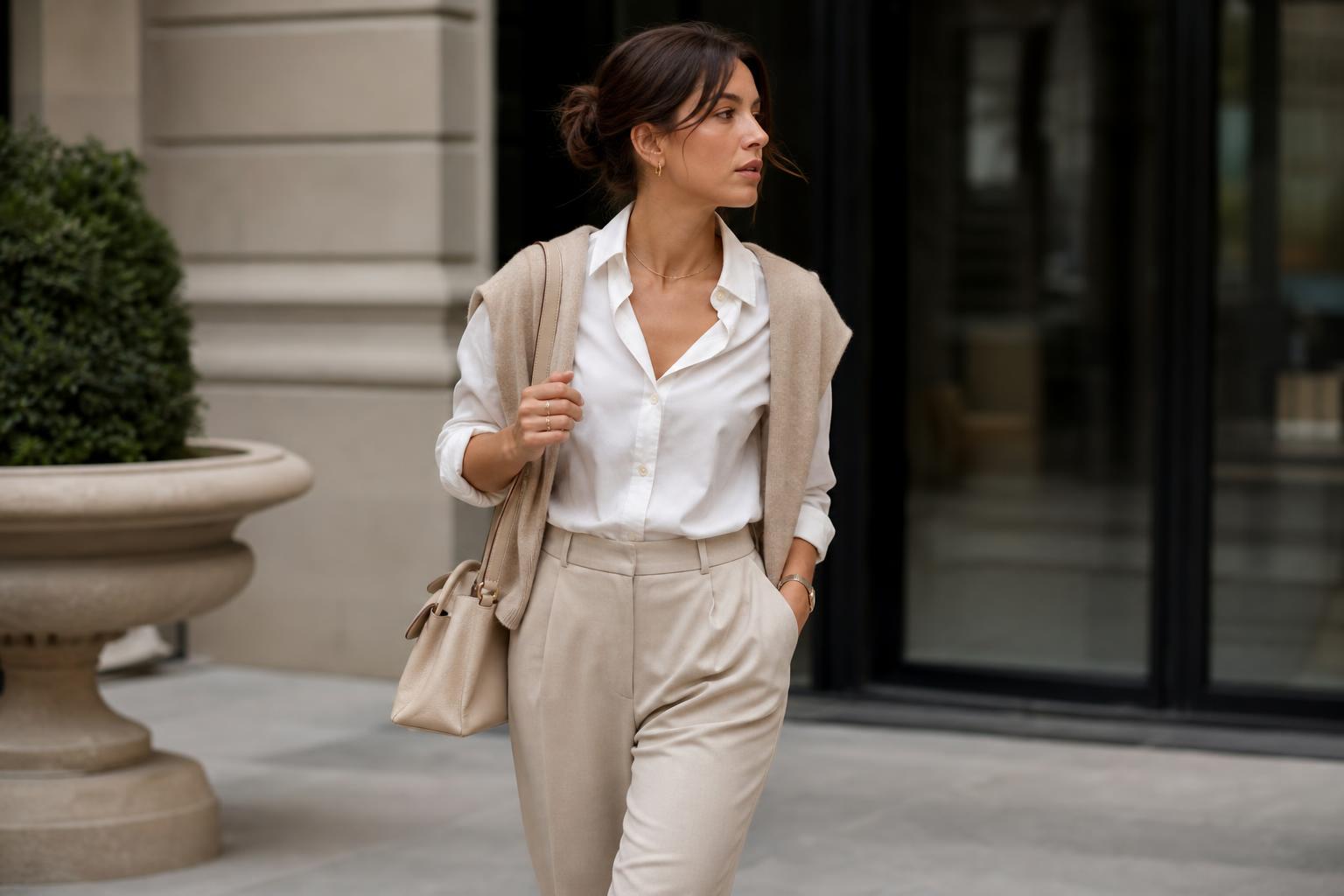
Category: Casual Outfits

Discover effortless Casual Outfits designed for everyday style, comfort, and versatility. Whether you’re looking for relaxed weekend looks, smart-casual combinations, seasonal outfit inspiration, or easy everyday fashion ideas, this collection features stylish outfits for a variety of occasions.

Explore casual jeans outfits, comfortable dresses, chic layering ideas, sneakers styling, and modern wardrobe essentials that help you create polished looks without sacrificing comfort. From minimalist aesthetics to trend-driven combinations, find inspiration for building outfits that feel both practical and fashionable.

Browse our latest casual outfit ideas and discover simple ways to elevate your everyday wardrobe with confidence and personal style.

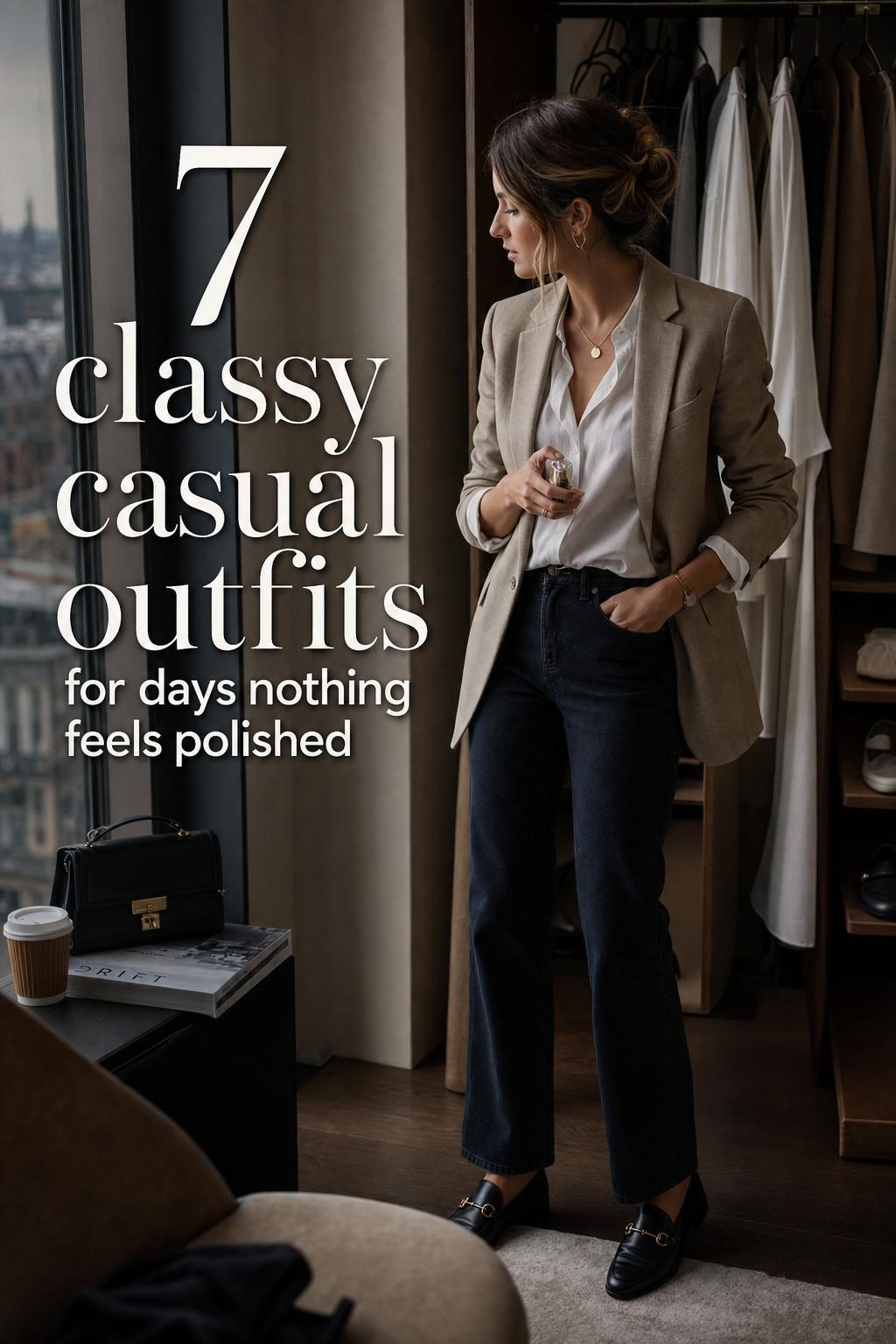
  • Casual Fall Outfits With a Quiet Luxury Mood

    Casual Fall Outfits With a Quiet Luxury Mood

    The quiet appeal of casual fall outfits

    There is a particular elegance to autumn dressing that never needs to announce itself. The air turns cooler, light softens, and wardrobes begin to rely on texture, proportion, and subtle layering rather than excess. The most compelling casual fall outfits carry that balance well: relaxed but intentional, polished without looking overworked, and grounded in pieces that feel as natural in motion as they do in a mirror.

    This aesthetic lives comfortably between city and weekend life. It belongs on a coffee run, in a creative office, at an outdoor lunch, on a museum afternoon, or during a slow Saturday walk through neighborhoods that feel a little more cinematic once the leaves begin to turn. It is popular because it solves a real wardrobe need. Fall style asks for adaptability, and the best looks answer with soft structure, thoughtful layers, and an ease that feels both modern and timeless.

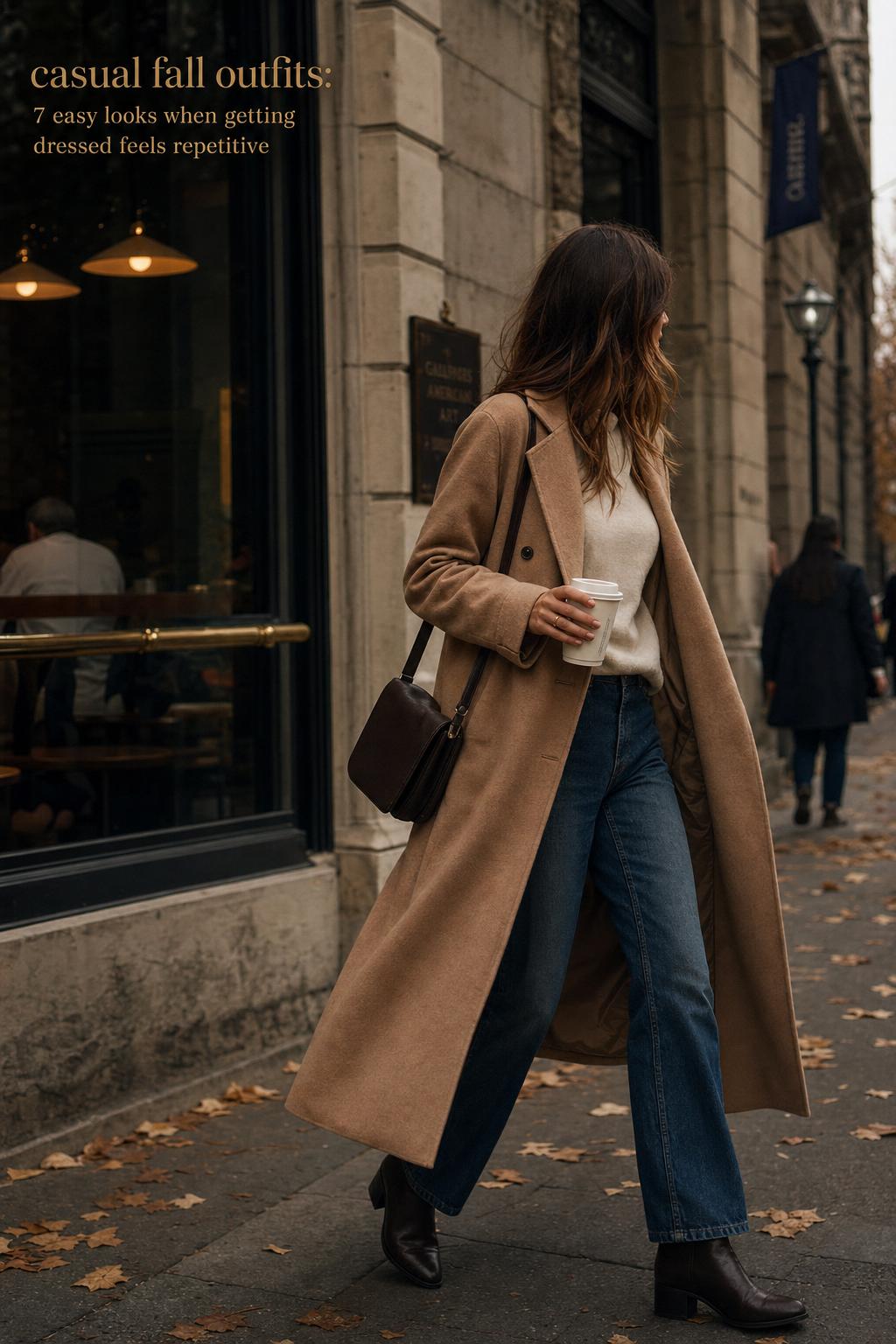
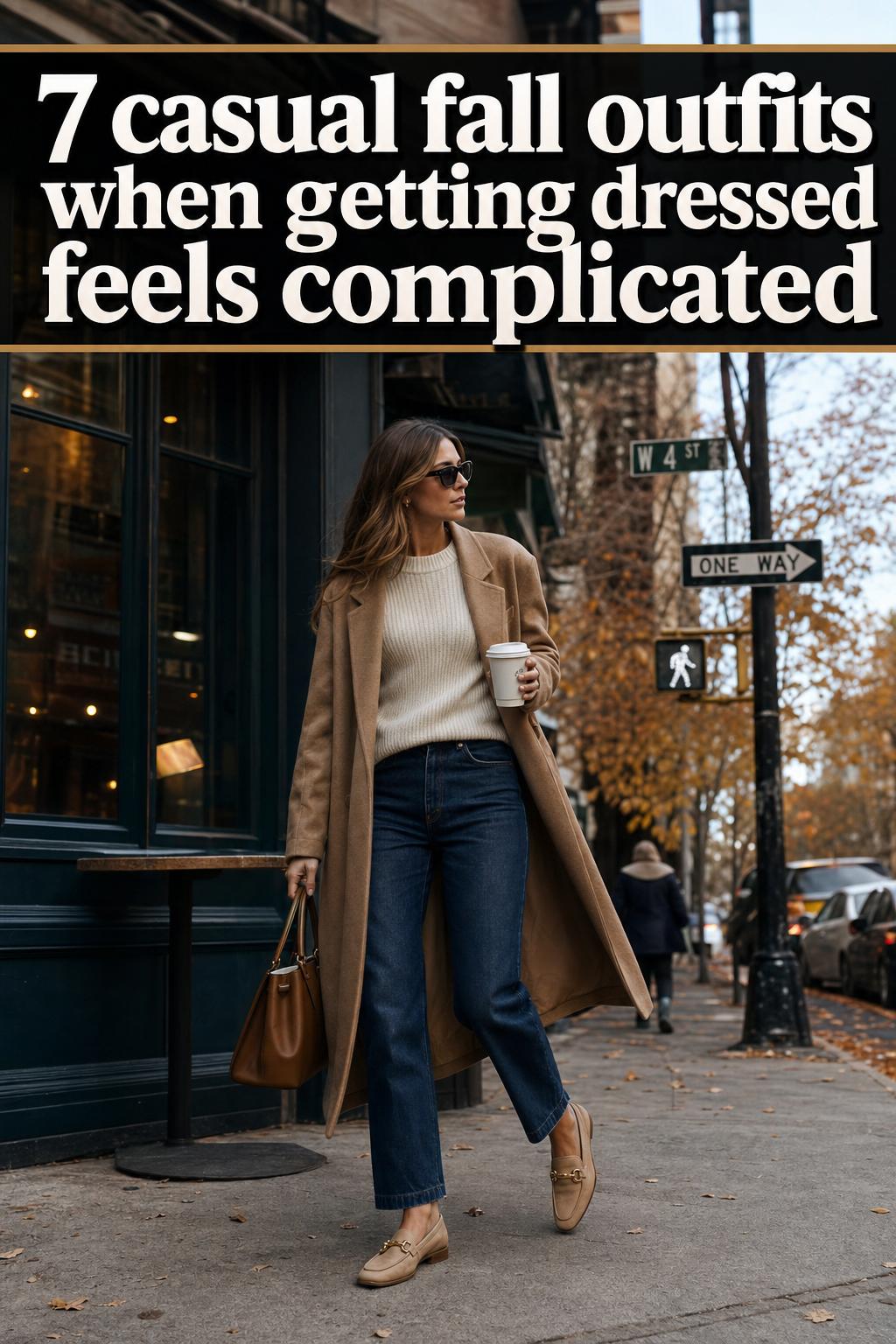
    Casual fall outfits street style: woman in camel coat and cream knit walking with coffee on an autumn city street
    A stylish woman strolls through an autumn city street in a camel coat and cream knit, capturing effortless casual fall outfits.

    What makes this mood enduring is not novelty, but composition. A knit becomes more interesting under a tailored coat. Denim looks sharper with refined footwear. A simple palette of cream, camel, charcoal, olive, black, and faded blue can feel endlessly varied when the silhouette shifts. Casual fall outfits succeed when they create atmosphere as much as utility, and that is exactly where autumn style is at its most persuasive.

    Aesthetic foundations: what gives fall casualwear its polish

    Before looking at individual combinations, it helps to understand the visual logic behind this style. Fall dressing depends on contrast. A tailored line paired with a softer fabric keeps an outfit from feeling severe. A relaxed knit over a cleaner trouser shape prevents the look from becoming too undone. Texture matters because autumn is a tactile season; wool, cotton, denim, suede, leather, ribbed knits, and brushed finishes add depth even when the color palette remains restrained.

    Proportion is equally important. An oversized layer needs something cleaner beneath it. A wide-leg jean often works best with a neater top line or a jacket that creates shoulder definition. When people struggle with casual fall outfits, it is rarely because they lack pieces. More often, the issue is visual weight. Too many bulky garments at once can flatten the silhouette, while too many fitted pieces can make autumn dressing feel stiff rather than effortless.

    The most useful way to think about this aesthetic is as a study in quiet balance: comfort against precision, warmth against lightness, timeless basics against small directional choices. That is why these outfits translate so well across style capitals often associated with refined ease, from Paris to Milan to Copenhagen. The mood changes slightly, but the principles remain consistent.

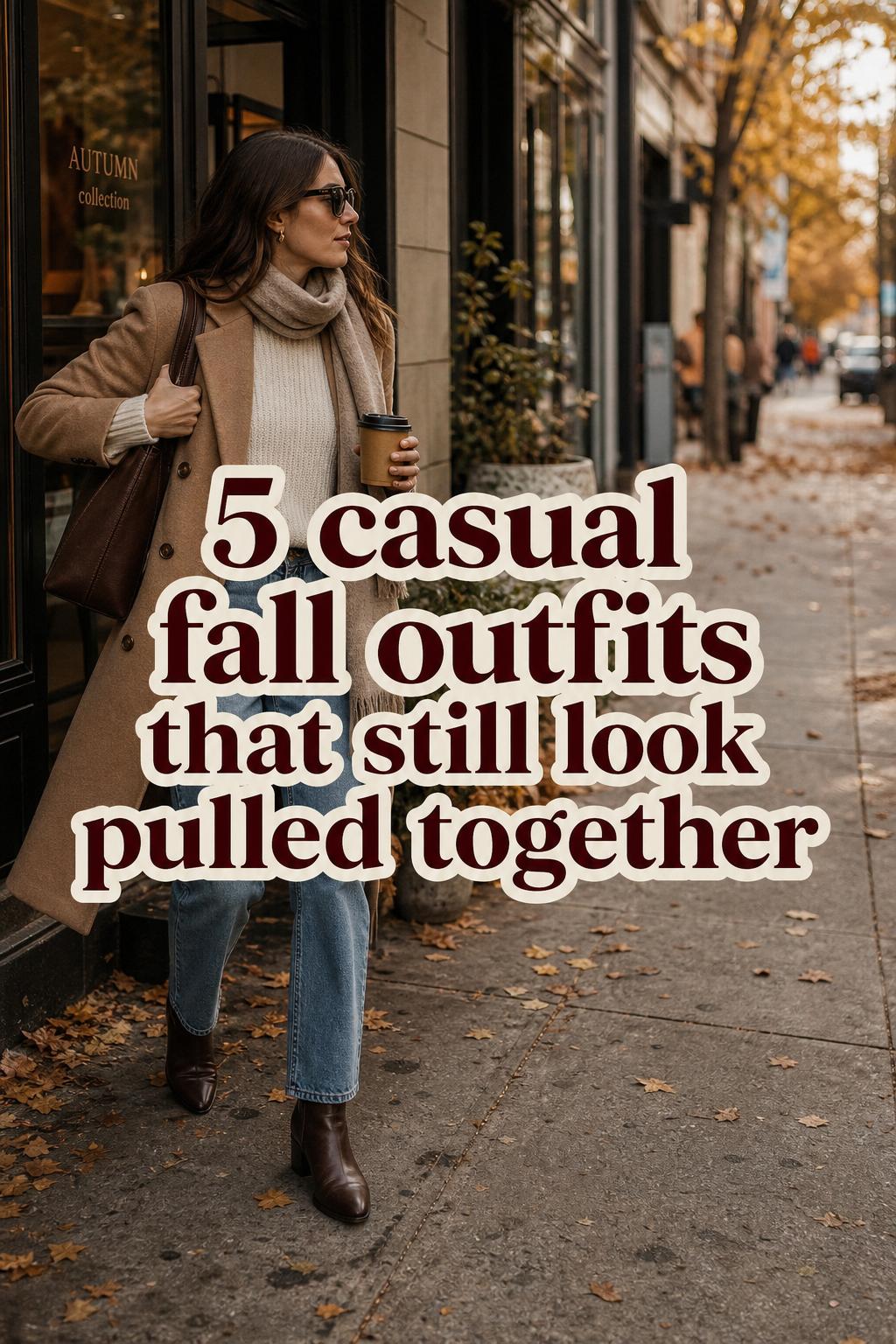
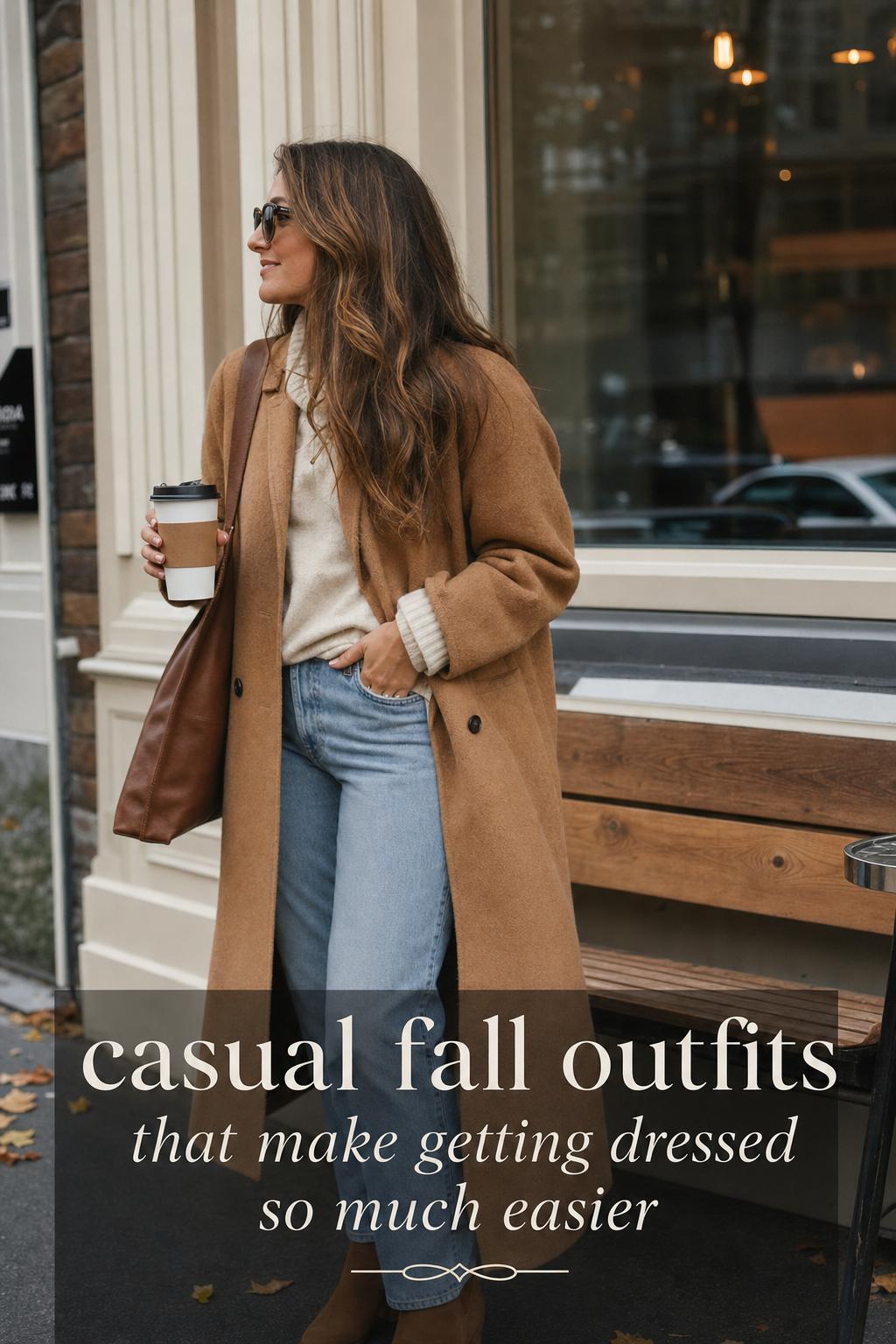
    Woman stepping out of a cafe in golden-hour light wearing casual fall outfits with camel coat, scarf, jeans, and coffee
    A stylish woman steps out of a neighborhood café in golden-hour light, showcasing a timeless casual fall look with cozy layers and denim.

    Look: relaxed minimal layers

    This is the version of fall dressing that feels calm, understated, and deeply wearable. The silhouette is clean but not sharp, with enough room to move and enough structure to hold its shape through a full day. It suggests the kind of wardrobe built slowly over time: considered essentials, subtle confidence, and no unnecessary noise.

    A fine knit in cream, oatmeal, or soft taupe sits beneath a straight wool coat in camel or charcoal, paired with dark-wash denim or tailored black trousers. The line is smooth through the torso, then slightly relaxed through the leg. Leather ankle boots or minimal loafers anchor the outfit without pulling it away from its quiet mood. A scarf in a neighboring neutral and a structured tote complete the composition with barely visible precision.

    • Key garments: lightweight knit, wool coat, straight-leg denim or tailored trousers
    • Footwear: ankle boots, loafers
    • Accessories: tonal scarf, leather tote, simple jewelry

    Why it works is simple: the restrained palette lets texture do the work. Casual fall outfits often become more sophisticated when color is edited and fabric variation is allowed to lead. This look is especially effective for transitional days when the weather shifts between cool morning air and a milder afternoon.

    Look: neutral street style with a tailored edge

    There is a sharper interpretation of the autumn casual mood that leans slightly urban without losing refinement. The silhouette here is more deliberate, with clean lines and a touch of attitude. It feels at home in a downtown setting, but remains practical enough for everyday wear.

    A structured blazer layered over a fitted knit or simple cotton tee creates the base. Instead of slim trousers, the look benefits from relaxed jeans or fuller tailored pants that bring modern proportion into play. Shades like black, stone, espresso, and muted olive keep the palette grounded. White sneakers can keep the look clean and daytime-ready, while sleek leather boots shift it toward a more editorial finish. A belt and compact shoulder bag sharpen the visual rhythm.

    This look fits the aesthetic because it shows how tailoring can soften rather than formalize. In casual fall outfits, a blazer is not there to make the outfit serious; it is there to give the relaxed pieces a frame. That distinction matters. Once the jacket is treated as structure rather than officewear, the outfit feels more current and far easier to repeat.

    Casual fall outfits featuring layered sweater, jeans, and ankle boots on a city street
    Effortless layers and warm textures define these casual fall outfits for an easy, everyday look.

    Style tip: let one piece carry the structure

    If the blazer has strong shoulders, keep the knit fine and the trousers fluid. If the trousers are wide and architectural, choose a softer jacket. Too many commanding pieces in one outfit can make an otherwise elegant fall look feel heavy. The sophistication comes from tension, not uniformity.

    Look: soft weekend aesthetic in knitwear and denim

    Some autumn looks are at their best when they feel almost domestic in their softness, yet still polished enough to wear out. This version of casual fall style is gentle, tactile, and easy to live in. The mood is less city-sharp and more slow-living refined.

    A chunky ribbed sweater in heather gray, cream, or dusty beige paired with classic blue jeans creates an easy foundation. The denim should feel relaxed but not collapsed, something with enough shape to support the weight of the knit. Suede ankle boots, soft leather flats, or understated sneakers keep it grounded. Add a wool coat or quilted layer if the day turns cooler, and finish with a crossbody bag and a scarf that echoes the knit’s warmth.

    The appeal here is emotional as much as visual. Casual fall outfits often succeed because they look comforting while remaining composed. This one is ideal for errands, brunch, travel days, or any setting where you want ease without looking incidental. The softness reads intentional because the silhouette still has control.

    Look: monochrome depth for cooler days

    Monochrome in autumn is rarely flat when it is built through texture. Instead of chasing contrast through many colors, this look creates dimension inside one tonal family. The result feels modern, calm, and quietly luxurious.

    Imagine charcoal on charcoal, cream layered with stone, or deep brown across several materials. A knit sweater, wool trousers, and a longer coat in closely related shades create a vertical line that lengthens the figure. Leather boots in a matching depth keep the outfit cohesive, while a bag in a slightly different finish prevents it from becoming too uniform. Even a simple base layer such as a fine tee or turtleneck can bring subtle variation if the fabric catches light differently.

    This interpretation works particularly well in late fall, when the weather supports denser fabrics and longer layers. It also solves a common styling problem: how to look dressed without relying on statement pieces. In practice, tonal dressing often looks more expensive and more deliberate because the eye reads harmony first.

    Stylish woman on a city street in tonal layers and coat, showcasing casual fall outfits with a chic coffee-shop vibe.
    A polished street-style moment in rich autumn neutrals captures the ease of tonal layering on a crisp city day.

    Look: the refined legging-and-coat formula

    Not every casual outfit needs denim or tailoring to feel complete. There are days built around movement, comfort, and practicality, and this is where the right legging-based look becomes relevant. The difference between casual and careless lies entirely in proportion and finish.

    Start with opaque black leggings and an oversized knit, sweatshirt, or longer button-down layered beneath a coat that adds shape. A wool wrap coat, a clean trench, or a longer structured jacket helps the outfit feel intentional. Footwear matters here more than anywhere else: leather ankle boots, sleek sneakers, or polished loafers instantly elevate the line. A cap, scarf, or oversized tote can make the look feel directional rather than improvised.

    This formula fits the broader aesthetic because it respects real life. Casual fall outfits should not ignore comfort, especially on travel days, school runs, or weekends with constant movement. The key is to ensure that the legging remains the quiet base, while the outer layers supply the visual architecture.

    How to recreate the look without losing polish

    Keep lengths intentional. If the bottom layer is very slim, the top layer should provide enough coverage and softness to balance it. Matte fabrics generally look more refined than shiny ones in daytime settings, and a coat with clean lines can transform the entire impression of the outfit.

    Look: oversized shirting under autumn outerwear

    There is something particularly appealing about a crisp shirt in fall. It introduces lightness into a season known for heavier textures, and that contrast gives an outfit intelligence. This look is ideal for those who prefer a less overtly cozy aesthetic and something slightly more architectural.

    An oversized white, blue, or striped button-down worn under a knit vest, blazer, or coat brings a sense of freshness to autumn layers. Pair it with straight jeans, dark trousers, or a relaxed wool pant. Loafers or ankle boots maintain the tailored spirit, while a simple knit draped over the shoulders can add softness without bulk. If the shirt is generous in volume, tuck only a portion or leave it loose beneath a structured outer layer so the hem becomes part of the look’s movement.

    The strength of this outfit lies in line and contrast. Casual fall outfits benefit from at least one piece that introduces crispness, especially when the rest of the wardrobe leans soft and earthy. A shirt does exactly that. It sharpens the visual language without making the look less approachable.

    Color stories that make autumn outfits feel intentional

    Fall color is most persuasive when it feels connected to the season without becoming theatrical. Deep neutrals, softened earth tones, and washed classics tend to hold up best because they layer naturally and repeat well. The beauty of casual dressing in autumn is that it does not need a large palette to stay interesting.

    • Cream, camel, and oatmeal create warmth without heaviness.
    • Charcoal, black, and espresso bring depth and urban polish.
    • Olive and muted brown add an outdoors-inspired note that still feels refined.
    • Blue denim works as a balancing tone, preventing neutrals from looking too flat.

    A useful rule is to keep the palette within two or three related families, then add texture rather than more color. That is often why the simplest casual fall outfits are the most memorable. They do not ask the eye to process too much at once. Instead, they feel composed from a distance and richer up close.

    Look: soft tailoring for the modern work-to-weekend shift

    Many autumn wardrobes need to move between loosely professional and clearly off-duty spaces in the same day. This look is built for that in-between moment. It is polished enough for a meeting, lunch, or casual office, then relaxed enough for the rest of the day without requiring a full change.

    A lightweight knit or fitted turtleneck paired with pleated trousers creates the base. Add a softly structured coat or blazer and choose footwear according to your day: loafers for a cleaner city line, ankle boots for more seasonal weight, or minimal sneakers if the setting allows more ease. Keep the bag practical but elegant, and let jewelry remain discreet. The palette can stay within taupe, black, navy, gray, or cream for maximum versatility.

    What makes this one of the most useful casual fall outfits is flexibility. Trousers often look more polished than denim, but when the knit remains relaxed and the outerwear avoids stiffness, the result stays approachable. It teaches an important lesson in fall dressing: refinement comes from control, not formality.

    Look: denim-on-denim, softened for autumn

    Denim layered with denim can become heavy or overly styled if the proportions and washes are not handled carefully. In autumn, though, it can feel grounded and effortless when softened by tonal contrast and elegant accessories. This is the more relaxed, slightly rugged branch of the aesthetic.

    A chambray or denim shirt under a heavier jacket, paired with jeans in a contrasting wash, creates a look with depth rather than sameness. Mid-blue with indigo, washed black with faded gray, or pale denim under a darker outer layer all work well. Brown leather boots, a wool scarf, and a tailored coat can bring enough sophistication to keep the outfit from feeling too casual. The silhouette should remain clean, especially if both denim pieces have visible texture.

    This variation works because it keeps the spirit of utility while refining the finish. Casual fall outfits often become stronger when one familiar fabric is repeated with nuance. The visual continuity feels confident, while the surrounding layers prevent the look from becoming one-note.

    Real-life styling considerations for changing autumn weather

    Fall rarely stays still long enough for a single formula to solve every day. Mornings can feel cold, afternoons mild, and evenings sharp again. That is why the most successful casual fall outfits are not only attractive; they are modular. You should be able to remove a scarf, open a coat, switch a boot for a sneaker, or replace a chunky knit with a finer layer without disrupting the overall composition.

    This is also where fabric weight matters. A thick sweater under a heavy coat may feel appealing in theory, but can become impractical indoors or while commuting. Often, a lighter knit beneath substantial outerwear gives a better result, both visually and functionally. Likewise, suede may feel beautifully autumnal, but it is less forgiving in wet weather than leather. Casual dressing becomes more convincing when these choices are made with the day in mind rather than the moodboard alone.

    Tips for making fall outfits work harder

    • Build around one dependable outer layer that works with both denim and trousers.
    • Keep at least one fine knit in rotation for milder days and indoor comfort.
    • Choose shoes that match your actual walking needs, not just the mirror.
    • Use scarves and bags to shift the mood of repeat outfits without changing the entire foundation.

    Common mistakes that make autumn outfits feel heavier than they need to

    One of the most common issues in fall dressing is over-layering without shape. When every piece is bulky, the body line disappears and the outfit loses clarity. Another frequent mistake is relying on color contrast alone rather than texture and silhouette. Autumn style rarely needs loud contrast to feel complete; often it needs better proportion.

    Footwear can also interrupt an otherwise thoughtful look. Shoes that are too delicate for the weight of the clothing can make the outfit feel visually disconnected, while overly heavy boots can overwhelm simpler layers. The same applies to accessories. Too many trend-driven details can distract from the elegance that makes casual fall outfits so enduring in the first place.

    A more balanced approach is to let one element do the talking. If the coat is oversized, keep the base streamlined. If the knit is textured and chunky, choose trousers or jeans with a cleaner line. If the palette is very neutral, add interest through shape. This kind of editing is what separates a stylish autumn outfit from a pile of seasonal pieces.

    Look: off-duty layers for travel, errands, and long days out

    There is a specific kind of outfit that has to hold up through movement, changing temperatures, and time. It should feel comfortable in a car, on a train, at a café, and during a late afternoon stop that was not part of the original plan. This version of the fall casual aesthetic is practical, but it should still look composed.

    A longline coat over a knit top and relaxed trousers or structured leggings creates a flexible base. Add sleek sneakers or supportive boots, depending on how much walking the day requires. A large tote, crossbody bag, or scarf can make the outfit more functional without weakening the silhouette. Keep the palette tonal so the look remains cohesive even when layers come on and off throughout the day.

    This is where experience changes styling decisions. Comfort becomes part of elegance when the outfit is built honestly around wearability. In real life, the best casual fall outfits are often the ones that survive a full day and still look resolved by evening.

    Key pieces for this aesthetic

    A strong autumn wardrobe does not need endless novelty. It needs a reliable foundation of pieces that can shift in mood depending on styling. The following essentials repeatedly support the aesthetic described throughout this guide.

    • A tailored or softly structured coat in camel, charcoal, black, or cream
    • Fine knits and chunkier sweaters in neutral shades
    • Straight-leg or relaxed denim in blue, black, or indigo
    • Tailored trousers with enough drape to balance bulkier layers
    • Button-down shirts that add crispness under knits and jackets
    • Leather ankle boots, loafers, or clean sneakers
    • Scarves, belts, and bags that echo the outfit rather than compete with it

    These pieces matter because they interact well. That is the difference between a wardrobe and a collection of items. Casual fall outfits become easier to build when each piece can move between multiple silhouettes and situations without losing coherence.

    How to adapt the aesthetic to your own wardrobe

    Not every wardrobe begins with coats, trousers, and tonal knits, and that is fine. The easiest way to adopt this aesthetic is to work with what you already wear most often, then refine the outline. If denim is your base, add better outerwear and more intentional footwear. If you live in leggings, focus on length and structure above the waist. If you prefer dresses, layer them with knits and boots in the same restrained palette so they still speak the language of autumn.

    It also helps to identify your dominant need. Some readers need casual fall outfits for school pickup and errands. Others need looks that can pass through a casual office, city day, or travel schedule. The aesthetic remains the same, but the emphasis changes. A person who walks all day may build around sneakers and long coats. Someone in a creative workplace may rely more on blazers, loafers, and trousers. The key is not to copy every silhouette exactly, but to preserve the same balance of ease, texture, and controlled layering.

    That is ultimately why this style works so well. It is less about a fixed formula and more about a disciplined mood: thoughtful, wearable, and subtly refined. Once that principle is understood, casual fall outfits become less about chasing combinations and more about dressing with clarity.

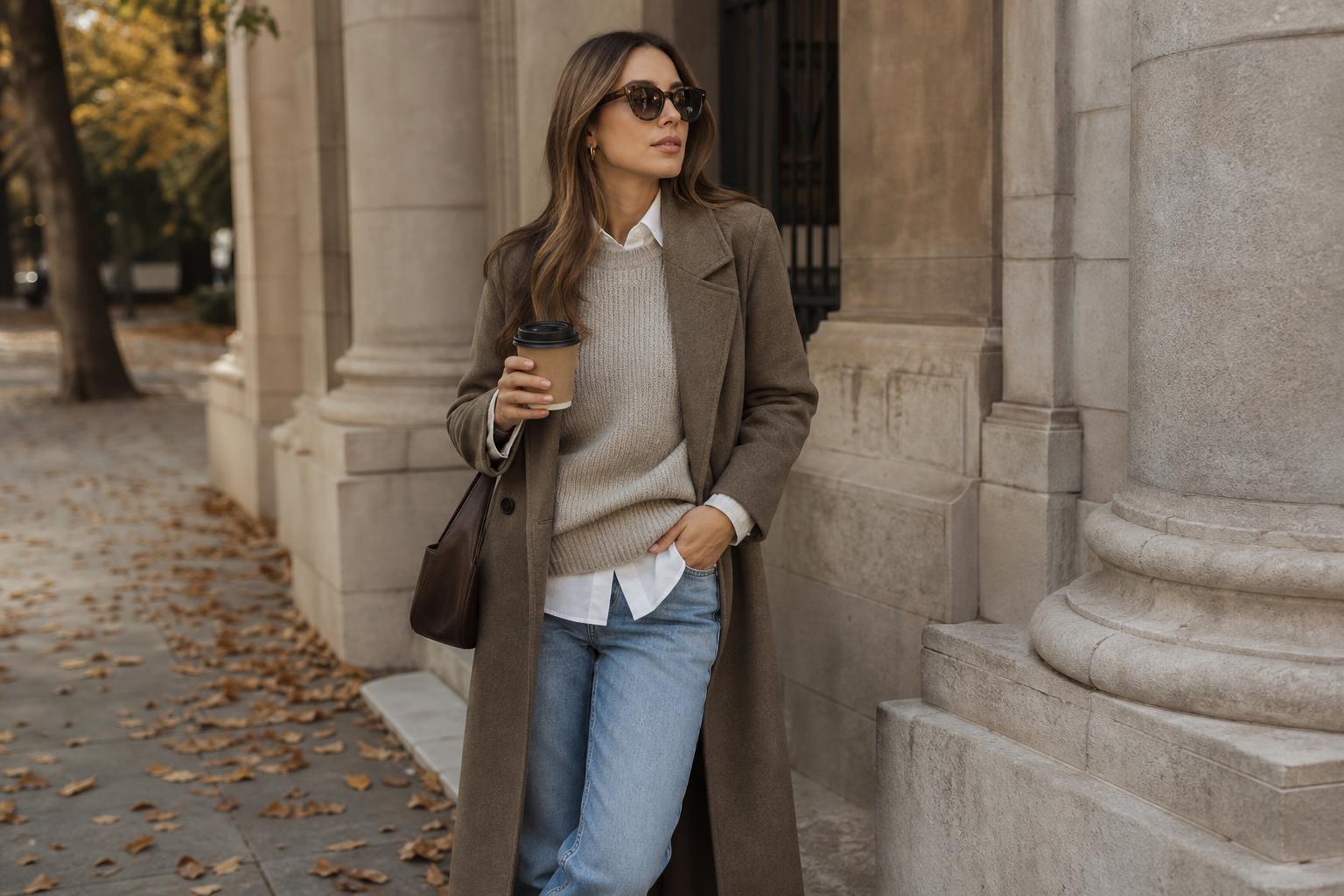
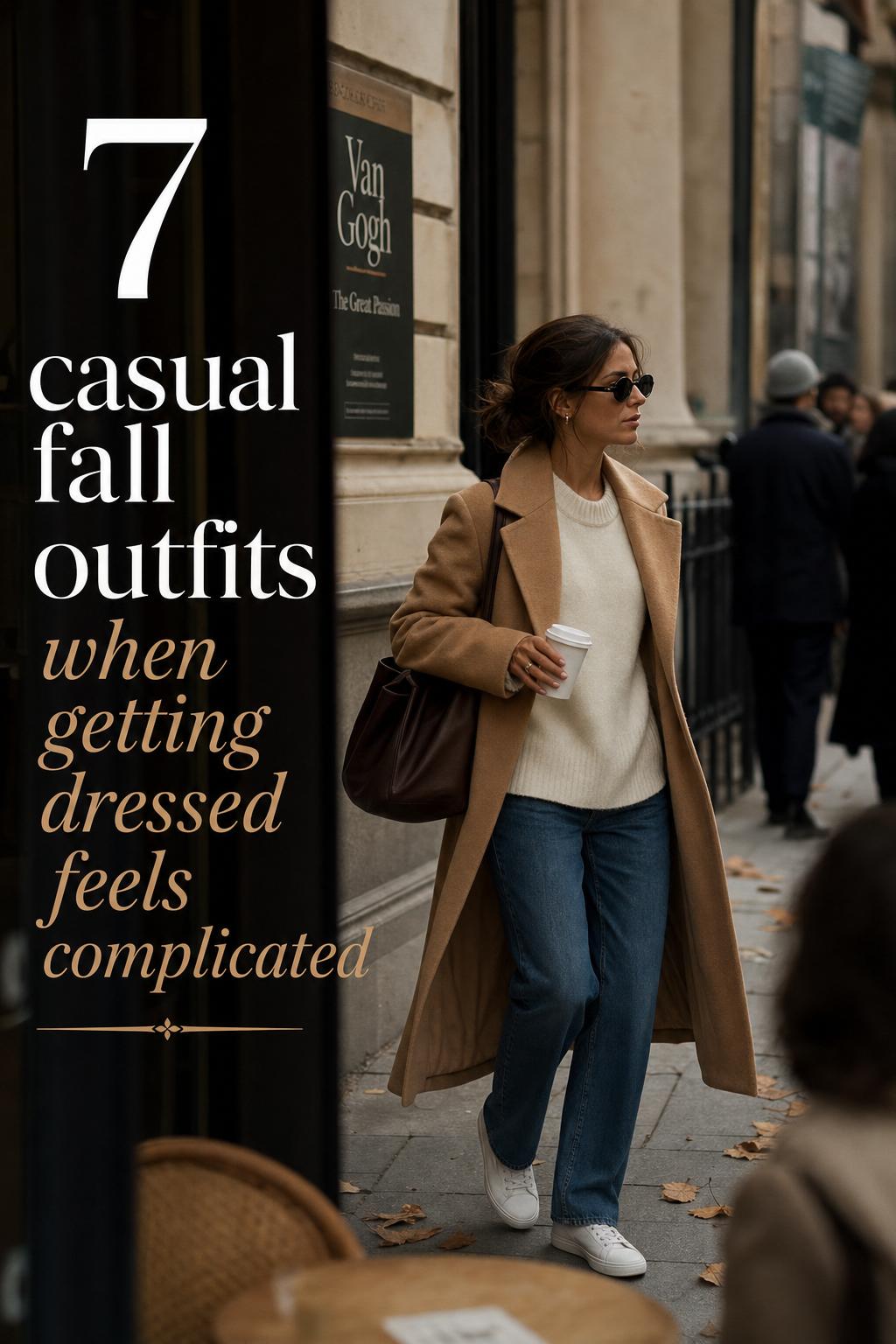
    Woman walking past a museum street with coffee, wearing casual fall outfits with camel coat, denim, and leather bag
    A candid autumn stroll past museum stone and café glass captures polished casual fall dressing with quiet-luxury ease.

    FAQ

    What defines a good casual fall outfit?

    A good casual fall outfit balances comfort, seasonal practicality, and visual structure. Usually that means combining softer pieces like knits or denim with one element that adds shape, such as a tailored coat, blazer, or cleaner trouser line.

    How can I make simple fall clothes look more polished?

    The easiest way is to focus on proportion, texture, and footwear. A simple sweater and jeans can look significantly more refined when paired with a well-cut coat, leather boots or loafers, and a restrained color palette.

    Are leggings appropriate for casual fall outfits?

    Yes, if they are styled with intention. Leggings work best when treated as a slim base layer under longer knits, shirts, or coats, with polished footwear and accessories that give the outfit enough structure.

    Which colors work best for fall casual style?

    Neutral and earthy shades tend to work best because they layer easily and create depth. Cream, camel, charcoal, black, olive, espresso, gray, and classic denim blue are especially effective for building outfits that feel cohesive.

    How do I layer for fall without looking bulky?

    Use contrast in fabric weight and silhouette rather than piling on equally heavy pieces. A lighter knit under a structured coat, or relaxed trousers with a fitted top layer, usually creates a cleaner and more flattering result than multiple oversized garments together.

    What shoes are most versatile with casual fall outfits?

    Leather ankle boots, loafers, and clean sneakers are the most versatile options because they work across denim, trousers, and layered knitwear. The best choice depends on how much walking you do and whether your outfit leans more polished or more relaxed.

    Can casual fall outfits work for a casual office?

    Yes, especially if you build them around soft tailoring. Knitwear, pleated trousers, a blazer, and understated footwear create an outfit that feels professional enough for a relaxed workplace while still fitting naturally into off-duty hours.

    How many layers should a fall outfit usually have?

    Most successful fall outfits rely on two to three visible layers, such as a base top, a knit or shirt, and outerwear. That is often enough to create depth and weather flexibility without making the silhouette feel crowded.

    What is the biggest mistake people make with autumn casual style?

    The biggest mistake is adding seasonal pieces without editing the silhouette. Too many bulky layers, overly heavy footwear, or conflicting textures can make an outfit feel cluttered, even when the individual items are strong.

    How can I build casual fall outfits from clothes I already own?

    Start with your most-worn basics and improve the styling around them. A better coat, more intentional shoes, and a tighter color palette can transform familiar jeans, sweaters, shirts, or leggings into outfits that feel more cohesive and elevated.

  • Spring Brunch Outfits Ideas with a Polished, Breezy Feel

    Spring Brunch Outfits Ideas with a Polished, Breezy Feel

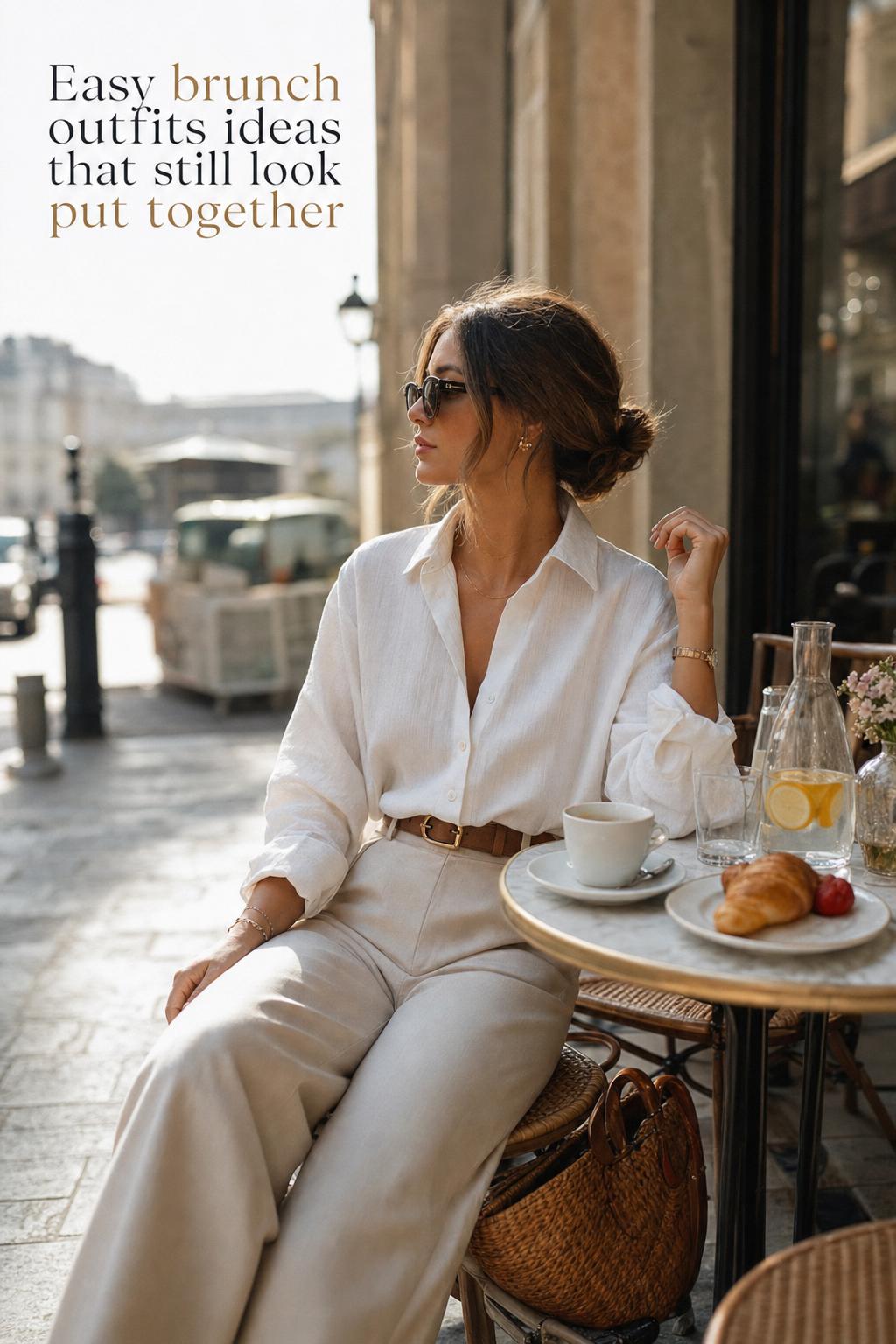
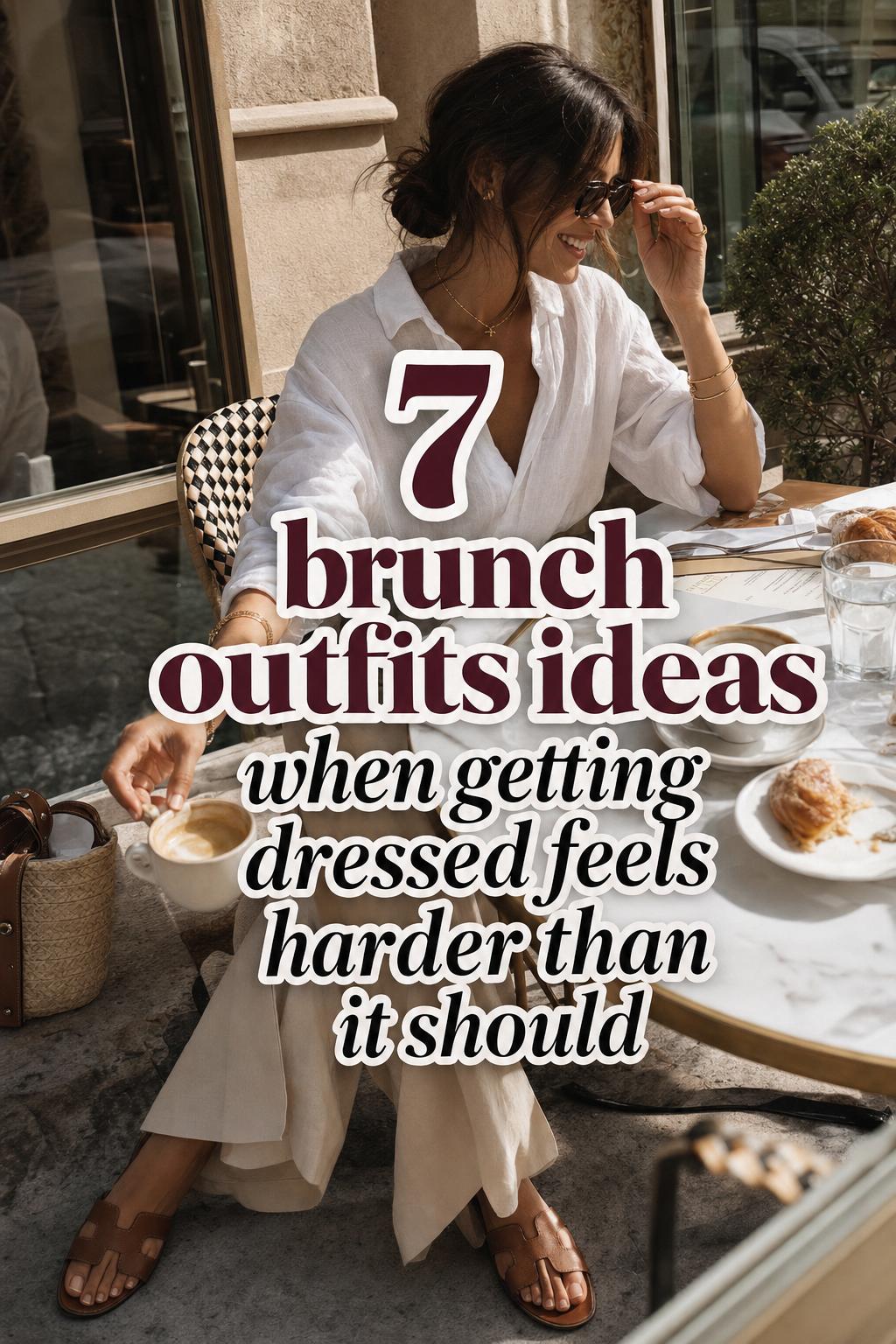
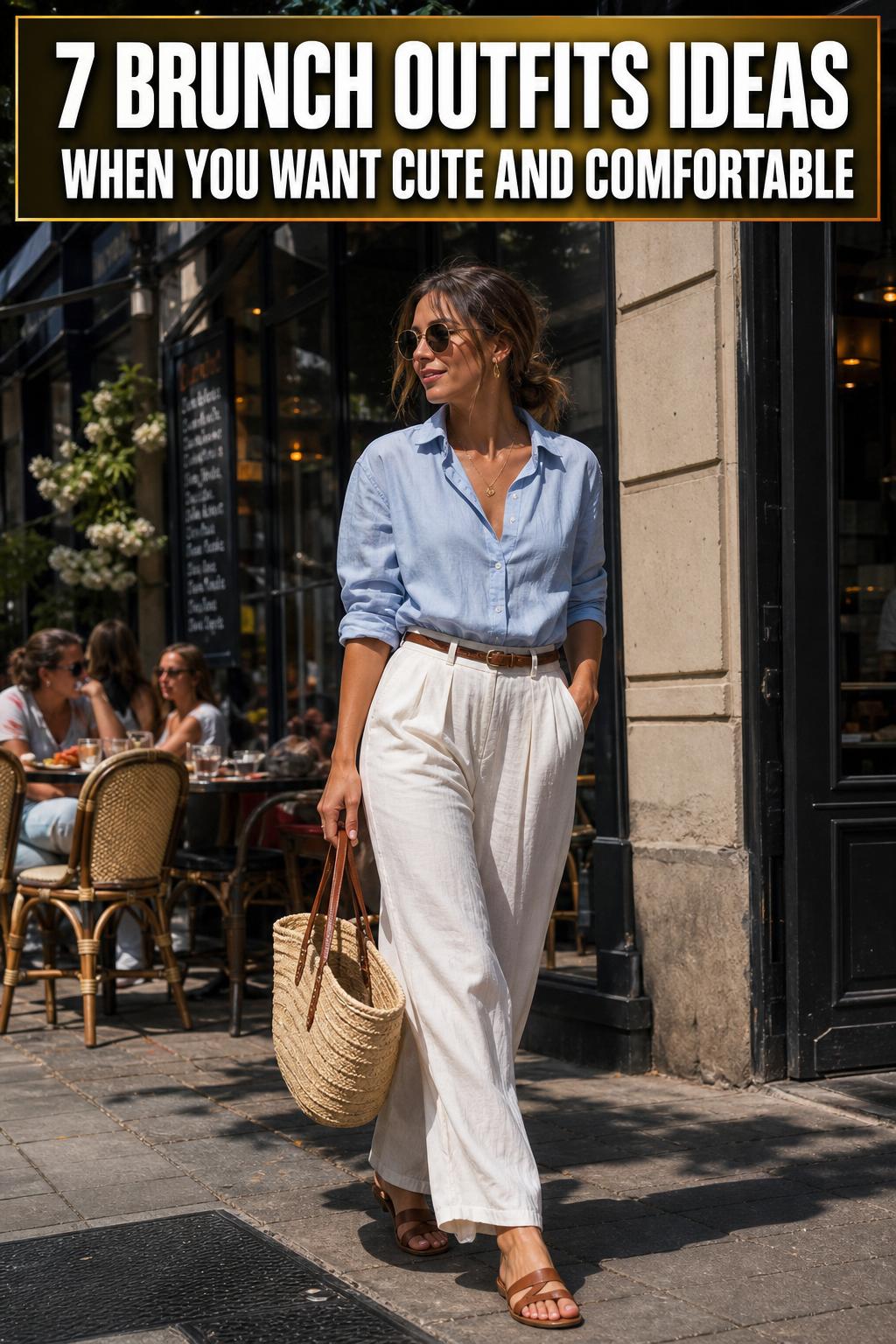
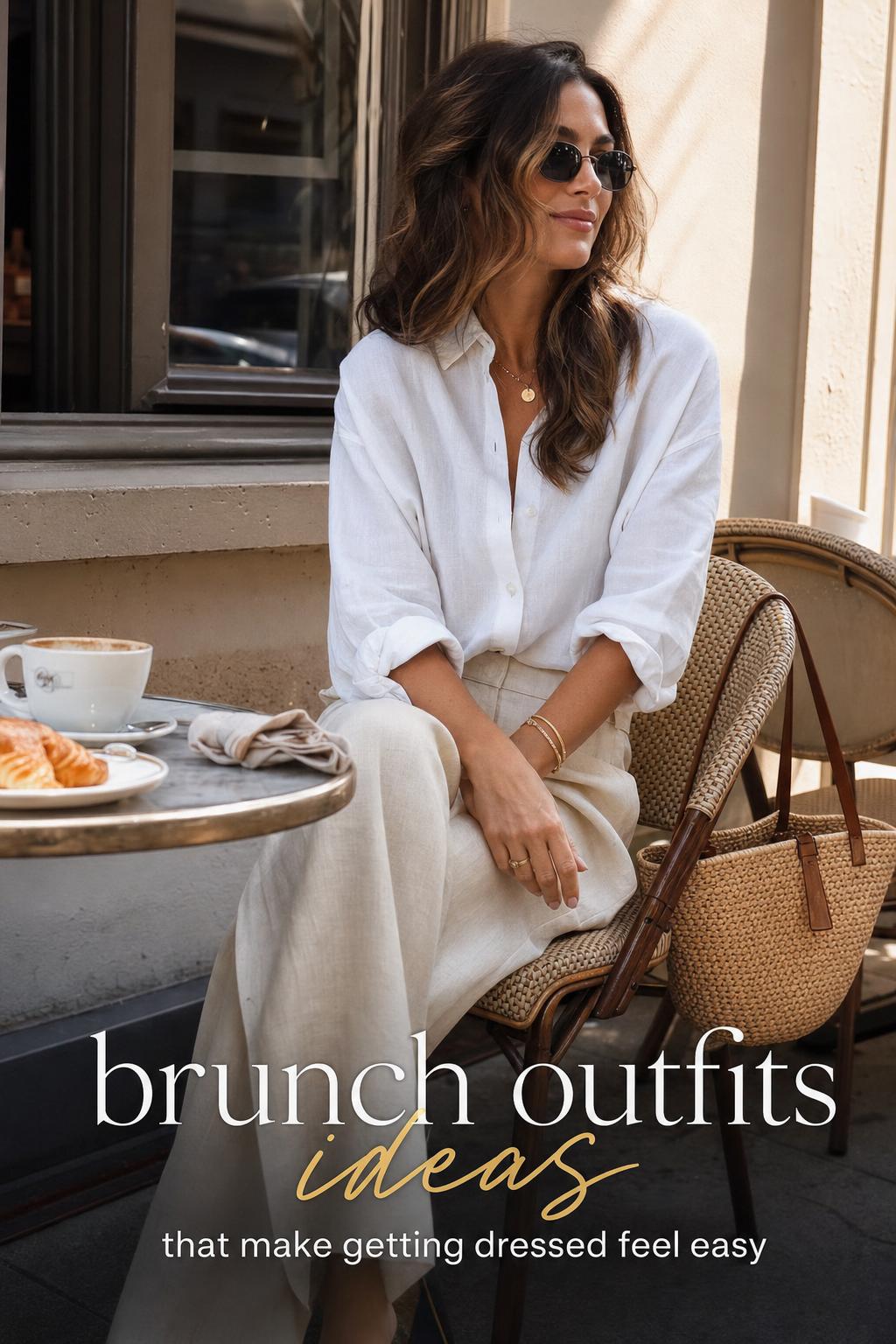
    Late-morning dressing asks for a very particular balance. Brunch outfits ideas work best when they acknowledge the reality of the event: you want enough polish for a restaurant, rooftop, beachside table, or city café, but you also need comfort, movement, and a look that feels effortless in daylight. That is why the strongest brunch wardrobe is never built around one dramatic piece alone. It is built around proportion, breathable fabrics, reliable shoes, and a few versatile outfit formulas you can repeat with small changes.

    The most useful approach is to think in terms of silhouettes and setting. A linen midi dress with sandals reads relaxed yet intentional for a casual Sunday brunch. Wide-leg pants with a button-down shirt feel modern and city-ready. A satin blouse with tailored trousers carries more polish for a rooftop brunch, while a maxi dress, espadrilles, and a straw bag fit a coastal mood without looking costume-like. The key is not chasing novelty. It is understanding why certain combinations work, then adapting them to season, body proportion, weather, and budget.

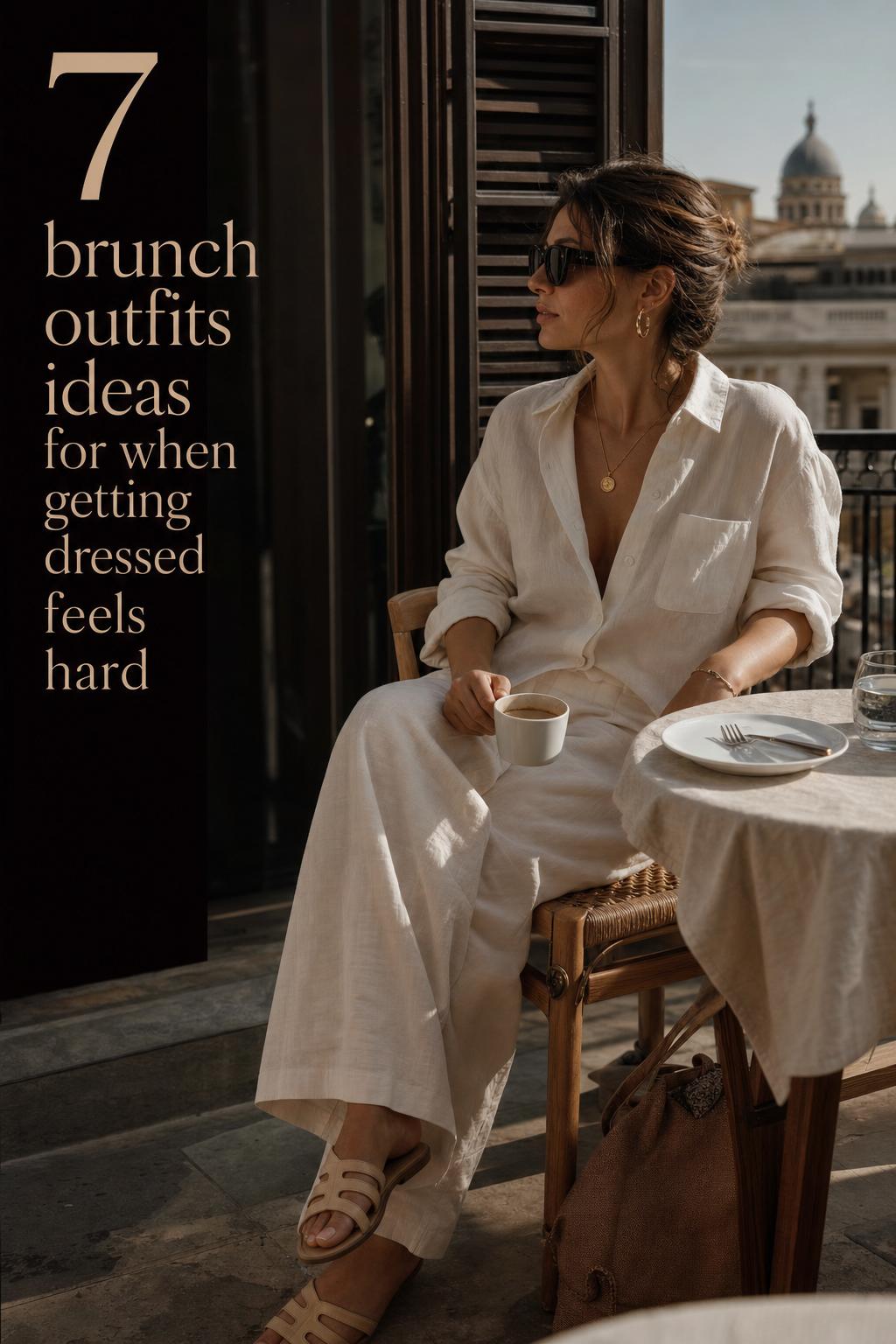
    Stylish woman in a linen midi dress at an upscale cafe table, showcasing brunch outfits ideas in soft daylight.
    A breezy linen midi dress and minimal accessories create an effortlessly polished look for a sunlit brunch table.

    The brunch wardrobe foundations worth building first

    Before choosing specific looks, it helps to identify the pieces that do the most work. In real life, the easiest brunch outfits come from a small group of staples that can be mixed across casual, elevated, and seasonal settings. These are also the items most often repeated in strong editorial and retailer styling: dresses, blouses or shirts, easy bottoms, supportive footwear, and accessories that add finish without adding effort.

    • A midi dress in linen or cotton
    • Wide-leg pants or tailored trousers
    • A button-down shirt or blouse
    • Well-cut denim that feels polished rather than overly distressed
    • Flat sandals, heeled sandals, or refined flats
    • A tote or clutch, depending on venue
    • Simple jewelry, a belt, and sunglasses for finishing detail

    If you are buying only one new brunch piece, start with the item that solves the most decisions. For many wardrobes, that is a midi dress. It requires no matching, works across spring and summer, layers easily with a blazer or trench, and can shift from flat sandals to a heel without needing a complete re-style. If dresses are not your preference, wide-leg pants are the next most versatile choice because they create an elegant line while remaining comfortable for sitting, walking, and longer daytime plans.

    Pieces worth investing in are the ones that determine structure: a good blazer, tailored trousers, quality sandals, and a well-made button-down shirt. More affordable alternatives can absolutely work for trend-led details such as a floral top, a satin blouse, a clutch, or statement accessories. This balance keeps the wardrobe refined without making every outfit expensive.

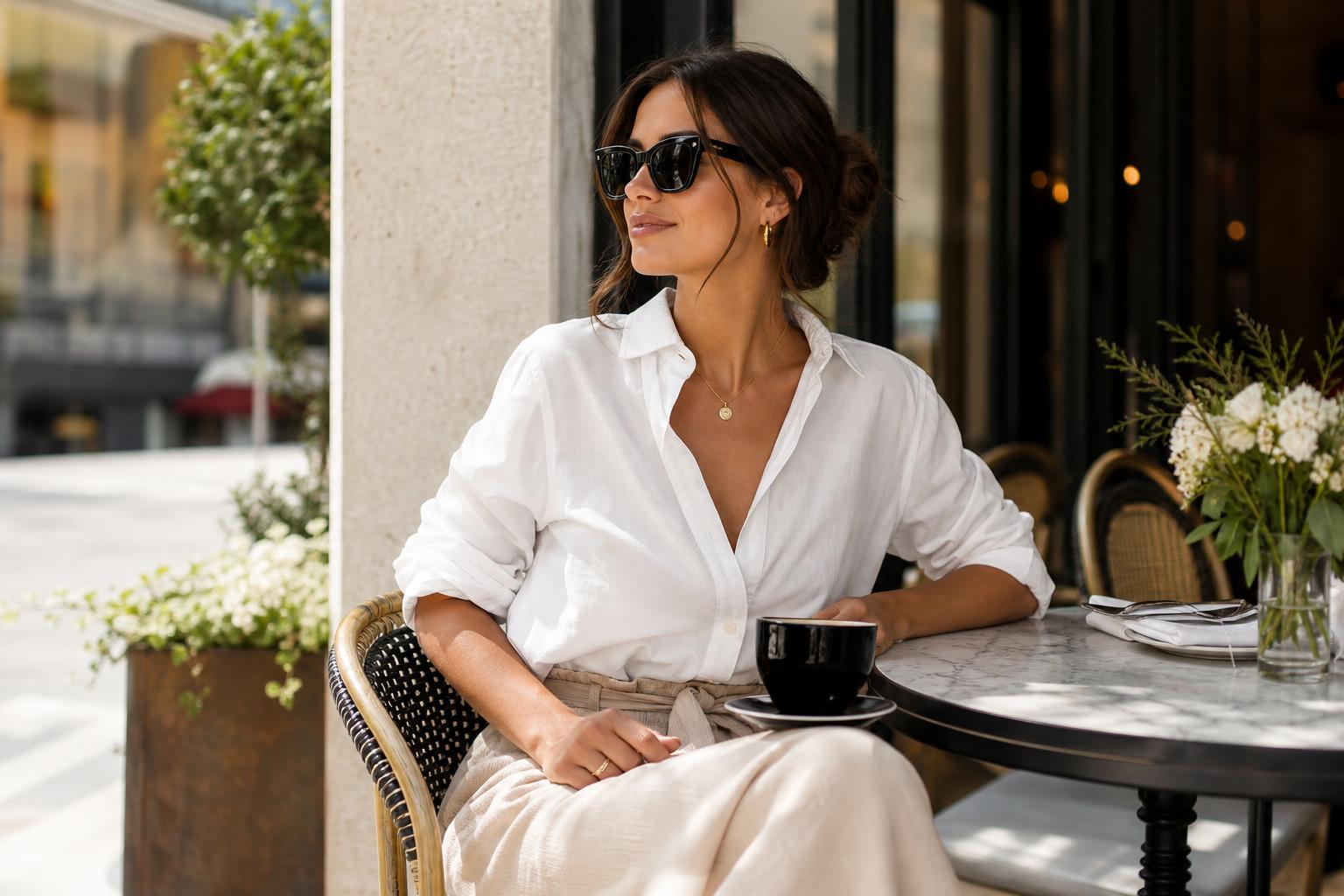
    Brunch outfits ideas featuring a stylish woman in a warm sunlit café terrace, adjusting sunglasses beside coffee and pastries
    A candid, sun-warmed café terrace scene captures effortless brunch outfits ideas with polished, wearable styling and relaxed charm.

    Outfit templates that make brunch dressing easier

    A strong brunch outfit usually follows a repeatable formula. Once you know the formula, you can swap fabrics, colors, and accessories instead of starting over every weekend. These templates are especially practical if you want a wardrobe that feels coordinated rather than random.

    The linen midi dress with sandals

    This is one of the most reliable casual chic brunch outfits because the silhouette does most of the work. A midi length feels polished in daylight, linen keeps the look breathable, and sandals preserve the ease that brunch dressing needs. Add a tote bag for a casual Sunday setting or a more compact bag if the venue is dressier.

    Why it works: the dress creates a single uninterrupted line, which tends to flatter many body types and simplifies proportion. For petite frames, a slimmer midi shape often prevents the look from feeling heavy. For curvier shapes, a version with gentle waist definition can create balance without feeling restrictive. For taller frames, a longer midi or even a maxi dress feels particularly graceful.

    Budget tip: if you want this outfit to look more expensive, focus on fabric and fit before accessories. Even simple flat sandals and minimal jewelry can look refined when the linen falls well and the hem length feels intentional.

    Wide-leg pants with a button-down shirt

    This is the casual-city template: a little tailored, a little relaxed, and ideal for urban brunch settings that lean polished. The wide-leg shape adds movement, while a button-down shirt keeps the upper half clean and structured. It feels especially aligned with a modern minimalist wardrobe and can easily shift from coffee to lunch to afternoon errands.

    Why it works: the volume below is balanced by clarity above. Tucking or half-tucking the shirt helps define the waist and prevents the silhouette from becoming too loose. If you are petite, choose a pant length that does not pool heavily at the ankle. If you are tall, the wide-leg proportion becomes an advantage and can handle stronger contrast, such as a crisp shirt with a more fluid trouser fabric.

    This is also one of the best options for business-casual brunch or a meeting that happens to involve mimosas. Swap sandals for refined heels if you want more elevation, or use flats for a more practical daytime version.

    Satin blouse with tailored trousers

    For elevated brunch outfits, this pairing offers texture without excess. A satin blouse catches daylight beautifully, and tailored trousers provide the structure needed to keep the look grounded. This is a very effective formula for rooftop brunch, party brunch, or any venue where denim would feel too informal.

    Why it works: one element brings softness and sheen, the other brings line and discipline. That contrast is what makes the outfit feel modern rather than overly dressy. Keep the accessories measured: heeled sandals, a clutch, and jewelry that either stays subtle or makes one clear statement. Doing too much in every category can make the outfit feel evening-driven rather than brunch-appropriate.

    If you are recreating this look affordably, save on the blouse and spend more on the trousers. Poor tailoring is more visible in pants than in a softly draped top.

    Denim with a blouse and polished footwear

    Denim appears repeatedly in brunch styling for a reason: it is familiar, easy to own, and adaptable. The difference between ordinary jeans-and-a-top and a good brunch outfit lies in the finish. A blouse, clean footwear, and one thoughtful accessory are what elevate denim into a daytime dining look.

    Choose denim when you want something approachable and low-maintenance. A blouse with texture, stripes, or a floral note can soften the casualness of jeans. Sandals make the look more relaxed; heels sharpen it. Add a bag with structure to keep the outfit from reading too everyday.

    Brunch outfits ideas with a stylish woman in a chic casual look at a sunny cafe table
    A chic, effortless look captures timeless brunch style in warm, natural light.

    Dressing by vibe, not just by garment

    The most stylish brunch outfits are often less about individual pieces and more about the atmosphere they create. A brunch in a neighborhood café does not ask for the same visual language as a rooftop reservation or a beachside table. Thinking in terms of vibe makes shopping and styling far more precise.

    Casual Sunday brunch

    This is where comfort-first fashion matters most. Think linen dress, flat sandals, slip-ons, a tote bag, sunglasses, and perhaps a hat if the setting is outdoors. Relaxed silhouettes work well here, but they still need shape somewhere. If the dress is loose, keep the accessories crisp. If the top is oversized, choose a cleaner bottom such as a midi skirt or streamlined shorts.

    A practical mistake to avoid is wearing pieces that belong more to the gym or to the sofa than to a restaurant. Brunch style can be comfortable without becoming careless. Cotton and linen are especially useful because they breathe well and naturally support that easy, daytime finish.

    Rooftop brunch

    Rooftop brunch usually benefits from stronger silhouettes and more considered textures. Satin, crepe, tailored pants, heeled sandals, and a clutch all sit naturally in this setting. Wide-leg pants can be especially effective because they bring drama without sacrificing movement.

    In a city context with an NYC urban brunch vibe, cleaner lines often look more convincing than overly decorative styling. A structured blazer layered over a satin blouse, or tailored trousers paired with a refined top, gives the right amount of presence for a skyline backdrop. Keep jewelry deliberate rather than excessive, and let one texture carry the outfit.

    Beachside or coastal brunch

    Here, light fabrics and soft movement are the priority. A linen dress, linen shirt, maxi dress, or easy romper paired with espadrilles and a straw bag creates a balanced coastal look. Sunnies, hats, and breathable cotton layers become practical as well as stylish.

    The goal is not to look beach-ready in a literal sense. It is to dress in a way that suits sunlight, breeze, and a more relaxed environment. Stiff fabrics can feel misplaced here, while soft neutrals, pastels, and florals tend to sit more naturally against the setting.

    Woman in linen midi dress at a city café brunch, wearing sunglasses and sandals, showcasing brunch outfits ideas in soft daylight
    A chic, candid café moment captures an effortless linen brunch look with polished accessories in soft morning light.

    Fabrics and textures that actually make sense for brunch

    Fabric choice is one of the clearest signals of whether an outfit will work in everyday life. Brunch often involves daytime light, changing temperatures, sitting for long periods, and occasionally moving from one plan to another. The right material helps the outfit hold its shape, stay comfortable, and feel appropriate for the venue.

    • Linen: ideal for warm weather, coastal settings, and relaxed brunches; best when you want airflow and natural texture.
    • Cotton: dependable, breathable, and easy for casual Sunday looks, button-down shirts, and dresses.
    • Satin: useful for elevated brunch outfits, especially rooftop or party settings; best balanced with tailoring.
    • Silk: refined and fluid, though it asks for more care and may not be the most practical choice for every daytime plan.
    • Knits: excellent for autumn and winter brunch dressing when you want softness and warmth without bulk.
    • Crepe and seersucker: helpful when you want texture and shape with a little more distinction than basic cotton.

    The most common mistake is ignoring fabric behavior. A heavy satin pant in high heat can feel uncomfortable by noon. A very thin cotton piece may wrinkle excessively if the cut is not strong. Linen is beautiful, but it needs a silhouette that can handle a little movement and natural creasing. Always pair the fabric with the right context.

    For travel-friendly brunch outfits, focus on materials that can handle sitting, packing, and changing temperatures. Tailored trousers in a forgiving fabric, cotton shirts, and midi dresses are often more practical than delicate, highly structured pieces.

    Color palettes that make daytime outfits feel intentional

    Color is often what distinguishes a thoughtful brunch outfit from a merely functional one. Daylight tends to reveal every imbalance, so color pairing matters more at brunch than it might at night. The easiest way to style confidently is to choose a simple palette and let silhouette and texture do the rest.

    Pastels for spring and softer settings

    Pastel brunch palettes work particularly well with florals, midi dresses, blouses, and light layers. They feel natural in spring brunch outfits and in venues with a romantic or outdoor tone. To keep pastels from looking overly sweet, ground them with neutral footwear, a structured bag, or a blazer.

    Neutrals for a polished minimalist approach

    Neutrals are often the smartest choice if you want versatility. Wide-leg pants, button-down shirts, knit dresses, blazers, and sandals all gain a more expensive appearance in a restrained neutral palette. This approach is especially useful for capsule dressing because every piece works with the next.

    Brights, florals, and accent colors

    Brighter tones and floral prints are effective when they appear with control. One vivid blouse with tailored trousers is often more refined than a full outfit of competing statements. Florals and stripes work particularly well when one pattern becomes the focus and everything else stays clean.

    Earth tones also make sense for autumn brunch dressing. They pair naturally with lightweight knits, utility jackets, and denim, and they offer warmth without relying on heavy styling.

    Accessories that finish the look without overwhelming it

    Accessories are not decoration alone; they determine function. A brunch outfit needs to move, sit comfortably, and sometimes transition into shopping, walking, or an early evening plan. The right shoes, bag, and jewelry should support that reality rather than complicate it.

    Shoes: comfort first, statement second

    Sandals are the most flexible brunch shoe because they suit dresses, denim, shorts, skirts, and tailored pants. Flat sandals are best for casual Sunday brunch, beachside plans, and long walks. Heeled sandals work for rooftop settings and elevated looks, but only if the venue and your plans support them. Flats can be just as polished if the shape is refined.

    Espadrilles are particularly useful in coastal or summer settings because they bring texture and a daytime mood. Slip-ons can also work, especially with knit dresses or relaxed separates, but they should still feel intentional rather than purely practical.

    Bags: scale matters

    A tote bag suits casual brunch, especially if you are carrying sunglasses, a lightweight scarf, or extras for a full day out. A clutch or compact structured bag feels more aligned with rooftop or party brunch. The bag should match the scale of the outfit. Large, slouchy bags can overwhelm a delicate midi dress, while a tiny clutch can look disconnected from wide-leg trousers and a blazer.

    Jewelry, belts, hats, and sunglasses

    Jewelry works best when it supports the neckline and fabric. A satin blouse may need only subtle earrings or one statement piece. A simple cotton dress can handle a belt and a few more visible accessories. Hats and sunglasses are underused but highly practical for outdoor and beachside brunch plans, especially in bright conditions. Lightweight scarves can also help with shifting weather while adding texture to a simple outfit.

    Seasonal brunch styling without overcomplicating your wardrobe

    One reason brunch dressing feels difficult is that the event sits across seasons so differently. Spring asks for freshness and light layering. Summer asks for breathability and sun readiness. Autumn requires texture and warmth without heaviness. Winter brunch needs insulation, but still with enough softness for daylight rather than evening drama.

    Spring: florals, light layers, and fresh proportions

    Spring brunch outfits benefit from cotton shirts, floral dresses, midi skirts, blouses, and a blazer or trench for changing temperatures. This is the season for pastel tones and airy fabrics. Keep the layering light so the look remains daytime-friendly. A trench over a floral midi dress or wide-leg pants with a crisp shirt creates polish without stiffness.

    Summer: breathable fabrics and sun-smart details

    Summer brunch ideas should start with linen, cotton, sandals, sunglasses, and uncomplicated silhouettes. A maxi dress, romper, shorts with a blouse, or a linen shirt over a simple dress can all work well. The practical priority is avoiding fabrics that trap heat or cling too heavily by midday.

    Tip: if you know you will be walking or waiting outdoors, choose flat sandals or espadrilles over a high heel, and keep the bag light. In hot weather, looking polished often comes down to editing, not adding.

    Autumn: lightweight knits, denim, and utility structure

    Autumn is ideal for knit dresses, denim, blouses, skirts, and utility jackets. Earth tones and stripes sit naturally here, and the textures can be a little richer than in spring. This is a good moment for layering a blazer over a button-down or adding a belt to define shape through heavier fabrics.

    Winter: warmth with a daytime sensibility

    Winter brunch outfits do not need to be bulky to be effective. Layered textures, chic knitwear, tailored trousers, dresses with warmer layers, and a trench or structured outer layer usually feel more polished than piling on too many casual pieces. Keep the palette refined and let one texture, such as knit or satin, add depth.

    The 30-piece brunch capsule mindset

    A capsule approach is one of the smartest ways to make brunch dressing easier. Rather than collecting isolated statement pieces, build around categories that can create multiple outfits. This keeps your wardrobe functional for weekends, casual city plans, travel, and even business-casual brunch situations.

    • 4 dresses: a linen midi, a cotton day dress, a knit dress, and one more elevated option
    • 4 tops: a button-down shirt, a blouse, a satin blouse, and a simple refined top
    • 4 bottoms: denim, wide-leg pants, tailored trousers, and a skirt or shorts option
    • 3 layering pieces: blazer, trench, utility jacket
    • 4 shoes: flat sandals, heeled sandals, flats, espadrilles
    • 5 accessories: tote, clutch, belt, jewelry, sunglasses or a hat
    • Seasonal extras such as florals, stripes, or a lightweight scarf

    You do not need to copy these numbers exactly. The point is to build enough range to cover casual Sunday brunch, rooftop plans, beachside settings, and cooler-weather outings without buying for each event separately. This method is also what makes shopping more rational: you buy to fill a gap in the wardrobe rather than because one look looked appealing in isolation.

    How to adapt brunch looks for body proportion and personal comfort

    The most successful outfit is the one you will actually wear with confidence. Body-positive and inclusive styling is not about following rigid rules; it is about understanding proportion and choosing silhouettes that let you move, sit, and enjoy the event. A brunch table is not the place for constant adjusting.

    For petite frames, clean lines are especially useful. A midi dress with a clear waist, trousers that do not drag, and sandals that visually lighten the outfit can all help maintain proportion. For taller frames, longer lines such as maxi dresses, wide-leg pants, and stronger layering often look beautifully balanced. For curvier figures, soft waist definition, fluid fabrics, and trousers or skirts that skim rather than cling can create ease and elegance.

    Comfort-first and adaptive choices matter as much as appearance. Stretch in the wrong place can cheapen a look, but strategic ease can improve it. If you know you dislike restrictive waistbands, a dress or relaxed trouser may serve you better than trying to force a fitted look. If you prefer more coverage, a blazer, button-down layer, or longer skirt can create confidence without sacrificing style.

    Brunch style by context: bridal, business-casual, party, and travel weekends

    Not all brunches ask for the same tone, and this is where many wardrobes fall short. The smartest styling question is not simply “What should I wear to brunch?” but “What kind of brunch is this?” Small context changes should guide silhouette, texture, and accessories.

    Bridal brunch

    A bridal brunch usually calls for a softer, more polished approach. Midi dresses, florals, refined blouses with skirts, and subtle jewelry all work well. Keep the palette light or neutral and avoid accessories that feel overly sharp or nightlife-driven.

    Business-casual brunch

    For a brunch that blends social and professional energy, rely on wide-leg pants, a button-down shirt, a blazer, or tailored trousers with clean footwear. This is where neutral palettes and precise proportions are especially effective. The outfit should feel composed, not festive.

    Weekend party brunch

    Party brunch looks can carry more personality: satin, statement accessories, heeled sandals, or stronger color. Even then, it helps to keep one element calm. If the blouse has sheen, choose quieter trousers. If the accessories are more visible, keep the dress silhouette simple.

    Travel and packing for brunch plans

    For a weekend away, choose a travel-friendly brunch packing strategy: one midi dress, one blouse, one button-down, one trouser, one pair of denim, sandals, and a bag that works across settings. Wrinkle resistance and versatility matter more than novelty. A look that survives a suitcase and still feels polished is always more useful than a complicated outfit that only works in theory.

    Common brunch outfit mistakes that weaken the whole look

    Many brunch outfits fail for surprisingly simple reasons. Usually it is not the wrong trend. It is a mismatch between venue, fabric, footwear, and time of day.

    • Choosing evening pieces that feel too formal in daylight
    • Ignoring weather and ending up too hot, too cold, or unable to walk comfortably
    • Wearing footwear that looks good standing still but not in real movement
    • Combining too many focal points at once: statement top, statement shoe, statement bag, heavy jewelry
    • Using oversized silhouettes without enough structure anywhere in the outfit
    • Buying trend pieces that do not connect with the rest of your wardrobe

    A useful rule is this: if an outfit cannot carry you through sitting, walking, natural daylight, and a casual photo without fussing, it probably is not the best brunch choice. Daytime polish depends on ease.

    Subtle shopping strategy: where style meets practicality

    Retail and editorial brands such as ASOS, Anthropologie, Willow & Thread, and modern fashion content hubs often present brunch looks through highly visual styling. That can be useful, but the smartest shopper looks past the image and studies the structure of the outfit. Is the appeal coming from the fabric, the cut, the color palette, or simply the model styling? That distinction helps prevent expensive mistakes.

    Shop categories before trends. Search first for the strongest wardrobe builders: midi dress, wide-leg pants, button-down shirt, tailored trousers, sandals, blazer. Then add one or two expressive pieces such as a floral blouse, satin top, or statement accessory. This creates a wardrobe that can produce many brunch looks rather than one memorable but limited outfit.

    If sustainability matters in your shopping decisions, focus on lasting silhouettes, recycled fabrics where available, rental platforms for more occasional elevated brunch pieces, and thrifted finds for blazers, bags, and scarves. The most sustainable brunch wardrobe is often the one built from repeatable pieces rather than constant replacement.

    Five quick outfit formulas to keep in rotation

    When you do not want to overthink, keep a short set of proven combinations in mind. These are easy to adapt and cover most brunch scenarios.

    • Linen midi dress, flat sandals, tote bag, sunglasses
    • Wide-leg pants, button-down shirt, belt, refined flats or sandals
    • Denim, blouse, heeled sandals, structured bag
    • Satin blouse, tailored trousers, clutch, subtle jewelry
    • Maxi dress, espadrilles, straw bag, hat for a coastal or outdoor setting

    Each formula can move across seasons with simple changes. Add a trench in spring, a utility jacket in autumn, lightweight knits in cooler weather, or switch from flats to heels when the venue becomes more elevated. That is the essence of good style: not endless novelty, but intelligent variation.

    Luxury editorial photo of a woman in chic café-to-rooftop style for brunch outfits ideas, adjusting sunglasses by coffee
    A candid, softly lit editorial moment captures effortless daytime polish with elevated brunch-ready essentials.

    FAQ

    What should I wear to brunch if I want to look polished but not overdressed?

    The safest formula is a midi dress with sandals, or wide-leg pants with a button-down shirt and simple accessories. These combinations feel intentional in daylight, work across many venues, and can be adjusted up or down with your bag and footwear.

    What are the best fabrics for brunch outfits in warm weather?

    Linen and cotton are the most practical choices for heat because they are breathable and naturally suited to daytime dressing. For more elevated settings, satin can work well in moderation, especially when balanced with tailored trousers or cleaner lines.

    Can I wear jeans to brunch?

    Yes, denim can work very well for brunch when the rest of the outfit adds polish. Pair jeans with a blouse or button-down shirt, refined sandals or heels, and a structured bag so the overall look feels considered rather than casual by default.

    How do I choose a brunch outfit for a rooftop venue?

    Rooftop brunch usually benefits from elevated textures and stronger structure, such as a satin blouse, tailored trousers, heeled sandals, or a blazer. Keep the silhouette clean and let one key element, such as sheen or tailoring, lead the look.

    What brunch outfits work best for petite or curvy body types?

    For petite frames, cleaner lines, defined waist placement, and lengths that do not overwhelm the ankle are especially helpful. For curvier shapes, fluid fabrics, gentle waist definition, and skirts or trousers that skim the body usually create a balanced and comfortable silhouette.

    What shoes are most practical for brunch?

    Flat sandals are often the most versatile because they suit dresses, denim, and tailored separates while remaining comfortable for walking and longer plans. Heeled sandals are useful for more elevated brunch settings, while espadrilles are ideal for beachside or summer locations.

    How can I build brunch outfits on a budget?

    Start with versatile staples: one midi dress, one button-down shirt, one pair of wide-leg pants or tailored trousers, simple sandals, and a practical bag. Spend more on fit and structure, then use affordable accessories or trend-led tops to refresh the look.

    What colors work best for brunch outfits?

    Pastels and florals work beautifully in spring, neutrals are the most versatile year-round, and brighter accents can be effective when the rest of the outfit stays controlled. The strongest brunch palettes usually rely on one clear direction rather than too many competing colors.

    How do I transition a brunch outfit into the rest of the day?

    Choose pieces that already have range, such as a blazer over a dress, wide-leg pants with a button-down, or denim with polished accessories. A change from flat sandals to heeled sandals, or from a tote to a clutch, is often enough to carry the outfit into later plans.

  • Casual Spring Outfits for City Days

    Casual Spring Outfits for City Days

    Some mornings in early spring begin with bright light and a mild forecast, only to turn breezy, damp, or unexpectedly cool by late afternoon. That is exactly why casual spring outfits can feel more difficult than they look in editorials: the season asks for ease, but also for judgment. You want a look that feels relaxed, modern, and wearable, yet still polished enough for errands, lunch, commuting, or a spontaneous dinner without a complete outfit change.

    The challenge is rarely a lack of clothes. More often, it is the tension between comfort and composition. Heavy winter layers feel wrong, but fully bare silhouettes can feel premature. Shoes become a question. Fabrics matter more than usual. Proportions that worked in colder months may suddenly feel too dense. The solution is not to dress for an idealized spring day, but to build outfits with flexibility, light structure, and a clear sense of balance.

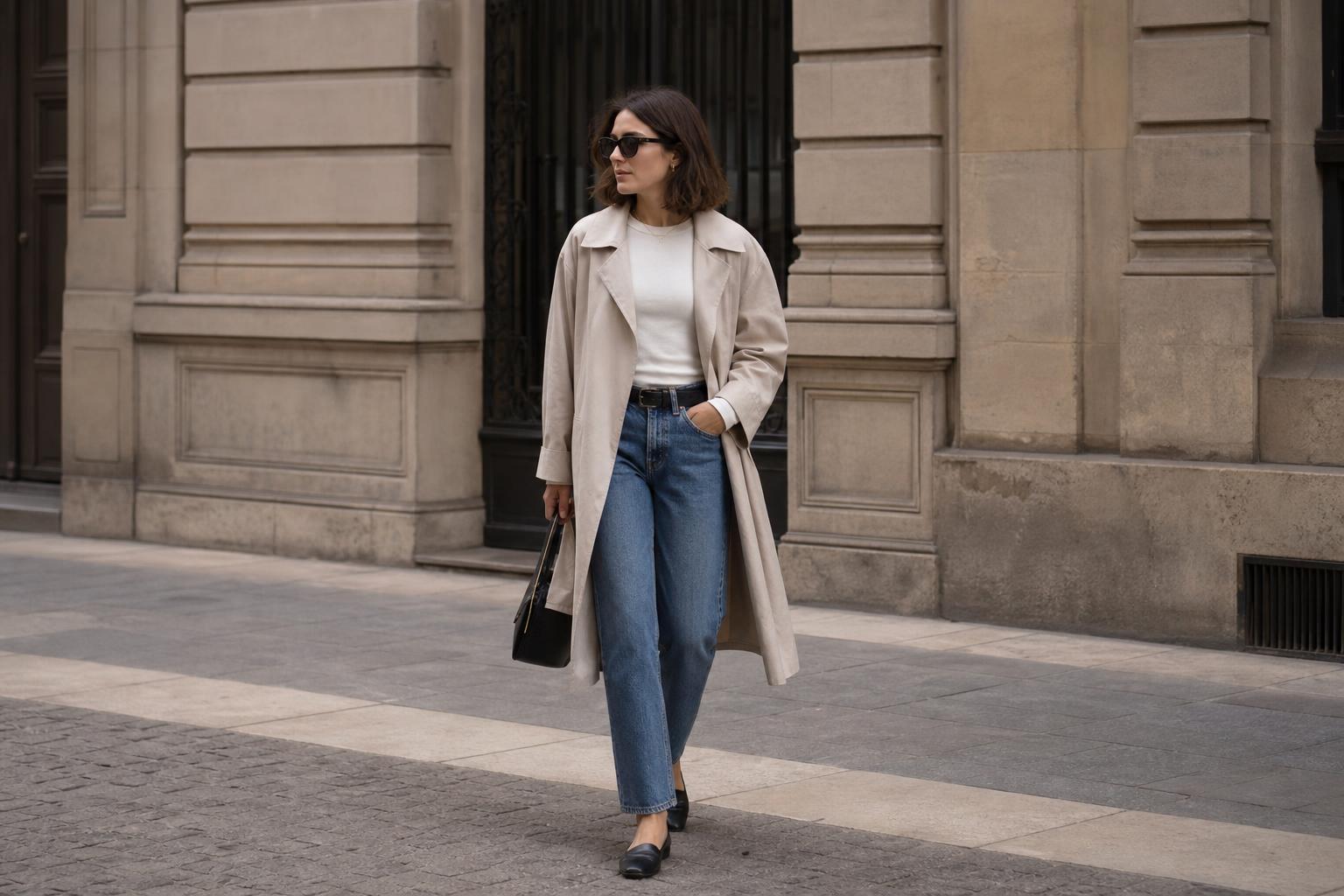
    Woman in layered casual spring outfits walking by a European cafe after rain, trench coat and denim in soft daylight
    A woman strolls past a European café in polished layers, capturing the ease of casual spring outfits after a light rain.

    This guide approaches casual spring outfits as a practical styling problem with elegant answers. Rather than chasing novelty, it focuses on how to dress with intention: how to layer without bulk, how to use texture and silhouette to create ease, and how to make everyday pieces feel refined in the spirit of Paris, Milan, and Copenhagen style.

    Why spring dressing feels deceptively complicated

    Spring sits in a transitional space, which is why getting dressed can feel inconsistent from one day to the next. Temperatures shift. Indoor and outdoor settings rarely match. A walkable city day may require movement, while a work-from-café schedule asks for something more composed. Even a simple casual look has to account for weather, practicality, and visual lightness.

    There is also a styling tension unique to this season: many wardrobes are still visually anchored in winter. Dark knits, sturdy boots, and substantial coats can overpower the softer, lighter rhythm that makes spring dressing feel effortless. On the other hand, moving too quickly into airy pieces can create outfits that look disconnected from the actual climate. The result is often a look that is either too heavy, too bare, or too tentative.

    The most successful casual spring outfits resolve this by treating the season as one of gradual adjustment. Instead of replacing your wardrobe, you recalibrate it. A tailored layer replaces a thick coat. Relaxed denim looks fresher with a lighter shoe. Soft neutral tones, clean lines, and breathable textures make an outfit feel seasonally right even when the weather remains unsettled.

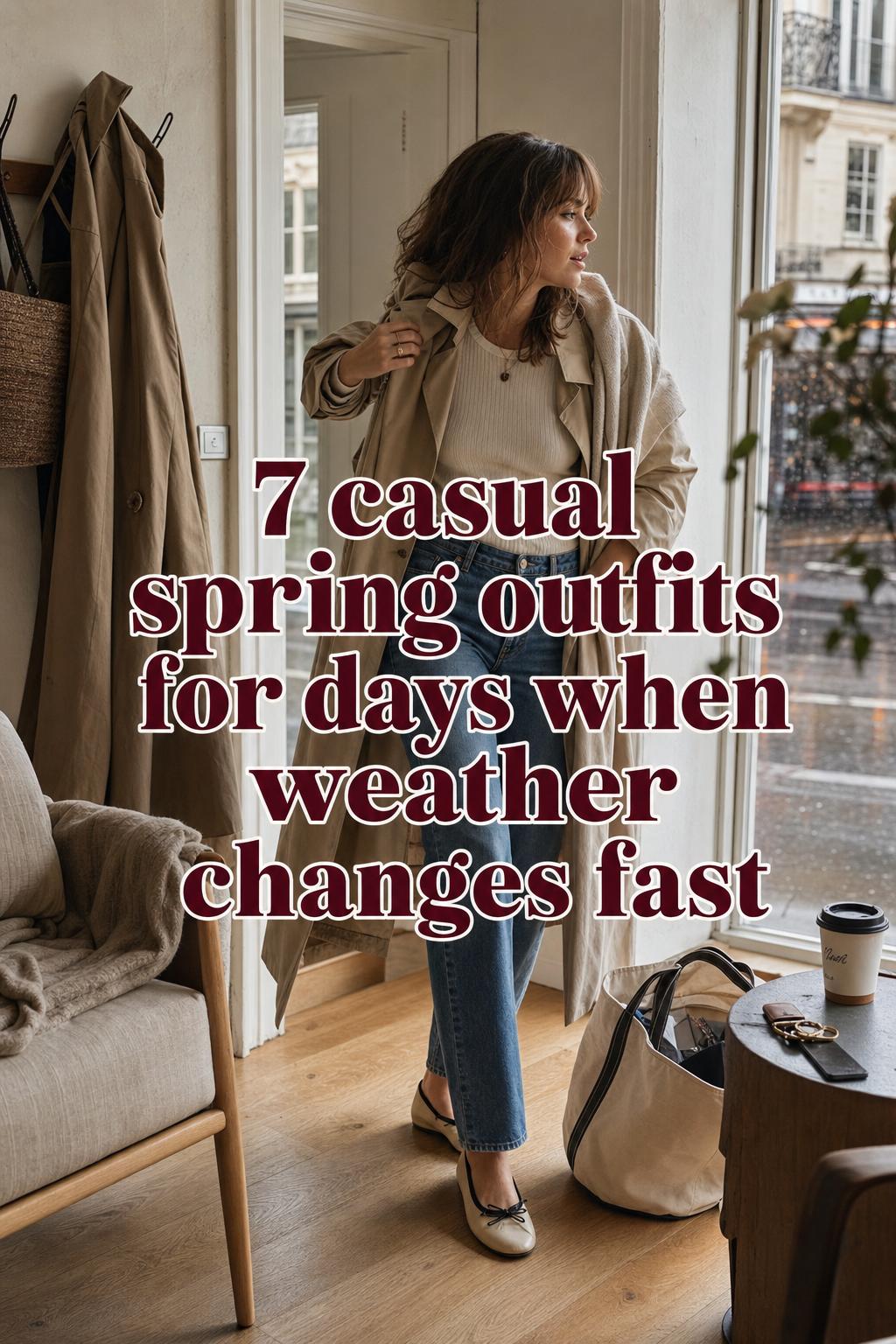
    Casual spring outfits in a warm European apartment entryway, woman adjusting trench coat by window on a moody spring morning
    A woman adjusts her light trench coat in a softly lit European apartment entryway, ready for a changeable spring day.

    The dressing principles that solve the problem

    Think in layers, not in single outfits

    A spring outfit should be able to expand or contract as the day changes. This is where light layering becomes essential. A structured blazer layered over a simple top, a lightweight knit draped over the shoulders, or a trench-style outer layer can shift the look without making it feel bulky. The point is not only warmth. Layers create adaptability and visual depth.

    Use fabric to create seasonal ease

    Fabric often determines whether an outfit feels correct for spring. Pieces with some movement and breathability naturally read as lighter and more relaxed. Crisp cotton, soft jersey, fine knits, and other breathable materials help casual dressing feel intentional rather than improvised. Even familiar wardrobe basics can look transformed when the texture feels clean and seasonally appropriate.

    Balance structure with relaxation

    Casual does not mean shapeless. One reason European street style often looks so composed is that relaxed pieces are usually anchored by something tailored. Loose denim, for example, becomes more polished with a blazer or a sharply cut jacket. A fluid skirt feels grounded with a streamlined knit. The contrast between ease and structure is what gives spring outfits their sophistication.

    Keep the palette coherent

    Color balance matters more in spring because heavier visual contrasts can make an outfit feel stuck in the previous season. Soft neutrals, denim blues, off-whites, muted earth tones, and restrained accents tend to create a refined everyday look. This does not require a monochrome wardrobe. It simply means the pieces should speak to one another rather than compete.

    Choose shoes for movement and continuity

    Footwear often determines whether a casual spring outfit truly works in real life. The wrong shoe can make the entire look feel seasonally confused. Shoes should support walking, transitional weather, and the overall silhouette. Clean, low-profile options usually help create continuity between practicality and style.

    A Paris-to-Copenhagen approach to casual spring style

    There is a useful lesson in the way style is often observed across Paris, Milan, and Copenhagen. Although each city has its own language of dress, they share an understanding that everyday outfits should look composed without appearing overworked. A tailored silhouette contrasted with relaxed textures, understated layering, and thoughtful color balance creates that effect.

    For spring, this translates beautifully into everyday dressing. From a Parisian perspective, a simple outfit gains elegance from restraint: a clean trench, straight-leg denim, a knit, and a practical flat. Milan offers a sharper sense of polish, where even casual separates benefit from clearer lines and stronger proportions. Copenhagen contributes a more relaxed, modern ease, often through looser shapes and unfussy layering. The practical value for the reader is simple: combine one polished element, one relaxed element, and one functional layer.

    Casual spring outfits for a stylish everyday look in soft pastel layers
    Soft pastel layers and light textures create an effortlessly polished casual spring look.

    Outfit solution: the lightweight layered city look

    A lightweight layered city look is one of the most reliable answers for unpredictable spring days. Start with a simple base such as a fitted or softly cut top, add straight or relaxed denim, and finish with a tailored outer layer that can stay on indoors without feeling excessive. The silhouette should feel clean rather than bulky, with enough structure to make the outfit look deliberate.

    This works because each element serves a purpose. The base layer keeps the outfit uncomplicated. Denim gives ease and familiarity. The outer layer introduces polish and solves the temperature problem. A structured blazer layered over a simple top creates a refined line through the shoulders, while the denim keeps the mood casual. The result is an outfit that can move from commute to coffee to evening plans with very little adjustment.

    If the weather shifts, the look still holds. You can remove the jacket and retain a complete outfit rather than a half-finished one. This is the quiet intelligence behind the best casual spring outfits: each layer is both functional and visually coherent.

    Tips for making it feel modern

    • Keep the underlayer relatively simple so the top half does not feel crowded.
    • Choose a jacket with enough shape to define the outfit, but not so much stiffness that it loses everyday ease.
    • Let one element stay relaxed, such as the denim or the hemline, so the final look remains casual rather than corporate.

    Outfit solution: smart casual balance for everyday plans

    There are days when the challenge is not weather alone but social ambiguity. You may be meeting friends, stepping into an informal office, then heading to dinner. In those moments, the strongest approach is smart casual balance: elevated basics composed with enough tailoring to look intentional, but never rigid.

    A fine knit paired with relaxed trousers or clean denim creates an ideal base. Add a polished layer, whether that is a blazer, a lightweight jacket, or another streamlined piece with visible structure. The key is proportion. If the trousers are looser, the top should feel slightly neater. If the upper half is more relaxed, the trousers should provide definition. This keeps the silhouette modern and prevents the outfit from appearing either overly dressed or too informal.

    The strength of this formula is versatility. It respects real life. You can sit comfortably, walk easily, and still look considered in photographs, meetings, or spontaneous social settings. That blend of practicality and subtle refinement is what makes it such a useful spring solution.

    Woman in refined street style walking by a corner café in a European city, showcasing casual spring outfits in soft layers
    A poised street-style moment captures a woman strolling past a corner café in soft layers made for chilly spring mornings.

    Outfit solution: a comfortable weekend silhouette that still looks polished

    Weekend dressing often goes wrong when comfort becomes the only priority. The outfit may feel easy, but visually it can look flat or unfinished. A better solution is to build around comfort while preserving shape. Start with relaxed separates, then add one element that sharpens the composition.

    For example, a soft knit or simple top with easy denim can look entirely different when paired with a clean outer layer or a thoughtfully chosen shoe. The outfit remains casual, but the lines feel controlled. Clean lines that create a polished everyday look are especially valuable on weekends because they help simple basics appear intentional rather than purely functional.

    This is also where texture can do quiet work. A smooth knit against denim, or a tailored surface contrasted with softer fabrics, gives the look more depth. You do not need many pieces. You need the right relationship between them.

    Outfit solution: the soft neutral look for brighter spring days

    On milder days, a softer palette can immediately make your outfit feel attuned to the season. Soft neutral tones balanced with denim, light knits, or simple separates create a fresh visual rhythm without requiring anything dramatic. This approach is especially effective if your winter wardrobe leaned dark and heavy.

    The reason it works is partly optical. Lighter tones reflect the season’s atmosphere and make even familiar shapes appear fresher. But it also works structurally: a restrained palette allows silhouette, fabric, and proportion to become more visible. A simple combination can therefore look elevated because the eye notices the composition rather than a loud color story.

    This kind of outfit is ideal for daytime plans, casual lunches, gallery visits, or city walking when you want to look relaxed yet refined. It feels particularly aligned with the elegant understatement often associated with Paris and Milan, where subtlety tends to read as confidence.

    Outfit solution: denim done with intention

    Denim sits at the center of many casual spring outfits, but it only looks elevated when the styling around it is deliberate. Denim is most effective in spring when it is used as an anchor rather than the entire statement. Pair it with a sharper top layer, a fine knit, or a clean minimal base so the overall look has shape.

    A common mistake is to combine denim with equally heavy or overly casual companions, which can make the outfit feel visually dense. Spring asks denim to work differently. It should provide grounded ease while the rest of the outfit introduces lightness. That may come from a more refined neckline, a softer fabric, or a cleaner silhouette through the outer layer.

    When styled well, denim becomes the practical constant in a changing season. It supports movement, handles transitional weather, and pairs naturally with many of the pieces that make spring dressing work.

    How to keep denim spring-appropriate

    • Pair it with lighter textures so the outfit does not feel winter-heavy.
    • Use one tailored piece to sharpen the silhouette.
    • Keep shoes clean and seasonally light to avoid dragging the look back into colder months.

    Outfit solution: relaxed tailoring for in-between temperatures

    Some of the best casual spring outfits rely less on obvious seasonal cues and more on precise tailoring used in a relaxed way. Relaxed tailoring means garments that hold shape without feeling strict. Think of a jacket with definition but not stiffness, trousers with movement but not slouch, or a knit that skims rather than clings. This balance is especially useful on days that begin cool and gradually warm.

    The outfit logic is straightforward. Structured elements provide confidence and visual coherence. Softer textures prevent the look from feeling formal. Together, they create a wardrobe language that works across many spring contexts: office-adjacent dressing, travel days, lunch meetings, or city weekends.

    This is one of the most transferable style lessons from European fashion culture. Looking polished does not require rigidity. It requires control of line, proportion, and contrast.

    What stylists quietly understand about spring proportions

    The difference between an ordinary casual outfit and a refined one is often proportion. In spring, layers are lighter, so the eye notices imbalance more quickly. An oversized top with oversized trousers can feel heavy unless there is a visible point of structure. A fitted top with a narrow bottom can look too stark if the fabrics are thin and the weather remains cool. Spring dressing rewards nuance.

    A good working rule is to let one area remain relaxed while another stays defined. A soft top can work beautifully with cleaner trousers. Relaxed denim benefits from a more tailored shoulder. A looser layer looks more intentional when the underlayer is controlled. This creates movement without visual disorder.

    Readers often notice that certain outfits simply look more expensive or editorial even when the pieces are basic. Usually, proportion is the reason. The garments are interacting well. The hem lengths, shoulder line, and volume distribution create harmony, which is why the outfit feels polished without appearing forced.

    Footwear, accessories, and the practical details that matter

    An outfit may look balanced in theory, but everyday success depends on details. Spring often involves walking, shifting surfaces, light rain, indoor heating, and schedules that stretch from morning to evening. Accessories and shoes therefore need to support the outfit rather than interrupt it.

    • Choose footwear that handles movement comfortably while maintaining a clean silhouette.
    • Use accessories to add clarity, not clutter; in spring, restraint often looks more refined.
    • Keep outer layers light enough to carry or drape when the temperature rises.
    • Favor pieces that can transition across settings without requiring a full restyle.

    In practical terms, this means avoiding shoes that are too heavy for the outfit’s visual weight, or accessories that make a casual look feel overly styled. The best additions are the ones that quietly improve function and finish. A simple bag, a neat belt, or a lightweight layer can be more effective than multiple decorative elements.

    Small adjustments that make casual spring outfits look more expensive

    Refinement in casual dressing often comes from editing rather than adding. A sleeve pushed with intention, a hemline that sits correctly with the shoe, or a more coherent color relationship can transform a simple outfit. These are not dramatic changes, but they create the impression of certainty.

    One useful habit is to look at the outfit in terms of line. Does the outer layer create shape, or does it collapse the silhouette? Do the fabrics fight each other, or do they create contrast in a controlled way? Is there one element making the look feel too seasonal in the wrong direction, such as an overly heavy shoe or an overly summery top? This kind of quick analysis leads to better decisions than simply adding more pieces.

    Another adjustment is to reduce visual noise. Casual spring outfits tend to feel most elegant when there is room for the eye to rest. Clean layering, measured texture, and a restrained palette give basics a more elevated presence.

    Common mistakes that make spring outfits feel off

    Dressing only for the forecast headline

    A mild temperature reading can be misleading. Wind, shade, and indoor cooling often change how the outfit feels in practice. Dressing only for the warmest part of the day usually results in discomfort and hurried styling fixes. A better approach is to build in one adaptable layer from the beginning.

    Keeping winter visual weight in the outfit

    Even if temperatures are still cool, an outfit can feel heavy because of color, fabric, and silhouette rather than warmth alone. Dense textures, dark palettes, and bulky shapes may be practical, but they often look out of sync with the season. Lightening the palette or refining the shape usually solves the issue without sacrificing comfort.
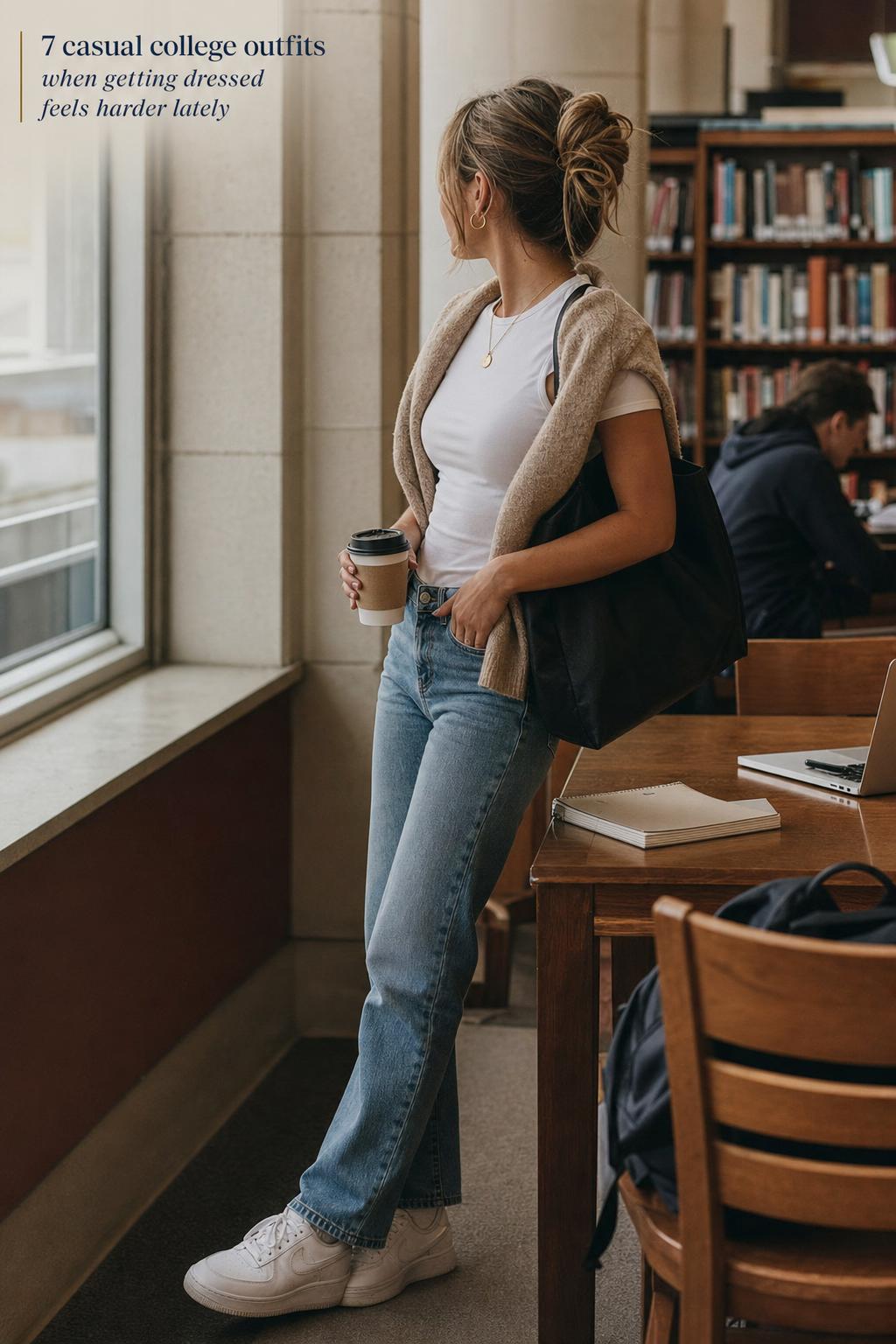
    Confusing casual with unstructured

    Relaxed dressing works best when it still has form. Without some tailored structure, the outfit can lose direction. This is why a simple blazer, neat jacket, or well-cut layer is so effective in spring: it keeps the look casual while preserving a polished outline.

    Letting shoes disrupt the silhouette

    Footwear can either complete the outfit or make it feel disconnected. Shoes that are too heavy, too formal, or too summery for the rest of the look often create imbalance. The best choice is usually the one that supports the line of the outfit and suits the day’s movement.

    A realistic formula for building casual spring outfits from your own wardrobe

    If you want a reliable way to get dressed without overthinking, use a three-part formula: a simple base, a shaping layer, and a practical finish. The base may be a top with denim or easy trousers. The shaping layer is the piece that adds structure, such as a tailored jacket or another lightweight layer with clear lines. The practical finish is the shoe and accessory choice that makes the outfit wearable for the day you actually have.

    This formula works because it keeps style decisions grounded in function. It also allows variation. A cleaner base feels more polished. A looser base feels more relaxed. A sharper layer introduces city refinement; a softer one feels more weekend-appropriate. Once you understand the logic, you can adapt the same structure to many spring scenarios without looking repetitive.

    That is ultimately the goal. Great spring style does not come from constant reinvention. It comes from learning how pieces interact: silhouette against silhouette, texture against texture, practicality against elegance. When those relationships are considered, even the most casual outfit feels composed.

    Conclusion

    The secret to successful casual spring outfits is not owning a completely different wardrobe for the season. It is understanding transition. Light layers, breathable textures, balanced proportions, and practical footwear create the kind of flexibility that spring dressing demands. Add one tailored element, keep the palette coherent, and let comfort support the look rather than dominate it.

    Once you begin dressing with those principles in mind, spring becomes far less unpredictable. You stop asking whether an outfit is casual enough or polished enough and start building looks that can do both. That is where everyday style becomes more refined, more wearable, and far more useful.

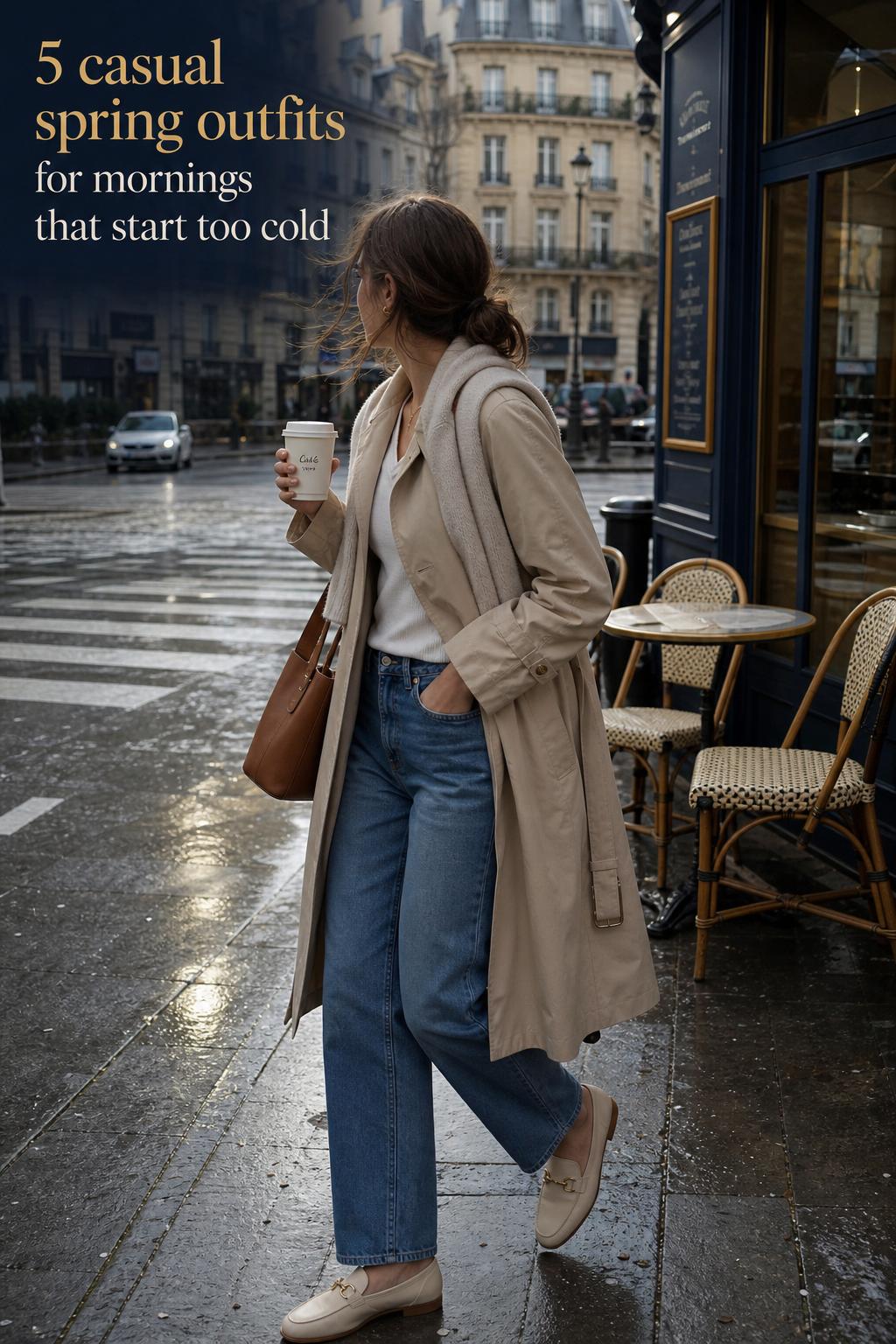
    Casual spring outfits street style in Paris after rain, woman in trench coat and jeans walking past a café with text overlay
    A stylish woman in a beige trench and denim walks past a European café after rain, captured in a moody editorial frame.

    FAQ

    How do I make casual spring outfits look polished without feeling overdressed?

    The easiest way is to combine one relaxed piece with one structured piece. Denim or easy trousers paired with a tailored jacket, refined knit, or clean outer layer creates balance. The outfit stays casual, but the silhouette looks intentional.

    What should I wear on a spring day when the temperature changes a lot?

    Build the outfit in layers that can work together or separately. A simple base with a lightweight shaping layer is usually the most practical solution. This allows you to adapt to cooler mornings and warmer afternoons without losing the coherence of the look.

    Which colors work best for casual spring outfits?

    Soft neutrals, denim blues, off-whites, and muted earth tones tend to work especially well because they feel lighter and more seasonal than heavy winter shades. The goal is not to avoid contrast entirely, but to keep the palette balanced and visually calm.

    Can I still wear denim regularly in spring?

    Yes, denim is one of the most useful spring anchors. The key is to style it with lighter textures and a cleaner silhouette so it feels appropriate for the season. A sharper top layer or softer knit usually helps denim look more refined.

    How can I dress casually for spring without looking too simple?

    Focus on composition rather than adding more items. Texture contrast, a well-defined shoulder line, balanced proportions, and a coherent palette can make very basic pieces look elevated. Simple outfits often feel strongest when the styling is edited and precise.

    What is the biggest mistake people make with spring outfits?

    One of the most common mistakes is dressing too quickly for an idealized version of spring. Outfits then feel either impractical or visually disconnected from the weather. Transitional dressing works best when you keep some coverage, but lighten the textures and overall weight.

    How do I choose the right shoes for a casual spring look?

    Choose shoes that support movement and match the visual weight of the outfit. In spring, footwear should usually feel cleaner and lighter than winter options, but still practical enough for walking and changing weather. The best shoe is the one that finishes the silhouette without interrupting it.

    How can I adapt European style influences like Paris, Milan, and Copenhagen to everyday outfits?

    Take the underlying principles rather than copying a costume version of the look. Paris offers restraint, Milan brings polish, and Copenhagen adds relaxed modernity. In practice, that means combining elevated basics, clear proportions, and functional layering in a way that suits your own routine.

  • Cute Casual Outfits That Balance Comfort and Polish

    Cute Casual Outfits That Balance Comfort and Polish

    Some of the most useful cute casual outfits sit in the space between ease and intention. That is precisely why readers so often blur the lines between casual outfits and casual-chic outfits: both rely on wearable basics, both favor comfort, and both can begin with the same wardrobe staples—a white tee, denim, sneakers, a knit, a jacket. Yet the final impression is not quite the same. One feels relaxed and straightforward; the other feels refined, slightly more composed, and often more deliberate in silhouette and finish.

    In modern American wardrobes, this distinction matters. Daily dressing now moves across home, commute, campus, coffee meetings, flights, city walks, and casual dinners without much time for a complete wardrobe change. That is why outlets such as Who What Wear, Marie Claire, Cosmopolitan, Yahoo Life, College Fashion, and Urban Outfitters repeatedly return to the same core formulas: jeans and tees, midi dresses with sneakers, knit sets, denim layers, loafers, and elevated basics. The real style question is not whether these pieces work, but how they are styled.

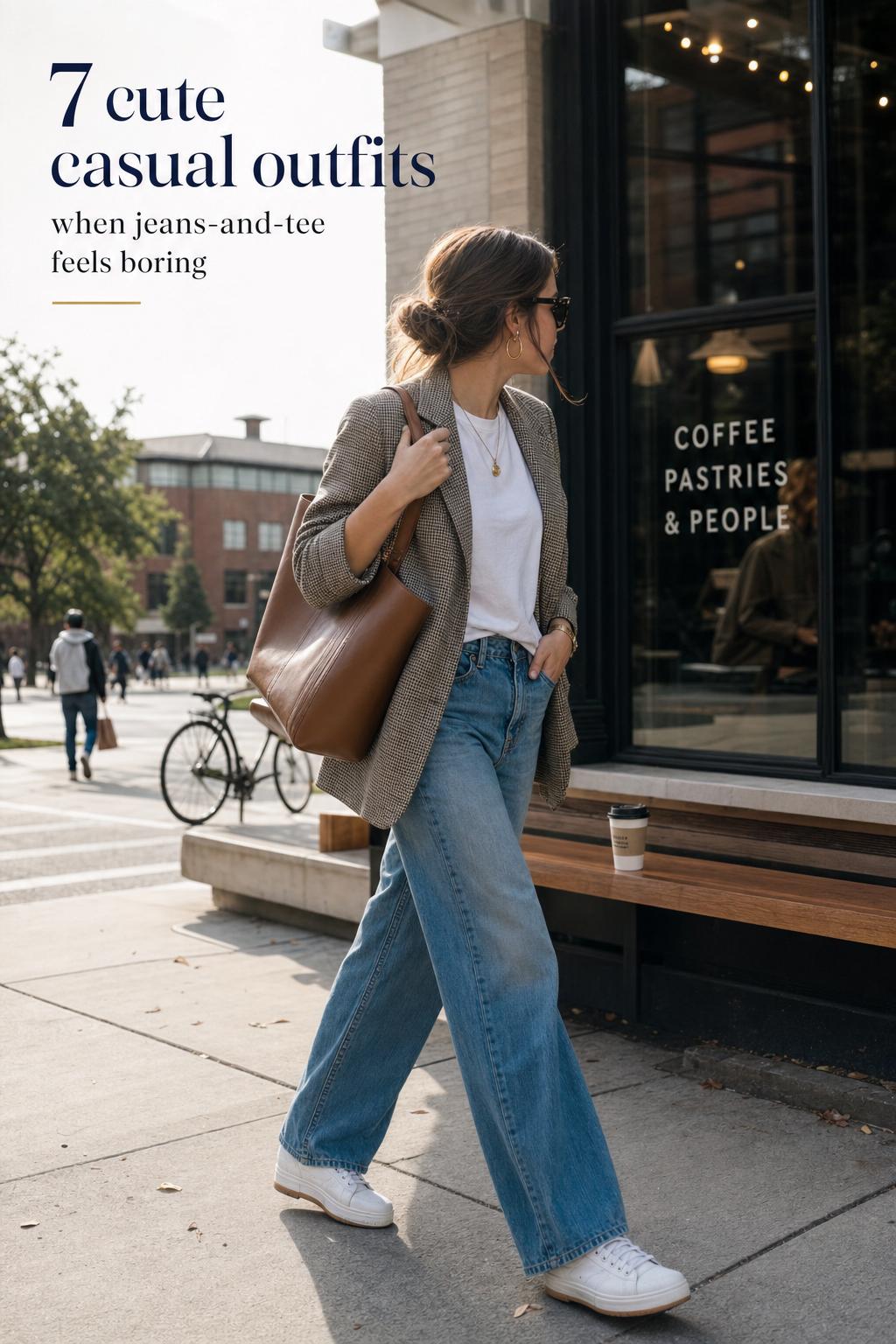
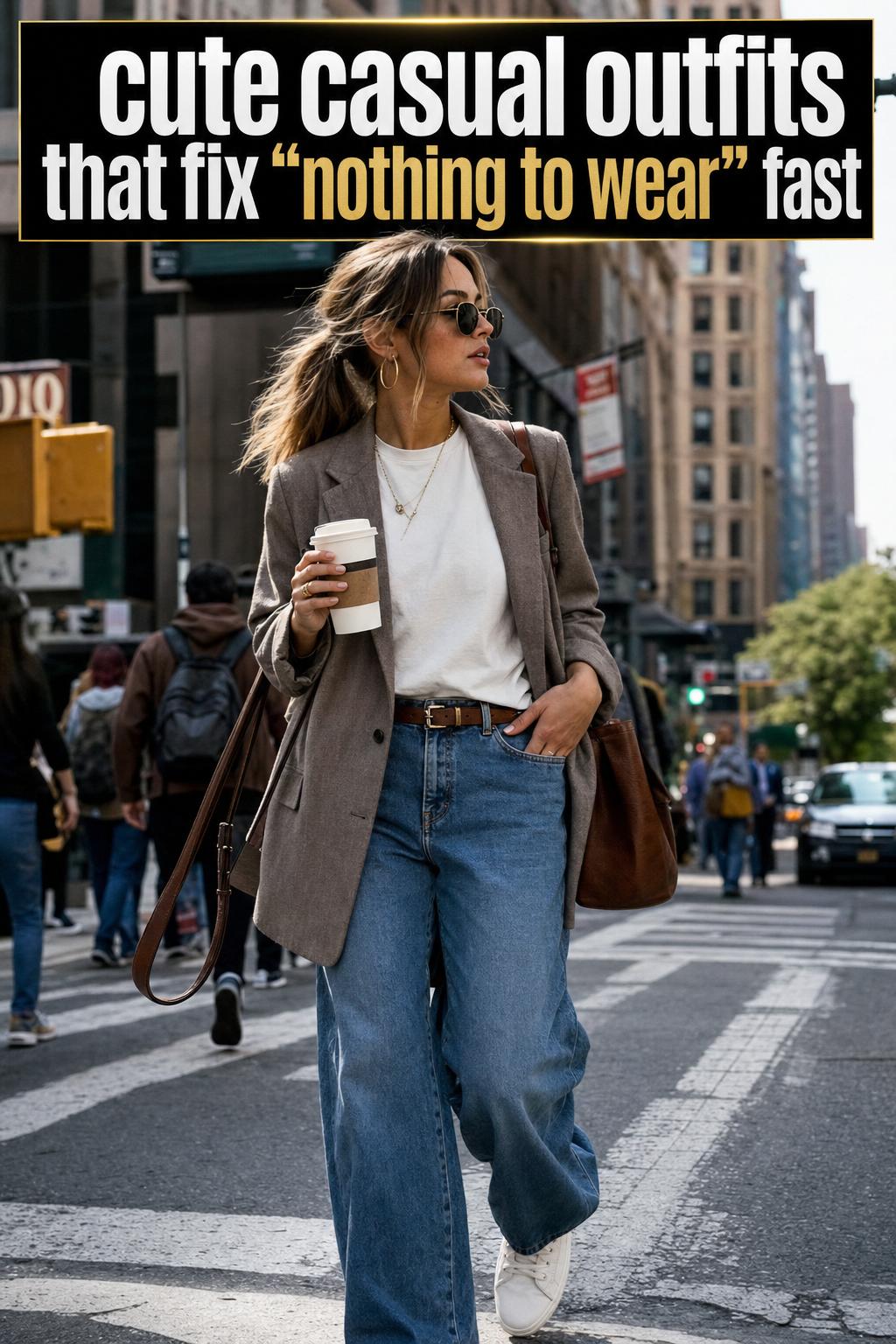
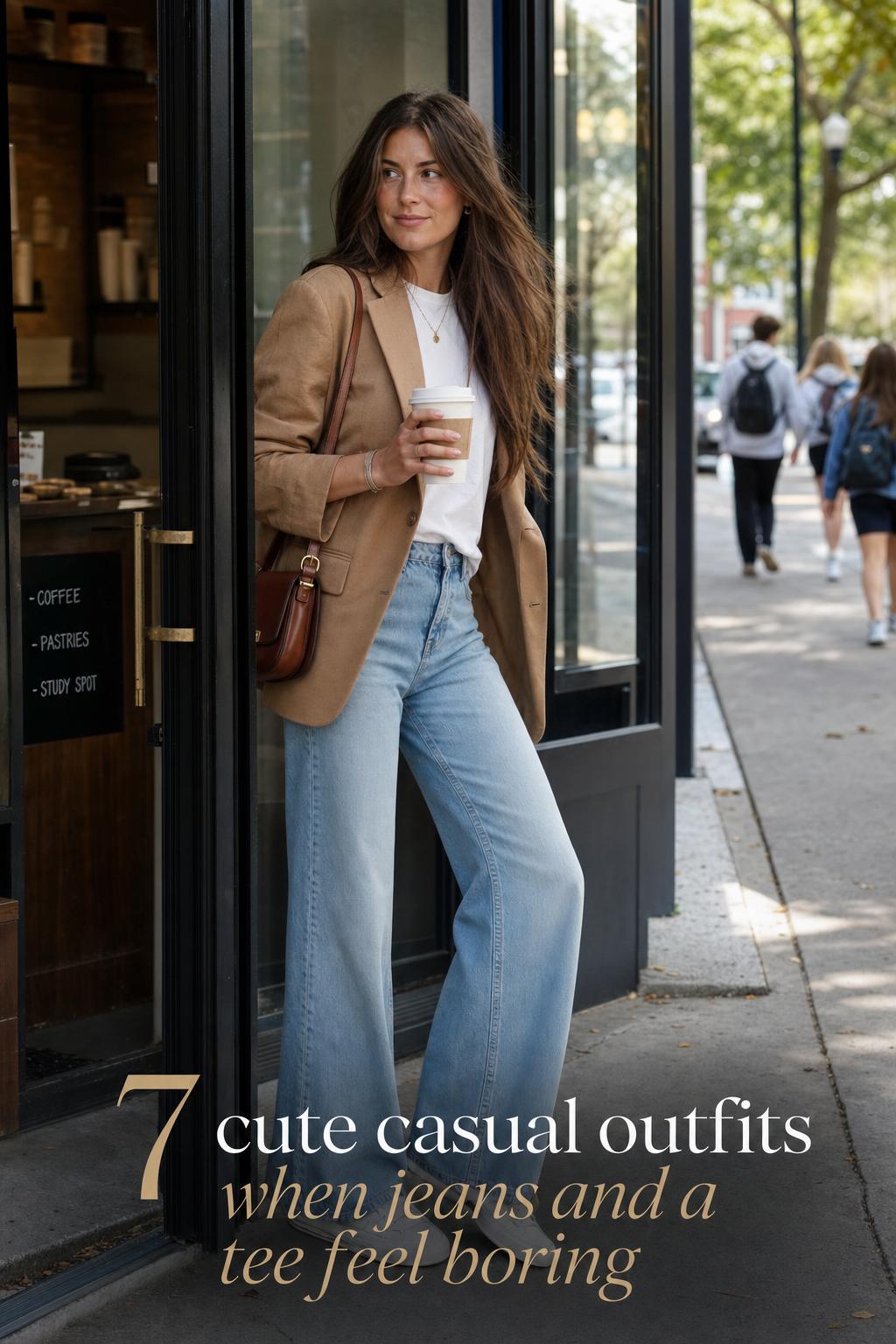
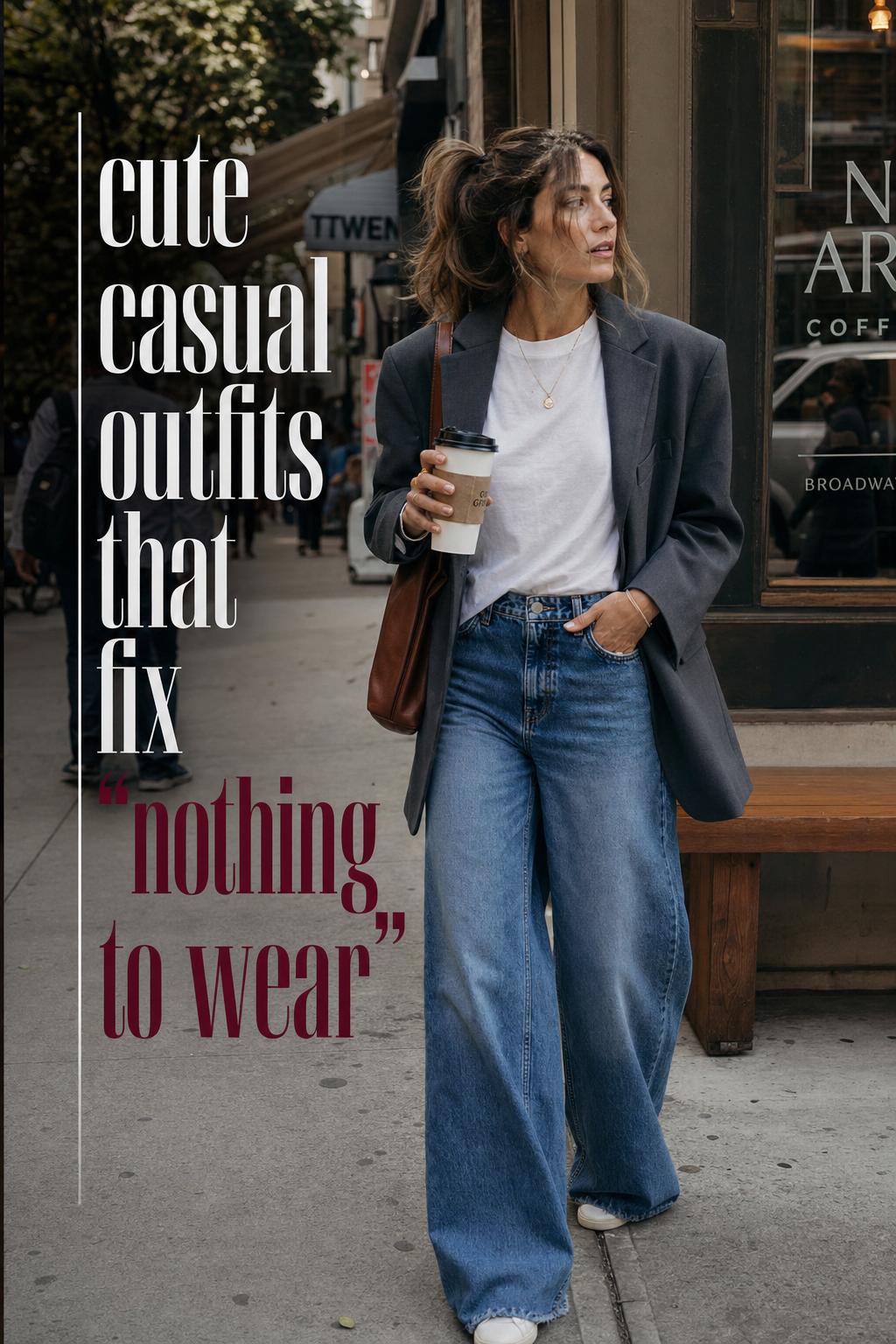
    Cute casual outfits street style: woman in white tee, wide-leg jeans and oversized blazer outside a coffee shop
    A stylish woman steps past a campus coffee shop in a white tee, wide-leg jeans, and an oversized blazer for effortless chic.

    This comparison breaks down how cute casual outfits differ from casual-chic dressing, where they overlap, and how to identify each approach in real life. Along the way, it also clarifies how summer, fall, winter, and spring styling shifts the balance, how city style from New York, Los Angeles, and Chicago influences outfit logic, and how a capsule wardrobe of basics makes both aesthetics far easier to build.

    The shared wardrobe language behind both styles

    Before separating these aesthetics, it helps to understand why they are so often grouped together. Cute casual outfits and casual-chic outfits are built from the same family of essentials: T-shirts, jeans, lightweight knits, hoodies, sneakers, loafers, denim jackets, neutral coats, midi skirts, casual dresses, bags, sunglasses, and simple jewelry. These are the foundational pieces that appear again and again in everyday fashion coverage because they are versatile, easy to repeat, and adaptable across seasons.

    Both styles also lean on the logic of the capsule wardrobe. Instead of treating every outfit as a trend statement, they use basics as the base and then shift proportion, texture, and accessories to create a different mood. A tee with wide-leg jeans and sneakers can read entirely casual. The same tee with a midi skirt, loafers, and an oversized blazer begins to move toward casual-chic. The ingredients overlap; the composition changes.

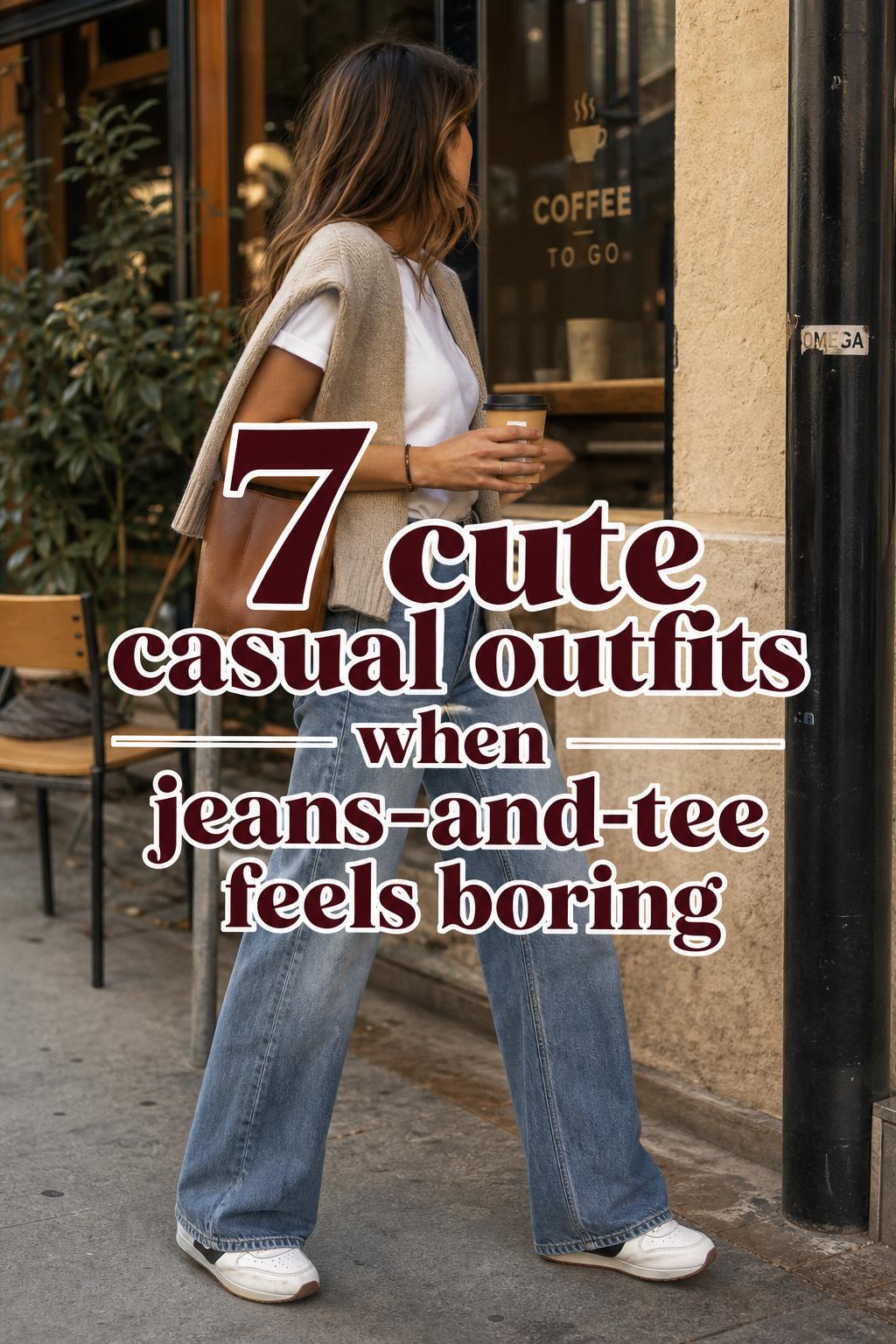
    Cute casual outfits with jeans and tee, blazer layering, sneakers, and coffee cup in warm golden-hour street style photo
    A warm golden-hour street-style moment shows effortless layering that elevates a simple jeans-and-tee look.

    Style overview: cute casual outfits

    Cute casual outfits are the more relaxed side of the comparison. Their defining characteristic is immediacy: they look easy to put on, comfortable to wear, and natural in everyday settings. The silhouette is usually uncomplicated—straight or wide-leg jeans with a T-shirt, a hoodie with denim, a simple maxi dress with sneakers, denim shorts with a white tee, or a soft knit set styled with minimal accessories.

    The color palette tends to stay approachable. Neutrals dominate, but softer seasonal shifts are common: white, denim blue, beige, gray, and black in the cooler months; pastels, florals, and brighter summer notes in spring and summer. Fabric choices are practical and familiar rather than formal. Denim, cotton tees, lightweight knits, soft loungewear textures, and easy dresses create a wardrobe that feels lived-in rather than structured.

    The overall mood is effortless. In fashion media, this often appears through street style references, influencer imagery, and “it girl” shorthand—the sort of look associated with moving through a normal day without seeming overworked. Even when an oversized blazer or a statement accessory enters the outfit, the foundation remains simple.

    Style overview: casual-chic outfits

    Casual-chic outfits begin in the same wardrobe but finish with more polish. Their defining characteristic is elevation. The pieces themselves may still be familiar—sweaters, midi skirts, trousers, sneakers, loafers, leather accents, trench-style layers, neutral coats—but they are arranged with greater attention to structure, line, and texture. The look remains wearable and practical, yet it projects a slightly sharper point of view.

    Silhouettes in casual-chic dressing often feel more composed. A sweater with a midi skirt creates cleaner vertical movement than a hoodie with denim. A knit set under a trench has a more considered finish than a lounge set worn alone. Leather details, tonal dressing, and tailored outerwear shift the mood from simply casual to refined. This is the space Marie Claire often captures with fall layering and elevated basics.
    The color palette also tends to look more restrained. Neutrals, tonal combinations, and controlled contrast are common. Rather than relying on playful ease alone, casual-chic style uses balance: soft textures against tailored lines, relaxed fabrics against polished shoes, understated accessories against strong proportions. The result is still accessible, but less spontaneous in appearance.

    Cute casual outfits styled in a relaxed everyday street look, photographed in natural light.
    A relaxed, natural-light street photo showcasing cute casual outfits styled for effortless everyday wear.

    Where the divide becomes visible

    Silhouette and structure

    The clearest difference lies in silhouette. Cute casual outfits usually prioritize comfort first, then shape. Think everyday jeans and tees, denim shorts with sneakers, or a T-shirt dress styled with minimal layering. Casual-chic reverses that order slightly. Comfort remains important, but shape is considered earlier: a defined coat line, a smoother knit, a midi skirt that lengthens the frame, or loafers that sharpen a simple base.

    Color palette and contrast

    Cute casual dressing allows more visible softness and spontaneity—summer whites, floral prints, playful denim, and fresh seasonal color. Casual-chic often looks more edited. White-on-white casuals, tonal neutrals, black with cream, or denim paired with a polished knit create a quieter visual field. The effect is not necessarily dressier in a formal sense, but it is visually more controlled.

    Level of formality

    Neither style is formal, but they perform differently. Cute casual outfits are ideal for errands, campus, daytime social plans, weekend movement, and situations where comfort needs to remain visible. Casual-chic works better when the day includes a lunch meeting, a city dinner, travel that requires polish, or a workplace with relaxed but presentable expectations.

    Styling philosophy

    Cute casual style says, “start with basics and keep them easy.” Casual-chic says, “start with basics and refine the finish.” That distinction sounds small, but it changes every styling decision, from whether sneakers should look sporty or clean-lined, to whether a jacket should feel thrown on or integrated into the silhouette.

    Typical wardrobe pieces

    • Cute casual outfits often center on T-shirts, jeans, hoodies, denim jackets, denim shorts, maxi dresses, matching knit sets, sneakers, and playful accessories.
    • Casual-chic outfits more often emphasize sweaters, midi skirts, leather accents, loafers, ankle boots, neutral coats, oversized blazers, and tonal knitwear.
    • Both styles use basics, but casual-chic leans more heavily on pieces that create clean lines and subtle structure.
    Cute casual outfits street style: woman in white tee, light-wash jeans and tan blazer leaving a campus coffee shop
    A stylish woman steps out of a sunlit campus coffee shop in elevated basics styled as cute casual outfits.

    How they read in real life: a visual style breakdown

    In everyday wear, cute casual outfits tend to feel more open and immediate. Layering is lighter, proportions are often looser, and the outfit usually looks ready for movement. A white tee tucked casually into wide-leg jeans with sneakers reads as effortless because there is little visual tension in the look. The lines are familiar, the textures are soft, and the accessories support rather than define the outfit.

    Casual-chic outfits, by contrast, often rely on contrast. A structured blazer layered over a soft knit set creates tension between polish and ease. A sweater with a midi skirt works because the softness of the knit is balanced by the length and fluidity of the skirt. A neutral coat over denim and loafers introduces a tailored frame around otherwise simple pieces.

    Footwear is one of the quickest visual clues. Sneakers anchor both styles, but not in the same way. In cute casual outfits, they often support the relaxed mood of the entire look, especially with dresses, denim shorts, or jeans and tees. In casual-chic dressing, loafers and ankle boots appear more often because they tighten the silhouette. Even when sneakers are used, they tend to function as a clean base rather than a sporty focal point.

    Accessories follow the same pattern. Cute casual styling might use sunglasses, a simple bag, or understated jewelry to finish a look without changing its mood. Casual-chic styling uses accessories more strategically. A structured bag, sharper sunglasses, or a slightly more deliberate jewelry choice can shift basics into a more polished register without making the outfit feel dressed up.

    The outfit formulas both styles borrow from—and interpret differently

    T-shirt, jeans, and sneakers

    This is the most familiar foundation in the entire category. In cute casual outfits, the formula is straightforward: a relaxed or fitted T-shirt, everyday denim, and sneakers, perhaps with a denim jacket or hoodie if the weather changes. It is the kind of look often seen in quick street style references and “nothing to wear” days because it always functions.

    In a casual-chic interpretation, the same formula becomes more precise. The denim may be wide-leg or cleaner in line, the T-shirt more neatly fitted or intentionally tucked, and the top layer more likely to be an oversized blazer or neutral coat than a hoodie. The sneakers remain, but the outfit now has visual architecture.

    Midi dress with sneakers

    For cute casual summer dressing, this formula is especially effective. A maxi or midi dress with sneakers keeps the silhouette easy while maintaining a feminine softness. The charm comes from not overcomplicating the look. This is why it appears so often in summer outfit roundups from magazines and lifestyle outlets.

    Casual-chic takes the same dress and introduces a more defined layer or accessory. A light jacket, a more sculpted bag, or a tonal palette shifts the outfit away from simple ease and toward a polished everyday look. The footwear remains practical, but the dress becomes part of a fuller composition rather than a one-step solution.

    Knit set with outerwear

    Matching knit sets can belong to either camp, which makes them useful for comparison. In cute casual styling, they lean soft and comfortable, especially when paired with sneakers and minimal accessories. In casual-chic dressing, they become more editorial when layered under a trench-style coat or neutral outer layer. Texture does the work here: the softness of knitwear looks more sophisticated when framed by sharper outerwear.

    Denim jacket, tee, and skirt

    This formula highlights styling mood. In cute casual outfits, the skirt may feel playful or floral, the jacket relaxed, the footwear uncomplicated. In a casual-chic version, the skirt is often a midi length, the proportions cleaner, and the accessories quieter. The difference is not the presence of denim, but how much the outfit depends on spontaneity versus control.

    White-on-white casuals

    White-on-white outfits appear simple, yet they reveal styling skill quickly. In a cute casual version, the look feels fresh and easy, often anchored by sneakers and soft layering. In casual-chic dressing, white-on-white becomes more architectural. The appeal comes from clean lines, tonal consistency, and carefully balanced textures. It is one of the fastest ways to make basics appear more refined.

    Season changes everything

    One reason casual and casual-chic are constantly discussed together is that both need to perform across the entire year. Summer, fall, winter, and spring do not simply change fabrics; they also change styling logic.

    Summer: lightness and sneaker-friendly simplicity

    Summer favors the cute casual side because the season naturally rewards simplicity. White tees, denim shorts, maxi dresses, and matching sets feel appropriate when layering must remain light. Sneakers with dresses, in particular, capture the relaxed practicality that defines many warm-weather outfit ideas. Casual-chic still works in summer, but it usually requires more discipline in color palette and cleaner accessories so the outfit feels polished without becoming heavy.

    Fall: where casual-chic becomes more visible

    Fall is the season in which the divide sharpens. Sweaters, midi skirts, leather accents, jackets, and textured knits naturally support a more elevated silhouette. Cute casual fall outfits still rely on denim and layering, but casual-chic often becomes more compelling because the season allows outerwear, tonal dressing, and richer texture combinations.

    Winter: comfort versus polish is most apparent

    In winter, cute casual outfits often lean into hoodies, soft knits, denim, and practical layering. Casual-chic winter dressing, however, uses neutral coats, ankle boots, polished knitwear, and a more intentional line. The challenge in colder weather is avoiding bulk. When proportions are not managed well, a cute casual outfit can lose definition, and a casual-chic outfit can feel overworked. This is where thoughtful layering matters most.

    Spring: balance, florals, and versatile layers

    Spring sits comfortably between both aesthetics. Florals, pastels, and lighter jackets make room for playful cute casual outfits, while the return of midi skirts, soft knits, and adaptable outerwear also supports casual-chic combinations. It is perhaps the easiest season for mixing the two.

    City influence: how location changes the styling mood

    American style is never entirely separate from place. New York, Los Angeles, and Chicago each create a slightly different version of casual dressing, which is useful when deciding whether a look should remain fully casual or lean more chic.

    New York style tends to reward sharper lines and stronger layering. An oversized blazer, loafers, a neutral coat, or tonal knitwear can make a simple outfit feel more aligned with city movement. Los Angeles often supports the easier side of the spectrum: relaxed denim, sneakers, T-shirts, light dresses, and softer silhouettes make sense in a climate that rarely demands heavy structure. Chicago, with its stronger seasonal shifts, highlights the practical side of both aesthetics. Layers must work hard there, and that naturally brings outerwear, texture, and proportion into focus.

    This city framework is useful because it explains why the same basics can read differently depending on climate and pace. A white tee and denim shorts in Los Angeles can remain simply cute and casual. In New York, the same instinct might become a tee, wide-leg jeans, loafers, and a blazer. The wardrobe overlap is real; the styling context changes the message.

    Editorial comparison through real wardrobe scenarios

    A day of errands, coffee, and walking

    The cute casual approach is the obvious choice here. Jeans, a white tee, sneakers, and a denim jacket offer freedom of movement and enough structure to feel put together. A casual-chic version would not be wrong, but it may feel slightly over-composed for a truly low-key day unless the rest of your wardrobe naturally skews polished.

    A casual office or lunch meeting

    This is where casual-chic becomes especially practical. A sweater and midi skirt, or a knit set under a structured layer, communicates intention without reading formal. Cute casual outfits can work in these settings too, but they generally need one elevated element—perhaps loafers instead of sneakers or a more tailored jacket—to hold the look together.

    Travel days and city weekends

    Travel often asks for both comfort and polish, which is why the border between the two styles becomes useful. Cute casual works beautifully for flights and long movement days, especially with soft fabrics and sneakers. Casual-chic is often the better answer if you want to arrive looking immediately ready for lunch, meetings, or photographs without changing first.

    “Nothing to wear” mornings

    On these days, cute casual outfits usually win because they are built from reliable combinations. College Fashion often captures this logic well: denim, knits, skirts, and floral notes offer enough variation to feel considered without demanding too much thought. Casual-chic can also be effective, but only if your wardrobe already contains easy refined pieces that work together naturally.

    Tips for choosing between the two on any given day

    • Choose cute casual outfits when comfort needs to stay visible in the final look, not just present behind the scenes.
    • Choose casual-chic when your day includes mixed settings and you need the outfit to hold up in more polished environments.
    • If the base is very simple, adjust the mood through footwear first: sneakers keep the outfit easier, while loafers or ankle boots sharpen it.
    • If the outfit feels flat, add structure before adding trend. An oversized blazer, neutral coat, or cleaner bag often does more than an extra accessory.
    • If the outfit feels too rigid, remove one polished element and let a softer texture—denim, knitwear, or a more relaxed tee—rebalance the look.

    The capsule wardrobe advantage

    A strong capsule wardrobe makes this comparison far simpler because it allows one set of pieces to move between both aesthetics. The most effective core wardrobe for cute casual outfits and casual-chic dressing includes T-shirts, lightweight knits, hoodies, jeans, midi skirts, casual dresses, sneakers, loafers, ankle boots, a denim jacket, and a neutral coat. Add a few accessories—bags, sunglasses, jewelry—and the wardrobe starts to shift fluidly between moods.

    This is also why shopping roundups from sources like Who What Wear often reference Zara, J.Crew, COS, and H&M in the same breath. The goal is not simply to buy more pieces; it is to find items that can work across outfit formulas. A tee that only works with denim is less useful than one that also sits cleanly under a blazer or with a midi skirt. A sneaker that only looks sporty is less versatile than one that can move from a maxi dress to a polished knit set.

    Urban Outfitters approaches the same idea from a more product-led perspective through denim staples, loungewear, and coordinating sets, while outlets like Marie Claire and Cosmopolitan often frame the conversation through seasonal styling and outfit interpretation. The through line is consistency: great style comes from repeatable pieces arranged thoughtfully, not from constant novelty.

    An overlooked distinction: texture and finish

    Many readers assume the difference between the two styles is simply “dressier versus more relaxed,” but texture often tells the truth faster than formality does. Cute casual outfits are comfortable with visible softness—cotton tees, washed denim, easy knits, casual dresses. Casual-chic relies more on contrast: leather accents with knits, smoother fabrics under structured outerwear, tonal layers that create depth rather than just coverage.

    This matters because two outfits can contain nearly identical pieces and still project entirely different moods. A tee, jeans, and jacket can read youthful and low-key, or sleek and composed, depending on how crisp the layering is, how the colors relate, and whether the finishing pieces sharpen or soften the silhouette. Readers often focus too much on the item list and not enough on the interaction between garments.

    Common styling mistakes that blur the look for the wrong reasons

    The aim is not to create rigid categories, but there are a few mistakes that make outfits feel accidental rather than intentional. The first is mixing too many competing messages. A polished coat, sporty sneakers, a playful floral piece, and a heavy statement accessory can all work separately, yet together they may weaken the outfit’s direction. The second is ignoring proportion. Wide-leg jeans, oversized outerwear, and bulky shoes can look excellent, but only if the rest of the outfit creates enough balance.

    Another common issue is using accessories as decoration rather than structure. In cute casual outfits, accessories should support the ease of the look. In casual-chic dressing, they should sharpen the line or reinforce the palette. If they do neither, they often create visual noise. Finally, many wardrobes rely too heavily on one season’s logic. A summer outfit formula does not always translate directly into fall or winter without adjusting texture and outerwear.

    Tips for adapting the look to real wardrobes

    If your closet already leans relaxed, do not try to force casual-chic by replacing everything. Start by refining one variable at a time: upgrade the outer layer, add loafers, or choose a more controlled palette. If your wardrobe already feels polished, add ease through sneakers, denim, or a simpler tee so the outfit remains modern rather than stiff.

    For readers thinking about sustainability and long-term use, the practical lesson is to favor pieces that travel across both aesthetics. Organic cotton tees, recycled materials in everyday staples, and durable outerwear make more sense when they work in multiple outfit formulas. The same principle applies to size-inclusive and accessibility-aware dressing: the best wardrobe is one that respects comfort, movement, and fit while still allowing for thoughtful styling.

    Even image-led fashion references—from Collage Vintage-inspired street style visuals to celebrity and editor styling—are most helpful when treated as composition studies rather than exact formulas. Notice what carries the look: proportion, texture, color restraint, or one elevated accessory. That is the transferable lesson.

    So which style should define your wardrobe?

    For most people, the answer is neither one exclusively. Cute casual outfits are the backbone of everyday dressing because they are easy, repeatable, and naturally aligned with modern life. Casual-chic is what gives that wardrobe range. It allows the same core basics to move into work-adjacent settings, city weekends, dinners, and travel days without losing comfort.

    The most functional wardrobes borrow from both. They keep the softness of casual dressing—denim, tees, sneakers, easy dresses, knit sets—but layer in the polish of casual-chic through midi skirts, loafers, neutral coats, leather accents, and cleaner lines. In practice, that hybrid is often what readers are really looking for when they search for cute casual outfits: not just inspiration, but a smarter way to make basics feel current, flattering, and adaptable.

    Cute casual outfits idea: woman in white tee, wide-leg jeans and oversized blazer walking with coffee on a city sidewalk
    A candid street-style moment contrasts cute casual outfits with casual-chic polish through effortless capsule-wardrobe layering.

    FAQ

    What makes an outfit cute instead of just casual?

    A cute casual outfit usually includes the same basics as a standard casual look, but with a more considered sense of balance, color, or styling detail. That might mean a maxi dress with sneakers, a white tee with wide-leg jeans, or denim with a playful skirt rather than the most purely functional combination.

    What is the difference between cute casual outfits and casual-chic outfits?

    Cute casual outfits emphasize ease first and polish second, while casual-chic outfits begin with the same wardrobe staples but style them with more structure, cleaner lines, and a more refined finish. The difference usually shows up in outerwear, footwear, accessories, and silhouette control rather than completely different clothing categories.

    Are sneakers appropriate for casual-chic dressing?

    Yes, but the styling matters. In cute casual outfits, sneakers often reinforce the relaxed tone of the look. In casual-chic dressing, they work best when the rest of the outfit has enough structure or tonal balance to keep the result polished rather than sporty.

    Which pieces are essential for building cute casual outfits?

    The most useful foundations are T-shirts, lightweight knits, hoodies, jeans, midi skirts, casual dresses, sneakers, loafers, ankle boots, a denim jacket, a neutral coat, and simple accessories such as bags, sunglasses, and jewelry. These pieces can be mixed across seasons and adjusted toward either a more relaxed or more polished mood.

    How can I make a simple jeans-and-tee outfit look more polished?

    Focus on finish rather than adding too many extra elements. A cleaner tuck, an oversized blazer, a neutral coat, loafers, or a more structured bag can shift jeans and a tee toward casual-chic without losing the simplicity that makes the outfit work in the first place.

    What are the best cute casual outfits for summer?

    Summer usually favors lighter formulas such as a white tee with denim shorts, a maxi dress with sneakers, or a matching knit set styled simply. The reason these combinations work is that they keep the silhouette breathable and uncomplicated while still looking intentional.

    How do I transition cute casual outfits from summer to fall?

    Begin by adding texture and one practical layer rather than changing the entire outfit formula. A denim jacket, light knit, oversized blazer, or neutral coat can take a summer base into fall, while loafers or ankle boots can make the outfit feel seasonally grounded without overcomplicating it.

    Do cute casual outfits work for different body types?

    Yes, because the category is built around adaptable basics rather than one fixed silhouette. The key is to choose proportions that feel balanced for your frame, whether that means a more defined waist with a midi skirt, straighter denim with a soft knit, or a longer outer layer to create cleaner vertical lines.

    Which brands are often associated with these outfit ideas?

    In fashion coverage, brands such as Zara, J.Crew, COS, H&M, Vuori, and Urban Outfitters frequently appear in discussions of casual and casual-chic dressing because they relate to basics, knitwear, outerwear, and easy styling formulas. The value lies less in the label itself and more in whether the piece integrates well into a repeatable wardrobe.

  • Modern Women Office Outfits With Quiet Power

    Modern Women Office Outfits With Quiet Power

    Women office outfits: the polished aesthetic of modern workwear

    The most compelling women office outfits rarely rely on noise. They are built on line, proportion, and a quiet sense of authority: a structured blazer over a fluid shirt, a trouser that skims rather than clings, a dress that feels composed from morning meetings to dinner after work. In the current mood of office wear, polish and ease are no longer opposites. They exist together in one wardrobe.

    This aesthetic moves easily between New York sharpness, Paris restraint, and the clean practicality often associated with modern minimalist dressing. It belongs in traditional corporate settings, in more relaxed business casual offices, and in the in-between spaces where workwear now lives: creative studios, hybrid schedules, and desk-to-dinner calendars. Its appeal is simple to understand. It makes professional dressing feel intelligent rather than rigid, and stylish rather than impractical.

    Women office outfits: professional woman adjusting blazer in a modern office-studio with soft window light, candid over-shoulder.
    A polished professional strides through a modern office-studio, adjusting her blazer in soft window light for effortless workday style.

    The strongest office attire for women in 2026 reflects that balance. Editorial voices such as Vogue, Who What Wear, and Marie Claire continue to frame office style through tailoring, power dressing, and season-aware styling, while retailers like H&M, UNIQLO, Walmart, Ellos, Foxcroft, and Karen Millen show how those ideas become real wardrobes through mix-and-match separates, easy-care fabrics, and wearable capsule pieces. The result is an office aesthetic that is refined, modern, and far more versatile than the old rules ever allowed.

    What modern office style looks like now

    Modern office style is no longer defined by one strict uniform. Instead, it is shaped by a spectrum that runs from formal tailoring to softened business casual. The common thread is intention. Even relaxed workwear still needs clean lines, thoughtful layering, and fabrics that hold their shape through a full day. That is why blazers, suits, trousers, dresses, and shirts remain at the center of the conversation across both magazine editorials and retailer collections.

    Power dressing remains an important concept, but it has evolved. It is less about severity and more about presence. A tailored jacket, a well-cut suit, or a strong dress can still signal authority, yet the styling is often lighter and more adaptable. This shift explains why office outfit trends now favor pieces that move between professional settings and evening plans, and why capsule wardrobe thinking has become such a practical foundation for women’s workwear.

    In U.S. offices, this matters because dress codes can vary sharply. A finance environment may still lean into suits and sharper tailoring, while a tech or creative workplace may welcome softer separates and more casual office outfits for women. The most useful wardrobe is one that can move across these contexts with only small adjustments in layering, fabric, and accessories.

    Key pieces for this aesthetic

    • blazers with tailored structure
    • suit separates that can be mixed rather than worn only as a set
    • trousers in polished cuts, including wide-leg and straight silhouettes
    • shirts and blouses that layer neatly under jackets
    • dresses that can stand alone or work under outerwear
    • skirts that balance movement with clean proportion
    • easy-care fabrics that resist creasing and hold shape
    Women office outfits in a warm modern workspace, woman adjusting blazer cuff by desk with laptop, tote, and morning light
    In soft morning light, she adjusts her blazer cuff beside a tidy desk, capturing the ease of polished women office outfits.

    Look: quiet power in tailoring

    This is the office look that understands the language of authority without becoming heavy-handed. The silhouette is long, controlled, and architectural: a blazer that defines the shoulders, tailored trousers that extend the line of the leg, and a shirt beneath that keeps the composition precise. It feels close to the spirit of New York workwear and the sharper side of power dressing, but with enough fluidity to remain modern.

    A suit in separates works especially well here because it gives the formality of tailoring with more flexibility. A blazer paired with matching or near-matching pants creates cohesion, while a crisp shirt softens the structure underneath. Wool and crepe are useful references for this mood because they support clean drape and a professional finish. Karen Millen’s emphasis on classically tailored work clothes reflects this direction, while the editorial framing from Vogue highlights how tailoring still anchors office wear in a compelling way.

    This look fits the aesthetic because it places shape first. It is ideal for presentations, client-facing days, or offices where polish still carries weight. The practical lesson is that tailoring does not need to feel stiff to look strong; the right proportions do much of the work.

    Style tip: use separates to soften formality

    A full matching suit can be powerful, but suit separates are often easier to live in. Keeping the blazer structured while choosing trousers with slightly more ease creates a professional outfit for work that still allows movement through commuting, meetings, and after-hours plans.

    Look: relaxed minimal layers for a business casual office

    Not every office asks for sharp suiting, yet even the most casual workplace benefits from visual discipline. This look has a quieter rhythm: a soft blouse, streamlined trousers, and a blazer worn more as a finishing layer than a statement. The mood is calm, understated, and highly wearable, closer to minimalist office wear than traditional corporate dressing.

    UNIQLO’s work and office wear approach speaks directly to this kind of outfit, where functional fabrics and versatile basics make the wardrobe easier to repeat. H&M’s office wear edit also supports the same idea from a more trend-aware mass-market angle: blazers, pants, skirts, and shirts that can be mixed in many combinations. Neutral tones tend to suit this mood best because they allow the silhouette to stay clear. A blouse with light drape under a clean blazer, paired with trousers in an easy straight or wide line, creates a business casual look that still reads polished.

    This interpretation works because modern office outfits are often judged by overall coherence rather than strict formality. The eye notices balance first. If the lines are clean and the pieces sit well together, the result feels intentional even when the palette and layering are relaxed.

    Women office outfits styled on professionals in a modern workplace, showcasing tailored blazers, trousers, and chic dresses.
    Polished women office outfits bring effortless elegance to a modern professional setting.

    Look: desk-to-dinner elegance

    Some office wardrobes need to carry the day beyond office hours. In that case, the most effective look is one with built-in ease and just enough refinement to shift moods after work. A dress or skirt-based silhouette often excels here because it feels complete with fewer elements, allowing subtle transitions through styling rather than a total change.

    A polished dress under a blazer offers one of the simplest desk-to-dinner office looks. Marie Claire’s styling focus on practical workwear and wardrobe-building supports this approach well: rely on dresses, suits, and separates that can be adjusted rather than replaced. A dress with clean structure, layered with a tailored jacket during the day, can feel office-appropriate in a formal setting; remove the jacket later, and the outfit becomes lighter without losing composure. A skirt and shirt combination can do the same, especially if the shirt has enough softness to shift the mood after hours.

    The reason this look belongs within the office wear aesthetic is its economy. It does not ask for excess. It asks for pieces with enough sophistication to perform in more than one setting, which is exactly why versatility has become central to modern workwear.

    How to recreate the look

    • start with a dress or skirt that feels polished on its own
    • add a blazer for daytime structure
    • keep the palette clean so the look transitions easily
    • choose a bag and shoes that do not feel overly casual
    Modern professional in tailored blazer and trousers in minimalist office, showcasing women office outfits in soft daylight
    A modern professional pauses in soft window light, showcasing polished women office outfits with effortless, lived-in elegance.

    Look: the practical capsule wardrobe uniform

    The most enduring women’s workwear capsule wardrobe is not built for novelty. It is built for repetition without boredom. The visual mood is concise and dependable: jackets, shirts, trousers, dresses, and skirts that relate to one another in tone and proportion. The pleasure comes from consistency rather than spectacle.

    Foxcroft’s work capsule framing and easy-care emphasis are useful here because they reflect what real office wardrobes often need: pieces that travel well, resist creasing, and require little fuss. Walmart’s women’s workwear categories also point to the practical side of this idea by focusing on affordable tops, pants, dresses, sets, and blazers that can be mixed across multiple looks. A strong capsule typically includes core tailoring, a few dresses, reliable shirts or blouses, and at least one blazer that works with almost everything else. The point is not minimalism for its own sake, but a wardrobe that removes friction on busy mornings.

    This look fits the aesthetic because thoughtful repetition is one of the clearest signs of personal style. An office wardrobe becomes more elegant when each piece has a job and each combination feels considered. That is the difference between a pile of work clothes for women and a wardrobe with real identity.

    A practical 15-piece office capsule direction

    • 2 blazers
    • 2 pairs of tailored trousers
    • 1 skirt
    • 2 dresses
    • 4 shirts or blouses
    • 2 knit or layering tops
    • 1 jacket or outer layer beyond a blazer
    • 1 flexible set or matching suit option

    This kind of structure gives enough variety for office outfits that are comfortable, polished, and easy to adapt. It also leaves room for different budgets, whether the wardrobe comes from H&M, UNIQLO, Walmart, Foxcroft, or a more premium tailored brand like Karen Millen.

    Look: summer workwear with breathability and polish

    Summer office dressing is where many wardrobes lose their balance. The challenge is not simply heat; it is maintaining professional shape in warmer conditions and often in buildings where temperatures shift sharply between outdoors and air-conditioned interiors. The summer version of this aesthetic feels light, breathable, and composed rather than stripped back.

    Vogue’s seasonal office wear lens and retailer guidance around seasonal fabrics both support the same principle: choose pieces that breathe yet still hold a professional line. Lightweight shirts, dresses, skirts, and tailored trousers become more useful than heavy suiting, but the silhouette should remain deliberate. A soft dress with a blazer kept nearby, or trousers with a light blouse, usually works better than trying to force winter-like tailoring into summer conditions. Fabric matters greatly here. Breathable, easy-care options help preserve polish through commutes and long days.

    This look belongs to the same office aesthetic because it translates structure into a warmer climate. The mood stays refined, but the textures and weight become lighter. That is often the smartest way to approach summer office outfits: reduce heaviness, not standards.

    Summer office mistakes worth avoiding

    The most common mistake is relying on overly casual pieces simply because the weather is warm. A better solution is to keep the same tailored logic and change the fabric weight, the amount of layering, and the degree of ease in the silhouette.

    Look: autumn and winter layers with modern structure

    Cold-weather office outfits invite more texture, and with it, more opportunity for depth. This is where the aesthetic can feel particularly rich: trousers with stronger drape, jackets with presence, shirts layered under tailored outerwear, and dresses used as foundations rather than standalone statements. The mood turns more grounded, slightly more formal, and elegantly composed.

    Seasonal workwear is strongest when layers are distinct but not bulky. A blazer remains central, but it gains support from outerwear and heavier fabrics. Wool and crepe become especially relevant because they hold shape while adding substance. The key is proportion. A structured top layer should balance the fluidity below it, whether that means a long trouser, a slim skirt, or a dress that falls cleanly under a jacket. This is the season in which power dressing can feel especially convincing, because tailoring naturally aligns with colder weather.

    For women navigating winter offices, practicality matters as much as appearance. Pieces that keep their form through commuting and repeated wear tend to earn their place in the wardrobe. That is why easy-care, wrinkle-resistant, and travel-friendly workwear continues to resonate so strongly across practical shopping-focused collections.

    Look: casual office outfits that still read professional

    A casual office does not eliminate the need for polish; it simply changes where the polish comes from. In this version of the aesthetic, refinement is carried by fabrication, fit, and layering rather than overt formality. The silhouette is softer, but still coherent. Think relaxed trousers, an easy top, and a blazer that sharpens the outline just enough.

    Ellos approaches casual office outfits for women through comfort-focused styling, layering, and practical fabrics, which makes sense for workplaces where strict suiting would feel out of place. The best casual office outfits retain one tailored element to anchor the look. Without that anchor, an outfit can drift too far into weekend territory. With it, even a simple combination of trousers and a top can feel office-ready.

    This interpretation works because office style today often depends on reading the room rather than following one fixed rule. A business casual office may welcome more ease, but it still responds well to clean lines, a controlled palette, and garments that suggest intention.

    Style tip: keep one strong line in every casual office look

    If the top is soft and relaxed, let the trousers be tailored. If the pants are easier and looser, let the blazer or shirt create structure. That single strong line keeps casual office wear from looking unfinished.

    Comfort, fabric, and the intelligence of easy-care dressing

    Comfort in office wear is often misunderstood. It does not mean replacing polished clothing with visibly casual pieces. It means selecting fabrics and cuts that support movement, maintain shape, and recover well over the course of the day. This is one of the clearest themes across current workwear: women want office outfits that are comfortable without losing professional clarity.

    UNIQLO highlights functional, easy-care fabrics and minimalist versatility; Foxcroft emphasizes wrinkle-resistant, travel-friendly pieces; Walmart and Ellos approach comfort through approachable separates and mix-and-match styling. These perspectives are different in price point and brand language, but they converge on the same truth. A useful office wardrobe depends on fabric behavior as much as on appearance. Wrinkle resistance, stretch, breathability, and easy maintenance are not minor details. They shape how often a piece gets worn.

    In real life, that trade-off matters. A beautiful blazer that constantly creases or a shirt that needs too much care may look strong in theory but remain unworn. By contrast, a slightly simpler garment in the right fabric often becomes the backbone of daily dressing. Thoughtful workwear is rarely about the most dramatic piece. It is about the one that still looks polished at 6 p.m.

    What to prioritize in fabric and fit

    • fabrics that resist visible creasing during long office days
    • enough stretch or ease for sitting, commuting, and movement
    • breathability for seasonal transitions and indoor temperature changes
    • cuts that skim the body rather than pull or collapse
    • pieces that can be repeated across several outfit formulas

    Accessories, shoes, and bags that complete the office aesthetic

    Accessories are often under-discussed in office style, yet they are what make an outfit feel resolved. A blazer and trouser combination can look excellent on its own, but the shoes and bag determine whether it reads simply dressed or fully composed. In office wear, accessories should anchor rather than distract.

    The most effective approach is proportion. If the clothing relies on clean tailoring, accessories should support that clarity. Shoes need to feel appropriate to the office environment and balanced with the silhouette above. Bags should be practical enough for the workday without overwhelming the look. Jewelry, when used, is strongest when it sharpens the outfit’s mood rather than competing with it. This is particularly important in desk-to-dinner styling, where accessories often do more to shift the feel than the clothes themselves.

    Because office dress codes vary, accessories should respond to context. A traditional office may ask for more restraint; a creative setting may welcome slightly more personality. The principle remains the same: let accessories finish the composition, not pull it apart.

    Reading the office: how women office outfits change by environment

    No workwear advice is complete without context. The same outfit can feel perfect in one workplace and slightly off in another. That is why the most reliable office wardrobe is built around adaptable pieces rather than rigid formulas. A blazer, trouser, dress, or shirt becomes more valuable when it can shift across industries with only minor styling changes.

    In more traditional U.S. offices, sharper tailoring often remains the clearest choice. In startup or creative settings, business casual and smart casual cues tend to matter more, which means softer layering and less formal suit styling can still be entirely appropriate. City culture can shape the mood as well. New York tends to favor sharper workwear signals, while more relaxed environments may read ease differently. The lesson is not to abandon personal style, but to calibrate it.

    A practical way to test an outfit is to ask where the professionalism comes from. If it comes only from one token piece, the look may feel unbalanced. If professionalism is built into the silhouette, the fabric, and the overall finish, the outfit will usually translate well across a broader range of offices.

    A quick framework for dress-code decisions

    • formal office: lean into blazers, suits, dresses, and sharper tailoring
    • business casual office: use tailored trousers, polished shirts, and lighter layering
    • creative or relaxed office: keep one structured piece to maintain authority
    • desk-to-dinner schedule: choose dresses, skirts, or separates that transition with small adjustments

    Inclusive and thoughtful wardrobe building

    One of the clearest opportunities in workwear is a more explicit embrace of inclusive sizing and accessibility. A polished office aesthetic should not depend on a narrow idea of who gets to wear tailoring well. The principles that make office outfits work—balance, proportion, ease, and structure—apply across sizes and body types. What changes is the precision of fit and the way garments interact with movement.

    Brands and retailers approach this differently, and not every collection solves it equally well. That is why wardrobe building should begin with silhouette rather than trend. A blazer that sits cleanly through the shoulder, trousers that move comfortably through the day, and dresses that hold shape without restriction are more important than chasing fashion-week energy for its own sake. In practice, this makes office style more democratic and more realistic.

    Accessibility also matters in a broader sense. Easy closures, flexible fabrics, low-maintenance care, and pieces that adapt to travel or long workdays all support a wardrobe that serves real life. The most refined workwear is not merely attractive. It is usable.

    Building a sustainable office wardrobe through longevity

    Sustainable dressing within office wear is best understood through longevity. While broader ethical and eco-focused conversations continue to grow, the most immediate and practical principle is simple: choose garments that can be worn repeatedly, styled multiple ways, and maintained without constant replacement. In office wardrobes, versatility is often the most convincing form of responsibility.

    Capsule wardrobe thinking supports this naturally. When blazers, trousers, dresses, shirts, and skirts all work together, each piece earns more use. Easy-care fabrics contribute as well, because garments that are simpler to maintain often stay in active rotation longer. This is where editorial style and practical logic meet. A wardrobe built around enduring shape and repeat wear is not only efficient; it also tends to look more coherent.

    Thoughtful care matters too. Pieces that keep their structure and finish over time preserve the elegance of office dressing. A work wardrobe does not need to be large to feel complete. It needs to be well considered.

    Ten office outfit formulas that always feel current

    Sometimes the easiest way to think about office style is through formulas rather than individual garments. A strong formula provides consistency while still allowing personal variation through color, fit, and fabric. These combinations work because they reflect the common backbone of modern workwear: tailoring, versatility, and controlled ease.

    • structured blazer with tailored trousers and a shirt
    • soft blouse with wide-leg trousers and a light blazer
    • dress with a tailored jacket for desk-to-dinner wear
    • skirt with a crisp shirt and refined outer layer
    • matching suit separates with a simple blouse
    • minimal blouse with straight pants in easy-care fabric
    • polished dress worn alone, with blazer added for meetings
    • casual office trouser with a knit top and structured jacket
    • wrinkle-resistant shirt with travel-friendly pants for commuting days
    • seasonal layered look built around wool or crepe tailoring

    Each formula can be interpreted through different retailers and style moods, from the more accessible mix-and-match approach at Walmart and H&M to the minimalist utility of UNIQLO, the practical capsule logic of Foxcroft, the casual polish of Ellos, and the stronger tailoring language of Karen Millen. What matters most is not brand loyalty, but whether the outfit holds its line and suits the environment where it will be worn.

    The editorial lesson behind the best workwear

    The finest office wardrobes are not built in a single shopping trip, nor are they sustained by trends alone. They develop through observation. Which blazer always makes the rest of the wardrobe look sharper? Which trousers remain comfortable after a full day? Which dress transitions from office hours to dinner without losing credibility? These are the questions that shape a strong workwear identity.
    That is why the current office aesthetic feels so relevant. It makes room for aspiration and practicality at once. It welcomes the editorial confidence of Vogue, the trend awareness of Who What Wear, the actionable styling of Marie Claire, and the grounded utility of H&M, UNIQLO, Walmart, Ellos, Foxcroft, and Karen Millen. At its best, office wear is not a costume for work. It is a composed visual language for modern professional life.

    Adapted well, this style works because it respects both image and reality. A wardrobe of women office outfits should feel polished enough for authority, comfortable enough for real schedules, and versatile enough to evolve with the way offices now operate. That is not just a fashion ideal. It is a very practical one.
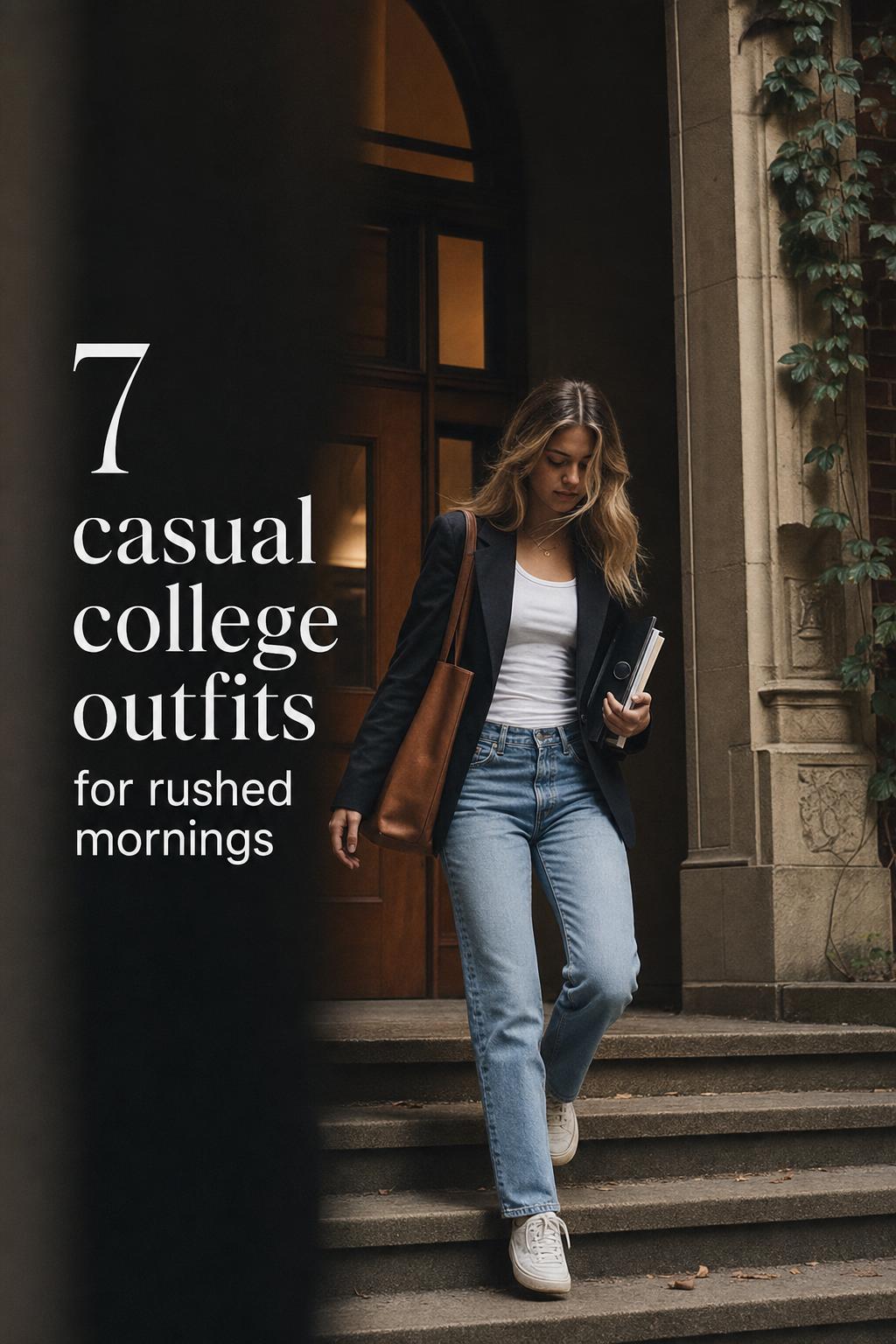
    Women office outfits: confident woman in tailored blazer and trousers in a modern office, adjusting her bag by a desk
    A calm, confident professional pauses between meetings in refined neutral tailoring, lit by soft window light in a modern studio office.

    FAQ

    What are the essential pieces for women office outfits?

    The most useful essentials are blazers, tailored trousers, shirts or blouses, dresses, skirts, and at least one flexible suit option. These pieces appear consistently across modern office wear because they can move between formal and business casual settings with only minor styling changes.

    How can I make office outfits look polished but still comfortable?

    Focus on fabric and fit rather than loosening the dress code too much. Easy-care materials, wrinkle-resistant finishes, breathable fabrics, and cuts that allow movement make office outfits more comfortable while preserving a professional silhouette.

    What is the difference between office wear and business casual for women?

    Office wear is the broader category and can include formal tailoring, dresses, and suits, while business casual usually relaxes the level of structure. In practice, business casual still benefits from tailored trousers, polished shirts, and at least one structured layer so the outfit does not lose its professional finish.

    How do I build a women’s workwear capsule wardrobe?

    Start with a small group of pieces that work in multiple combinations, such as two blazers, two pairs of trousers, a skirt, two dresses, several shirts or blouses, and a matching suit or set. The goal is a wardrobe with repeatable formulas, not a large number of disconnected items.

    What are good office outfits for hot summer weather?

    Lightweight dresses, breathable shirts, skirts, and tailored trousers usually work better than heavy suiting in summer. The key is to keep the lines professional while reducing fabric weight and unnecessary layers, often with a blazer kept nearby for meetings or cooler indoor spaces.

    Are blazers still important in office outfit trends?

    Yes, blazers remain one of the central pieces in modern office style because they add instant structure and help casual pieces read as professional. They are especially useful in workplaces with mixed dress codes because they can shift an outfit from relaxed to polished very quickly.

    How can I transition an office outfit from desk to dinner?

    Choose outfits that look complete even when one layer is removed, such as a dress with a blazer or a skirt-and-shirt combination with refined accessories. Desk-to-dinner dressing works best when the base outfit is already polished and the transition relies on small styling changes rather than a full outfit replacement.

    Which brands are often associated with women’s office wear?

    Across the current office wear landscape, names that appear frequently include H&M, UNIQLO, Walmart, Ellos, Foxcroft, and Karen Millen on the retail side, alongside editorial authorities such as Vogue, Who What Wear, and Marie Claire that shape the broader conversation around trends, tailoring, and power dressing.

    What should I wear to a more casual office without looking underdressed?

    Aim for one strong tailored element, such as a blazer or polished trouser, and let the rest of the outfit feel slightly softer. Casual offices usually allow more ease, but a clean silhouette, controlled palette, and thoughtful layering still make the difference between relaxed and unfinished.

  • Casual College Outfits That Feel Polished

    Casual College Outfits That Feel Polished

    The rhythm of college life asks a great deal from clothes. A day can begin with an early lecture, move through a library session, stretch into coffee with friends, and end at a campus event without leaving much time to change. That is why the best casual college outfits are not built around novelty. They rely on balance: comfort with shape, ease with polish, and practical layers that can handle real movement, shifting weather, and the visual expectations of campus life.

    Across campus style, certain pieces appear again and again for good reason: jeans, tees, sneakers, denim layers, hoodies, dresses, cardigans, plaid shirts, joggers, and simple outerwear. These are not exciting because they are basic; they are useful because they can be composed in many different ways. A white sneaker can soften a knit dress, a blazer can refine denim, and an oversized cardigan can make a slip dress feel lecture-appropriate. Thoughtful styling matters more than owning more clothes.

    Casual college outfits on campus: jeans, white tee, oatmeal cardigan, sneakers and black tote in a library hallway
    A candid library-side moment captures a polished capsule look of denim, a white tee, an oatmeal cardigan, and crisp sneakers.

    This guide approaches casual college outfits the way a fashion editor would approach a real wardrobe: by looking at silhouette, proportion, layering, and the campus situations where each look actually has to function. The goal is not to overwhelm you with random inspiration, but to help you decide what to buy first, what to repeat often, what to adapt for weather, and how to make everyday campus outfits look intentional without losing comfort.

    The campus wardrobe foundation that makes everything easier

    A practical college wardrobe is, in essence, a capsule wardrobe for college. That does not mean severe minimalism. It means keeping a small group of core pieces that mix naturally across the semester. The most useful base includes jeans, T-shirts, button-ups, knitwear, a cardigan, a hoodie, sneakers, one polished shoe such as loafers or ankle boots, a blazer or structured jacket, and at least one easy dress. Denim in more than one form also earns its place, whether as jeans, a denim jacket, denim shorts, or a denim skirt.

    The reason this framework works is simple: campus dressing rewards repetition. You are not building one perfect outfit; you are building combinations that survive busy mornings. Straight jeans worn with a graphic tee and sneakers feel casual and grounded. The same jeans with a button-up and blazer become presentation-ready. A dress with combat boots feels more directional, while the same dress with white sneakers becomes softer and easier for day-to-day wear.

    • Buy first: jeans, two or three tees, white sneakers, a cardigan, and one outer layer such as a jacket or blazer.
    • Add next: a dress, joggers or sweatpants, a button-up, and one pair of boots or loafers.
    • Save for later: trend pieces such as cargo pants or a onesie romper if they fit your personal style and campus routine.
    If you are shopping on a budget, prioritize the pieces that bridge the most situations. A neutral cardigan, a pair of jeans that fit well, and clean sneakers will do more work than several single-purpose items. This is also the easiest way to avoid a closet that looks full but never feels useful.

    Casual college outfits scene of a student adjusting a tote and sneaker in a warm dorm entryway with morning light
    A college student slips on white sneakers and adjusts a canvas tote in soft morning light, showing easy casual college outfits for campus days.

    Why some casual college outfits always look more polished

    The difference between a thrown-on campus outfit and one that feels refined usually comes down to proportion and contrast. Relaxed pieces need some structure nearby. If your hoodie is oversized, straight jeans or a cleaner sneaker can keep the silhouette from feeling heavy. If your dress is fluid, a structured jacket or blazer adds visual clarity. If your outfit is very simple, a tote bag, satchel, belt, or a small piece of jewelry can sharpen the result.

    Texture matters as well. Denim, knitwear, cotton tees, and smooth outerwear create more interest when worn together than one flat fabric from head to toe. This is why a plaid shirt tied over a dress, or a denim jacket layered over a tee and joggers, often looks more considered than a basic matching set worn without anything else.
    Color balance is another quiet advantage. Soft neutrals, classic denim blues, black, white, and muted tones are easier to recombine. Graphic tees, plaid shirts, and dresses can introduce personality, but they tend to work best when the rest of the outfit remains grounded. For everyday campus looks, this balance makes getting dressed much faster.

    Casual college outfits with a student in a relaxed campus look, walking outdoors near university buildings
    A student strolls across campus in an effortlessly styled casual college outfit.

    Quick outfit formulas for busy campus mornings

    The best outfit formulas are the ones you can repeat without feeling repetitive. A formula is not restrictive; it is simply a reliable framework. Once you know what proportions suit you, these combinations remove decision fatigue while still allowing variety through color, footwear, and layering.

    Tee, straight jeans, and sneakers

    This is one of the strongest everyday campus looks because it handles almost everything. The tee keeps the look relaxed, the jeans provide structure, and sneakers make it comfortable for long walks between classes. To make this feel more expensive, choose a tee that fits neatly at the shoulder and jeans with a clean line through the leg. A tote bag or backpack completes the outfit without overcomplicating it.

    For petite frames, a slightly shorter tee or a front tuck can keep proportions from looking shortened. For curvy builds, straight jeans with a bit of shape at the waist often create a more balanced line than very stiff, boxy denim. For tall frames, this look is particularly easy to wear because longer jeans and slightly oversized tees often feel naturally balanced.

    Slip dress, oversized cardigan, and ankle boots

    This formula works when you want a softer silhouette without looking overdressed for class. The slip dress brings fluidity, the cardigan makes it campus-appropriate, and ankle boots add enough weight to anchor the look. It is especially effective in transitional weather when mornings are cool and afternoons warm up.

    If you prefer more coverage, layer a tee underneath the dress or add a denim jacket instead of the cardigan. If the dress feels too delicate for your campus environment, combat boots create a stronger contrast and make the outfit more practical for walking. This is also a useful formula for presentations or casual campus events where jeans feel too informal but full dressiness would look out of place.

    Knit set, structured jacket, and loafers

    For days when comfort matters most but you still want clean lines, this combination is quietly effective. The knit set offers softness and ease, while the structured jacket prevents the outfit from reading like lounge wear. Loafers give the look a slightly more composed finish than sneakers.

    This formula is especially useful for commuters or students moving between class and informal work settings. If loafers feel too polished for your campus, white sneakers keep the outfit approachable. The key is contrast: one relaxed layer, one tailored layer.

    Denim as the anchor of everyday campus style

    Many of the strongest casual college outfits depend on denim because it stabilizes the wardrobe. Denim works with athletic-inspired pieces, soft dresses, polished jackets, and simple basics. It is hard to overstate how much easier dressing becomes once you have a few denim options that genuinely fit your life.

    Jeans for daily repetition

    Jeans are the obvious foundation, but not every pair functions equally well. The most versatile campus pair is usually one that can work with both sneakers and loafers, and that sits comfortably through long seated hours. If a pair only looks right with one shoe or one top, it is less useful than it seems. Straight jeans, in particular, keep appearing in campus outfits because they pair well with graphic tees, plaid shirts, hoodies, blazers, and cardigans.

    Denim skirt and denim shorts for warmer days

    A denim skirt can be one of the easiest ways to vary your campus wardrobe without leaving your comfort zone. Styled with a tee and sneakers, it feels simple and familiar. With a button-up or cardigan, it becomes slightly more polished. Denim shorts offer a similar effect in warmer weather, though they work best when the rest of the outfit remains streamlined. An oversized hoodie with very casual shorts can feel too unstructured unless balanced with cleaner sneakers or a more defined bag.

    Denim jacket layering

    A denim jacket is one of the most forgiving outer layers for college because it sits comfortably over dresses, tees, joggers, and even athletic-inspired outfits. In temperate regions or during back-to-school season, it can replace heavier outerwear. It also solves a common campus problem: how to add enough structure to an otherwise soft outfit without making it feel formal.

    Casual college outfits inspiration: woman in jeans, white tee and oatmeal cardigan walking out of a campus library with a tote
    A candid campus moment captures an effortless look of jeans, a white tee, and an oatmeal cardigan on the way from the library to coffee.

    Athleisure, joggers, and sweatpants without looking underdressed

    Athleisure has a permanent place in campus style because college life values movement, comfort, and low-maintenance dressing. But there is a difference between purposeful athleisure and simply wearing whatever is clean. The first relies on shape, repetition, and one polished element. The second often feels accidental.

    Joggers and sweatpants look strongest when paired with pieces that create visual intention: a fitted tee, a clean sneaker, a structured jacket, or a matching sweat set broken up with a denim jacket or blazer. Oversized hoodies are equally effective, but they need some balance. If both the top and bottom are voluminous, the outfit can feel shapeless. A neater shoe, a slightly cropped layer, or a compact tote bag can solve that.

    • Choose sweatpants with a clean line rather than overly bulky volume if you want them to work beyond the dorm.
    • Keep sneakers clean; footwear often decides whether athleisure reads intentional or careless.
    • Layer with denim or a structured jacket to make relaxed pieces feel campus-ready.
    • If you wear a matching sweat set, add contrast through a plaid shirt, outerwear, or accessories.

    This category is especially practical during finals week, long study days, and cooler weather. It can also suit students who spend a lot of time commuting. The mistake to avoid is letting every element be equally soft. Comfortable does not have to mean visually flat.

    Dresses, skirts, and one-piece options that still feel casual

    Many students overlook dresses because they assume dresses require more effort than jeans. In reality, a simple dress can be one of the easiest outfit solutions on a rushed morning. Once you add sneakers, a cardigan, or a denim jacket, the look becomes practical very quickly. The appeal lies in the silhouette: one piece creates coherence immediately, which is why dresses often feel more polished with less work.

    A knit dress with sneakers is one of the most functional dressy-casual campus outfits. It moves easily, feels comfortable during long wear, and can shift from class to a presentation or event with minor changes. A blazer layered over a midi dress creates a slightly more formal version suitable for campus events, while a cardigan keeps the mood softer and more everyday.

    For those who prefer a playful alternative, a onesie romper can work in casual settings, especially in warmer weather. Because it is already visually complete, it needs very little styling beyond clean sneakers and a light layer. The same logic applies to simple dresses: when the base is easy, accessories can stay minimal.

    If you are concerned about practicality, choose silhouettes that allow movement when sitting on lecture hall seats, climbing stairs, or walking across campus. This matters more than trend value. A casual college outfit only succeeds if it still works after several hours of real life.

    Weather-proof campus dressing by region

    Not all campuses ask for the same wardrobe. A useful college closet reflects climate as much as style. The same core pieces can still work, but layering and fabric choice should shift according to region. This is one of the biggest gaps in many outfit guides, and it matters because weather often determines whether an outfit gets worn at all.

    Coastal and temperate campuses

    Light layers do most of the work here. A tee with jeans and sneakers can be finished with a cardigan, denim jacket, or trench when needed. Breathable fabrics are useful because temperatures can change throughout the day. A plaid shirt tied around the shoulders or waist is not only visually casual; it also solves practical layering needs without much bulk.

    Midwestern and Northeastern campuses

    Layering becomes the central skill. Knitwear, hoodies, jackets, insulated coats, and boots matter more here because outdoor walks between buildings can be significant. A base of tee and jeans can still anchor the outfit, but outerwear and footwear must do more work. Combat boots, ankle boots, and insulated boots can all belong in a college wardrobe when chosen with walking comfort in mind. A blazer may still be useful indoors, but it cannot be your only structured layer.

    Southern campuses

    Breathable fabrics, sun protection, and lighter silhouettes are more practical. Dresses, denim shorts, tees, and sneakers become especially valuable. A button-up can function as both top and light layer. Because heat can flatten an outfit visually, this is where accessories such as tote bags, satchels, belts, and minimal jewelry can help add interest without adding weight.

    In a city-influenced campus setting such as Manhattan or New York, the campus outfit often leans slightly more layered and intentional even when still casual. A button-up under knitwear, cleaner denim, loafers, or a structured bag can make sense there in a way that may feel unnecessary on a more relaxed campus. Campus culture matters alongside climate.

    The pieces that handle presentations, orientation, and campus events

    Not every college day is purely casual. Orientation weekend, class presentations, back-to-school events, and homecoming-related gatherings ask for outfits that feel polished without appearing formal. The solution is not to abandon comfort; it is to choose dressy-casual campus outfits with cleaner lines.

    A blazer over jeans and a tee is one of the simplest ways to achieve that shift. The tee keeps the outfit approachable, while the blazer changes the tone immediately. A midi dress with a blazer works similarly for those who prefer a one-piece base. Loafers can reinforce the polished mood, while sneakers soften it if your campus atmosphere is more relaxed.

    For orientation, an outfit should be easy to move in, adaptable to indoor and outdoor settings, and comfortable enough for a long day. Straight jeans, a breathable tee, a cardigan or light jacket, and clean sneakers remain one of the safest combinations. For finals week, comfort rises in priority, but there is still value in maintaining structure through a clean hoodie, joggers, and a reliable outer layer. Looking put together often supports confidence, especially on high-pressure days.

    Accessories that make campus outfits feel intentional

    Accessories should not be treated as afterthoughts in college dressing. On a campus wardrobe built largely from basics, they create distinction. A tote bag or satchel adds shape to soft outfits, a belt can define the waist over dresses or denim, and statement earrings can lift a simple tee-and-jeans combination without making it impractical for class.

    Backpacks still have their place, of course, especially for students carrying a great deal. The key is proportion. A very large backpack paired with oversized clothing can make the whole look feel heavy. If your bag is substantial, keep the outfit lines cleaner elsewhere. If your outfit is relaxed and layered, a more structured bag can make the entire composition feel balanced.

    Scarves, hats, and small jewelry pieces also matter in climate-specific wardrobes. In colder regions, they are not just decorative but functional. In warmer climates, restraint is usually more effective. One strong accessory often does more than several competing ones.

    How to adapt these outfits for body proportions and personal comfort

    A useful outfit formula should bend to your proportions rather than ask you to ignore them. This is where many trend-based outfit roundups fall short. The most wearable casual college outfits are not about copying one silhouette exactly, but about understanding what each piece is doing inside the outfit.

    If you are petite, too much volume at once can overwhelm the frame. A slightly shorter cardigan, a front tuck, or a sneaker with a cleaner shape can keep the look light. If you are tall, oversized hoodies, straight jeans, longer cardigans, and relaxed jackets often feel particularly natural because they echo vertical lines rather than interrupt them. If you are curvy, waist definition can be useful in dresses, blazers, and cardigans, while jeans with a cleaner fit through the waist and hip often make layering easier.

    Comfort is equally individual. Some students need outfits that work for dorm living and frequent walking. Others need commuter-friendly looks that can hold their shape through a train ride or full day away from home. If your day involves long sitting hours, stiff denim or boots that require breaking in may not be your best weekday choice, no matter how good they look in theory. Style is only convincing when it survives use.

    Common campus styling mistakes worth avoiding

    The fastest way to improve your wardrobe is not always to buy more. Often, it is to remove the habits that make outfits feel less considered than they could.

    • Wearing all oversized pieces together without a point of structure, which can make the outfit feel shapeless.
    • Choosing shoes that do not match the day’s walking demands, then avoiding the outfit entirely.
    • Buying trend pieces before securing basics such as jeans, tees, sneakers, and layering pieces.
    • Ignoring weather realities and relying on outfits that only work indoors.
    • Using too many statement elements at once instead of letting one piece lead.
    • Keeping items that look appealing individually but do not integrate into the rest of the wardrobe.

    A smaller wardrobe with stronger combinations is almost always more useful than a larger wardrobe full of disconnected pieces. This is why elevated basics outperform impulse purchases over the course of a semester.

    Shopping with intelligence: what is worth investing in and what can stay affordable

    College style is often budget-conscious, and rightly so. Not every item deserves equal spending. The pieces worth investing in are usually the ones that affect comfort, frequency of wear, and the overall finish of the outfit: jeans that fit properly, sneakers you can walk in, boots if you live in a colder region, and a jacket or blazer that gives shape to many looks.

    Items that can remain affordable include tees, graphic tees, layering basics, plaid shirts, and trend-led additions such as cargo pants or a matching sweat set. These pieces can still look good, but they rarely need to carry the same structural responsibility as footwear or outerwear. Thrift finds are especially useful in this category because they allow experimentation without significant cost. They also align well with a more thoughtful, less wasteful approach to campus style.

    When shopping, ask practical questions before anything else. Can this be worn with jeans and sneakers? Can it layer under or over a cardigan, jacket, or hoodie? Will it work in at least two seasons? Can it adapt to class, a coffee run, and a casual campus event? These questions make impulse decisions less likely and versatility more likely.

    Campus style moods worth knowing, from prep-leisure to cozy athleisure

    Not every wardrobe needs the same visual personality. Within casual college outfits, a few style directions appear naturally. Prep-leisure combines structured pieces such as a blazer, loafers, or button-up with relaxed denim or knitwear. Cozy athleisure leans on joggers, hoodies, matching sets, and sneakers, elevated through cleaner proportions and outer layers. Edgy academia pulls in plaid shirts, combat boots, darker denim, and jackets for a stronger silhouette.

    These are useful not as labels to follow rigidly, but as ways to recognize what you are already drawn to. A student influenced by New York or Manhattan campus style may prefer cleaner lines, button-ups, structured bags, and polished outerwear. Someone on a more laid-back campus may rely more heavily on denim, oversized hoodies, and sneakers. Personal style becomes more consistent once you understand your default mood.

    Internal wardrobe logic: how one outfit should lead to the next

    The smartest college wardrobes are built in clusters, not isolated looks. A cardigan should work with jeans, dresses, and skirts. Sneakers should work with athleisure, denim, and dresses. A blazer should pair with a tee, a midi dress, or a button-up. This internal logic is what makes a wardrobe feel calm instead of chaotic.

    If a piece only works in one exact styling scenario, it is less helpful during the semester. By contrast, elevated basics create a chain reaction. Buy the right jeans, and suddenly your tees, plaid shirts, blazers, and sneakers all work harder. Add the right outerwear, and dresses and knitwear become more useful. This is the real power of capsule thinking on campus: not restriction, but momentum.

    Practical tips for making casual college outfits work harder

    A polished campus wardrobe rarely depends on dramatic styling. It is usually a collection of small, smart decisions repeated well.

    • Keep one “default” lecture outfit formula and one “default” presentation outfit formula ready at all times.
    • Use layering pieces to extend outfits across seasons instead of replacing the whole wardrobe.
    • Pair softer garments with one structured element to avoid looking unfinished.
    • Choose bags and shoes based on how much walking your campus requires.
    • Repeat your best combinations confidently; consistency often looks more stylish than constant novelty.
    • Build around denim, tees, and sneakers first, then add dresses, blazers, cargo pants, or boots as secondary layers of style.

    The most successful campus style is rarely the most complicated. It is the outfit that still feels right halfway through the day, still looks composed after hours of wear, and still gives you enough confidence to focus on everything else.

    Moody campus editorial photo of casual college outfits with jeans, blazer, tote bag, and sneakers in window-lit library aisle.
    A candid, window-lit campus moment captures casual college outfits styled with denim, soft layers, and a structured tote.

    FAQ

    What are the most versatile pieces for casual college outfits?

    The most versatile pieces are jeans, tees, sneakers, a cardigan, a hoodie, and one structured layer such as a blazer or jacket. These items mix easily with dresses, denim skirts, joggers, and button-ups, which is why they form the backbone of a practical campus wardrobe.

    How can I make casual college outfits look more polished without losing comfort?

    Use contrast. Pair relaxed items such as hoodies, joggers, or oversized cardigans with cleaner shoes, structured jackets, straight jeans, or a defined bag. Clean sneakers, balanced proportions, and one intentional accessory often make a bigger difference than adding more trend pieces.

    What should I buy first if I am building a college wardrobe on a budget?

    Start with the pieces you can wear repeatedly across classes and seasons: jeans, two or three T-shirts, sneakers, a cardigan, and a practical jacket. After that, add a dress, a button-up, and one polished shoe option such as loafers or ankle boots if your routine calls for them.

    Do dresses actually work for everyday campus life?

    Yes, especially simple dresses and knit dresses. They are often easier than separates because the outfit is mostly complete on its own. Add sneakers, a cardigan, or a denim jacket, and the look becomes casual enough for class while still feeling polished.

    How do I dress for college in changing weather?

    Rely on light, removable layers. In temperate areas, cardigans, denim jackets, and trenches are useful. In colder Midwestern or Northeastern settings, knitwear, heavier jackets, and boots matter more. In warmer Southern climates, breathable fabrics, dresses, shorts, and light button-ups tend to be more practical.

    What are the best casual college outfits for presentations or campus events?

    A blazer with jeans and a tee, a midi dress with a blazer, or a knit dress with sneakers are all strong options. These combinations keep the ease of everyday dressing while adding enough structure to feel appropriate for more visible campus moments.

    Can athleisure still look intentional on campus?

    Absolutely, as long as it has shape and a polished element. Joggers, sweatpants, or a matching sweat set look more intentional with clean sneakers, a denim jacket, a structured outer layer, or a fitted top that balances volume.

    How should I adapt these outfits if I am petite, curvy, or tall?

    Petite frames often benefit from less bulk and slightly cleaner proportions, such as front tucks or shorter layers. Curvy frames often suit waist definition and jeans with a clean fit through the waist and hip. Tall frames can usually carry oversized hoodies, longer cardigans, and straighter denim especially well because the vertical proportions feel balanced.

    What common mistakes make campus outfits feel less put together?

    The most common issues are too much volume at once, footwear that is not practical for the day, buying trend items before securing basics, and choosing pieces that do not connect with the rest of the wardrobe. A more focused closet usually solves these problems quickly.

  • Spring Outfits for Work That Feel Polished and Modern

    Spring Outfits for Work That Feel Polished and Modern

    By the time most people build a wardrobe for the office, they have usually discovered that the phrase outfits for work can mean several very different things. In one workplace, it suggests a blazer, tailored trousers, a button-down shirt, and a work bag in a restrained neutral palette. In another, it means relaxed tailoring, dark denim, loafers, and a knit layered under an oversized coat. The confusion is understandable: modern office wear now stretches across business formal, business casual, and a looser smart-casual mode shaped by hybrid schedules and shifting corporate culture.

    The most useful comparison is no longer formal versus casual in the abstract. It is structured workwear versus relaxed workwear, with a third lens layered over both: seasonal office dressing. These styles are constantly discussed together because they borrow the same core wardrobe pieces—blazers, tailored trousers, shirts, skirts, dresses, boots, and minimalist accessories—yet they create entirely different impressions through proportion, fabric, and styling logic.

    Outfits for work editorial photo of a modern professional in a contemporary office wearing a tailored blazer and trousers
    A quietly confident office look pairs a tailored blazer with crisp layers and refined accessories in soft window light.

    What follows is a style breakdown of the main approaches to office outfits: polished corporate dressing, business casual dressing, and creative smart-casual workwear. Rather than treating workwear as a single formula, this comparison looks at how silhouette, texture, color balance, and accessories shift from one office environment to another, and how the same garment can move between finance, legal, tech, and creative settings with a few deliberate changes.

    The three workwear languages shaping the modern office

    Most office wardrobes sit somewhere between three recognizable style languages. The first is tailored corporate dressing: precise, composed, and authority-led. The second is business casual: still polished, but softer in its lines and easier in its combinations. The third is creative smart-casual dressing: structured enough to feel intentional, relaxed enough to reflect personal style. Understanding these categories makes it easier to interpret dress codes that are often implied rather than clearly explained.

    Style overview: tailored corporate workwear

    This is the most structured version of office attire. The defining characteristics are clean lines, tailored structure, and a restrained palette built around black, navy, beige, white, and camel. Typical silhouettes include a blazer over a button-down shirt, tailored trousers, a pencil skirt, or a streamlined dress. Fabrics tend to read polished rather than casual: wool, silk, and cashmere textures appear more often than visibly relaxed cottons. The overall mood is professional, composed, and subtly aligned with power dressing.

    Style overview: business casual workwear

    Business casual is often mistaken for simply “less formal,” but its defining feature is balance. It keeps workwear staples such as blazers, trousers, shirts, and loafers, yet introduces softer styling decisions: light tailoring, knitwear, relaxed pieces, and more freedom in how garments are combined. The silhouettes are neither severe nor slouchy. The palette still favors neutrals, though the mood is less rigid. Cotton, lightweight wool, satin blouses, and easy knits all have a place here. Visually, it feels effortless rather than ceremonial.

    Style overview: creative smart-casual office style

    This version of workwear leans into mixed textures, looser proportions, and more personal styling. Structured tailoring is still present, but it is often contrasted with relaxed pieces: denim with a blazer, a maxi skirt with a chunky knit, leather pants with a crisp shirt, or a knit set finished with boots and a checked print scarf. The mood is modern and expressive, yet still office-aware. It tends to appear in creative workplaces and startup environments where polish matters, but conventional corporate codes carry less weight.

    Outfits for work in a cozy home office as a woman adjusts her blazer beside a laptop, mug, and leather bag in warm light
    In warm morning light, she adjusts her blazer at a lived-in desk, capturing effortless outfits for work with quiet confidence.

    Where they overlap—and why they are often confused

    The reason these styles blur together is simple: they rely on many of the same foundational pieces. Across nearly every form of office wear, the recurring pillars remain the blazer, tailored trousers, the button-down shirt, dress and skirt silhouettes, neutral colors, and discreet accessories such as bags, belts, and minimalist jewelry. A white shirt from With Nothing Underneath, for example, may anchor a highly traditional outfit under a sharp blazer, or it may be worn with denim and loafers in a more casual office.

    The distinctions emerge in the styling decisions around those pieces. A blazer can signal authority when paired with tailored pants and black pumps, but it can read more relaxed when worn over a knit with jeans. A maxi skirt can feel editorial with a chunky knit and oversized coat, or more conservative with a neat shirt and restrained accessories. The garments are familiar; the visual message changes through proportion, texture, and context.

    This is also why seasonal work outfits are so important. Winter office wear and summer workwear often borrow from the same wardrobe foundations, then adjust through fabric and layering. A trench coat, knit set, or knee-high boots can shift a look toward colder-weather polish, while breathable fabrics such as linen, cotton, and light blends push the same wardrobe into summer without abandoning professionalism.

    The clearest differences between polished and relaxed office dressing

    The most practical way to compare workwear styles is by looking at five elements: silhouette, color palette, formality, styling philosophy, and hero pieces. These are the decisions that determine whether an outfit feels finance-ready, creative, or comfortably in between.

    Silhouette and structure

    Tailored corporate workwear favors a clean vertical line. Jackets sit with intention on the shoulder, trousers are cut with precision, and shirts are crisp rather than fluid. Business casual softens that architecture. The silhouette still feels refined, but not rigid; perhaps the blazer is slightly less strict, the knit more visible, or the trouser less sharply formal. Creative smart-casual dressing is where proportion becomes a styling tool in itself: oversized coats, chunky knits, wide or relaxed pants, and mixed lengths such as a maxi skirt with boots all create more movement.

    Color palette and visual discipline

    Across office outfits, neutral palettes remain the most reliable foundation. Black, navy, beige, and white dominate because they simplify dressing and reinforce a professional image. The difference lies in how strictly those shades are used. Corporate dressing usually keeps contrast clean and direct. Business casual allows a bit more softness in tonal dressing. Creative workwear may still begin with neutrals, but often introduces texture and visual variation before color becomes the focal point.

    Level of formality

    Formal workwear is designed to reassure: it signals readiness, discipline, and awareness of conventional dress codes. Business casual is designed to ease that formality without losing credibility. Smart-casual office style introduces individuality, but only works when at least one or two anchoring elements remain polished. That is why relaxed outfits for work tend to rely on a blazer, polished loafers, or a structured work bag to keep the look from slipping into weekend territory.

    Wardrobe pieces that define each style

    • Tailored corporate dressing centers on the blazer, tailored trousers, button-down shirt, pencil skirt, structured dress, black pumps, and a professional bag.
    • Business casual leans on blazers, trousers, shirts, loafers, knitwear, satin blouses, and versatile separates that can mix easily through the week.
    • Creative smart-casual dressing often features denim, relaxed tailoring, leather pants, knit sets, maxi skirts, oversized outerwear, scarves, and boots.
    Stylish outfits for work on a minimalist clothing rack in a bright modern office.
    A curated selection of polished workwear hangs neatly in a bright, modern office setting.

    How the styles look in real life

    On a hanger, these categories may seem close. On the body, they read quite differently. Tailored corporate dressing is controlled. The lines are deliberate, the fabrics hold shape, and the outfit often appears finished before accessories are added. Business casual appears more breathable. It may include the same blazer and trousers, but the shirt may be softer, the shoe more grounded, and the layering less formal. Creative smart-casual workwear is visually more dimensional, relying on contrast: a tailored silhouette set against relaxed textures, or a polished shirt offset by leather pants or denim.

    Accessories sharpen these distinctions. In a formal office outfit, the bag is usually structured and the jewelry minimal. In business casual, accessories soften the look without distracting from it. In creative settings, a silk scarf, checked print scarf, or more directional boot can become part of the outfit’s composition rather than merely a finishing detail. This is where labels such as Burberry, DeMellier, Staud, The Frankie Shop, and Everlane often appear in the conversation: not because a brand defines style on its own, but because certain brands are repeatedly associated with specific silhouettes and textures.

    Tips for reading the visual balance of an office outfit

    • If the outfit has more volume on top, such as a chunky knit or oversized coat, a cleaner line below helps restore balance.
    • If you are using relaxed pieces like denim or drawstring pants, keep at least one tailored element visible.
    • When the palette is very neutral, texture becomes the main source of interest—silk, wool, cashmere, leather, and knitwear do the work.
    • Footwear changes the message quickly: loafers and pumps read more office-ready than shoes with a distinctly off-duty feel.

    Season changes everything: winter work outfits versus summer workwear

    Seasonality is not a side note in office dressing; it changes the very logic of the outfit. Winter work outfits are built through layering, texture, and warmth. Summer work outfits depend on breathability, lighter fabrics, and cleaner silhouettes. Yet both must preserve the same core objective: looking composed for a full workday.

    Winter: texture, layering, and professional warmth

    In winter, structure often comes from outerwear as much as from tailoring. A white tailored trouser under a shearling coat creates a refined contrast between polish and warmth. A maxi skirt with a chunky knit and oversized coat introduces movement while still reading office-appropriate. The button-down remains useful because it sits neatly beneath layers, while leather pants can work in more relaxed offices when the rest of the outfit remains clean and controlled. A knit set finished with a checked print scarf and boots creates a complete winter office look without appearing heavy.

    Brands frequently associated with this kind of winter workwear include Lisa Yang for knit-driven refinement, Burberry for scarf-led outerwear polish, Staud for boots, Citizens of Humanity for trousers or pants with modern structure, and DeMellier for the work bag that brings everything together. The point is not to dress in labels, but to understand the visual language they often represent: polished utility, elevated texture, and deliberate layering.

    Summer: ease, breathability, and sharper editing

    Summer office wear requires more restraint, not less. Because fabrics are lighter and layers are fewer, each piece becomes more visible. Breathable materials such as linen, cotton, and light blends are central, especially in dresses, skirts, tops, and shirts. A summer dress can work beautifully for the office when the silhouette remains clean and accessories stay minimal. Lightweight tailoring, an easy vest, or a crisp shirt can replace heavier blazer-based dressing without sacrificing structure.

    This is where the distinction between polished and too casual becomes especially important. The same warm weather that makes relaxed dressing appealing can also flatten an outfit if every element is soft. A neat blouse, a structured bag, or well-cut trousers restore the visual discipline that office attire needs. In warmer regions and offices with less formal dress codes, business casual often becomes the dominant mode because it accommodates comfort and long workdays more gracefully.

    Outfits for work: professional woman adjusting blazer in modern office hallway with structured bag, candid editorial photo
    A quietly confident professional refines her blazer mid-stride, capturing polished outfits for work in a modern office setting.

    Industry matters more than trends

    One of the biggest reasons people struggle with outfits for work is that they borrow visual ideas from one office culture and apply them to another. A look that feels refined in a creative studio may feel underdressed in legal or finance settings. A full power-dressing formula that works in a formal office may feel unnecessarily rigid in a startup. Industry does not eliminate style, but it does shape the boundaries within which style operates.

    Finance and legal: precision first

    These environments tend to favor the most traditional end of office wear. Blazers, tailored trousers, button-down shirts, pencil skirts, and polished dresses are reliable because they communicate consistency. Here, the outfit should not rely on novelty. The strongest looks are usually those with a calm neutral palette, subtle accessories, and fabrics that hold shape through long days. Power dressing in this setting is less about dramatic styling than about clarity and confidence.

    Tech and startup offices: polished ease

    In tech and startup environments, smart-casual dressing often carries more weight than classic corporate attire. That does not mean anything goes. The most convincing outfits still include tailored structure somewhere in the look—a blazer, polished trousers, or a sharp shirt—balanced by more relaxed pieces such as denim or softer knitwear. The visual goal is capability without stiffness.

    Creative workplaces: texture and personality within boundaries

    Creative offices usually allow greater freedom with proportion and material. This is where leather pants, oversized coats, maxi skirts, and directional accessories feel more natural. The challenge is to keep personality from becoming visual noise. A silk scarf, a strong boot, or a modern coat works best when the rest of the outfit remains edited. Creative workwear succeeds when it still looks intentional at a desk, in a meeting, and across a full day of movement.

    Example comparisons: the same work situation, styled three ways

    Morning meeting outfit

    The tailored corporate version begins with a blazer, button-down shirt, tailored trousers, and black pumps, likely in navy, black, or beige. The business casual interpretation keeps the blazer and trouser foundation but replaces the sharper shirt with a softer blouse or knit, and may swap pumps for loafers. The creative smart-casual version might use a structured blazer over denim and a crisp shirt, with a polished bag ensuring the outfit still reads as workwear rather than off-duty dressing. The logic shifts from authority, to ease, to personality.

    Cold-weather office day

    A formal winter office outfit may rely on tailored trousers, a button-down, a wool layer, and a structured coat. Business casual might soften this with knitwear and a less severe silhouette. A more fashion-led approach could pair a maxi skirt with a chunky knit and oversized coat, or a knit set with a checked print scarf and boots. All three are winter work outfits, but they tell different stories through proportion and texture. One is controlled, one is approachable, one is editorial.

    Warm-weather office day

    In a formal setting, summer dressing often means lighter tailoring: a crisp shirt, polished trousers, and careful restraint in accessories. Business casual may move toward breathable fabrics and easy separates, perhaps a lightweight vest or shirt with trousers. In a creative workplace, a summer dress or skirt-and-top combination can work well if the silhouette is clean and the styling remains precise. The difference lies not in how much skin is shown, but in whether the outfit still communicates structure.

    The role of brands in shaping workwear aesthetics

    Some brands recur in office wear conversations because they embody particular styling directions. Burberry often appears in relation to scarves and refined outerwear, making it relevant in winter workwear and polished layering. DeMellier is closely tied to the work bag, an accessory that quietly defines how finished an outfit feels. Lisa Yang suggests knit-led luxury with office-friendly restraint. Staud often appears around boots, while The Frankie Shop is associated with modern tailoring and oversize structure. Everlane points to streamlined basics, and Citizens of Humanity enters the discussion where denim or contemporary pants are considered office-appropriate in more relaxed environments. With Nothing Underneath is naturally linked to the shirt category, particularly the crisp button-down.

    These names are most useful as visual reference points. They help illustrate the difference between a sharply tailored look, a minimalist work wardrobe, and a more directional office outfit. The deeper principle remains the same: strong workwear depends less on accumulation and more on coherence. The bag, coat, shirt, trouser, and shoe should speak the same visual language.

    A more practical lens: comfort, fit, and the long workday

    Editorial workwear often emphasizes appearance first, but real office wardrobes live or fail by comfort. Long days, changing temperatures, commuting, sitting, and movement all affect whether an outfit remains convincing from morning to evening. This is one reason stretch fabrics, breathable materials, and thoughtful layering matter so much. An outfit may look polished in a mirror and still fail in practice if the shirt pulls, the skirt restricts movement, or the shoe does not support a full day.

    Fit is equally important. Tailoring is not only about aesthetics; it is the mechanism that makes office wear look intentional. This is especially relevant for size inclusivity and for petite or tall adjustments. The same blazer or trouser can read expensive and composed when proportion is right, or awkward when the length and balance are off. Alteration is often the quiet step that turns a decent work outfit into a reliable one.

    Tips for making office wear more wearable

    • Choose pieces that maintain structure over a full day, especially blazers, trousers, and shirts.
    • Use layering strategically in winter rather than relying on one heavy item that overwhelms the silhouette.
    • In summer, prioritize breathable fabrics so the outfit keeps its polish rather than collapsing by midday.
    • Adjust hem length, sleeve length, and waist placement where needed; proportion is central to a professional impression.
    • Build around versatile separates that can be repeated and recombined across the week.

    The seven-day question: repeating pieces without looking repetitive

    One of the most intelligent ways to approach office wear is not by chasing constant novelty, but by learning how the same workwear staples can shift between dress codes and seasons. A blazer can anchor tailored trousers one day, denim the next. A button-down can sit under knitwear in winter or pair with a skirt in summer. A neutral dress can read formal with pumps and a structured bag, then slightly softer with a cardigan or lighter layering. This is where a true work capsule begins to emerge.

    The value of a capsule is not minimalism for its own sake. It is visual consistency with enough variation to suit meetings, desk days, warm weather, cold weather, and different office expectations. The most effective capsules usually revolve around blazers, trousers, shirts, dresses, skirts, knitwear, and one or two dependable pairs of shoes. Accessories then provide tone rather than transformation: a belt, a scarf, a polished bag, or understated jewelry.

    What often goes wrong with work outfits

    The most common mistakes are rarely dramatic. More often, the outfit is simply mismatched in its internal logic. A very relaxed trouser with no structured counterpart can read unfinished. Heavy winter textures combined without shape can overwhelm the figure. In summer, an outfit may become too soft if every piece is fluid and unstructured. Even expensive garments can look uncertain when the silhouette lacks a clear center.

    Another common issue is dressing for an imagined office rather than the actual one. Many people either overcorrect into stiffness or undercorrect into casualness. The better approach is to observe what authority looks like in your environment. In some offices, authority means a blazer and tailored trouser. In others, it may mean clean denim, a shirt, loafers, and a refined coat. Office style is always relational.

    A quick editorial rule of thumb

    If your outfit includes a directional item—leather pants, a chunky knit, an oversized coat, or a dramatic scarf—keep the other elements quieter. If your outfit relies on simple basics, use texture and fit to prevent it from feeling flat. Workwear almost always improves when one idea leads and the rest support it.

    When to choose each style

    The right office style depends on setting, season, and the role the outfit needs to play on a given day. Some days call for reassurance and authority. Others benefit from ease, mobility, and a more conversational kind of polish.

    • Choose tailored corporate dressing for formal offices, presentations, client-facing days, and industries such as finance and legal where dress code norms remain more traditional.
    • Choose business casual for everyday office wear, hybrid schedules, team meetings, and workplaces where polish matters but full formality is unnecessary.
    • Choose creative smart-casual dressing for design-led environments, startup offices, and workdays where individuality is welcome as long as the outfit remains composed.
    • Choose seasonal adaptations of any style when climate demands it: winter calls for layered texture and boots, while summer requires breathable fabrics and sharper editing.

    The strongest wardrobes do not commit to only one of these modes. They move between them. A person in a business casual office may still need a more formal look for certain meetings. Someone in a creative workplace may still want the authority of a sharper blazer and tailored trousers on key days. Flexibility is part of dressing well for modern work.

    Bringing the styles together without losing clarity

    The most modern office outfits are often hybrids. A power-dressing blazer with softer knitwear. A crisp shirt with relaxed denim in the right office. A maxi skirt balanced by an understated top. A summer dress grounded with polished accessories. This blending works because contemporary workwear is less about rigid rules than about reading the room while maintaining visual discipline.

    The core distinction remains useful. Tailored corporate dressing leads with structure. Business casual leads with balance. Creative smart-casual dressing leads with texture and personality. Once you can identify which principle is leading the outfit, it becomes much easier to decide whether a look feels right for your office, your industry, and the season.

    In practice, the best office wear is rarely the most complicated. It is the outfit in which silhouette, fabric, color, and accessories all support the same message. That message may be authority, ease, or creative polish—but it should always feel intentional.

    Outfits for work: stylish woman in neutral blazer by office window with structured bag in a modern workspace
    A stylish professional pauses by the window, showing how refined outfits for work can feel effortless in a real-day setting.

    FAQ

    What are the most essential pieces to build outfits for work?

    The strongest foundation usually includes a blazer, tailored trousers, a button-down shirt, a polished dress or skirt, knitwear, and dependable shoes such as loafers or pumps. A structured work bag and a neutral color palette make these pieces easier to combine across different office settings.

    How do I know if my office is business casual or more formal?

    Look at what authority and seniority wear in your workplace. If blazers, tailored pants, and sharper shirts are the norm, the office likely leans formal. If you regularly see light tailoring, knitwear, loafers, and occasional denim styled in a polished way, business casual is probably the dominant dress code.

    Can jeans work as part of office outfits?

    Yes, but usually in more relaxed or creative offices rather than highly traditional environments. Jeans work best when balanced with tailored elements such as a blazer, crisp shirt, polished loafers, or a structured bag so the overall look still reads as intentional workwear.

    What makes a summer outfit office-appropriate?

    Breathable fabrics such as linen, cotton, and light blends are key, but structure still matters. A summer outfit feels office-appropriate when the silhouette remains clean, the pieces are well edited, and accessories keep the look polished rather than overly casual.

    How should winter work outfits differ from summer workwear?

    Winter work outfits rely more on layering, texture, and outerwear, using pieces such as knits, coats, scarves, and boots to create warmth without losing polish. Summer workwear uses fewer layers and lighter fabrics, which means fit, silhouette, and accessory choice become even more important.

    Are accessories important in office wear?

    Very much so, although they tend to work best when understated. A structured bag, a belt, minimalist jewelry, or a scarf can complete an outfit and clarify its tone, whether you are aiming for classic corporate polish or a more creative office look.

    How can I make basic workwear staples feel less boring?

    Focus on styling rather than novelty. A blazer, shirt, and trousers can feel much more refined when you vary texture, adjust proportions, or introduce a single strong detail such as a silk scarf, an oversized coat, or boots with a clean silhouette. The difference usually comes from composition, not from replacing the basics.

    What is the easiest way to create a work capsule wardrobe?

    Start with versatile separates in a neutral palette: one or two blazers, tailored trousers, shirts, knitwear, a dress or skirt, and reliable shoes. The goal is to choose pieces that can move between seasons and dress codes, so one item can be styled multiple ways across the week.

    How important is tailoring for professional outfits?

    It is often the detail that makes office wear look considered. Even simple pieces gain authority when sleeve length, hem length, and waist placement are right. Good tailoring improves comfort, balance, and the overall impression of polish, especially with blazers, trousers, skirts, and dresses.

  • Dressy Casual Outfits for Polished Days and Nights

    Dressy Casual Outfits for Polished Days and Nights

    There is a particular elegance to dressy casual outfits when they are done well: not stiff, not overly relaxed, but composed with enough structure to feel intentional. The mood sits between refinement and ease, where a knit blazer, a fluid midi dress, dark jeans, or polished loafers can create a look that feels modern rather than formal. It is this balance that makes the style so visually appealing. The silhouette is often clean, the textures thoughtful, and the overall impression quietly polished.

    This aesthetic appears everywhere real life asks for subtle sophistication: wedding guest attire, office dressing, brunch, weekend socials, bridal showers, and the day-to-night stretch when changing outfits is not practical. In the U.S., dressy casual is especially popular because it solves a common wardrobe problem. People want to look appropriate and pulled together without feeling overdressed, and they want pieces that can move across occasions with only a few styling changes.

    Dressy casual outfits street style with knit blazer, dark denim, and loafers in a modern city setting
    A polished city street-style moment captures the refined ease of dressy casual outfits in motion.

    What makes the category enduring is not a single formula but a style logic. Tailored pieces meet softer fabrics. A crisp shirt gains ease through dark denim. A jumpsuit reads more refined through crepe or satin. Clean sneakers may work in one context, while loafers or heeled sandals become essential in another. The beauty of dressy casual lies in these small calibrations, where proportion, fabric, and setting decide the final mood.

    What dressy casual really looks like

    Dressy casual is often confused with smart casual, semi-formal, or business casual, yet it holds its own position. It asks for relaxed comfort elevated through refined choices. That usually means avoiding anything too lounge-driven or gym-adjacent, while also stepping back from the sharper finish of traditional dress codes. In practice, the style is built from pieces such as blazers, structured jackets, crisp shirts, blouses, chinos, dress pants, dark jeans, midi dresses, jumpsuits, loafers, dress shoes, heeled sandals, and carefully chosen accessories.

    The misunderstanding usually begins with the word casual. Casual does not mean careless here. It means the outfit has breathing room. Fabrics may be lighter, silhouettes may be softer, and accessories more restrained, but the look still requires polish. A printed button-down shirt from a brand like Bonobos or J.Crew, for example, carries a different visual message than a basic tee. A light blue lace midi dress has a different tone from a casual sundress. The difference is subtle, yet very visible.

    Context matters just as much as the clothes themselves. A wedding in the evening calls for a more elevated interpretation than a weekend lunch. An office look may lean toward tailored pants and a structured jacket, while a daytime social event can accommodate a knit polo, a pencil skirt, or dark denim with a polished blouse. Dressy casual works best when you read the room first and style the outfit second.

    Dressy casual outfits in a cozy sunlit city apartment, woman styling a knit blazer by a mirror with midi dress and loafers nearby
    In soft morning light, she reaches for a knit blazer beside a mirror, surrounded by effortless dressy casual outfit options.

    Why the aesthetic works so well in modern wardrobes

    Great dressy casual style depends on composition rather than excess. It is not about piling on statement pieces or chasing novelty. Instead, it relies on contrast: a tailored silhouette with relaxed textures, a fluid fabric with clean lines, a casual base with one structured layer that brings the entire look into focus. This is why the style appears consistently in editorial fashion, retail styling, and event dressing. It photographs well, feels wearable, and leaves room for personal interpretation.

    It is also highly adaptable. A blazer from Banana Republic can shift dark jeans into dinner territory. A blouse with crepe drape can elevate chinos for the office. A Reformation or Lulus midi dress can feel relaxed enough for daytime but refined enough for wedding guest attire with the right shoes and accessories. Even brands with different identities, from Abercrombie & Fitch to Anthropologie, sit comfortably within this category because dressy casual is defined less by label and more by visual balance.

    There is a practical appeal too. For long events, uncertain weather, or settings that move between indoors and outdoors, this aesthetic tends to outperform stricter dress codes. A comfortable knit blazer, lightweight coat, structured top, or jumpsuit in breathable fabric handles movement better than something rigidly formal. The result feels thoughtful rather than effortful, which is why so many people return to dressy casual outfits for repeat-wear occasions.

    Dressy casual outfits styled on a model with blazer, fitted jeans, and heels in a bright city street setting
    A polished dressy casual outfit pairs a tailored blazer with sleek denim and refined heels for effortless style.

    Look: relaxed blazer with dark denim polish

    This is one of the clearest expressions of dressy casual because it uses familiar, wearable pieces and gives them a refined frame. The silhouette begins with the clean line of a tailored blazer and lets dark jeans provide ease. The mood is understated and urban, ideal for a casual office, dinner, or a daytime event where you want to appear polished without moving into full business attire.

    A comfortable knit blazer works especially well here because it softens the structure without losing shape. Underneath, a crisp shirt, printed button-down, or fine knit polo creates depth. Dark jeans should remain visually clean rather than distressed, allowing the denim to read as intentional. Loafers or dress shoes complete the look with more certainty than athletic footwear, while a lightweight coat can add another tailored note in cooler weather. This is a combination that brands such as J.Crew, Banana Republic, Bonobos, and Todd Snyder have all helped normalize in the broader dressy casual conversation.

    • Key garments: knit blazer, printed button-down shirt or knit polo, dark jeans
    • Footwear: loafers or polished dress shoes
    • Accessories: minimal belt, restrained watch or simple jewelry

    The reason this look works is proportion. The blazer introduces a dress code signal, while denim prevents the outfit from becoming too formal. If the shirt is too stiff or the shoes too glossy, the balance can tip toward business or semi-formal. If the denim is faded or the blazer too slouchy, the elegance is lost. Dressy casual often depends on these fine adjustments.

    Look: fluid midi dress in a refined daytime palette

    For women’s dressy casual attire, the midi dress remains one of the most versatile forms because it offers shape without rigidity. The visual effect is graceful rather than dramatic, especially in fabrics that move gently. This look carries a composed softness that suits weddings, bridal showers, daytime celebrations, and polished weekend plans.

    Lace, satin, crepe, and similar refined fabrics change the entire reading of a dress. A light blue lace midi dress feels delicate and elevated, while a satin or crepe style can appear modern and clean-lined. Labels such as Reformation, Lulus, Anthropologie, Azazie, Cleobella, and Alice + Olivia are often associated with these kinds of silhouettes because they sit comfortably between eventwear and everyday sophistication. Color matters here too. Soft neutrals, muted blue, and quietly rich shades tend to hold the aesthetic more effectively than something overly loud, unless the event specifically invites a more expressive look.

    • Key garments: midi dress in lace, crepe, or satin
    • Footwear: heeled sandals or polished flats, depending on venue
    • Accessories: minimal earrings, small bag, light outer layer if needed

    This version of dressy casual succeeds because it feels complete with little effort. The dress carries the silhouette on its own, so the supporting pieces can remain quiet. For longer events, especially weddings, this matters. A beautifully cut midi dress can look composed for hours without requiring constant adjustment, which is one reason it appears so often in wedding guest attire guidance.

    Dressy casual outfits idea: woman in knit blazer and satin midi dress walking past a city cafe with coffee cup at dusk
    A stylish woman steps past a city café in a knit blazer and satin midi dress, capturing an effortless dressy casual look.

    Look: the pencil skirt and soft structure equation

    The pencil skirt offers a more directional interpretation of dressy casual, one that feels polished and slightly sharper while still remaining approachable. Visually, it draws the eye to line and proportion. The mood can shift from office-appropriate to evening-ready depending on what tempers it: a softer knit, a more relaxed blouse, or understated accessories rather than overtly formal pieces.

    A pencil skirt paired with a structured top or draped blouse gives the outfit its tailored center. The key is avoiding a look that feels too corporate or too occasion-specific. A fitted blouse in crepe, a smooth knit, or a lightly textured fabric keeps the styling grounded. Neutral palettes make the shape stand out, while a refined color accent can bring in personality. Primark’s approach to dressy casual styling emphasizes this blend of tailored and easy elements, and it remains a useful principle: one polished anchor piece, one softer balancing piece.

    Why does this look fit the aesthetic so well? Because it demonstrates that dressy casual is not always loose or relaxed in shape. It can be sleek. The “casual” aspect comes from restraint and wearability, not from abandoning structure. This makes the look especially effective for professional settings, city dinners, and occasions when a blazer would feel too expected.

    Look: knit polo and chinos with modern ease

    There is a clean confidence to the knit polo when used in dressy casual outfits. It is more refined than a standard casual top but less formal than a buttoned shirt, which places it perfectly in the middle ground. Combined with chinos or dress pants, it creates a silhouette that feels contemporary, comfortable, and quietly intentional.

    A short-sleeve cable-knit polo or fine knit version paired with chinos keeps the outfit breathable and composed, especially in warm weather or daytime events. Lighter neutrals can feel relaxed, while darker shades sharpen the finish. Loafers remain the strongest footwear partner here, though clean sneakers may work in settings that clearly lean casual. This is one of the most effective dressy casual formulas for men because it reduces visual noise. There is enough texture to suggest effort, enough tailoring to signal polish, and enough comfort to wear through a full day.

    This look is particularly useful for spring and summer occasions when a full blazer may feel excessive. It also shows how fabric texture can carry formality. The knit itself does much of the work. Even without heavy layering, the outfit feels elevated because the material has depth and the fit remains intentional.

    Style insight: fabric is often what makes casual feel dressy

    Many dress code mistakes happen because people focus only on the garment category and ignore the fabric. A jumpsuit can be casual or refined depending on drape. A blouse can look flat or elevated depending on texture. Dark jeans become more acceptable when everything around them carries polish. This is why so many successful dressy casual outfits rely on crepe, satin, lace, wool blends, linen, and refined knits. These materials change how light sits on the outfit and how the silhouette moves.

    Linen, for example, can be excellent for warm weather and outdoor events, but it works best when the cut is tailored enough to counterbalance the fabric’s relaxed character. Crepe and satin often read more dressed-up, making them strong options for weddings or evening social settings. Lace creates visual delicacy, while wool blends and structured knits support office-ready polish. Fabric is not a minor detail; in dressy casual dressing, it often determines the entire tone.

    This is also where real-world practicality enters the conversation. A beautiful outfit must still survive sitting, walking, changing temperatures, and long hours. For outdoor weddings, lighter fabrics with good movement tend to feel more elegant than something heavy and rigid. For office dressing, fabrics that hold shape throughout the day maintain polish more reliably. The most convincing dressy casual looks are not just visually refined; they remain composed under normal wear.

    Look: jumpsuit minimalism for day-to-night dressing

    A well-cut jumpsuit brings a quieter kind of sophistication to the dressy casual wardrobe. The line is uninterrupted, which creates immediate polish, yet the one-piece nature keeps the mood modern and unfussy. This is one of the strongest options for day-to-night dressing because the outfit already feels complete before accessories are added.

    For the aesthetic to land properly, the fabric should do some of the elevating. Crepe and satin are especially effective because they hold shape while still moving with the body. A jumpsuit in a neutral or rich but restrained color palette can move from office-adjacent events to evening socials with only minor changes in shoes and jewelry. Heeled sandals lend a cleaner finish, while a structured jacket can sharpen the overall frame. In wedding guest dressing, jumpsuits also offer a practical alternative to dresses, particularly for guests who prefer ease of movement and a more modern silhouette.

    The strength of this look lies in clarity. There are fewer components competing for attention, so cut and fit matter more. If the jumpsuit fits well through the waist and falls cleanly through the leg, the entire outfit reads as composed. This is a useful reminder that dressy casual is often less about adding more and more about choosing better.

    Where dressy casual changes with the occasion

    The same aesthetic can shift meaning depending on where it is worn. A wedding asks for more sensitivity to fabric, footwear, and color than a weekend lunch. An office may accept dark jeans with a blazer but not satin or lace. A social event might welcome clean sneakers, while a guest dress code would be better served by loafers, dress shoes, or heeled sandals. Dressy casual is not a fixed costume; it is a styling language that adjusts to context.

    Wedding guest attire with a dressy casual mood

    Weddings remain one of the most common settings where people search for clarity. Dressy casual wedding attire usually means polished, celebratory, and comfortable enough for a full event. Midi dresses, jumpsuits, tailored separates, refined blouses, chinos, and blazers all work when they are grounded in better fabrics and a tidier finish. Labels such as Azazie, Reformation, Lulus, Anthropologie, and The Knot’s recommended brand mix all reflect this middle ground between full formality and casual wear.

    A guest should generally aim for visual respect without looking as though they misunderstood the invitation. That means avoiding clothes that feel too lounge-like, too office-heavy, or too severe. Outdoor weddings, child-friendly events, and daytime ceremonies often allow more softness in color and silhouette, while evening settings usually require a more refined reading of the same pieces.

    Office dressing that feels polished, not rigid

    In professional contexts, dressy casual often intersects with business casual but is not identical to it. The office version benefits from tailored structure and moderation. Dress pants, chinos, blouses, crisp shirts, knit polos, and structured jackets create a reliable vocabulary. The aim is authority with ease, not excessive ornament or strict corporate formality.

    For long workdays, this interpretation tends to be one of the most practical because it prioritizes comfort without sacrificing presence. Fabrics that resist looking crushed by midday, shoes that can handle movement, and layers that transition between meeting rooms and outside temperatures all matter more than trend-driven details.

    Weekend socials and everyday polish

    This is where dressy casual feels most effortless. Weekend dressing allows more personality, softer layering, and a lighter touch with accessories. A blouse with dark jeans, a midi dress with clean lines, a pencil skirt with a knit top, or chinos with a refined polo all belong here. The outfit should feel intentional, but not as if it is trying to meet a strict dress code.

    Daytime gatherings also offer more room for experimentation with elevated casual elements. Clean sneakers may work in some settings, especially if the rest of the outfit carries polish. But if the event has any ceremonial tone, loafers, dress shoes, or sandals usually preserve the dressy side of the balance more successfully.

    Look: tailored shorts with structured summer ease

    Warm-weather dressy casual can be difficult because summer often pushes wardrobes toward either full relaxation or overt occasionwear. Tailored shorts offer a middle path when styled with discipline. The mood is crisp, unfussy, and distinctly seasonal, ideal for daytime social plans or settings where summer polish is expected without heavy layering.

    The silhouette depends on the contrast between a clean short and a more structured top. A blouse, a polished knit, or a tailored shirt keeps the look intentional. Fabrics matter even more here because the reduced coverage makes every element more visible. Linen can work beautifully if the cut remains sharp. Lightweight structured fabrics also help the outfit avoid reading too beach-adjacent. Footwear should remain clearly refined, with sandals or loafers often doing more for the overall composition than sneakers.

    This interpretation is not universal for every event, which is precisely why judgment matters. For weddings or more formal guest attire, shorts may not carry enough gravity. But for resort-like daytime gatherings, polished brunches, and some creative office settings, they can become a sleek expression of seasonal dressy casual style.

    Color palettes that hold the aesthetic together

    Color is one of the quietest but most powerful tools in dressy casual outfits. A muted palette often creates refinement before silhouette is even noticed. Soft neutrals, navy, deep tones, light blue, and restrained seasonal shades make it easier for fabrics and tailoring to take the lead. This is one reason the aesthetic feels so aligned with modern editorial dressing: the color story rarely fights the silhouette.

    That does not mean all dressy casual style must be neutral. It means color should support the occasion. For weddings and daytime events, softer tones can feel polished and celebratory. For office dressing, a more contained palette often creates authority. For evening social settings, darker tones can sharpen the entire look. The most elegant outfits tend to balance one area of visual interest with restraint elsewhere, whether that is a printed shirt, a lace texture, or a satin finish.

    • For weddings: soft blue, delicate neutrals, subtle romantic shades
    • For office settings: navy, charcoal, cream, and other grounded tones
    • For weekends: deeper denim, warm neutrals, and one accent color if desired

    The larger point is coherence. Dressy casual rarely benefits from too many competing ideas at once. A cohesive palette gives the outfit composure, which is often the difference between looking stylish and simply looking dressed.

    Look: structured jacket over a softened base

    Some of the most sophisticated dressy casual outfits are built from tension between formal and easy elements. A structured jacket layered over a softer base captures that perfectly. The mood is composed, city-ready, and intelligent, especially for settings where you want to signal polish without appearing overly corporate.

    The jacket may be a blazer or another structured outer layer, while underneath you might have a blouse, fine knit, or even a sleek dress. Pairing it with dress pants creates a cleaner office line. Wearing it over a midi dress introduces more fluidity. Layered over dark jeans, it lands in that useful middle zone between everyday and elevated. This is also where mixed-brand styling becomes relevant. A blazer from one retailer, trousers from another, and shoes from elsewhere can still read seamlessly dressy casual if the proportion, texture, and color remain aligned.

    The styling lesson here is that outerwear can recalibrate an outfit in seconds. If the base feels too relaxed, a structured jacket can restore polish. If the outfit already carries enough refinement, that same layer can be draped or simplified so the look does not become too formal. Dressy casual is often a matter of controlling this final percentage of formality.

    A practical note on shoes, comfort, and long days

    Footwear has an outsized influence on dressy casual style because shoes can instantly tilt an outfit toward either casual or dressy. Loafers, dress shoes, heeled sandals, and polished flats usually anchor the aesthetic most reliably. Clean sneakers can work, but only when the event and the rest of the styling clearly support that choice. If there is any ambiguity, more refined shoes tend to be the safer and more stylish decision.

    Comfort matters as much as visual finish, particularly for weddings, all-day office wear, or weekends that involve walking between venues. A shoe that looks excellent for ten minutes but changes your posture by midday can undermine the whole outfit. Dressy casual is persuasive when it appears effortless, and comfort is part of that illusion. The outfit should move well, stand well, and remain believable over time.

    This is one area where thoughtful trade-offs matter. Sneakers may feel physically easiest, but they lower the formality level. Heeled sandals may elevate a look beautifully, but not every venue supports them. Loafers often sit in the sweet spot because they are polished, practical, and adaptable across work, events, and everyday wear.

    Style tip: how to build a small dressy casual capsule

    The most useful dressy casual wardrobe is not expansive; it is versatile. A small capsule built around interchangeable pieces gives more styling freedom than a closet full of highly specific items. Because the aesthetic depends on balance rather than spectacle, repeating strong basics is not a weakness. It is often the smartest approach.

    • One blazer or structured jacket
    • One crisp shirt and one softer blouse or knit top
    • One pair of dress pants or chinos
    • One pair of dark jeans
    • One midi dress or jumpsuit for event dressing
    • One reliable pair of loafers or dress shoes
    • One occasion-ready shoe such as heeled sandals

    With these pieces, it becomes easy to build multiple dressy casual outfits for weddings, office dressing, brunch, or evening plans. The blazer sharpens denim. The midi dress handles guest attire. The chinos or dress pants support office looks. The loafers keep transitions smooth. This is how thoughtful composition outperforms trend-chasing: the wardrobe begins to work as a system.

    Look: soft weekend elegance with elevated basics

    This interpretation of dressy casual is quieter and more understated, built for everyday polish rather than event dressing. The mood is soft, modern, and easy to wear, with clean lines replacing statement styling. It feels especially relevant for brunch, gallery-like social settings, daytime city plans, or any moment when you want comfort to appear refined.

    A blouse or structured top paired with dark jeans or tailored trousers creates the base. Add a lightweight coat or relaxed blazer if the weather calls for layering. The palette often stays neutral, letting fabric and cut carry the look. Accessories should remain light-handed. In this mood, over-accessorizing can make the outfit feel less contemporary. The strength lies in crispness, not clutter.

    Why does this feel so effective? Because it respects real life. It acknowledges movement, weather, and repetition. This is the side of dressy casual that people return to again and again because it feels realistic without becoming ordinary. The clothes still have shape. The look still has presence. It simply does not require ceremony to make sense.

    Common missteps that weaken the dressy casual effect

    The easiest way to miss the aesthetic is to lean too far toward one side of the equation. An outfit that is too casual can feel unfinished, while one that is too dressed-up loses the relaxed sophistication that defines dressy casual. The challenge is usually not the individual pieces; it is the relationship between them.

    • Pairing polished garments with overly distressed or lounge-like basics
    • Using shoes that are too sporty for the event
    • Choosing fabrics that wrinkle, sag, or flatten the silhouette too quickly
    • Over-accessorizing a look that should feel clean and balanced
    • Ignoring the event context, especially for weddings or office environments

    A useful test is to ask what the outfit communicates at first glance. Does it look deliberate? Does it feel appropriate for the venue and time of day? Does one piece feel disconnected from the rest? Dressy casual outfits are most successful when nothing appears accidental. The look should feel easy, but it should never feel random.

    Regional and situational nuance in the U.S.

    Even within the U.S., dressy casual can shift according to location and social culture. A city environment may accept sharper tailoring and darker palettes more readily, while a warmer or more relaxed setting may lean toward lighter fabrics and softer silhouettes. This does not change the core principle, but it does affect how the same pieces are interpreted. A blazer and loafers can feel standard in one environment and notably polished in another.

    That is why rigid formulas can be misleading. The smartest approach is to keep the same aesthetic foundation while adjusting weight, color, and footwear to the context. For example, a linen-blend look may feel ideal in heat, while wool blends and layered knits make more sense in cooler conditions. The dressy casual mood remains consistent, but the styling language becomes more responsive.

    This situational awareness is especially useful for events with incomplete dress guidance. If an invitation says dressy casual and little else, the venue, time of day, and season become your best clues. A garden wedding, office gathering, and downtown dinner may all use the same phrase but ask for subtly different versions of it.

    How to recreate the aesthetic without overthinking it

    The simplest way to approach dressy casual outfits is to begin with one refined anchor and build outward. That anchor might be a blazer, a midi dress, a pencil skirt, a jumpsuit, a crisp shirt, or polished loafers. Once you identify the piece carrying the sophistication, the rest of the look can relax slightly. This keeps the outfit from feeling either overdone or underconsidered.

    Next, pay attention to silhouette and fabric before adding accessories. A clean line, a controlled palette, and one thoughtful texture usually do more than multiple trend elements. If the outfit already feels visually complete, stop there. Dressy casual often looks strongest when there is space in the styling. It invites the eye in rather than demanding attention all at once.

    For readers building from brands they already know, it can help to think in categories rather than labels. Bonobos, Banana Republic, J.Crew, Abercrombie & Fitch, Reformation, Lulus, Anthropologie, Azazie, Cleobella, and Alice + Olivia each fit into the dressy casual conversation through different product strengths. The goal is not to dress like a brand image. It is to borrow pieces that support the same polished but wearable aesthetic.

    Dressy casual outfits in a city evening scene, woman in knit blazer and satin midi dress outside a boutique hotel
    A modern woman steps into the evening outside a boutique hotel in an effortlessly polished dressy casual look.

    FAQ

    What does dressy casual mean?

    Dressy casual means an outfit that balances relaxed comfort with visible polish. It usually combines refined fabrics, tailored or structured pieces, and cleaner footwear while avoiding both lounge wear and full formal dressing.

    Are dark jeans appropriate for dressy casual outfits?

    Yes, dark jeans can work well when they are clean, well-fitting, and paired with polished elements such as a blazer, crisp shirt, blouse, loafers, or dress shoes. They are generally more suitable for office, dinner, or weekend settings than for weddings that lean more elevated.

    Can I wear sneakers with a dressy casual look?

    Clean sneakers can work in more relaxed dressy casual settings, especially for everyday wear or some weekend socials, but they are not always the best choice. If the occasion carries more formality, loafers, heeled sandals, polished flats, or dress shoes usually create a stronger result.

    What should I wear to a dressy casual wedding?

    For a dressy casual wedding, look for polished pieces with comfortable elegance, such as a midi dress, jumpsuit, blouse with refined separates, chinos with a blazer, or dress pants with a knit polo or crisp shirt. Fabrics such as lace, crepe, satin, and lightweight tailored materials tend to read appropriately for guest attire.

    What is the difference between dressy casual and smart casual?

    They overlap, but dressy casual usually leans more visibly polished, especially for events like weddings or social occasions with a dress code. Smart casual can be broader, while dressy casual typically asks for a clearer sense of refinement in fabric, footwear, and overall styling.

    Which fabrics make an outfit look more dressy casual?

    Refined fabrics such as crepe, satin, lace, wool blends, linen with tailored structure, and elevated knits tend to support the dressy casual mood. These materials give the outfit better drape, texture, or shape than very casual jersey or heavily distressed fabrics.

    How can I make a casual outfit feel more polished?

    Add one structured or refined element, such as a blazer, a crisp button-down, a pencil skirt, polished loafers, or a better fabric. Often, one strong piece is enough to recalibrate the whole outfit as long as the fit remains clean and the color palette feels cohesive.

    What are the best shoes for dressy casual outfits?

    Loafers, dress shoes, polished flats, and heeled sandals are among the most reliable options because they support the refined side of the aesthetic without making the outfit too formal. The best choice depends on the occasion, weather, and how much walking or standing the day requires.

    Can a jumpsuit count as dressy casual?

    Yes, a jumpsuit can be one of the strongest dressy casual choices when it has a clean cut and a refined fabric such as crepe or satin. It works especially well for day-to-night dressing and for occasions where you want a polished look with easy movement.

    How do I transition a dressy casual outfit from day to night?

    Keep the base outfit polished and versatile, then sharpen the finish with small changes such as switching shoes, adding a structured jacket, or choosing more refined accessories. A midi dress, jumpsuit, dark jeans with a blazer, or tailored separates can all transition well when the fabrics and proportions are already balanced.

  • What to Wear: casual elegant outfits with Quiet Polish

    What to Wear: casual elegant outfits with Quiet Polish

    Some of the most polished women in any city are not dressed formally at all. They are wearing casual elegant outfits: a structured blazer over denim, a midi dress with simple sandals, tailored trousers with a white tee, or a silk blouse balanced by relaxed textures. The appeal is not excess. It is control. The silhouette looks intentional, the fabrics feel considered, and the accessories do just enough. This is the kind of dressing that works in everyday life, whether you are moving through a workday, packing for travel, stepping out for dinner, or simply trying to make familiar basics look more refined.

    Casual elegance sits at the intersection of comfort and polish. It borrows from classic casual dressing, smart-casual blends, understated elegance, quiet luxury, and capsule wardrobe logic. Across fashion editorials, personal style blogs, and brand guides from names such as Who What Wear, Summersalt, Nordstrom, My Chic Obsession, Busbee Style, Manglyco, and Fabric Fits, the same foundation appears again and again: blazers, denim, tailored trousers, midi dresses, loafers, minimal jewelry, and a restrained palette. The real difference lies in how you compose them.

    Woman in casual elegant outfits wearing blazer, white tee and dark denim on a city street with subtle editorial text overlay
    A refined street-style look pairs a structured blazer, crisp white tee, and dark denim for effortless casual elegance.

    This is where the style becomes useful rather than purely aspirational. A casual elegant wardrobe should help you get dressed faster, spend more wisely, and look polished without feeling overdone. It should also adapt to different proportions, budgets, and seasons. The goal is not to imitate a perfect editorial image. It is to understand why an outfit works, which pieces deserve investment, and how to recreate the effect with what you already own.

    What casual elegance actually looks like in practice

    Casual elegance is often misunderstood as simply wearing expensive basics. In reality, it is more specific than that. The look depends on a refined balance between tailored structure and relaxed ease. Think of a blazer with jeans, a crisp white shirt with soft trousers, or a simple dress finished with minimal jewelry and a structured bag. The outfit does not need many elements, but each element should contribute to a clean line, a thoughtful proportion, or a subtle textural contrast.

    The easiest way to recognize the style is to study silhouette first. Tailored pieces, such as blazers and trousers, create definition. Casual pieces, such as denim, knitwear, or a white tee, keep the outfit grounded and wearable. Elegant accessories, especially loafers, understated jewelry, and a simple handbag, pull the composition together. That is why the same blazer can look corporate in one outfit and effortlessly refined in another. It depends on the supporting pieces around it.

    There is also a practical reason this aesthetic remains so consistent across U.S. fashion coverage. It solves a modern wardrobe problem: how to look polished in situations that are neither fully casual nor truly formal. A wardrobe refresh built around elegant basics answers that need better than trend-driven shopping ever will.

    Casual elegant outfits: woman in camel blazer, white tee and dark jeans adjusting blazer in a warm urban café
    A modern woman steps from café warmth to city light in an effortless casual elegant outfit of blazer, tee, and dark denim.

    The wardrobe architecture behind polished everyday dressing

    A casual elegant wardrobe does not need to be large, but it does need range. The most useful pieces are those that can move between casual, work, and slightly dressier settings with only minor adjustments. This is why capsule wardrobe thinking appears so often in discussions of elegant casual style. Versatility is not a bonus here; it is the principle.

    The pieces to buy first

    If you are starting from scratch, begin with the pieces that create the most outfit combinations. A blazer, high-quality denim, tailored trousers, a midi dress, and refined footwear will take you further than several statement items. These are the pieces that repeatedly show up in classic casual outfits because they can shift tone depending on what they are paired with.

    • A blazer for structure and instant polish
    • Dark-wash denim or clean-line jeans for a casual base
    • Tailored trousers for work, travel, and elevated daytime dressing
    • A simple midi dress for one-step ease
    • Loafers or sleek sandals for refined comfort
    • Minimalist jewelry for subtle finishing detail
    • A structured bag or simple handbag to sharpen the look

    If budget matters, invest first in the piece that changes the most outfits. For many women, that is the blazer. A good blazer can elevate jeans, knitwear, dresses, and even a white tee. Denim is often second because it carries the casual side of the equation while still pairing beautifully with elegant tops and shoes. Accessories can be added gradually.

    What is worth investing in and what can be kept affordable

    Investment makes the most sense where fit, fabric, and repetition matter. Blazers, trousers, and loafers usually earn that investment because they are worn often and their quality is easy to see. A blazer that holds its shape instantly looks more expensive than one with weak structure. Tailored trousers in a stable fabric also tend to age better in a wardrobe than trend-specific separates.

    Affordable options work well for simple tops, basic knitwear, layering tees, and some seasonal accents. A white tee under a blazer can look very refined if the fit is clean and the rest of the outfit is intentional. The same is true of uncomplicated skirts or blouses, especially if you keep the palette restrained and the accessories minimal.

    Casual elegant outfits styled with a tailored blazer, silk top, and slim trousers in a bright city street scene
    A polished street-style look showcases casual elegant outfits with refined tailoring and effortless simplicity.

    Why the blazer remains the defining piece

    No item appears more consistently in casual elegant styling than the blazer. Fashion editors, stylists, and bloggers return to it because it adds architecture without making an outfit feel stiff. Nordstrom styling guidance, classic casual editorials, and personal fashion blogs all treat the blazer as a central piece for one reason: it is the fastest way to elevate casual dressing.

    A structured blazer layered over denim creates a clear visual hierarchy. The denim keeps the look relaxed. The blazer restores polish. Add loafers and a simple handbag, and the result feels measured rather than accidental. This formula is especially useful for days that involve multiple settings, such as coffee meetings, office hours, and evening plans.

    How to make blazer and jeans look refined rather than generic

    The success of blazer-and-denim combinations depends on contrast and restraint. Keep one element crisp and one element relaxed. A tailored blazer with dark-wash denim generally reads more elegant than an oversized jacket with distressed jeans. A neutral or tonal palette also helps. Loafers, ankle boots, or simple pumps can sharpen the line further, while minimalist jewelry prevents the look from becoming too busy.

    For petite proportions, a blazer that does not overwhelm the frame is often easier to style than a very long cut. For taller women, a slightly longer line can look particularly elegant with tailored trousers or straight denim. For curvier figures, the balance matters more than strict rules: a blazer that defines shape without pulling can create an especially polished silhouette. In all cases, the most important question is whether the blazer supports the line of the body rather than hiding it completely.

    Tip: if your blazer feels too formal, soften it with a knit, a white tee, or denim. If it feels too casual, add tailored trousers, a structured bag, and cleaner footwear. The piece itself is versatile; the supporting items determine its mood.

    Modern woman in casual elegant outfits wearing an oatmeal blazer and dark jeans outside a café with text overlay
    A modern woman strides past a quiet café in tonal neutrals, pairing an oatmeal blazer with dark denim and polished loafers.

    The quiet power of dresses, skirts, and soft structure

    Not every casual elegant outfit needs tailoring in the traditional sense. Midi dresses, simple skirts, and soft blouses offer another path to refinement, especially when ease and movement are priorities. This side of the aesthetic appears often in Summersalt styling pages, personal blogs, and casual chic roundups because it suits travel, warm weather, and days when you want one piece to do most of the work.

    Why the midi dress works so well

    The midi dress has enough length to feel graceful and enough simplicity to stay wearable. It creates an elongated line, which is why it is often perceived as elegant even when styled minimally. Add simple sandals, a structured bag, and restrained jewelry, and you have an outfit that feels finished without looking precious. This is particularly effective for daytime events, city weekends, travel dinners, or any setting where a full formal look would feel excessive.

    For women who prefer less structure around the waist or hips, a midi dress can be easier to wear than fitted separates. For petite women, the most important styling choice is proportion. A midi that does not visually shorten the frame often works best when paired with simple shoes and a cleaner neckline. For taller women, the longer line can feel especially natural and editorial.

    Skirts and silk blouses for elevated softness

    A silk blouse with tailored trousers or a skirt is one of the clearest examples of how texture creates elegance. Silk, or silk-like fluidity, introduces movement and light, while the tailored base keeps the look grounded. This pairing is useful for work environments, low-key evening plans, and occasions where denim would feel too casual. It also transitions well between seasons when layered with a blazer or knit.

    If you like feminine dressing but want to avoid looking overly dressed, this formula is especially reliable. Keep accessories quiet, choose a simple handbag rather than a heavily embellished one, and let the fabric do the work.

    Tailored trousers, white tees, and the elegance of restraint

    One of the most practical outfit formulas in this category is also one of the simplest: tailored trousers, a white tee, and a blazer or light layer. Fabric Fits highlights this combination because it captures the essence of elevated casual style. The white tee keeps the outfit approachable. The tailored trousers introduce polish. The blazer, if added, gives the look structure and clarity.

    This is an excellent option for women who do not enjoy fussy styling. It is comfortable, repeatable, and easy to adjust for weather. It also works across different body types because the components can be shaped independently. If you need more waist definition, choose trousers with a cleaner fit. If you prefer ease through the hip or thigh, the polished effect can still hold as long as the line remains intentional and the fabric is not too limp.

    The mistake to avoid here is treating minimalism as an excuse for poor fit. With simple outfits, every line matters. A white tee should sit cleanly under a blazer. Trousers should not collapse awkwardly at the hem. Jewelry should refine rather than clutter. The look succeeds because it is restrained, not because it is unfinished.

    Fabrics and color palettes that make outfits look more expensive

    Casual elegance is as much about fabric as it is about silhouette. Cotton, linen, silk blends, wool, and cashmere are repeatedly associated with refined casual dressing because they create depth without relying on loud detail. Even simple shapes become more elevated when the material has body, softness, or a gentle drape.

    How fabric changes the mood of an outfit

    A blazer in a stable fabric reads more polished than one that loses shape after a few wears. Cashmere knits lend quiet softness to trousers or denim. Linen feels effortless in warm weather, though it reads most elegant when the rest of the outfit stays streamlined. Silk blends can make a simple blouse feel more considered than a basic woven top. These details matter because casual elegant outfits rely on subtle signals rather than obvious statement pieces.

    The easiest color strategy to follow

    Neutral and subdued palettes dominate this style for good reason. Monochrome or tonal dressing tends to look polished because the eye reads it as coherent. That does not mean everything must be beige or black. It means color should feel balanced. Denim with a soft knit and structured blazer works because the tones support one another. A white shirt with tailored trousers feels classic because the contrast is clean. A midi dress paired with understated accessories looks elevated because there is no visual competition.

    • Use tonal combinations when you want an outfit to feel instantly polished
    • Let one texture provide interest rather than adding multiple strong accents
    • Keep bags and shoes aligned with the overall tone of the outfit
    • If wearing denim, choose cleaner washes when you want a more elegant finish

    Tip: if you are trying to make affordable pieces look more refined, simplify the palette first. Color discipline often has more impact than price.

    Accessories that elevate without overpowering

    The best accessories in casual elegant outfits are rarely dramatic. They are precise. Minimalist jewelry, loafers, sleek sandals, ankle boots, sunglasses, and a structured bag all appear repeatedly because they finish the outfit while preserving its restraint. This is where many women either sharpen the look or lose it.

    A refined bag brings order to denim and a knit. Loafers can make relaxed trousers feel intentional. Minimal jewelry works because it supports the outfit rather than competing with it. Gold and silver jewelry are both useful, especially when worn simply. The common thread is clarity.

    How to choose accessories for real life

    For daily wear, comfort and repeat value should guide your choices. If you walk often, loafers are usually more versatile than delicate heels. If you need one bag for work and weekend, a structured shape in a simple finish will work harder than a highly trend-led style. If you travel, minimal jewelry is easier to mix across outfits than statement pieces. Elegant dressing becomes far more practical when your accessories support repetition.

    Sunglasses can also act as a finishing accent, particularly in spring and summer styling. They lend a composed feel to a white tee, tailored trousers, or a midi dress without adding bulk or fuss. It is a small detail, but small details often define this aesthetic.

    Seasonal shifts: keeping the same wardrobe polished all year

    One of the most useful things about casual elegance is that the formulas remain stable across seasons. What changes is fabric weight, layering, and footwear. This is why the style suits capsule wardrobes so well. You are not rebuilding your look every few months. You are refining the same vocabulary for different temperatures and settings.

    Spring and summer: lighter textures, clearer lines

    In warmer months, linen, cotton, lighter dresses, simple skirts, and sandals come forward. A midi dress with minimal accessories is especially effective here because it feels finished while remaining breathable. Dark-wash denim can still work on cooler evenings, particularly with a simple blouse or blazer. The key is to keep the outfit airy rather than heavily layered.

    Summer casual chic outfit ideas often fail when they try to do too much. In heat, elegance usually comes from reducing visual noise. One clean dress, one structured bag, one piece of jewelry, and comfortable sandals are often enough.

    Fall and winter: texture becomes the styling tool

    As temperatures drop, wool, cashmere knits, blazers, and tailored trousers become especially valuable. Denim and loafers continue to work, though ankle boots may feel more practical depending on weather. Layering matters more in these seasons, but the principle remains the same: combine one structured element with one softer or more relaxed one.

    A cashmere knit with tailored trousers is refined and comfortable. A blazer over denim remains reliable. A dress layered with a jacket can carry the same elegance as in summer, just with more textural depth. Seasonal dressing is less about new formulas and more about fabric behavior.

    From work to weekend to travel: where these outfits are most functional

    The true value of casual elegant outfits appears when you test them against real schedules. The style is not only attractive; it is efficient. It works in environments where dress codes are ambiguous and in days that require movement between contexts.

    For work

    Elegant casual outfits for work are usually built around tailored trousers, blouses, knitwear, or a blazer. Denim may also work in some settings if the wash is clean and the styling is polished. A silk blouse with trousers offers more softness, while a white shirt and blazer create a crisper result. Choose shoes that you can wear for hours; the outfit will not feel elegant if you are visibly uncomfortable in it by midday.

    For weekends and city days

    This is where blazer-and-jeans formulas, simple dresses, loafers, and structured bags are at their best. They feel presentable without asking for much maintenance. If your weekend includes walking, cafés, errands, or meeting friends, these combinations give enough polish without becoming impractical.

    For travel

    Travel wardrobes benefit enormously from this style because it rewards repetition. Tailored trousers, a knit, a blazer, and one midi dress can create several outfits with very little luggage. Minimal jewelry and one versatile bag keep things easy. This is also where color coordination matters: a tighter palette means every piece can work with the next.

    Tip: if you are packing for a trip, build around one blazer, one trouser, one denim, one dress, two tops, and one pair of refined flat shoes. That kind of wardrobe architecture can cover a surprising range of situations.

    The role of brands, editors, and style voices

    Different fashion sources interpret casual elegance through slightly different lenses, and understanding those differences can help you identify your own version of the look. Who What Wear often frames the style through elegant basics, classic silhouettes, and editorial outfit formulas. Nordstrom’s stylist perspective emphasizes wardrobe staples and elevated everyday dressing. Summersalt leans into wear-anywhere ease with dresses, denim, and minimal accessories. My Chic Obsession often approaches the aesthetic through quick recreations, blazer-and-jeans combinations, silk blouses, and capsule wardrobe logic. Busbee Style highlights all-day wearability, including jackets, dresses, denim, and loafers. Manglyco speaks more to structured basics, bag and shoe pairing, and timeless style. Fabric Fits focuses on elevated basics such as white tees, tailored pants, and blazer layering.

    The common lesson across all of them is more important than any single shopping source: polished style comes from composition. The pieces may vary by price tier, but the visual logic stays the same. Tailored structure, relaxed balance, clean accessories, and disciplined color choices repeatedly create the most elegant results.

    Common mistakes that weaken a casual elegant outfit

    Because this style looks effortless, it is easy to assume it requires very little thought. In reality, the margin for error is smaller. When an outfit is built on simple pieces, proportion, finish, and coordination become more visible.

    • Too many competing details, which can make the outfit feel busy rather than refined
    • Loose everything, especially when both top and bottom lack structure
    • Overly distressed denim when the goal is elegance
    • Accessories that feel disconnected from the clothing
    • Ignoring fabric quality in very simple outfits
    • Choosing shoes that fight the tone of the rest of the look

    Another common mistake is dressing for the idea of elegance rather than the reality of your day. A look that requires constant adjustment, uncomfortable shoes, or fabrics unsuited to the weather will not feel polished for long. Real elegance includes ease. It should support movement, temperature, and the length of time you actually need to wear the clothes.

    How to adapt the style for different proportions and preferences

    Casual elegance is not limited to one body shape because its foundation is proportion rather than trend. What changes is the placement of structure, the volume of fabric, and the balance between fitted and relaxed elements.

    If you are petite, cleaner lines and controlled proportions often help the outfit stay sharp. A blazer that does not dominate the frame, a midi dress with a clear line, and trousers with a neat hem can all support a longer visual effect. If you are tall, longer blazers, full-length trousers, and elongated dresses often look naturally harmonious. If you are curvy, the most useful styling principle is definition without restriction. Pieces that acknowledge the body’s shape usually look more elegant than pieces that either cling too tightly or erase all structure.

    Your personal comfort level also matters. Some women feel most polished in dresses and skirts; others prefer trousers and denim. The style accommodates both. The key is not to force yourself into one formula, but to preserve the same design logic: refined line, quiet color balance, and accessories that support the whole.

    A smart capsule for casual elegant dressing

    If you want this aesthetic to become easy, not occasional, build a small rotation around repeatable pairings. A wardrobe that supports casual elegant outfits does not need endless novelty. It needs compatibility.

    • One blazer in a versatile tone
    • One pair of dark-wash jeans
    • One pair of tailored trousers
    • One midi dress
    • One crisp shirt or simple blouse
    • One knit, ideally in a soft neutral
    • One white tee for layering
    • One pair of loafers or similarly refined flats
    • One pair of sandals or ankle boots depending on climate
    • One structured bag and a small selection of minimal jewelry

    This type of wardrobe can be mixed into classic casual outfits, elegant casual outfits for work, travel combinations, and seasonally adjusted looks without much friction. That is the point. The better your wardrobe architecture, the less styling becomes a daily struggle.

    Styling insight: why some outfits feel instantly polished

    There is a reason certain combinations always return in fashion editorials and street-style inspired guides. A blazer with denim, a dress with minimal accessories, or tailored trousers with a white tee all work because they resolve contrast. They give the eye one relaxed element and one refined one. They also rely on pieces with long stylistic life rather than short-lived novelty. That is why they feel modern season after season.

    This is also why casual elegance connects so naturally with quiet luxury and timeless wardrobe staples. The effect comes less from branding than from discipline. Even when brands like Nordstrom or Summersalt frame the look through shopping, the strongest outfits still depend on line, fabric, and proportion. The woman wearing them appears put together because the outfit is edited.

    The most useful mindset is to stop asking whether a piece is trendy enough and start asking whether it helps create a polished whole. That shift leads to smarter purchases, more repeat wear, and a wardrobe that feels composed rather than crowded.

    Woman in blazer and white tee on a city street with text overlay about casual elegant outfits
    A poised city-street look pairs a softly structured blazer, white tee, and dark denim for casual elegant outfits.

    FAQ

    What is the easiest way to start wearing casual elegant outfits?

    Start with one structured piece and one relaxed piece. A blazer with dark-wash jeans, tailored trousers with a white tee, or a midi dress with minimal jewelry are the easiest combinations to recreate because they already contain the balance that defines the style.

    What should I buy first for a casual elegant wardrobe?

    The most useful first purchases are a blazer, high-quality denim, tailored trousers, and refined flat shoes such as loafers. These pieces create the most outfit combinations and can move between work, weekend, and travel with very little adjustment.

    Can casual elegant outfits work for the office?

    Yes, especially when you lean on tailored trousers, blouses, blazers, knitwear, and polished shoes. In more relaxed workplaces, clean denim can also work if the wash is simple and the outfit includes refined elements such as a blazer, loafers, and a structured bag.

    How can I make casual outfits look more elegant on a budget?

    Focus on fit, clean colors, and simple accessories before chasing more items. A well-cut blazer, neat denim, a white tee, and minimal jewelry often look more refined than a wardrobe full of trend pieces. Keeping the palette tonal or neutral also helps affordable clothing look more considered.

    Which fabrics work best for casual elegance?

    Cotton, linen, wool, cashmere, and silk blends are especially effective because they add depth and polish without relying on heavy embellishment. In warm weather, linen and cotton feel natural. In cooler months, wool and cashmere help the same outfit formulas look richer and more seasonal.

    Are jeans suitable for elegant casual outfits?

    Yes, jeans are one of the most important casual foundations in this style. They work best when the wash is clean, the fit feels intentional, and they are paired with elevated pieces such as a blazer, silk blouse, loafers, or a structured handbag.

    What accessories elevate without making the outfit feel overdressed?

    Minimalist jewelry, loafers, simple sandals, ankle boots, sunglasses, and a structured bag are the most reliable choices. They sharpen the outfit without overwhelming it, which is essential in a style built on restraint and subtle detail.

    How do I adapt casual elegant outfits for different body types?

    Use the same principles but adjust the proportion. Petite women often benefit from controlled lengths and cleaner lines, taller women can carry longer silhouettes naturally, and curvier women usually look best in pieces that create definition without pulling or hiding the body completely. The goal is balance, not one rigid formula.

    What are the most common mistakes to avoid?

    Avoid combining too many statement details, relying on poor fit in very simple outfits, or choosing overly distressed pieces when you want polish. Casual elegance works best when the silhouette is clear, the fabrics feel considered, and the accessories support rather than distract.

    How do I transition these outfits between seasons?

    Keep the same core formulas and change the fabric weight, layering, and footwear. A midi dress can move from summer to fall with a jacket, denim can be paired with sandals in warmer months and loafers or boots later, and tailored trousers work year-round with lighter tops or cashmere knits depending on temperature.