
The rhythm of college life asks a great deal from clothes. A day can begin with an early lecture, move through a library session, stretch into coffee with friends, and end at a campus event without leaving much time to change. That is why the best casual college outfits are not built around novelty. They rely on balance: comfort with shape, ease with polish, and practical layers that can handle real movement, shifting weather, and the visual expectations of campus life.
Across campus style, certain pieces appear again and again for good reason: jeans, tees, sneakers, denim layers, hoodies, dresses, cardigans, plaid shirts, joggers, and simple outerwear. These are not exciting because they are basic; they are useful because they can be composed in many different ways. A white sneaker can soften a knit dress, a blazer can refine denim, and an oversized cardigan can make a slip dress feel lecture-appropriate. Thoughtful styling matters more than owning more clothes.

This guide approaches casual college outfits the way a fashion editor would approach a real wardrobe: by looking at silhouette, proportion, layering, and the campus situations where each look actually has to function. The goal is not to overwhelm you with random inspiration, but to help you decide what to buy first, what to repeat often, what to adapt for weather, and how to make everyday campus outfits look intentional without losing comfort.
The campus wardrobe foundation that makes everything easier
A practical college wardrobe is, in essence, a capsule wardrobe for college. That does not mean severe minimalism. It means keeping a small group of core pieces that mix naturally across the semester. The most useful base includes jeans, T-shirts, button-ups, knitwear, a cardigan, a hoodie, sneakers, one polished shoe such as loafers or ankle boots, a blazer or structured jacket, and at least one easy dress. Denim in more than one form also earns its place, whether as jeans, a denim jacket, denim shorts, or a denim skirt.

Your wedding has a lot of moving pieces. Your plan can still feel composed.
Zarellea organizes guests, vendors, budget, and timelines in one shared space — so you can make decisions with clarity, not stress.
The reason this framework works is simple: campus dressing rewards repetition. You are not building one perfect outfit; you are building combinations that survive busy mornings. Straight jeans worn with a graphic tee and sneakers feel casual and grounded. The same jeans with a button-up and blazer become presentation-ready. A dress with combat boots feels more directional, while the same dress with white sneakers becomes softer and easier for day-to-day wear.
- Buy first: jeans, two or three tees, white sneakers, a cardigan, and one outer layer such as a jacket or blazer.
- Add next: a dress, joggers or sweatpants, a button-up, and one pair of boots or loafers.
- Save for later: trend pieces such as cargo pants or a onesie romper if they fit your personal style and campus routine.
If you are shopping on a budget, prioritize the pieces that bridge the most situations. A neutral cardigan, a pair of jeans that fit well, and clean sneakers will do more work than several single-purpose items. This is also the easiest way to avoid a closet that looks full but never feels useful.
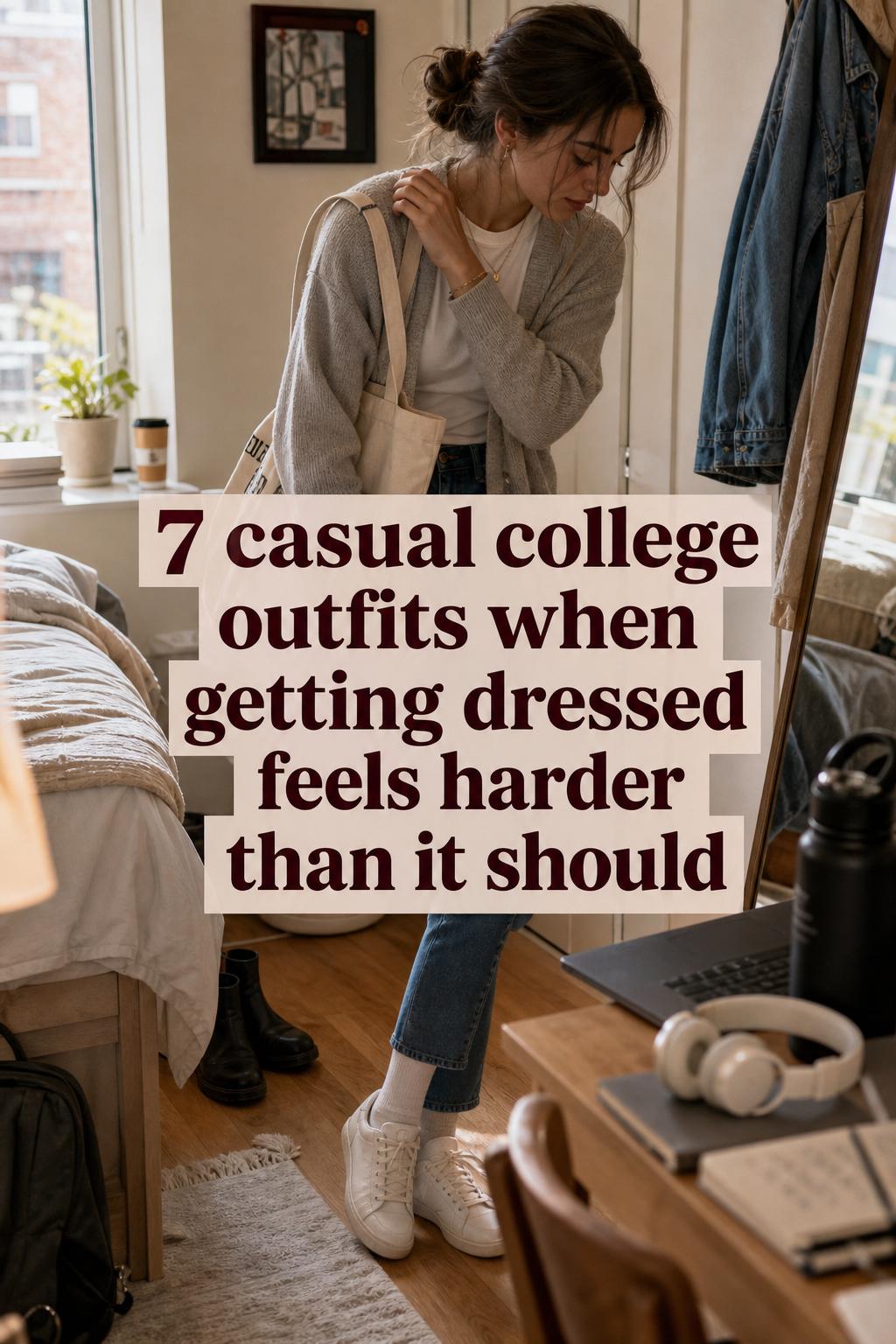
Why some casual college outfits always look more polished
The difference between a thrown-on campus outfit and one that feels refined usually comes down to proportion and contrast. Relaxed pieces need some structure nearby. If your hoodie is oversized, straight jeans or a cleaner sneaker can keep the silhouette from feeling heavy. If your dress is fluid, a structured jacket or blazer adds visual clarity. If your outfit is very simple, a tote bag, satchel, belt, or a small piece of jewelry can sharpen the result.
Texture matters as well. Denim, knitwear, cotton tees, and smooth outerwear create more interest when worn together than one flat fabric from head to toe. This is why a plaid shirt tied over a dress, or a denim jacket layered over a tee and joggers, often looks more considered than a basic matching set worn without anything else.
Color balance is another quiet advantage. Soft neutrals, classic denim blues, black, white, and muted tones are easier to recombine. Graphic tees, plaid shirts, and dresses can introduce personality, but they tend to work best when the rest of the outfit remains grounded. For everyday campus looks, this balance makes getting dressed much faster.
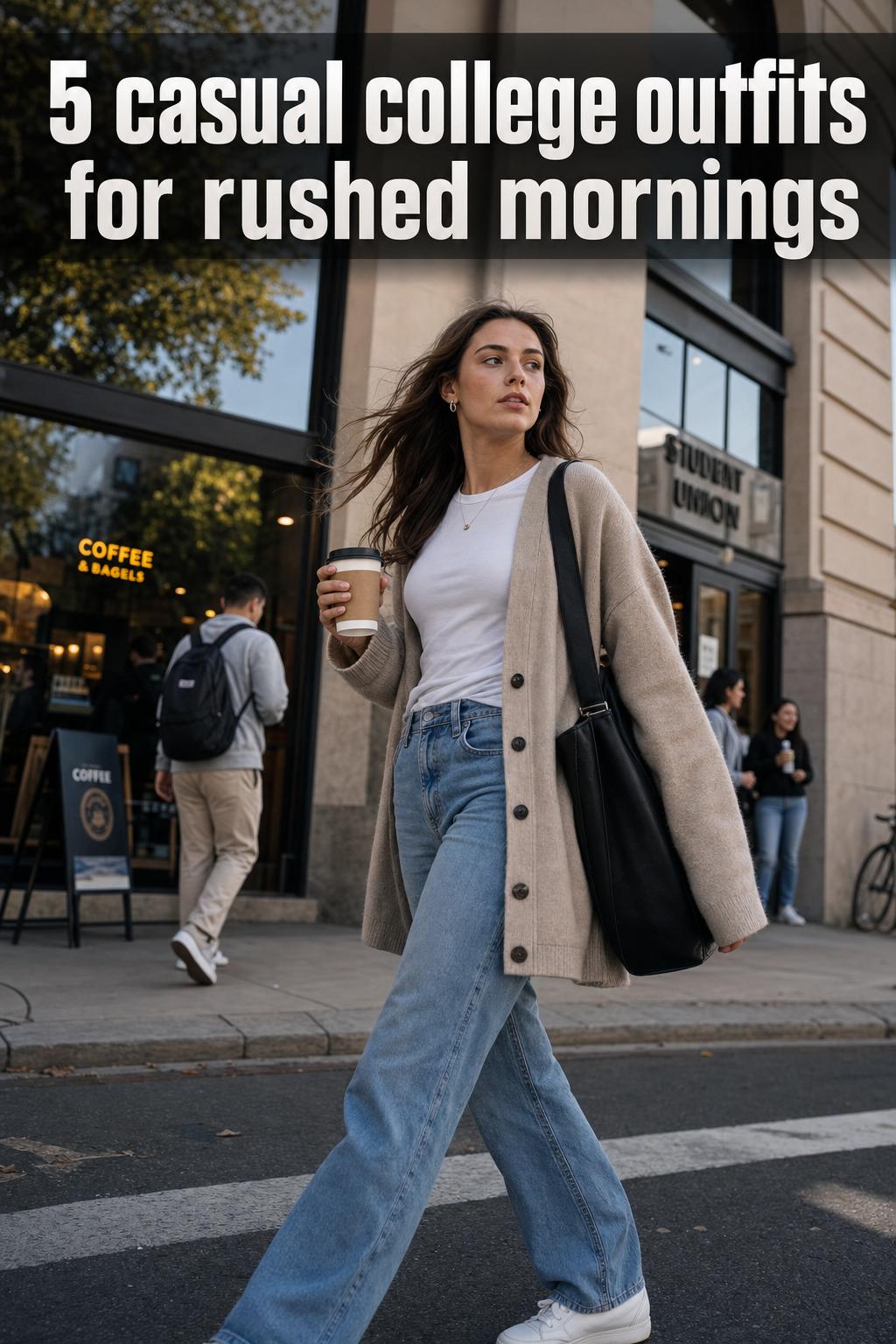
Quick outfit formulas for busy campus mornings
The best outfit formulas are the ones you can repeat without feeling repetitive. A formula is not restrictive; it is simply a reliable framework. Once you know what proportions suit you, these combinations remove decision fatigue while still allowing variety through color, footwear, and layering.
Tee, straight jeans, and sneakers
This is one of the strongest everyday campus looks because it handles almost everything. The tee keeps the look relaxed, the jeans provide structure, and sneakers make it comfortable for long walks between classes. To make this feel more expensive, choose a tee that fits neatly at the shoulder and jeans with a clean line through the leg. A tote bag or backpack completes the outfit without overcomplicating it.
For petite frames, a slightly shorter tee or a front tuck can keep proportions from looking shortened. For curvy builds, straight jeans with a bit of shape at the waist often create a more balanced line than very stiff, boxy denim. For tall frames, this look is particularly easy to wear because longer jeans and slightly oversized tees often feel naturally balanced.
Slip dress, oversized cardigan, and ankle boots
This formula works when you want a softer silhouette without looking overdressed for class. The slip dress brings fluidity, the cardigan makes it campus-appropriate, and ankle boots add enough weight to anchor the look. It is especially effective in transitional weather when mornings are cool and afternoons warm up.
If you prefer more coverage, layer a tee underneath the dress or add a denim jacket instead of the cardigan. If the dress feels too delicate for your campus environment, combat boots create a stronger contrast and make the outfit more practical for walking. This is also a useful formula for presentations or casual campus events where jeans feel too informal but full dressiness would look out of place.
Knit set, structured jacket, and loafers
For days when comfort matters most but you still want clean lines, this combination is quietly effective. The knit set offers softness and ease, while the structured jacket prevents the outfit from reading like lounge wear. Loafers give the look a slightly more composed finish than sneakers.
This formula is especially useful for commuters or students moving between class and informal work settings. If loafers feel too polished for your campus, white sneakers keep the outfit approachable. The key is contrast: one relaxed layer, one tailored layer.
Denim as the anchor of everyday campus style
Many of the strongest casual college outfits depend on denim because it stabilizes the wardrobe. Denim works with athletic-inspired pieces, soft dresses, polished jackets, and simple basics. It is hard to overstate how much easier dressing becomes once you have a few denim options that genuinely fit your life.
Jeans for daily repetition
Jeans are the obvious foundation, but not every pair functions equally well. The most versatile campus pair is usually one that can work with both sneakers and loafers, and that sits comfortably through long seated hours. If a pair only looks right with one shoe or one top, it is less useful than it seems. Straight jeans, in particular, keep appearing in campus outfits because they pair well with graphic tees, plaid shirts, hoodies, blazers, and cardigans.
Denim skirt and denim shorts for warmer days
A denim skirt can be one of the easiest ways to vary your campus wardrobe without leaving your comfort zone. Styled with a tee and sneakers, it feels simple and familiar. With a button-up or cardigan, it becomes slightly more polished. Denim shorts offer a similar effect in warmer weather, though they work best when the rest of the outfit remains streamlined. An oversized hoodie with very casual shorts can feel too unstructured unless balanced with cleaner sneakers or a more defined bag.
Denim jacket layering
A denim jacket is one of the most forgiving outer layers for college because it sits comfortably over dresses, tees, joggers, and even athletic-inspired outfits. In temperate regions or during back-to-school season, it can replace heavier outerwear. It also solves a common campus problem: how to add enough structure to an otherwise soft outfit without making it feel formal.
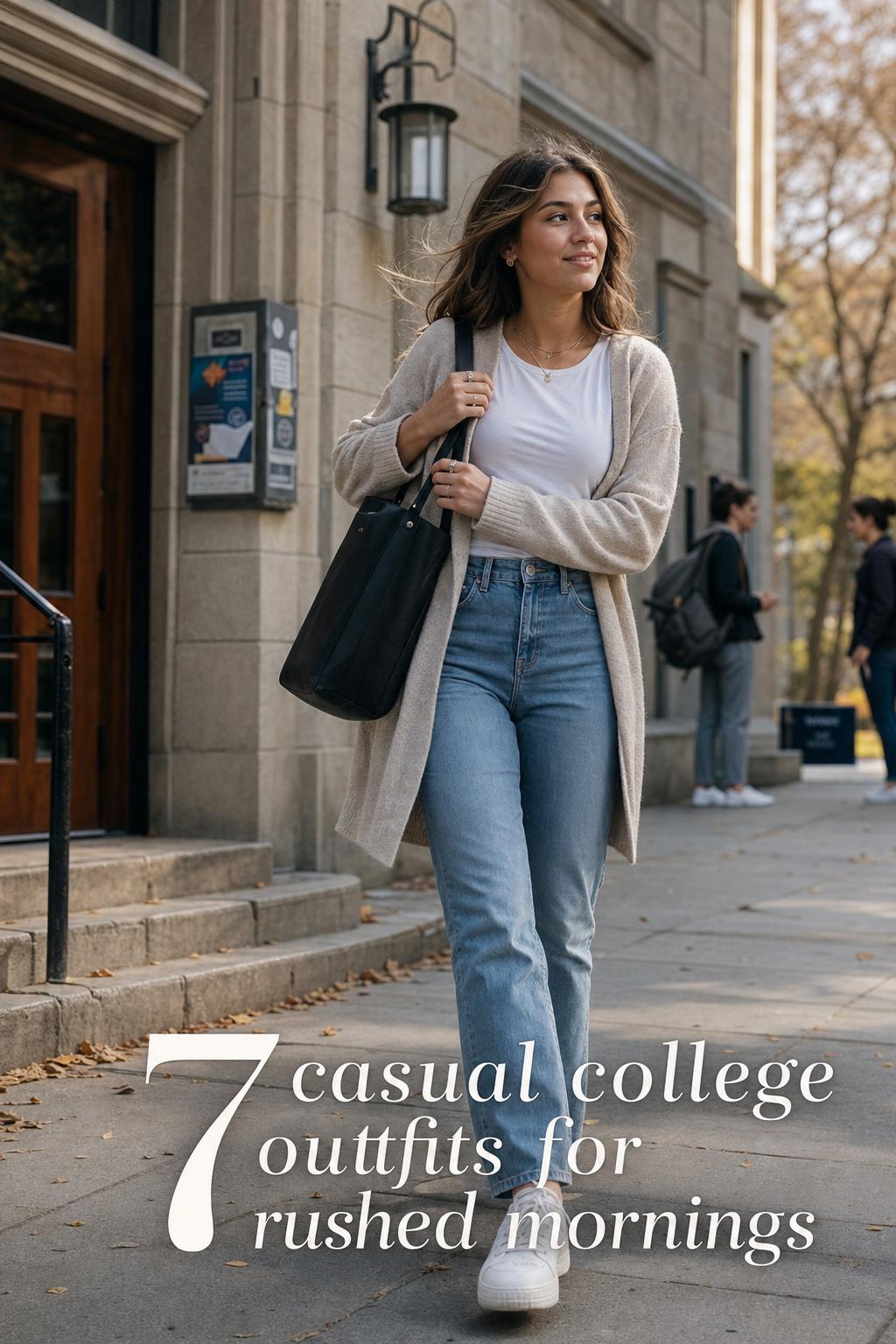
Athleisure, joggers, and sweatpants without looking underdressed
Athleisure has a permanent place in campus style because college life values movement, comfort, and low-maintenance dressing. But there is a difference between purposeful athleisure and simply wearing whatever is clean. The first relies on shape, repetition, and one polished element. The second often feels accidental.
Joggers and sweatpants look strongest when paired with pieces that create visual intention: a fitted tee, a clean sneaker, a structured jacket, or a matching sweat set broken up with a denim jacket or blazer. Oversized hoodies are equally effective, but they need some balance. If both the top and bottom are voluminous, the outfit can feel shapeless. A neater shoe, a slightly cropped layer, or a compact tote bag can solve that.
- Choose sweatpants with a clean line rather than overly bulky volume if you want them to work beyond the dorm.
- Keep sneakers clean; footwear often decides whether athleisure reads intentional or careless.
- Layer with denim or a structured jacket to make relaxed pieces feel campus-ready.
- If you wear a matching sweat set, add contrast through a plaid shirt, outerwear, or accessories.
This category is especially practical during finals week, long study days, and cooler weather. It can also suit students who spend a lot of time commuting. The mistake to avoid is letting every element be equally soft. Comfortable does not have to mean visually flat.
Dresses, skirts, and one-piece options that still feel casual
Many students overlook dresses because they assume dresses require more effort than jeans. In reality, a simple dress can be one of the easiest outfit solutions on a rushed morning. Once you add sneakers, a cardigan, or a denim jacket, the look becomes practical very quickly. The appeal lies in the silhouette: one piece creates coherence immediately, which is why dresses often feel more polished with less work.
A knit dress with sneakers is one of the most functional dressy-casual campus outfits. It moves easily, feels comfortable during long wear, and can shift from class to a presentation or event with minor changes. A blazer layered over a midi dress creates a slightly more formal version suitable for campus events, while a cardigan keeps the mood softer and more everyday.
For those who prefer a playful alternative, a onesie romper can work in casual settings, especially in warmer weather. Because it is already visually complete, it needs very little styling beyond clean sneakers and a light layer. The same logic applies to simple dresses: when the base is easy, accessories can stay minimal.
If you are concerned about practicality, choose silhouettes that allow movement when sitting on lecture hall seats, climbing stairs, or walking across campus. This matters more than trend value. A casual college outfit only succeeds if it still works after several hours of real life.
Weather-proof campus dressing by region
Not all campuses ask for the same wardrobe. A useful college closet reflects climate as much as style. The same core pieces can still work, but layering and fabric choice should shift according to region. This is one of the biggest gaps in many outfit guides, and it matters because weather often determines whether an outfit gets worn at all.
Coastal and temperate campuses
Light layers do most of the work here. A tee with jeans and sneakers can be finished with a cardigan, denim jacket, or trench when needed. Breathable fabrics are useful because temperatures can change throughout the day. A plaid shirt tied around the shoulders or waist is not only visually casual; it also solves practical layering needs without much bulk.
Midwestern and Northeastern campuses
Layering becomes the central skill. Knitwear, hoodies, jackets, insulated coats, and boots matter more here because outdoor walks between buildings can be significant. A base of tee and jeans can still anchor the outfit, but outerwear and footwear must do more work. Combat boots, ankle boots, and insulated boots can all belong in a college wardrobe when chosen with walking comfort in mind. A blazer may still be useful indoors, but it cannot be your only structured layer.
Southern campuses
Breathable fabrics, sun protection, and lighter silhouettes are more practical. Dresses, denim shorts, tees, and sneakers become especially valuable. A button-up can function as both top and light layer. Because heat can flatten an outfit visually, this is where accessories such as tote bags, satchels, belts, and minimal jewelry can help add interest without adding weight.
In a city-influenced campus setting such as Manhattan or New York, the campus outfit often leans slightly more layered and intentional even when still casual. A button-up under knitwear, cleaner denim, loafers, or a structured bag can make sense there in a way that may feel unnecessary on a more relaxed campus. Campus culture matters alongside climate.
The pieces that handle presentations, orientation, and campus events
Not every college day is purely casual. Orientation weekend, class presentations, back-to-school events, and homecoming-related gatherings ask for outfits that feel polished without appearing formal. The solution is not to abandon comfort; it is to choose dressy-casual campus outfits with cleaner lines.
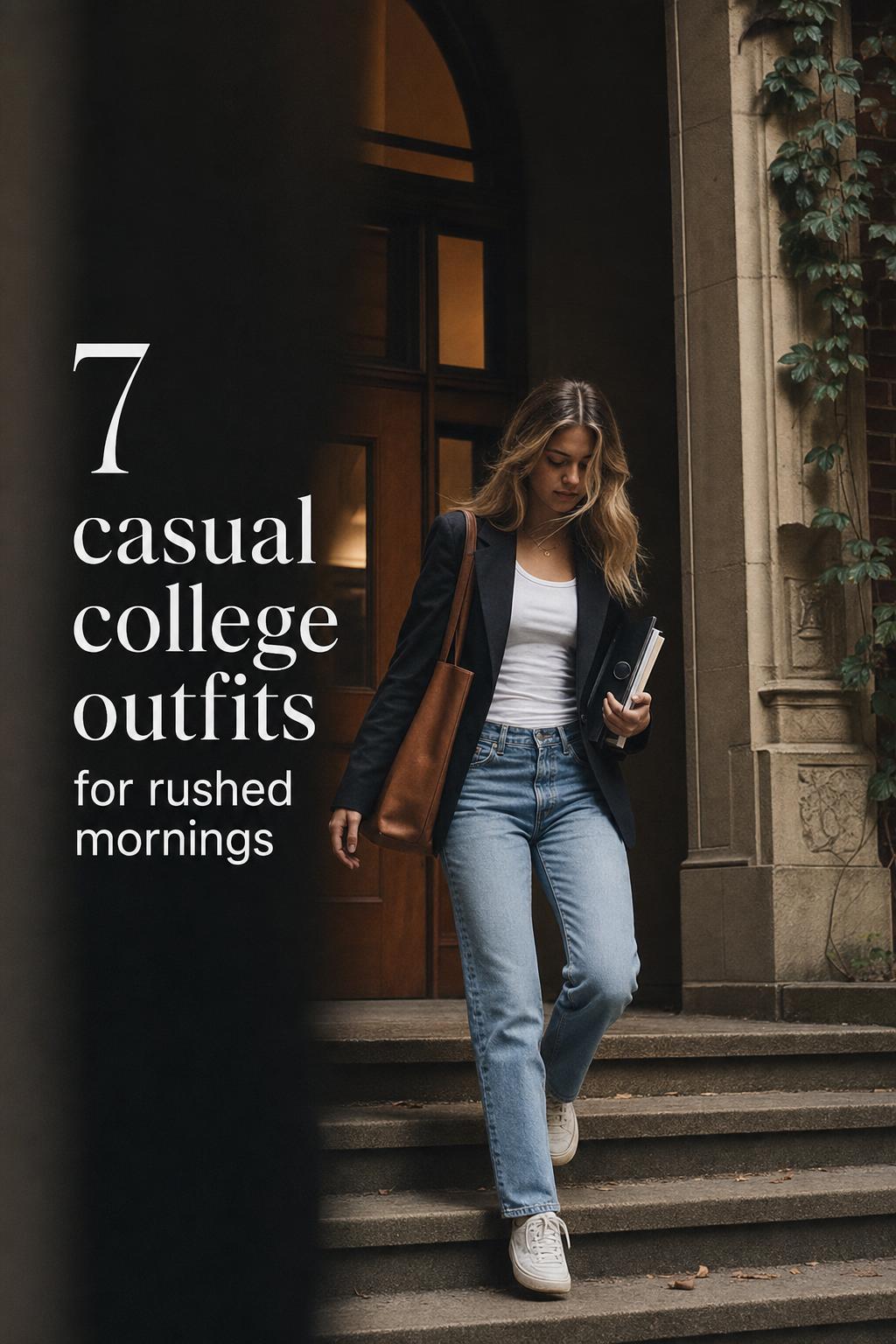
A blazer over jeans and a tee is one of the simplest ways to achieve that shift. The tee keeps the outfit approachable, while the blazer changes the tone immediately. A midi dress with a blazer works similarly for those who prefer a one-piece base. Loafers can reinforce the polished mood, while sneakers soften it if your campus atmosphere is more relaxed.
For orientation, an outfit should be easy to move in, adaptable to indoor and outdoor settings, and comfortable enough for a long day. Straight jeans, a breathable tee, a cardigan or light jacket, and clean sneakers remain one of the safest combinations. For finals week, comfort rises in priority, but there is still value in maintaining structure through a clean hoodie, joggers, and a reliable outer layer. Looking put together often supports confidence, especially on high-pressure days.
Accessories that make campus outfits feel intentional
Accessories should not be treated as afterthoughts in college dressing. On a campus wardrobe built largely from basics, they create distinction. A tote bag or satchel adds shape to soft outfits, a belt can define the waist over dresses or denim, and statement earrings can lift a simple tee-and-jeans combination without making it impractical for class.
Backpacks still have their place, of course, especially for students carrying a great deal. The key is proportion. A very large backpack paired with oversized clothing can make the whole look feel heavy. If your bag is substantial, keep the outfit lines cleaner elsewhere. If your outfit is relaxed and layered, a more structured bag can make the entire composition feel balanced.
Scarves, hats, and small jewelry pieces also matter in climate-specific wardrobes. In colder regions, they are not just decorative but functional. In warmer climates, restraint is usually more effective. One strong accessory often does more than several competing ones.
How to adapt these outfits for body proportions and personal comfort
A useful outfit formula should bend to your proportions rather than ask you to ignore them. This is where many trend-based outfit roundups fall short. The most wearable casual college outfits are not about copying one silhouette exactly, but about understanding what each piece is doing inside the outfit.
If you are petite, too much volume at once can overwhelm the frame. A slightly shorter cardigan, a front tuck, or a sneaker with a cleaner shape can keep the look light. If you are tall, oversized hoodies, straight jeans, longer cardigans, and relaxed jackets often feel particularly natural because they echo vertical lines rather than interrupt them. If you are curvy, waist definition can be useful in dresses, blazers, and cardigans, while jeans with a cleaner fit through the waist and hip often make layering easier.
Comfort is equally individual. Some students need outfits that work for dorm living and frequent walking. Others need commuter-friendly looks that can hold their shape through a train ride or full day away from home. If your day involves long sitting hours, stiff denim or boots that require breaking in may not be your best weekday choice, no matter how good they look in theory. Style is only convincing when it survives use.
Common campus styling mistakes worth avoiding
The fastest way to improve your wardrobe is not always to buy more. Often, it is to remove the habits that make outfits feel less considered than they could.
- Wearing all oversized pieces together without a point of structure, which can make the outfit feel shapeless.
- Choosing shoes that do not match the day’s walking demands, then avoiding the outfit entirely.
- Buying trend pieces before securing basics such as jeans, tees, sneakers, and layering pieces.
- Ignoring weather realities and relying on outfits that only work indoors.
- Using too many statement elements at once instead of letting one piece lead.
- Keeping items that look appealing individually but do not integrate into the rest of the wardrobe.
A smaller wardrobe with stronger combinations is almost always more useful than a larger wardrobe full of disconnected pieces. This is why elevated basics outperform impulse purchases over the course of a semester.
Shopping with intelligence: what is worth investing in and what can stay affordable
College style is often budget-conscious, and rightly so. Not every item deserves equal spending. The pieces worth investing in are usually the ones that affect comfort, frequency of wear, and the overall finish of the outfit: jeans that fit properly, sneakers you can walk in, boots if you live in a colder region, and a jacket or blazer that gives shape to many looks.
Items that can remain affordable include tees, graphic tees, layering basics, plaid shirts, and trend-led additions such as cargo pants or a matching sweat set. These pieces can still look good, but they rarely need to carry the same structural responsibility as footwear or outerwear. Thrift finds are especially useful in this category because they allow experimentation without significant cost. They also align well with a more thoughtful, less wasteful approach to campus style.
When shopping, ask practical questions before anything else. Can this be worn with jeans and sneakers? Can it layer under or over a cardigan, jacket, or hoodie? Will it work in at least two seasons? Can it adapt to class, a coffee run, and a casual campus event? These questions make impulse decisions less likely and versatility more likely.
Campus style moods worth knowing, from prep-leisure to cozy athleisure
Not every wardrobe needs the same visual personality. Within casual college outfits, a few style directions appear naturally. Prep-leisure combines structured pieces such as a blazer, loafers, or button-up with relaxed denim or knitwear. Cozy athleisure leans on joggers, hoodies, matching sets, and sneakers, elevated through cleaner proportions and outer layers. Edgy academia pulls in plaid shirts, combat boots, darker denim, and jackets for a stronger silhouette.
These are useful not as labels to follow rigidly, but as ways to recognize what you are already drawn to. A student influenced by New York or Manhattan campus style may prefer cleaner lines, button-ups, structured bags, and polished outerwear. Someone on a more laid-back campus may rely more heavily on denim, oversized hoodies, and sneakers. Personal style becomes more consistent once you understand your default mood.
Internal wardrobe logic: how one outfit should lead to the next
The smartest college wardrobes are built in clusters, not isolated looks. A cardigan should work with jeans, dresses, and skirts. Sneakers should work with athleisure, denim, and dresses. A blazer should pair with a tee, a midi dress, or a button-up. This internal logic is what makes a wardrobe feel calm instead of chaotic.
If a piece only works in one exact styling scenario, it is less helpful during the semester. By contrast, elevated basics create a chain reaction. Buy the right jeans, and suddenly your tees, plaid shirts, blazers, and sneakers all work harder. Add the right outerwear, and dresses and knitwear become more useful. This is the real power of capsule thinking on campus: not restriction, but momentum.
Practical tips for making casual college outfits work harder
A polished campus wardrobe rarely depends on dramatic styling. It is usually a collection of small, smart decisions repeated well.
- Keep one “default” lecture outfit formula and one “default” presentation outfit formula ready at all times.
- Use layering pieces to extend outfits across seasons instead of replacing the whole wardrobe.
- Pair softer garments with one structured element to avoid looking unfinished.
- Choose bags and shoes based on how much walking your campus requires.
- Repeat your best combinations confidently; consistency often looks more stylish than constant novelty.
- Build around denim, tees, and sneakers first, then add dresses, blazers, cargo pants, or boots as secondary layers of style.
The most successful campus style is rarely the most complicated. It is the outfit that still feels right halfway through the day, still looks composed after hours of wear, and still gives you enough confidence to focus on everything else.
FAQ
What are the most versatile pieces for casual college outfits?
The most versatile pieces are jeans, tees, sneakers, a cardigan, a hoodie, and one structured layer such as a blazer or jacket. These items mix easily with dresses, denim skirts, joggers, and button-ups, which is why they form the backbone of a practical campus wardrobe.
How can I make casual college outfits look more polished without losing comfort?
Use contrast. Pair relaxed items such as hoodies, joggers, or oversized cardigans with cleaner shoes, structured jackets, straight jeans, or a defined bag. Clean sneakers, balanced proportions, and one intentional accessory often make a bigger difference than adding more trend pieces.
What should I buy first if I am building a college wardrobe on a budget?
Start with the pieces you can wear repeatedly across classes and seasons: jeans, two or three T-shirts, sneakers, a cardigan, and a practical jacket. After that, add a dress, a button-up, and one polished shoe option such as loafers or ankle boots if your routine calls for them.
Do dresses actually work for everyday campus life?
Yes, especially simple dresses and knit dresses. They are often easier than separates because the outfit is mostly complete on its own. Add sneakers, a cardigan, or a denim jacket, and the look becomes casual enough for class while still feeling polished.
How do I dress for college in changing weather?
Rely on light, removable layers. In temperate areas, cardigans, denim jackets, and trenches are useful. In colder Midwestern or Northeastern settings, knitwear, heavier jackets, and boots matter more. In warmer Southern climates, breathable fabrics, dresses, shorts, and light button-ups tend to be more practical.
What are the best casual college outfits for presentations or campus events?
A blazer with jeans and a tee, a midi dress with a blazer, or a knit dress with sneakers are all strong options. These combinations keep the ease of everyday dressing while adding enough structure to feel appropriate for more visible campus moments.
Can athleisure still look intentional on campus?
Absolutely, as long as it has shape and a polished element. Joggers, sweatpants, or a matching sweat set look more intentional with clean sneakers, a denim jacket, a structured outer layer, or a fitted top that balances volume.
How should I adapt these outfits if I am petite, curvy, or tall?
Petite frames often benefit from less bulk and slightly cleaner proportions, such as front tucks or shorter layers. Curvy frames often suit waist definition and jeans with a clean fit through the waist and hip. Tall frames can usually carry oversized hoodies, longer cardigans, and straighter denim especially well because the vertical proportions feel balanced.
What common mistakes make campus outfits feel less put together?
The most common issues are too much volume at once, footwear that is not practical for the day, buying trend items before securing basics, and choosing pieces that do not connect with the rest of the wardrobe. A more focused closet usually solves these problems quickly.
Leave a Reply