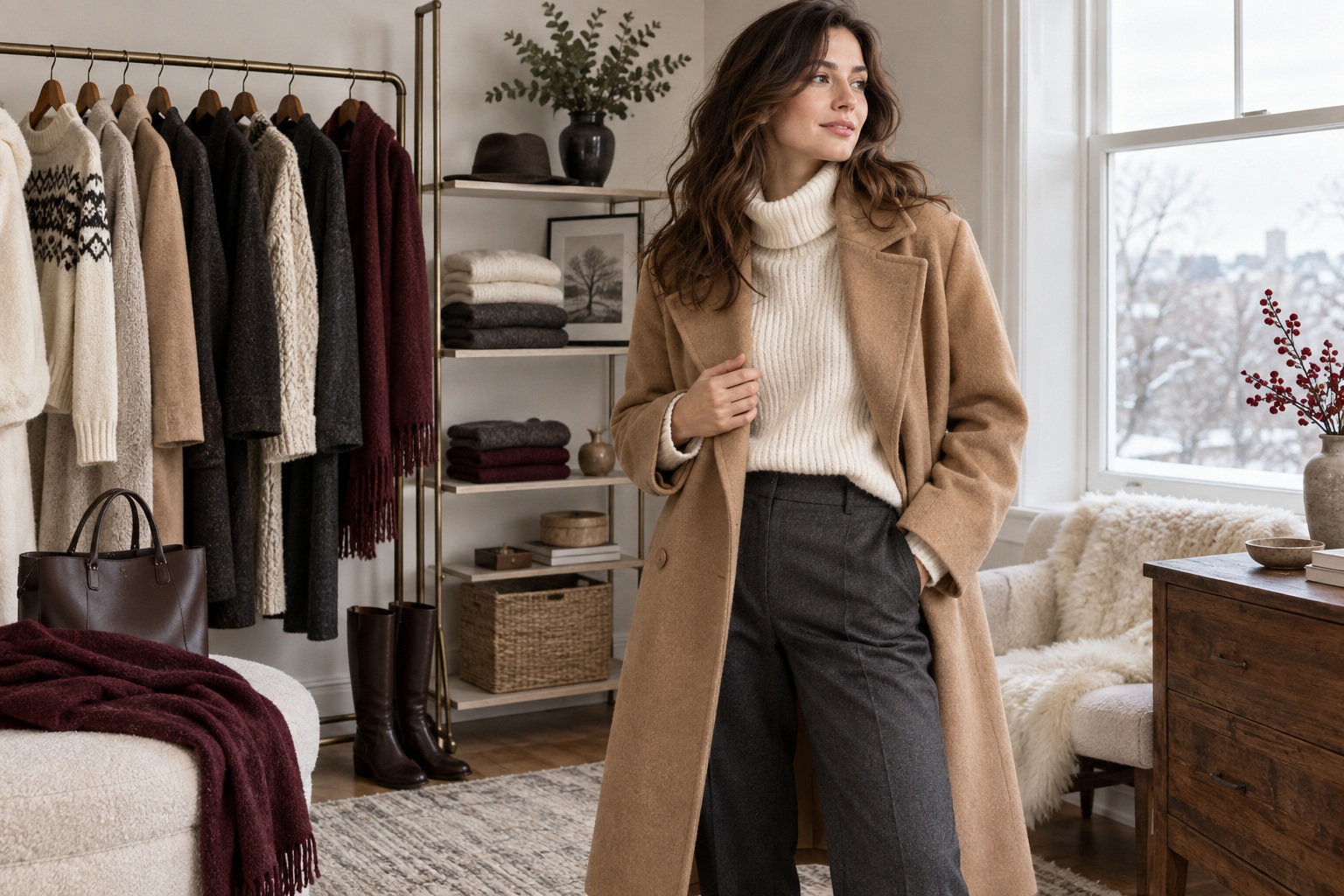
A winter wardrobe should make getting dressed easier, not turn every morning into a negotiation with the weather. The most useful closet is not necessarily the biggest one. It is the one where a warm base layer, a polished middle layer, a reliable coat, and the right shoes can become several different outfits without looking repetitive.
This guide treats your winter wardrobe as a system. Instead of starting with a long shopping list, identify the jobs your clothes need to perform, build a compact core around those jobs, and create outfit formulas that work for real life. The result can be a small capsule or a larger closet with the same logic behind it.
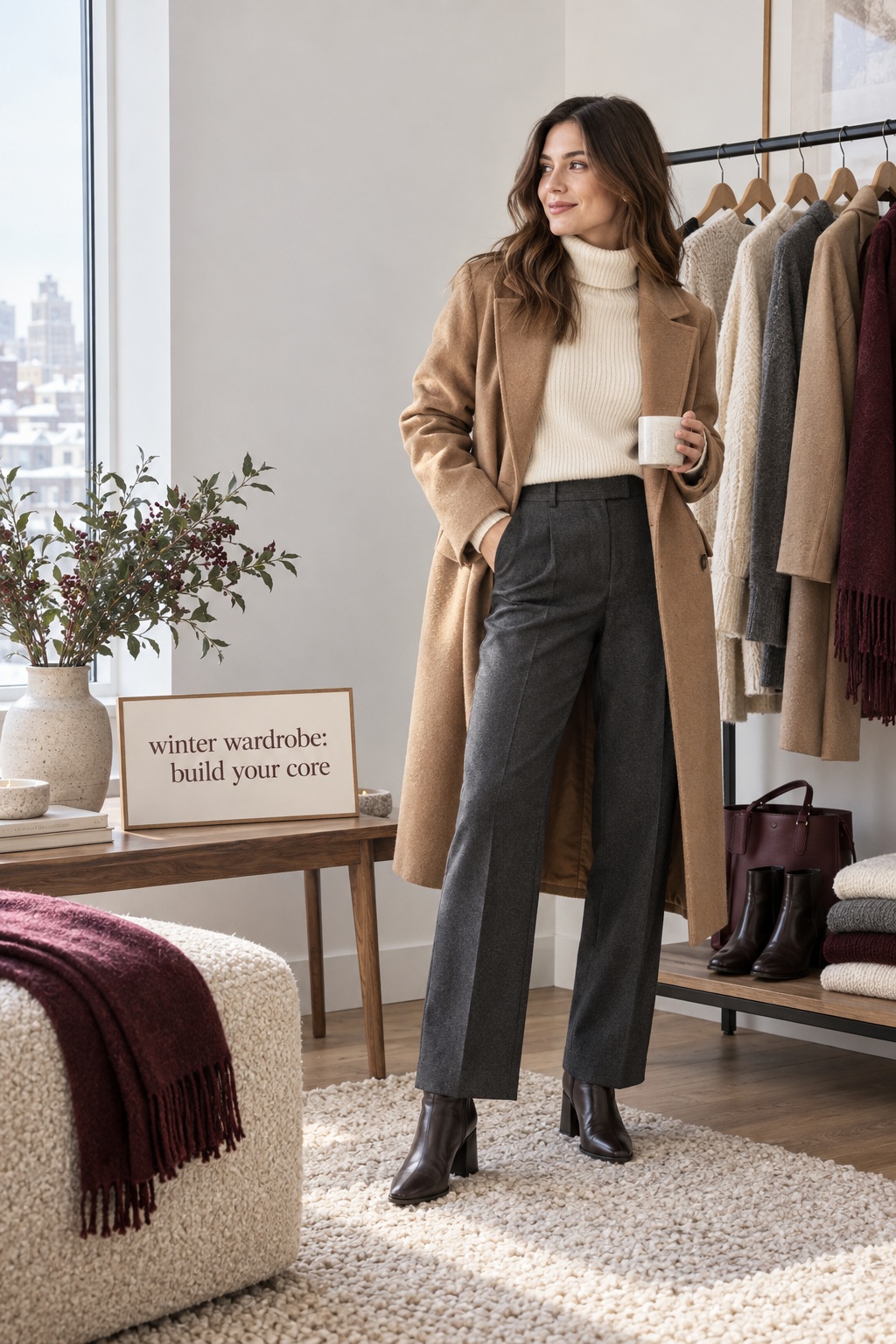
The goal is simple: stay warm outside, comfortable indoors, and put together wherever the day takes you. You can use the method with clothes you already own, then add only the pieces that solve a genuine gap. This approach is especially useful when winter dressing feels repetitive, bulky, or expensive.
Start with wardrobe jobs, not a shopping list
Before you buy another sweater, look at what your winter wardrobe is expected to do. A person who walks to work in snow needs different protection from someone who drives between heated buildings. Someone who spends weekends outdoors needs more technical layers, while someone whose calendar is mostly dinners and office days may need more texture, tailoring, and dressy shoes. The right wardrobe begins with your routine.
Your wedding has a lot of moving pieces. Your plan can still feel composed.
Zarellea organizes guests, vendors, budget, and timelines in one shared space — so you can make decisions with clarity, not stress.
Audit the clothes already in rotation
Pull your cold-weather clothes into one place. Include coats, jackets, knitwear, trousers, jeans, skirts, dresses, boots, sneakers, scarves, hats, gloves, and the long-sleeve tops that disappear under everything else. Do not judge the pile by quantity. Judge it by usefulness. A garment that never leaves the hanger is information, even if it is beautiful.
- Keep pieces that fit comfortably over the layers you actually wear.
- Mark items that look good but fail in cold, wind, rain, or indoor heat.
- Separate damaged pieces from items that only need cleaning, depilling, mending, or a better hanger.
- Notice which colors and silhouettes you reach for without thinking.
- Write down the outfit situations you still struggle to dress for.
This audit usually reveals that the problem is not a total lack of clothes. It is a missing connection. You may own several attractive sweaters but no slim base layer that fits underneath them. You may have excellent coats but only one pair of shoes that can handle wet sidewalks. You may have plenty of black pieces but no lighter layer to create contrast. Naming the gap prevents random shopping.
Assign every useful piece a job
Think in five wardrobe jobs. A piece can have more than one job, but it should be clear why it earns space. Base pieces sit next to the skin. Insulation pieces hold warmth. Weather pieces protect you. Structure pieces give an outfit a clean line. Polish pieces add personality. This vocabulary makes styling decisions quicker because you can diagnose what a look is missing.
- Base: close-fitting tees, tanks, long-sleeve tops, tights, and thin merino or thermal layers.
- Insulation: sweaters, cardigans, fleece, vests, and quilted layers.
- Weather protection: wool coats, puffers, parkas, shells, hats, gloves, and scarves.
- Structure: tailored trousers, dark denim, blazers, straight skirts, and firm shoes.
- Polish: jewelry, a beautiful bag, a textured knit, a velvet accent, or a sleek boot.
This job-based view helps you shop with precision. If a look feels flat, you may need structure or polish, not another warm layer. If you are cold, you need better base or insulation, not a more dramatic coat. If everything feels bulky, the missing solution may be a thinner base layer that lets you reduce the size of the middle layer.
Choose a flexible color and texture language
A winter wardrobe becomes easier to combine when most pieces share a visual language. Start with two or three core neutrals such as black, charcoal, navy, cream, camel, or chocolate. Add one accent family, such as burgundy, forest green, icy blue, or warm red. The accent does not need to appear everywhere. It only needs to repeat often enough that it feels connected.
Texture creates variety when the palette is quiet. Pair smooth denim with fuzzy knitwear, matte wool with polished leather, brushed flannel with ribbed jersey, or a soft scarf with a crisp coat. A strong winter outfit often needs only one noticeable texture and one clean shape. Too many heavy textures at once can make the look feel crowded.
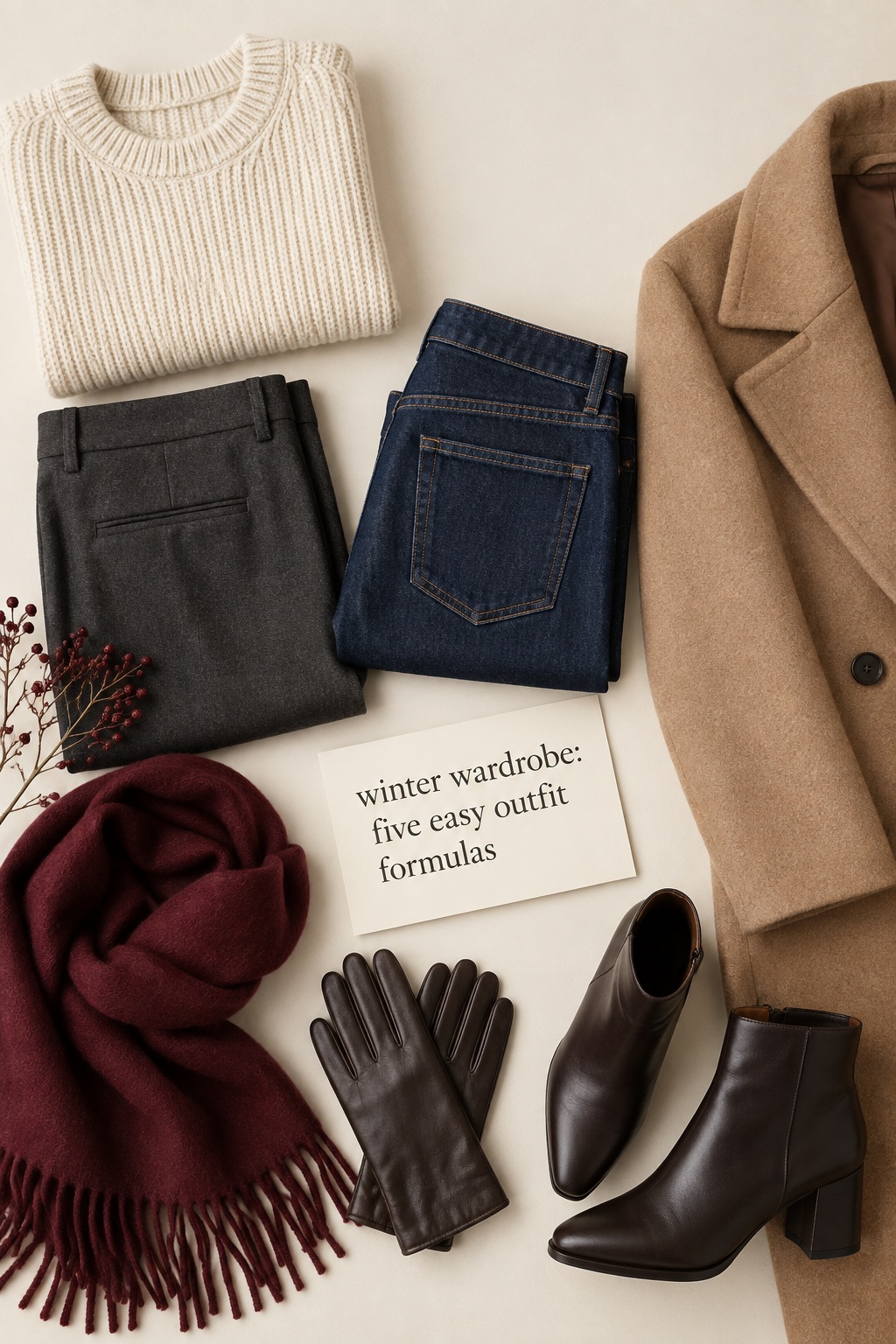
Build the winter core in layers
The core of a winter wardrobe is not a fixed number of pieces. It is a dependable sequence of layers. Each layer should be comfortable on its own and compatible with the layer above it. This is why a thin turtleneck can be more useful than a very thick sweater, and why the right coat is one that closes over your favorite knitwear without pulling.
Layer one: the quiet base
Begin with long-sleeve tops in fabrics that feel comfortable under other clothes. Cotton jersey is easy for mild days. Merino can be useful when you need warmth without much bulk. Silk or a smooth blend can work beneath a shirt or dress when you want the base layer to disappear. The best colors are the ones that repeat in your wardrobe, usually black, ivory, gray, navy, or a skin-close neutral.
Do not buy every base layer in the same neckline. A crew neck, a mock neck, and a scoop or square neck give you different styling options. Sleeve length matters too. A fitted long sleeve under a sleeveless dress changes what you can wear in winter, while a fine turtleneck can turn a blazer, cardigan, or short-sleeve knit into a colder-weather outfit.
Layer two: insulation with shape
Your middle layer supplies warmth and personality. Keep at least one fine knit for easy layering, one medium-weight sweater for everyday wear, and one more generous knit for especially cold days. A cardigan is valuable because it can be opened indoors. A vest adds insulation while keeping your arms free. A fleece or quilted layer makes sense when your winter is active or wet.
Balance volume deliberately. If the sweater is chunky, choose a straighter or slimmer bottom. If the trousers are wide, try a shorter knit, a tucked fine sweater, or a jacket that ends near the waist. An oversized coat can work with almost anything, but the outfit underneath should still have one visible line of structure, such as a defined shoulder, a clean trouser crease, or a tucked hem.
Layer three: outerwear that finishes the outfit
Outerwear is both protection and the first impression of a winter outfit. A long wool coat gives polish to jeans, work trousers, and dresses. A puffer is the practical answer for wind, snow, and long outdoor stretches. A shorter jacket can be useful for driving, commuting, or milder days. If rain is common, a weather-resistant shell or parka may be more valuable than a second fashion coat.
Check the coat with the layers you actually own. Can you button it over your thickest sweater? Do the sleeves leave room for a cuff? Does the hem work with your longest skirt or dress? Can you reach into the pockets while wearing gloves? These details determine whether an outer layer becomes a favorite or stays on the hanger.
Layer four: shoes and accessories that do real work
Winter shoes need to support the outfit and the ground beneath you. One weather-ready boot with a stable sole may be more useful than several delicate pairs. Add a sleek ankle boot or loafer for indoor-heavy days, then consider a sneaker that can handle your normal commute. A tall boot works especially well with skirts, dresses, and wide-leg trousers when the shaft stays hidden under the hem.
Accessories are not an afterthought. A scarf can add color, warmth, and a new proportion to a familiar coat. Gloves make a simple outfit feel finished when they echo the leather of a bag or shoes. A beanie can soften tailoring, while a structured hat can give a puffer a sharper direction. Keep these pieces in the same palette as the rest of the wardrobe so they connect multiple outfits.
For a useful overview of winter capsule categories, compare the practical layering logic in Condé Nast Traveler’s winter basics guide with the more fashion-led essentials in Harper’s Bazaar’s winter capsule edit. The best choices are the ones that suit your own weather, schedule, and comfort level.
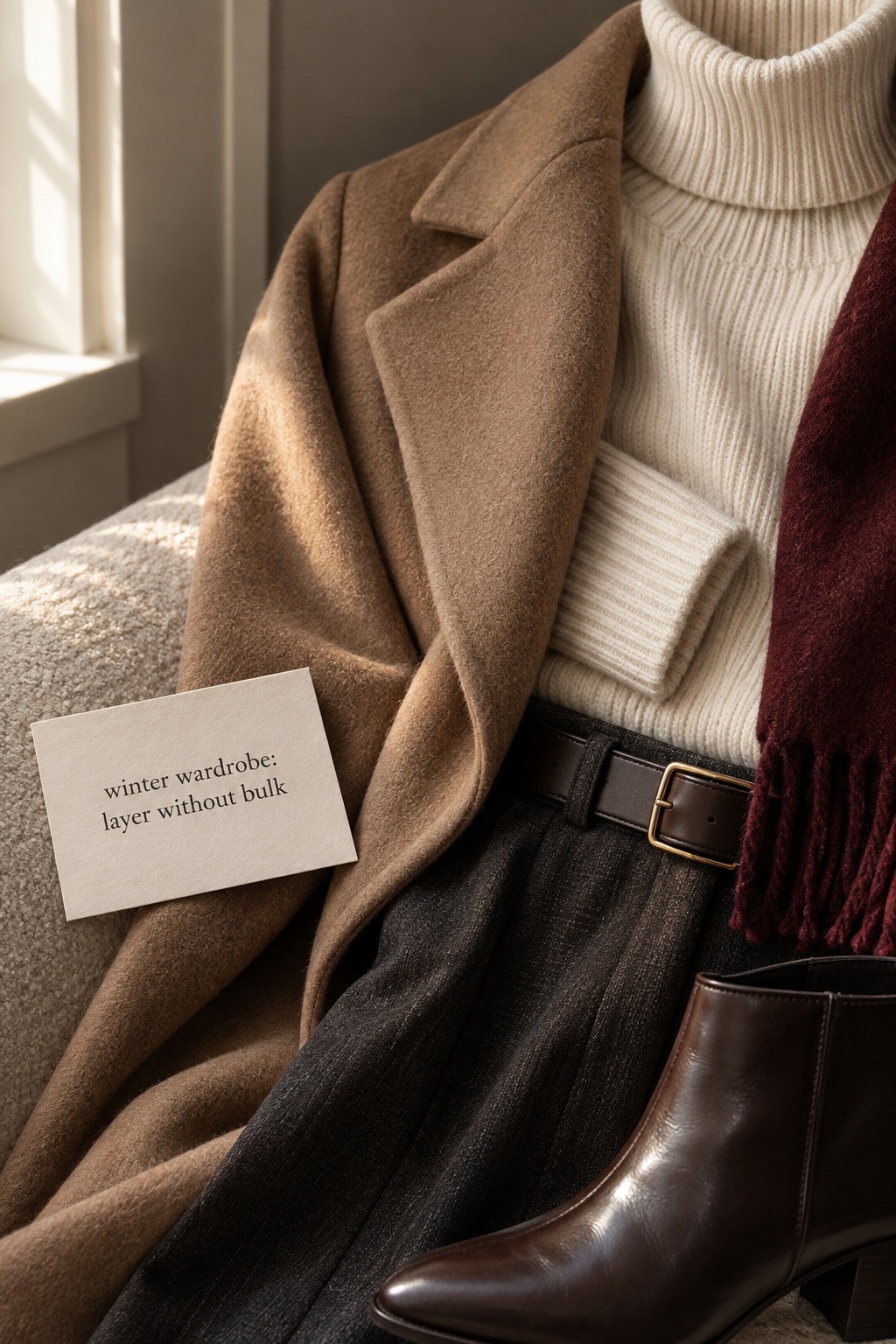
Use five outfit formulas for real winter days
A wardrobe proves its value in the morning, when you have limited time and a specific day ahead. The formulas below are not uniforms. They are starting points that make it easier to substitute what you own while keeping the balance of warmth, shape, and polish. Save the formulas as a mental checklist, then change one detail when you want a different result.
1. The polished workday
Start with a fine base layer, tailored trousers or a straight midi skirt, and a medium-weight knit or blazer. Finish with a long coat, ankle boots, and one deliberate accessory. The base layer keeps the outfit comfortable in a heated office. The tailored bottom and coat maintain a clear line when the sweater is relaxed. For a creative workplace, use a textured cardigan or patterned scarf. For a conservative setting, keep the palette tonal.
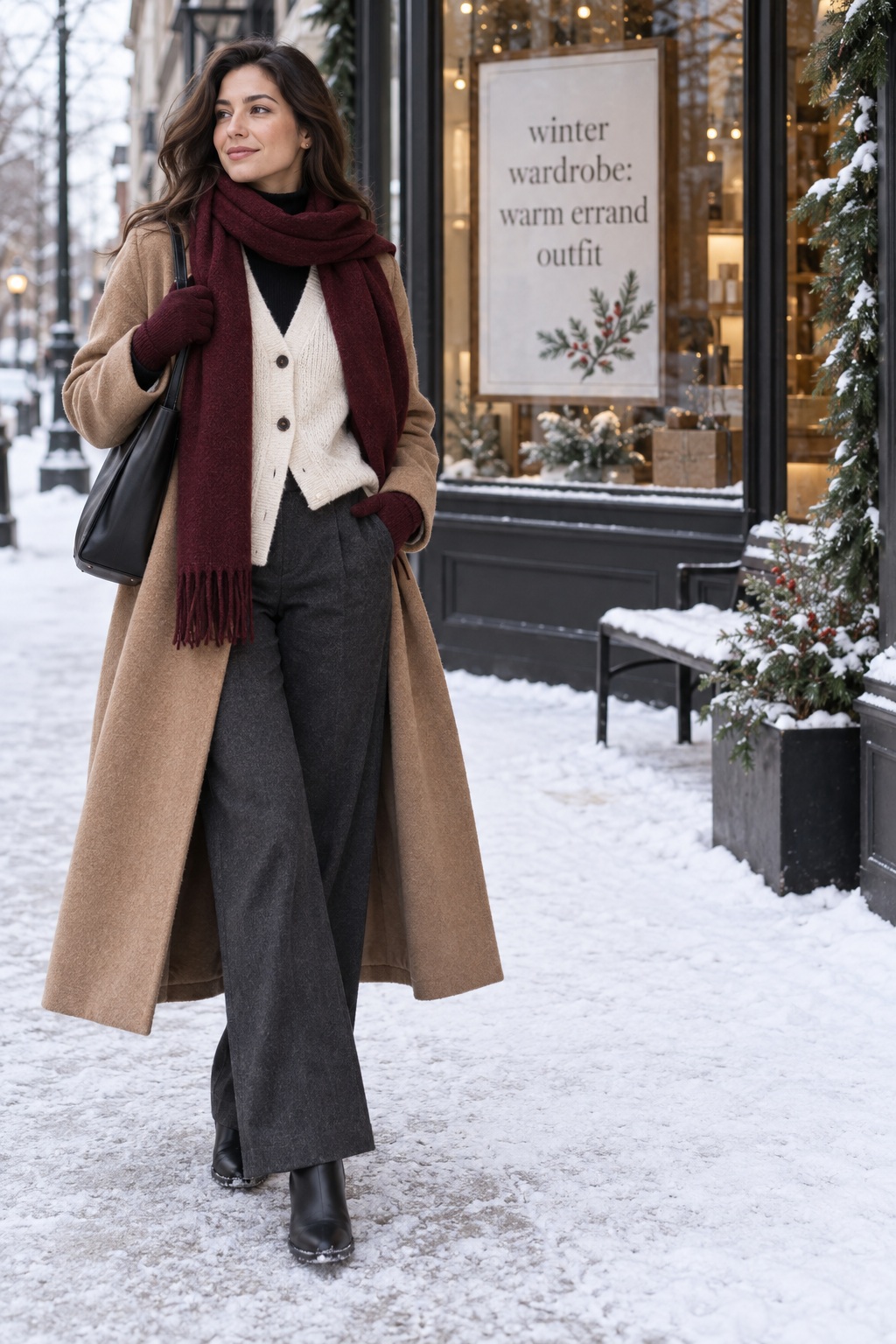
2. The warm errand outfit
Use a close-fitting base, straight or relaxed jeans, a sweater, and a practical puffer or parka. Choose shoes with traction and leave enough room for socks. This formula works because the silhouette stays simple while the outer layer handles the weather. To keep it from looking like an afterthought, repeat one color in two places. A burgundy beanie can echo a stripe in the sweater, while a cream scarf can connect pale denim to a dark coat.
3. The relaxed weekend look
Build around one comfortable piece that still has shape, such as wide-leg jeans, corduroy trousers, or a knit dress. Add a fine base layer if needed, then use a cardigan, chore jacket, shearling-style layer, or oversized coat. The key is contrast: one soft or loose item with one cleaner item. Try wide-leg jeans with a fitted turtleneck, a cropped cardigan, and a long coat. Or wear a knit dress with tights, a tall boot, and a short jacket.
4. The travel-ready winter uniform
Travel outfits need to tolerate temperature changes, sitting, walking, and repeated wear. Start with a smooth long-sleeve top, relaxed trousers or dark stretch denim, a fine sweater, and a packable insulating layer. Add a coat that works at your destination, comfortable boots or sneakers, and a scarf that can double as a warm layer on a cold plane. Keep the palette narrow so every item can be worn with every other item.
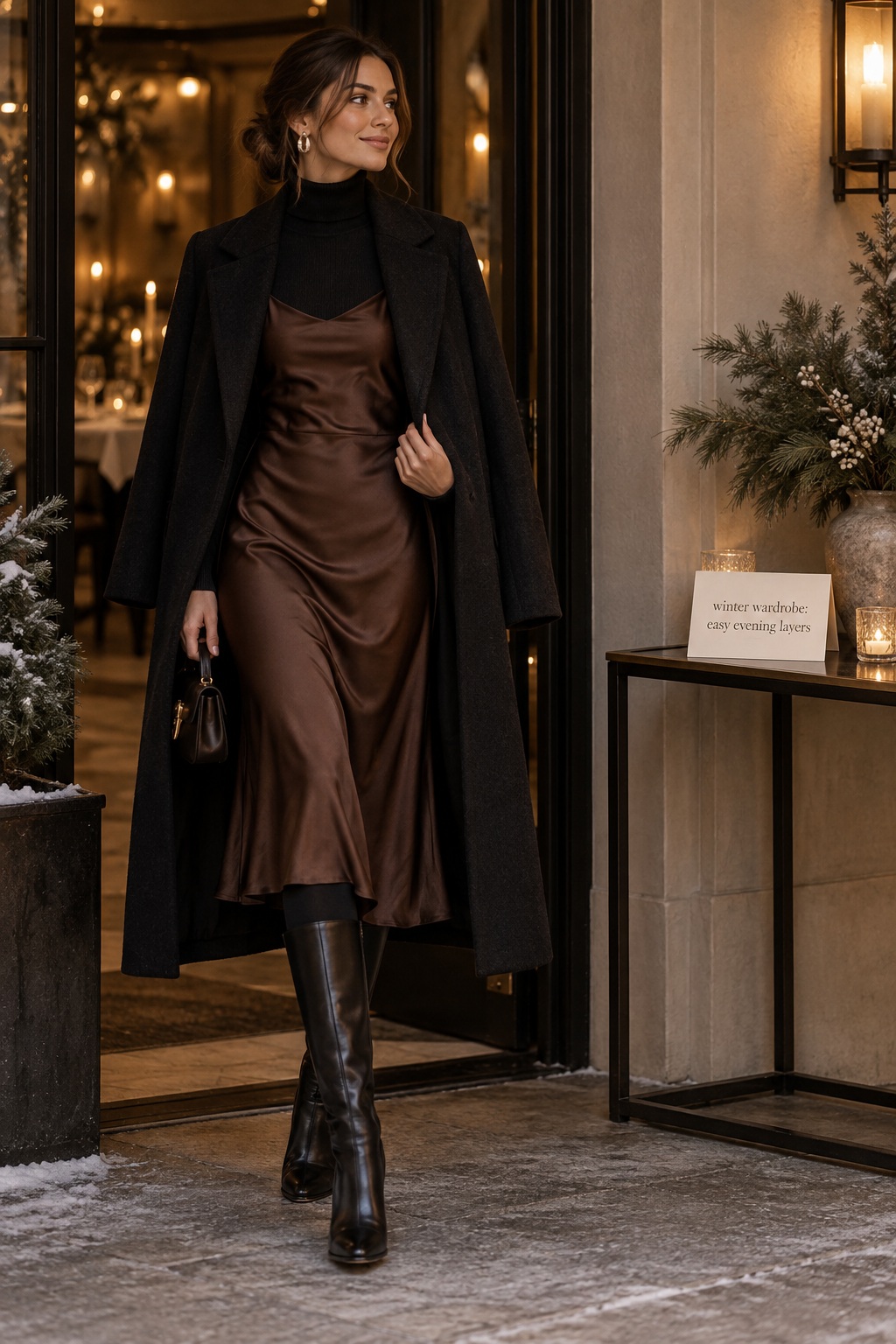
5. The winter evening outfit
Warmth does not require hiding your personal style. Put a fine turtleneck under a slip or knit dress, wear a velvet or satin skirt with an oversized sweater, or pair tailored trousers with a polished top and a strong coat. Opaque tights, a tall boot, and a long coat can make a lighter dress feel appropriate for a cold evening. Choose one focal point, such as a glossy shoe, bright bag, interesting neckline, metallic earring, or rich fabric.
Edit, care for, and extend the system
The most successful winter wardrobe is maintained throughout the season. After wearing an outfit, notice what worked. Did the sweater ride up under the coat? Did the boot make walking uncomfortable? Did you feel too warm indoors? Small observations are more useful than a sudden shopping spree. Keep a short note on your phone and review it before buying anything new.
Use the three-outfit test before adding a piece
Before buying something new, name three complete outfits you can make with clothes you own. Include shoes and an outer layer. If you can only imagine one special occasion for the item, it may be a treat rather than a wardrobe solution. That is fine if you choose it intentionally, but do not confuse it with a missing essential. For a core piece, raise the standard and look for three contexts such as office, weekend, and travel.
Care is part of styling
- Air knits between wears and follow the care label before washing.
- Use a fabric shaver carefully on pilling rather than discarding a good sweater too early.
- Give boots time to dry naturally and protect them according to their material.
- Store coats with enough space that the shoulders keep their shape.
- Keep scarves and gloves together so the finishing pieces are available when you need them.
Care changes how your wardrobe looks. Clean, brushed knitwear and conditioned leather make simple outfits feel more deliberate. The visual effect is similar to adding polish, but it costs less and keeps your best pieces in rotation longer. A wardrobe that is cared for also gives you clearer information about what truly needs replacing.
Adjust for your actual winter
There is no universal winter wardrobe. In a mild climate, a wool overshirt, trench, leather jacket, or fine knit may be more useful than a heavy parka. In a snowy climate, insulation, traction, and weather resistance need to take priority. If you move between a cold commute and overheated buildings, thin flexible layers are often more useful than one very warm sweater. Build around the conditions you experience, not the fantasy version of winter you see in an editorial image.
Comfort is not separate from style. It is what lets you wear the outfit with confidence. A coat that closes, boots you can walk in, and layers that do not pinch will always look better than a theoretically perfect outfit you spend the day adjusting. Let the practical requirements guide the visual choices, then use color, texture, and accessories to make the result personal.
FAQ
How many pieces should a winter wardrobe have?
There is no required number. Start with enough base layers, insulating pieces, outerwear, bottoms, shoes, and accessories to cover your weekly routine without constant laundry or discomfort. A smaller wardrobe can work well when every piece has several partners. A larger wardrobe is useful when your work, weather, or activities require distinct categories.
What are the most useful winter wardrobe colors?
Choose two or three neutrals that you already enjoy wearing, then add one accent family. Black, charcoal, navy, cream, camel, and chocolate are flexible starting points, but the best palette is the one that makes your existing clothes easy to combine. Repeat accent colors in small details rather than buying an entire new color story.
How can I layer without looking bulky?
Use a thin base layer, keep the middle layer suited to the coat, and avoid making every piece oversized. One relaxed item is usually enough. Pay attention to sleeve and hem lengths, because clean lines make layers look intentional. A fine turtleneck under a cardigan or blazer often adds warmth with less bulk than a second chunky sweater.
What shoes work best with winter outfits?
Choose shoes based on the surface, walking distance, and outfit role. A stable weather-ready boot handles outdoor days. An ankle boot or loafer gives polish for indoor-heavy outfits. A sneaker can work for mild conditions and travel. The most useful pair is the one you can wear comfortably with your main trousers, jeans, skirts, and coat.
How do I make a winter wardrobe feel less repetitive?
Change one variable at a time. Swap the shoe, change the neckline, add a scarf, reverse the proportion of coat and bottom, or introduce a different texture. You can also move the same dress between casual and evening settings with boots, tights, a cardigan, or a sharper coat. Repetition becomes useful when the outfit structure works and the details evolve.
What should I buy first if my winter wardrobe is weak?
Buy the piece that solves the most frequent problem. If you are cold, start with a comfortable base layer or weather-ready coat. If outfits feel shapeless, look for a structured bottom or polished shoe. If nothing combines, choose a core neutral that works with at least three items you already own. Fill the biggest functional gap before adding another statement piece.
Leave a Reply