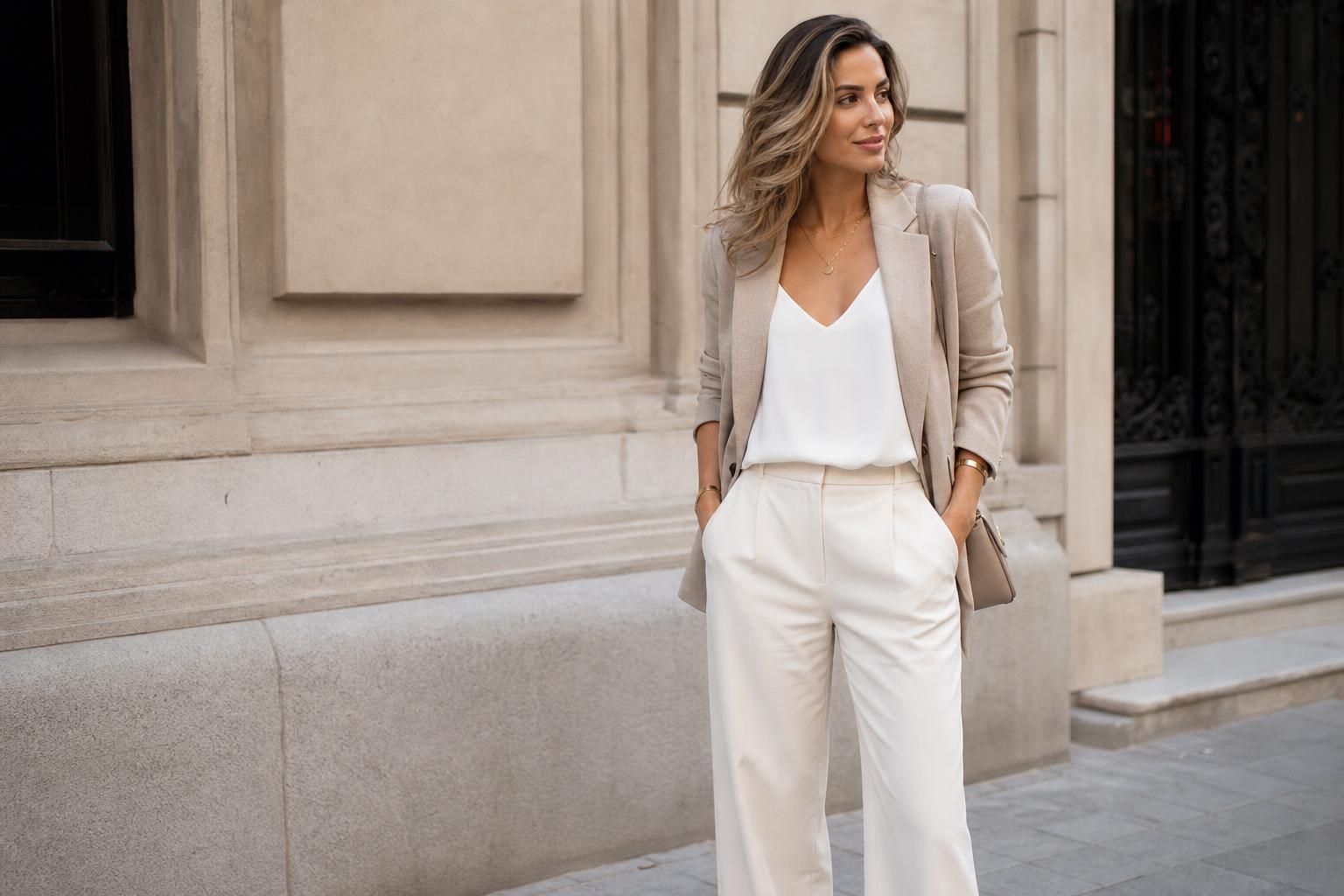
There is a particular elegance to dressy casual outfits when they are done well: not stiff, not overly relaxed, but composed with enough structure to feel intentional. The mood sits between refinement and ease, where a knit blazer, a fluid midi dress, dark jeans, or polished loafers can create a look that feels modern rather than formal. It is this balance that makes the style so visually appealing. The silhouette is often clean, the textures thoughtful, and the overall impression quietly polished.
This aesthetic appears everywhere real life asks for subtle sophistication: wedding guest attire, office dressing, brunch, weekend socials, bridal showers, and the day-to-night stretch when changing outfits is not practical. In the U.S., dressy casual is especially popular because it solves a common wardrobe problem. People want to look appropriate and pulled together without feeling overdressed, and they want pieces that can move across occasions with only a few styling changes.
What makes the category enduring is not a single formula but a style logic. Tailored pieces meet softer fabrics. A crisp shirt gains ease through dark denim. A jumpsuit reads more refined through crepe or satin. Clean sneakers may work in one context, while loafers or heeled sandals become essential in another. The beauty of dressy casual lies in these small calibrations, where proportion, fabric, and setting decide the final mood.
What dressy casual really looks like
Dressy casual is often confused with smart casual, semi-formal, or business casual, yet it holds its own position. It asks for relaxed comfort elevated through refined choices. That usually means avoiding anything too lounge-driven or gym-adjacent, while also stepping back from the sharper finish of traditional dress codes. In practice, the style is built from pieces such as blazers, structured jackets, crisp shirts, blouses, chinos, dress pants, dark jeans, midi dresses, jumpsuits, loafers, dress shoes, heeled sandals, and carefully chosen accessories.
Your wedding has a lot of moving pieces. Your plan can still feel composed.
Zarellea organizes guests, vendors, budget, and timelines in one shared space — so you can make decisions with clarity, not stress.
The misunderstanding usually begins with the word casual. Casual does not mean careless here. It means the outfit has breathing room. Fabrics may be lighter, silhouettes may be softer, and accessories more restrained, but the look still requires polish. A printed button-down shirt from a brand like Bonobos or J.Crew, for example, carries a different visual message than a basic tee. A light blue lace midi dress has a different tone from a casual sundress. The difference is subtle, yet very visible.
Context matters just as much as the clothes themselves. A wedding in the evening calls for a more elevated interpretation than a weekend lunch. An office look may lean toward tailored pants and a structured jacket, while a daytime social event can accommodate a knit polo, a pencil skirt, or dark denim with a polished blouse. Dressy casual works best when you read the room first and style the outfit second.
Why the aesthetic works so well in modern wardrobes
Great dressy casual style depends on composition rather than excess. It is not about piling on statement pieces or chasing novelty. Instead, it relies on contrast: a tailored silhouette with relaxed textures, a fluid fabric with clean lines, a casual base with one structured layer that brings the entire look into focus. This is why the style appears consistently in editorial fashion, retail styling, and event dressing. It photographs well, feels wearable, and leaves room for personal interpretation.
It is also highly adaptable. A blazer from Banana Republic can shift dark jeans into dinner territory. A blouse with crepe drape can elevate chinos for the office. A Reformation or Lulus midi dress can feel relaxed enough for daytime but refined enough for wedding guest attire with the right shoes and accessories. Even brands with different identities, from Abercrombie & Fitch to Anthropologie, sit comfortably within this category because dressy casual is defined less by label and more by visual balance.
There is a practical appeal too. For long events, uncertain weather, or settings that move between indoors and outdoors, this aesthetic tends to outperform stricter dress codes. A comfortable knit blazer, lightweight coat, structured top, or jumpsuit in breathable fabric handles movement better than something rigidly formal. The result feels thoughtful rather than effortful, which is why so many people return to dressy casual outfits for repeat-wear occasions.
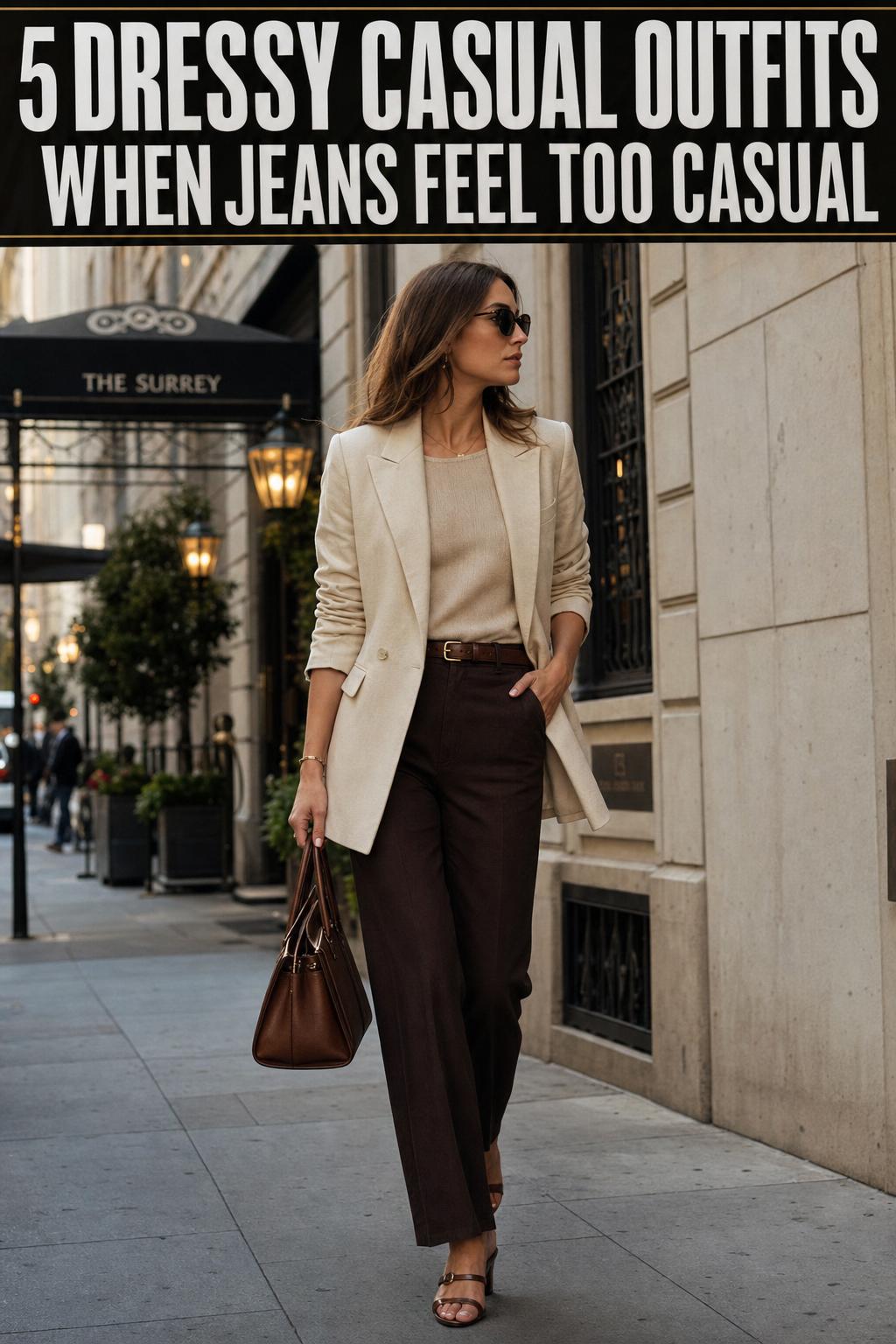
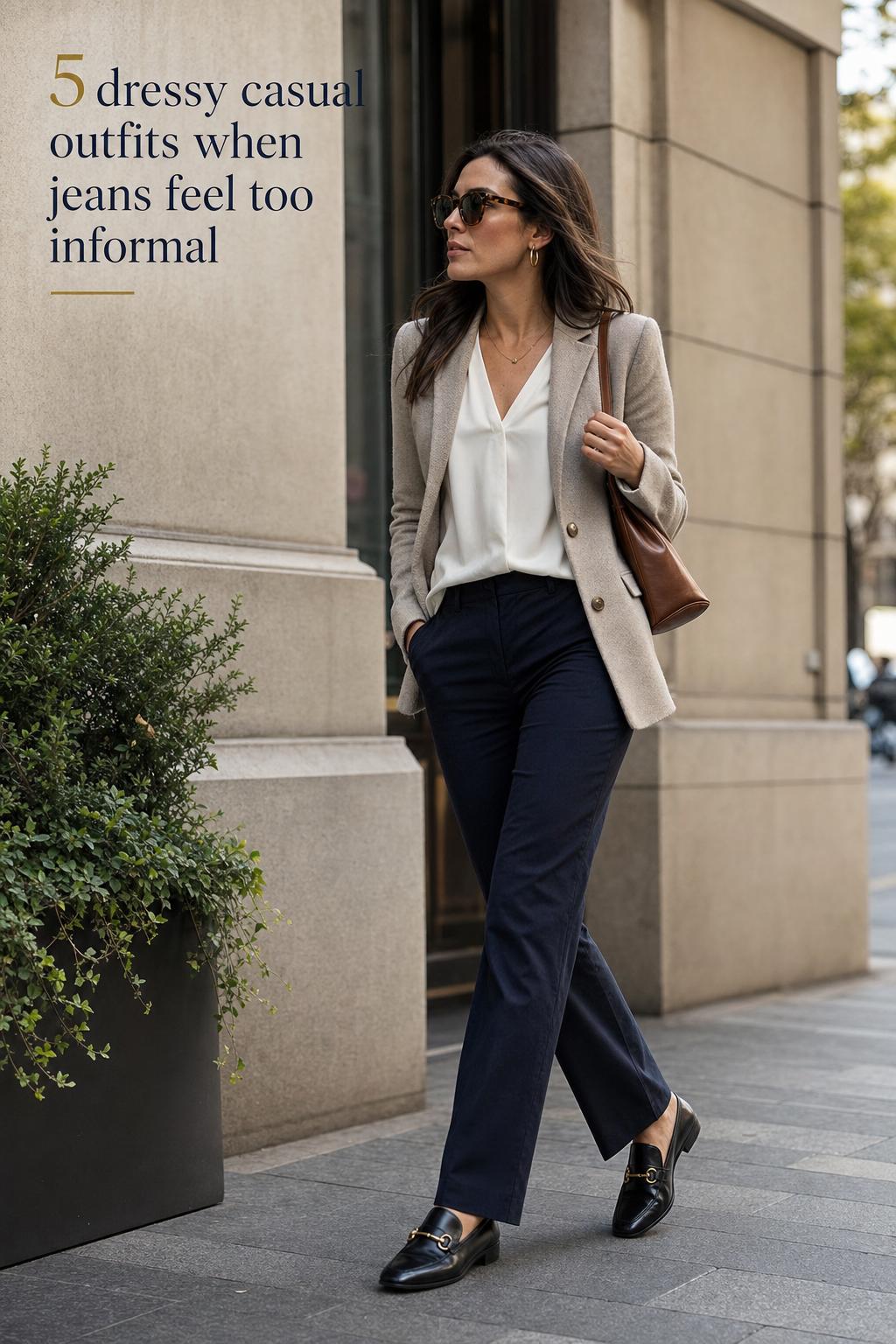
Look: relaxed blazer with dark denim polish
This is one of the clearest expressions of dressy casual because it uses familiar, wearable pieces and gives them a refined frame. The silhouette begins with the clean line of a tailored blazer and lets dark jeans provide ease. The mood is understated and urban, ideal for a casual office, dinner, or a daytime event where you want to appear polished without moving into full business attire.
A comfortable knit blazer works especially well here because it softens the structure without losing shape. Underneath, a crisp shirt, printed button-down, or fine knit polo creates depth. Dark jeans should remain visually clean rather than distressed, allowing the denim to read as intentional. Loafers or dress shoes complete the look with more certainty than athletic footwear, while a lightweight coat can add another tailored note in cooler weather. This is a combination that brands such as J.Crew, Banana Republic, Bonobos, and Todd Snyder have all helped normalize in the broader dressy casual conversation.
- Key garments: knit blazer, printed button-down shirt or knit polo, dark jeans
- Footwear: loafers or polished dress shoes
- Accessories: minimal belt, restrained watch or simple jewelry
The reason this look works is proportion. The blazer introduces a dress code signal, while denim prevents the outfit from becoming too formal. If the shirt is too stiff or the shoes too glossy, the balance can tip toward business or semi-formal. If the denim is faded or the blazer too slouchy, the elegance is lost. Dressy casual often depends on these fine adjustments.
Look: fluid midi dress in a refined daytime palette
For women’s dressy casual attire, the midi dress remains one of the most versatile forms because it offers shape without rigidity. The visual effect is graceful rather than dramatic, especially in fabrics that move gently. This look carries a composed softness that suits weddings, bridal showers, daytime celebrations, and polished weekend plans.
Lace, satin, crepe, and similar refined fabrics change the entire reading of a dress. A light blue lace midi dress feels delicate and elevated, while a satin or crepe style can appear modern and clean-lined. Labels such as Reformation, Lulus, Anthropologie, Azazie, Cleobella, and Alice + Olivia are often associated with these kinds of silhouettes because they sit comfortably between eventwear and everyday sophistication. Color matters here too. Soft neutrals, muted blue, and quietly rich shades tend to hold the aesthetic more effectively than something overly loud, unless the event specifically invites a more expressive look.
- Key garments: midi dress in lace, crepe, or satin
- Footwear: heeled sandals or polished flats, depending on venue
- Accessories: minimal earrings, small bag, light outer layer if needed
This version of dressy casual succeeds because it feels complete with little effort. The dress carries the silhouette on its own, so the supporting pieces can remain quiet. For longer events, especially weddings, this matters. A beautifully cut midi dress can look composed for hours without requiring constant adjustment, which is one reason it appears so often in wedding guest attire guidance.
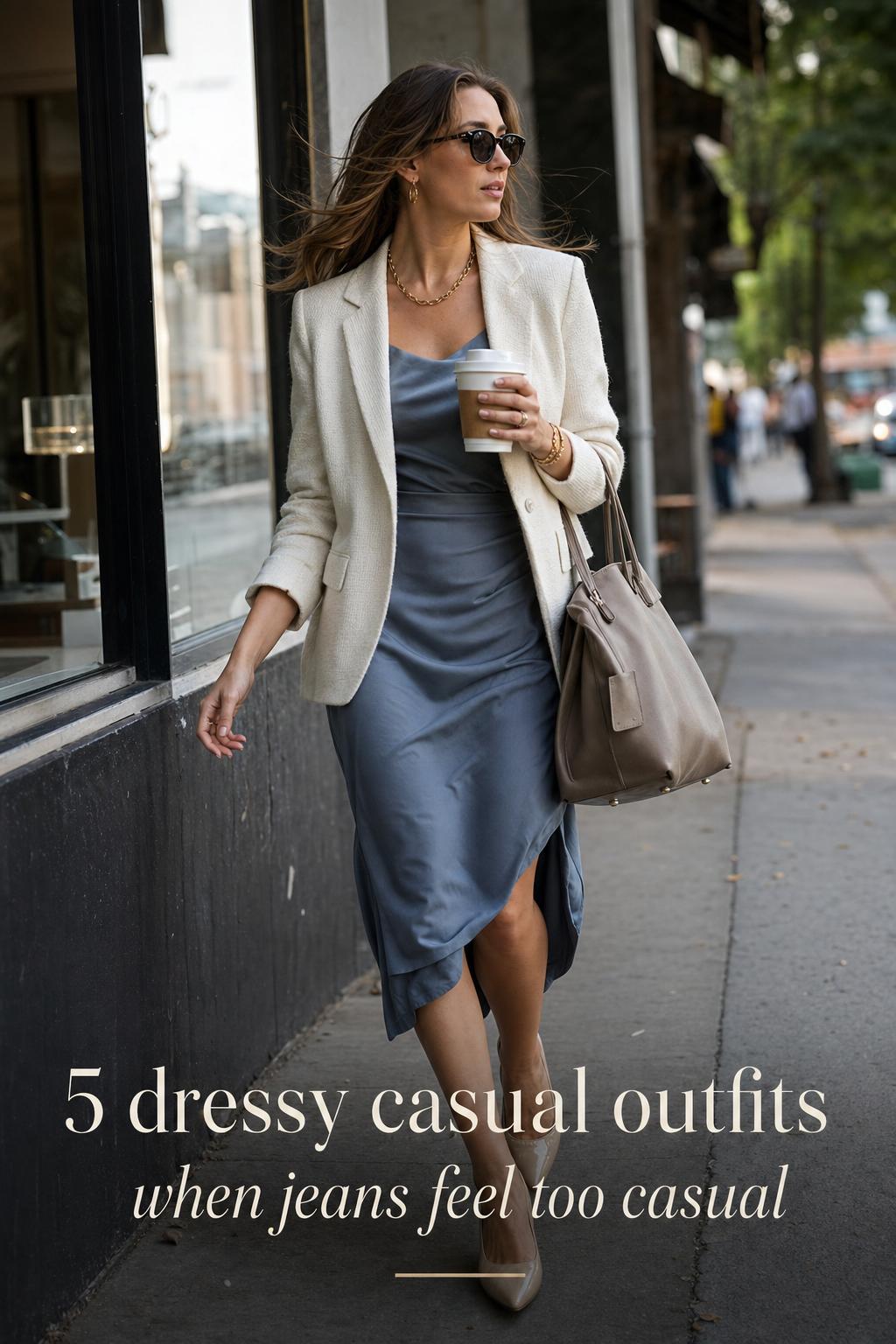
Look: the pencil skirt and soft structure equation
The pencil skirt offers a more directional interpretation of dressy casual, one that feels polished and slightly sharper while still remaining approachable. Visually, it draws the eye to line and proportion. The mood can shift from office-appropriate to evening-ready depending on what tempers it: a softer knit, a more relaxed blouse, or understated accessories rather than overtly formal pieces.
A pencil skirt paired with a structured top or draped blouse gives the outfit its tailored center. The key is avoiding a look that feels too corporate or too occasion-specific. A fitted blouse in crepe, a smooth knit, or a lightly textured fabric keeps the styling grounded. Neutral palettes make the shape stand out, while a refined color accent can bring in personality. Primark’s approach to dressy casual styling emphasizes this blend of tailored and easy elements, and it remains a useful principle: one polished anchor piece, one softer balancing piece.
Why does this look fit the aesthetic so well? Because it demonstrates that dressy casual is not always loose or relaxed in shape. It can be sleek. The “casual” aspect comes from restraint and wearability, not from abandoning structure. This makes the look especially effective for professional settings, city dinners, and occasions when a blazer would feel too expected.
Look: knit polo and chinos with modern ease
There is a clean confidence to the knit polo when used in dressy casual outfits. It is more refined than a standard casual top but less formal than a buttoned shirt, which places it perfectly in the middle ground. Combined with chinos or dress pants, it creates a silhouette that feels contemporary, comfortable, and quietly intentional.
A short-sleeve cable-knit polo or fine knit version paired with chinos keeps the outfit breathable and composed, especially in warm weather or daytime events. Lighter neutrals can feel relaxed, while darker shades sharpen the finish. Loafers remain the strongest footwear partner here, though clean sneakers may work in settings that clearly lean casual. This is one of the most effective dressy casual formulas for men because it reduces visual noise. There is enough texture to suggest effort, enough tailoring to signal polish, and enough comfort to wear through a full day.
This look is particularly useful for spring and summer occasions when a full blazer may feel excessive. It also shows how fabric texture can carry formality. The knit itself does much of the work. Even without heavy layering, the outfit feels elevated because the material has depth and the fit remains intentional.
Style insight: fabric is often what makes casual feel dressy
Many dress code mistakes happen because people focus only on the garment category and ignore the fabric. A jumpsuit can be casual or refined depending on drape. A blouse can look flat or elevated depending on texture. Dark jeans become more acceptable when everything around them carries polish. This is why so many successful dressy casual outfits rely on crepe, satin, lace, wool blends, linen, and refined knits. These materials change how light sits on the outfit and how the silhouette moves.
Linen, for example, can be excellent for warm weather and outdoor events, but it works best when the cut is tailored enough to counterbalance the fabric’s relaxed character. Crepe and satin often read more dressed-up, making them strong options for weddings or evening social settings. Lace creates visual delicacy, while wool blends and structured knits support office-ready polish. Fabric is not a minor detail; in dressy casual dressing, it often determines the entire tone.
This is also where real-world practicality enters the conversation. A beautiful outfit must still survive sitting, walking, changing temperatures, and long hours. For outdoor weddings, lighter fabrics with good movement tend to feel more elegant than something heavy and rigid. For office dressing, fabrics that hold shape throughout the day maintain polish more reliably. The most convincing dressy casual looks are not just visually refined; they remain composed under normal wear.
Look: jumpsuit minimalism for day-to-night dressing
A well-cut jumpsuit brings a quieter kind of sophistication to the dressy casual wardrobe. The line is uninterrupted, which creates immediate polish, yet the one-piece nature keeps the mood modern and unfussy. This is one of the strongest options for day-to-night dressing because the outfit already feels complete before accessories are added.
For the aesthetic to land properly, the fabric should do some of the elevating. Crepe and satin are especially effective because they hold shape while still moving with the body. A jumpsuit in a neutral or rich but restrained color palette can move from office-adjacent events to evening socials with only minor changes in shoes and jewelry. Heeled sandals lend a cleaner finish, while a structured jacket can sharpen the overall frame. In wedding guest dressing, jumpsuits also offer a practical alternative to dresses, particularly for guests who prefer ease of movement and a more modern silhouette.
The strength of this look lies in clarity. There are fewer components competing for attention, so cut and fit matter more. If the jumpsuit fits well through the waist and falls cleanly through the leg, the entire outfit reads as composed. This is a useful reminder that dressy casual is often less about adding more and more about choosing better.
Where dressy casual changes with the occasion
The same aesthetic can shift meaning depending on where it is worn. A wedding asks for more sensitivity to fabric, footwear, and color than a weekend lunch. An office may accept dark jeans with a blazer but not satin or lace. A social event might welcome clean sneakers, while a guest dress code would be better served by loafers, dress shoes, or heeled sandals. Dressy casual is not a fixed costume; it is a styling language that adjusts to context.
Wedding guest attire with a dressy casual mood
Weddings remain one of the most common settings where people search for clarity. Dressy casual wedding attire usually means polished, celebratory, and comfortable enough for a full event. Midi dresses, jumpsuits, tailored separates, refined blouses, chinos, and blazers all work when they are grounded in better fabrics and a tidier finish. Labels such as Azazie, Reformation, Lulus, Anthropologie, and The Knot’s recommended brand mix all reflect this middle ground between full formality and casual wear.
A guest should generally aim for visual respect without looking as though they misunderstood the invitation. That means avoiding clothes that feel too lounge-like, too office-heavy, or too severe. Outdoor weddings, child-friendly events, and daytime ceremonies often allow more softness in color and silhouette, while evening settings usually require a more refined reading of the same pieces.
Office dressing that feels polished, not rigid
In professional contexts, dressy casual often intersects with business casual but is not identical to it. The office version benefits from tailored structure and moderation. Dress pants, chinos, blouses, crisp shirts, knit polos, and structured jackets create a reliable vocabulary. The aim is authority with ease, not excessive ornament or strict corporate formality.
For long workdays, this interpretation tends to be one of the most practical because it prioritizes comfort without sacrificing presence. Fabrics that resist looking crushed by midday, shoes that can handle movement, and layers that transition between meeting rooms and outside temperatures all matter more than trend-driven details.
Weekend socials and everyday polish
This is where dressy casual feels most effortless. Weekend dressing allows more personality, softer layering, and a lighter touch with accessories. A blouse with dark jeans, a midi dress with clean lines, a pencil skirt with a knit top, or chinos with a refined polo all belong here. The outfit should feel intentional, but not as if it is trying to meet a strict dress code.
Daytime gatherings also offer more room for experimentation with elevated casual elements. Clean sneakers may work in some settings, especially if the rest of the outfit carries polish. But if the event has any ceremonial tone, loafers, dress shoes, or sandals usually preserve the dressy side of the balance more successfully.
Look: tailored shorts with structured summer ease
Warm-weather dressy casual can be difficult because summer often pushes wardrobes toward either full relaxation or overt occasionwear. Tailored shorts offer a middle path when styled with discipline. The mood is crisp, unfussy, and distinctly seasonal, ideal for daytime social plans or settings where summer polish is expected without heavy layering.
The silhouette depends on the contrast between a clean short and a more structured top. A blouse, a polished knit, or a tailored shirt keeps the look intentional. Fabrics matter even more here because the reduced coverage makes every element more visible. Linen can work beautifully if the cut remains sharp. Lightweight structured fabrics also help the outfit avoid reading too beach-adjacent. Footwear should remain clearly refined, with sandals or loafers often doing more for the overall composition than sneakers.
This interpretation is not universal for every event, which is precisely why judgment matters. For weddings or more formal guest attire, shorts may not carry enough gravity. But for resort-like daytime gatherings, polished brunches, and some creative office settings, they can become a sleek expression of seasonal dressy casual style.
Color palettes that hold the aesthetic together
Color is one of the quietest but most powerful tools in dressy casual outfits. A muted palette often creates refinement before silhouette is even noticed. Soft neutrals, navy, deep tones, light blue, and restrained seasonal shades make it easier for fabrics and tailoring to take the lead. This is one reason the aesthetic feels so aligned with modern editorial dressing: the color story rarely fights the silhouette.
That does not mean all dressy casual style must be neutral. It means color should support the occasion. For weddings and daytime events, softer tones can feel polished and celebratory. For office dressing, a more contained palette often creates authority. For evening social settings, darker tones can sharpen the entire look. The most elegant outfits tend to balance one area of visual interest with restraint elsewhere, whether that is a printed shirt, a lace texture, or a satin finish.
- For weddings: soft blue, delicate neutrals, subtle romantic shades
- For office settings: navy, charcoal, cream, and other grounded tones
- For weekends: deeper denim, warm neutrals, and one accent color if desired
The larger point is coherence. Dressy casual rarely benefits from too many competing ideas at once. A cohesive palette gives the outfit composure, which is often the difference between looking stylish and simply looking dressed.
Look: structured jacket over a softened base
Some of the most sophisticated dressy casual outfits are built from tension between formal and easy elements. A structured jacket layered over a softer base captures that perfectly. The mood is composed, city-ready, and intelligent, especially for settings where you want to signal polish without appearing overly corporate.
The jacket may be a blazer or another structured outer layer, while underneath you might have a blouse, fine knit, or even a sleek dress. Pairing it with dress pants creates a cleaner office line. Wearing it over a midi dress introduces more fluidity. Layered over dark jeans, it lands in that useful middle zone between everyday and elevated. This is also where mixed-brand styling becomes relevant. A blazer from one retailer, trousers from another, and shoes from elsewhere can still read seamlessly dressy casual if the proportion, texture, and color remain aligned.
The styling lesson here is that outerwear can recalibrate an outfit in seconds. If the base feels too relaxed, a structured jacket can restore polish. If the outfit already carries enough refinement, that same layer can be draped or simplified so the look does not become too formal. Dressy casual is often a matter of controlling this final percentage of formality.
A practical note on shoes, comfort, and long days
Footwear has an outsized influence on dressy casual style because shoes can instantly tilt an outfit toward either casual or dressy. Loafers, dress shoes, heeled sandals, and polished flats usually anchor the aesthetic most reliably. Clean sneakers can work, but only when the event and the rest of the styling clearly support that choice. If there is any ambiguity, more refined shoes tend to be the safer and more stylish decision.
Comfort matters as much as visual finish, particularly for weddings, all-day office wear, or weekends that involve walking between venues. A shoe that looks excellent for ten minutes but changes your posture by midday can undermine the whole outfit. Dressy casual is persuasive when it appears effortless, and comfort is part of that illusion. The outfit should move well, stand well, and remain believable over time.
This is one area where thoughtful trade-offs matter. Sneakers may feel physically easiest, but they lower the formality level. Heeled sandals may elevate a look beautifully, but not every venue supports them. Loafers often sit in the sweet spot because they are polished, practical, and adaptable across work, events, and everyday wear.
Style tip: how to build a small dressy casual capsule
The most useful dressy casual wardrobe is not expansive; it is versatile. A small capsule built around interchangeable pieces gives more styling freedom than a closet full of highly specific items. Because the aesthetic depends on balance rather than spectacle, repeating strong basics is not a weakness. It is often the smartest approach.
- One blazer or structured jacket
- One crisp shirt and one softer blouse or knit top
- One pair of dress pants or chinos
- One pair of dark jeans
- One midi dress or jumpsuit for event dressing
- One reliable pair of loafers or dress shoes
- One occasion-ready shoe such as heeled sandals
With these pieces, it becomes easy to build multiple dressy casual outfits for weddings, office dressing, brunch, or evening plans. The blazer sharpens denim. The midi dress handles guest attire. The chinos or dress pants support office looks. The loafers keep transitions smooth. This is how thoughtful composition outperforms trend-chasing: the wardrobe begins to work as a system.
Look: soft weekend elegance with elevated basics
This interpretation of dressy casual is quieter and more understated, built for everyday polish rather than event dressing. The mood is soft, modern, and easy to wear, with clean lines replacing statement styling. It feels especially relevant for brunch, gallery-like social settings, daytime city plans, or any moment when you want comfort to appear refined.
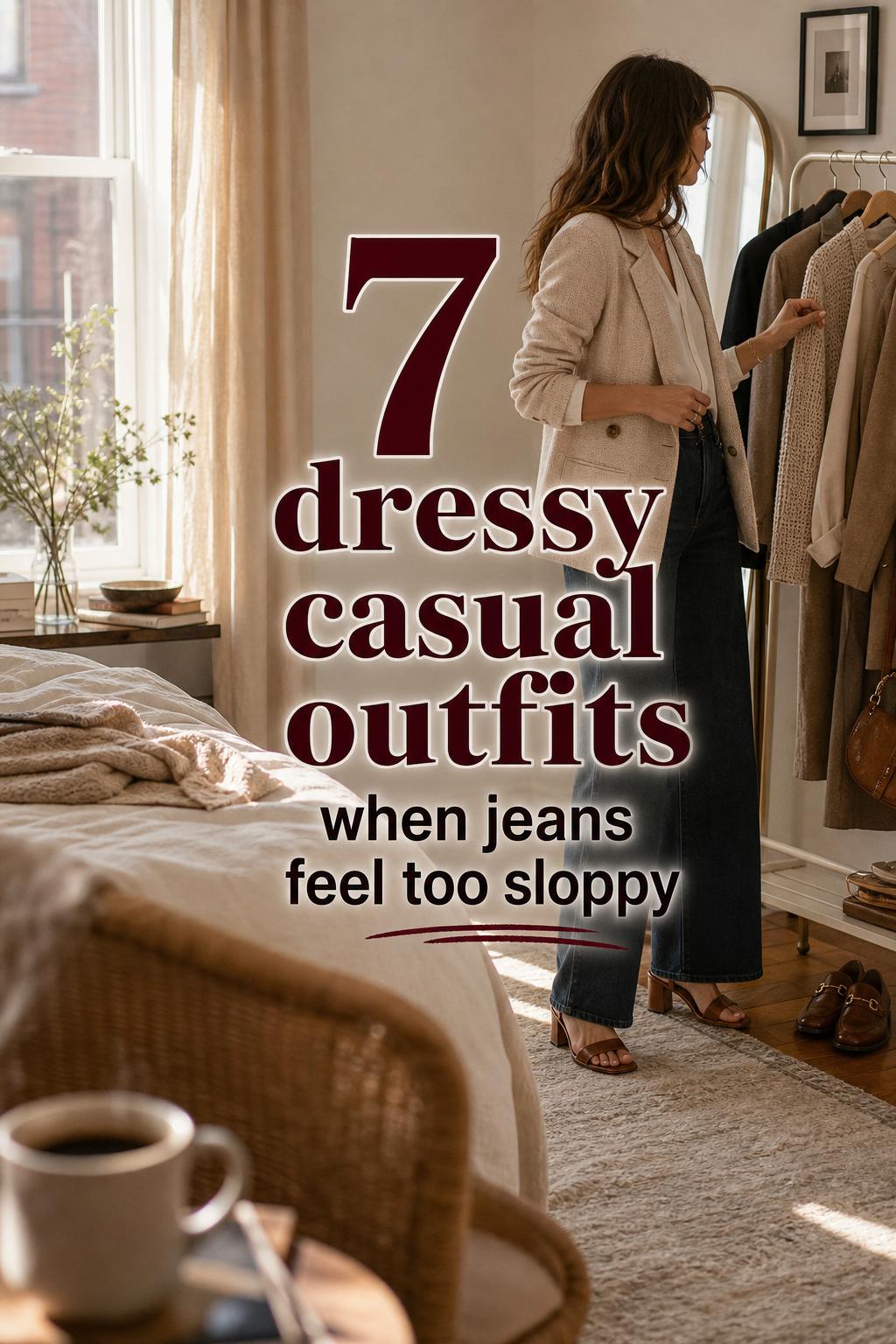
A blouse or structured top paired with dark jeans or tailored trousers creates the base. Add a lightweight coat or relaxed blazer if the weather calls for layering. The palette often stays neutral, letting fabric and cut carry the look. Accessories should remain light-handed. In this mood, over-accessorizing can make the outfit feel less contemporary. The strength lies in crispness, not clutter.
Why does this feel so effective? Because it respects real life. It acknowledges movement, weather, and repetition. This is the side of dressy casual that people return to again and again because it feels realistic without becoming ordinary. The clothes still have shape. The look still has presence. It simply does not require ceremony to make sense.
Common missteps that weaken the dressy casual effect
The easiest way to miss the aesthetic is to lean too far toward one side of the equation. An outfit that is too casual can feel unfinished, while one that is too dressed-up loses the relaxed sophistication that defines dressy casual. The challenge is usually not the individual pieces; it is the relationship between them.
- Pairing polished garments with overly distressed or lounge-like basics
- Using shoes that are too sporty for the event
- Choosing fabrics that wrinkle, sag, or flatten the silhouette too quickly
- Over-accessorizing a look that should feel clean and balanced
- Ignoring the event context, especially for weddings or office environments
A useful test is to ask what the outfit communicates at first glance. Does it look deliberate? Does it feel appropriate for the venue and time of day? Does one piece feel disconnected from the rest? Dressy casual outfits are most successful when nothing appears accidental. The look should feel easy, but it should never feel random.
Regional and situational nuance in the U.S.
Even within the U.S., dressy casual can shift according to location and social culture. A city environment may accept sharper tailoring and darker palettes more readily, while a warmer or more relaxed setting may lean toward lighter fabrics and softer silhouettes. This does not change the core principle, but it does affect how the same pieces are interpreted. A blazer and loafers can feel standard in one environment and notably polished in another.
That is why rigid formulas can be misleading. The smartest approach is to keep the same aesthetic foundation while adjusting weight, color, and footwear to the context. For example, a linen-blend look may feel ideal in heat, while wool blends and layered knits make more sense in cooler conditions. The dressy casual mood remains consistent, but the styling language becomes more responsive.
This situational awareness is especially useful for events with incomplete dress guidance. If an invitation says dressy casual and little else, the venue, time of day, and season become your best clues. A garden wedding, office gathering, and downtown dinner may all use the same phrase but ask for subtly different versions of it.
How to recreate the aesthetic without overthinking it
The simplest way to approach dressy casual outfits is to begin with one refined anchor and build outward. That anchor might be a blazer, a midi dress, a pencil skirt, a jumpsuit, a crisp shirt, or polished loafers. Once you identify the piece carrying the sophistication, the rest of the look can relax slightly. This keeps the outfit from feeling either overdone or underconsidered.
Next, pay attention to silhouette and fabric before adding accessories. A clean line, a controlled palette, and one thoughtful texture usually do more than multiple trend elements. If the outfit already feels visually complete, stop there. Dressy casual often looks strongest when there is space in the styling. It invites the eye in rather than demanding attention all at once.
For readers building from brands they already know, it can help to think in categories rather than labels. Bonobos, Banana Republic, J.Crew, Abercrombie & Fitch, Reformation, Lulus, Anthropologie, Azazie, Cleobella, and Alice + Olivia each fit into the dressy casual conversation through different product strengths. The goal is not to dress like a brand image. It is to borrow pieces that support the same polished but wearable aesthetic.
FAQ
What does dressy casual mean?
Dressy casual means an outfit that balances relaxed comfort with visible polish. It usually combines refined fabrics, tailored or structured pieces, and cleaner footwear while avoiding both lounge wear and full formal dressing.
Are dark jeans appropriate for dressy casual outfits?
Yes, dark jeans can work well when they are clean, well-fitting, and paired with polished elements such as a blazer, crisp shirt, blouse, loafers, or dress shoes. They are generally more suitable for office, dinner, or weekend settings than for weddings that lean more elevated.
Can I wear sneakers with a dressy casual look?
Clean sneakers can work in more relaxed dressy casual settings, especially for everyday wear or some weekend socials, but they are not always the best choice. If the occasion carries more formality, loafers, heeled sandals, polished flats, or dress shoes usually create a stronger result.
What should I wear to a dressy casual wedding?
For a dressy casual wedding, look for polished pieces with comfortable elegance, such as a midi dress, jumpsuit, blouse with refined separates, chinos with a blazer, or dress pants with a knit polo or crisp shirt. Fabrics such as lace, crepe, satin, and lightweight tailored materials tend to read appropriately for guest attire.
What is the difference between dressy casual and smart casual?
They overlap, but dressy casual usually leans more visibly polished, especially for events like weddings or social occasions with a dress code. Smart casual can be broader, while dressy casual typically asks for a clearer sense of refinement in fabric, footwear, and overall styling.
Which fabrics make an outfit look more dressy casual?
Refined fabrics such as crepe, satin, lace, wool blends, linen with tailored structure, and elevated knits tend to support the dressy casual mood. These materials give the outfit better drape, texture, or shape than very casual jersey or heavily distressed fabrics.
How can I make a casual outfit feel more polished?
Add one structured or refined element, such as a blazer, a crisp button-down, a pencil skirt, polished loafers, or a better fabric. Often, one strong piece is enough to recalibrate the whole outfit as long as the fit remains clean and the color palette feels cohesive.
What are the best shoes for dressy casual outfits?
Loafers, dress shoes, polished flats, and heeled sandals are among the most reliable options because they support the refined side of the aesthetic without making the outfit too formal. The best choice depends on the occasion, weather, and how much walking or standing the day requires.
Can a jumpsuit count as dressy casual?
Yes, a jumpsuit can be one of the strongest dressy casual choices when it has a clean cut and a refined fabric such as crepe or satin. It works especially well for day-to-night dressing and for occasions where you want a polished look with easy movement.
How do I transition a dressy casual outfit from day to night?
Keep the base outfit polished and versatile, then sharpen the finish with small changes such as switching shoes, adding a structured jacket, or choosing more refined accessories. A midi dress, jumpsuit, dark jeans with a blazer, or tailored separates can all transition well when the fabrics and proportions are already balanced.
Leave a Reply