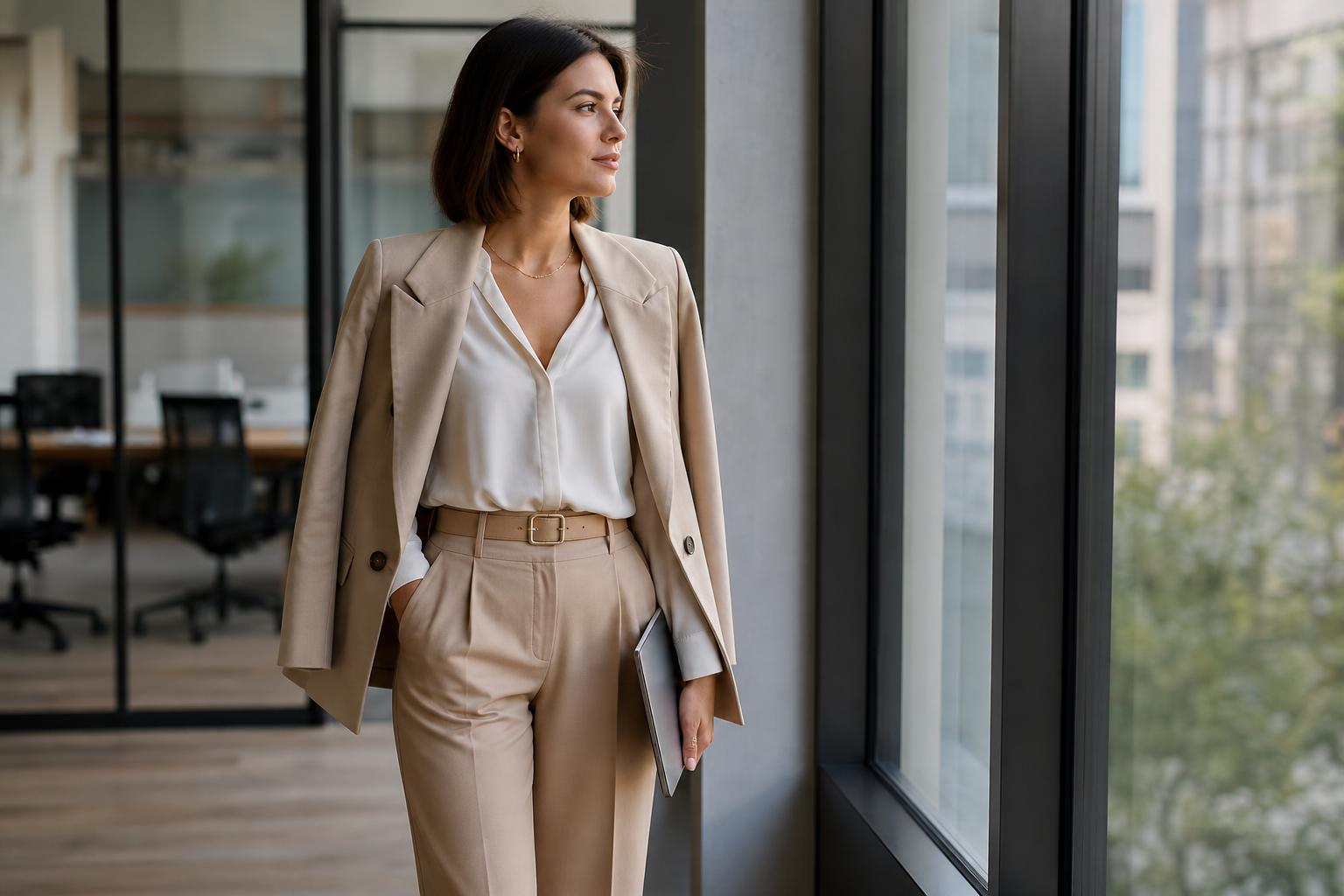
Women office outfits: the polished aesthetic of modern workwear
The most compelling women office outfits rarely rely on noise. They are built on line, proportion, and a quiet sense of authority: a structured blazer over a fluid shirt, a trouser that skims rather than clings, a dress that feels composed from morning meetings to dinner after work. In the current mood of office wear, polish and ease are no longer opposites. They exist together in one wardrobe.
This aesthetic moves easily between New York sharpness, Paris restraint, and the clean practicality often associated with modern minimalist dressing. It belongs in traditional corporate settings, in more relaxed business casual offices, and in the in-between spaces where workwear now lives: creative studios, hybrid schedules, and desk-to-dinner calendars. Its appeal is simple to understand. It makes professional dressing feel intelligent rather than rigid, and stylish rather than impractical.
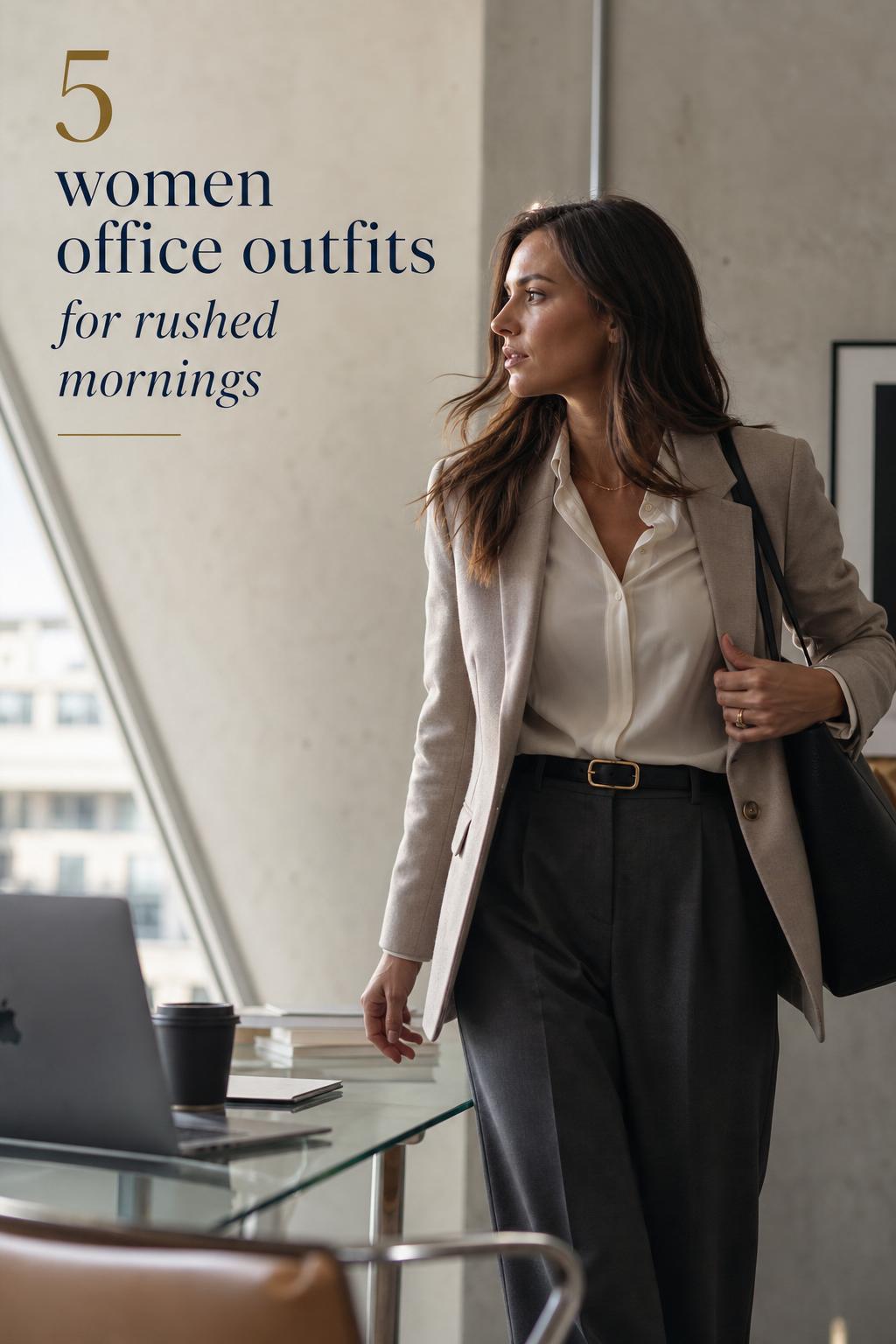
The strongest office attire for women in 2026 reflects that balance. Editorial voices such as Vogue, Who What Wear, and Marie Claire continue to frame office style through tailoring, power dressing, and season-aware styling, while retailers like H&M, UNIQLO, Walmart, Ellos, Foxcroft, and Karen Millen show how those ideas become real wardrobes through mix-and-match separates, easy-care fabrics, and wearable capsule pieces. The result is an office aesthetic that is refined, modern, and far more versatile than the old rules ever allowed.
What modern office style looks like now
Modern office style is no longer defined by one strict uniform. Instead, it is shaped by a spectrum that runs from formal tailoring to softened business casual. The common thread is intention. Even relaxed workwear still needs clean lines, thoughtful layering, and fabrics that hold their shape through a full day. That is why blazers, suits, trousers, dresses, and shirts remain at the center of the conversation across both magazine editorials and retailer collections.
Your wedding has a lot of moving pieces. Your plan can still feel composed.
Zarellea organizes guests, vendors, budget, and timelines in one shared space — so you can make decisions with clarity, not stress.
Power dressing remains an important concept, but it has evolved. It is less about severity and more about presence. A tailored jacket, a well-cut suit, or a strong dress can still signal authority, yet the styling is often lighter and more adaptable. This shift explains why office outfit trends now favor pieces that move between professional settings and evening plans, and why capsule wardrobe thinking has become such a practical foundation for women’s workwear.
In U.S. offices, this matters because dress codes can vary sharply. A finance environment may still lean into suits and sharper tailoring, while a tech or creative workplace may welcome softer separates and more casual office outfits for women. The most useful wardrobe is one that can move across these contexts with only small adjustments in layering, fabric, and accessories.
Key pieces for this aesthetic
- blazers with tailored structure
- suit separates that can be mixed rather than worn only as a set
- trousers in polished cuts, including wide-leg and straight silhouettes
- shirts and blouses that layer neatly under jackets
- dresses that can stand alone or work under outerwear
- skirts that balance movement with clean proportion
- easy-care fabrics that resist creasing and hold shape
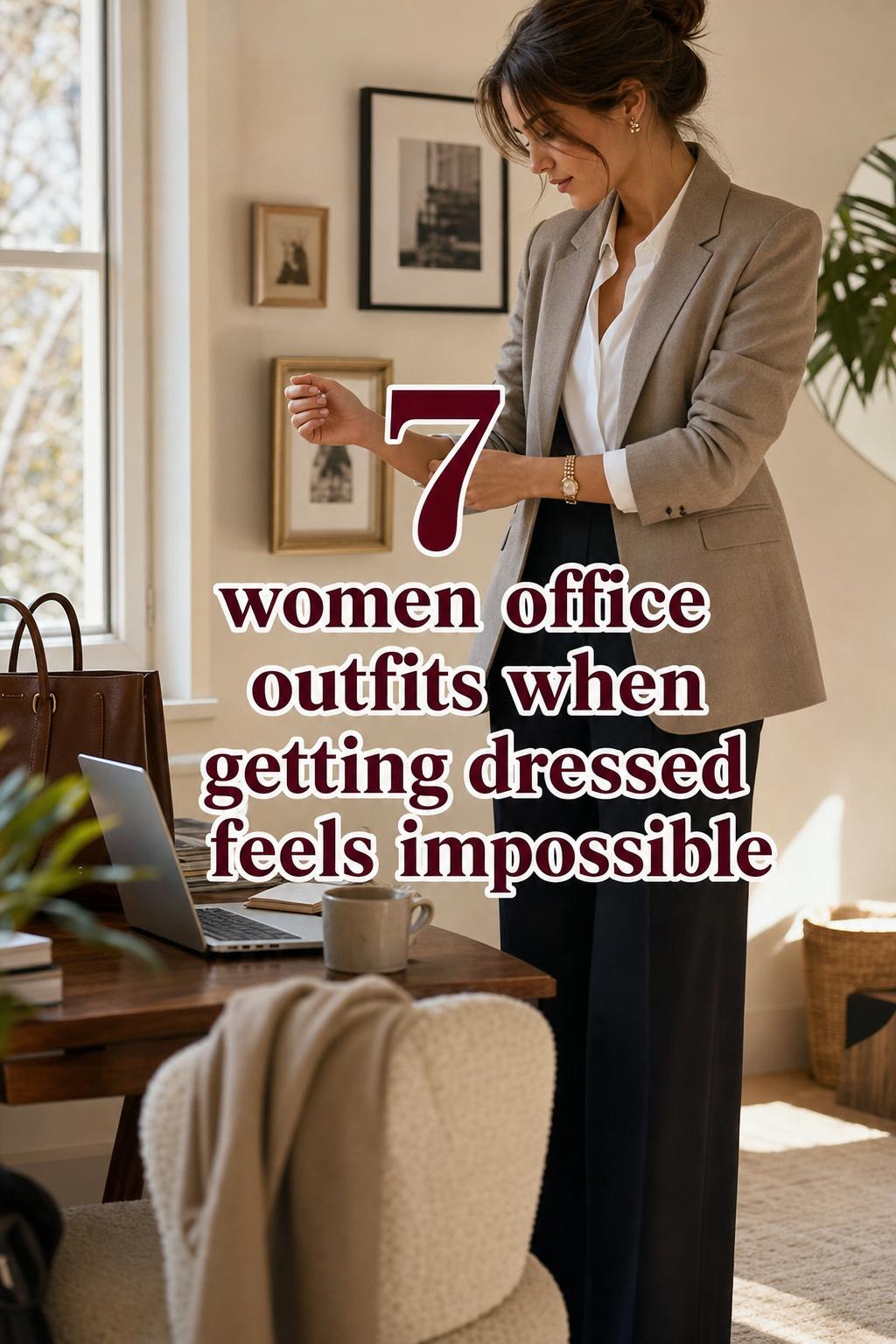
Look: quiet power in tailoring
This is the office look that understands the language of authority without becoming heavy-handed. The silhouette is long, controlled, and architectural: a blazer that defines the shoulders, tailored trousers that extend the line of the leg, and a shirt beneath that keeps the composition precise. It feels close to the spirit of New York workwear and the sharper side of power dressing, but with enough fluidity to remain modern.
A suit in separates works especially well here because it gives the formality of tailoring with more flexibility. A blazer paired with matching or near-matching pants creates cohesion, while a crisp shirt softens the structure underneath. Wool and crepe are useful references for this mood because they support clean drape and a professional finish. Karen Millen’s emphasis on classically tailored work clothes reflects this direction, while the editorial framing from Vogue highlights how tailoring still anchors office wear in a compelling way.
This look fits the aesthetic because it places shape first. It is ideal for presentations, client-facing days, or offices where polish still carries weight. The practical lesson is that tailoring does not need to feel stiff to look strong; the right proportions do much of the work.
Style tip: use separates to soften formality
A full matching suit can be powerful, but suit separates are often easier to live in. Keeping the blazer structured while choosing trousers with slightly more ease creates a professional outfit for work that still allows movement through commuting, meetings, and after-hours plans.
Look: relaxed minimal layers for a business casual office
Not every office asks for sharp suiting, yet even the most casual workplace benefits from visual discipline. This look has a quieter rhythm: a soft blouse, streamlined trousers, and a blazer worn more as a finishing layer than a statement. The mood is calm, understated, and highly wearable, closer to minimalist office wear than traditional corporate dressing.
UNIQLO’s work and office wear approach speaks directly to this kind of outfit, where functional fabrics and versatile basics make the wardrobe easier to repeat. H&M’s office wear edit also supports the same idea from a more trend-aware mass-market angle: blazers, pants, skirts, and shirts that can be mixed in many combinations. Neutral tones tend to suit this mood best because they allow the silhouette to stay clear. A blouse with light drape under a clean blazer, paired with trousers in an easy straight or wide line, creates a business casual look that still reads polished.
This interpretation works because modern office outfits are often judged by overall coherence rather than strict formality. The eye notices balance first. If the lines are clean and the pieces sit well together, the result feels intentional even when the palette and layering are relaxed.
Look: desk-to-dinner elegance
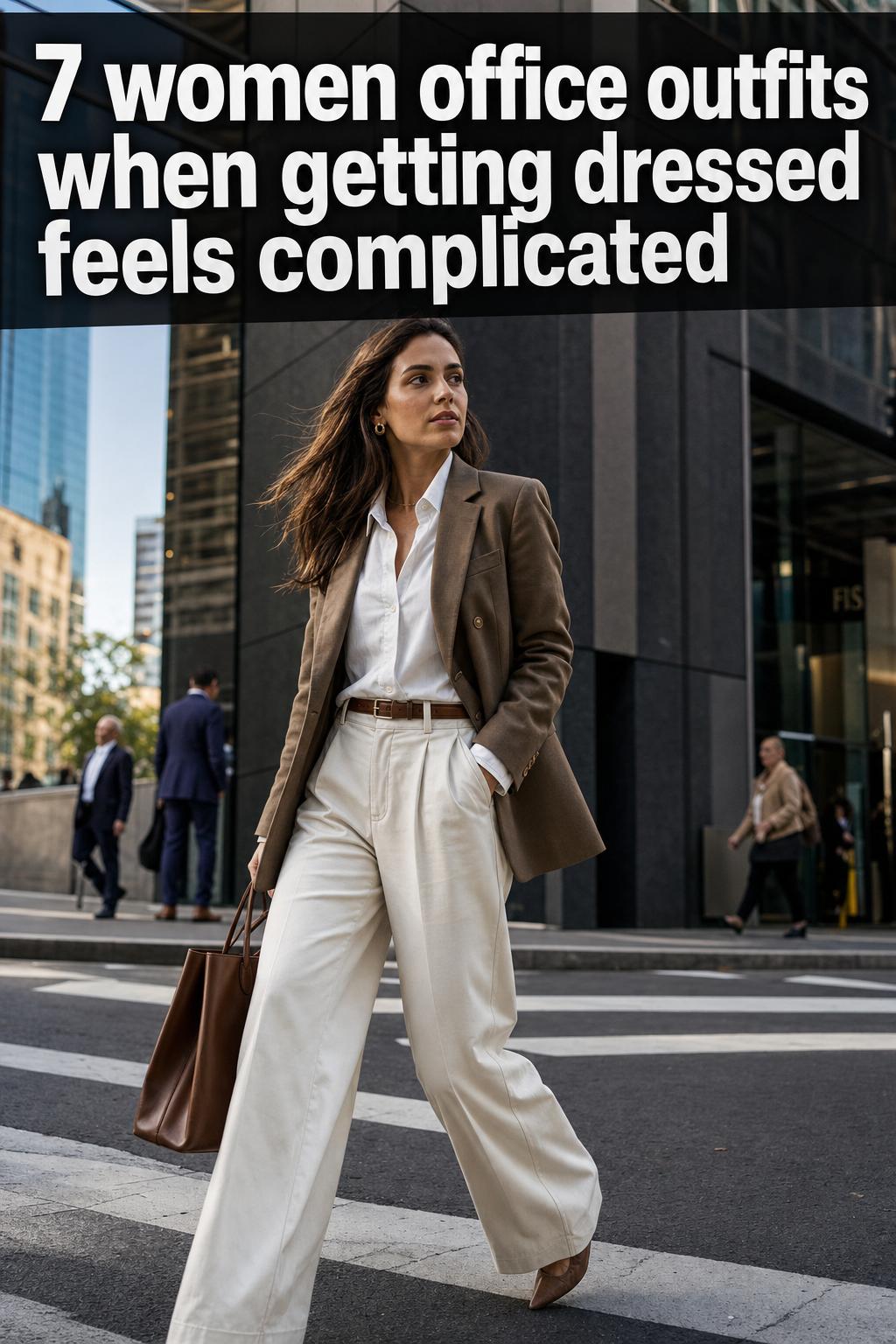
Some office wardrobes need to carry the day beyond office hours. In that case, the most effective look is one with built-in ease and just enough refinement to shift moods after work. A dress or skirt-based silhouette often excels here because it feels complete with fewer elements, allowing subtle transitions through styling rather than a total change.
A polished dress under a blazer offers one of the simplest desk-to-dinner office looks. Marie Claire’s styling focus on practical workwear and wardrobe-building supports this approach well: rely on dresses, suits, and separates that can be adjusted rather than replaced. A dress with clean structure, layered with a tailored jacket during the day, can feel office-appropriate in a formal setting; remove the jacket later, and the outfit becomes lighter without losing composure. A skirt and shirt combination can do the same, especially if the shirt has enough softness to shift the mood after hours.
The reason this look belongs within the office wear aesthetic is its economy. It does not ask for excess. It asks for pieces with enough sophistication to perform in more than one setting, which is exactly why versatility has become central to modern workwear.
How to recreate the look
- start with a dress or skirt that feels polished on its own
- add a blazer for daytime structure
- keep the palette clean so the look transitions easily
- choose a bag and shoes that do not feel overly casual
Look: the practical capsule wardrobe uniform
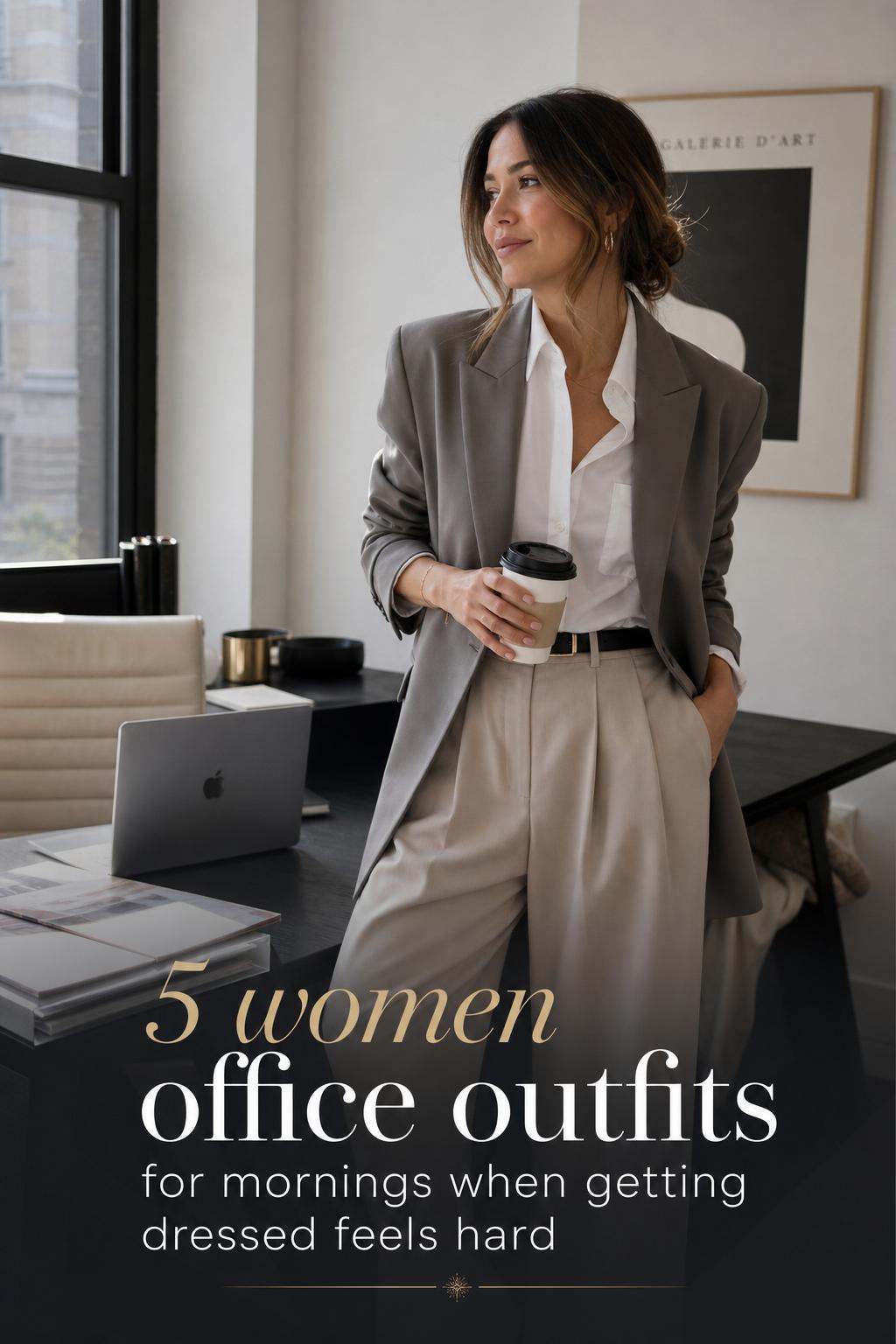
The most enduring women’s workwear capsule wardrobe is not built for novelty. It is built for repetition without boredom. The visual mood is concise and dependable: jackets, shirts, trousers, dresses, and skirts that relate to one another in tone and proportion. The pleasure comes from consistency rather than spectacle.
Foxcroft’s work capsule framing and easy-care emphasis are useful here because they reflect what real office wardrobes often need: pieces that travel well, resist creasing, and require little fuss. Walmart’s women’s workwear categories also point to the practical side of this idea by focusing on affordable tops, pants, dresses, sets, and blazers that can be mixed across multiple looks. A strong capsule typically includes core tailoring, a few dresses, reliable shirts or blouses, and at least one blazer that works with almost everything else. The point is not minimalism for its own sake, but a wardrobe that removes friction on busy mornings.
This look fits the aesthetic because thoughtful repetition is one of the clearest signs of personal style. An office wardrobe becomes more elegant when each piece has a job and each combination feels considered. That is the difference between a pile of work clothes for women and a wardrobe with real identity.
A practical 15-piece office capsule direction
- 2 blazers
- 2 pairs of tailored trousers
- 1 skirt
- 2 dresses
- 4 shirts or blouses
- 2 knit or layering tops
- 1 jacket or outer layer beyond a blazer
- 1 flexible set or matching suit option
This kind of structure gives enough variety for office outfits that are comfortable, polished, and easy to adapt. It also leaves room for different budgets, whether the wardrobe comes from H&M, UNIQLO, Walmart, Foxcroft, or a more premium tailored brand like Karen Millen.
Look: summer workwear with breathability and polish
Summer office dressing is where many wardrobes lose their balance. The challenge is not simply heat; it is maintaining professional shape in warmer conditions and often in buildings where temperatures shift sharply between outdoors and air-conditioned interiors. The summer version of this aesthetic feels light, breathable, and composed rather than stripped back.
Vogue’s seasonal office wear lens and retailer guidance around seasonal fabrics both support the same principle: choose pieces that breathe yet still hold a professional line. Lightweight shirts, dresses, skirts, and tailored trousers become more useful than heavy suiting, but the silhouette should remain deliberate. A soft dress with a blazer kept nearby, or trousers with a light blouse, usually works better than trying to force winter-like tailoring into summer conditions. Fabric matters greatly here. Breathable, easy-care options help preserve polish through commutes and long days.
This look belongs to the same office aesthetic because it translates structure into a warmer climate. The mood stays refined, but the textures and weight become lighter. That is often the smartest way to approach summer office outfits: reduce heaviness, not standards.
Summer office mistakes worth avoiding
The most common mistake is relying on overly casual pieces simply because the weather is warm. A better solution is to keep the same tailored logic and change the fabric weight, the amount of layering, and the degree of ease in the silhouette.
Look: autumn and winter layers with modern structure
Cold-weather office outfits invite more texture, and with it, more opportunity for depth. This is where the aesthetic can feel particularly rich: trousers with stronger drape, jackets with presence, shirts layered under tailored outerwear, and dresses used as foundations rather than standalone statements. The mood turns more grounded, slightly more formal, and elegantly composed.
Seasonal workwear is strongest when layers are distinct but not bulky. A blazer remains central, but it gains support from outerwear and heavier fabrics. Wool and crepe become especially relevant because they hold shape while adding substance. The key is proportion. A structured top layer should balance the fluidity below it, whether that means a long trouser, a slim skirt, or a dress that falls cleanly under a jacket. This is the season in which power dressing can feel especially convincing, because tailoring naturally aligns with colder weather.
For women navigating winter offices, practicality matters as much as appearance. Pieces that keep their form through commuting and repeated wear tend to earn their place in the wardrobe. That is why easy-care, wrinkle-resistant, and travel-friendly workwear continues to resonate so strongly across practical shopping-focused collections.
Look: casual office outfits that still read professional
A casual office does not eliminate the need for polish; it simply changes where the polish comes from. In this version of the aesthetic, refinement is carried by fabrication, fit, and layering rather than overt formality. The silhouette is softer, but still coherent. Think relaxed trousers, an easy top, and a blazer that sharpens the outline just enough.
Ellos approaches casual office outfits for women through comfort-focused styling, layering, and practical fabrics, which makes sense for workplaces where strict suiting would feel out of place. The best casual office outfits retain one tailored element to anchor the look. Without that anchor, an outfit can drift too far into weekend territory. With it, even a simple combination of trousers and a top can feel office-ready.
This interpretation works because office style today often depends on reading the room rather than following one fixed rule. A business casual office may welcome more ease, but it still responds well to clean lines, a controlled palette, and garments that suggest intention.
Style tip: keep one strong line in every casual office look
If the top is soft and relaxed, let the trousers be tailored. If the pants are easier and looser, let the blazer or shirt create structure. That single strong line keeps casual office wear from looking unfinished.
Comfort, fabric, and the intelligence of easy-care dressing
Comfort in office wear is often misunderstood. It does not mean replacing polished clothing with visibly casual pieces. It means selecting fabrics and cuts that support movement, maintain shape, and recover well over the course of the day. This is one of the clearest themes across current workwear: women want office outfits that are comfortable without losing professional clarity.
UNIQLO highlights functional, easy-care fabrics and minimalist versatility; Foxcroft emphasizes wrinkle-resistant, travel-friendly pieces; Walmart and Ellos approach comfort through approachable separates and mix-and-match styling. These perspectives are different in price point and brand language, but they converge on the same truth. A useful office wardrobe depends on fabric behavior as much as on appearance. Wrinkle resistance, stretch, breathability, and easy maintenance are not minor details. They shape how often a piece gets worn.
In real life, that trade-off matters. A beautiful blazer that constantly creases or a shirt that needs too much care may look strong in theory but remain unworn. By contrast, a slightly simpler garment in the right fabric often becomes the backbone of daily dressing. Thoughtful workwear is rarely about the most dramatic piece. It is about the one that still looks polished at 6 p.m.
What to prioritize in fabric and fit
- fabrics that resist visible creasing during long office days
- enough stretch or ease for sitting, commuting, and movement
- breathability for seasonal transitions and indoor temperature changes
- cuts that skim the body rather than pull or collapse
- pieces that can be repeated across several outfit formulas
Accessories, shoes, and bags that complete the office aesthetic
Accessories are often under-discussed in office style, yet they are what make an outfit feel resolved. A blazer and trouser combination can look excellent on its own, but the shoes and bag determine whether it reads simply dressed or fully composed. In office wear, accessories should anchor rather than distract.
The most effective approach is proportion. If the clothing relies on clean tailoring, accessories should support that clarity. Shoes need to feel appropriate to the office environment and balanced with the silhouette above. Bags should be practical enough for the workday without overwhelming the look. Jewelry, when used, is strongest when it sharpens the outfit’s mood rather than competing with it. This is particularly important in desk-to-dinner styling, where accessories often do more to shift the feel than the clothes themselves.
Because office dress codes vary, accessories should respond to context. A traditional office may ask for more restraint; a creative setting may welcome slightly more personality. The principle remains the same: let accessories finish the composition, not pull it apart.
Reading the office: how women office outfits change by environment
No workwear advice is complete without context. The same outfit can feel perfect in one workplace and slightly off in another. That is why the most reliable office wardrobe is built around adaptable pieces rather than rigid formulas. A blazer, trouser, dress, or shirt becomes more valuable when it can shift across industries with only minor styling changes.
In more traditional U.S. offices, sharper tailoring often remains the clearest choice. In startup or creative settings, business casual and smart casual cues tend to matter more, which means softer layering and less formal suit styling can still be entirely appropriate. City culture can shape the mood as well. New York tends to favor sharper workwear signals, while more relaxed environments may read ease differently. The lesson is not to abandon personal style, but to calibrate it.
A practical way to test an outfit is to ask where the professionalism comes from. If it comes only from one token piece, the look may feel unbalanced. If professionalism is built into the silhouette, the fabric, and the overall finish, the outfit will usually translate well across a broader range of offices.
A quick framework for dress-code decisions
- formal office: lean into blazers, suits, dresses, and sharper tailoring
- business casual office: use tailored trousers, polished shirts, and lighter layering
- creative or relaxed office: keep one structured piece to maintain authority
- desk-to-dinner schedule: choose dresses, skirts, or separates that transition with small adjustments
Inclusive and thoughtful wardrobe building
One of the clearest opportunities in workwear is a more explicit embrace of inclusive sizing and accessibility. A polished office aesthetic should not depend on a narrow idea of who gets to wear tailoring well. The principles that make office outfits work—balance, proportion, ease, and structure—apply across sizes and body types. What changes is the precision of fit and the way garments interact with movement.
Brands and retailers approach this differently, and not every collection solves it equally well. That is why wardrobe building should begin with silhouette rather than trend. A blazer that sits cleanly through the shoulder, trousers that move comfortably through the day, and dresses that hold shape without restriction are more important than chasing fashion-week energy for its own sake. In practice, this makes office style more democratic and more realistic.
Accessibility also matters in a broader sense. Easy closures, flexible fabrics, low-maintenance care, and pieces that adapt to travel or long workdays all support a wardrobe that serves real life. The most refined workwear is not merely attractive. It is usable.
Building a sustainable office wardrobe through longevity
Sustainable dressing within office wear is best understood through longevity. While broader ethical and eco-focused conversations continue to grow, the most immediate and practical principle is simple: choose garments that can be worn repeatedly, styled multiple ways, and maintained without constant replacement. In office wardrobes, versatility is often the most convincing form of responsibility.
Capsule wardrobe thinking supports this naturally. When blazers, trousers, dresses, shirts, and skirts all work together, each piece earns more use. Easy-care fabrics contribute as well, because garments that are simpler to maintain often stay in active rotation longer. This is where editorial style and practical logic meet. A wardrobe built around enduring shape and repeat wear is not only efficient; it also tends to look more coherent.
Thoughtful care matters too. Pieces that keep their structure and finish over time preserve the elegance of office dressing. A work wardrobe does not need to be large to feel complete. It needs to be well considered.
Ten office outfit formulas that always feel current
Sometimes the easiest way to think about office style is through formulas rather than individual garments. A strong formula provides consistency while still allowing personal variation through color, fit, and fabric. These combinations work because they reflect the common backbone of modern workwear: tailoring, versatility, and controlled ease.
- structured blazer with tailored trousers and a shirt
- soft blouse with wide-leg trousers and a light blazer
- dress with a tailored jacket for desk-to-dinner wear
- skirt with a crisp shirt and refined outer layer
- matching suit separates with a simple blouse
- minimal blouse with straight pants in easy-care fabric
- polished dress worn alone, with blazer added for meetings
- casual office trouser with a knit top and structured jacket
- wrinkle-resistant shirt with travel-friendly pants for commuting days
- seasonal layered look built around wool or crepe tailoring
Each formula can be interpreted through different retailers and style moods, from the more accessible mix-and-match approach at Walmart and H&M to the minimalist utility of UNIQLO, the practical capsule logic of Foxcroft, the casual polish of Ellos, and the stronger tailoring language of Karen Millen. What matters most is not brand loyalty, but whether the outfit holds its line and suits the environment where it will be worn.
The editorial lesson behind the best workwear
The finest office wardrobes are not built in a single shopping trip, nor are they sustained by trends alone. They develop through observation. Which blazer always makes the rest of the wardrobe look sharper? Which trousers remain comfortable after a full day? Which dress transitions from office hours to dinner without losing credibility? These are the questions that shape a strong workwear identity.
That is why the current office aesthetic feels so relevant. It makes room for aspiration and practicality at once. It welcomes the editorial confidence of Vogue, the trend awareness of Who What Wear, the actionable styling of Marie Claire, and the grounded utility of H&M, UNIQLO, Walmart, Ellos, Foxcroft, and Karen Millen. At its best, office wear is not a costume for work. It is a composed visual language for modern professional life.
Adapted well, this style works because it respects both image and reality. A wardrobe of women office outfits should feel polished enough for authority, comfortable enough for real schedules, and versatile enough to evolve with the way offices now operate. That is not just a fashion ideal. It is a very practical one.
FAQ
What are the essential pieces for women office outfits?
The most useful essentials are blazers, tailored trousers, shirts or blouses, dresses, skirts, and at least one flexible suit option. These pieces appear consistently across modern office wear because they can move between formal and business casual settings with only minor styling changes.
How can I make office outfits look polished but still comfortable?
Focus on fabric and fit rather than loosening the dress code too much. Easy-care materials, wrinkle-resistant finishes, breathable fabrics, and cuts that allow movement make office outfits more comfortable while preserving a professional silhouette.
What is the difference between office wear and business casual for women?
Office wear is the broader category and can include formal tailoring, dresses, and suits, while business casual usually relaxes the level of structure. In practice, business casual still benefits from tailored trousers, polished shirts, and at least one structured layer so the outfit does not lose its professional finish.
How do I build a women’s workwear capsule wardrobe?
Start with a small group of pieces that work in multiple combinations, such as two blazers, two pairs of trousers, a skirt, two dresses, several shirts or blouses, and a matching suit or set. The goal is a wardrobe with repeatable formulas, not a large number of disconnected items.
What are good office outfits for hot summer weather?
Lightweight dresses, breathable shirts, skirts, and tailored trousers usually work better than heavy suiting in summer. The key is to keep the lines professional while reducing fabric weight and unnecessary layers, often with a blazer kept nearby for meetings or cooler indoor spaces.
Are blazers still important in office outfit trends?
Yes, blazers remain one of the central pieces in modern office style because they add instant structure and help casual pieces read as professional. They are especially useful in workplaces with mixed dress codes because they can shift an outfit from relaxed to polished very quickly.
How can I transition an office outfit from desk to dinner?
Choose outfits that look complete even when one layer is removed, such as a dress with a blazer or a skirt-and-shirt combination with refined accessories. Desk-to-dinner dressing works best when the base outfit is already polished and the transition relies on small styling changes rather than a full outfit replacement.
Which brands are often associated with women’s office wear?
Across the current office wear landscape, names that appear frequently include H&M, UNIQLO, Walmart, Ellos, Foxcroft, and Karen Millen on the retail side, alongside editorial authorities such as Vogue, Who What Wear, and Marie Claire that shape the broader conversation around trends, tailoring, and power dressing.
What should I wear to a more casual office without looking underdressed?
Aim for one strong tailored element, such as a blazer or polished trouser, and let the rest of the outfit feel slightly softer. Casual offices usually allow more ease, but a clean silhouette, controlled palette, and thoughtful layering still make the difference between relaxed and unfinished.
Leave a Reply