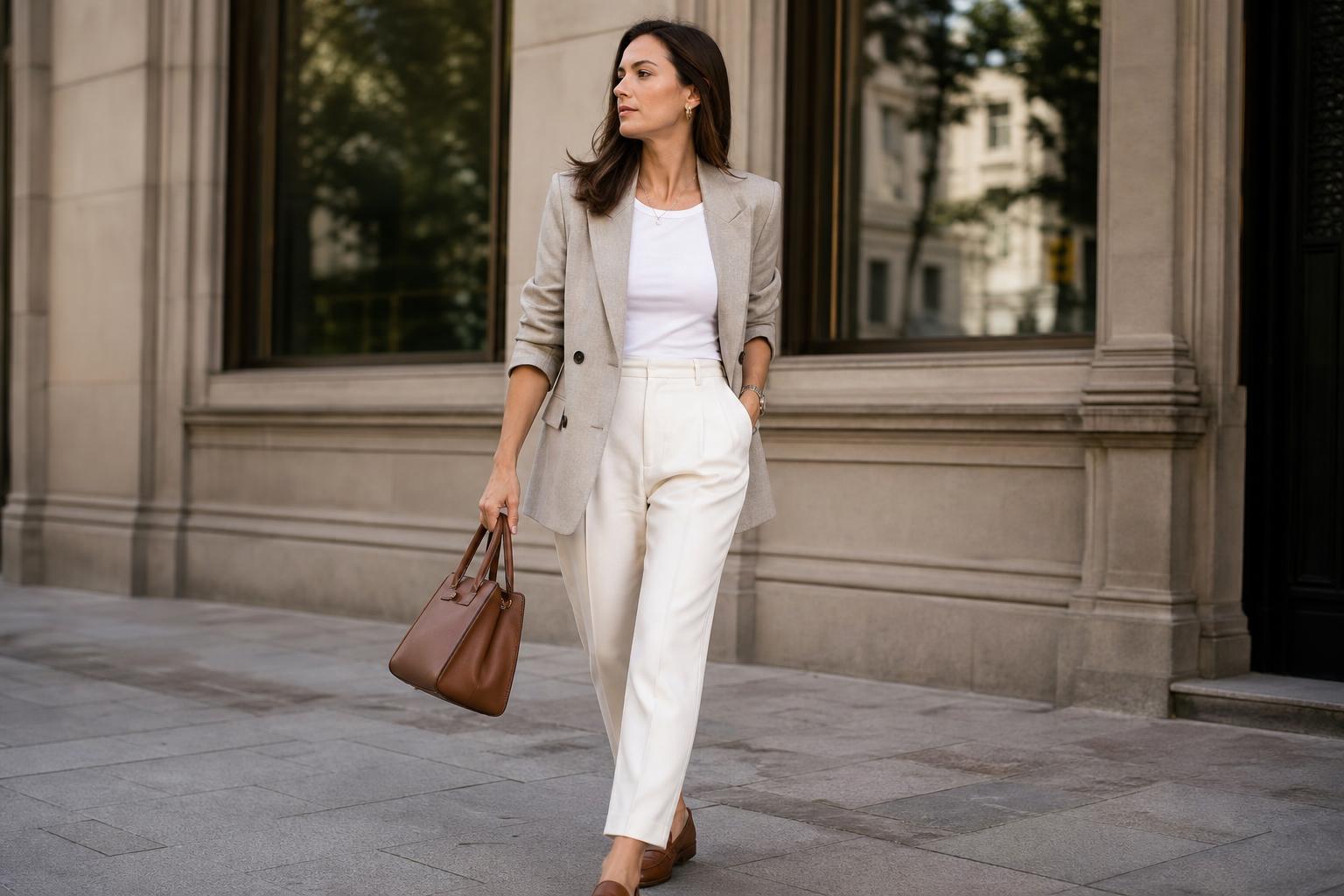
Some of the most polished women in any city are not dressed formally at all. They are wearing casual elegant outfits: a structured blazer over denim, a midi dress with simple sandals, tailored trousers with a white tee, or a silk blouse balanced by relaxed textures. The appeal is not excess. It is control. The silhouette looks intentional, the fabrics feel considered, and the accessories do just enough. This is the kind of dressing that works in everyday life, whether you are moving through a workday, packing for travel, stepping out for dinner, or simply trying to make familiar basics look more refined.
Casual elegance sits at the intersection of comfort and polish. It borrows from classic casual dressing, smart-casual blends, understated elegance, quiet luxury, and capsule wardrobe logic. Across fashion editorials, personal style blogs, and brand guides from names such as Who What Wear, Summersalt, Nordstrom, My Chic Obsession, Busbee Style, Manglyco, and Fabric Fits, the same foundation appears again and again: blazers, denim, tailored trousers, midi dresses, loafers, minimal jewelry, and a restrained palette. The real difference lies in how you compose them.
This is where the style becomes useful rather than purely aspirational. A casual elegant wardrobe should help you get dressed faster, spend more wisely, and look polished without feeling overdone. It should also adapt to different proportions, budgets, and seasons. The goal is not to imitate a perfect editorial image. It is to understand why an outfit works, which pieces deserve investment, and how to recreate the effect with what you already own.
What casual elegance actually looks like in practice
Casual elegance is often misunderstood as simply wearing expensive basics. In reality, it is more specific than that. The look depends on a refined balance between tailored structure and relaxed ease. Think of a blazer with jeans, a crisp white shirt with soft trousers, or a simple dress finished with minimal jewelry and a structured bag. The outfit does not need many elements, but each element should contribute to a clean line, a thoughtful proportion, or a subtle textural contrast.
Your wedding has a lot of moving pieces. Your plan can still feel composed.
Zarellea organizes guests, vendors, budget, and timelines in one shared space — so you can make decisions with clarity, not stress.
The easiest way to recognize the style is to study silhouette first. Tailored pieces, such as blazers and trousers, create definition. Casual pieces, such as denim, knitwear, or a white tee, keep the outfit grounded and wearable. Elegant accessories, especially loafers, understated jewelry, and a simple handbag, pull the composition together. That is why the same blazer can look corporate in one outfit and effortlessly refined in another. It depends on the supporting pieces around it.
There is also a practical reason this aesthetic remains so consistent across U.S. fashion coverage. It solves a modern wardrobe problem: how to look polished in situations that are neither fully casual nor truly formal. A wardrobe refresh built around elegant basics answers that need better than trend-driven shopping ever will.
The wardrobe architecture behind polished everyday dressing
A casual elegant wardrobe does not need to be large, but it does need range. The most useful pieces are those that can move between casual, work, and slightly dressier settings with only minor adjustments. This is why capsule wardrobe thinking appears so often in discussions of elegant casual style. Versatility is not a bonus here; it is the principle.
The pieces to buy first
If you are starting from scratch, begin with the pieces that create the most outfit combinations. A blazer, high-quality denim, tailored trousers, a midi dress, and refined footwear will take you further than several statement items. These are the pieces that repeatedly show up in classic casual outfits because they can shift tone depending on what they are paired with.
- A blazer for structure and instant polish
- Dark-wash denim or clean-line jeans for a casual base
- Tailored trousers for work, travel, and elevated daytime dressing
- A simple midi dress for one-step ease
- Loafers or sleek sandals for refined comfort
- Minimalist jewelry for subtle finishing detail
- A structured bag or simple handbag to sharpen the look
If budget matters, invest first in the piece that changes the most outfits. For many women, that is the blazer. A good blazer can elevate jeans, knitwear, dresses, and even a white tee. Denim is often second because it carries the casual side of the equation while still pairing beautifully with elegant tops and shoes. Accessories can be added gradually.
What is worth investing in and what can be kept affordable
Investment makes the most sense where fit, fabric, and repetition matter. Blazers, trousers, and loafers usually earn that investment because they are worn often and their quality is easy to see. A blazer that holds its shape instantly looks more expensive than one with weak structure. Tailored trousers in a stable fabric also tend to age better in a wardrobe than trend-specific separates.
Affordable options work well for simple tops, basic knitwear, layering tees, and some seasonal accents. A white tee under a blazer can look very refined if the fit is clean and the rest of the outfit is intentional. The same is true of uncomplicated skirts or blouses, especially if you keep the palette restrained and the accessories minimal.
Why the blazer remains the defining piece
No item appears more consistently in casual elegant styling than the blazer. Fashion editors, stylists, and bloggers return to it because it adds architecture without making an outfit feel stiff. Nordstrom styling guidance, classic casual editorials, and personal fashion blogs all treat the blazer as a central piece for one reason: it is the fastest way to elevate casual dressing.
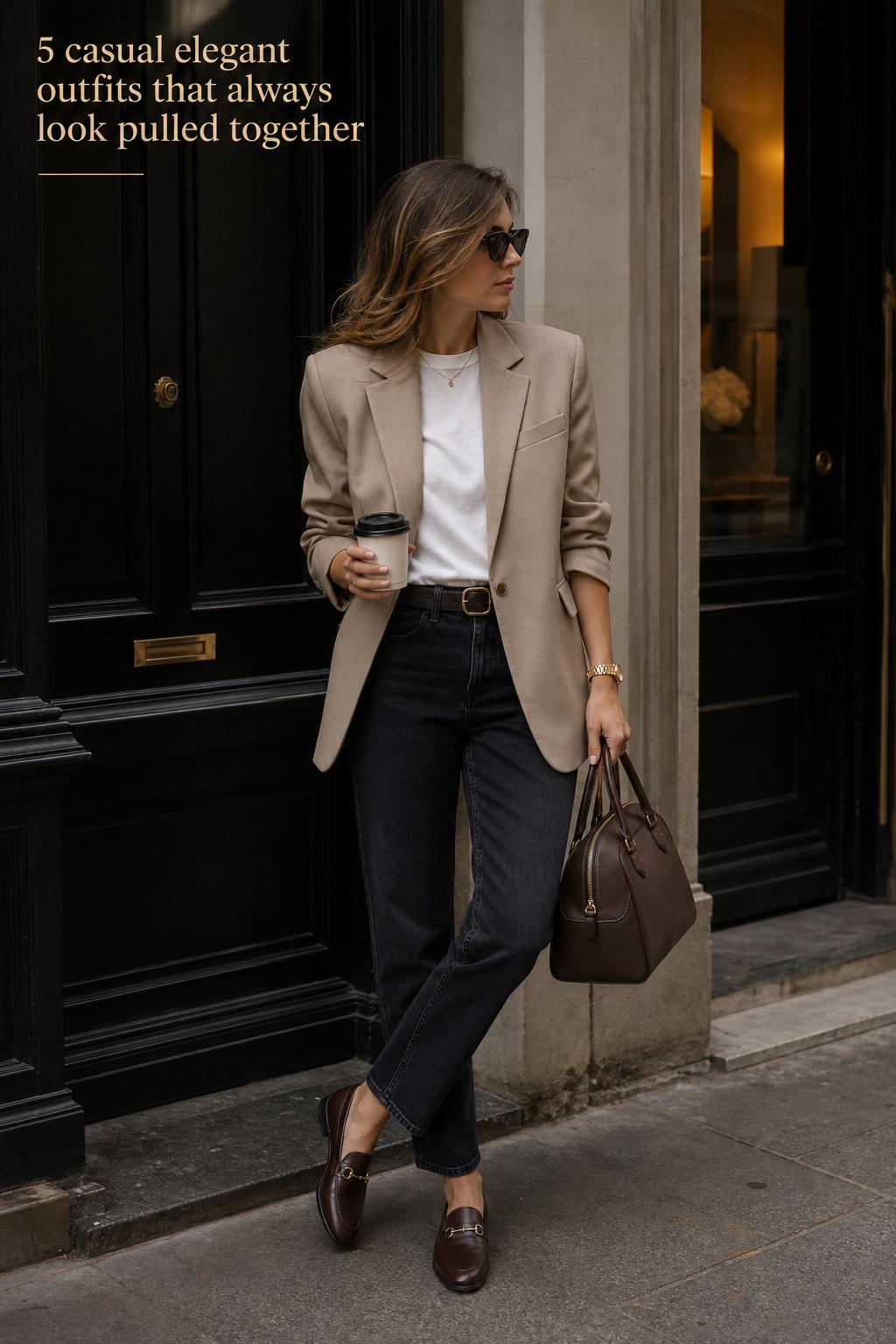
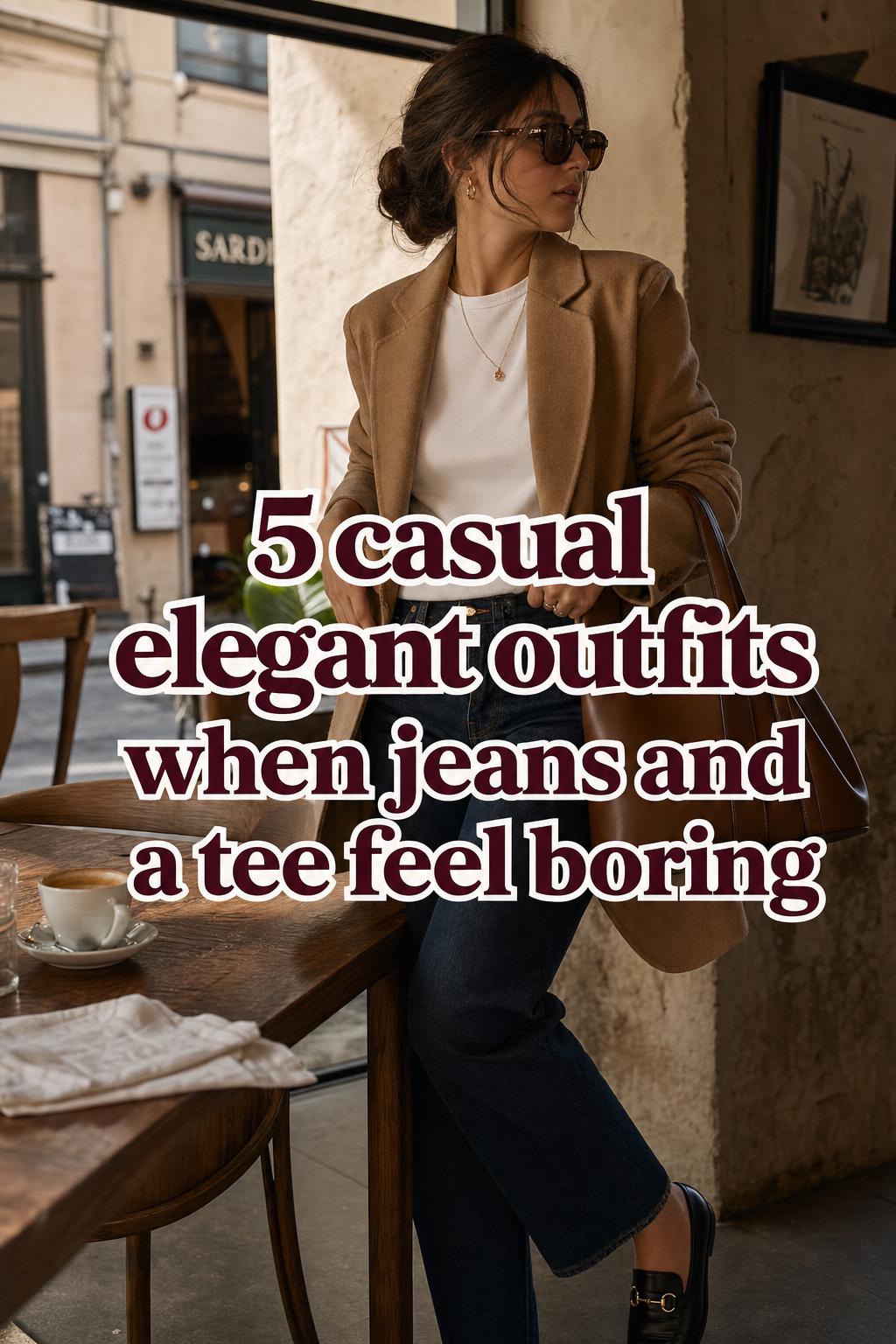
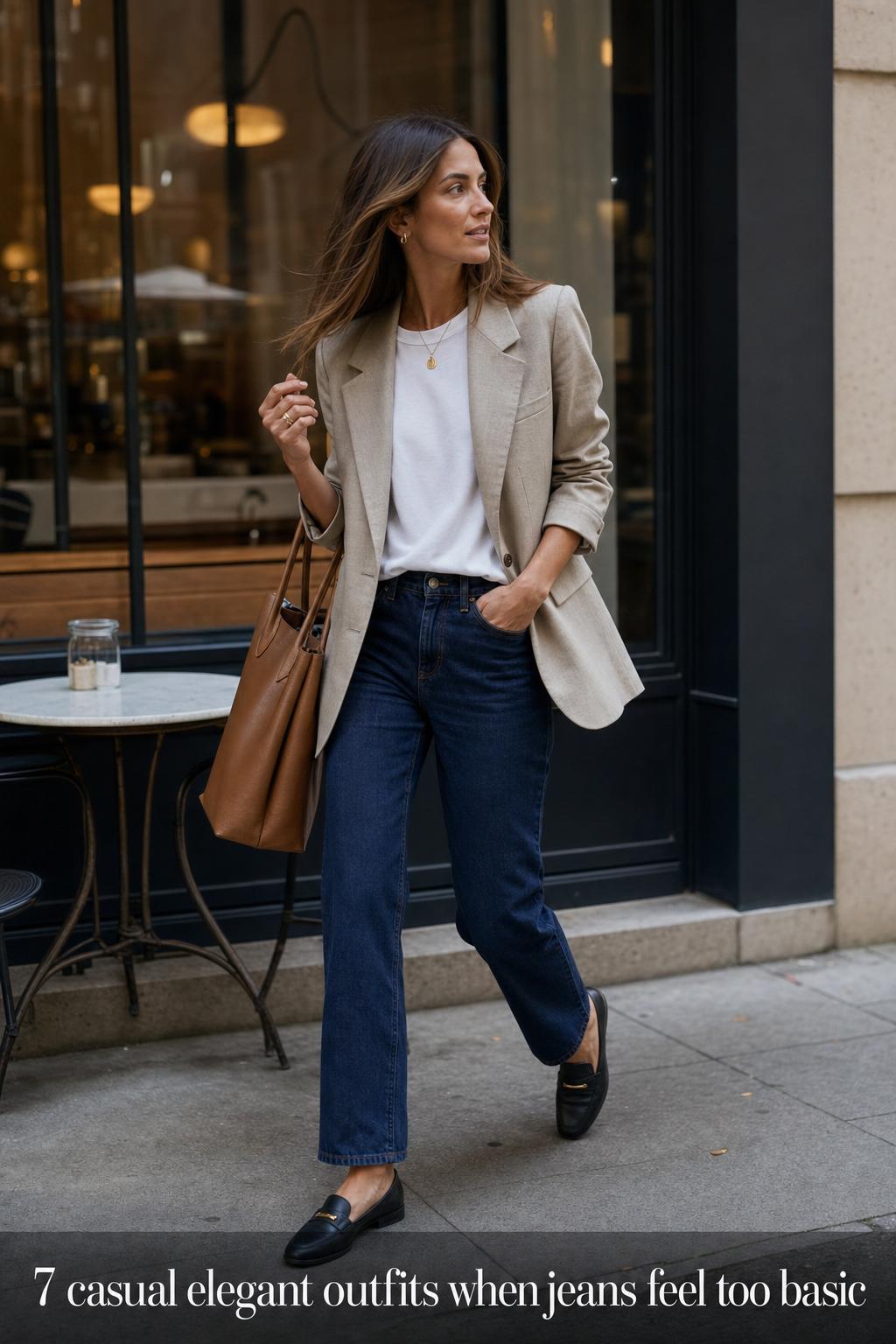
A structured blazer layered over denim creates a clear visual hierarchy. The denim keeps the look relaxed. The blazer restores polish. Add loafers and a simple handbag, and the result feels measured rather than accidental. This formula is especially useful for days that involve multiple settings, such as coffee meetings, office hours, and evening plans.
How to make blazer and jeans look refined rather than generic
The success of blazer-and-denim combinations depends on contrast and restraint. Keep one element crisp and one element relaxed. A tailored blazer with dark-wash denim generally reads more elegant than an oversized jacket with distressed jeans. A neutral or tonal palette also helps. Loafers, ankle boots, or simple pumps can sharpen the line further, while minimalist jewelry prevents the look from becoming too busy.
For petite proportions, a blazer that does not overwhelm the frame is often easier to style than a very long cut. For taller women, a slightly longer line can look particularly elegant with tailored trousers or straight denim. For curvier figures, the balance matters more than strict rules: a blazer that defines shape without pulling can create an especially polished silhouette. In all cases, the most important question is whether the blazer supports the line of the body rather than hiding it completely.
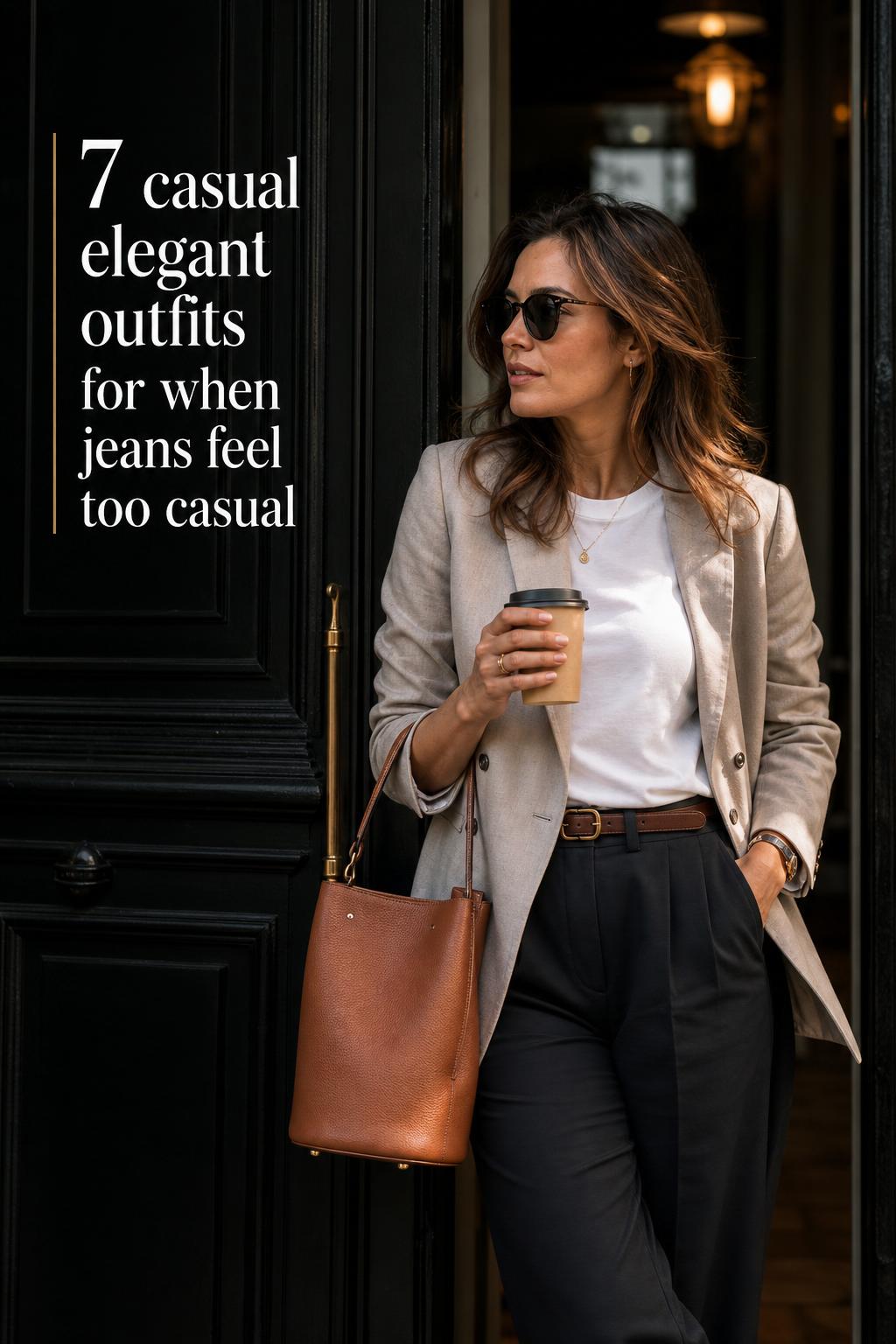
Tip: if your blazer feels too formal, soften it with a knit, a white tee, or denim. If it feels too casual, add tailored trousers, a structured bag, and cleaner footwear. The piece itself is versatile; the supporting items determine its mood.
The quiet power of dresses, skirts, and soft structure
Not every casual elegant outfit needs tailoring in the traditional sense. Midi dresses, simple skirts, and soft blouses offer another path to refinement, especially when ease and movement are priorities. This side of the aesthetic appears often in Summersalt styling pages, personal blogs, and casual chic roundups because it suits travel, warm weather, and days when you want one piece to do most of the work.
Why the midi dress works so well
The midi dress has enough length to feel graceful and enough simplicity to stay wearable. It creates an elongated line, which is why it is often perceived as elegant even when styled minimally. Add simple sandals, a structured bag, and restrained jewelry, and you have an outfit that feels finished without looking precious. This is particularly effective for daytime events, city weekends, travel dinners, or any setting where a full formal look would feel excessive.
For women who prefer less structure around the waist or hips, a midi dress can be easier to wear than fitted separates. For petite women, the most important styling choice is proportion. A midi that does not visually shorten the frame often works best when paired with simple shoes and a cleaner neckline. For taller women, the longer line can feel especially natural and editorial.
Skirts and silk blouses for elevated softness
A silk blouse with tailored trousers or a skirt is one of the clearest examples of how texture creates elegance. Silk, or silk-like fluidity, introduces movement and light, while the tailored base keeps the look grounded. This pairing is useful for work environments, low-key evening plans, and occasions where denim would feel too casual. It also transitions well between seasons when layered with a blazer or knit.
If you like feminine dressing but want to avoid looking overly dressed, this formula is especially reliable. Keep accessories quiet, choose a simple handbag rather than a heavily embellished one, and let the fabric do the work.
Tailored trousers, white tees, and the elegance of restraint
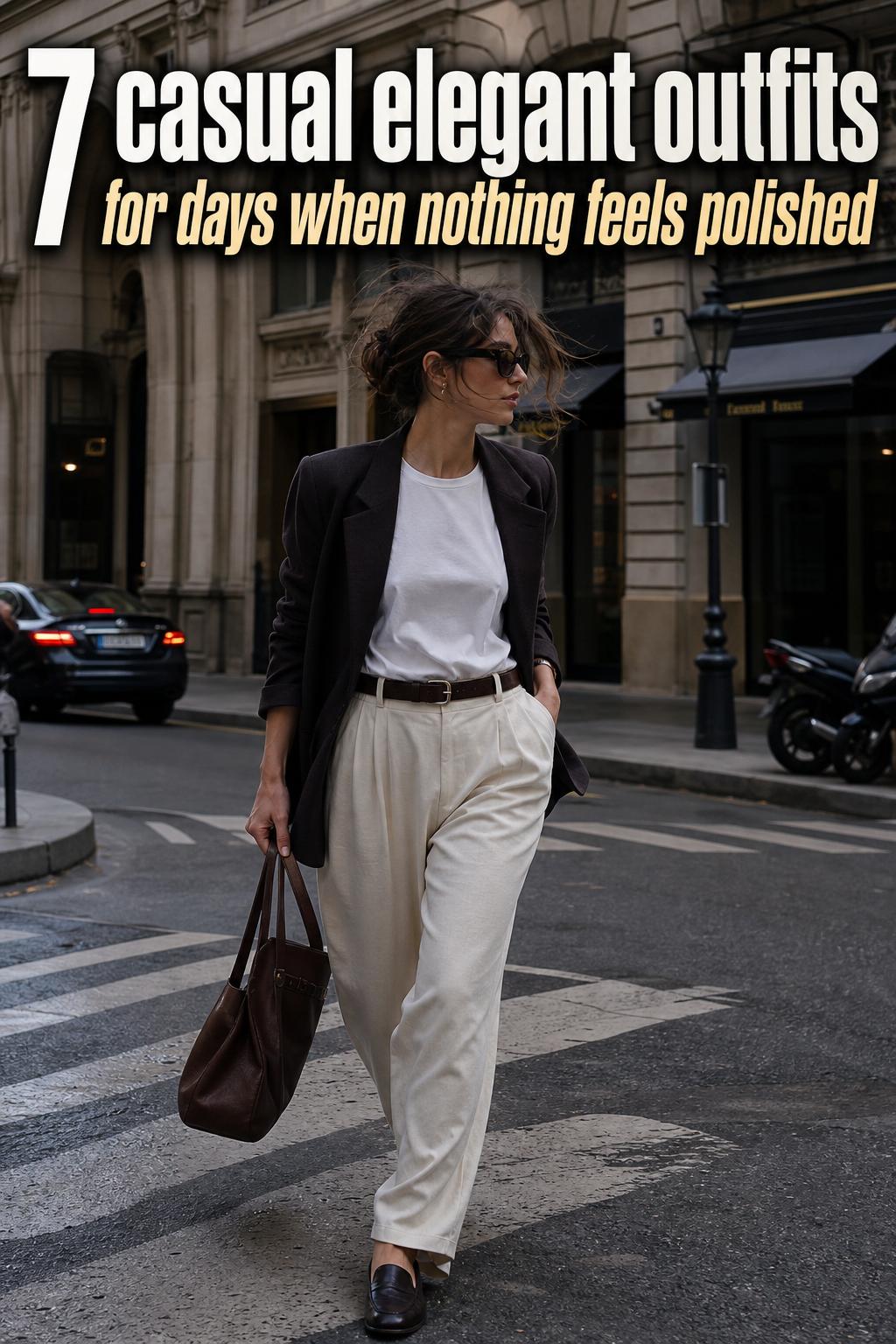
One of the most practical outfit formulas in this category is also one of the simplest: tailored trousers, a white tee, and a blazer or light layer. Fabric Fits highlights this combination because it captures the essence of elevated casual style. The white tee keeps the outfit approachable. The tailored trousers introduce polish. The blazer, if added, gives the look structure and clarity.
This is an excellent option for women who do not enjoy fussy styling. It is comfortable, repeatable, and easy to adjust for weather. It also works across different body types because the components can be shaped independently. If you need more waist definition, choose trousers with a cleaner fit. If you prefer ease through the hip or thigh, the polished effect can still hold as long as the line remains intentional and the fabric is not too limp.
The mistake to avoid here is treating minimalism as an excuse for poor fit. With simple outfits, every line matters. A white tee should sit cleanly under a blazer. Trousers should not collapse awkwardly at the hem. Jewelry should refine rather than clutter. The look succeeds because it is restrained, not because it is unfinished.
Fabrics and color palettes that make outfits look more expensive
Casual elegance is as much about fabric as it is about silhouette. Cotton, linen, silk blends, wool, and cashmere are repeatedly associated with refined casual dressing because they create depth without relying on loud detail. Even simple shapes become more elevated when the material has body, softness, or a gentle drape.
How fabric changes the mood of an outfit
A blazer in a stable fabric reads more polished than one that loses shape after a few wears. Cashmere knits lend quiet softness to trousers or denim. Linen feels effortless in warm weather, though it reads most elegant when the rest of the outfit stays streamlined. Silk blends can make a simple blouse feel more considered than a basic woven top. These details matter because casual elegant outfits rely on subtle signals rather than obvious statement pieces.
The easiest color strategy to follow
Neutral and subdued palettes dominate this style for good reason. Monochrome or tonal dressing tends to look polished because the eye reads it as coherent. That does not mean everything must be beige or black. It means color should feel balanced. Denim with a soft knit and structured blazer works because the tones support one another. A white shirt with tailored trousers feels classic because the contrast is clean. A midi dress paired with understated accessories looks elevated because there is no visual competition.
- Use tonal combinations when you want an outfit to feel instantly polished
- Let one texture provide interest rather than adding multiple strong accents
- Keep bags and shoes aligned with the overall tone of the outfit
- If wearing denim, choose cleaner washes when you want a more elegant finish
Tip: if you are trying to make affordable pieces look more refined, simplify the palette first. Color discipline often has more impact than price.
Accessories that elevate without overpowering
The best accessories in casual elegant outfits are rarely dramatic. They are precise. Minimalist jewelry, loafers, sleek sandals, ankle boots, sunglasses, and a structured bag all appear repeatedly because they finish the outfit while preserving its restraint. This is where many women either sharpen the look or lose it.
A refined bag brings order to denim and a knit. Loafers can make relaxed trousers feel intentional. Minimal jewelry works because it supports the outfit rather than competing with it. Gold and silver jewelry are both useful, especially when worn simply. The common thread is clarity.
How to choose accessories for real life
For daily wear, comfort and repeat value should guide your choices. If you walk often, loafers are usually more versatile than delicate heels. If you need one bag for work and weekend, a structured shape in a simple finish will work harder than a highly trend-led style. If you travel, minimal jewelry is easier to mix across outfits than statement pieces. Elegant dressing becomes far more practical when your accessories support repetition.
Sunglasses can also act as a finishing accent, particularly in spring and summer styling. They lend a composed feel to a white tee, tailored trousers, or a midi dress without adding bulk or fuss. It is a small detail, but small details often define this aesthetic.
Seasonal shifts: keeping the same wardrobe polished all year
One of the most useful things about casual elegance is that the formulas remain stable across seasons. What changes is fabric weight, layering, and footwear. This is why the style suits capsule wardrobes so well. You are not rebuilding your look every few months. You are refining the same vocabulary for different temperatures and settings.
Spring and summer: lighter textures, clearer lines
In warmer months, linen, cotton, lighter dresses, simple skirts, and sandals come forward. A midi dress with minimal accessories is especially effective here because it feels finished while remaining breathable. Dark-wash denim can still work on cooler evenings, particularly with a simple blouse or blazer. The key is to keep the outfit airy rather than heavily layered.
Summer casual chic outfit ideas often fail when they try to do too much. In heat, elegance usually comes from reducing visual noise. One clean dress, one structured bag, one piece of jewelry, and comfortable sandals are often enough.
Fall and winter: texture becomes the styling tool
As temperatures drop, wool, cashmere knits, blazers, and tailored trousers become especially valuable. Denim and loafers continue to work, though ankle boots may feel more practical depending on weather. Layering matters more in these seasons, but the principle remains the same: combine one structured element with one softer or more relaxed one.
A cashmere knit with tailored trousers is refined and comfortable. A blazer over denim remains reliable. A dress layered with a jacket can carry the same elegance as in summer, just with more textural depth. Seasonal dressing is less about new formulas and more about fabric behavior.
From work to weekend to travel: where these outfits are most functional
The true value of casual elegant outfits appears when you test them against real schedules. The style is not only attractive; it is efficient. It works in environments where dress codes are ambiguous and in days that require movement between contexts.
For work
Elegant casual outfits for work are usually built around tailored trousers, blouses, knitwear, or a blazer. Denim may also work in some settings if the wash is clean and the styling is polished. A silk blouse with trousers offers more softness, while a white shirt and blazer create a crisper result. Choose shoes that you can wear for hours; the outfit will not feel elegant if you are visibly uncomfortable in it by midday.
For weekends and city days
This is where blazer-and-jeans formulas, simple dresses, loafers, and structured bags are at their best. They feel presentable without asking for much maintenance. If your weekend includes walking, cafés, errands, or meeting friends, these combinations give enough polish without becoming impractical.
For travel
Travel wardrobes benefit enormously from this style because it rewards repetition. Tailored trousers, a knit, a blazer, and one midi dress can create several outfits with very little luggage. Minimal jewelry and one versatile bag keep things easy. This is also where color coordination matters: a tighter palette means every piece can work with the next.
Tip: if you are packing for a trip, build around one blazer, one trouser, one denim, one dress, two tops, and one pair of refined flat shoes. That kind of wardrobe architecture can cover a surprising range of situations.
The role of brands, editors, and style voices
Different fashion sources interpret casual elegance through slightly different lenses, and understanding those differences can help you identify your own version of the look. Who What Wear often frames the style through elegant basics, classic silhouettes, and editorial outfit formulas. Nordstrom’s stylist perspective emphasizes wardrobe staples and elevated everyday dressing. Summersalt leans into wear-anywhere ease with dresses, denim, and minimal accessories. My Chic Obsession often approaches the aesthetic through quick recreations, blazer-and-jeans combinations, silk blouses, and capsule wardrobe logic. Busbee Style highlights all-day wearability, including jackets, dresses, denim, and loafers. Manglyco speaks more to structured basics, bag and shoe pairing, and timeless style. Fabric Fits focuses on elevated basics such as white tees, tailored pants, and blazer layering.
The common lesson across all of them is more important than any single shopping source: polished style comes from composition. The pieces may vary by price tier, but the visual logic stays the same. Tailored structure, relaxed balance, clean accessories, and disciplined color choices repeatedly create the most elegant results.
Common mistakes that weaken a casual elegant outfit
Because this style looks effortless, it is easy to assume it requires very little thought. In reality, the margin for error is smaller. When an outfit is built on simple pieces, proportion, finish, and coordination become more visible.
- Too many competing details, which can make the outfit feel busy rather than refined
- Loose everything, especially when both top and bottom lack structure
- Overly distressed denim when the goal is elegance
- Accessories that feel disconnected from the clothing
- Ignoring fabric quality in very simple outfits
- Choosing shoes that fight the tone of the rest of the look
Another common mistake is dressing for the idea of elegance rather than the reality of your day. A look that requires constant adjustment, uncomfortable shoes, or fabrics unsuited to the weather will not feel polished for long. Real elegance includes ease. It should support movement, temperature, and the length of time you actually need to wear the clothes.
How to adapt the style for different proportions and preferences
Casual elegance is not limited to one body shape because its foundation is proportion rather than trend. What changes is the placement of structure, the volume of fabric, and the balance between fitted and relaxed elements.
If you are petite, cleaner lines and controlled proportions often help the outfit stay sharp. A blazer that does not dominate the frame, a midi dress with a clear line, and trousers with a neat hem can all support a longer visual effect. If you are tall, longer blazers, full-length trousers, and elongated dresses often look naturally harmonious. If you are curvy, the most useful styling principle is definition without restriction. Pieces that acknowledge the body’s shape usually look more elegant than pieces that either cling too tightly or erase all structure.
Your personal comfort level also matters. Some women feel most polished in dresses and skirts; others prefer trousers and denim. The style accommodates both. The key is not to force yourself into one formula, but to preserve the same design logic: refined line, quiet color balance, and accessories that support the whole.
A smart capsule for casual elegant dressing
If you want this aesthetic to become easy, not occasional, build a small rotation around repeatable pairings. A wardrobe that supports casual elegant outfits does not need endless novelty. It needs compatibility.
- One blazer in a versatile tone
- One pair of dark-wash jeans
- One pair of tailored trousers
- One midi dress
- One crisp shirt or simple blouse
- One knit, ideally in a soft neutral
- One white tee for layering
- One pair of loafers or similarly refined flats
- One pair of sandals or ankle boots depending on climate
- One structured bag and a small selection of minimal jewelry
This type of wardrobe can be mixed into classic casual outfits, elegant casual outfits for work, travel combinations, and seasonally adjusted looks without much friction. That is the point. The better your wardrobe architecture, the less styling becomes a daily struggle.
Styling insight: why some outfits feel instantly polished
There is a reason certain combinations always return in fashion editorials and street-style inspired guides. A blazer with denim, a dress with minimal accessories, or tailored trousers with a white tee all work because they resolve contrast. They give the eye one relaxed element and one refined one. They also rely on pieces with long stylistic life rather than short-lived novelty. That is why they feel modern season after season.
This is also why casual elegance connects so naturally with quiet luxury and timeless wardrobe staples. The effect comes less from branding than from discipline. Even when brands like Nordstrom or Summersalt frame the look through shopping, the strongest outfits still depend on line, fabric, and proportion. The woman wearing them appears put together because the outfit is edited.
The most useful mindset is to stop asking whether a piece is trendy enough and start asking whether it helps create a polished whole. That shift leads to smarter purchases, more repeat wear, and a wardrobe that feels composed rather than crowded.
FAQ
What is the easiest way to start wearing casual elegant outfits?
Start with one structured piece and one relaxed piece. A blazer with dark-wash jeans, tailored trousers with a white tee, or a midi dress with minimal jewelry are the easiest combinations to recreate because they already contain the balance that defines the style.
What should I buy first for a casual elegant wardrobe?
The most useful first purchases are a blazer, high-quality denim, tailored trousers, and refined flat shoes such as loafers. These pieces create the most outfit combinations and can move between work, weekend, and travel with very little adjustment.
Can casual elegant outfits work for the office?
Yes, especially when you lean on tailored trousers, blouses, blazers, knitwear, and polished shoes. In more relaxed workplaces, clean denim can also work if the wash is simple and the outfit includes refined elements such as a blazer, loafers, and a structured bag.
How can I make casual outfits look more elegant on a budget?
Focus on fit, clean colors, and simple accessories before chasing more items. A well-cut blazer, neat denim, a white tee, and minimal jewelry often look more refined than a wardrobe full of trend pieces. Keeping the palette tonal or neutral also helps affordable clothing look more considered.
Which fabrics work best for casual elegance?
Cotton, linen, wool, cashmere, and silk blends are especially effective because they add depth and polish without relying on heavy embellishment. In warm weather, linen and cotton feel natural. In cooler months, wool and cashmere help the same outfit formulas look richer and more seasonal.
Are jeans suitable for elegant casual outfits?
Yes, jeans are one of the most important casual foundations in this style. They work best when the wash is clean, the fit feels intentional, and they are paired with elevated pieces such as a blazer, silk blouse, loafers, or a structured handbag.
What accessories elevate without making the outfit feel overdressed?
Minimalist jewelry, loafers, simple sandals, ankle boots, sunglasses, and a structured bag are the most reliable choices. They sharpen the outfit without overwhelming it, which is essential in a style built on restraint and subtle detail.
How do I adapt casual elegant outfits for different body types?
Use the same principles but adjust the proportion. Petite women often benefit from controlled lengths and cleaner lines, taller women can carry longer silhouettes naturally, and curvier women usually look best in pieces that create definition without pulling or hiding the body completely. The goal is balance, not one rigid formula.
What are the most common mistakes to avoid?
Avoid combining too many statement details, relying on poor fit in very simple outfits, or choosing overly distressed pieces when you want polish. Casual elegance works best when the silhouette is clear, the fabrics feel considered, and the accessories support rather than distract.
How do I transition these outfits between seasons?
Keep the same core formulas and change the fabric weight, layering, and footwear. A midi dress can move from summer to fall with a jacket, denim can be paired with sandals in warmer months and loafers or boots later, and tailored trousers work year-round with lighter tops or cashmere knits depending on temperature.
Leave a Reply