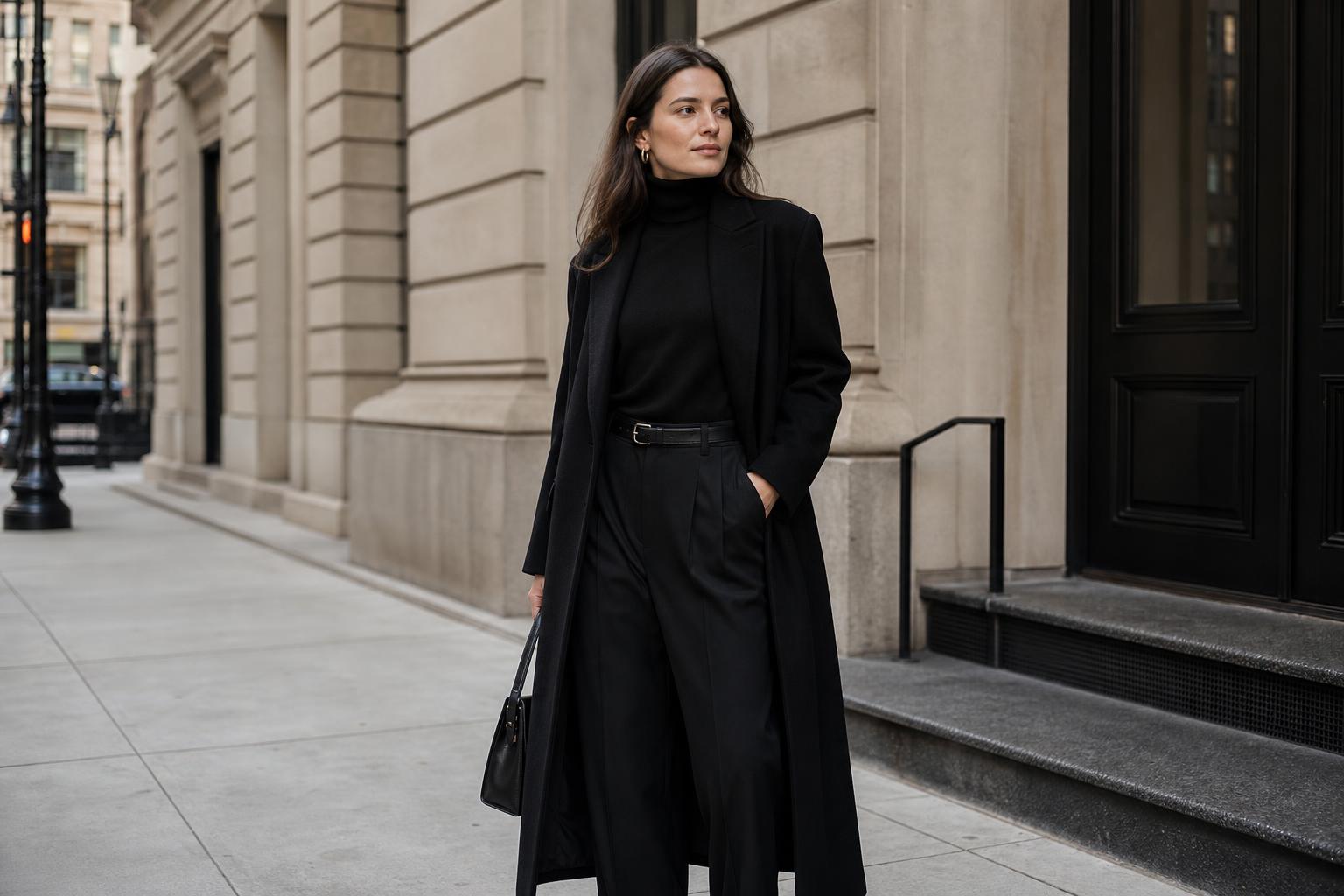
Monochrome aesthetic outfits and the quiet power of color harmony
Some of the most memorable outfits are not built on prints or sharp contrast, but on restraint. monochrome aesthetic outfits carry that particular kind of confidence. They rely on a single color family, tonal dressing, and the subtle conversation between silhouette, texture, and finish. The result can feel minimal, luxurious, modern, or softly romantic depending on the shades and fabrics involved, but the visual language is always cohesive.
This aesthetic appears everywhere style feels intentional: on city streets in New York and Los Angeles, at fashion weeks, on red carpets, in refined workwear, and in off-duty wardrobes that lean toward minimalism. A monochrome look can be all-black and architectural, nude and warm, blue and composed, or brown and quietly rich. What makes it enduring is not just that it photographs well, but that it gives the wearer an instantly polished framework for getting dressed.
The appeal is practical as well as visual. Head-to-toe monochrome simplifies decisions, creates clean lines, and lets fabrics like satin, wool, denim, leather, and cotton do more of the expressive work. That is why the style moves so easily between a Copenhagen-inspired minimalist wardrobe, a Milan-leaning tailored mood, and a relaxed American streetwear interpretation. The color is unified, but the personalities of the outfits can be completely different.
What defines a monochrome aesthetic
A monochrome outfit is built around one color family rather than a mix of unrelated shades. In its strictest form, that means dressing in one hue from head to toe. In everyday styling, the idea is often slightly broader and more wearable: tonal dressing within the same family, such as navy with azure, cream with ivory, or chocolate with tan. This is why monochromatic outfits rarely feel flat when they are done well. They are unified, not uniform.
Your wedding has a lot of moving pieces. Your plan can still feel composed.
Zarellea organizes guests, vendors, budget, and timelines in one shared space — so you can make decisions with clarity, not stress.
The elegance comes from how the eye reads continuity. A single-color outfit naturally elongates the line of the body, reduces visual interruption, and allows details such as drape, cut, and proportion to become more noticeable. A structured blazer layered over fluid trousers in the same family feels more sophisticated because the silhouette is uninterrupted. Likewise, a coat, knit, and boots in related tones can appear far more deliberate than a multicolor outfit made from expensive pieces.
There is also a psychological effect to monochrome dressing that explains why it is often associated with minimalism and luxury fashion. A coherent palette can read calm, expensive, and self-assured because it suggests editorial control. That does not mean every monochrome look must be severe. In practice, the most compelling ones balance consistency with nuance, often through matte versus glossy finishes, tailored versus relaxed shapes, or soft versus structured fabrics.
Why the look remains popular
Monochrome remains appealing because it works across occasions and style identities. It can support a capsule wardrobe, translate easily from day to evening, and make wardrobe basics feel elevated. It is also highly adaptable: a streetwear interpretation may use a hoodie, oversized jacket, and sneakers in one tonal family, while an evening version may rely on a dress, long coat, and sleek footwear in the same color story. The formula is clear, but the mood is flexible.
The foundation: color families that shape the mood
Not all monochrome aesthetic outfits communicate the same feeling. The color family sets the tone before texture or accessories enter the picture. Black tends to feel sharp and urban, white can read clean and sculptural, nude and tan offer softness, brown adds grounded depth, and blue creates quiet authority. Understanding this difference matters because a successful monochrome wardrobe is less about copying a specific outfit and more about choosing the family that matches your life, climate, and personal style.
Look: all-black city minimalism
Among monochrome outfits, all-black remains the most instinctive and often the easiest to wear. The mood is direct, refined, and slightly cinematic. In urban settings such as New York or London, black naturally suits tailored outerwear, long lines, and strong footwear. The silhouette works best when there is contrast in shape: perhaps a structured coat over a fluid dress, or a sharp blazer over relaxed trousers that skim rather than cling.
The richness comes from texture, because without it black can lose dimension. Wool, leather, cotton, satin, and denim each absorb or reflect light differently, and that difference is what makes the look feel layered rather than flat. A matte black wool coat with leather boots and a satin blouse has depth even though the palette remains singular. Dresses, jackets, coats, boots, and trousers become especially important here because each piece contributes a different surface.
- Key garments: tailored coat, blazer, trousers or a black dress
- Footwear: boots with a clean, substantial shape
- Accessories: restrained black accessories that echo the finish of the outfit
This look fits the monochrome aesthetic because it proves that one color can carry multiple personalities. The drama does not come from brightness, but from precision. It is also one of the most forgiving interpretations for work, evening events, and transitional weather, provided the fabrics are mixed thoughtfully.
Look: white and ivory with sculptural calm
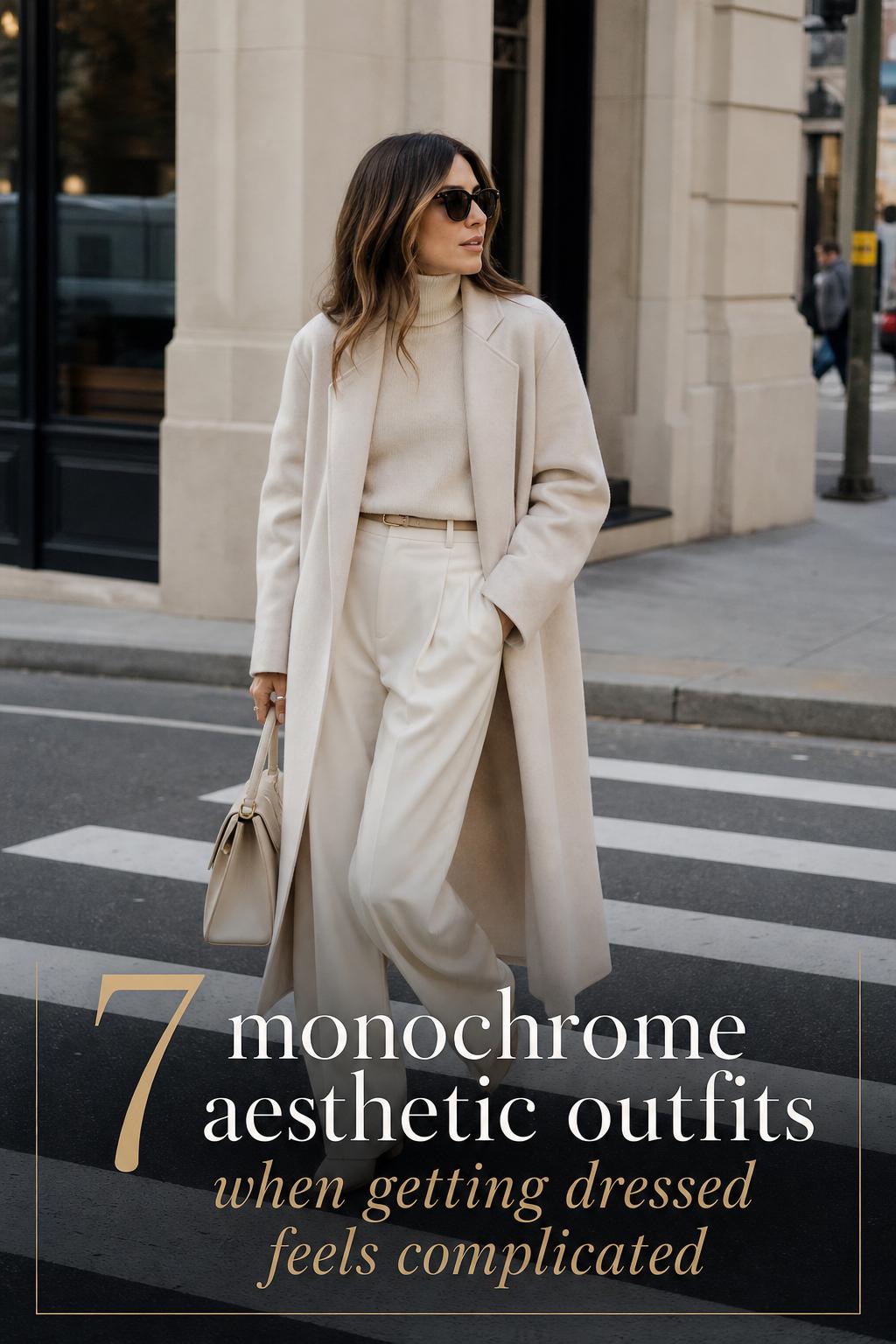
A white-based monochrome look feels different from black immediately. It is quieter, more architectural, and often more directional because every seam and proportion is visible. The mood suits environments where clean styling feels natural, from daytime events to polished travel dressing. The most elegant versions avoid trying to be overly pristine; instead, they let cream, ivory, and white coexist so the outfit feels soft rather than clinical.
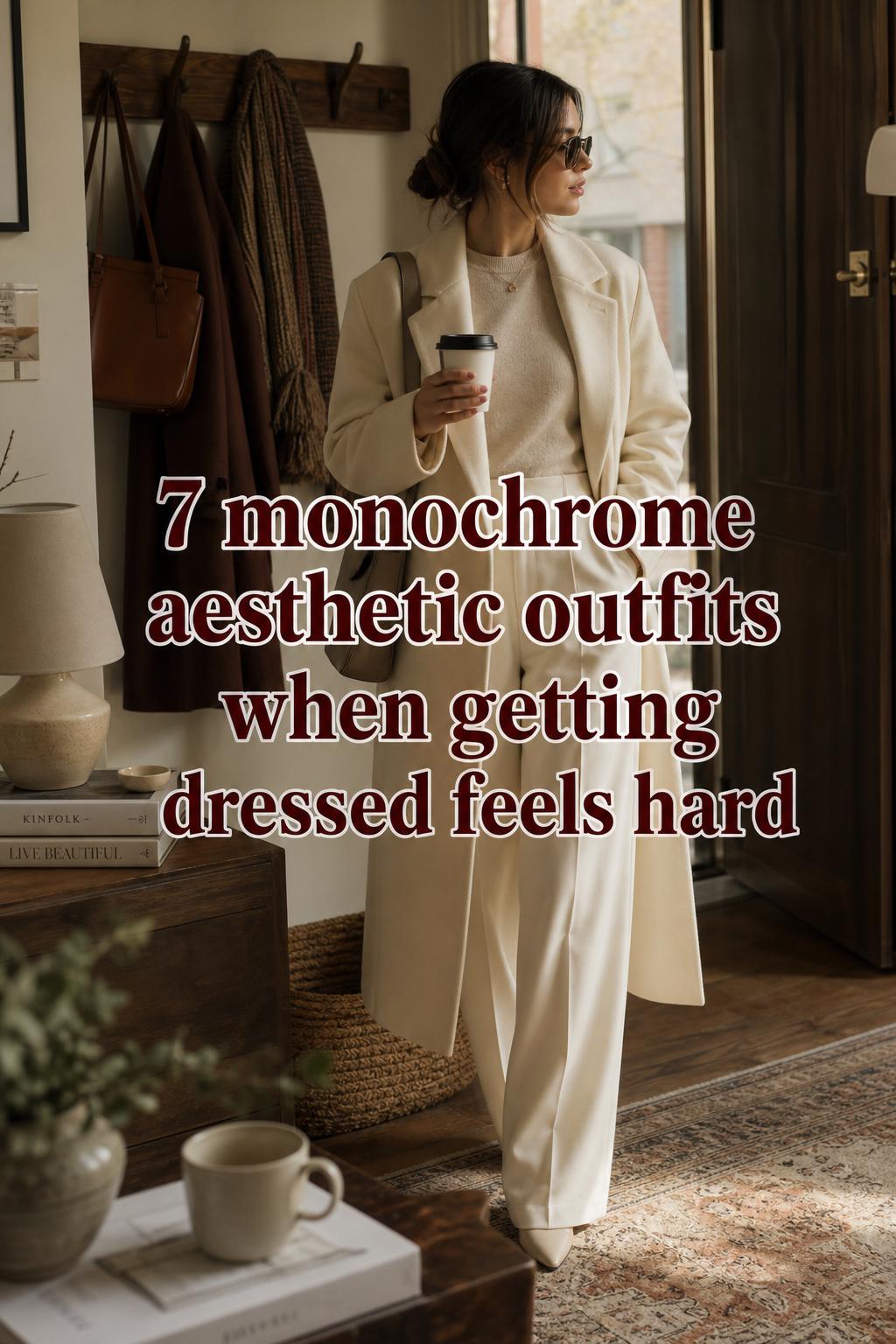
Think of a long ivory coat over a cotton top and wide-leg trousers in a close tonal range, finished with shoes in the same family. Satin can bring light to the upper half, while wool or denim adds structure below. Because pale monochrome reveals creasing and fabric quality quickly, silhouette matters more than ornament. Straight lines, gentle volume, and measured layering keep the outfit controlled.
What makes this interpretation work is restraint. White monochrome can appear expensive because it asks every element to be intentional. There is no loud color to distract from imbalance, so proportion and fabric do all the talking.
Look: navy-to-azure tonal dressing
Blue monochrome offers one of the most versatile paths into the aesthetic because it balances authority with ease. It can feel professional in workwear, relaxed in denim, and elegant in evening fabrics. A tonal range from navy to azure creates movement without breaking the visual harmony, which is why blue often appeals to those who find all-black too severe or all-white too demanding.
A polished version may pair a navy blazer with a softer blue top and tailored trousers, with footwear staying in the same family. A more casual interpretation can lean on denim as the anchor, layered with blue cotton or knitwear and grounded by similarly toned outerwear. Satin adds evening polish, while wool keeps it businesslike. The key is to keep the blues close enough that the outfit still reads as one continuous idea.
This color family is especially strong for readers looking for monochrome outfit ideas for women that feel less formal than black but still cohesive. Blue has enough subtle variation to make tonal dressing intuitive, which is why it works across both capsule wardrobes and trend-led styling.
Look: nude and tan in soft warm neutrals
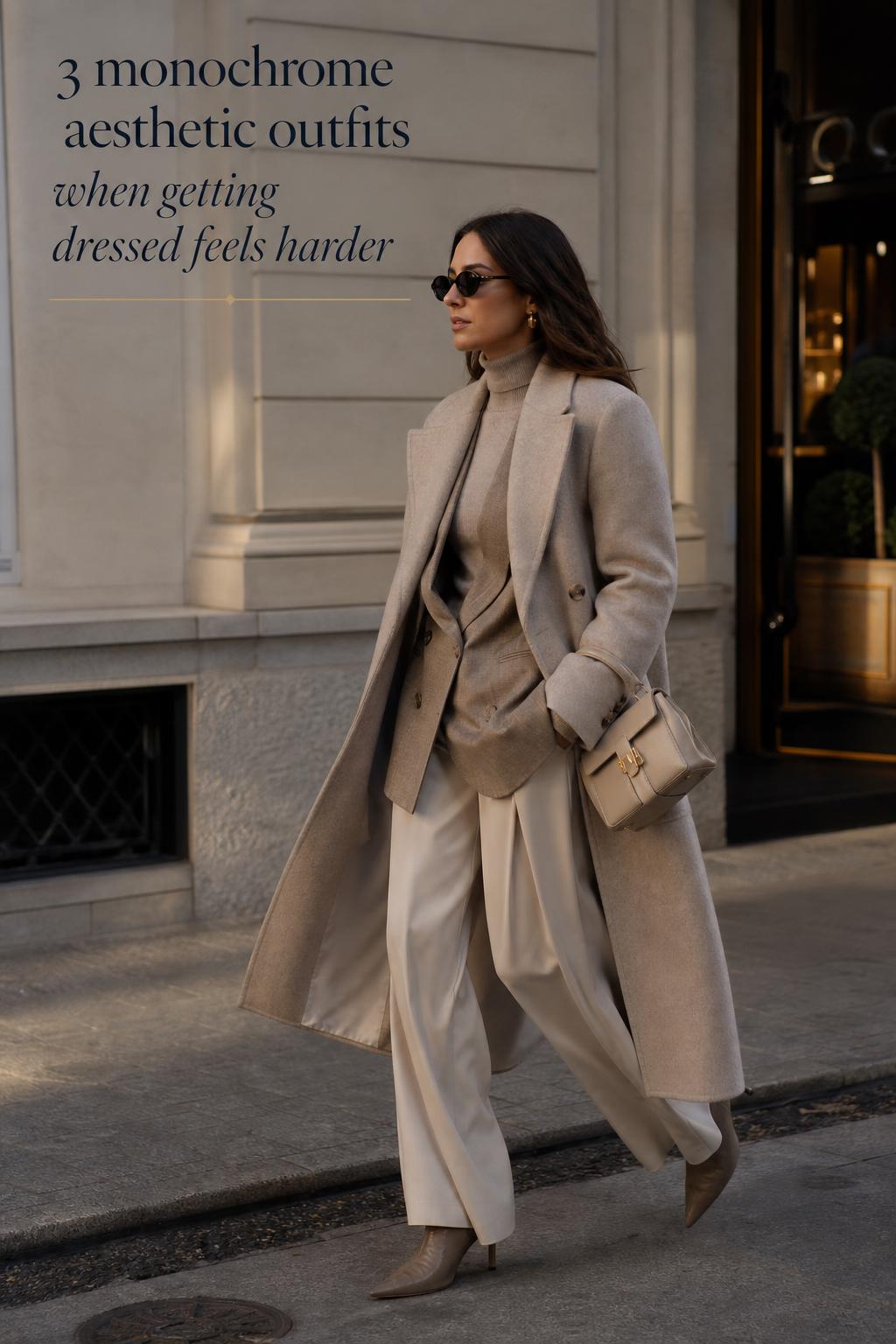
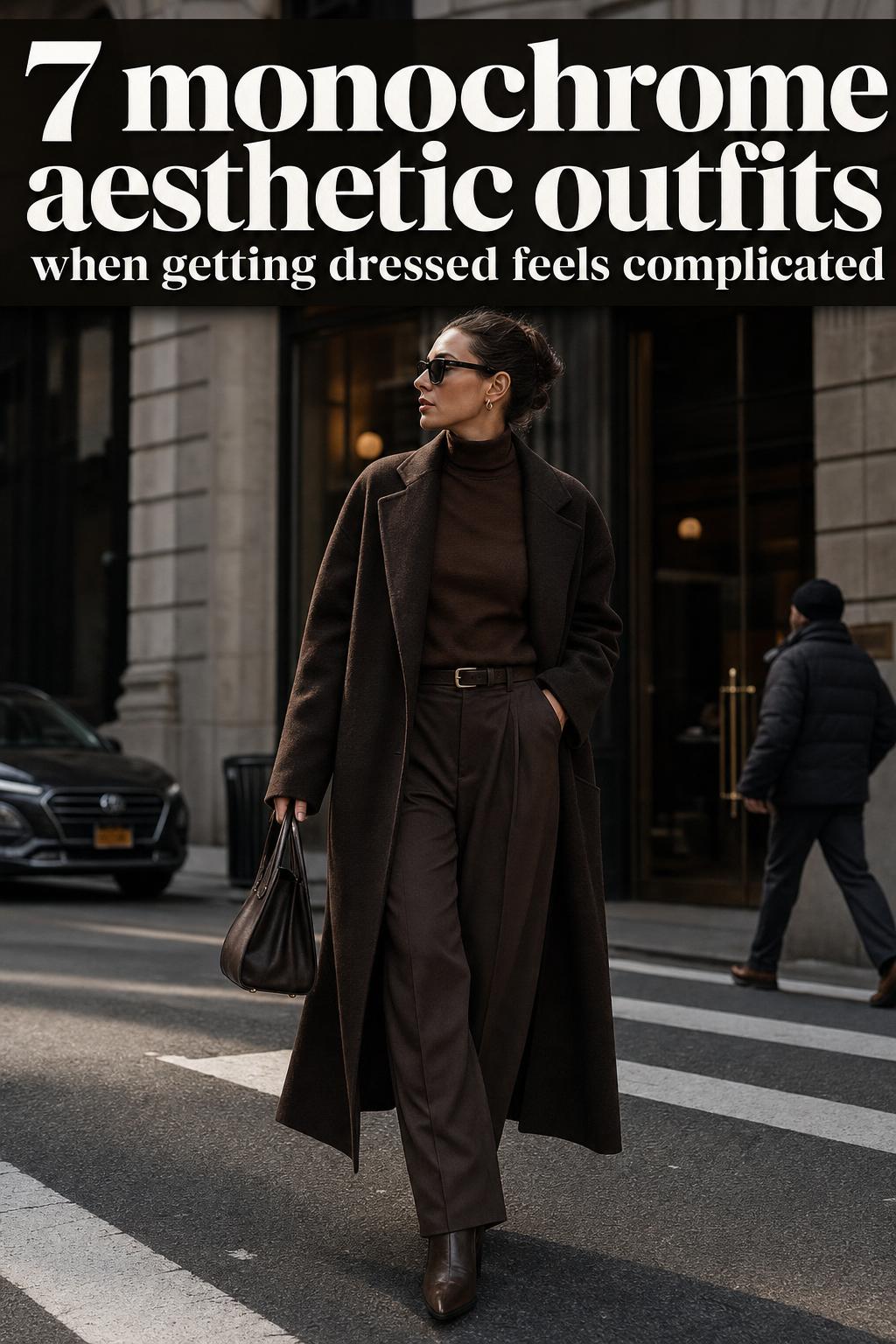
Nude, tan, and related warm neutrals create one of the most approachable monochrome moods. The effect is soft, composed, and quietly luxurious, especially when the outfit relies on layering rather than decoration. This is the kind of palette that feels at home in Los Angeles light, on a refined weekend in Milan, or in an understated office setting where polished ease matters more than trend display.
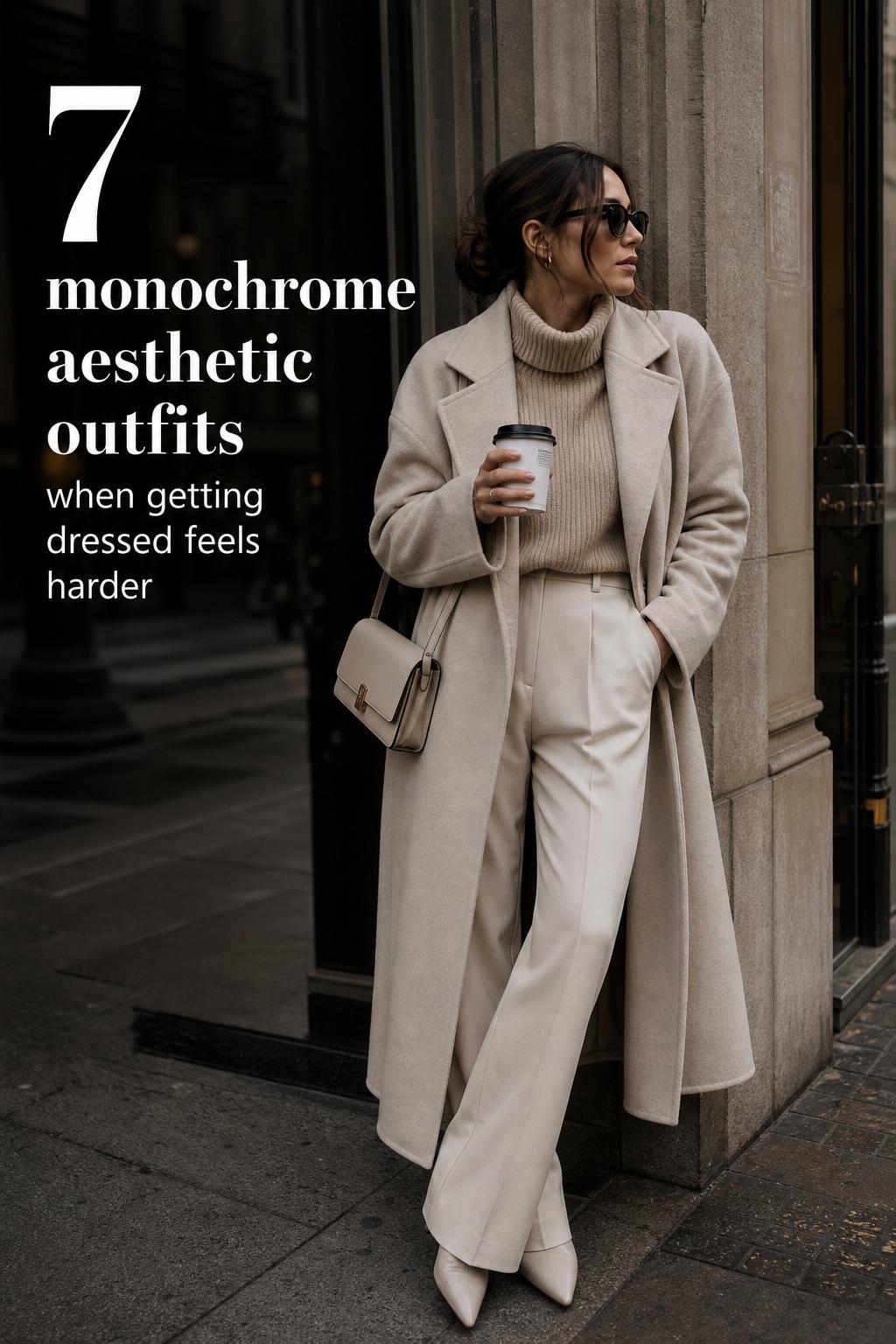
The strongest versions combine pieces with gentle tonal shifts: a tan coat over a nude knit, paired with cream-leaning trousers and footwear in the same spectrum. Wool, cotton, and satin are especially useful here because they prevent the outfit from looking washed out. A soft matte knit beside a slightly luminous satin layer creates visual depth while keeping the entire look serene.
This is a classic example of how monochrome dressing can support a minimalist wardrobe. Warm neutrals are often easier to repeat across seasons than more directional colors, and they transition naturally from casual to more formal contexts with only small changes in cut and fabric.
Look: brown and earth tones with quiet richness
Brown monochrome has a distinct atmosphere. It feels grounded, intelligent, and slightly more tactile than black or blue. The palette can move from espresso to softer earth tones, which makes it ideal for outfits centered on texture and depth. Brown also suits those who want a refined alternative to black without sacrificing sophistication.
A rich brown coat over coordinating trousers and a top in a nearby tonal range creates a strong vertical line, while leather boots or a structured bag reinforce the polished finish. Wool and leather are natural companions in this family, but denim can shift the look toward a more relaxed weekend mood. The advantage of earth tones is that they naturally absorb variation. A deeper outer layer and a lighter underlayer still feel coherent rather than contrasted.
Brown monochrome works because it looks considered without appearing studied. It has the ease of neutrals, but with more softness and depth than stark black-and-white dressing. For many wardrobes, it becomes the most wearable version of head-to-toe color harmony.
Texture, fabric, and silhouette: where monochrome becomes sophisticated
The main reason monochrome aesthetic outfits succeed or fail is not the color itself but what happens inside that color. When every piece is in one family, the eye notices finish, weight, line, and movement more intensely. This is why texture and silhouette appear so often in strong monochrome styling. They are not decorative extras; they are the architecture of the look.
Texture creates contrast without introducing another shade. Matte wool next to satin, cotton against leather, or denim under a sleek coat gives the outfit dimension. The difference between glossy and dry surfaces matters because it affects perceived color depth. Even in the same black or navy, one fabric can appear softer while another appears sharper, making the outfit feel layered and intentional.
Silhouette does similar work. If the palette is restrained, proportion becomes expressive. A long coat over a narrow dress creates one mood; an oversized jacket with loose trousers and substantial sneakers creates another. Neither is more correct than the other. The question is whether the shape supports the atmosphere you want the color family to convey.
Style tip: avoid the flat monochrome effect
The easiest mistake in monochrome dressing is making everything too similar in both shade and surface. When the sweater, trousers, coat, and shoes all share the same exact finish, the outfit can lose definition. The fix is usually simple: vary at least one of the following elements—fabric, structure, or tonal depth. A satin blouse under a matte blazer, leather boots beneath wool trousers, or a cream coat over a slightly darker knit immediately restores dimension.
- Mix matte and glossy finishes
- Use one structured piece to anchor softer garments
- Let shoes or outerwear sit one step deeper or lighter within the same family
- Choose accessories that echo the outfit rather than sharply contrast it
Looks that translate the aesthetic into real wardrobes
Look: tailored monochrome for workwear
For office dressing, monochrome has an immediate advantage: it looks focused. A tonal blue or brown outfit built on a blazer and tailored trousers appears composed before accessories are even considered. The mood should be polished, not rigid, so the best workwear versions pair clean tailoring with one softer element, such as a fluid top or gently draped coat.
Blue works particularly well here because navy and softer mid-blues support professionalism without feeling severe. Brown and nude families create a warmer office presence, especially in wool and cotton. Footwear should reinforce the line of the outfit rather than interrupt it, so staying within the same tonal family keeps the look elongated and refined.
This interpretation fits the monochrome aesthetic because it turns wardrobe basics into a complete statement. Instead of relying on novelty, it relies on thoughtful composition, which is often what distinguishes a strong professional wardrobe from a merely functional one.
Look: evening monochrome with fluid shine
Evening monochrome benefits from fabrics that move with light. The silhouette can be slim and elongated or softly draped, but there should be a sense of intentional finish. This is where dresses, long coats, and sleeker footwear become especially effective. Black is the obvious choice, yet white, deep blue, or warm nude can feel equally sophisticated depending on the setting.
A satin dress under a tonal coat offers the exact kind of contrast monochrome dressing needs at night. The color remains continuous, while the sheen adds depth and event-appropriate elegance. If the look is built in black, leather accessories can sharpen it; if it is in nude or brown, softer textures keep it fluid and modern. The aim is not excess, but control with a little luminosity.
In practical terms, this category is useful because it shows how one color family can still feel special. Evening monochrome often looks stronger than a more complicated palette simply because the eye reads it as deliberate from a distance.
Look: weekend streetwear in one tonal family
Streetwear gives monochrome a different rhythm. The mood becomes easier, more urban, and slightly more experimental in shape. Instead of tailoring, the interest may come from volume: an oversized jacket, a hoodie, relaxed trousers, and sneakers all within one color story. This approach is especially visible in city style and works well in transitional weather when layering is natural.
All-black is the clearest version, but tonal grey-adjacent black, deep blue denim families, or warm brown streetwear can be just as effective. If Nike, Supreme, or other streetwear references enter the look, they work best when branding does not overpower the palette. The strength of monochrome streetwear lies in consistency of tone paired with visible texture and proportion shifts.
This look fits the aesthetic because it proves monochrome is not limited to polished tailoring or evening dressing. It can carry a minimalist streetwear identity with equal force, especially when the outfit feels relaxed but still coherent from head to toe.
Look: soft weekend layers for understated minimalism
Not every monochrome outfit needs to read sharp or dramatic. Some of the most wearable versions are built for ordinary days: coffee runs, gallery visits, travel, or a low-key lunch in Los Angeles or Copenhagen-inspired settings. The silhouette here is gentle and layered, often with looser shapes that move comfortably through the day.
Cream, tan, brown, or soft blue are ideal for this mood. A knit layered under a coat with straight trousers and tonal footwear feels complete without trying too hard. Cotton and wool are especially convincing because they give body to relaxed cuts. The success of this look often depends on keeping the palette close and the accessories minimal, so the outfit feels calm rather than busy.
What makes this version important is its realism. monochromatic outfits are often discussed through event dressing or editorial styling, but their strongest argument may be how well they perform in everyday life. When the layers are comfortable and the tones are close, the outfit remains elegant for hours without demanding attention.
Celebrity references that clarify the mood
Public figures often make monochrome dressing feel tangible because they show how the idea translates outside mood boards. Sofia Coppola is frequently associated with elegant monochrome styling, and that connection makes sense. Her fashion image aligns naturally with minimalism, polished ease, and thoughtful restraint. In a Marc Jacobs context, the monochrome approach feels cultivated rather than forced, proving that simplicity can still carry narrative weight.
Gillian Anderson offers a different but equally useful reference point. A monochrome dress, including the kind of clean, timeless styling associated with ME+EM, demonstrates how one-color dressing can feel classic without becoming predictable. This matters for readers who want monochrome outfit ideas that are sophisticated but still wearable for real events, whether that means a premiere-adjacent evening, a formal dinner, or an elevated daytime occasion.
Celebrity examples are most helpful when treated as mood references rather than exact formulas. The lesson is not to reproduce a red-carpet look literally, but to notice what makes it effective: a continuous palette, a clean silhouette, and enough textural variation to avoid visual flatness.
How to translate a celebrity monochrome moment into daily dressing
The most wearable approach is to borrow the composition rather than the full styling. If a Sofia Coppola-inspired look relies on a long coat, fluid dress, and tonal accessories, that same structure can work with simpler wardrobe staples in a similar family. If a Gillian Anderson-inspired monochrome dress feels compelling because it is streamlined and timeless, the everyday version may be a clean dress with matching outerwear and shoes that stay close in tone. This keeps the visual intelligence of the outfit while making it practical.
A monochrome capsule wardrobe, built with intention
Monochrome dressing becomes especially effective when it is supported by a capsule wardrobe. Because the palette is narrow, the wardrobe can feel expansive without being large. Coats, dresses, jackets, trousers, tops, and footwear begin to work together more easily when they stay within one or two connected families. This is one reason monochrome is so closely aligned with minimalism: repetition becomes a strength rather than a limitation.
In real terms, a monochrome capsule does not require every item to match perfectly. It requires enough tonal compatibility that pieces can be layered without visual friction. For someone leaning toward blue, that might mean navy outerwear, softer blue tops, denim, and tonal shoes. For someone who prefers warm neutrals, coats, knits, trousers, and accessories can move between nude, tan, cream, and brown without leaving the family.
- Choose one main color family you will actually wear often
- Add two or three tonal variations within that family
- Prioritize outerwear, trousers, and footwear first because they shape the silhouette most clearly
- Use satin, wool, cotton, denim, or leather to create depth across repeated colors
- Keep accessories aligned with the palette so the wardrobe remains cohesive
This approach also has a practical advantage for seasonal dressing. A tonal wardrobe transitions more smoothly across weather shifts because it is built on compatibility. A wool coat in winter and a lighter cotton layer in spring can still belong to the same monochrome story. That continuity helps the wardrobe feel coherent over time rather than fragmented by trend cycles.
Regional mood: how monochrome shifts from New York to Los Angeles to Milan
One of the most interesting things about monochrome styling is how the same principle changes character depending on fashion ecosystem and setting. In New York, the look often becomes sharper: black, navy, strong coats, boots, and a more architectural silhouette suited to pace and weather. The effect is urbane, efficient, and slightly severe in the best possible way.
In Los Angeles, monochrome tends to soften. Nude, tan, cream, and relaxed earth tones feel more natural, with fluid layering and an ease that suits brighter light and a less formal daily rhythm. The palette still reads polished, but the structure is often gentler. In Milan, there is usually more emphasis on richness of material and finish. Brown, black, and deep neutrals paired with refined tailoring can make monochrome feel quietly luxurious rather than stark.
Thinking in regional moods can help when a monochrome outfit feels too strict or too plain. Often the issue is not the palette but the styling language around it. A black look may need a softer silhouette if your wardrobe leans relaxed. A nude look may need sharper tailoring if you want more authority. The principle stays the same; the execution shifts.
Common monochrome mistakes and the subtle fixes
Because the palette is controlled, small imbalances become more visible in monochrome outfits. That is why the look can seem deceptively easy. In reality, the styling is simple but precise. A few adjustments usually make the difference between elegant and underdeveloped.
Too exact in shade, too similar in fabric
If every piece is identical in tone and finish, the outfit can appear dense or one-note. Introduce tonal variation or a change in surface. Even a slight shift from matte cotton to satin or from smooth leather to textured wool gives the eye something to register.
Strong silhouette missing from the outfit
When color is not creating contrast, the cut of the clothes has to create presence. If the outfit feels vague, add one anchoring shape: a long coat, a defined blazer, a sharper trouser line, or boots with more visual weight.
Accessories breaking the color story
A monochrome look can lose impact when accessories pull too far away from the palette. This does not mean everything must match perfectly, but the bag, shoes, and outer layer should feel related. The outfit reads most strongly when accessories continue the same tonal logic.
Ignoring occasion and practicality
An all-white look may be beautiful, but not every setting supports that level of maintenance. Similarly, all-black satin may look elegant in the evening but less useful for a long casual day. The best monochrome wardrobes are not only aesthetic; they are context-aware. Fabric choice, weather, movement, and how long you will wear the outfit all matter.
How to recreate the effect without overthinking it
The easiest way to begin is to start with one strong piece and build outward in related tones. A coat can anchor the family, or a pair of trousers can define the direction of the look. Then add a top, layer, and shoes that remain in that spectrum. If the outfit feels too plain, adjust texture before adding another color. In most cases, monochrome improves through better fabric contrast, not through more visual information.
For readers who want practical monochrome outfit ideas for women, this is often the most sustainable method. It uses wardrobe basics, teaches stronger styling habits, and encourages repetition with variation. A coat, blazer, dress, jacket, trousers, boots, and a few tops in a consistent family can create more combinations than a wardrobe full of unrelated statement pieces.
Key pieces for this aesthetic
- A long coat in black, navy, brown, tan, or ivory
- A blazer with clean structure
- Trousers with a refined line
- A dress that can move between day and evening
- Footwear that supports the color story
- Fabric variety: wool, satin, cotton, leather, and denim
These pieces matter because they control the visual line of the outfit. Once that line is strong, monochrome dressing becomes easier and more expressive. The garments do not need to be elaborate; they need to work together in shape, tone, and finish.
Why monochrome still feels modern
Monochrome endures because it sits at the intersection of style intelligence and visual clarity. It supports minimalism without becoming cold, works in luxury fashion and streetwear, and allows a wardrobe to feel edited rather than excessive. It is also one of the few aesthetics that can move from a fashion week atmosphere to a practical weekday with very little translation.
The most successful monochrome aesthetic outfits are not necessarily the most dramatic. They are the ones that understand balance: one family of color, enough tonal or textural variation to create depth, and a silhouette that feels deliberate. That is why the look remains so compelling. It asks less from color and more from styling, and in doing so, it often looks more sophisticated.
Whether your instinct is all-black, tonal blue, warm nude, or rich brown, the principle is the same. Build harmony first, then let texture, cut, and occasion shape the personality of the outfit. The result is a wardrobe that feels polished, modern, and entirely your own.
FAQ
What is the difference between monochrome and tonal dressing?
Monochrome usually refers to dressing in one color family from head to toe, while tonal dressing allows slight shade variation within that family, such as navy with softer blue or tan with cream. In practice, many of the strongest monochrome outfits are tonal because the variation adds depth and keeps the look from appearing flat.
How do I keep a monochrome outfit from looking boring?
The most reliable way is to vary texture, silhouette, or finish rather than add another color. Pair wool with satin, leather with cotton, or structured tailoring with a softer layer. Small tonal shifts within the same family also help create movement while preserving the cohesive effect.
Are all-black outfits the best option for monochrome dressing?
All-black outfits are often the easiest entry point because black naturally feels polished and versatile, but they are not the only strong option. Blue, brown, white, nude, and tan monochrome looks can be equally effective and sometimes feel softer or more adaptable for daytime wear.
Which fabrics work best for monochrome aesthetic outfits?
Wool, satin, cotton, leather, and denim are especially useful because they each reflect light differently. That variation in surface is what gives monochrome depth. A single-color outfit becomes much more sophisticated when one piece is matte, another is slightly glossy, and another has more structure.
Can monochrome outfits work for casual streetwear?
Yes, monochrome translates very well into streetwear. A hoodie, oversized jacket, relaxed trousers, and sneakers in one tonal family can feel modern and intentional. The key is to let proportion and fabric create the interest, especially in all-black or blue-based streetwear looks.
How can I build a monochrome capsule wardrobe?
Start by choosing one main color family you genuinely enjoy wearing, then collect a few tonal variations within it. Focus first on coats, trousers, dresses, jackets, tops, and footwear that can layer together easily. A capsule works best when the pieces share not only color compatibility but also a consistent style language.
Do monochrome outfits suit workwear and evening dressing equally well?
They do, but the execution should change with the setting. Workwear monochrome often benefits from tailoring and controlled fabrics like wool and cotton, while evening monochrome feels stronger with sleeker lines and fabrics such as satin or polished leather. The palette may stay the same, but the finish should reflect the occasion.
What colors are most versatile for monochromatic outfits?
Black, navy, brown, tan, nude, and white are among the most versatile because they move easily across seasons and occasions. Black offers the strongest city minimalism, blue is flexible and composed, brown adds soft richness, and nude or tan create an understated, warm neutral look.
How do celebrity monochrome looks help with everyday styling?
They are most useful as composition references rather than exact formulas. A Sofia Coppola or Gillian Anderson monochrome moment can show how a continuous palette, a clean silhouette, and well-chosen fabrics create impact. The everyday version is simply a more practical translation of the same visual logic.
Leave a Reply