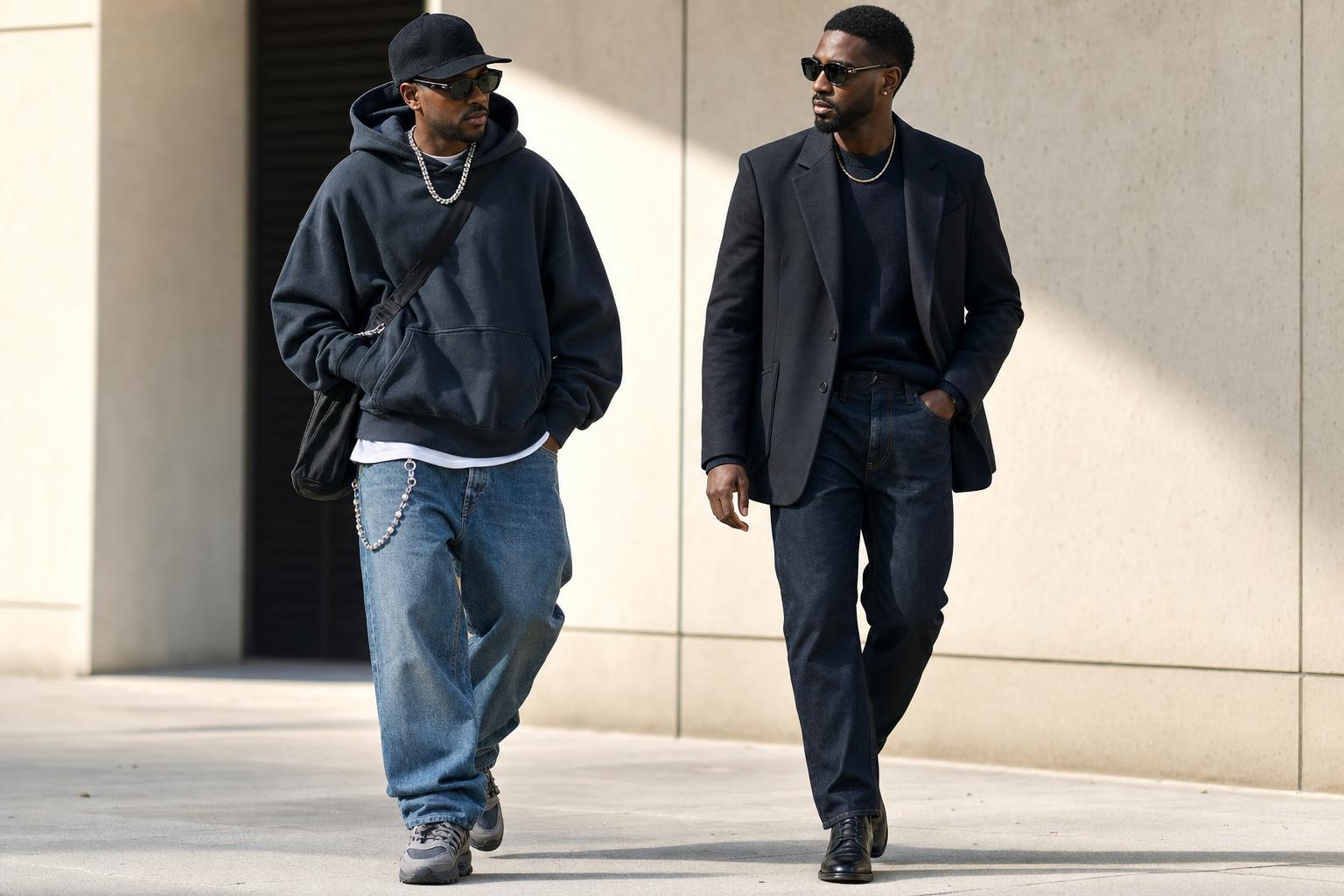
Hiphop style is often treated as a single look, yet in practice it moves between distinct visual languages. One expression leans oversized, graphic, and street-led. Another is sharper, cleaner, and more composed, borrowing the confidence of hip-hop culture without relying on its most exaggerated proportions. These approaches are discussed together because they share attitude, rhythm, and cultural visibility, but they communicate that energy in very different ways.
That distinction matters in a modern wardrobe. A roomy hoodie, loose denim, and statement sneakers create one kind of presence; a streamlined jacket, precise layering, and controlled accessories create another. Understanding the difference helps you identify what you are actually drawn to: the bold ease of a classic street silhouette, or the polished restraint of a refined urban one. This comparison breaks down both directions so you can read them clearly, wear them with intention, and combine them without losing balance.
Two ways hiphop style shows up in fashion now
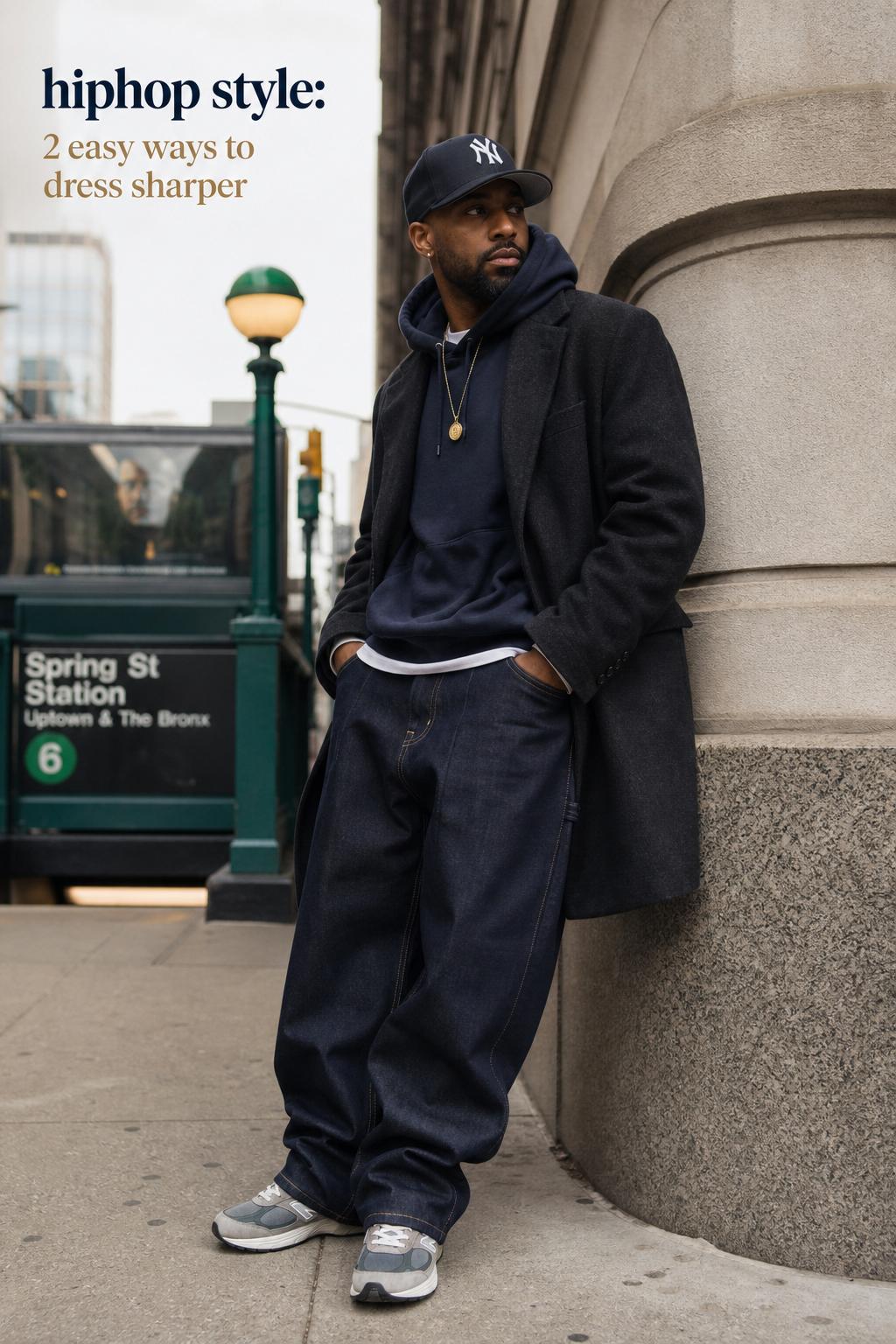
In everyday dressing, hiphop style usually appears in two broad interpretations. The first is classic street-led hip-hop dressing: relaxed, visible, confident, and built on proportion. The second is a more polished urban interpretation: still rooted in self-expression, but edited through cleaner lines, quieter color choices, and a more tailored sense of composition.
They overlap enough to be confused. Both may use sneakers, outerwear, denim, and layered basics. Both depend on personal presence more than strict rules. But once you look closely at silhouette, volume, finish, and styling logic, the differences become much easier to see.
Your wedding has a lot of moving pieces. Your plan can still feel composed.
Zarellea organizes guests, vendors, budget, and timelines in one shared space — so you can make decisions with clarity, not stress.
Style overview: classic street-led hip-hop dressing
This version of hiphop style is defined by looseness, impact, and visual confidence. The silhouette is often oversized or at least intentionally relaxed, with garments that create space around the body rather than tracing it closely. A hoodie may sit broad at the shoulder, denim may fall straight and wide, and outerwear often adds another layer of volume.
The palette can be bold or grounded. Black, white, gray, and blue denim remain foundational, but the look allows room for graphic contrast, saturated accents, and statement details. Fabrics tend to feel durable and tactile: heavyweight cotton, washed denim, fleece, technical outerwear, and sneakers with visual heft. The mood is expressive, casual, and unmistakably street-centered.
Style overview: polished urban hip-hop dressing
The more refined interpretation keeps the confidence of hip-hop influence but shifts the emphasis toward control. Silhouettes are still relaxed enough to feel modern, yet the lines are more deliberate. Instead of stacking several oversized pieces at once, the outfit may balance one relaxed item with one more structured one.
The color story is usually tighter. Neutrals, tonal dressing, and clean contrasts do more work than loud graphics. Fabrics may still include cotton, denim, and knitwear, but the finish is often more considered, with fewer competing details. The overall mood is polished, urban, and adaptable across more settings, especially when you want hip-hop influence without the strongest streetwear cues.
Where the confusion begins
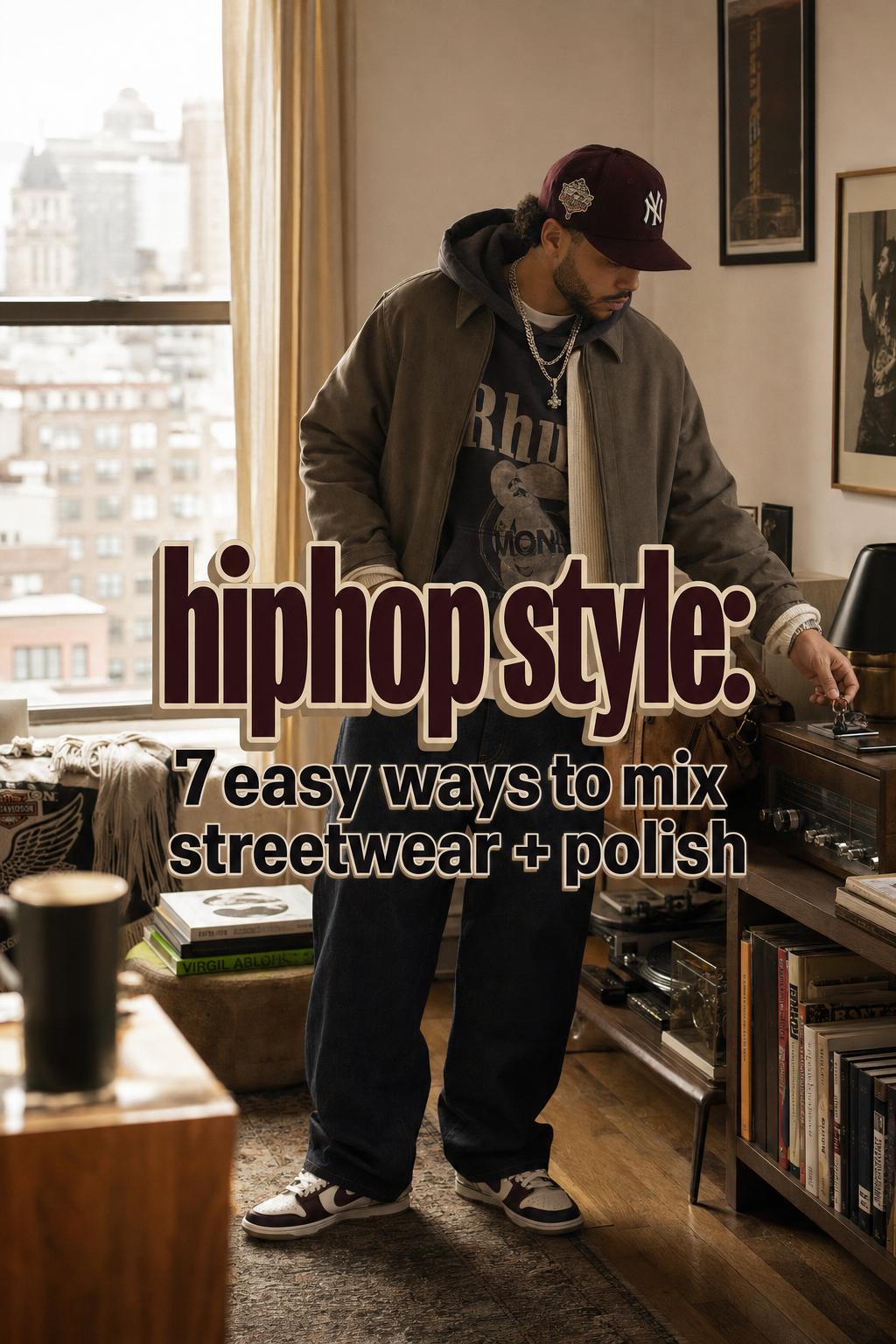
Both styles draw from the same broad cultural energy: self-definition, confidence, movement, and the idea that clothing is a form of authorship. That shared foundation is why people often place them under the same umbrella. A bomber, pair of sneakers, chain, cap, or denim jacket can appear in both wardrobes.
The difference is not the existence of those pieces, but how they are handled. In one outfit, the sneaker is part of a deliberately oversized composition. In another, it acts as the only casual anchor in an otherwise composed look. This is why copying pieces without understanding styling logic often leads to an outfit that feels visually uncertain.
The core comparison: volume, structure, and attitude
Silhouette and structure
Classic street-led hip-hop dressing relies heavily on proportion as a style statement. Volume is visible and intentional. Tops may drape larger, trousers may sit wider, and the overall line feels expansive rather than precise. The body is not tightly defined; the outfit creates its own shape around it.
Polished urban hip-hop dressing still values ease, but it edits volume more carefully. The structure is clearer. A relaxed pant may be paired with a more fitted knit or a clean jacket. Instead of broad width from shoulder to hem, there is usually one focal shift in proportion. That creates a look that feels composed rather than oversized for its own sake.
Color and visual intensity
Street-led hip-hop dressing tends to accept more visual intensity. Contrast, logo presence, graphic print, and stronger color punctuation fit naturally into the look because the style is built to hold boldness.
The polished urban version is more selective. It often favors tonal layering, monochrome combinations, or one controlled accent against a restrained base. The outfit speaks through proportion and finish rather than through many competing statements at once.
Formality and flexibility
Traditional street-centered hip-hop looks are usually casual by design. They are strongest in off-duty dressing, travel, weekends, music-centered environments, and informal social settings. Their power comes from ease and presence, not polish in the conventional sense.
Refined urban styling travels more easily across contexts. It can still feel rooted in hiphop style while working in a creative office, a dinner setting, or a city day that moves from errands to evening plans. This flexibility is one reason many people gravitate toward it as they want the attitude of streetwear without the full casual volume.
Wardrobe pieces and how they function
In a classic street-led outfit, pieces often carry visible identity on their own: roomy hoodies, loose jeans, substantial sneakers, oversized outerwear, and accessories that read immediately. Each item contributes to the statement.
In a polished urban version, wardrobe pieces are often quieter individually but stronger in combination. A clean jacket, dark denim, simple sneakers, and a fitted base layer may not appear dramatic on a hanger, yet together they create a refined silhouette with hip-hop influence. It is less about loud items and more about visual editing.
How these styles read in real life
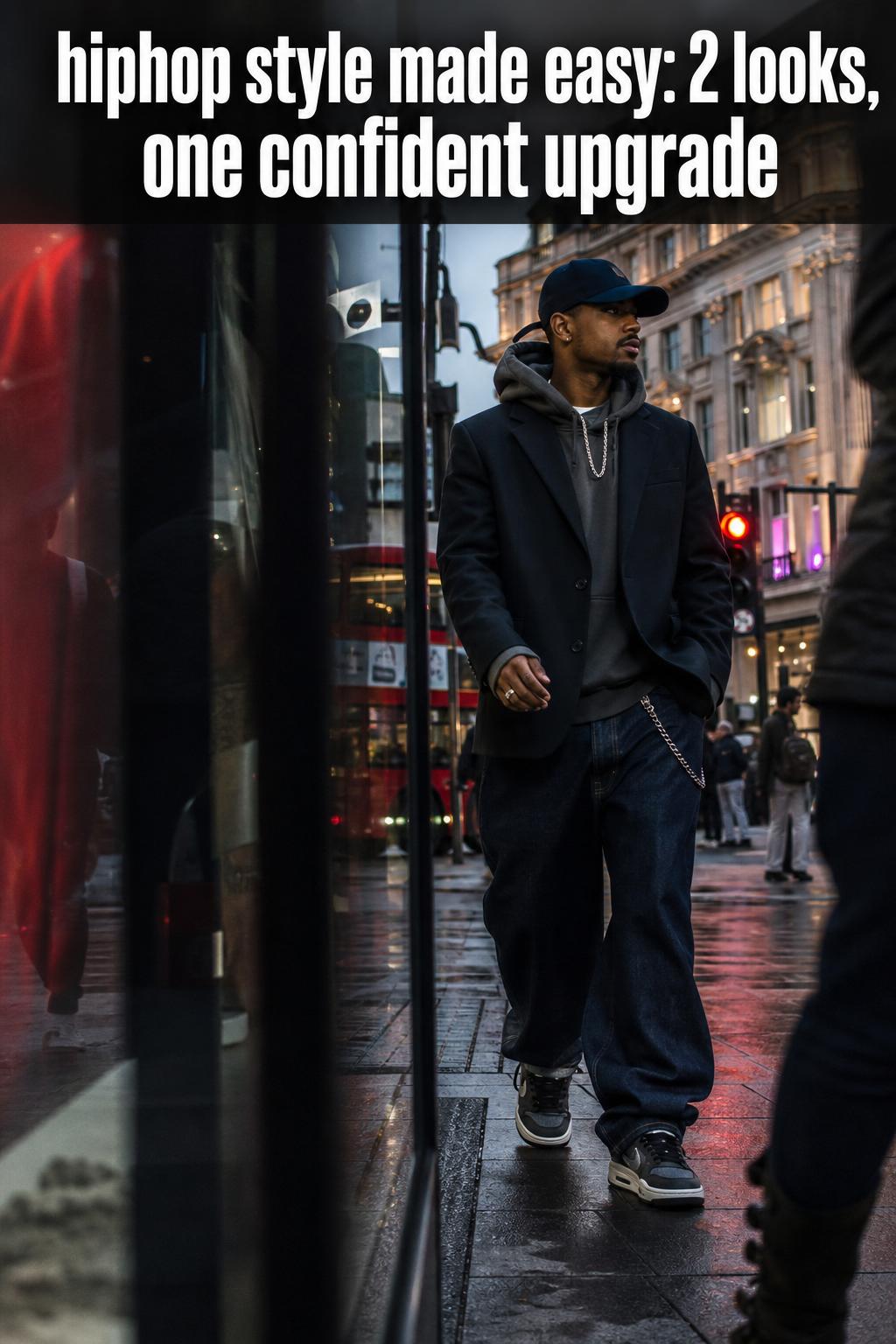
The easiest way to distinguish the two is to imagine them in motion. Street-led hip-hop dressing tends to create a broad outline from a distance. The eye notices volume first, then detail. A hoodie sits away from the body, trousers break with more width, and footwear grounds the look with weight.
Polished urban dressing reads differently. The eye notices shape and finish together. There may still be relaxed elements, but the outfit keeps cleaner vertical lines. Layers sit closer, hems are more deliberate, and accessories are used to sharpen rather than amplify the composition.
Layering approach
Layering in classic hiphop style often builds dimension through size. A T-shirt under a hoodie under a jacket creates depth because each layer carries its own presence. The result feels substantial and easy, especially in cooler weather.
In a more polished interpretation, layering is slimmer and more controlled. A structured jacket layered over a fine knit or a clean overshirt over a crisp tee creates a polished everyday look. The effect depends less on bulk and more on line and contrast.
Garment proportions
Street-led dressing often lets several pieces relax at once. That can work beautifully when the hems, fabric weights, and footwear all support each other. The risk appears when the proportions become accidental rather than intentional, leaving the outfit heavy without shape.
Refined urban styling is more likely to anchor one loose item with one cleaner one. A wider pant with a fitted top, or a boxy jacket with straight denim, creates clarity. This is why the look often feels more accessible for people who admire hiphop style but do not want to disappear into volume.
Accessories and finish
Accessories in street-led hip-hop dressing often reinforce visibility. Caps, chains, bold sneakers, and statement bags or outerwear details complete the language of the look. They are not incidental; they help establish scale and attitude.
In polished urban dressing, accessories tend to be fewer and more selective. A watch, clean sneaker, minimal chain, or sleek bag may be enough. The accessory does not need to dominate because the outfit is already carrying itself through balance.
Outfit comparisons that show the difference clearly
Casual day dressing
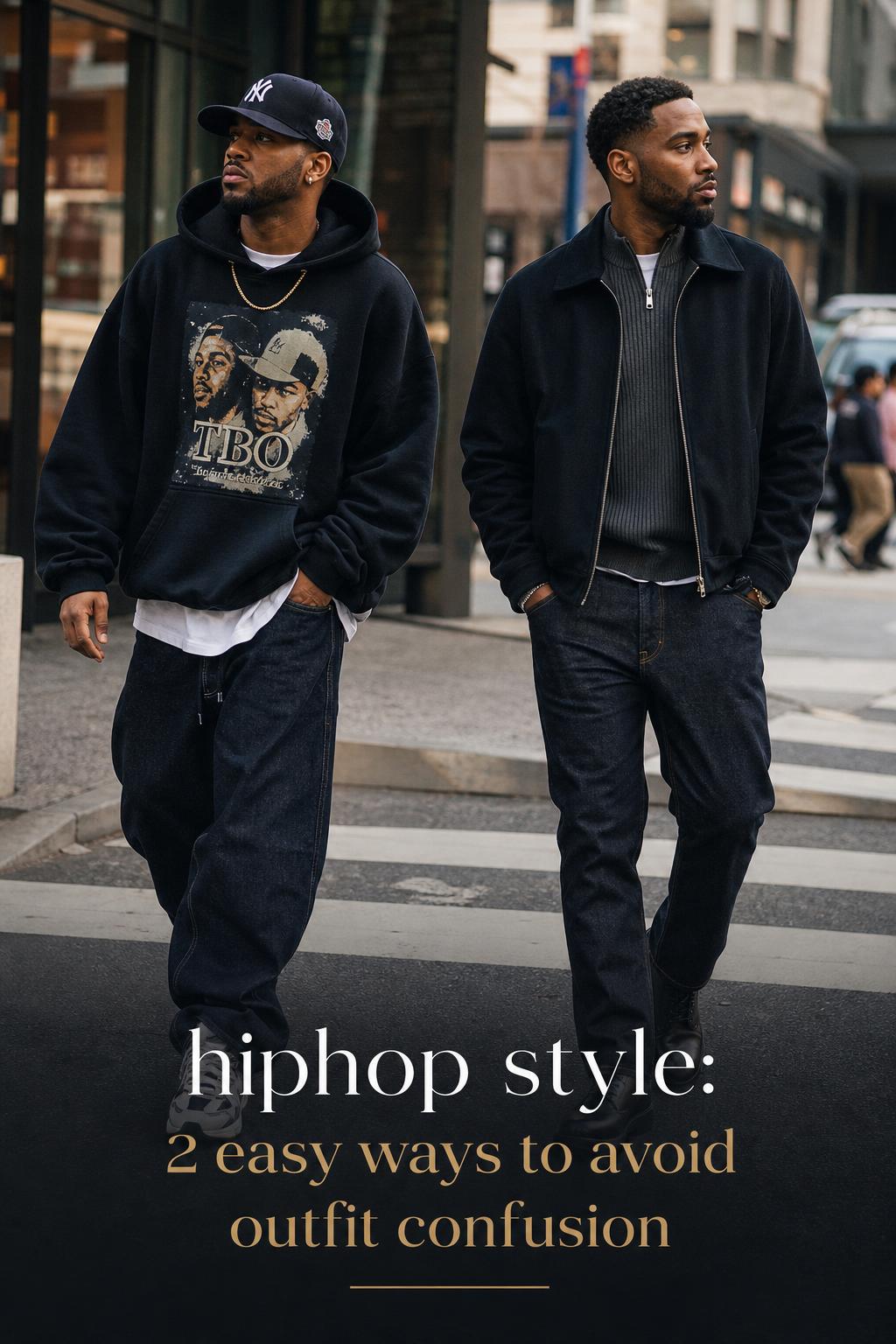
A street-led version of a casual day look might build around a relaxed hoodie, loose denim, and substantial sneakers. The logic is comfort with visual weight. Nothing feels timid, and the pieces are chosen to create a full silhouette rather than a narrow line.
A polished urban version would treat the same casual setting differently. Instead of several oversized layers, it might use straight dark denim, a clean sweatshirt or knit, and a sharper jacket. Sneakers remain, but they function as a modern anchor rather than the main statement. The effect is quieter, but no less confident.
Travel outfit interpretation
For travel, classic hiphop style often excels because it prioritizes movement and ease. Roomy layers make long hours more comfortable, and substantial footwear can support a practical, city-ready wardrobe. The look feels naturally off-duty.
The polished urban approach to travel would still protect comfort, but with more control. A tailored silhouette contrasted with relaxed textures works especially well here: perhaps a clean outer layer, soft jersey base, and streamlined trousers or dark denim. It looks composed in transit without feeling overdressed.
Evening casual dressing
In a casual evening setting, street-led dressing may lean into darker tones, richer texture, and stronger accessories while keeping the relaxed shape intact. It remains expressive and social, with presence built through scale.
The refined urban version often becomes especially effective at night. Dark layers, clean lines, and one clear point of contrast create a polished look that still carries hip-hop influence. This is where the difference between “casual” and “carefully styled” becomes most visible.
A city-specific reading of hiphop style
One reason hiphop style remains so relevant is that it adapts naturally to city life. In a dense, fast-moving urban wardrobe, clothes must handle weather shifts, long days, walking, public transit, and changing social settings. That practicality shapes how the two style directions function.
The classic street-led version is especially strong for environments where comfort, movement, and personal visibility matter. Layering is easy, sneakers are integral, and the relaxed silhouette accommodates a day that does not stay static. The polished urban version is better suited to city schedules that require more visual adaptability. It can move from daytime meetings to dinner with only minor adjustments, which explains its appeal for those who want hip-hop influence in a more refined wardrobe framework.
When each style works best
- Choose classic street-led hip-hop dressing when you want ease, stronger visual personality, generous layering, and a clearly casual mood.
- Choose polished urban hip-hop dressing when you want flexibility, cleaner lines, and an outfit that can move through more settings without losing modern edge.
- Use the first approach for weekends, travel days, concerts, informal social plans, and relaxed everyday wear.
- Use the second approach for creative work environments, city dinners, low-key evening plans, and occasions where a more composed appearance matters.
Neither direction is inherently better. The question is what the day asks of you, and what kind of presence you want your clothes to project. A wardrobe becomes more useful when you understand not only which pieces you like, but which styling language makes those pieces feel coherent.
Tips for wearing hiphop style without losing proportion
The most common mistake is not “too casual” or “too dressed up.” It is imbalance. Hiphop style depends heavily on proportion, so garments need to relate to each other with intent. If every piece is large, heavy, and detailed, the outfit can look crowded. If everything is slim and quiet, the hip-hop influence may disappear entirely.
- Let one dimension lead: width, length, or structure. Avoid pushing all three at once unless you know exactly how to control the silhouette.
- Match fabric weight across the outfit. A heavy hoodie and sturdy denim support each other better than a heavy top with a flimsy trouser.
- Use footwear to ground the look. In hiphop style, shoes often complete the proportion rather than simply finish the outfit.
- Keep accessories in conversation with the silhouette. Bigger layers can hold bolder accessories; cleaner outfits usually benefit from restraint.
- Edit color with purpose. Even bold dressing looks stronger when there is a clear visual hierarchy.
A useful practical test is the mirror-at-distance test. Stand back and read the outfit as shape first, detail second. If the silhouette feels coherent before you notice individual pieces, the look is usually working. If your eye jumps in too many directions, one layer or accessory probably needs to be removed.
The blend: combining both approaches intelligently
The most modern wardrobes rarely sit at only one extreme. Many of the strongest outfits borrow the ease of classic hip-hop dressing and the precision of polished urban styling. That might mean pairing relaxed denim with a cleaner jacket, or using a roomy outer layer over a more fitted base. The goal is not compromise for its own sake, but a more wearable composition.
This blend works especially well for people who admire the visual confidence of hiphop style but want more versatility across daily life. The key is preserving the spirit while refining the execution. You do not need to remove the street influence; you simply need to decide where it should speak most clearly.
Tip: build from one signature element
If you are mixing the two directions, begin with one unmistakably hip-hop element and let the rest of the outfit support it. That could be a wider pant, a substantial sneaker, a bold outer layer, or a strong graphic piece. Then surround it with cleaner, more controlled items. This keeps the look legible and prevents the outfit from feeling undecided.
Common styling errors that weaken the look
Because hiphop style is rooted in attitude, many people assume it cannot be overworked. In reality, it is one of the easiest styles to disrupt when proportion, finish, or practicality are ignored. A look that appears effortless usually involves careful visual editing.
- Wearing multiple oversized pieces without enough structure elsewhere in the outfit.
- Adding too many statement elements, so no single detail has room to lead.
- Using accessories that do not match the scale of the clothing.
- Forcing polished pieces into a street-led outfit without considering fabric and proportion.
- Choosing footwear that visually disappears under a strong silhouette.
Another mistake is dressing for the image rather than the day itself. If you will be walking for hours, sitting in transit, or moving between temperatures, the outfit needs to perform. The strongest style choices always account for comfort, movement, and wear over time. In that sense, practical intelligence is part of the aesthetic.
How to identify each style at a glance
If the outfit announces itself through scale, visible casualness, and layered ease, you are likely looking at a classic street-led interpretation of hiphop style. If it holds the same confidence but expresses it through cleaner lines, edited color, and more controlled shape, you are looking at the polished urban version.
Neither reading is more authentic than the other in pure visual terms. They simply prioritize different tools. One leans on volume and impact. The other relies on discipline and finish. Once you understand that difference, it becomes far easier to style with intention rather than imitation.
Conclusion
The core distinction in hiphop style is not whether an outfit includes sneakers, denim, outerwear, or street influence. It is how those elements are composed. Classic street-led dressing creates presence through generous proportion, layered comfort, and visual boldness. Polished urban dressing keeps the same confidence but sharpens it through cleaner structure, tighter color control, and greater versatility.
Once you know what to look for, each style becomes easy to identify: broad volume and expressive layering on one side, refined balance and modern polish on the other. The most compelling wardrobes often borrow from both, combining relaxed energy with tailored clarity in a way that feels personal, modern, and fully considered.
FAQ
What defines hiphop style most clearly?
The clearest defining feature is intentional self-expression through silhouette, layering, and attitude. In visual terms, hiphop style often relies on relaxed proportions, sneakers, denim, outerwear, and accessories, but the real distinction comes from how confidently those elements are composed together.
Is hiphop style always oversized?
No. Oversized proportions are common in classic street-led versions, but a polished urban interpretation can be much cleaner and more controlled. Hiphop style is less about one exact fit and more about using shape with intention.
How is hiphop style different from a more polished urban look?
The difference usually appears in proportion and finish. A street-led hip-hop outfit emphasizes volume, casual ease, and visual impact, while a polished urban look edits those same influences into cleaner lines, a tighter color story, and a more versatile silhouette.
Can hiphop style work in a more refined wardrobe?
Yes. The most effective approach is to keep one or two strong hip-hop elements, such as relaxed denim or substantial sneakers, and combine them with more structured layers. This preserves the attitude of the style while making it easier to wear across different settings.
What is the biggest mistake people make with hiphop style?
The most common mistake is losing proportion. When every piece is oversized, loud, or heavy at the same time, the outfit can feel visually crowded. Strong hiphop style usually has a clear hierarchy, with one dominant proportion or statement leading the look.
Which shoes work best with hiphop style?
Sneakers are often the natural foundation because they support both the casual mood and the silhouette. In many outfits, footwear helps balance the scale of the clothing, which is why shoes should feel substantial enough to ground the overall look.
Is hiphop style only for casual outfits?
Not necessarily. The more classic street-led version is usually casual, but a refined urban interpretation can work in creative workplaces, dinner settings, and other moments where you want a polished appearance with modern edge.
How can I make hiphop style look more sophisticated?
Focus on editing rather than removing the style’s character. Use cleaner color combinations, balance one relaxed piece with one structured one, simplify accessories, and pay attention to fabric weight and silhouette. That creates sophistication without flattening the attitude that makes the look distinctive.
Leave a Reply