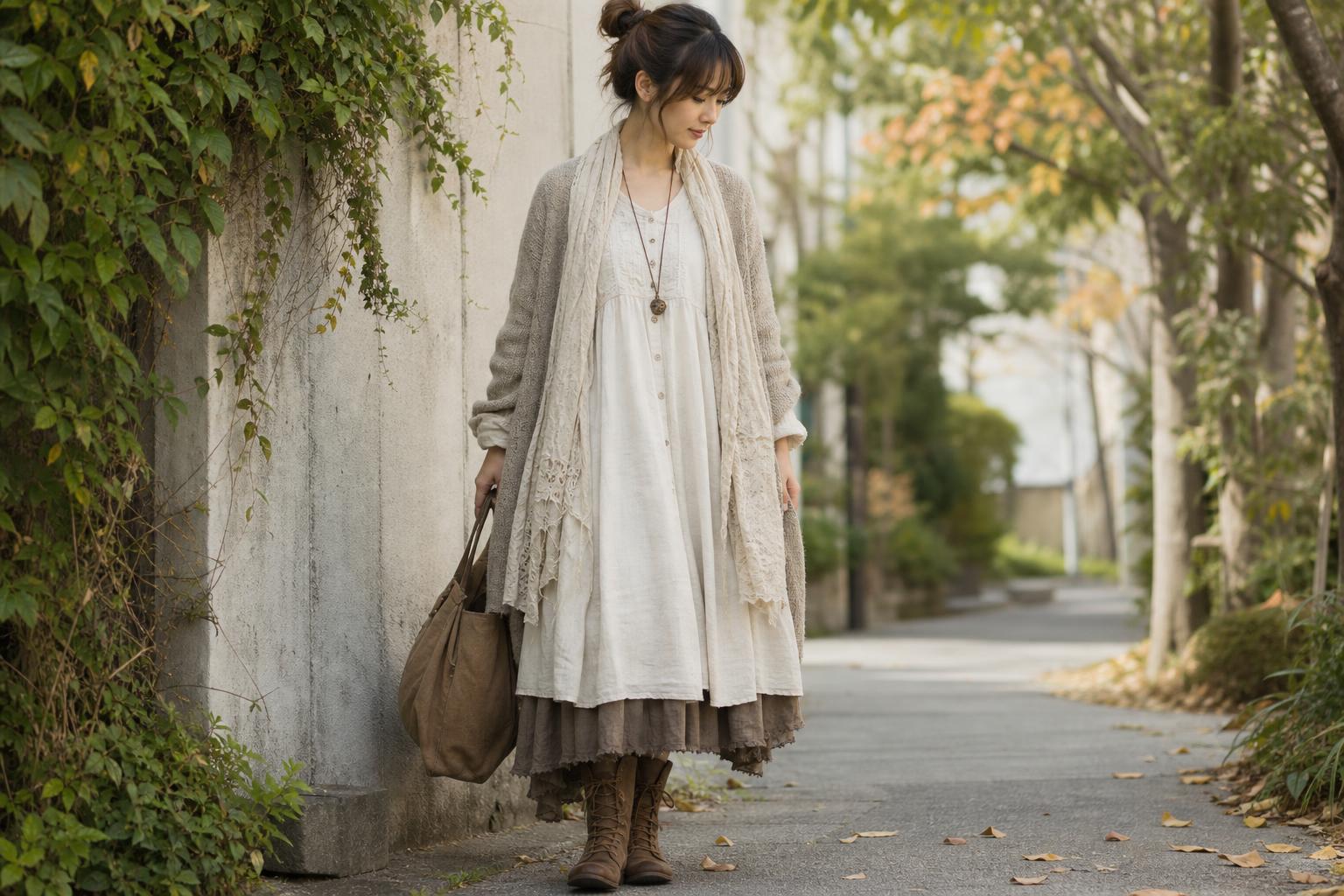
The appeal of mori style is easy to understand and surprisingly difficult to wear well. Many readers are drawn to its quiet woodland romance, its layered dresses, soft cardigans, shawls, linen, wool, and earth-toned textures, yet struggle when the outfit leaves the screen and enters real life. What should feel effortless can quickly become bulky, overly costumey, or impractical for a normal day.
This is the central challenge of mori kei, also called mori girl or simply forest style: how do you build a wardrobe that captures the Japanese forest aesthetic without losing comfort, movement, and everyday versatility? The answer lies less in buying a perfect set of pieces and more in understanding proportion, fabric behavior, layering logic, and the mood that holds everything together.
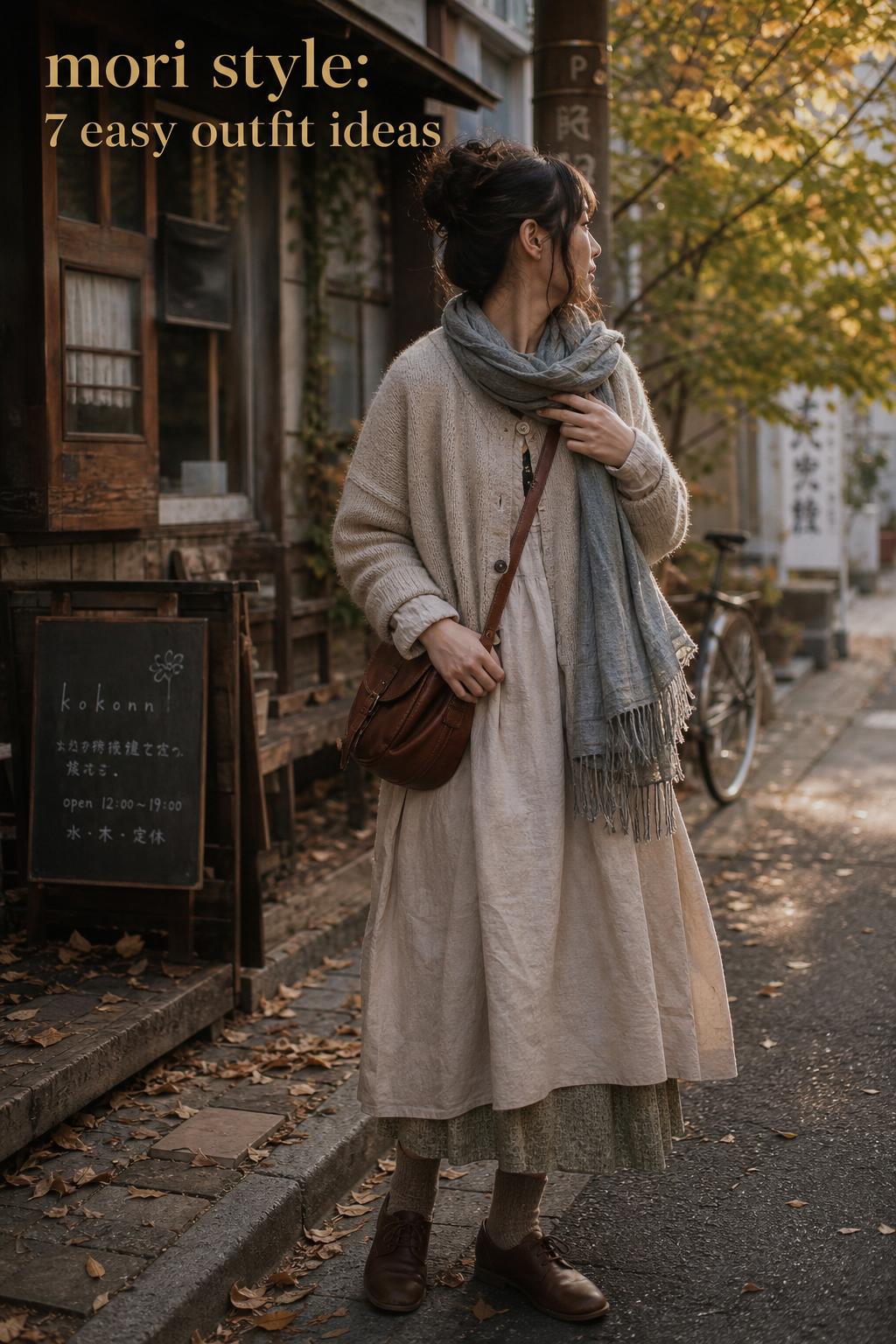
This guide approaches mori style as a practical styling problem to solve. You will find a clear definition, context from Japan and Harajuku, explanations of substyles such as dark mori and mori boy, and realistic outfit solutions for daily wear. Rather than treating the look as a costume, the goal is to help you compose a refined, wearable wardrobe with natural fabrics, vintage influence, and the soft forest sensibility that defines mori kei fashion.
Why mori style can feel harder to wear than it looks
Mori style is built on softness, layering, and a slightly nostalgic silhouette. That sounds simple in theory, but each of those qualities brings a practical complication. Layer too much and the shape becomes heavy. Choose the wrong fabrics and the look loses its natural ease. Lean too far into decorative detail and the result can read more theatrical than lived-in.
Your wedding has a lot of moving pieces. Your plan can still feel composed.
Zarellea organizes guests, vendors, budget, and timelines in one shared space — so you can make decisions with clarity, not stress.
Weather also matters. A woodland-inspired outfit may look lovely in autumn light, but real wardrobes must function in spring, winter, and transitional weather. Breathability, warmth, ease of movement, and fabric weight all affect whether mori clothing feels polished or uncomfortable. This is why the strongest mori outfits rely on natural materials such as linen, wool, cotton, and organic textiles, not only for appearance but for how they drape and layer.
There is also a cultural translation at work. Mori kei emerged in Japan, with Harajuku and the mid-2000s internet era often cited in its origin story, including the Mixi-era subculture around the forest girl idea. That context helps explain why the style feels specific: it is not only about looking rustic, but about creating a gentle, nature-based wardrobe identity. For a U.S. reader adapting it today, the challenge is preserving that spirit while making it work in contemporary life.
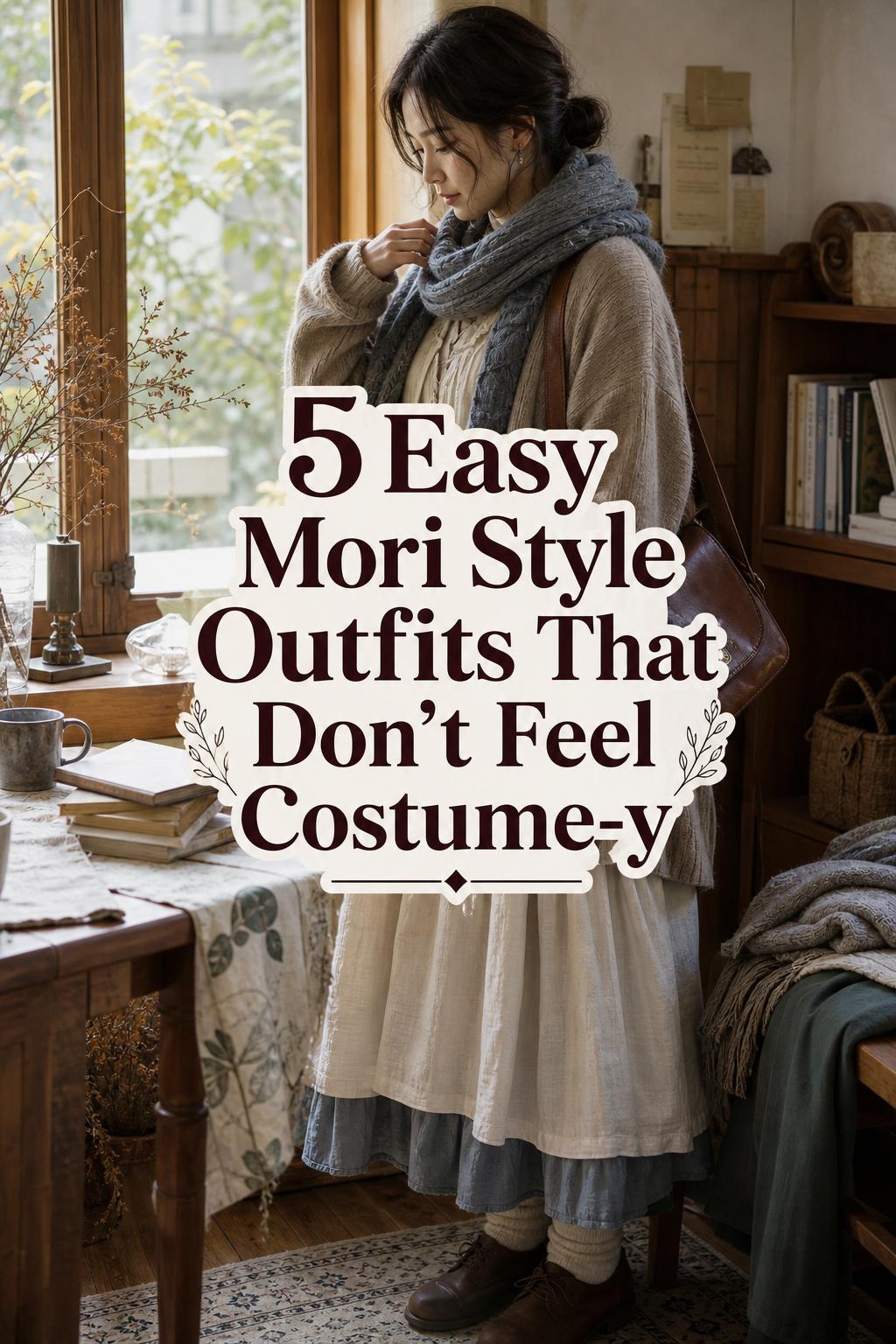
What mori style actually means
The forest girl concept and the core mood
Mori means forest, and mori kei is generally understood as a forest-inspired Japanese fashion aesthetic. The phrase mori girl appears frequently alongside it, and in practice the two are closely linked. The core image is someone dressed as though she belongs in a quiet woodland setting: soft layers, natural textures, muted colors, vintage references, and an overall feeling of calm rather than spectacle.
This is why so many descriptions circle back to forest fashion, natural living, and a cottagecore-like sensibility. Yet mori style is not identical to cottagecore. It has its own Japanese cultural context, its own silhouette language, and a more specific emphasis on layered softness, earth tones, and tactile fabrics.
Color palette, texture, and visual balance
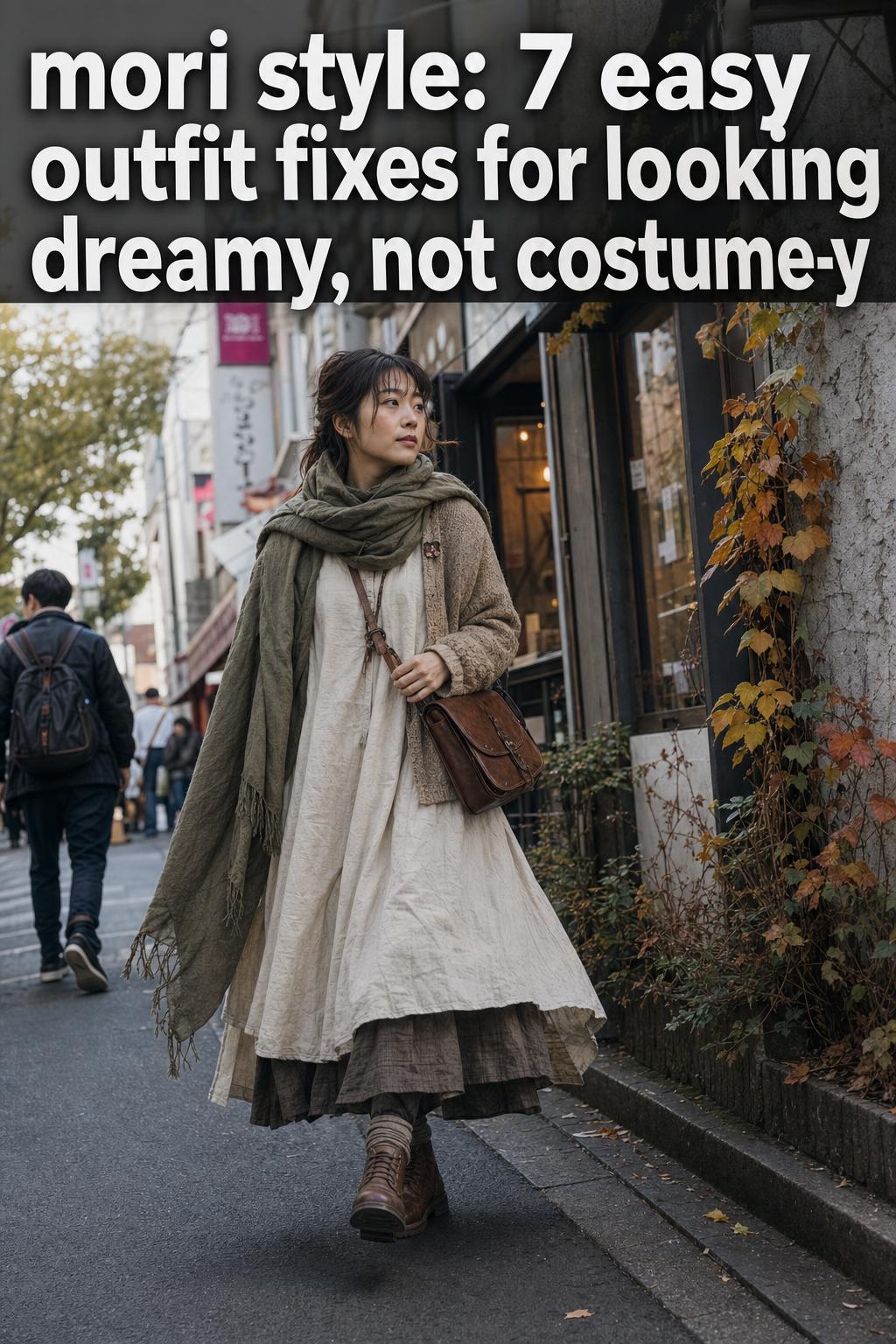
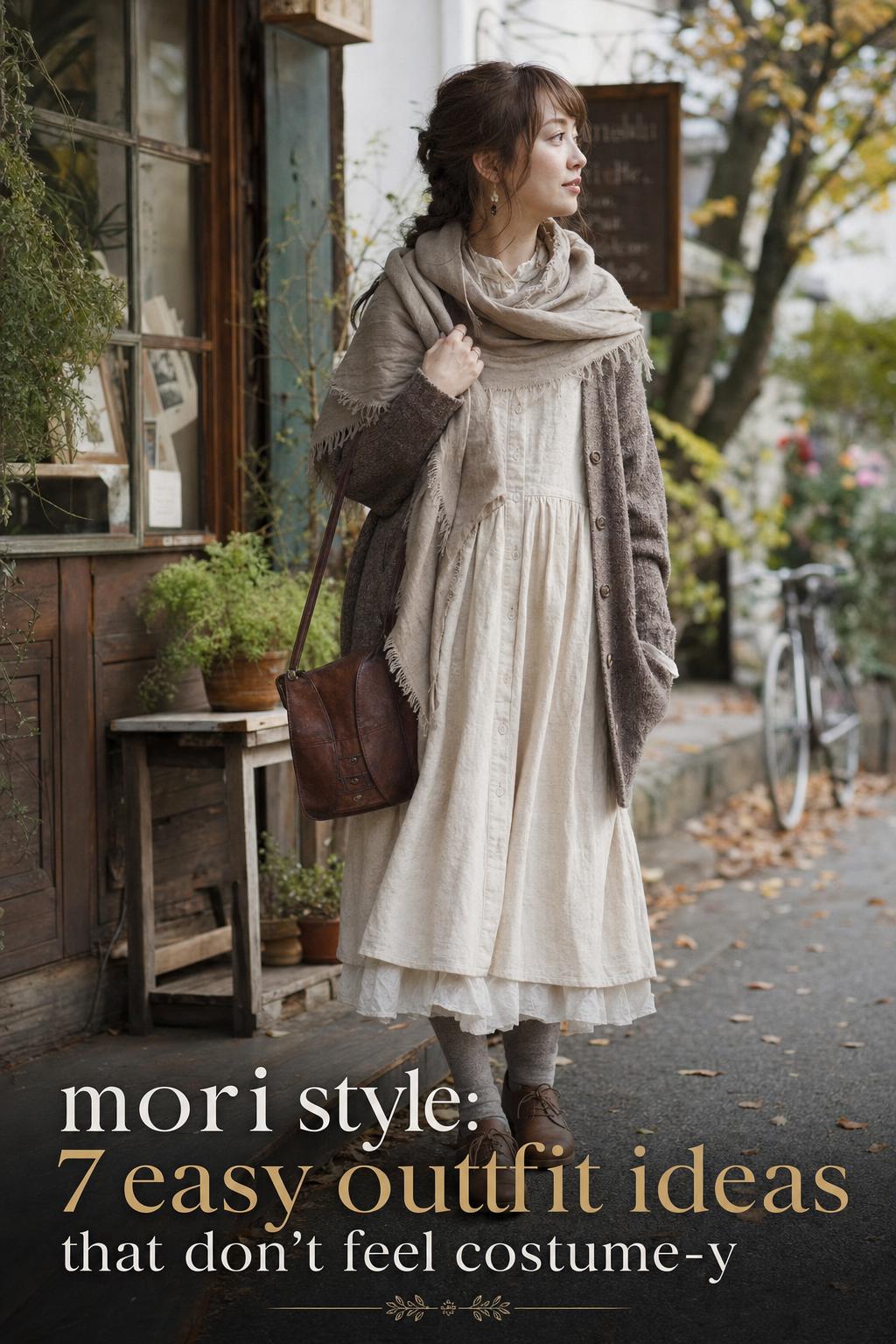
The mori palette tends to stay close to nature: cream, beige, brown, mossy green, gray, muted blue, and other softened earth tones. These shades work because they support layering without visual noise. Instead of sharp contrast, mori style usually relies on tonal depth, where one soft neutral sits against another and texture creates distinction.
Texture is essential. Linen brings airy irregularity, wool adds warmth and depth, cotton softens the look, and natural dyes or organic-feeling textiles help the outfit appear grounded rather than synthetic. A mori wardrobe rarely depends on one standout item; it is the interaction of dress, cardigan, shawl, skirt, and accessory that creates the effect.
Why layering is the real foundation
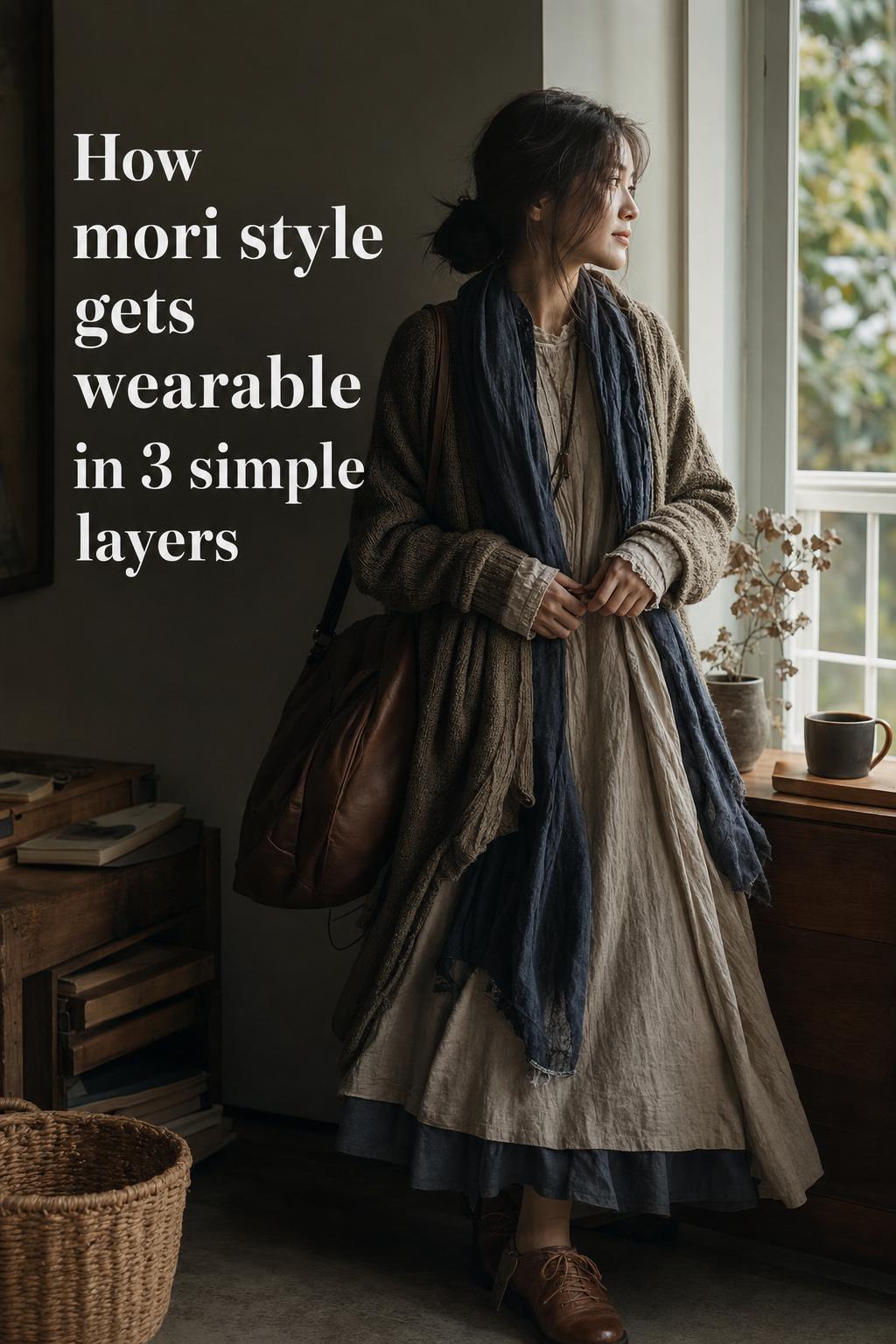
More than any single garment, layering defines mori kei fashion. It allows a simple dress to feel woodland rather than plain, and it gives practical flexibility across seasons. The trick is to think in lengths and weights. A light dress under a softer cardigan, topped with a shawl or relaxed outer layer, creates depth without strain. When every layer is bulky or the lengths compete, the silhouette becomes confused.
The most successful mori looks feel composed, not piled on. Each layer should have a purpose: warmth, softness, movement, or texture. That discipline is what keeps the style refined.
From Japan to today: the cultural frame behind the look
Mori kei is consistently tied to Japan in discussions of its history, often with Harajuku as an important style reference point and the mid-2000s internet era as part of its rise. That origin matters because it explains the blend of individuality and subcultural coherence. This was not simply woodland dressing; it became a recognizable visual language within Japanese fashion culture.
Over time, variations emerged. Mori girl remains the most widely recognized expression, but mori boy and dark mori also appear as substyles. Casual mori and more formal interpretations show that the aesthetic is flexible, provided its defining ideas stay intact: natural materials, softness, layering, and the forest-like mood.
Some search results connected to “mori” lead to very different territory, including Mori Building Co. Ltd. in a corporate design context and exhibition materials about Hanae Mori, whose significance belongs to Japanese fashion heritage more broadly. These are not the same as mori kei, but they do underline how the word “Mori” can point toward distinct fashion-related narratives tied to Japan. For readers exploring the style, it helps to separate the woodland subculture of mori kei from the surname-based legacy of Hanae Mori and the unrelated corporate branding of Mori.
The dressing principles that make mori style work in real life
Before building outfits, it helps to establish a few styling principles. These are what keep mori style wearable, modern, and comfortable rather than overly literal.
- Choose natural fabrics first. Linen, wool, cotton, and other organic-feeling textiles create the right drape, texture, and breathability.
- Keep the palette grounded. Earth tones and softened neutrals create harmony and make layering easier.
- Balance volume with length. If the dress is loose and long, keep the cardigan softer rather than oversized in every direction.
- Use texture to add interest instead of loud contrast. The style thrives on tactile depth, not sharp color blocking.
- Think in layers, not outfits. A mori wardrobe works best when pieces can be recombined across seasons.
- Let vintage influence support the look. Vintage and secondhand pieces often bring the softness and irregular charm this style needs.
There is a practical side to this as well. Natural fibers tend to breathe better, which matters when wearing multiple layers. Softer tonal dressing also makes it easier to repeat pieces without the wardrobe feeling repetitive. This is one reason mori style adapts well to capsule thinking, especially if you are building slowly or on a budget.
Wardrobe anatomy: the pieces that solve most mori styling problems
Dresses, skirts, and easy foundations
The easiest foundation for mori style is a dress with a relaxed shape and soft movement. It should skim rather than cling, creating a gentle line that allows for layering on top and beneath if needed. Skirts work equally well, especially when paired with a knit or simple top in a natural tone. The aim is not sharp tailoring but an easy, slightly storybook silhouette anchored in practicality.
Cardigans, shawls, and outer layers
Cardigans and shawls are among the most important mori kei garments because they solve both aesthetic and functional needs. They soften the frame, create warmth, and add visual depth through knit texture or drape. A cardigan that falls neatly over a dress can make the outfit feel intentionally layered; a shawl can bring comfort in transitional weather without introducing rigid structure.
Accessories and footwear with a grounded finish
Accessories in mori style should support the natural mood rather than dominate it. Think in terms of quiet finishing touches that reinforce the woodland effect. Footwear should be comfortable enough to suit the casual, lived-in spirit of the look. If the shoes feel too polished or severe, they can disrupt the softness of the outfit. The same principle applies to bags and smaller details: gentle texture and ease generally work better than hard contrast.
Fabric care as part of the styling process
Because mori clothing often depends on linen, wool, and other natural fabrics, care matters more than it might in a synthetic wardrobe. When natural textures are flattened, stretched, or overworked, the style loses much of its appeal. Maintaining softness, shape, and surface texture is not only a practical concern; it is part of preserving the aesthetic itself.
Outfit solutions for the most common mori style challenges
Outfit solution: the lightweight layered daytime look
This is the answer for anyone who loves mori girl dressing but worries about feeling too warm or overdone. Start with a breathable linen or cotton dress in a soft neutral, then add a light cardigan in a similar earth-toned family. A shawl can be carried or draped only when needed rather than worn all day.
Why it works: the outfit keeps the visual codes of mori kei—natural texture, layering, relaxed silhouette—without relying on heavy volume. It solves the problem of trying to look forest-inspired in mild weather by keeping the composition airy. This is particularly useful in spring or for indoor settings where full autumnal layering would feel excessive.
Outfit solution: the autumn woodland balance
For cooler weather, build around a dress or skirt in a deeper neutral and introduce wool through a cardigan or outer layer. Add a shawl for another texture and keep the palette within browns, creams, gray-greens, or muted rust-like tones if they remain soft. The effect should feel cocooning rather than heavy.
Why it works: autumn is where mori style often feels most intuitive, but it is also where readers tend to over-layer. This version uses warmth strategically. Wool brings insulation, while the dress base prevents the look from becoming too dense. You retain movement, which is crucial for the forest girl silhouette.
Outfit solution: casual mori for everyday city wear
Many people admire Japanese forest fashion but hesitate to wear it in urban daily life. A casual mori approach solves that. Pair a simple skirt or dress with a soft cardigan and keep accessories understated. Let the fabrics and muted palette do the work instead of adding too many visibly “themed” pieces.
Why it works: this is how mori style becomes adaptable rather than occasional. The outfit nods to woodland aesthetics while staying grounded enough for commuting, coffee meetings, or a normal day of errands. It is especially useful for readers in the U.S. who want the mood of mori kei without appearing as though they are in full subcultural dress every day.
Outfit solution: a more formal mori interpretation
Formal mori is less about dramatic ornament and more about refinement through texture and tone. Begin with a longer dress in a restrained shade, add a beautifully draped cardigan or shawl, and keep the silhouette elongated. The result should feel composed and serene, with natural materials carrying the elegance.
Why it works: readers often assume mori style cannot move beyond casual dressing, but the aesthetic can become formal through restraint. When the palette stays cohesive and the fabrics are rich in texture, the outfit reads intentional and polished without abandoning its forest-like softness.
Outfit solution: dark mori without losing softness
Dark mori introduces deeper tones while keeping the core woodland atmosphere. Instead of bright contrast, use charcoal, deep brown, forested green, or other muted dark shades layered with softer neutrals. The silhouette should remain relaxed and tactile, not severe.
Why it works: the challenge with dark mori is avoiding a shift into a harsher aesthetic that loses the gentle quality of mori kei. By keeping the textures soft and the layering organic, darker colors feel atmospheric rather than rigid. This is particularly effective in winter, when lighter palettes may feel seasonally out of place.
Mori style in the U.S.: building the look without a specialist wardrobe
One of the practical gaps around mori style is how to assemble it outside Japan. While the aesthetic is rooted in Japanese fashion culture, many of its wardrobe needs can be met through thoughtful sourcing rather than dedicated labels. This is where vintage clothing and secondhand shopping become especially useful. They often provide the soft cardigans, dresses, shawls, and textured skirts that suit the style naturally.
For U.S. readers, the most realistic approach is often brand-agnostic. Focus on silhouette, fabric, and palette instead of chasing a perfect label. A good linen dress, a worn-in wool cardigan, and a vintage-inspired shawl can often create a stronger mori effect than newer trend pieces that imitate the look too literally. This also aligns with the style’s quiet relationship to natural materials and slower wardrobe building.
There is room here for sustainable thinking as well, even if the style itself should not be reduced to a slogan. Because mori kei relies on natural fabrics and often pairs well with secondhand sourcing, it lends itself to careful wardrobe development. The practical advantage is clear: pieces with texture and softness often improve the look rather than making it feel too new.
Where mori style meets related aesthetics
Mori style is frequently compared to cottagecore, fairycore, and other forest-adjacent aesthetics. These comparisons are helpful, but only if they remain precise. Cottagecore tends to emphasize pastoral romance broadly, while mori kei is more specifically tied to Japanese forest fashion, layering, and a softened, everyday woodland silhouette. Fairycore may lean more whimsical or decorative, while mori usually feels quieter and more grounded.
There are also intersections with Lolita in the broader world of Japanese street style, though mori style generally avoids the more structured and overtly ornate direction associated with Lolita fashion. Mori boy, meanwhile, adapts the same natural and layered sensibility into a different silhouette framework. Across these variations, the constant is not a rigid formula but a relationship to nature-inspired dressing through fabric, shape, and mood.
A seasonal way to think about mori kei
Mori style becomes easier to wear when you stop imagining it as one static outfit type and start treating it as a seasonal system. The forest aesthetic naturally shifts with climate, and your wardrobe should do the same.
- In spring, use lighter cotton and linen layers, softer neutrals, and a more open silhouette.
- In autumn, introduce wool, deeper earth tones, and richer texture through knits and shawls.
- In winter, rely on dark mori or heavier layering, but preserve softness so the outfit does not become too stark.
- In transitional weather, make cardigans and removable layers do the work rather than building everything into one heavy look.
This seasonal thinking reflects the style’s connection to natural imagery. It also solves one of the most common practical problems: trying to wear the same idea year-round without adjusting the fabric weight or color depth.
Tips that immediately improve a mori outfit
A mori wardrobe does not need to be large, but it does need to be coherent. Small adjustments often make a bigger difference than buying more pieces.
- Keep at least one visible texture in every outfit, such as linen slub, soft wool, or a knit cardigan.
- Work within one tonal family before introducing contrast.
- If the outfit feels bulky, shorten or lighten the top layer rather than removing all the layers.
- If the outfit feels plain, add a shawl or another soft textile element instead of a louder accessory.
- Use vintage or secondhand pieces to avoid an overly polished finish.
- For a capsule mori wardrobe, repeat a small number of dresses, cardigans, and skirts in compatible neutrals.
One useful styling test is movement. Walk, sit, and layer the outfit as you would during a real day. Mori style should feel gentle and practical, not restrictive. If a piece looks right on a hanger but interrupts ease of motion, it is probably not helping the overall composition.
Common mistakes that make mori style look forced
The first mistake is treating mori kei as a costume made of symbols instead of a wardrobe built from relationships. Too many “forest” references at once can flatten the subtlety that makes the style appealing. The second is ignoring fabric quality. Synthetic-looking materials may mimic the shape, but they rarely create the quiet authenticity associated with mori clothing.
Another common error is layering without hierarchy. When every piece is equally oversized, frilled, or long, the eye has nowhere to rest. The outfit loses shape and often feels uncomfortable to wear. It is far more effective to let one layer provide volume, one provide texture, and one provide softness.
Finally, many readers make the look too neat. Mori style benefits from a slight irregularity, the sort often found in vintage-inspired garments or secondhand pieces. If everything is crisp, matched, and overly styled, the forest mood becomes decorative rather than lived-in.
An editorial note on modern reinterpretations
Mori style does not have to remain frozen in its early internet-era image. The strongest modern interpretations keep the original logic—natural fabrics, layered softness, woodland mood, Japanese fashion roots—while simplifying the wardrobe for contemporary life. Some readers may lean toward a more muted minimalism, others toward darker seasonal dressing, and others toward a stronger vintage emphasis. Those shifts can work as long as the outfit still feels grounded in the forest aesthetic rather than detached from it.
That is also why broad references to fashion heritage, such as exhibition materials on Hanae Mori or corporate design documents tied to Mori Building Co. Ltd., should be read as adjacent context rather than direct templates. They remind us that Japanese fashion contains many different stories. Mori kei remains distinct because its identity is built around nature-inspired daily dressing, not surname recognition or corporate branding.
How to approach your own mori wardrobe with confidence
The most reliable way into mori style is to start with three decisions: your palette, your core fabric, and your preferred level of layering. Once those are clear, the wardrobe becomes much easier to assemble. You are no longer shopping for a fantasy version of forest fashion; you are editing toward a consistent silhouette.
For some, that will mean casual mori built from everyday dresses and cardigans. For others, it may mean dark mori in winter or a more formal layered interpretation for occasions that call for subtle elegance. The style is broad enough to hold these variations, but it remains coherent when you respect its essentials: natural materials, softness, earth-toned color balance, and thoughtful layering.
Great mori style is not about owning the most pieces. It is about composition. When the textures speak to one another, when the silhouette moves easily, and when the outfit feels like a natural extension of the person wearing it, the forest aesthetic becomes believable, modern, and beautifully wearable.
FAQ
What is mori style?
Mori style, also called mori kei or mori girl, is a Japanese forest-inspired fashion aesthetic built around layered silhouettes, natural fabrics such as linen, wool, and cotton, muted earth tones, and a soft woodland mood.
Is mori kei the same as mori girl?
The two terms are closely connected and often used together, with mori girl referring to the forest girl image and mori kei referring to the broader style category, though in everyday use many people treat them as near equivalents.
What fabrics work best for mori clothing?
The most suitable fabrics are natural materials such as linen, wool, cotton, and other organic-feeling textiles because they create the softness, texture, breathability, and layered drape that define mori style.
How do I wear mori style without looking like I am in costume?
Focus on a restrained palette, natural textures, and balanced layering rather than adding too many themed details at once; the most wearable mori outfits feel calm, practical, and slightly vintage rather than theatrical.
What are the main mori kei substyles?
Commonly referenced substyles include mori girl, mori boy, dark mori, and more casual or formal interpretations, all of which stay connected through natural materials, softness, and a forest-inspired aesthetic.
How is mori style different from cottagecore?
Mori style shares a nature-inspired feeling with cottagecore, but it is more specifically rooted in Japanese fashion culture and usually places greater emphasis on layered softness, tactile fabrics, and a woodland silhouette associated with mori kei.
Where did mori kei originate?
Mori kei is generally linked to Japan, with Harajuku often mentioned in its style context and the mid-2000s internet era, including the Mixi-era subculture, forming part of its origin story.
Can I build a mori wardrobe from vintage or secondhand pieces?
Yes, vintage and secondhand pieces are especially useful for mori style because they often offer the soft cardigans, textured dresses, shawls, and slightly irregular finishes that suit the aesthetic naturally.
Is dark mori still considered mori style?
Yes, dark mori is a recognized variation that uses deeper, muted shades while keeping the same natural textures, relaxed layering, and gentle woodland atmosphere found in the broader mori aesthetic.
Does mori style relate to Hanae Mori?
Not directly; Hanae Mori belongs to Japanese fashion heritage through her own designer legacy, while mori style refers to the forest-inspired subcultural aesthetic of mori kei, so the shared word “Mori” does not mean they are the same fashion category.
Leave a Reply