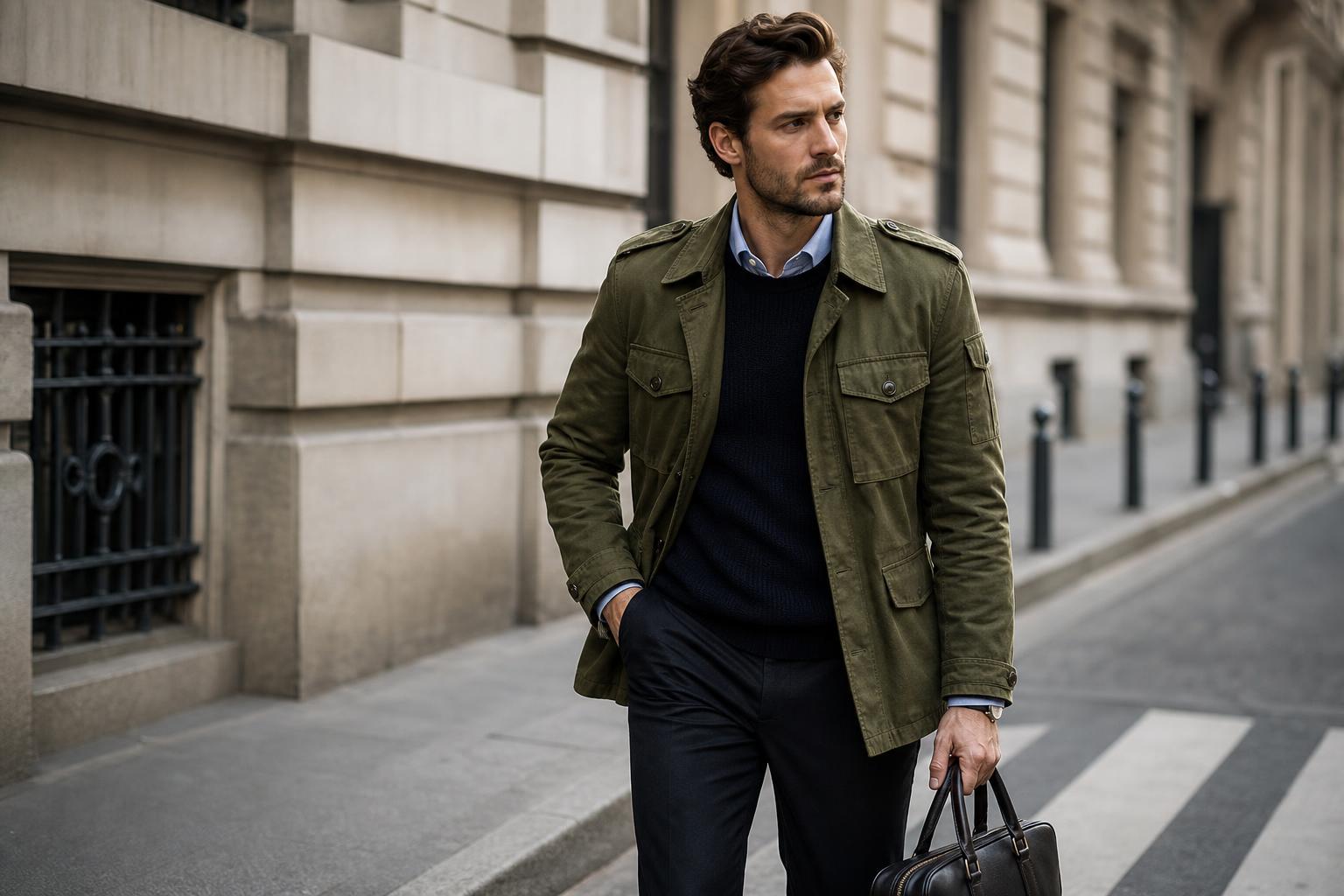
The modern appeal of military style
There is a reason military style returns whenever fashion begins craving structure again. It brings clarity to a wardrobe: sharp shoulders, disciplined lines, practical hardware, deep pockets, durable fabrics, and a palette grounded in olive, khaki, navy, black, and brushed neutrals. Even when the mood shifts from runway drama to everyday dressing, the visual language remains instantly recognizable—controlled, functional, and quietly commanding.
Today, military style moves between Paris polish, Milan richness, Copenhagen ease, and New York directness. On the runway and on the street, it appears as a military jacket over soft tailoring, a field jacket layered with denim, a peacoat worn with relaxed trousers, or a trench coat that turns practical outerwear into something refined. Celebrities such as Margot Robbie, Bella Hadid, Kate Moss, Greta Lee, and Beyoncé help keep the look visible, but its real appeal lies in something simpler: it makes ordinary pieces feel more intentional.
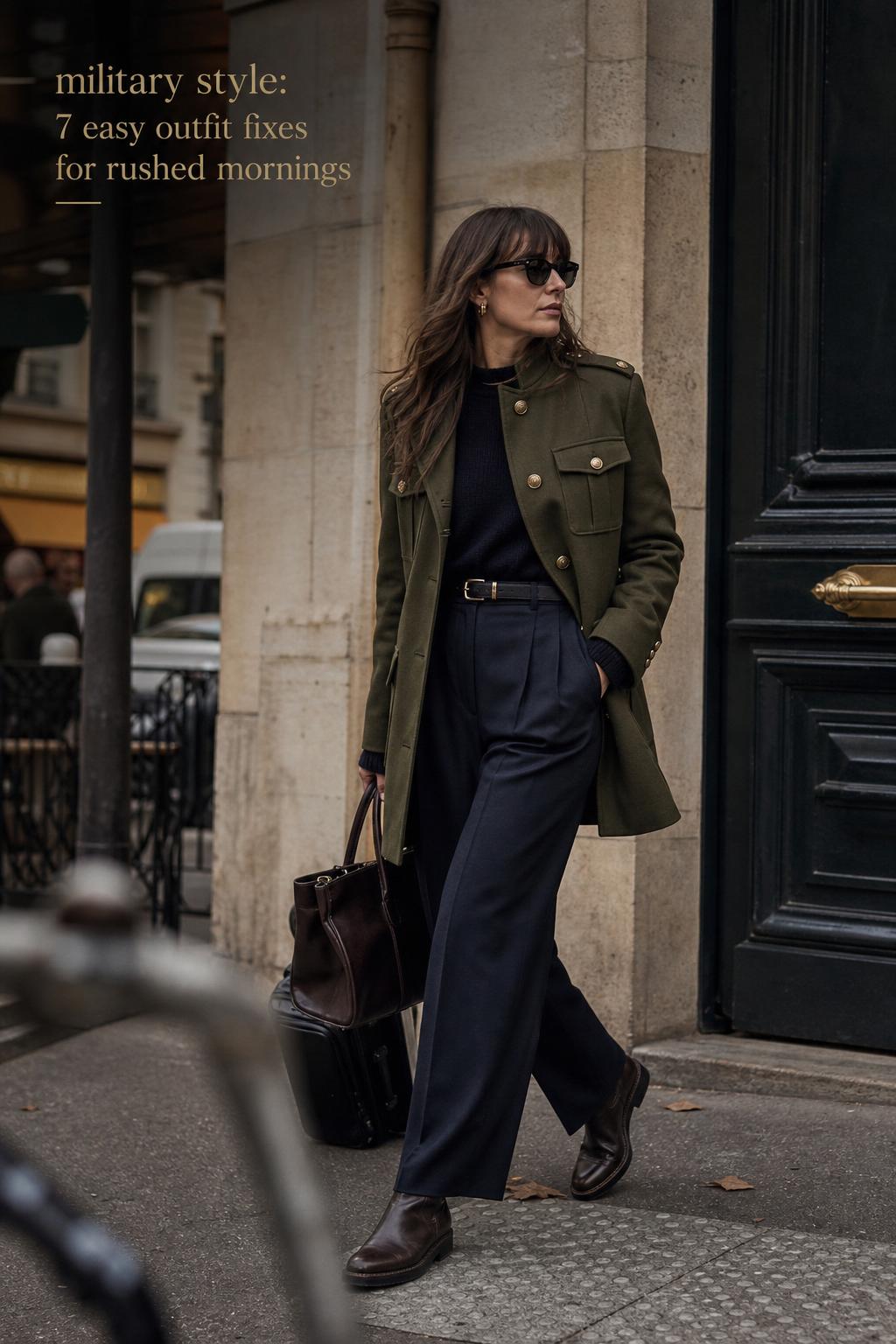
It is also one of the rare aesthetics that can feel strong without looking severe, and trend-aware without depending on novelty. Whether worn for weekend city dressing, office layering, travel days, or a polished off-duty uniform, military style remains popular because it balances history with wearability. The best versions never feel like costume. They feel composed.
What military style means in a modern wardrobe
At its core, military style is fashion shaped by the silhouettes and design codes of uniforms. That includes garments such as the military jacket, trench coat, field jacket, peacoat, and military outerwear more broadly, along with details like epaulettes, brass buttons, flap pockets, sturdy closures, and camouflage-inspired references. In fashion history, these elements moved from utility into civilian dress because they solved real clothing problems: warmth, protection, movement, weather resistance, and durability.
Your wedding has a lot of moving pieces. Your plan can still feel composed.
Zarellea organizes guests, vendors, budget, and timelines in one shared space — so you can make decisions with clarity, not stress.
That function-first origin explains why the aesthetic feels so enduring. A field jacket still works because it layers well. A peacoat still feels relevant because its shape is clean and adaptable. A trench coat continues to bridge practicality and polish. Even more trend-led versions—such as the military jacket revival seen in current runway-to-street coverage—gain momentum because they offer a disciplined counterpoint to softer or more bohemian dressing.
There is also a cultural duality in military style that makes it interesting. It can lean high-fashion through houses and labels such as Ralph Lauren, Chloé, Burberry, Nili Lotan, Toteme, Khaite, Frame, ME+EM, and Reformation, or read more utilitarian through militaria, vintage references, military surplus influence, and tactical fashion. That spectrum is precisely why the aesthetic remains versatile in the U.S. market: it can be tailored, streetwear-ready, minimalist, equestrian, tomboy, or softly bohemian depending on how the pieces are composed.
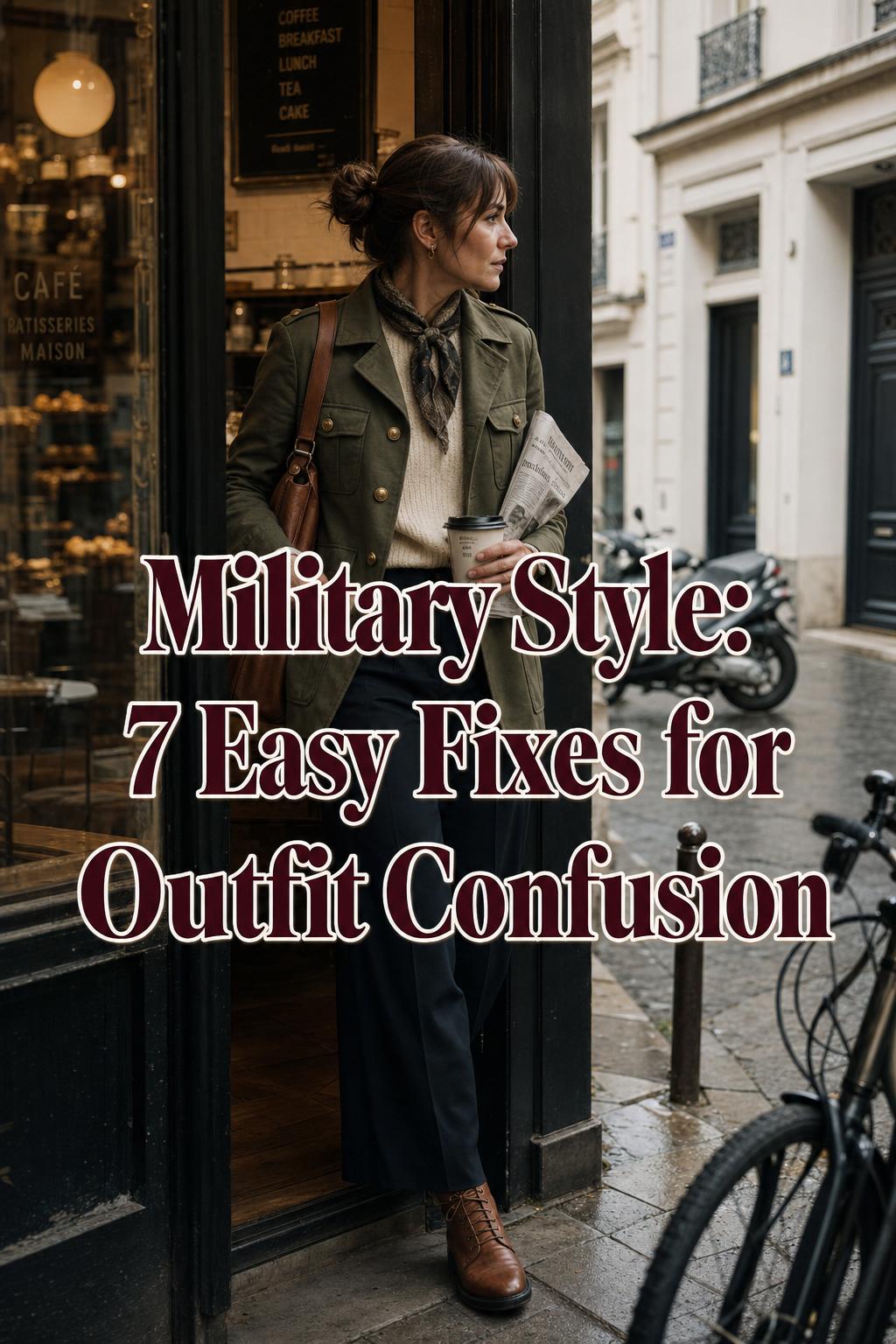
Core garments that anchor the aesthetic
The military jacket as the focal point
The military jacket is the most visible expression of the trend right now, and for good reason. It gives the torso structure, adds shape without the formality of a blazer, and introduces hardware and pockets that make even simple basics appear styled. Current interpretations range from polished versions associated with Ralph Lauren, Chloé, Zara, Nili Lotan, and ME+EM to more classic, historically grounded references connected to military-inspired outerwear and Alpha Industries.
Fit matters more here than with many other trend pieces. A jacket that sits too rigidly can veer theatrical; one that is too oversized can lose the disciplined line that makes military style effective. The most wearable versions hold enough shape through the shoulder and body to read intentional, then soften through the rest of the look with denim, knitwear, flowing skirts, or clean tailoring.
Field jackets, trench coats, and peacoats
If the military jacket is the statement, the field jacket is often the everyday workhorse. It is less formal, easier to layer, and particularly useful for transitional weather and travel days. A trench coat brings a sleeker line and often suits readers who prefer a quieter interpretation of military style. Burberry remains a natural anchor in this conversation because the trench occupies such a central place in the fashion history of military-derived clothing.
The peacoat offers the most compact elegance of the group. It sharpens denim, elevates knitwear, and creates a tidy, urban silhouette that works especially well in New York or Paris-minded wardrobes. Each of these garments carries military influence differently: the field jacket emphasizes utility, the trench emphasizes movement and polish, and the peacoat emphasizes order and structure.
Details that make the look believable
Military style succeeds or fails on details. Epaulettes, brass hardware, structured pockets, sturdy lapels, twill, ripstop, brushed cotton, and weather-minded fabrics all contribute to authenticity. This is also where the tactical-to-fashion continuum becomes useful. Even when a look is highly polished, the strongest versions retain some trace of functional design language. Without that, the outfit risks becoming only decorative.
- Structured pockets create practical visual weight.
- Brass buttons and hardware add contrast and polish.
- Twill, brushed cotton, and ripstop reinforce the utilitarian mood.
- Boots ground the outfit more effectively than overly delicate shoes.
- Camouflage references work best as a restrained accent rather than the entire message.
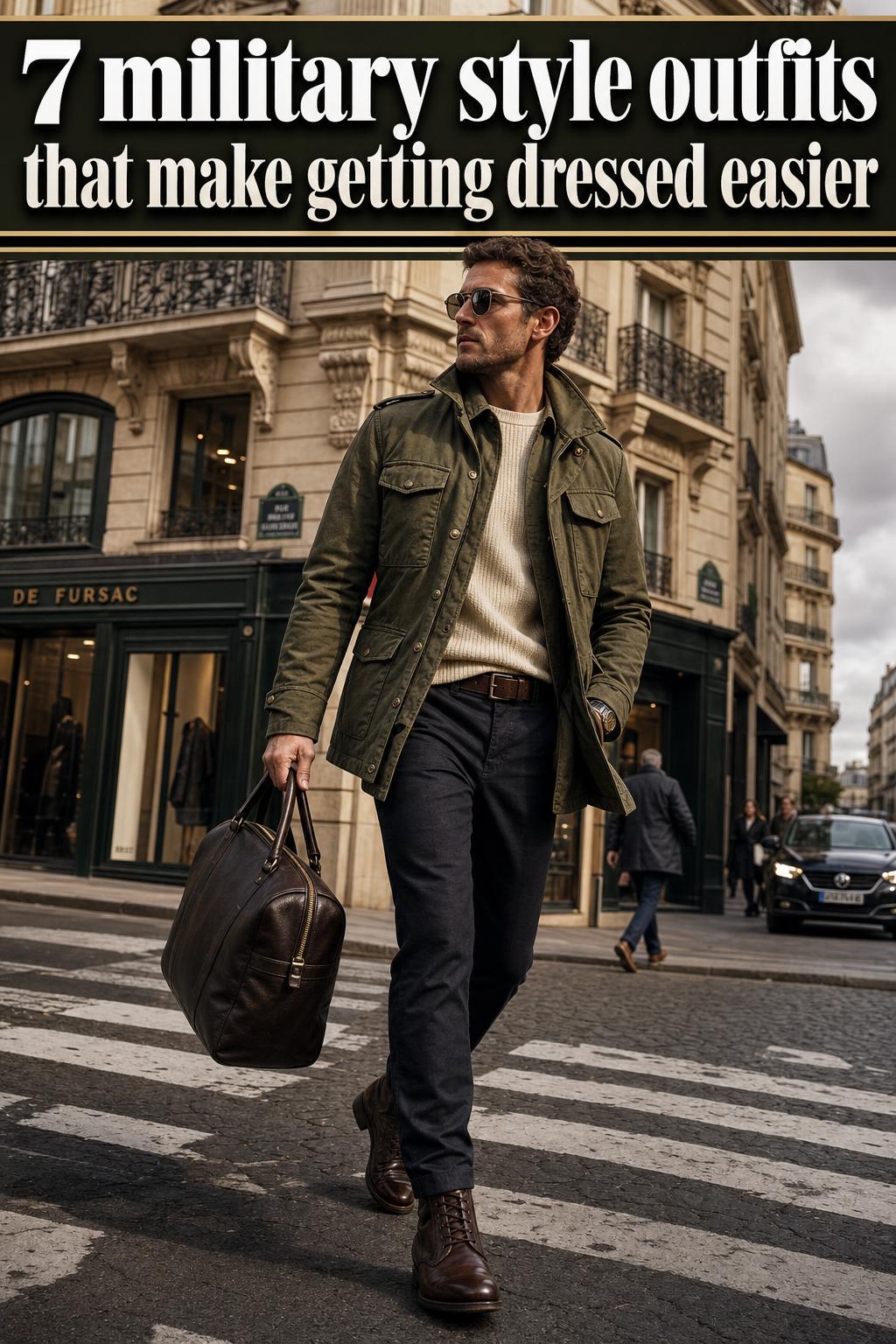
Look: runway officer with softened tailoring
This interpretation captures why the military jacket trend has returned so strongly through runway-to-street styling. The silhouette is assertive at the top and fluid below: a structured jacket over clean trousers or a long skirt, with enough movement in the lower half to avoid stiffness. The mood feels polished rather than literal, more fashion editor than reenactment.
Choose a military jacket in olive, deep navy, or black with visible buttons and defined shoulders. Underneath, keep the base refined—a fine knit, crisp shirt, or streamlined top in cream, taupe, or charcoal. Trousers should be tailored but not severe, or a fluid skirt can create an elegant contrast. Brass hardware, subtle leather accessories, and boots complete the line without clutter. This is where brands like Ralph Lauren, Nili Lotan, Toteme, Khaite, and ME+EM feel especially relevant in mood, even if the wardrobe itself mixes high and low.
The reason this look works is proportion. Military style can become heavy if every element is rigid. By pairing structure with softness, the jacket remains the focal point while the rest of the outfit keeps the silhouette modern. It is a practical formula for city meetings, gallery afternoons, or an office that allows personality within a polished dress code.
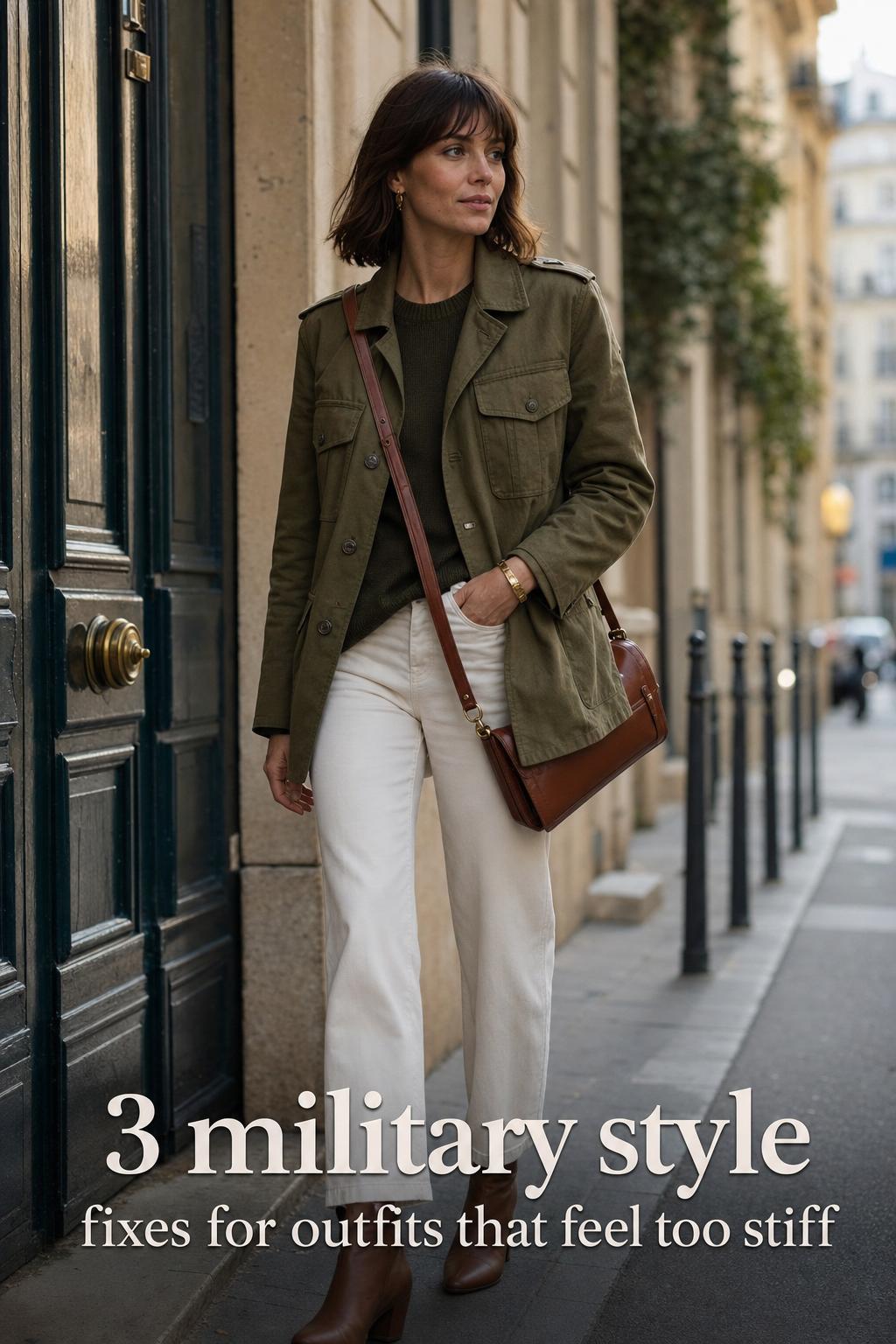
Look: tomboy street style in olive and denim
There is a clear line from runway styling to the streetwear-ready military look seen around trend revivals and Y2K references. This version leans more relaxed and direct, with a lived-in ease that feels grounded in New York street style and the broader revival of utility wear. Think less ceremony, more confidence.
An olive field jacket or military jacket over faded denim creates the foundation. Add a simple knit or tee beneath, then finish with substantial boots and a belt or compact bag with understated hardware. The fabrics should feel tactile: twill, washed cotton, denim, brushed textures. A little wear is useful here; a pristine finish can look too staged for the mood. Bella Hadid and Kate Moss are often referenced around this kind of styling because it depends on ease more than perfection.
What keeps this from looking flat is the tonal depth. Olive against vintage blue denim, black boots, and a cream or gray top gives the outfit quiet complexity. It also sits naturally within the overlap between militaria, tactical fashion, and contemporary streetwear. For everyday wear, this is one of the most realistic ways to bring military style into rotation without asking the wardrobe to change completely.
Style tip: let one rugged piece do the work
When the jacket already carries strong military cues, the rest of the look benefits from restraint. Avoid stacking too many literal references at once. One field jacket, one pair of sturdy boots, and otherwise simple separates usually create a better result than combining cargo pants, heavy hardware, and aggressive camouflage in the same outfit.
Look: equestrian polish with military structure
Among the more refined interpretations of military style, the equestrian direction is especially compelling. It takes the precision of military tailoring and filters it through a cleaner, heritage-minded silhouette. The mood is controlled, elegant, and slightly formal, but still highly wearable.
Start with a sharply cut jacket in navy or forest green, ideally with a strong front closure and clean shoulder line. Add slim or straight trousers, tall boots or polished ankle boots, and a fine knit in ivory, camel, or black. The color palette should stay disciplined. This is not the place for loud contrast. Labels such as Ralph Lauren and Burberry fit naturally into this visual world because the balance of structure and heritage is central to the look.
The appeal here lies in refinement. Military style can sometimes read overtly directional, but this version turns it into a wardrobe language of precision. It works well for office environments, travel where you want to feel composed from morning to evening, and situations where denim might feel too casual but traditional suiting feels too expected.
- Key garments: structured jacket, slim trousers, fine knit
- Footwear: tall boots or polished ankle boots
- Accessories: leather belt, minimal bag, restrained metal hardware
Look: boho softness against military hardware
One of the most effective ways to modernize military style is to contrast it with softness. The boho take does exactly that, turning a jacket with authority into a balancing piece rather than the whole mood. This is the kind of styling that keeps the trend accessible to readers who do not naturally gravitate toward hard tailoring.
A military jacket layered over a flowing dress or skirt creates movement beneath a sharper top line. Khaki, olive, and washed green sit beautifully against cream, muted floral tones, or sandy neutrals. The texture story matters: brushed cotton and twill above, softer drape below. Chloé feels like a natural reference point for this conversation because the brand is often associated with a more fluid, romantic fashion vocabulary that can absorb military elements without losing femininity.
The success of this look depends on contrast with discipline. Too much softness and the jacket feels disconnected; too much structure and the boho note disappears. Keep one visible military cue—buttons, pockets, epaulettes—then let the rest of the silhouette move. This approach is particularly strong for weekends, transitional weather, and readers who want military-inspired outfits for everyday wear without looking too severe.
Look: closet staples with a civilian uniform mindset
The most enduring military style often looks the least performative. It appears in closet staples arranged with intention: a dark jacket, straight trousers or denim, a knit, a trench, boots, and one practical bag. The visual message is simple, but the effect is strong because each piece contributes structure or utility.
This kind of look can be built around a Banana Republic or J.Crew sensibility just as easily as around Frame, Quince, Reformation, or Zara. The point is not label hierarchy. It is disciplined styling. A Wilmington-style tailored jacket, a peacoat-inspired coat, or a field jacket layered over elevated basics all speak the same language when the proportions are clean and the palette is controlled.
For many wardrobes, this is the most useful version to emulate because it integrates naturally with what is already there. If you wear denim, black trousers, knitwear, and boots regularly, military style may require only one strong outerwear piece to shift the entire mood. That is why the trend has broad appeal in the U.S.: it can be aspirational without being impractical.
How to recreate the look
- Begin with one anchor piece: a military jacket, trench coat, field jacket, or peacoat.
- Keep the base layers simple and fitted enough to maintain a clear silhouette.
- Choose a restrained palette of olive, navy, black, khaki, cream, or gray.
- Use hardware sparingly so the outfit feels edited, not overloaded.
- Finish with boots or sturdy shoes to preserve the grounded mood.
Look: minimalist military in black, navy, and stone
Not every version of military style needs obvious olive tones or surplus references. A minimalist interpretation can feel even more modern, especially for readers drawn to clean lines and a quieter luxury mood. Here the influence appears through shape and construction rather than overt styling cues.
A dark peacoat or pared-back military jacket in black or navy, worn with stone trousers and a close-fitting knit, creates a sleek urban silhouette. Hardware should remain visible but controlled. The fabrics do the work: dense wool-like weight in the outer layer, compact knit texture beneath, smooth tailored trousers below. This approach sits comfortably alongside the sensibilities associated with Toteme, Khaite, and Frame, where discipline and refinement matter more than decoration.
What makes this aesthetic compelling is restraint. You are borrowing from military style without announcing it too loudly. For offices, dinners, or travel between seasons, it offers many of the same strengths—clarity, structure, usefulness—while feeling especially refined.
From militaria to the runway
Military style carries unusual longevity because it is not merely a seasonal novelty. It has roots in fashion history, in uniformity, and in garments originally designed for function. Over time, civilian wardrobes adopted these shapes because they worked. Designers and fashion houses then reinterpreted them repeatedly, moving them from necessity into style language.
That historical depth helps explain why the trend can return in different forms: as Y2K revival, as polished outerwear, as army chic, as utility wear, as tactical fashion, or as high-fashion military-inspired dressing. One season may emphasize a sharply cut military jacket seen on runways and celebrities like Margot Robbie or Beyoncé. Another may focus more on field jackets, peacoats, or trench coats with a quieter wardrobe role. The core visual code remains stable even as the mood changes.
There is also a practical intelligence in the way these garments have survived. Pockets, closures, weather-minded fabrics, and sturdy silhouettes are not decorative accidents. They are the reason the aesthetic continues to translate from Paris and Milan runways to American daily life. Fashion may rename the look each cycle, but the appeal is consistent: military style gives wardrobe architecture to modern dressing.
Where military style works best in real life
Some aesthetics photograph beautifully yet feel difficult by midday. Military style is not usually one of them. Because many of its defining garments come from outerwear and practical design, the look often performs well in the rhythms of actual life—commutes, travel, changeable weather, long walks, and days that move between casual and polished settings.
For urban dressing in New York, a peacoat or structured military jacket over denim and boots feels direct and functional. In a more polished office context, a trench coat or tailored jacket paired with slim trousers creates a composed line that still feels modern. For weekends, a field jacket over knitwear and relaxed denim has enough utility to handle movement and weather while still appearing deliberate. In travel wardrobes, military outerwear is particularly useful because it layers easily and gives shape to simple basics.
This is also where the distinction between inspiration and imitation matters. A runway image may celebrate drama, but a real wardrobe needs balance. If the coat is heavily detailed, simplify the base. If the silhouette is oversized, keep the lower half cleaner. If the look already carries heritage weight, avoid adding too many competing themes. Military style is most persuasive when adapted to context rather than copied in full.
Key pieces for this aesthetic
- Military jacket with visible structure
- Field jacket for everyday layering
- Trench coat for polished transitions
- Peacoat for compact urban tailoring
- Boots that ground the silhouette
- Neutral knitwear and trousers to soften the look
The fabrics and construction that change everything
Many readers focus first on color or hardware, but fabric is often the deciding factor in whether military style looks authentic, luxurious, or costume-like. Twill, brushed cotton, and ripstop all carry a functional visual language that aligns naturally with military-inspired fashion. They suggest durability and purpose, which is why even a simple shape can feel convincing when made in the right material.
Fabric also changes how the garment behaves on the body. A crisp jacket holds authority and works well with tailoring. A softer cotton military jacket suits more casual styling and can blend into boho or streetwear combinations. Weather-minded textiles, including the broader category of fabric technologies referenced in discussions around utility wear and outdoor influence, reinforce the practical roots of the aesthetic. Even when a look is highly editorial, these tactile signals matter.
Construction details deserve equal attention. Strong seams, substantial closures, reliable pocket placement, and a clean shoulder line are more important than excessive ornament. Readers often notice this instinctively in the difference between a jacket that feels elevated and one that feels overly theatrical. The strongest military style pieces communicate function first, then fashion.
Vintage, military surplus, and the ethics of inspiration
One of the underexplored dimensions of military style is how closely it intersects with military surplus culture, vintage collecting, and questions of reuse. For some wardrobes, vintage or surplus-inspired pieces add authenticity and character that newer garments cannot easily replicate. They also speak to a more sustainable approach by extending the life of clothing already in circulation.
At the same time, thoughtful styling matters. Military-inspired fashion works best when it acknowledges its origins through restraint and intelligence rather than turning history into novelty. That may mean pairing one surplus-influenced piece with quiet modern basics, or choosing a newer jacket inspired by military construction rather than assembling a look entirely from literal references. The goal is not to erase the past, but to translate it respectfully into contemporary civilian dress.
From a wardrobe perspective, this balance is useful. Vintage can bring depth, but newer pieces from brands such as Ralph Lauren, Burberry, Zara, J.Crew, Banana Republic, Reformation, ME+EM, Chloé, or Nili Lotan may offer easier fit, cleaner finishing, or a softer interpretation. The most successful approach often combines both sensibilities: historical awareness with modern composition.
Practical tip: avoid turning the look into costume
If a garment already has epaulettes, brass buttons, flap pockets, and a structured shoulder, let that be enough. Balance military references with ordinary wardrobe staples such as knitwear, denim, straight trousers, or a fluid skirt. The quickest way to lose sophistication is to make every item in the outfit repeat the same message at full volume.
The shopping lens: entry-level ease and collector mood
Military style spans a wide retail range, which partly explains its resilience. At one end, accessible labels such as Zara, Quince, J.Crew, Banana Republic, and Reformation can introduce the silhouette through a single jacket or coat. At the other, brands like Ralph Lauren, Burberry, Chloé, Nili Lotan, Toteme, Khaite, Frame, and ME+EM shape a more elevated interpretation built around tailoring, fabric, and finish.
The key is deciding what you want the piece to do in your wardrobe. If you need a practical layer that works with denim and boots, a field jacket or simple military jacket may be enough. If you want a statement outerwear piece that sharpens everything else, a more tailored military jacket or peacoat is worth prioritizing. If your wardrobe already leans minimal, a trench coat with military lineage may integrate more easily than a heavily detailed jacket.
Collector-minded shoppers often look for stronger historical signals or more distinctive silhouettes, while everyday dressers usually benefit from moderation. Neither approach is inherently better. The most useful purchase is the one that fits your existing wardrobe habits and the contexts where you will actually wear it.
Common styling mistakes that weaken military style
Because military style is visually distinct, small choices have an outsized impact. A beautiful jacket can look awkward if the styling around it is too literal, too busy, or too disconnected from the rest of the wardrobe. Editing is essential.
- Wearing too many military references at once, which can make the outfit feel theatrical.
- Choosing a poor fit, especially through the shoulder and torso, which distorts the jacket’s intended structure.
- Ignoring texture, so the look feels flat rather than grounded in utility.
- Adding overly delicate accessories that fight the strength of the silhouette.
- Relying on trend language without considering real-life use, movement, and layering needs.
What stylists and experienced dressers understand instinctively is that military style is strongest when composed with contrast. Tailoring needs softness nearby. Utility benefits from polish. Heritage gains freshness through restraint. Once that balance is in place, even a very recognizable jacket feels modern rather than nostalgic.
The future of military style
Fashion will continue to reinterpret military style because the building blocks are too useful to disappear. Runways may push the military jacket back into focus one year, while the next cycle highlights peacoats, trench coats, field jackets, or utility-driven silhouettes that overlap with gorpcore, streetwear, and tactical fashion. What changes is emphasis, not foundation.
That makes military style less of a passing trend than a recurring wardrobe framework. It can absorb celebrity influence, from Margot Robbie to Bella Hadid, or become quieter and more private through polished staples and strong outerwear. It can move through Paris, Milan, and New York with equal confidence. Most importantly, it can be adapted with intelligence: one jacket, one coat, one pair of boots, and a disciplined eye for silhouette are often enough.
The enduring appeal lies in that combination of strength and practicality. Military style works because it gives clothes purpose, and gives the wearer presence. In a modern wardrobe, that remains a rare and valuable quality.
FAQ
What defines military style in fashion?
Military style is defined by clothing influenced by uniforms and utility garments, including pieces such as the military jacket, trench coat, field jacket, and peacoat, along with details like epaulettes, brass buttons, flap pockets, structured shoulders, and practical fabrics such as twill or brushed cotton.
How can I wear a military jacket without looking costume-y?
The easiest approach is to let the jacket be the main statement and keep the rest of the outfit simple with denim, tailored trousers, knitwear, or a fluid skirt in restrained colors. Avoid layering too many literal military references at once, especially heavy hardware, camouflage, and multiple utility pieces in the same look.
Which garments are most important for a military-inspired wardrobe?
The core pieces are a military jacket, field jacket, trench coat, peacoat, sturdy boots, and a set of neutral basics that support them. These garments cover the main expressions of military style, from polished tailoring to relaxed utility dressing.
Is military style only about jackets?
No. Jackets are the most visible entry point, but military style also includes trench coats, peacoats, utility-driven silhouettes, boots, hardware details, and the broader aesthetic of disciplined structure, durability, and functional design.
Which brands are often associated with military style?
Brands frequently connected to military style include Ralph Lauren, Chloé, Burberry, Nili Lotan, ME+EM, Zara, J.Crew, Banana Republic, Frame, Reformation, Toteme, Khaite, Quince, and Alpha Industries, each representing a different point on the spectrum from heritage practicality to elevated fashion interpretation.
What colors work best for military style?
Olive, khaki, navy, black, gray, cream, and other muted neutrals work best because they support the structured, utilitarian mood of the aesthetic. These shades also make it easier to mix military-inspired pieces with everyday wardrobe staples.
Can military style work for the office?
Yes, especially through tailored interpretations such as a refined military jacket, a trench coat, or a peacoat paired with slim trousers, knitwear, and polished boots. The key is choosing clean silhouettes and limiting overtly rugged details so the look stays professional and composed.
How does military style connect to fashion history?
Military style is rooted in garments originally designed for function, protection, and movement, which later moved into civilian wardrobes and then into fashion collections. Its long history explains why the aesthetic repeatedly returns through different trend cycles, from heritage tailoring to Y2K-inspired revivals.
Is vintage or military surplus a good option for this aesthetic?
Vintage and military surplus can be excellent options because they often bring authenticity, character, and a stronger sense of history, while also supporting reuse. The most wearable approach is usually to combine one vintage or surplus-inspired piece with modern basics so the outfit feels current and balanced.
Why does military style keep coming back into fashion?
It returns because the silhouettes are functional, flattering, and visually clear. Designers, runways, and celebrities may renew attention around the military jacket trend, but the deeper reason is that these garments offer structure, practicality, and a sense of authority that remains useful in modern wardrobes.
Leave a Reply