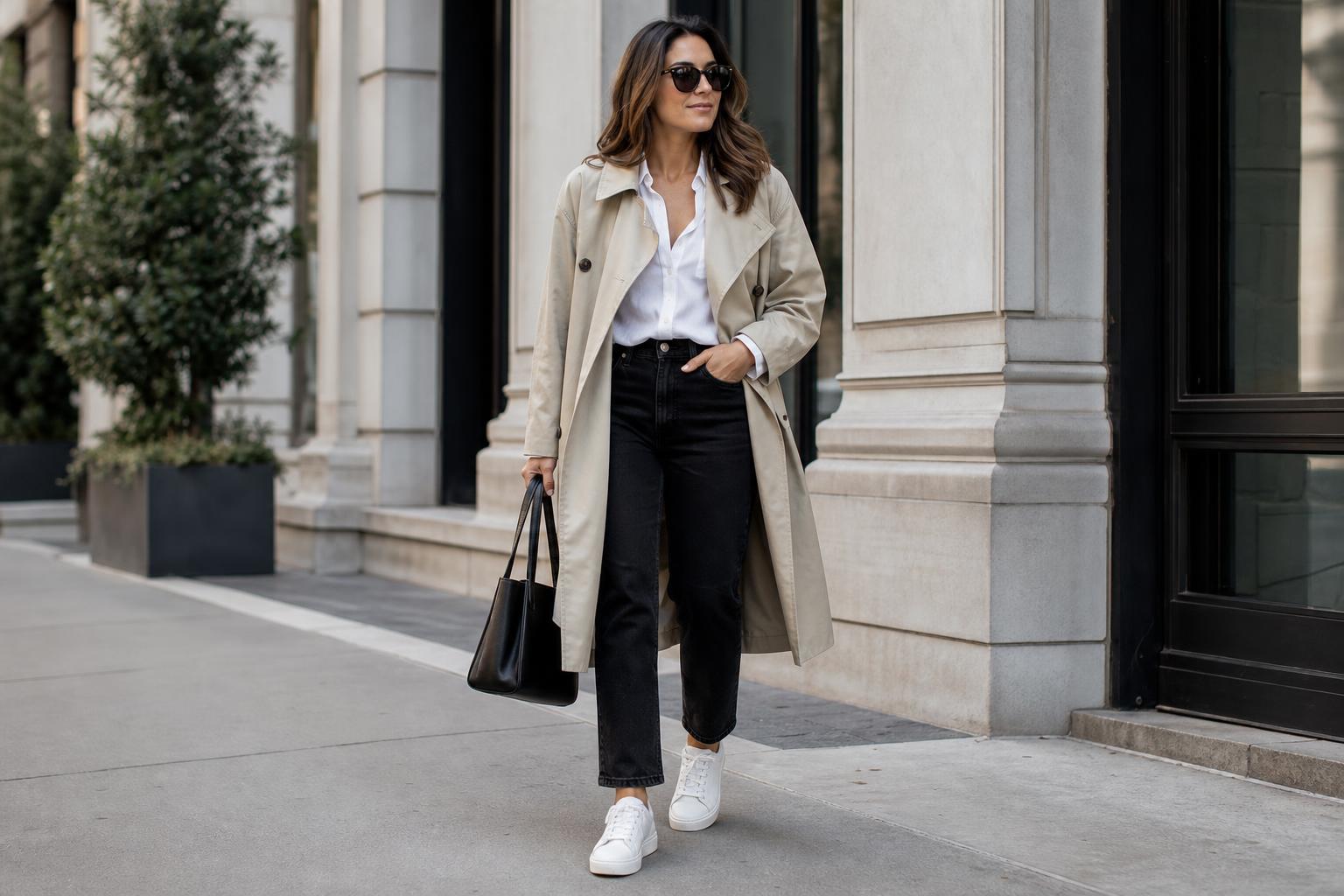
Cute sneaker outfits have become less of a trend and more of a modern wardrobe reality. On the days when heels feel impractical and loafers seem too formal, sneakers solve a very real style problem: they bring comfort, movement, and a fresh visual balance to pieces that might otherwise feel overly polished or too casual. The appeal is not only that they are easy to wear. It is that the right sneaker outfit can make a wardrobe look more current, more relaxed, and often more expensive, simply through proportion and styling choices.
The most successful sneaker outfits are rarely about the sneakers alone. They depend on clean lines, thoughtful layering, and the relationship between shape and function. A structured blazer with low-profile sneakers creates one kind of elegance. A soft knit dress with classic white sneakers creates another. The charm of cute sneaker outfits lies in that flexibility: they can work for commuting, travel, errands, casual offices, lunch, city weekends, and transitional weather without sacrificing style for comfort.
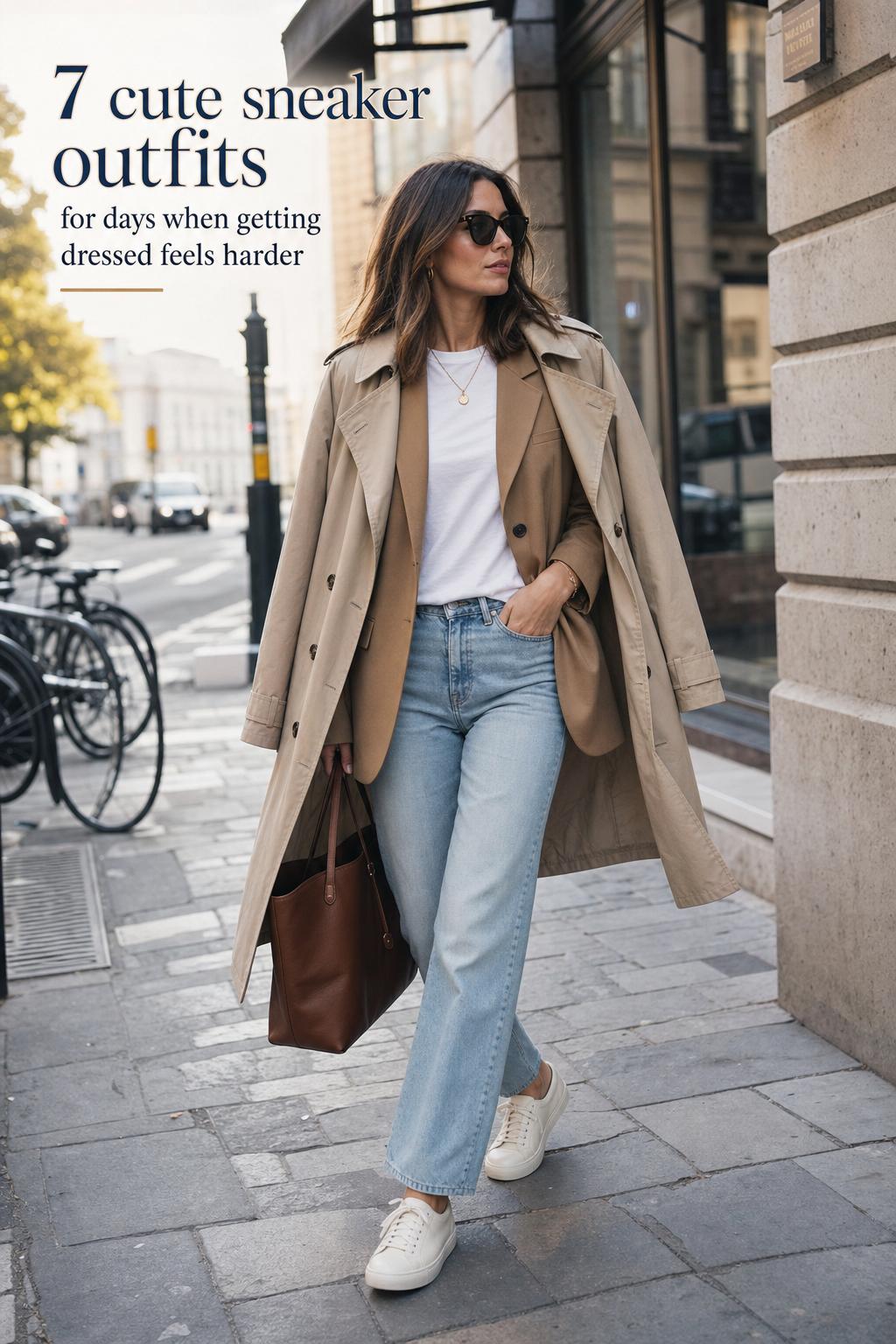
What matters most is knowing how to build the outfit so it feels intentional. That means choosing silhouettes that complement the sneaker rather than compete with it, understanding which fabrics hold their shape, and recognizing when a practical choice also improves the entire look. The goal is not to collect endless outfit formulas. It is to learn how to style sneakers in a way that fits everyday life, flatters your proportions, and keeps your wardrobe versatile.
Why sneaker outfits look especially modern right now
There is a reason sneakers work so well with today’s wardrobes. Fashion has shifted toward pieces that move easily between settings: tailored trousers that can be worn to work or on a flight, knit dresses that can go from daytime to dinner, denim that feels polished enough for city dressing, and elevated basics that rely on subtle styling rather than overt trend signals. Sneakers sit naturally in that environment because they soften sharper garments and add ease to more feminine ones.
Your wedding has a lot of moving pieces. Your plan can still feel composed.
Zarellea organizes guests, vendors, budget, and timelines in one shared space — so you can make decisions with clarity, not stress.
From a styling perspective, sneakers create a visual contrast that is often flattering. A crisp blazer, straight-leg jeans, and a simple sneaker feel balanced because the structure of the jacket offsets the casual grounding of the shoe. A midi skirt with sneakers works for a similar reason: the fluid line of the skirt gains practicality and modernity when paired with something streamlined on the foot. The result is polished, but not precious.
This also explains why so many women return to sneakers when building a capsule wardrobe. They are one of the easiest pieces to repeat without an outfit feeling repetitive. A well-chosen pair can work with denim, trousers, dresses, skirts, shorts, and soft tailoring, making them one of the most useful everyday foundations you can buy.
The foundation first: which sneakers are easiest to style
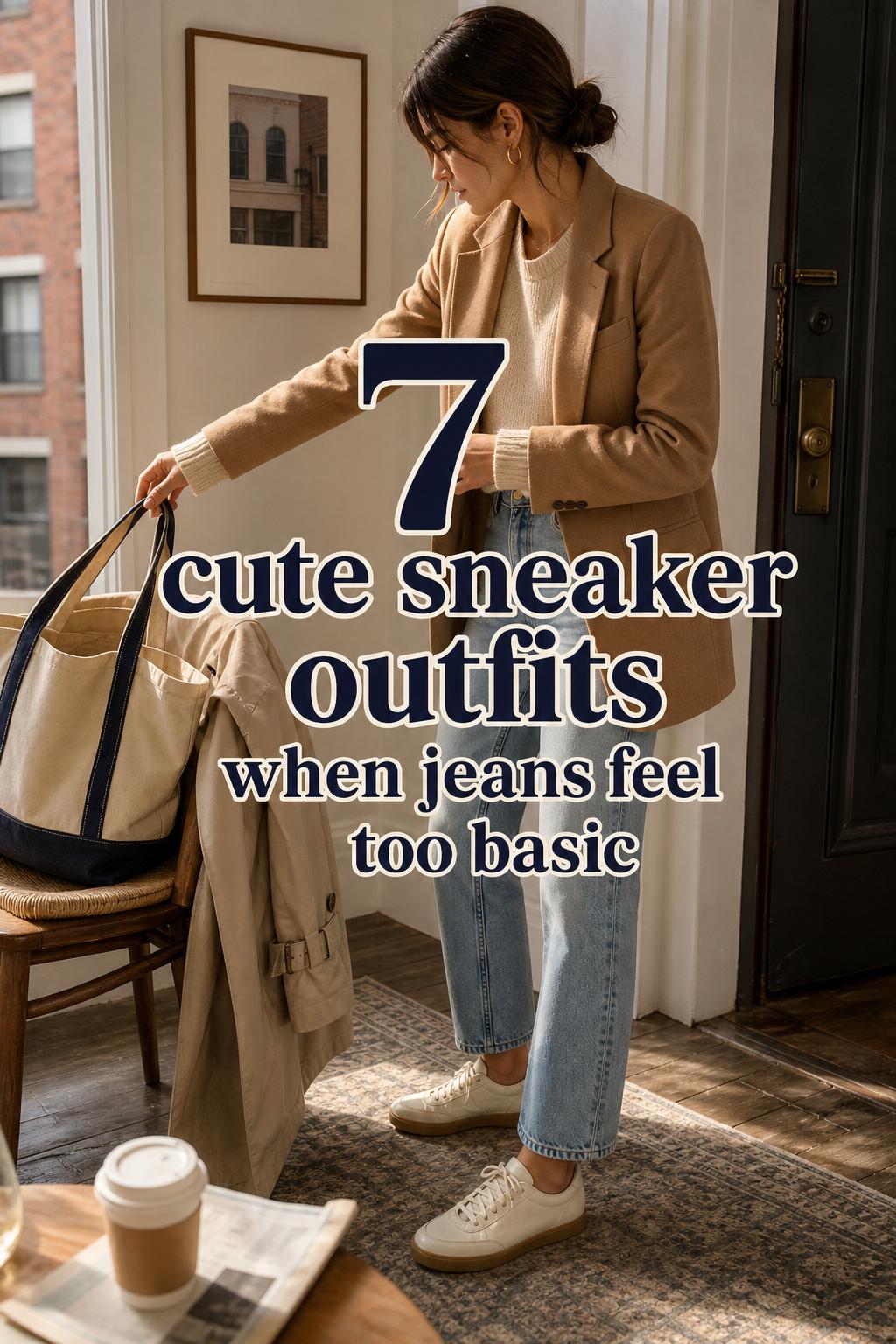
If you want the greatest wardrobe return, start with sneakers that have a clean shape and restrained detailing. A simple white sneaker remains the most versatile option because it disappears into the outfit just enough to let silhouette and color do the work. It can sharpen dark denim, freshen soft neutrals, and keep dresses from feeling overly dressed.
Low-profile sneakers are especially useful if you are petite or prefer a more refined look. They do not interrupt the leg line as much, and they pair beautifully with ankle-length trousers, straight jeans, slip skirts, and column dresses. Chunkier sneakers create a stronger style statement and can work well with wider trousers, oversized layers, and more directional casual outfits, but they require more attention to volume and proportion.
Color matters too. White, cream, beige, gray, and black are generally the easiest to repeat. These shades tend to integrate with a broader range of outfits and feel calmer than bright color-blocked sneakers, especially if your wardrobe is built around denim, black trousers, soft knits, and neutral outerwear. If you already own a practical sneaker but it feels difficult to style, the issue is often not the shoe itself. It is usually the surrounding outfit proportions or an overly busy color story.
What to buy first if you want a practical sneaker wardrobe
- A clean white or cream everyday sneaker
- A pair of straight-leg or relaxed jeans with a hem that works with flats
- A structured blazer or polished jacket for contrast
- A knit dress or simple midi skirt for softer combinations
- A pair of tailored trousers that skim the ankle or fall cleanly over the shoe
These five pieces create more combinations than most people expect, and they make it easier to get dressed without relying on one narrow outfit formula.
Denim and sneakers: the easiest route to a polished everyday look
Among all cute sneaker outfits, denim remains the most approachable starting point because it already belongs to daily life. The difference between a forgettable jeans-and-sneakers combination and one that looks considered usually comes down to fit, hem length, and the choice of top layer.
Straight-leg jeans are the most reliable option because they hold a clean line without clinging too closely to the leg or overwhelming the shoe. They flatter a wide range of body types and work with both low-profile and slightly chunkier sneakers. If you are petite, a cropped straight leg or full-length pair tailored to just skim the top of the sneaker tends to look more intentional than denim that pools awkwardly. If you are tall, full-length straight or relaxed denim can look especially elegant with a simple sneaker and a longer coat or blazer.
For curvier figures, jeans with a bit of structure through the hip and a balanced straight or subtle wide leg can create a smoother line than very skinny cuts, especially when worn with sneakers. The outfit feels easier and more current, and the sneaker anchors the shape rather than fighting it.
The denim combinations that work hardest
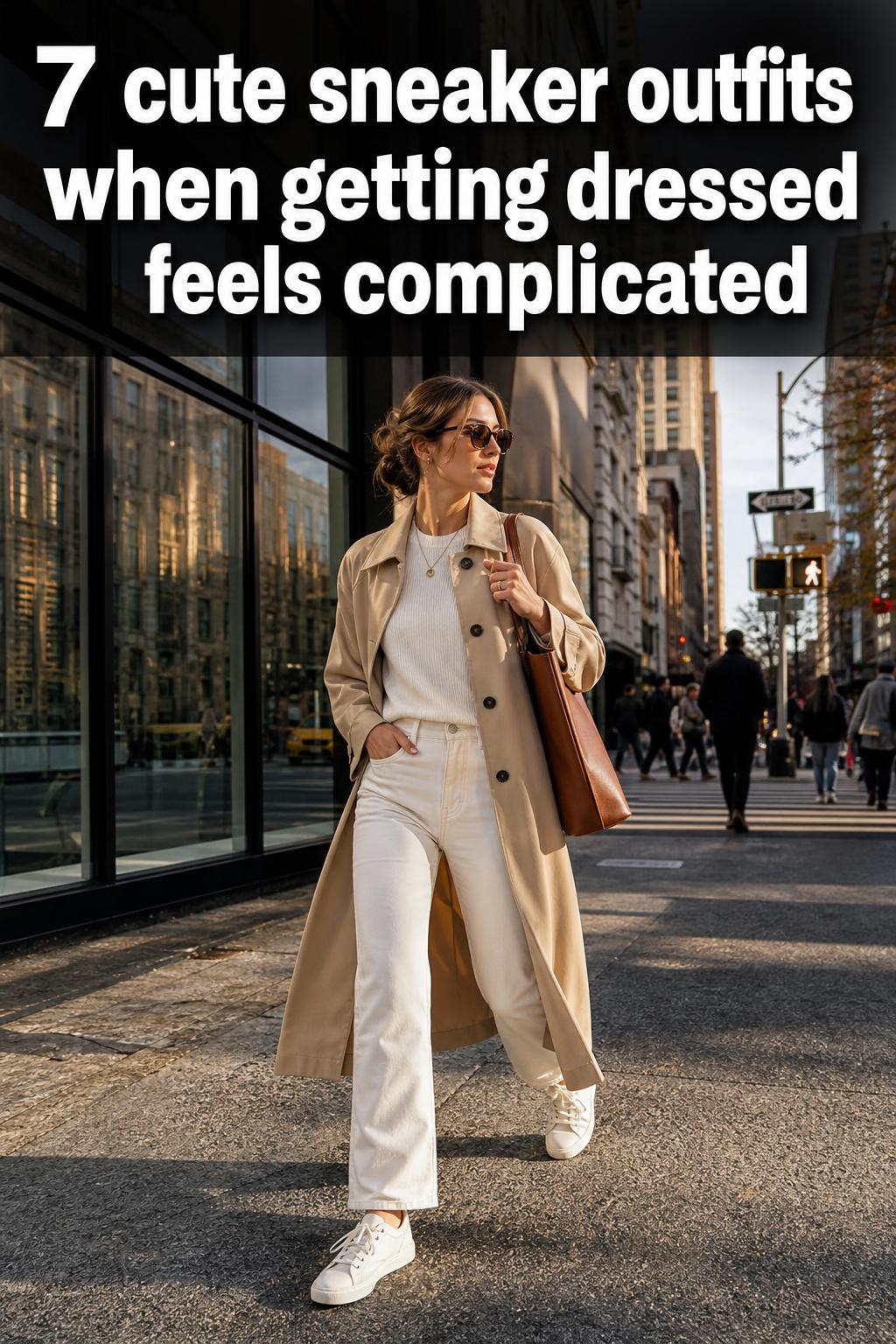
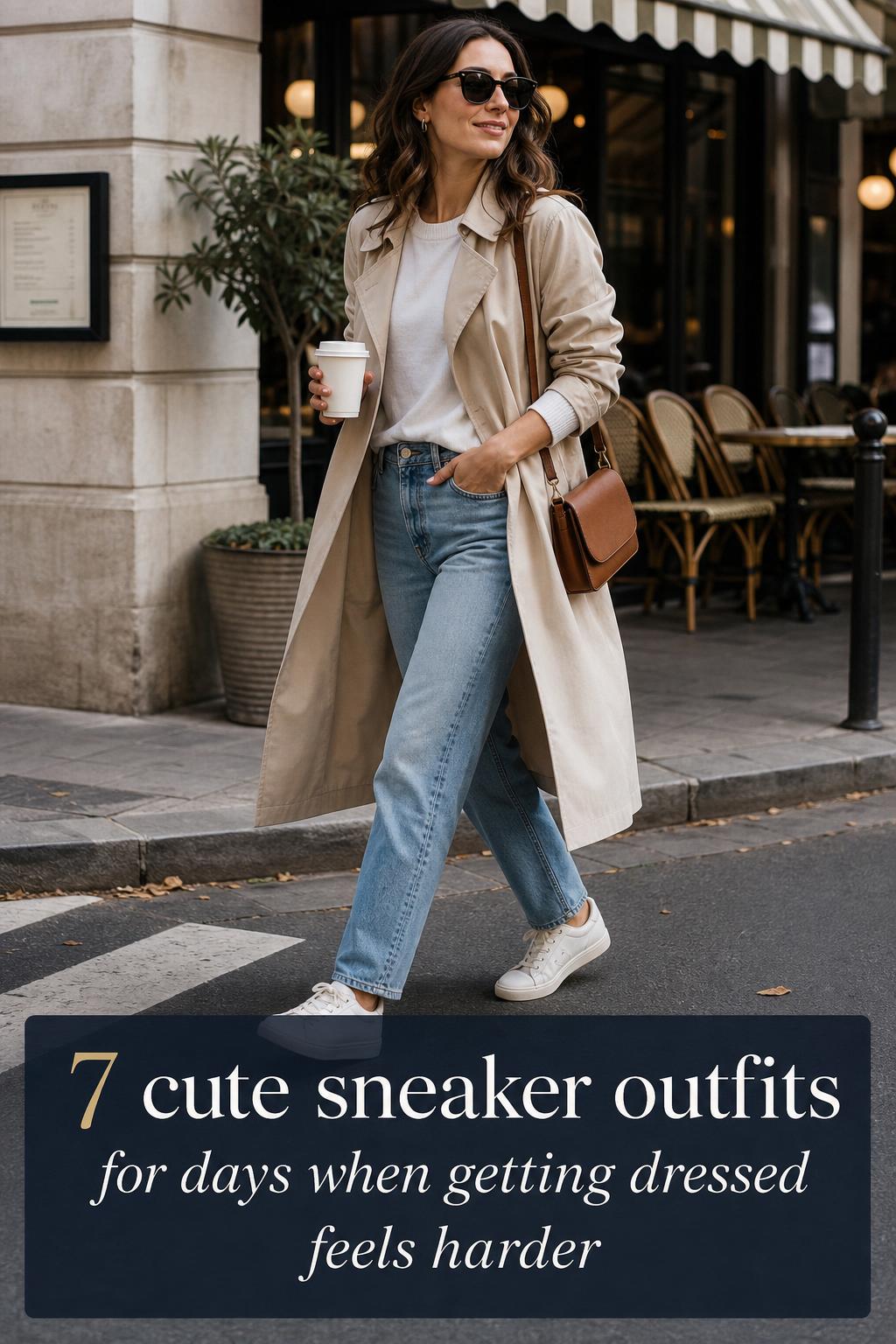
A white T-shirt, straight blue jeans, and white sneakers may sound simple, but it becomes much more refined when finished with a tailored blazer, a leather belt, and a bag in a complementary neutral. The reason this formula works is proportion: the blazer introduces structure, the denim keeps the look grounded, and the sneakers prevent the outfit from reading too formal.
Dark-wash jeans with black or tonal sneakers can be even more useful if you want a sleeker city look. Add a fine knit, trench, or minimalist coat, and the outfit takes on a quiet sophistication that works well for casual offices, travel days, and early evening plans.
Relaxed jeans with sneakers benefit from restraint elsewhere. If the denim is loose, choose a more fitted knit, a tucked shirt, or a jacket with defined shoulders. This keeps the silhouette from becoming shapeless. Cute does not require excess detail. Very often, it comes from clean styling and a sense of ease.
Soft dresses with sneakers: feminine, practical, and surprisingly versatile
One of the most wearable ways to style sneakers is with dresses that have movement but not too much volume. This pairing works because the sneaker removes formality and makes the dress suitable for longer days, unpredictable weather, and real walking. It also broadens the dress’s usefulness, which matters if you want your wardrobe to do more with fewer pieces.
Knit dresses are particularly strong with sneakers because they create a clean vertical line. A ribbed midi in black, taupe, navy, or cream with a simple sneaker feels polished, comfortable, and easy to layer. Add a trench coat or cropped jacket, and the outfit transitions effortlessly between seasons. For petite frames, a dress that stays close to the body without excess fabric tends to work best, as it prevents the sneaker from visually shortening the silhouette. For taller figures, column dresses and longer hemlines can look especially elegant with understated sneakers.
Shirt dresses and slip-inspired dresses can also work beautifully, but they need attention to balance. A very floaty dress with a heavy sneaker can feel disconnected. If the dress is light and fluid, a sleeker sneaker often makes more sense. If the dress has more volume or utility details, a slightly chunkier sneaker can feel grounded and intentional.
How to keep the dress-and-sneaker combination flattering
- Choose hemlines that show some ankle or fall in a clean uninterrupted line
- Use a jacket or belt if the dress needs more shape through the waist
- Keep the sneaker visually clean if the dress already has print or texture
- Repeat the sneaker color somewhere else in the outfit, such as the bag or outerwear tone
This kind of visual repetition makes the outfit feel composed rather than accidental.
Tailored trousers and sneakers for a sharper kind of casual
For anyone who wants cute sneaker outfits that read more polished than sporty, tailored trousers are the answer. They bring immediate structure and make even the simplest sneaker feel deliberate. This is especially useful if you are dressing for a casual office, meetings in transit, or days when you want comfort without losing a refined silhouette.
Ankle-length trousers are the easiest entry point because they frame the sneaker neatly and keep the line crisp. Straight and softly tapered cuts are especially versatile. Wide-leg trousers can also work beautifully, but the hem should be considered carefully. Too long, and the fabric collapses over the shoe. Too short, and the proportion can feel abrupt. The ideal hem either just clears the sneaker or falls with a light break that still allows the trouser shape to read clearly.
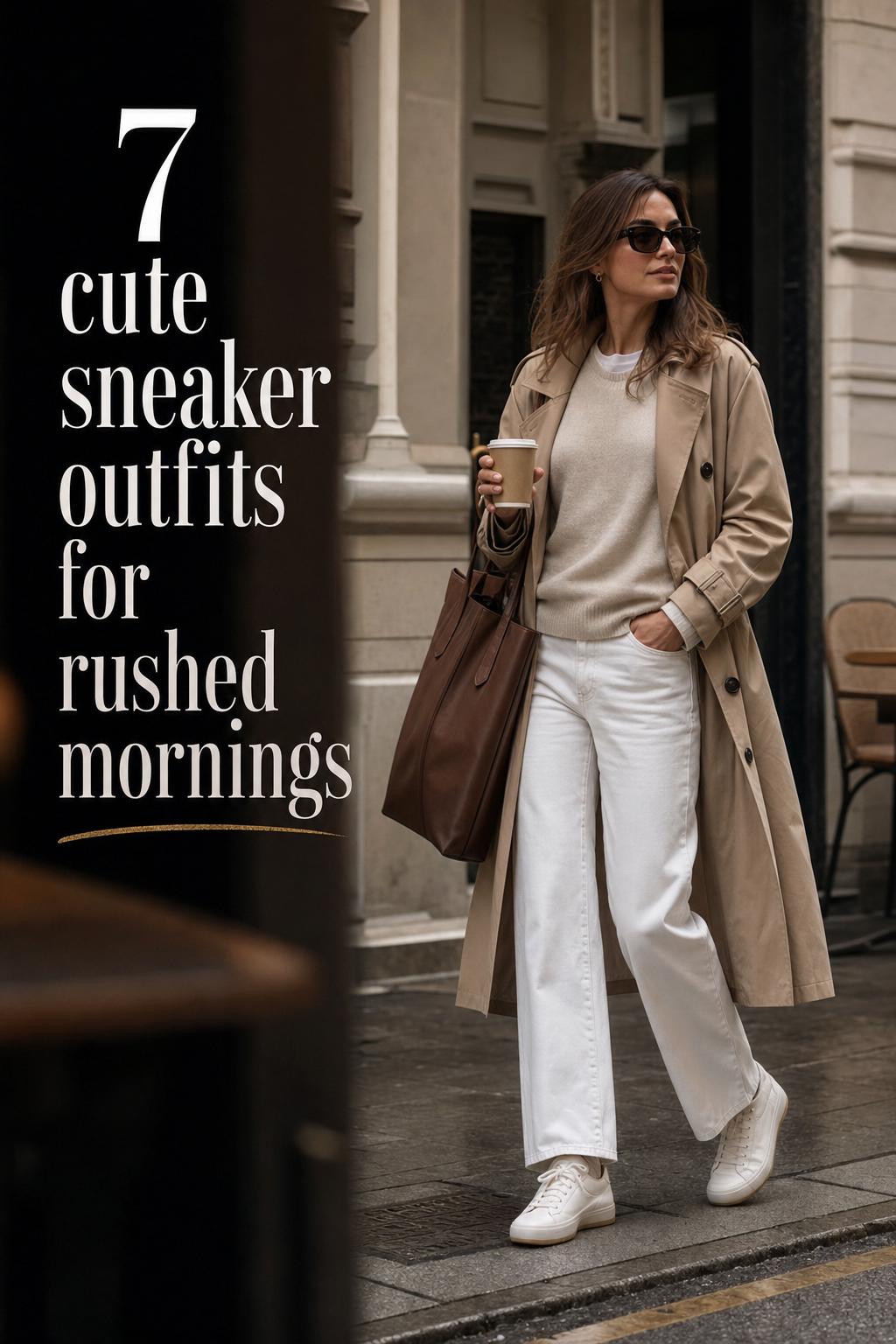
Color coordination matters more here than in casual denim outfits. Monochrome or tonal dressing often makes sneakers look more elevated. Cream trousers with cream sneakers and a soft knit create a light, expensive-looking palette. Black trousers with black or white sneakers and a sharp jacket offer a more urban interpretation. In both cases, the outfit benefits from simplicity.
Tip: the easiest way to make sneaker outfits look more expensive
Focus on fabric quality and clarity of line rather than adding more accessories. Trousers that drape well, a blazer with real structure, a knit that holds its shape, and sneakers that are clean and in good condition will always communicate more polish than trend-heavy extras. A sneaker outfit looks elevated when every piece appears intentional and well maintained.
Skirts, movement, and the balance of proportion
Skirts with sneakers can be particularly charming because they create contrast without feeling forced. The challenge is getting the proportion right. The skirt sets the rhythm of the outfit, and the sneaker either supports that rhythm or disrupts it.
Slip skirts and bias-cut midis are among the easiest to pair with sleek sneakers. The fluidity of the fabric contrasts nicely with the practical simplicity of the shoe, and the resulting silhouette feels relaxed yet refined. Add a fitted knit, a cropped cardigan, or a slightly oversized blazer, and the outfit becomes suitable for brunch, casual dinners, and creative work settings.
Pleated skirts can also work, especially when styled with cleaner tops and less bulky footwear. If the skirt already carries movement and texture, the sneaker should usually remain understated. A-line or fuller skirts require a bit more care. They can look lovely with sneakers, but the rest of the outfit often needs waist definition to avoid visual heaviness.
A body-shape note worth remembering
If you have a shorter torso or want to lengthen the legs, choose a higher-waisted skirt and tuck or half-tuck the top. If you have longer limbs and want balance, a boxier knit or slightly oversized jacket can create an elegant counterweight. The sneaker should feel integrated into the silhouette, not like an afterthought added only for comfort.
Layers that make sneaker outfits feel editorial rather than basic
The difference between an outfit that feels merely convenient and one that feels styled often comes down to layering. Sneakers are inherently relaxed, so the surrounding layers need to create shape, texture, and definition. This is where outerwear becomes especially important.
A trench coat is one of the most useful companions to sneakers because it adds movement and polish without stiffness. Worn over denim and a T-shirt, it creates an effortless city look. Over a knit dress and simple sneakers, it reads even more refined. A structured blazer offers a sharper effect and is ideal when you want to elevate denim or trousers quickly. Cropped jackets are excellent with dresses and skirts because they define the waist area and keep the leg line open.
Texture also deserves attention. A smooth leather bag, a wool coat, a crisp cotton shirt, or a soft cashmere knit can all make sneakers feel more sophisticated. When every element is casual, the outfit can drift into gym-adjacent territory. Cute sneaker outfits work best when at least one piece introduces structure and at least one introduces softness.
Layering tip for real weather
Dress for temperature changes, not only for the mirror. Lightweight knits, trench coats, unlined blazers, and overshirts help sneakers transition across seasons more smoothly. If you rely on sneakers for commuting or travel, these layers make the outfit practical for indoor and outdoor shifts without compromising the silhouette.
Color stories that make sneakers easier to wear
Many sneaker outfits fail not because the formula is wrong, but because the color story is unresolved. Sneakers tend to look best when they belong to the palette rather than sitting outside it. This does not mean everything must match exactly. It means the shoe should feel connected to the rest of the outfit.
Neutrals are the easiest place to start. White sneakers with denim, camel, black, gray, navy, olive, and cream nearly always work because they act as a visual reset. Cream sneakers are often softer with warm palettes and can look especially elegant with beige trousers, oatmeal knits, and tan outerwear. Black sneakers can look streamlined in darker wardrobes but may feel heavy with very delicate spring fabrics unless balanced with another dark element, such as a belt or bag.
If you want a more playful outfit, keep one part of the look grounded. For example, if the sneaker has color, let the clothing silhouette stay clean and repeat one of the sneaker tones subtly in a knit, stripe, or accessory. This creates cohesion without making the outfit feel too coordinated.
How to adapt sneaker outfits for petite, curvy, and tall proportions
The same sneaker outfit can read very differently depending on proportion, which is why body-type adaptation matters. The goal is not to follow rigid rules, but to understand what each silhouette emphasizes.
For petite frames
Low-profile sneakers are often the easiest choice because they preserve a longer leg line. Look for cropped or ankle-grazing trousers, straight jeans with a clean hem, and dresses that do not overwhelm the frame with excess volume. Monochrome dressing and higher waistlines can also help create length. If you love chunky sneakers, pair them with shorter hemlines or cleaner, more fitted silhouettes so the shoe does not dominate the look.
For curvy proportions
Balance is key. Sneakers pair beautifully with garments that define shape without clinging too tightly. Think straight jeans, softly tailored trousers, knit dresses with some structure, and skirts that skim rather than grip. A cropped jacket or tucked knit can help define the waist. Avoid pairing very bulky sneakers with equally bulky clothing unless you want a deliberately oversized silhouette; otherwise, the outfit can lose clarity.
For tall frames
Taller silhouettes can carry more volume and longer lines with ease. Full-length trousers, longer coats, column dresses, and relaxed denim all work well with sneakers. This is also where chunkier sneakers can feel especially natural. To keep the outfit feeling considered, use layering or tonal dressing so the added volume remains elegant rather than heavy.
Budget-smart ways to build cute sneaker outfits
You do not need a large budget to make sneaker outfits look polished. In fact, the smartest approach is usually to invest selectively and save strategically. The pieces worth spending a bit more on are the ones that affect shape and repeat value: a reliable sneaker in a versatile color, well-fitting jeans or trousers, and one strong outer layer such as a blazer or trench. These pieces frame almost every sneaker outfit and determine whether the result feels polished or improvised.
More trend-sensitive or seasonal items can be more affordable. Basic T-shirts, simple tanks, soft layering tops, and some casual dresses do not necessarily need premium pricing if the cut is clean and the fabric is not overly thin or clingy. The key is not whether an item is expensive. It is whether it supports the silhouette.
Where to save without sacrificing style
- Simple cotton tops used mainly for layering
- Trend-led accessories that may rotate out quickly
- Casual jersey dresses worn with outerwear
- Seasonal knit basics if the shape is flattering and the fabric looks smooth
A useful test is this: if the item will be worn in three or more outfit categories, such as with denim, trousers, and skirts, it may deserve a better-quality version.
Common mistakes that make sneaker outfits look less intentional
Even the best wardrobe staples can look unfinished if a few practical details are overlooked. Sneakers are forgiving, but they are also revealing. Because they sit at the casual end of the style spectrum, they expose whether the rest of the outfit has enough structure to carry them.
- Wearing sneakers that are visibly worn out with otherwise polished clothing
- Pairing bulky shoes with hemlines or silhouettes that cut the leg awkwardly
- Using too many competing casual elements at once, such as oversized hoodie, loose joggers, and athletic sneakers when the goal is an elevated everyday look
- Ignoring sock choice when the ankle line is visible
- Letting trouser hems bunch heavily over the shoe
- Choosing dresses or skirts with too much volume for a very heavy sneaker
Most of these issues are easy to correct. Cleaner sneakers, sharper hems, and one structured layer can transform an outfit quickly.
Tip: never underestimate maintenance
A wiped-down sneaker, fresh laces, and soles free from visible grime do more for an outfit than another accessory ever will. When sneakers are part of a polished look, upkeep becomes part of the styling.
Situational dressing: where sneaker outfits make the most sense
The best sneaker outfits are not built in the abstract. They are built for actual use. This is where thoughtful styling matters most, because a look that appears balanced in theory may not suit the pace or needs of the day.
For travel days
Choose trousers or relaxed jeans, a breathable top layer, and a sneaker you already know is comfortable for long walking. Add a blazer, trench, or overshirt rather than a bulky coat if you need flexibility. A travel outfit should look composed from the airport to arrival, and sneakers are often the most practical anchor.
For casual work settings
Tailored trousers, a fine knit, and minimal sneakers are often the strongest combination. Keep the color palette calm and avoid heavily athletic styles. If your office allows denim, dark straight-leg jeans with a blazer and clean sneakers can also feel appropriate and polished.
For weekends in the city
This is where denim, skirts, knit dresses, and layered separates all come into play. A trench coat, crossbody bag, and simple sneaker create an effortless formula that feels realistic for walking, coffee stops, errands, and dinner without needing a full outfit change.
For transitional weather
Sneakers are particularly useful between seasons because they work well with light layers. A knit, a jacket, and either jeans or a midi dress usually offer enough range for cool mornings and milder afternoons. This practical versatility is one reason they remain such a strong wardrobe staple.
How to make sneaker outfits feel like part of a capsule wardrobe
A capsule wardrobe depends on repeatability, and sneakers perform well within that structure because they can bridge casual and polished pieces with little effort. To make them work harder, think in outfit families rather than isolated looks. One clean sneaker can support a denim family, a tailored family, and a dress-and-skirt family.
This approach helps you shop more intelligently. Instead of buying separate shoes for every scenario, you refine the garments around the sneaker: trousers with the right hem, dresses with workable proportions, and outerwear that sharpens the overall effect. The sneaker becomes less of a casual fallback and more of a styling tool.
If your wardrobe already includes neutral layers, denim, knitwear, and one or two tailored pieces, you are likely closer to a strong sneaker capsule than you think. Often the missing element is simply better coordination: cleaner palettes, more deliberate hems, and stronger contrast between relaxed and structured pieces.
FAQ
How do I make sneaker outfits look cute instead of sloppy?
Focus on contrast and upkeep. Sneakers look cutest when paired with pieces that add shape, such as a blazer, trench, straight-leg jeans, tailored trousers, or a clean knit dress. Keep the sneakers clean, choose balanced proportions, and avoid combining too many overly casual elements in one look.
What color sneakers are the most versatile for everyday outfits?
White and cream are usually the easiest because they work with denim, black, navy, beige, gray, and softer seasonal tones. Black can also be very versatile in darker wardrobes, especially with trousers and structured outerwear, but it tends to look heaviest with delicate warm-weather fabrics.
Can I wear sneakers with dresses without looking too casual?
Yes, especially with knit dresses, shirt dresses, and simple midi silhouettes. The key is choosing a sneaker that matches the dress’s visual weight. Sleeker sneakers suit lighter, more fluid dresses, while slightly more substantial sneakers can work with structured or utility-inspired dresses.
Which jeans look best with sneakers?
Straight-leg jeans are usually the most reliable because they create a clean line and work with many sneaker shapes. Relaxed jeans can also look excellent if the rest of the outfit is more defined. The most important detail is hem length: it should either skim the sneaker neatly or fall with intention, not bunch awkwardly.
Are chunky sneakers still practical for cute outfits?
They can be, but they require more careful styling than low-profile sneakers. Chunky sneakers usually work best with wider trousers, longer coats, relaxed denim, or cleaner fitted pieces that balance their volume. If you want maximum versatility, a simpler silhouette is often easier to integrate into daily outfits.
What should petite women look for in sneaker outfits?
Low-profile sneakers, higher waistlines, cropped jackets, and clean hems tend to be most flattering because they help preserve leg length. Monochrome or tonal outfits can also create a longer line. The main thing to avoid is too much bulk at both the shoe and clothing level at the same time.
How can I style sneakers for a casual office?
Choose minimal sneakers with tailored trousers, a fine knit, button-down, or structured blazer. Keep the palette refined and avoid obvious athletic details. Dark denim can also work in relaxed offices when styled with polished layers and clean sneakers.
What is the smartest first purchase if I want to build more sneaker outfits?
A clean white or cream sneaker is usually the best first buy because it works across the widest range of outfits. After that, focus on one pair of jeans with the right hem and one structured outer layer, since those pieces dramatically increase how polished sneaker outfits can look.
Can cute sneaker outfits work in colder weather?
Yes, as long as the outfit is layered intelligently. Sneakers pair well with wool coats, trenches, knitwear, straight jeans, and knit dresses. In colder conditions, fabric choice matters more: denser knits, proper socks, and weather-appropriate outerwear keep the outfit functional without losing the clean lines that make sneaker styling work.
Leave a Reply