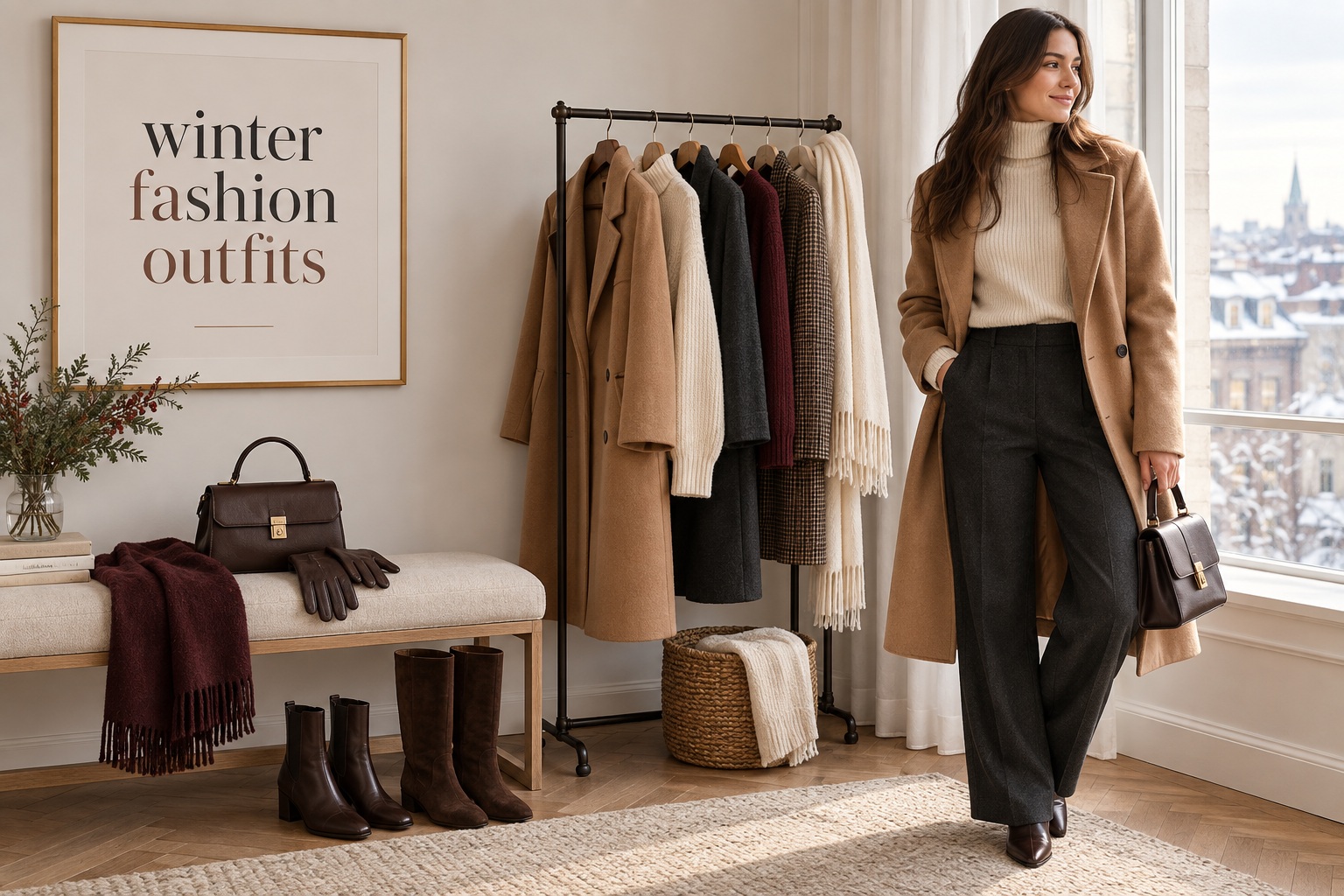
Winter fashion outfits are easiest to build when warmth and style are treated as connected decisions. Instead of piling on every thick piece you own, give each layer a job, decide where the outfit needs structure, and then add one detail that makes it feel like you. That approach works for a cold commute, a casual weekend, a long office day, or a dinner when you still have to walk outside.
This guide gives you a repeatable way to get dressed. You will start with a simple three-layer system, then use it to create practical winter fashion outfits for different situations. The goal is not to copy one perfect look. It is to understand why a combination works, so you can swap in the coat, knit, trousers, skirt, denim, boots, or accessories you already like.
Why winter fashion outfits feel harder than they should
Winter dressing creates three competing problems. You need enough insulation to stay comfortable, enough room to move, and enough visual shape to avoid looking swallowed by fabric. A warm sweater can become awkward under a narrow coat. A beautiful shoe can be impractical on wet pavement. A dark outfit can be elegant, but it can also look unfinished when every piece has the same weight and finish.
The fix is to stop judging the outfit as a pile of individual items. Look at the relationship between the layers. A close-fitting base gives a generous mid-layer somewhere to sit. A structured outer layer creates a frame. A scarf, belt, bag, or polished boot then adds an intentional edge. Each item does not need to be dramatic. The combination needs to have a clear order.
Your wedding has a lot of moving pieces. Your plan can still feel composed.
Zarellea organizes guests, vendors, budget, and timelines in one shared space — so you can make decisions with clarity, not stress.
It also helps to separate the visible outfit from the weather system underneath it. On a mild day, a fine long-sleeve top may be enough beneath a blazer and wool coat. On a colder day, the same visual idea can include a thin thermal base, a fine knit, and a roomier coat. The styling remains consistent while the hidden layer changes.
Build every winter outfit with three jobs in mind
A dependable winter outfit has three layers, even when one of them is very subtle. Think of them as foundation, interest, and protection. This is more flexible than a strict rule about wearing exactly three visible pieces because the foundation can be a thermal top, the interest layer can be a shirt or cardigan, and protection can range from a tailored coat to a weatherproof puffer.
1. Choose a smooth foundation layer
The foundation sits closest to the body. Choose a fitted or semi-fitted long-sleeve top, fine turtleneck, lightweight mock neck, or thin thermal layer. It should feel comfortable when you reach, sit, and walk, but it should not create extra ridges beneath the next piece. Black, cream, navy, gray, and chocolate are easy starting colors because they disappear under most winter layers.
For truly cold conditions, a moisture-managing base can make the rest of the outfit more comfortable. The Girl Scouts of Maine layering guide separates moisture-wicking base layers, insulating layers, and protective shells for outdoor conditions. Use that functional logic even for everyday clothes, then choose a refined visible layer over it. The winter layering guide is useful when you need to adjust for colder temperatures.
2. Add an interest layer with texture or structure
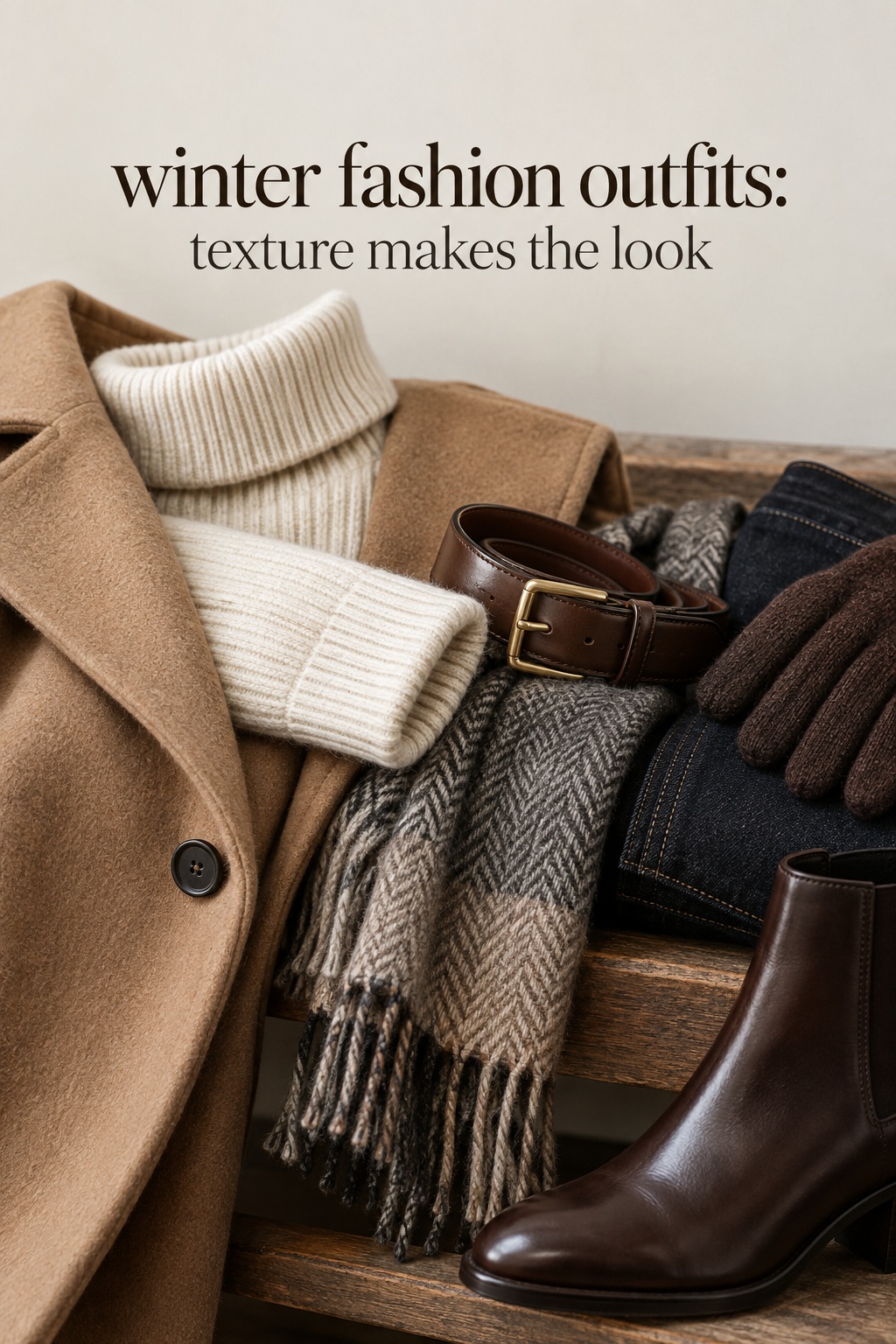
The interest layer is what keeps a practical outfit from feeling anonymous. Try a crewneck sweater, cardigan, sweater vest, button-down, blazer, quilted vest, or knit dress. You can use texture instead of color to create interest: ribbed knit against smooth denim, brushed wool against satin, or a crisp shirt under a soft sweater.
Pay attention to length. If the top is oversized, keep the bottom more streamlined or use a long, straight coat to create one uninterrupted line. If the trousers or skirt have generous volume, a closer top or shorter jacket can keep the outfit from becoming shapeless. Proportion is not about hiding your body. It is about giving the eye a place to pause.
3. Let the outer layer set the mood
The coat is often the first thing people see, so it should agree with the rest of the outfit. A tailored wool coat makes denim and knitwear feel more polished. A puffer supports leggings, straight jeans, cargo trousers, and weatherproof boots. A long relaxed coat can make a simple sweater-and-trouser combination look deliberate. A cropped jacket works best when the high waist or long leg line underneath is visible.
Check the armholes and shoulders before committing to a favorite coat. You should be able to wear your intended mid-layer without pulling or crushing the sweater. A coat that is technically warm but too tight will make the entire outfit look tense. A little extra room is useful, especially when you need to move between freezing streets and warm indoor rooms.
Winter fashion outfit formulas for real days
Once you understand the three jobs, outfit planning becomes faster. Start with the situation, choose the shoe that can handle it, and build upward. These formulas are intentionally flexible. Replace the listed color with your own palette and adjust the insulation underneath rather than abandoning the whole idea.
For everyday errands: fine knit, straight denim, and a practical coat
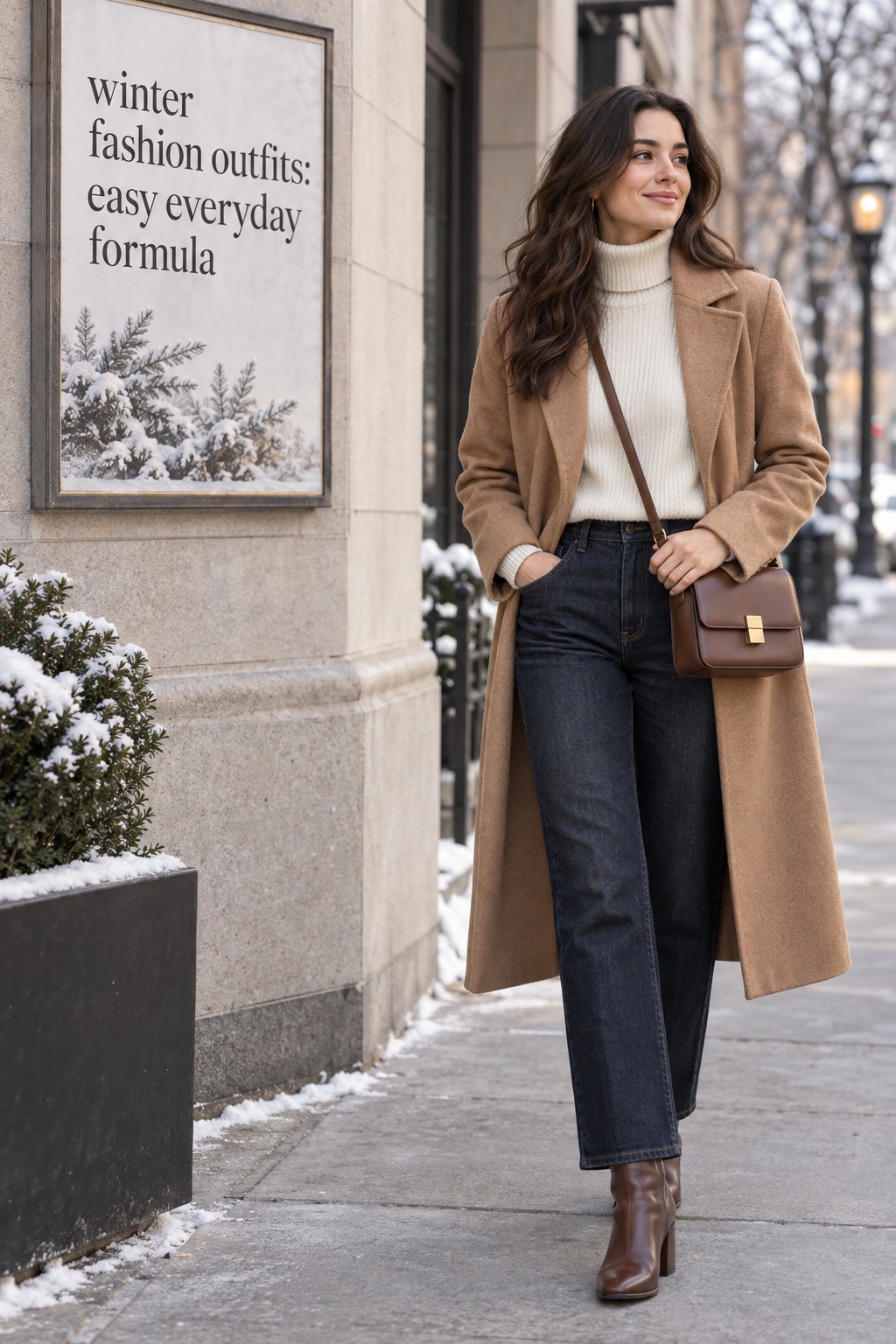
Wear a fine turtleneck or long-sleeve knit with straight-leg jeans, a mid-calf coat, and ankle boots with a stable sole. Add a crossbody bag so your hands stay free, then use a scarf to bring a second color near your face. This is one of the easiest winter fashion outfits because the silhouette is clear without feeling dressed up.
If the coat is oversized, choose a cleaner denim shape and keep the knit tucked or close to the body. If the jeans are wide, let the coat fall straight and show a little boot at the hem. These small adjustments make the same pieces feel balanced instead of bulky.
For work: shirt, knit, tailored trousers, and walkable shoes
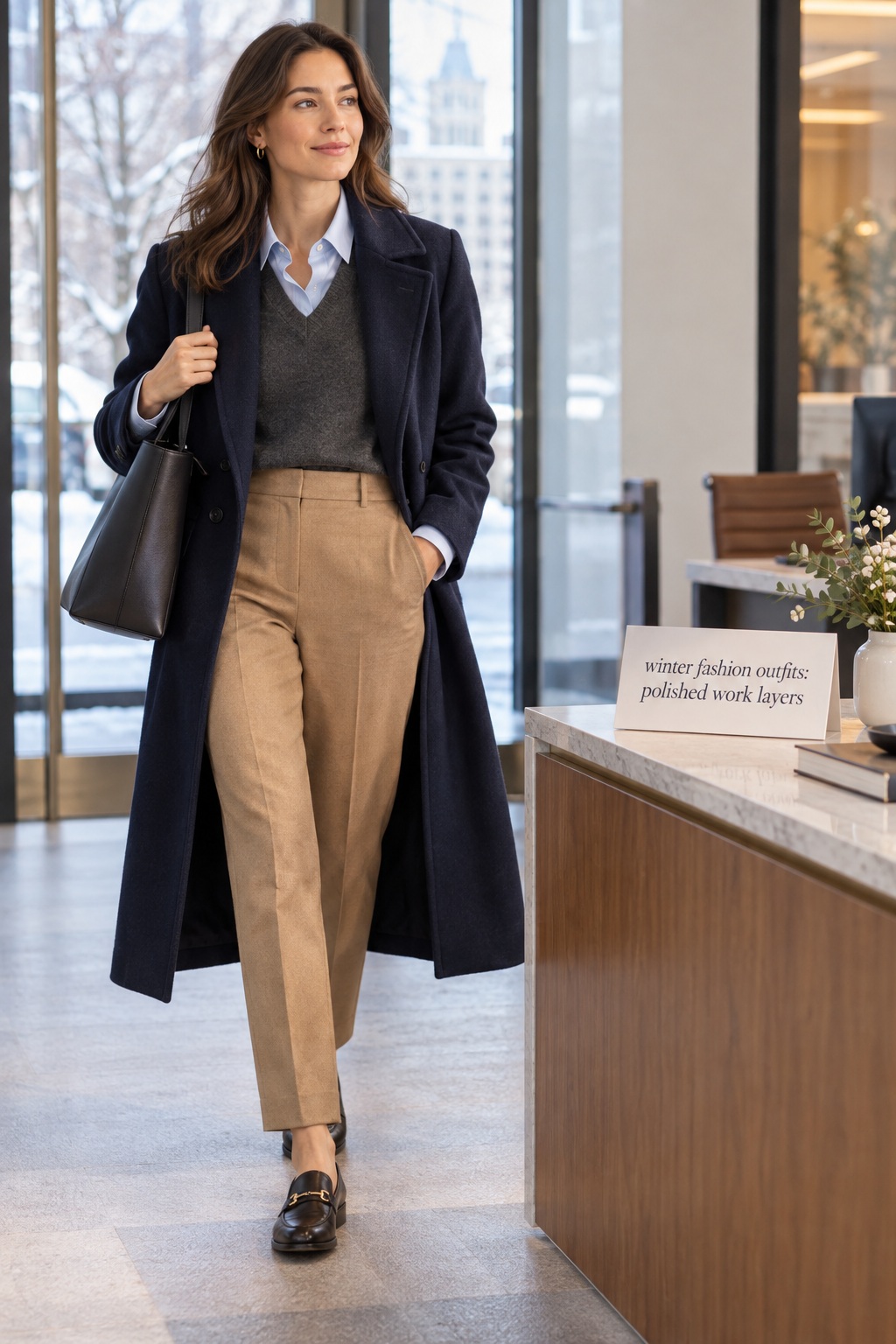
Layer a crisp button-down beneath a V-neck sweater or collarless blazer, then add tailored trousers and loafers or sleek ankle boots. Let the collar and cuffs show, but keep the rest of the outfit quiet. A burgundy scarf, colored sock, or structured tote can provide the point of contrast without turning the outfit into a costume.
This formula is especially useful when the commute is colder than the office. Wear a thin base layer under the shirt, carry a warm coat for the outside portion, and choose trousers that still drape when you sit. If snow or slush is likely, commute in weatherproof boots and change into a smarter pair at your destination.
For a relaxed weekend: hoodie or sweater, long coat, and sneakers
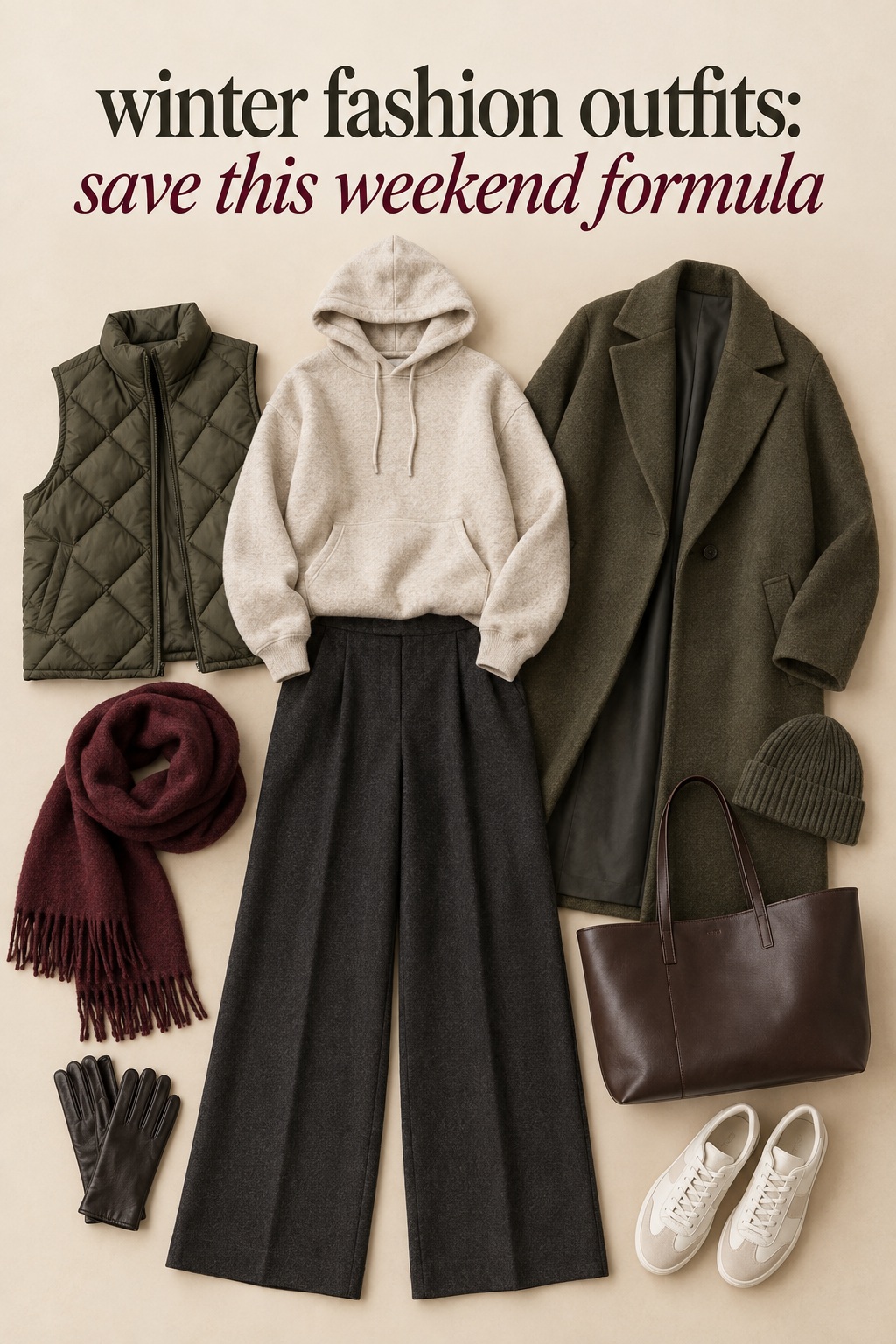
Pair a soft hoodie or relaxed crewneck with wide-leg trousers, dark denim, or a long skirt. Add a long coat and clean sneakers with a substantial sole. The contrast between a casual base and a more composed outer layer keeps the look comfortable but not careless. A beanie or canvas tote can make the outfit feel natural, while a leather bag or small hoop earrings adds a more finished note.
Keep the colors connected. For example, gray knitwear, dark denim, camel outerwear, and brown shoes create a calm palette. You can also use one brighter element, such as a red scarf or green bag, while keeping the rest neutral.
For a date or dinner: fine knit, satin or tailored bottom, and a sharp boot
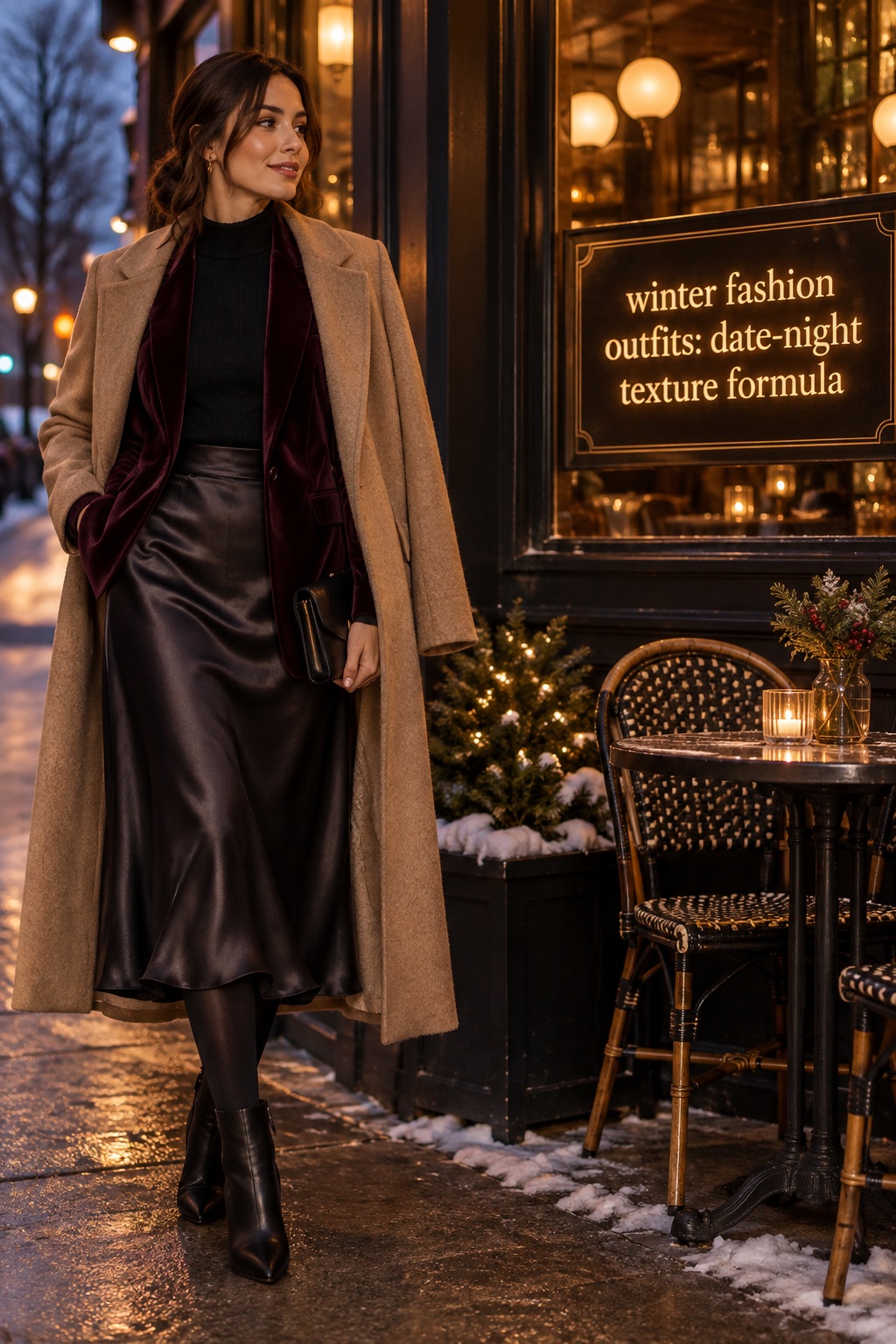
Winter fashion outfits for evenings do not need to rely on a bare dress and delicate shoes. Try a fine black or ivory knit with a satin midi skirt, tailored wide-leg trousers, or dark denim. Finish with a leather jacket, velvet blazer, or long coat and a pointed or polished ankle boot. Tights can add warmth beneath a skirt, while a small bag keeps the proportions light.
Use texture to signal evening. Satin, velvet, a subtle metallic finish, polished leather, or a sculptural earring can do more than a stack of accessories. Keep one area sleek so the outfit feels intentional rather than overloaded.
For a dress or skirt: close base, opaque tights, and tall boots
Wear a fine turtleneck under a slip dress, knit dress, or shirt dress. Add opaque tights and tall boots, then use a long cardigan, blazer, or coat as the middle or outer layer. The result feels feminine without ignoring the weather. A belt can define the waist if all the layers begin to look too straight, but it is optional.
For a shorter hem, make the boots and tights feel like one continuous line. For a midi length, decide where the boot ends and make that gap look deliberate. A coat that repeats the dress length can create a clean column, while a cropped jacket adds a more playful proportion.
Adjust the outfit for temperature, snow, and indoor heat
A good outfit formula should survive changing conditions. Start by adding warmth closest to the body, then add insulation, and only then change the outer shell. This preserves the visible styling while making it more practical. A thin thermal under a fine knit usually looks cleaner than forcing one enormous sweater under a coat that cannot close.
- For cool but dry days, use a long-sleeve base, one mid-layer, and a wool coat or light puffer.
- For freezing commutes, add a thin thermal top, warm socks, gloves, and a scarf before adding another bulky sweater.
- For snow or slush, prioritize weather-resistant boots with grip and a coat that protects the areas exposed to wind and moisture.
- For overheated offices, choose removable layers: a fine knit, cardigan, vest, or scarf rather than one heavy piece.
- For windy weather, close the gaps at the neck and wrists. A good scarf and gloves can change the comfort of the same outfit.
Natural fibers can be comfortable and breathable, but no single material solves every weather problem. Wool or cashmere can feel warm without becoming clammy, while technical insulation and water-resistant shells can be more useful in wet, windy conditions. Think about the actual forecast and your time outside rather than choosing fabric based only on how luxurious it sounds. For snow-day footwear and base-layer reminders, this practical snow dressing guide is a useful reference.
Common winter styling mistakes and quick fixes
Too many thick layers
If the coat will not close or your arms feel trapped, remove bulk from the middle first. Swap a chunky sweater for a fine knit and add warmth underneath. The outfit will often look more polished and feel warmer because the outer layer can sit correctly.
Every item has the same texture
A head-to-toe soft outfit can look flat even when the pieces are beautiful. Add one crisp surface, such as a shirt collar, leather belt, smooth boot, or structured bag. You can also contrast a fluffy knit with a straight trouser or a matte coat with a subtle satin skirt.
The shoes ignore the day
Shoes determine whether winter fashion outfits feel believable. Use sneakers for dry, relaxed walking; lug-soled boots for wet streets; loafers for indoor work days; and polished ankle boots for dinners or events. If the ideal shoe is not weatherproof, separate the commute shoe from the destination shoe.
The color palette is too accidental
You do not need a monochrome outfit, but you do need a relationship between the colors. Repeat one shade in two places, such as a burgundy bag with a burgundy stripe in the scarf. Or use a neutral bridge, such as cream, gray, navy, or brown, to connect a brighter top and coat.
FAQ
What is the easiest winter fashion outfit to start with?
Start with a fine turtleneck, straight-leg jeans, a mid-calf coat, and ankle boots. Add a scarf and practical bag. It is simple enough for errands, but the coat and accessories give it a finished shape.
How can I look stylish in winter without feeling bulky?
Use a thin base layer, one insulating mid-layer, and an outer layer with enough room at the shoulders. Keep one part of the silhouette close to the body, and add warmth through socks, gloves, a scarf, or a fine thermal instead of only adding thick sweaters.
What should I wear with a winter dress?
Try a fine turtleneck underneath, opaque tights, and tall boots. Add a cardigan, blazer, or long coat depending on the temperature. Repeat one color between the tights, boots, or coat to make the layers look connected.
How do I make a casual winter outfit look more polished?
Keep the casual base, such as a hoodie, jeans, or leggings, but add one structured element. A tailored coat, leather bag, clean boot, or crisp scarf can give the outfit direction without making it uncomfortable.
What shoes work best for winter fashion outfits?
Choose based on the ground and the occasion. Weather-resistant boots with grip are best for snow and slush. Ankle boots, loafers, and clean sneakers work for dry everyday wear, while a pointed boot or sleek knee-high boot can make a dressier outfit feel finished.
How can I dress for a warm office after a cold commute?
Choose removable layers rather than one very heavy sweater. Wear a thin base, shirt or fine knit, and a coat for the commute. Carry a scarf and gloves outside, then remove the coat and one layer indoors. A separate pair of office shoes can also make the transition easier.
How do I make winter outfits look less dark?
Keep the foundation dark if you like, then add lightness near the face with an ivory knit, cream scarf, or pale shirt. You can also use one saturated accent, such as red, green, or cobalt, while keeping the coat and shoes neutral.
Leave a Reply