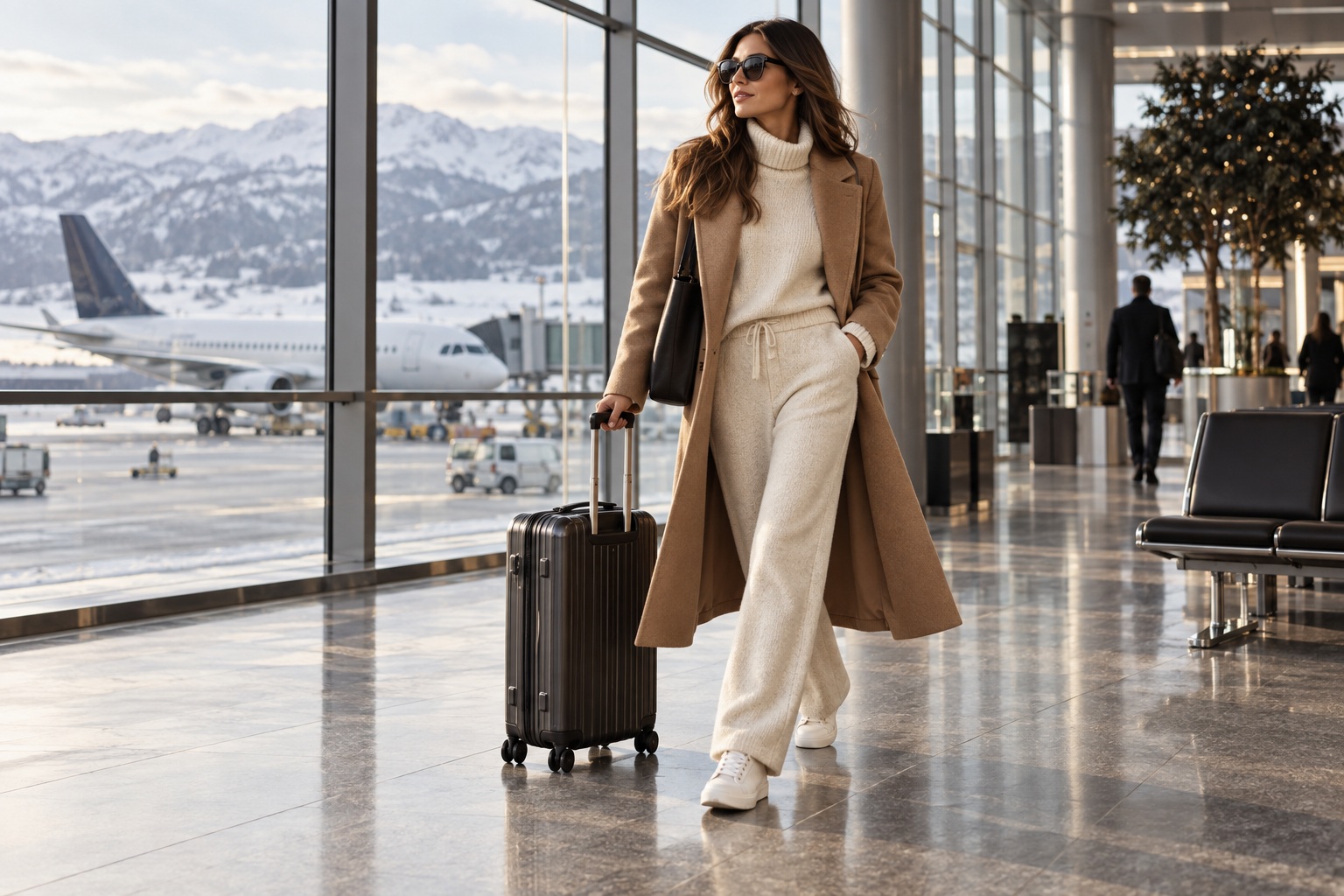
A winter airport outfit has a surprisingly long shift. It starts outside in the cold, gets tested in a security line, spends hours under cabin lights, and may carry you straight into a destination. Dressing for only one of those moments is why a warm commute can turn into an overheated terminal or a polished arrival look can become uncomfortable before takeoff. A small travel capsule solves the problem by giving every layer a job.
Instead of planning a new look for every trip, choose a few pieces that work together: one comfortable base, one top layer, one weather layer, and shoes that suit the route. Then adjust the combination for your flight length and what happens after landing. The goal is to feel like yourself throughout the journey, not to dress as if the airport were a photo shoot.
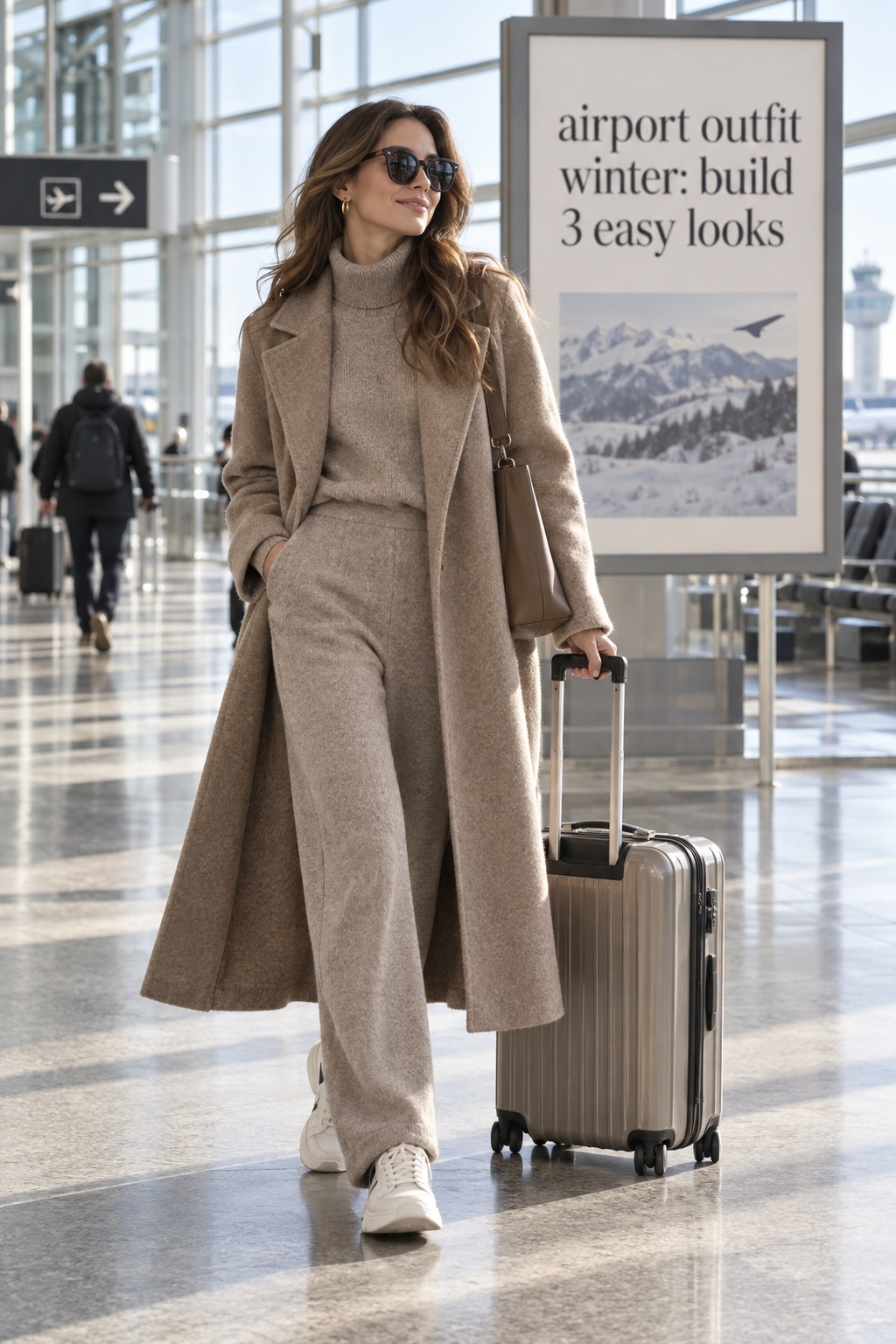
Use the ideas below as a capsule system. You can start with clothes you already own, repeat the same reliable foundation, and make a small change when the destination or itinerary calls for it.
The winter airport capsule: four pieces with separate jobs
A useful capsule is not a fixed uniform. It is a short list of pieces that solve different parts of the travel day and coordinate without much thought. When each item has a purpose, you can change one element without rebuilding the entire outfit. Begin with the layer closest to your skin, then add pieces that are easy to remove or carry.
Your wedding has a lot of moving pieces. Your plan can still feel composed.
Zarellea organizes guests, vendors, budget, and timelines in one shared space — so you can make decisions with clarity, not stress.
Start with a base that stays comfortable while seated
The base usually consists of a top and a bottom, though a knit dress can fill both roles. Look for a waistband, neckline, and fabric that feel comfortable when you sit for a while. Soft trousers, relaxed jeans with room to bend, ponte pants, or leggings can all work. A fine knit, long-sleeve tee, or breathable blouse can sit underneath a sweater or jacket. The best choice depends on what you already enjoy wearing.
Before travel day, try the outfit sitting down. Check that the waistband does not dig in, the top does not ride up when you reach overhead, and the fabric is not itchy against your skin. Notice whether pockets or closures press uncomfortably when you lean forward. These small checks are more useful than choosing a piece just because it looks relaxed on a hanger. If denim feels stiff after an hour, save it for a shorter trip and use a softer trouser for a long flight.
Add a removable middle layer
A cardigan, quarter-zip, overshirt, or fine sweater gives you warmth that can be adjusted without changing the base. Favor a layer that opens easily or can be tied over your shoulders when you warm up. A bulky pullover may feel cozy at the curb but become awkward to remove in a crowded row. A lighter middle layer is easier to manage at the gate and can double as an extra cover during the flight.
Think about what the layer looks like on its own. You may wear it while walking through the terminal, so it should feel presentable without the coat. A neat collar, clean hem, and a color that connects with your trousers make a simple base look intentional. If you prefer a matching set, the top can be worn zipped or open over a tee, which gives the outfit two visual versions without adding another garment.
Choose one outer layer and one dependable shoe
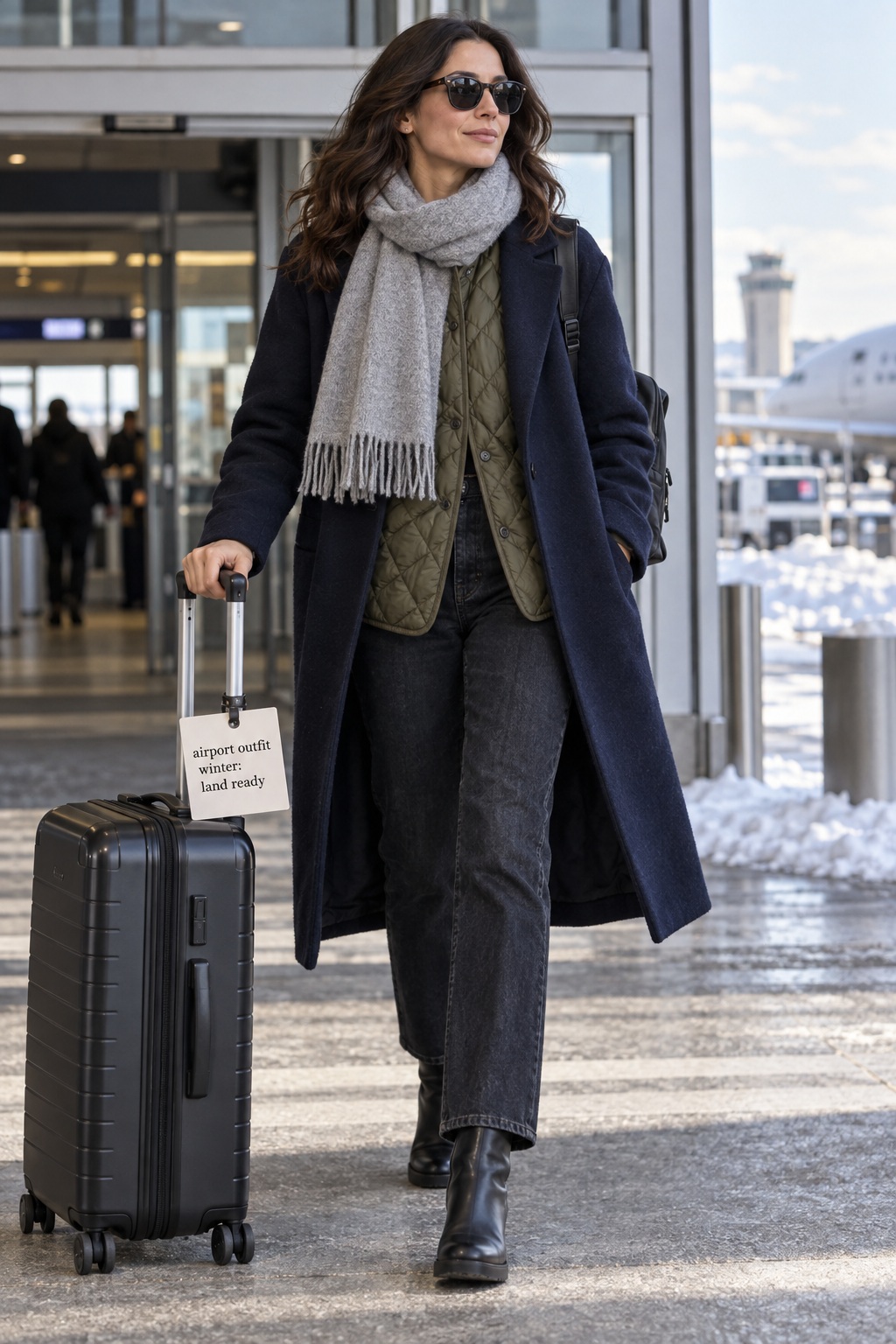
Your coat handles the coldest part of the route. A long wool coat creates a clean line over knitwear or tailored trousers; a lighter quilted layer can be easier to pack or wear in a milder winter. Pick a coat with room for the sweater you plan to wear underneath, and make sure its length works with your bag and the way you move. If the coat is cumbersome once you reach the terminal, consider a less bulky outer layer and let the removable middle layer do more work.
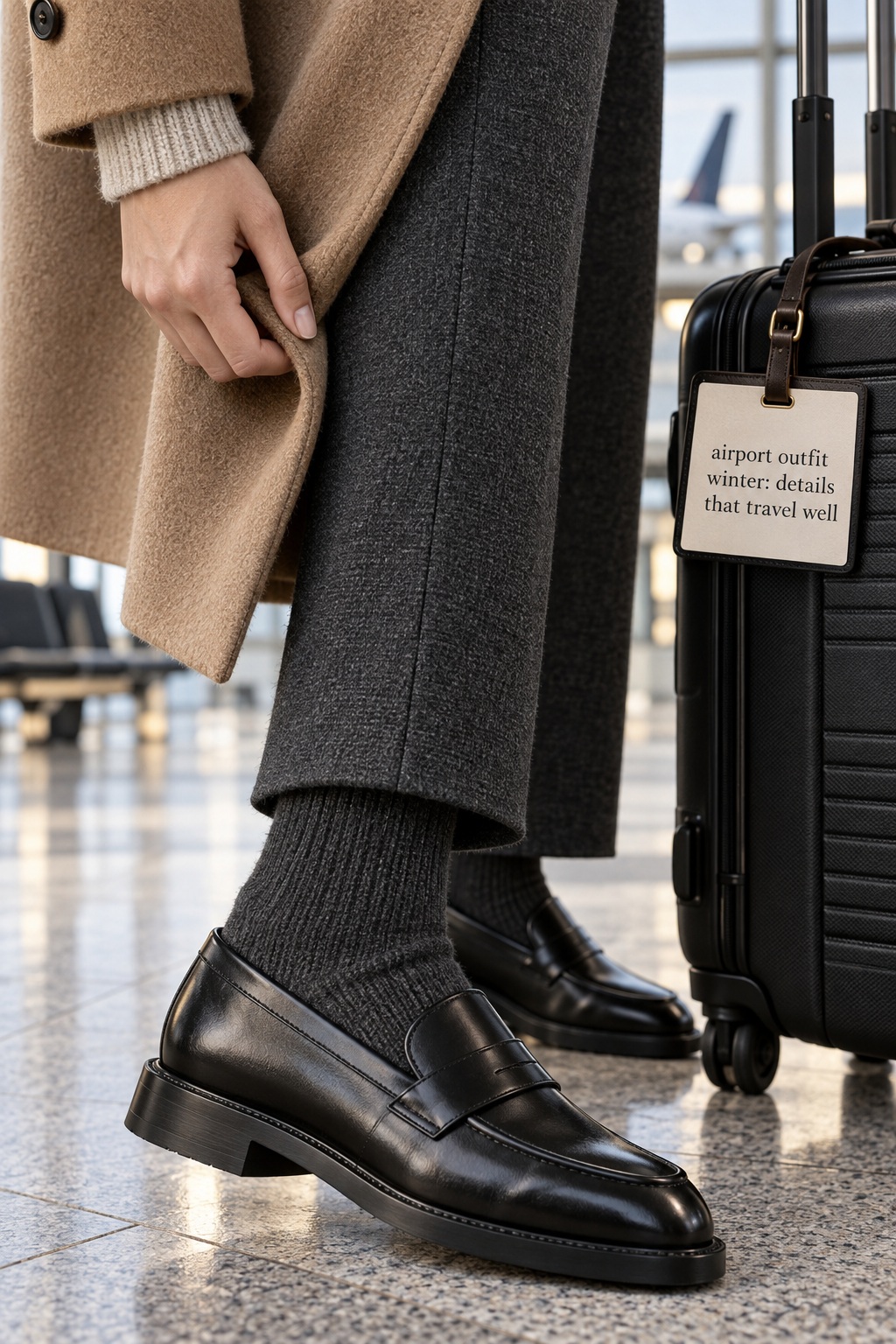
Shoes should feel secure for walking and simple to handle if you need to take them off. Clean sneakers are an easy choice with jeans, knit trousers, or a matching set. Loafers and flat boots can make the same base feel more polished. If you choose boots, check that they are comfortable to sit in and easy to loosen. A beautiful shoe that needs constant attention will distract from the rest of the look.
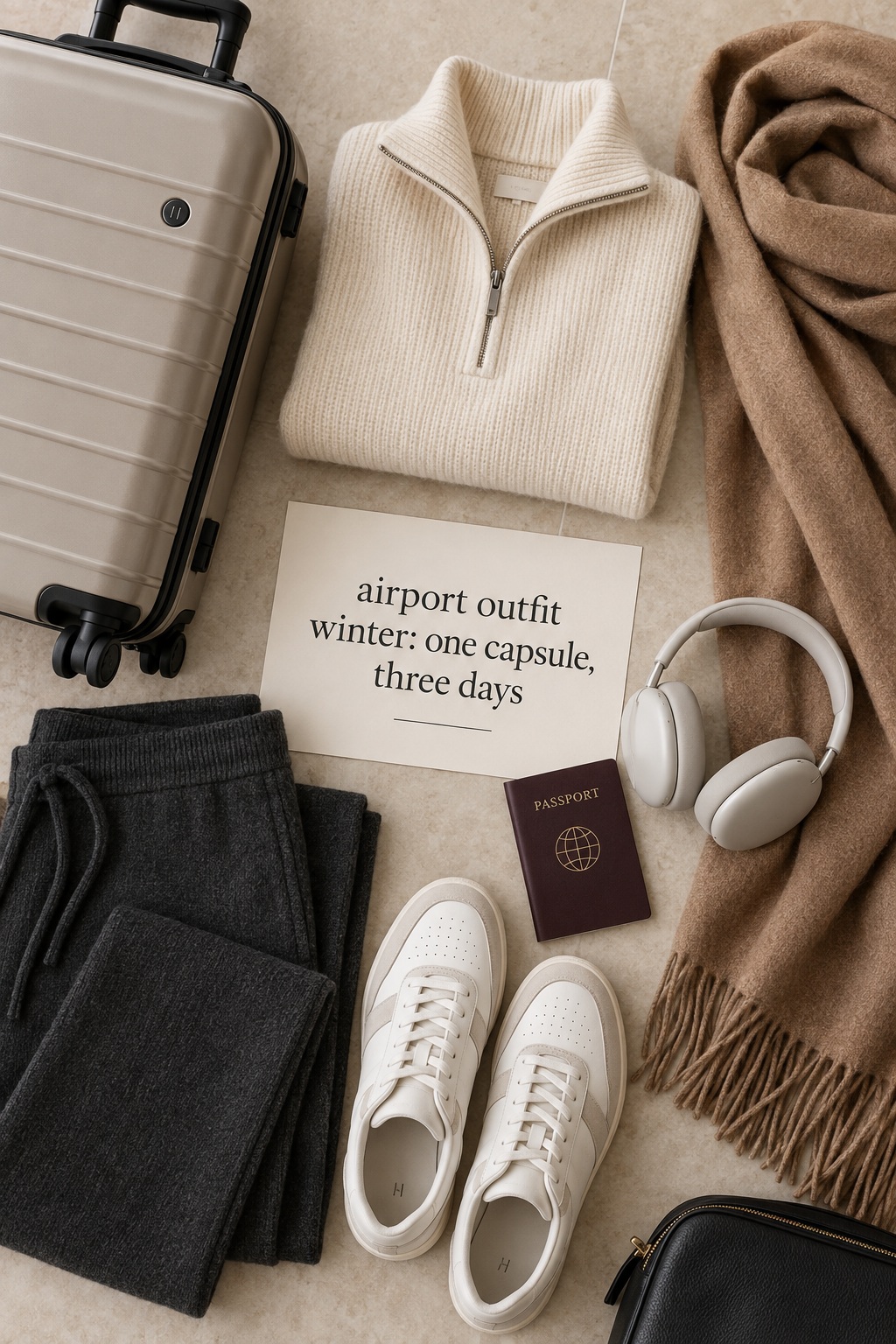
Keep the capsule within one color story, such as charcoal, cream, and camel, or navy, gray, and burgundy. Repeating a color between the top, bag, or outer layer makes the pieces look related. You do not need every item to match. A consistent palette simply helps the outfit look composed when you take off a layer or carry it over your arm.
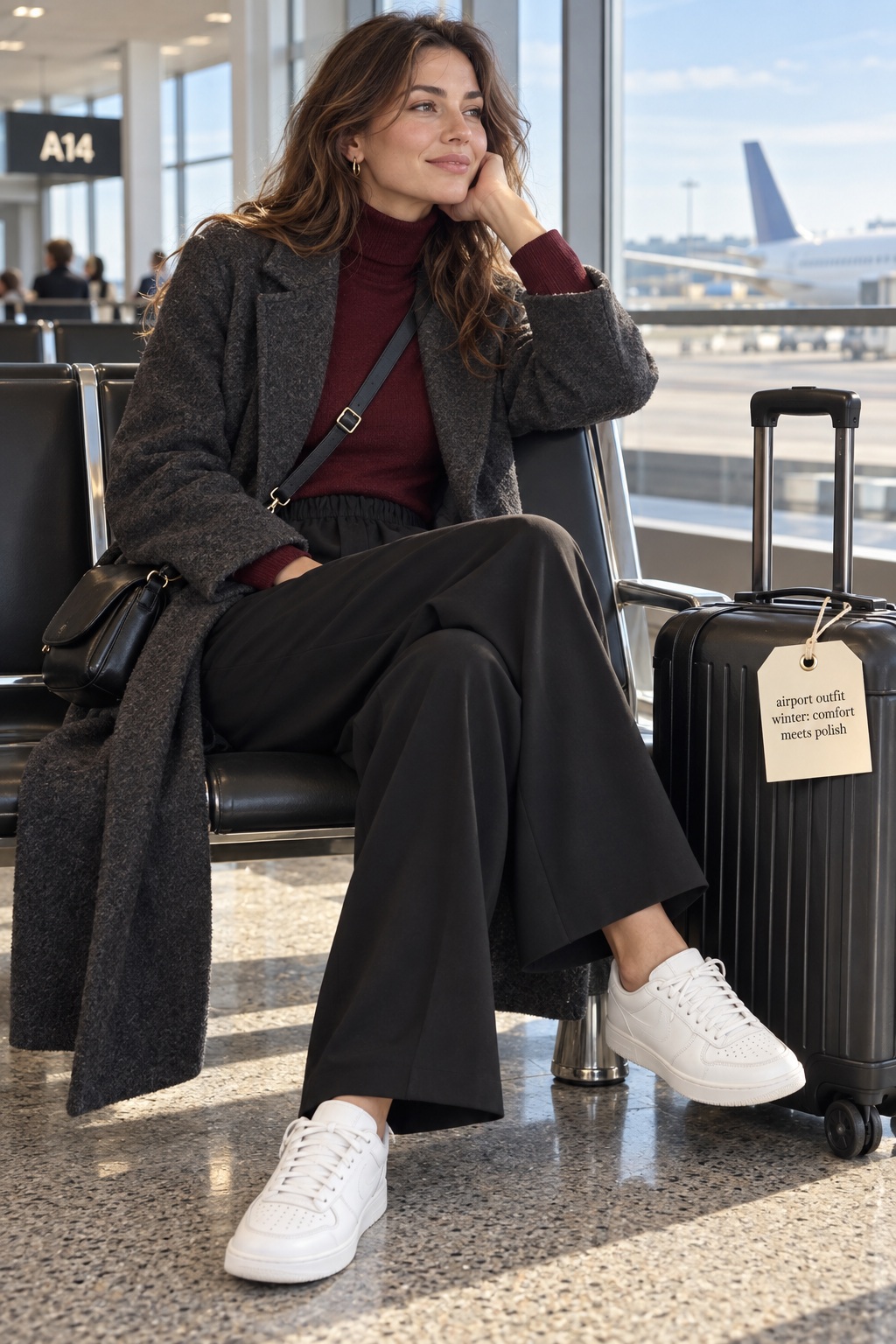
Build three airport outfits from the same capsule
Once the core pieces work together, use the itinerary to decide which ones to wear. The combinations below are starting points, not shopping lists. Swap in similar items from your closet, keep the same base when it suits you, and change the layer or shoe to match the trip. The capsule works best when it reduces decisions rather than adding rules.
For a short flight, keep the shape relaxed and simple
For a short trip, pair straight-leg jeans or relaxed trousers with a long-sleeve tee, a cardigan or overshirt, and sneakers. Add a coat for the trip to the airport and a small crossbody for the things you want close at hand. This outfit is easy to wear beyond the terminal if you are heading to a cafe, hotel, or casual plan after landing. A belt or small earring can add polish without making the look feel overdone.
If you would rather wear a matching knit set, let the silhouette provide the structure. A clean sneaker, simple coat, and compact bag keep the set from reading as sleepwear. You can also wear a fitted tee under an open cardigan to break up the matching pieces. Keep the overall outline easy to move in, especially if you expect to walk between gates or carry your own bag.
For an overnight or longer flight, plan for comfort over time
For a longer journey, choose a soft base that stays comfortable after hours of sitting. Knit trousers or leggings with a longer top and a zip cardigan can feel relaxed while still looking deliberate. A scarf or soft wrap adds another adjustable layer and can be folded into your personal item when you do not need it. Avoid a complicated outfit with pieces that need to be retied, tucked, or adjusted every time you stand up.
Keep the most useful items easy to reach. A cardigan that opens in front is simpler to take off than a snug pullover. A crossbody or tote with an organized pocket can hold small essentials, while the main bag stays closed. Choose a top that feels comfortable against your skin and trousers that do not restrict bending. These details help the outfit work through waiting, sitting, and getting up again without turning the look into a collection of travel gear.
For a direct-to-plans arrival, sharpen one piece
If you are going directly from the airport to lunch, a meeting, or a casual event, keep the same comfortable base and make one element more structured. Swap a sweatshirt for a fine knit or blouse, or wear relaxed trousers with a soft blazer. A clean coat and a pair of polished loafers can make the combination feel ready for the next stop without sacrificing ease on the plane. You do not need to dress formally from head to toe to look considered.
Consider the transition before you leave home. If you can change one top in a restroom or at your destination, pack it where it is reachable. If you will not have that option, choose a base that already fits the arrival setting. A small accessory, such as a belt, scarf, or earrings, can shift the mood, but do not rely on accessories to rescue a base that feels wrong for the plan.
For any combination, take a quick mirror photo with the coat both on and off. The two versions are the looks you will actually wear. If one feels incomplete, add a deliberate finishing detail or reconsider the proportions before packing. This simple check helps the outfit read well through the full sequence rather than only in the doorway at home.
What to prioritize when adding a travel piece
You do not need to buy a dedicated travel wardrobe. If you are adding one item, choose it by the problem it solves and how often you can wear it outside the airport. A piece that coordinates with several clothes you already own is more useful than an item that only completes one carefully styled look. Start by identifying where your current outfit becomes inconvenient: the waistband, the temperature change, the shoes, the bag, or the arrival plan.
Prioritize comfort, movement, and easy care
Try the piece in the positions your day will require. Sit, stand, reach, and walk in it. Look for a waistband that stays comfortable, sleeves that do not bunch under a coat, and fabric that does not require constant smoothing. Check the care label before you choose a delicate knit or fabric that needs special handling. A travel favorite should be straightforward to clean and comfortable enough to repeat, rather than precious enough to worry about all day.
Consider how easily the piece combines with your existing layers. A top that fits under a coat and also looks finished without it has more uses than a one-purpose statement piece. Trousers that work with sneakers and loafers can cover casual and slightly dressier plans. If your closet leans toward dark basics, a lighter knit or scarf may provide enough contrast. If you wear mostly neutrals, a colored sweater can become the focal point while the rest stays simple.
Make security and bag access part of the outfit
Think through the moments when you need your hands free or an item quickly. A bag that stays close to your body can be easier to manage in a line than a loose shoulder bag that slips down. Pockets are helpful for a phone or boarding pass, but they should not make the silhouette bulky. Keep jewelry uncomplicated if you prefer to move through screening with fewer things to remove. These are convenience choices, not a dress code; use the approach that fits your own travel routine.
Footwear deserves the same practical test. If you favor boots, choose a pair you can take off and put back on without a struggle. If you prefer sneakers, make sure the laces are not so complicated that they slow you down when you are carrying other things. A simple shoe can still look polished when it is clean and in good condition. You can make the rest of the outfit more expressive through color, knit texture, or a coat with a defined shape.
Choose repeat wear over one-trip styling
Before adding an item, name at least three ways you would wear it: on a travel day, for an ordinary winter day, and with a different bottom or layer. If you can only imagine one airport outfit, the item may be too specific for a small capsule. This does not mean every piece must be plain. A textured sweater, patterned scarf, or distinctive coat can still earn its place when it works with several combinations.
Keep the palette and proportions in mind. A cropped jacket may work with high-rise trousers but not with every top you own. A long cardigan may be comfortable but compete with a long coat. Lay the pieces together before buying and check the full length from shoulder to hem. When the capsule is compact, each layer should complement the others rather than repeat the same job.
Style inspiration can be helpful, but exact products and celebrity looks are not necessary to create a functional airport capsule. Start from the clothes that fit your routine, then identify a genuine gap. A soft middle layer may help more than another pair of trousers; a reliable sneaker may solve more than a new bag. Spend attention on the piece that changes how the whole outfit works.
Adapt the capsule to the route and destination
Winter travel does not mean the same thing for every route. You might leave a cold home and arrive somewhere mild, travel between two cold places, or spend much of the day indoors. Rather than dressing heavily for the entire journey, use removable layers and decide what you need at each stage. Your coat is a route layer; your base is the outfit you will wear after the outerwear comes off.
For cold departure and a milder arrival
Wear the coat and scarf for the trip from home, then place them in an easy-to-reach part of your carry-on or keep them with you if you will need them again on the return. Underneath, choose a lighter base that will feel comfortable when you reach the warmer destination. A long-sleeve tee with relaxed trousers and a cardigan gives you options without requiring a complete outfit change. If you expect to change clothes after landing, pack that change in a separate pouch so it is easy to find.
Try not to make the coat the only source of warmth. A removable middle layer lets you adjust during the trip, while a lighter base avoids trapping too much heat once you arrive. If you are carrying the coat for a while, choose one you can fold over a suitcase handle or wear comfortably over your arm. The important point is to think about where the layers go after they come off.
For a cold arrival or time outdoors
If you will step outside soon after landing, keep the weather layer accessible rather than buried under everything else. A coat with room for a sweater, a scarf, and shoes suitable for the expected route make the transition easier. If your airport-to-destination trip includes walking, consider whether your shoes are comfortable for the full distance and whether the hem of your trousers works with them. These choices can be practical and still look cohesive.
For a trip that includes both indoor and outdoor plans, it can help to separate what you wear from what you carry. A compact hat or gloves can go in the outer pocket of a bag, while a bulky coat stays on until you reach the terminal. Avoid adding multiple heavy layers that all need to be removed at once. One structured coat, one adaptable middle layer, and a comfortable base usually make the outfit easier to manage than several overlapping sweaters.
Let the return trip shape what you wear
Think about the return as well as the departure. The easiest travel outfit is often one you can wear again without feeling as if you are repeating a costume. A neutral base, a washable tee, and a coat that coordinates with several bottoms give you flexibility if plans shift. If one part of the outfit is likely to be worn more than once, choose a fabric and color that remain easy to combine with the rest of your bag.
Pack a small backup layer only when it answers a real need. A spare top can be useful when you expect to go directly somewhere after landing; an extra sweater may be unnecessary if your cardigan already does the job. Keep the outfit system simple enough that you can remember it next time. When a combination feels good, note the pieces and the conditions that made it work, such as a short flight, a cold curbside, or an arrival with no time to change.
The best airport outfit is ultimately a repeatable decision. Choose a base that lets you sit and move, add layers you can remove, and finish with footwear and a bag that suit your route. Keep the color story connected and let one piece provide personality. That small winter capsule gives you room to feel comfortable, look considered, and arrive ready for whatever comes next.
FAQ
What should I wear to the airport in winter?
Start with a comfortable top and bottom, add a removable middle layer, and wear a coat suited to the coldest part of your route. Sneakers, flat boots, or loafers can finish the outfit depending on your plans. Choose clothes that feel good when sitting and walking, and keep the layers easy to take off or carry.
Can I wear jeans on a winter flight?
Yes, if the jeans feel comfortable while seated and allow you to bend and move. Relaxed or straight-leg styles can be easier for a long travel day than a rigid fit. Pair them with a soft top and removable sweater, then use the coat to handle the cold outside the terminal.
How do I stay comfortable when the airport and plane feel different?
Wear adjustable layers rather than one very heavy outfit. A tee or fine knit under a cardigan or overshirt gives you a way to adapt as you move between spaces. Keep a scarf or wrap accessible if you want another layer, and choose a coat that can be removed without disrupting the clothes underneath.
What shoes are easiest for winter airport outfits?
Clean sneakers, flat boots, and loafers are all useful choices. Pick a pair that feels secure for walking and is manageable to remove if needed. For a cold or wet route, a practical boot may make more sense; for a milder day or a polished arrival, sneakers or loafers can work well.
What should I wear if I am flying from a cold place to a warm one?
Wear a lighter base under a coat and removable sweater. Keep the coat and any accessories you will need for the return easy to carry, and consider packing a change of clothes if you want to switch after landing. The aim is to stay comfortable at departure without wearing every warm layer for the entire trip.
How can I look polished in comfortable travel clothes?
Use a coordinated color palette, keep the clothes neat, and add one structured piece such as a coat, overshirt, or blazer. A clean shoe and a bag that fits the outfit also help. You can keep a relaxed silhouette; thoughtful proportions and one finishing detail are often enough to make it look intentional.
Do I need a separate airport wardrobe?
No. Build a small capsule from clothes you already wear and add a dedicated piece only if it solves a recurring problem. A comfortable base, a useful layer, a coat, and dependable shoes can create several combinations. Prioritize repeat wear and easy care over items that only work for one trip.
Leave a Reply