The real challenge behind summer corporate outfits
Some wardrobes become unexpectedly difficult the moment temperatures rise. A tailored office look that feels polished in cooler months can quickly become heavy, restrictive, or visibly uncomfortable in summer, yet the expectations of a corporate environment rarely soften simply because the weather has changed. That tension is what makes summer corporate outfits such a persistent dressing problem: you need professionalism, ease, structure, and comfort at the same time.
The difficulty is not only about heat. It is also about proportion, fabric behavior, commute realities, office air conditioning, long workdays, and the subtle line between relaxed summer dressing and corporate polish. The most effective answer is not to abandon tailoring, but to rethink it with lighter textures, cleaner styling decisions, and silhouettes that move well through the day. This guide breaks down how to do exactly that, with practical outfit solutions and the styling logic behind them.
Why summer office dressing becomes complicated so quickly
Summer creates a split set of conditions that often work against each other. Outside, the priority is breathability. Inside, the priority may be coverage and structure because many offices run cold. Add a walk to the train, a humid commute, client-facing meetings, or a dress code that still expects a composed silhouette, and the result is a wardrobe decision that needs more thought than it appears to.
Comfort also becomes more visible in summer. If a fabric wrinkles too easily, clings in heat, or traps warmth, the entire outfit can lose its refined effect by midday. Likewise, pieces that seem practical in theory can feel too casual in a corporate setting once they are actually worn together. This is why summer office style is less about buying “summer clothes” and more about composing outfits that can absorb heat without losing authority.
Your wedding has a lot of moving pieces. Your plan can still feel composed.
Zarellea organizes guests, vendors, budget, and timelines in one shared space — so you can make decisions with clarity, not stress.
The balancing act every polished summer wardrobe needs
The central issue is balance: enough structure to read professional, enough softness to feel seasonal, enough coverage to remain office-appropriate, and enough lightness to stay wearable for a full day. A strong summer corporate outfit usually solves this through fabric choice first, silhouette second, and styling restraint third. That order matters. If the fabric is wrong, even the best silhouette struggles. If the shape is off, even beautiful summer materials can look unfinished. And if too many elements compete, the outfit loses the quiet precision that corporate dressing relies on.
The principles that make summer corporate outfits work
Good office dressing in warm weather is rarely dramatic. It is thoughtful. The most reliable looks are built from a few clear principles that can be repeated across different wardrobes, industries, and schedules. These principles are especially useful because they help you make decisions even when dress codes vary from formal corporate to modern business casual.
- Choose light fabrics with enough body to hold shape rather than collapse.
- Keep silhouettes clean so the outfit feels intentional, not improvised for the weather.
- Use layering strategically with one lightweight outer piece instead of multiple heavy ones.
- Rely on a controlled color palette to create polish even when the outfit itself is simple.
- Build around versatile separates that can move from commute to conference room without adjustment.
Fabric is the first decision, not the last
In summer, fabric determines whether an outfit merely looks corporate in the mirror or actually functions throughout the day. Lightweight materials that breathe and move away from the body are generally more effective than anything dense, overly synthetic, or stiff. At the same time, there must be enough structure for the garment to keep a tailored line. That is why a refined summer office wardrobe often feels slightly lighter in touch but not limp in appearance.
This is particularly important for suiting pieces, trousers, and skirts. A clean drape keeps the look composed, while a lighter hand helps with temperature control. The point is not to make every item airy and loose. The point is to use fabrics that can support a polished silhouette without making the wearer feel trapped in it.
Proportion creates polish when layers are reduced
Summer outfits often contain fewer layers, which means proportion becomes more visible. A sleeveless shell under a tailored blazer, straight trousers with a softly tucked blouse, or a defined midi dress with a precise shoe all rely on line and shape to look complete. When one element becomes more minimal, the others need to be more considered. Clean shoulders, a defined waist, balanced hem lengths, and trousers that neither drag nor cling all contribute to the quiet authority expected in a corporate setting.
A restrained palette often looks cooler and smarter
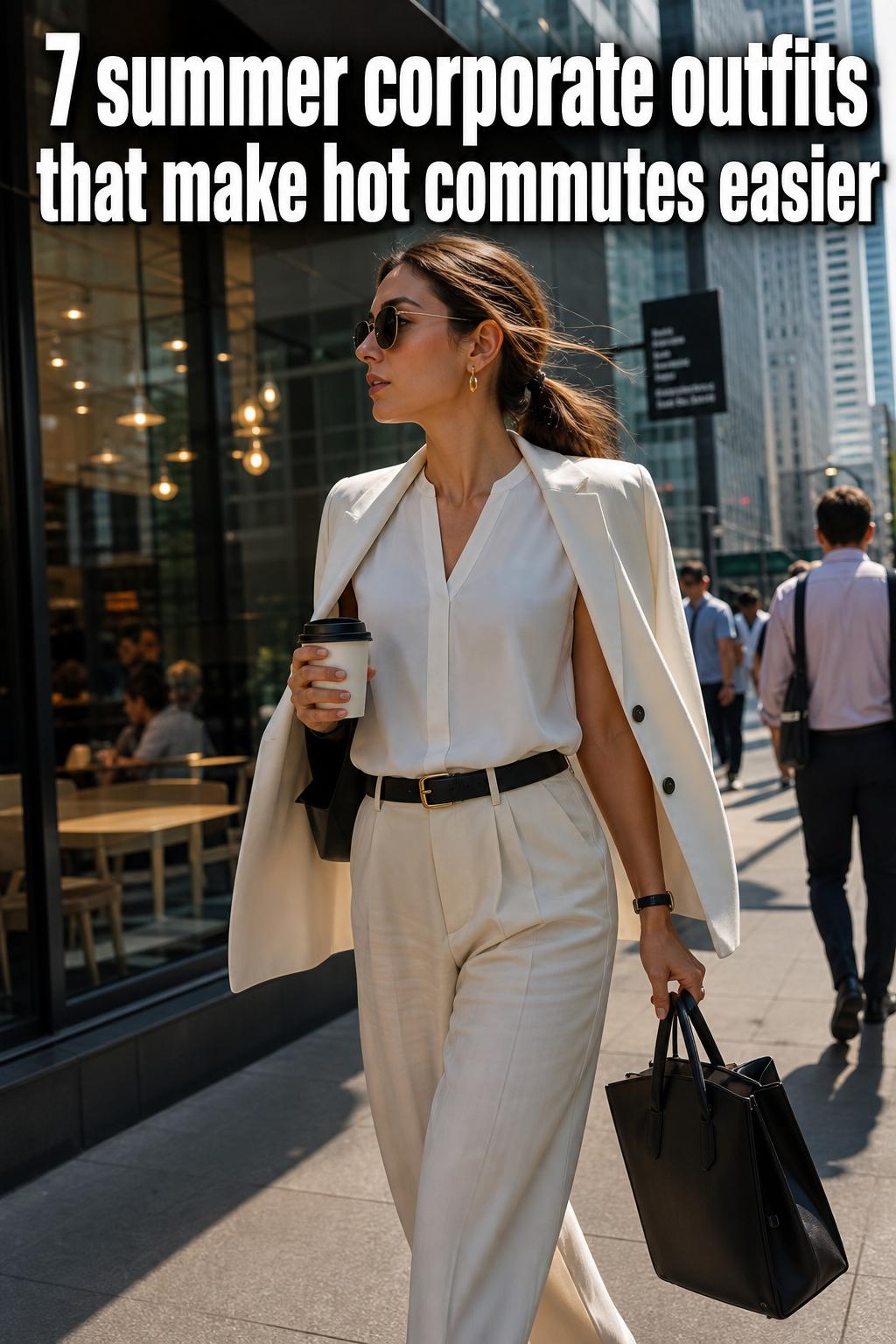
Summer can tempt people into treating office dressing as an extension of vacation style, but a corporate wardrobe usually benefits from discipline. Soft neutrals, deep navy, crisp white, muted stone, charcoal, and understated tonal combinations often read more refined than high-contrast novelty. That does not mean color has no place. It means color works best when integrated into a composed scheme rather than carrying the outfit alone. A modern summer corporate look often feels elevated because the palette is calm, allowing cut and texture to do the work.
What to prioritize when the office, commute, and weather all disagree
One of the least discussed realities of summer corporate dressing is that you may be dressing for three climates at once. The walk outside can be warm and bright, the commute crowded and humid, and the office heavily air-conditioned. This is why the best summer office outfits are adaptive rather than simply lightweight. They make room for variation.
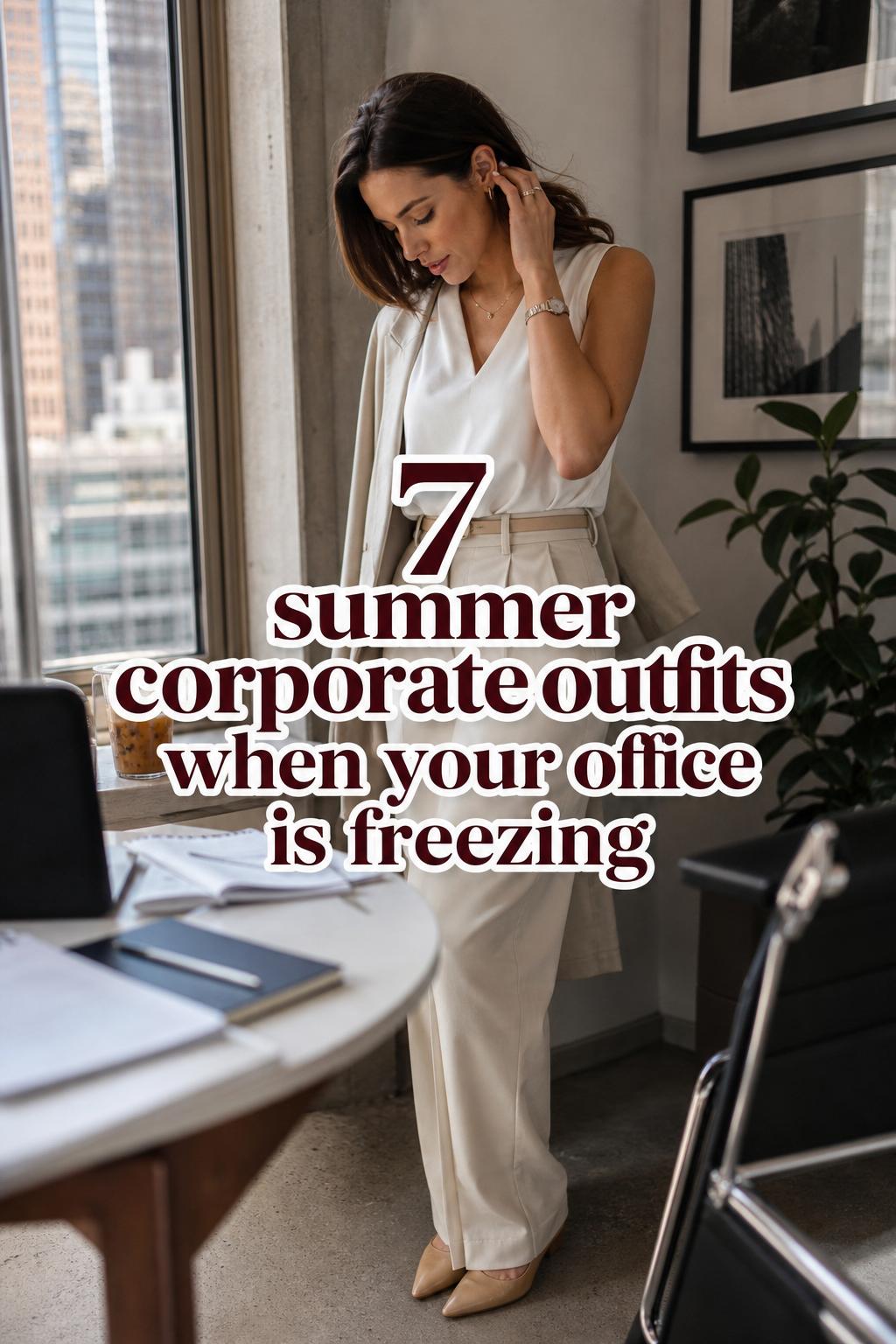
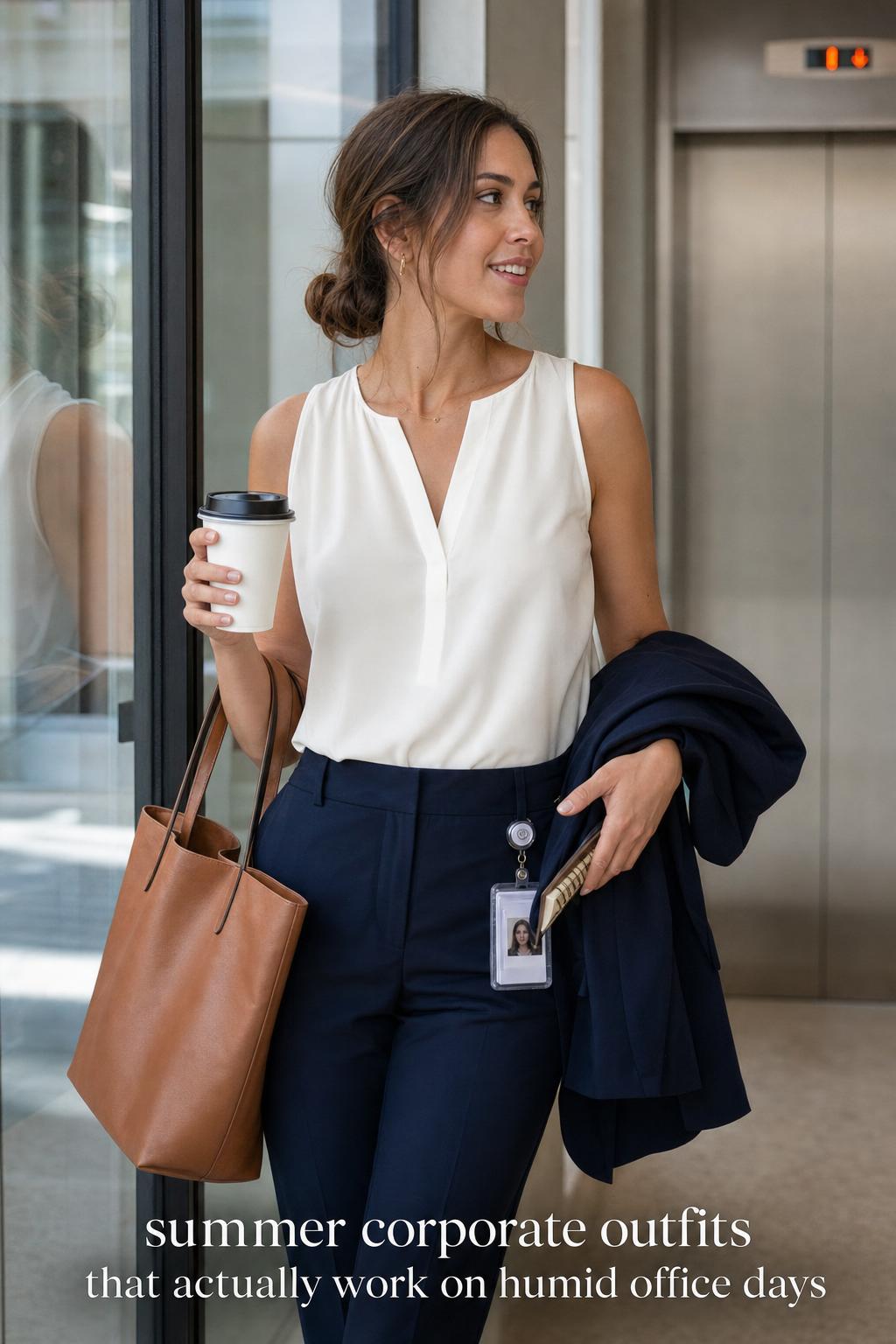
A useful approach is to anchor the look with a breathable base and add one structured layer that can be removed or put back on without disrupting the outfit. That base might be a sleeveless top with tailored trousers, a polished dress with clean lines, or a blouse in a light fabric paired with a skirt that allows movement. The outer layer should be intentional enough to finish the outfit, but light enough to carry comfortably when it comes off.
Tips for handling shifting temperatures
- Keep the innermost layer office-appropriate on its own so you do not rely entirely on a blazer.
- Choose one lightweight jacket or blazer with a clean shape instead of piling on extra layers.
- Select shoes that can handle walking as well as desk time, especially if your commute is long.
- Avoid overly tight waistbands or restrictive cuts, which feel more uncomfortable as the day warms.
Outfit solution: the lightweight tailored column
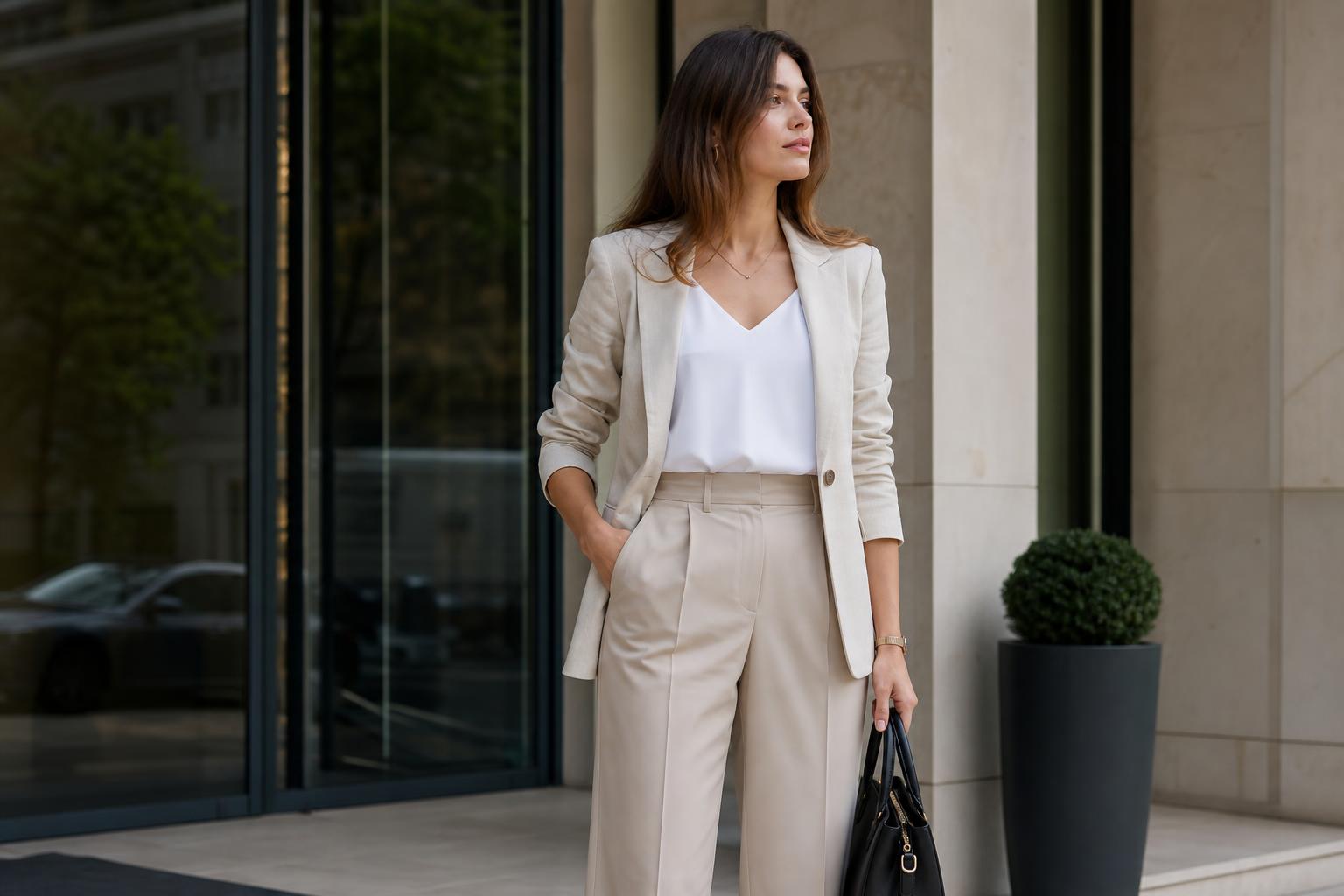
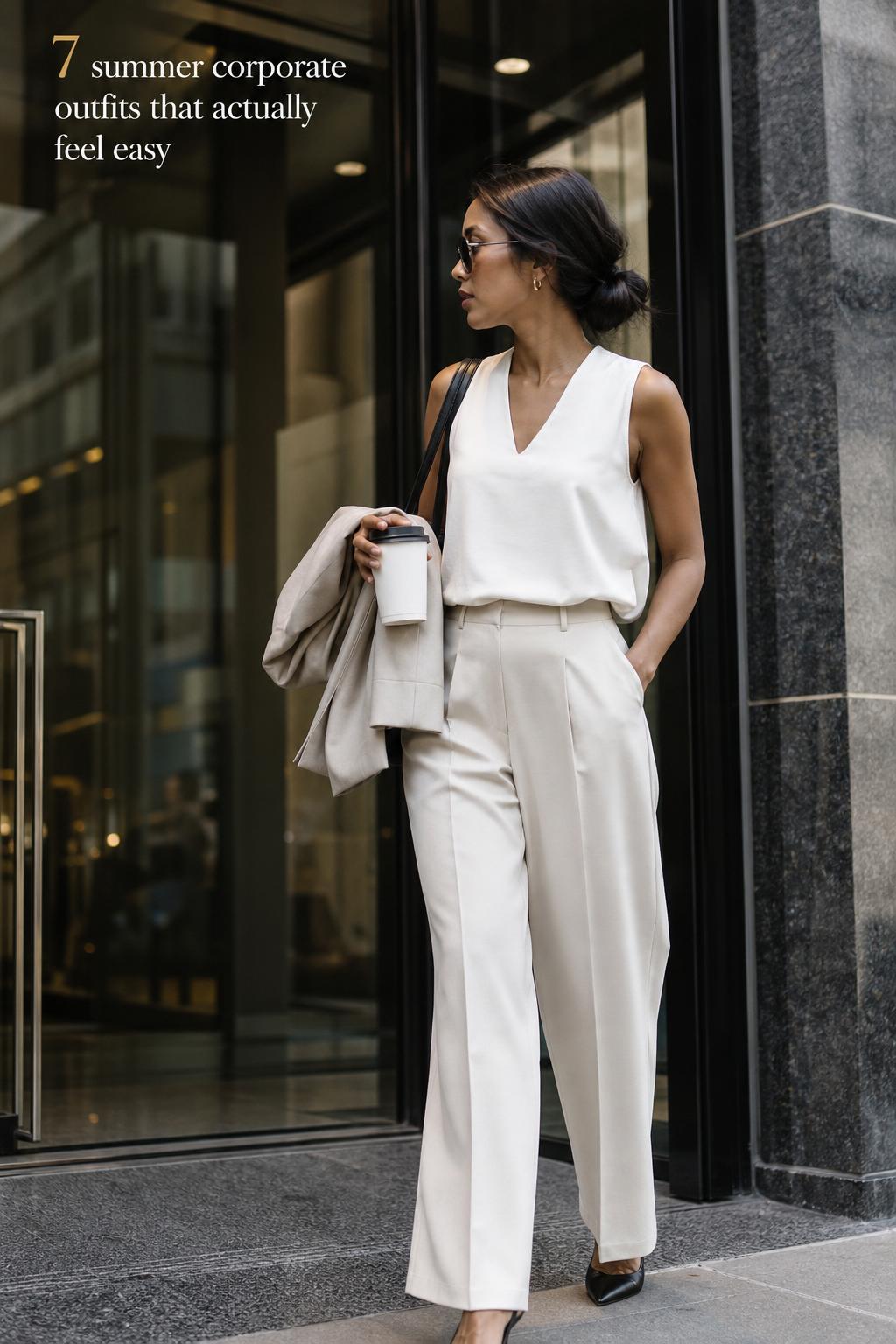
This is one of the most effective formulas for summer corporate outfits because it feels polished without requiring heavy styling. Start with straight or slightly wide tailored trousers in a light fabric and pair them with a tonal sleeveless shell or short-sleeved knit. Add a lightweight blazer in a coordinated shade, creating a long, uninterrupted line through the body.
The reason this combination works is its simplicity. The column effect elongates the silhouette and keeps the outfit looking composed even if the blazer comes off during the day. The tailored trouser maintains professional structure, while the lighter top reduces visual and physical weight. In practice, this outfit is especially useful for offices that expect polish but not full formal suiting. It also transitions well from morning meetings to late afternoon when the heat has intensified.
To refine the look further, keep accessories minimal and architectural rather than decorative. A slim belt, a structured tote, and understated jewelry preserve the line of the outfit. Footwear should remain elegant but practical, ideally something that complements the long silhouette instead of interrupting it.
Outfit solution: the modern skirt-and-shirt balance
A skirt can be one of the smartest responses to summer office heat, but the success of the outfit depends on proportion and finish. A midi-length skirt with a clean shape paired with a crisp shirt or refined blouse creates a look that is seasonally light yet firmly corporate. The key is choosing a skirt that moves well without becoming too relaxed and a top that adds just enough structure at the shoulders and neckline.
This combination solves several problems at once. It allows airflow more easily than close-fitting trousers, gives visible polish for meetings, and can be adjusted depending on office temperature by adding a lightweight blazer or fine knit layer. A gentle tuck at the waist helps define shape and keeps the outfit from feeling too soft. In warmer climates, this balance between fluidity and tailoring is often what makes the difference between feeling dressed and feeling overheated.
Color matters here. A neutral skirt with a white, blue, or soft-toned shirt often looks especially sharp because the palette reinforces the clean lines. If you want a slightly more editorial finish, use tonal dressing: for example, different shades within the same restrained family. The overall effect remains professional but more considered than a standard office formula.
Outfit solution: the polished sleeveless dress with structure
For many professionals, a structured sleeveless dress is the easiest answer to hot-weather dressing because it removes the complication of matching separates. The important distinction is structure. In a corporate setting, the dress should have a clear silhouette, a refined neckline, and enough tailoring to read intentional rather than casual. A midi length is often the most versatile because it balances coverage, movement, and formality.
This outfit works particularly well on days with back-to-back meetings, presentations, or minimal time to adjust your look. It creates immediate coherence and can be finished with a blazer for extra authority. When the blazer comes off, the dress should still feel complete. That is the test of a strong summer office dress: it stands on its own while also supporting a layer.
The silhouette should skim rather than cling. In summer, close-fitting garments often become less flattering over the course of the day because they respond too directly to heat and movement. A cleaner, slightly relaxed tailored shape tends to look more expensive and feel more comfortable. Add a structured bag and polished shoes, and the result is effortless in the best editorial sense: considered, useful, and quietly strong.
Outfit solution: smart casual, but still unmistakably corporate
Not every office requires traditional suiting, but summer can make smart casual dress codes surprisingly difficult to interpret. The risk is leaning too far into ease and losing the corporate element altogether. A reliable way to handle this is to pair one relaxed summer piece with one tailored anchor. For example, a fluid blouse with precise trousers, or a softer knit top with a structured skirt.
The logic is simple: one piece introduces comfort and seasonal softness, while the other establishes professional clarity. This prevents the outfit from reading like weekend wear, even if the fabrics are lighter and the palette is softer. In a modern office, this kind of contrast often feels more current than head-to-toe formality, particularly when the lines remain clean and the accessories restrained.
If your workplace allows slightly more flexibility, this is also where subtle personal style can appear. The proportion of the trouser, the drape of the blouse, or the elegance of the shoe can shift the overall mood without compromising appropriateness. The most successful smart casual summer office looks are not casual in construction; they are casual only in degree.
Outfit solution: the summer suit that does not feel heavy
There are offices and occasions where a suit remains the clearest answer. The question is how to wear one in summer without feeling overdone or overheated. The solution lies in reducing visual and physical density. A lighter-weight suit in a clean cut, worn with a minimal top underneath, often feels much more relevant to the season than a conventional layered approach.
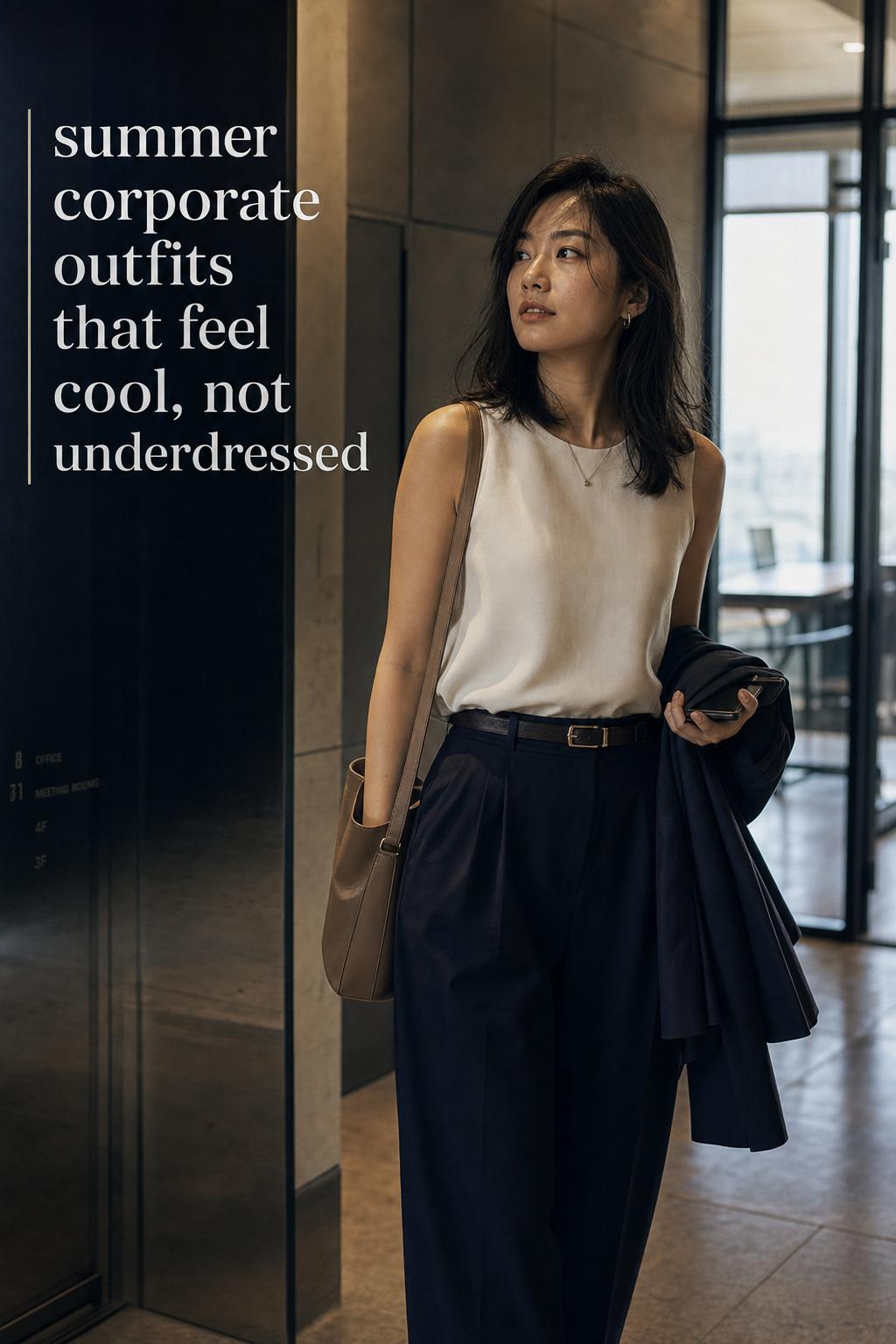
A summer suit works best when it is allowed to breathe visually. That means avoiding bulky inner layers and letting the tailoring carry the look. A sleeveless shell, a simple blouse, or a refined knit can all work as the base, provided the neckline remains polished. The blazer should skim the body rather than constrict it, and the trouser should drape cleanly from the waist. This creates a sense of ease without sacrificing the authority that a suit naturally provides.
This is often the right choice for formal meetings, industries with traditional expectations, or days when you need a sharper presence. It also photographs well and maintains consistency across environments, which matters when your day includes conference rooms, client lunches, and travel between offices. The key is not abandoning suiting in summer, but editing it intelligently.
A city-to-office approach for long days
Summer dressing is rarely just about the office itself. Many people need outfits that can survive a city day: walking several blocks, climbing stairs, carrying a laptop, sitting through meetings, then heading to dinner or an event without a complete change. This is where summer corporate outfits need to function almost like wardrobe systems rather than isolated looks.
A practical city-to-office formula starts with breathable, crease-resistant pieces in a controlled palette. A lightweight blazer over a sleeveless top and tailored trousers works well because each component can adapt independently. If the day is especially long, comfort should be designed into the outfit from the beginning, not added as an afterthought. That means shoes you can genuinely walk in, fabrics that recover after sitting, and a bag that feels sleek without being delicate.
How to keep a polished look intact by late afternoon
- Favor fabrics that maintain shape after sitting for long periods.
- Keep one simple layer available for over-air-conditioned spaces.
- Use accessories that support the outfit rather than compete with it.
- Choose silhouettes that allow movement, especially through the waist and hip.
- Build around pieces that still look intentional if one layer comes off.
Footwear, bags, and finishing details that improve the entire outfit
In summer, accessories have a larger role because the clothing itself is lighter and often simpler. A good shoe can stabilize a soft outfit; a refined bag can give a minimal look more authority. The same is true in reverse. A shoe that feels too casual or a bag that looks overly beach-oriented can weaken even the strongest tailoring.
For footwear, the ideal choice is polished enough for the office yet realistic for warm weather and movement. The shape should align with the overall outfit: clean, sharp, and deliberate. For bags, structure matters. A bag with defined lines tends to support corporate dressing better than something slouchy, especially in summer when the clothes themselves may have more softness and drape.
Jewelry and smaller details should remain subtle. Summer corporate style rarely needs excess ornament. Instead, the goal is quiet refinement: a watch, simple earrings, a clean belt, a pair of sunglasses for the commute that can be removed once indoors. These details help the outfit feel finished without adding heat or visual clutter.
Practical styling notes that make a visible difference
Some of the most effective improvements to summer office dressing are small adjustments rather than major wardrobe changes. A sleeve length that allows more air, a blouse with a cleaner neckline, a trouser hem that works with the actual shoes you wear, or a blazer in a lighter construction can all shift the comfort and polish of an outfit more than people expect.
It is also worth thinking in terms of repetition. The strongest wardrobes do not require a completely new idea every morning. They rely on a few dependable summer formulas that can be rotated with different fabrics, tones, and accessories. This is not a compromise. It is often the mark of real style intelligence: knowing which silhouettes work for your office, your climate, and your schedule, then refining them until they feel effortless.
Tips for building repeatable summer office formulas
- Identify two or three silhouettes that work reliably in heat and repeat them with variation.
- Keep colors coordinated so pieces mix easily without losing polish.
- Prioritize garments that can stand alone if an outer layer is removed.
- Edit out pieces that wrinkle, cling, or require constant adjustment during the day.
Where summer office outfits often go wrong
Most mistakes happen when dressing swings too far in one direction. Some people focus only on staying cool and end up with outfits that feel underdressed for a corporate environment. Others cling to traditional office formulas and wear fabrics or layers that are technically professional but visibly impractical in summer. Neither approach produces the composed effect most professionals want.
Another common issue is ignoring how a garment behaves over time. An outfit may look sharp at 8 a.m. but feel creased, restrictive, or unbalanced by lunch. Summer dressing asks more of clothing because heat amplifies every weakness in fit and fabric. That is why trying on a piece in a cool room is not enough; you need to consider how it performs across a real workday.
Common mistakes to avoid
- Choosing fabrics that trap heat or show wear quickly through the day.
- Relying on a blazer to make an otherwise too-casual outfit seem corporate.
- Wearing overly tight silhouettes that become uncomfortable in warm weather.
- Letting footwear undermine an otherwise polished office look.
- Using too many trend-driven elements instead of focusing on balance and function.
The most useful mindset for dressing well in a corporate summer
The best summer office style is rarely about dramatic reinvention. It is about intelligent adjustment. You keep the principles of corporate dressing—clarity, precision, professionalism—but translate them through lighter fabrics, simpler layering, and more responsive silhouettes. Once you begin thinking this way, choosing summer corporate outfits becomes less about guessing and more about composing.
A polished warm-weather wardrobe should feel calm, not complicated. If the fabrics breathe, the proportions are balanced, and the outfit remains credible with or without its outer layer, you are usually on the right track. From there, every workplace and personal style can interpret the formula a little differently, but the underlying logic stays the same: thoughtful composition will always look more refined than dressing by temperature alone.
FAQ
What counts as a professional summer corporate outfit?
A professional summer corporate outfit is one that maintains a polished silhouette and office-appropriate coverage while using lighter fabrics and more breathable styling choices. Tailored trousers, structured dresses, refined skirts, crisp shirts, and lightweight blazers are all strong options when the overall look remains intentional and composed.
How can I dress for a cold office and a hot commute at the same time?
The most effective approach is to build your outfit around a breathable base layer that still looks professional on its own, then add one lightweight structured layer such as a blazer or light jacket. This lets you stay comfortable outdoors while still being prepared for over-air-conditioned indoor spaces.
Are sleeveless tops appropriate for corporate offices in summer?
Sleeveless tops can work well in summer if the cut is refined, the neckline is polished, and the fabric has enough structure to look intentional. They are especially effective under a blazer or with tailored trousers, but the specific level of appropriateness still depends on your office dress code and how formal your workplace is.
Can I wear dresses as part of summer corporate outfits?
Yes, dresses are often one of the easiest and most practical options for summer office dressing, especially when they have a tailored silhouette, a professional neckline, and a midi or similarly balanced length. The strongest choices are structured enough to feel corporate and comfortable enough to wear through a full workday.
What colors work best for summer office outfits?
Controlled, refined colors usually work best in a corporate setting during summer. Soft neutrals, navy, white, stone, charcoal, and tonal combinations tend to look polished and seasonally appropriate, while also making it easier to mix pieces and maintain a professional overall impression.
How do I make a business casual summer outfit still look corporate?
The easiest way is to pair one relaxed piece with one tailored anchor. A fluid blouse with precise trousers, or a softer top with a structured skirt, keeps the outfit comfortable without losing professional definition. Clean lines, thoughtful proportions, and restrained accessories also help business casual read as polished rather than informal.
What are the biggest mistakes people make with summer office dressing?
The most common mistakes are choosing fabrics that feel too heavy or too flimsy, wearing silhouettes that become uncomfortable in heat, and relying on one formal piece such as a blazer to make an otherwise casual outfit seem office-ready. Summer dressing works best when comfort and professionalism are planned together rather than treated as separate concerns.
Do I need a summer suit for corporate work?
Not always, but it can be very useful if your office is formal or your role involves meetings, presentations, or client-facing work. A lighter-weight suit with a minimal top underneath offers structure and authority without the heaviness of traditional layering, making it one of the most reliable options for more formal summer office settings.
Leave a Reply