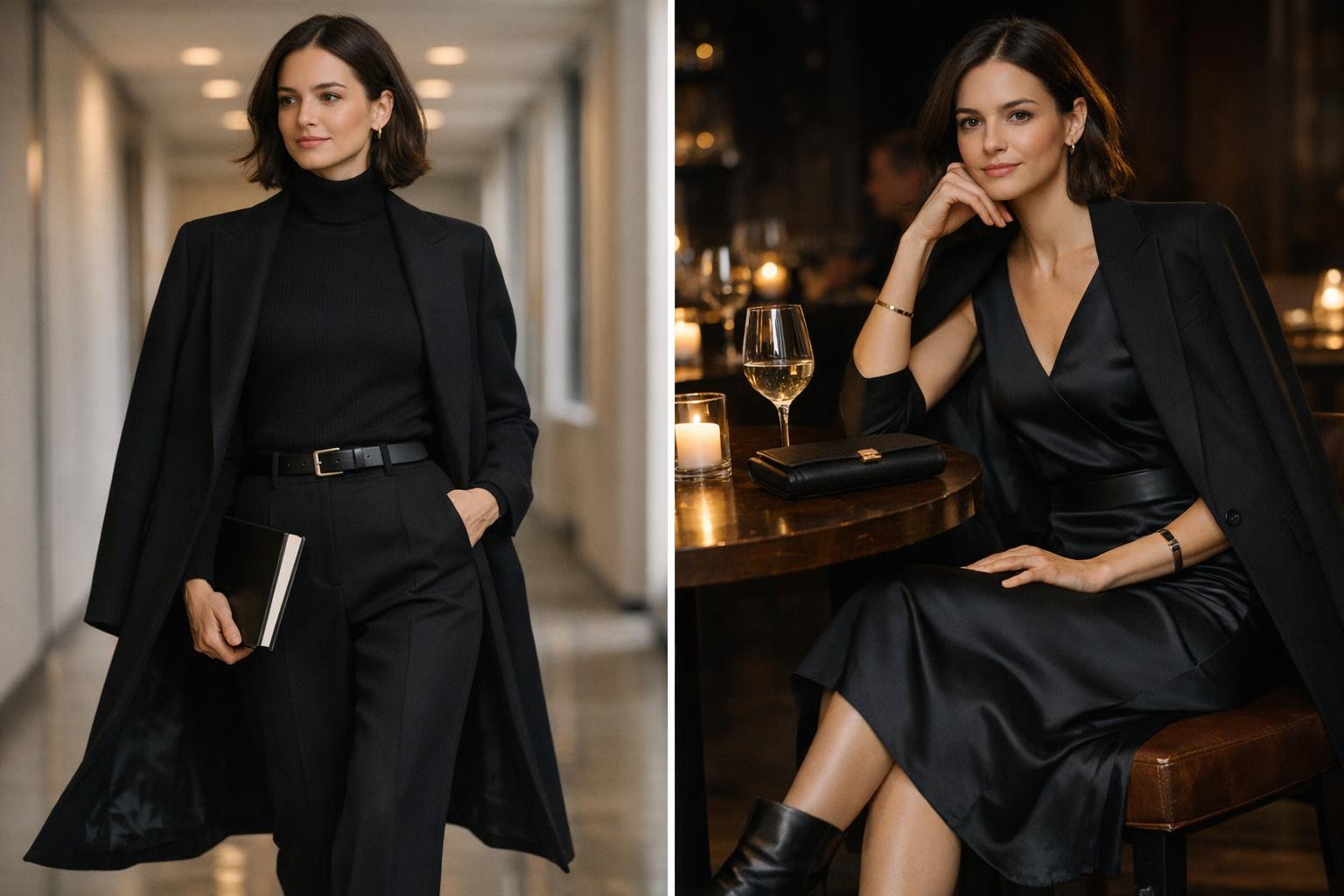
The quiet power of a black outfit
There’s a familiar moment before a calendar-heavy day—class in the morning, meetings in the afternoon, dinner somewhere dimly lit—when you need your clothes to feel composed without feeling complicated. This is where a black outfit earns its reputation. Black is not merely a color; it’s a styling tool that sharpens silhouette, streamlines proportion, and makes even simple pieces look deliberate. When you get the balance right, black can read minimalist and modern, softly romantic, or decisively tailored—sometimes all in the same day.
But black can also fall flat: too heavy, too literal, too “default.” The difference between a thoughtful black look and an outfit that feels like an afterthought comes down to fabric behavior, texture contrast, and the small decisions—shoe shape, neckline, hem length, the space between layers—that fashion editors obsess over because they’re the difference makers in real wardrobes.
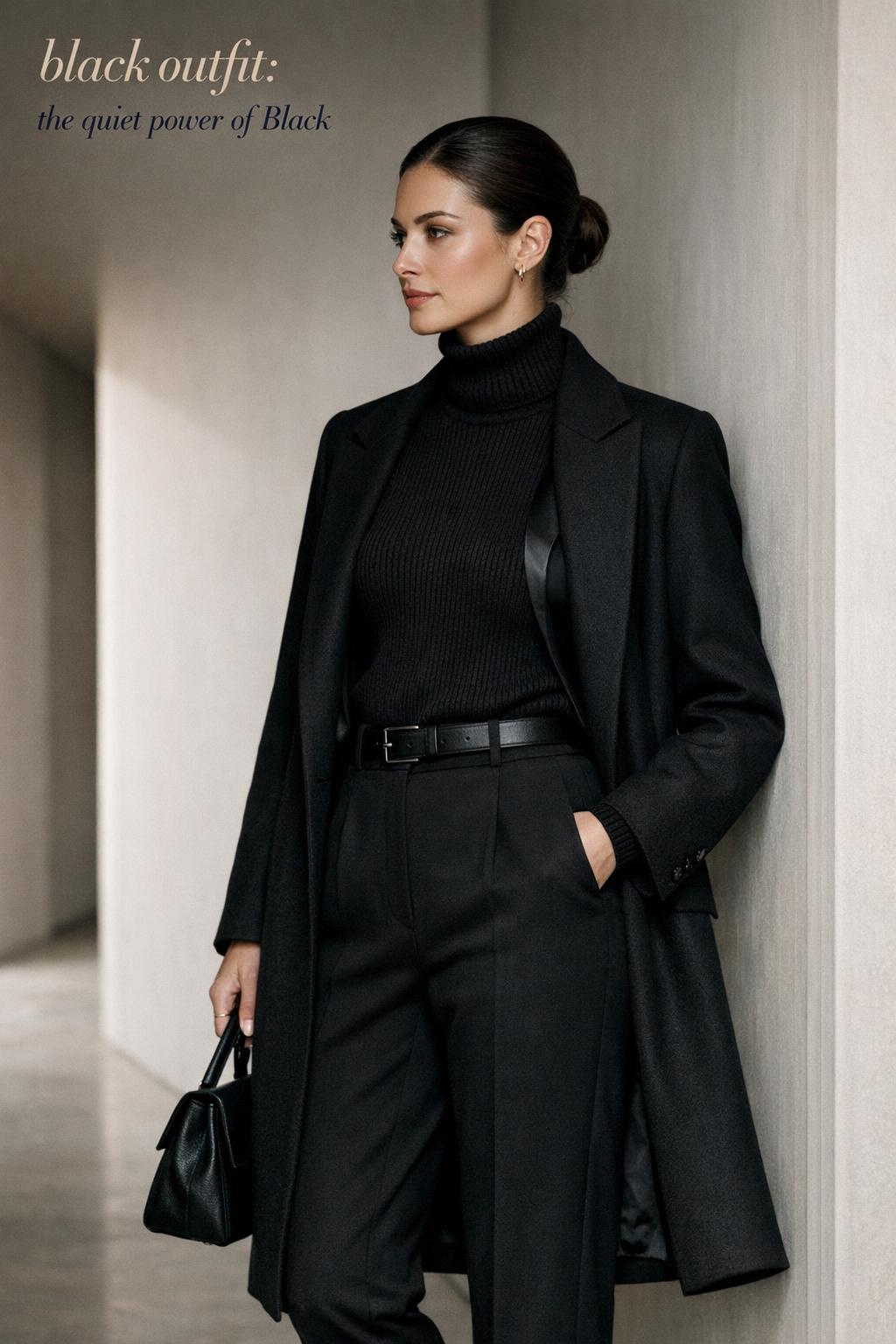
How to think about black: silhouette first, then texture, then detail
A black outfit succeeds when it has architecture. Because black minimizes visual noise, the outline becomes the message: a clean shoulder line, a defined waist, a longer leg, a sharper collar. Start by choosing a silhouette that communicates the mood you want—tailored for authority, relaxed for ease, fitted for evening, or a mix for that modern “polished but not trying” effect.
Once the silhouette is decided, texture does the emotional work. Matte black can feel serious and graphic; satin or leather shifts the tone to evening; knitwear softens the severity; sheer elements introduce air. Finally, details—buttons, seams, straps, pleats—become more visible in black because they create subtle highlights and shadows. That’s why black can be so flattering: it makes the eye read structure, not clutter.
Your wedding has a lot of moving pieces. Your plan can still feel composed.
Zarellea organizes guests, vendors, budget, and timelines in one shared space — so you can make decisions with clarity, not stress.
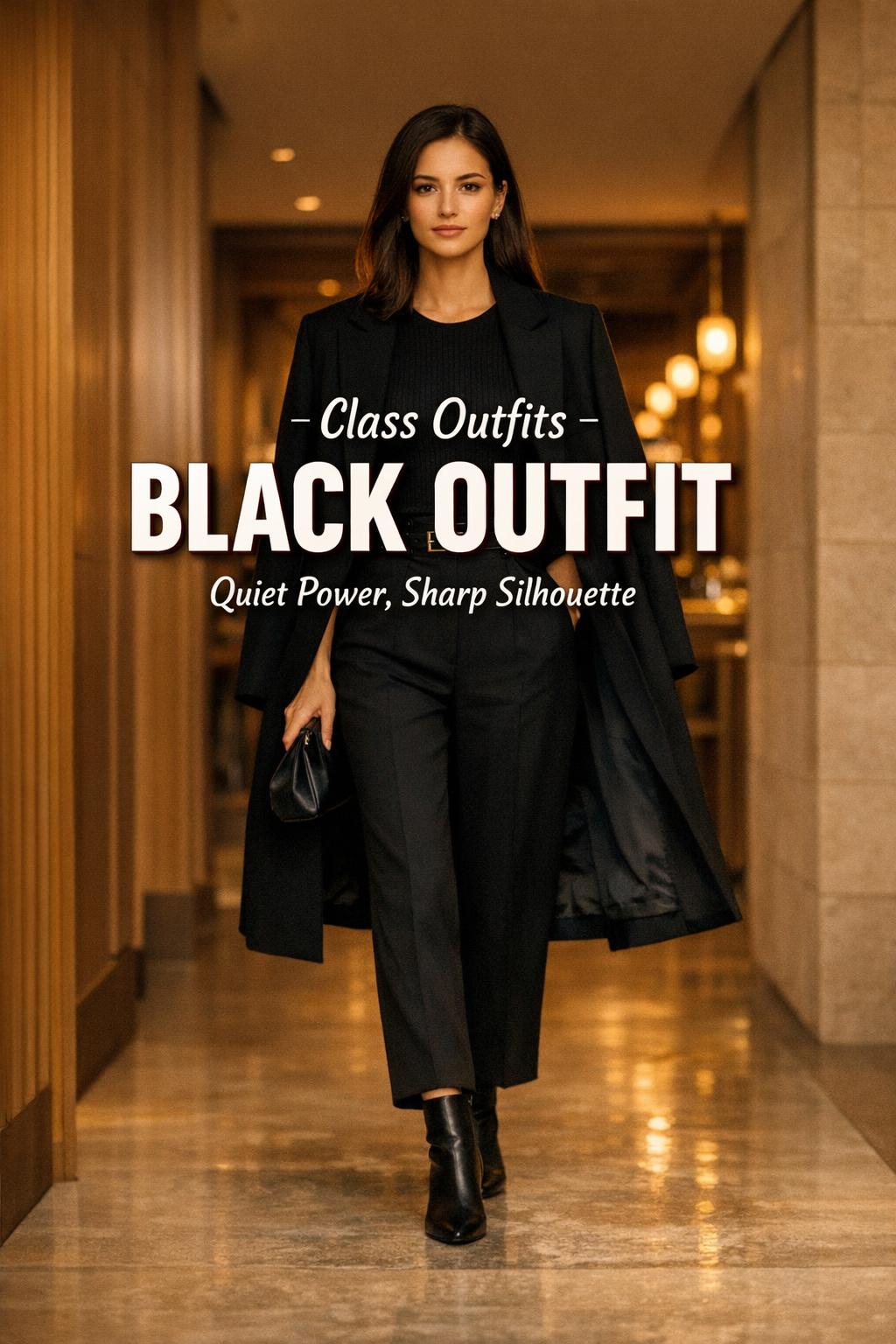
Tips: the three-question test before you leave the house
If your all-black look feels “almost” right, ask three quick questions: Is there a clear focal point (a neckline, a belt, a strong shoe)? Is there at least one texture contrast (knit with denim, leather with cotton, satin with wool)? And does the proportion feel intentional (cropped layer over long line, fitted top with wider leg, or structured outerwear over something softer)? When you can answer yes to all three, black reads styled rather than safe.
Black for class outfits: polished, comfortable, and not overly precious
Class outfits have a specific brief: you want comfort through long sits and lots of walking, but you still want to look put-together when you catch your reflection in a hallway mirror or meet someone unexpectedly. Black handles this effortlessly because it hides wear, feels cohesive across multiple pieces, and can be adapted to different dress codes without a full change.
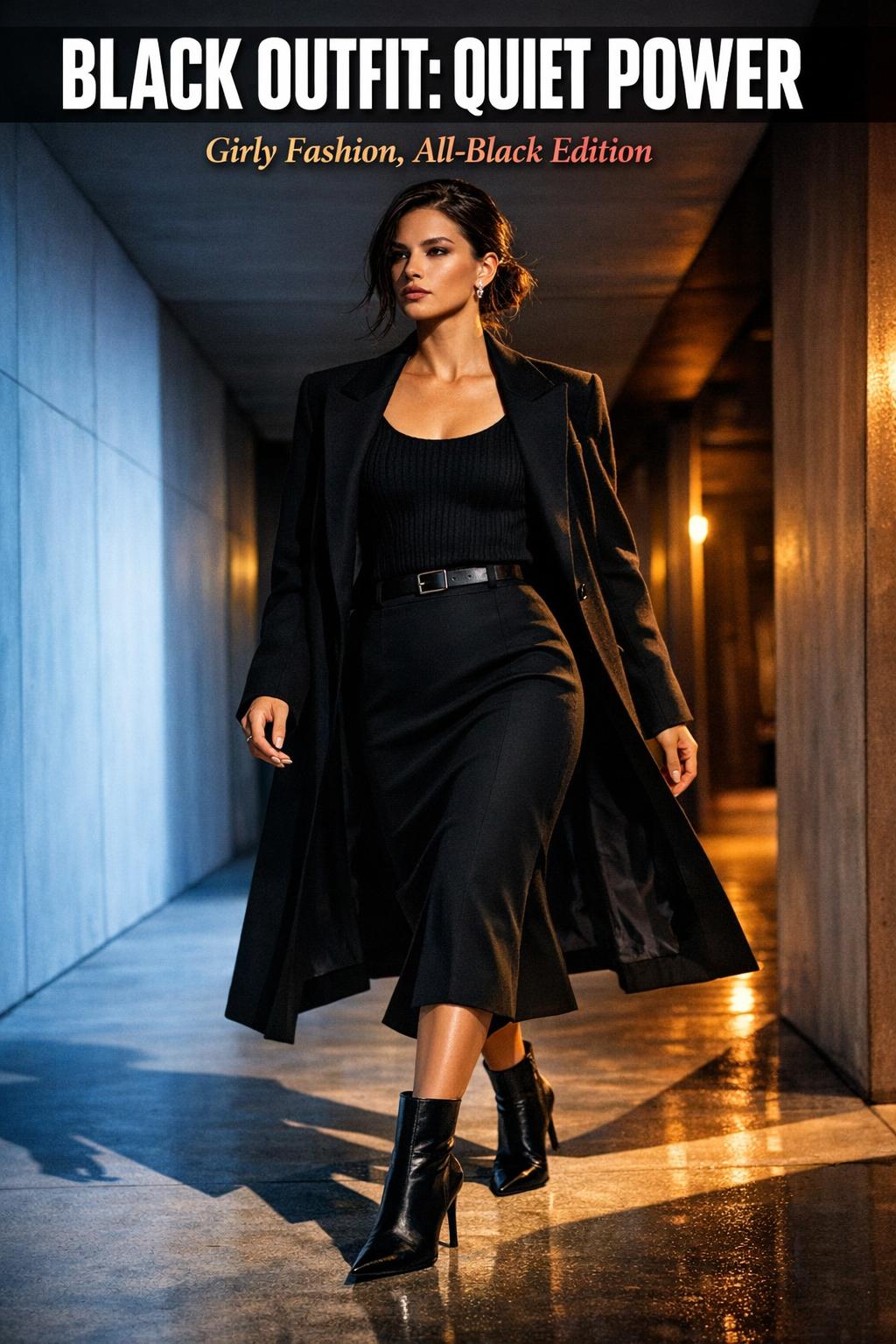
A practical formula is a clean base plus one structured element. Think a black knit top with a black midi skirt, grounded by a jacket that gives the outfit a spine. Or a black dress that moves easily under a blazer. The charm is in restraint: crisp lines, breathable fabrics, and shoes that support you without looking purely utilitarian.
Texture choices that make black feel “daytime,” not evening-only
For daytime—especially for class—lean into cotton, ponte, ribbed knits, and denim-like structure rather than head-to-toe shine. A matte knit with a slightly structured pant reads intentional and academic; a glossy fabric everywhere can feel too nightlife-coded for a morning schedule. The goal is a black outfit that’s refined, not theatrical.
- Ribbed knit + tailored trouser for movement and shape
- Matte jersey dress + structured layer for instant polish
- Dark denim-like black + soft sweater to avoid stiffness
- Ponte skirt/pant + crisp top for a clean, “edited” look
Girly fashion in black: romantic, not severe
“Girly fashion” doesn’t disappear in black—it simply becomes more sophisticated. Black can actually sharpen romantic details: a puff sleeve looks more sculptural, a ruffle reads more graphic, and a delicate strap feels intentionally minimal. The key is to keep the softness in the silhouette and the fabric, so the look feels feminine rather than strict.
When building a girly black outfit, choose one romantic statement and let the rest stay quiet. A black dress with a defined waist, a gently flared skirt, or a sweetheart neckline carries the mood on its own. If you want separates, try a softer top with a structured bottom—or the reverse—to avoid looking costumey. Black is at its most elegant when it suggests, rather than insists.
Tips: how to keep black romantic in daylight
Romance reads through lightness and movement. If your outfit feels too heavy, introduce an airy element: a lighter knit, a skirt with drape, a sleeve with volume, or a neckline that opens the frame of the face. Even a subtle contrast between matte and slightly luminous fabrics can make black look soft rather than stern.
Cute simple outfits: the elegance of “less, but better”
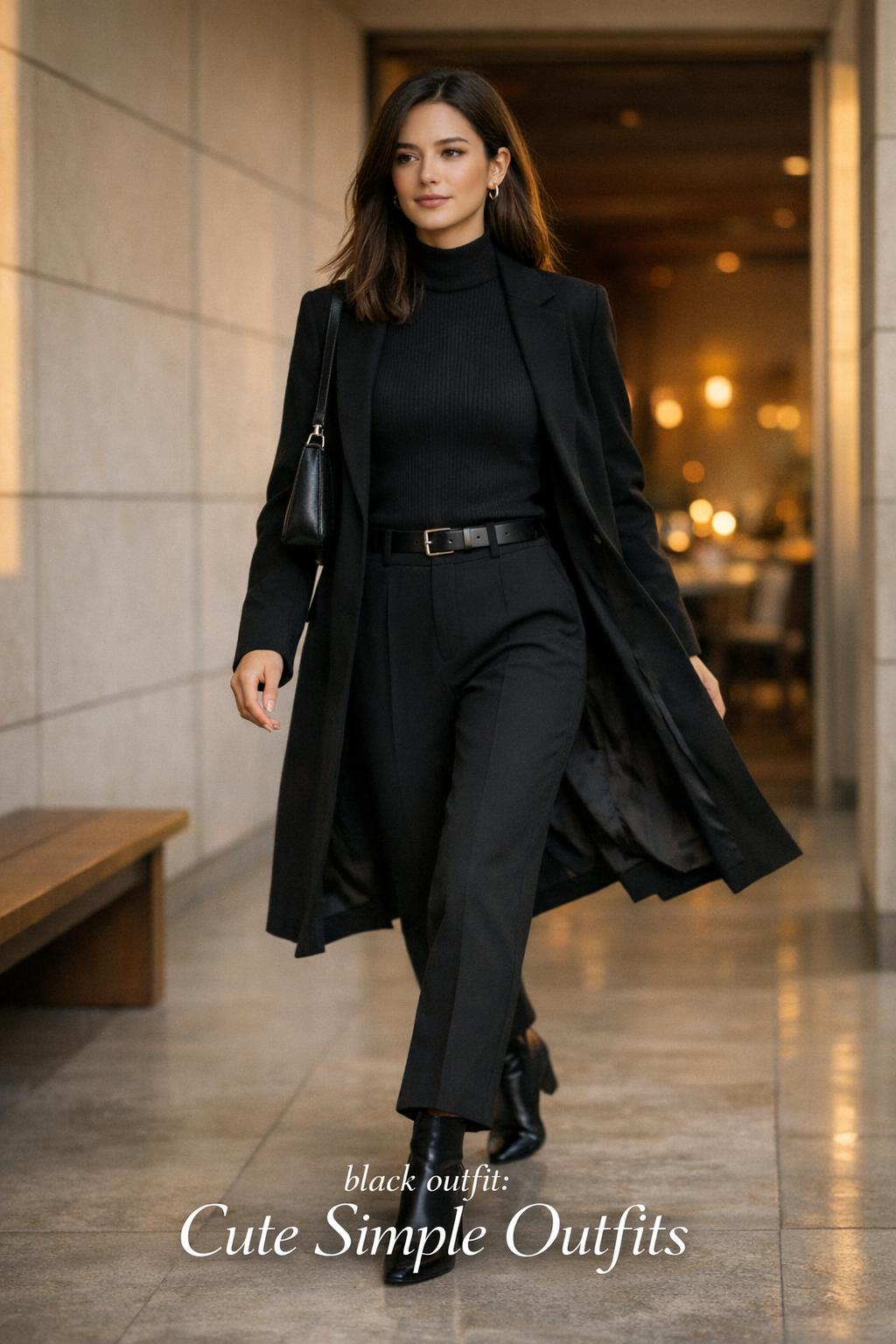
Cute simple outfits are rarely about novelty; they’re about clarity. In black, simplicity becomes even more visible, which is why fit and proportion matter. A clean black top paired with a black bottom can look impeccable when the lengths and widths feel balanced—cropped with high-waisted, fitted with wide-leg, longline with narrow. When it’s off, it can feel like “gym-to-errands,” even if the pieces are technically nice.
To keep a simple black outfit looking elevated, make one component visibly intentional: a sharper shoulder line, a longer hem, a defined waist, or a shoe with a clean profile. This is the quiet editorial trick—one considered element creates the impression that everything is considered.
A simple proportion guide that works in real life
Use contrast in volume, not just color. Pair a slim top with a fuller bottom, or a relaxed top with a straighter skirt or pant. If you keep everything equally tight or equally loose, black can turn the outfit into a single block. The goal is a silhouette with rhythm: a point of definition, a line of length, a place for the eye to rest.
- Fitted knit + wide-leg pant for modern balance
- Oversized shirt layer + straight skirt for clean structure
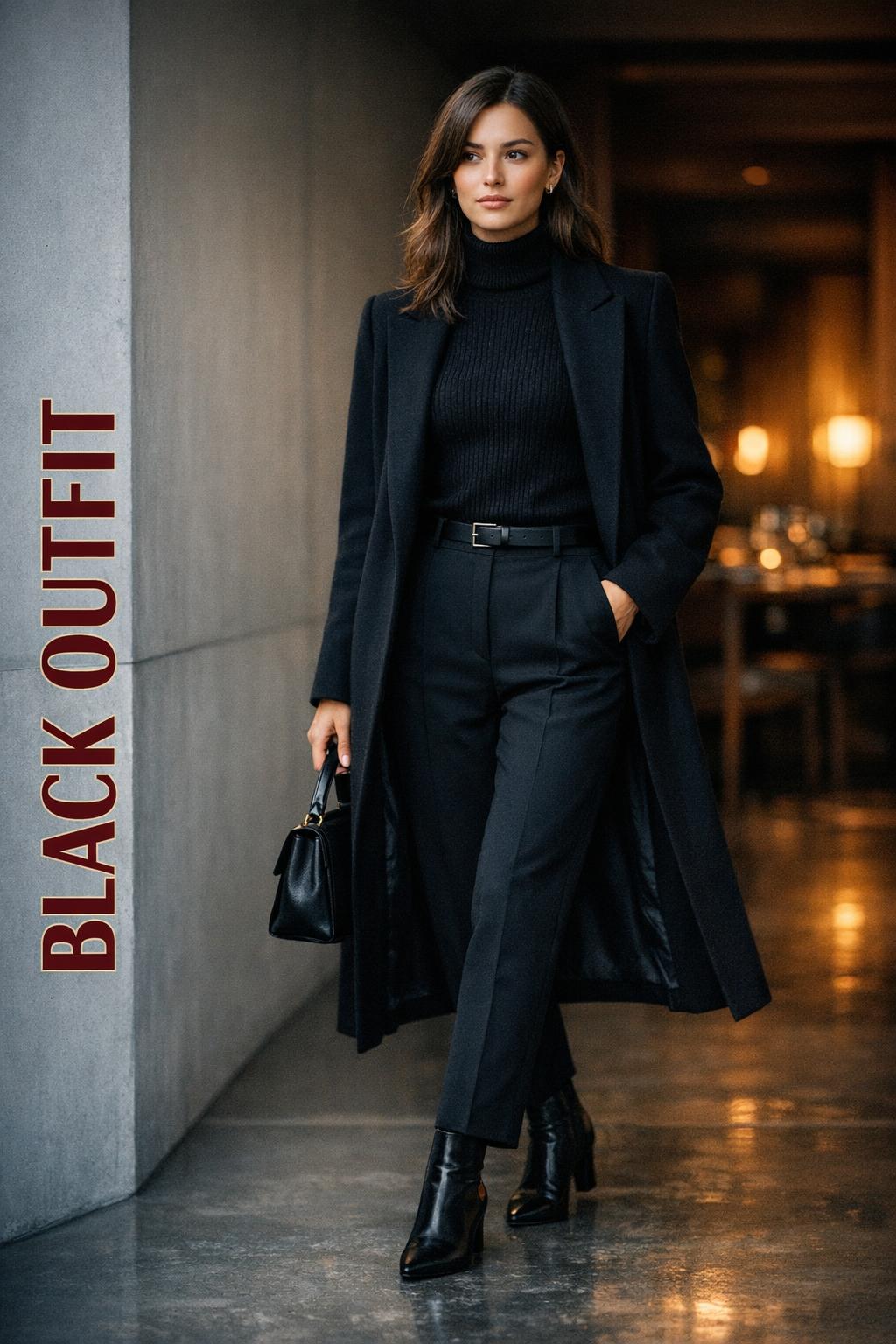
- Long coat line + slimmer base for a refined column effect
- Cropped jacket + high-rise bottom to lengthen the leg
Outfits aesthetic: building a “black story” with contrast and restraint
When people talk about outfits aesthetic, they’re usually describing a consistent visual language—something cohesive enough to feel like a point of view. Black is the easiest foundation for that, but it still needs a storyline. The storyline isn’t “everything black.” It’s the interplay of surfaces: sleek against soft, structured against fluid, opaque against a hint of sheerness.
An aesthetic black outfit often relies on a signature: a repeated silhouette (long line outerwear, clean trouser shape), a specific texture (matte knits, subtle leather), or a consistent detail (minimal hardware, sharp collars). Once you choose that signature, you can repeat it across different contexts—class outfits, office days, evening plans—without looking like you’re wearing a uniform. You’re building a wardrobe language.
Tips: the “two textures plus one accent” method
To avoid flatness, aim for two distinct textures and one accent detail. For example: a matte knit with a structured woven pant, plus a belt that defines the waist; or a sleek skirt with a soft sweater, plus a sharp boot. The accent shouldn’t be loud—it’s simply the finishing mark that tells the eye the outfit is composed.
Where black goes wrong: common styling mistakes (and how to correct them)
Black is forgiving, but it is also revealing in a different way: it reveals hesitation. When an outfit is built from “safe” pieces with no focal point, the result can look unfinished. Another common issue is mismatched blacks—some pieces reading faded, others deep and saturated—creating an accidental patchwork effect. This isn’t inherently wrong, but it needs to look intentional through texture contrast or deliberate layering.
Finally, black can feel too heavy near the face, especially in daylight. If you’ve ever put on an all-black top and felt your features disappear, it’s usually a neckline and fabric issue, not “black doesn’t suit me.” The fix is often as simple as opening the neckline, adding a layer that breaks the block, or choosing a fabric that reflects a touch more light.
- Problem: head-to-toe matte with no variation. Fix: add a second texture (knit + woven, leather + cotton) or a subtle sheen.
- Problem: “one big black shape.” Fix: define the waist, adjust hem lengths, or introduce a cropped layer.
- Problem: mismatched blacks look accidental. Fix: make contrast the point (pair faded black denim with a crisp black top).
- Problem: black feels harsh near the face. Fix: choose a more open neckline or add a layer to soften the frame.
Day-to-night black: small switches that change the entire mood
The most useful black outfits are the ones that can survive a full day and still feel right at night. The secret isn’t a full change—it’s one intentional swap that rebalances the silhouette or shifts the texture story. A daytime black look often benefits from softer structure and comfort-forward fabrics; nighttime asks for sharper lines, stronger contrast, or a slightly more defined fit.
Think like an editor packing a tote for a long day: you want one piece that transforms the look without demanding a mirror marathon. A change in shoe profile can do it. So can adding a more structured layer. Even a subtle shift in how you wear the same pieces—tucked versus untucked, belted versus straight—can move the look from practical to intentional.
Tips: a three-minute upgrade strategy
For a quick evening pivot, focus on (1) neckline—open it slightly with styling or layering, (2) waist—define it or clean the line, and (3) shoe—choose a sharper silhouette. These three adjustments change the visual “temperature” of black immediately, without needing extra accessories or a complete change of clothes.
Black in warm weather vs. cold weather: the fabric decisions that matter
Wearing black in heat is a different challenge than wearing it in winter. In warm weather, black can feel intense if the fabric is heavy or clingy. The solution is to choose lighter, breathable constructions and silhouettes that allow air—think movement and space rather than compression. In cooler months, black becomes a natural layering base, and texture contrast becomes easier: knits, structured outer layers, and boots create dimension almost automatically.
In both cases, comfort is a style issue, not just a practical one. If you’re tugging at fabric or overheating, the outfit reads unsettled. A well-chosen black outfit looks calm because it feels calm to wear—easy through the shoulders, steady at the waist, workable with your day’s pace.
Tips: how to keep black from feeling “too much” in bright daylight
Use negative space: a slightly lower neckline, a shorter sleeve, or a hem that shows ankle can make black feel lighter without adding color. If you prefer coverage, look for fabric movement instead—drape that shifts when you walk, or a knit that doesn’t cling. Black feels most modern when it has air around it.
Personal style in black: minimalist, tailored, or softly feminine
A black outfit isn’t a single style—it’s a canvas that lets personal taste become clearer. Minimalists can lean into clean lines and refined basics, letting fit and proportion do the work. Those drawn to tailoring can use black to emphasize structure: a defined shoulder, a sharp lapel, a straight leg. If your preference is girly fashion, black becomes a way to make romantic shapes feel grown-up and wearable across more settings.
What matters is choosing your “anchor” and repeating it. An anchor can be a trouser silhouette you trust, a skirt length that always feels right, or an outerwear shape that makes you stand taller. Once you know your anchor, black becomes less about playing it safe and more about building consistency—an outfits aesthetic that looks cohesive because it’s rooted in you.
A realistic wardrobe approach: build around anchors, not fantasies
The most convincing black wardrobes aren’t built from occasional statement pieces; they’re built from repeatable combinations you can wear on low-energy mornings. If you find yourself reaching for the same black pieces, that’s information—those are your anchors. Refine them, tailor if needed, and then experiment with one variable at a time (a new texture, a different layer length) so the outfit remains wearable, not aspirational.
Finishing touches that keep black looking intentional
Black magnifies the condition of clothes: lint, fading, uneven hems, and tired fabric surfaces show up quickly. This isn’t about perfection; it’s about the quiet discipline that makes black look expensive even when it’s simple. The finishing touches are often invisible from a distance, but they register in the overall impression—especially in daylight and in photos.
- Keep black pieces consistent in tone when you want a sleek “column” look; use contrast intentionally when mixing different blacks.
- Choose one focal point: neckline, waist, sleeve shape, or shoe silhouette.
- Prioritize clean lines at hems and cuffs; black looks best when edges look deliberate.
- Let texture provide dimension instead of relying on multiple “extras.”
FAQ
How do I make a black outfit look expensive without buying new pieces?
Focus on structure and finish: refine the silhouette with a clean layer (like a sharper outer piece), create proportion on purpose (a defined waist or a longer line), and keep textures intentional (matte paired with a subtle sheen). Black reads elevated when it looks edited and well-maintained, not overloaded.
What’s the easiest way to style black for class outfits?
Use a comfortable base and add one structured element: a knit or jersey foundation with a more tailored layer gives polish without sacrificing ease. Keep the overall look breathable and practical for long hours, and rely on proportion—cropped over high-rise or longline over slim—to make it feel intentional.
Why does my all-black look feel flat?
Most often it’s missing contrast—either in texture or in shape. Add dimension by pairing different surfaces (knit with woven, matte with a slight sheen) and introduce a focal point such as a neckline, a defined waist, or a sharper shoe silhouette so the outfit has visual rhythm.
Can girly fashion work in black without looking too severe?
Yes—choose romantic elements that bring softness through movement and shape, like gentle volume, a defined waist, or a more open neckline, and keep the rest restrained. Black makes feminine details look more graphic and refined, especially when the fabrics feel light rather than heavy.
How do I wear black in warm weather without feeling weighed down?
Prioritize airy silhouettes and lighter fabric behavior rather than cling and compression. Create “negative space” with a more open neckline, shorter sleeves, or ankle exposure, and choose pieces that move as you walk so black feels modern and breathable in daylight.
What’s a quick day-to-night trick for a black outfit?
Change one element that shifts the mood: sharpen the shoe silhouette, define the waist, or adjust the neckline with styling or layering. Black responds dramatically to small proportion changes, so a three-minute tweak can make the same outfit feel appropriately evening-ready.
Is it okay to mix different shades of black in one outfit?
It can work well if it looks intentional. If the blacks don’t match, make contrast part of the design by pairing different textures and clear silhouettes—such as a crisp top with a more relaxed, faded black bottom—so it reads styled rather than accidental.
How do I create an outfits aesthetic with mostly black pieces?
Choose a consistent signature—such as a repeatable silhouette, a preferred texture story, or a minimalist level of detail—and build variations around it. A cohesive black aesthetic comes from repeating a point of view (structure, softness, or tailoring) rather than repeating identical outfits.
Leave a Reply