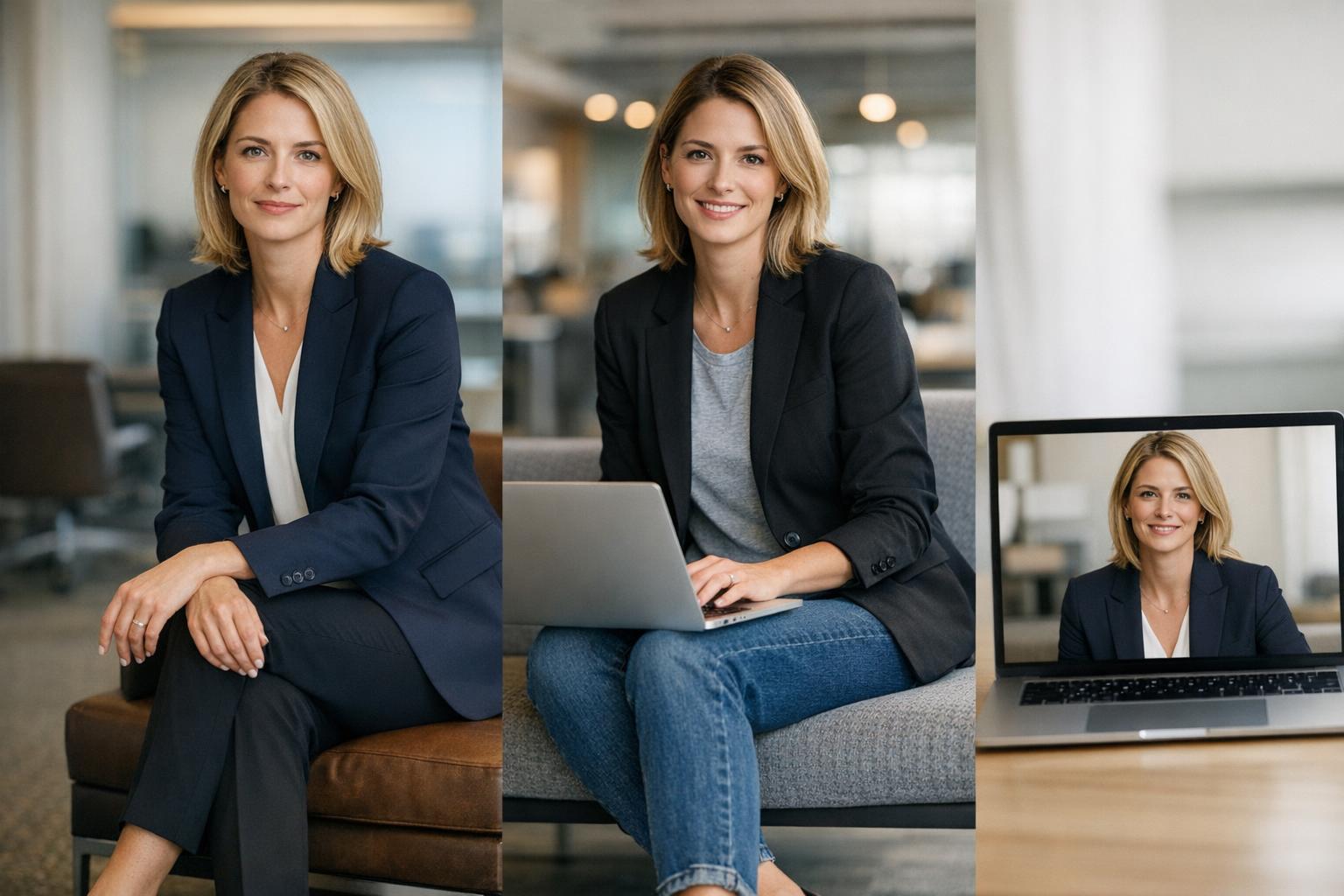
Interview outfit logic: business formal polish vs. smart casual ease
The modern interview outfit sits at the intersection of style and strategy. You are not dressing for a runway, and you are not dressing for a normal workday either. You are dressing for a moment where strangers assess your judgment in minutes—often through the shorthand of fabric, fit, and formality. That is why “what to wear to an interview” remains a perennial question across fashion media and career advice, and why the answer keeps splitting into two aesthetics that are endlessly discussed together: business formal and smart casual.
They are often confused because they share key building blocks—especially the blazer, tailored pants, and conservative shoes—and because industry norms have blurred the old lines. A finance or consulting interview still tends to reward conservative structure, while technology and startups are famous for a more relaxed baseline where overdressing can feel out of tune. Add the reality of virtual interviews (where a look must read well on camera), and the spectrum gets even more nuanced.
This style breakdown compares business formal and smart casual through the lens of real interview scenarios in the United States: how silhouettes differ, how neutral color palettes signal intent, how fabrics behave under office lighting or on video, and how to build a modular, three-piece capsule that adapts across sectors. Along the way, you’ll see how to translate the same core pieces into men’s business outfits and stylish mens suits, and how to make industry-aware choices—from a Google interview to a social work job interview outfit—without losing your sense of self.
Style overview: business formal interview dressing
Business formal is the most structured end of the interview attire spectrum. Its defining characteristic is clarity: crisp lines, controlled proportions, and a composed finish. The silhouette is typically tailored—think blazer and matching trousers (a pantsuit) or a skirt suit—designed to look intentional from every angle, including when you sit down, cross your legs, or stand to shake hands.
Your wedding has a lot of moving pieces. Your plan can still feel composed.
Zarellea organizes guests, vendors, budget, and timelines in one shared space — so you can make decisions with clarity, not stress.
The color palette leans heavily on neutrals: navy, black, white, and other restrained tones that rarely invite debate. This is where “black vs navy interview suit” becomes a genuine consideration—not because one is universally right, but because both are understood as low-risk signals of professionalism. Fabrics often appear smoother and more substantial; the aesthetic mood is controlled, credible, and classic, built to align with conservative expectations and hiring-manager instincts.
In practice, business formal is less about looking expensive and more about looking prepared. Fit and tailoring do much of the work here: a blazer that sits cleanly at the shoulder, trousers with a confident drape, and a blouse or shirt that doesn’t pull, gape, or distract.
Style overview: smart casual interview dressing
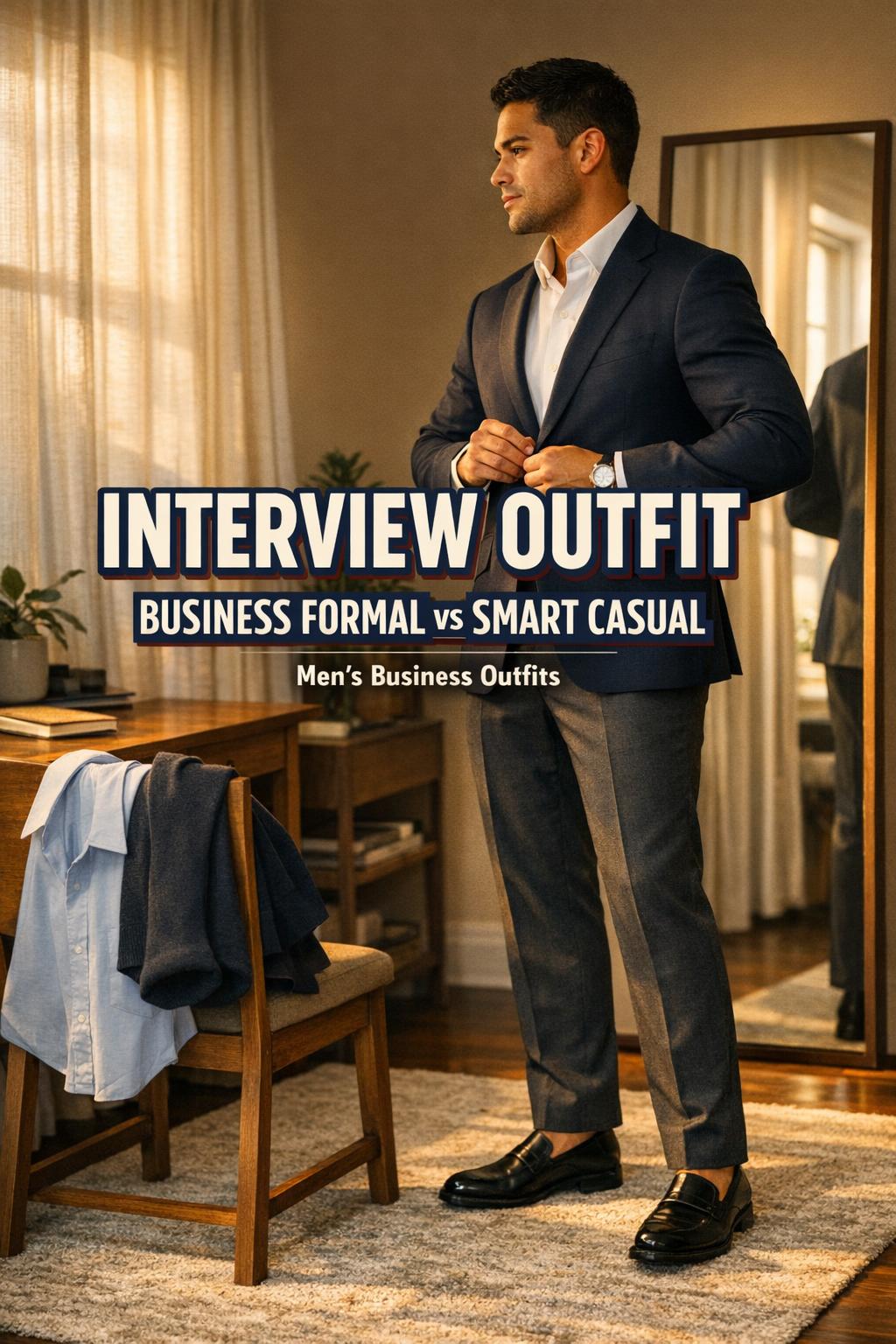
Smart casual is the more relaxed cousin that still reads “professional wardrobe,” just in a softer voice. Its defining characteristic is ease with intention: a blazer might be present, but it can be more flexible in structure; tailored pants may be swapped for dress pants that feel less severe; and styling often relies on thoughtful coordination rather than strict matching.
Smart casual leans on clean, modern silhouettes—often a blazer with a simple top, or a polished knit-like look achieved through a conservative blouse and refined accessories. The color palette still favors neutrals, but there is slightly more room for a personal palette within the safe zone: a softer white, a deeper navy, or a calm tonal pairing that reads well on camera and in person.
The mood is “serious but not overbearing,” a phrase that fits tech-company culture especially well. It communicates competence and good taste without implying you misunderstand the room. For roles where team fit and modern sensibility matter, smart casual can be the most elegant answer to “job interview outfit” because it respects industry norms while preserving approachability.
The formality spectrum: why industry norms decide the rules
Most interview attire advice fails when it treats formality as a single standard. In reality, interview dress codes are negotiated through industry expectations and company culture. A conservative sector may read a relaxed outfit as a lack of seriousness; a casual sector may read a very formal look as poor calibration.
Technology interviews are the clearest example. Guidance around how to dress for a Google interview—and similar advice for Google and Facebook (Meta)—centers on balance: polished, professional, and comfortable, without drifting into a suit-and-tie severity that can feel out of sync with an informal corporate environment. Meanwhile, finance and consulting lean toward business formal because the work itself is closely associated with conservative dress and visible credibility.
- Tech & startups: often rewards smart casual done cleanly—tailored pieces without excessive formality.
- Finance & consulting:</strong frequently expects business formal—structured suits, restrained palette, minimal accessories.
When you’re uncertain, the safest editorial approach is to choose a classic base (blazer + tailored bottom + conservative top) and adjust the level of structure. That is the quiet power of a modular interview outfit: it lets you calibrate without starting from zero.
Key differences: business formal vs. smart casual, piece by piece
Silhouette and structure
Business formal is architectural. The blazer is sharper, the trousers are more precisely tailored, and the overall outline looks composed even at a distance. Smart casual is still tailored, but less rigid: the blazer can feel more like a refined layer than a uniform, and proportions can be slightly more relaxed as long as they remain intentional.
Color palette and visual risk
Both styles rely on a neutral color palette because neutrals reduce the chance that your outfit becomes the story. The difference is in how strictly those neutrals are used. Business formal tends toward uniformity—matching pieces or clearly coordinated classics like navy, black, and white. Smart casual allows tonal dressing and softer combinations, provided the look still reads professional under office lighting and on video.
Level of formality and the “message” it sends
Business formal signals respect for hierarchy and tradition; it is a visual shorthand for seriousness. Smart casual signals competence plus cultural fluency—an ability to look professional without leaning on the strictest version of business attire. Neither is “better.” The better choice is the one that aligns with the norms of the room you are trying to enter.
Styling philosophy: uniform vs. capsule
Business formal often behaves like a uniform: fewer decisions, fewer variables, fewer chances to misstep. Smart casual behaves like a capsule: a blazer anchors the look, but the top and bottom can shift to suit the company and the day. This is where many men’s business outfits now live—using tailored structure, but avoiding extremes.
Visual style breakdown: how these aesthetics read in real life
Imagine two candidates walking into the same building. Both are wearing a blazer. Both chose neutrals. Yet the visual story is different, and hiring teams notice—even if they never name it aloud.
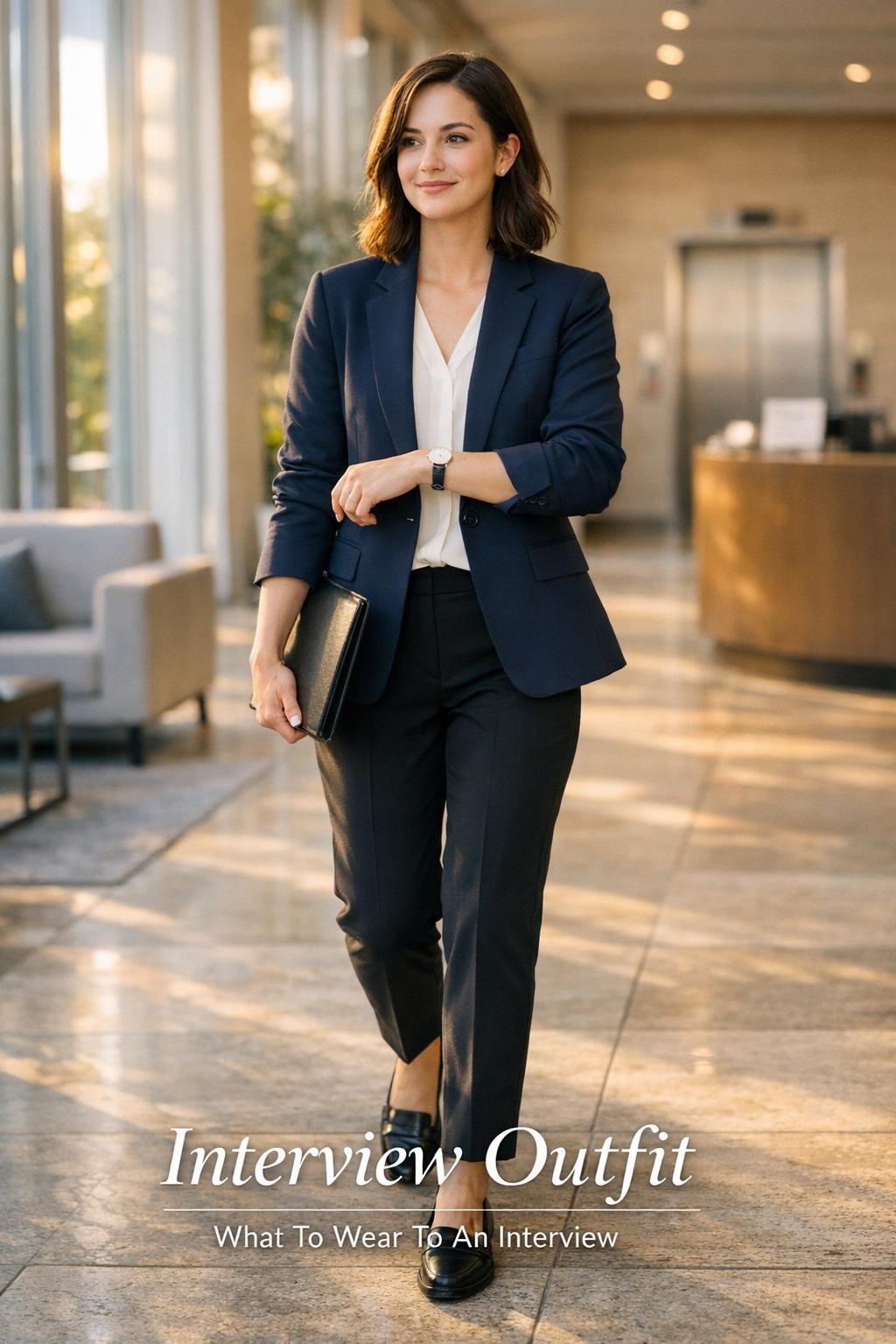
Layering and proportion
Business formal layering is deliberate and flat in the best way: a structured blazer over a blouse or shirt that sits cleanly at the neckline, with trousers or a skirt that continues the line. Smart casual may introduce a softer contrast—still refined, but with slightly more relaxed drape through the body. The goal is to look composed without looking uncomfortable.
Accessories: punctuation, not paragraphs
Across both styles, accessories should complement rather than overpower. Business formal typically uses minimal accessories to maintain a conservative silhouette. Smart casual can tolerate a touch more personality, but the best approach remains editorial restraint: one strong choice (a clean bag, a classic watch) rather than a collection of statements competing for attention.
Footwear choices
Footwear is where the styles separate quickly. Business formal expects conservative shoes that echo the tailored structure of the outfit. Smart casual can accommodate loafers more naturally—an idea frequently repeated in interview outfit discussions—because loafers sit between formal and relaxed. The common thread is polish: clean lines, tidy condition, and a professional finish.
Camera-read for virtual interviews
Virtual interviews compress style into a smaller frame. The blazer becomes even more valuable because it creates structure on screen, while a conservative top keeps the focus on your face. The smartest approach is to prioritize fit through the shoulders and neckline—areas most visible on camera—and to keep the palette calm so you don’t create visual “noise” against your background.
The shared foundation: a three-piece interview capsule that adapts
Behind most successful interview outfits is the same simple architecture: blazer + top + bottom. This three-piece capsule works because it is easy to calibrate. Make the blazer sharper and the palette more uniform, and you move toward business formal. Relax the structure slightly and choose a softer pairing, and you move toward smart casual—without changing your entire wardrobe.
The blazer as the anchor piece
The blazer appears across nearly every credible “what to wear to an interview” framework because it does one job exceptionally well: it frames you. In business formal, that frame is structured and classic; in smart casual, it can be slightly more flexible, but still tailored. Prioritize a clean shoulder line, a stable lapel, and sleeves that feel intentional rather than improvised.
Bottoms: tailored pants, dress pants, or a skirt
Bottoms carry the quiet authority of the look. Tailored pants push the outfit toward business formal; dress pants with a slightly softer feel can read smart casual while remaining professional. A skirt can work beautifully when the length and fit are conservative and the overall outfit remains balanced—especially when paired with a blazer that keeps the silhouette refined.
Tops: the conservative blouse or shirt
The top should support, not compete. A conservative blouse or shirt in a neutral—often white—is a classic for a reason: it reflects light nicely, looks crisp under a blazer, and keeps attention on your face. In more fashion-forward environments, a shell top can serve the same function: clean, minimal, and easy under tailoring.
Color, fabric, and fit: the “silent language” of interview attire
Most hiring decisions are not made on clothing alone, yet clothing contributes to first impressions because it communicates judgment. Color choices imply restraint or experimentation; fabric choices hint at comfort and preparation; fit suggests attention to detail. This is why neutral palettes and tailoring dominate interview attire guidance across industries.
Color palettes by industry: neutrals as diplomacy
Neutrals—navy, black, white, and related subdued tones—function as diplomacy. In finance and consulting, they align with conservative expectations. In tech, they read as modern and unfussy. In creative settings, they provide a calm base so any personality you introduce feels intentional, not chaotic. If you’re debating black vs. navy, the more useful question is whether you want the sharper severity of black or the slightly softer authority of navy—and how either will read in your interview context.
Fabric choices: how materials behave under pressure
Interviews involve movement, waiting, and sometimes travel—conditions that reveal fabric behavior quickly. Smooth, stable fabrics read crisp; others wrinkle and look tired by the time you arrive. In a virtual interview, fabric texture can also create distracting visual effects if it catches light oddly. The practical approach is to choose fabrics that keep their shape and sit cleanly, especially in the blazer and through the front of the top where the camera focuses.
Tailoring and fit: the difference between “fine” and convincing
Tailoring is the overlooked lever of interview dressing. A modest blazer that fits impeccably can look more professional than a statement piece that doesn’t. Alterations matter because they refine proportion: sleeves that stop at the right place, trousers that break cleanly, a waistband that lies flat. This is also where inclusivity becomes practical—whatever your size or body type, the goal is a clean line that lets you move comfortably and sit with ease.
Industry comparisons: translating the same outfit into different sectors
Think of industry norms as the styling brief. The same building blocks—blazer, pants or skirt, conservative blouse, loafers or other professional shoes—become different messages depending on how you tune the details. Below are sector-specific interpretations designed to show the logic, not prescribe a uniform.
Technology & startups: the calibrated “Google interview” balance
For a Google interview, or interviews at similarly informal tech firms, the sweet spot is professional without feeling overly formal. A blazer is still a strong choice, but the outfit should not look like it belongs to a different industry. Smart casual typically wins here: tailored pants, a clean top, and polished shoes that feel modern. The signal you want is competence and cultural fit—serious, not overbearing.
Finance & consulting: conservative structure as credibility
Finance and consulting tend to reward business formal clarity. This is where a coordinated suit (pantsuit or skirt suit) in a neutral palette feels most at home. Accessories should be minimal and purposeful; shoes should read conservative. If you are building stylish mens suits for this world, the same principle applies: clean tailoring, restrained color, and a composed finish that communicates reliability.
Healthcare & education: composed, practical, and calm
Healthcare and education interviews often sit between business formal and business casual, depending on the role and institution. The most effective interview outfit is usually conservative styling that feels functional: a blazer for structure, tailored pants or a skirt with easy movement, and shoes you can walk in confidently. The aesthetic should feel reassuring—professional wardrobe choices that suggest steadiness and respect.
Creative/media: personality with boundaries
Creative and media environments can be more receptive to fashion-forward detail, but interviews still require restraint. A blazer can become a subtle statement piece here—through cut or proportion—while the rest of the outfit stays calm. The best creative interview looks are edited: clean lines, intentional palette, and one controlled point of interest rather than a head-to-toe trend narrative.
Example comparisons: the same scenario styled two ways
Rather than listing endless options, it is more useful to see how business formal and smart casual solve the same problem. These comparisons show the styling logic behind each approach, using the same core wardrobe pieces.
Example comparison: the classic office interview
Business formal interprets the classic office interview with a matching pantsuit or skirt suit in navy or black, a conservative blouse or shirt in white, and conservative shoes. The composition is uniform-like: minimal contrast, clean tailoring, accessories kept quiet. Smart casual takes the same situation and softens it slightly—still a blazer, still tailored pants, still a restrained top, but the blazer may be less rigid and the overall effect more modern than traditional.
Example comparison: the tech campus interview day
Business formal can look too intense for a casual tech environment unless you deliberately relax the styling; a full suit may read as miscalibrated in an informal corporate setting. Smart casual tends to land better: a blazer with tailored pants and polished loafers creates a professional silhouette without signaling that you misunderstood the culture. This is where men’s business outfits often benefit from a tailored jacket and clean shirt rather than the strictest suit formula.
Example comparison: the social work job interview outfit
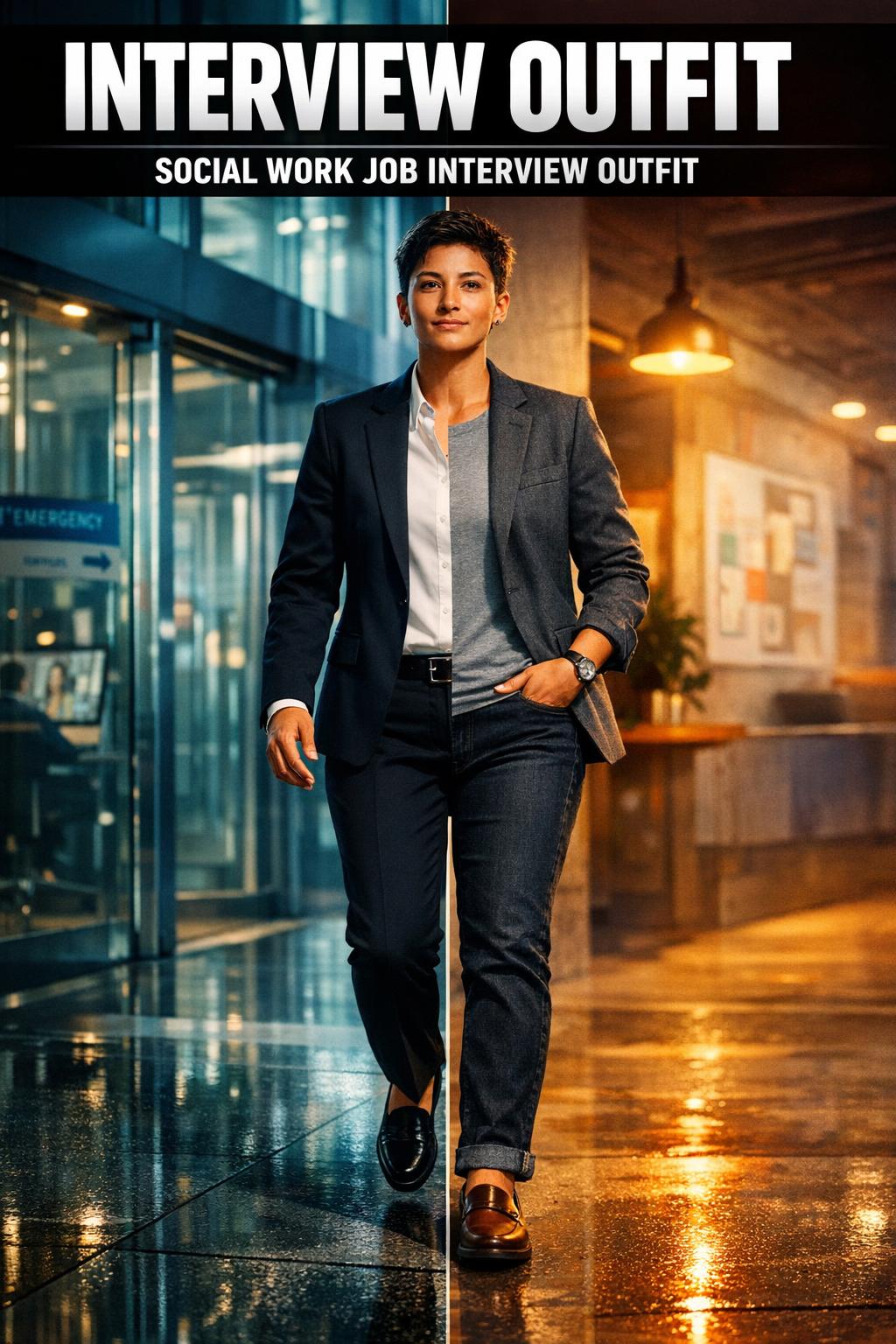
A social work job interview outfit typically benefits from conservative styling that feels approachable. Business formal can work if the setting is very formal, but it may risk looking too severe. Smart casual often communicates the right balance: a blazer for credibility, tailored pants for professionalism, and a simple, conservative top that feels calm. The goal is to look competent and respectful, while still human—an outfit that supports conversation rather than dominating it.
Example comparison: the virtual interview
On camera, business formal reads sharp and authoritative: structured blazer, neutral top, minimal accessories that won’t catch glare. Smart casual reads polished and modern: still a blazer, but perhaps with a slightly softer feel, paired with a calm, neutral blouse that keeps attention on your face. In both cases, the neckline and shoulder fit become the focal points because that’s what the webcam captures.
Tips from the fitting room: making the outfit behave in real life
The gap between a good interview outfit and a great one is rarely about buying more. It is about ensuring the pieces perform under real conditions: walking, sitting, waiting, and being seen under unforgiving lighting or a laptop camera.
- Do a sit-test: sit down in your full outfit and check for pulling at the buttons, gaping at the blouse, or a skirt riding up beyond your comfort.
- Check the “wrinkle timeline”: wear the outfit for 20 minutes at home; if it creases heavily, it may look tired before the interview begins.
- Keep patterns restrained: loud patterns can distract in person and on video, where they can appear even busier.
- Let one piece lead: if the blazer is a statement, keep accessories minimalist; if accessories are distinctive, keep the blazer classic.
A final practical note: bring your interview attire to the level of the job, not the level of your anxiety. Overcorrecting into extreme formality can feel as risky as underdressing, particularly in tech. Calibration is its own form of competence.
Grooming and fragrance: the invisible part of “professional”
Interview attire is not only clothing. Grooming choices—hair, makeup, and fragrance—shape how polished an outfit appears. The most reliable approach is moderation: grooming should look intentional and clean, not theatrical. In a close conversation or a small room, fragrance becomes louder than you think, so it is wise to keep it subtle to avoid overshadowing the interview itself.
This is where minimalism is not about denying personality; it is about directing attention. A neat finish lets the blazer, the clean lines, and your communication take the lead.
Shopping and sizing: value, versatility, and the case for alterations
If you are building an interview wardrobe from scratch, the smartest purchases are the pieces that can repeat across scenarios: a blazer that works for tech and finance with small styling changes, tailored pants that pair with multiple tops, and shoes that remain comfortable through long waits. This is also where AI-assisted outfit planning and visualization tools have started to appear in interview dressing conversations—not as a replacement for taste, but as a way to pre-visualize combinations and reduce decision fatigue.
Budget and investment pieces can both work if the fit is right. A lower-cost blazer that’s tailored can outperform a more expensive piece that doesn’t sit correctly. If you are assembling stylish mens suits or refining men’s business outfits, the same principle applies: prioritize fit at the shoulders, clean lines through the torso, and trousers that fall neatly without constant adjustment.
Tips: a calm, repeatable buying framework
Start with a neutral blazer and one tailored bottom you can wear multiple ways, then add a conservative top that photographs well for virtual interviews. Use accessories—bag, shoes, watch—as quiet anchors, not focal points. If you’re tempted by a trendy element, keep it contained to one item so the interview look stays timeless rather than time-stamped.
When to choose business formal vs. smart casual
The most sophisticated interview dressing is situational. You are choosing a style language based on industry norms, role expectations, and the setting—office, campus, or video call.
- Choose business formal when you expect conservative standards, when the organization signals tradition, or when you want maximum clarity and authority in your presentation.
- Choose smart casual when the company culture is known to be informal (as in many tech environments), when the role rewards approachability, or when you want polished ease rather than strict uniformity.
- Blend the two when you’re unsure: keep the blazer and neutral palette, then choose how structured the rest should feel.
This is also the simplest answer to “what to wear to a job interview” when you cannot confirm the dress code: build from a conservative base and calibrate with structure, not with loud color or heavy accessories.
A final checklist for a confident job interview outfit
The strongest interview outfits are memorable for the right reasons: they look polished, they respect the room, and they let your conversation lead. Before you leave (or log on), run a quick edit.
- Blazer fits cleanly at the shoulders and sits neatly when you move.
- Top is conservative and camera-friendly, with no pulling or gaping.
- Bottom is tailored enough to look intentional and comfortable enough to sit confidently.
- Shoes are professional, clean, and aligned with the formality level.
- Accessories complement rather than compete.
- Grooming is neat; fragrance is subtle.
- Outfit looks good standing and sitting, in daylight and indoor lighting.
Whether your path leads to finance, a creative studio, a classroom, a hospital, or a Google interview, the most persuasive interview outfit is rarely the loudest. It is the one that demonstrates judgment: a refined silhouette, a neutral palette, and styling restraint that reads as readiness.
FAQ
What should I wear to an interview if I don’t know the dress code?
Start with a neutral three-piece base—blazer, conservative top, and tailored pants or a skirt—then adjust the level of structure: sharper and more uniform for business formal, slightly softer for smart casual, while keeping accessories minimal and professional.
Is a blazer always necessary for an interview outfit?
A blazer isn’t the only option, but it is the most reliable because it adds instant structure and professionalism across industries; it also reads especially well on video by framing the shoulders and making the overall silhouette look intentional.
How should I dress for a tech interview like a Google interview?
Aim for polished, professional, and comfortable rather than overly formal: smart casual typically works well, using tailored pants, a clean top, and a blazer that looks refined without feeling severe, so you align with an informal corporate environment.
Should I choose black or navy for an interview suit?
Both are classic neutral choices; decide based on the tone you want to project and the industry context, keeping the rest of the outfit conservative so the overall impression stays low-risk and professional.
What’s the difference between business formal and smart casual for interviews?
Business formal is more structured and uniform-like, often centered on a coordinated suit and restrained accessories, while smart casual keeps the look professional but slightly more relaxed, using tailored pieces and clean styling without the strictest level of formality.
What should I wear for a virtual interview to look professional on camera?
Choose a blazer and a conservative top in a calm neutral palette, prioritize fit at the shoulders and neckline (the most visible areas), and keep accessories minimal so nothing distracts under lighting or against your background.
How do I build men’s business outfits that work for interviews?
Build around tailored structure and neutral colors: a well-fitting blazer or suit with clean lines, a crisp shirt, and conservative shoes; for stylish mens suits, the deciding factor is almost always fit and restraint rather than bold styling.
What makes a good social work job interview outfit?
Choose conservative styling that feels composed and approachable: a blazer for credibility, tailored pants or a skirt for professionalism, and a simple top with minimal accessories, aiming for a calm, respectful look that supports conversation.
What are the most common interview outfit mistakes?
The most frequent issues are poor fit, garments that wrinkle or look unkempt quickly, overly loud patterns, and excessive accessories or fragrance that distract; a polished, neutral, well-tailored look usually performs best across interview settings.
Leave a Reply