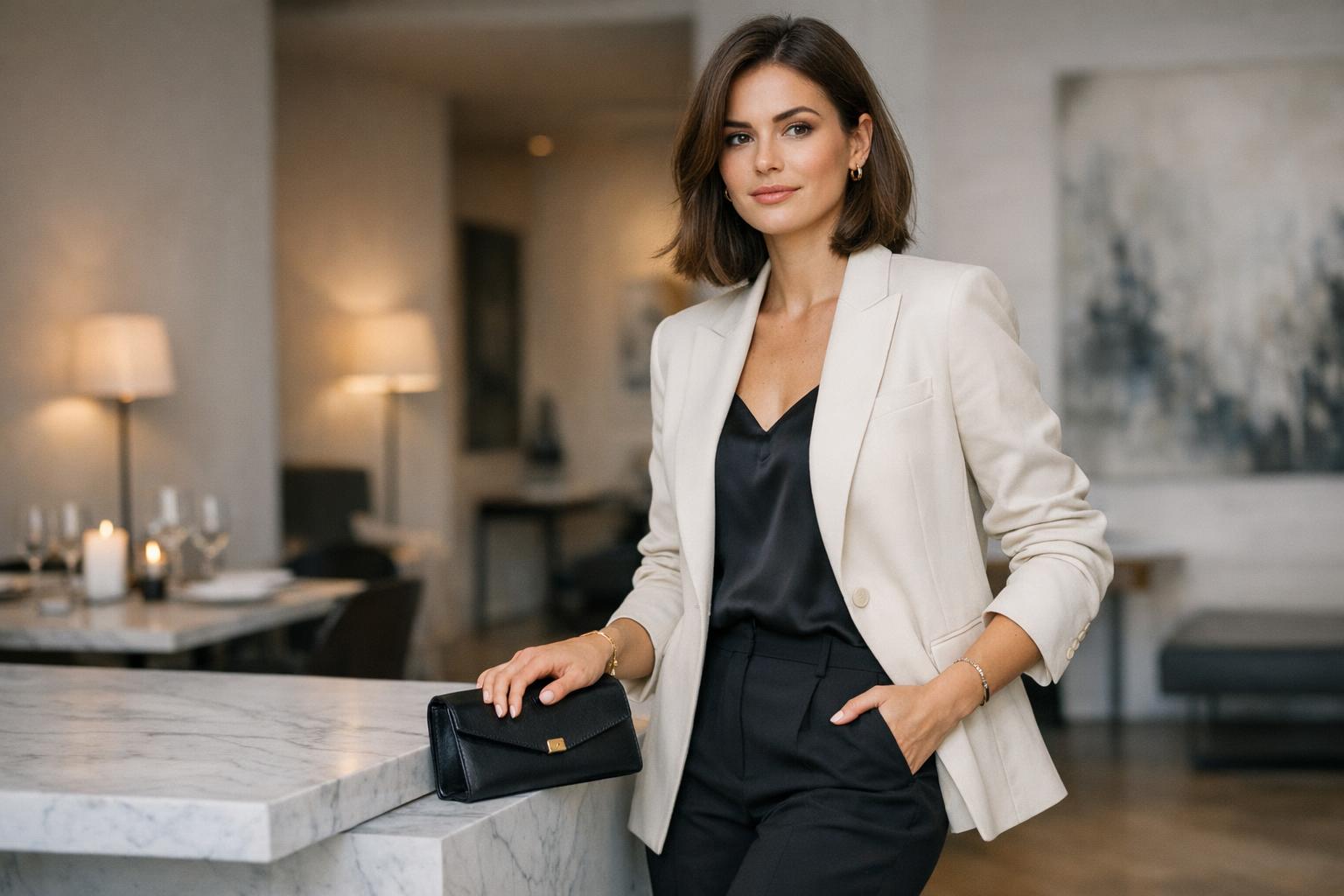
A semi-formal dress code creates one of the most persistent wardrobe dilemmas: it sounds precise, yet in practice it sits in that uncertain space between relaxed dressing and full occasionwear. The challenge of building the right outfit semiformal look is not simply choosing something “nice.” It is deciding how polished you need to be, how comfortable you want to remain, and how to avoid looking either underdressed or excessively formal for the room.
This tension becomes even sharper when the event itself offers few clues. A dinner, work function, wedding-related celebration, evening gathering, or smart daytime occasion can all fall under the same label while calling for slightly different styling choices. The most successful semi-formal outfits solve that ambiguity through proportion, fabric, and restraint. Rather than chasing one rigid formula, the goal is to build a look that feels refined, appropriate, and easy to wear for hours.
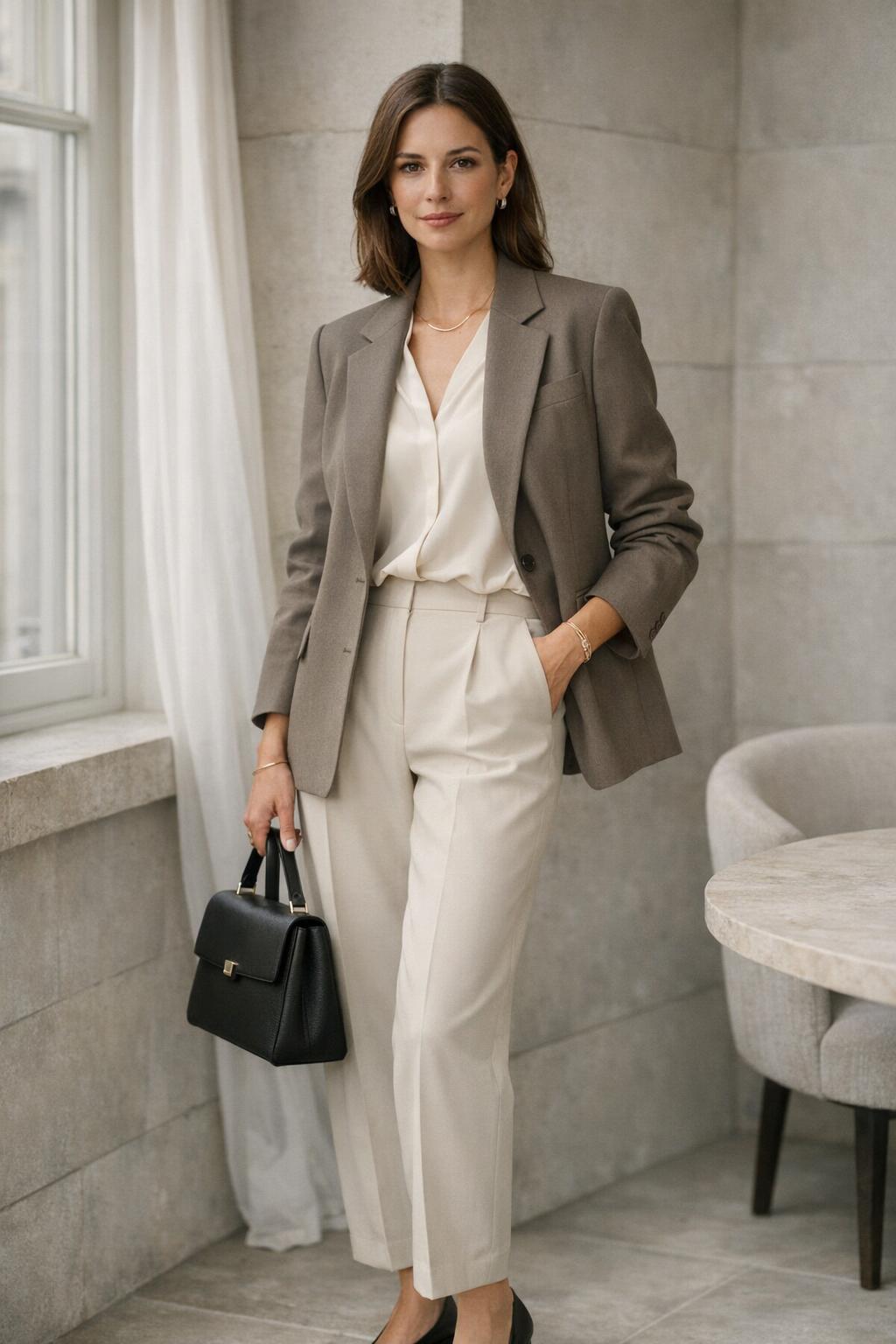
What follows is a practical fashion guide shaped around that problem. Instead of treating semi-formal dressing as a narrow rulebook, it approaches it as a styling exercise: how to combine tailored structure, softer textures, and elevated basics into outfits that feel composed in real life. Whether your preference leans toward look di moda polish, stylish work outfits, cute professional outfits, simple casual outfits, or classier interpretations of everyday dressing, the same principles can help you find the right balance.
Why semi-formal feels harder than it should
The difficulty with semi-formal style comes from contrast. Most people know what casual looks like, and most people can identify overtly formal clothing. Semi-formal, however, depends on subtle calibration. A blazer can make one outfit feel sharp and event-ready, yet in another context it can look too corporate. A dress can feel perfectly polished if the fabric has elegant movement, but too casual if the cut and texture read purely daytime.
Your wedding has a lot of moving pieces. Your plan can still feel composed.
Zarellea organizes guests, vendors, budget, and timelines in one shared space — so you can make decisions with clarity, not stress.
Weather also complicates the decision. In warm conditions, lighter fabrics are essential, but outfits can quickly lose structure if everything becomes too soft or too bare. In cooler settings, layering helps, yet too many heavy pieces can push the look into business or winter evening territory rather than a balanced semi-formal silhouette. Comfort matters as well. A semi-formal event usually involves movement, sitting, standing, socializing, and staying dressed for several hours. That means the outfit has to maintain its shape while still feeling wearable.
There is also a practical issue of context. A semi-formal outfit for an office-adjacent event is different from one for a dinner or celebration. The best approach is not to search for a single universal answer, but to understand the visual signals that create polish: clean lines, thoughtful layering, controlled color, and materials that look intentional rather than incidental.
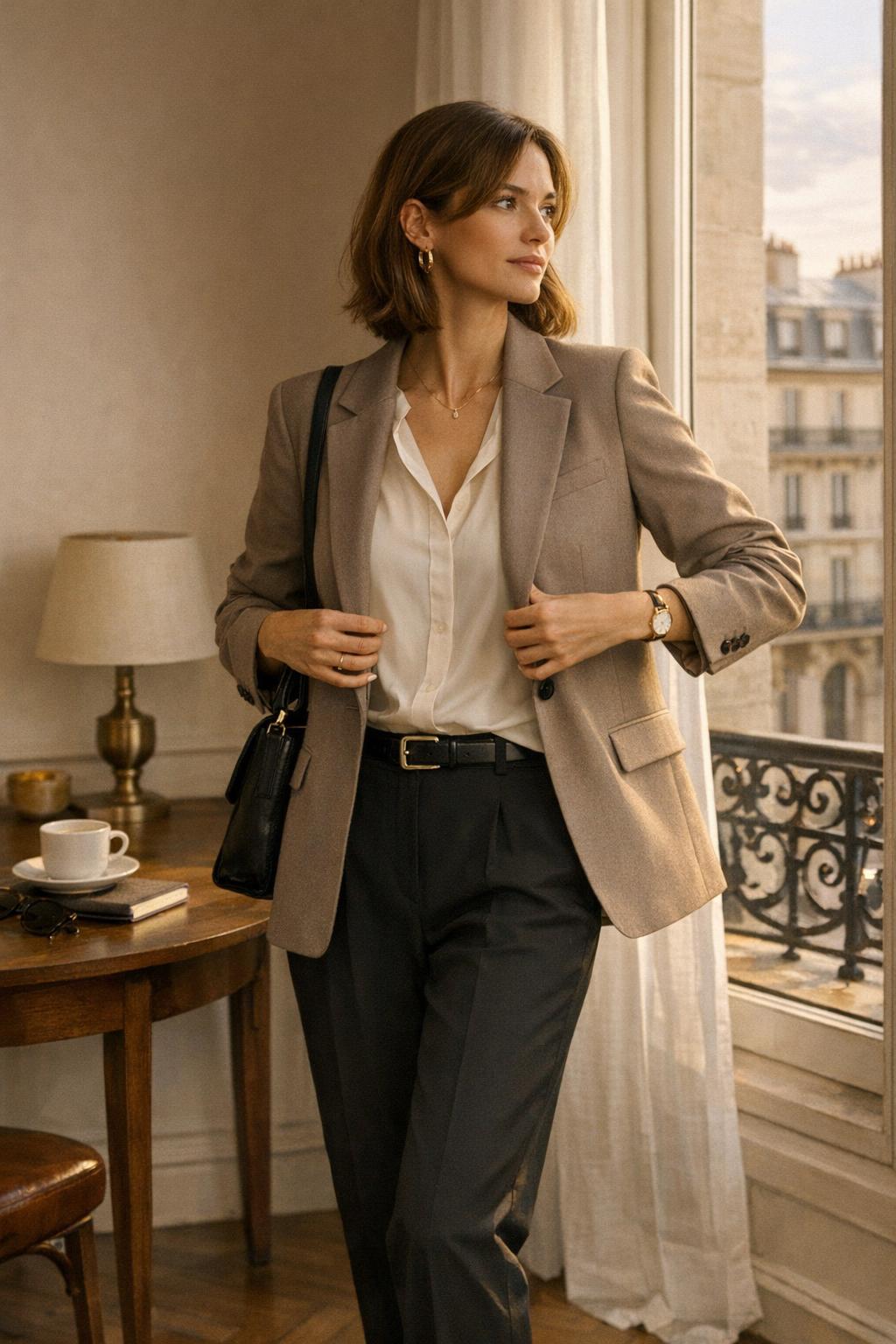
The principles that make semi-formal dressing work
Semi-formal style is most convincing when every piece contributes to a clear visual hierarchy. One item usually provides structure, another adds softness, and the rest support the look without competing for attention. This is why tailored trousers with a fluid blouse feel balanced, and why a structured blazer layered over a simple dress often looks more refined than a heavily embellished outfit trying too hard to announce the occasion.
Use tailored structure as the anchor
A semi-formal outfit needs at least one element with shape: a blazer, tailored trousers, a clean midi dress, a well-cut skirt, or a polished shirt. This structure creates the impression of effort and intention. Without it, even beautiful pieces can drift into simple casual outfits rather than something suitable for an event or elevated social setting.
Balance polished pieces with ease
The smartest semi-formal dressing never feels stiff. If everything is rigid, the look risks becoming severe. If everything is soft, it can appear unfinished. The sweet spot is contrast: a tailored silhouette paired with a fluid fabric, a sleek dress softened by a relaxed layer, or a crisp shirt styled with elegant trousers that move easily. This balance gives the outfit a modern, wearable quality.
Let fabric do part of the work
Fabric often decides whether an outfit reads casual, professional, or semi-formal. Smooth weaves, draped materials, crisp cotton, refined knits, and structured suiting fabrics all elevate an outfit without requiring dramatic styling. Textures that wrinkle easily, feel overly sporty, or appear too relaxed can undermine the intention even if the silhouette itself is strong.
Keep the color story controlled
A restrained palette helps semi-formal outfits look sophisticated. Neutrals, soft tonal combinations, deeper evening shades, and subtle contrast all support a polished finish. This does not mean the look must be muted, only that the colors should feel edited. One strong accent can be elegant; too many disconnected tones can make the outfit look improvised.
Think in terms of occasion, not only trend
The most reliable semi-formal outfits are built from timeless wardrobe elements, then adjusted to suit the setting. That philosophy feels especially aligned with the understated confidence often associated with Paris, Milan, and Copenhagen dressing: nothing appears accidental, but nothing appears overworked either. Great style here is less about novelty and more about composition.
How to read the setting before you get dressed
Before choosing pieces, it helps to interpret the event through three questions: how polished is the venue, how long will you be wearing the outfit, and does the occasion lean social, professional, or celebratory? A restaurant dinner, gallery-style event, office reception, or family celebration may all use the same dress code language, but they ask for different levels of presence.
- If the setting is work-adjacent, lean toward tailored structure and cleaner lines.
- If the occasion is social or evening-centered, introduce softer drape, richer color, or more elegant accessories.
- If the event spans day into night, rely on versatile layers that can adapt without requiring a full change.
- If comfort is essential because of travel, movement, or long wear, choose breathable fabrics and footwear that remain polished without feeling restrictive.
This is where many semi-formal mistakes begin. People often dress for the label instead of the environment. The result is a look that is technically correct but visually disconnected from the moment. Reading the room first makes styling decisions clearer.
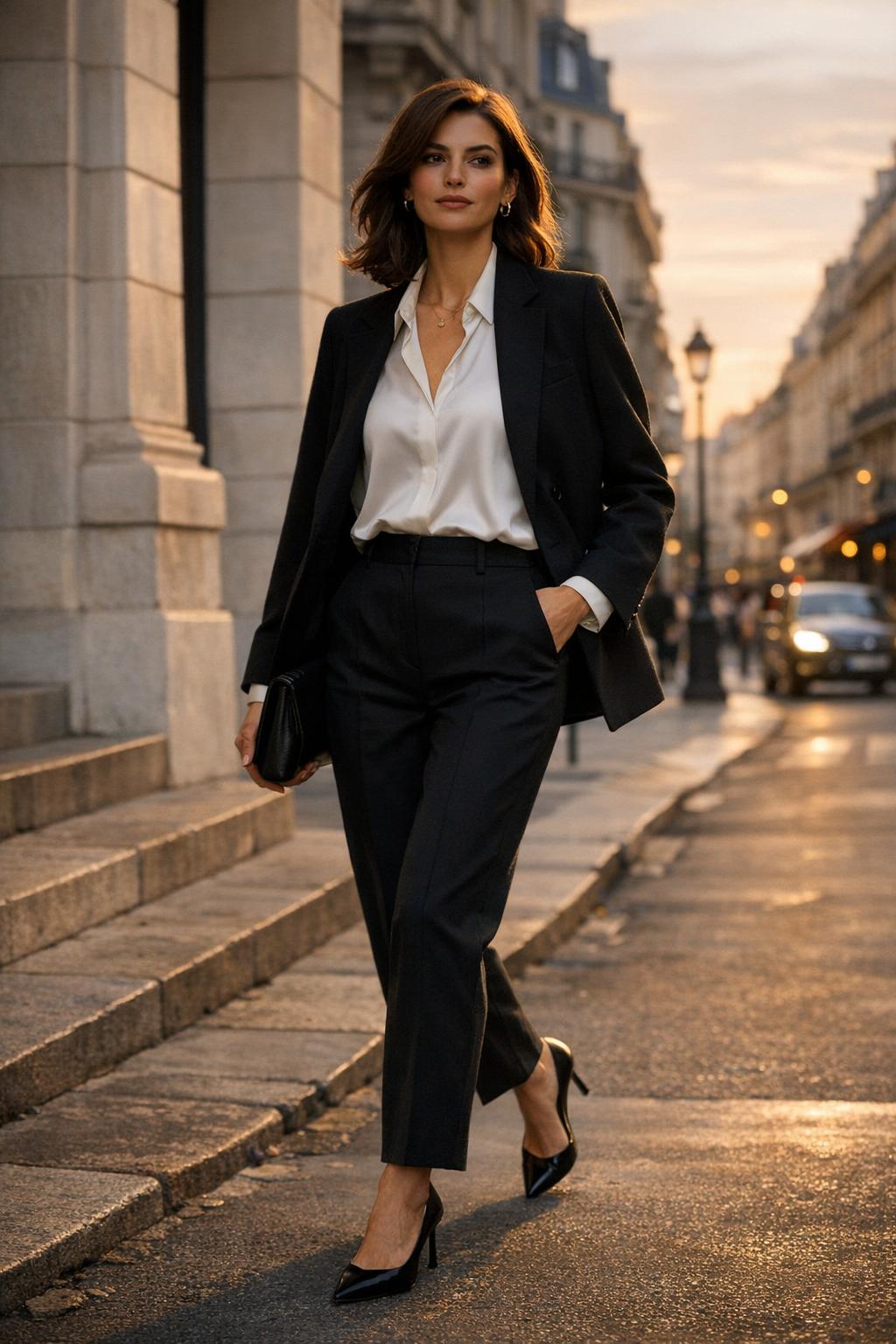
Outfit solution: the tailored blazer with fluid separates
One of the most reliable answers to a semi-formal invitation is a structured blazer layered over a soft top and tailored trousers or a streamlined skirt. This combination works because it carries authority without looking overly businesslike when the proportions are handled well. The blazer provides shape; the fluid underlayer introduces movement and ease.
To keep the outfit from feeling too office-specific, avoid pieces that are all from the same rigid visual language. A sharp blazer with severe trousers and a stiff shirt can move quickly into corporate territory. Instead, a softly draped blouse, a refined knit shell, or a smoother camisole-style top can lighten the mood. The result belongs comfortably in the world of cute professional outfits and classy work outfits while remaining event-appropriate.
This look is especially effective for evening dinners, networking events, gallery openings, or workplace celebrations where you want confidence without formality that feels theatrical. It also transitions well across temperatures. In cooler weather, the blazer stays on. In warmer interiors, it can be removed without the outfit collapsing.
Why this combination works
The tailored outer layer creates immediate polish, while the softer pieces beneath prevent visual heaviness. The outfit also solves a practical problem: many semi-formal events involve uncertain temperature control. A blazer gives you flexibility, and the base layer can be chosen according to season and comfort.
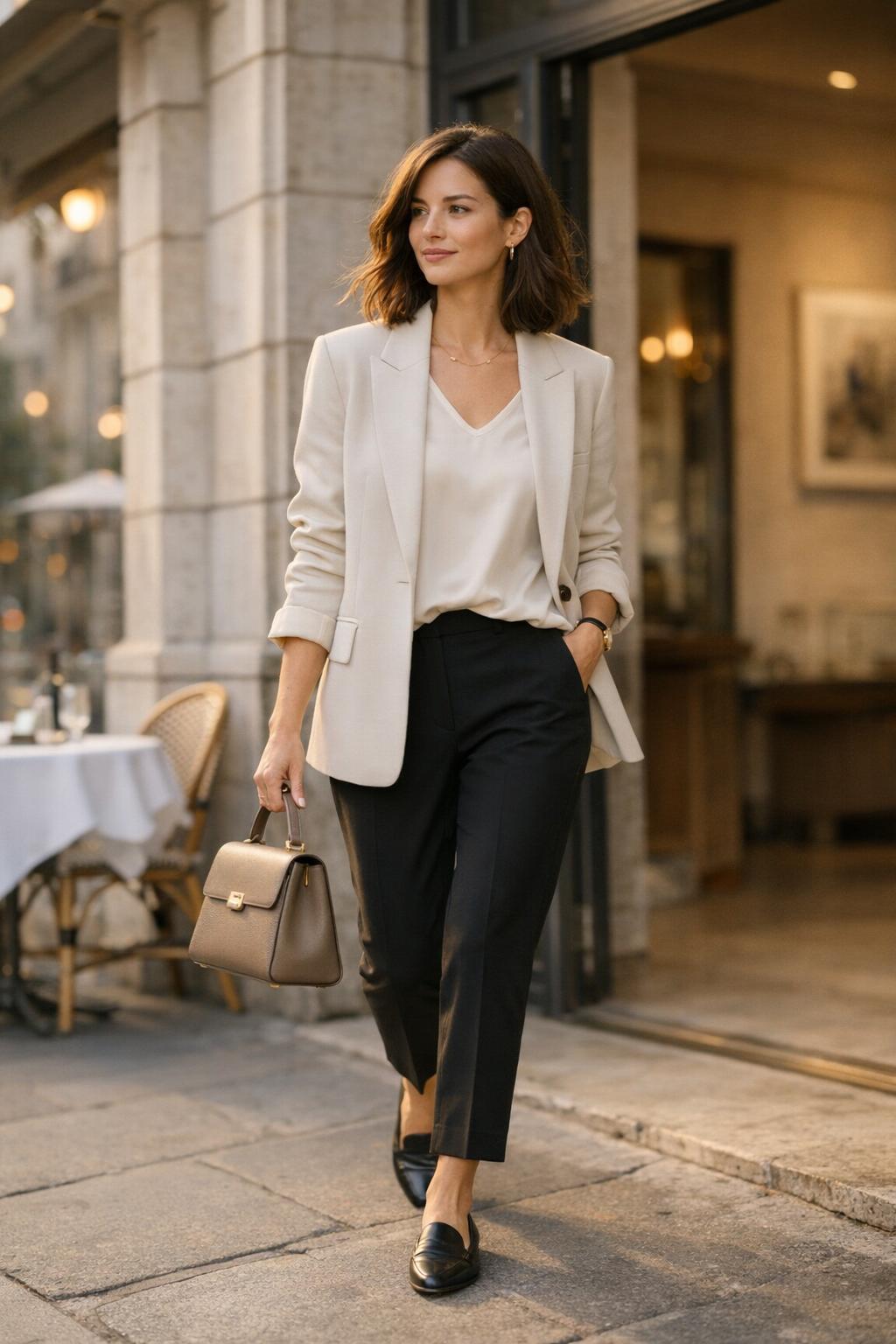
Outfit solution: the refined midi dress with clean layering
A midi dress with a modern silhouette offers one of the simplest routes into semi-formal dressing. The key is to choose a shape that feels composed rather than overtly festive. Clean lines, subtle drape, and a length with enough presence to look intentional usually create the right tone. If the dress stands too close to casual daytime dressing, a structured jacket or elegant knit layer can refine it.
This approach suits readers who prefer a polished look with minimal assembly. It is also ideal when the event itself is ambiguous. A refined dress can shift across settings depending on how it is styled: more architectural with a blazer, softer with a lightweight wrap, more modern with understated accessories. It belongs naturally within a look di moda approach because the impact comes from line and proportion, not excess detail.
For real-life wear, this outfit also addresses comfort. A midi length offers ease of movement and helps you avoid constant adjustment while walking, sitting, or mingling. In warm weather, breathable fabrics keep the outfit elegant without looking heavy. In cooler conditions, layering preserves the silhouette better than simply adding bulk.
Best occasions for this look
It works particularly well for dinners, celebrations, date nights with a dress code, and events where you want a feminine silhouette without veering into full formalwear. If the invitation is semi-formal but the atmosphere seems softer and more social than corporate, this is often the strongest choice.
Outfit solution: polished trousers and an elevated knit
There are times when a shirt feels too strict and a blouse feels too delicate. In those moments, a refined knit paired with tailored trousers offers exactly the right middle ground. This is a particularly effective semi-formal solution for transitional weather, where comfort and temperature regulation matter as much as appearance.
The success of this look depends on cut. The knit should feel intentional, not lounge-like: clean neckline, smooth finish, and a fit that follows the body without clinging or slouching. Trousers with a crisp line bring structure, while the knit softens the overall impression. The result feels quietly elegant and very modern, especially for those who prefer stylish work outfits that can evolve into evening dressing with only minor changes.
In practice, this outfit is useful for restaurant gatherings, office-to-evening events, and occasions where you know you will be on your feet for a long stretch. It provides enough sophistication to satisfy the dress code while preserving comfort through movement and changing conditions.
A subtle styling insight
With knitwear, texture becomes especially important. A knit that is too chunky can read daytime casual. A smoother, finer finish tends to align better with semi-formal settings because it keeps the silhouette clean and supports layering without visual weight.
Outfit solution: the shirt-and-skirt balance for understated elegance
A crisp shirt paired with a polished skirt creates a semi-formal outfit that feels intelligent rather than predictable. The beauty of this combination lies in contrast. The shirt brings clarity and structure; the skirt introduces movement. Together, they create a look that feels considered and editorial without appearing overdressed.
This solution is especially useful for readers who want something more elevated than simple casual outfits but less expected than a dress. It can also be one of the strongest options for daytime semi-formal events because it looks fresh in natural light and adapts easily with accessories and outerwear. If the shirt is too stiff, the outfit can feel severe. If the skirt is too relaxed, the look may lose its semi-formal edge. Balance remains the central principle.
Think of this as a quiet statement look: clean lines, a tailored tuck or half-tuck if appropriate, and a silhouette that lets each piece contribute. It is polished enough for events, but also rooted in wardrobe intelligence rather than occasion-specific purchasing.
Outfit solution: a monochrome semi-formal look that always reads polished
When the invitation is vague and you need a dependable answer, monochrome dressing can be remarkably effective. Keeping the outfit in one tonal family creates cohesion immediately, which is invaluable in semi-formal styling. Even simple pieces appear more deliberate when color is handled with discipline.
This might mean soft neutral tones balanced with a structured blazer and matching trousers, or a dress and outer layer in closely related shades. The elegance comes from continuity. Without loud contrast, the eye notices shape, texture, and fit more clearly. This is often how classy work outfits achieve their sophistication: not through complexity, but through consistency.
Monochrome also gives room for nuanced accessory choices. Because the clothing is visually calm, shoes, jewelry, or a bag can sharpen the mood without overwhelming the look. For readers drawn to Milan-style polish or Copenhagen restraint, this approach feels especially relevant.
Adapting semi-formal style for day, evening, and in-between hours
Not every semi-formal event begins at the ideal dressing hour. Many start in late afternoon, carry into evening, or sit awkwardly between professional and social timing. In those cases, adaptability becomes more important than drama. The smartest outfits are the ones that can shift mood through small adjustments.
- For daytime, emphasize crispness, lighter layers, and softer color contrast.
- For evening, deepen the palette, sharpen the silhouette, or use richer textures.
- For events that begin after work, rely on one strong anchor piece such as a blazer, polished trouser, or clean midi dress.
- For uncertain schedules, choose pieces that remain elegant after hours of wear and do not require constant straightening.
This is where many stylish work outfits can be transformed successfully. A daytime base becomes semi-formal through better layering, more refined shoes, and a cleaner accessory edit. The difference often lies less in adding more and more in removing what feels too casual.
Fabric, footwear, and finishing details that change the entire effect
Readers often focus first on the main garments, yet semi-formal success frequently comes down to supporting details. A strong outfit can lose definition if the shoe feels too casual or if the fabric combination looks mismatched. Conversely, a relatively simple base can become beautifully polished through thoughtful finishing.
Fabric choices that support a semi-formal silhouette
Choose materials that hold shape or drape with intention. Crisp cotton, refined knitwear, smooth woven fabrics, and structured tailoring textiles all tend to support the dress code well. Pieces that collapse too easily, wrinkle heavily, or feel overtly sporty can make the outfit appear less considered.
Footwear that keeps the look balanced
Shoes should reinforce the level of polish established by the outfit. The best options usually have clean lines and a visible sense of finish. The point is not height or drama, but coherence. If the clothing reads refined and the shoes read casual, the entire composition weakens. Comfort matters too, especially for events that involve standing or walking. A semi-formal look that you cannot wear naturally will never appear fully polished.
Accessories with restraint
Semi-formal dressing benefits from editing. A belt, earring, compact bag, or subtle layered jewelry can complete the look, but too many decorative elements often disrupt the elegance. Think of accessories as punctuation rather than the whole sentence. They should clarify the outfit, not compete with it.
A practical note on comfort: style should still survive real life
An outfit may look perfect in a mirror and fail entirely after two hours if the fabric clings, the jacket restricts movement, or the shoes change your posture. Semi-formal dressing is particularly vulnerable to this because the category encourages precision, and precision can lead people to choose clothing that photographs well but performs poorly.
A more experienced approach is to test the outfit as a full composition before the event. Sit in it. Walk in it. Layer and remove outerwear. Consider whether the fabrics still look refined after movement. This is especially important for cute professional outfits and polished work-inspired looks, where tailoring is part of the appeal. If the fit is too tight or the layers fight each other, the look loses its effortless quality.
True elegance rarely comes from discomfort. It comes from clothing that holds its shape while allowing you to behave normally. That is the difference between looking dressed and looking truly well dressed.
Common mistakes that make a semi-formal outfit miss the mark
Most semi-formal dressing errors are not dramatic. They happen in small imbalances that shift the outfit away from the intended middle ground.
- Choosing pieces that are too casual in fabric, which makes the look feel unfinished even if the silhouette seems correct.
- Leaning too hard into officewear, creating a result that feels more corporate than occasion-ready.
- Over-accessorizing in an effort to make a basic outfit look formal, which often creates visual clutter instead of polish.
- Ignoring the event duration and venue conditions, leading to discomfort that shows in posture and movement.
- Using too many competing style signals at once, so the outfit has no clear identity.
The correction is almost always the same: simplify, sharpen one key silhouette, and let the rest of the look support it. Semi-formal style rewards clarity more than excess.
Tips for building a semi-formal wardrobe without overcomplicating it
A practical wardrobe does not need dozens of event-specific pieces to solve semi-formal dressing. In fact, the most useful wardrobes rely on a compact set of elevated basics that can be recomposed depending on context. This is why certain garments appear repeatedly in polished dressing: the structured blazer, the tailored trouser, the refined knit, the clean shirt, the elegant skirt, and the dress with a modern line.
If you tend to dress casually in everyday life, start by upgrading one element at a time. Keep the outfit familiar, but replace the most relaxed piece with something sharper. If your wardrobe is heavily professional, soften the look through texture and proportion so it does not read as standard office attire. Both strategies move toward the same destination: an outfit semiformal enough for the occasion, but still personal and believable.
A useful rule is to build around pieces you can wear in more than one setting. The best stylish work outfits and classy work outfits often become excellent semi-formal looks because they already contain the right architecture. Similarly, some simple casual outfits can be elevated if their lines are clean and the fabrics are improved. The transformation usually requires intention, not reinvention.
Final perspective: polish comes from judgment, not complication
Semi-formal dressing asks for discernment more than spectacle. The strongest outfits rely on shape, fabric, and context rather than trying to force a mood through obvious styling tricks. A structured blazer over softer separates, a refined midi dress with thoughtful layering, tailored trousers paired with an elevated knit, or a crisp shirt balanced by a polished skirt all succeed because they solve the same problem in different ways: they create composure without stiffness.
Once you understand that logic, the dress code becomes far less intimidating. You begin to see semi-formal style not as a narrow category, but as a controlled interplay of ease and structure. That perspective makes it easier to adapt your wardrobe for future invitations, changing weather, and different settings while still looking refined, modern, and entirely at ease.
FAQ
What does semi-formal mean in outfit terms?
Semi-formal usually means dressing in a way that is more polished than casual but less elaborate than full formalwear. In practical terms, that often includes tailored pieces, refined dresses, structured layers, cleaner fabrics, and accessories that feel intentional rather than relaxed.
Can a blazer make an outfit semi-formal?
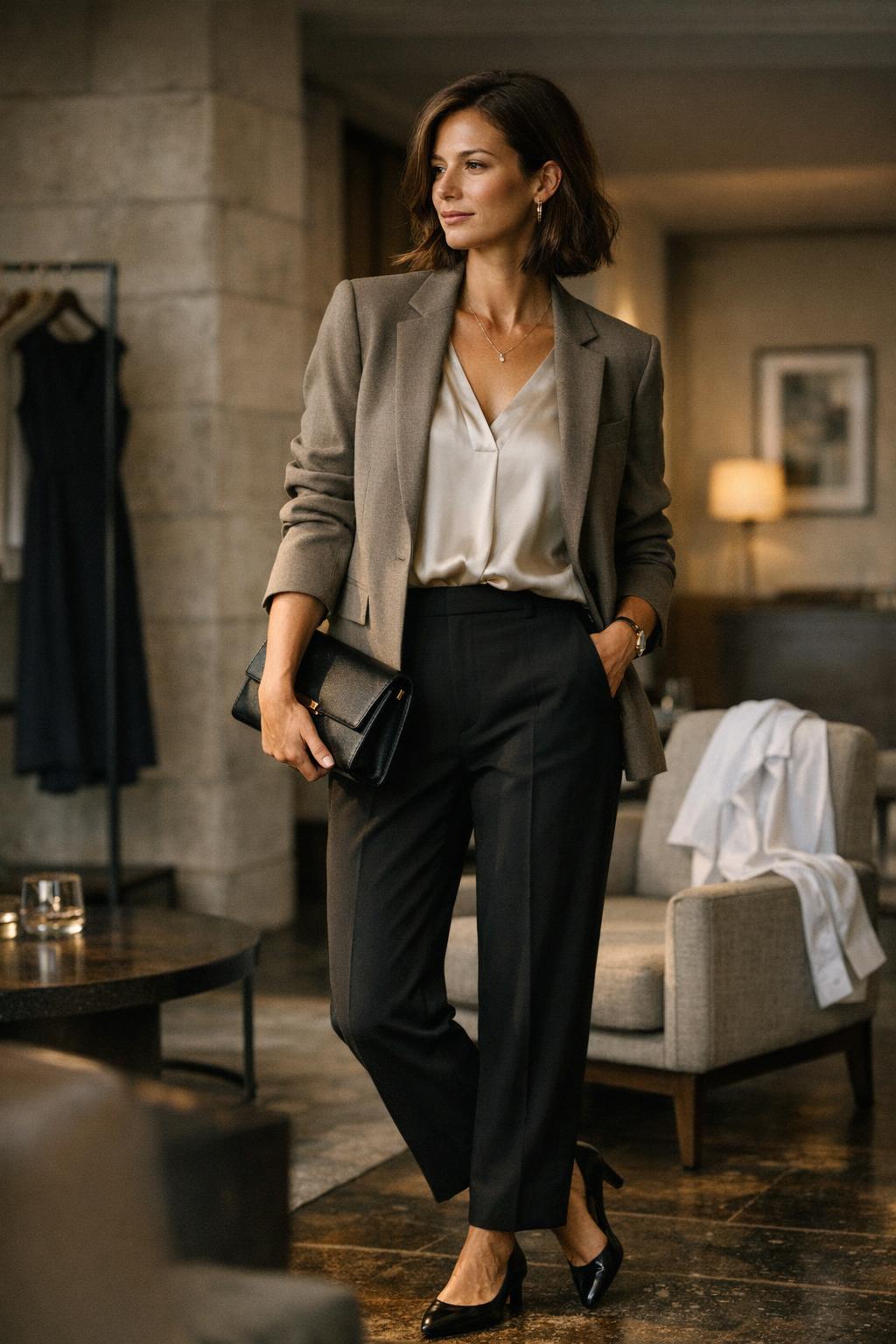
Yes, a blazer can help establish a semi-formal look because it adds structure and polish, but it works best when paired with pieces that soften the overall effect. If everything else feels too corporate, the outfit may read as officewear rather than event-appropriate semi-formal dressing.
Are trousers appropriate for a semi-formal event?
Tailored trousers are one of the most reliable semi-formal options, especially when styled with an elevated top, refined knit, blazer, or polished accessories. The key is choosing a silhouette and fabric that look intentional and not overly casual.
How do I avoid looking too casual in a semi-formal outfit?
The easiest way is to make sure at least one part of the outfit provides visible structure, such as a blazer, tailored trouser, crisp shirt, or clean midi dress. Controlled color, polished shoes, and better fabrics also help prevent the look from slipping into everyday casual territory.
How do I avoid looking overdressed?
Keep the styling edited and resist adding too many statement elements at once. Semi-formal looks are usually strongest when the silhouette is clean, the accessories are restrained, and the outfit feels composed rather than heavily embellished or overtly dramatic.
Can simple casual outfits be turned into semi-formal looks?
Sometimes, yes. Simple casual outfits with clean lines can be elevated through better tailoring, sharper layering, and more refined footwear, but not every casual piece will make the transition. The final look still needs clear polish and enough structure to suit the occasion.
What are the best semi-formal options for work-related events?
The strongest choices often come from the overlap between stylish work outfits, cute professional outfits, and semi-formal dressing. Tailored trousers with a refined top, a structured blazer with softer separates, or a polished dress with clean layering all work well because they feel professional without looking strictly corporate.
Does monochrome work for semi-formal dressing?
Yes, monochrome is often one of the easiest ways to look polished because it creates visual cohesion immediately. A tonal outfit allows fit, texture, and silhouette to stand out, which makes even relatively simple pieces appear more elevated and composed.
What should I prioritize if comfort is important?
Prioritize breathable fabrics, comfortable movement, and shoes you can realistically wear for the full event. Semi-formal style should still function in real life, and an outfit that looks elegant but causes constant adjustment will never feel truly polished.
Leave a Reply