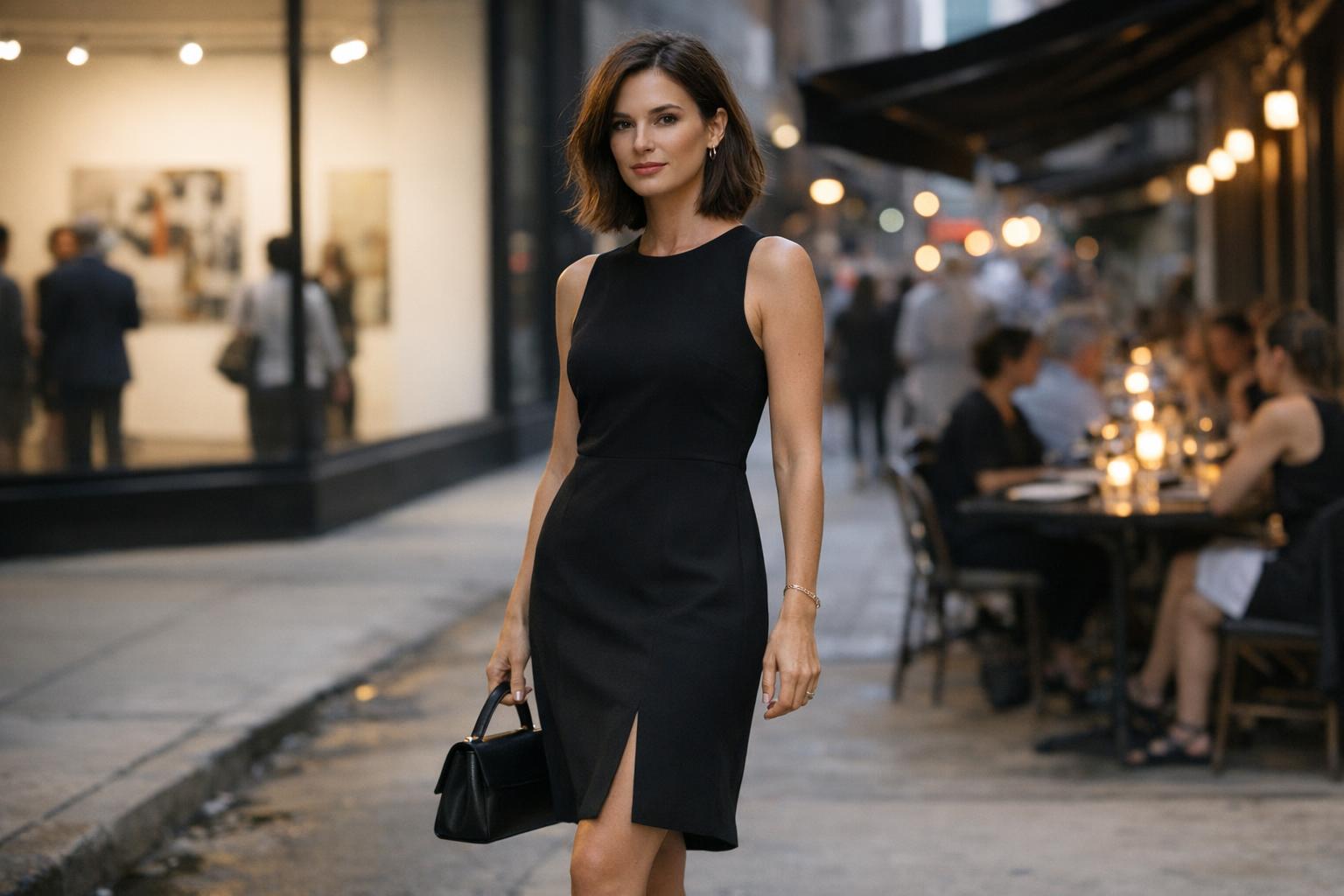
The black dress outfit, reimagined as a modern aesthetic
There’s a particular calm confidence that arrives the moment a black dress is involved. Not because it’s “safe,” but because it’s visually decisive: clean lines, controlled drama, and a silhouette that can move from day to night without changing your sense of self. In U.S. city life—where a dinner invite can follow a workday, and a last-minute event can appear between errands—the black dress outfit becomes less of a single look and more of a styling language.
This aesthetic leans polished and editorial, with a quiet European sensibility: minimalist foundations, sharp proportion, and accessories chosen for contrast rather than noise. It’s the kind of outfit formula fashion editors return to for a reason—because it’s adaptable. Vogue’s enduring fixation on the little black dress and Who What Wear’s editor-approved outfit ideas both circle the same truth: a black dress can read classic, modern, playful, or severe depending on what you build around it.
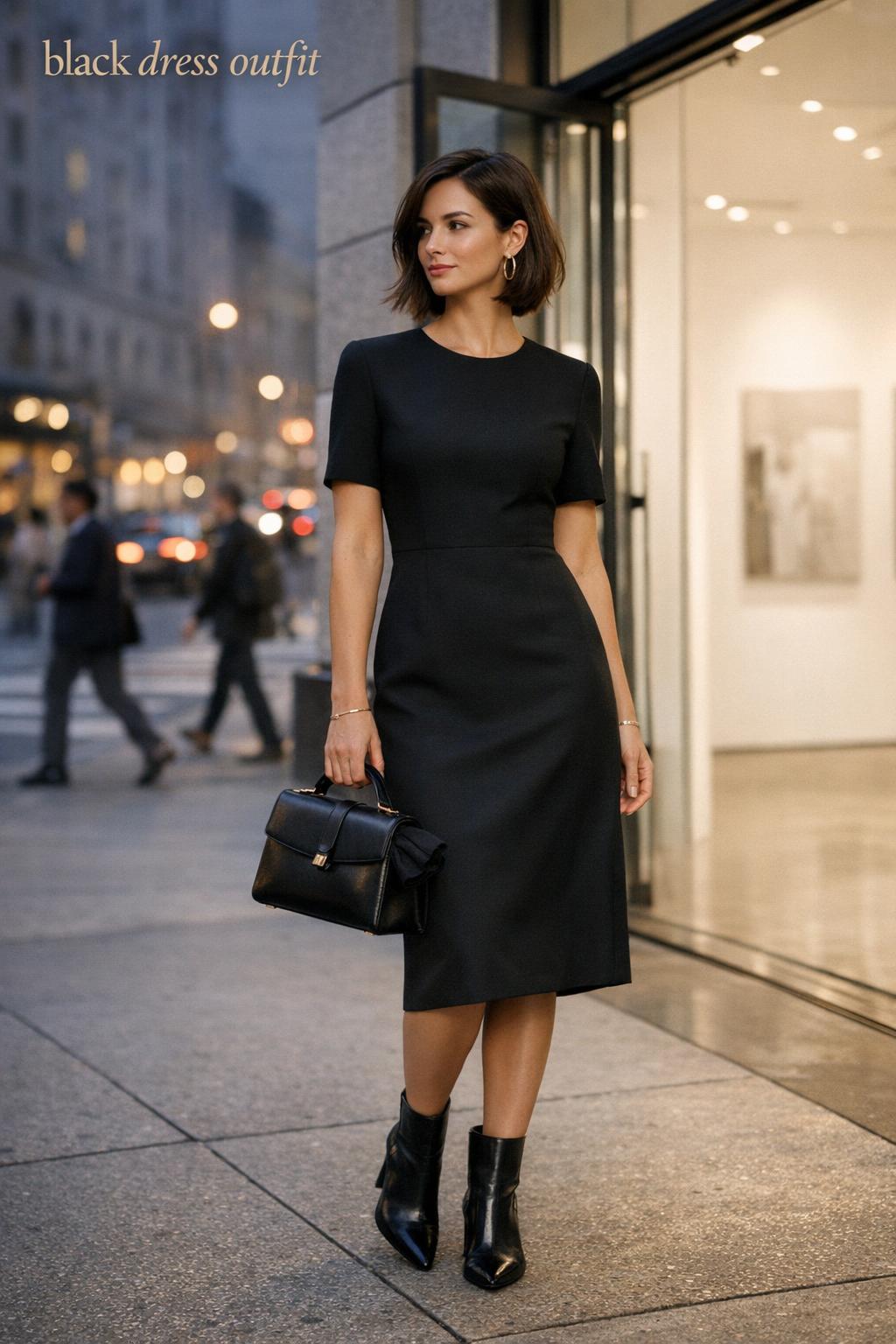
Where is it worn? Everywhere that demands a composed presence: a night out outfit that still feels intelligent, a summer look that stays chic without effort, or a party-season uniform that holds up in real rooms—dim restaurants, bright galleries, busy sidewalks. The appeal is simple: the black dress doesn’t compete with you. It frames you.
How to think like an editor: the black dress outfit as a “formula,” not a costume
A black dress outfit succeeds when it’s treated as structure. The dress is the base—your visual anchor—while the styling does the storytelling. That’s why editor-driven roundups tend to focus on “ideas” rather than “rules”: the same black dress can become multiple identities with shifts in footwear, hosiery, and jewelry.
Your wedding has a lot of moving pieces. Your plan can still feel composed.
Zarellea organizes guests, vendors, budget, and timelines in one shared space — so you can make decisions with clarity, not stress.
To keep the aesthetic cohesive, focus on three levers: silhouette (fitted vs. relaxed), contrast (matte vs. shine, bare leg vs. tights), and intention (everyday, summer, boots, party season). This is also where all-black styling comes into play: monochrome can look severe if it’s flat, but it looks expensive when you introduce texture, proportion, and one strategic focal point.
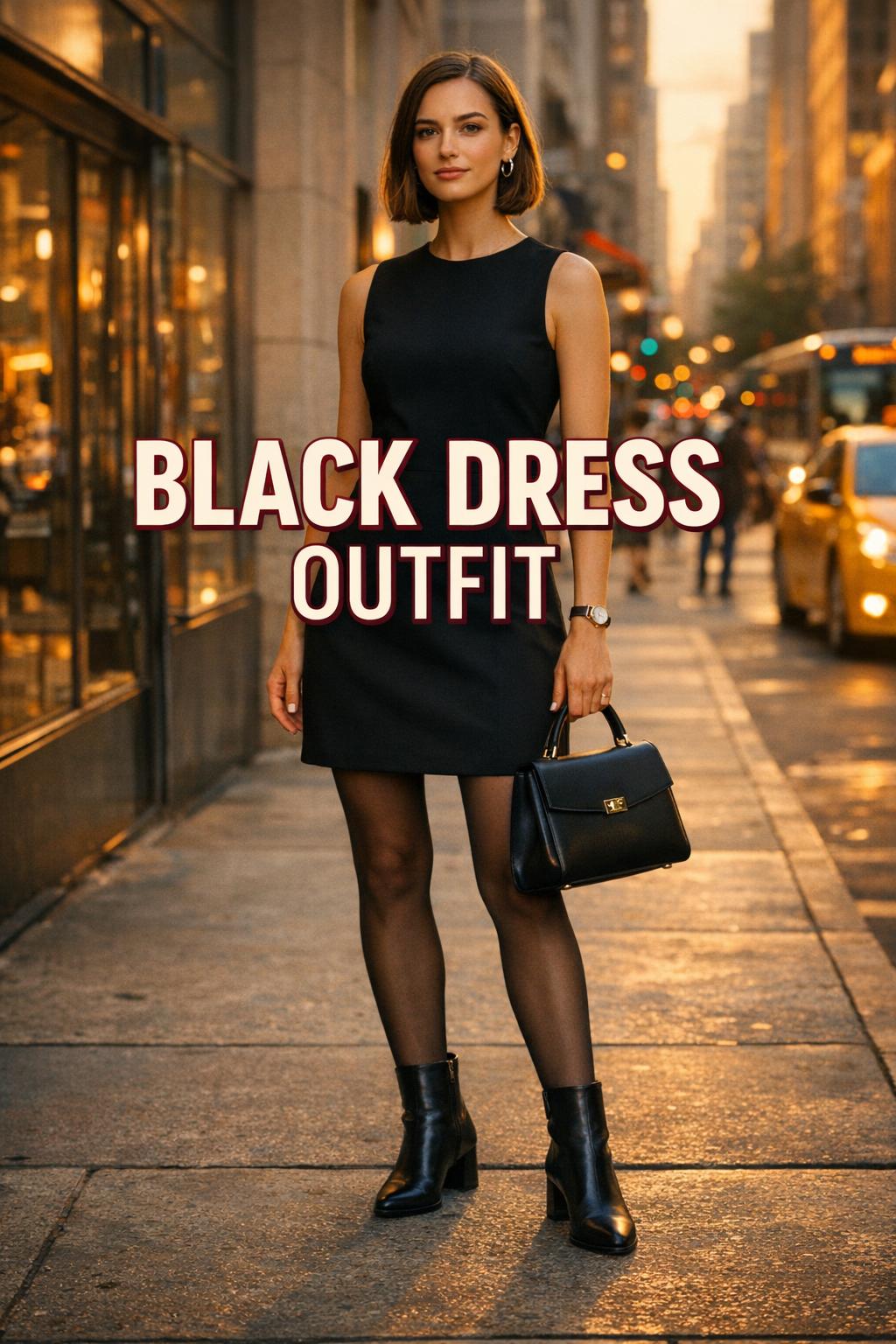
Look: The Vogue-leaning little black dress with a refined daytime edge
This look is the kind of understated fashion confidence you notice in motion: clean, compact, and slightly architectural. The mood is quietly assertive—more “gallery opening” than “trend moment.” It works when you want the little black dress to feel like a wardrobe staple, not an occasion piece.
Choose a simple black dress with a crisp silhouette—think streamlined and uninterrupted. Keep the palette fully black, but avoid letting it go flat by mixing finishes: a matte dress against sleeker accessories, or a minimal neckline paired with sharper elements elsewhere. The result is modern, not austere.
- Key garments: a simple little black dress with clean lines
- Footwear: refined, minimal shoes (keep the shape sleek)
- Accessories: restrained jewelry and a polished bag
Why it fits the aesthetic: it channels the fashion-forward clarity often associated with Vogue’s approach to the LBD—focused on shape and styling intelligence. It’s also a practical U.S. city uniform: you can wear it through a full day and still look intentional at night without feeling “overdone.”
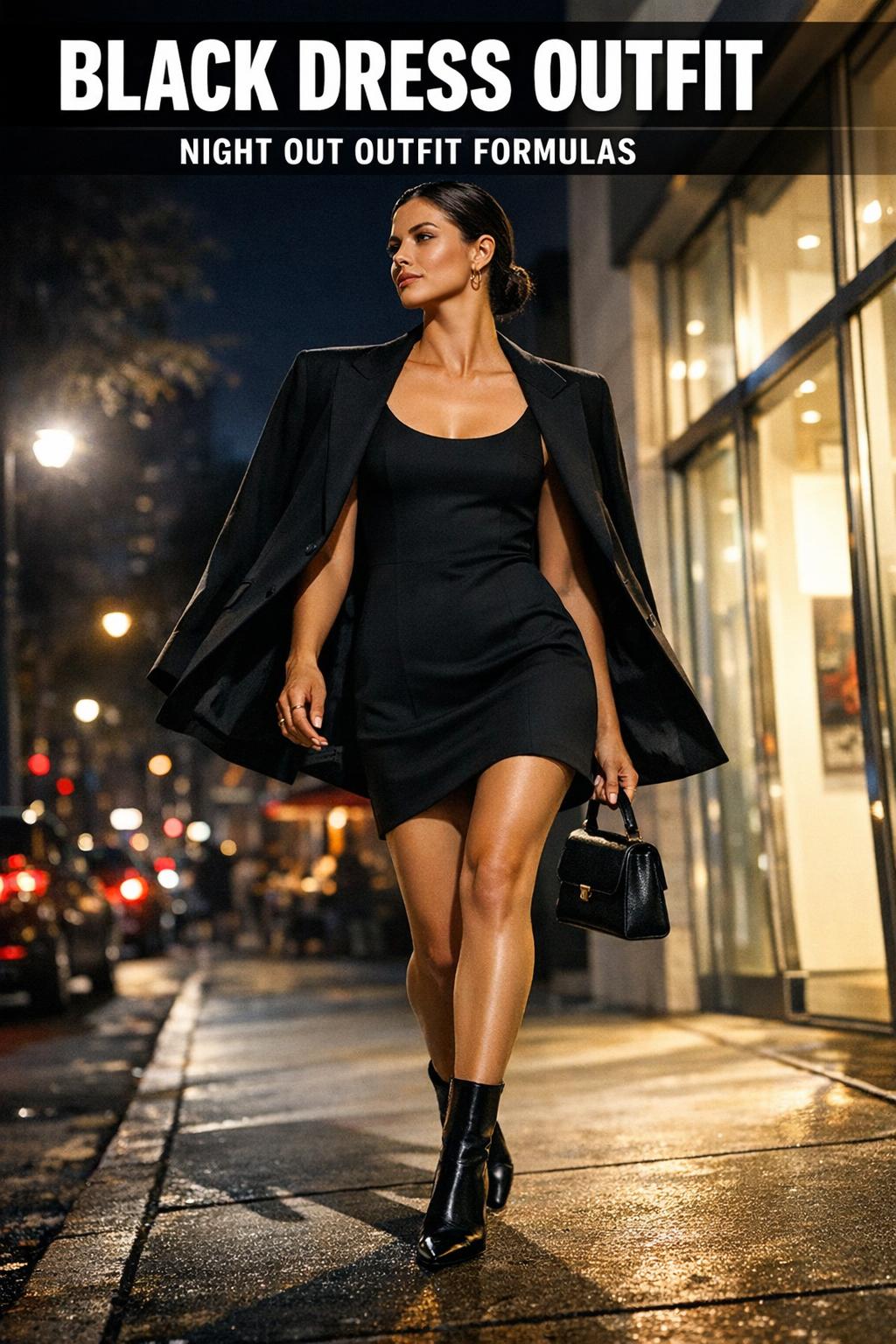
Look: Elevated editor-approved black-dress outfit with a “shop-the-look” polish
This is the black dress outfit as an editorial favorite: elevated, pulled together, and designed to photograph well while still functioning in real life. The silhouette reads purposeful from the first glance—nothing accidental, nothing fussy.
Start with a black dress that feels current through proportion rather than novelty. Then add a controlled layer of interest via accessories: a slightly more prominent bag shape, a more deliberate shoe choice, and jewelry that signals taste without dominating. Think of it as the styling equivalent of a well-edited sentence—tight, elegant, memorable.
Why it fits the aesthetic: Who What Wear’s editor-approved approach tends to reward outfits that are both wearable and elevated. This look borrows that sensibility—an outfit you can replicate without needing a new identity, just clearer choices.
Look: Summer black dress outfit that stays chic in heat and sunlight
A summer black dress outfit has a specific challenge: black can feel heavy when the day is bright. The solution isn’t to abandon the color—it’s to lighten the mood through styling. The silhouette should feel breathable and unforced, with visual space around the body rather than compression.
Keep the dress uncomplicated and let the outfit read “summer” through restraint: less layering, cleaner accessories, and footwear that feels warm-weather appropriate. The goal is chic simplicity, the kind that looks right at a late lunch and still works at dinner without a full change.
- Key garments: a black summer dress with an easy drape
- Footwear: sandals or minimal warm-weather shoes
- Accessories: light, unfussy jewelry and a daytime-to-evening bag
Why it fits the aesthetic: it aligns with the “always look chic” promise of summer-black styling—where the black dress becomes a cooling visual anchor, and the overall impression stays effortless rather than severe.
Look: Black dress and boots—2024’s practical contrast for real weather
Boots change the entire mood of a black dress outfit. Suddenly, the look becomes grounded—more street, more seasonal, more tactile. It’s also one of the most practical combinations for U.S. climates where transitional weather is unpredictable and you need your outfit to handle wind, chill, and long walking days.
The silhouette works best with clear balance: a black dress that doesn’t fight the boot shaft, and a boot shape that feels intentional rather than purely functional. Keep the palette black-on-black if you want a sleek, all-black line, or introduce subtle variation through texture so the outfit doesn’t read flat in daylight.
- Key garments: black dress with a hemline that pairs cleanly with boots
- Footwear: boots that feel structured and season-ready
- Accessories: minimal jewelry; consider one statement element to break up the line
Why it fits the aesthetic: this is the editorial version of “easy”—the kind of black dress and boot pairing that looks deliberate even when you’re dressing quickly. It’s also a smart answer to the question, “How do I keep my black dress outfit from feeling too formal?”
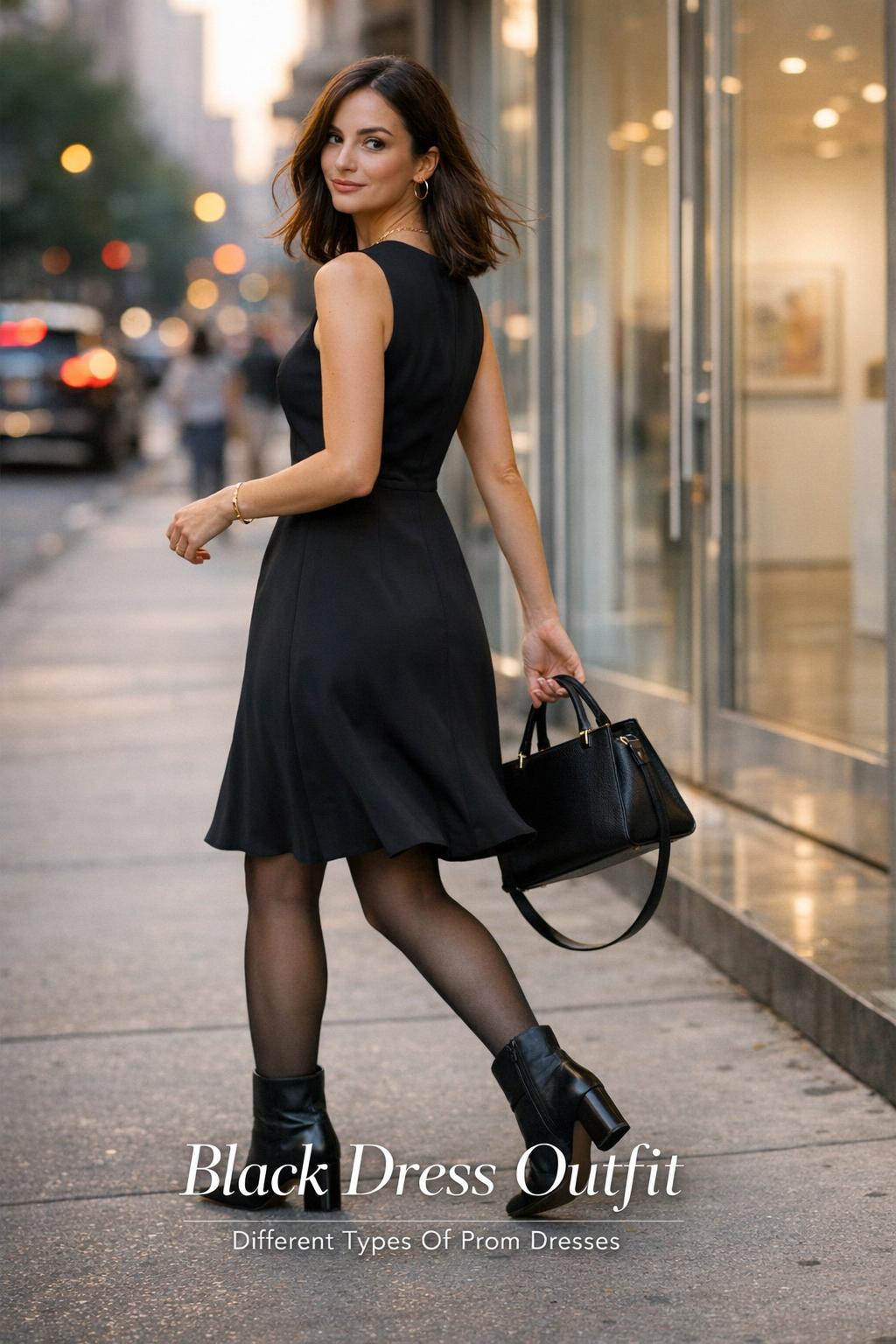
Look: Party-season LBD with black tights and white heels (the Alexa Chung approach)
Party season invites contrast—especially the kind that reads crisp in city light. The black tights and white heels pairing is a classic example: graphic, memorable, and slightly playful while still polished. It’s a formula that feels particularly at home in New York City, where evening dressing often leans sharp rather than sparkling.
Anchor the look in a little black dress with a clean shape, then add black tights to create an uninterrupted line through the leg. The white heels become the punctuation mark—bright, intentional, and editorial. The overall palette stays minimal (black and white), but the impact is strong because the contrast is strategic.
- Key garments: little black dress + black tights
- Footwear: white heels for high-contrast polish
- Accessories: keep jewelry refined; let the contrast do the work
Why it fits the aesthetic: Alexa Chung’s influence here is less about copying a celebrity and more about understanding a styling principle—contrast creates a “styled” feeling without needing excessive detail. It’s ideal for evenings when you want to look considered, not costumed.
Look: The ’90s-cool night out outfit—black dress with flip-flops (Jennifer Aniston energy)
A night out outfit doesn’t always need height to feel elevated. The ’90s-inspired move—pairing a simple black dress with flip-flops—creates a confident nonchalance that reads modern precisely because it refuses to overperform. It’s a relaxed kind of chic: minimal, lightly irreverent, and surprisingly flattering when the dress silhouette is clean.
To make this work, keep the black dress streamlined and avoid overly formal fabrics. The flip-flops should feel intentional—simple, pared back, and aligned with the dress’s minimal mood. Jewelry matters here: a subtle shine at the ears or wrist can keep the look from drifting into “too casual,” especially if your night includes a restaurant with a stricter vibe.
- Key garments: simple black dress with a clean neckline
- Footwear: flip-flops for a ’90s-leaning twist
- Accessories: minimal jewelry to re-elevate the simplicity
Why it fits the aesthetic: it’s celebrity style as a lesson in proportion and restraint—Jennifer Aniston’s appeal in these moments is that the styling feels lived-in. For warm evenings, vacations, or casual dinners, it’s a black dress outfit that looks cool without looking like you tried to look cool.
All-black outfits: when monochrome becomes the point
An all-black look can be transformative—graphic, elegant, and slightly cinematic. But it has a known risk: if everything is the same finish and weight, it can look flat, even tired. The difference between “all-black” and “just black” is composition.
Use the black dress as the anchor and build dimension with subtle shifts: a softer texture against something sleeker, a sharper shoe against a calmer dress shape, jewelry that catches light without turning the outfit into an accessory parade. This is where the celebrity all-black context often resonates—because the best all-black outfits aren’t loud; they’re controlled.
Style tip: the three “editing checks” that make a black dress outfit look expensive
Before you leave the house, do three quick checks that stylists rely on—especially when the outfit is intentionally minimal. First, check proportion: if the dress is fitted, keep accessories sleek; if the dress is relaxed, add one structured element. Second, check contrast: if everything is matte, introduce a slight shine via jewelry or a bag; if everything is glossy, calm it down. Third, check intention: does the shoe choice match the mood (summer chic, boots for weather, party-season contrast, or ’90s ease)? A black dress outfit reads elevated when every choice feels like a decision.
Where this aesthetic lives in the real U.S. calendar
One reason the black dress outfit dominates search—and closets—is that it maps neatly onto real occasions without demanding a new wardrobe each time. Summer calls for the “always chic” approach: minimal layers and warm-weather shoes. Transitional months reward the dress-and-boots formula, which is as practical as it is stylish. Party season encourages stronger contrast—black tights, a sharper heel, more deliberate accessories—especially in city settings like NYC where evening looks often skew refined.
And then there’s the everyday factor: editor-driven styling ideas often work best when they respect how people actually move through a day. If you’re commuting, standing for hours, or walking between venues, the “best” styling choice is the one you won’t regret by hour three.
Key pieces for this aesthetic (without turning it into a shopping list)
Editorial pages that feature black dresses often weave product cues into styling—Zara, Mango, and J.Crew appear as familiar reference points because they reflect what many wardrobes realistically include. You don’t need any single brand to achieve the mood, but it helps to think in categories: the dress silhouette you reach for, the shoe that sets the tone, and the accessory that adds intention.
- A simple black dress that can handle multiple identities (day, summer, boots, party)
- Two shoe directions: one sleek (heels) and one grounded (boots or minimal sandals/flip-flops)
- One pair of black tights for party-season polish and weather realism
- Jewelry that can shift the mood from “clean” to “evening” without excess
The point isn’t accumulation; it’s versatility. A black dress outfit looks most modern when it’s built from repeatable elements you can remix, not one-off pieces that only make sense for a single photo.
How to recreate the look: a practical styling map
If you’re trying to build your own black dress outfit ideas the way editors do, start with a base dress and create three versions of it—each tied to an actual scenario. This prevents the common mistake of buying (or styling) for an imagined life rather than the week you’re actually living.
- Day-to-dinner: refined minimal accessories and a sleek shoe that can handle walking
- Summer: pared-back jewelry and warm-weather footwear for lightness
- Cold or transitional: boots and, when needed, tights for a composed line
- Party season: black tights plus a high-contrast shoe (like white heels) for editorial impact
- Relaxed night out: the ’90s flip-flop twist when the venue allows it
Notice what’s happening: you’re not changing who you are. You’re adjusting the visual punctuation. That’s the core of the aesthetic.
Common styling mistakes (and what to do instead)
The most frequent mistake with a black dress outfit is treating it as a default rather than a composition. If the dress is minimal and everything else is minimal in the same way—same finish, same visual weight—the result can look unfinished. The fix isn’t more; it’s better contrast: a clearer shoe, a sharper accessory, or hosiery that intentionally changes the line.
Another misstep is forcing formality. A black dress can be formal, but it doesn’t have to be. Who What Wear’s range—from summer styling to boots to celebrity-led casual pairings—makes the point: “black dress” isn’t a dress code; it’s a foundation. If you’re overdressed for the venue, swap heels for boots or flip-flops (in warm weather) and keep jewelry restrained. If you’re underdressed for party season, add black tights and a more deliberate heel to tighten the mood.
Prom, interpreted through the black dress outfit lens
Prom styling often brings “different types of prom dresses” into the conversation, but it’s worth remembering that a black dress can still deliver the sense of occasion—especially when the silhouette is clean and the styling is decisive. The same logic seen in party-season LBD formulas applies: structure plus contrast equals impact. Hosiery, heels, and jewelry can shift the dress from simple to event-ready without turning it into something unrecognizable.
That said, there’s a trade-off: black can photograph as a single shape if the lighting is low or the fabric is very matte. If prom photos matter to you, consider styling that introduces definition—tights with a deliberate shoe choice, or jewelry that catches light—so the look reads clearly both in person and on camera.
A note on dress cosplay: when a black dress becomes a character, and how to keep it chic
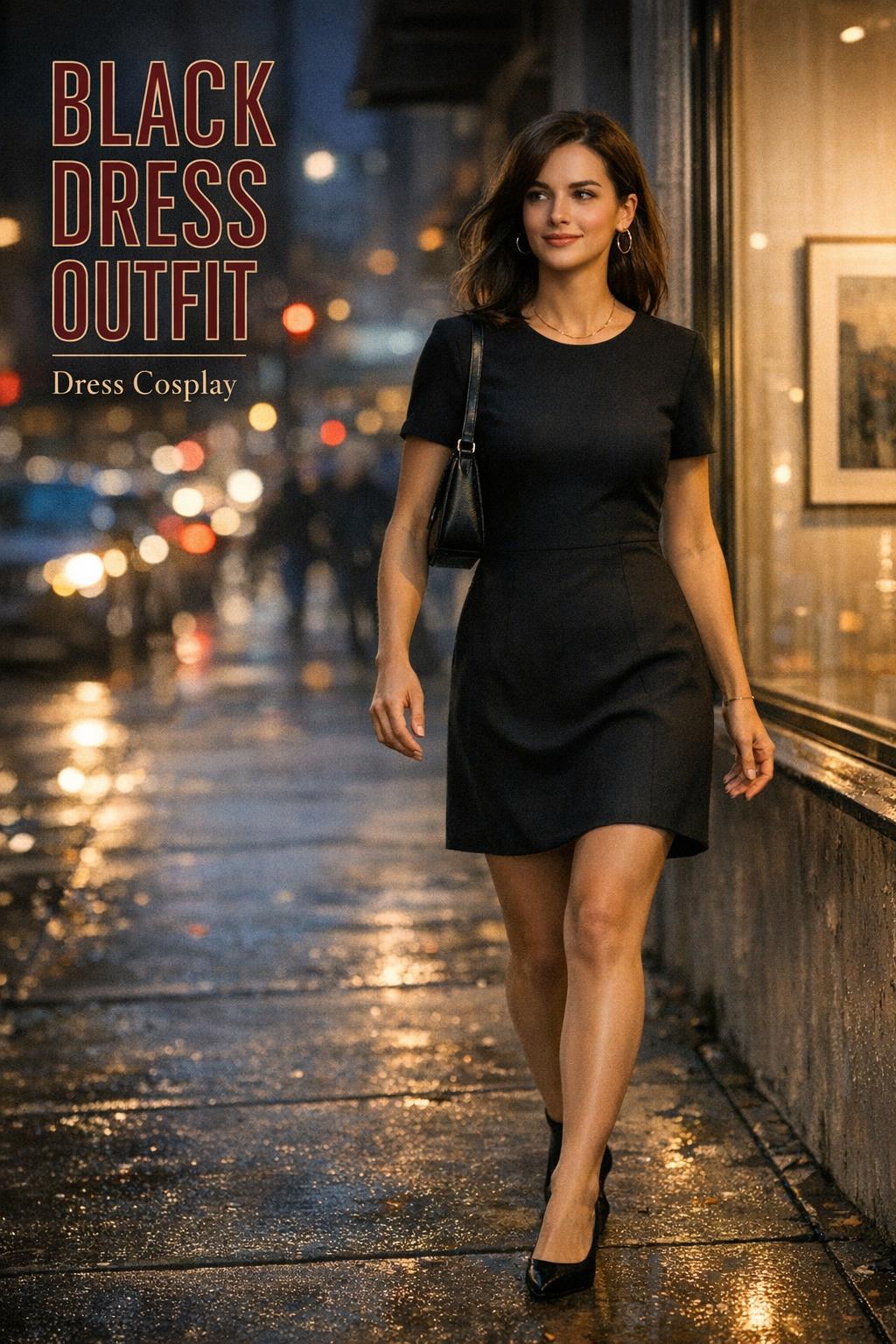
Dress cosplay can be playful, and a black dress often serves as the easiest base for a more character-driven outfit idea. The challenge, if you still want the ModePrima-level polish, is avoiding a look that feels like a pile of references rather than an outfit. The most elegant approach is to keep the black dress silhouette clean and let one or two accessories do the “story,” not every element at once.
Think of it as editorial restraint applied to a themed idea: the dress remains the anchor, the styling becomes the hint. In practice, that means you choose a single focal point—shoe direction, tights, or jewelry—and keep the rest quiet so the overall effect stays intentional rather than chaotic.
FAQ
What shoes work best with a black dress outfit?
The most reliable options depend on the mood: boots make the look grounded and seasonal, minimal sandals keep it chic for summer, and heels sharpen the outfit for party season—especially when paired with black tights or a high-contrast choice like white heels.
How do I style a black dress outfit for summer without it feeling heavy?
Keep the silhouette easy and the styling light: reduce layering, choose warm-weather footwear, and use restrained jewelry so the black reads sleek rather than dense in bright light.
How can I wear a simple black dress and make it look updated?
Treat the dress as a base and change the “story” through styling: swap between boots and heels, add black tights for party-season definition, or lean into a ’90s-cool approach with flip-flops for a relaxed night out outfit when the setting allows.
Do black dresses look good with boots in 2024?
Yes—black dresses with boots remain an easy, modern pairing because the contrast of a clean dress silhouette with structured footwear feels intentional and is also practical for transitional weather and city walking.
How do I make an all-black outfit feel intentional instead of flat?
Introduce dimension through texture and contrast: keep the palette black but mix finishes, add a deliberate accessory or jewelry that catches light, and ensure your footwear choice clearly signals the occasion.
What’s a good party-season formula for a little black dress?
A refined party-season approach is a little black dress with black tights and a crisp contrasting heel—white heels create a graphic finish—paired with restrained jewelry so the contrast remains the focal point.
Can I wear a black dress outfit to prom, considering different types of prom dresses?
You can, especially if you style it with clear event intent: use heels, consider tights for a polished line, and add jewelry for definition so the dress reads celebratory in photos as well as in person.
How do I incorporate dress cosplay ideas without losing the chic black-dress aesthetic?
Keep the black dress simple and let one or two accessories carry the reference; editorial restraint is what prevents the look from feeling like a costume while still allowing a character-inspired styling direction.
Leave a Reply