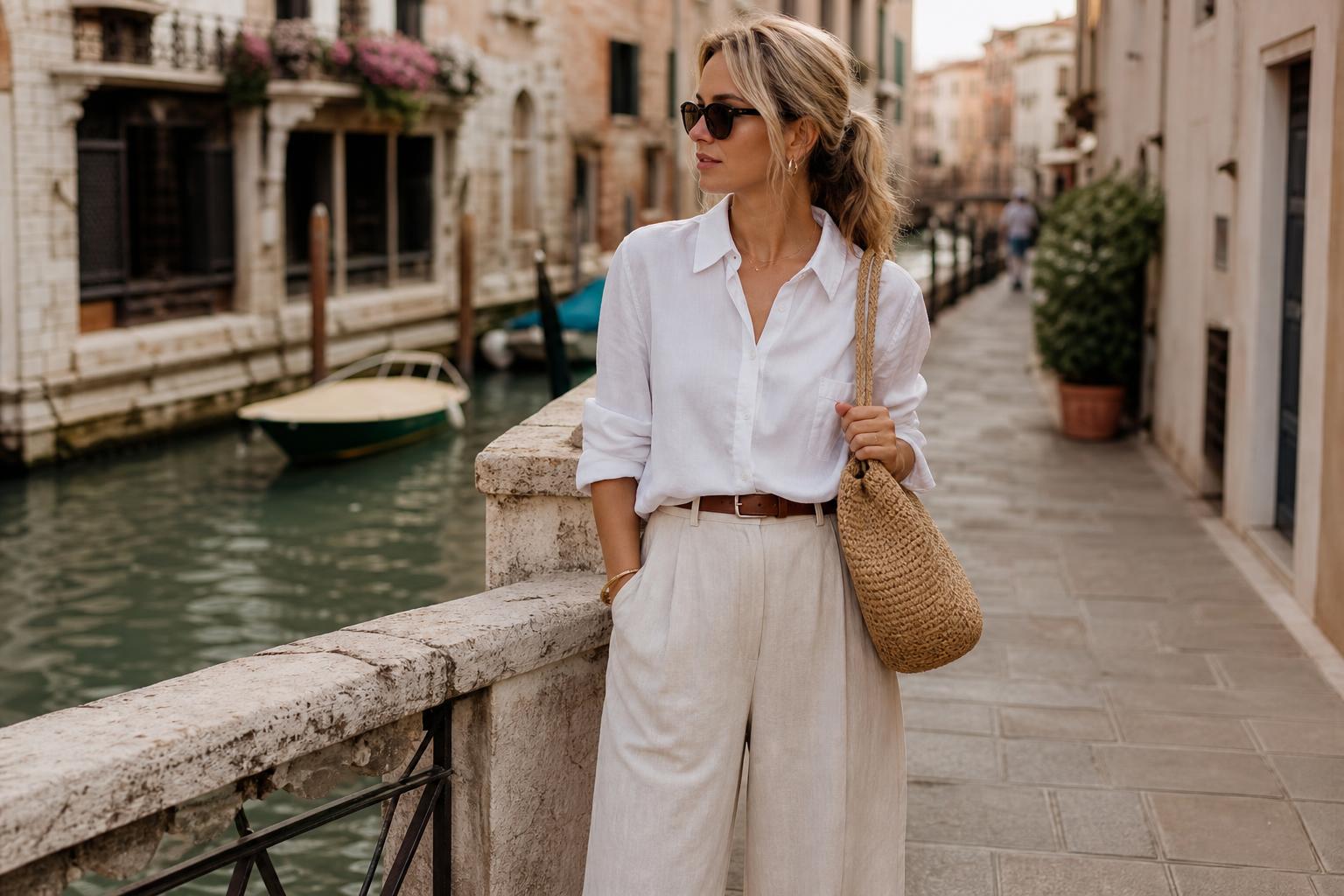
There is a particular elegance to planning italy vacation outfits well. The mood is never overly styled, yet it is never careless either: breathable linen, clean tailoring, sun-softened neutrals, and a wardrobe that can move from Roman streets to a Milan aperitivo, from a Venice canal walk to an Amalfi Coast terrace without losing its sense of refinement.
The appeal of this aesthetic lies in balance. Italian travel style is practical enough for long walking days, museum visits, and changing weather, but it still carries a polished visual identity. Comfortable shoes matter, so do lightweight fabrics, but so does proportion: a structured blazer over an easy dress, wide-leg trousers with a soft knit, a scarf carried not as decoration alone but as a useful layer for churches and cooler evenings.
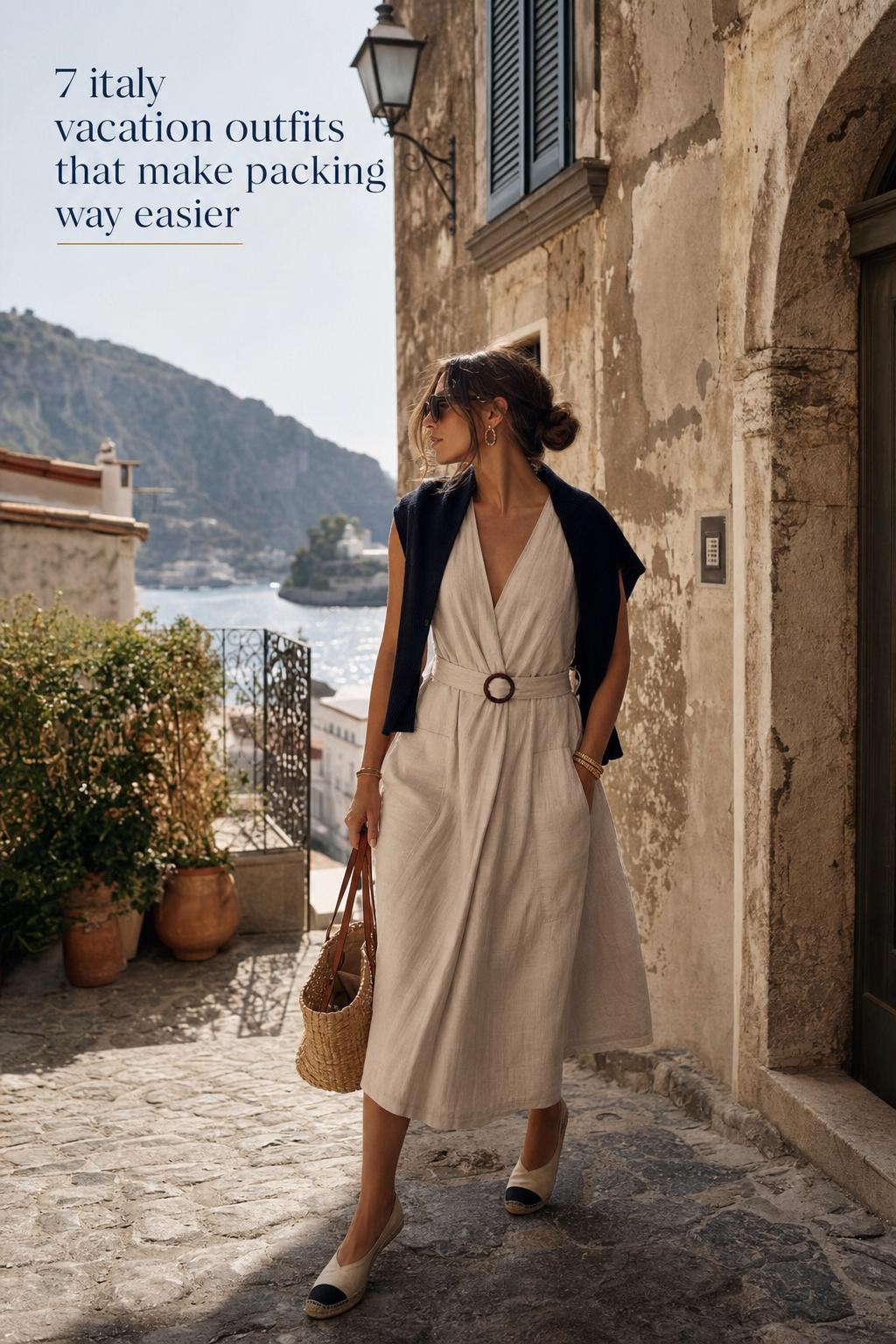
That is why the most convincing italy vacation outfits feel less like trend-driven packing and more like wardrobe composition. They rely on versatile silhouettes, city-aware dressing, and thoughtful transitions between day and night. The result is effortless in appearance, but never accidental.
Why destination-led dressing works so well in Italy
Italy asks more of a travel wardrobe than many destinations do. In one trip, you may move between historic city centers, religious sites, elegant shopping districts, coastal towns, galleries, boat days, and dinner settings that feel relaxed but still visually considered. A single packing formula rarely covers all of that well.
Your wedding has a lot of moving pieces. Your plan can still feel composed.
Zarellea organizes guests, vendors, budget, and timelines in one shared space — so you can make decisions with clarity, not stress.
A destination-focused approach solves the problem. Instead of packing random vacation pieces, you build around location, occasion, and climate: Rome calls for strong walking shoes and light layers, Milan benefits from tailored structure, Venice favors breathable daywear that remains polished, and the Amalfi Coast invites sun-ready pieces that still work beyond the beach. This is where a true Italy packing list becomes more intelligent than a simple pile of outfits.
The most successful wardrobe for Italy also respects versatility. A linen dress should work for sightseeing with sandals, then shift into evening with a blazer and sunglasses swapped for a woven bag and more refined accessories. Wide-leg trousers should feel comfortable in the day but composed enough for dinner. In practical terms, this keeps luggage lighter. In visual terms, it creates cohesion.
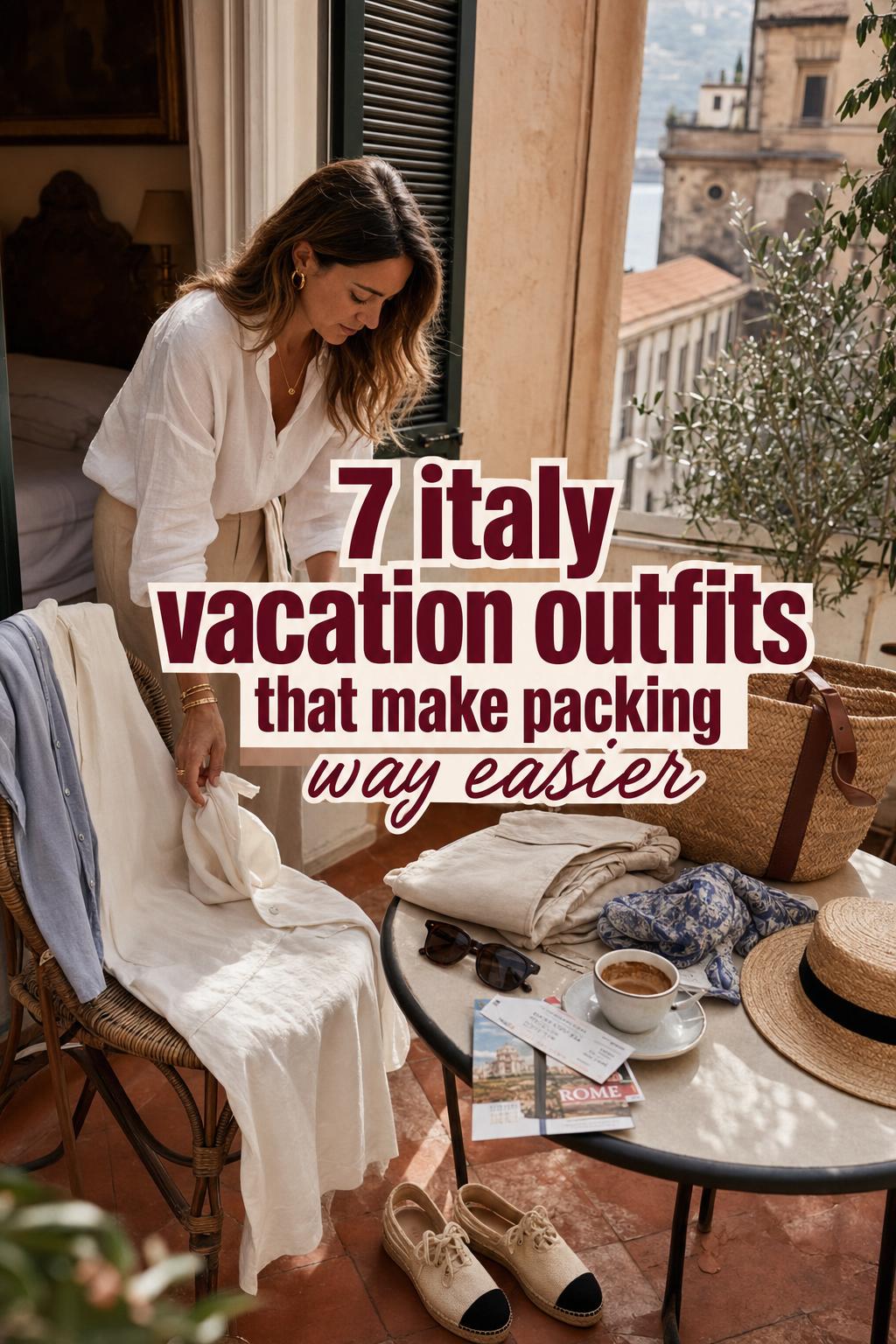
The foundation: fabrics, silhouettes, and the shape of an Italian travel wardrobe
Breathable fabrics that still look composed
Linen and cotton appear repeatedly in the strongest outfit ideas for good reason. They breathe well in warm weather, layer easily in spring, and carry the soft, unforced texture that suits Italian travel. Silk blends also have a place when you want a more fluid line, especially for pieces that need to move between daytime culture and evening dining.
Fabric choice matters because Italy is often experienced on foot. Heat, movement, museum interiors, church visits, and coastal shifts all affect how clothing performs. Lightweight fabrics are not just a style preference; they support comfort over long days while still preserving an elevated appearance.
Silhouettes with longevity
The silhouettes that recur most naturally are also the ones that travel best: midi dresses, wide-leg trousers, tailored blazers, cardigans, trench coats for spring, and easy skirts balanced by fitted or softly structured tops. These shapes are flattering without feeling restrictive, and they hold up visually in cities where style tends to favor polish over excess.
Comfortable footwear is equally central. Sandals, espadrilles, loafers, and well-considered walking shoes do more than support practicality; they anchor the mood of the outfit. The right shoe keeps a relaxed look intentional rather than underdressed.
Key pieces for this aesthetic
- linen dress in a neutral or sea-soft tone
- wide-leg trousers in cotton or a breathable blend
- tailored blazer for Milan-inspired structure
- light cardigan or cream knit set for spring mornings
- comfortable sandals or espadrilles
- scarf for layering and church modesty
- straw hat, sunglasses, and a woven accessory for coastal settings
Together, these pieces create an Italian vacation wardrobe that feels city-chic rather than overpacked. Each item carries its own function, but more importantly, each one can connect to several destinations and occasions.
City mood matters: how Rome, Milan, Venice, and the Amalfi Coast shape the look
One of the clearest patterns in strong Italy outfit ideas is that the clothing changes subtly with the city. Not dramatically, but enough to respect the setting. The texture, structure, and finish of a look often say as much as the pieces themselves.
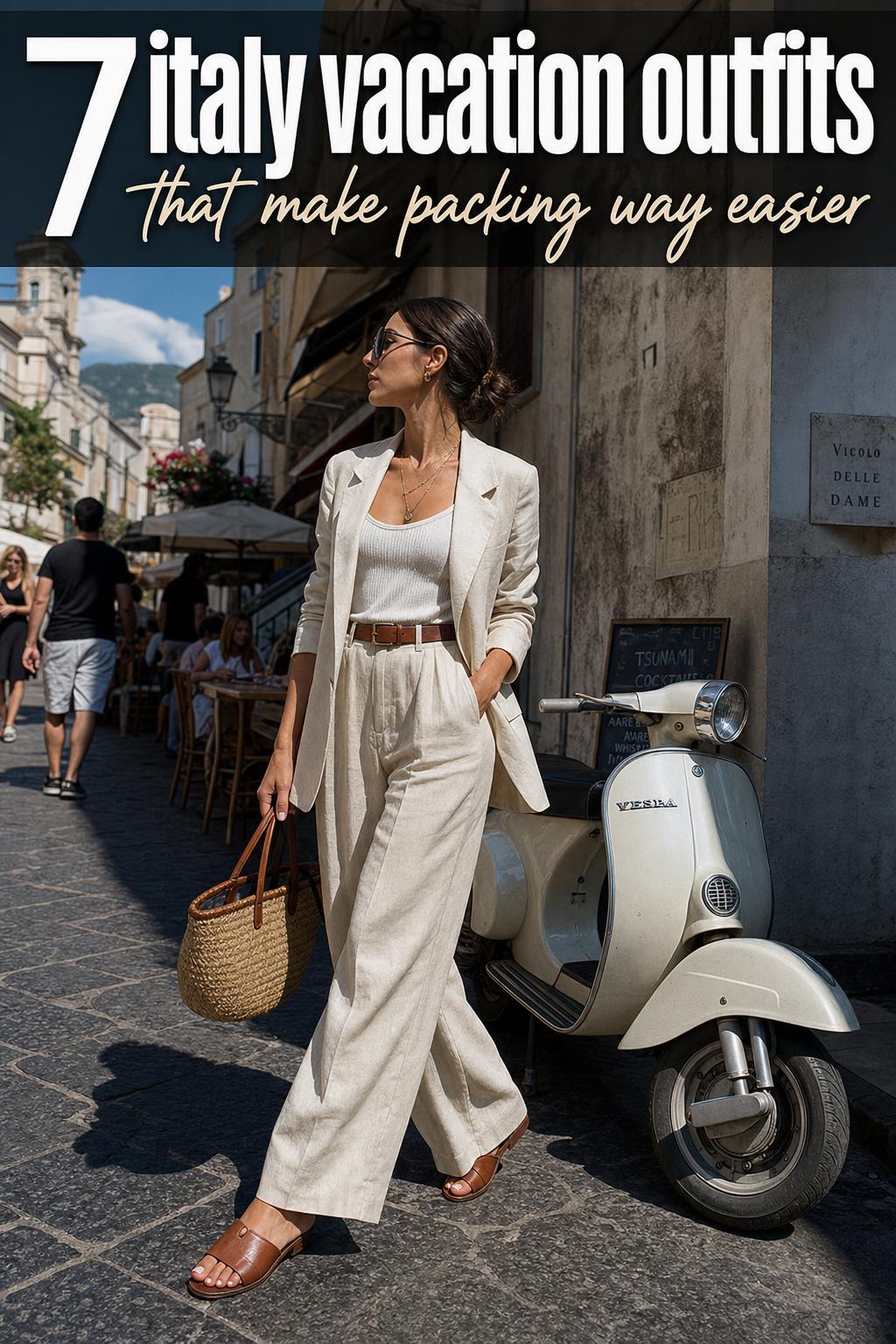
Rome: polished ease for long walking days
Rome asks for stamina and restraint. The visual mood is lightly refined rather than overtly fashion-forward: airy fabrics, comfortable walking shoes, soft layers, and enough coverage for churches and cultural site visits. The best Rome outfits understand that beauty matters, but mobility matters just as much.
A scarf, lightweight cardigan, or easy button layer becomes especially useful here. It can soften a sleeveless look, provide modest coverage for religious site visits, and help transition into cooler morning or evening hours. In Rome, practicality is not separate from style; it is part of the look.
Milan: tailored lines and day-to-night composure
Milan shifts the emphasis toward sharper composition. A blazer, wide-leg trousers, a clean dress, or a fitted top with a polished skirt all make sense in a city associated with fashion and more structured dressing. The mood is modern, composed, and slightly more directional, even when the palette stays neutral.
This is where daytime sightseeing can blend into aperitivo or dinner without a full outfit change. A tailored layer or a better-cut trouser creates that bridge. Milan outfit ideas work best when they feel deliberate, with proportion doing most of the visual work.
Venice: soft romance with practical movement
Venice lends itself to slightly more fluid styling. Canal walks, galleries, and long days outdoors suit dresses, midi skirts, knit sets, and breathable fabrics that move easily. There is room for a touch of romance here, but the look still needs enough practicality for walking and changing surfaces.
A cream knit set, a cardigan with a white midi skirt, or an easy dress with comfortable sandals all capture the atmosphere well. Venice works beautifully with subtle texture and lighter tonal dressing.
Amalfi Coast and Lake Como: relaxed luxury without excess
On the Amalfi Coast and around Lake Como, the mood becomes more sunlit and resort-leaning. Linen dresses, kaftan cover-ups, sandals, sunglasses, hats, and woven accessories all feel natural. Still, the most effective coastal looks are not simply beachwear. They should carry enough structure to move into town, lunch, or evening dining.
This is also where Mediterranean color accents work especially well. Sea-blue, terracotta, and warm neutrals can add character to a mostly understated wardrobe. The silhouette can stay simple; texture and palette do the atmospheric work.
Look: Roman daywear with lightweight layers
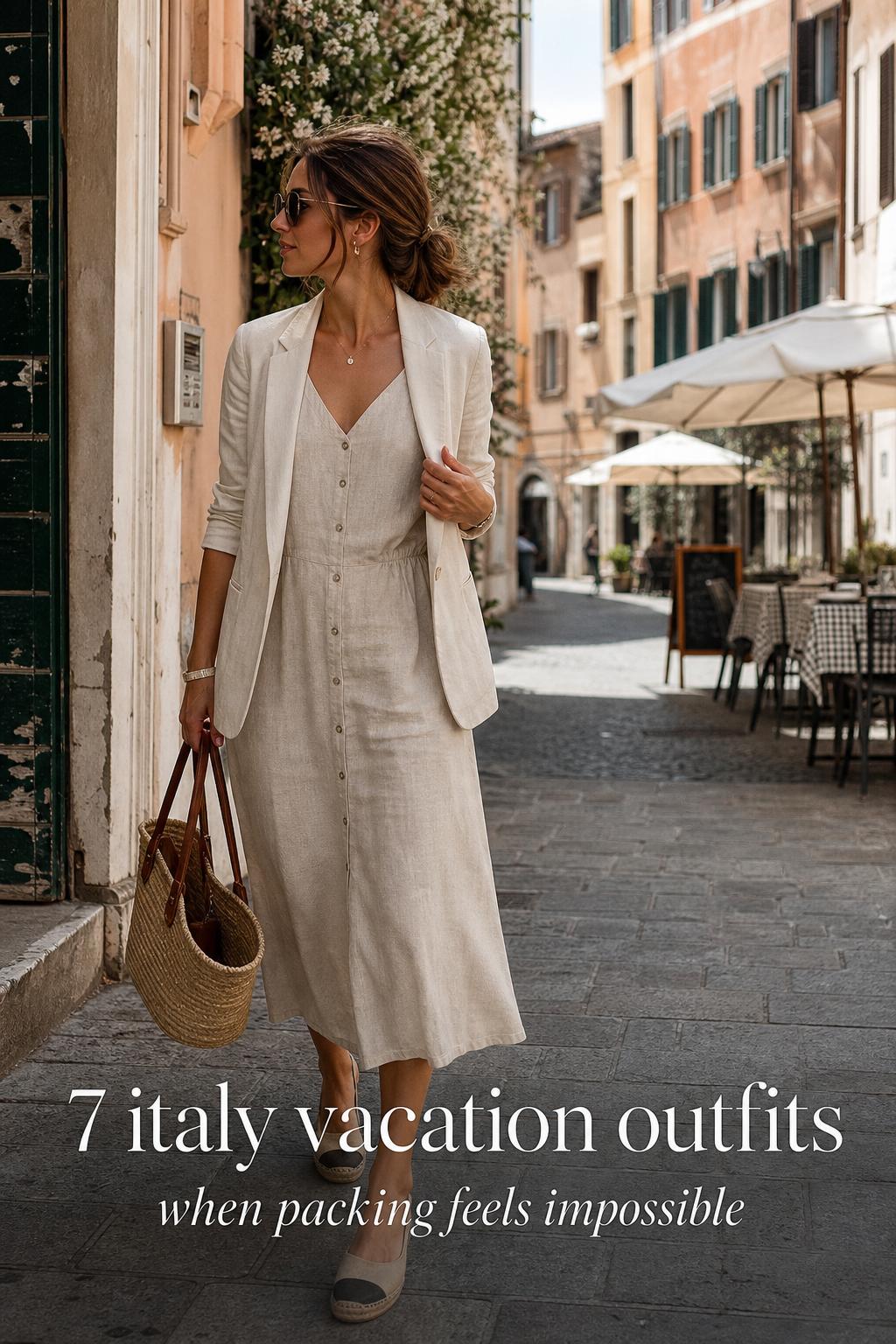
This look captures the practical elegance that Rome rewards. The silhouette is easy through the body, with enough structure to feel polished in photographs and enough softness to remain comfortable through museum visits, piazza stops, and long city walks. It reads thoughtful rather than dressed up.
A breathable midi dress in linen or cotton forms the base, grounded by comfortable walking shoes or refined flat sandals. Over the shoulders, a lightweight scarf or cardigan provides flexibility for churches and cooler interiors. The color palette stays quiet: cream, stone, soft tan, or muted olive, finished with sunglasses and a simple day bag.
Why it works: Rome often involves shifting between exposed outdoor heat and culturally sensitive interiors. This kind of look respects both realities without sacrificing the clean, elevated line that makes Italian travel style feel distinct.
Style tip
If a sleeveless dress is your most useful sightseeing piece, the easiest way to make it more versatile is not to replace it but to add a scarf. In an Italy packing list, that single item often does the work of both styling and practicality.
Look: Milan tailored minimalism
Milan favors sharpness, but not stiffness. This interpretation leans into a tailored silhouette with fluid movement: polished enough for the city’s fashion-aware atmosphere, yet relaxed enough to feel believable during daytime exploring. It has the confidence of understatement.
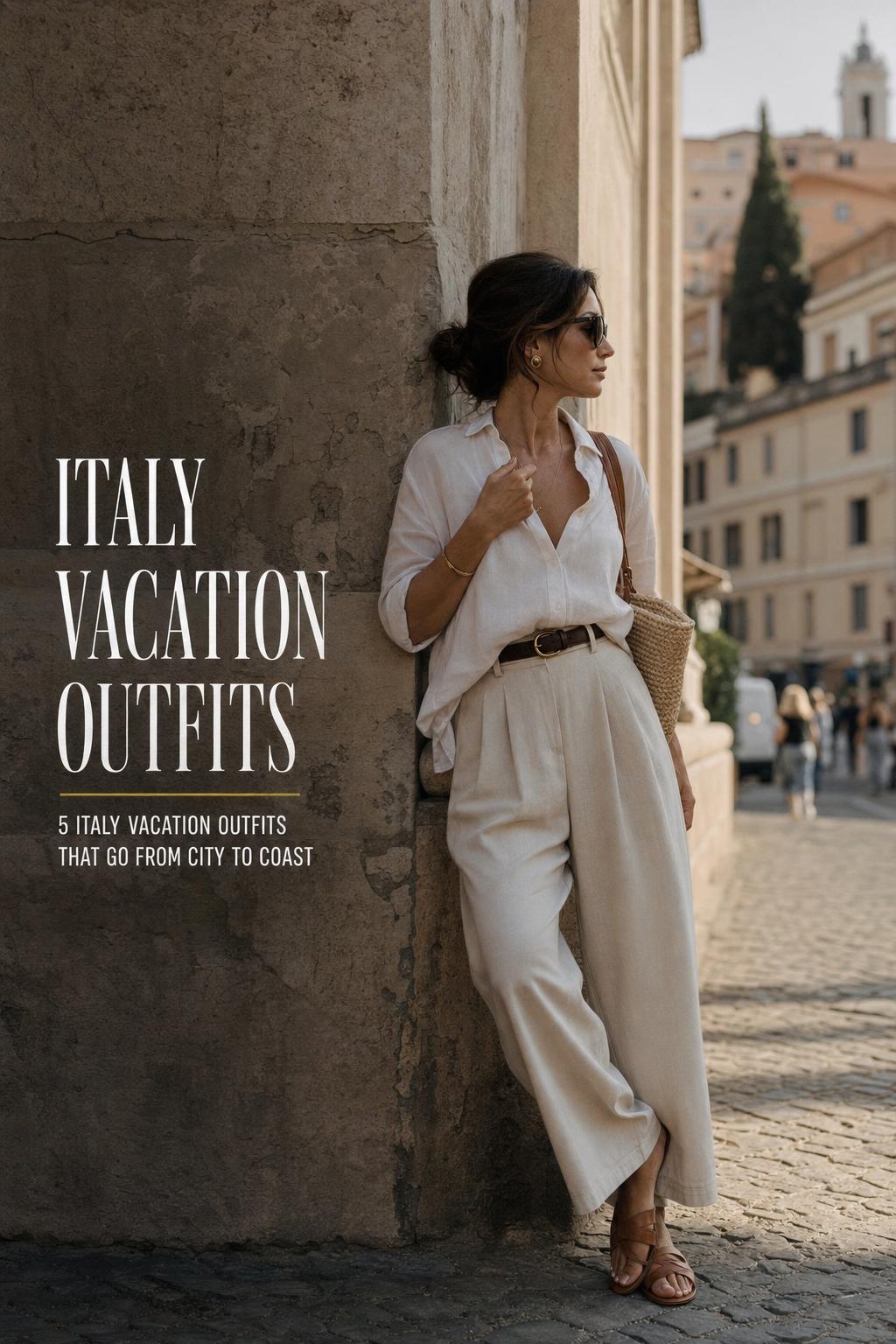
Wide-leg trousers in a breathable fabric create the base, paired with a fitted top or clean blouse and a tailored blazer. Loafers or sleek sandals keep the line modern and wearable. A neutral palette of ivory, black, taupe, or soft gray allows the cut to lead, though a subtle contrast between matte cotton and smoother fabric brings depth.
- key garments: tailored blazer, wide-leg trousers, fitted top
- footwear: loafers or minimal sandals
- accessories: sunglasses, structured bag, light scarf if needed
Why it works: Milan chic daytime outfits rely less on decoration and more on proportion. The blazer adds clarity, the trousers create movement, and the entire look transitions naturally into an evening aperitivo without feeling costume-like.
Look: Venice canal-soft elegance
In Venice, a softer visual language feels right. The silhouette here is gently romantic, shaped by movement and lightness rather than sharp tailoring. It suits canal walks, gallery visits, and slow afternoons where the outfit should feel composed but not rigid.
A cream knit set is one refined option for spring, especially on cooler mornings. Another is a gray cardigan over a white midi skirt, finished with espadrilles or comfortable sandals. The textures do most of the work: knit against cotton, soft structure against fluid hemline, pale neutrals catching the light in a way that feels natural to Venice.
Why it works: Venice outfit ideas often benefit from softness, but softness alone can become vague. A defined waist, a midi length, or a cardigan with clear shape keeps the look elegant and grounded.
Look: Amalfi Coast beach-to-town refinement
This is the version of coastal dressing that remains chic once you leave the shoreline. The mood is bright, relaxed, and sun-aware, but never too casual to step into a terrace lunch or town dinner. The silhouette should skim rather than cling, allowing air, movement, and a sense of ease.
A linen dress or a kaftan cover-up layered over a clean base works especially well, paired with sandals, a straw hat, sunglasses, and a woven accessory. Sea-blue, white, sandy beige, and terracotta are natural palette choices here. If the garment is loose, the accessories can stay minimal; if the look is very simple, texture becomes important.
Why it works: Amalfi Coast beach-to-town outfits succeed when they bridge resort wear and real dressing. The goal is not to look ready only for the beach, but ready for the rhythm of the day.
How to recreate the look
Start with one breathable hero piece, usually a linen dress. Add only the accessories that support the setting: a hat for sun protection, sandals suitable for walking, and sunglasses that complete the line. Then ask whether the look can move into town without needing a total change. If yes, it belongs in your suitcase.
Look: Spring city layers with trench and wide-leg trousers
For spring travel, one of the most reliable formulas is the trench coat with wide-leg trousers. It has enough polish for Milan, enough practicality for Rome, and enough visual lightness to avoid feeling heavy in transitional weather. The silhouette is elongated, modern, and quietly cinematic.
A light trench over breathable trousers and a simple top gives structure without bulk. Cotton and soft blends keep the outfit wearable through shifting temperatures. Neutral shades work best here: oat, stone, cream, and light gray. The effect is elegant because it relies on shape rather than embellishment.
Why it works: spring in Italy often asks for layering that can be removed easily. The trench brings cohesion to an otherwise simple base, and the wide-leg trouser keeps the outfit refined while allowing movement through long travel days.
Look: Museum morning in a cardigan and midi skirt
Not every Italy vacation outfit needs a blazer or dress to feel elevated. Sometimes the strongest look is quieter: a cardigan, a white midi skirt, and footwear chosen for comfort rather than display. The mood is intelligent, understated, and ideal for museum days or gallery-heavy itineraries.
The cardigan should feel soft but not shapeless, the skirt fluid but not flimsy. A gray cardigan gives subtle contrast to a white skirt, while sandals or espadrilles keep the outfit seasonally appropriate. The palette remains calm, allowing texture and proportion to lead.
Why it works: this combination offers coverage, movement, and polish in equal measure. It also layers well with a scarf, making it especially useful for church visits or cooler starts to the day.
Look: Celebrity-inspired Euro vacation polish
There is a reason Bella Hadid-inspired vacation dressing continues to resonate in this space. The aesthetic combines linen dresses, vintage-leaning sandals, sunglasses, woven accessories, and a kind of effortless confidence that feels aligned with Italy’s resort and city settings alike. The best interpretation, however, is not mimicry. It is selective adaptation.
Think of this look as affordable luxury in wardrobe form. A simple linen dress, a strong pair of sunglasses, and clean accessories create a polished travel image without requiring heavily statement-driven pieces. The color story tends to stay restrained, which is why the result reads chic rather than busy.
Why it works: celebrity-inspired travel wardrobes are most successful when they use clear formulas. Here, the formula is simplicity plus finish. It can be recreated with accessible shopping finds from places like Zara or Nordstrom, but the real lesson lies in keeping the styling disciplined.
Practical note on budget-friendly styling
Luxury impact does not come only from price. In italy vacation outfits, the sharper difference usually comes from fit, fabric behavior, and whether the pieces work together tonally. A well-cut neutral dress can feel more elevated than several trend-led items competing for attention.
Look: Evening aperitivo with a city-smart edge
Evening in Italy rarely requires dramatic occasionwear for a traveler’s itinerary, but it does benefit from a little more precision. This look is built for aperitivo, dinners, and that transitional hour when daytime clothing needs a more intentional finish. The silhouette should feel leaner, cleaner, and slightly more defined than a daytime sightseeing look.
A fitted top with a midi skirt, or a blazer layered over an easy dress, creates the right mood. Long-sleeve tops, checked or printed mini skirts, and even a more fitted jeans-and-boots combination can work in cooler conditions, especially if your trip leans into transitional seasons. The key is moderation: one tailored element, one relaxed element, and accessories that sharpen rather than overload.
Why it works: the best day-to-night outfits in Italy are not entirely different wardrobes. They are refined variations on the same aesthetic language, adjusted with proportion and a little more structure.
Color palettes that feel at home in Italy
The strongest visual palettes for Italy tend to be grounded in neutrals first, then lifted by place-driven accents. Cream, white, stone, tan, black, and soft gray provide a stable wardrobe foundation. They mix easily, photograph well, and allow tailoring and texture to stand out.
To keep the wardrobe from feeling flat, Mediterranean tones can be introduced selectively. Terracotta echoes sun-warmed architecture, sea-blue works naturally in Venice or along the Amalfi Coast, and muted olive or sandy beige supports a more understated city look. The goal is not to build every outfit around color, but to let color support atmosphere.
This is especially useful when packing a capsule wardrobe. If most pieces live in the same tonal family, repeating shoes, blazers, hats, or scarves becomes much easier without making the outfits feel identical.
What often goes wrong with Italy travel style
The most common mistake is treating the trip as one uninterrupted beach vacation or, on the other extreme, as a purely fashion-image exercise. Italy usually contains too much variety for either approach to work. A suitcase full of very casual resort wear will struggle in cities and churches. A wardrobe built only around statement looks may become uncomfortable by the second day of walking.
Another frequent issue is ignoring layer logic. Even in a warm-weather trip, mornings, interiors, and evenings can make a one-note wardrobe feel incomplete. This is why a light cardigan, trench, blazer, or scarf appears so often in strong packing guidance. They are not extras; they make the wardrobe functional.
Finally, footwear is often underestimated. Stylish sandals may be enough in some settings, but city itineraries with museums, galleries, and long walking routes demand shoes that can hold up for hours. In practice, the best travel wardrobe is the one you do not need to fight with halfway through the day.
Tips for avoiding overpacking
- choose one consistent palette so layers and accessories repeat easily
- pack pieces that can shift from day to night with one styling change
- balance dresses with separates such as wide-leg trousers and a skirt
- bring at least one modesty layer for churches and religious sites
- limit shoes to pairs that genuinely fit your itinerary
A capsule approach to an Italy packing list
A capsule wardrobe for Italy is not about reducing personality. It is about increasing coherence. When every item supports multiple settings, the entire trip feels more fluid. You spend less time changing and more time simply adjusting the same visual language to the moment.
A practical structure often includes a dress or two, one polished trouser, one skirt, one layering piece with shape, one softer knit or cardigan, walking-friendly shoes, sandals, and accessories that support sun protection and evening polish. This works especially well for mixed itineraries that include Rome, Milan, Venice, and coastal stops.
The advantage of this method is not only efficiency. It also creates stronger personal style. When the wardrobe is edited, each look appears more intentional, and that editorial quality is exactly what makes Italian travel dressing feel so compelling.
Tips for building a city-to-coast capsule
Begin with city pieces first, then soften for the coast. In other words, pack the blazer, the wide-leg trouser, the cardigan, and the comfortable day shoes before you add the hat, woven bag, or kaftan. This prevents a beautiful coastal wardrobe from leaving you underprepared in Rome or Milan.
Shopping perspective: accessible finds versus polished wardrobe logic
There is a strong shopping angle around italian vacation fashion finds, especially through accessible retailers such as Zara and Nordstrom. That can be useful, particularly if you want affordable ways to capture the Lake Como or Amalfi mood. Still, the stronger perspective is not to chase an entire vacation through new purchases alone.
Great style here comes from composition. A budget-friendly blazer can work beautifully if the trousers have enough drape and the shoes suit the day. A simple dress can feel luxurious if the accessories are restrained and the fit is balanced. Even celebrity-inspired looks only translate well when the wardrobe formula is understood first.
If you do shop before the trip, prioritize pieces with real repeat value: a linen dress, a trench, a cardigan, or wide-leg trousers. These are not only useful for Italy; they are the backbone of the entire aesthetic.
Destination-specific dressing details that make a difference
Small decisions often determine whether a travel wardrobe feels effortless or slightly off. In Rome, the ability to cover shoulders quickly for churches matters. In Milan, the line of the outfit matters more than ornament. In Venice, a look needs enough practicality for walking while still feeling light and elegant. On the Amalfi Coast or near Lake Como, the challenge is making resort-inspired pieces polished enough for town.
These nuances are why city-specific outfit planning tends to work better than generic packing. A traveler heading to museums and galleries may choose a cardigan and midi skirt over a beach-led dress. Someone moving from a Venice canal walk to dinner may rely on a knit set that stays composed all day. A Milan itinerary may need one blazer more than a second casual dress.
When you think in this way, every outfit becomes attached to a realistic use case rather than an abstract style fantasy. That is the point where travel style becomes truly convincing.
How to adapt the aesthetic to your own wardrobe
You do not need a completely new closet to achieve this mood. The essential shift is in editing and pairing. Look for pieces you already own that fit the core language: breathable fabrics, clean silhouettes, neutral tones, one or two Mediterranean accents, and accessories with a purpose. Then begin combining them with more discipline than usual.
If your style is more minimal, lean into Milan with wide-leg trousers, blazers, and structured simplicity. If you prefer softness, take your cues from Venice with knits, skirts, and fluid dresses. If you want something more sunlit and relaxed, focus on the Amalfi Coast formula of linen, sandals, hats, and woven textures. The aesthetic remains the same; only the emphasis changes.
That is what makes italy vacation outfits so enduring. They are not one fixed uniform, but a family of looks shaped by climate, destination, and a consistent sense of polished ease. Once that principle is clear, the wardrobe becomes far easier to build.
FAQ
What should I wear in Italy for sightseeing?
For sightseeing, focus on breathable fabrics such as linen and cotton, comfortable walking shoes, and light layers that can adapt throughout the day. Midi dresses, wide-leg trousers, cardigans, and scarves work especially well because they balance comfort, polish, and flexibility for museums, galleries, and long city walks.
How do I dress for churches in Italy?
Dressing for churches usually means planning for modest coverage, especially around the shoulders. A scarf, light cardigan, or easy layer is one of the most useful additions to an Italy packing list because it allows sleeveless or lighter daytime outfits to remain appropriate for religious site visits without needing a full outfit change.
What are the best fabrics for italy vacation outfits?
Linen, cotton, and breathable blends are the most useful choices, especially for spring and summer travel. They help with comfort in warm weather, move well through long walking days, and create the easy, refined texture that suits Rome, Milan, Venice, and the Amalfi Coast.
How can I make my outfits work from day to night in Italy?
The easiest approach is to build around versatile silhouettes such as a linen dress, a midi skirt, or wide-leg trousers, then change the finish rather than the whole look. Adding a blazer, switching to more polished accessories, or sharpening the proportions with a fitted top can make a daytime outfit feel right for aperitivo or dinner.
What should I wear in Rome versus Milan?
Rome usually calls for practical elegance: comfortable shoes, breathable pieces, and layers useful for churches and long walking days. Milan tends to suit more tailored structure, such as blazers, clean dresses, and wide-leg trousers, with a stronger emphasis on polished day-to-night dressing.
Are dresses or trousers better for an Italy trip?
Both are useful, and the best wardrobe usually includes each. Dresses are ideal for warm weather and easy day-to-night transitions, while trousers bring structure and versatility, especially for Milan, cooler spring travel, or itineraries with more urban settings and evening plans.
What shoes are best for Italy vacation outfits?
Comfortable walking shoes, sandals, espadrilles, and loafers are the most practical options depending on the season and destination. The right choice depends on how much walking your itinerary includes, but the key is selecting shoes that support long days without disrupting the polished, balanced look of the outfit.
Can I create chic italy vacation outfits on a budget?
Yes, because the overall effect depends more on fit, fabric, and styling than on price alone. Accessible finds from retailers such as Zara and Nordstrom can work well when you focus on strong basics like a linen dress, a blazer, wide-leg trousers, and simple accessories rather than buying too many trend-led pieces.
What colors work best for an Italian vacation wardrobe?
Neutrals such as cream, white, tan, stone, black, and soft gray create the strongest foundation because they mix easily and keep the wardrobe cohesive. Mediterranean accents like terracotta and sea-blue can then be added selectively to reflect the atmosphere of places such as Venice, Lake Como, or the Amalfi Coast.
How many outfits should I pack for Italy?
It is usually more effective to pack a small capsule wardrobe than a separate outfit for every moment. A few dresses or separates, one tailored layer, one softer knit, practical shoes, and versatile accessories can cover sightseeing, museums, dinners, churches, and coastal stops far better than an overpacked suitcase full of disconnected looks.
Leave a Reply