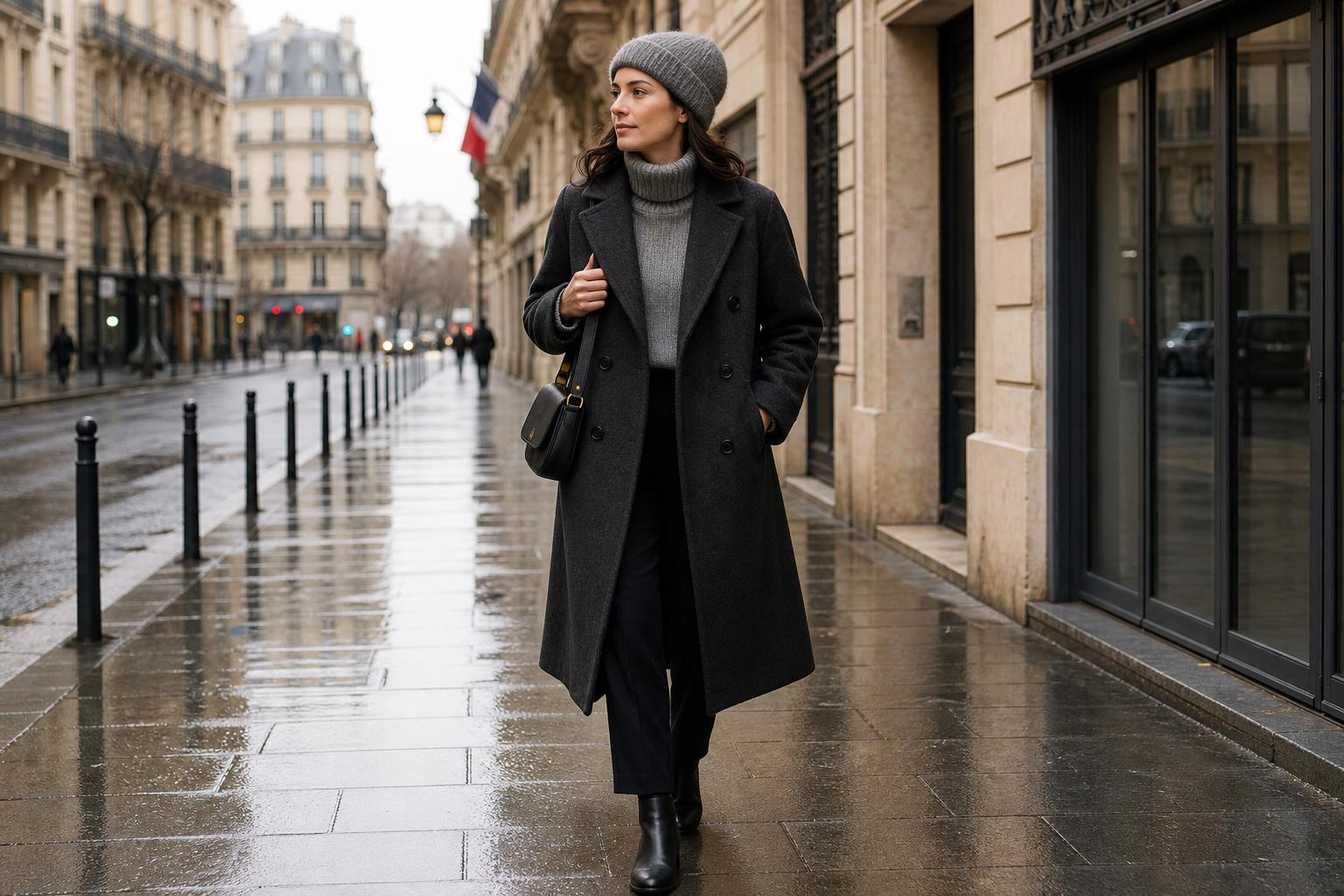
A winter weekend in London, a brisk few days in New York, a museum-filled itinerary in Paris, or long walks through a Nordic capital all raise the same wardrobe question: how do you dress for movement, cold, and city life without losing shape or polish? Cold city break outfits sit at the intersection of practicality and style, which is why several approaches tend to overlap in conversation. A minimalist capsule wardrobe, a polished Parisian look, and a more functional weather-ready layering system can all appear similar at first glance, especially when they share coats, boots, scarves, and knitwear.
The distinction lies in styling philosophy. One approach prioritizes interchangeability and packing light, another favors tailored elegance, and another is built around protection from wind, rain, or snow. Understanding these differences makes packing easier and helps you build outfits that feel intentional rather than improvised. What follows is a style breakdown of the main cold-weather city dressing approaches, how they compare visually, and when each one works best for urban travel.
The three style directions behind most cold city break outfits
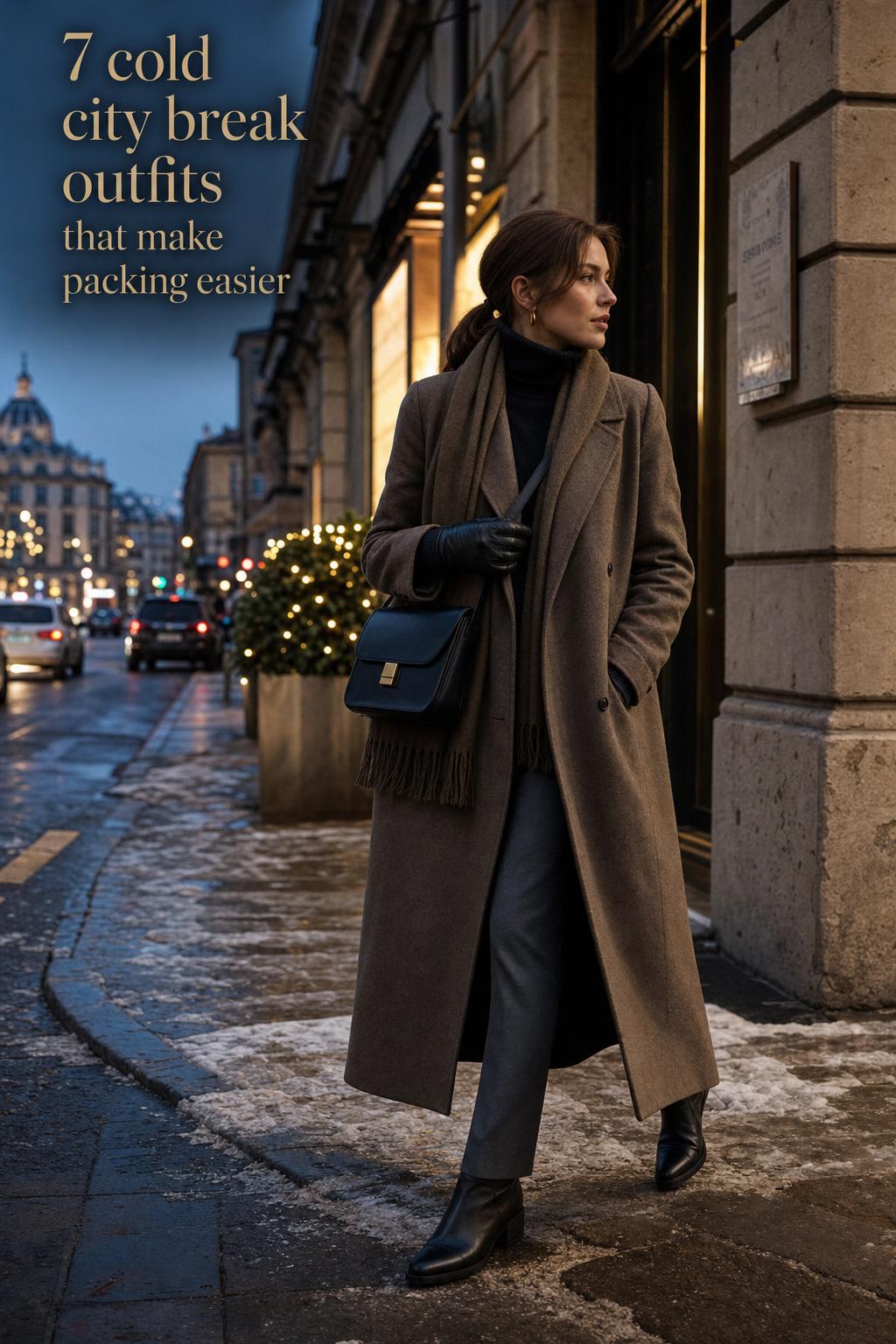
Most winter city break wardrobes are shaped by three recurring aesthetics: the capsule-led urban traveler, the polished city dresser, and the weatherproof functional layerer. In practice, many travelers mix all three, but each has a distinct logic. Knowing which one dominates your wardrobe helps with smarter packing, better outfit balance, and fewer pieces that go unworn.
Style overview: the capsule-led urban traveler
This style is rooted in versatility. Its defining characteristic is a compact wardrobe built from a few interchangeable pieces: a reliable winter coat, one or two knits, practical bottoms, a pair of boots, and accessories that shift the mood of the outfit without taking up much room. The silhouette is usually clean and moderate rather than dramatic, because every piece needs to work in multiple combinations.
Your wedding has a lot of moving pieces. Your plan can still feel composed.
Zarellea organizes guests, vendors, budget, and timelines in one shared space — so you can make decisions with clarity, not stress.
The color palette tends to stay disciplined, often relying on neutrals or a restrained mix that makes layering easier. Fabrics are chosen for warmth-to-weight balance, with knitwear, base layers, and outerwear doing most of the work. The overall mood is efficient, considered, and modern, with a strong emphasis on carry-on packing and capsule wardrobe logic.
Style overview: the polished city dresser
This is the approach most closely associated with Parisian chic and refined European city style. It favors a more tailored structure, a visually composed silhouette, and pieces that feel elevated even when practical. A structured coat, sleek boots, a refined scarf, and knitwear with a clean line are central. Compared with the capsule-led approach, this style often appears more deliberate in proportion and more polished in finish.
The palette is usually understated but not purely utilitarian. Soft neutrals, dark tones, and carefully balanced textures create a calm, sophisticated look. Rather than dressing for maximum outfit quantity, the polished city dresser often focuses on fewer but stronger combinations suited to sightseeing, dining, and work-friendly city moments.
Style overview: the weatherproof functional layerer
This approach becomes especially relevant for cold urban travel with wind, rain, or snow. The emphasis is on technical practicality: waterproof outerwear, breathable layers, insulated pieces, and footwear with grip. Brands such as RAINS and The North Face often sit naturally in this space because they align with the weather-ready outerwear focus found in winter city break dressing.
Visually, the functional layerer can still look stylish, but the aesthetic mood starts with protection rather than polish. The silhouette may be slightly more substantial due to layering, and accessories are chosen as working components rather than decorative finishing touches. This is the wardrobe that performs best during long outdoor itineraries, uncertain forecasts, and city days shaped by rain, slush, or icy pavement.
Why these styles are often mistaken for each other
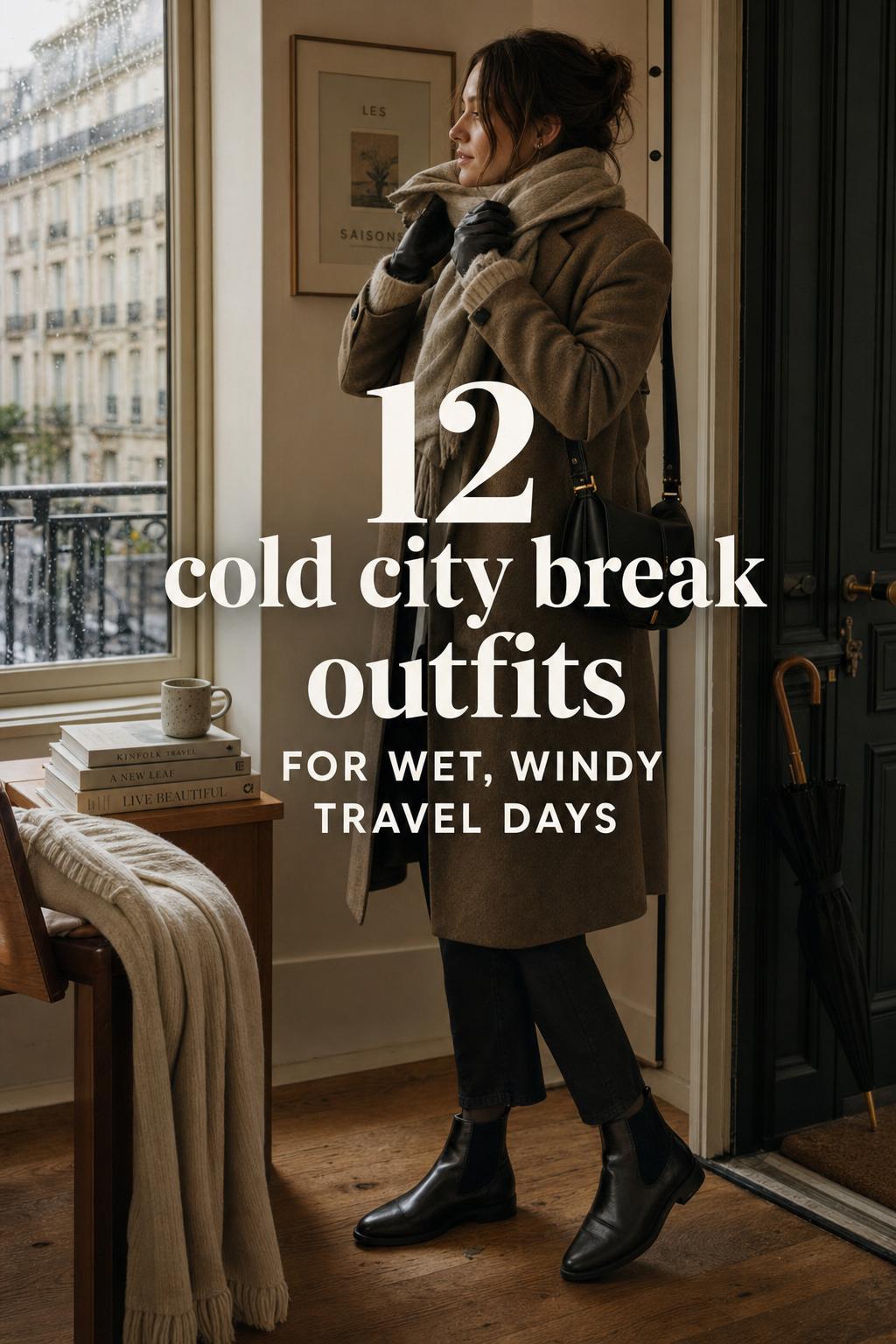
The confusion is understandable because all three approaches rely on the same core entities: outerwear, boots, layering, scarves, hats, gloves, and practical bags. In a winter travel setting, almost everyone reaches for a coat, knitwear, and reliable footwear. The difference is less about the individual item and more about how that item is selected, styled, and prioritized within the wardrobe.
A black wool coat, for example, can belong to a capsule wardrobe because it works with everything, to a polished city look because of its tailored line, or to a weather-first wardrobe if it is paired with thermal layers and waterproof boots. The same piece changes meaning according to outfit composition. That is why cold city break outfits are best understood through comparison rather than through isolated packing lists alone.
The key differences that define each approach
Silhouette and structure
The capsule-led urban traveler tends to favor balanced, adaptable silhouettes. Nothing is too fitted or too directional, because each garment must layer smoothly and reappear in multiple looks. The polished city dresser leans toward sharper structure, often anchored by a tailored coat, elegant boots, and a more intentional line through the body. The weatherproof functional layerer accepts more volume if it improves warmth and mobility.
This is often where city break wardrobes succeed or fail. A refined silhouette may look excellent for dinner and museum visits but feel limited in sleet or snow. A more technical shape may perform brilliantly outdoors yet need thoughtful styling to avoid looking disconnected from the rest of the trip. The strongest wardrobes understand this trade-off in advance.
Color palette
The capsule approach generally uses a controlled palette so every piece can be reworn with ease. The polished city dresser relies on tonal harmony, often making texture and cut more important than color contrast. The weatherproof layerer may also keep colors practical, but the reasoning is different: outerwear and accessories are selected for use under changing conditions, not just visual cohesion.
In real travel wardrobes, a restrained color story is more than an aesthetic choice. It reduces packing friction and makes accessories such as scarves, hats, and bags more effective. For a 3-day or 7-day winter city break, this matters because visual repetition feels elegant when the palette is coherent.
Level of formality
The polished city dresser is the most naturally suited to restaurants, evening plans, and work-friendly itineraries. The capsule-led traveler sits in the middle, flexible enough for daytime sightseeing and casual dinners with minor adjustments. The weatherproof functional layerer is the least formal by nature, though it can be elevated with cleaner lines, a structured bag, or more refined knitwear.
This distinction matters because city breaks often combine multiple environments in one day. A daytime walk, a gallery, a train ride, and dinner can all happen in one outfit. The more your wardrobe can move across these contexts, the fewer specialty items you need to pack.
Styling philosophy
The capsule philosophy asks, “How many ways can I wear this?” The polished city philosophy asks, “How can I make this look composed?” The functional philosophy asks, “Will this hold up in cold, rain, or snow?” None is inherently better; the right choice depends on destination, forecast, and itinerary.
For a winter city break packing list, these questions are more useful than trend-driven thinking. They keep attention on proportion, warmth, and purpose. Great travel style is rarely about novelty. It is usually about selecting a few pieces that keep working under pressure.
Typical wardrobe pieces
- The capsule-led urban traveler builds around a versatile winter coat, compact knitwear, base layers, practical boots, and a crossbody or backpack.
- The polished city dresser prioritizes a structured coat, elegant knitwear, refined boots, sleek accessories, and a bag with a cleaner finish.
- The weatherproof functional layerer relies on waterproof outerwear, thermal layers, weather-resistant boots with grip, and cold-weather accessories chosen for performance.
Retail and editorial platforms such as ASOS, Wolf & Badger, Brakeburn, and Ry Dale often show these categories in overlapping ways, but the distinction remains useful when deciding what deserves space in a carry-on.
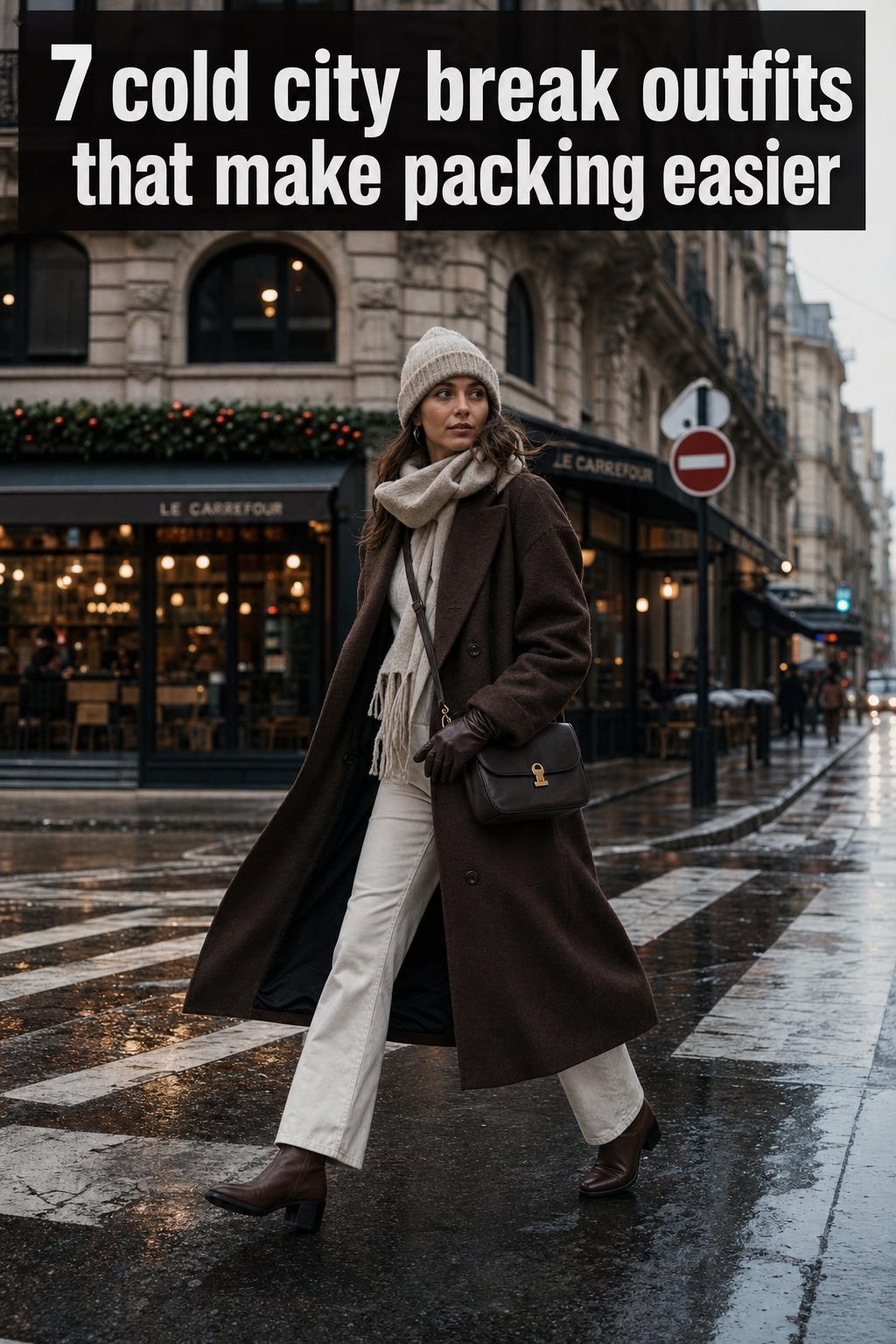
Visual style breakdown in real outfits
How layering changes the mood
Layering is one of the core concepts behind winter city break outfits, but the visual result differs by style. In a capsule wardrobe, layers are usually fine and unobtrusive: a base layer under knitwear, topped with a coat that does not overwhelm the frame. In a polished city look, layering is less visible and more sculpted. The outfit appears streamlined, even if warmth is built quietly underneath.
By contrast, the weatherproof functional layerer allows the layers to show. A waterproof shell over a knit, or a more substantial outer layer paired with practical accessories, creates a clear visual message of preparedness. This is not a flaw. In rain or snow, visible functionality often looks more convincing than forced elegance.
Garment proportions and outfit balance
The capsule-led wardrobe aims for proportion that can shift throughout the trip without difficulty. Straightforward bottoms, a mid-length coat, and boots that support walking are typical because they create balance without requiring too much styling maintenance. The polished city dresser may use a stronger coat shape or sleeker boots to create a longer visual line. The outfit often looks more deliberate from a distance.
The functional layerer may choose bulk strategically: a parka, waterproof shell, or sturdier footwear can add visual weight, so the rest of the outfit benefits from clean supporting pieces. This is where many travelers make mistakes. If every piece is heavy, the outfit can lose shape. If one practical piece is balanced by simpler layers and restrained accessories, the result feels modern rather than cumbersome.
Accessories and finishing details
Scarves, hats, gloves, and socks are more than extras on a cold city break. They shift both the function and the tone of the outfit. In the capsule approach, accessories are often the tool that makes repeated outfits feel different. In the polished city mode, they refine the look and maintain color harmony. In the functional wardrobe, they are chosen first for warmth and weather response, then styled with restraint to keep the outfit visually coherent.
Bags follow the same logic. A compact crossbody suits capsule packing because it works day to night and leaves the hands free. A structured bag supports a more polished city silhouette. A backpack with weather protection fits the functional layerer, especially during full days of urban exploring in uncertain conditions.
Footwear as the defining signal
Boots often reveal which style approach is really in play. Sleek boots point toward a polished city dresser. Waterproof boots with grip clearly belong to the weather-ready wardrobe. Versatile ankle boots or similarly practical options sit at the center of the capsule approach, provided they are comfortable enough for walking and work with multiple outfit formulas.
For best winter outfits for city sightseeing, footwear should rarely be an afterthought. A coat can carry visual authority, but if the boots cannot handle long pavements, wet weather, or repeated wear, the wardrobe loses credibility quickly.
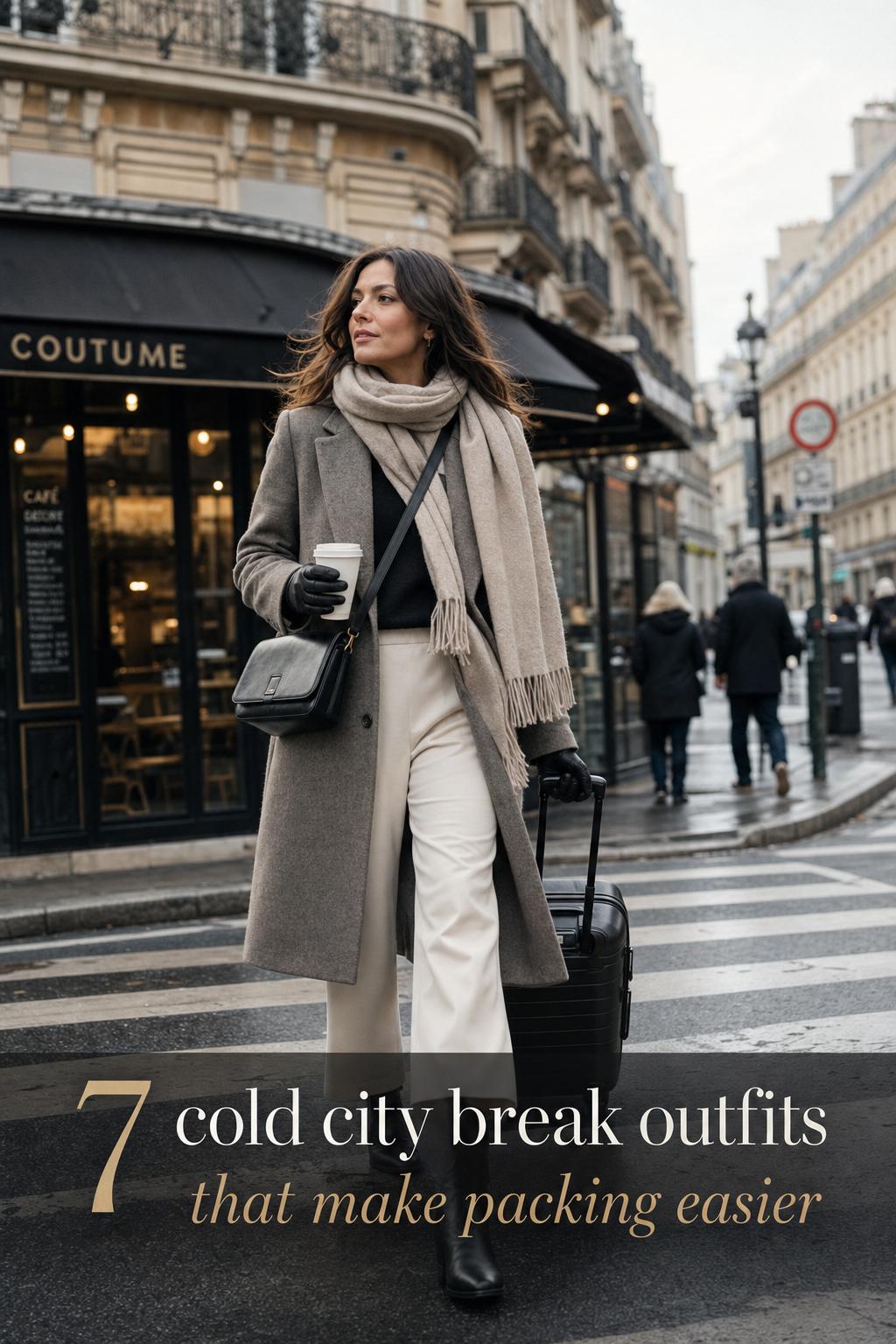
Three city archetypes and what they teach your wardrobe
Cold city break outfits often become clearer when viewed through city-specific style archetypes. These references are helpful not because every traveler wants to dress like a local stereotype, but because they sharpen the mood, proportion, and practicality of a wardrobe.
Nordic minimalist
This archetype aligns closely with the capsule-led urban traveler and, at times, the functional layerer. The mood is pared back, modern, and quietly practical. Clean outerwear, understated layering, and useful accessories create an impression of control rather than excess. It is particularly strong for city breaks shaped by walking, shifting weather, and a desire for simplicity.
Parisian chic
Parisian chic belongs most naturally to the polished city dresser. The silhouette is refined, the palette restrained, and the styling more composed. Knitwear, a tailored coat, elegant boots, and a scarf create a look that can move from daytime city exploring to dinner with minimal adjustment. It is less about quantity of combinations and more about clarity of line.
Tokyo streetwear-inspired practicality
This archetype can bridge functional and fashion-led dressing. It allows more experimentation in layering and proportion while still respecting the demands of cold urban travel. The strength here is adaptability. A weather-ready outer layer can sit over simpler wardrobe basics without making the outfit feel overly conservative. For travelers who want warmth but dislike looking predictable, this balance can be especially useful.
Where style logic matters most: sightseeing, dining, and transit
A city break is not one event but a sequence of different settings. The best wardrobe is not simply stylish in isolation; it performs across walking-heavy daytime plans, indoor cultural spaces, transport changes, and evening meals. This is where comparison becomes practical.
Daytime city exploring
The capsule-led traveler usually has the strongest answer here: a coat that works all day, easy layering, boots built for movement, and accessories that can be removed indoors. The functional layerer also performs well, especially in wind, rain, or snow. The polished city dresser can work beautifully for sightseeing, but only if elegance has not come at the expense of comfort or weather readiness.
Dinner and evening plans
This is where the polished city dresser gains an advantage. A cleaner silhouette, more refined footwear, and slightly sharper outerwear transition naturally into restaurants or nightlife. The capsule-led wardrobe can follow with a simple styling shift, often through accessories or a more composed knitwear-and-coat combination. The functional layerer may need to remove its more technical outer layer indoors to reveal a more balanced inner outfit.
Travel days and carry-on dressing
The capsule approach is usually the most efficient for transit because every piece is chosen for rewear. This aligns with the travel-ready editorial logic seen in city break packing guidance. The functional layerer is also practical on travel days, particularly when forecast uncertainty is high. The polished city dresser works best if the outfit remains comfortable enough for movement and layering through changing indoor and outdoor temperatures.
Example comparisons that clarify the differences
Casual daytime outfit interpretation
The capsule-led traveler might build a look around a versatile coat, a knit, simple bottoms, practical boots, and a crossbody bag. The logic is mix-and-match ease. The polished city dresser would approach the same daytime itinerary with a more structured coat and a cleaner visual line, using proportion and texture to make the outfit feel elevated. The functional layerer would prioritize waterproof outerwear and more protective footwear, allowing the accessories to support warmth first.
Dinner-ready winter outfit interpretation
For dinner, the polished city dresser may rely on sleek boots, refined knitwear, and a tailored coat that holds shape the moment it is put on. The capsule-led traveler would use the same base pieces from the day but tighten the composition through neater accessories and a more intentional coat-and-boot pairing. The functional layerer would likely let the outerwear do less of the visual work here, revealing an inner outfit that feels less technical once indoors.
Cold, wet forecast interpretation
Under rain or snow, the differences become unmistakable. The weatherproof functional layerer will naturally move toward waterproof outerwear, breathable layers, and boots with grip. The capsule-led traveler can adapt if the core wardrobe includes weather-ready pieces, but a purely aesthetic capsule may struggle. The polished city dresser can still succeed, though only with realistic choices that respect the forecast rather than resist it.
Tips for building a better winter city break wardrobe
The strongest cold-weather travel wardrobes rarely come from packing more. They come from understanding what your trip asks of you and choosing the style approach that answers those demands most honestly.
- Start with outerwear, because the coat or shell sets both the temperature strategy and the silhouette.
- Choose one clear footwear direction: sleek, versatile, or weatherproof. Trying to force one pair to do every job can lead to compromise.
- Use accessories to increase variety without adding bulk.
- Build around layering essentials rather than standalone statement pieces.
- Pack according to itinerary, not fantasy. A wardrobe for museums and cafés differs from one built around long outdoor walks or holiday markets.
A practical tip that often improves packing instantly is to separate “warmth pieces” from “style pieces” before you pack. Base layers, socks, hats, and gloves protect the wardrobe from cold stress, while coats, boots, and knitwear create the visible style direction. Once those roles are clear, it becomes easier to combine utility and elegance without overpacking.
Common mistakes that weaken cold city break outfits
Many winter travel wardrobes fail not because the clothes are unattractive, but because the styling logic is incomplete. A beautiful coat with inadequate footwear, or practical boots with no proportional balance elsewhere, can make the whole outfit feel unresolved.
- Overpacking outerwear instead of choosing one strong coat and one clear supporting strategy.
- Ignoring the role of waterproof footwear in cities where wet pavement shapes the entire day.
- Choosing bulky layers without considering how they sit under the coat.
- Bringing too many unrelated colors, which limits rewear and weakens the capsule wardrobe effect.
- Treating scarves, hats, and gloves as afterthoughts rather than core components.
Another frequent mistake is dressing for photos rather than for movement. Urban travel places constant demands on comfort, temperature adjustment, and walking. Outfits that work only while standing still tend to feel less refined by midday, no matter how polished they looked at the start.
Brand signals and style positioning without losing editorial clarity
Brand references can help clarify aesthetic direction, even when the goal is not to shop heavily. RAINS and The North Face suggest a more weather-adaptive, technical approach. COLLUSION can sit within a more trend-aware urban mix. Platforms such as ASOS and Wolf & Badger often present city break outfits through a blend of editorial inspiration and product logic, while Brakeburn and Ry Dale lean into practical cold-weather dressing with a brand-specific lens.
The useful takeaway is not that one brand defines a style, but that certain labels signal priorities. Technical outerwear brands point toward the functional layerer. Editorial multi-brand spaces often support the polished or capsule-led dresser by showing how outerwear, bags, and footwear interact. The reader’s job is to borrow the styling intelligence, not just the item list.
Sustainability, longevity, and the case for fewer better pieces
Cold city break dressing naturally lends itself to a more sustainable mindset because the best wardrobes rely on repetition, durability, and multi-use pieces. A strong capsule wardrobe is not only efficient for travel; it also encourages a longer view of style. One dependable coat, one reliable pair of boots, and adaptable knitwear often do more than several less considered items.
This is also why rental, second-hand options, and a repair-minded attitude make sense within winter travel dressing. When an outfit philosophy is built around timeless outerwear, practical accessories, and rewear potential, longevity becomes part of the style itself. The most refined city-break wardrobes rarely look rushed. They look edited.
When to choose each style approach
Choose the capsule-led urban traveler if you value flexibility
This is the most reliable option for a 3-day or 7-day trip when you want to pack light and repeat pieces without looking repetitive. It suits mixed itineraries, carry-on travel, and readers who prefer thoughtful wardrobe composition over trend-driven variation.
Choose the polished city dresser if your itinerary leans refined
If your plans include restaurants, cultural venues, work-friendly moments, and city settings where a tailored silhouette feels appropriate, this is often the strongest choice. It works particularly well in destinations where style culture rewards restraint and polish, such as Paris or Milan-inspired dressing contexts.
Choose the weatherproof functional layerer if the forecast is the main story
For trips shaped by wind chill, rain, snow, or long outdoor stretches, function should lead. This does not mean abandoning style. It means letting waterproof outerwear, thermal layers, and practical boots define the framework, then refining the look through color balance and proportion.
The most convincing cold city break outfits usually blend all three
In reality, the best winter city break outfits are rarely pure examples of a single aesthetic. A polished coat may sit over a capsule-based core. Waterproof boots may anchor an otherwise refined outfit. A Nordic minimalist wardrobe may borrow a Parisian sense of line, while a Tokyo streetwear-inspired layer can make a practical travel look feel more individual.
The essential distinction is this: capsule dressing is about versatility, polished city dressing is about composition, and weatherproof layering is about performance. Once you recognize which principle is leading the outfit, the rest of the wardrobe becomes easier to edit. That is the real secret of cold city break outfits: not more clothing, but clearer intention.
FAQ
What are the most essential pieces for cold city break outfits?
The core pieces are a dependable winter coat or weatherproof outerwear, practical boots, layering essentials such as base layers and knitwear, and accessories including a scarf, hat, gloves, and warm socks. A useful bag, usually a crossbody or weather-protected backpack, completes the wardrobe.
How do I pack for a winter city break without overpacking?
Build a capsule wardrobe around a limited color palette and choose pieces that can be reworn in different combinations. Start with one strong outerwear option, one main pair of boots, a small number of layering pieces, and accessories that can shift the look without taking much space.
What is the difference between a polished city look and a practical winter travel outfit?
A polished city look emphasizes tailored structure, refined proportions, and a more elevated finish, while a practical winter travel outfit begins with protection from cold, rain, or snow. The best wardrobes often combine both by using functional foundations with a cleaner silhouette and more thoughtful accessories.
Which shoes work best for winter city sightseeing?
Boots are the strongest choice, especially if they are comfortable for long walks and suitable for wet or cold conditions. If the forecast includes rain, slush, or snow, waterproof boots with grip are more dependable than sleeker options that look elegant but cannot handle urban winter surfaces well.
Can cold city break outfits still work for dinner or nightlife?
Yes, provided the wardrobe has a balanced silhouette and a few refined elements. A structured coat, polished knitwear, sleek boots, and a more intentional accessory choice can carry the same outfit from daytime sightseeing into evening plans without requiring a complete change.
How many coats should I bring for a 3-day winter city break?
In most cases, one well-chosen coat is enough if it suits the forecast and works across your planned outfits. The smarter strategy is to vary what goes underneath through base layers, knitwear, and accessories rather than packing multiple coats that compete for suitcase space.
Are accessories really that important in a winter city break wardrobe?
They are essential because they affect both warmth and style. Scarves, hats, gloves, and socks help regulate comfort outdoors, but they also shape the finish of the outfit and make repeated coat-and-boot combinations feel more deliberate.
What style approach works best for uncertain winter weather?
The weatherproof functional layerer is the safest starting point when conditions may shift between cold, rain, and snow. Even so, it works best when balanced with capsule wardrobe discipline and a polished sense of proportion, so the outfit remains practical without feeling overly heavy.
Leave a Reply