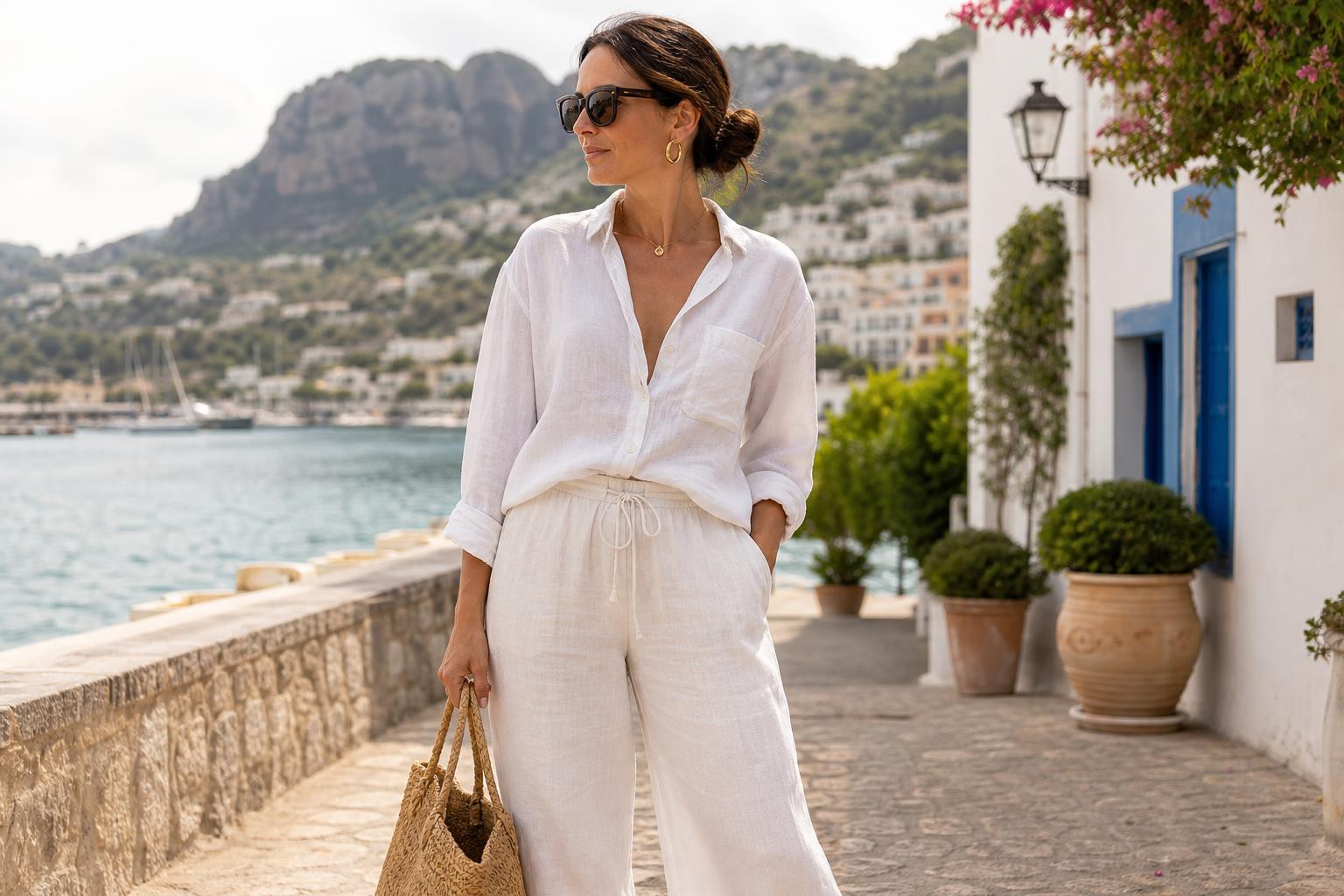
There is a particular challenge at the center of tropical vacation outfits: the wardrobe has to look light, polished, and expressive while also surviving heat, humidity, bright sun, and the constant shift from beach to lunch to dinner. That is why several style approaches tend to overlap in this category. Resort wear, island vacation outfits, beach vacation outfits, and summer outfits are often grouped together, yet they do not behave in quite the same way once you consider fabric, silhouette, and occasion.
The most useful comparison is not between isolated garments, but between styling philosophies. Some tropical looks are built around editorial resort glamour, with statement earrings, a white midi dress, and a straw bag that feels ready for a poolside terrace. Others lean into a practical capsule wardrobe, relying on linen shorts, breathable tops, quick beach coverups, and sandals that can move across a full day. Understanding the difference helps you pack better and dress with more intention.
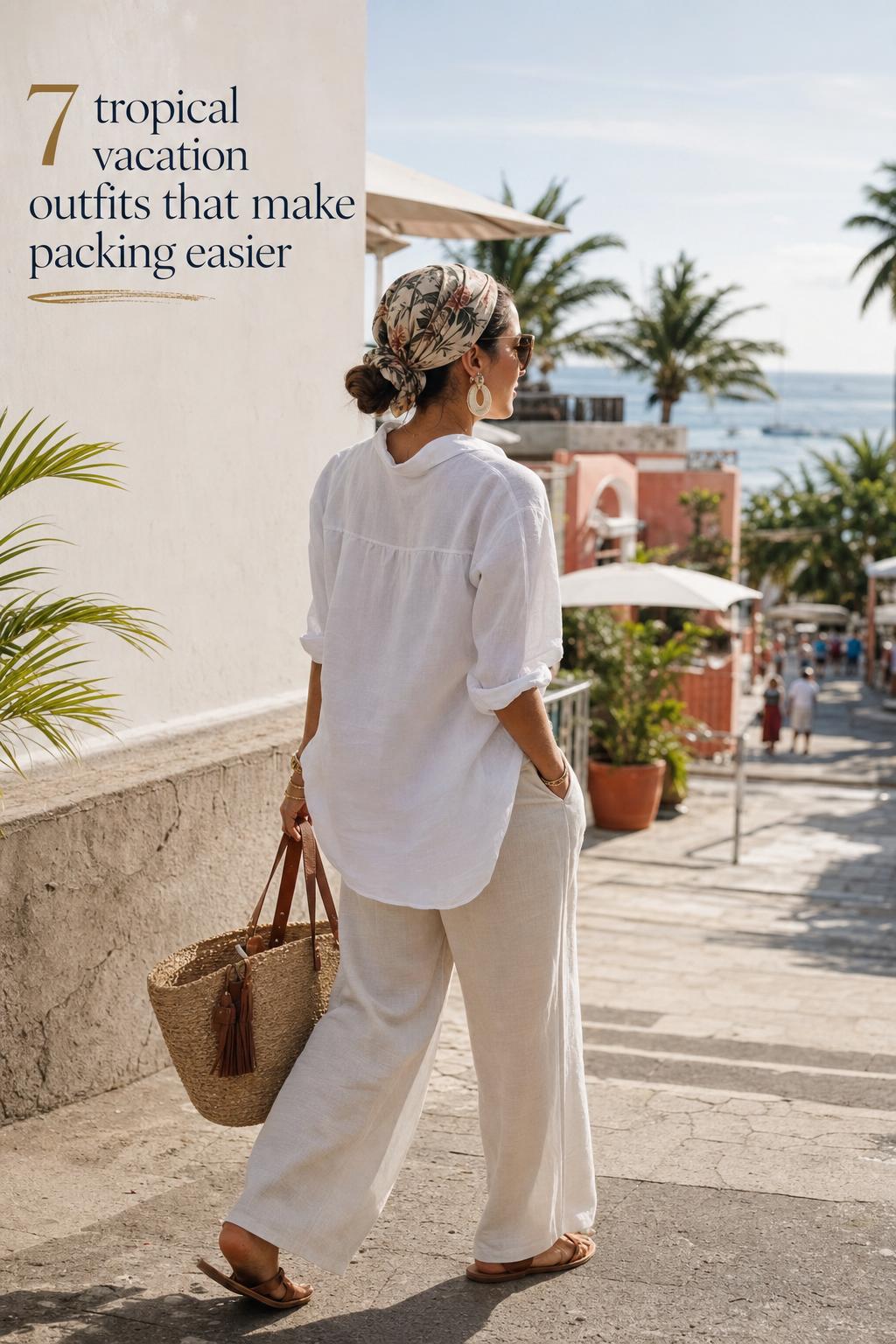
This guide compares the leading approaches to tropical vacation outfits, explains how they differ visually and functionally, and shows how to choose between them for Caribbean escapes, Hawaii, Bali, Cancún, Ibiza, or an easy island getaway closer to home. The goal is not to chase every trend, but to understand why certain pieces work, when they do not, and how to build a wardrobe that feels both refined and realistic.
The three tropical style directions worth knowing
Most tropical wardrobes fall into three recognizable directions. They can overlap, and the strongest vacation wardrobes often borrow from all three, but each one has a different visual priority. Seeing those priorities clearly is the first step toward a more coherent suitcase.
Your wedding has a lot of moving pieces. Your plan can still feel composed.
Zarellea organizes guests, vendors, budget, and timelines in one shared space — so you can make decisions with clarity, not stress.
Style overview: polished resort wear
Polished resort wear is the most editorial of the three. It favors breezy dresses, slip dresses, white maxi dresses, wide-leg trousers, and elevated jumpsuits styled with heeled sandals, kitten heel sandals, statement earrings, or a beaded bag. The mood is composed rather than casual. Fabrics still need to feel light, but the visual emphasis is on clean lines, color balance, and a beach-to-dinner transition that looks effortless from a hotel terrace to a dressier restaurant.
Style overview: beach-led tropical dressing
Beach-led tropical dressing begins with swimwear and builds outward. Printed swimwear, sheer coverups, crochet layers, tunics, jelly shoes, flip flops, straw bags, and sun hats shape the outfit. This approach is more relaxed, more exposed to the elements, and often more playful in color and print. It works particularly well for poolside glam, resort afternoons, and destinations where beach culture sets the tone of the day.
Style overview: capsule-based island wardrobe
The capsule-based island wardrobe is the most practical interpretation. It relies on repeatable pieces such as linen clothing, cotton tops, linen shorts, a maxi dress, a lightweight skirt, sandals, and one or two coverups that can cross multiple settings. UPF clothing and breathable fabrics matter more here than overt trend statements. The mood is still stylish, but the logic is efficiency: fewer pieces, more combinations, less packing stress.
Why these styles are often confused
They share many of the same garments. A white midi dress can sit comfortably in polished resort wear, in beach vacation outfits, and in a capsule packing list. A straw bag can look chic beside a slip dress at dinner or entirely natural over a printed swimsuit and cover-up by day. Sandals, tropical prints, florals, head scarves, and boho tops move easily between aesthetics.
The difference is less about the item itself and more about composition. A white dress paired with pastel knit and flip flops reads differently from the same dress with statement earrings and heeled thong sandals. Linen shorts can feel softly tailored with a broderie anglaise top, or more casual with a bandana top and beach slides. Tropical style is not one visual language; it is a family of related ones.
What separates resort wear from beach vacation outfits
If there is one distinction that clarifies most packing decisions, it is this: resort wear is occasion-aware, while beach vacation outfits are environment-led. Resort wear asks where you are going next. Beach dressing asks what the climate and setting demand right now.
Silhouette and structure
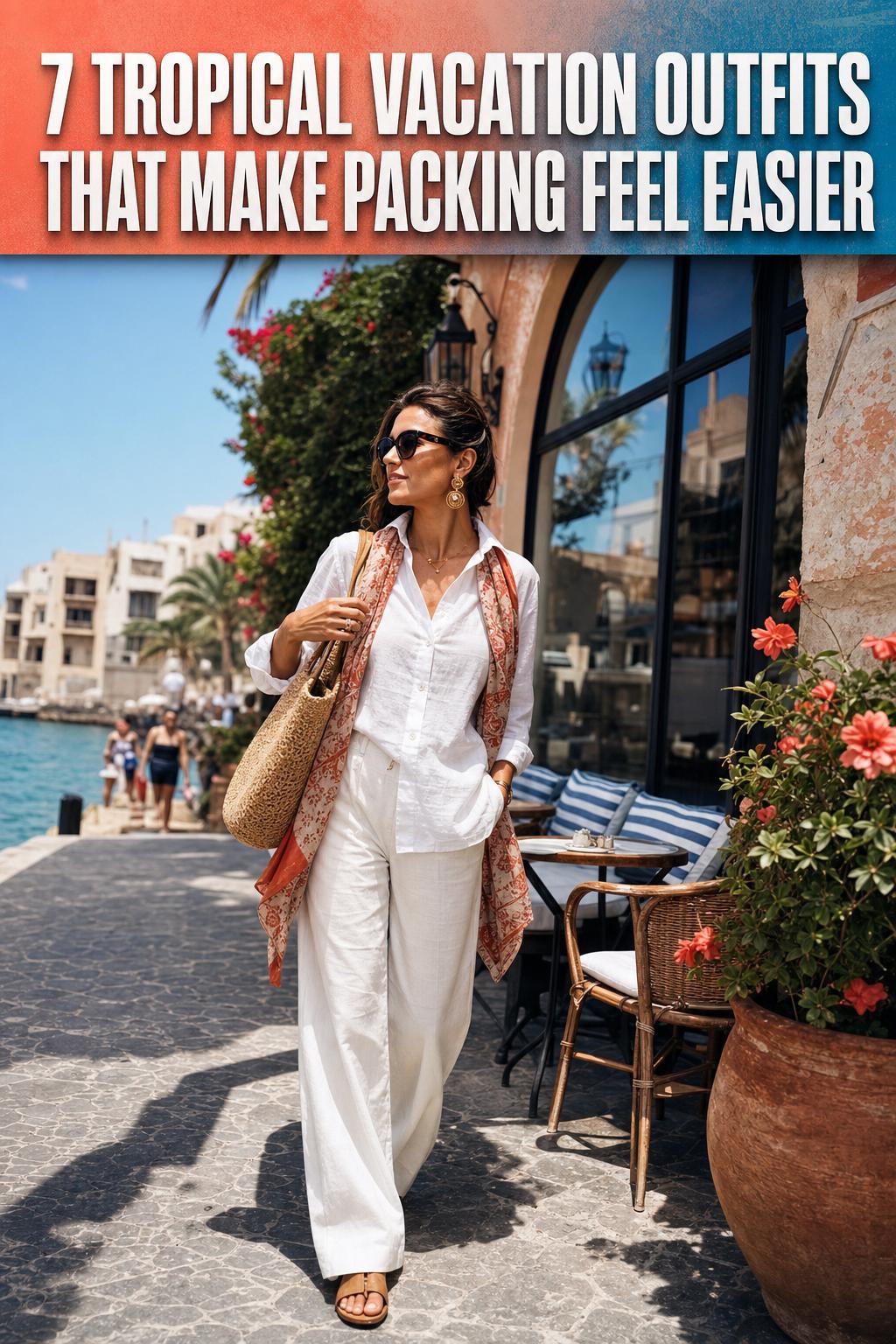
Resort wear usually has a cleaner silhouette. Think a halterneck top with a midi skirt, a turquoise camisole with parachute trousers, or a red dress finished with a beaded bag. The lines are more deliberate, and the outfit often has one focal piece. Beach vacation outfits are looser by design. The swimsuit is frequently the base layer, with a coverup or tunic added only as much as needed. The outline is softer and less structured.
Color palette and print use
Beach-led looks tend to welcome stronger tropical prints, florals, matching sets, and the colorful ease associated with a coconut girl mood. Resort wear is more selective. It may still use tropical color palettes such as ocean blues, palm greens, or sunset corals, but often with greater restraint. A polished resort look might let one color or one texture carry the outfit, rather than layering several visual messages at once.
Level of formality
Resort wear can move into evening. Beach outfits rarely try to. A breezy dress, slip dress, or jumpsuit with refined sandals and jewelry is built to survive a dinner reservation. A swimsuit under a crochet coverup is built to survive sun, salt, and a long lunch near the water. Both belong on the same trip, but they solve different problems.
Styling philosophy
Resort wear often treats accessories as finishing tools: statement earrings, a head scarf, mesh flats, or a straw tote used with intention. Beach dressing treats accessories more functionally, even when they are stylish. The bag carries essentials. The coverup shields from sun. The sandals slip off easily. The beauty of this category is ease, not polish.
Where the capsule wardrobe approach differs from both
The capsule method sits slightly apart because it is less an aesthetic than a discipline. It asks which pieces can do the most work across the trip. In practice, this often produces a cleaner, calmer suitcase than trend-driven packing.
- A white maxi dress can function as daytime sightseeing wear, a beach coverup over swimwear, or a dinner look with statement earrings.
- Linen shorts can work with a cotton top during the day and with a boho blouse in the evening.
- Wide-leg pants or parachute trousers can double as airport dressing and resort nightwear depending on footwear and jewelry.
- A straw bag can move from beach to town more easily than a heavily embellished evening bag.
This approach is especially useful for 7-day, 10-day, or 14-day tropical trips where luggage space matters. It also suits travelers who want versatility rather than multiple single-use outfits. The limitation, of course, is that a tightly edited wardrobe can feel visually repetitive if color palette and accessories are not considered carefully.
Fabric is where tropical style becomes practical
Many tropical outfit guides focus on the image of the look rather than how the clothes behave. In reality, fabric determines whether an outfit feels refined after an hour in heat. Breathable cotton, linen, rayon blends, and moisture-conscious materials shape not only comfort, but drape, movement, and the overall success of the silhouette.
Linen and cotton for a classic island wardrobe
Linen clothing and breathable cotton are the foundation of the most dependable tropical wardrobes. They support the visual language people often associate with island vacation outfits: soft texture, a relaxed line, and a natural ease that works with sandals, straw bags, and sun-faded color palettes. Linen shorts, airy tops, and simple dresses do not need much styling to feel right in tropical heat.
Rayon blends and moisture-aware options for movement
For days that involve more activity, moisture-wicking blends and quick-dry materials become useful. These fabrics make more sense in travel outfits, sightseeing looks, or transitions between water activities and lunch. They may not always have the romance of broderie anglaise or crochet, but they often sit better in real life when the itinerary is active rather than decorative.
UPF clothing and sun-conscious dressing
UPF clothing enters the conversation when sun protection becomes part of the wardrobe logic. It tends to appear more often in practical island packing advice than in editorial outfit roundups, but it matters. A capsule-based traveler may prioritize a lightweight UPF layer or coverup precisely because it protects the outfit strategy of the rest of the suitcase. It is not necessary for every single look to be technical, but it is worth understanding when the destination involves long hours outdoors.
The visual difference in everyday outfits
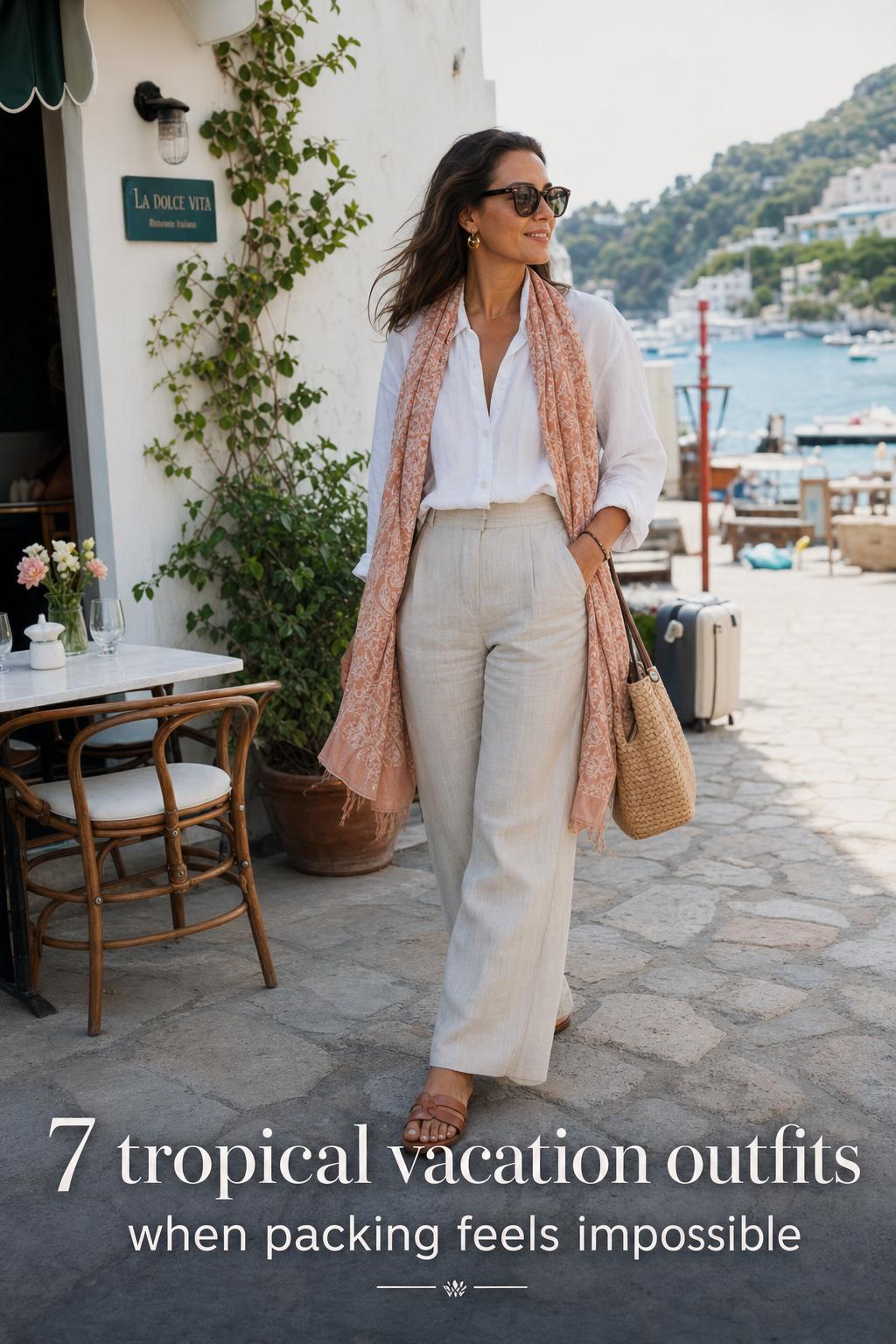
Once these styles are worn in daily vacation life, the contrasts become clearer. Tropical vacation outfits are not only about what appears in a flat lay; they are about how garments stack, shift, and breathe through the day.
Layering approach
Beach-led styling layers minimally. A printed swimsuit under a sheer coverup is usually enough. The outfit remains visually open. Resort wear layers with more intention: perhaps a pastel knit over a white dress for evening breeze, or a head scarf added to a halterneck and midi skirt combination. Capsule dressing layers strategically, often keeping one extra piece in play that can solve several situations rather than adding many separate layers.
Garment proportions
Resort wear often balances one fluid piece with another controlled one. A fitted camisole with wide trousers, or a refined top with a printed skirt, creates a modern silhouette that looks intentional. Beach outfits allow more looseness overall. Coverups, tunics, and matching sets tend to prioritize ease over shape. Capsule wardrobes often return to the most reliable proportions: a simple top with linen shorts, a maxi dress that needs little else, or wide-leg pants that work with multiple tops.
Accessories and finishing pieces
A beaded bag, statement earrings, and heeled thong sandals immediately move an outfit toward polished resort territory. Flip flops, jelly shoes, and a practical straw tote suggest a day built around beach movement. Head scarves and bandanas can move across both worlds, but their styling changes the message. Tied neatly with a midi skirt they feel considered; tied casually with swimwear they feel youthful and easy.
Outfit comparisons that show the styling logic
Beach lunch after a swim
A beach-led interpretation starts with printed swimwear and a crochet or sheer coverup, then finishes with flat sandals and a straw bag. The logic is simple: the outfit respects the fact that water is still part of the day. A resort-wear version of the same lunch might skip visible swimwear entirely and choose a white midi dress with statement earrings and a refined sandal. The setting may be similar, but the styling assumes a sharper social frame.
Casual afternoon in town
The capsule approach would likely choose linen shorts, a cotton or boho top, and easy sandals, perhaps with a head scarf if the sun is strong. It is a practical, breathable answer that can handle walking and heat. A more trend-led tropical outfit might push toward a bandana top, bloomers, or a matching set with tropical prints. Both can work, but the first is grounded in repetition and comfort, while the second is built around visual personality.
Resort dinner by the water
Here the difference becomes decisive. Resort wear reaches naturally for a breezy dress, slip dress, or jumpsuit with jewelry and a beaded bag. Perhaps a red dress with mesh flats, or a halterneck top with a midi skirt and clean sandals. Beach-led dressing often struggles in this setting unless it is elevated substantially. The same coverup that looked ideal at noon may feel underdressed by evening unless replaced by a true dress or coordinated separates.
Travel day and airport styling
The best travel outfits usually come from the capsule philosophy. Wide-leg pants or a jumpsuit compress well, feel comfortable in transit, and can be reworn after arrival. Resort wear can look elegant at the airport, but it is not always the most forgiving in long transit conditions. Beach-focused styling rarely solves travel day well because swim-based pieces have too narrow a purpose.
Destination matters more than many wardrobes admit
One of the clearest differences between an average tropical suitcase and a thoughtful one is destination awareness. Tropical does not mean the same thing everywhere. Caribbean, Hawaii, Bali, Phuket, Fiji, Cancún, Puerto Rico, Jamaica, Waikīkī, Maui, San Juan, Punta Cana, and Ibiza all sit inside the same broad fantasy, yet their style cues can pull a wardrobe in slightly different directions.
Caribbean rhythm: easy color and beach-to-dinner balance
For a Caribbean island escape, tropical prints, sunset corals, ocean blues, and breezy dresses feel natural, but so do practical coverups and sandals that can handle movement. In places such as Cancún, San Juan, Jamaica, or Punta Cana, the wardrobe often needs to cross from bright daytime heat into a dinner setting without a full costume change. This is where the white maxi dress, the straw bag, and a simple switch in jewelry earn their place.
Hawaii and the Pacific: print, ease, and soft structure
In Hawaii, including Waikīkī and Maui, tropical dressing often benefits from softer structure. Aloha-inspired prints, airy dresses, and relaxed sets make sense, but they are strongest when balanced with simplicity. A single printed piece worn with clean sandals or a straw tote often feels more refined than several competing motifs. The atmosphere supports ease, yet overly formal resort dressing can look disconnected from the landscape.
Bali, Phuket, and Fiji: lighter layers and fluid silhouettes
For Bali, Phuket, or Fiji, fluid resort wear and beach-led dressing often meet in the middle. Coverups, tunics, wide-leg pants, lightweight skirts, and swimwear-based outfits all have a role. These destinations reward wardrobes that can absorb humidity while still feeling visually composed. Rayon blends, cotton, and linen become especially important here because heavy structure quickly loses its elegance.
Ibiza: where boho and resort polish overlap
Ibiza introduces a slightly different tropical-adjacent mood. Broderie anglaise tops, printed skirts, boho details, statement earrings, head scarves, and dressier sandals feel particularly at home. It is one of the clearest examples of how beachwear and resort wear can overlap. A sheer coverup alone may feel too unfinished for night, but bohemian textures styled with intention can move beautifully from day to evening.
Color, print, and the mood of the outfit
Color is one of the easiest ways to separate tropical styles without changing the whole wardrobe. Ocean blues, palm greens, sunset corals, white, and red all appear across vacation dressing, but they communicate different things depending on how they are used. White is often the cleanest bridge across all categories. It supports beach simplicity, polished resort wear, and capsule packing equally well.
Tropical prints and florals create immediate atmosphere, but they require discipline. In a beach-led look, a printed swimsuit or matching set can carry the full story. In a resort look, a printed skirt or one statement top is often enough. The more vivid the print, the more useful it becomes to ground the outfit with natural texture such as linen, straw, or simple leather-like finishes in sandals and bags.
Tips: if your suitcase already contains several bright pieces, keep accessories quieter. If your wardrobe is mostly white, beige, or soft neutral tropical shades, then a beaded bag, red dress, or turquoise camisole can create a sharper focal point without making the whole trip feel trend-driven.
Accessories that reveal the style instantly
- Straw bag: the most versatile across beach, town, and casual dinner settings.
- Beaded bag: more directional and better suited to resort dinners or evening cocktails.
- Flip flops and jelly sandals: strongest in beach-led wardrobes and casual daytime use.
- Kitten heel sandals or heeled thong sandals: better for refined resort wear and dinner transitions.
- Head scarf or bandana: useful in both practical and editorial styling, depending on how neatly it is integrated.
- Statement earrings: a fast route to evening polish, especially with otherwise simple dresses.
Accessories are where many outfits either sharpen or collapse. A common mistake is pairing a highly decorative bag with a highly decorative print and then adding ornate jewelry on top. Tropical dressing usually looks best when one element leads and the rest support. A straw tote with a white dress and clean sandals feels coherent because the textures speak softly to one another rather than compete.
How trend details fit into a balanced tropical wardrobe
Recent vacation styling has made room for 90s revival cues and boho details: bandana tops, bloomers, mesh flats, parachute trousers, and playful color contrasts. These pieces can absolutely belong in tropical vacation outfits, but they work best when surrounded by steadier garments. A bandana top feels more persuasive with linen shorts or a simple skirt than with several other trend-heavy pieces. Parachute trousers need a clean, breathable top to avoid looking overly styled for the climate.
This is where brands frequently shape the mood even without dominating the wardrobe. In the broader resort conversation, labels such as Massimo Dutti, Sézane, H&M, Mango, COS, Free People, ASOS, Dior, Gucci, and Manolo Blahnik often appear as references for specific silhouettes, sandals, or accessories. What matters more than the label, however, is the styling lesson: one directional piece looks strongest when anchored by breathable basics and considered proportion.
When to choose each approach
Choose polished resort wear when the trip includes dressier evenings
If your itinerary includes dinners, hotel bars, nightlife, or settings where a beach coverup would feel incomplete, polished resort wear should be the backbone of the wardrobe. It photographs well, adapts easily with jewelry, and creates a composed silhouette without requiring heavy fabrics.
Choose beach-led tropical dressing when water and daytime leisure dominate
If the trip is built around poolside hours, beach clubs, or long afternoons near the water, begin with swimwear and coverups. This is also the right choice when comfort, quick changes, and a playful mood matter more than evening refinement.
Choose a capsule-based island wardrobe when versatility matters most
If luggage space is limited, the trip is longer, or you prefer a calmer visual rhythm, the capsule approach is usually the most efficient. It is particularly effective for 10-day and 14-day packing, multi-stop travel, or vacations that mix airports, towns, beaches, and dinners.
Tips: many travelers do best with a split wardrobe. Let the capsule pieces form the base, add two or three beach-led items for poolside use, and include one or two polished resort looks for evening. This prevents overpacking while still acknowledging that tropical trips rarely stay in a single style lane.
A refined tropical capsule for 7, 10, or 14 days
A strong capsule does not need endless variety. It needs thoughtful repetition. The goal is to create enough contrast through silhouette, fabric, and accessories that the wardrobe feels complete without becoming bulky.
- 1 white maxi or midi dress
- 1 breezy evening dress or jumpsuit
- 2 to 3 lightweight tops, including one boho or embroidered option
- 1 pair of linen shorts
- 1 lightweight skirt or printed skirt
- 1 pair of wide-leg pants or parachute trousers for travel and evening
- 2 swimsuits, including one printed option
- 1 to 2 coverups, ideally one sheer or crochet and one more practical
- 1 straw bag and, if needed, 1 smaller beaded bag
- 2 pairs of sandals, one flat and one more polished
- 1 head scarf or bandana and a small selection of jewelry
This framework allows beach-to-town movement, dinner dressing, and travel-day comfort without fragmenting the wardrobe. It also reduces the common packing problem of bringing too many special pieces that only work once.
Common tropical styling mistakes
Even beautiful individual items can struggle in a tropical setting if the styling logic is weak. The climate quickly exposes choices that looked good in theory but do not perform in wear.
- Choosing visual drama over breathable fabrics and then feeling uncomfortable by midday.
- Packing too many beach-only pieces and not enough dinner-ready options.
- Relying on prints in every outfit so the wardrobe starts to feel repetitive rather than varied.
- Ignoring footwear balance and bringing sandals that suit only one context.
- Forgetting the role of coverups and UPF-aware layers on sun-heavy days.
- Treating accessories as an afterthought instead of the tool that changes the formality of the outfit.
The simplest correction is to evaluate each item against three questions: is it breathable, can it work in more than one setting, and does it contribute to an overall visual rhythm rather than a one-off statement. That is the difference between a wardrobe that merely looks tropical and one that functions beautifully on the trip.
The most modern approach: blending the styles intelligently
The best tropical wardrobes rarely belong entirely to one category. They borrow the elegance of resort wear, the ease of beach dressing, and the discipline of a capsule wardrobe. A white dress may serve as the anchor, while printed swimwear provides energy, linen separates supply practicality, and accessories dictate the shift in tone.
This blended approach also explains why certain looks feel current without becoming disposable. A boho top, a head scarf, or even a 90s-leaning detail such as mesh flats can be integrated if the surrounding wardrobe remains grounded. Tropical style is strongest when it respects climate, movement, and setting as much as visual appeal.
Ultimately, tropical vacation outfits are less about owning a fixed set of pieces and more about understanding what each style language is trying to achieve. Once that becomes clear, it is much easier to decide whether the day calls for a swimsuit and coverup, a white midi dress and straw bag, or a capsule combination of linen shorts and an airy top that can carry you almost anywhere.
FAQ
What are the best fabrics for tropical vacation outfits?
The most reliable choices are breathable cotton, linen, rayon blends, and other lightweight materials that manage heat well. Linen and cotton create the classic island look, while moisture-aware and quick-dry fabrics are especially useful for active days, travel outfits, or transitions between water activities and town.
What is the difference between resort wear and beach vacation outfits?
Resort wear is usually more polished and occasion-aware, with breezy dresses, jumpsuits, refined sandals, and jewelry that can move into evening. Beach vacation outfits are more environment-led, often built around swimwear, coverups, flat sandals, and practical accessories designed for daytime sun and water.
Do I need UPF clothing for a tropical trip?
Not every outfit needs to be technical, but UPF clothing can be useful if your trip includes long hours outdoors or repeated sun exposure. It is especially relevant in capsule packing because one lightweight UPF layer or coverup can support comfort and sun-conscious dressing without taking much luggage space.
Are sandals appropriate for dinner at a tropical resort?
Yes, but the style matters. Flat sandals, flip flops, and jelly shoes are better suited to beach-led daytime outfits, while kitten heel sandals or heeled thong sandals are more appropriate for resort dinners. The overall outfit should feel intentional rather than purely beach-based.
How can I create beach-to-dinner tropical outfits without overpacking?
Start with versatile core pieces such as a white maxi or midi dress, linen separates, and one polished evening option. Then use accessories to shift the mood: a straw bag for day, a beaded bag for evening, flat sandals for the beach, and more refined jewelry or footwear for dinner.
What colors work best for tropical vacation outfits?
White remains the most versatile, but ocean blues, palm greens, sunset corals, red, and tropical florals also work beautifully. The key is balance. A wardrobe becomes more refined when strong prints or bright tones are grounded by simple silhouettes, natural textures, or quieter accessories.
How many outfits should I pack for a 7-day tropical trip?
A compact but functional wardrobe usually includes a small rotation of dresses, tops, shorts or skirts, swimwear, coverups, and two pairs of sandals. The most effective 7-day packing list is built around repeatable pieces that can work across daytime, dinner, and travel rather than seven entirely separate looks.
Can tropical prints and boho details work in a polished vacation wardrobe?
Yes, particularly when they are used with restraint. A printed skirt, a broderie anglaise top, or a boho blouse can add character to a resort wardrobe, but they tend to look strongest when paired with clean silhouettes, breathable fabrics, and accessories that do not compete for attention.
What shoes are best for tropical vacation outfits?
The most practical combination is one flat pair for beach and daytime use and one more polished pair for evenings. Flip flops and jelly sandals suit relaxed settings, while heeled sandals or kitten heel styles bring a more refined finish to dinner and resort wear looks.
Leave a Reply