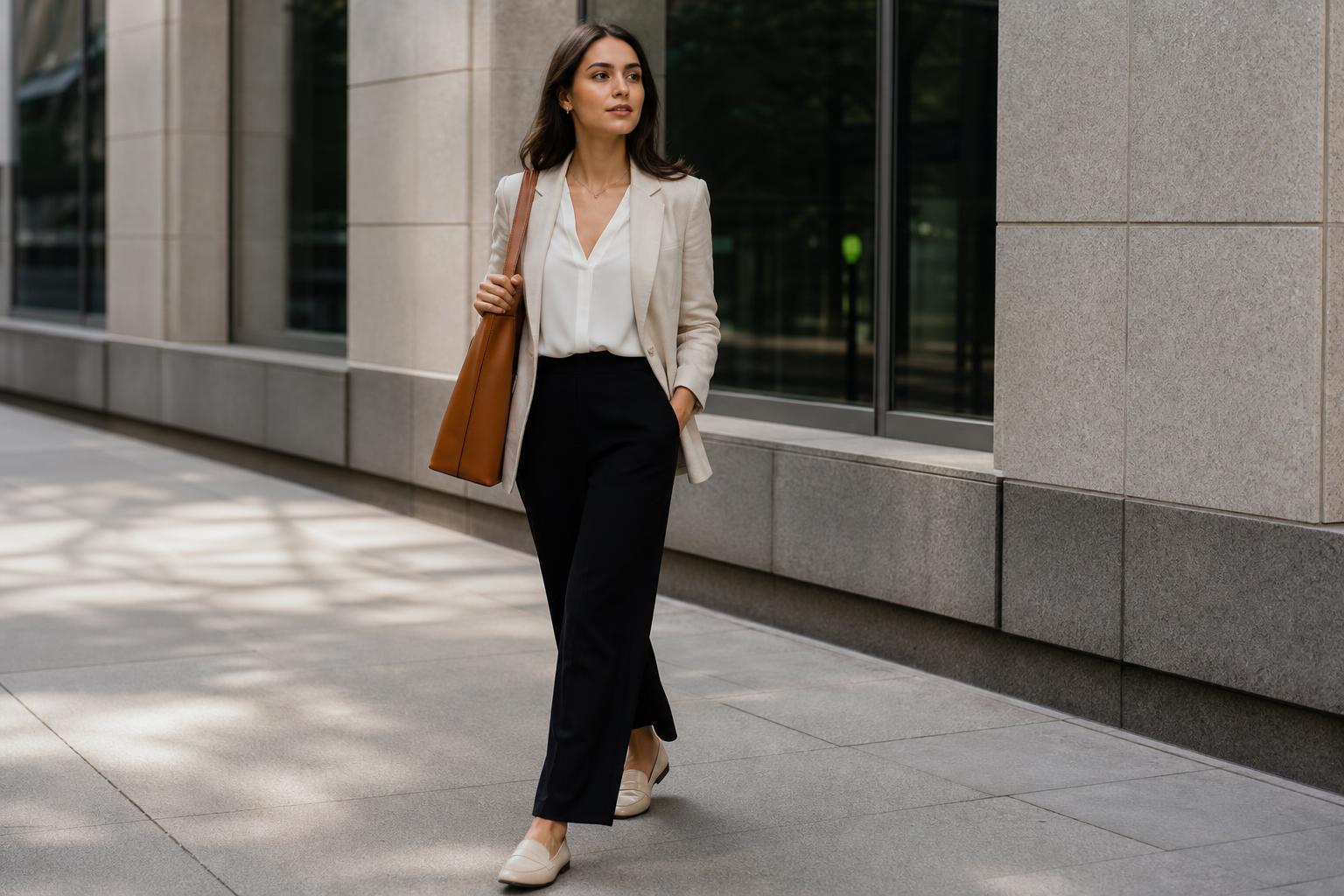
By the time a summer internship begins, the wardrobe question usually feels more difficult than expected. The office may be formal or quietly relaxed, the commute may be hot and humid, and the building itself may be aggressively air-conditioned. That tension is exactly why summer internship outfits can feel so hard to get right: you are dressing for heat, professionalism, movement, and first impressions at once.
A polished intern wardrobe does not require a large budget or a closet full of trend pieces. It requires clarity. The most reliable approach is to build around a few refined essentials—a linen blazer, tailored trousers, a midi skirt or midi dress, a crisp blouse, a structured tote bag, and comfortable work shoes—then adapt them to your industry, your office culture, and the practical realities of summer. The result is a wardrobe that looks thoughtful, feels comfortable, and travels well from commute to desk to meeting.
Why the summer internship wardrobe problem happens
The challenge is rarely about style alone. It is about competing conditions. A hot commute asks for breathable fabrics and ease of movement, while a cold office often demands layering. Business casual can mean one thing in finance and another in tech. A creative agency may welcome more personality, while a bank or public-facing setting usually rewards restraint, tailored structure, and clean lines.
There is also the question of versatility. Most interns need outfits that can repeat without looking repetitive, which is why capsule wardrobe thinking appears so often in summer workwear advice. A good capsule is not restrictive; it is practical. It gives you pieces that mix easily, hold their shape, and maintain a polished silhouette even on long days. This is especially useful during internship season, when onboarding sessions, regular office days, and occasional meetings may all require slightly different versions of professional dress.
Your wedding has a lot of moving pieces. Your plan can still feel composed.
Zarellea organizes guests, vendors, budget, and timelines in one shared space — so you can make decisions with clarity, not stress.
The dressing logic that makes summer workwear feel easier
The most effective summer office wardrobe is built on balance: breathable against structured, simple against refined, relaxed textures against tailored lines. That is why a linen blazer works so well. It introduces polish without the heaviness of a traditional jacket. The same principle applies to tailored trousers in a lightweight fabric, or a midi dress that skims rather than clings.
Proportion matters just as much as fabric. A structured blazer layered over a lighter blouse creates visual authority, while a midi skirt paired with a clean blouse keeps the line elegant and office-appropriate. Comfortable footwear—loafers, flats, low-heeled pumps, or white sneakers where the dress code allows—grounds the look in real life. A structured tote bag then completes the picture, adding function without making the outfit feel overworked.
- Choose breathable fabrics such as linen and cotton, especially for pieces worn closest to the body.
- Use light layers to manage the shift between outdoor heat and office air conditioning.
- Keep your color palette anchored in neutrals, blues, or other restrained tones so pieces mix easily.
- Prioritize silhouettes that feel polished while allowing movement during commutes and long workdays.
- Build around interchangeable essentials rather than isolated statement items.
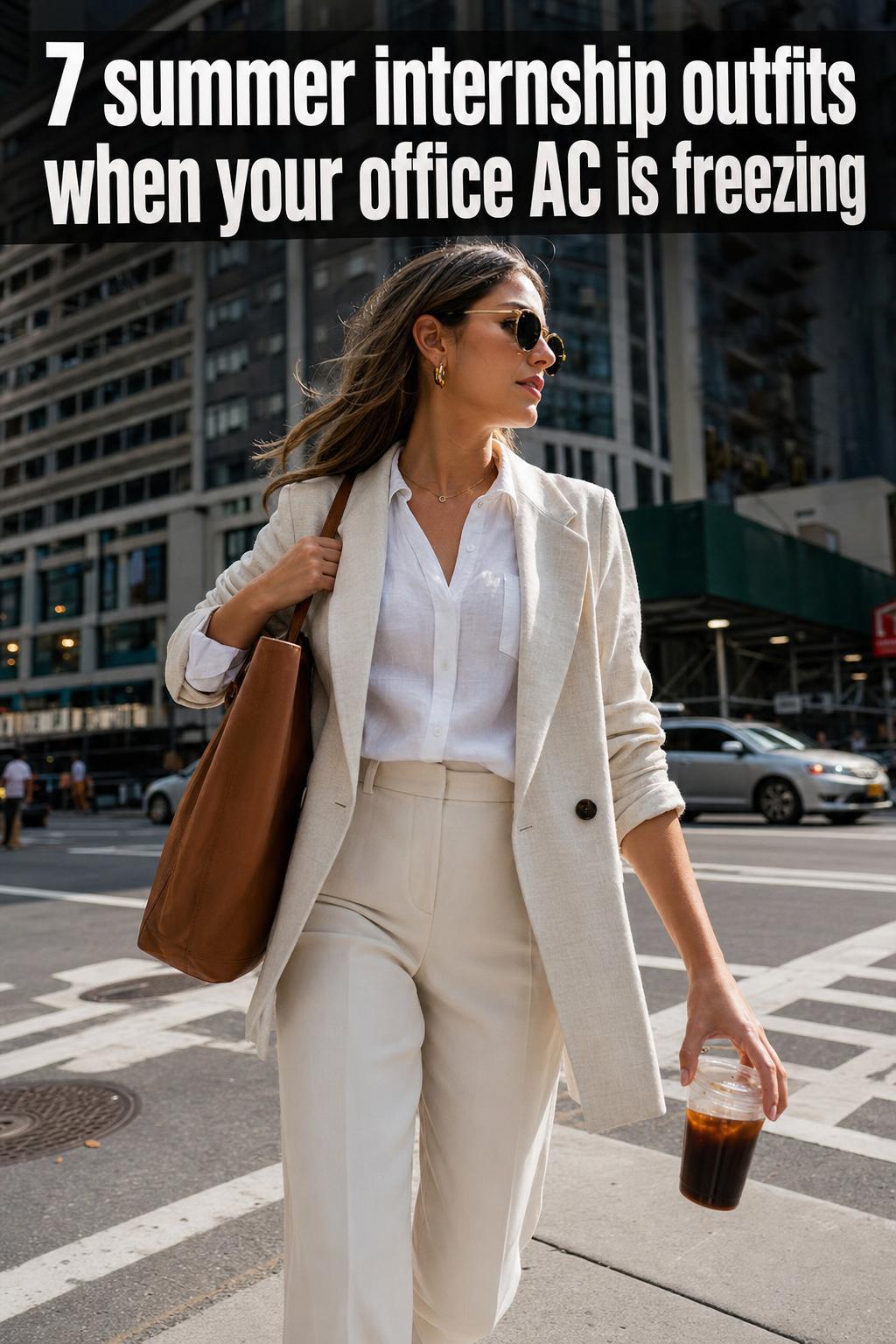
The core capsule that works across most summer internships
If you want summer internship outfits that solve the daily getting-dressed problem, begin with a compact set of foundations. Across the strongest outfit guides, the same wardrobe anchors appear repeatedly because they answer the same practical needs: breathability, professionalism, reusability, and ease of styling.
The linen blazer
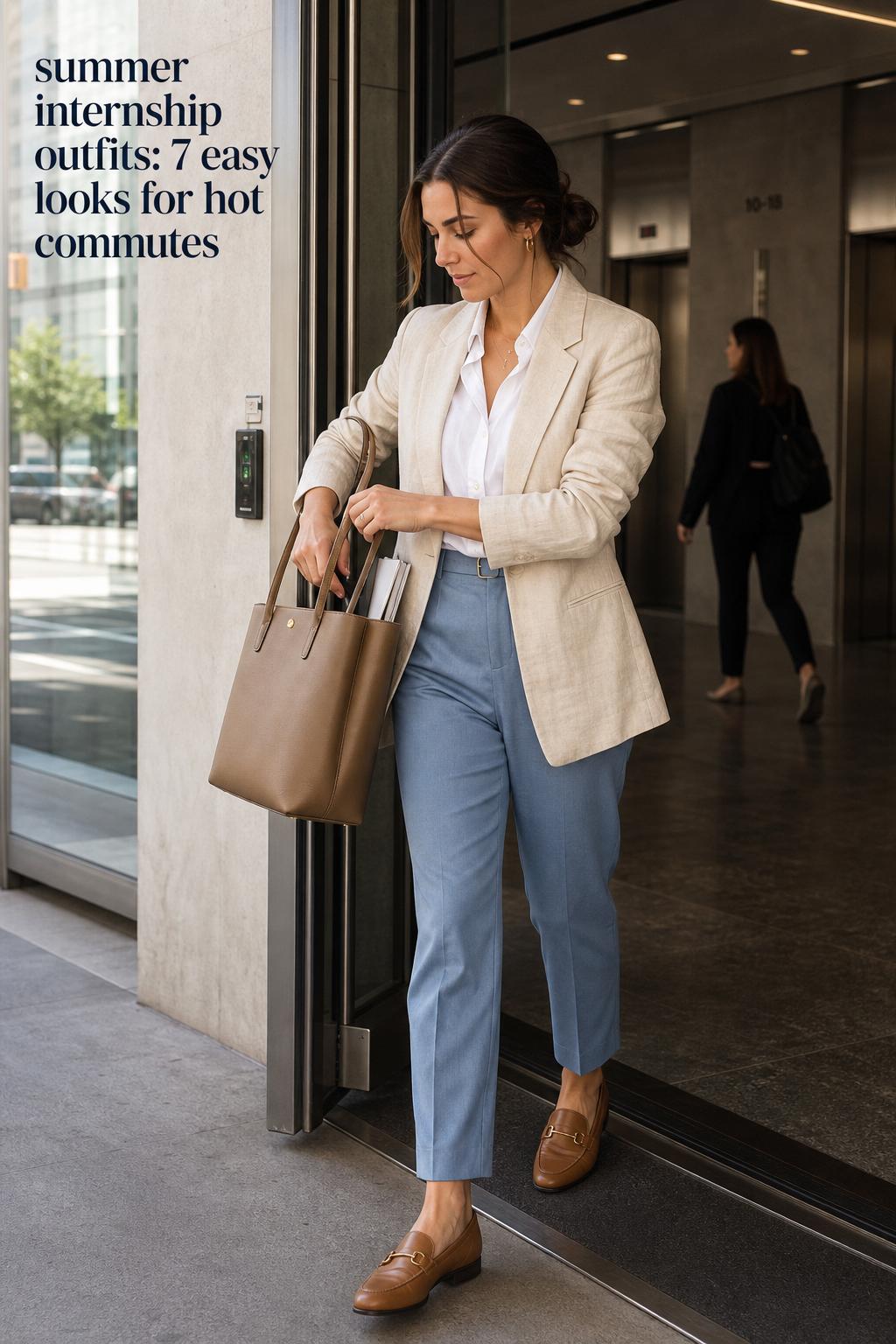
A linen blazer is one of the clearest summer essentials because it gives shape without excessive weight. In business casual offices, it turns a simple top and trousers into a deliberate outfit. In more polished settings, it softens the formality of tailored pieces while still reading professional. Neutral shades and soft blues are especially effective because they layer easily over blouses, dresses, and even minimalist tops.
Tailored trousers and the midi skirt
Tailored trousers bring consistency to a work wardrobe. They work with a blazer, a white blouse, a dress shirt, or a simple knit, and they adapt across industries more easily than trend-led bottoms. The midi skirt offers a similarly versatile option with a slightly lighter visual feel. Both pieces suit the rhythm of summer offices because they can be formal or relaxed depending on the shoes and top you add.
Crisp blouses, white shirts, and breathable dresses
A white blouse or crisp shirt remains one of the most useful office layers because it sharpens everything around it. With trousers, it looks classic. With a midi skirt, it feels elegant. With a blazer, it becomes meeting-ready. Breathable dresses—especially flowy dresses, midi dresses, and shirt dresses—offer the quickest route to an outfit that looks complete with minimal effort. In hot weather, that ease matters.
The structured tote and practical shoes
A structured tote bag is not just an accessory; it helps the outfit read as professional. It also accommodates the practical side of internship life, from notebooks to daily essentials. Shoes should be chosen with the real day in mind. Loafers and flats are reliable in most offices, low-heeled pumps make sense for more formal environments, and white sneakers can work in casual settings or startups where smart casual is the norm.
Dress code by industry: where the outfit changes
The phrase business casual often sounds clear until you enter a specific workplace. In practice, each sector interprets it differently. Understanding that distinction is what makes an outfit feel appropriate rather than merely attractive.
Finance and banking: tailored first, expressive second
In financial services and banking environments, the safest approach is a blazer with tailored pants, a silk-like or crisp blouse, and simple pumps, flats, or loafers. The silhouette should be composed and understated. This is the setting where a lightweight blazer is doing more than adding style; it signals readiness. A pencil-skirt sensibility, clean suiting lines, and a restrained palette tend to align well here, even if the exact outfit is summer-adapted.
Tech and startup offices: smart casual with control
Tech internship outfits usually allow more flexibility, but that does not mean anything goes. The most effective interpretation is smart casual: tailored trousers or a midi skirt, a simple blouse or polished top, and comfortable shoes. A blazer can be swapped for a lighter layer when the office is relaxed, though keeping one in your tote remains wise for presentations or onboarding moments. White sneakers can work here when the rest of the look is clean and intentional.
Marketing and agency settings: polished with personality
Marketing and agency wardrobes often leave more room for expression, which is where a printed dress, a statement blazer, or a slightly more fashion-forward silhouette can feel at home. The key is still polish. A skirt with a crisp blouse, or a dress balanced by a structured tote and refined flats, offers personality without drifting into weekend dressing. This is the kind of office where modern street-style references can be useful, provided they are translated into wearable office proportions.
Hospitality and events: breathable, client-ready, resilient
Hospitality and events work often demands both professional appearance and physical stamina. Breathable dresses, tailored trousers, and long-sleeve blouses in light fabrics are practical because they hold up visually while moving through busy spaces. Accessories should stay controlled, and shoes should support long periods on your feet. In these roles, looking polished is important, but functionality becomes equally visible over the course of the day.
Nonprofit and public sector: clean, modest, dependable
For nonprofit or public sector internships, modest silhouettes and simple professional pieces usually work best. A shirt dress, tailored pants, a cardigan or blazer, and understated flats create the right balance. These workplaces often reward reliability in dress rather than trend awareness, so clarity of silhouette and a composed color palette are more useful than statement dressing.
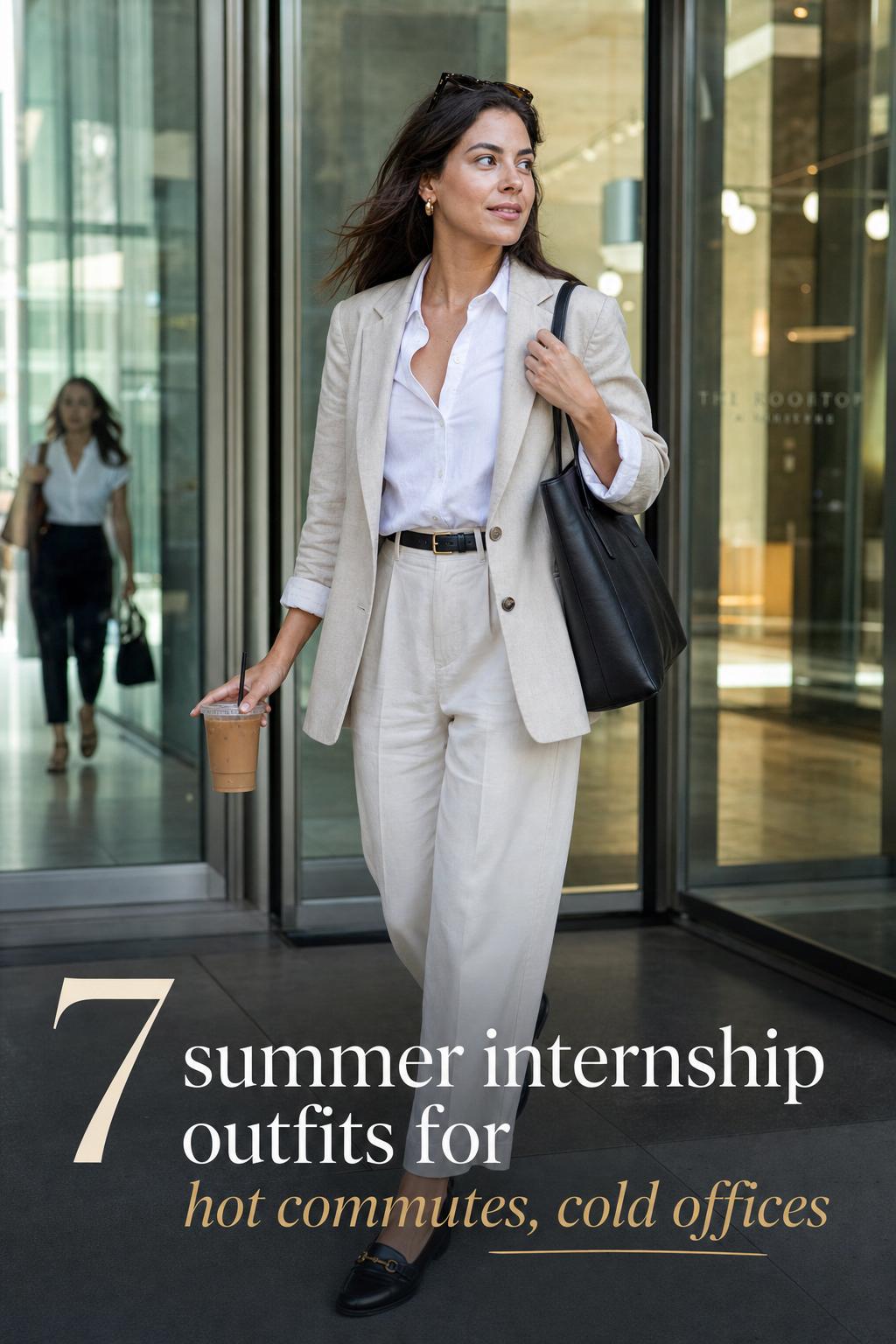
Weather-proofing for hot commutes and cold offices
One of the most practical style problems in summer is dressing for two climates in one day. Outside, there may be heat, humidity, and a crowded commute. Inside, there may be heavy air conditioning and meeting rooms that feel unexpectedly cold. The answer is not to overcomplicate the outfit, but to design it in layers.
Begin with a breathable base: a cotton blouse, a light dress, or a soft top under a blazer. Then add a removable layer such as a linen blazer or light cardigan. This allows the outfit to stay polished at your desk without making the commute miserable. The same principle applies to fabrics. Linen, cotton, and other lightweight materials keep the look refined while making the day physically manageable.
City conditions also matter. A humid New York day may call for looser silhouettes and lighter textures, while a drier San Francisco-style office rhythm may make layering even more important because the outdoor and indoor temperatures can feel sharply different. Chicago summer offices, like many urban workplaces, often combine warm commutes with cold interiors, making a portable outer layer essential.
Tip: build around removable structure
If one piece should do the heavy lifting in your summer work wardrobe, let it be the blazer. Carried over the arm, worn on the train, or added only for meetings, it gives you control. A lightweight blazer over a blouse and tailored trousers can shift from hot commute to professional office in seconds, which is why it remains one of the most repeated summer internship wardrobe essentials.
Outfit solutions for real internship days
The most useful outfits are not the most complicated; they are the ones that solve a daily problem elegantly. Below are practical combinations that can be adapted across offices, budgets, and levels of formality.
Outfit solution: the classic office anchor
Pair a linen blazer with tailored trousers, a white blouse, loafers, and a structured tote bag. This combination works because every piece supports the same message: composed, breathable, and professional. It is especially effective for finance, formal onboarding sessions, or any day when you want to appear immediately settled. If the office is slightly less formal, flats can replace loafers without changing the overall balance.
Outfit solution: the polished dress route
A midi dress or shirt dress with a light blazer and low-heeled pumps creates an effortless line that feels complete with very little styling. This is one of the strongest options for interns who want simplicity in the morning but still need a meeting-ready look. The dress provides comfort and airflow, while the blazer restores structure for the office. A structured tote keeps the outfit grounded.
Outfit solution: the smart casual tech look
Choose tailored trousers, a minimal top or crisp blouse, white sneakers, and a blazer kept nearby for presentations or colder rooms. This works best in tech or startup settings where comfort matters but polish still counts. The sneakers make the commute easier, while the tailored trousers prevent the outfit from slipping into casual territory. The result is a modern silhouette with a clear professional center.
Outfit solution: the skirt-based business casual formula
A midi skirt with a tucked blouse and loafers creates a softer but still structured office look. It is ideal for marketing, nonprofit, or public-facing roles that value professionalism without strict corporate dressing. The skirt introduces movement, the blouse adds clarity, and the loafers keep the outfit practical for walking and long days. If the office runs cold, add a cardigan or blazer without disrupting the line.
Outfit solution: the creative office interpretation
For a more expressive workplace, try a printed dress or a dress balanced with a neutral blazer, refined flats, and a simple tote. This solves the challenge of wanting personality while still respecting the office. The print or color becomes the focal point, while the blazer and accessories maintain discipline. This is where subtle inspiration from street-style figures such as Olivia Palermo, Karlie Kloss, or Chiara Ferragni can be useful—not as direct imitation, but as a reminder that polished dressing can still feel modern.
Outfit solution: the long-day hospitality option
Wear breathable trousers with a long-sleeve blouse, a lightweight blazer for indoor settings, and comfortable flats or loafers. This combination is especially useful for hospitality or events work, where visual professionalism and physical endurance need to coexist. The blouse offers coverage in heavily air-conditioned venues, while the breathable trousers keep the outfit workable in heat.
A refined weekly formula instead of a crowded closet
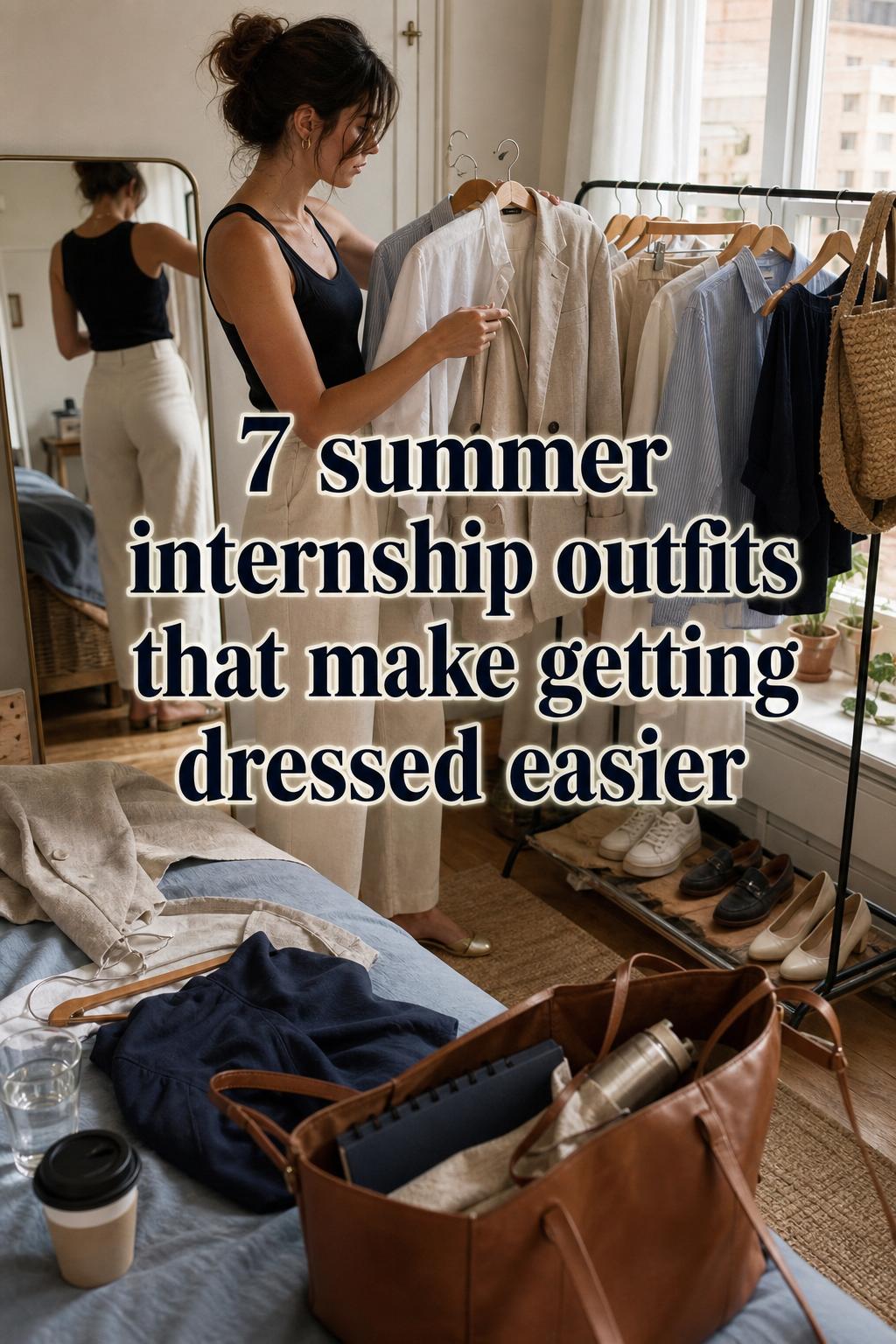
One of the simplest ways to make a summer internship wardrobe feel manageable is to think in rotations rather than single outfits. A small set of repeatable pieces can create enough variation for a full week while keeping the overall wardrobe coherent.
- Two blazers or one blazer plus one cardigan for layering flexibility.
- Two pairs of tailored trousers in easy neutrals.
- One midi skirt.
- Two to three blouses or white shirts.
- One shirt dress or midi dress.
- One pair of loafers or flats, plus low-heeled pumps if your office is formal.
- One structured tote bag that works every day.
This kind of capsule wardrobe is effective because it reduces decision fatigue and improves cost-per-wear. It also makes packing easier for interns spending the summer in another city or moving between office days and networking events. Even budget-conscious wardrobes benefit from this logic, which is why so many affordable outfit guides emphasize mix-and-match foundations over one-off purchases.
Budget-minded choices without sacrificing polish
Affordable dressing appears repeatedly in internship outfit planning for good reason. Many interns are building a work wardrobe for the first time, and spending heavily on every category is rarely realistic. A stronger strategy is to invest mentally rather than extravagantly: choose pieces that repeat well, hold a clean silhouette, and suit more than one office scenario.
Retailers such as Target and Lulus often appear in affordable summer internship outfit discussions because they fit the budget-conscious part of the search while still offering wearable basics. Amazon is also part of that affordable conversation in some internship-style roundups. The useful lesson is not to chase volume, but to select a few pieces with clear purpose: a blazer that layers well, a dress that works under office air conditioning, a midi skirt that pairs with multiple tops, and shoes you can actually walk in.
Tip: spend where repetition is highest
If your budget is limited, direct it toward the items you will wear most often: tailored trousers, a structured tote, loafers or flats, and a blazer. Tops and accessories can remain simpler. This keeps the wardrobe looking elevated even when the total spend stays controlled, and it aligns with the under-$100 and capsule wardrobe logic that runs through many popular internship outfit ideas.
Street style inspiration, translated for the office
Editorial inspiration can be useful when it is interpreted with restraint. Street-style names such as Olivia Palermo, Karlie Kloss, and Chiara Ferragni appear in internship fashion conversations because they embody a certain polished confidence: blazers with tailored pieces, pencil-skirt discipline, clean dresses, and strong outer layers. But the office version should be quieter than the image that inspired it.
A summer internship is not the place for dramatic styling experiments. It is the place to borrow principles. From street style, take the idea of power dressing through proportion, the confidence of a clean neutral palette, or the contrast between a tailored silhouette and a relaxed texture. Leave behind anything that competes with the practical demands of the workday. That editorial edit is what makes a fashion reference useful rather than distracting.
Small adjustments that improve an outfit immediately
The difference between looking merely dressed and looking professionally composed often comes down to a few practical refinements. These details are especially important in summer, when heat and fatigue can quickly undermine an otherwise strong outfit.
- Tuck or half-tuck a blouse to define the waist and sharpen the silhouette.
- Keep one office layer on hand even if you leave home without it.
- Use simple accessories rather than crowded ones, especially in formal industries.
- Choose shoes based on your actual commute, not only your desk image.
- Let the bag match the level of polish in the outfit; a structured tote usually looks more professional than a slouchy carryall.
For readers who need modesty considerations, a longer midi hemline, a shirt dress, or a long-sleeve blouse in a breathable fabric can solve the problem elegantly. For those seeking inclusive or accessibility-friendly choices, the same capsule logic still applies: prioritize ease, repeatability, and a silhouette that supports comfort over the length of the day.
Common mistakes that make summer office dressing harder
Most summer wardrobe errors come from overcorrecting. Some interns dress too lightly for the heat and then feel unprepared in cold offices. Others overdress in heavy fabrics because they associate professionalism with stiffness. Neither approach works particularly well.
Relying on one climate instead of two
An outfit chosen only for outdoor weather often falls short indoors. The practical fix is a removable layer and breathable base pieces. That way, comfort does not depend on perfect forecasting or office temperature luck.
Choosing trend pieces over repeatable essentials
An isolated statement item may feel exciting at first, but it rarely solves the daily wardrobe problem. Internship dressing rewards repeatability. A blazer, tailored pants, a midi skirt, and a white blouse usually offer more value than several difficult-to-style pieces.
Ignoring the dress code of the sector
A polished startup outfit may not translate to banking, and a finance-ready look may feel overly severe in a creative agency. The right question is never just “Does this look good?” but “Does this fit the culture of the workplace I am entering?” That awareness is one of the clearest signs of style intelligence.
The most useful mindset: build a wardrobe, not isolated looks
The best summer internship outfits come from a system, not a scramble. Once you understand your industry, choose breathable fabrics, and build around a few interchangeable pieces, getting dressed becomes far less stressful. A linen blazer, tailored trousers, a midi dress or midi skirt, a crisp blouse, a structured tote bag, and reliable shoes can carry an impressive amount of your summer.
That is ultimately the goal: not to look overdone, but to look prepared, modern, and at ease in your own wardrobe. When the pieces are chosen thoughtfully, style and practicality stop competing. They begin to support each other.
FAQ
What should I wear for a summer internship on the first day?
On the first day, it is usually wise to dress slightly more polished than you think you may need. A linen blazer, tailored trousers or a midi skirt, a white blouse, and loafers or flats create a professional first impression while still working in summer weather. Once you observe the office culture, you can adjust the level of formality.
What counts as business casual for a summer internship?
Business casual generally means professional pieces with a lighter, less formal tone than full business dress. For summer, that often includes tailored trousers, midi skirts, crisp blouses, shirt dresses, loafers, flats, and a lightweight blazer. The exact interpretation depends on the industry, with finance usually more formal than tech or creative offices.
Can I wear white sneakers to a summer internship?
White sneakers can work in more casual or startup environments if the rest of the outfit is clean and polished, such as tailored trousers with a blouse or minimal top. They are less appropriate in more traditional sectors like banking or highly formal client-facing settings, where loafers, flats, or low-heeled pumps are safer choices.
How do I dress for a hot commute and a cold office?
Start with breathable fabrics like linen or cotton, then add a removable layer such as a linen blazer or light cardigan. This keeps the commute manageable without leaving you cold at your desk. The most effective outfits are built in layers rather than relying on one fabric weight for the entire day.
What are the most important pieces for a summer internship capsule wardrobe?
The most useful core pieces are a linen blazer, tailored trousers, a midi skirt or midi dress, a crisp blouse or white shirt, a structured tote bag, and comfortable professional shoes such as loafers or flats. These items work well because they can be mixed repeatedly and adapted across different office situations.
How many outfits do I need for a summer internship?
You usually need fewer complete outfits than you think if your wardrobe is built as a capsule. A small rotation of tailored bottoms, a dress, a few blouses, one or two layers, and practical shoes can create enough combinations for a full workweek. Repetition is normal as long as the pieces are mixed thoughtfully.
Are dresses appropriate for internship offices?
Yes, dresses can be very appropriate, especially midi dresses, shirt dresses, and other breathable styles with a polished shape. They are often one of the easiest summer office solutions because they look complete quickly. If the office is formal or heavily air-conditioned, add a lightweight blazer to sharpen the look and provide coverage.
How can I build an affordable internship wardrobe?
Focus on versatile essentials rather than buying many separate outfits. Affordable options from retailers such as Target, Lulus, and Amazon can work well when you prioritize repeatable pieces like a blazer, tailored pants, a midi skirt, and practical shoes. A smaller wardrobe with strong foundations usually looks more polished than a larger wardrobe built from disconnected items.
What should I wear for a finance internship versus a tech internship?
For finance, lean toward a more tailored formula: blazer, tailored trousers, crisp blouse, and simple pumps, flats, or loafers. For tech, smart casual usually works better, such as tailored trousers with a polished top and white sneakers or loafers, plus a blazer available for meetings. The main difference is the degree of formality, not the need for polish.
Leave a Reply