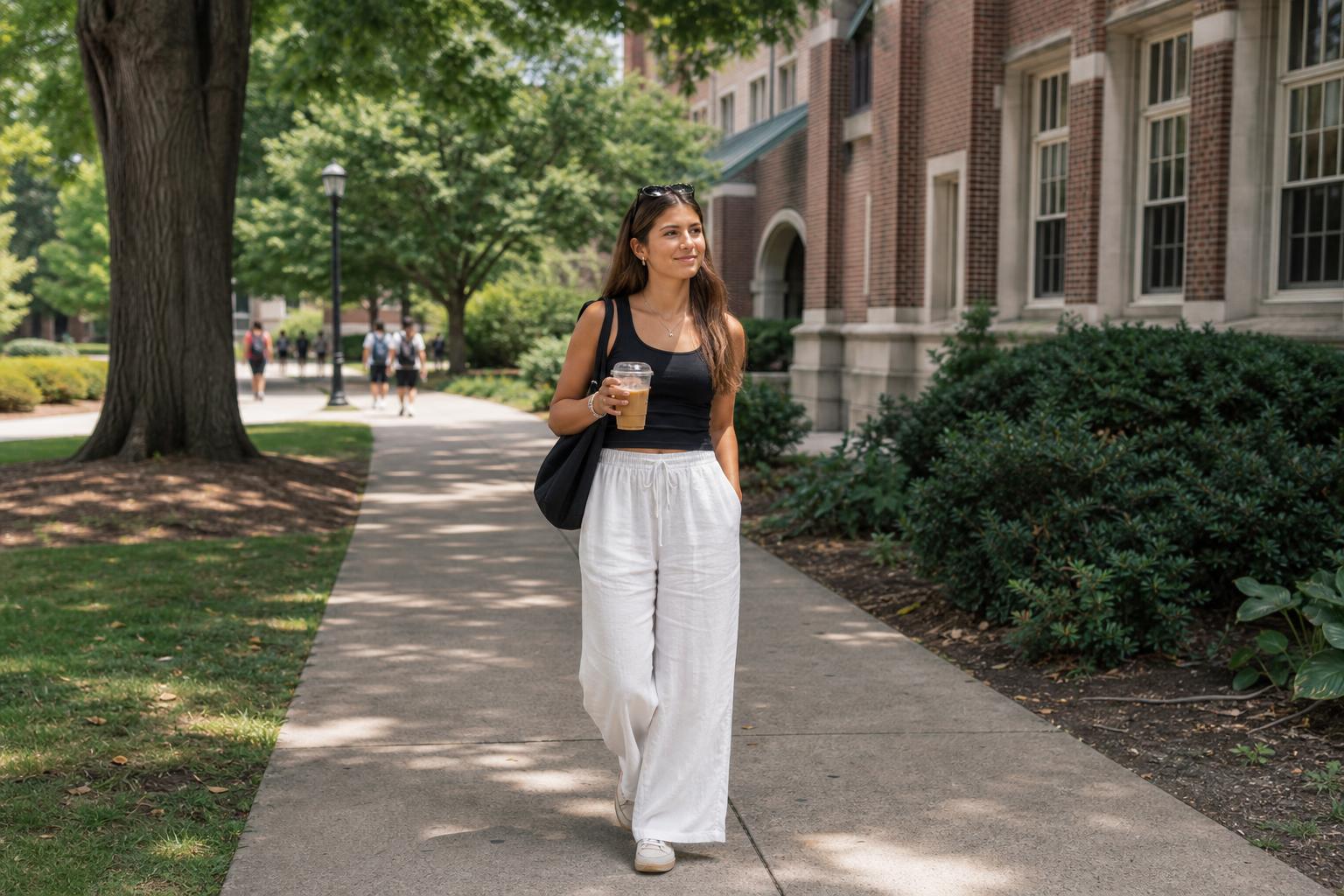
By midsummer, campus style becomes less about novelty and more about judgment. The walk from dorm to lecture hall is hot, the library is over-air-conditioned, coffee runs turn into study sessions, and a single day can include class, campus hangouts, and an evening social event. The best summer college outfits solve those small realities beautifully. They feel light, breathable, and easy to move in, but they also look considered. A good outfit on a college campus is rarely complicated. More often, it is a clean formula: a T-shirt dress with sneakers, linen pants with a tank and sandals, a skirt balanced by a graphic tee, or denim shorts grounded by a button-down shirt. What matters is how the pieces work together for comfort, proportion, and repeat wear.
That is why building a summer campus wardrobe should begin with outfit logic rather than impulse shopping. The most useful pieces are the ones that move between classrooms, study sessions, casual campus days, orientation, and even internship-related moments with only minor changes in shoes, accessories, or layering. Below, you will find a practical, editorial guide to summer college outfits that prioritizes breathable fabrics, polished simplicity, budget-conscious choices, and styling decisions that hold up in everyday life.
The campus summer equation: heat, movement, and real-life wearability
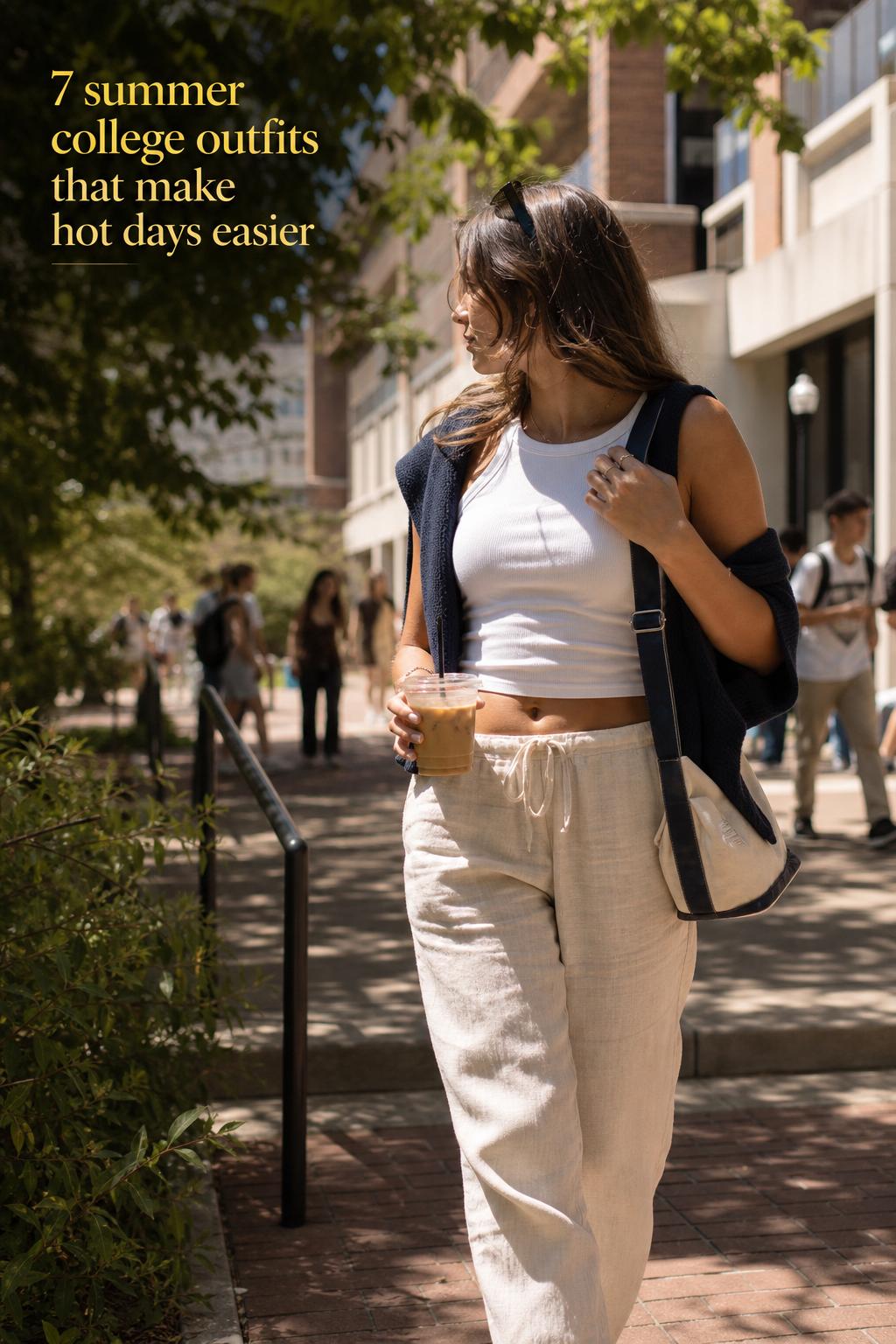
College summer dressing has its own rhythm. You are not dressing for one static setting; you are dressing for transitions. A look that works for a humid walk across campus may need a lightweight cardigan in a cold classroom or library study room. A casual outfit for class may need a slightly cleaner finish for a coffee shop meeting or social event later in the day. This is why the strongest summer campus wardrobe is built on breathable fabrics, relaxed but intentional silhouettes, and accessories that serve both style and function.
There is also a practical distinction between clothes that look appealing in a photo and clothes that genuinely perform on campus. Summer college outfits need to handle sitting for long periods, walking between buildings, carrying a bag, and repeating across the week without feeling tired. Cotton, linen, and viscose matter because they help with heat management. Sneakers and sandals matter because they support movement. Layering pieces matter because campus environments shift quickly from sun to air conditioning. Once you understand those conditions, styling becomes easier and far more consistent.

Your wedding has a lot of moving pieces. Your plan can still feel composed.
Zarellea organizes guests, vendors, budget, and timelines in one shared space — so you can make decisions with clarity, not stress.
What to buy first: the core pieces that do most of the work
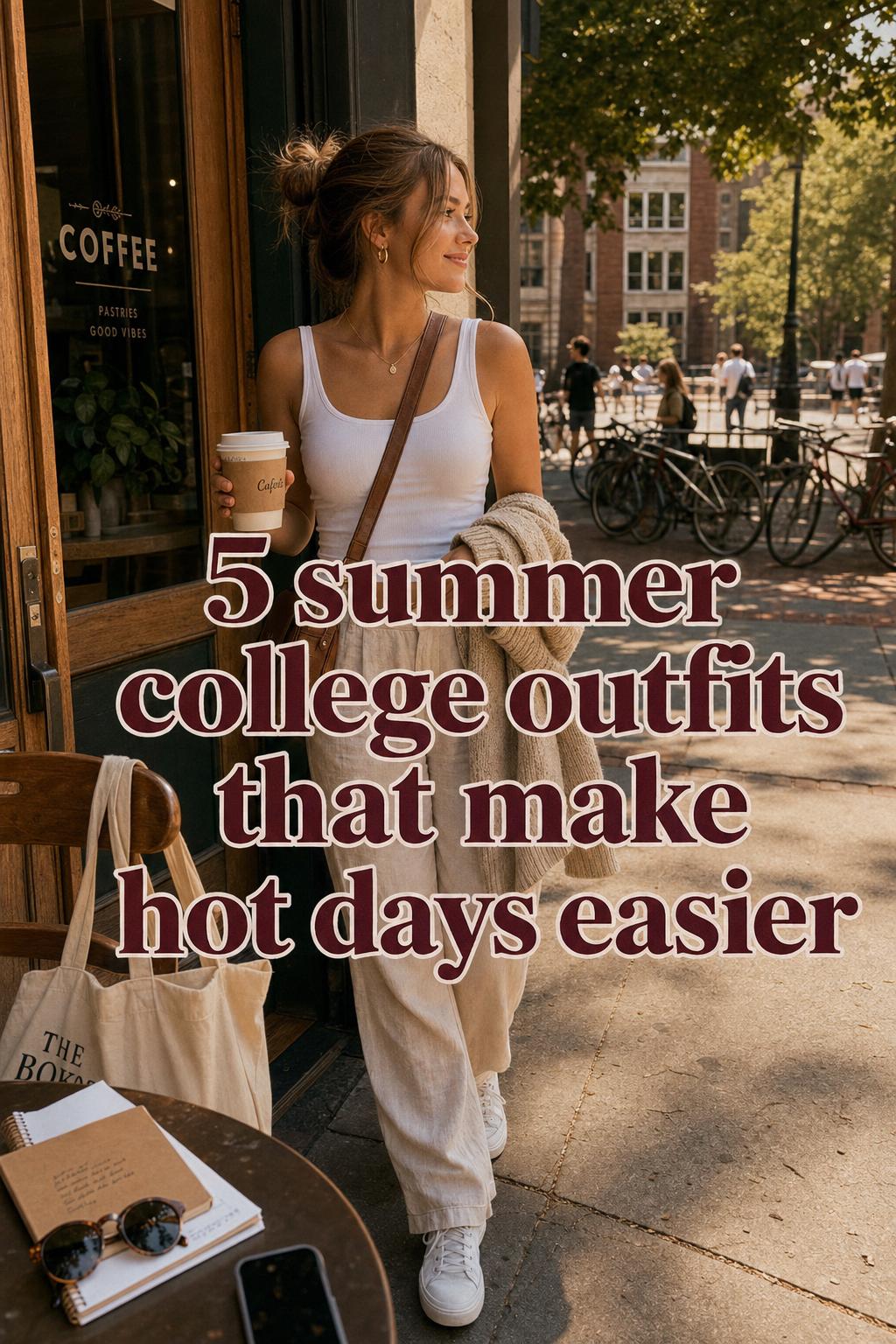
If your wardrobe needs direction, begin with the items that appear again and again because they are genuinely versatile: dresses, shorts, skirts, tees, rompers, linen pants, sandals, sneakers, and one or two lightweight layering pieces. These are the foundation of most useful summer outfits for college students because they can be recombined without requiring a large budget.
- A T-shirt dress for quick, no-fuss dressing
- Linen pants for hot days when you want more coverage than shorts
- Denim shorts that sit comfortably for long class hours
- A graphic tee and a simple tank for easy outfit rotation
- A midi or maxi dress for campus days that extend into social events
- A skirt that works with both sneakers and sandals
- A romper or jumpsuit for one-piece convenience
- A lightweight cardigan or light jacket for classrooms and libraries
- Sneakers for walking-heavy days
- Sandals for lighter, warmer days and more open silhouettes
If you are deciding where to spend more and where to save, invest in the pieces that affect comfort and repetition: shoes, breathable fabrics, and the fit of your core bottoms or dresses. Save on trend-driven accents or extra layering pieces. A well-cut dress in a wearable color palette will give you more value than a pile of novelty separates that only work once.
Outfit formulas that actually work on campus
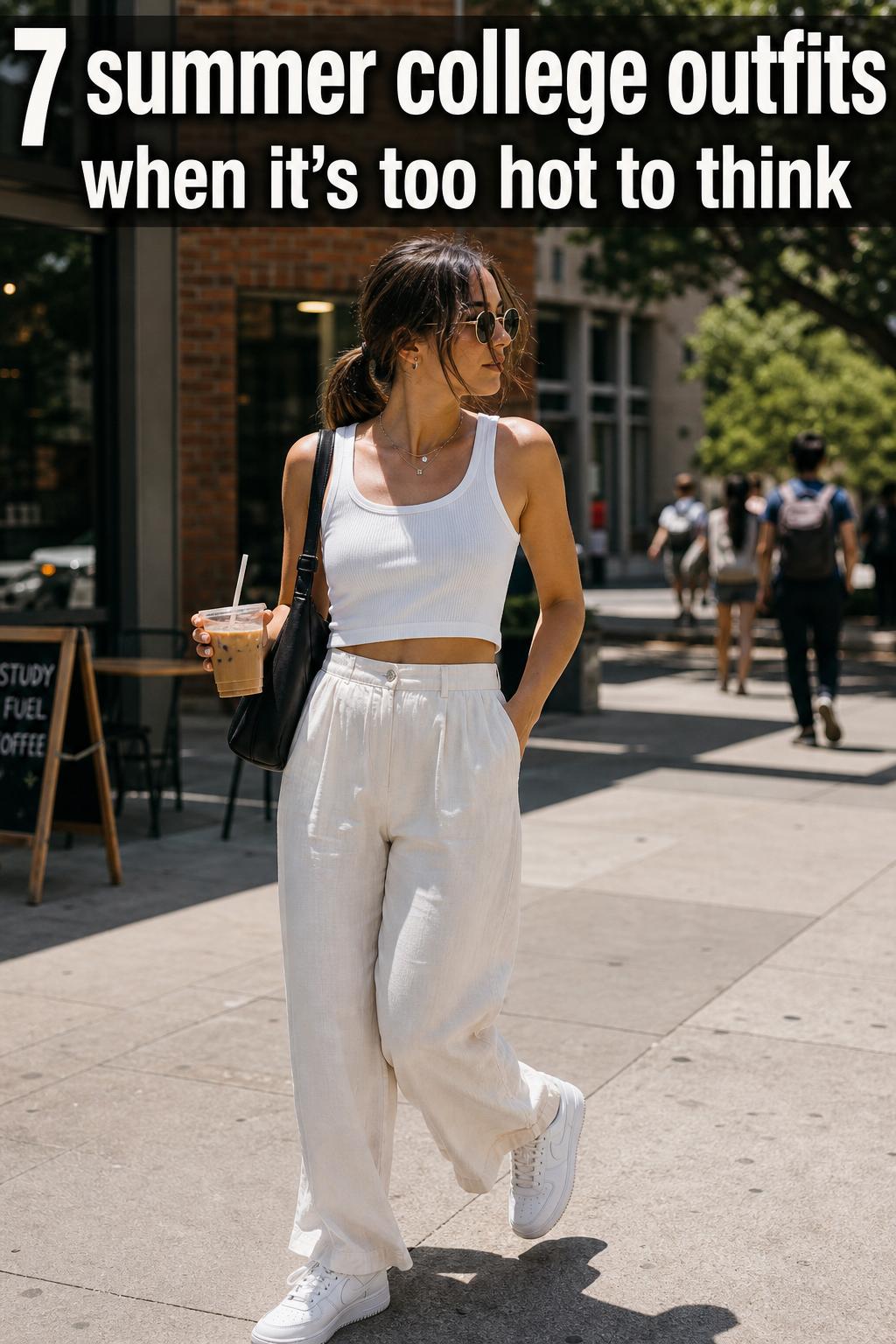
The appeal of a formula is that it reduces decision fatigue. Instead of starting from scratch each morning, you rely on combinations that already make sense in terms of silhouette, weather, and campus routine. These formulas are especially strong because each one can be adjusted for body proportions, budget, and occasion.
T-shirt dress with sneakers
This is one of the easiest summer college outfits to recreate because it needs very little styling to feel complete. A T-shirt dress has a clean line, keeps you cool, and removes the complexity of matching separates. Sneakers ground the look and make it practical for walking between classes. If you are petite, a shorter or more defined silhouette prevents the dress from overwhelming your frame. If you are tall, a longer T-shirt dress can look especially balanced. If you are curvy, choose a version that skims rather than clings, then add a crossbody bag to create visual structure.
Why it works is simple: the dress provides ease, while sneakers keep the outfit from feeling too bare or too dressed up. Add a light cardigan for library study sessions or classrooms with strong air conditioning. For a more polished finish, keep the color palette restrained and let the shoes provide the casual note.
Linen pants, tank, and sandals
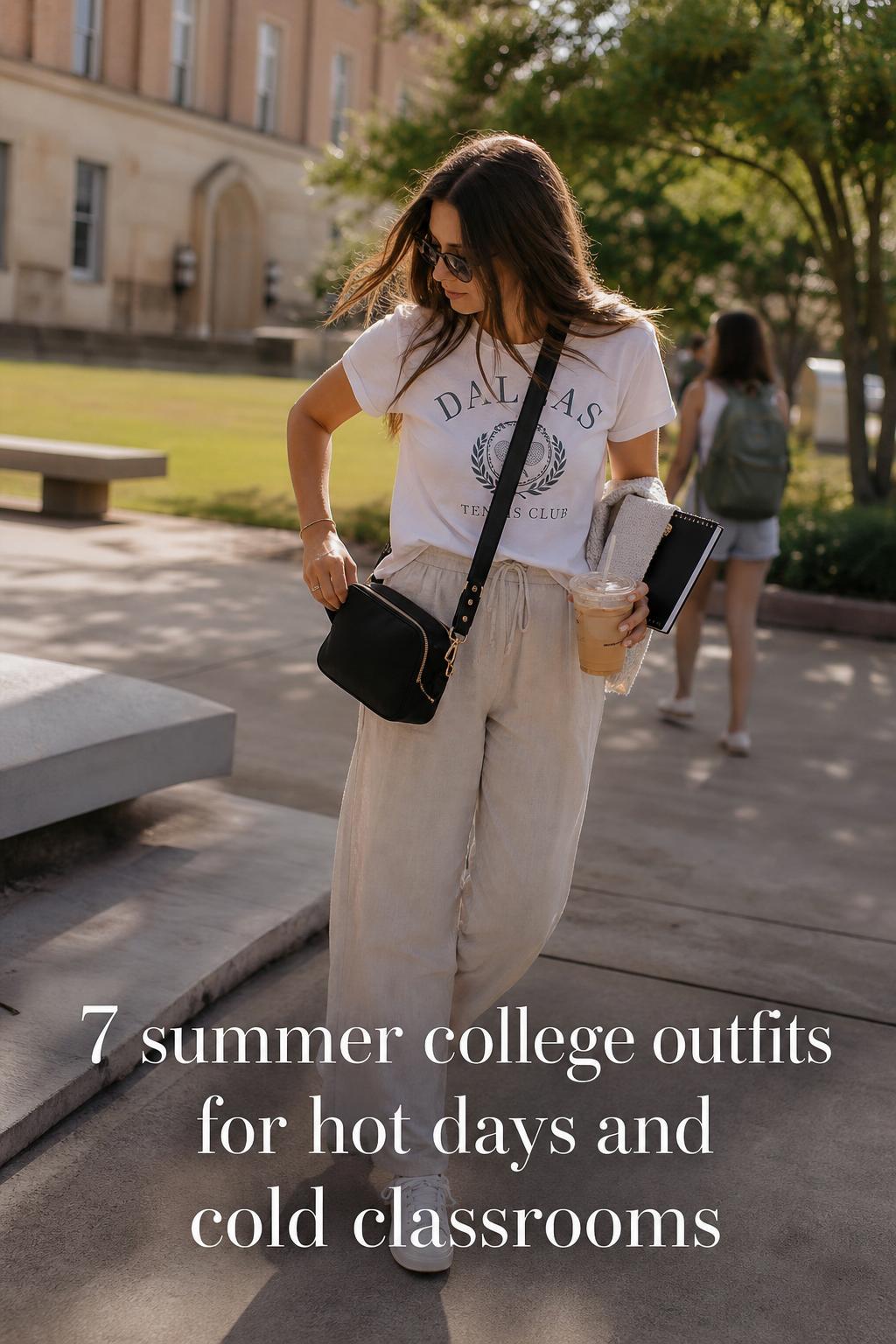
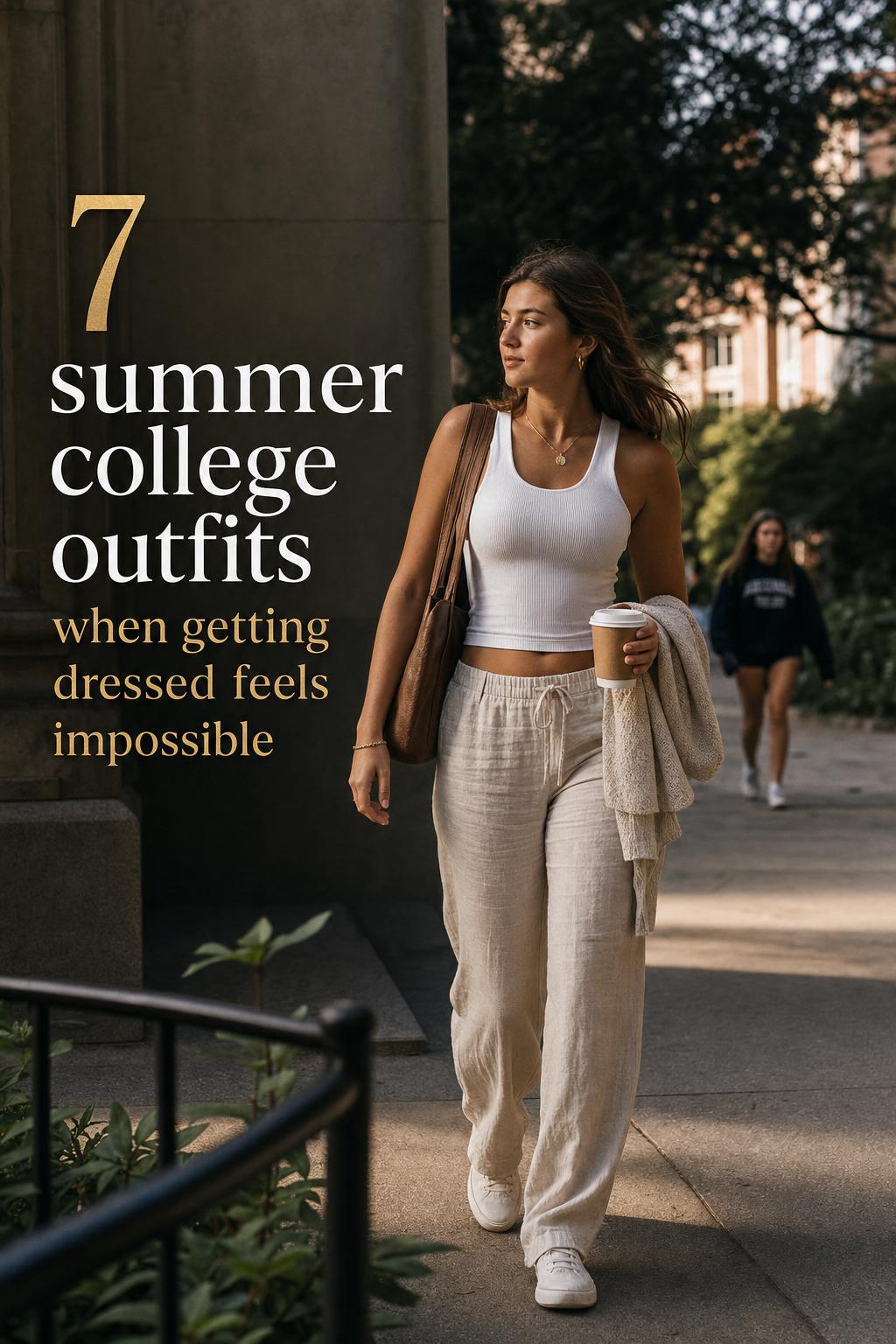
Linen pants are one of the smartest answers to hot campus days because they offer breathability without the exposure of shorts. A simple tank keeps the upper half streamlined, while sandals maintain lightness. This formula is ideal if you want a little more coverage, if your campus involves long commutes, or if you prefer a more refined silhouette. For curvy figures, a tank with a balanced fit can prevent the outfit from looking too boxy. For petites, keep the pants slightly straighter and pair them with simple sandals to maintain line length.
The strength of this outfit lies in contrast: relaxed fabric below, cleaner shape above. It feels polished without trying too hard. It is also one of the easiest formulas to adapt for coffee shop meetings, study sessions, or casual internship-adjacent settings where denim shorts may feel too informal.
Romper with a sun hat
A romper is useful because it gives the effect of a styled look with the speed of a single piece. Adding a sun hat introduces both function and personality, especially on bright campus days or outdoor social events. If you are tall, a romper can look especially elegant with a little more vertical space in the torso. If you are petite, choose one that does not bunch at the waist or hip. If you are concerned about practicality, focus on relaxed cuts that allow comfortable sitting during class and study sessions.
This formula suits days when you want a complete look without carrying too many styling decisions. Sandals keep it airy; sneakers make it more campus-oriented. The key is to avoid a romper that is too tight or too delicate for all-day wear. On a college campus, movement matters as much as appearance.
Button-down shirt, denim shorts, and sandals
This combination succeeds because it balances tailored structure with relaxed textures. The button-down shirt adds polish; denim shorts keep the mood casual and youthful; sandals soften the outfit for summer. If your shorts are more fitted, let the shirt be looser. If your shorts are relaxed, a slightly cleaner tuck or half-tuck can bring shape back into the silhouette.
For body proportion, this is one of the most adaptable formulas. A longer shirt can create ease for curvier shapes, while petites may prefer a lighter tuck to show the waistline. It also transitions well from class to campus hangouts. If you are shopping on a budget, this is a smart place to start because each piece works with many others in a capsule wardrobe.
Slip dress with a lightweight cardigan
This look has more softness and fluidity, which makes it useful for social events, coffee shop study dates, or days when you want something slightly more dressed. The cardigan is not an afterthought here; it is what makes the outfit campus-friendly. It adds modesty, practical warmth, and a textural layer that makes a simple dress feel intentional rather than unfinished.
The easiest way to keep this formula grounded is through simple shoes and restrained accessories. On campus, the cardigan can be worn properly in class, then draped over the shoulders outdoors or removed entirely in the heat. If you worry the slip dress feels too delicate for daytime, choose a version in a less clingy fabric and add sneakers instead of sandals for balance.
Skirt, graphic tee, and sneakers
This is one of the best formulas for readers who want summer outfits with personality but still need practicality. A skirt introduces movement and airflow, while a graphic tee keeps the look rooted in campus life. Sneakers make it wearable for long days. If you are curvy, a skirt with an easy waist and a tee that can be tucked lightly will define shape without forcing it. If you are tall, a midi length can look very balanced. If you are petite, keep the hem and volume in proportion so the skirt does not dominate the frame.
The reason this works so well is the tension between casual and polished. The graphic tee gives ease; the skirt provides shape. It is also one of the simplest ways to avoid the common mistake of looking either overdone or underdressed on campus.
Jumpsuit with a crossbody bag
A jumpsuit offers the same one-step convenience as a romper, but with a more elongated line. That makes it especially good for days when you want a slightly cleaner finish. A crossbody bag is not only visually useful; it is practical for carrying essentials while keeping your hands free between buildings. This formula can work for orientation days, a packed class schedule, or campus events where you want to look a bit more organized.
Choose a jumpsuit with enough ease to sit comfortably and enough structure to avoid looking shapeless. Sandals give it lightness. Sneakers make it more casual. If you are working with a limited wardrobe, a jumpsuit can replace multiple outfit combinations because it stands alone so well.
Maxi dress with sandals
A maxi dress can be remarkably practical on hot days because it allows airflow while requiring almost no coordination. It is especially useful for campus social events, orientation moments, or days when you want to feel dressed with minimal effort. The potential drawback is volume. If the dress is too oversized, it can look heavy rather than relaxed. That is why simple sandals and a controlled color palette help keep the look refined.
For petites, the line of the dress matters more than decoration. For taller readers, this silhouette often feels naturally balanced. For anyone, the best version is one that moves easily and does not require constant adjusting.
Shorts, polo, and sneakers
This outfit is understated, but that is part of its value. A polo gives more structure than a basic tee, which can make even simple shorts feel more intentional. Sneakers complete the campus mood and support long walking days. This formula is ideal for casual class schedules, study sessions, or days when comfort has to come first but you still want the outfit to feel composed.
If you tend to look better with a little structure around the shoulders or neckline, this formula can be especially flattering. To keep it from feeling flat, pay attention to fit and color coordination. Clean lines matter more here than statement accessories.
Midi dress with a cardigan for library study rooms
This is one of the more specific but genuinely useful campus formulas. A midi dress is comfortable for sitting, polished enough for day-to-evening movement, and easy to layer. The cardigan addresses the practical reality of colder indoor spaces. The result is balanced and calm, particularly for long library hours, presentations, or quieter campus days.
The styling lesson here is about preparedness. Summer dressing on campus is not only about staying cool outside. It is also about building in enough flexibility to stay comfortable indoors. A cardigan in a neutral or softly coordinated tone will integrate with far more outfits than one chosen only for trend value.
Fabric choices that make or break a summer outfit
On campus, fabric is not a background detail. It determines whether an outfit remains comfortable after several hours, whether it drapes neatly when you sit through class, and whether it looks fresh or tired by late afternoon. Breathable fabrics such as cotton, linen, and viscose repeatedly matter because they support heat management and movement.
Linen gives a relaxed, slightly textured elegance that suits summer college outfits particularly well. Cotton is dependable and easy to wear in tees, dresses, and casual tops. Viscose can add softness and drape in dresses and skirts. The right fabric also affects how polished an outfit appears. Even simple campus staples such as tees, shorts, or dresses look more elevated when the fabric hangs well and does not fight the body.
- Choose linen pants when you want breathability with more coverage
- Choose cotton for easy everyday staples such as tees and T-shirt dresses
- Choose viscose when you want softer drape in dresses or skirts
- Add a light jacket or cardigan only if it is easy to carry and layer
A common mistake is buying for the image of summer rather than the weather of summer. If your campus is humid, fabrics that are too stiff or too clingy can become difficult very quickly. If your day includes both heat and strong indoor air conditioning, one breathable layer plus one lightweight cover-up is usually more effective than wearing heavier pieces from the start.
Color palettes that make a small wardrobe look bigger
Color coordination is one of the simplest ways to make a budget-conscious wardrobe feel more expansive. When your tops, dresses, skirts, and layering pieces sit within a coherent palette, remixing becomes easier. This matters for college because repetition is inevitable. The goal is not to hide repetition, but to make it look intentional.
Soft neutrals, clean basics, and a few controlled accents tend to work best for summer campus style because they allow accessories, shoes, and silhouette to carry the outfit. A graphic tee can provide contrast. Sandals or sneakers can introduce variety. A cardigan can soften the palette or anchor it. The less random your color choices, the more polished even your simplest outfit formulas will appear.
If you are unsure where to begin, build around your most repeated items. For example, if denim shorts, linen pants, and sneakers are your staples, choose tanks, tees, and cardigans that work with all three. This creates a practical campus wardrobe rather than a collection of isolated outfits.
How to make summer campus outfits work for different body proportions
The most useful style advice is adaptive. A campus outfit should not depend on having one specific build. Instead, think in terms of line, balance, and comfort. A dress that skims the body will usually be easier to wear all day than one that clings. A looser top often looks better when the bottom half is more defined. A fuller skirt benefits from a cleaner upper silhouette. These are not rigid rules, but they are reliable starting points.
For petite frames, proportion is often the key issue. Too much fabric can overwhelm, especially in maxi dresses, oversized shirts, or very full skirts. Cleaner hems, lighter volume, and a visible waistline usually help. For tall frames, length can become an asset, especially in midi dresses, jumpsuits, and linen pants. For curvy figures, shape tends to matter more than tightness. Pieces that follow the body without gripping it usually create a more polished and comfortable result.
Size-inclusive thinking also means recognizing that convenience should never come at the expense of mobility. If a romper rides up, if shorts feel restrictive after an hour of sitting, or if a dress needs constant adjustment, the outfit is not doing its job. The most flattering summer college outfits are usually the ones you can forget about once you put them on.
Practical tip: use contrast, not complication
If you are trying to make an outfit feel more balanced, start by contrasting one element rather than adding more pieces. Pair a relaxed shirt with cleaner shorts. Pair a flowing skirt with a simple tee. Pair a soft dress with sneakers. This creates visual structure without making the outfit fussy, which is ideal for everyday campus wear.
Shoes, bags, and accessories that earn their place
Accessories for college should be selective. The most successful ones are not decorative extras but practical finishing pieces. Sneakers, sandals, loafers, hats, and crossbody bags all appear repeatedly because they support movement, weather, and day-long use. If an accessory only works with one look or makes the outfit less comfortable, it is probably not a priority purchase.
Sneakers are indispensable for class-heavy days, large campuses, and any schedule that involves walking. Sandals are useful when your outfit needs lightness and the weather is consistently warm. Loafers can shift a simpler dress or pants outfit slightly more polished for an orientation event, internship setting, or campus meeting. A hat offers sun coverage and can sharpen a romper or casual dress without adding weight. A crossbody bag works well because it supports movement and keeps the outfit visually streamlined.
- Choose sneakers for walking-intensive days and casual campus routines
- Choose sandals when the rest of the outfit is already clean and balanced
- Choose a crossbody bag if you want hands-free practicality
- Add a hat on outdoor-heavy days rather than relying on it as a purely aesthetic piece
A subtle but important point: accessories can also determine whether an outfit looks intentional or unfinished. If a dress feels too plain, the answer is not always more jewelry or more layers. Often, simply changing from flimsy shoes to clean sneakers or structured sandals is enough.
Budget-friendly wardrobe building without losing polish
Affordable summer college outfits are rarely about buying the cheapest version of everything. They come from choosing versatile categories first and making sure each item can appear in multiple outfit formulas. A capsule-like approach works especially well in summer because the season naturally favors lighter, simpler dressing.
Start with the pieces that connect most often: one dress you can wear with sneakers and sandals, one pair of shorts, one pair of linen pants, two tops, one skirt or romper, one cardigan, and practical shoes. From there, add only what fills a genuine gap. This approach keeps the wardrobe focused and reduces the common problem of owning many clothes but having no convincing combinations.
Where to invest and where to save
Invest in shoes, the fit of your most-worn bottoms, and dresses or jumpsuits that will carry a large portion of your weekly dressing. Save on extra tanks, graphic tees, or trend-sensitive accessories. This is not about austerity; it is about efficiency. A well-fitting pair of shorts or linen pants will affect your confidence and comfort far more than several inexpensive novelty pieces that never quite work.
How to make simple pieces look more expensive
Fit, fabric behavior, and color discipline matter more than labels. A clean tank with linen pants looks more elevated when the proportions are controlled and the sandals are simple. A T-shirt dress looks more refined when the sneakers are fresh and the cardigan is lightweight rather than bulky. In other words, polish comes from composition, not excess.
Campus moments that call for slightly different styling
Not every summer day on campus asks for the same thing. Class, orientation, exams, social events, and internships create different expectations, even if the wardrobe remains fundamentally casual. The easiest way to manage these shifts is to keep your base outfits similar and adjust only the finish.
Orientation days
Orientation often means extended walking, introductions, photos, and a long schedule. A jumpsuit with a crossbody bag, a midi dress with sneakers, or linen pants with a tank and sandals all work well because they feel prepared without becoming stiff. Avoid anything that needs constant readjustment. The day is usually too long for that.
Study sessions and library hours
For study sessions, comfort and indoor layering are central. A T-shirt dress with sneakers and a cardigan, or a midi dress with a cardigan for library study rooms, tends to perform well because it acknowledges the indoor climate. This is where practical layering is more important than visual drama.
Campus social events
Social events often reward a little more fluidity or personality. A slip dress with a lightweight cardigan, a maxi dress with sandals, or a skirt with a graphic tee can feel easy yet assembled. The aim is not to look formal, but to give the outfit a little more finish than your most basic class-day formula.
Internship-related moments
For internship settings or campus situations with a more professional tone, linen pants, a cleaner top such as a tank or polo, and sandals or loafers create a more composed impression than shorts. The formula still belongs to summer, but the silhouette is steadier and more intentional.
What students often get wrong in summer dressing
Most campus outfit mistakes come from overcorrecting. Some students dress only for the heat and forget indoor layering. Others dress only for polish and end up uncomfortable halfway through the day. The right balance lies between those extremes.
- Choosing pieces that look good standing up but are uncomfortable in class
- Ignoring breathable fabrics on very hot or humid days
- Buying too many isolated trend pieces instead of remixable basics
- Wearing sandals on days that clearly require sneakers
- Using bulky layers that are difficult to carry around campus
- Forgetting that a cleaner fit often looks better than extra decoration
A useful test is to ask whether the outfit works from morning class through an afternoon study session without becoming distracting. If not, refine the formula. On campus, practicality is not opposed to style. It is often the reason style looks convincing.
A more thoughtful approach: capsule dressing, sustainability, and repeat wear
There is a growing appeal in building a summer campus wardrobe that wastes less and works harder. A capsule approach naturally supports this because it encourages pieces that mix easily across the semester calendar. Sustainable fabrics and eco-friendly choices matter here not as abstract ideals, but as part of a more deliberate wardrobe logic. If a dress, skirt, or pair of linen pants can be styled three or four ways for class, social events, and study sessions, it is already doing more than a single-use trend purchase.
Thoughtful dressing also invites more inclusive and realistic styling decisions. Size-inclusive, adaptive-minded choices, breathable materials, and practical silhouettes all contribute to a wardrobe that serves different bodies and different campus contexts. Whether the campus feel is more urban or suburban, the principle remains the same: choose pieces that can adapt to weather, routine, and repetition without losing their shape or usefulness.
Tip: build around your semester calendar
If your summer includes orientation, classes, study sessions, social events, and internship-related commitments, assign your wardrobe pieces to those contexts before buying more. A cardigan that works only once is less valuable than one that layers over a T-shirt dress, a midi dress, and a tank. A pair of sneakers that suits shorts, skirts, and dresses is usually a better investment than a more fragile shoe that limits your outfit options.
The smartest summer college outfits are the ones you can repeat differently
Campus style becomes easier the moment you stop treating every outfit as a separate creation. The most effective summer college outfits are not ten unrelated looks. They are a small set of dependable silhouettes, breathable fabrics, and practical accessories that can shift depending on weather, schedule, and mood. Dresses, skirts, shorts, rompers, linen pants, sneakers, sandals, and cardigans appear so often for a reason: they work.
If you want your wardrobe to feel polished, begin with wearability. Choose outfit formulas that make sense for class, campus life, library hours, coffee shop study sessions, and social events. Favor breathable fabrics. Keep your color palette cohesive. Invest where comfort and repetition matter. Then let styling come from proportion, texture, and balance rather than constant novelty. That is what makes a summer campus wardrobe feel modern, effortless, and truly useful.
FAQ
What are the best summer college outfits for class?
The best options for class are the ones that stay comfortable for hours and still look put together, such as a T-shirt dress with sneakers, linen pants with a tank and sandals, or a skirt with a graphic tee and sneakers. These combinations work because they balance breathability, movement, and a clean silhouette.
What should I buy first for a summer campus wardrobe?
Start with pieces that can be worn multiple ways: a dress, shorts, linen pants, a tee, a tank, a cardigan, sneakers, and sandals. These core items create the most outfit combinations and make it easier to dress for class, study sessions, and campus events without overspending.
Which fabrics are best for hot campus days?
Breathable fabrics such as cotton, linen, and viscose are the most practical choices for hot campus days. They help with heat management, tend to feel lighter on the body, and usually look better after long hours of walking, sitting, and moving between indoor and outdoor spaces.
How can I make summer college outfits look polished on a budget?
Focus on fit, simple color coordination, and versatile pieces instead of buying too many trend-driven items. A well-fitting pair of shorts, clean sneakers, and a dress or linen pants in a wearable palette will usually look more refined than a larger wardrobe filled with disconnected pieces.
Are dresses practical for college in the summer?
Yes, dresses are often one of the most practical summer choices for college because they are easy to style, breathable, and fast to put on. T-shirt dresses, midi dresses, slip dresses with a cardigan, and maxi dresses can all work well as long as they allow comfortable movement and do not require constant adjustment.
What if I am petite, tall, or curvy?
Use proportion as your guide rather than following rigid rules. Petite frames usually benefit from controlled volume and a visible waistline, tall frames often suit midi dresses and jumpsuits well, and curvy figures are often flattered by pieces that skim the body rather than cling tightly. The goal is comfort, movement, and balance.
How do I dress for both hot weather and cold classrooms?
Build the outfit around a breathable base such as a dress, tank, tee, shorts, or linen pants, then add a lightweight cardigan or light jacket that is easy to carry. This keeps you cool outdoors while giving you enough coverage for lecture halls, libraries, and study rooms.
What shoes are most useful for summer college outfits?
Sneakers and sandals are usually the most useful options. Sneakers are better for walking-heavy days and large campuses, while sandals work well when the weather is consistently warm and the outfit already has enough structure. Loafers can also be useful for slightly more polished campus events or internship-related settings.
Can I wear the same pieces for orientation, study sessions, and social events?
Yes, and that is often the smartest approach. A midi dress, jumpsuit, T-shirt dress, skirt, or pair of linen pants can all be adapted with different shoes, accessories, or a cardigan. Repeating pieces in new combinations is usually more effective than trying to build separate wardrobes for each campus occasion.
Leave a Reply