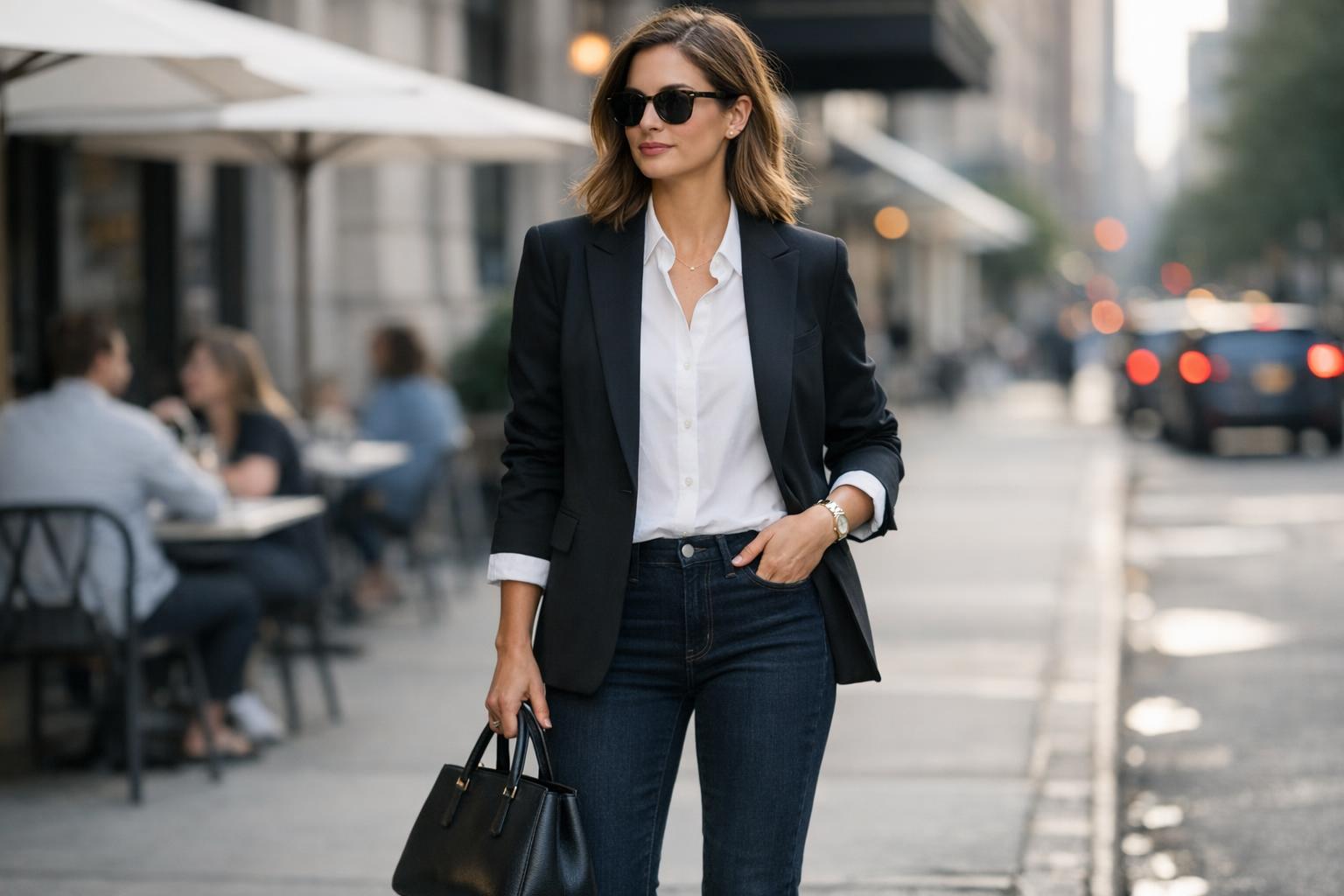
Smart casual outfit vs. business casual vs. dressy casual: why the line feels blurry now
The modern American calendar is full of invitations that demand translation: “smart casual,” “business casual,” “dressy casual,” “upscale casual.” The words arrive without a mood board, yet they imply a very specific balance—tailoring tempered by ease, polish softened by comfort. It’s why a smart casual outfit can feel deceptively simple until you’re standing in front of your closet deciding whether sneakers are a clever contrast or a step too far.
What makes these styles so frequently confused is that they share many of the same building blocks: the blazer, the white shirt or button-up, dark-wash jeans, loafers, sleek sneakers, a midi dress, a well-chosen coat. The difference is not the presence of these pieces, but how they’re composed—silhouette, proportion, fabric choice, and the overall intention of the look.
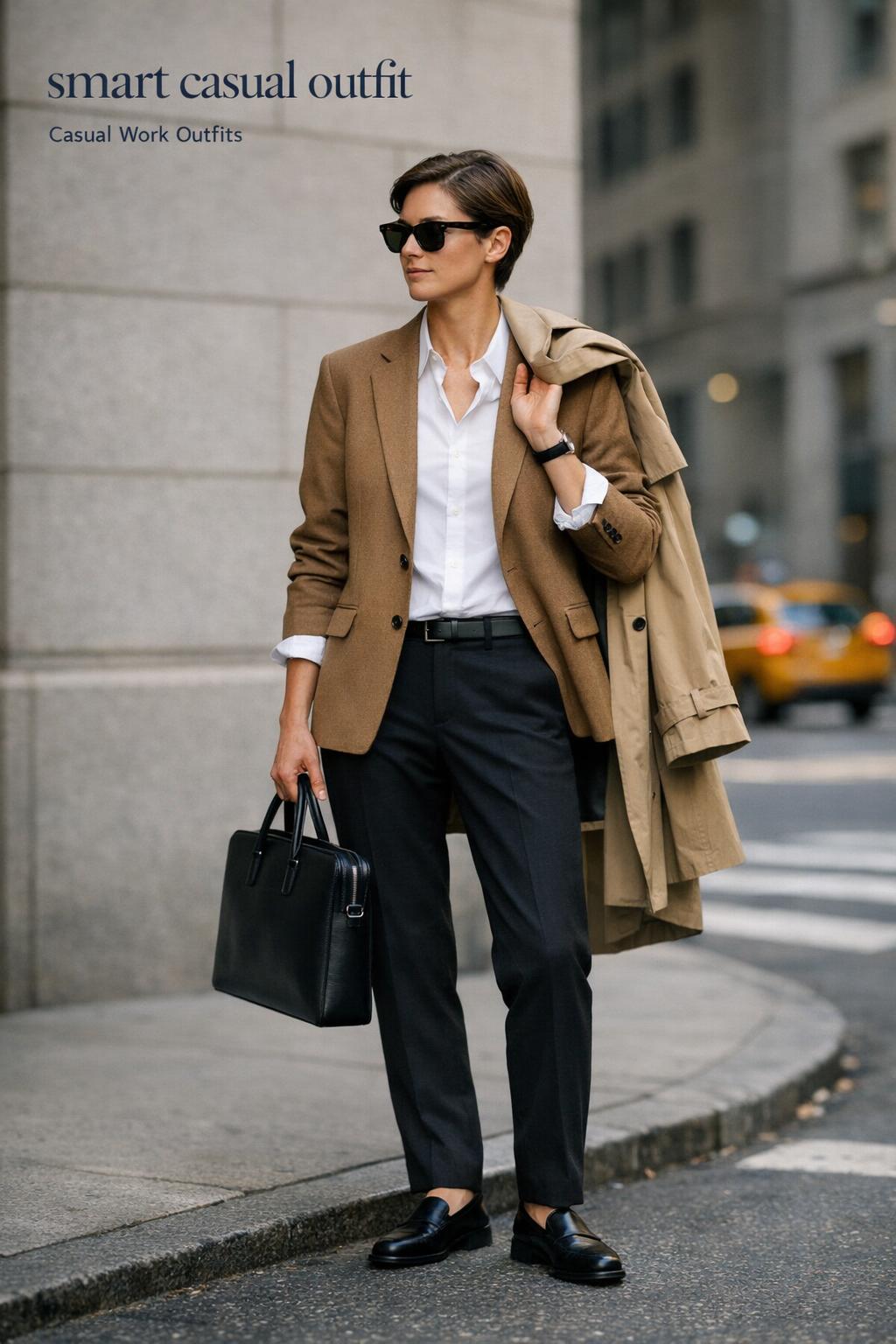
This comparison breaks down smart casual alongside its closest cousins—business casual and dressy casual—through a distinctly real-world lens: office-to-evening transitions, weekend brunch, travel days, and the subtle signals sent by footwear and layering. Along the way, we’ll use recognizable reference points—from New York street-style moments to celebrity-led styling cues (Gigi Hadid, Kendall Jenner, Margot Robbie, Jennifer Lawrence), and from luxury polish (Dior, Hermès, Bottega Veneta, Saint Laurent, Prada, Toteme) to accessible wardrobe staples (J.Crew, Suitsupply, Theory) and shopping ecosystems (Nordstrom, Net-a-Porter, MyTheresa).
Style overview: smart casual (the calibrated mix of tailoring and ease)
Smart casual is the art of contrast made wearable. It’s built on the idea of mixing one “smart” element—tailoring, a crisp button-up, a refined shoe, a structured coat—with one “casual” element such as denim, a tee, relaxed proportions, or sneakers. The aesthetic mood is polished but not rigid, modern but not overly trend-driven, and designed to move between settings: lunch to meetings, office to dinner, gallery opening to after-work drinks.
Your wedding has a lot of moving pieces. Your plan can still feel composed.
Zarellea organizes guests, vendors, budget, and timelines in one shared space — so you can make decisions with clarity, not stress.
Silhouette tends to be intentional: a blazer that adds structure over a fine knit tee, wide-leg pants balanced with a streamlined top, or an oversized shirt anchored by clean trousers. Color is often restrained—neutrals, dark denim, crisp white shirts—then lifted with accessories like aviator sunglasses or a leather bag. The texture story matters: cotton poplin against denim, wool blends against a smooth tee, or a sleek shoe against a relaxed hemline.
Smart casual signatures you’ll see again and again
Across the most recognizable smart casual moments—whether celebrity sightings in New York or outfit galleries from fashion publications—the signatures repeat: the blazer as the anchor, the white shirt as the clarifier, denim as the casual counterweight, and footwear that reads “considered.” Smart casual is less about a single uniform and more about the relationship between pieces.
- A structured blazer over a tee or fine knit
- A classic button-up (often a white shirt) layered under knitwear or outerwear
- Dark-wash jeans paired with sleek shoes rather than sporty trainers
- Loafers or streamlined sneakers that look intentional, not incidental
- Accessories that elevate: a refined bag, minimal sunglasses, polished outerwear
Style overview: business casual (work-first polish with fewer “surprises”)
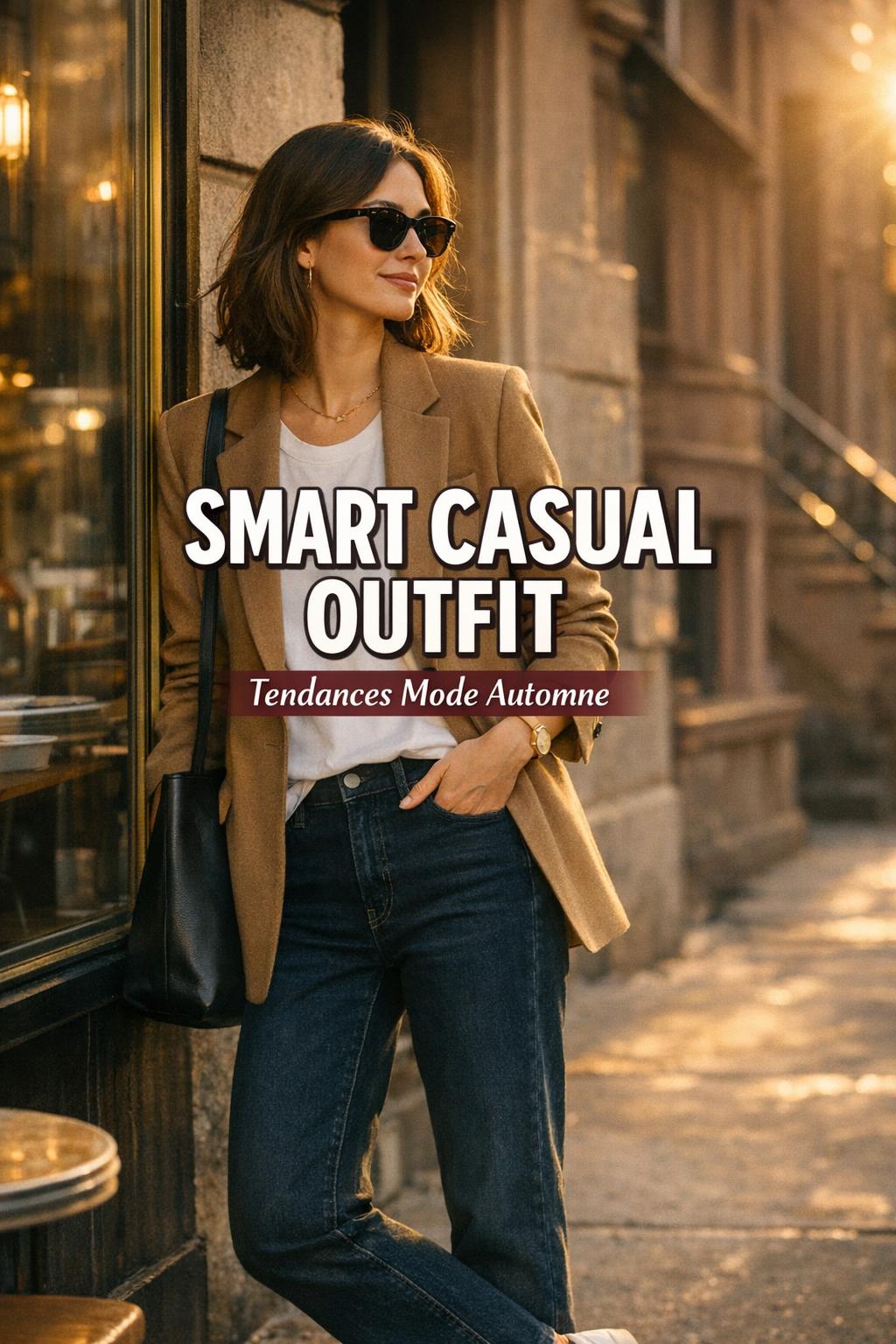
Business casual is the office’s comfort zone: professional, clean, and predictable in the best way. It borrows from tailoring—dress pants, chinos, button-down shirts, knitwear—and keeps the casual elements controlled. The aesthetic mood is pragmatic and understated, built for credibility in meetings and reliability across a workweek.
Silhouettes lean structured and neat rather than deliberately contrasted. Think shirts and pants as the foundation, with a blazer or coat as a finishing layer. Footwear typically reads more “office” than “street,” with loafers often feeling like the natural endpoint. If smart casual is a blend, business casual is a boundary—flexible, but still clearly workplace-led.
Where business casual shows up most clearly
The most consistent business casual framework is component-driven: shirts, pants, footwear, and a few rules on what to avoid. It’s especially common when you need to reduce risk—presentations, first days, client-facing environments—because the formula is recognizable at a glance.
Style overview: dressy casual (occasion-first, with a softer structure)
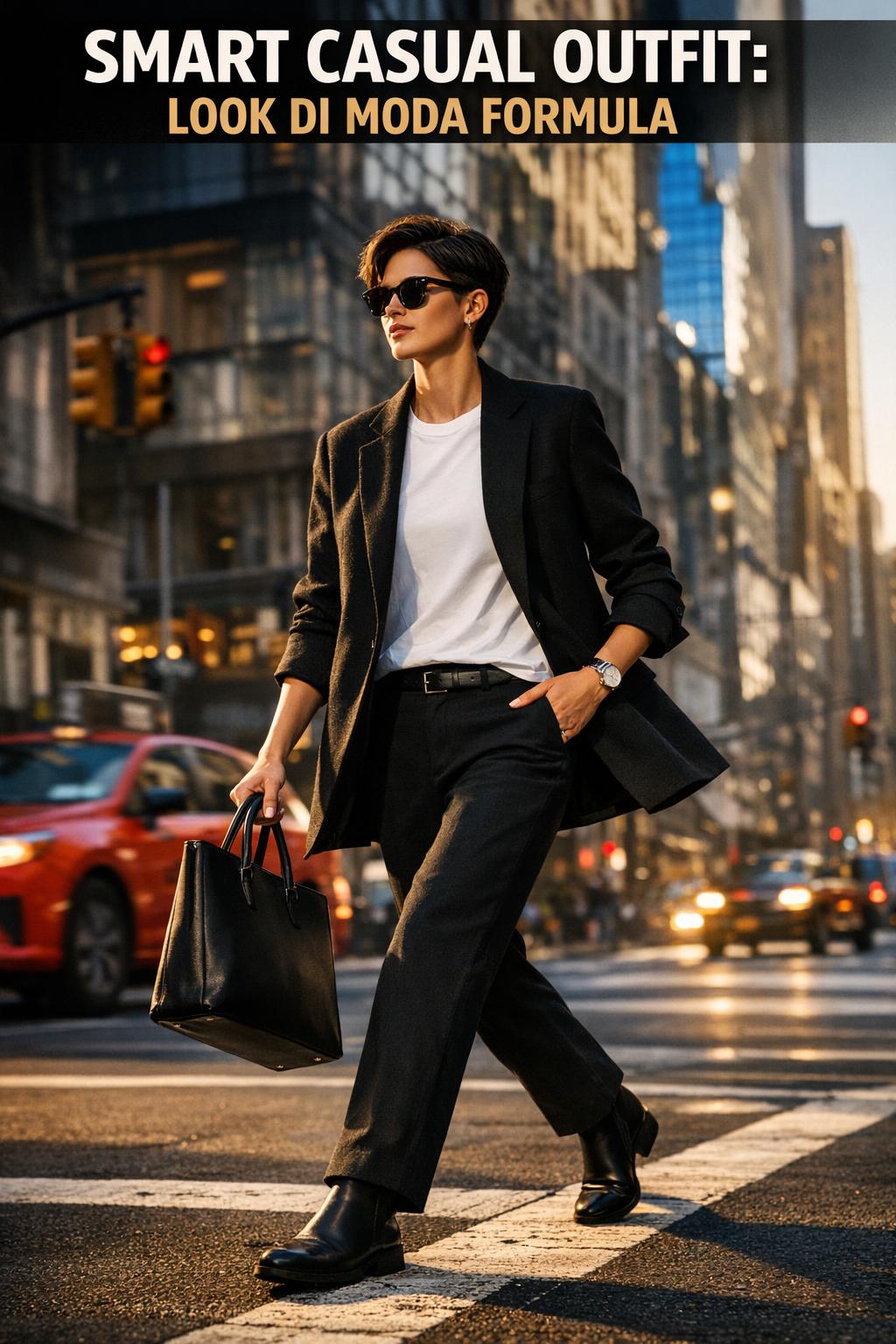
Dressy casual—often used interchangeably with “upscale casual”—is built around the social setting rather than the workplace. It tends to be more expressive than business casual and less tailored than smart casual, depending on the person. A midi dress with boots, a polished top with denim, or a sleek outerwear moment can all fit, as long as the overall mood reads elevated for a casual environment.
Dressy casual can lean romantic or relaxed, especially when dresses and boots enter the conversation. It’s also where accessories can do more of the heavy lifting: a better bag, a sharper shoe, or a coat that makes the entire outfit feel “planned.” In many closets, dressy casual is the category people reach for when “jeans are fine, but make it chic.”
Key differences: smart casual vs. business casual vs. dressy casual
Silhouette and structure: tailoring as a choice vs. a requirement
Business casual treats structure as the baseline: shirts and trousers keep their lines clean, and the outfit’s job is to look competent. Smart casual treats structure as a styling tool: a blazer can be boxy, an oversized shirt can be deliberate, wide-leg pants can feel modern—because the “casual” counterbalance makes room for shape. Dressy casual may use structure, but it often relies on drape and ease—especially when a midi dress replaces tailored separates.
Formality level: what you’re signaling to the room
Business casual signals workplace alignment first. Smart casual signals versatility—capable of an office moment, but equally at home in a restaurant or a creative setting. Dressy casual signals social intention: you’re dressed up relative to the setting, even if you’re not wearing formalwear. In practice, smart casual is often the sweet spot for office-to-evening transitions, precisely because it can read polished without feeling corporate.
Color palette: controlled neutrals vs. “elevated casual” contrast
All three styles can live comfortably in neutrals, but they use them differently. Business casual tends to be consistent and restrained. Smart casual often uses contrast—crisp white against dark denim, a tailored jacket against a soft tee—so neutrals look purposeful rather than plain. Dressy casual may introduce more texture-led variety: a coat, boots, or a dress that shifts the mood even if the palette stays simple.
Typical wardrobe pieces: the same cast, different casting
The pieces overlap—blazers, button-ups, jeans, loafers, sneakers—but their roles change. In business casual, jeans may be optional, and sneakers are often a debate. In smart casual, jeans (especially dark-wash) can be central, and sleek sneakers can be acceptable when balanced with tailoring. In dressy casual, denim can remain, but dresses, boots, and accessories often become the “dressy” lever.
Visual style breakdown: how these aesthetics look in motion
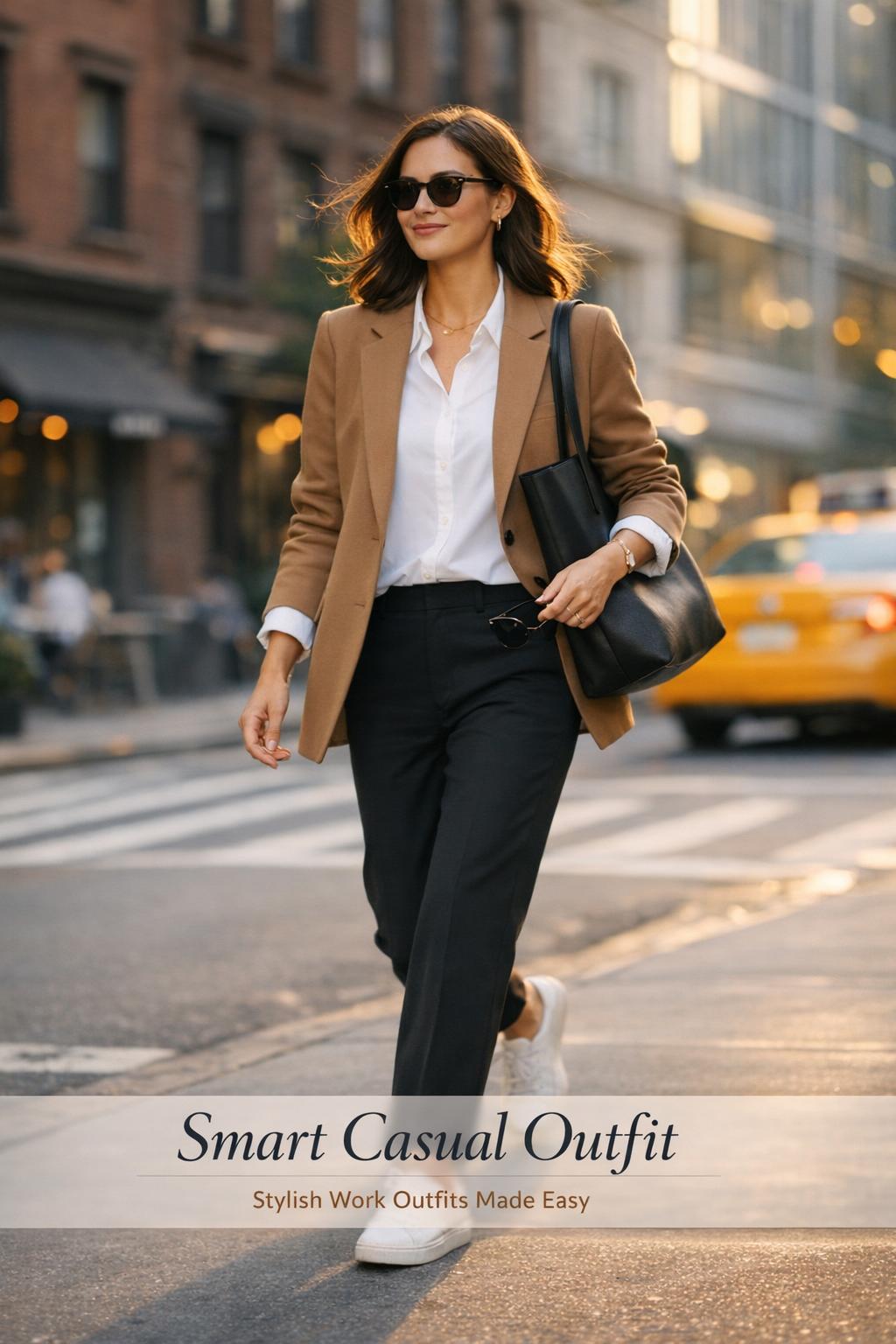
The quickest way to spot the difference is to watch how an outfit is built from the top layer down. Smart casual relies on layering to create a refined frame—often with a blazer, a lightweight coat, or a trench—then relaxes the base with denim or a tee. Business casual builds from the base up: shirt and pants first, then a blazer or knit as a controlled finishing layer. Dressy casual often starts with a single strong piece—a dress, a standout coat, a polished top—and lets the rest support it.
Layering: the blazer, the button-up, the oversized shirt
Smart casual layering thrives on contrast. A classic button-up under a blazer is a familiar formula, but smart casual also makes room for the oversized shirt as a modern silhouette—especially when paired with wide-leg pants or dark denim. This is the territory where celebrity references are useful, not because you need designer labels, but because the logic is consistent: structure on top, ease below, and a few sharp details to finish.
Business casual layering is quieter: a button-down, a neat knit, an office-friendly coat. Dressy casual layering can be more about mood: a coat and accessories shifting a simple base into something that feels occasion-ready.
Accessories: where “looks chic” often happens
Accessories are the silent punctuation. Smart casual often uses them to elevate the casual parts—think aviator sunglasses with a blazer-and-denim look, or a leather bag that makes a tee feel intentional. Luxury references like Hermès, Bottega Veneta, Saint Laurent, Prada, Dior, Toteme, and Reformation appear so often in smart casual storytelling because accessories and polished finishes are a fast shorthand for refinement. The principle holds even without designer pieces: clean lines, good materials, and restraint signal “smart.”
Footwear taxonomy: loafers vs. sleek sneakers vs. boots
Footwear is where these styles separate most decisively. Business casual tends to default to loafers and other office-appropriate shoes, because they align with the work-first message. Smart casual allows sleek sneakers—especially when the rest of the outfit is tailored. Dressy casual often leans into boots (ankle boots are a common visual cue), especially with dresses or darker denim.
A practical rule that plays out in real wardrobes: the more casual the shoe, the more “smart” your top half needs to be. If you want sneakers, earn them with a blazer, a crisp white shirt, or a clean, structured coat.
Smart casual outfit philosophies: three approaches, three moods
Within smart casual itself, there are distinct aesthetics that show up repeatedly across celebrity examples, magazine styling, and shopping categories. Understanding these sub-approaches helps you choose a smart casual outfit that feels authentic—rather than like you borrowed someone else’s uniform.
The “New York balance”: tailored on top, relaxed below
This is the look most people picture when they hear smart casual: a blazer layered over a tee, paired with jeans or tailored pants, finished with loafers or sleek sneakers. It’s the street-style logic frequently associated with New York: you may be walking a lot, you may be moving between environments, and you want your outfit to flex without losing polish. Celebrity anchors like Gigi Hadid and Kendall Jenner are often referenced in this context because their off-duty styling leans into that precise tension—clean, modern, and pragmatic.
The “formal-to-country balance”: coats and accessories doing the work
Some smart casual outfits read smart not because the base is particularly formal, but because the outerwear and accessories refine it. A coat can shift denim into something dinner-appropriate; a bag can make a knit and trousers feel purposeful. This is where brand storytelling—Dior, Hermès, Bottega Veneta, Saint Laurent—often appears: not as a requirement, but as a visual language of finishing details.
The “oversized shirt modernity”: ease with intention
The oversized shirt—worn as a deliberate silhouette rather than an afterthought—has become one of smart casual’s clearest modern signals. It can stand in for a blazer on warmer days, or it can layer under outerwear when you want dimension. The key is proportion: if the shirt is roomy, keep the rest of the look clean and anchored—wide-leg pants with a refined shoe, or dark denim with a crisp accessory.
Outfit logic comparisons: the same scenario, styled three ways
Instead of treating outfits as fixed recipes, it’s more useful to compare how each style solves the same problem. Below, each scenario is intentionally ordinary—because most wardrobes are built for real life, not runway moments.
Scenario: “Jeans are allowed, but it should look polished”
In business casual, jeans—if permitted—tend to be dark and paired with a button-down and a neat shoe, keeping the message workplace-first. In a smart casual outfit, jeans become a core player: dark-wash denim balanced by a blazer and a fine knit tee, with loafers or sleek sneakers depending on how relaxed the setting is. In dressy casual, denim is often dressed up through a more evening-leaning top or a sharper accessory story, aiming for “looks chic” rather than “office-ready.”
Scenario: “Brunch, but you might extend the day”
Business casual can feel slightly overdressed at brunch unless you soften it—less structure, fewer crisp elements. Smart casual is naturally at home here: a blazer over a tee, or a button-up with relaxed trousers, built for comfort and a possible pivot into afternoon plans. Dressy casual leans into the social mood—perhaps a midi dress with boots, or a polished top with denim—more about the occasion than the calendar efficiency.
Scenario: “Office-to-evening with no time to change”
This is smart casual’s most persuasive argument. Business casual can be too corporate for evening unless you add a deliberate accessory or swap shoes. Dressy casual can work, but it may not read professional enough for the day. Smart casual sits between them: tailored structure with a relaxed base, plus accessories that can be adjusted quickly—sunglasses off, bag swapped, coat added, and you’re ready.
Casual work outfits vs. stylish work outfits: where smart casual fits
In the U.S., “Casual Work Outfits” often describes what’s simply acceptable: comfortable, functional, and minimal effort. “Stylish Work Outfits” suggests something else entirely—composition, silhouette, and the sense that you chose your outfit rather than defaulted to it. Smart casual is the bridge between the two. It takes workplace-appropriate elements and introduces a controlled ease that still reads intentional.
A useful mental model: business casual is primarily a dress code; smart casual is more of a styling philosophy. If your office is relaxed, smart casual can elevate casual work outfits without feeling like you’re wearing a uniform. If your office is more traditional, smart casual still works—but you’ll lean closer to business casual in footwear and tailoring, then add subtle ease through fabric and proportion.
Tips: a quick “polish check” before you leave
When you’re trying to land smart casual (especially for work), do one mirror check that has nothing to do with trends: does any single element look accidental? Smart casual forgives a tee, even sneakers, but it doesn’t forgive sloppiness. Keep your focal point clear—either the blazer, the crisp shirt, or the refined shoe—so the look reads intentional from the first glance.
- If your outfit is mostly casual (tee, denim), add a tailored blazer or structured outerwear.
- If your outfit is mostly tailored (button-up, trousers), soften it with a fine knit tee or relaxed proportions.
- If you choose sneakers, keep them sleek and the rest of the outfit clean-lined.
- If you choose loafers, you can afford slightly more relaxed denim or an oversized shirt.
Celebrity anchors as style shorthand: what to borrow (and what to ignore)
Celebrity examples endure in smart casual conversations because they offer a fast read on proportion and contrast. Gigi Hadid and Kendall Jenner often represent that crisp, city-ready blend: blazer plus denim, white shirt layered cleanly, accessories that feel deliberate. Margot Robbie and Jennifer Lawrence are frequently associated with variations that feel approachable—smart pieces anchored by relaxed staples, rather than head-to-toe formality.
What’s worth borrowing is the styling logic: the clean line of a blazer, the grounding effect of dark denim, the lift of a refined shoe. What’s worth ignoring is the assumption that the brand label is the magic. Dior, Prada, Saint Laurent, Hermès, Bottega Veneta, Toteme, and Reformation appear as reference points because they communicate a polished finish—yet the underlying principle is composition, not price.
Tip: treat brands as a “finish level,” not a requirement
When you see smart casual styled with luxury accessories, translate it into finish: smooth materials, minimal fuss, crisp edges. The same outfit formula—blazer, tee, jeans—can look convincingly smart with mid-market staples from places like J.Crew and Theory, especially when fit and proportion are handled with care.
Fabric and season: smart casual through U.S. weather (and tendances mode automne)
A smart casual outfit only looks effortless if it behaves well in real conditions: heat, air-conditioning, rain, long walks. Fabric choice is where many outfits succeed or quietly collapse. In warm weather, linen and cotton keep the look breathable; in colder months, wool blends and merino support layering without bulk. The goal is not to dress for a studio photo—it’s to stay composed through a day.
Summer clarity: linen and cotton as “smart” fabrics, not just casual ones
Linen and cotton can read smart casual when the silhouette is intentional: a clean button-up, tailored pants, or structured outerwear in a lightweight form. If you’re relying on denim in summer, keep the top half crisp—this is where a white shirt earns its status as a core entity in smart casual dressing.
Fall and winter composition: wool blends, merino, and thoughtful layering
Tendances mode automne are often less about novelty and more about texture: wool blends, merino knits, and coats that give the outfit architecture. Smart casual looks especially convincing in cooler seasons because layering is built into its identity—button-up under knitwear, blazer under a coat, denim balanced by a refined shoe. The trick is to avoid piling on volume everywhere; keep one layer structured, one layer relaxed.
A location note: why New York smart casual reads differently than a warmer coast
Even within the U.S., “smart casual” shifts with climate and daily movement. In a New York context—where street style is a real-world reference point—outerwear and layering carry much of the look: blazers, coats, and polished accessories can travel across multiple plans. In warmer regions, smart casual often relies more heavily on shirts, clean trousers, and footwear choices, because heavy layers are impractical.
This is not a strict regional rule so much as a practical one: the more your environment demands comfort and mobility, the more smart casual becomes a design problem—how to look refined without dressing formally. That’s precisely where smart casual’s balance philosophy outperforms stricter dress codes.
Look di moda, without the costume: proportion and restraint
A look di moda doesn’t require loud elements; it requires coherence. Smart casual, at its best, is quietly fashionable because it understands proportion. A boxy blazer looks modern when the pants are clean and the shoe is sleek. Wide-leg pants feel elegant when the top half is streamlined. An oversized shirt looks intentional when accessories are refined and the hemline is balanced.
Restraint is also what keeps smart casual from drifting into either extreme: too casual (like joggers without structure) or too formal (like a full suit with no relaxed counterpoint). Smart casual is the middle space where a few choices carry the entire mood.
Tips: the three proportion “anchors” that prevent outfit drift
When smart casual misses, it’s usually because everything is the same level—either all relaxed or all structured. Anchor your outfit with one strong decision, then let the rest support it. This is the styling intelligence behind so many blazer-and-denim combinations seen in magazines and celebrity street style.
- Anchor with structure: a blazer or tailored outerwear that frames the body cleanly.
- Anchor with a crisp line: a white shirt or button-up that sharpens the neckline and sleeves.
- Anchor with footwear: loafers for a refined baseline, or sleek sneakers if the top half is tailored.
The capsule approach: fewer pieces, more smart casual outcomes
If smart casual feels complicated, it’s often because the closet is full of one-off items that don’t speak to each other. A capsule approach—centered on the repeat entities that define the style—makes smart casual feel automatic. Blazers, button-downs, dark denim, tailored pants, and versatile shoes create a wardrobe that can pivot across work, weekends, and evenings.
Think of it as building a small cast of reliable performers. A blazer becomes the centerpiece, a white shirt becomes the translator between casual and smart, jeans become the relaxed base, and loafers or sleek sneakers handle the formality dial. Retailers and ecosystems like Nordstrom sit naturally in this conversation because they mirror how people actually shop for mixed wardrobes—some practical staples, some elevated pieces—without forcing you into one style identity.
Tip: keep one “clean” outfit ready for last-minute plans
In real life, smart casual is often needed quickly: a meeting added to a travel day, a dinner after work, a casual invitation that still matters. Keep one default formula ready—a blazer, a fine tee, dark-wash jeans or tailored pants, and your most polished everyday shoes. This is the backbone of many stylish work outfits because it’s reliable, comfortable, and looks intentional under different lighting and in different venues.
Common mistakes that make smart casual look either too stiff or too sloppy
Smart casual lives in nuance, so the mistakes are rarely dramatic—they’re small misalignments that change the message. The goal is not perfection; it’s coherence. If the outfit reads confusing, it’s usually because the “smart” and “casual” elements are fighting rather than balancing.
- Too many relaxed pieces at once (for example: very casual sneakers with an overly slouchy top and unstructured denim), which can dissolve the “smart” side of the equation.
- Over-correcting into formality (a fully formal look with no relaxed counterpoint), which often reads business casual or even semi-formal rather than smart casual.
- Ignoring footwear signals: the shoe often decides whether denim looks intentional or merely casual.
- Layering without shape: piling on pieces without a clear silhouette can flatten the look.
A subtle but important point: smart casual is not only about what you wear, but how it sits on the body. Fit and proportion are the quiet force behind outfits that look composed, even when they’re built from simple staples.
A brief note on interpretation: why smart casual means different things to different people
Smart casual is famously interpretive. Perception varies across men’s and women’s attire, and it’s part of why the term persists: it’s flexible enough to cover many wardrobes while still implying a standard of polish. In practice, this means it’s wise to dress for the most likely expectation of the room—especially for work-related settings—then adjust with one detail (shoe choice, blazer vs. oversized shirt, denim vs. tailored pants) to match the tone.
If you’re unsure, the safest smart casual move is to prioritize clean lines and a refined top layer. A blazer and a crisp shirt rarely look inappropriate; the casual note can come through denim, a fine knit tee, or sleek sneakers if the environment allows.
Smart casual shopping ecosystems (without turning your closet into a logo wall)
Smart casual is often described through brands because they serve as shorthand for different finish levels. J.Crew and Theory often represent polished staples and tailored ease; Suitsupply is a familiar reference point in men’s smart casual conversations because it speaks to clean, wearable tailoring. On the more aspirational side, Dior, Hermès, Bottega Veneta, Saint Laurent, Prada, Toteme, and Reformation appear as reference markers for refined silhouettes, accessories, and finishing.
Retail platforms like Nordstrom, Net-a-Porter, and MyTheresa are frequently part of the smart casual landscape because they gather these ideas in one place: tailoring, denim, elevated basics, and accessories. Still, the most editorially sound approach is to shop for shape and material first. A smart casual outfit succeeds when it has a clear silhouette and a cohesive mood—whether the label is designer or not.
AI styling and the new smart casual reality: helpful, but not the final editor
AI-assisted styling has entered the smart casual conversation as a way to generate outfit ideas by occasion—brunch, office, evenings—based on what you already own or what’s available in real-time inventories. Used well, it can reduce decision fatigue and help you see combinations you might overlook, especially within the repeating formulas of smart casual: blazer plus tee, button-up plus trousers, denim balanced with polished shoes.
Still, the final edit is human. Smart casual depends on context—how long your day is, whether you’ll be walking, what the venue feels like, how formal your workplace is. AI can propose; you refine. The most effective use is as a prompt that respects your personal comfort and the room’s expectations.
FAQ
What does smart casual mean in the U.S.?
In the U.S., smart casual generally means a balanced outfit that mixes one polished element (like a blazer, a crisp white shirt, tailored pants, or refined shoes) with one relaxed element (like dark-wash jeans, a tee, or sleek sneakers), creating a look that feels intentional without reading fully formal.
Is smart casual the same as business casual?
No—business casual is typically more work-first and predictable, built around shirts, trousers or chinos, and office-appropriate footwear, while smart casual allows more contrast (like denim with a blazer, or a tee under tailoring) and is designed to flex from daytime to social settings.
How do I dress smart casual with jeans?
Use dark-wash jeans as the casual base and add a smart anchor such as a structured blazer or a crisp button-up, then finish with loafers or sleek sneakers; the more casual the shoe, the more tailored your top half should look.
Can I wear sneakers with a suit jacket or blazer?
Yes, in many smart casual settings, sleek sneakers can work with a blazer when the rest of the outfit is clean and refined—think a fine knit tee or crisp shirt and dark denim or tailored pants—so the sneakers read as a deliberate contrast rather than an accidental mismatch.
Are ripped jeans acceptable for a smart casual outfit?
Ripped jeans usually push the look toward casual rather than smart casual; if you need the outfit to read polished for work, a meeting, or a dinner, dark-wash jeans with a clean finish are the safer choice for maintaining the “smart” side of the balance.
What shoes are safest for smart casual?
Loafers are the safest smart casual shoe because they instantly add polish, while sleek sneakers can also work when paired with tailored pieces; ankle boots often fit best when the outfit leans dressy casual or when you want a more evening-appropriate finish.
What’s a reliable smart casual outfit for office-to-evening?
A dependable option is a blazer layered over a tee or button-up with tailored pants or dark-wash jeans, finished with loafers or sleek sneakers and a refined bag; it reads professional enough for daytime while staying relaxed enough for an evening setting.
How should I adapt smart casual for summer vs. winter?
For summer, prioritize breathable fabrics like linen and cotton in clean silhouettes (crisp shirts, tailored pants, lighter layers), and for winter, rely on layering with wool blends and merino to keep structure without bulk—often using a blazer or coat to maintain a polished frame.
Why do celebrity examples matter for smart casual styling?
Celebrity references—such as Gigi Hadid, Kendall Jenner, Margot Robbie, and Jennifer Lawrence—are useful because they consistently demonstrate smart casual’s core logic: pairing tailored pieces like blazers with relaxed staples like tees and denim, then refining the look with accessories and footwear that keep the balance polished.
Leave a Reply