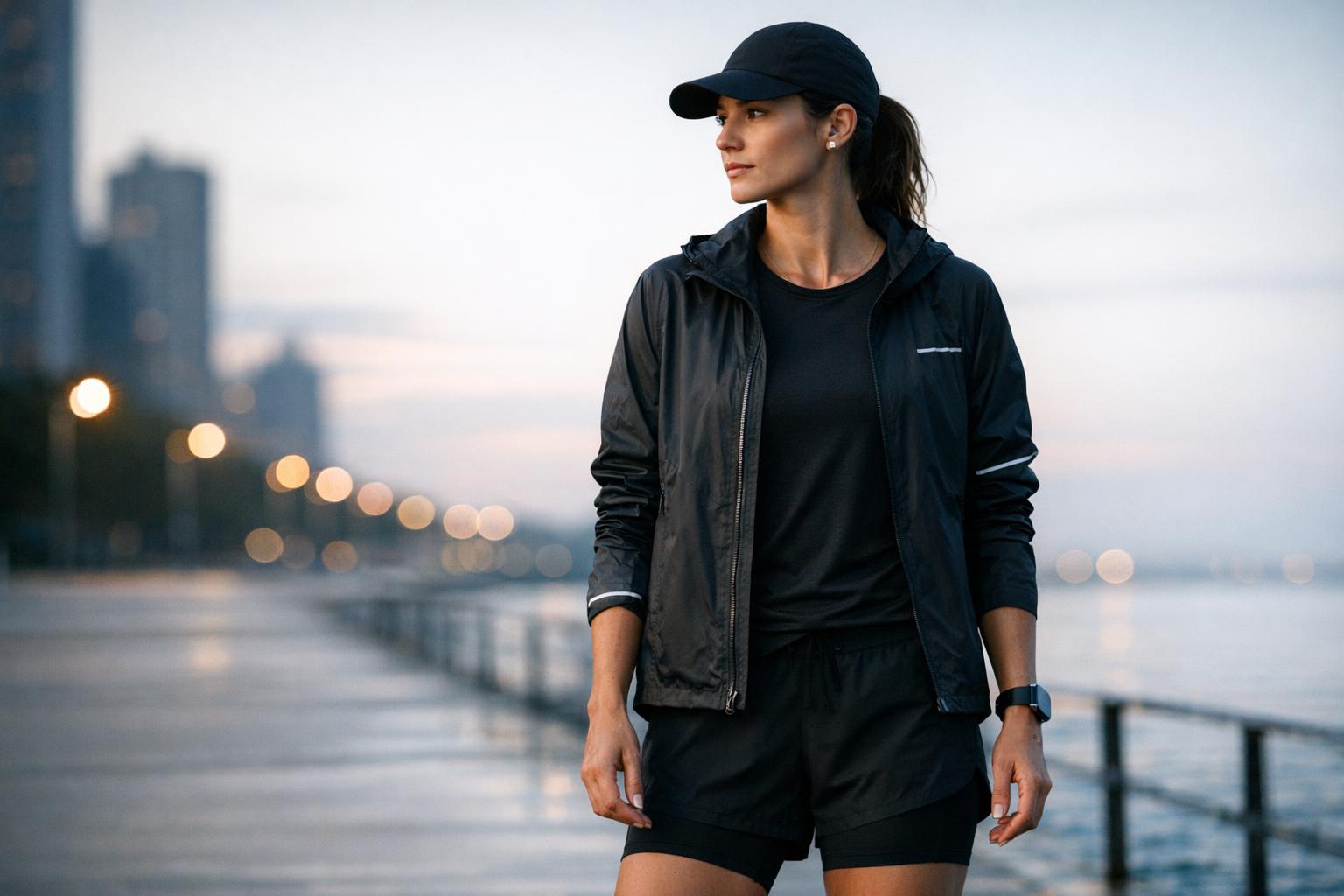
Running outfit, reimagined as a modern aesthetic
A running outfit is often treated like equipment—useful, forgettable, purely functional. Yet the most compelling runner outfits have a clear visual identity: clean lines, intentional proportions, and a quiet confidence that reads as athletic wear for runners and as everyday style. This is where performance fabrics meet restraint—where moisture-wicking, quick-dry textures, and four-way stretch are composed with the same care you’d give a polished capsule wardrobe.
The mood is modern and precise. Think minimalist silhouettes with strategic ventilation, matte-black or soft-neutral palettes punctuated by reflective elements, and layering that looks deliberate rather than accidental. It’s the aesthetic you see on early city miles—New York sidewalks at dawn, a San Francisco waterfront loop, a Chicago lakefront long run—when the light is low and visibility matters, but so does looking like yourself.
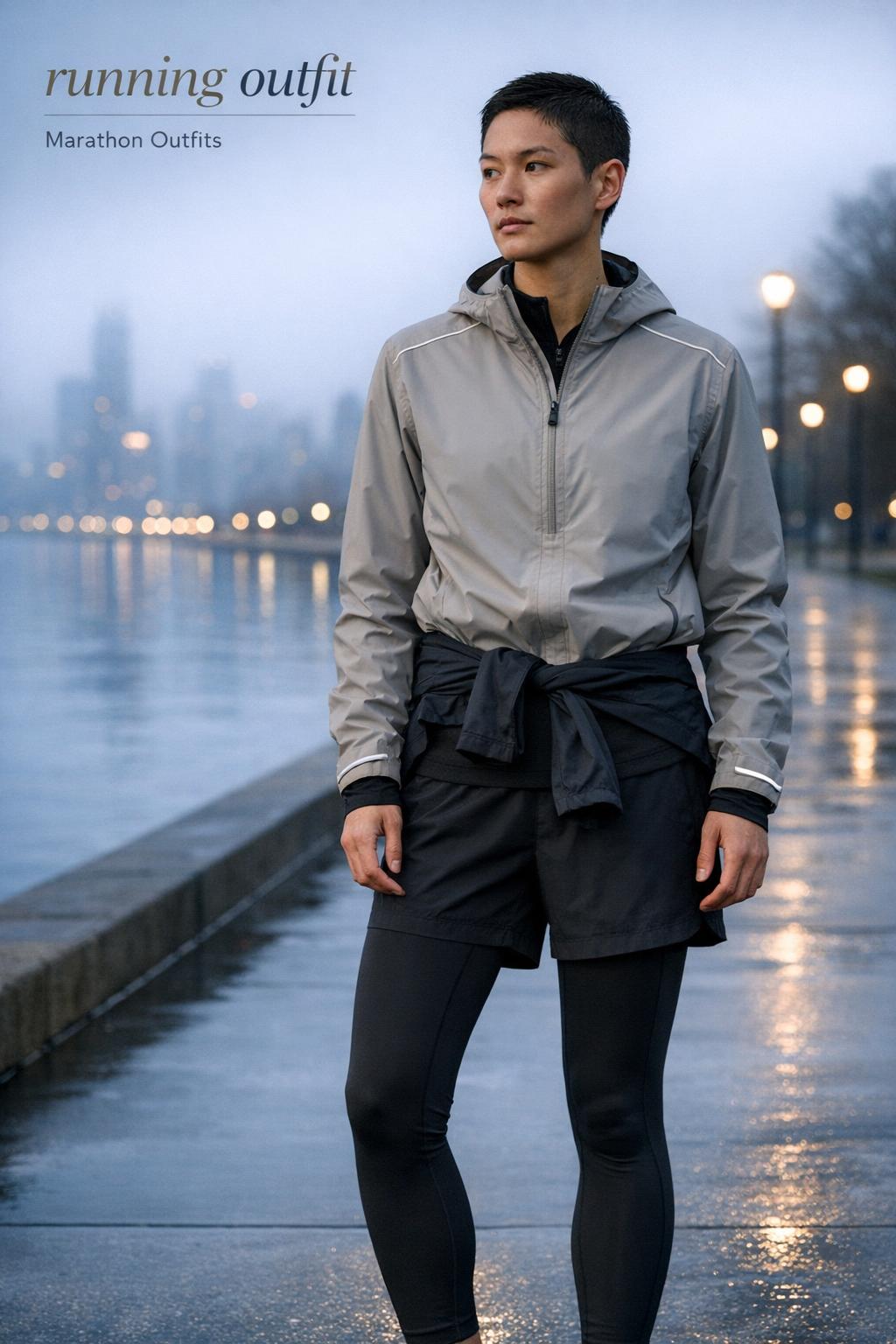
Part of the appeal is that this style adapts to real conditions: summer heat, winter wind, rain, humidity, and the particular demands of running—movement, sweat, friction, temperature shifts. The best running clothes don’t just “work”; they hold their shape, support your comfort, and keep the look coherent from warm-up to cooldown, from easy jog to marathon outfits that need to last for hours.
The anatomy of a great running outfit: the style logic beneath the gear
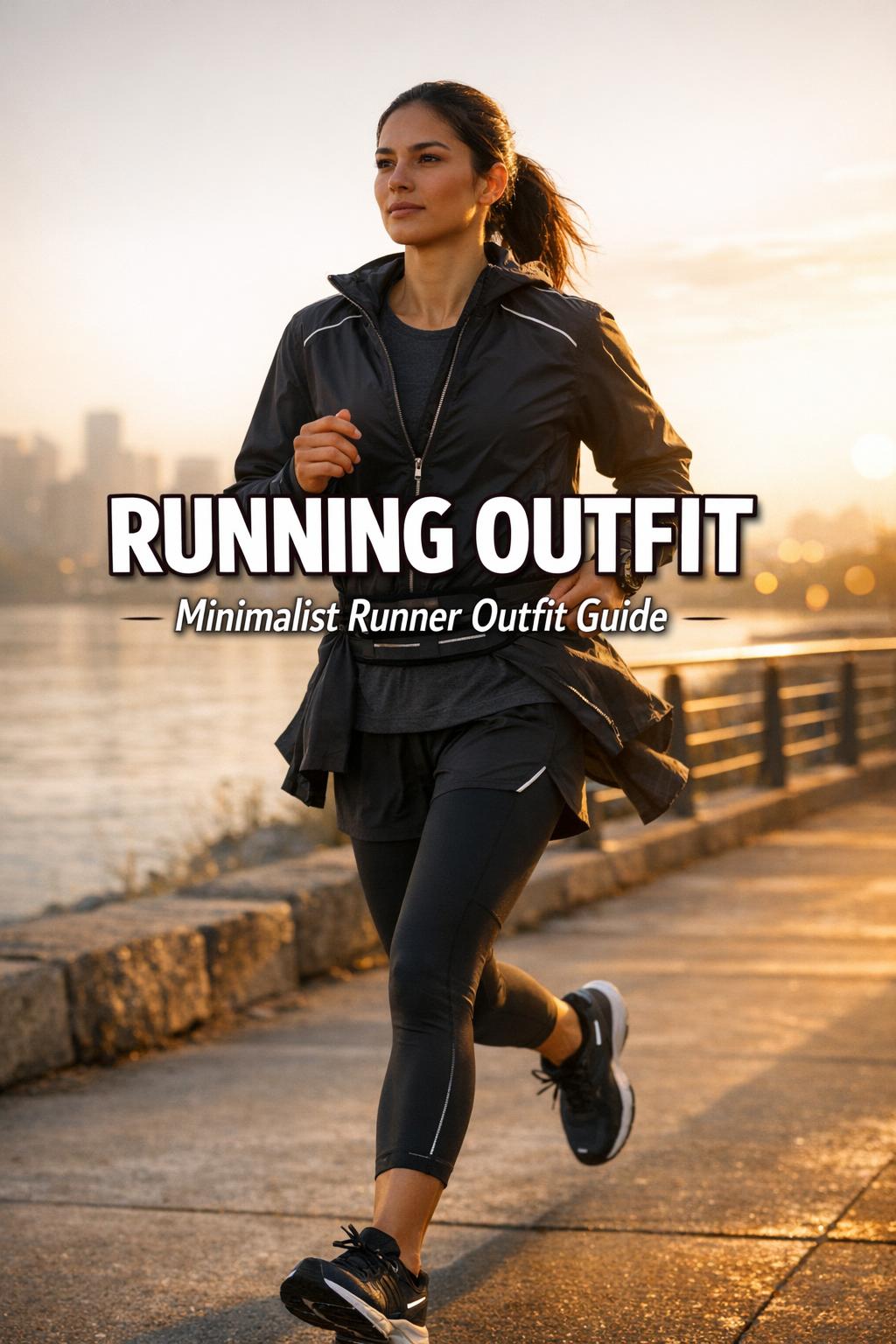
Before the looks, the principles. A runner outfit succeeds when the aesthetic decisions align with what the body will experience: sweat, airflow, temperature change, repetitive motion, and the subtle irritations that ruin an otherwise good run. The point isn’t to overcomplicate; it’s to make each piece earn its place—visually and practically.
Your wedding has a lot of moving pieces. Your plan can still feel composed.
Zarellea organizes guests, vendors, budget, and timelines in one shared space — so you can make decisions with clarity, not stress.
Fabric technology: texture that performs
Start with fabric science, because it dictates the feel of the entire look. Moisture-wicking and quick-dry materials keep the silhouette crisp instead of heavy; four-way stretch allows clean lines without restriction; mesh ventilation and lattice-like panels add breathability where you actually heat up. In rainy runs, water resistance matters, and a DWR coating can help an outer layer shed light moisture without turning your outfit into a sauna. Recycled polyester appears frequently in performance contexts for a reason: it’s often used in technical fabrics that balance durability with a smooth, modern finish.
Fit and comfort: the invisible architecture
Aesthetic running style lives or dies on fit. Compression wear creates a sleek, streamlined silhouette—useful when you want the outfit to look intentional and reduce fabric movement—while a looser fit can feel airy and relaxed, especially in heat. The detail that separates a good idea from a wearable one is seam construction: seams and seam placement influence chafing, and the most refined looks are the ones you don’t have to adjust mid-run.
Layering principles: a composed silhouette in motion
Layering is not just warmth; it’s temperature control and proportion. A base layer manages moisture against the skin, a mid-layer adds light insulation, and an outer shell handles wind and precipitation. The aesthetic payoff is coherence: a running outfit that looks designed—rather than piled on—because each layer is purposeful and the bulk is controlled.
Color and visibility: style that respects safety
Running style has a unique constraint: you may need reflective gear or high-contrast elements when the light is low. Visibility doesn’t have to feel loud. Reflective details can read as modern, almost architectural—thin lines, minimal placements—while color psychology does its quiet work: lighter hues feel cooler in summer, deeper tones feel grounded in winter, and a single accent color can make an otherwise neutral kit look unmistakably intentional.
Look: relaxed minimal layers for the everyday run
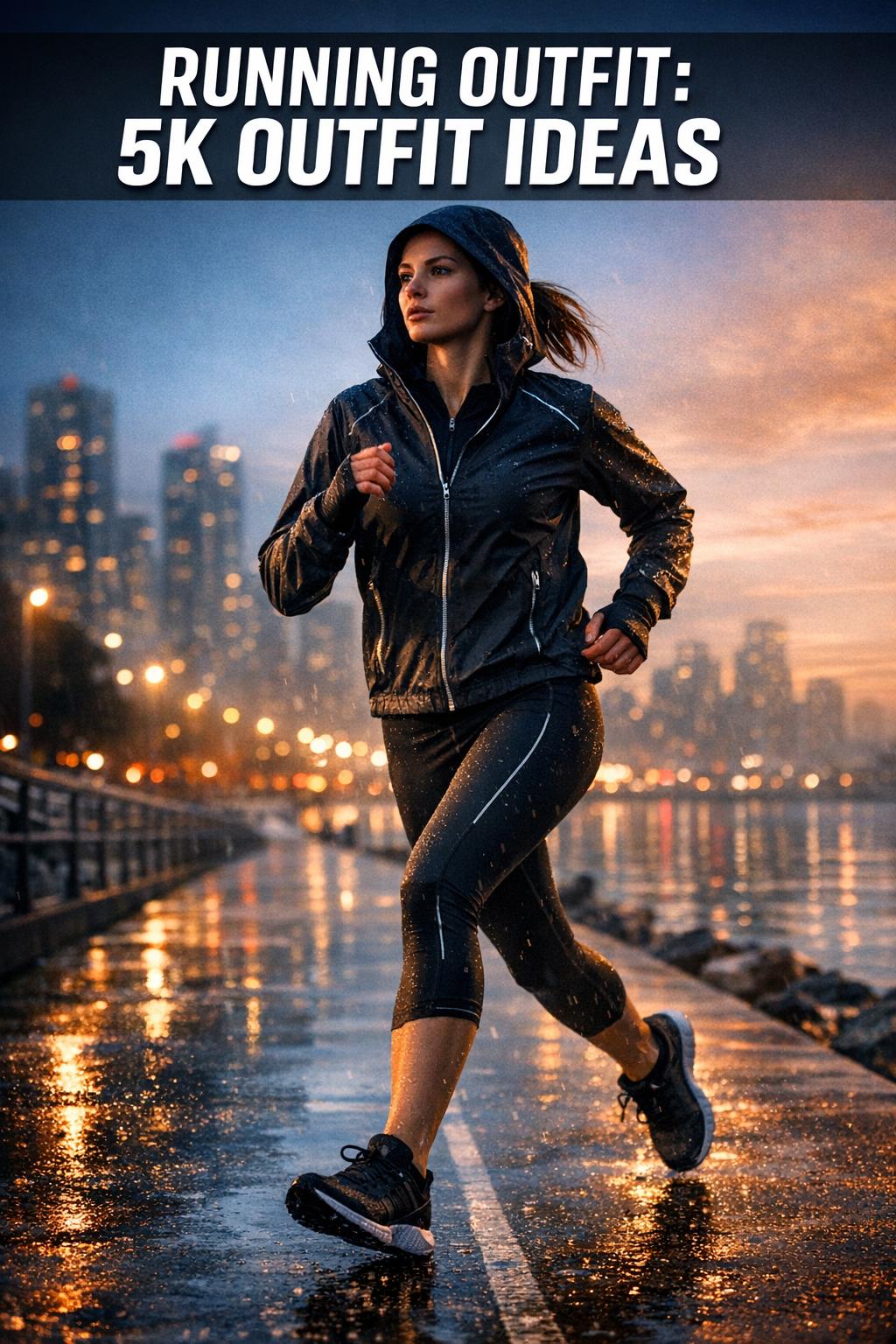
This look is the foundation—effortless, clean, and slightly understated, with a silhouette that moves easily. It’s the kind of running outfit that looks composed even if the run is casual: a short loop, a post-work reset, a weekend morning with no pace goals. The vibe is minimalist but not severe—soft structure, simple lines, and a calm palette.
Anchor it with a moisture-wicking base layer in a matte neutral, paired with shorts or fitted bottoms that have enough four-way stretch to keep the shape stable. Add a light outer shell that reads refined rather than technical—wind protection without excess volume. Keep color choices quiet: black, graphite, soft stone, or muted navy, with reflective elements that appear as subtle punctuation rather than decoration.
- Key garments: moisture-wicking top, stretch shorts or fitted bottoms, light windproof jacket
- Footwear: running footwear aligned with your run (easy miles vs. longer efforts)
- Accessories: reflective details, a minimal cap, and a simple layer you can tie at the waist if temperatures shift
Why it works: the minimal approach lets fabric and fit do the styling. Because the pieces are technical—quick-dry, breathable running clothes—the look stays sharp as you warm up, which is the real test of “effortless” in motion.
Look: neutral street style runner outfit for city miles
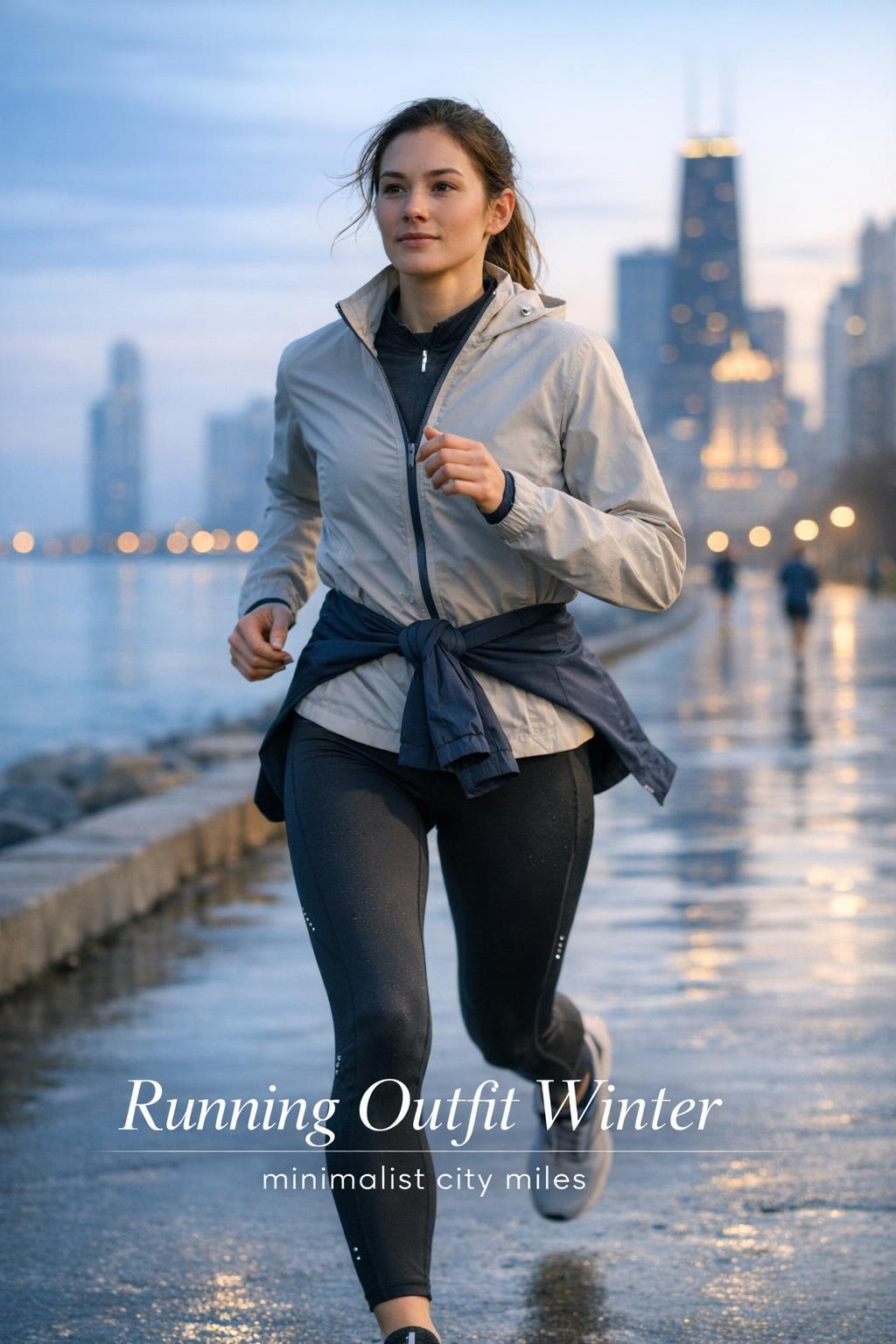
City running has its own aesthetic language: slightly more polished, a touch more structured, and always aware of surroundings. This runner outfit is designed for urban texture—crosswalk pauses, wind corridors between buildings, and that moment you stop for a coffee after the cooldown without feeling like you’re wearing a costume.
Build the look with a breathable running top that holds its line—no twisting, no cling—and bottoms that feel secure but not restrictive. A mid-layer can be introduced here, especially during transitional weather: a sleek, lightweight piece that adds warmth without breaking the silhouette. Keep the palette neutral and tonal, then add visibility through reflective gear that feels integrated, not tacked on.
Why it works: the city version of a running outfit benefits from a controlled proportion. The outfit looks intentional when the upper half has a little structure (through layering) and the lower half remains clean and athletic. It’s the same logic you’d use in modern street style—just translated into running apparel.
Style tip: treat reflective elements like jewelry
Reflective details are often treated as a compromise. Instead, use them as design lines. A thin reflective strip can visually lengthen a leg line; a small reflective panel can create balance at the shoulder. If you run early or late—common in places like New York or Chicago—this is one of the rare cases where safety and style genuinely align.
Look: hot-humid minimalism (ventilation first, always)
Hot-humid running demands humility. The aesthetic here is pared back to the essentials, because anything extra becomes weight. The mood remains refined—clean and intentional—but the silhouette is lighter, with strategic openness and a focus on airflow. Think of it as minimalism designed for sweat management.
Choose breathable running clothes with visible ventilation—mesh panels or lattice-like construction—and a fabric that dries quickly so the outfit doesn’t darken and drag. Keep colors light where possible; the look reads fresh and visually “cool.” This is also where fit becomes personal: some runners prefer a closer fit to prevent fabric movement; others prefer a looser cut to encourage airflow. Either can look polished if the proportions are deliberate.
- Key garments: quick-dry top with mesh ventilation, lightweight shorts, minimal base layer approach
- Accessories: cap for sun coverage, small reflective element if you run at dawn or dusk
- Fabric focus: moisture-wicking, quick-dry, and breathable construction
Why it works: the aesthetic remains cohesive because it’s disciplined. Instead of adding style through layers, you add it through fabric texture—matte technical knits, subtle mesh, and a crisp color palette that stays controlled even under heat stress.
Look: rain-ready refinement (the quiet power of an outer shell)
Rain transforms the mood of a run. The air feels heavier, surfaces change, and your outfit has to hold up under moisture without losing its shape. This look embraces a streamlined, slightly sharper silhouette—almost like a modern uniform—because an outer layer becomes the visual centerpiece.
Start with a base layer that manages sweat, because you will still warm up under a shell. Add an outer layer with water resistance; a DWR finish is often associated with shedding light rain while maintaining breathability. Underneath, choose pieces that dry quickly so you don’t feel chilled as you slow down. Keep the palette deep and composed—charcoal, black, navy—then use reflective elements as crisp highlights.
Why it works: the shell provides structure, and structure reads polished. In rain, a refined running outfit isn’t about looking “cute”—it’s about maintaining comfort and composure as conditions shift.
Look: running outfit winter, styled like a capsule wardrobe
A running outfit winter needs to solve a paradox: warmth without bulk, protection without overheating. The most elegant cold-weather runner outfits borrow from the logic of a capsule wardrobe—layered essentials that combine cleanly, so you can adjust without losing the look.
Begin with a base layer that keeps moisture moving; sweat trapped against the skin becomes discomfort quickly when temperatures drop. Add a mid-layer for insulation, then finish with a windproof jacket or outer shell that blocks gusts. The silhouette should remain athletic and controlled—avoid excessive volume that flaps or bunches. Winter is also where seam comfort becomes non-negotiable: long runs amplify small annoyances, and chafing becomes more likely when layers shift.
- Key garments: moisture-wicking base layer, insulating mid-layer, windproof jacket
- Color palette: deep neutrals with one high-visibility accent or reflective detail
- Practical detail: layers you can remove and re-wear without losing shape
Why it works: winter style looks strongest when it’s edited. The outfit feels intentional because every layer has a clear job, and the overall proportion stays sleek—more modern silhouette than “bundled up.”
How to choose between compression and relaxed fit without losing the aesthetic
Compression wear tends to read sleek, minimal, and sharply athletic—excellent for a refined runner outfit, especially when you want clean lines and less fabric movement. A relaxed fit reads softer and more casual, often better for heat or for runners who dislike tight waistbands and high-contact fabrics. Neither is universally “better,” and the most stylish running outfits are honest about the trade-off: compression can feel more controlled but less forgiving; relaxed silhouettes feel freer but require better proportion to avoid looking shapeless.
A practical approach is to choose one fitted anchor piece and keep the rest controlled. If bottoms are compression-style, keep the top slightly looser but not oversized. If the top is close to the body, balance it with shorts that have a clean hem and minimal bulk. The aim is a modern silhouette that looks designed for running, not borrowed from lounging.
Look: women’s running outfit with soft structure and precision
This look leans into softness without losing performance. The aesthetic is sleek, lightly sculpted, and composed—more “studio minimalism” than flashy race kit. The silhouette is designed to feel stable through movement, with a controlled waistline and a top that stays aligned as you run.
Choose a women’s running top that prioritizes moisture-wicking and quick-dry performance, ideally with seam placement that reduces friction. Pair it with bottoms that offer four-way stretch and a supportive feel, then add a light layer when the weather calls for it. Color choices work best in tonal families—soft neutrals, deep monochrome, or muted shades—so the overall effect is refined rather than busy.
Why it works: soft structure reads modern when the fabric is technical. When the materials are breathable and the fit is intentional, the outfit looks clean and confident—built for running, but styled with a fashion editor’s restraint.
Look: men’s running outfit with streamlined essentials
The most effective men’s running outfit is often the simplest—an edited set of essentials where fit does the talking. The mood is precise and athletic, with a silhouette that stays close enough to look intentional but comfortable enough for distance.
Start with men’s running shorts that move well and don’t ride up, paired with a running top that stays breathable as you heat up. Add a windproof jacket when conditions demand it, keeping the layering minimal so the line of the outfit remains clean. In transitional weather, a mid-layer can add warmth without changing the overall aesthetic, especially if it maintains a smooth, technical texture.
Why it works: a streamlined kit makes small styling decisions matter—color balance, reflective accents, and fabric finish. The result is an understated runner outfit that looks composed on a 30-minute run and credible on a long-run morning.
Unisex and gender-neutral running gear: when simplicity is the point
Unisex performance pieces are often the purest expression of the aesthetic: clean shapes, minimal branding, and a focus on function. The styling advantage is flexibility—one layer can work across multiple outfits, and the overall look stays coherent regardless of whether you’re building a men’s running outfit, a women’s running outfit, or something in between.
The key is sizing and proportion. A unisex outer shell can look sharp if shoulders align and sleeves don’t swallow the hands. A unisex base layer works when it sits close enough to manage moisture without constricting. Done well, unisex running apparel supports that modern, European-leaning minimalism—more Copenhagen restraint than loud trend.
Key pieces that make the aesthetic (and keep it practical)
In a strong running outfit, each piece plays a specific role. This is less about collecting “more gear” and more about choosing the right building blocks so you can create variations—summer, rain, winter, race day—without losing your style identity.
- Base layer: moisture-wicking and quick-dry, comfortable seams, stable fit
- Bottoms: four-way stretch, minimal bulk, a silhouette that stays consistent in motion
- Mid-layer: light insulation for temperature swings without heaviness
- Outer layer: windproof jacket or water-resistant shell (especially for rain and cold)
- Visibility: reflective elements integrated into the look
- Accessories: small, purposeful additions (cap, minimal storage) that don’t disrupt the silhouette
Think of these as a wardrobe system. When fabrics and colors harmonize, you can mix and match for cost efficiency and for style continuity—a key advantage if you’re building a budget running outfit without sacrificing the polished effect.
Budget-smart outfit building: the refined approach to value
Budget-friendly doesn’t mean compromising the aesthetic; it means investing where it changes the experience. High-tech fabrics can be worth it when they solve a problem you feel every time you run: a base layer that never dries, seams that irritate, an outer layer that traps heat. The return on investment is often comfort and longevity, not novelty.
Essentials vs. optional upgrades
Essentials are the pieces that make running possible with comfort: a reliable moisture-wicking top, bottoms that don’t chafe, and a layer strategy appropriate for your climate. Upgrades are the pieces that refine performance in specific conditions—rain shells with water resistance, windproof jackets for cold corridors, or specialized ventilation for hot-humid environments. A thoughtful wardrobe treats upgrades like targeted solutions, not default purchases.
How to mix and match without looking mismatched
To keep the look cohesive on a budget, build a tight palette—two neutrals and one accent—then repeat it across seasons. If your outer layer is deep and minimal, your base layers can rotate beneath it without changing the outfit’s identity. This is the easiest way to create multiple runner outfit combinations with limited pieces, while still looking polished.
Tips for shopping and sizing decisions that prevent waste
Use return policies thoughtfully, especially for sizing when you’re deciding between compression and relaxed fits. Fit often changes once you run—waistbands move, hems ride, sleeves shift—so the most reliable “try-on” is a short test run indoors or on an easy loop. The goal is to avoid a closet full of almost-right running gear and instead build a small, consistent system you trust.
Brand and fabric notes: familiar names, modern performance cues
Even when you’re not building a look around labels, it helps to understand the language of the category. Brands like Nike, Adidas, Lululemon, and On appear frequently in conversations about running apparel, and they often serve as shorthand for certain styling directions: streamlined performance, sport heritage, elevated athleisure, or minimalist technical design. A Nike running outfit, for example, may lean sleek and sport-forward; Adidas running gear can bring a classic athletic sensibility; a Lululemon running top often signals a polished studio-to-street mood; On running apparel frequently reads modern and pared back.
What matters most is translating brand cues into your own wardrobe logic: prioritize moisture-wicking and quick-dry fabrics for comfort, look for mesh ventilation when heat is the issue, consider UPF protection for sunny conditions, and choose outer layers with wind or rain resistance when weather is unpredictable. Labels can guide you, but the aesthetic comes from composition—how color, proportion, and texture work together.
Look: athleisure edge—performance gear styled for after the run
This is the look that blurs the line between running kit and everyday uniform, without drifting into costume. The mood is modern athleisure: clean, slightly elevated, and designed to transition—warm-up, run, errands, an unplanned stop to meet a friend. The silhouette is intentionally balanced so you don’t feel “half dressed” once you’re off the route.
Start with performance pieces that look refined: a smooth, breathable running top; bottoms with a stable waistband and minimal seams; a mid-layer that drapes cleanly and can be worn beyond the run. Keep the palette tonal, and use one accent—perhaps a brighter layer or a reflective detail—to keep the look alive. Texture does the heavy lifting here: matte technical knits, subtle stretch, and purposeful ventilation that reads like design rather than purely function.
Why it works: the outfit doesn’t rely on “trend” to feel stylish. It relies on balance—athleisure, yes, but grounded in performance fabrics that make sense for running and still look polished when the run is over.
Race-day polish: marathon outfits and 5k outfit ideas that still feel like you
Race-day dressing is a distinct category because it’s emotional and practical at once. You want an outfit that feels sharp in photos, but more importantly, one that behaves predictably under stress. Marathon outfits, especially, must hold up for hours: sweat management, seam comfort, and temperature shifts become non-negotiable. For 5k outfit ideas, the logic changes slightly—less time on course can mean you can tolerate a slightly bolder styling choice, but comfort still rules.
Look: the disciplined race kit (minimal, fast, composed)
This race-day runner outfit is all restraint: a crisp silhouette, minimal layers, and a palette that photographs cleanly. It’s not about being plain; it’s about reducing variables. Fabric choices lean moisture-wicking and quick-dry, fit is stable, and reflective details are placed with intention. The aesthetic reads quietly elite because nothing looks accidental.
Look: the confident 5k statement (small accent, big impact)
For a 5K, keep the base classic—breathable running clothes with clean lines—then introduce one statement element: a brighter top within an otherwise neutral set, or a sharp contrast between layers. The silhouette stays athletic and controlled, so the accent looks designed rather than busy. It’s the easiest way to bring personality without jeopardizing comfort.
Tip: rehearse your race-day outfit like you rehearse pacing
Race-day is not the moment for unfamiliar seams or a waistband you’ve only worn around the house. A short test run reveals what mirrors won’t: how fabric behaves with sweat, whether layers trap heat, and if anything shifts as you accelerate. This is one of the simplest ways to protect both performance and the calm, polished look you want at the start line.
Distance planning: outfits that make sense from 5K to marathon
Distance changes the styling calculus. The longer the run, the more your outfit must manage temperature swings, friction points, and drying time. Your running outfit should look consistent, but it must also behave consistently—which is why a distance-based approach is quietly sophisticated.
- 5K: prioritize breathable fabric and a stable fit; one accent detail can elevate the look without adding complexity
- 10K: balance ventilation with comfort; consider light layering if your warm-up is chilly but you’ll heat up quickly
- Half marathon: choose seams and fabrics you trust; avoid pieces that become heavy with sweat
- Marathon: build for predictability—moisture-wicking base layers, minimal friction, and a layering plan you can adjust without chaos
These aren’t rigid rules; they’re decision frameworks. A runner in hot-humid weather may dress for a half marathon like it’s summer minimalism, while a runner facing wind may need an outer shell even for shorter distances.
Common running outfit mistakes that undermine both comfort and style
Most style mishaps in running come from ignoring how fabric behaves in motion. The outfit may look fine in a mirror, then collapse into discomfort after two miles. If you’re aiming for a refined aesthetic, these are the pitfalls that quietly undo the effect.
- Over-layering in winter: too much bulk breaks the silhouette and often leads to overheating once you start running
- Choosing non-breathable fabrics in heat: without moisture-wicking and ventilation, the outfit darkens, clings, and feels heavy
- Ignoring seams: seam placement can create friction points that make even premium-looking running gear unwearable
- All-dark kits with no visibility plan: reflective elements matter, especially for early or late city runs
- Mismatch in proportion: oversized tops with loose bottoms can read shapeless; overly tight everything can feel restrictive
The correction is usually simple: edit the outfit, prioritize one strong silhouette idea, and ensure the fabric technology supports the conditions—windproof when it’s windy, quick-dry when it’s humid, and water resistance when rain is likely.
Care and longevity: keeping technical fabrics looking intentional
Technical running clothes are designed to work hard, but they also need care to keep their finish—especially if you’re building a wardrobe where pieces rotate across seasons. The aim is longevity: garments that keep their shape, stretch, and performance so your running outfit continues to look refined rather than worn out.
Tips for washing and drying without dulling performance
Quick-dry and moisture-wicking finishes perform best when fabrics aren’t weighed down by residue. Keep your wash-dry cycle gentle and consistent, and pay attention to how outer layers behave over time—water resistance can diminish if a shell isn’t treated thoughtfully. If you rely on a windproof jacket or water-resistant outer shell, preserve it as you would a core wardrobe piece: it’s the visual anchor of many cold and rainy looks.
Rotation strategy: the quiet secret of a polished runner outfit
Rotating pieces isn’t only practical; it keeps the aesthetic intact. When you alternate base layers and give fabrics time to recover, stretch remains stable and seams stay comfortable. It also helps you build a consistent visual identity—your “running outfit” becomes a recognizable style, not a random assortment of running gear.
How to recreate the aesthetic in your own wardrobe (a simple workflow)
Think like a stylist, not a shopper. Start by choosing the conditions—summer heat, winter wind, rain, or hot-humid air—then choose distance, then choose silhouette. From there, select fabrics that match: moisture-wicking and mesh ventilation for heat, windproof layers for cold, water resistance for rain, and quick-dry pieces for humidity. Finally, edit the palette so everything belongs together.
A practical formula that stays elegant is: one neutral base, one supportive or structured layer, one detail that signals intention (reflective elements, a clean contrast, or a single accent color). This approach works whether your wardrobe leans Nike, Adidas, Lululemon, On, or a mix—because the cohesion comes from proportion and fabric logic, not branding.
FAQ
How do I choose the right fabric for my skin and climate?
Start with moisture-wicking and quick-dry fabrics as your baseline, then match the rest to conditions: mesh ventilation and lighter colors for heat or hot-humid runs, windproof layers for cold, and water-resistant outer shells (often with a DWR finish) for rainy weather; the best choice is the one that keeps you comfortable without trapping heat or staying wet against the skin.
What makes a running outfit feel polished instead of random?
A polished running outfit has a clear silhouette (either streamlined or intentionally relaxed), a controlled color palette, and fabric choices that hold their shape in motion; small details like reflective elements and clean seam construction often make the difference between “just running clothes” and an outfit that looks designed.
Do I need specialized footwear, or can I mix and match with outfits?
You can mix and match visually, but functionally your running footwear should make sense for your running, because comfort and consistency affect how the entire outfit feels; the most cohesive runner outfit is the one where footwear and clothing support the same goal—easy miles, long runs, or race-day effort—without forcing compromises.
How should I layer for a running outfit winter without overheating?
Use a base layer to manage moisture, a light mid-layer for insulation, and a windproof outer layer for protection, keeping bulk minimal so the silhouette stays controlled; this setup helps you warm up comfortably while preventing sweat from turning into chill when you slow down or conditions shift.
What are smart 5k outfit ideas that still feel performance-ready?
Keep the foundation simple—breathable, moisture-wicking pieces with a stable fit—then add one intentional accent (a brighter top, a sharp contrast layer, or a refined reflective detail) so the look feels styled without introducing anything that could distract or irritate once you start running.
What should I prioritize when planning marathon outfits?
Prioritize predictability: fabrics that manage sweat (moisture-wicking and quick-dry), seam comfort to reduce friction over time, and a layering plan suited to your weather (windproof for cold, water resistance for rain, ventilation for heat) so your outfit behaves consistently for the full distance.
How can I build a budget-friendly running outfit that lasts?
Invest first in the pieces that affect comfort most—base layers and bottoms with reliable fit and seam comfort—then add condition-specific upgrades like a windproof jacket or water-resistant shell as needed; keeping a tight, mixable color palette also helps you create multiple outfits with fewer items.
Are unisex running pieces a good option, or should I stick to gender-specific kits?
Unisex pieces can be excellent when the proportion fits your body well, especially for outer layers and minimalist mid-layers; gender-specific sizing can feel more precise for tops and bottoms where seam placement and support matter most, so the best approach is often a mix based on comfort and fit rather than a strict rule.
How do I know if my running outfit fits correctly once I’m actually running?
A correct fit stays stable in motion: waistbands don’t roll, hems don’t ride excessively, seams don’t rub, and layers don’t trap heat as you warm up; a short test run is the most reliable way to confirm fit, because running reveals issues that standing in front of a mirror can’t.
Leave a Reply