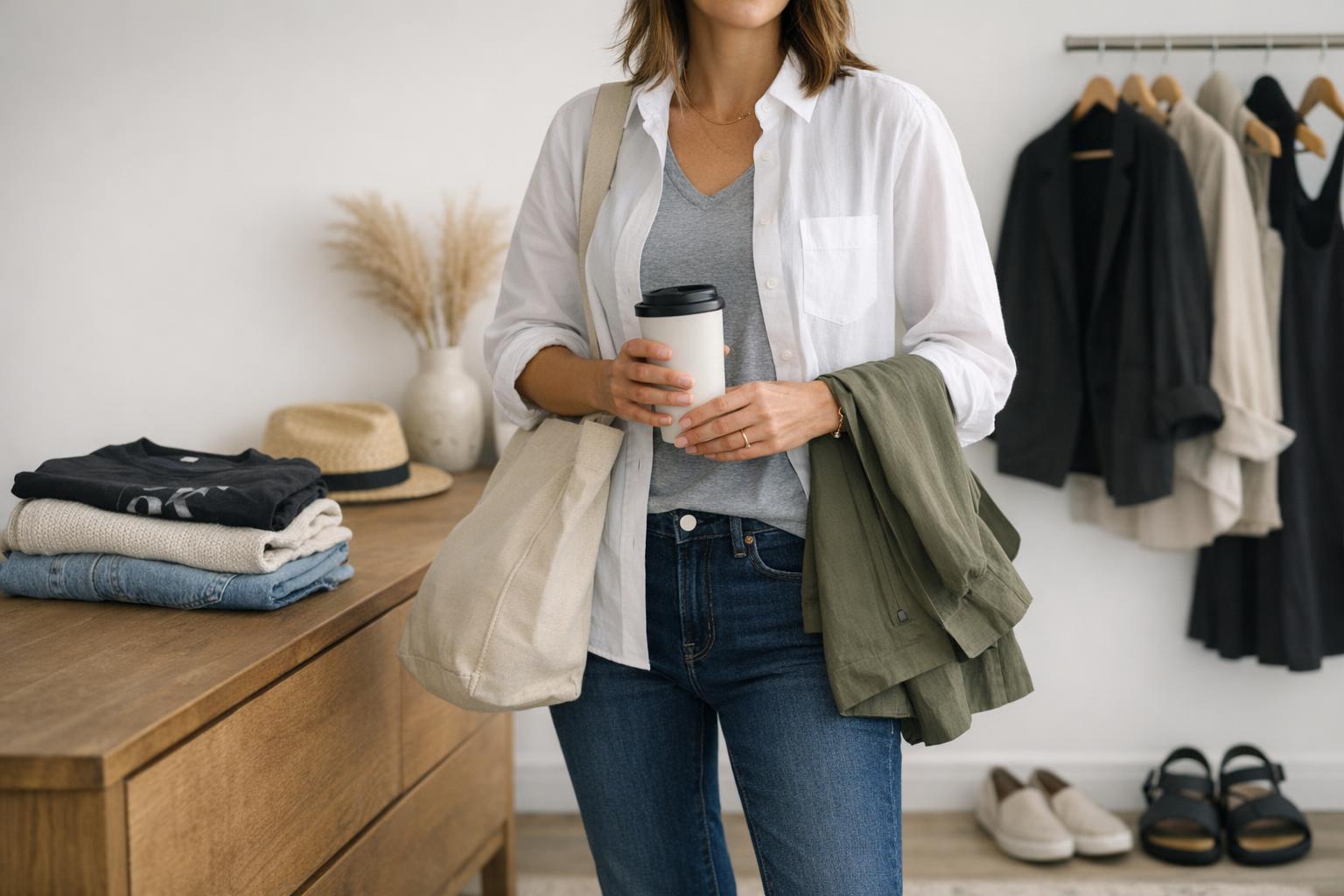
Capsule wardrobe casual: the everyday style problem it actually solves
There’s a specific moment most closets fail: a regular morning when you need something comfortable, presentable, and weather-appropriate—and you’re not dressing for a runway, a gala, or a niche aesthetic. You’re dressing for errands, a coffee meeting, a last-minute video call, a walk that turns into lunch, and maybe dinner later. A capsule wardrobe casual approach is built for exactly that kind of day: a small, intentional set of clothes that mix easily, repeat without feeling repetitive, and cover real-life needs without constant shopping.
In U.S. wardrobes, this usually means leaning on casualwear: jeans, tees, easy dresses, light layers, and shoes you can actually walk in. But the best casual capsule isn’t just “basics.” It’s a system—one that uses a neutral palette, versatile pieces, and thoughtful repetition so you can get dressed fast while still feeling like yourself. If you’ve ever admired the polish of a stylist’s off-duty uniform, that’s the logic at work.
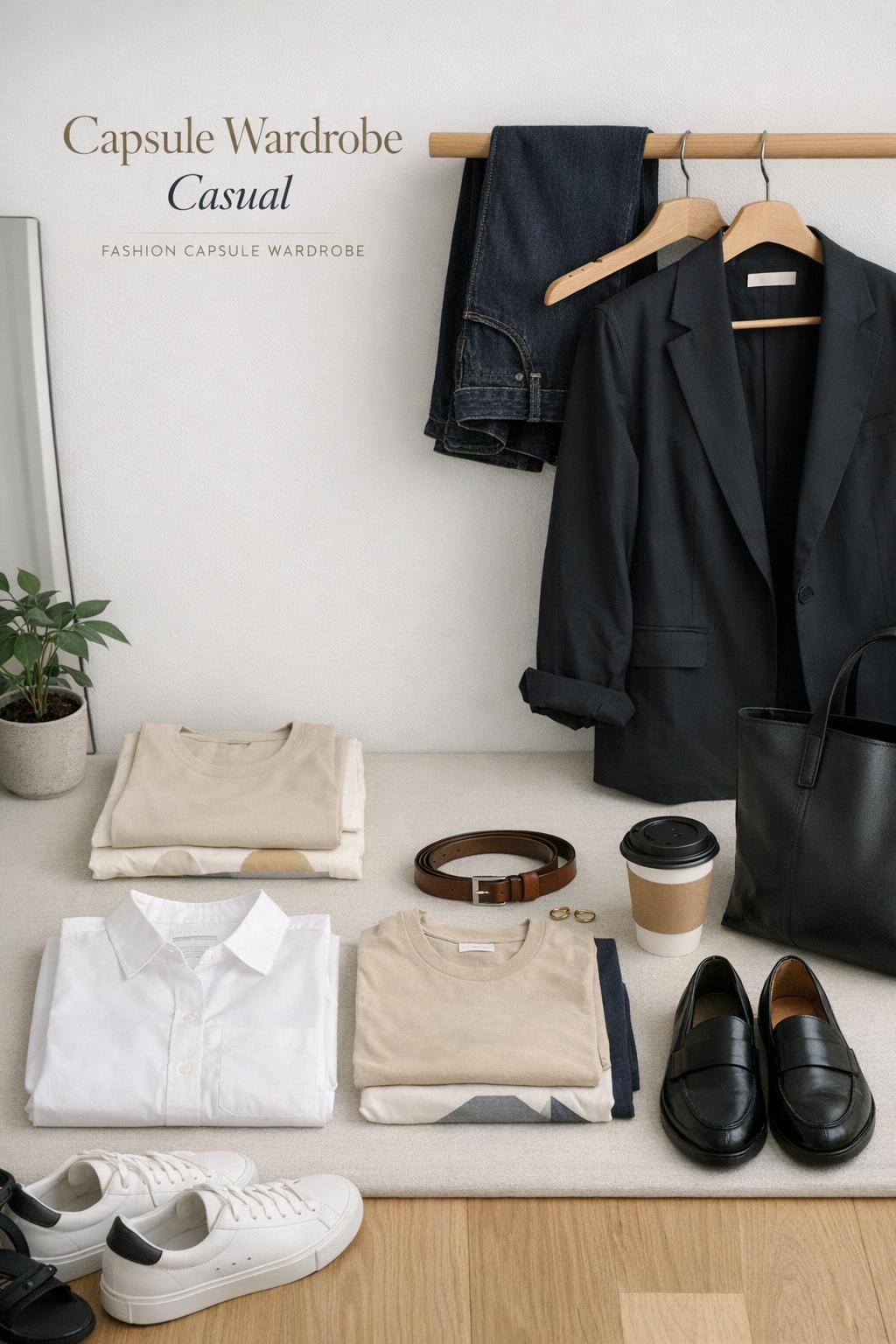
That’s why capsule wardrobe content from fashion magazines and brand guides tends to converge on the same ideas: timeless staples (like a white shirt and tailored trousers), a short list of essential pieces (sometimes framed as “easy pieces”), and seasonal rotation based on climate and lifestyle. And it’s also why personal frameworks—like a former Nordstrom stylist mapping out seven key casual items—resonate: they connect the concept to specific clothing categories you can picture, wear, and re-wear.
What a fashion capsule wardrobe is (and what it isn’t)
A fashion capsule wardrobe is a curated collection of clothing—often built around wardrobe basics—that’s intentionally limited in size and designed for mix-and-match outfits. The aim isn’t to own “as little as possible.” It’s to own fewer pieces that work harder: a consistent color story, silhouettes you trust, and layers that adapt as your day changes.
Your wedding has a lot of moving pieces. Your plan can still feel composed.
Zarellea organizes guests, vendors, budget, and timelines in one shared space — so you can make decisions with clarity, not stress.
It’s also helpful to separate the concept from a few common misconceptions. A capsule is not automatically a strict minimalist wardrobe capsule, and it doesn’t require identical outfits or a single uniform. In practice, most casual capsules balance repeatable foundations (like jeans and tees) with a few items that keep things interesting (a graphic tee, a dress that can go day-to-night, or sporty sandals that change the feel of denim).
- A capsule wardrobe is: a strategy for versatility, outfit cohesion, and easier decision-making.
- A capsule wardrobe is not: a rule that bans trends, color, or personality.
- A casual capsule is: built around comfortable, everyday pieces (jeans, tees, easy dresses, practical shoes).
- A casual capsule is not: limited to loungewear or “only basics.”
For capsule wardrobe women building around casualwear, the biggest unlock is noticing how a few staple categories create dozens of realistic combinations: a white shirt changes denim; a lightweight jacket refines a tee; a versatile dress removes the need to coordinate separates. The capsule becomes less about the number and more about the relationships between pieces.
A quick origin story: why “easy pieces” still matters
The capsule wardrobe has a well-known fashion lineage, including Donna Karan’s “7 Easy Pieces.” That idea—getting dressed through a set of modular essentials—still maps cleanly onto today’s casual capsule wardrobe, even when the pieces are more relaxed. The lasting lesson is that outfits become easier when clothing is designed to layer and combine: tops that sit well under jackets, bottoms that work with multiple shoes, and a palette that doesn’t fight itself.
Modern capsule thinking takes that “easy pieces” logic and applies it to everyday life: lighter denim for warm months, sport sandals that keep you moving, or a tank dress that can read casual with sneakers and feel more intentional with a jacket. The concept hasn’t changed; the styling context has.
Core principles that make a casual capsule actually wearable
Capsule wardrobes fail when they’re built as an abstract checklist instead of a realistic routine. The most reliable principles are simple, but they require honest decision-making: what you wear most, how your climate behaves, and what your week looks like.
Versatility beats volume (especially in casualwear)
Casual style has a deceptively high “wear frequency.” If you’re reaching for jeans and tees several days a week, you’ll notice quickly whether your capsule is functional. A versatile piece earns its spot when it works across multiple settings: errands, travel, a relaxed office, or a weekend dinner. That’s why capsule checklists keep returning to staples like jeans, a white shirt, and a lightweight jacket or blazer—because these items move easily between contexts.
A neutral palette makes mixing effortless (and still leaves room for personality)
Many capsule wardrobe guides emphasize a neutral palette because it reduces friction: fewer clashes, more combinations, and less “nothing goes together” frustration. Neutrals also make repeating outfits feel intentional. Personality doesn’t disappear; it shifts to details—like a graphic tee, the shape of your denim, or your choice of shoes (sneakers vs. loafers vs. sporty sandals).
Seasonal rotation is part of the system, not an extra project
Brand guides that focus on how to build a capsule wardrobe frequently highlight seasonal rotation and climate. That’s practical: a U.S. wardrobe might need lightweight layers and breathable pieces for warm seasons, then heavier layers for cooler months. Thinking in seasonal capsules removes pressure to make one small set of clothes cover every temperature.
Tips: If you’re new to the idea, don’t aim for perfection. Start by identifying the pieces you wear repeatedly and build outward. Your first capsule is more like a draft than a final answer.
The essential casual capsule pieces (a wearable core you can build around)
Different articles frame the core list differently—some highlight universal staples like a white shirt, tailored trousers, and a leather jacket; others focus on a stylist’s personal “musts” like a tank dress, lightweight jeans, sporty sandals, and a graphic tee. You can reconcile both by focusing on categories that do the heavy lifting in a casual capsule: tops that layer, bottoms that anchor outfits, one-piece outfits (dresses), and shoes that match your pace.
1) The white shirt (button-down or cotton shirt)
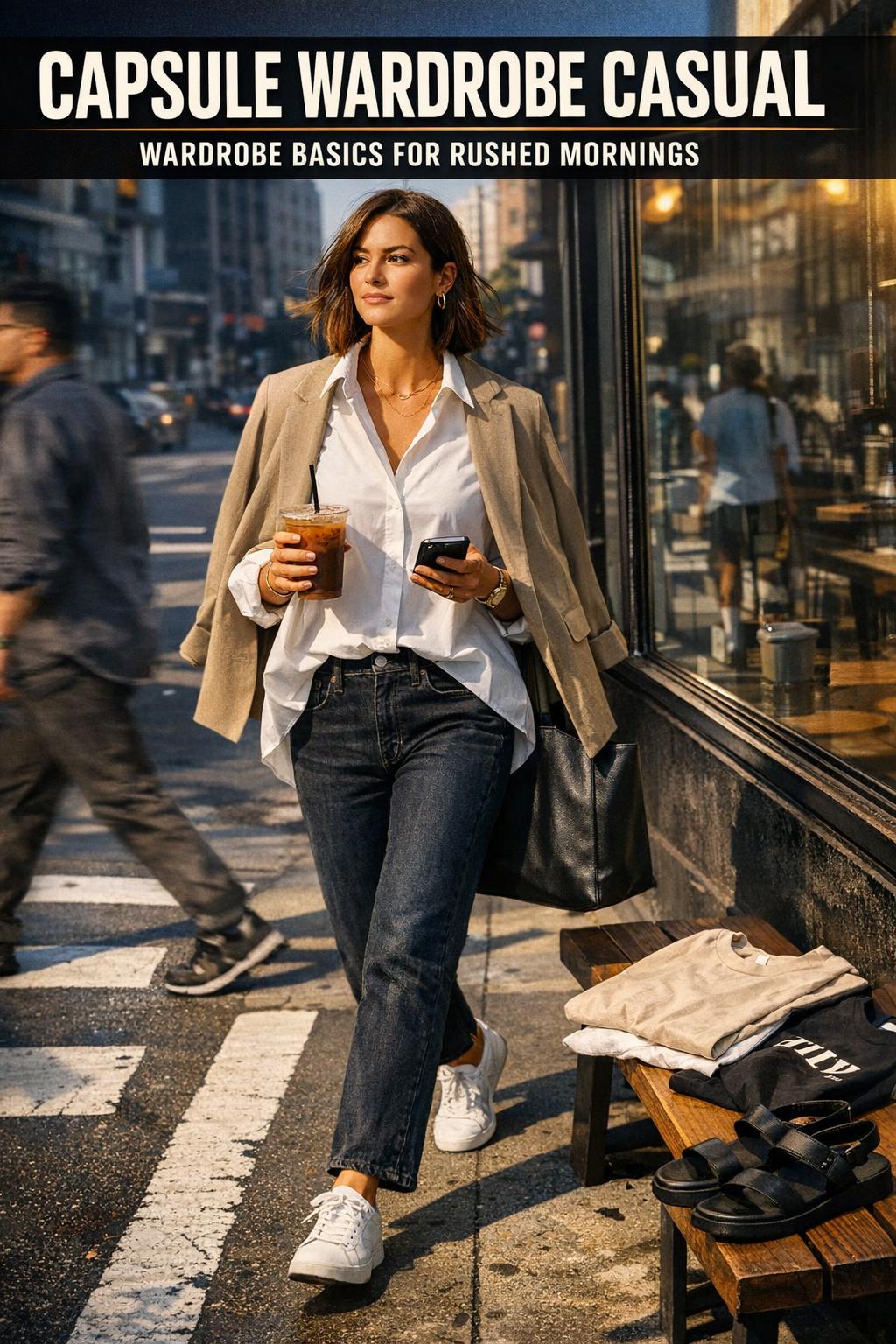
A white shirt is one of the most repeated capsule wardrobe staples because it’s a style translator: it makes denim look cleaner, softens tailored trousers, and layers easily under a lightweight jacket or blazer. In casualwear, it’s also a practical “reset” piece—useful when your other items lean sporty, relaxed, or graphic.
How it works in real life: If your week includes at least one moment where you need to look slightly more polished without dressing up, the white shirt does that with minimal effort.
2) Jeans you can live in (dark wash or lightweight)
Jeans are the backbone of a casual capsule wardrobe, and the key is choosing a pair that supports your climate and lifestyle. Dark wash jeans read more refined and pair cleanly with a white shirt or a blazer. Lightweight jeans can be more comfortable when temperatures rise, while still giving the structure that makes casual outfits feel “finished.”
In shopping-focused capsule content, denim brands often appear alongside the concept—names like Good American, FRAME, Rag & Bone, and AG show up as examples of the category. You don’t need a specific label for the strategy to work, but it’s useful to note the pattern: the denim slot matters enough that many stylists and editors treat it as an anchor investment piece.
3) The everyday tee (neutral) and a graphic tee for variety
A neutral T-shirt is classic wardrobe basics territory: it layers under jackets, pairs with jeans, and works with skirts or tailored trousers. Adding one graphic tee can keep the capsule from feeling too uniform and adds personality without breaking the neutral palette strategy (because the base of the outfit can remain simple).
Tips: If you find yourself bored by “basics,” use the tee category to solve it. Keep one tee neutral for maximum versatility and let one graphic tee carry the mood when the rest of your outfit is straightforward.
4) A lightweight jacket or an unstructured blazer
This is the piece that turns casual into intentional. A lightweight jacket is practical for temperature swings, while an unstructured blazer gives a bit of shape without feeling formal. This category is also the bridge between high-level capsule staples (the “tailored” idea) and modern casualwear (the “throw it on and go” reality).
When you’re building a minimalist wardrobe capsule, this layer is also where cost-per-wear can make sense: you’ll reach for it on repeat, and it affects the overall impression of your outfit more than a trend piece would.
5) A versatile dress (tank dress, T-shirt dress, white dress)
Dresses appear frequently in casual capsule discussions because they eliminate outfit math. A tank dress is a warm-weather workhorse; a T-shirt style is easy and casual; a white dress can feel crisp and elevated without requiring complicated styling. The key is versatility: you want a dress that works with sneakers, sporty sandals, or a light layer when temperatures drop.
In stylist-led casual capsule examples, dresses often get their own callouts (tank dress, white dress) because they create multiple outfits with minimal additional pieces—especially when paired with the same jacket and shoes you already rely on.
6) Shoes that match your real schedule (sneakers, loafers, sporty sandals)
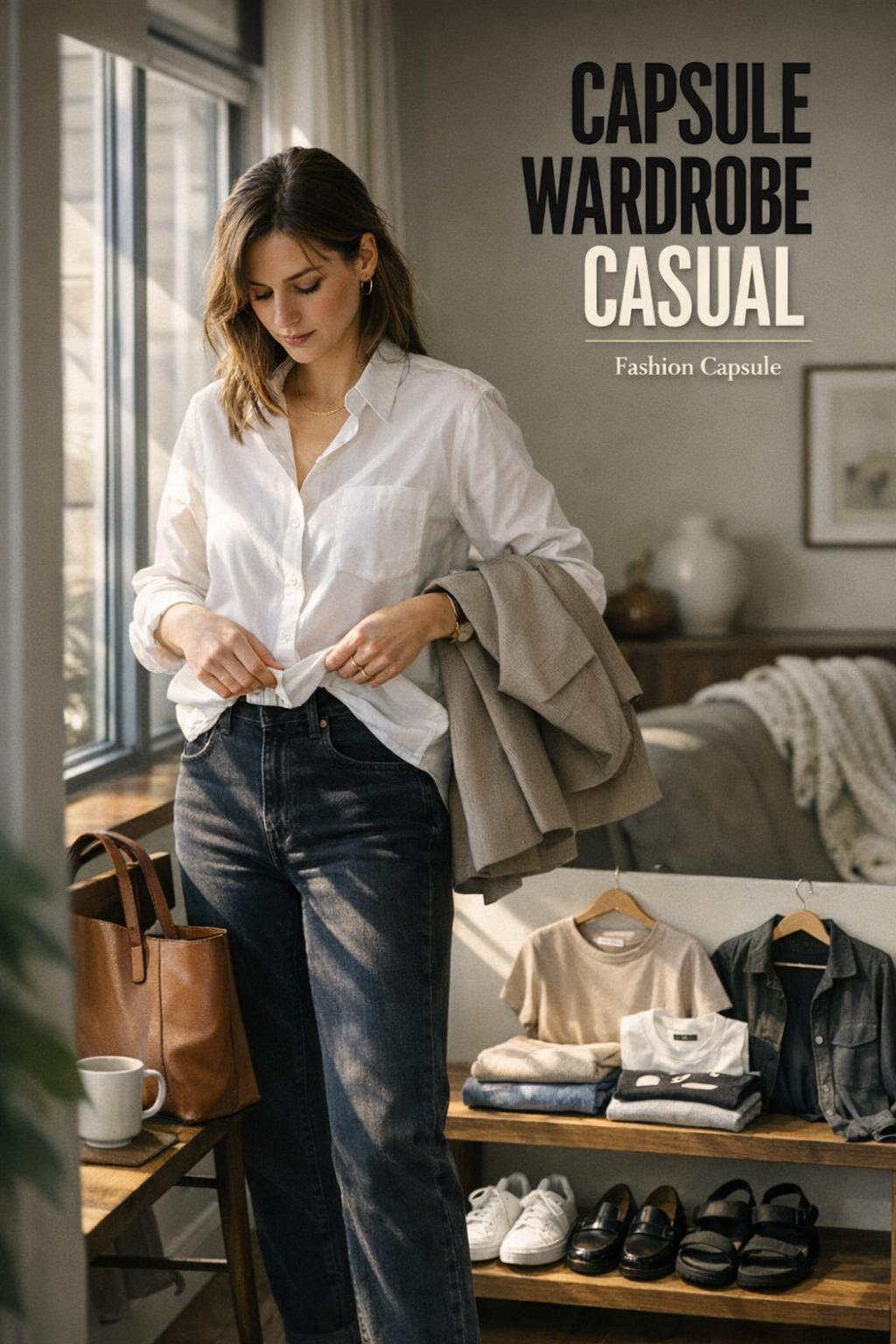
Shoes can make or break a capsule wardrobe casual plan because they control comfort and determine where an outfit can realistically go. Sneakers keep things grounded and practical. Loafers can tilt the same jeans-and-tee outfit more polished. Sporty sandals are a key warm-weather staple in many casual capsule lists, often shown alongside brands like Nike or Birkenstock as recognizable examples of the category.
Real-world check: If your capsule includes shoes you avoid wearing for long walks or busy days, the capsule will fail in practice. The “right” shoe is the one you’ll actually put on without hesitation.
7) A lightweight sweater or cardigan for layering
Even in warm seasons, indoor air conditioning, evenings, and travel days make a light knit valuable. A sweater or cardigan also helps stretch the wear of sleeveless dresses and tanks, turning them into multi-season pieces without requiring a complete wardrobe overhaul.
8) A few accessories that quietly do the work
Accessories in a casual capsule shouldn’t be a distraction; they should be finishers. A belt can give denim a cleaner line. Minimal jewelry adds intention without turning casualwear into “overstyled.” A scarf can add interest while staying within a neutral palette. The point is restraint: a small set that repeats across outfits helps your style feel consistent.
The Nordstrom stylist approach: why “seven key pieces” resonates
One of the most compelling casual capsule wardrobe narratives comes from a former Nordstrom stylist, Jennifer Sattler, who frames her approach through a practical set of core items—tank dress, lightweight jeans, sporty sandals, a white dress, a shorts set, and a graphic tee among them—organized through her Closet Choreography framework. What makes this angle useful isn’t just the shopping list; it’s the logic: pick categories that generate outfits quickly and repeat comfortably.
There’s also a subtle but important signal in this type of stylist-led capsule: the emphasis on wearability. A Nordstrom stylist perspective implies the clothes need to work for many customers, many lifestyles, and many daily demands. That bias toward practicality is exactly what a fashion capsule wardrobe needs—especially if your goal is everyday style rather than aspirational dressing.
Brands often appear in these capsules (COS, & Other Stories, Free People, Ganni, Tory Burch, alongside denim brands like FRAME, Rag & Bone, AG, and Good American). You can treat those names as examples of how editors and stylists shop the categories: a mix of clean staples and a few personality pieces. The more transferable insight is to keep your capsule centered on categories, then choose the specific items that fit your comfort and routine.
How to assemble your casual capsule without starting from scratch
The most sustainable way to build a capsule wardrobe is to begin with what you already wear. That’s especially true for capsule wardrobe women who have a closet full of “almost right” pieces: you don’t need to replace everything; you need to identify the pieces that reliably get you through a day and then fill the gaps strategically.
Start with a closet audit that focuses on behavior, not fantasy
When you audit, don’t just ask “Do I like this?” Ask “Do I wear this in a normal week?” Put your most-worn casualwear in one zone: the jeans you reach for, the tees that feel right, the dress you wear when you’re tired but still want to look pulled together. These are the beginnings of your capsule.
- Pull out the items you wear repeatedly: jeans, tees, a light layer, easy shoes.
- Note what you avoid wearing and why (comfort, fit, styling difficulty, weather mismatch).
- Identify gaps by situation: workday casual, weekend errands, travel, last-minute plans.
Define your lifestyle profile before you define your item count
Many capsule guides discuss item counts and suggest ranges (often around a few dozen items). That can be helpful, but lifestyle matters more than an arbitrary number. If your week is mostly casual, your capsule should prioritize casual shoes, denim, tees, and practical layers. If you need occasional polish, the “elevators” matter more: a white shirt, tailored trousers, and a blazer that doesn’t feel stiff.
Tips: Think in “use cases,” not categories alone. Your closet doesn’t need three versions of the same top if your real friction point is footwear or layering for temperature swings.
Create a color palette that supports repetition
A neutral palette shows up again and again in capsule guidance because it makes repetition look cohesive instead of accidental. The simplest approach is to choose a base of neutrals and keep any statement elements concentrated in a few pieces, such as a graphic tee or a standout dress. This helps you get dressed quickly while still letting your capsule feel like a fashion capsule, not a uniform.
Test outfits for a week and revise like a stylist would
Once you’ve assembled a first draft, wear it. If you keep reaching for the same jeans and ignoring the others, that’s information. If you love a dress but never wear it because you don’t have the right shoes, that’s a solvable capsule gap. This is where capsule thinking becomes practical rather than aspirational: the capsule evolves based on daily decisions.
Seasonal capsule templates with a U.S. climate mindset
Seasonality is a recurring theme in capsule wardrobe advice because it’s one of the biggest reasons “perfect capsules” fail. A casual capsule that works in one season can feel unwearable in another. Rotating in and out by season keeps your daily choices simple without forcing one set of clothing to do the impossible.
Spring/Summer casual capsule: light layers and easy footwear
For warmer months, the categories that tend to earn their place are breathable tops, lightweight jeans, dresses (especially tank dresses), shorts sets, and shoes that suit heat and walking—often sporty sandals. This is also the season when a white dress can do a lot of work: it reads fresh and intentional while staying simple.
- Lightweight jeans plus a neutral tee for daily wear
- Tank dress for one-and-done outfits
- Sporty sandals for comfort and warm-weather practicality
- One light layer (a lightweight jacket) for evenings and air conditioning
- A graphic tee to keep the capsule from feeling too plain
Fall/Winter casual capsule: structure, warmth, and repeatable layers
Cooler months push your capsule toward layering and more substantial staples. This is where darker denim can feel especially useful, and where a blazer or structured jacket can be worn repeatedly without looking out of place. While high-level capsule lists often reference items like tailored trousers and a leather jacket, the casual version of the same idea is simple: one warm layer that elevates your basics, and bottoms that work with multiple shoes.
Tips: If you’re building a minimalist wardrobe capsule across seasons, keep the “role” of each item consistent. You might swap a tank dress for a more covered dress, but the function stays the same: a versatile one-piece that reduces outfit effort.
Outfit chemistry: why certain pairings always look right
Capsule dressing becomes easy when you understand a few repeatable outfit formulas. You’re not reinventing your style every morning; you’re rotating combinations that already work. The same staples appear across fashion magazines, brand guides, and stylist capsules because the pairings are dependable.
The white shirt + jeans formula (casual, but never sloppy)
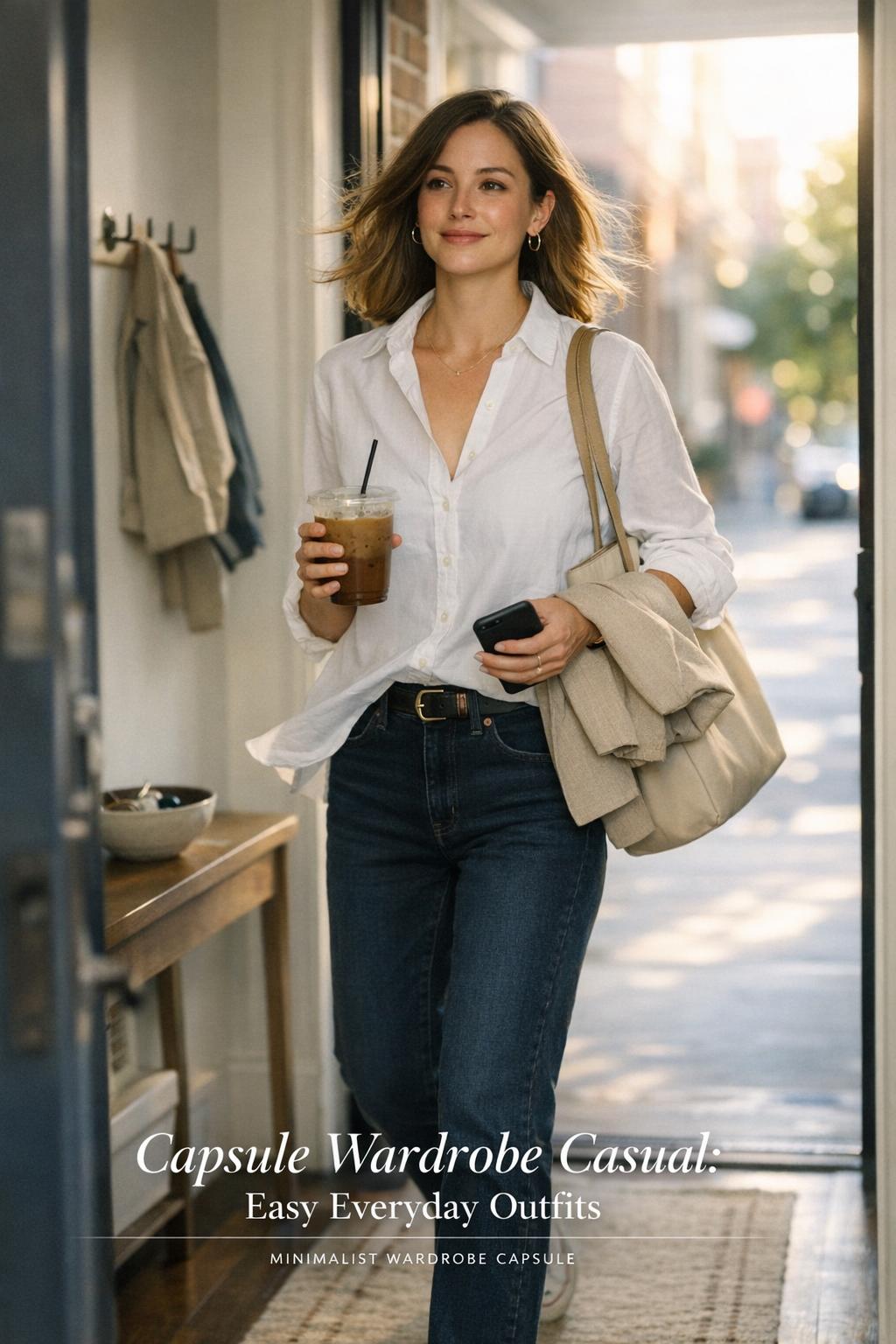
This pairing is a capsule classic because it balances structure (the shirt) and ease (the denim). It also holds up across settings: add sneakers for errands, swap to loafers for a more refined casual look, or throw on a lightweight jacket for temperature changes. If your capsule wardrobe casual plan needs one “default” outfit, this is often it.
The dress + practical shoe formula (the fastest path to looking finished)
A tank dress with sneakers or sporty sandals reads intentionally casual and is especially useful on busy days. A white dress can feel slightly more elevated with minimal effort. The reason this works is psychological as well as visual: a dress looks like a complete outfit, even when you’ve put in less time than it takes to coordinate separates.
The tee + blazer (or lightweight jacket) formula (the casual-to-polished bridge)
Layering a neutral tee under a blazer or lightweight jacket is a repeatable way to sharpen casualwear without sacrificing comfort. This is where the capsule’s versatility becomes obvious: the same tee you wear with jeans can also sit under a jacket and feel appropriate for a meeting or dinner.
Tips: When an outfit feels “off,” check whether it needs either structure (a jacket, a cleaner shoe) or ease (a tee instead of a crisp top). Most casual capsule fixes fall into one of those two adjustments.
Common mistakes that make a casual capsule feel harder than it should
Most capsule issues aren’t caused by a lack of taste—they’re caused by mismatched expectations. A casual capsule is meant to reduce decisions, not create new rules that you have to manage. If your capsule feels difficult, it usually comes down to a few predictable problems.
Buying “perfect” items that don’t fit your actual lifestyle
If your capsule includes tailored trousers you never reach for, or shoes you can’t walk in, you’ll default back to the same two outfits and feel bored. That’s why lifestyle-based capsule guidance is so practical: it forces the wardrobe to match your routine rather than a concept.
Ignoring climate and then blaming the capsule
Seasonal rotation is not optional in a functional capsule. If you try to keep a single set of pieces for every temperature shift, you’ll end up with outfits that feel uncomfortable or impractical. A capsule should make dressing easier; if you’re constantly fighting the weather, the system needs a seasonal adjustment.
Overloading on “statement” and underbuilding the basics
Graphic tees, standout dresses, and brand-forward pieces can absolutely belong in a fashion capsule. But they work best when the wardrobe basics are strong enough to support them. If you have multiple eye-catching pieces and not enough neutrals to anchor them, outfits become harder to assemble quickly—which defeats the point of a capsule wardrobe casual approach.
Shopping the categories: using brands as reference points, not rules
Many casual capsule wardrobe articles integrate shopping recommendations, often pointing to recognizable retailers and labels. Nordstrom shows up prominently in stylist-led capsule content, and brands like COS, & Other Stories, Free People, Ganni, Tory Burch, Nike, Birkenstock, Good American, FRAME, Rag & Bone, and AG appear as examples across staple categories—from denim to sandals to easy tops and dresses.
It’s useful to treat these names as shorthand for a type of item rather than a requirement. The category thinking is what transfers: pick the best jeans you’ll actually wear, the shoes that match your pace, and the dress silhouette you’ll reach for when you need a no-thought outfit. If you prefer to shop within one retailer for convenience (as many U.S. shoppers do), the capsule approach still works—your goal is cohesion and repeat wear, not collecting labels.
Where a minimalist wardrobe capsule and a fashion capsule diverge (and how to blend them)
Some people come to capsules for minimalism; others come for style clarity. A minimalist wardrobe capsule leans heavily on repetition, restrained color, and a tight edit. A fashion capsule wardrobe often leaves room for a few personality-driven pieces—like a graphic tee, a standout dress, or a specific shoe silhouette—while keeping the foundations stable.
Blending the two is usually the sweet spot for capsule wardrobe women building casual closets. Keep the core neutral and versatile (white shirt, jeans, tees, layering piece), then choose one or two items that make you feel like you’re not wearing the same outfit every day. That might be a white dress in summer, or a blazer that changes the tone of denim. The capsule remains small, but it doesn’t feel sterile.
Tips for making a casual capsule survive real life
Tips: Keep one outfit combination “ready” that you know works every time—something like a white shirt with dark wash jeans and sneakers. When mornings get rushed, that default outfit prevents the spiral of trying on three things and feeling like nothing fits.
Tips: If you’re experimenting with a new category—like switching from sneakers to loafers, or adding sporty sandals—test it on a day with a realistic schedule. A capsule only works if the pieces hold up through movement, errands, and long hours.
Tips: Treat your capsule like a living closet choreography. If you notice you’re avoiding a piece repeatedly, it’s either uncomfortable, hard to style, or mismatched to your season. Replace it with something that solves the same job more reliably.
FAQ
What does “capsule wardrobe casual” mean?
A capsule wardrobe casual approach is a curated set of everyday casualwear—like jeans, tees, easy dresses, light layers, and practical shoes—chosen to mix and match easily so you can get dressed quickly with consistent results.
How many pieces should be in a casual capsule wardrobe?
Capsule guidance commonly points to a limited range (often discussed as a few dozen pieces) but the more reliable answer is to build around your lifestyle and climate, then adjust by season so your capsule stays wearable rather than artificially small.
What are the most important wardrobe basics for a casual capsule?
The most repeated essentials across capsule guidance are versatile staples like a white shirt, dependable jeans (dark wash or lightweight), a neutral tee, a lightweight jacket or blazer, a versatile dress, and shoes you can realistically wear all day.
Can a capsule wardrobe still feel like a fashion capsule wardrobe and not boring?
Yes—keep your core pieces neutral and versatile, then add a small number of personality items such as a graphic tee, a standout dress (like a white dress), or a distinctive shoe style; the foundations keep outfits cohesive while the accents prevent sameness.
How do I adapt a capsule wardrobe for seasons and changing weather?
Use seasonal rotation: keep the same core roles in your wardrobe (tops, bottoms, layers, shoes, a dress option) but swap in warmer- or lighter-weight versions as needed, so the capsule stays practical in different temperatures.
What is “7 Easy Pieces,” and how does it relate to a casual capsule?
“7 Easy Pieces” is associated with Donna Karan and reflects the idea of modular essentials that layer and combine into multiple outfits; a casual capsule uses the same logic, just with more relaxed daily items like tees, jeans, tank dresses, and practical footwear.
Do I need to buy specific brands like Nordstrom, COS, or Rag & Bone to build a capsule?
No—those brands often appear as shopping examples in capsule content, but the transferable strategy is category-based: choose the jeans, tees, dresses, layers, and shoes you’ll actually wear, whether you shop at Nordstrom or elsewhere.
What’s a practical first step if I’m overwhelmed by capsule rules?
Start with a closet audit focused on what you already wear most, then build your first capsule draft around those repeat pieces; once you wear it for a week, you’ll quickly see which gaps to fill and which items don’t earn their place.
Leave a Reply