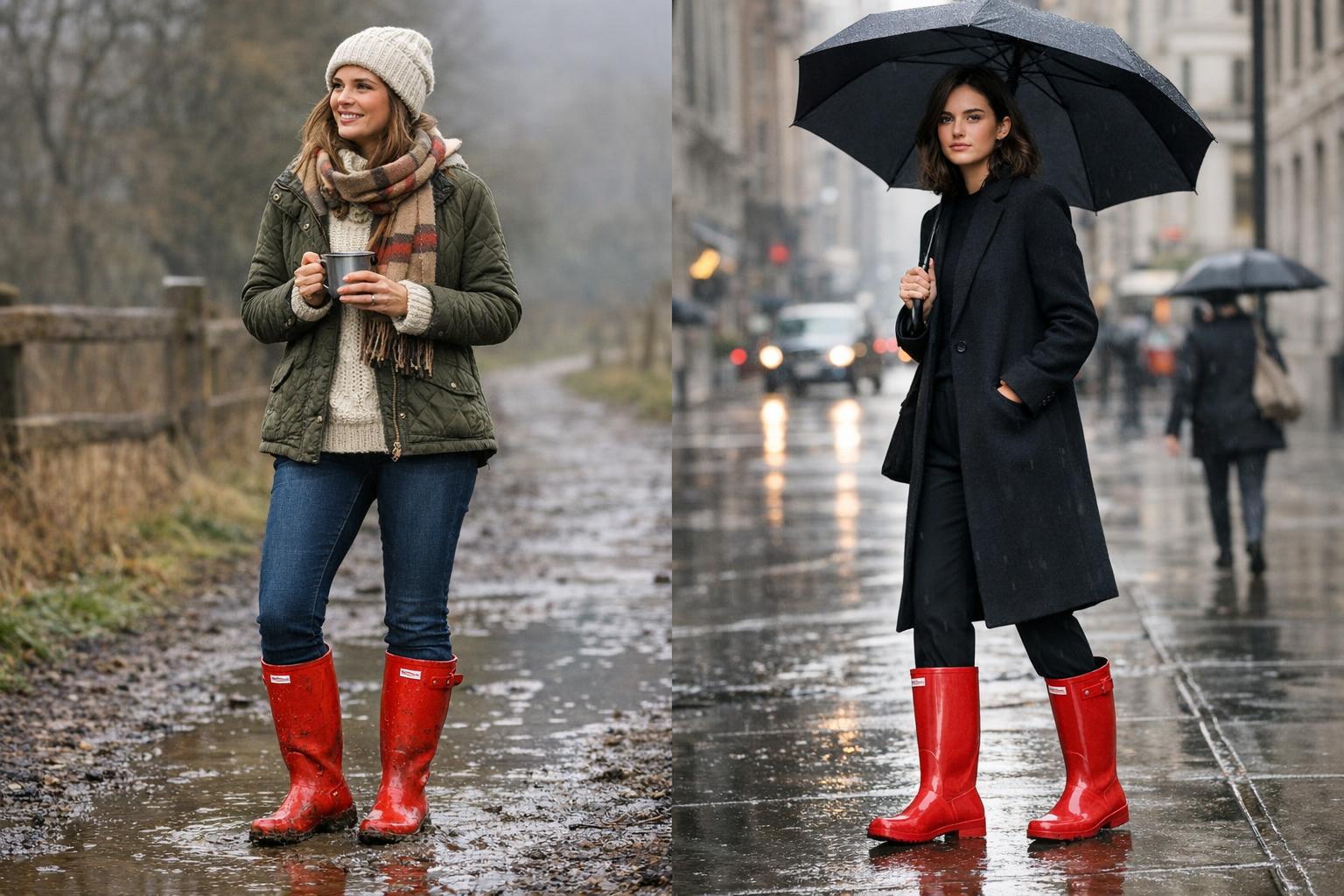
Hunter boots outfit: country heritage vs city polish (and why both feel “right” in the rain)
There’s a particular moment familiar to anyone who dresses for real weather: you’re standing by the door, the forecast looks unkind, and your outfit suddenly becomes a negotiation between practicality and identity. That’s where a hunter boots outfit earns its cultural staying power. It’s not just a functional choice—it signals a styling philosophy, and there are two distinct aesthetics that tend to orbit around it.
The first is classic country heritage: grounded, outdoorsy, and slightly utilitarian, as if you could step from a muddy path into a warm kitchen without changing a thing. The second is city polish: pared-back, intentional, and composed—rainwear reframed as a sleek, modern uniform. These two approaches are often discussed together because they share the same hero piece—hunter boots—but they read very differently once you pay attention to proportion, texture, and finish.
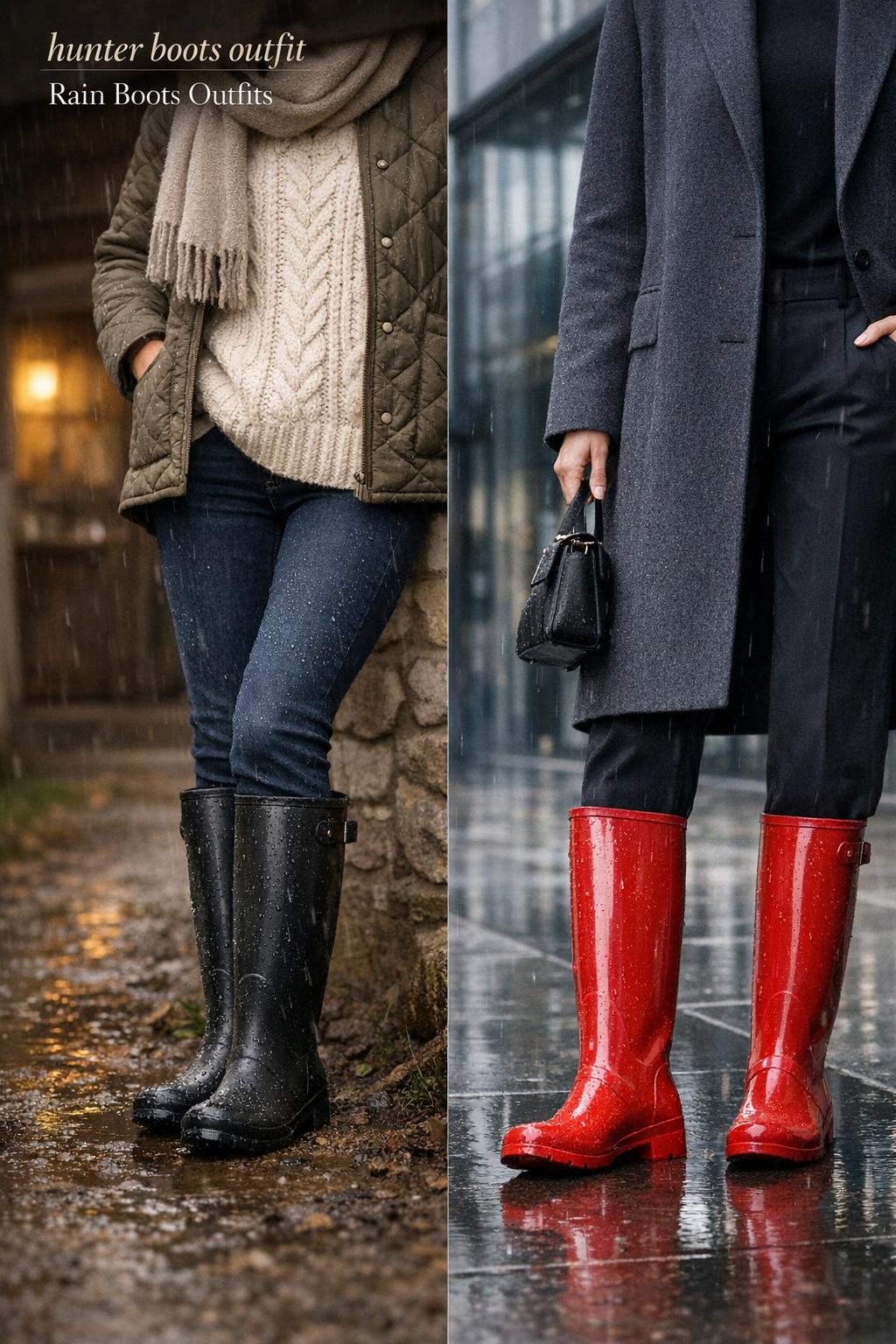
Below, you’ll learn how to distinguish the heritage look from the polished urban take, how to build rain boots outfits that feel coherent (not costume-like), and how details like outerwear structure, color temperature, and accessory restraint determine whether your outfit with hunter boots looks “weekend practical” or “weekday editorial.”
Style overview: country heritage rain dressing
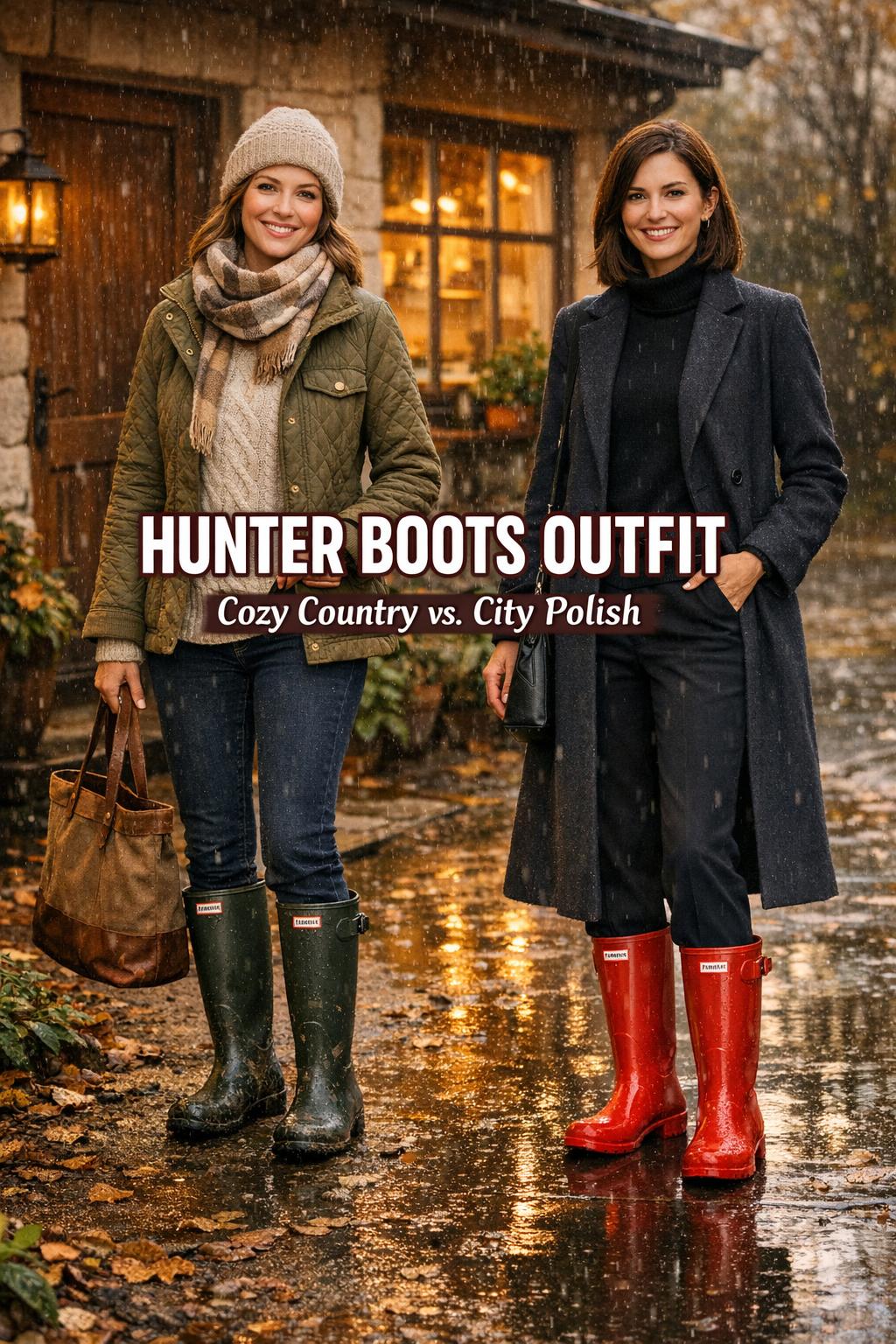
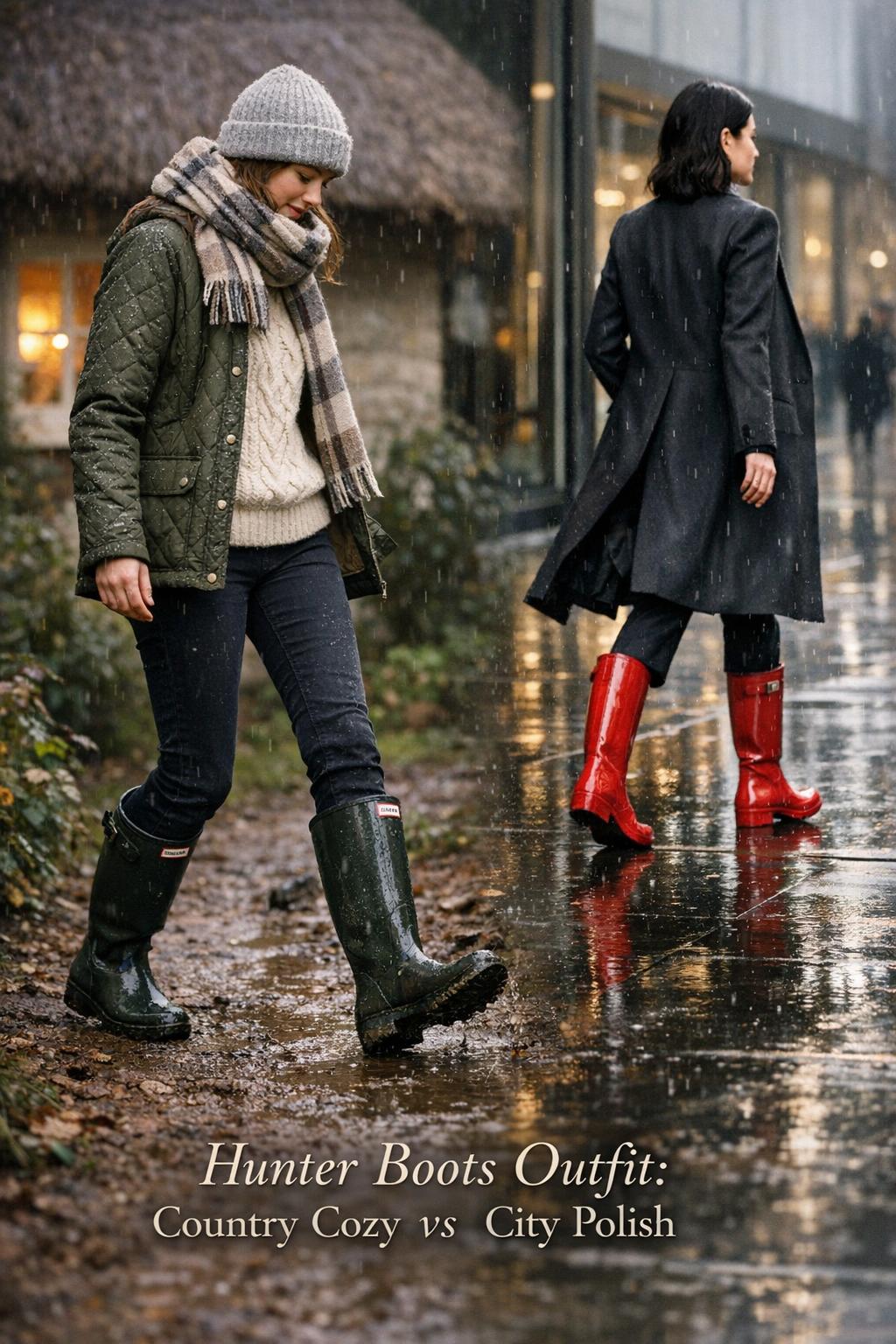
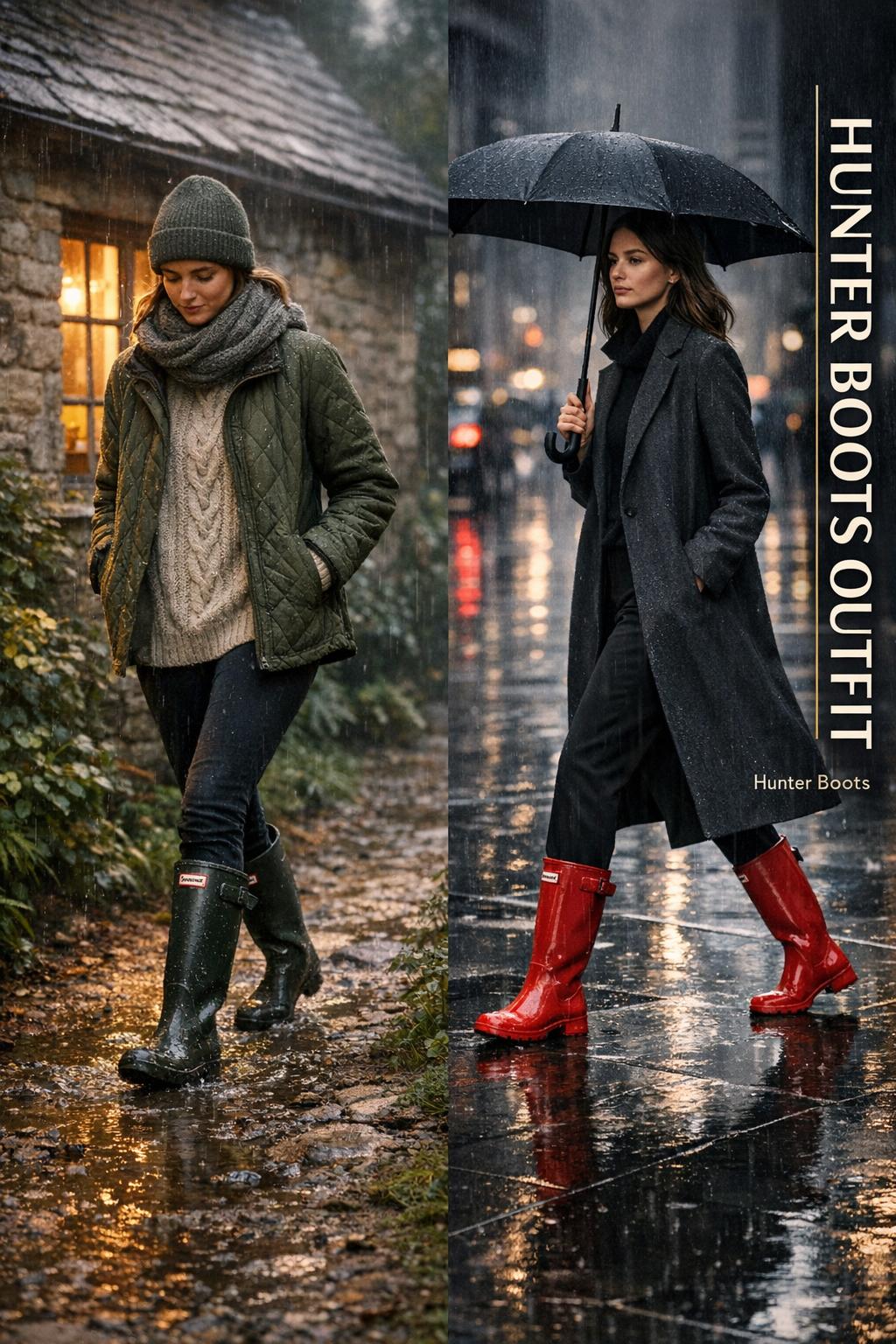
Country heritage styling is the most instinctive place hunter boots land: it prioritizes durability and ease, and it embraces the idea that clothes should tolerate weather without becoming precious. The defining characteristic is a relaxed, functional silhouette—pieces that layer comfortably, move easily, and look natural against the matte, rubber finish of hunter boots.

Your wedding has a lot of moving pieces. Your plan can still feel composed.
Zarellea organizes guests, vendors, budget, and timelines in one shared space — so you can make decisions with clarity, not stress.
Silhouettes skew practical: straight or slim jeans tucked into boots, leggings with longer tops, quilted or utility outerwear, and knit layers that feel substantial rather than delicate. Color palettes tend to be earthy and grounded—think muted neutrals and deeper shades that don’t look out of place against wet sidewalks or muddy paths. Textures are tactile and honest: knits, waxed-looking finishes, and fabrics that appear hard-wearing. The mood is warm, approachable, and quietly prepared.
Style overview: city polish rain uniform
City polish takes the same boots and reframes them as a deliberate contrast—rubber footwear offset by clean lines, controlled volume, and a more minimal palette. Here, the point isn’t to look “outdoorsy.” The point is to look composed despite the weather, as if rain is simply another lighting condition.
Silhouettes are more structured: straight-leg trousers cropped to show a clean break above the boot, longline coats that create a column, and streamlined layers that avoid bulk at the knee. Color tends to read cooler or more monochrome, with tonal dressing doing the heavy lifting. Textures are smoother and more intentional—outerwear with shape, knits with a refined hand, and accessories that feel edited rather than abundant. The mood is modern, crisp, and quietly directional.
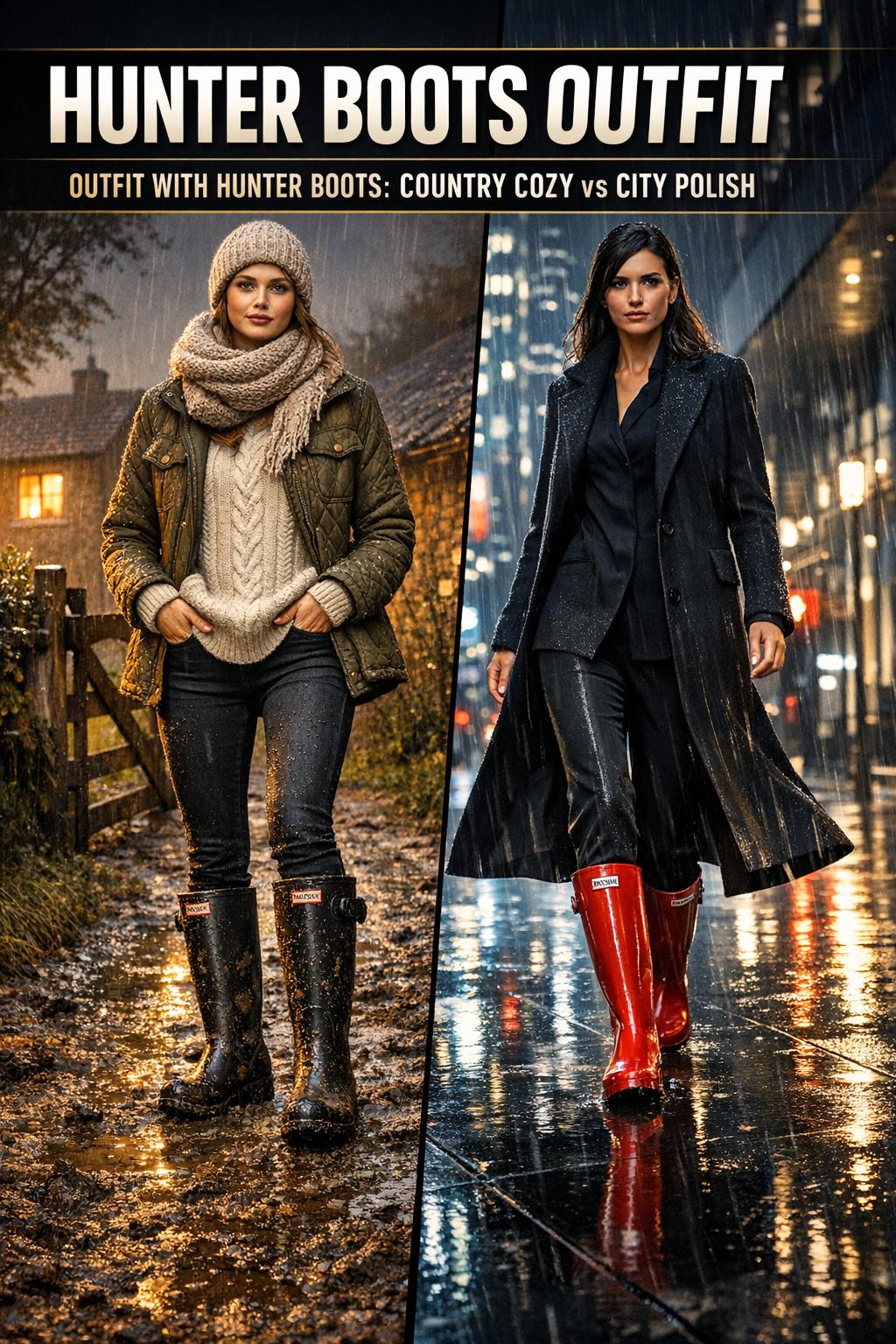
Key differences that change the entire read
Silhouette: relaxed layering vs controlled proportion
In the heritage approach, the outfit builds from comfort: a forgiving layer on top, a streamlined base (often tucked into the boot), and an overall shape that feels easy. The city approach is more architectural: it manages volume carefully so the boot feels like part of a clean, intentional line rather than a purely practical add-on. This is why the same boots outfit can look charmingly casual in one context and sharply polished in another—proportion is doing the storytelling.
Color palette: earthy depth vs tonal restraint
Heritage dressing tolerates visual warmth and contrast—darker denim against lighter knits, a practical jacket over layered textures. City polish often prefers tonal continuity: blacks, grays, navies, or other closely related shades that make the rubber boot feel like a sleek punctuation mark. Even when you introduce hunter red boots, the styling logic shifts: heritage treats red as cheerful and sporty; city polish treats it as a single statement, then quiets everything else down.
Formality: pragmatic casual vs refined everyday
Neither aesthetic is “formal” in the traditional sense—rain boots are inherently casual. But heritage reads as weekend-ready and practical, while city polish can pass for a thoughtful weekday look with the right coat shape and a more edited base. The difference isn’t about adding dressy pieces; it’s about removing visual noise and choosing sharper lines.
Styling philosophy: function-first vs function, then composition
Country heritage starts with: “Will I be warm and dry?” City polish starts with: “Will I look intentional?” Both value function, but the order matters. In practice, that changes everything from sock choice (invisible vs deliberately cozy) to whether you tuck or crop your trousers, to how much you allow your outfit to look layered.
Visual style breakdown: how each approach looks in real rain boots outfits
Layering: cozy stacks vs sleek columns
Heritage layering is openly practical: a knit, a vest-like warmth layer, then a weather-ready outer layer. You’ll see multiple textures at once, and that’s part of the charm. City polish is more about creating a single, long line—one excellent coat over a simpler base, with fewer competing textures. The result is a cleaner silhouette that photographs well and feels less “busy” in motion.
Proportions: the knee is the battleground
With tall rain boots, the knee area becomes a focal point—especially with hunter boots. Heritage styling typically commits to a tuck: slim denim or leggings disappear into the boot, leaving the top half to do the visual work. City polish often avoids the full tuck unless the rest of the outfit is extremely clean; instead it uses cropped hems, straight legs, or a deliberate break that keeps the outfit looking tailored rather than sporty.
Accessories: practical abundance vs editorial restraint
Heritage outfits welcome the extras: a warm scarf, a cozy hat, a carryall that looks ready for a long day. City polish edits accessories down to a few purposeful pieces—often choosing one hero element (a sharp coat shape, a clean bag line, or a single color story) and letting the boots function quietly. The effect is not “less effort,” but rather effort concentrated in fewer decisions.
Footwear emphasis: blending in vs making a statement
In heritage dressing, hunter boots tend to blend into the utility narrative: they are part of the uniform. In city polish, they can become a deliberate contrast—especially in a monochrome outfit where the boot’s sheen and structure stand out. This is where hunter red boots become particularly interesting: the same red that reads playful outdoors can read graphic and modern when the rest of the look is restrained.
Comparison in practice: the same scenarios, two different outfit logics
Scenario: an everyday errand run in steady rain
The heritage interpretation begins with comfort: a soft knit, a longer outer layer that can handle drizzle, and slim bottoms tucked into hunter boots so you never think about puddles. The city interpretation starts with a clean base—straight-leg pants or a streamlined leg—and a structured coat that holds its shape even when the weather doesn’t cooperate. Both are practical; one looks cozy and lived-in, the other looks deliberately composed.
Scenario: commuting and arriving somewhere heated
Heritage styling often assumes you’ll stay layered: the outfit remains warm once you’re inside, sometimes at the expense of feeling a touch heavy. City polish thinks about the “arrival moment.” It uses fewer, better layers—so you can remove a coat and still look finished. This is one of the clearest places you’ll feel the difference between rain boots outfits that are built for being outdoors all day and those designed for moving between weather and interiors.
Scenario: weekend trip with unpredictable sidewalks and park paths
Heritage is naturally at home here: it welcomes texture, casual layering, and a little ruggedness. A city-polished approach can work, but it needs careful fabric choices—pieces that won’t look overly precious once you’re navigating wet benches, damp grass edges, and the kind of terrain that makes you grateful you chose hunter boots in the first place. The styling distinction becomes less about “dressy vs casual” and more about whether the outfit is willing to show its practicality.
Where hunter red boots fit: sporty heritage or graphic city accent
Hunter red boots are often treated as a novelty, but they’re actually a useful style tool because they force clarity. Red demands a decision: do you want the boots to harmonize with the outfit’s warmth, or do you want them to act as a crisp, graphic interruption?
In the heritage lane, red feels classic and cheerful—an outdoorsy pop against practical layers. In the city lane, red is most convincing when everything else calms down: clean lines, minimal competing colors, and an outfit that looks intentional even when the weather is not. The trade-off is simple: a louder boot can make your look memorable, but it can also reduce versatility if the rest of your wardrobe is already high-contrast. If you’re building a repeatable outfit with hunter boots, consider whether you want your statement to come from color or from silhouette.
Tips: how to make a hunter boots outfit look intentional (not accidental)
The quickest way to lose the plot with rain boots is to treat them as an afterthought—pulled on at the last second with an outfit designed for different shoes. Hunter boots have visual weight and a distinct finish; they ask the rest of your outfit to meet them with either cohesion or conscious contrast.
- Decide your silhouette first. If you’re tucking into tall boots, keep the top half relaxed but not shapeless; if you’re going for a city line, keep the leg clean and manage volume with a structured coat.
- Keep the knee area clean. Bunched fabric at the shaft looks fussy. Choose hems and fits that either tuck smoothly or break intentionally above the boot.
- Use texture strategically. Rubber reads sleek; pairing it with overly delicate fabrics can feel mismatched. Balance it with knits, sturdy cottons, or outerwear that has body.
- Let one element lead. If the boots are the bold piece (especially hunter red boots), quiet the rest. If the coat is the hero, keep the boots classic and understated.
A small but meaningful real-life consideration: rain often means walking faster, stepping wider, and navigating slick surfaces. An outfit that looks beautiful standing still can become irritating in motion if the hem catches or the layers shift. Before you commit to a boots outfit for a long day, take a minute to move around—sit, climb stairs, and check that your trousers don’t ride up in a way that leaves you constantly adjusting.
Common styling mistakes that make rain boots outfits feel heavy
Too much bulk at once
Hunter boots already add structure and volume from the calf down. If you add an oversized coat, a thick scarf, and a bulky knit all at once, the outfit can skew visually dense. Heritage style can handle warmth, but it still benefits from one streamlined area—usually the leg. City polish is even less forgiving: it wants one strong shape, not competing puffiness.
Unclear hem strategy
Half-tucked hems and fabric bunching around the shaft are what make an outfit with hunter boots feel accidental. Commit to a clean tuck with slim pieces, or commit to a cropped/straight line that sits above the boot. The “in-between” is what reads messy.
Competing statements
If you’re wearing hunter red boots, keep your palette focused. If your coat is bold in shape, keep the rest calm. The most elegant rain boots outfits usually have one statement—color, silhouette, or texture—and everything else supports it.
When to choose heritage vs city polish (and how to blend them)
Choose country heritage when the day is outdoors-forward
If you’ll be outside for long stretches—walking, standing, moving between damp environments—heritage styling shines because it’s built around comfort and tolerance. It also suits weekends and casual plans where a relaxed mood feels appropriate. The limitation is that it can feel too casual for certain workplaces or meetings, especially if the layers become overly cozy.
Choose city polish when you need a composed “arrival”
If your day involves commuting, meetings, or simply wanting to look sharp despite the rain, the polished approach is more reliable. It photographs well, reads intentional, and transitions better once you’re indoors. The limitation is that it can feel slightly rigid if your day turns more active than expected—sleek lines are wonderful, but they don’t always love muddy spontaneity.
Blend the two for the most wearable boots outfit
The most modern hunter boots outfit often lives between the extremes: a heritage-leaning base (comfortable layers, weather readiness) with a city-minded edit (cleaner palette, fewer competing textures). A useful guideline is to borrow one element from each: take heritage practicality in fabric and layering, then apply city restraint in color and proportion. The result feels lived-in but not sloppy—prepared but still refined.
Context matters: styling hunter boots for U.S. weather realities
Rain dressing in the U.S. is rarely consistent—one day calls for puddle-proof footwear, the next feels like a damp chill, and another brings sudden warmth that makes heavy layers impractical. That variability is exactly why hunter boots remain a staple: they offer a stable foundation when the rest of the outfit must adapt.
In cooler rain, the heritage approach feels natural because layering adds comfort. In warmer rain, city polish becomes especially useful: fewer layers, cleaner lines, and a base that doesn’t feel too insulated. If you’re building repeatable rain boots outfits, consider your local pattern—do you need warmth, or do you need breathability paired with protection? Let that answer determine whether you lean into cozy texture or streamlined structure.
The subtle art of repetition: building a small rotation of outfits with hunter boots
There’s a reason certain boots outfit formulas endure: they are easy to repeat without feeling repetitive. Hunter boots become most valuable when they anchor a small wardrobe logic you can return to whenever weather disrupts your plans.
- The heritage formula: slim base + tactile knit + practical outer layer + hunter boots, with optional cozy accessories depending on temperature.
- The city formula: streamlined base + structured outer layer + minimal accessories + hunter boots, with a tighter palette for a cleaner read.
- The statement formula (with hunter red boots): quiet, tonal outfit + one intentional accent (the boots) + simple lines to keep the color looking modern.
The editorial point is not to own more; it’s to decide more clearly. When you know which style lane you’re dressing in, the choices become quicker—and your outfit with hunter boots stops feeling like a compromise and starts feeling like a signature.
Conclusion: the difference is not the boot—it’s the styling intention
Country heritage and city polish both make sense with hunter boots because both respect function. The distinction comes down to what you want your outfit to communicate: heritage leans into warmth, texture, and relaxed practicality; city polish leans into line, restraint, and a composed silhouette.
Once you train your eye on proportion at the knee, palette discipline, and the role of outerwear structure, you can identify each style instantly—and blend them when real life demands both comfort and refinement. The best rain boots outfits are not complicated; they’re simply decisive.
FAQ
What should I wear with hunter boots for a casual everyday look?
For a casual hunter boots outfit, keep the base streamlined (so the boot shaft looks clean) and let the top half carry the comfort—think a cozy layer and a practical outer layer that matches the weather, with a palette that feels relaxed rather than overly styled.
How do I make an outfit with hunter boots look more polished?
Shift toward city polish by simplifying the color palette, choosing cleaner lines through the leg, and relying on a structured outer layer to create a composed silhouette; the boots should look integrated, not like a last-minute swap for rain.
Are hunter red boots hard to style?
They’re easiest to style when you treat them as the single statement in the look—keep the rest of the outfit calm and intentional, with minimal competing colors, so the red reads graphic and modern rather than busy.
Should jeans go over or inside hunter boots?
Inside tends to look cleaner with tall rain boots because it avoids bunching at the shaft; if you prefer not to tuck, a more polished approach is to use a straight or cropped hem that breaks intentionally above the boot rather than sitting awkwardly on it.
How do I avoid looking bulky in rain boots outfits?
Balance the visual weight of the boots by keeping one area streamlined—often the leg—and limiting competing volume in outerwear and accessories; aim for one strong shape at a time instead of multiple bulky layers.
Can I wear hunter boots for commuting and workdays?
Yes, especially if you choose a city-polished styling approach that prioritizes clean proportions and a refined outer layer, so you still look finished when you remove your coat and step into an indoor setting.
What’s the easiest way to build a repeatable boots outfit for rainy weather?
Create a simple formula you can repeat—either a heritage formula (streamlined base plus cozy layers) or a city formula (tonal base plus structured outerwear)—and stick to a consistent proportion strategy around the boot shaft.
How can I tell if my hunter boots outfit looks “heritage” or “city”?
Heritage looks more textured and layered with an outdoorsy ease, while city looks more tonal and controlled with cleaner lines; the difference usually shows up at the knee (tucked and cozy versus cropped/straight and streamlined) and in how edited the accessories feel.
Leave a Reply