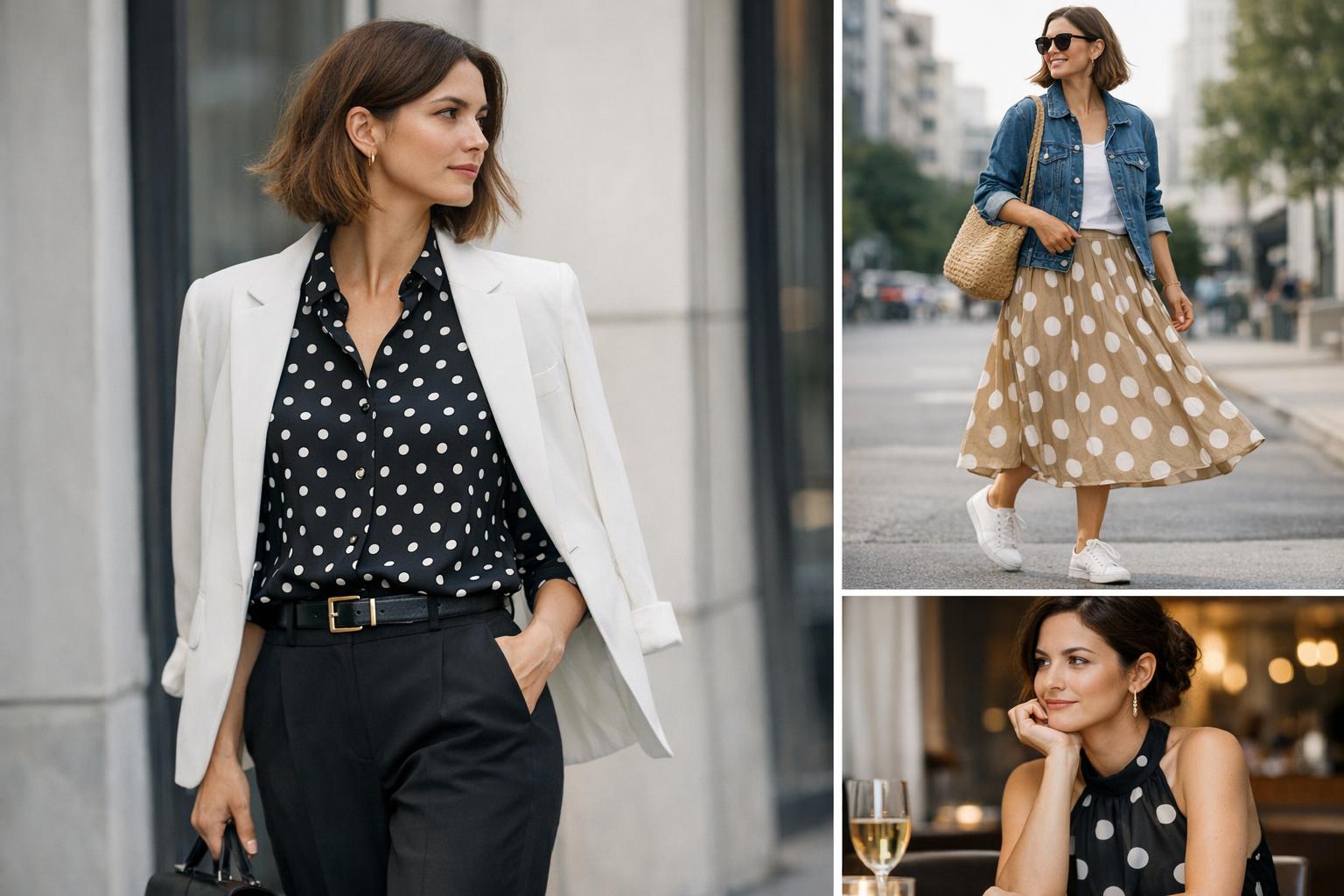
Polka dots as a modern classic: the aesthetic behind a polka dot outfit
There’s a particular kind of confidence in a polka dot outfit: not loud, not timid—simply assured. Polka dots sit in that rare space where a print can feel playful and still read polished. The effect is graphic yet soft, nostalgic yet current, and it’s precisely that tension that keeps the motif circulating through everyday wardrobes and more elevated settings.
Think of the mood as “refined spontaneity.” A dot print brings movement to a silhouette, especially in fluid fabrics like viscose, satin, and silk, yet it can look quietly tailored when anchored by structure—an office-appropriate blazer, a clean shoe, a belt that defines the waist. In other words, dots don’t need to be styled loudly to be seen; they simply need to be composed with intention.
This aesthetic shows up where real life happens: casual Saturdays, workdays that run into dinner, special events that call for something memorable without being costume-y. It’s popular because it solves a modern style problem—how to look styled without looking overstyled—while offering endless variations in scale, color, and fabric behavior.
Before the outfits: dot scale, contrast, and fabric behavior
Polka dots aren’t a single look; they’re a family of visual decisions. The difference between classic and modern polka dots often comes down to scale and spacing. Smaller, evenly spaced dots tend to read timeless and “quiet,” while larger dots or irregular spacing feels more graphic—closer to a modern statement. This is the first styling choice, because it determines whether the print blends into your outfit or becomes the focal point.
Your wedding has a lot of moving pieces. Your plan can still feel composed.
Zarellea organizes guests, vendors, budget, and timelines in one shared space — so you can make decisions with clarity, not stress.
Classic vs. modern polka dots (and why it matters)
Classic polka dots—often high-contrast, evenly repeated—pair naturally with clean silhouettes. They’re the dots you can wear to the office without feeling themed. Modern dots can be oversized, tonal (low-contrast), or placed in ways that change the rhythm of a garment; they shine in simpler styling, because the print itself is the architecture.
If you’re collecting polka dots outfit ideas, start by asking what you want the dot to do: soften a tailored outfit, sharpen a casual look, or add dimension to eveningwear. Once you decide that, the rest—fabric, shoe, accessory—becomes far easier.
Fabrics that flatter the print: cotton, viscose, satin, silk
Fabric changes how dots “sit” on the body. Cotton tends to hold shape, keeping the dot pattern crisp; it’s excellent when you want a structured effect or a clean daytime silhouette. Viscose drapes and moves, so dots feel softer and more romantic, especially in skirts and dresses. Satin and silk add light reflection—dots become subtly dimensional, and the outfit reads instantly more evening-leaning, even if the silhouette is minimal.
A practical note from real wardrobes: dots look most intentional when the fabric behavior matches the setting. A silk or satin polka dot blouse can be a perfect dinner piece, but it may feel fussy for a long, casual day. Cotton and viscose often win for comfort and ease, especially when you’ll be moving through different temperatures and spaces.
Look: relaxed minimal layers (the understated dots outfit)
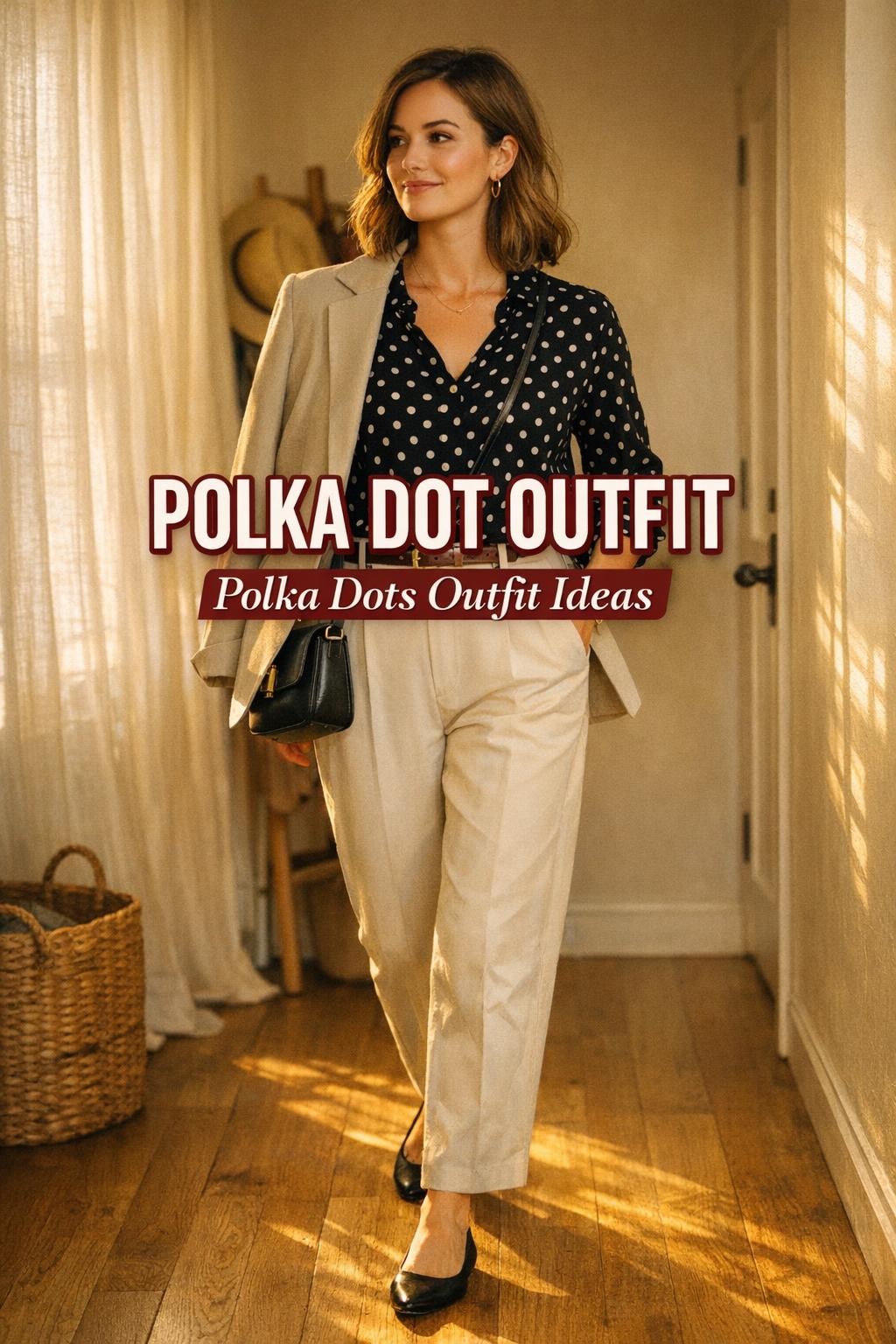
This look is for the day you want to feel composed without feeling “done.” The silhouette is relaxed but not sloppy—clean lines, soft movement, and one controlled point of visual interest: the dots. The overall vibe is modern minimalism with a gentle twist, the kind of outfit that looks quietly expensive because nothing is trying too hard.
Start with a polka dot blouse in viscose for drape—small dots keep it refined. Pair it with tailored, neutral bottoms to ground the print: think a straight-leg trouser or a streamlined skirt. Add a light layer—an unstructured blazer works beautifully here because it introduces shape without fighting the softness of the fabric. Keep the palette restrained: neutrals with either black-and-white dots or tonal dots that whisper rather than shout.
- Key garments: viscose polka dot blouse, straight-leg trousers or a clean skirt, unstructured blazer
- Footwear: sleek flats or simple low-heel shoes
- Accessories: a belt to define the waist, a minimal handbag
Why it works: the dots provide personality while the rest of the outfit stays architecturally calm. This is a dependable formula when you want polka dots outfit ideas that can flex from daytime commitments to an evening plan—swap the shoe, add a slightly sharper belt, and the mood shifts immediately.
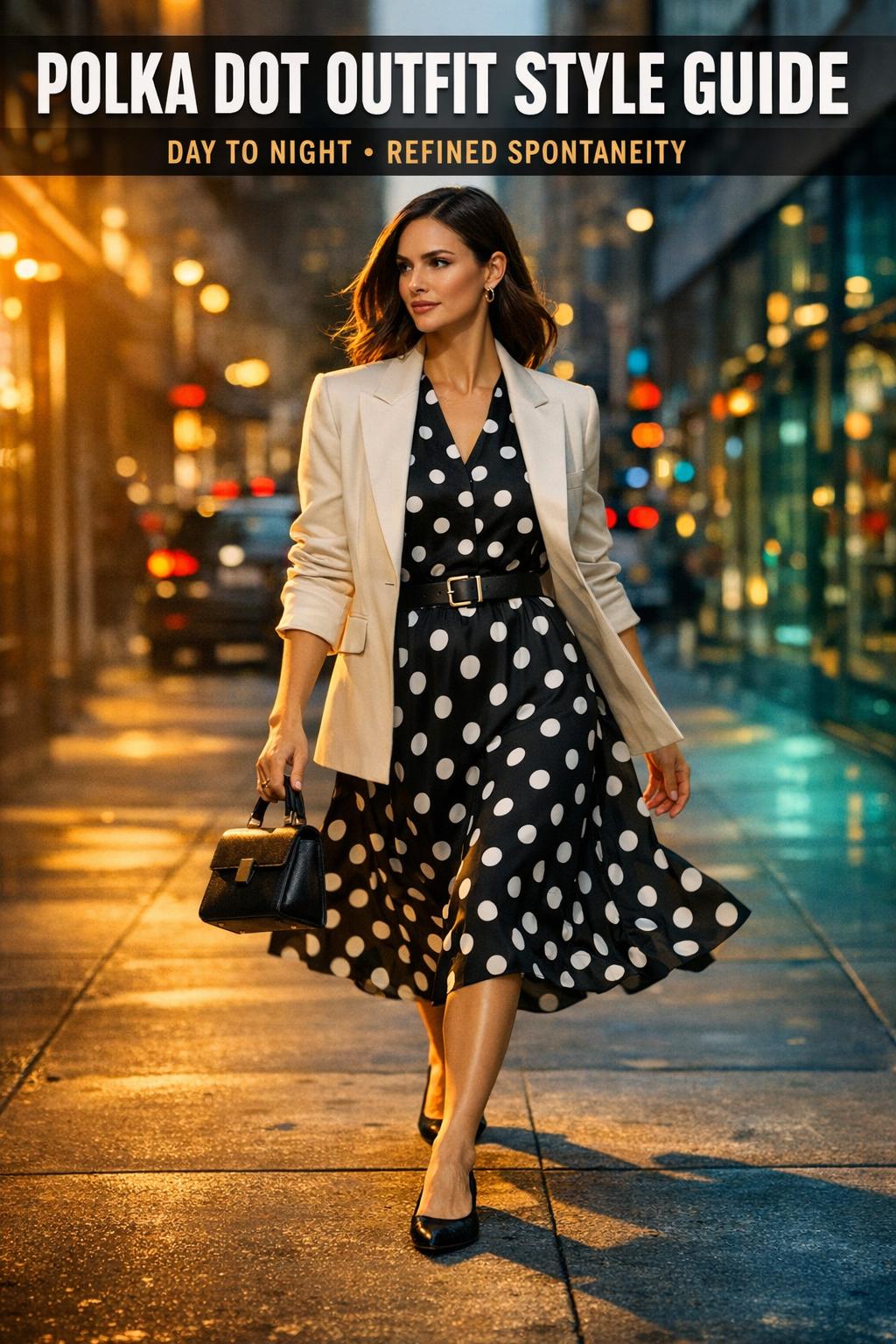
Look: office-appropriate polish (posh outfits classy, with dots)
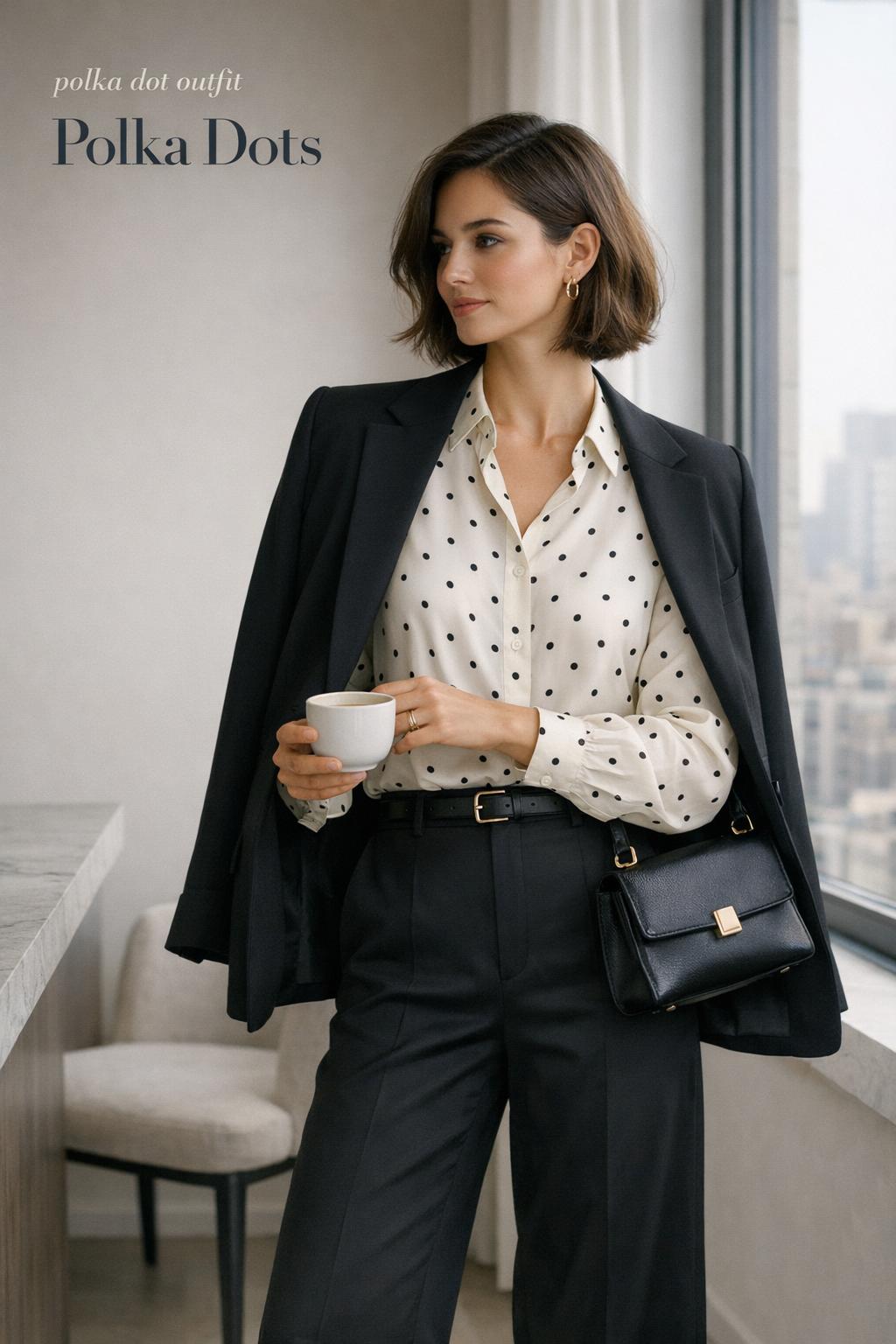
There’s a particular elegance to dots in a work setting when they’re treated like a neutral. This look is built around tailored structure and controlled contrast: a clean jacket line, a considered hem, and dots that behave like a refined texture rather than a novelty. The aesthetic is “posh outfits classy” in the most wearable sense—professional, calm, and unmistakably styled.
Choose a polka dot blouse in silk if your office leans formal, or in a high-quality cotton if you want more structure and less sheen. The key is proportion: a blouse with a tidy collar or a simple neckline is easier to layer under a blazer. Keep the blazer sharp—this is where the outfit earns its authority. Pair with a pencil skirt or tailored trousers, and use a belt to create a clear waistline if the blouse is fluid. Color pairings are strongest when they’re simple: classic black-and-white polka dots with neutral tailoring, or subtle tonal dots with a monochrome suit.
Styling insight: dots at the office are most convincing when the rest of the look is restrained. If you add too many “extras”—a bold shoe, a loud bag, high-shine jewelry—the print can feel busy. Let the dot be the detail; let tailoring be the message.
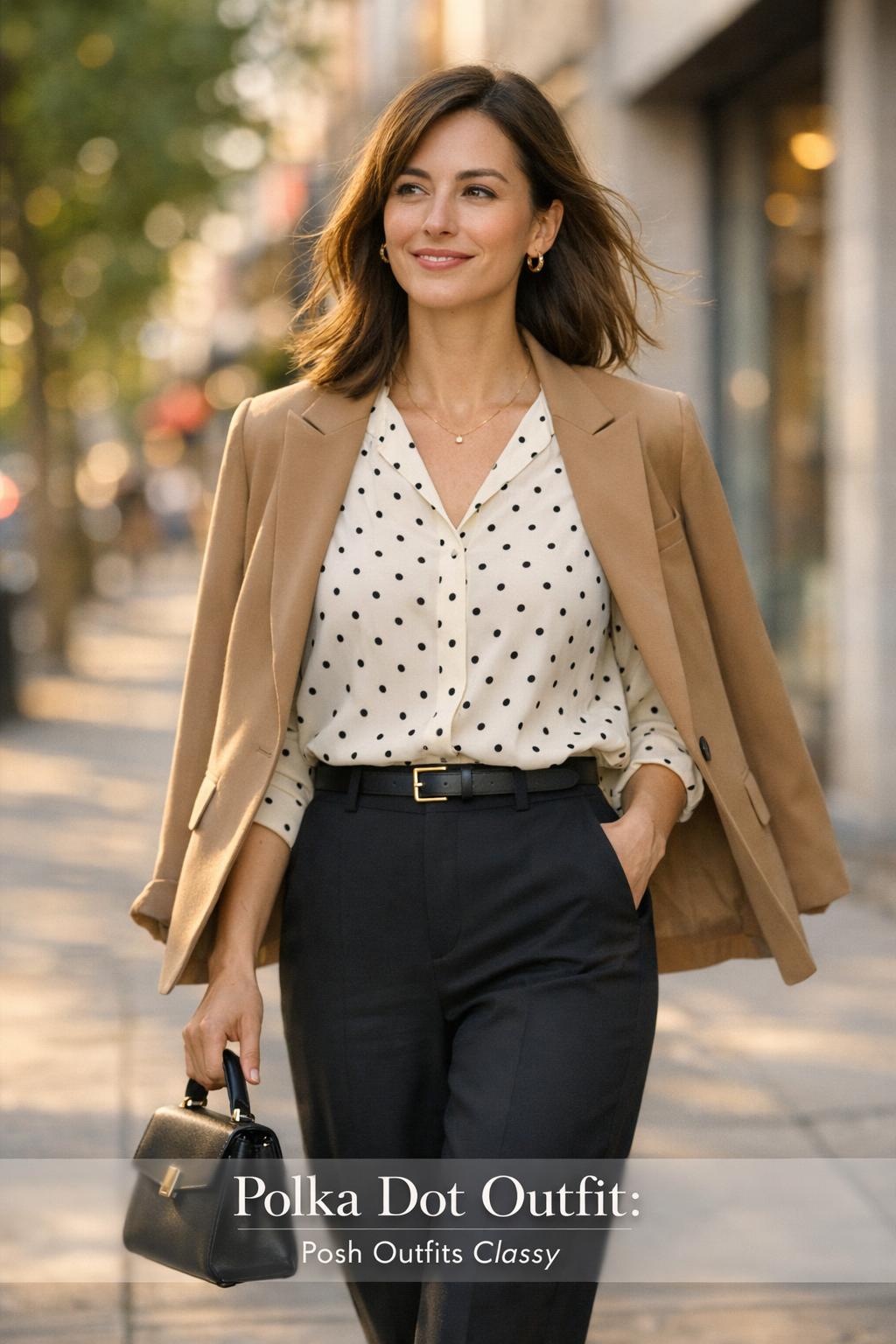
Style tip: the three-point rule for dots in real life
When a dots outfit feels “too much,” it’s usually because the eye has nowhere to rest. A practical way to edit your look is the three-point rule: keep only three visual focal points—your polka dots, one structural element (like a blazer or belt), and one accessory (shoes or bag). Everything else should be quiet. This small discipline makes polka dots look intentional in photos, in meetings, and under mixed lighting.
Look: soft weekend aesthetic (polka dots, but effortless)
This interpretation leans into ease: softer silhouettes, breathable fabrics, and a palette that feels gentle rather than high-contrast. The mood is relaxed and slightly romantic, perfect for weekends when you want an outfit that moves with you—coffee, errands, a late lunch—without losing its charm.
A polka dot dress in cotton or viscose is the anchor here. Keep the dots smaller if you want it to feel timeless, or choose slightly larger dots if you want a more modern graphic mood. The rest is about quiet support: a belt can give shape without turning the dress into a “look,” and shoes should prioritize comfort with a clean finish. Keep accessories light—one handbag, one considered detail—so the dress remains the story.
- Key garments: cotton or viscose polka dot dress, optional belt
- Footwear: flats or low-heel shoes that can handle a full day
- Accessories: a simple handbag, minimal jewelry
Why it works: the dress carries the print in one continuous line, which is inherently flattering and easy. You don’t have to “build” the outfit—just refine it. It’s also one of the most reliable polka dots outfit ideas when you want to feel feminine without leaning into anything overly sweet.
Look: evening dots in satin and silk (special events without the costume)
For evening or special events, polka dots can look surprisingly sophisticated—provided the fabric does the heavy lifting. The silhouette should feel clean and deliberate, with a subtle glow from satin or silk that makes the dots appear almost dimensional. The overall effect is confident and modern: a print you recognize, styled in a way that feels grown-up.
Choose a satin or silk polka dot skirt paired with a minimalist top, or a silk polka dot dress with a neckline that doesn’t compete with the print. Keep color pairings sleek: neutrals are dependable, while primary colors can work when used as a controlled accent rather than an all-over competing statement. A tailored layer—think a structured blazer—adds warmth and sharpness for venues with unpredictable temperature.
Styling insight: in evening light, high-contrast dots can photograph stronger than you expect. If you’re attending an event where you’ll be under flash photography or bright indoor lighting, tonal dots or smaller dots can feel more elegant and less visually aggressive.
Look: street-style precision (neutral foundations, graphic dots)
This is where dots turn graphic and architectural. The silhouette plays with proportion—something structured paired with something relaxed—so the print feels modern rather than retro. The mood nods to European street style sensibilities associated with fashion capitals like Paris, Milan, and Copenhagen: clean, considered, and quietly expressive.
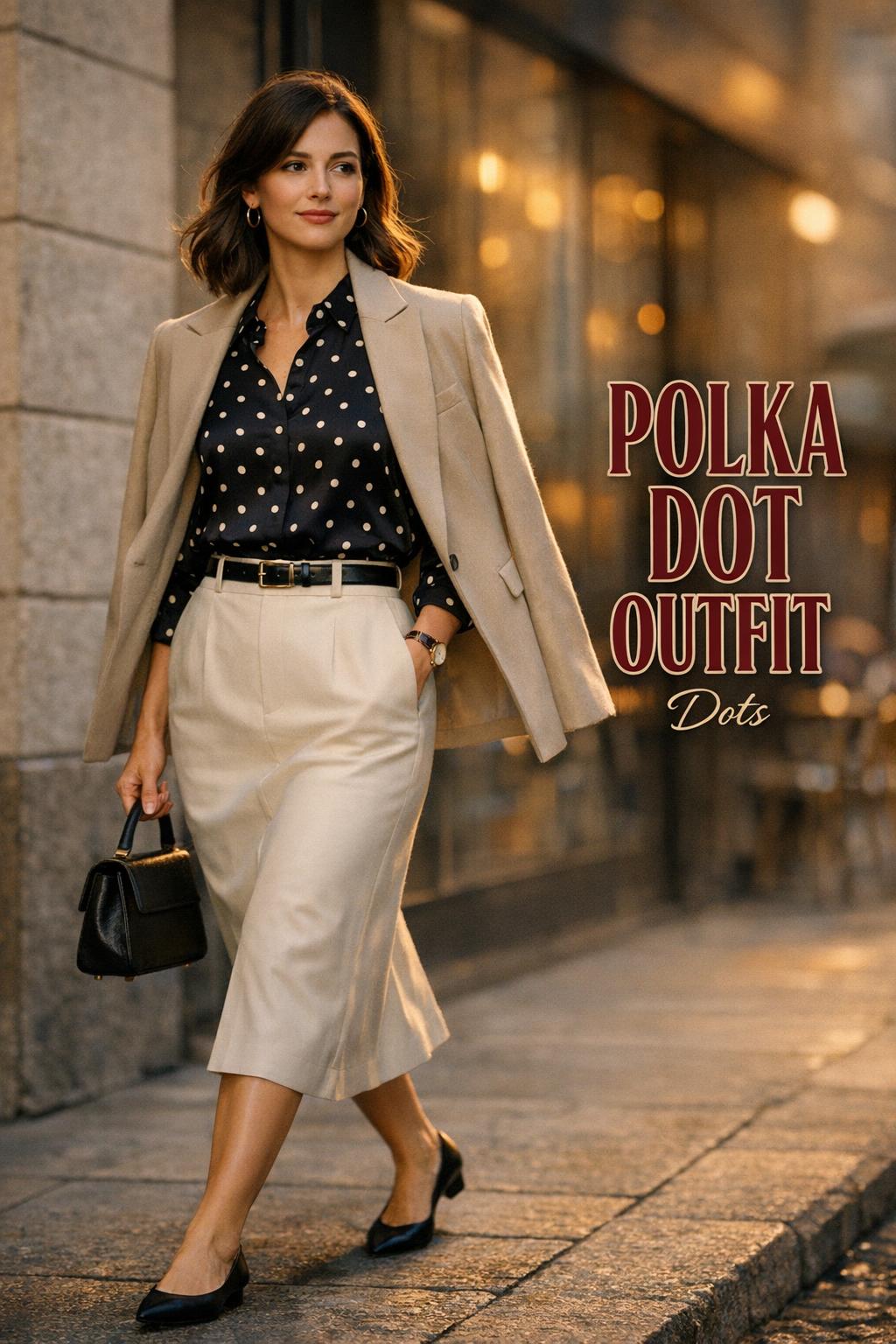
Build the look with a neutral foundation: a sharply tailored trouser or a streamlined skirt. Add a polka dot top that reads bold in shape—perhaps a slightly boxy blouse or a clean, tucked-in shirt. The key is balance: if the dot is high-contrast, keep the rest of the palette calm. Accessories should be minimal but intentional—belt, handbag, and shoes that echo the outfit’s structure.
Why it works: the outfit treats dots as a graphic element, not a romantic one. That single decision shifts the entire identity of the print. It’s an excellent option when you want a dots outfit that feels contemporary and city-ready without relying on heavy layering or excessive detail.
Designer and brand spotlight: how “brand energy” changes a polka dot outfit
Even when you’re not shopping with a label in mind, it helps to understand “brand energy”—the way designers and fashion houses communicate a print. Polka dots appear across both historical and contemporary designers, and the styling cues often remain consistent: classic dots aligned with clean tailoring, modern dots paired with pared-back styling so the print can feel intentional rather than busy.
When brands release polka dot collections “this season,” they typically differentiate through fabric and cut rather than reinventing the dot itself. That’s useful for your wardrobe thinking: instead of chasing novelty, look for the version of dots that suits your daily life. Cotton for crisp daytime structure, viscose for movement, satin and silk for evening sheen—each choice changes the tone more than any trend-driven detail.
How to recreate the aesthetic without overthinking it
A convincing polka dot outfit usually comes down to two decisions: what role the dots will play (detail vs. statement) and what role your tailoring will play (soft vs. structured). Once those are set, you can build outfits almost automatically—dress plus belt, blouse plus blazer, skirt plus minimalist top—without drifting into “random outfit” territory.
- Pick one hero piece: a polka dot dress, blouse, or skirt—avoid stacking multiple dot items unless you’re intentionally styling a statement.
- Match fabric to your day: cotton and viscose for long wear; satin and silk when the setting calls for polish.
- Choose a color strategy: neutrals for timeless ease; primary colors as controlled accents.
- Use one structural anchor: a blazer or belt to add clarity to the silhouette.
One real-life consideration: movement matters. If you’ll be sitting for long periods, commuting, or walking between venues, viscose tends to behave gracefully and resist looking overly rigid. For long office days, a structured layer can keep a dot blouse looking crisp through meetings and temperature shifts.
Common styling mistakes with dots (and easy corrections)
Polka dots are forgiving, but they’re also precise—because the pattern is repetitive, the eye notices when the outfit lacks a clear plan. The most common issue is visual competition: too many focal points battling the dots. Another is mismatched formality—pairing a glossy satin dot piece with overly casual styling can look accidental rather than relaxed.
- Too many statements at once: If the dots are high-contrast, simplify accessories and keep the silhouette clean.
- Unclear proportions: Add a belt or a tailored blazer to define shape when the fabric is fluid.
- Wrong fabric for the occasion: Save silk and satin for evening or polished settings; rely on cotton and viscose for everyday ease.
- Color chaos: Let neutrals do the work, or keep primary colors to one accent element.
The correction is nearly always editorial: remove one element, add one structural line, and commit to a single mood. Dots don’t require more styling—they require cleaner styling.
Where a polka dot outfit fits best: from casual Saturdays to special events
Part of the appeal of polka dots is their range. A dot blouse under a blazer reads office-appropriate without feeling severe. A cotton dot dress feels easy on the weekend. A satin or silk dot piece can carry you into evening without needing heavy embellishment. This versatility is why polka dots remain a wardrobe staple: the print adapts as your day shifts.
If you’re dressing for a specific setting, let the occasion dictate your “dot intensity.” For professional environments, smaller dots and lower shine keep the look refined. For special events, you can move into silk or satin and allow the dots to become more visible—still balanced by a clean silhouette and restrained accessories.
Care and longevity: keeping polka dots crisp and intentional
Dots draw attention to the overall finish of a garment—wrinkles, shine, and stretching can be more visible on a patterned surface than on a solid. In practice, caring for polka dot pieces is less about complicated rules and more about respecting fabric. Cotton benefits from thoughtful pressing to keep the pattern looking sharp. Viscose rewards gentle handling because its drape is part of the aesthetic. Satin and silk look best when kept smooth and protected from unnecessary friction, especially in areas where a handbag or belt might rub.
A useful habit: when you plan your outfit, consider the friction points. If you’re wearing a silk polka dot blouse with a belt, choose a belt that sits securely and doesn’t slide. If you’ll be carrying a handbag on your shoulder all night, be mindful of how it interacts with satin. Small decisions like these keep dots looking polished rather than worn-in too quickly.
Shopping guide, edited: what to look for when you’re choosing dots
If you’re shopping—whether budget-friendly options or premium/designer picks—the smartest approach is to shop for outcomes, not hype. Dots are recurring; you don’t need a loud “new” dot. You need the right cut, the right fabric, and a dot scale you’ll enjoy wearing repeatedly. That’s what makes a piece feel timeless.
- For a blouse: look for a neckline that layers easily under a blazer and a fabric that suits your day (cotton/viscose for ease, silk for polish).
- For a skirt: prioritize movement and lining; satin and silk look elevated, but viscose can be more forgiving for long wear.
- For a dress: consider whether you want a belt-friendly waist or a more fluid silhouette, and choose dot scale accordingly.
- For versatility: neutrals and classic dot scales are easiest to wear across occasions.
Retailers will vary, and collections change, but the evaluation stays the same: fabric behavior, fit, and how easily the piece integrates with a blazer, belt, shoes, and handbag you already own. That’s the difference between buying a “dots outfit” and building a wardrobe option you’ll reach for.
Real-world styling scenarios: small shifts that change the whole mood
One reason polka dots endure is that they respond well to subtle edits. Imagine a standard workday: a polka dot blouse in silk under a blazer, tailored trousers, and simple shoes. If plans extend into dinner, you don’t need a second outfit—swap the shoes for a more evening-leaning pair, remove the blazer, and let the blouse become the statement. If your day is casual, keep the blouse but move to a softer foundation—viscose skirt, minimal belt, relaxed accessories.
These are the kinds of decisions stylists make instinctively: they don’t rebuild from scratch, they recalibrate proportion, shine, and contrast. Dots respond beautifully to that approach because the print already provides interest. Your job is simply to keep the rest of the story coherent.
A final note on confidence: letting dots feel like you
The most successful polka dot outfit is the one that reads like a signature rather than a costume. Dots can be minimal, graphic, romantic, or sharply professional—and the difference is rarely the print itself. It’s fabric choice, silhouette clarity, and a restrained approach to accessories. Start with one hero dot piece, anchor it with structure when needed, and let the mood—casual, office-appropriate, evening—decide the finish.
FAQ
What makes a polka dot outfit look modern instead of retro?
A modern polka dot outfit usually relies on cleaner silhouettes, restrained accessories, and intentional contrast. Choosing tonal dots or pairing high-contrast dots with tailored structure—like a blazer and streamlined trousers—helps the print read graphic and current rather than themed.
How do I style polka dots for the office without looking too busy?
Keep the dots as the primary detail and make everything else quiet: a silk or cotton polka dot blouse under a structured blazer, paired with tailored trousers or a pencil skirt. Stick to neutrals or controlled color pairings, and limit accessories to one focal point, such as a belt or handbag.
Which fabrics work best for polka dots in everyday wear?
Cotton and viscose are the easiest for daily wear because cotton holds a crisp shape and viscose drapes comfortably with natural movement. Satin and silk can look more elevated, but they often feel better suited to polished settings or evenings due to shine and sensitivity to friction.
How should I choose between small dots and large dots?
Small dots tend to read timeless and refined, especially for workwear and versatile outfits, while large dots feel bolder and more graphic. If you want the print to be subtle, go smaller; if you want it to be the statement, go larger and keep the rest of the outfit minimal.
Can I wear polka dots to a special event?
Yes—polka dots can look sophisticated for special events when the fabric and silhouette are elevated. Satin or silk pieces, paired with clean lines and restrained accessories, typically read more event-appropriate than casual cotton styling.
What color pairings look best with polka dots?
Neutrals are the most reliable because they let the print feel intentional and wearable across occasions. Primary colors can work as accents—through a shoe, belt, or handbag—when the rest of the outfit stays controlled and the dots remain the main visual interest.
How do I accessorize a dots outfit without overdoing it?
Use an editing mindset: choose one structural accessory (like a belt) and one finishing piece (like shoes or a handbag), then keep the rest minimal. This keeps the dots from competing with multiple statement elements and helps the outfit feel polished.
How do I care for polka dot garments so they stay crisp?
Care depends on fabric: cotton benefits from careful pressing to keep the pattern sharp, viscose should be handled gently to preserve drape, and satin or silk look best when kept smooth and protected from friction. Planning around friction points—like belts and shoulder bags—also helps maintain a polished finish.
Leave a Reply