Quiet luxury outfits, explained through real life: the Monday-to-Saturday wardrobe problem
You know the moment: it’s Monday morning, you want to look pulled together for work, but you also need pieces that can stretch into dinners, travel days, and last-minute events without screaming for attention. That’s where quiet luxury outfits earn their reputation. The aesthetic isn’t about flashy logos or trend-chasing; it’s about refined tailoring, premium-looking fabrics (think silk, satin, wool, bouclé, and cashmere), and a color story built to mix effortlessly. The goal is a wardrobe that reads “expensive” because of fit, texture, and restraint—not because the branding is loud.
In the U.S., search interest in quiet luxury often comes with practical intent: people want outfit ideas, they want to know how to dress in quiet luxury, and many want affordable quiet luxury outfits using accessible brands like Zara, Mango, J.Crew, Madewell, Banana Republic, H&M, and Reformation—alongside premium references such as The Row, Totême, Isabel Marant, Gucci, and Bottega Veneta. This guide brings those threads together: outfit templates, fabric cues, brand context, and transitional style strategies you can actually use across a calendar.
What “quiet luxury” really means in outfits (and what it doesn’t)
Quiet luxury is understated luxury: clean lines, impeccable fit, and materials that look and feel elevated without relying on prominent logos. In outfit terms, that usually translates to tailored silhouettes (a structured jacket, a well-cut trouser, a crisp shirt), a calm palette (cream, taupe, black, navy), and accessories chosen for shape and craftsmanship rather than overt branding. It’s also closely tied to a capsule wardrobe mindset—fewer pieces, more repeatability, and a deliberate approach to what you wear on a typical day.
What it doesn’t mean: it’s not a requirement to buy only high-end labels, and it’s not a rigid uniform. Many of the most convincing quiet luxury outfits are built from accessible pieces styled with intention: a Zara trouser hemmed to the right length, a Mango vest worn with matching trousers, a J.Crew blazer with denim that fits perfectly. The aesthetic is persuasive when it looks effortless—like you’re not trying to prove anything.
Your wedding has a lot of moving pieces. Your plan can still feel composed.
Zarellea organizes guests, vendors, budget, and timelines in one shared space — so you can make decisions with clarity, not stress.
It also helps to understand why the look has cultural traction. The term “quiet luxury” shows up in fashion history and context, tied to a preference for logoless design and refined minimalism. Designers and fashion centers such as New York and Milan often come up in broader discussions of how understated luxury evolves, but in day-to-day styling, the signal is simpler: fabric, fit, and proportion.
The four signals that make luxury outfits feel “quiet” instead of loud
If you’ve ever tried to recreate a look from an editorial roundup and felt like it came out “flat,” it’s usually because one of these signals was missing. Quiet luxury is less about the exact item and more about the combination of visual cues working together.
- Tailoring and structure: clean shoulders, a defined waistline (even subtly), and trousers that skim rather than cling. A structured jacket does heavy lifting here.
- Fabric behavior: satin and silk catch light softly; bouclé and wool add texture; cashmere reads plush; crepe drapes with polish. The fabric should look intentional in motion.
- Logo-free restraint: you can carry a great bag or wear beautiful sunglasses, but the overall message stays quiet when branding doesn’t dominate.
- A controlled palette: neutrals and classic shades build coherence. This is why capsule wardrobes and quiet luxury pair so naturally.
The quickest way to test an outfit: stand in normal indoor lighting and check whether the “interest” comes from texture, silhouette, and proportion. If the interest comes mainly from a logo or an overly trendy detail, it’s drifting away from the quiet luxury lane.
Outfit archetypes you can repeat (without looking repetitive)
The best quiet luxury outfits are modular. You’re not building one perfect look; you’re building a system of silhouettes that you can rotate across workwear, weekends, and evenings. Below are the archetypes that show up again and again in strong outfit guides: they’re simple, but they don’t look basic when the materials and fit are right.
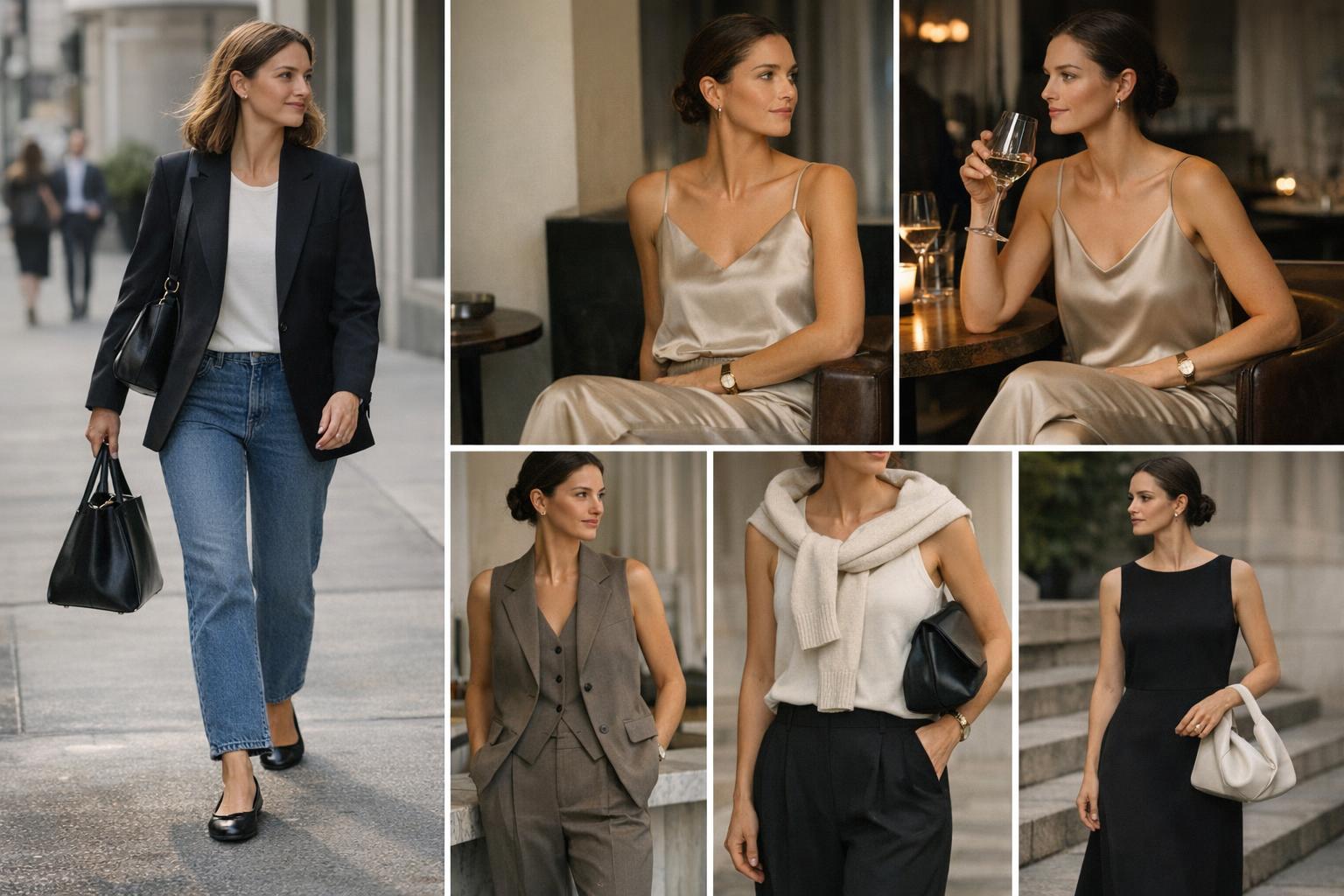
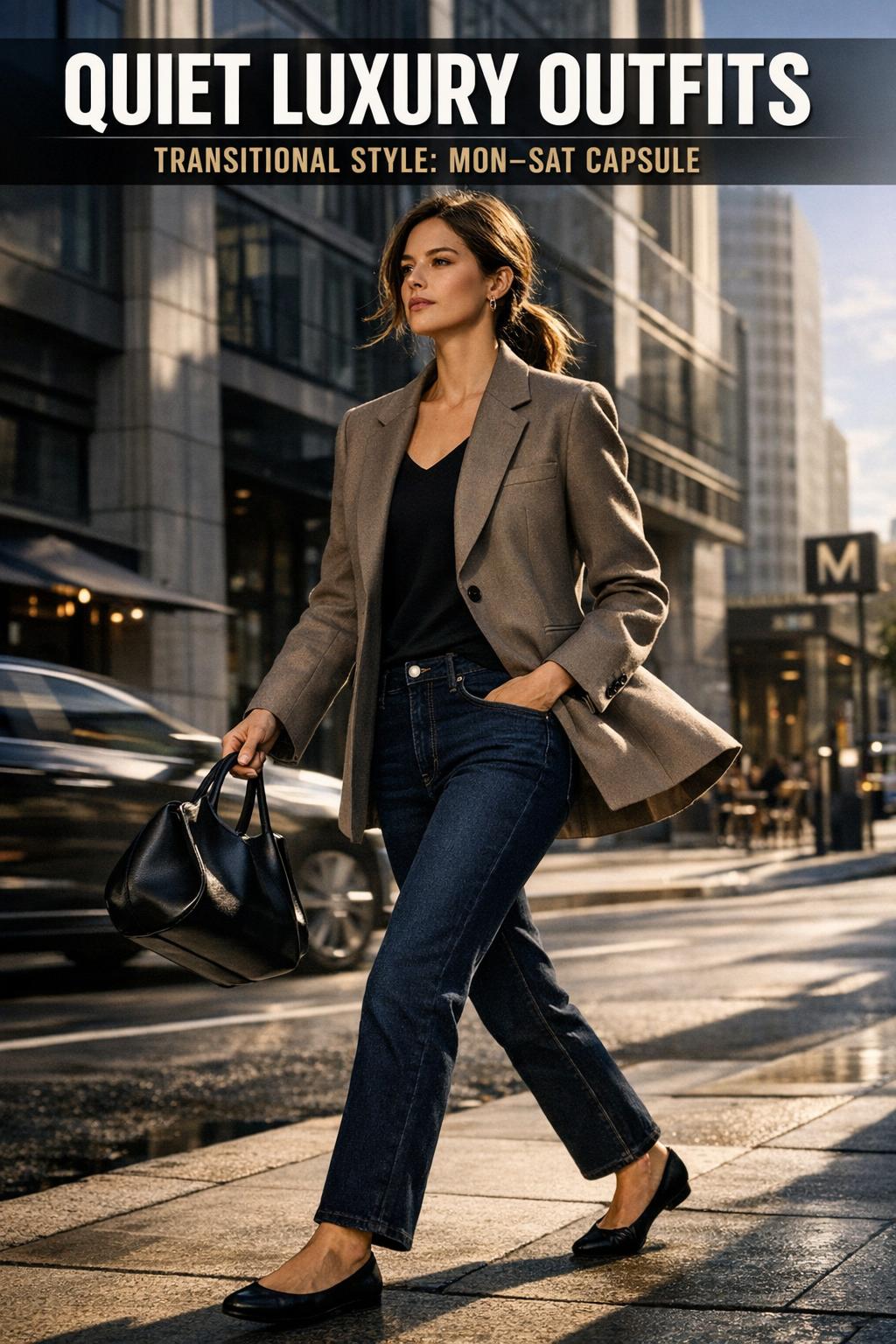
Structured jacket + jeans + ballet flats: the shortcut to polished transitional style
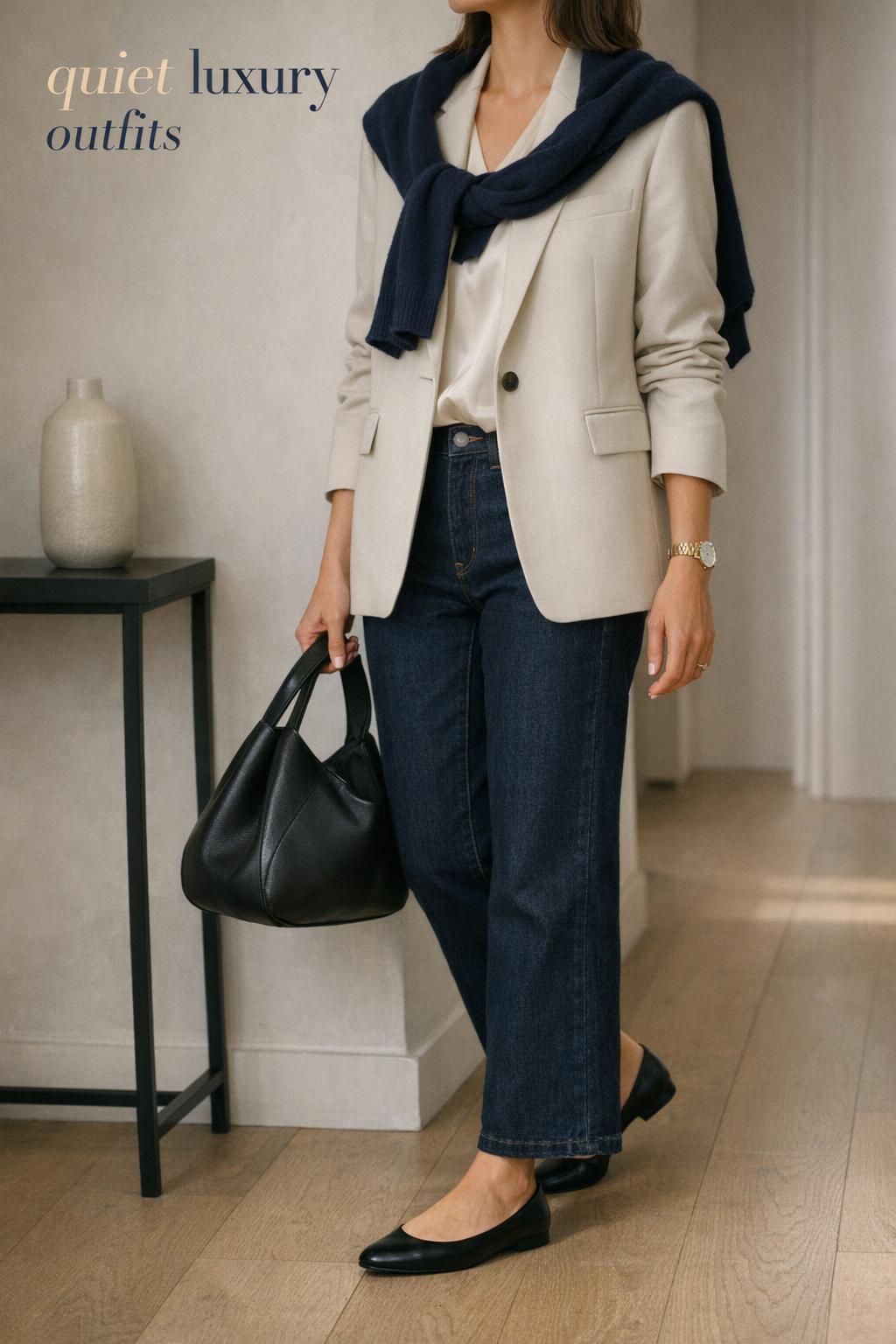
This trio is a staple because it works as transitional style almost year-round in many U.S. cities. The jacket supplies structure; jeans add ease; ballet flats keep the finish refined. For the jacket, look for wool blends or bouclé texture for a “quiet” richness. For jeans, prioritize a clean wash and a tailored fit through the hip and leg—nothing overly distressed. Brands like J.Crew, Madewell, Mango, and Reformation show up often in accessible interpretations, while The Row is frequently referenced as an aspirational north star for this type of minimal, immaculate pairing.
Tips: If the outfit feels too casual, swap the tee for a crisp shirt and add a belt. If it feels too formal, keep the shirt but push up the sleeves and choose softer ballet flats. These micro-adjustments are what make transition outfits look intentional rather than “leftover” from another occasion.
Satin set evenings: soft light, minimal effort
A satin set—top and pants—does something that loud outfits often fail to do: it looks elevated in low light without needing sparkle or heavy styling. Satin and silk are classic quiet luxury triggers because they create depth with movement. Keep the cut streamlined and avoid fussy details; the fabric is the point. Totême and Isabel Marant are often name-checked in editorial contexts for elevated minimalism, but you can follow the same logic with more accessible retailers as long as the satin doesn’t look overly thin and the fit is clean at the waist and hem.
How to wear it in real life: For a holiday dinner or an evening event, choose minimal jewelry and let the set carry the look. For a daytime version, soften it with a draped sweater and understated sandals.
Vest + matching trousers: the modern power suit, quieter
A tailored vest with matching trousers reads confident, but it’s less rigid than a full blazer suit. It’s also one of the easiest luxury outfits to personalize—buttoned up for the office, slightly relaxed for a dinner, layered under a structured jacket when the weather turns. Zara and Mango frequently appear in affordable quiet luxury conversations for suiting separates, and the key is proportion: the vest should sit flat through the torso, and the trousers should fall in a straight or wide-leg line that looks deliberate rather than oversized.
Tips: If you’re wearing this as transitional style, pay attention to shoes. Ballet flats keep it refined; sandals make it warmer-weather appropriate; a sleek pair of sunglasses (brands like Le Specs appear in outfit roundups) can give it that “editorial in motion” finish without turning it flashy.
Tank + wide-leg trousers + draped sweater: the “bougie auntie” approach to ease
This is the quiet luxury outfit you reach for when comfort matters—travel days, long lunches, or a full schedule where you’ll be sitting, walking, and standing. The wide-leg trouser does the work of looking tailored; the tank keeps the base clean; the sweater draped over the shoulders adds depth and a controlled, classic gesture that reads expensive. Banana Republic and J.Crew are common references in budget-conscious quiet luxury wardrobes for elevated basics and easy tailoring, and this template shows why: the look depends on clean foundational pieces more than statement items.
Real-world note: For movement and comfort, check the trouser rise and waistband. If you’re adjusting all day, the outfit won’t feel effortless—and quiet luxury should feel easy to live in.
Classic dress + minimal jewelry + sculptural bag: one piece, maximum impact
A simple dress becomes “quiet luxury” when the fabric and cut look intentional and the accessories are restrained. This is where a sculptural bag and clean lines matter: a Bottega Veneta reference often signals the idea of craftsmanship and shape, but the principle is broader than any one label. Pair a classic dress with minimal jewelry and choose a bag that has structure—something that looks designed, not decorated. Reformation and Zara are often mentioned in shopping-friendly outfit edits, and they can work well here when you keep the styling calm and the fit precise through the shoulders and waist.
Holiday angle: For quiet luxury holiday outfits, this template is reliable: a draped dress or a clean silhouette, a refined blazer (velvet may appear in holiday edits), and simple accessories. The look reads festive without relying on loud sparkle.
Transition outfits and seasonal shifts: how quiet luxury adapts without drama
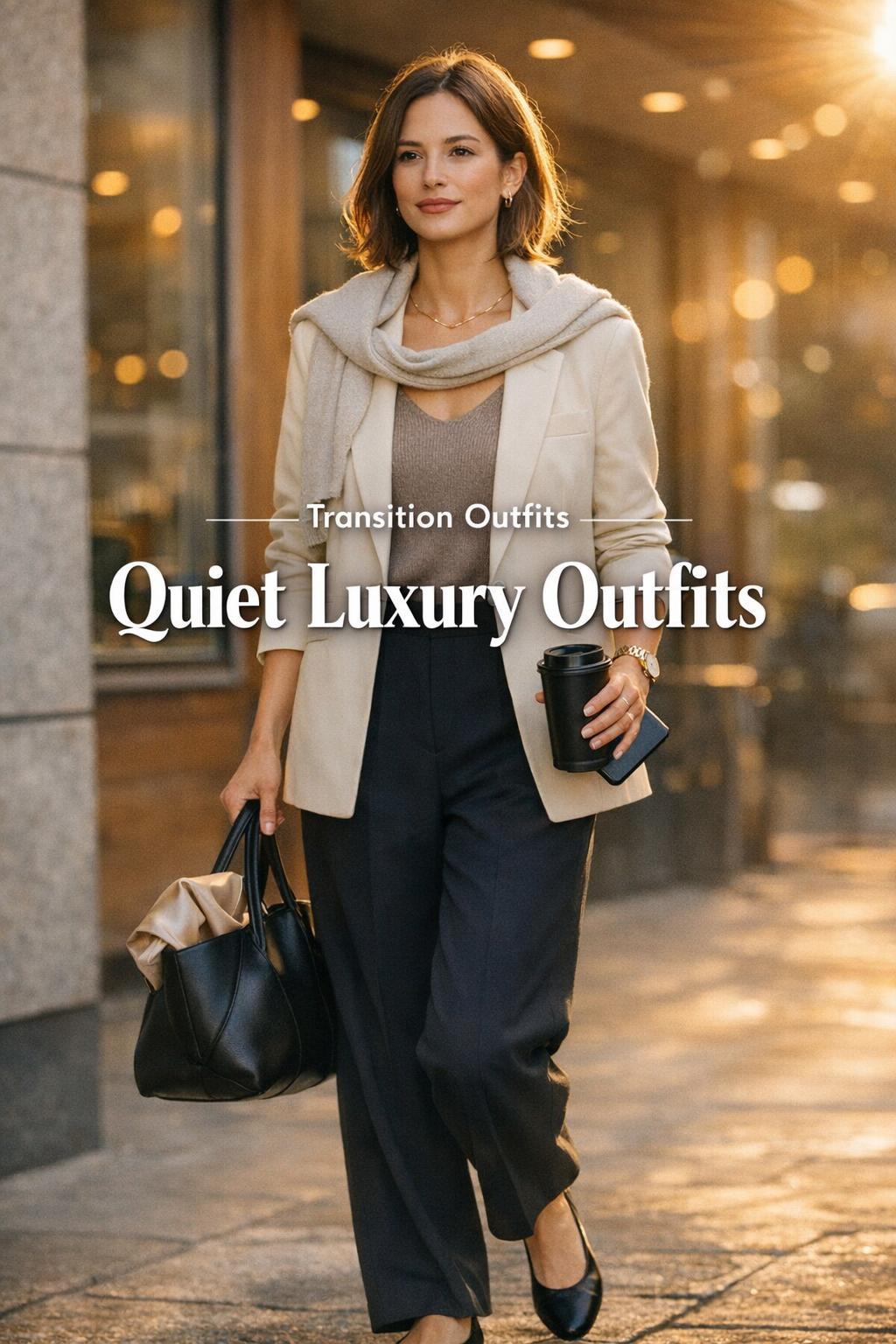
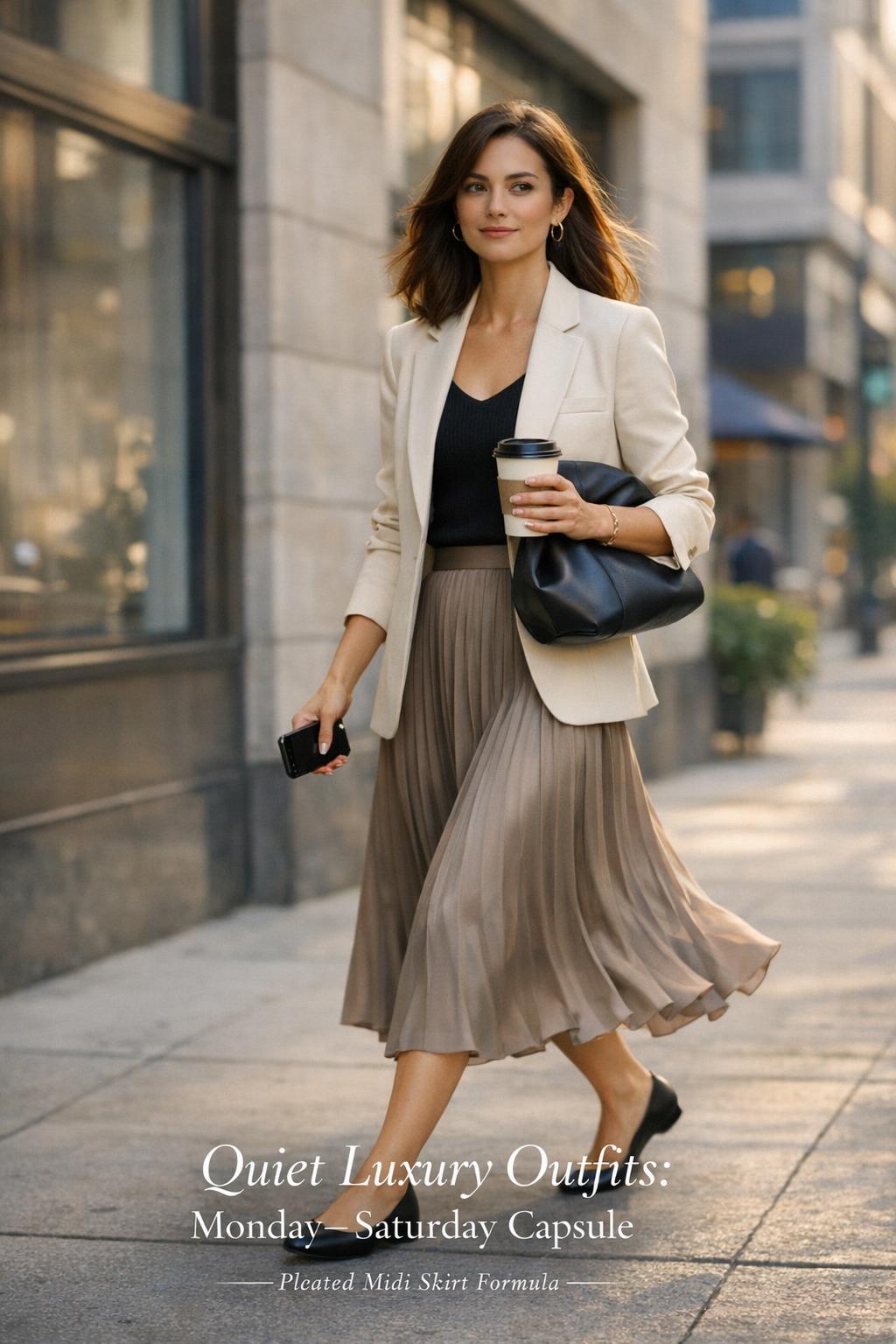
Quiet luxury is naturally suited to transition outfits because its foundation is layering, tailoring, and neutral palettes. Transitional style doesn’t require a whole new wardrobe; it requires the right “bridge” pieces: a structured jacket that works indoors and outdoors, knitwear that can be draped or worn properly, and trousers that look just as right with sandals as they do with closed-toe flats.
One of the most practical approaches is to keep the base consistent (tank + trousers, shirt + trousers, dress + jacket) and shift the texture to match the season. Satin and silk feel right for evenings and indoor events; wool and bouclé add visual warmth; cashmere reads cozy and refined when you need softness. The quieter the palette, the easier it is to mix textures without the outfit looking busy.
Where the pleated midi skirt fits into quiet luxury
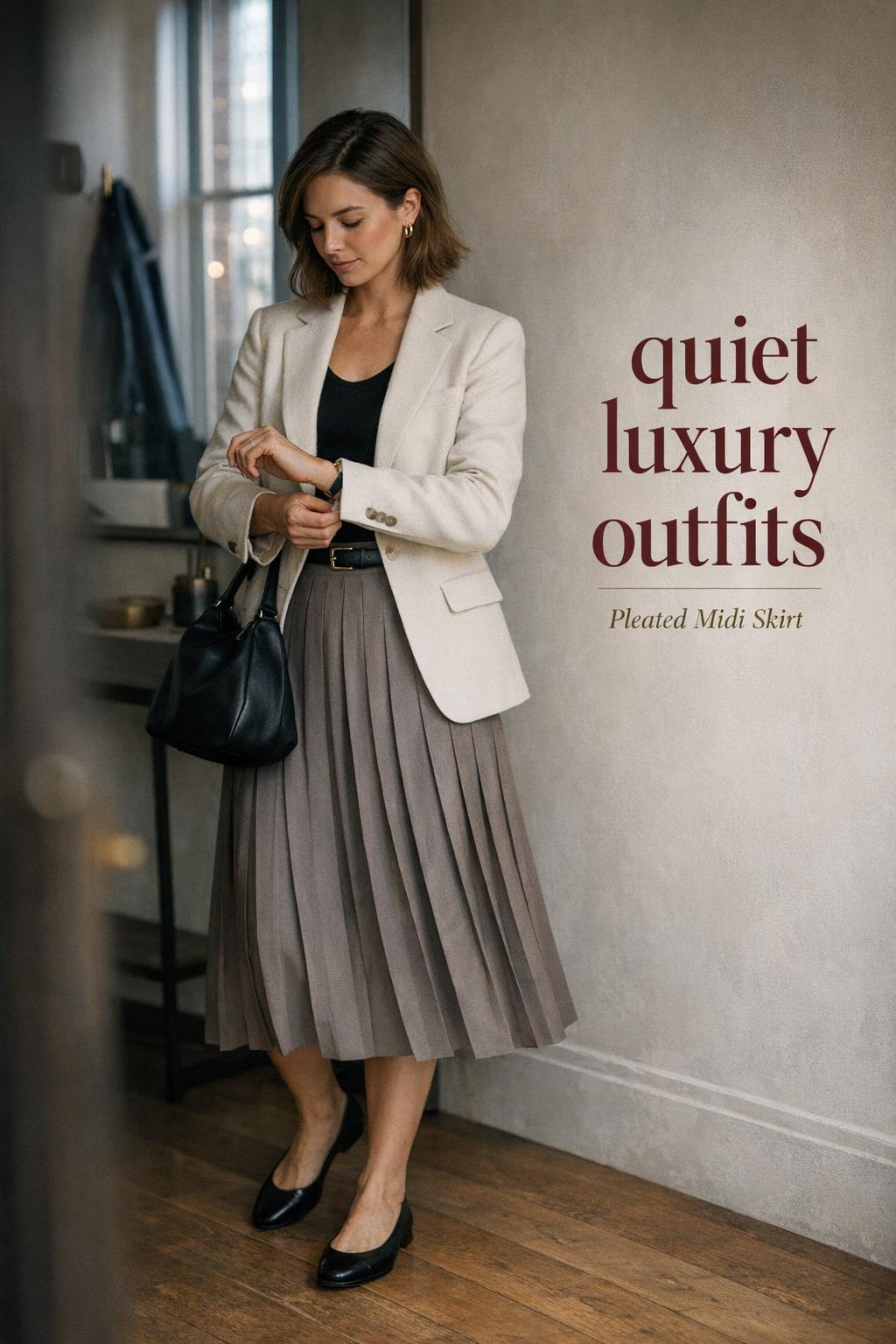
A pleated midi skirt can sit comfortably in a quiet luxury wardrobe when the pleats are crisp, the fabric looks substantial, and the color stays within a calm palette. It’s especially useful for transitional style because it moves well, layers easily, and can look refined with minimal effort. Style it with a structured jacket for a tailored top-half silhouette, or with a crisp shirt tucked in for clean lines. If you want it to feel modern rather than precious, keep jewelry minimal and choose shoes that don’t compete—ballet flats are an easy match.
Tips: The pleated midi skirt is sensitive to fit at the waistband. If it gaps or twists, it breaks the “effortless” illusion. A small tailoring adjustment can do more for quiet luxury than an expensive new purchase.
Fabric, finish, and color: the quiet cues people actually notice
Quiet luxury is a tactile aesthetic. Even when someone can’t name the fabric, they can usually sense when something hangs beautifully or catches light in a controlled way. That’s why editorial outfit guides repeatedly return to the same material vocabulary: satin, silk, cashmere, wool, and bouclé (or tweed-like texture). These aren’t random; they’re reliable signals of quality and intention.
- Satin and silk: best for evening or “special” looks that still feel understated; they create dimension without loud embellishment.
- Wool and wool blends: ideal for structured jackets and tailored trousers; they hold shape and read polished.
- Bouclé: adds texture to a jacket without needing bold color; it’s a classic shortcut to “expensive-looking.”
- Cashmere: the quietest form of softness; works as knitwear or layering, especially for transitional style.
- Crepe: frequently used in tailored pieces because it drapes cleanly without clinging.
Color is the other half of the equation. Neutrals—cream, taupe, black, navy—make the wardrobe feel cohesive and let texture stand out. That doesn’t mean you can’t wear color; it means color shouldn’t be doing all the talking. If you add a stronger shade, keep the silhouette and fabric quiet so the overall message stays refined.
Brands, designers, and the social proof effect (why certain names keep showing up)
Quiet luxury is often communicated through references. In outfit roundups, you’ll see a mix: accessible brands that help people build the look and premium labels that represent the aesthetic at its most distilled. That mix is part of how the trend spreads—people anchor the concept to recognizable names, then recreate it within their own budget.
On the premium side, The Row is frequently linked to the idea of immaculate minimalism, and that’s where celebrity and influencer context enters. Kendall Jenner is a commonly referenced figure in discussions that orbit The Row and the broader quiet luxury mood—less as a “how-to” and more as a cultural shorthand for understated, logoless styling. Totême and Isabel Marant often appear as contemporary references for elevated essentials, while Gucci and Bottega Veneta show up as examples in accessory conversations, where craftsmanship and silhouette can matter more than logos.
On the accessible side, Mango and Zara are recurring for tailoring and matching sets; J.Crew and Banana Republic come up for refined basics and blazers; Madewell often appears as a practical denim and wardrobe-staple option; Reformation is frequently included for dresses that can be styled into a quiet luxury direction. Even H&M appears in budget-friendly discussions where the styling approach (and careful selection) is what makes the difference.
Locations like New York and Milan matter less as “where to shop” and more as shorthand for tailoring ecosystems and fashion heritage. The point isn’t that you need a city-specific wardrobe—it’s that quiet luxury borrows from a long-running fashion conversation about restraint, cut, and quality.
A practical capsule: build quiet luxury with three anchor pieces (then expand)
Capsule wardrobes are central to quiet luxury because repetition is part of the look. When outfits are built from a small set of consistent shapes, everything feels deliberate. If you’re starting from scratch—or editing a closet that’s become overly trend-driven—choose three anchors that can create multiple luxury outfits and transition outfits without needing constant additions.
The 3-piece foundation (with realistic price flexibility)
- Structured jacket: a blazer or tailored jacket in a neutral. This is your instant polish tool for denim, dresses, and trousers.
- Tailored wide-leg trousers: the piece that makes even a tank top feel intentional; it’s also a core transitional style item.
- Elevated flat: ballet flats are a common quiet luxury signal because they’re refined but not showy.
Price bands vary widely here, and that’s the point: you can start with Zara or Mango for trousers and suiting, J.Crew or Banana Republic for blazers, and build upward over time. If you prefer to invest in one item first, prioritize what you wear most frequently. In practice, a structured jacket tends to deliver the most “quiet luxury per wear” because it reshapes outfits you already own.
How to expand to a 5–7 piece system without losing the plot
Once the anchors are working, add pieces that unlock new settings: a crisp shirt for office polish, a satin top for evening, a classic dress for event flexibility, and a belt to refine proportions. This is where accessories can sharpen the message: sunglasses (Le Specs is a name that appears in outfit edits) and a sculptural bag can add finish without adding noise. The goal is cohesion—everything should look like it belongs to the same wardrobe story.
Tips: If you’re tempted to add a new “statement” item, test whether it works with at least three existing pieces. Capsule logic keeps quiet luxury from turning into a closet of one-off purchases.
Occasion-specific quiet luxury: work, travel, and holiday outfits
Quiet luxury is sometimes treated like a purely aesthetic trend, but it’s most useful when applied to actual scenarios. Below are three settings where people commonly want guidance, and where small styling choices make the difference between “simple” and “elevated.”
Quiet luxury for work (without looking severe)
For workwear, keep the silhouette tailored but not tight: vest + matching trousers, or structured jacket + trousers. Add a crisp shirt when you need authority, and lean on neutral colors to keep the look steady across a week. If your office environment is more relaxed, structured jacket + jeans + ballet flats can still read professional if the denim is clean and the jacket is well-cut. The balancing act is comfort: you’ll wear these pieces for hours, so prioritize ease at the waistband, breathable fabrics, and shoes you can actually walk in.
Quiet luxury travel day: polished, packable, and low-maintenance
Travel is where transitional style becomes non-negotiable: you need layers and you need pieces that don’t fall apart after sitting. Tank + wide-leg trousers + draped sweater is a dependable formula because it moves well and adapts to temperature changes. A structured jacket can replace the sweater if you want sharper lines, and minimalist accessories keep the look calm even when the day is chaotic. The quiet luxury standard here is “still looks good at arrival.”
Quiet luxury holiday outfits: festive texture, restrained styling
Holiday dressing often pushes people toward sparkle and loud statements, but quiet luxury holiday outfits take a different route: satin, silk, velvet blazers, draped dresses, and sleek tailoring. Brands like Coach, Nordstrom, and Zara are often cited in holiday-focused edits because they offer a range from accessible to elevated options. The best approach is to pick one rich texture—satin set, velvet blazer, or a draped dress—and keep everything else minimal. You get the celebratory feel without sacrificing the understated elegance that defines the aesthetic.
Common mistakes that make quiet luxury outfits look accidental (and how to fix them)
Quiet luxury can be deceptively hard because the details aren’t masked by bold prints or loud branding. When something is off, it shows. A few recurring issues tend to derail otherwise good luxury outfits.
- Fit drift: trousers pooling too much at the hem or jackets pulling at the buttons. Fix: prioritize tailoring and hem lengths; it’s often the most impactful change.
- Texture overload: mixing too many “look at me” fabrics at once (for example, satin plus heavy texture plus overly shiny accessories). Fix: let one fabric lead and keep the rest quiet.
- Over-accessorizing: stacking accessories until the outfit becomes busy. Fix: keep minimal jewelry and choose one hero accessory (a sculptural bag or sleek sunglasses).
- Logo dominance: a single loud logo can override the entire message. Fix: choose logo-free pieces or keep branding subtle.
Tips: When you’re unsure, simplify. Quiet luxury is one of the few aesthetics where removing an element often improves the look immediately.
Maintaining the look: care, longevity, and the tailoring mindset
Quiet luxury leans on materials—cashmere, silk, satin, wool—so upkeep matters. The most convincing wardrobes aren’t just well-styled; they’re well-maintained. Think of care as part of the aesthetic: a blazer that keeps its shape, trousers with clean hems, knitwear that still looks plush.
A tailoring mindset helps even with affordable quiet luxury outfits. If a Mango trouser fits like it was made for you, it will look more expensive than a premium item that doesn’t sit right at the waist or hem. Similarly, a crisp shirt and a structured jacket benefit from thoughtful cleaning and storage so they don’t lose their line. Quiet luxury is, in many ways, a long game—built on repeat wear and consistency.
Tips: Before adding new pieces, check the condition of your existing “anchors.” Replacing a tired belt, refreshing a pair of ballet flats, or adjusting a trouser hem can restore the whole wardrobe’s polish.
A small lookbook-in-words: mixing the archetypes into a real week
To make the outfit templates feel usable, it helps to imagine a week where you’re moving between roles and settings. Monday: vest + matching trousers with minimal jewelry for a clean, modern work look. Tuesday: structured jacket + jeans + ballet flats—still professional, but softer. Wednesday: tank + wide-leg trousers + draped sweater for a long day that requires comfort. Thursday evening: satin set with understated accessories. Weekend: classic dress with a sculptural bag for brunch or a casual event. The point isn’t to follow a script; it’s to see how a capsule approach creates variety without chaos.
And if you want to introduce a pleated midi skirt, slot it in where you’d normally reach for trousers: crisp shirt + pleated midi skirt for work, or structured jacket + pleated midi skirt for a dinner that needs a bit more movement and softness. When the palette and fabrics are consistent, the pieces don’t compete—they collaborate.
FAQ
What are quiet luxury outfits?
Quiet luxury outfits are combinations built around refined tailoring, premium-looking fabrics (such as silk, satin, wool, bouclé, and cashmere), and logo-free restraint, with an emphasis on timeless silhouettes like structured jackets, tailored trousers, crisp shirts, and simple dresses.
How do I dress in quiet luxury without wearing obvious logos?
Focus on fit and fabric first: choose tailored pieces that sit cleanly at the shoulders and waist, add texture through materials like satin or wool, and keep accessories minimal so the outfit’s polish comes from silhouette and finish rather than branding.
Can you achieve quiet luxury on a budget?
Yes—many people build affordable quiet luxury outfits with accessible brands like Zara, Mango, J.Crew, Banana Republic, Madewell, H&M, and Reformation by prioritizing neutral colors, clean silhouettes, and small tailoring tweaks that make pieces look intentional.
What fabrics signal quiet luxury the most?
Satin and silk signal understated elegance through soft sheen, while wool and bouclé add structure and texture; cashmere reads plush and refined, especially in knitwear, and crepe is often associated with clean drape in tailored items.
What are the easiest quiet luxury outfit formulas to copy?
Reliable formulas include structured jacket + jeans + ballet flats, a satin set for evening, vest + matching trousers for a modern suit look, tank + wide-leg trousers + draped sweater for polished comfort, and a classic dress with minimal jewelry and a sculptural bag.
Which brands are most associated with the quiet luxury aesthetic?
Quiet luxury is commonly discussed with a mix of premium and accessible brands, including The Row, Totême, Isabel Marant, Gucci, and Bottega Veneta alongside Zara, Mango, J.Crew, Banana Republic, Madewell, Reformation, and sometimes Coach and Nordstrom in holiday-focused outfit edits.
How do I make transition outfits feel quietly luxurious during seasonal changes?
Keep a consistent base outfit (like a tank and tailored trousers or a dress and structured jacket) and adjust texture and layering—adding a draped sweater, switching to wool or bouclé for warmth, or using satin and silk for indoor evenings—so the look stays cohesive without dramatic shifts.
Does a pleated midi skirt work for quiet luxury?
A pleated midi skirt can work well when it’s in a calm color, the pleats look crisp, and the styling stays restrained—pair it with a crisp shirt or structured jacket and minimal accessories so the outfit reads polished rather than overly decorative.
Leave a Reply