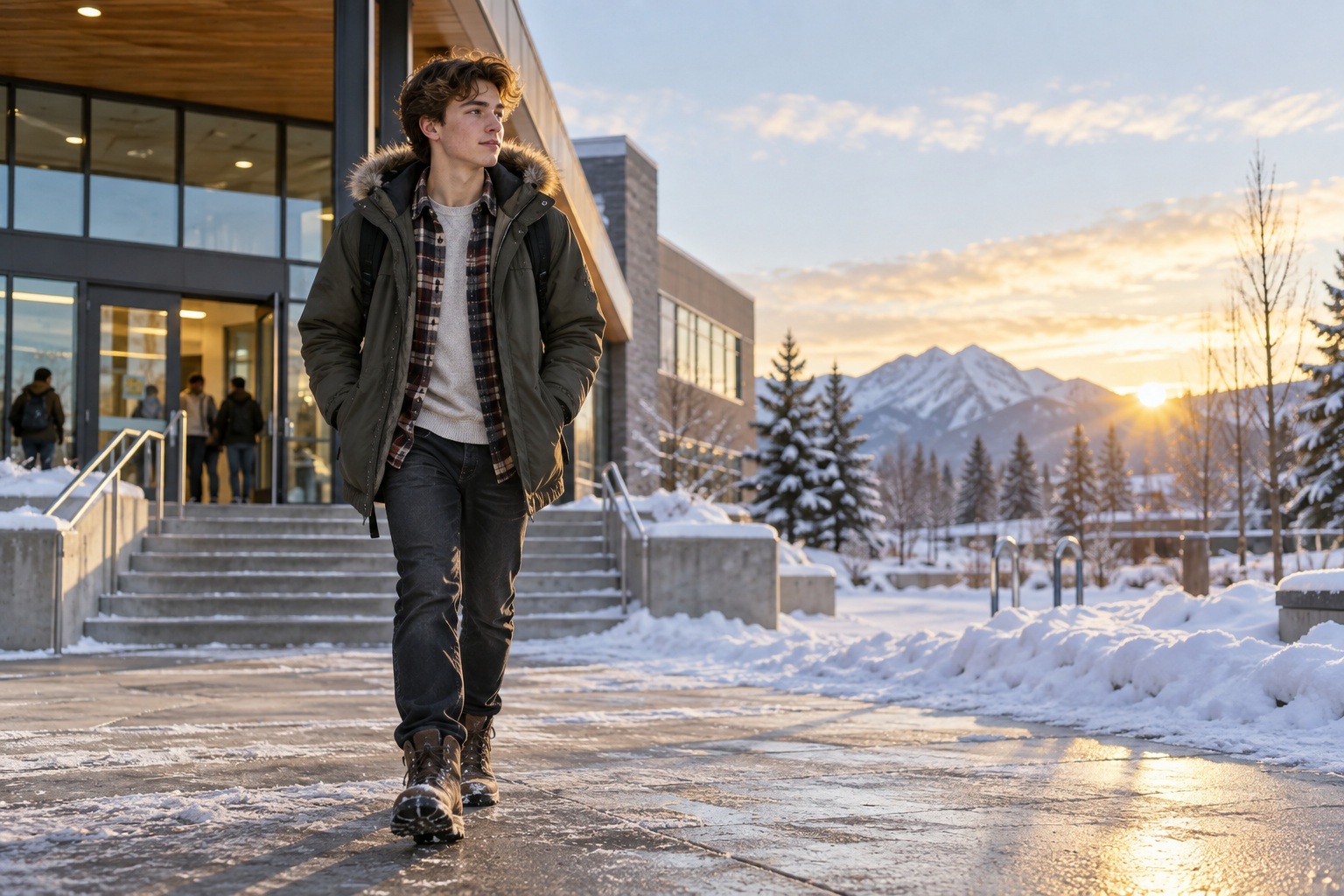
Winter school mornings create a very specific style problem. You need an outfit that survives the walk, bus stop, or car ride, but you also need to sit in a heated classroom for hours. Add a dress code, a backpack, changing weather, and a short morning routine, and a look that seemed perfect at home can feel too bulky, too cold, or impossible to move in by second period. The best outfit ideas for school winter are not complicated costumes. They are flexible combinations built from a warm base, one useful middle layer, weather-ready outerwear, and shoes that can handle real movement. The formulas below are designed to be repeated with the clothes you already own. Swap colors, fabrics, and proportions to make them feel personal.
Think of your outfit as a small system rather than a single look. First, decide what the outdoor portion of the day demands. Is it dry and cold, windy, rainy, or snowy? Next, choose a layer you can remove without ruining the outfit. Finally, check whether the shoes, hem, and bag support the amount of walking you will do. There are four useful tests. You should be able to raise your arms comfortably, sit without fighting your coat or skirt, carry your backpack without crushing the layers, and remove one piece once you are inside. If an outfit passes those tests, it is much more likely to work from the first bell to the last.
Why winter school outfits fail before the first class
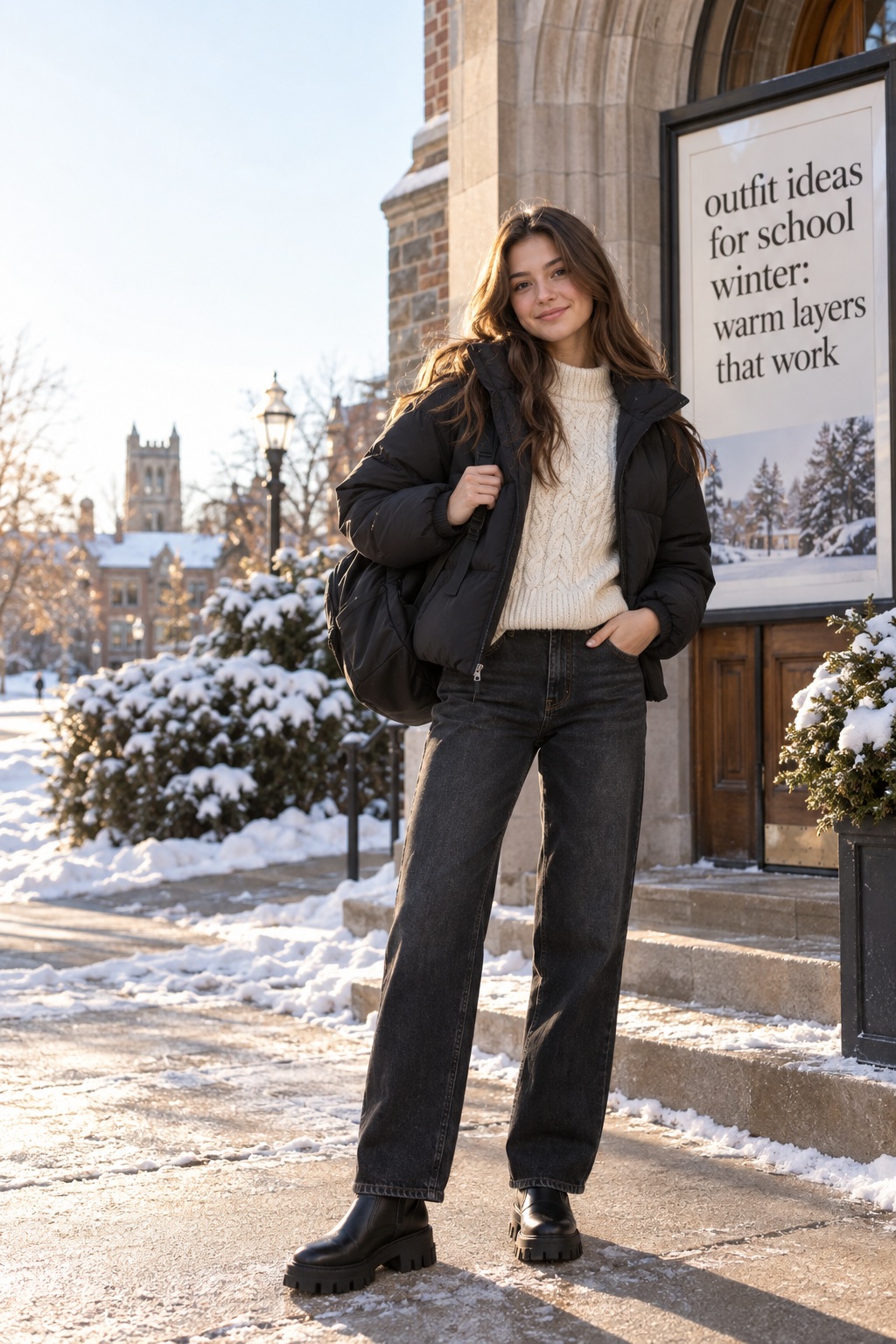
Most winter outfits fail because they solve only one part of the day. A thick sweater may feel cozy outside but become uncomfortable indoors. A thin fashion layer may look polished but leave you cold while waiting for transportation. A long hem may work in dry weather and become a nuisance in slush. A beautiful pair of shoes may not be practical when sidewalks are wet. The answer is not always buying warmer clothes. It is matching each layer to a job.
Start with the route. If you walk fifteen minutes to school, your coat and shoes need to handle more weather than if you step from a car into a building. If you wait for a bus, protect your ears, neck, and hands because those small gaps can make an otherwise warm outfit feel incomplete. If your school has a long outdoor lunch period or frequent movement between buildings, choose an outer layer that is easy to close and a bottom that will not drag through wet pavement.

Your wedding has a lot of moving pieces. Your plan can still feel composed.
Zarellea organizes guests, vendors, budget, and timelines in one shared space — so you can make decisions with clarity, not stress.
Then think about the classroom. A warm outfit should still work when the coat comes off. The base layer should look acceptable on its own, and the middle layer should not require perfect styling to look good. This is why a ribbed long-sleeve tee under a cardigan, hoodie, or sweater vest is so useful. It gives you a complete indoor look and lets you adjust without starting over.
Build the outfit with a flexible three-layer formula
The easiest starting point is a three-layer formula: a close base layer, a comfortable middle layer, and an outer layer chosen for the weather. You do not always need all three pieces to be heavy. Several lighter layers often look neater and give you better temperature control. The base handles comfort next to your skin, the middle creates the visible outfit, and the outer layer protects you while you travel.
Start with a smooth base
A fitted long-sleeve tee, thin thermal top, mock neck, or lightweight turtleneck creates warmth without adding much volume. Choose a neckline that works with the next layer. A crew neck is easy under a sweatshirt, while a mock neck looks intentional beneath a cardigan, sweater vest, or overshirt. If you dislike tight sleeves, choose a soft ribbed top with a little stretch instead of sizing down. Neutral shades are easy to repeat, but a base in burgundy, forest green, blue, or soft pink can make a simple outfit look considered.
Use the middle layer for personality
Your middle layer is where the outfit gets its style. Try a crewneck sweater, zip-up fleece, cardigan, hoodie, flannel shirt, sweater vest, or relaxed blazer. Medium-weight knits are usually easier indoors than one extremely chunky sweater. For a polished effect, let a collar, tee hem, or cuff show. For a sporty effect, let the hoodie drawstring and sneakers carry the visual interest. If you are wearing a backpack, avoid stiff shoulder details that will dig in or make the straps slide.
Choose the outer layer for the commute
A puffer, wool coat, quilted jacket, parka, or water-resistant shell should do a clear job. A puffer is useful for cold, windy mornings. A wool coat creates a sharper silhouette for a dressier school day. A parka or shell makes more sense when rain or wet snow is likely. Keep the shape roomy enough for the middle layer, but avoid excessive fabric around the shoulders because it makes backpacks uncomfortable. Check the hood, zipper, and pockets before leaving. Practical details are part of good styling when the weather is difficult.
Six outfit formulas you can rotate all winter
1. Knit sweater, straight-leg jeans, and weather-ready sneakers
This is the dependable everyday formula. Start with a long-sleeve tee, add a medium-weight knit sweater, and finish with straight-leg jeans and sneakers that have a grippy sole. A shorter puffer keeps the proportions relaxed, while a long coat makes the same outfit feel more polished. Choose dark denim for wet days and a lighter wash when the forecast is dry. A half-tuck or a slightly shorter sweater can show the shape of the jeans without making the outfit feel formal.
To keep the combination from looking flat, vary the textures. Pair smooth denim with a cable knit, or wear a fine ribbed sweater with a quilted jacket. A small beanie, striped socks, or a colorful backpack can add personality without making the outfit difficult to wear. If the classroom is warm, remove the puffer and keep the sweater as the focal point.
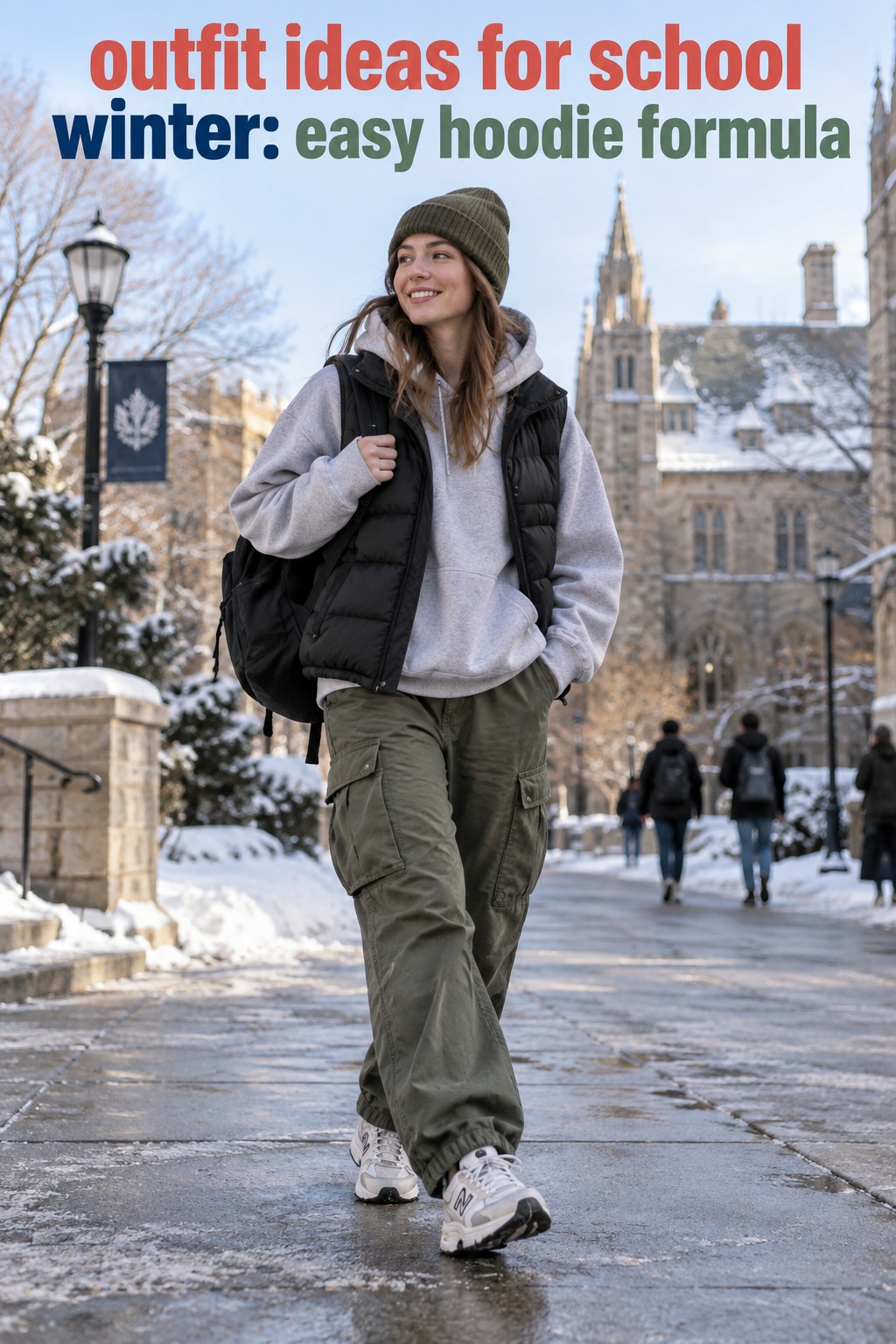
2. Hoodie, puffer vest, and cargo or wide-leg pants
A hoodie under a puffer vest is warm through the core while leaving your arms free for writing, carrying books, and moving between classes. Wear it with cargo pants, relaxed chinos, or wide-leg jeans. The key is balance: if both the hoodie and pants are very oversized, choose a cleaner vest and a simple shoe so the silhouette still looks deliberate. A fitted long-sleeve tee under the hoodie adds warmth without making the sleeves feel crowded.
This formula works especially well for casual dress codes and active days. Add a thin base layer underneath the hoodie when the morning is especially cold. If the classroom is warm, remove the vest and leave the hoodie as the main layer. Keep cargo pockets useful rather than overloaded, and choose a backpack with a shape that does not compete with the vest.
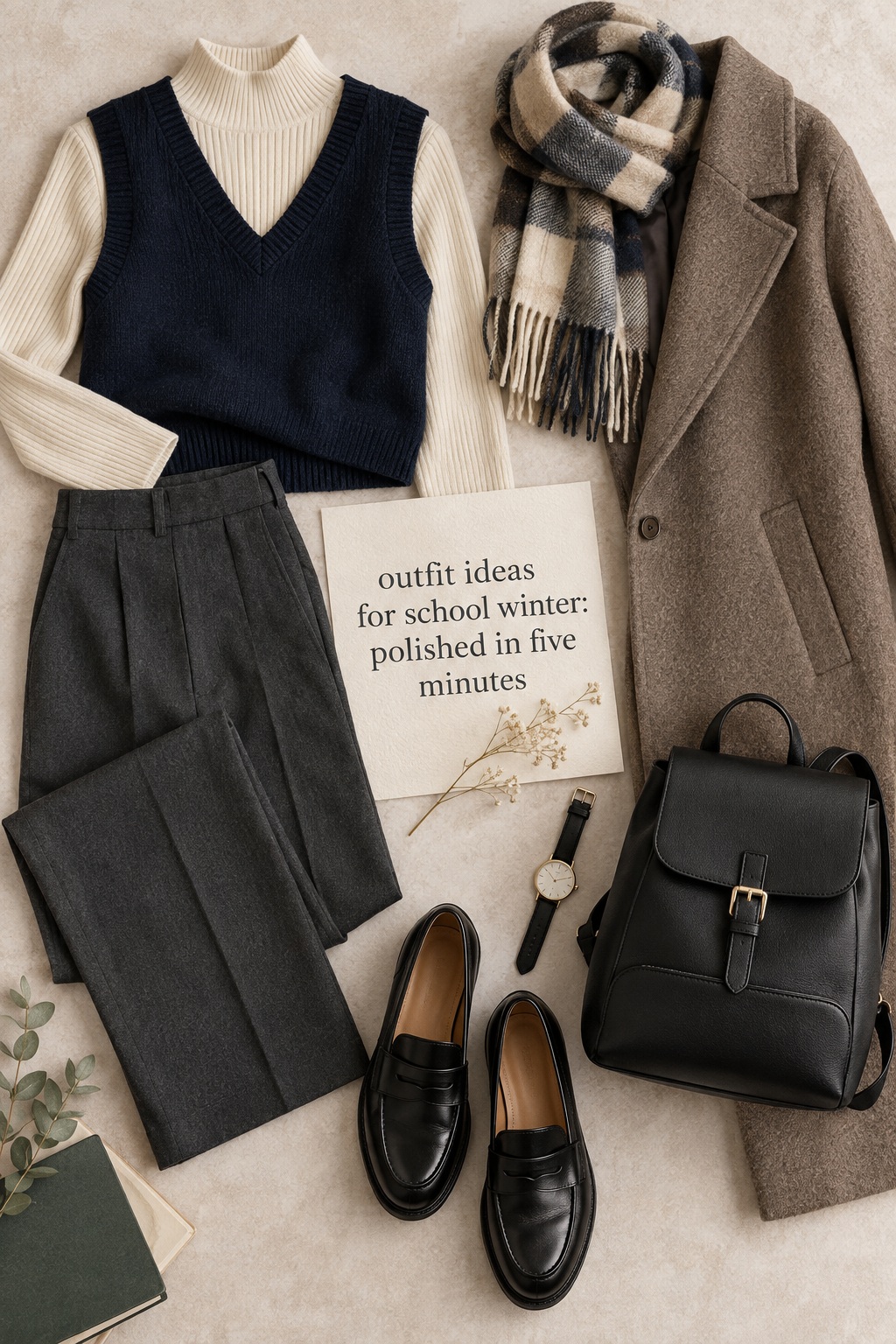
3. Mock neck, sweater vest, trousers, and loafers
For a preppy or academic feel, layer a mock neck beneath a sweater vest and pair it with straight trousers or dark jeans. Loafers work for dry days, while ankle boots are a better choice when the pavement is wet. A structured backpack and a simple watch complete the look without making it feel like a costume. Keep the colors close, such as cream, camel, brown, and navy, or use one plaid piece as the accent.
Keep the outfit comfortable by choosing a vest with room at the armholes and trousers with enough ease to sit in all day. A wool coat or quilted jacket can go over the top. If your school has a strict dress code, this formula is easy to adjust with approved colors and a longer hem. A bright sock or simple hair accessory can add interest when the clothing rules are limited.
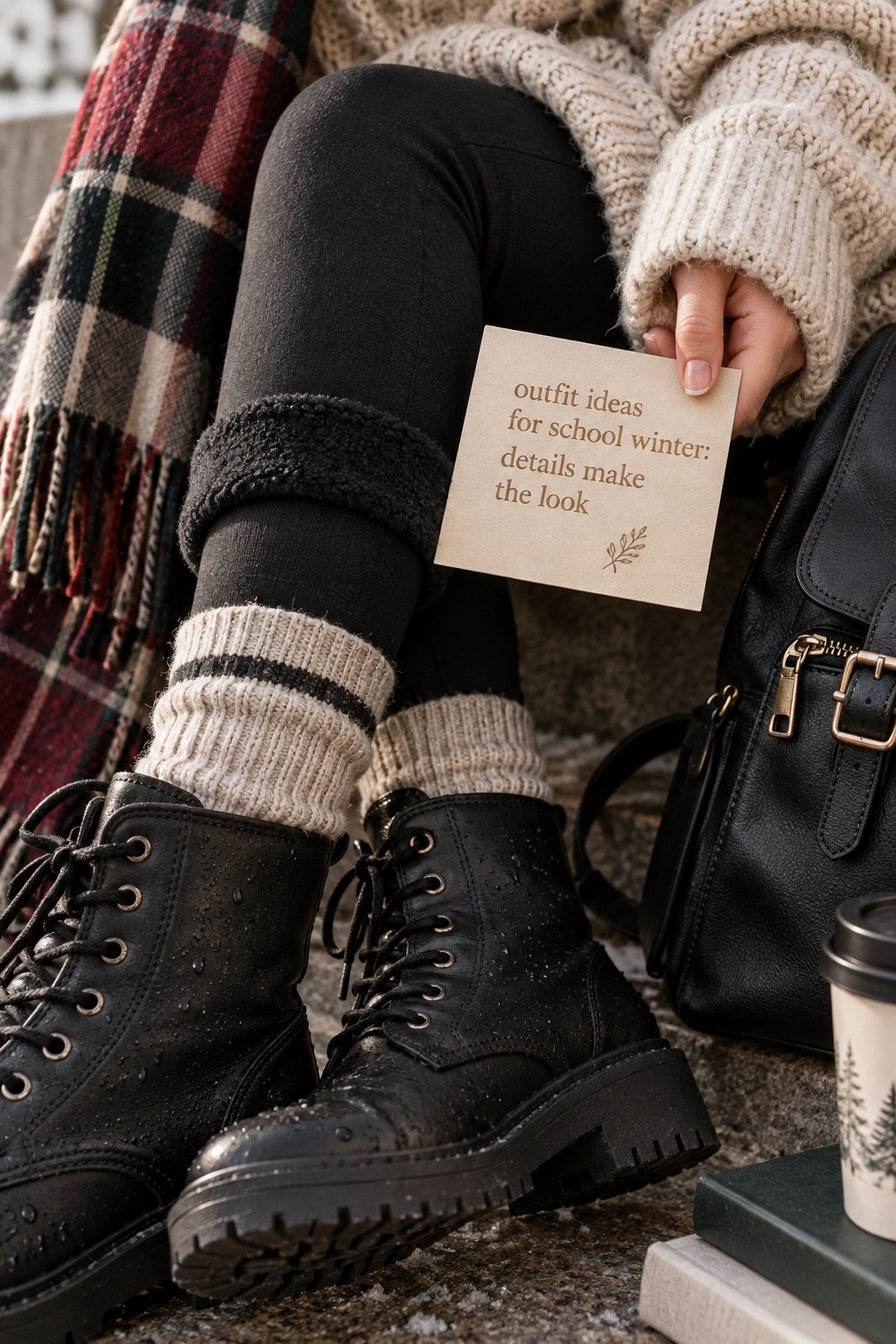
4. Fleece-lined leggings, an oversized sweater, and boots
When comfort is the priority, use a long oversized sweater with fleece-lined leggings and boots. The sweater should cover the area where the leggings meet your top, and the boots should have enough traction for the route to school. A longline coat or puffer adds warmth without changing the simple formula. This look is especially useful on mornings when you want a soft outfit that still feels put together.
Make the look feel styled by choosing one interesting detail: a textured knit, a contrast beanie, a scarf in a deep color, or boots with a clean shape. Avoid piling on several bulky accessories. The strength of this outfit is its ease. If leggings feel too light for the forecast, switch to fleece-lined trousers or add tall socks and a longer coat.
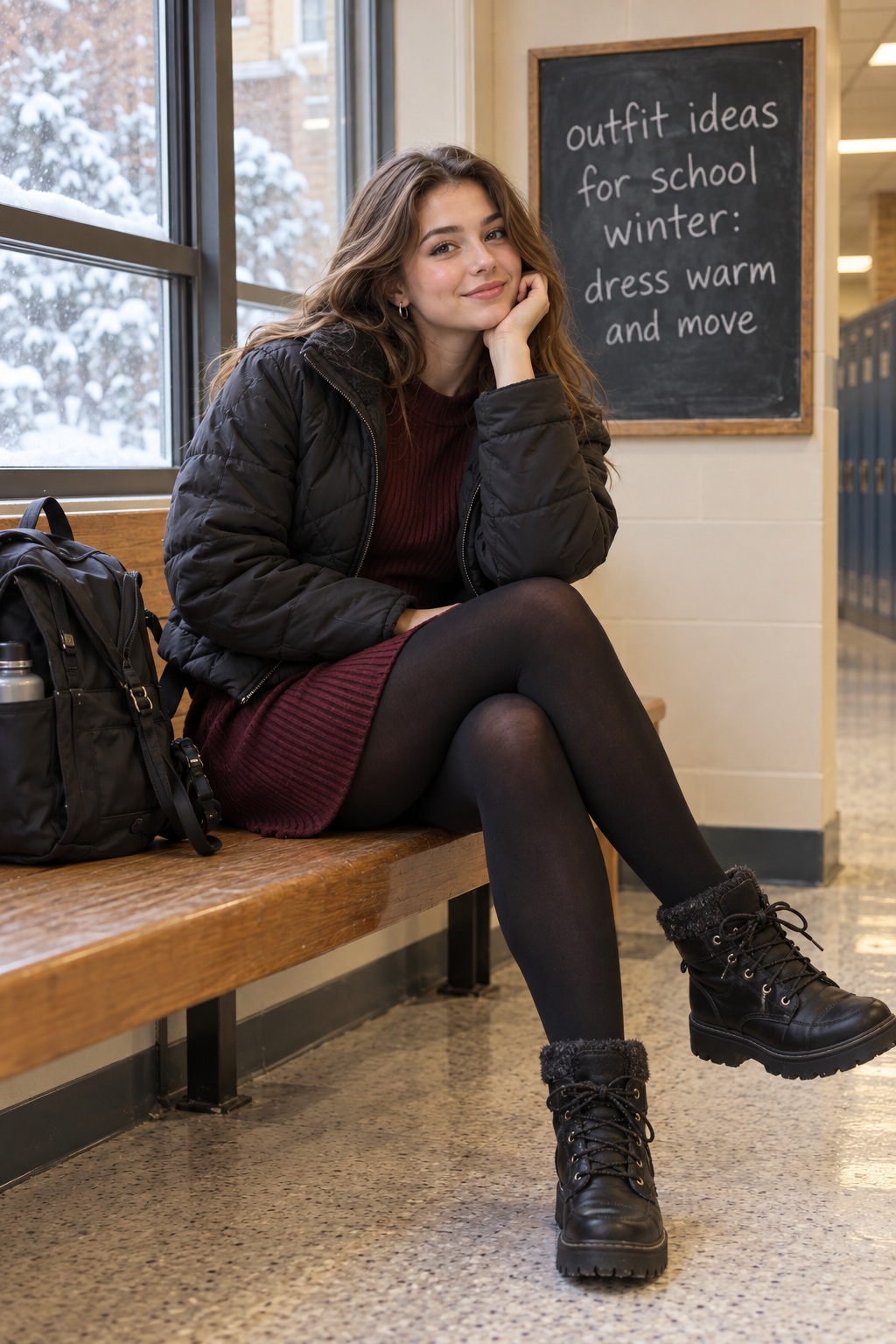
5. Long-sleeve dress, tights, and a cropped jacket
A sweater dress or long-sleeve knit dress can be a useful alternative to jeans. Wear opaque tights and flat boots, then add a cropped puffer, denim jacket, or short quilted coat. The shorter outer layer keeps the shape visible, while the tights and boots provide coverage for colder days. A collared shirt under the dress can make the outfit feel more school-ready and adds a useful indoor layer.
For a more casual version, wear a sweatshirt over the dress so the lower portion reads like a skirt. Choose a length that lets you walk comfortably and sit without constant adjustments. If snow is expected, switch to a water-resistant boot and keep the hem away from the ground. A crossbody bag may be attractive, but a backpack is usually better for a full school day.
6. Thermal tee, flannel overshirt, jeans, and a parka
This layered formula is useful for wet, windy, or unpredictable mornings. A thermal tee provides a close first layer, a flannel overshirt adds color and texture, and jeans or corduroy pants anchor the outfit. Finish with a parka or water-resistant jacket and shoes that can handle damp sidewalks. The flannel can be worn open, buttoned, or tied around the waist later in the day, which makes it flexible when the temperature changes.
Inside, you can open the jacket or remove it without losing the look. If the temperature rises, wear the flannel open over the base layer. If it drops, add a thin sweatshirt between the tee and flannel. Choose one dominant color in the plaid and repeat it in your socks, bag, or hair accessory for a pulled-together effect.
Make simple school outfits look intentional
Warmth does not require a complicated wardrobe. The fastest way to make basic pieces look considered is to repeat one visual idea. Try tonal dressing, such as cream with tan and brown, or use one bright color against navy, gray, or black. You can also repeat a texture: a ribbed knit with a ribbed sock, a quilted jacket with smooth fleece, or corduroy pants with a brushed flannel. These small connections make a repeat outfit feel new.
Proportion matters too. A voluminous sweater usually looks balanced with a straight or slim bottom, while wide-leg pants work well with a shorter jacket or a top that is tucked slightly. You do not need a full tuck. A small front tuck or a visible base-layer hem can show where one layer ends and the next begins. When you wear a long coat, keep the layers below it simple so the silhouette does not feel crowded.
Shoes are part of the outfit logic. Sneakers are convenient for dry days and long walks. Lug-sole boots add traction and make soft layers look sharper. Loafers create a preppy effect, but they need warm socks and a dry forecast. If your school requires indoor shoes, wear practical outdoor boots to commute and keep a clean pair in your locker or bag when possible. A shoe that protects your feet will always look better than one that makes you walk carefully.
Accessories should solve small problems. A beanie protects your ears, a scarf fills the gap at the neck, touchscreen gloves help on the way to school, and a backpack keeps your hands free. Pick one or two that support the weather rather than treating every accessory as decoration. If your outfit feels plain, change the color or texture of the accessory instead of adding several new items.
Common mistakes and the five-minute morning check
The most common mistake is dressing for the temperature inside your house instead of the entire route. Check the forecast and think about wind, precipitation, and how long you will wait outside. A second mistake is using one huge layer instead of several lighter ones. The result is usually bulky outside and unbearable inside. Another mistake is forgetting that wet fabric feels colder and that a long pant hem can become heavy after brushing against slush.
- Check whether your outer layer fits over the middle layer without pulling at the shoulders.
- Choose shoes for the pavement, not just for the mirror.
- Keep hems clear of puddles and slush.
- Make sure your backpack straps sit comfortably over the coat.
- Pick one layer you can remove in class.
- Add one useful accessory, such as a hat, scarf, or gloves.
Give yourself one final movement test before leaving. Sit down, raise your arms, walk quickly, and check that nothing rides up or restricts your stride. If the outfit passes, take a quick photo. After a few weeks, you will have your own library of combinations that are faster to repeat than starting from an empty closet. Save the best formulas in a phone note with labels such as dry cold, rainy morning, snow day, and mild afternoon.
FAQ
What is the warmest outfit for school in winter?
A close base layer, a medium-weight sweater or hoodie, weather-ready outerwear, warm socks, and grippy boots is a reliable starting point. Choose several manageable layers so you can remove one indoors instead of relying on one extremely bulky item.
How can I look cute at school without being cold?
Use a simple warm formula and add style through color, texture, or one accessory. A sweater vest, plaid scarf, textured knit, colorful beanie, or polished boot can make jeans and a base layer look intentional while keeping the outfit practical.
What should I wear to school when it is raining in winter?
Choose a thin base layer, a middle layer that will not become too warm indoors, and a water-resistant jacket or parka. Keep hems shorter or tapered, and wear shoes with a grippy sole. Darker pants can be easier to manage on splashy routes.
Are leggings warm enough for a winter school outfit?
Fleece-lined leggings can work for moderate cold when worn with a long sweater, coat, warm socks, and suitable boots. For very cold or windy weather, choose thicker trousers or add a longer insulating layer over the top.
How do I avoid overheating in a warm classroom?
Make the base layer comfortable on its own and use a removable vest, cardigan, overshirt, or coat. Medium-weight layers are easier to regulate than one heavy sweater. Keep a small tote or locker space available for the layer you remove.
What shoes are best for school in winter?
Choose shoes based on the route and rules at your school. Water-resistant boots with traction are best for snow and slush, sneakers work for dry days, and loafers can suit a polished outfit when the ground is clear. Warm socks matter as much as the shoe choice.
Leave a Reply