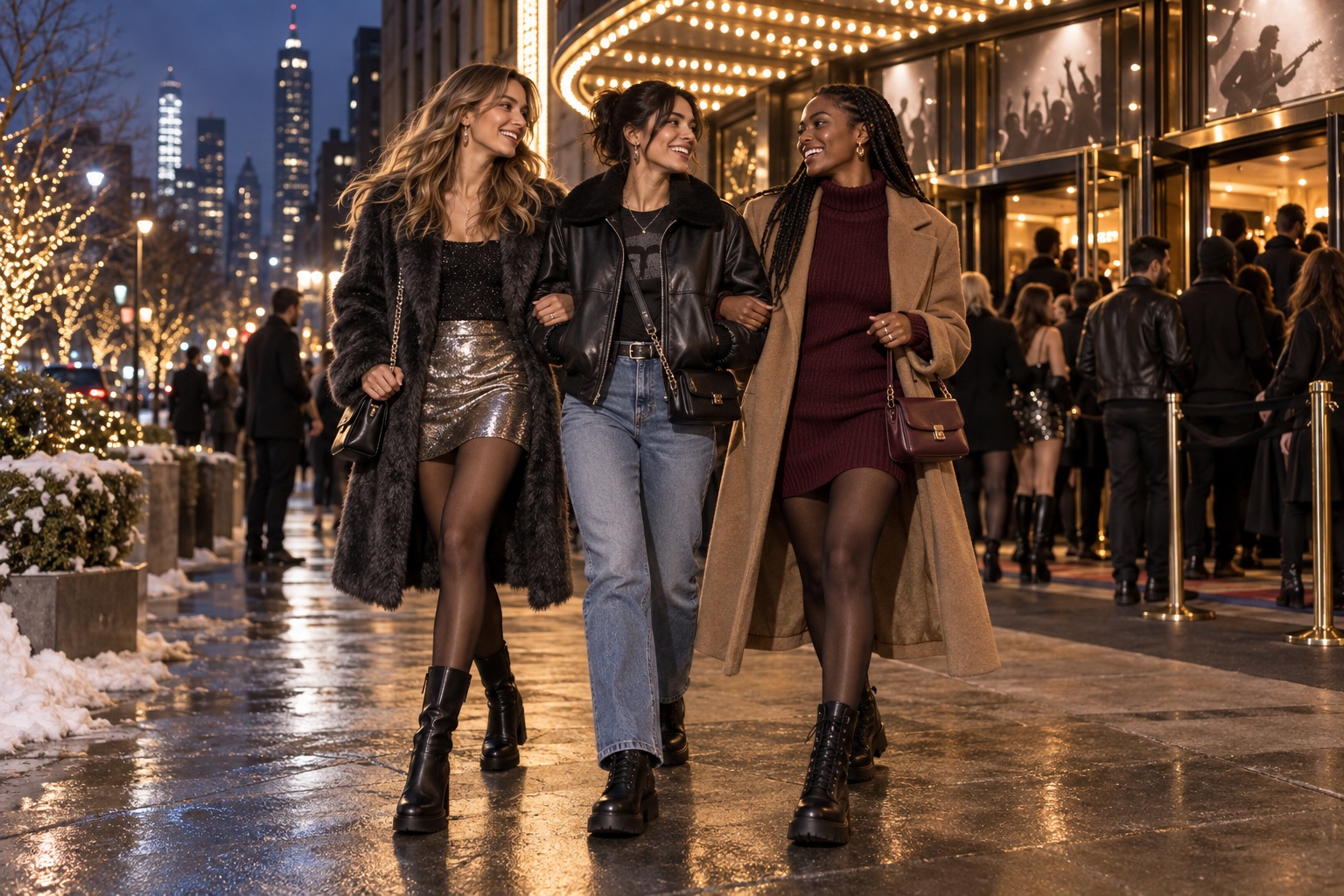
Planning a concert outfit winter look is less about finding one magical piece and more about solving a small chain of practical decisions. You may stand in a cold queue, walk across wet pavement, squeeze into a crowded room, remove a coat, carry your phone, and stay on your feet until the last song. The outfit has to work through every part of that evening, not only the few minutes when you take a mirror photo.
The easiest way to get there is to treat your clothes like a checklist. Start with the venue and the weather. Then choose a comfortable base, one layer that can handle the temperature outside, shoes with real support, and one clear visual focal point. That order keeps the look expressive without making it fragile or uncomfortable. The formulas below are designed for women who want to feel warm enough on the way there and dressed enough once the lights go down.
Prepare for the Actual Concert, Not an Imaginary Photo
Before you open your closet, identify what kind of night you are attending. A seated theater show, an indoor arena, a general-admission club venue, and an outdoor concert may all happen in winter, but they place different demands on clothing. A seated performance usually lets you wear a longer coat and a more polished shoe. A standing show rewards secure layers and a bag that stays close to your body. An outdoor event requires warmth, weather protection, and a plan for staying comfortable when the ground is cold or wet.
- Check the venue rules: Look for dress expectations, bag-size limits, coat-check information, and whether umbrellas or large outerwear are restricted.
- Check the route: Include parking lots, transit platforms, outdoor queues, stairs, and the distance between dinner and the venue.
- Check the room: A packed floor can feel much warmer than the sidewalk, while a seated hall may stay cool for the entire performance.
- Check your role: Decide whether you will dance, sit, take photos, buy merchandise, or move between venues.
- Check the forecast close to the date: Build a flexible layer plan instead of dressing for a generic winter day.
Coat handling matters more than many outfit roundups admit. If there is a reliable coat check, a substantial wool coat can be a beautiful arrival layer. If there is no coat check, choose something you can wear comfortably, fold over a chair, or keep on without blocking your view. A slim puffer, cropped insulated jacket, leather jacket over a knit, or medium-weight wool coat often works better than a huge floor-length piece that becomes another object to manage.
Think about temperature in zones. Your first zone is the trip to the venue, your second is the entrance line, your third is the room, and your fourth is the journey home. A fitted long-sleeve top or thin turtleneck can make a dramatic top usable in winter. Thermal tights can sit under a skirt or dress without changing the visual story. A scarf, gloves, and warm socks can be removed or stored when you get inside. Small, removable solutions give you more control than one bulky layer.
Use the Concert Outfit Winter Decision Checklist
Once the conditions are clear, build the look in five decisions. This keeps you from buying or adding random statement pieces simply because they look exciting in isolation. You are aiming for a clear silhouette, enough warmth, and one memorable detail.
1. Choose the base silhouette
Begin with the shape you want to see when your coat comes off. A fitted knit dress with boots creates a streamlined line. A graphic tee with wide-leg jeans feels casual and easy to move in. A satin skirt with a compact sweater creates texture contrast. A bodysuit with tailored trousers gives you structure without requiring a short hem. If the base is fitted, let the outer layer add volume. If the base is loose, use a defined waist, a tucked top, or a cropped jacket to keep the outfit intentional.
2. Add warmth where it will not show
Hidden warmth is often more useful than a visibly wintery outfit. Try a thin thermal under a tee, a fine turtleneck beneath a slip dress, fleece-lined tights beneath a mini, or warm socks inside boots. These layers let you keep the personality of the main piece. Avoid adding so many underlayers that the neckline, armholes, or waistband pull. The best base layer feels smooth and close to the body, not compressed.
3. Select shoes for the floor
Shoes should match the surface and the number of hours you will spend standing. Combat boots, platform boots, supportive ankle boots, and clean sneakers can all look concert-ready. A low block heel is usually easier to manage than a very thin heel if you expect stairs, a long queue, or dancing. For outdoor shows, choose a sole with traction and enough room for socks. Wear the shoes at home first, including on hard floors. Ten comfortable minutes in your bedroom is a useful warning test, not a guarantee, but discomfort at home is a clear reason to change the plan.
4. Make the bag hands-free
A small crossbody, belt bag, or secure shoulder bag is usually more useful than a large tote. It should fit your phone, cardholder, keys, lip product, and one small emergency item. Check the venue policy before you leave. A zip closure matters in a dense crowd, and a strap that stays close to the body is easier when you are moving. If you plan to buy a shirt or poster, decide whether you will carry it, wear it, or place it in a checked bag. Your concert outfit winter plan should account for the objects you will collect, not only the clothes you start with.
5. Pick one focal point
Let one element create the first impression. It might be a metallic skirt, a bright coat, a strong graphic tee, a velvet texture, a sculptural earring, or a pair of statement boots. Supporting pieces should make that focal point easier to notice. If the jacket is dramatic, keep the base simple. If the dress is reflective, use quieter jewelry. If the shoes are colorful, let the rest of the outfit provide a calm frame. This edit makes the look photograph well and keeps it from feeling like several unrelated ideas layered together.
Build a Formula for Your Type of Winter Show
These five formulas give you a starting point. Adjust the colors and proportions to suit your wardrobe, but keep the practical logic intact. Each one solves a different concert problem.
Arena show: polished layers with easy movement
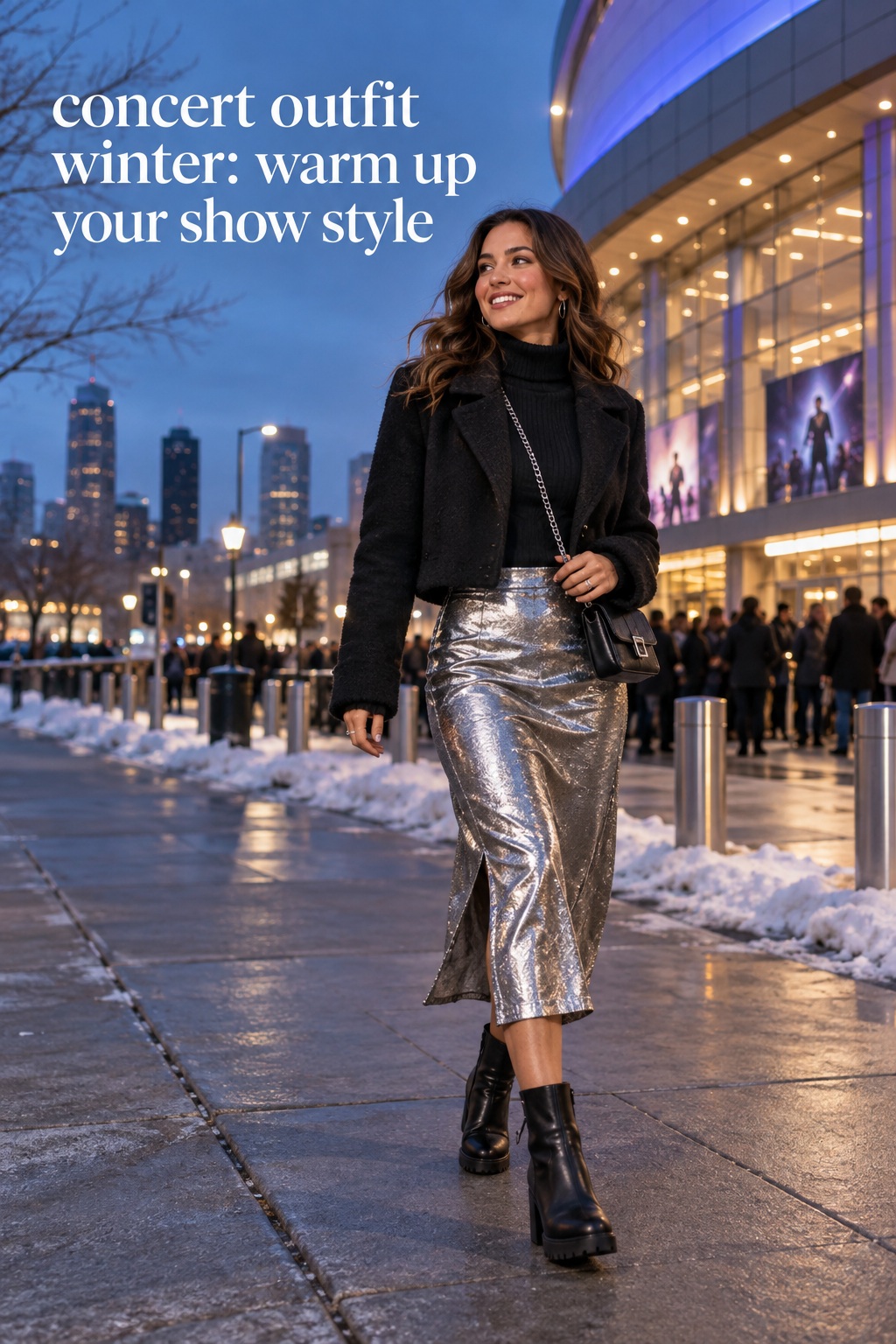
Try a fitted turtleneck, wide-leg trousers, ankle boots, and a structured blazer or medium-weight wool coat. The narrow top keeps the upper half clean, while the trouser shape gives you room to walk and sit. Choose charcoal, chocolate, cream, navy, or black if you want a refined base, then add shine through earrings or a small metallic bag. This outfit works especially well when you are going from a restaurant to a large indoor venue, because it looks finished without relying on a delicate party piece.
Standing-room gig: graphic tee, denim, and a tough layer
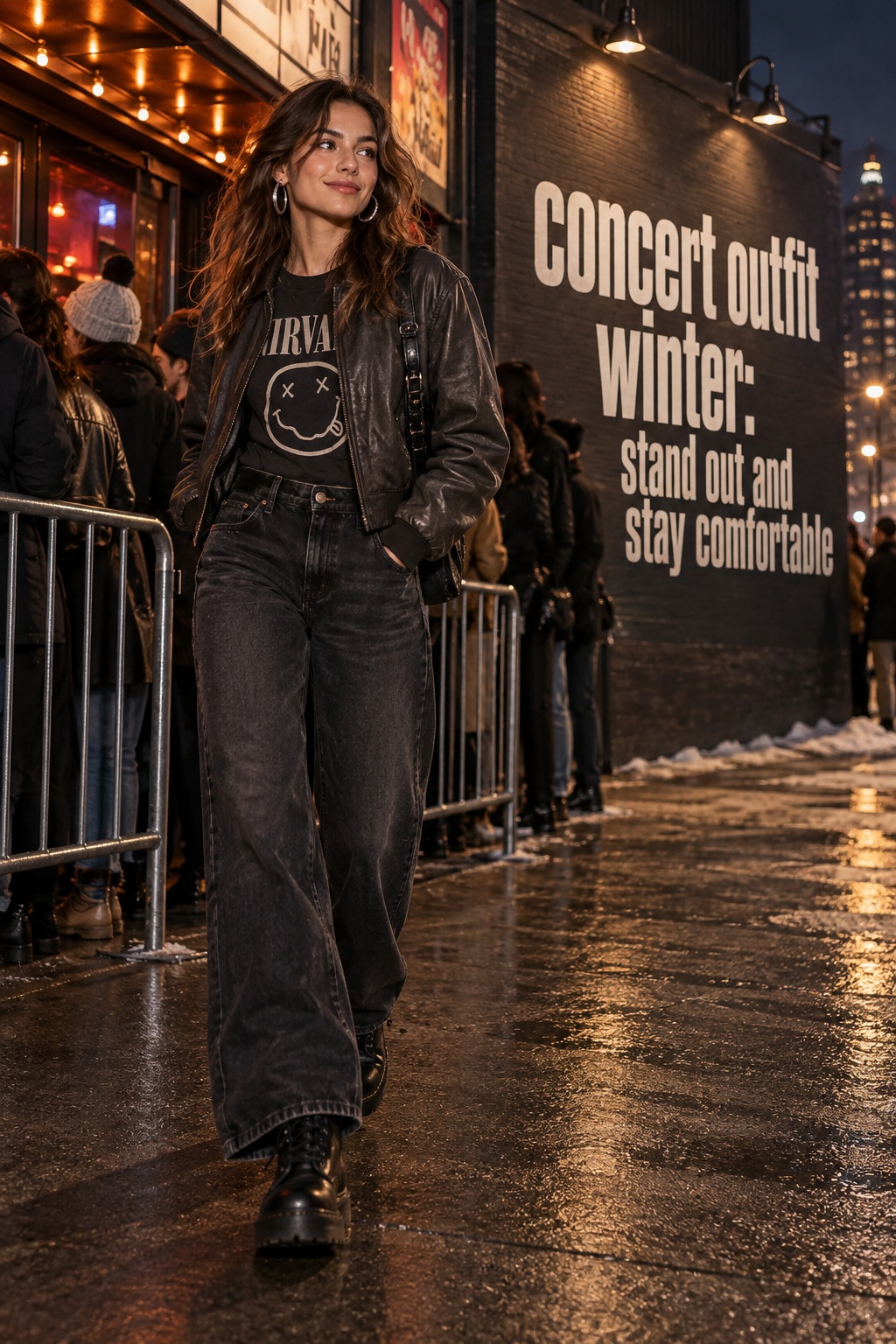
Start with a band tee or an artful graphic tee, dark straight-leg or wide-leg jeans, and supportive boots or sneakers. Add a leather jacket, cropped puffer, or roomy bomber that can be removed once the crowd warms up. A belt and silver hoops give the simple base a finished edge. If you want more color, use a bright sock, scarf, or bag rather than a second competing print. The result feels connected to live music and lets you raise your arms, move through the crowd, and stand for hours.
Seated concert: sweater dress with a refined coat
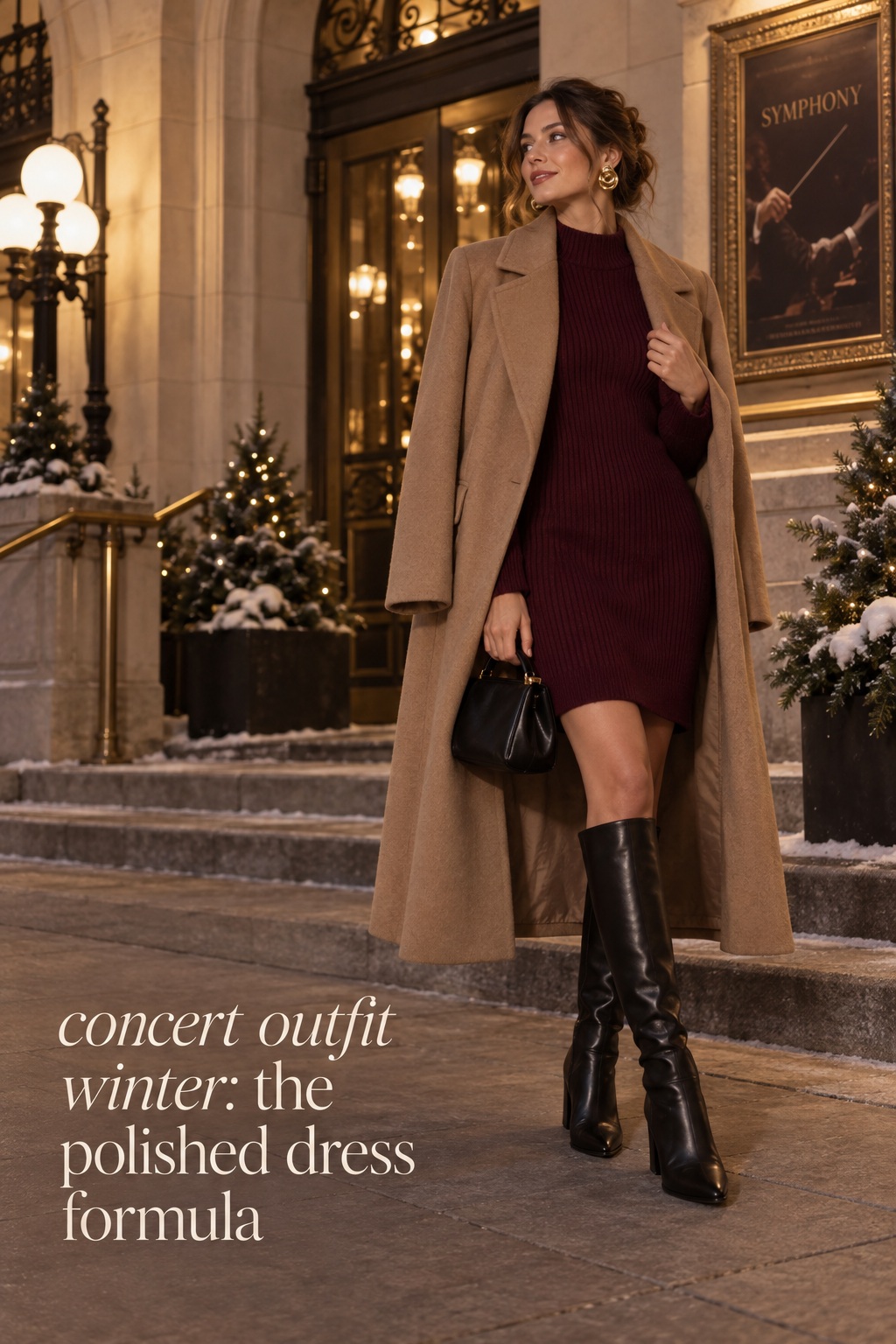
A sweater dress with knee-high boots and a long coat gives you warmth and polish in one line. Choose a dress that lets you sit comfortably and does not require constant adjustment. A belt can define the waist, while a brooch or statement earring adds personality without making the outfit noisy. If the theater is warm, the dress still works after the coat comes off. If the route includes cold sidewalks, add opaque or fleece-lined tights and gloves that coordinate with the bag.
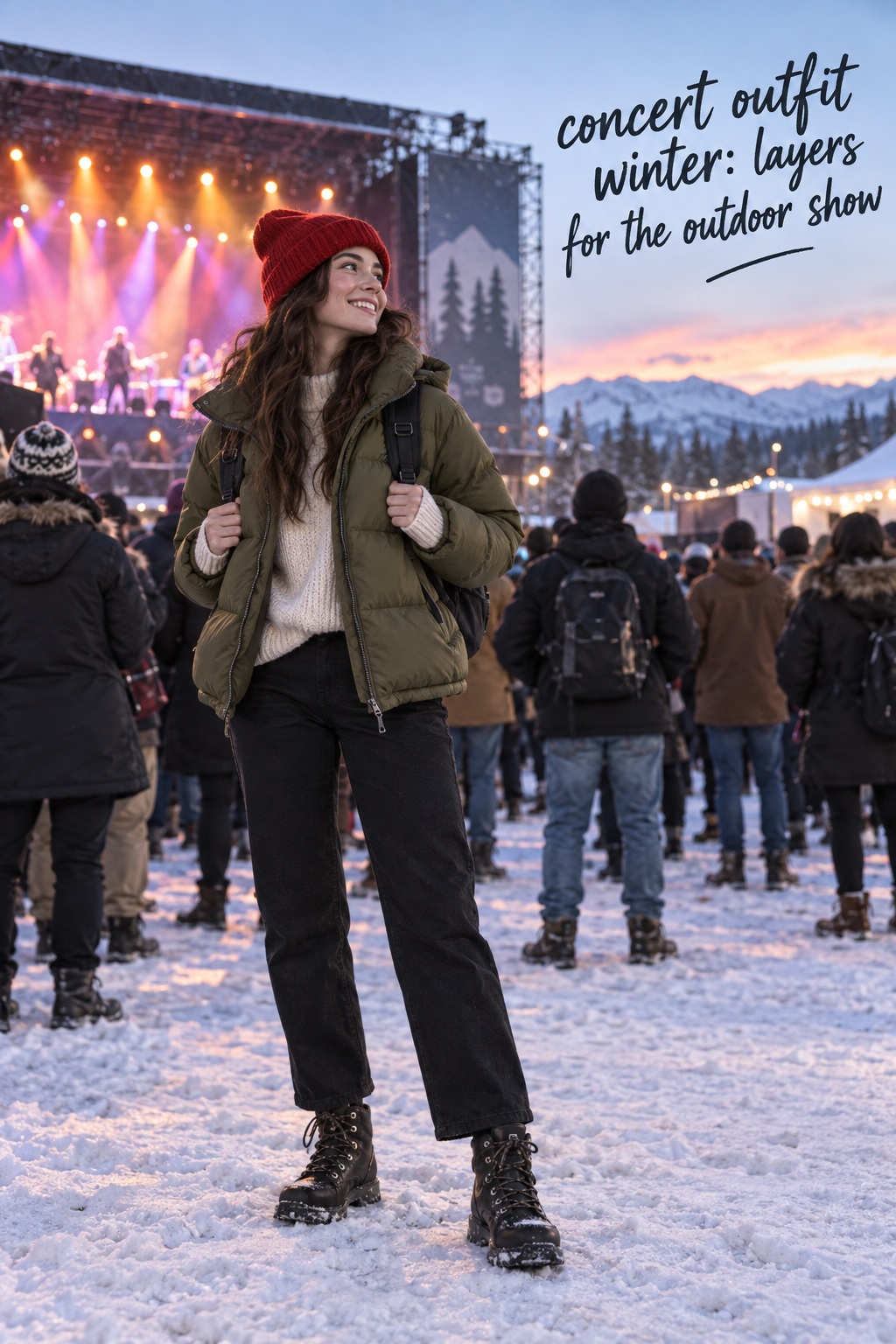
Outdoor concert: insulated pieces with a visible style idea
For an outdoor event, build from the ground up. Wear warm socks, a weather-ready boot, comfortable trousers or lined leggings, a close-fitting base, and a sweater or fleece layer. Add a puffer, shearling-style jacket, or waterproof outer shell depending on the forecast. To keep the result from reading like ordinary errands, choose one visible idea such as a red beanie, a patterned scarf, a colorful puffer, a bold belt, or a graphic top under the open jacket. Protect your phone from rain and keep your hands free.
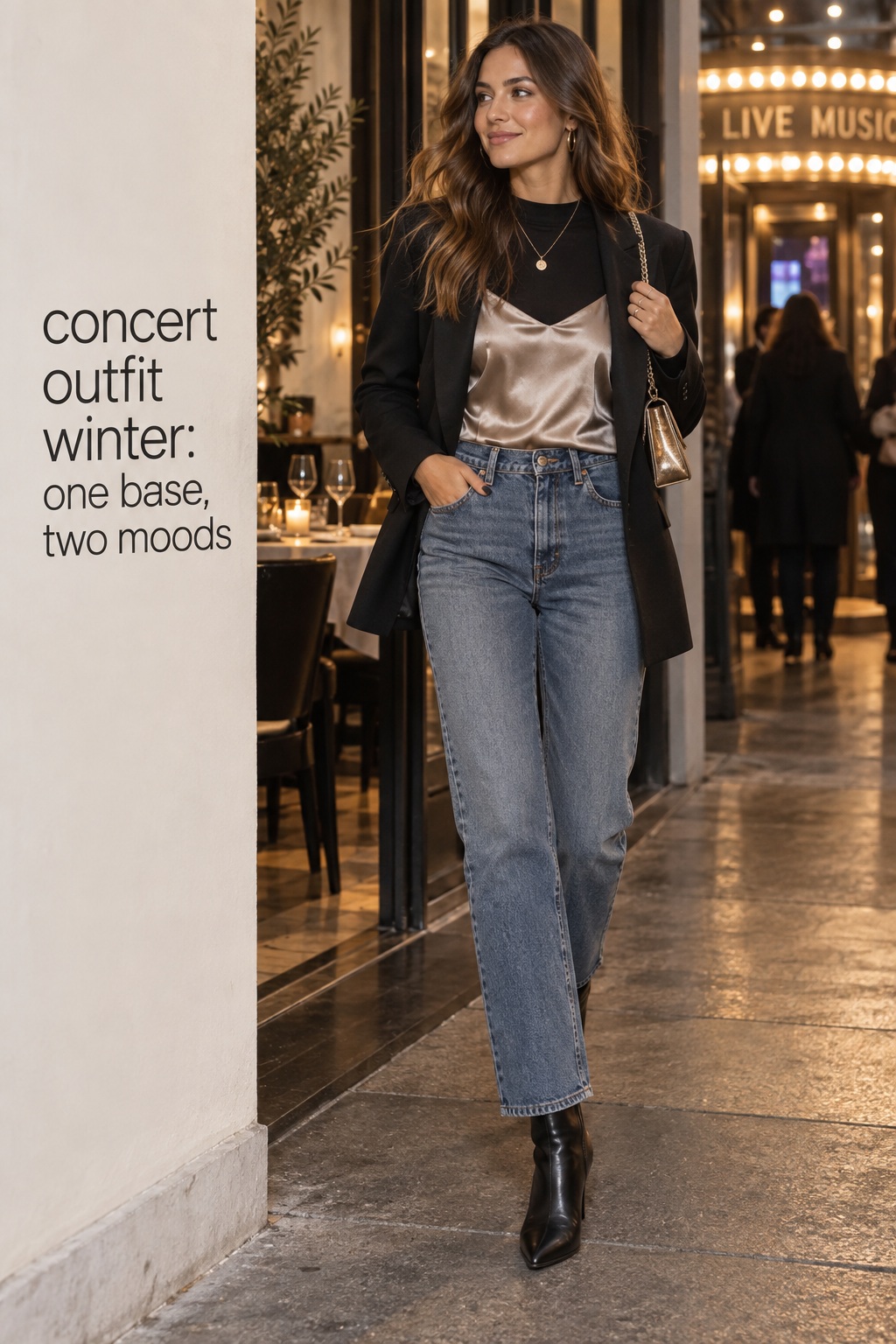
Uncertain plans: a removable statement layer
When you do not know whether the night will include dinner, a bar, a queue, or a dance floor, use a flexible base. Try a satin camisole over a thin long-sleeve layer, straight jeans, pointed ankle boots, and a tailored blazer. A faux-fur collar, metallic bag, red lip, or bold earring can lift the outfit once you arrive. If the plan becomes more casual, remove the blazer. If it becomes dressier, keep the jewelry and let the satin show. This formula gives you options without packing a second outfit.
Run a Final Review Before You Leave
The last check should be physical, not only visual. Sit down, walk quickly, raise both arms, turn your shoulders, and step up and down a few stairs. Check whether the neckline stays secure, whether the waistband digs in, and whether the hem catches under your coat. If you cannot move naturally in the outfit at home, the venue will not make it easier.
- Test the heat plan: Know which layer comes off first and where it will go.
- Test the shoe plan: Add socks, insoles, or a lower heel if the shoes are almost comfortable rather than truly comfortable.
- Test the bag plan: Put every essential inside and confirm the closure works without two hands.
- Test the weather plan: Add tights, gloves, a hat, or a water-resistant layer when the route needs it.
- Test the visual balance: Remove one accessory if the outfit has more than one obvious headline.
- Test the backup: Keep a small blister patch, hair tie, and stain-removal wipe where you can reach them.
Common winter concert mistakes are usually small but predictable. A beautiful mini skirt becomes difficult when you are freezing outside without tights. A large tote becomes awkward when you need both hands. A new heel feels fine for a photo and painful during the opener. A huge coat hides the base and leaves you sweating inside. Solve the likely problem before the night starts. The most stylish choice is often the one that lets you stop thinking about your clothes once the music begins.
You can also refresh a concert look without buying a new outfit. Change the proportions by tucking a sweater, add a belt to a long coat, layer a sheer top over a tank, switch jeans for a satin skirt, or move a statement earring from daytime to evening. The goal is interpretation: use the clothes you own to recreate the mood, not a perfect copy of someone else’s image. A winter concert outfit feels personal when it reflects both the show and the way you actually like to move.
FAQ
What should I wear to a concert in winter?
Choose a comfortable base such as jeans and a graphic tee, a sweater dress, a satin skirt with a knit, or tailored trousers with a fitted top. Add a removable warm layer, supportive shoes, and a small hands-free bag. Adjust the outerwear and hidden layers to the time spent outdoors.
How do I stay warm at a winter concert without looking bulky?
Use thin layers close to the body, such as a thermal shirt, fine turtleneck, warm socks, or fleece-lined tights. Add one strong outer layer rather than several bulky sweaters. A cropped puffer, tailored coat, leather jacket, or shearling-style jacket can keep the shape intentional.
Are dresses practical for a winter concert?
Yes. A sweater dress or a slip dress layered over a fitted long-sleeve top can be practical when paired with tights, boots, and a coat. Choose a hem and neckline that stay secure while sitting, walking, and raising your arms. A dress is less useful when it requires constant adjustment.
What shoes are best for a concert outfit winter look?
Combat boots, supportive ankle boots, platform boots, low block heels, and clean sneakers are strong choices. Pick based on the venue surface and how long you will stand. For outdoor shows, prioritize traction, warmth, and weather resistance. Break in the shoes before the event.
What coat should I wear to an indoor winter concert?
Choose a coat that matches the venue logistics. A wool coat works well when there is a coat check. A slim puffer, short wool coat, bomber, or leather jacket is easier when you must keep it with you. Select a layer that can be removed without damaging the outfit underneath.
What bag works best for a concert in winter?
A small crossbody, belt bag, or secure shoulder bag is usually easiest. Confirm the venue’s size rules, choose a closure that stays shut, and carry only essentials. Keep the bag close to your body so you can move, dance, take photos, and hold a drink without constantly adjusting it.