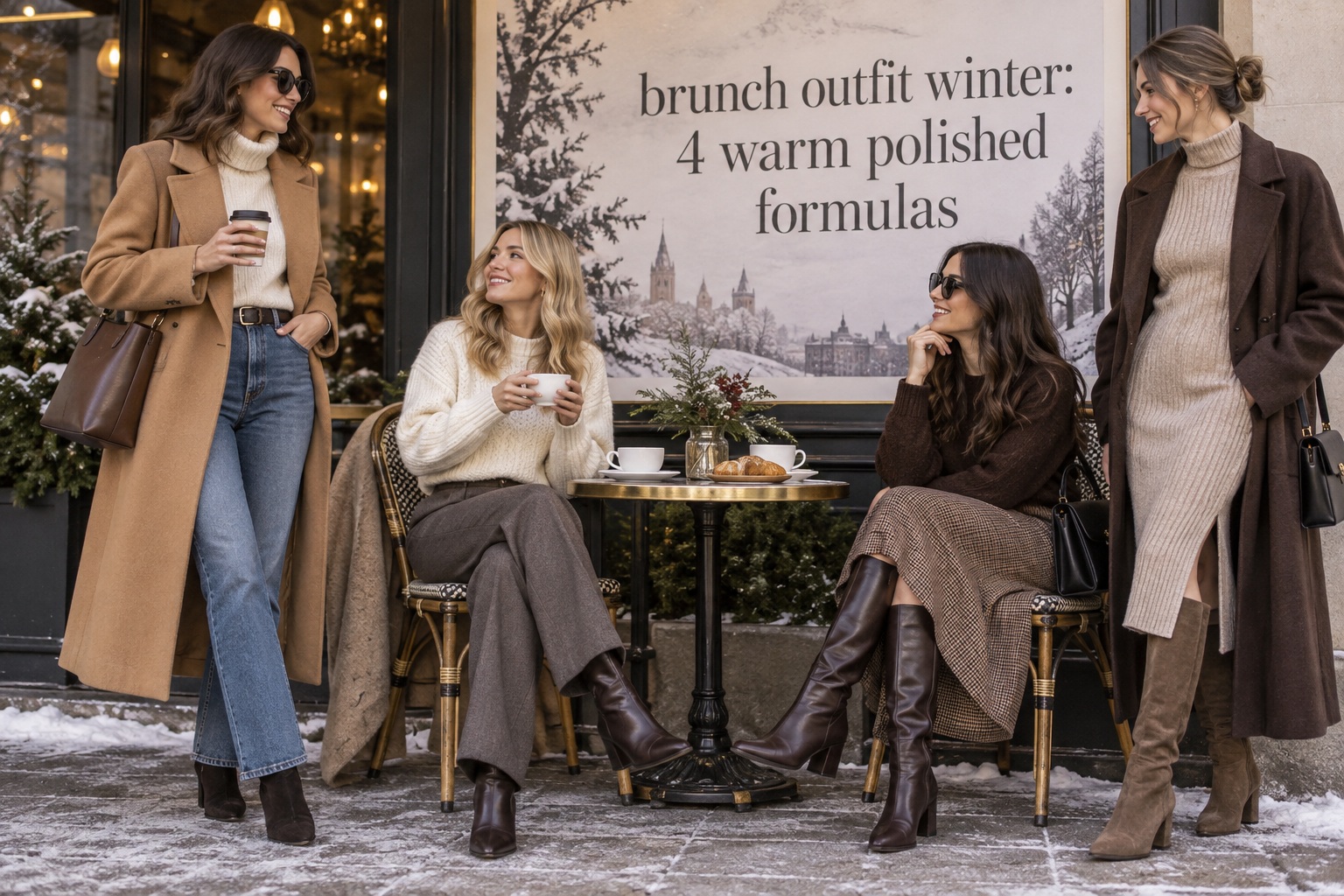
A winter brunch outfit has to solve more than one style problem at once. You may walk several blocks in the cold, wait outside for a table, sit near a sunny window, and then discover that the restaurant is warm enough for everyone to start removing layers. The outfit needs to look intentional in all of those moments without feeling like a heavy coat is doing all the work.
The easiest way to choose is to compare the conditions before choosing a category. Think about the temperature, the amount of outdoor time, the dress code, and whether you want a look that feels relaxed or noticeably polished. Then choose one of four reliable directions: refined denim, tailored trousers, a skirt with boots, or a knit dress. Each can become a strong brunch outfit winter solution when the layers are removable and the proportions stay clear.
Start with the brunch conditions, not the outfit category
Before opening your closet, make a quick four-part forecast. This keeps you from choosing a beautiful outfit that fails as soon as you leave home. The same sweater and skirt can work for a sunny walk in a mild city and feel completely wrong for a windy morning with a long wait outside.
Check the outdoor distance
For a short car ride and a mostly indoor brunch, you can let the outfit underneath the coat carry more of the personality. A lighter knit, a satin skirt, or a dress with a slim boot may be enough. If you will walk, take public transit, or stand outside, choose a warmer base and a shoe that can handle the route. A long coat, lined boot, and scarf can protect the look without making it feel overbuilt.
Your wedding has a lot of moving pieces. Your plan can still feel composed.
Zarellea organizes guests, vendors, budget, and timelines in one shared space — so you can make decisions with clarity, not stress.
Estimate the indoor temperature
Restaurants vary. Some feel chilly near the door, while others become warm once the room fills. Removable layers are the answer. A fitted long-sleeve base under a sweater, a cardigan over a thin top, or a coat worn open gives you options. Avoid building the entire outfit around one extremely thick layer that cannot be adjusted without ruining the proportions.
Read the venue instead of guessing a dress code
A neighborhood cafe usually welcomes denim, sneakers, and a soft coat. A hotel dining room, birthday brunch, or fashionable downtown restaurant may call for trousers, a skirt, a knit dress, or a more structured bag. When you are unsure, start with a polished base and make it casual with the shoe. Tailored trousers with clean sneakers are easier to relax than a very casual outfit is to dress up at the last minute.
Choose one visual anchor
Let one piece lead the outfit. It could be a camel coat, a textured sweater, a pair of knee-high boots, a patterned skirt, or a bright scarf. Once you have the anchor, keep the remaining pieces supportive. Winter outfits already contain several layers, so too many statement elements can make the look feel busy before you even add gloves or a bag.
The four winter brunch outfit directions
These four formulas cover most brunch situations without turning your wardrobe into a costume closet. Compare them by warmth, polish, movement, and how easily they can change once you arrive. The best choice is the one that suits the plan, not necessarily the one that looks most dramatic in a mirror.
1. Straight-leg jeans, a soft knit, and a polished coat
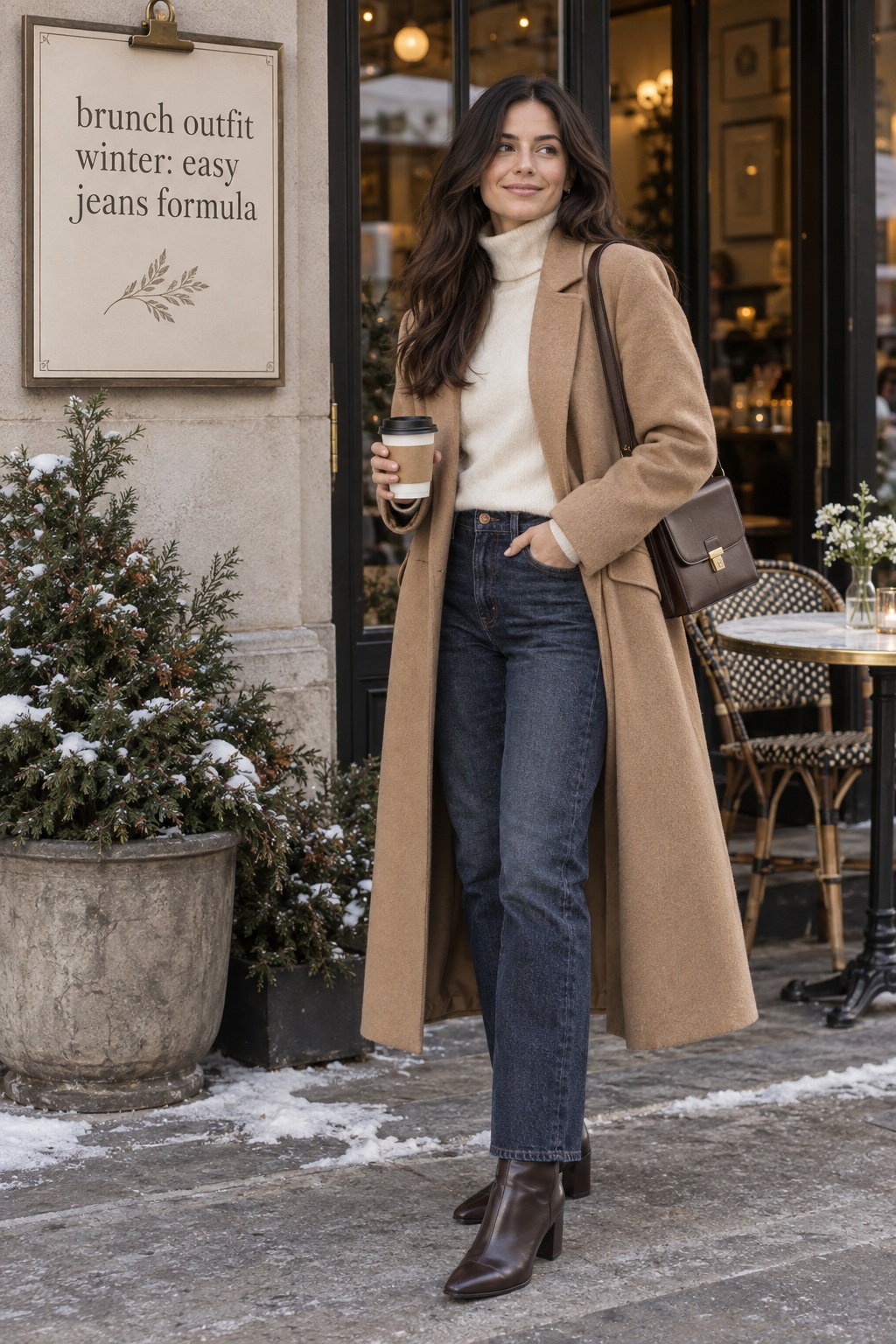
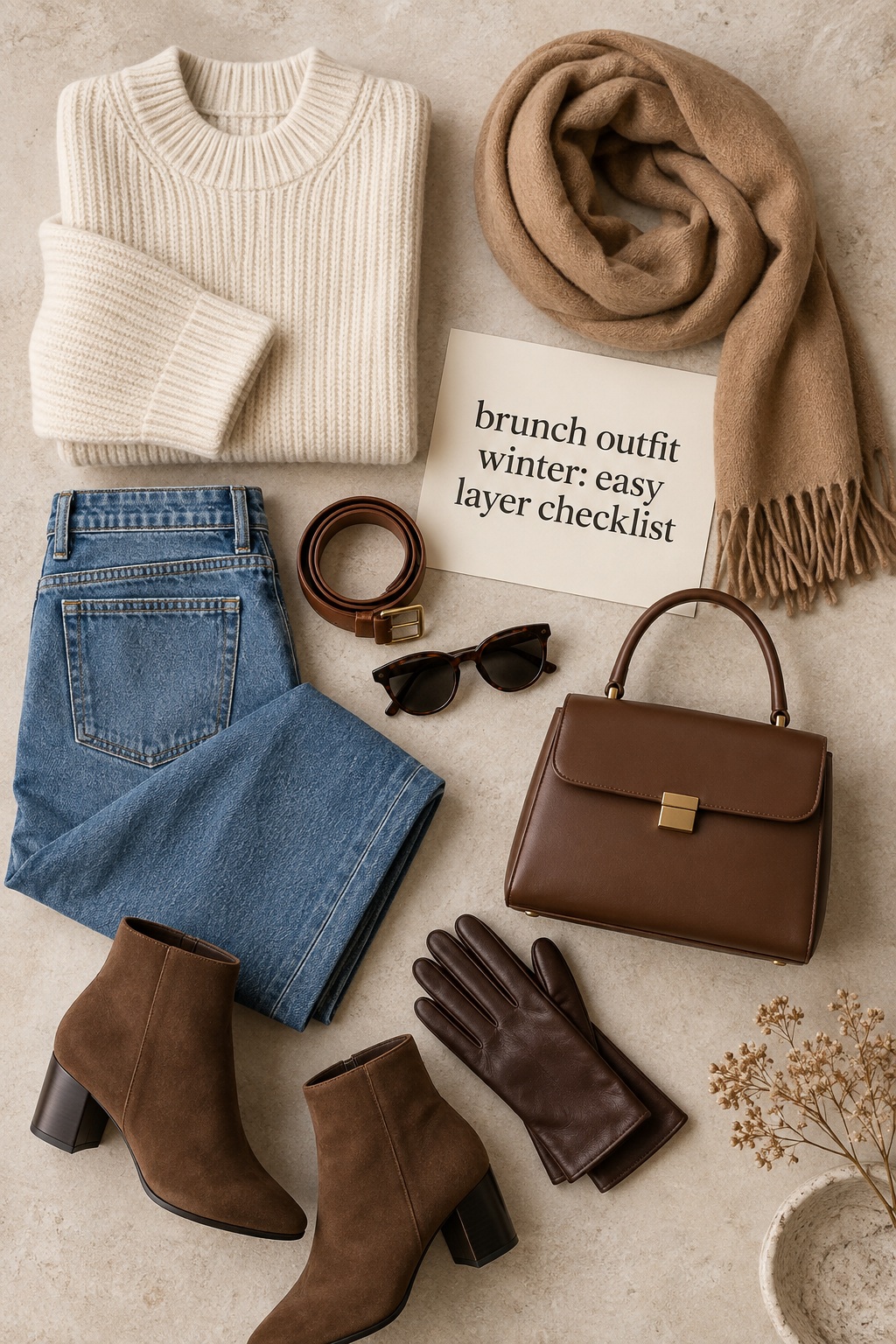
This is the dependable choice for a relaxed cafe, a long walk, or a brunch where you want to feel comfortable but still pulled together. Start with straight-leg or softly wide jeans, then add a fine-gauge turtleneck, crewneck, or collared knit. A long wool coat, quilted coat, or textured shearling layer gives the base enough structure to feel intentional. Finish with ankle boots, sleek sneakers, or a low block heel.
Use contrast to keep the formula from looking ordinary. Dark denim works with a cream sweater and camel coat. Medium denim can support a chocolate coat, burgundy scarf, or patterned bag. If the knit is oversized, add a small front tuck or choose a coat that falls cleanly from the shoulder. If the coat is voluminous, keep the sweater closer to the body so you can sit comfortably indoors.
This formula is easy to adjust for a more polished venue. Swap sneakers for pointed ankle boots, use a leather belt, and carry a structured shoulder bag. A small earring or neat hair accessory is enough to signal that the outfit is planned. You do not need to replace the jeans if the coat and finishing details provide the elevation.
2. Tailored trousers, a fitted base, and a textured layer
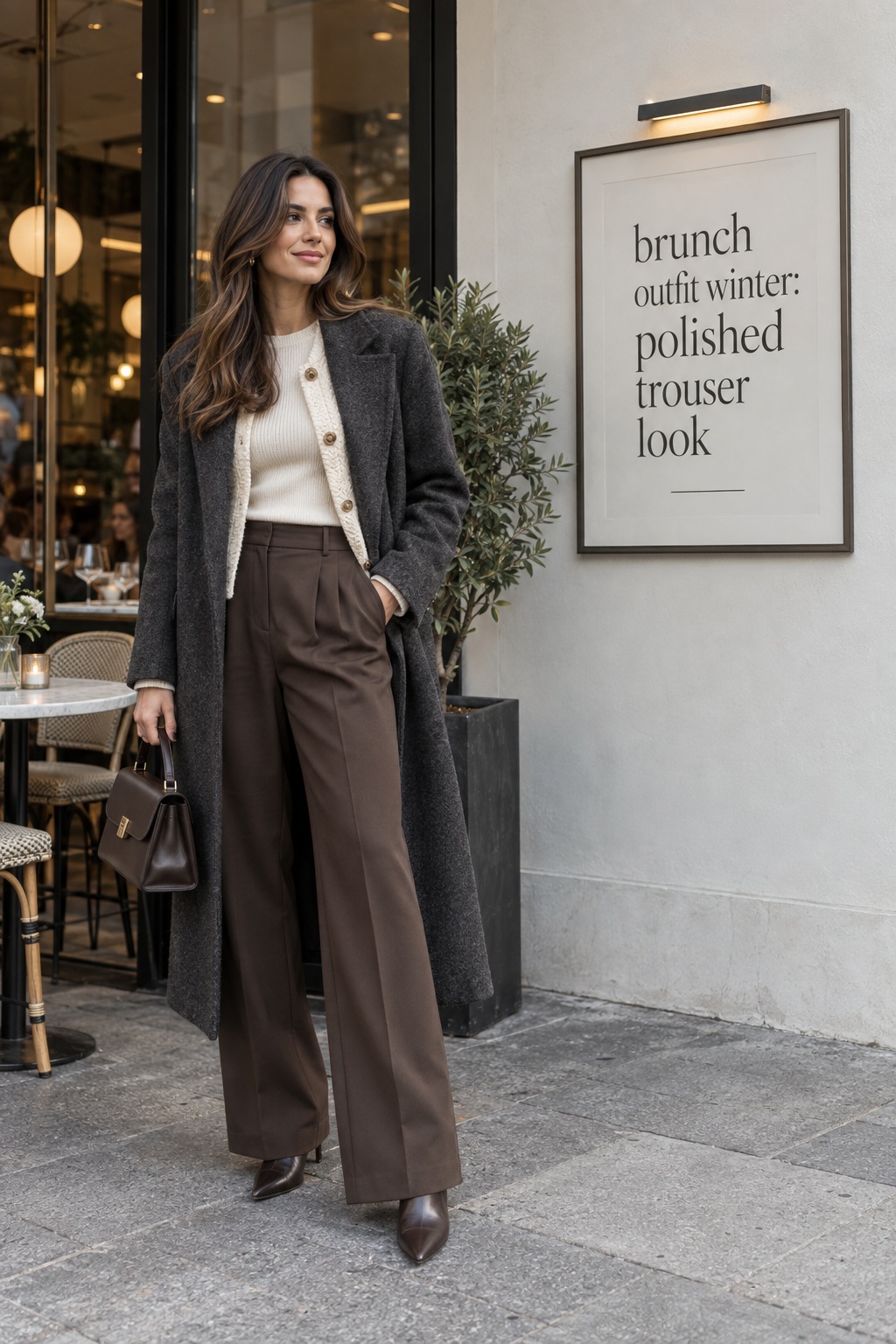
Choose this direction when the brunch is in a smart restaurant, when you want more polish than denim provides, or when you need an outfit that moves easily from coffee to another daytime plan. Begin with straight or wide-leg trousers and a fitted knit top. Add a cropped cardigan, a fine sweater, or a relaxed blazer beneath a long coat. The clean line of the trouser balances a soft layer and keeps the outfit looking composed.
Proportion matters more than the exact cut. A cropped top can support a fuller trouser because it leaves a clear waist. A longer sweater works best with a straighter trouser or a front tuck. If both the sweater and trouser are generous, add a sharper element such as a narrow belt, pointed shoe, structured bag, or crisp collar. One controlled line keeps the volume from becoming shapeless.
For a softer daytime effect, use oatmeal, gray, navy, chocolate, or cream in related tones and let texture create the interest. Ribbed knit with smooth wool, brushed coat with polished leather, or a crisp shirt under a soft sweater gives the outfit depth without requiring a bold print. For a dressier brunch, choose a satin-finish trouser or a subtle metallic accessory, then keep the rest quiet.
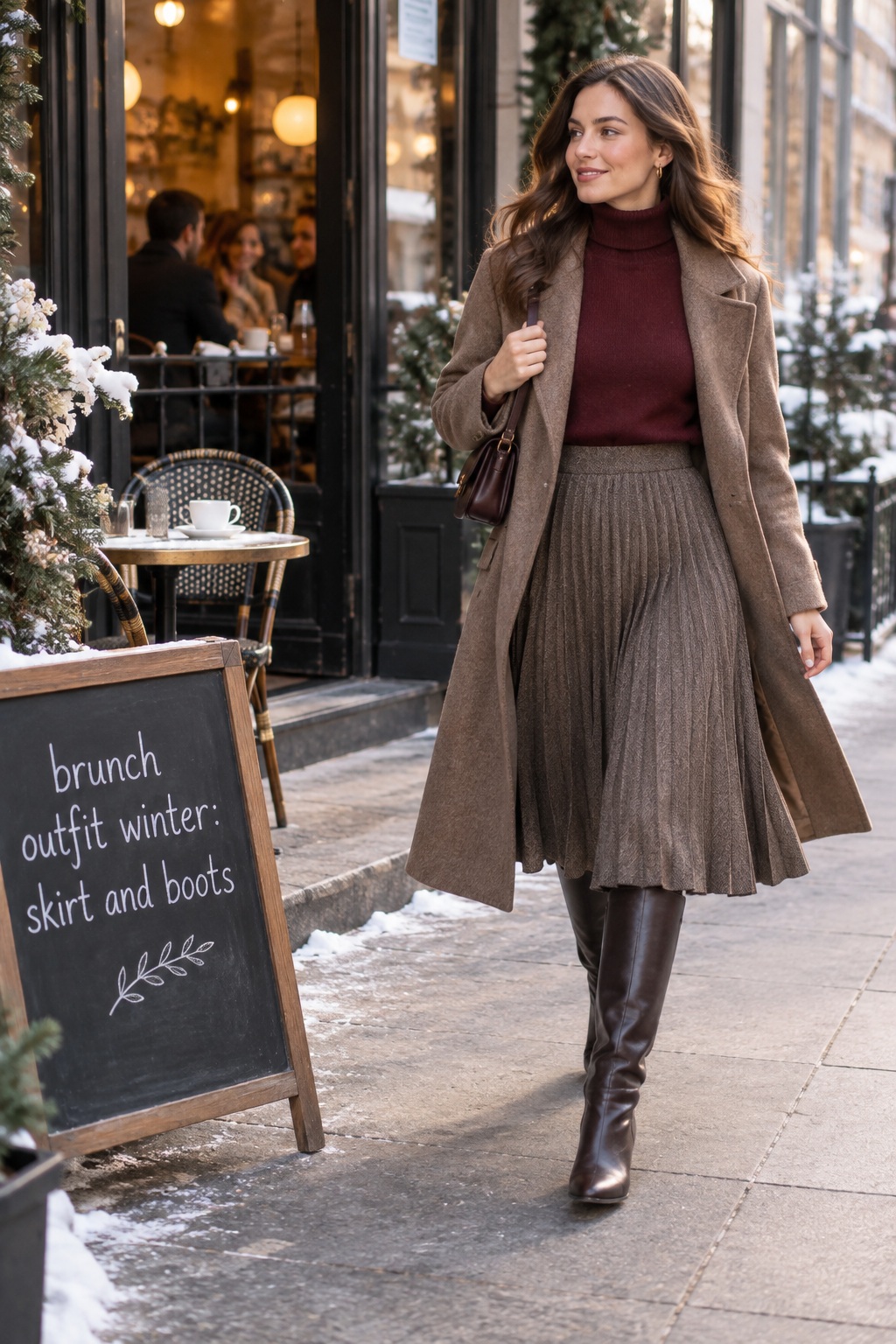
3. Midi skirt, warm tights, and knee-high boots
A midi skirt is useful when you want movement and a slightly more feminine brunch outfit without committing to a dress. Try a pleated, denim, knit, or satin midi with a fitted turtleneck or a shorter sweater. Opaque tights add warmth under a skirt, while knee-high boots make the gap between hem and shoe feel deliberate. A long coat worn open creates a strong vertical line as you walk.
Keep the top half controlled when the skirt has volume. A tucked fine knit, fitted cardigan, or cropped sweater will usually make the proportions easy to read. If the skirt is narrow, you can use a chunkier sweater or a scarf with more texture. The goal is not to make every piece slim. It is to decide where the volume belongs and give the rest of the outfit a clear edge.
Choose the finish based on the venue. A denim midi with a fisherman sweater and lug-sole boots feels casual. A satin midi with a fine knit, leather belt, and slim boots feels more refined. A patterned skirt can be the visual anchor, so match only one small color in the scarf or bag instead of building a fully coordinated set.
4. Knit dress, belt, and weather-ready boots
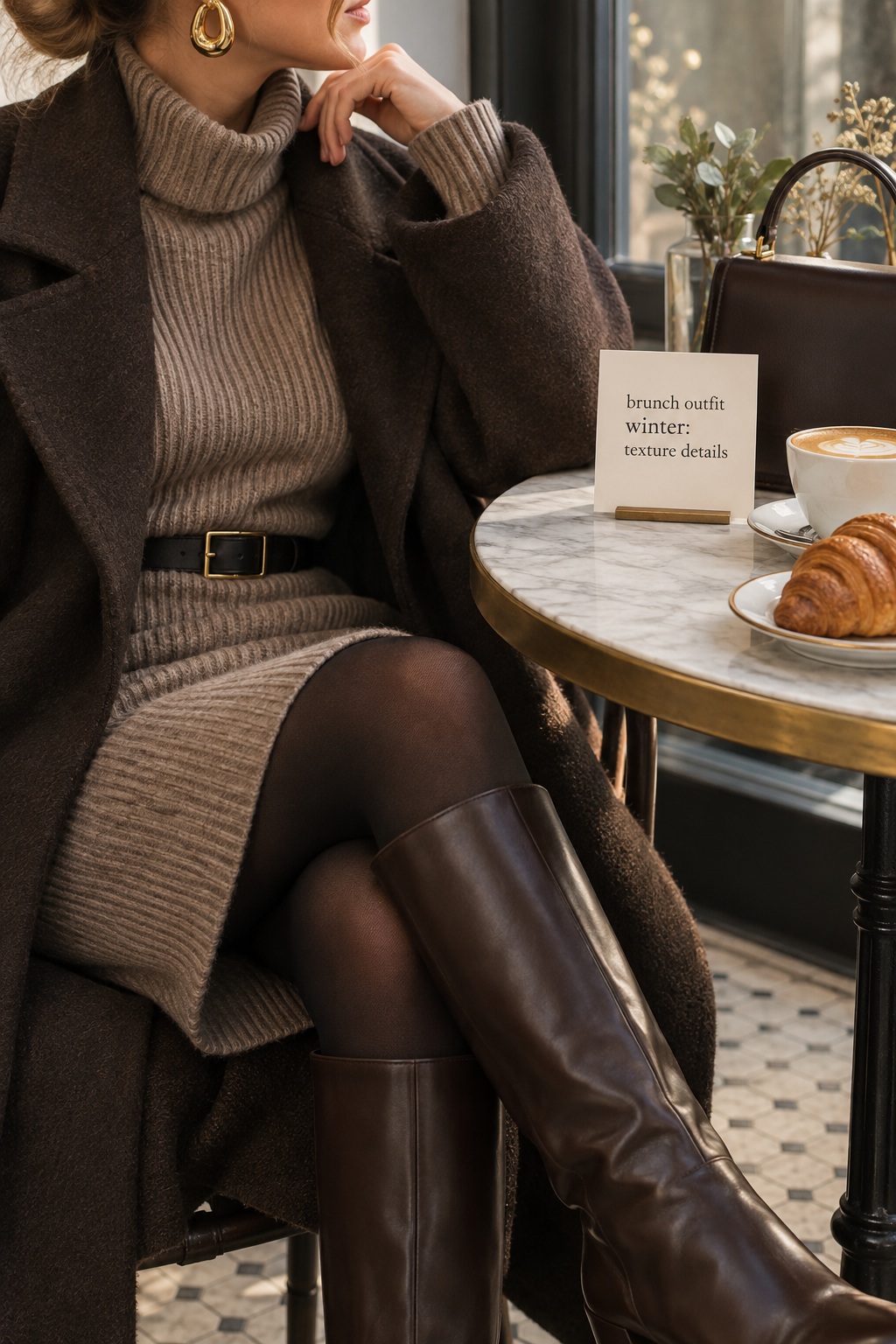
A knit dress is the one-and-done answer when you want the outfit to feel finished without combining several separate pieces. Choose a straight, ribbed, or softly shaped dress and add a belt only if the silhouette needs a break. Knee-high boots give warmth and structure, while ankle boots create a more casual line. Add a long coat for the walk and a compact bag for the table.
Do not assume that a sweater dress must be tight. A relaxed shape can look elegant with a longer coat, a clean boot, and one defined accessory. If the dress is loose through the body, avoid adding an oversized scarf, huge bag, and heavy coat all at once. One structured element is usually enough. If the dress is slim, a cropped jacket or shorter coat can keep the proportions lively.
This direction works well for a brunch that may become a gallery visit, birthday celebration, or afternoon gathering. You can adjust the mood with the boot. A flat lug boot feels relaxed, a narrow knee boot feels polished, and a heeled boot adds occasion without demanding a completely different outfit. If the dress is thin, add opaque tights and a close-fitting base layer underneath.
How to layer each look without losing the silhouette
Layering works best when each piece has a job. The base manages comfort against the skin, the middle layer adds warmth or texture, and the outer layer protects you from the weather. A simple three-part system makes it easier to remove one piece indoors without leaving the outfit unfinished.
Use a close base when you need flexibility
A thin long-sleeve top, fitted mock neck, camisole with a cardigan, or smooth bodysuit can sit under a sweater without adding obvious bulk. Choose the base according to the neckline and sleeve shape. A high neck under a crewneck adds warmth, while a smooth tank under a cardigan keeps the arm area comfortable. When you expect a warm restaurant, a removable cardigan over the base may be more useful than a heavy sweater.
Make the middle layer do the styling work
The middle layer is what people see after you remove the coat. It should have enough interest to stand alone. A cable knit, crisp shirt, fine turtleneck, cardigan, or softly shiny top can all work. If the middle layer has substantial texture, keep the base smooth. If the base has a print or visible collar, choose a calmer sweater or jacket above it.
Choose the coat by the outfit underneath
A long coat is the most versatile option because it protects a dress, skirt, trousers, or jeans without cutting the body into too many sections. A shorter puffer or shearling jacket can be better for a casual look or active walking, but balance it with a clean lower half. If the outfit underneath is wide, avoid a coat that stops at the widest point unless the hem is deliberately cropped.
Let the shoes connect warmth and polish
Boots are an easy winter brunch choice because they bridge practical movement and visual polish. Ankle boots work with jeans and trousers. Knee-high boots support skirts and dresses. Lug soles make a delicate dress more grounded, while a sleek pointed boot makes a chunky sweater feel more refined. Sneakers can work with denim, trousers, or a casual knit dress when the venue is relaxed and the route is long.
Look at the hem before deciding. Cropped jeans need a shoe that makes the exposed ankle look intentional. A midi skirt often benefits from a boot that follows the leg rather than stopping at its widest point. Wide trousers need enough shoe structure to keep the hem from dragging. These small decisions make the outfit feel complete even when the clothes are simple.
Keep accessories useful but visible
A scarf, gloves, belt, bag, or hat can add personality, but winter outfits do not need every accessory at once. Pick one accessory to repeat a color or texture from the outfit. A leather belt can echo ankle boots. A wool scarf can soften a tailored coat. A structured bag can sharpen a relaxed sweater. If the coat already has a strong texture, choose a simpler scarf and let the outer layer lead.
Fast fixes when the forecast or dress code changes
A useful outfit formula should survive small changes. You do not need to start over because the forecast dropped, the reservation moved outdoors, or your friend chose a more formal restaurant. Use one targeted swap first, then reassess the balance.
When the morning is colder than expected
Add warmth closest to the body before adding a much larger coat. A thin thermal-style top, opaque tights, warm socks, or a close base under the sweater can preserve the silhouette. If you need more protection, change the shoe to a lined boot and add a scarf that covers the neck. This usually looks cleaner than piling a second bulky sweater on top of the first.
When rain or wet sidewalks are likely
Choose the outer layer and shoes first. A water-resistant coat, hood, or compact umbrella matters more than a delicate statement layer. Wear a boot with a stable sole and keep trousers cropped enough to avoid a wet hem. A knit dress with tall boots can be easier to protect than a long skirt or wide trouser when the route is messy.
When the brunch becomes dressier
Keep the base, but replace the most casual finishing piece. Trade sneakers for pointed ankle boots, a puffer for a tailored coat, or a soft tote for a structured bag. A belt, small earring, or satin texture can lift jeans and a knit without changing the entire look. The fastest polish usually comes from a clean shoe and a coat with a clear shoulder line.
When you will spend a long time outside
Favor the formulas that keep the legs and feet protected. Trousers with a close base, a knit dress with tights, or a midi skirt with tall boots will be easier than a cropped jean with a low shoe. Add a scarf and gloves that you can remove at the table. If you need a hat, choose a simple shape that works with the coat and does not compete with the neckline.
When the outfit feels too bundled
Remove one layer before changing the whole base. Try a thinner knit under the coat, open the coat to show the vertical line, or replace a large scarf with a smaller one. You can also create space by rolling the sleeve once, showing a little ankle above the boot, or using a front tuck. The goal is controlled breathing room, not less warmth everywhere.
The most reliable brunch outfit winter formula is the one that still looks good after the coat comes off. Start with the conditions, choose one clear direction, and give every layer a job. Jeans can look polished with a strong coat. Trousers can feel relaxed with a soft knit. A skirt can stay warm with tights and tall boots. A knit dress can handle several dress codes with a simple change of shoe. Once you compare warmth, mobility, and polish together, getting dressed becomes much less uncertain.
FAQ
What is the easiest brunch outfit winter formula?
Start with straight-leg jeans, a fine knit, ankle boots, and a polished coat. It is comfortable for walking, easy to adjust indoors, and simple to make dressier with a belt, structured bag, or pointed boot.
Can I wear white jeans to a winter brunch?
Yes. Pair them with a textured sweater, warm-toned coat, and brown or black boots. Keep the rest of the outfit clean so the winter-white base looks intentional rather than overly summery.
Are dresses warm enough for a winter brunch?
A knit dress can be warm enough when you add opaque tights, a close base layer, boots, and a weather-ready coat. A belt or structured bag can give a relaxed dress more shape.
What shoes work best with a winter brunch outfit?
Ankle boots, knee-high boots, lug-sole boots, and clean sneakers are the most flexible choices. Match the shoe to the hem, walking distance, and formality instead of choosing it separately from the rest of the outfit.
How can I look polished without wearing heels?
Use a structured coat, tailored trousers, a clean boot, a neat belt, or a compact bag. A pointed flat, sleek loafer, or stable ankle boot can give the outfit a finished line without the height of a heel.
What should I wear if the brunch venue is casual?
Choose jeans or relaxed trousers with a sweater, weather-ready boots, and a shorter puffer, shearling jacket, or casual wool coat. Keep one detail polished, such as a belt, scarf, or structured crossbody.
How do I avoid looking bulky in winter layers?
Use a close base, one insulating middle layer, and one protective coat. Keep the lower half or the waist visibly defined, and remove one competing texture before adding another accessory.
Leave a Reply