Introduction
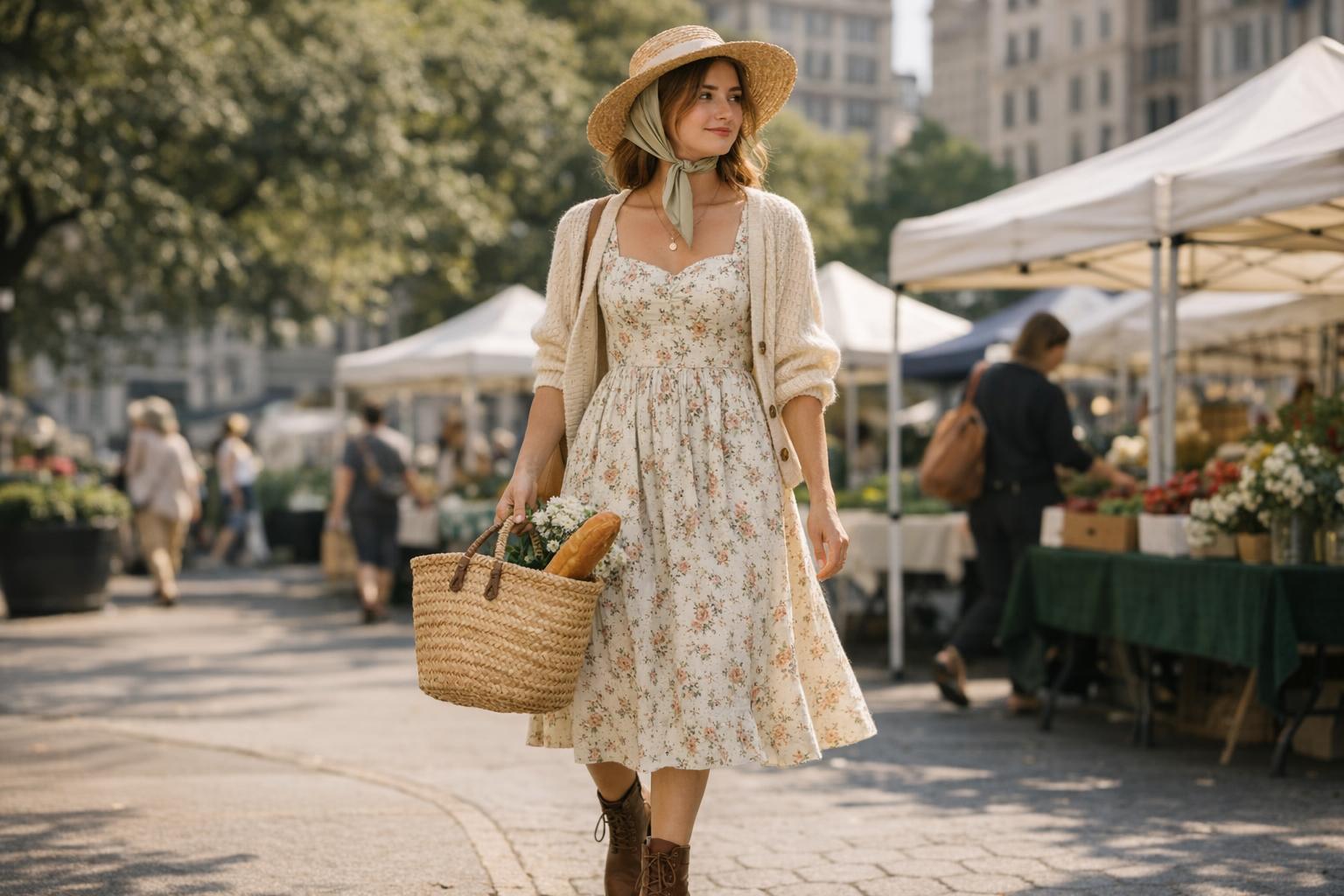
There’s a particular kind of softness that reads instantly as cottagecore: a silhouette that moves when you walk, a print that feels borrowed from a wildflower field, and textures that look better in daylight than they do under nightclub lights. The cottage core outfit isn’t costume—at its best, it’s an aesthetic discipline built around romance, rustic charm, and a calm, nature-leaning palette that makes the wearer feel slightly removed from the frantic pace of modern dressing.
In practice, this cottage core outfits aesthetic shows up everywhere: weekend farmer’s market mornings, casual coffee dates, long park walks, and even “city cottagecore” commutes where a woven bag and a floral dress soften the edges of an urban backdrop. It’s also a look that thrives across seasons. In warm months, light cottage core outfits lean into breathable fabrics and sun-washed color. In colder months, prairie-inspired layers and textured knits create warmth without losing the mood.
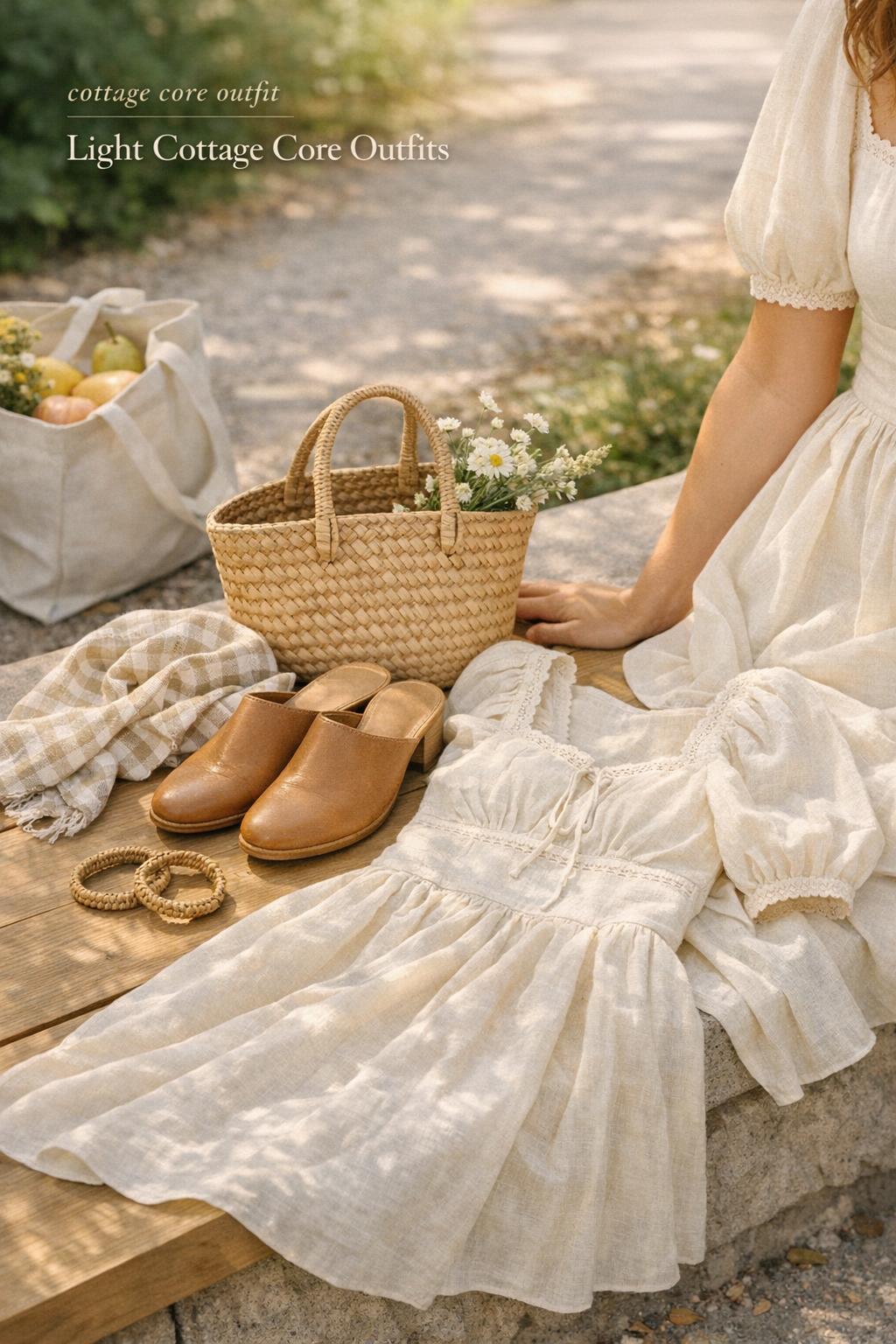
Part of the appeal is cultural: cottagecore has been framed as both a fashion trend and a broader aesthetic with related offshoots—fairycore, farmcore, goblincore, even grandmacore—each nudging the same pastoral dream in a slightly different direction. The style’s popularity has also been tied to social media moments and a renewed appetite for handmade and vintage pieces, the kind you’d browse through a marketplace like Etsy or a brand-led curation such as Shoppe Flora. The result is a wardrobe language that feels personal, feminine, and quietly intentional.
What “cottagecore” really means in clothing
Cottagecore, as a concept, is an aesthetic that romanticizes rural life—especially the visual cues of countryside calm—then translates that into modern styling. In fashion terms, it typically resolves into prairie silhouettes, milkmaid dress shapes, floral prints, and accessories that suggest craft and utility: straw bags, woven details, crochet textures, silk scarves, and the occasional lace collar that frames the face like a portrait.
It also sits in a family of related aesthetics. Fairycore pushes the look more ethereal and storybook, farmcore leans practical and workwear-adjacent, goblincore tilts toward earthy quirk, and grandmacore embraces vintage coziness. You don’t need to label yourself to dress the part, but understanding these relationships helps you steer your outfit toward “romantic meadow” versus “rustic garden” versus “forest girl era.”
Key pieces that quietly do the heavy lifting
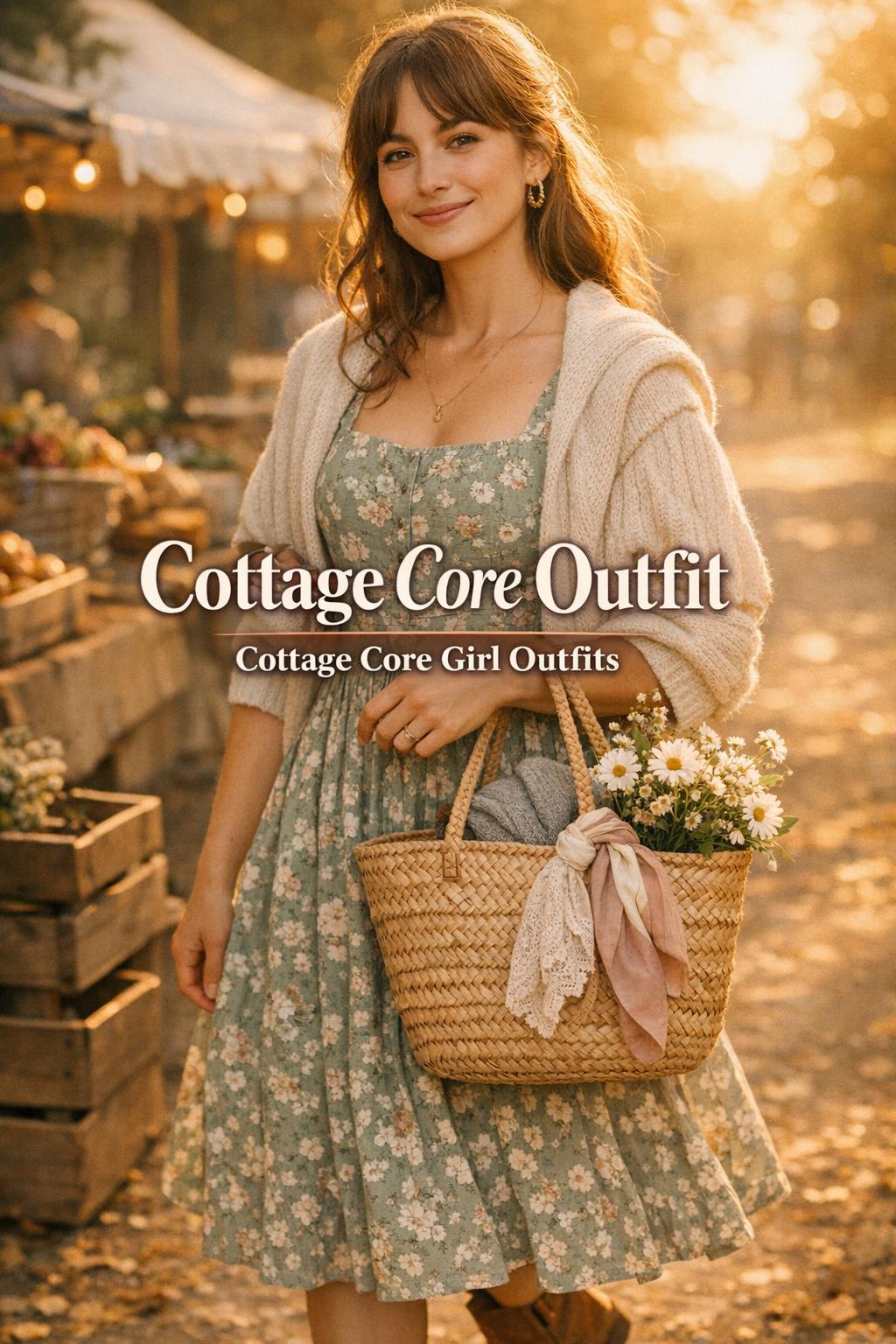
Every strong cottagecore wardrobe has a few anchor items—pieces that instantly set the scene. They’re less about novelty and more about shape, texture, and repetition. When these foundations are right, you can keep everything else simple and still read unmistakably cottagecore.
Milkmaid dresses and prairie silhouettes
The milkmaid dress and the prairie dress are the silhouettes most closely associated with cottagecore fashion. They’re defined by gentle structure—often a fitted bodice with a fuller skirt—and details that add romance without fuss, like puff sleeves. The key is proportion: a defined top half balanced by movement through the hem creates that “storybook” line without feeling overly formal.
Florals, gingham, and nature-inspired prints
Florals and gingham appear repeatedly because they function like visual shorthand. A ditsy floral suggests a meadow; gingham nods to picnic tradition; nature motifs keep the look grounded. If you’re building cottagecore outfits for women who want versatility, choose prints that feel wearable at a distance—small-scale florals, soft checks—so the outfit reads romantic rather than theatrical.
Natural fabrics and tactile texture
Even when an outfit is simple, fabric choice changes the entire mood. Linen and cotton are repeatedly associated with cottagecore because they look authentic in daylight and feel comfortable over long hours. Wool blends support the colder side of the aesthetic, especially when you want warmth but still crave texture. Lace and crochet add that hand-touched feeling that pairs naturally with the cottagecore idea of craft and calm.
Accessories that signal the aesthetic
Accessories are where cottagecore becomes instantly legible. Straw bags and woven bags are iconic because they suggest countryside practicality. Crochet accessories and woven bracelets bring softness at the wrist and neckline. A silk scarf—whether tied in the hair or looped at the neck—adds polish that feels European in spirit while still aligning with the rustic charm at the heart of cottagecore.
Footwear that keeps it grounded
Cottagecore footwear works best when it looks walkable. Ankle boots add structure to floaty dresses, mules feel effortless with skirts, and simple leather sandals keep summer outfits realistic. The aesthetic is romantic, yes—but it’s also meant to move through real life, whether that’s a city sidewalk or a countryside path.
- Core dress shapes: milkmaid dress, prairie dress
- Prints: florals, gingham, nature motifs
- Fabrics and texture: linen, cotton, wool blends, lace, crochet
- Accessories: straw bag, woven bag, silk scarf, woven bracelets, lace collar
- Footwear: ankle boots, mules, simple leather sandals
Look: light cottage core outfits in sun-washed florals
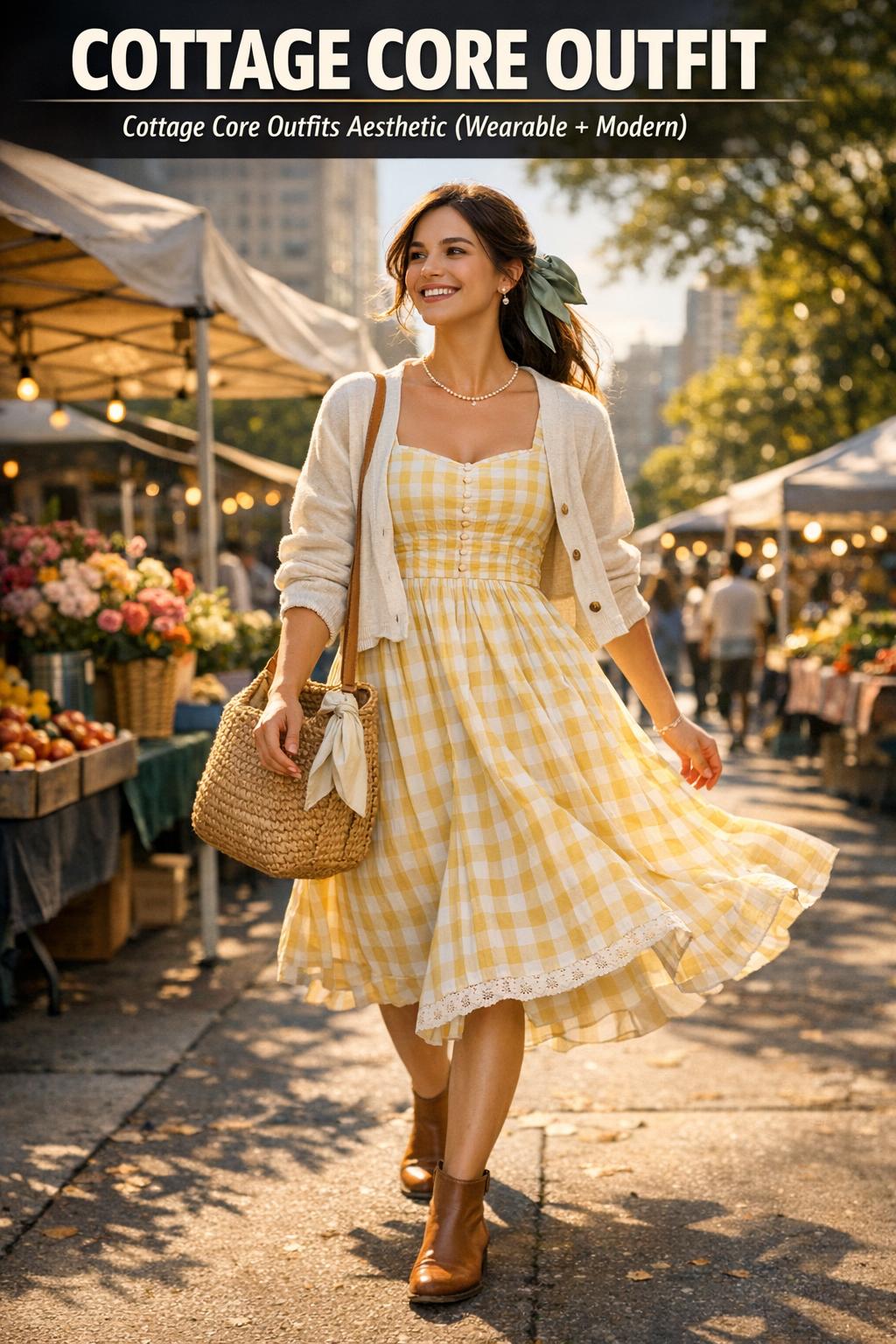
This is the cottagecore version of minimal summer dressing: airy, romantic, and unforced. The silhouette should feel buoyant—something that catches the breeze rather than clinging—while still keeping a gentle sense of shape through the bodice or waist.
Start with a floral dress in a soft color story, then let fabric do the work: linen or cotton will look naturally textured, especially in daylight. A straw bag or woven bag keeps the look grounded in rustic charm, while simple leather sandals keep the outfit practical for long walks, outdoor markets, or travel days when comfort matters as much as mood.
Why this fits the cottage core outfits aesthetic: it doesn’t chase complexity. The romance comes from proportion and print—prairie influence through shape, nature influence through pattern—then a single accessory telegraph (woven texture) seals the identity.
- Key garments: floral dress in linen or cotton
- Footwear: simple leather sandals
- Accessories: straw bag or woven bag
Look: the “cottage core girl outfits” formula—puff sleeves and a woven accent
When people picture cottagecore in its most recognizable form, they’re often imagining a puff-sleeve moment. The look is youthful but not childish, romantic without being overly precious, and visually clear even in a crowded room.
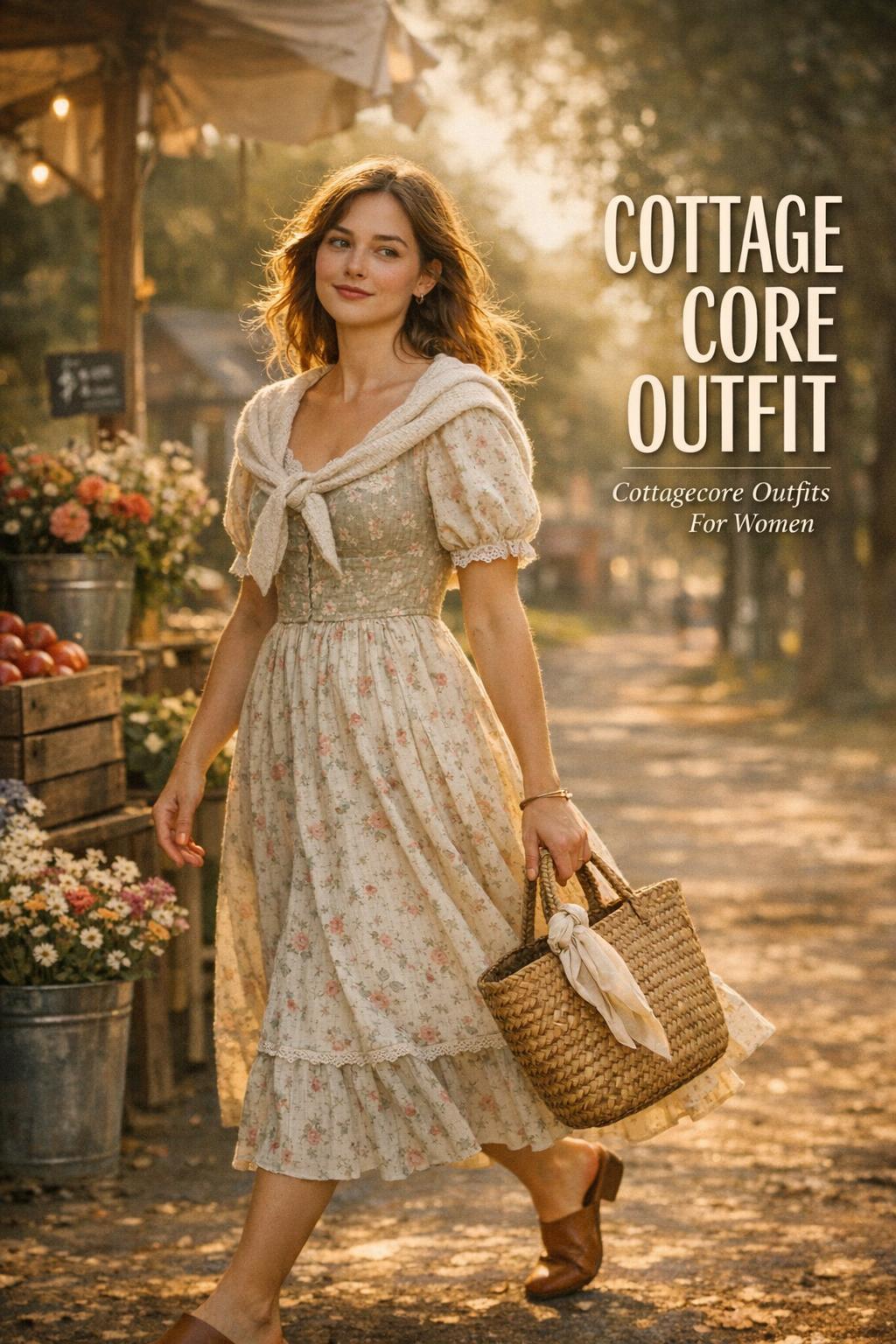
Choose a milkmaid dress with puff sleeves to establish the silhouette. Keep the palette gentle—nature-inspired tones and soft contrasts—then add one accessory with obvious texture: a woven bag or straw bag works perfectly. If you want a slightly more styled finish, a silk scarf can be tied as a hair detail, or worn at the neck for that polished, magazine-like touch.
Why it works: puff sleeves bring volume near the face, which makes accessories like scarves and lace collars feel harmonious rather than fussy. The woven element keeps everything from drifting too “fairytale costume,” anchoring the romance in something rustic and usable.
Look: rustic chic with a striped shirt dress and countryside ease
Not every cottagecore outfit needs florals. This interpretation leans rustic chic—cleaner, slightly more tailored, and ideal for someone who wants the aesthetic without a full-on prairie dress moment. The mood is “quiet countryside,” with a modern line.
A striped shirt dress provides structure and simplicity while still feeling pastoral when paired with natural textures. Add a straw bag for that unmistakable cottagecore signal, then choose footwear based on your day: mules for an effortless city-café mood, or leather sandals for warm-weather practicality.
Why it fits: cottagecore is an aesthetic, not a uniform. A shirt dress can still feel cottagecore when the styling references nature and craft—woven accessories, soft color choices, and a silhouette that reads relaxed rather than corporate.
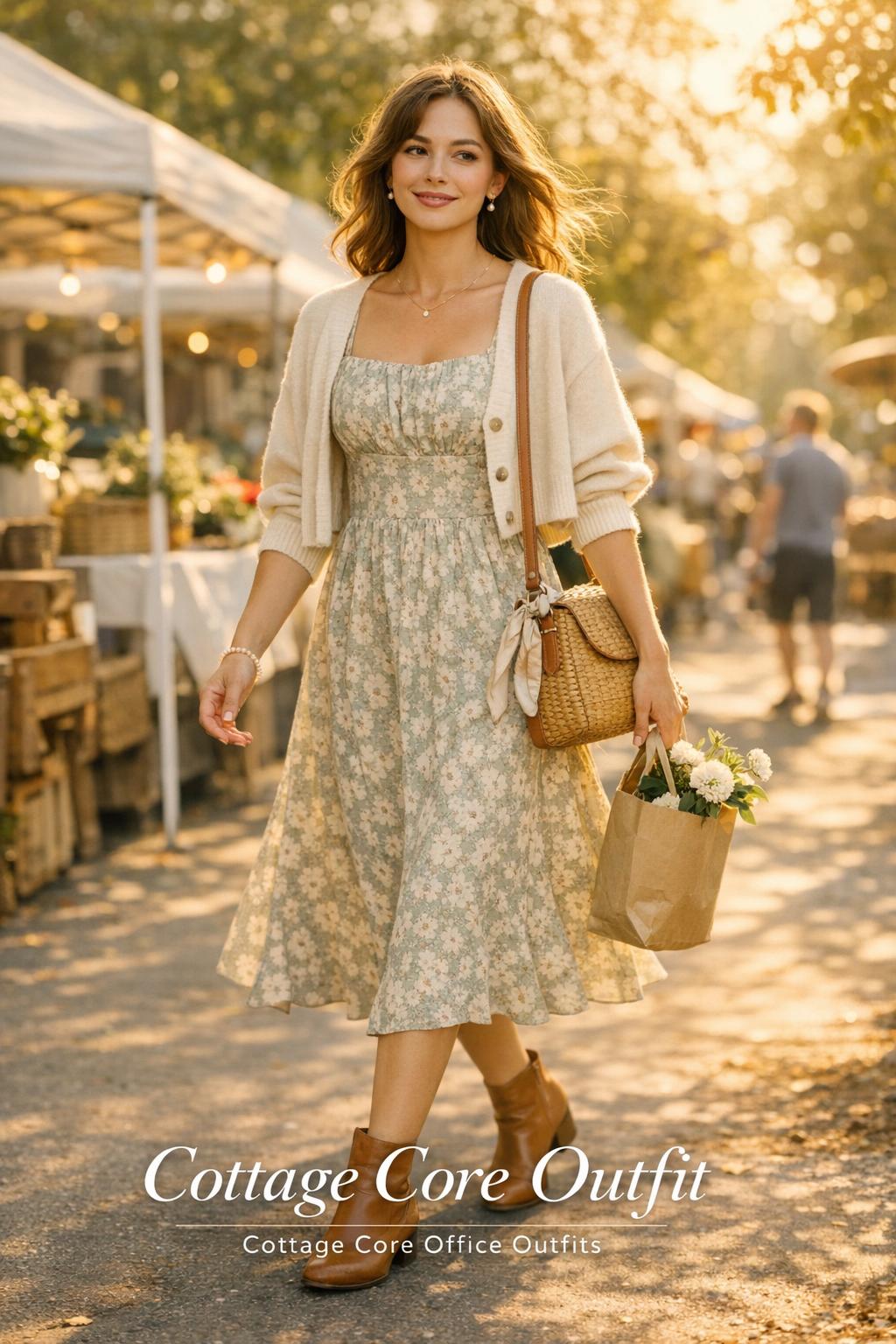
Look: crochet-knit romance with a woven bag—soft texture, strong identity
This look is built on texture rather than print. It’s ideal when you want cottagecore to feel elevated and modern—less “flower field,” more “quiet artistry.” The silhouette should skim the body without clinging, letting knit texture and movement speak.
A crochet-knit dress creates immediate visual interest, especially when balanced with something simple and natural, like a woven bag. Keep the color palette calm and nature-leaning, so the texture reads as intentional. For footwear, ankle boots can add contrast and structure, while mules keep the look soft and contemporary.
Why it works: crochet and woven accessories share a hand-touched sensibility. Together they reinforce cottagecore’s craft-forward impression without leaning heavily on overt prairie tropes.
Look: cottage core office outfits—romantic, but composed
Cottagecore can be surprisingly wearable for the office when you treat it like a refinement exercise. The goal isn’t to bring a picnic blanket to your desk; it’s to translate romantic dressing into a silhouette that feels intentional and work-appropriate.
Start with a blouse that nods to the aesthetic—think a peasant blouse feel, gentle volume, perhaps a lace collar detail—then pair it with a skirt that holds a clean line. If you want print, keep it subtle: a soft floral that reads calm rather than loud. Accessories should be restrained: a silk scarf for polish or a small woven accent that hints at rustic charm without becoming distracting.
Why it works: office dressing thrives on coherence. Cottagecore, at its best, is coherent by design—soft shapes, nature-inspired palettes, tactile materials—so the look can feel professional when the proportions are controlled and the accessories are edited.
- Key garments: blouse with gentle volume (peasant-blouse mood), clean-line skirt
- Accessories: silk scarf or subtle woven detail
- Footwear: mules or ankle boots depending on formality and weather
Look: cozy forest-girl layering for fall and winter
Fall and winter cottagecore is where texture becomes the lead character. The silhouette shifts from breezy to layered—still romantic, but grounded by warmth and weight. Think prairie influence with a practical edge: you want to look like you stepped out of a period drama, but you also want to survive a cold commute.
Build the base around a dress or skirt with movement, then add warmth through wool blends and layered pieces. Ankle boots make the look feel intentional and weather-ready, and accessories can do quiet work: a woven bag adds texture, while crochet elements or a lace collar keep the softness near the face.
Why it fits: cottagecore isn’t limited to summer. The same principles—nature tones, tactile fabrics, romantic proportion—become even more compelling when the season demands layering and texture.
A city-to-countryside rubric: where the look is worn, and how to adapt it
Cottagecore is often associated with the countryside, with cultural references that point back to the United Kingdom and rural England as part of the aesthetic’s broader mythology. But most people wear it in modern environments—U.S. cities, suburbs, college campuses—where practicality matters. The trick is learning what to amplify and what to soften depending on your setting.
In a countryside setting—outdoor gatherings, day trips, garden strolls—you can lean fully into prairie silhouettes, florals, straw bags, and sandals without feeling overdressed. In the city, the same outfit benefits from one stabilizing element: a cleaner silhouette like a shirt dress, more restrained prints, or accessories that are tactile but not oversized. This is the difference between “romantic fashion” and “themed dressing.”
If you’re someone who loves the idea but worries it won’t translate to your real life, start with accessories first. A woven bag or silk scarf can shift even a simple outfit toward cottagecore, then you can layer in florals or milkmaid shaping as your comfort grows.
Style tip: how to keep cottagecore romantic, not theatrical
The most common misstep with cottagecore is treating every detail as equally loud: puff sleeves, heavy florals, lace, crochet, straw accessories—all at once. In editorial styling, restraint is what makes romance feel modern.
Choose one focal point per outfit. If the dress is a bold prairie silhouette, keep accessories quieter: a simple woven bag and understated sandals. If the outfit is minimal in shape (like a shirt dress), let one romantic element come forward—a silk scarf, a lace collar, or a delicate floral print. This balancing act is what makes cottagecore outfits for women look intentional rather than like a costume rack.
- One statement silhouette at a time (puff sleeves or full skirt, not every volume detail together)
- One high-texture element at a time (crochet or lace or heavy weaving)
- Keep the color story nature-inspired and calm for a refined finish
How to start: a practical wardrobe plan for cottagecore outfits for women
Building a cottage core outfit wardrobe is easier when you separate “core pieces” from “accent pieces.” Core pieces create the silhouette and can be reworn across seasons; accent pieces deliver the aesthetic cue—woven texture, crochet, a scarf detail—that makes the outfit unmistakably cottagecore.
Budget-friendly starters that still look authentic
If you’re starting on a budget, prioritize items that work hard across different looks: a floral dress that can be worn alone in summer and layered later; a blouse with romantic volume that can move between weekend and cottage core office outfits; and one excellent accessory like a woven bag. Shopping routes vary—some prefer brand curation such as Shoppe Flora, others enjoy the wide handmade and vintage mix found on Etsy—but the decision should be guided by how often you’ll truly wear the piece.
Capsule logic: repeat silhouettes, rotate details
A capsule approach keeps cottagecore from becoming clutter. Repeat the same few silhouettes—milkmaid dress, clean-line skirt, soft blouse, shirt dress—then rotate details like florals versus gingham, or crochet versus silk scarf. This is also where seasonality becomes easy: linen and cotton for warmth, wool blends when temperatures drop, ankle boots when you need traction and structure.
- Core silhouettes: milkmaid dress, prairie dress, shirt dress, skirt-and-blouse
- Accent cues: straw bag, woven bag, crochet accessories, lace collar, silk scarf
- Seasonal switches: linen/cotton in spring-summer, wool blends and ankle boots in fall-winter
Where related aesthetics fit: fairycore, farmcore, goblincore, grandmacore
One reason cottagecore stays interesting is its flexibility. If your taste leans whimsical, fairycore makes sense—romantic, storybook, and airy, often emphasizing the “fairy-tale fashion” side of the spectrum. If you prefer practicality, farmcore grounds the look with a more utilitarian sensibility. Goblincore keeps it earthy and quirky, while grandmacore leans into cozy vintage charm.
Use these sub-aesthetics as styling nudges rather than strict categories. A crochet-knit dress with a woven bag reads more fairycore-adjacent; a structured shirt dress with straw accessories can feel farmcore-leaning; lace collars and vintage-inspired touches can drift toward grandmacore. The underlying cottagecore principles remain the same: nature cues, tactile fabrics, and romantic proportion.
A note on the fashion trend: inspiration versus real life
Cottagecore has been framed repeatedly as a fashion trend, and trends often come with extremes—hyper-styled images, heavily curated outfits, and occasional pressure to “look the part.” In real wardrobes, cottagecore works best when it’s treated as a vocabulary rather than a strict dress code.
A useful approach is to build one outfit that feels unmistakably cottagecore for days you want full mood—floral dress, woven bag, sandals—then keep a second, quieter version for daily wear, like rustic chic with a shirt dress and subtle woven accessories. This protects the aesthetic from becoming repetitive and keeps it wearable across different spaces, including work.
Shopping pathways, without losing your point of view
Cottagecore is often discovered through editorial inspiration—guides that highlight woven bags, floral dresses, and crochet textures—then built through a mix of sources. A brand like Shoppe Flora emphasizes romantic and feminine cottage core clothing style with vintage-inspired energy. A marketplace like Etsy offers variety through handmade and vintage goods, shaped by individual makers and shops. Even trend-focused retailer blogs, such as Urban Expressions, frame the aesthetic through accessory pairings like woven bracelets and silk scarves.
The practical takeaway isn’t where you shop—it’s how you choose. Prioritize fabric feel and silhouette first. A beautiful accessory can elevate a simple dress, but an unconvincing base piece is hard to rescue. When in doubt, choose fewer items with stronger identity: one dress you love, one woven bag you carry constantly, and one seasonal shoe that makes sense for your daily life.
Mini visual guide: composing a cottage core outfit like an editor
Think in components, like a flat-lay you could imagine on a clean table: a main silhouette, one secondary layer or detail, and one accessory texture. This keeps the outfit readable and ensures the aesthetic comes through even when the day becomes hectic—sudden weather changes, long commutes, or a packed schedule.
For on-model variation, adjust only one variable at a time. Swap sandals for ankle boots, woven bag for straw bag, floral for gingham, linen for wool blend. This is how you create multiple looks that still feel like the same style identity, rather than a random rotation of “cute outfits.”
- Main silhouette: milkmaid dress, prairie dress, shirt dress, or skirt-and-blouse
- Texture cue: crochet, lace collar, or woven detail
- Accessory anchor: straw bag or woven bag, optionally a silk scarf
- Practical finish: sandals, mules, or ankle boots depending on the setting
FAQ
What defines a cottage core outfit?
A cottage core outfit is defined by romantic, prairie-inspired silhouettes (like milkmaid dresses and prairie dresses), nature-inspired prints (especially florals and gingham), tactile materials (linen, cotton, wool blends, lace, crochet), and rustic-leaning accessories such as straw bags or woven bags.
Can I wear cottagecore in an urban setting without looking like I’m in costume?
Yes—keep the styling edited. Use one strong cottagecore cue at a time (a floral dress or a woven bag), and balance it with cleaner lines such as a shirt dress or a simple skirt-and-blouse silhouette; this keeps the look romantic and modern rather than theatrical.
What are the best accessories for the cottagecore outfits aesthetic?
Straw bags and woven bags are the most immediate signals, while crochet accessories, lace collars, woven bracelets, and a silk scarf add softness and a crafted finish; choosing one or two accessories with texture is usually more effective than wearing all of them at once.
How do I make light cottage core outfits work for hot weather?
Rely on breathable natural fabrics like linen and cotton, and choose airy silhouettes with movement—such as a floral dress—then keep footwear and accessories practical, like simple leather sandals and a straw bag that feels comfortable to carry all day.
How can cottagecore translate into cottage core office outfits?
Focus on controlled proportions and subtle cues: a softly romantic blouse (peasant-blouse mood or a lace collar detail) paired with a clean-line skirt, plus restrained accessories like a silk scarf or a small woven element, creates a composed look that still reads cottagecore.
What shoes work best with cottagecore outfits for women?
Ankle boots add structure and make prairie silhouettes feel weather-ready, mules give a modern and effortless finish, and simple leather sandals keep warm-weather looks grounded; the best choice depends on season, comfort, and how much walking your day requires.
How do fairycore, farmcore, goblincore, and grandmacore relate to cottagecore?
They’re related aesthetics that share cottagecore’s nature-leaning spirit but shift the emphasis: fairycore is more ethereal and storybook, farmcore is more practical and rustic, goblincore is earthy and quirky, and grandmacore is cozy and vintage-tinged; you can use these as styling directions without changing the core cottagecore foundation.
Where do people typically shop for cottagecore pieces?
People often mix sources: brand-led cottagecore clothing curation like Shoppe Flora, accessory-focused fashion retailer edits such as Urban Expressions, and handmade or vintage options via Etsy; whichever route you take, prioritize silhouette and fabric feel so the look remains authentic and wearable.
Leave a Reply