The modern casual equation: comfort, polish, and a little structure
Most mornings, style isn’t a grand creative project—it’s a negotiation between your calendar, the weather, and what feels good on your body for the next ten hours. That’s exactly why “causal outfit ideas for women” has become such a persistent search: casual no longer means careless. In a culture of daily movement—commutes, coffee runs, work meetings, school pickups, flights, and last-minute dinners—casual dressing is expected to be comfortable, functional, and still visually intentional.
In today’s women dressing style landscape, the most reliable outfits share a quiet architecture: a relaxed base (denim, a t-shirt, a hoodie, a knit) anchored by at least one structured element (a blazer, a crisp button-down shirt, a coat) and finished with footwear that sets the formality dial (sneakers for ease, loafers for polish, boots for confidence). Think of it as modern casual chic—simple pieces arranged with proportion, texture, and clean lines, not a pile of trends.
If you’re drawn to moda femenina with an editorial sensibility—Paris restraint, Milan sharpness, Copenhagen practicality—this guide will feel familiar. We’ll work with essentials that show up again and again for a reason: jeans, blazers, t-shirts, sneakers, and the layering pieces that make everyday outfits feel deliberate. You’ll see how smart casual and business casual can overlap, how a “shirt work outfit” can still feel relaxed, and how to adapt basic style outfits women rely on across seasons, climates, and real-life settings.
What “casual” actually means now (and why it’s not the same as “basic”)
Casual is a dress code, but it’s also a styling language. At its best, casual dressing balances approachability with refinement: pieces you can move in, fabrics that don’t demand constant adjustment, and silhouettes that look composed even when they’re comfortable. “Basic,” on the other hand, only describes the building blocks—jeans, tees, cardigans. The difference is how you assemble them.
Your wedding has a lot of moving pieces. Your plan can still feel composed.
Zarellea organizes guests, vendors, budget, and timelines in one shared space — so you can make decisions with clarity, not stress.
Classic casual outfits tend to use familiar items and repeatable outfit formulas: denim + blazer + tee; button-down shirt + jeans + loafers; hoodie + structured layer + sleek sneakers. The polish comes from restraint and continuity—tonal color stories, minimal accessories, and one intentional focal point (a blazer’s shoulder line, a crisp collar, a clean sneaker profile).
Smart casual is the bridge concept: it’s still relaxed, but it suggests some tailoring. Business casual is the stricter sibling, often requiring structure and a more office-appropriate finish. The good news is that the same core pieces—especially jeans paired with blazers and button-down shirts—can travel between these categories when you adjust styling details like footwear and layering.
Start with four outfit “templates” that never feel random
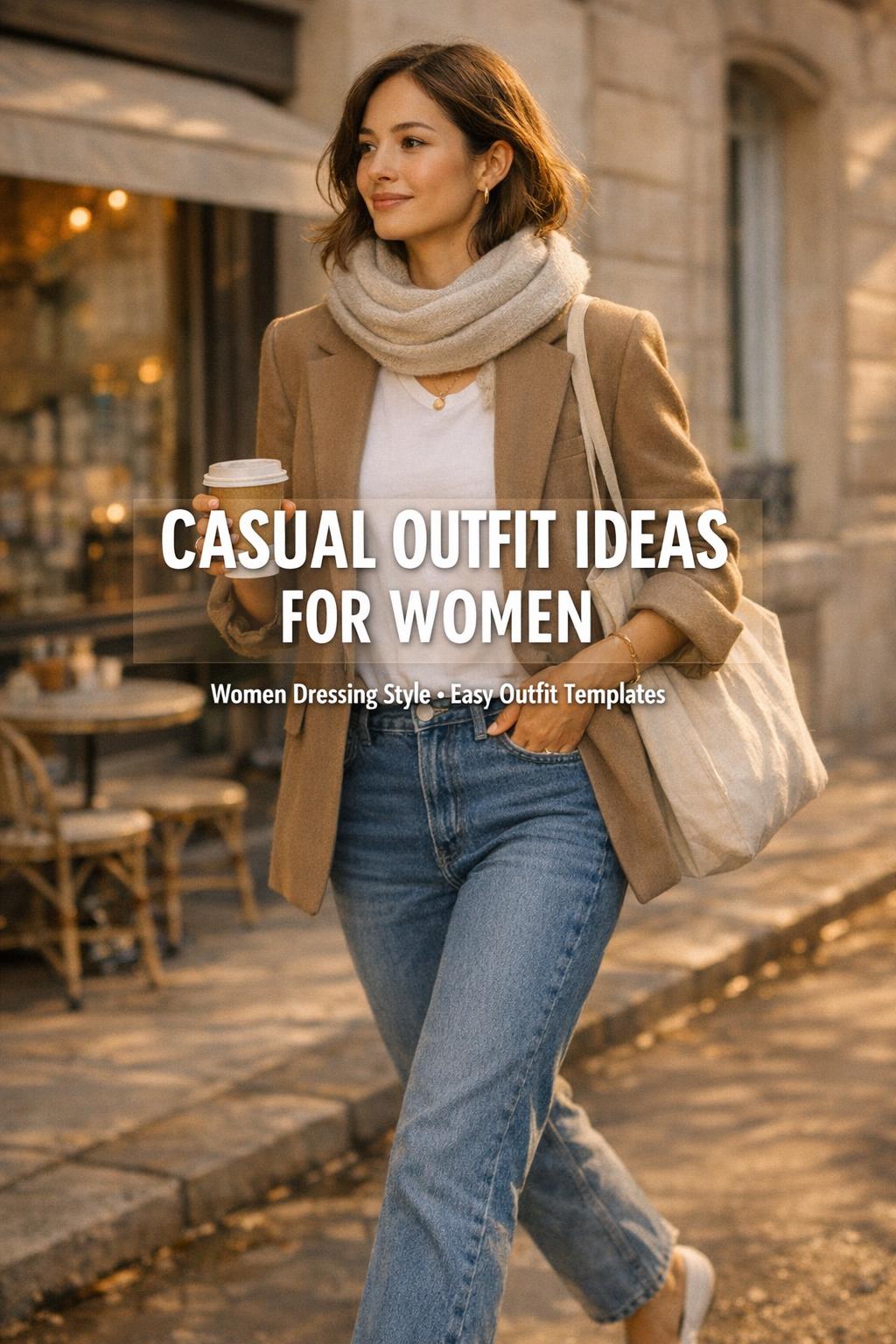
Fashion editors lean on templates because they remove decision fatigue. A template isn’t a uniform—it’s a framework. You can swap proportions, fabrics, and seasonal layers while keeping the overall effect consistent: relaxed, modern, and quietly put-together.
The denim + blazer + t-shirt formula (the classic casual backbone)
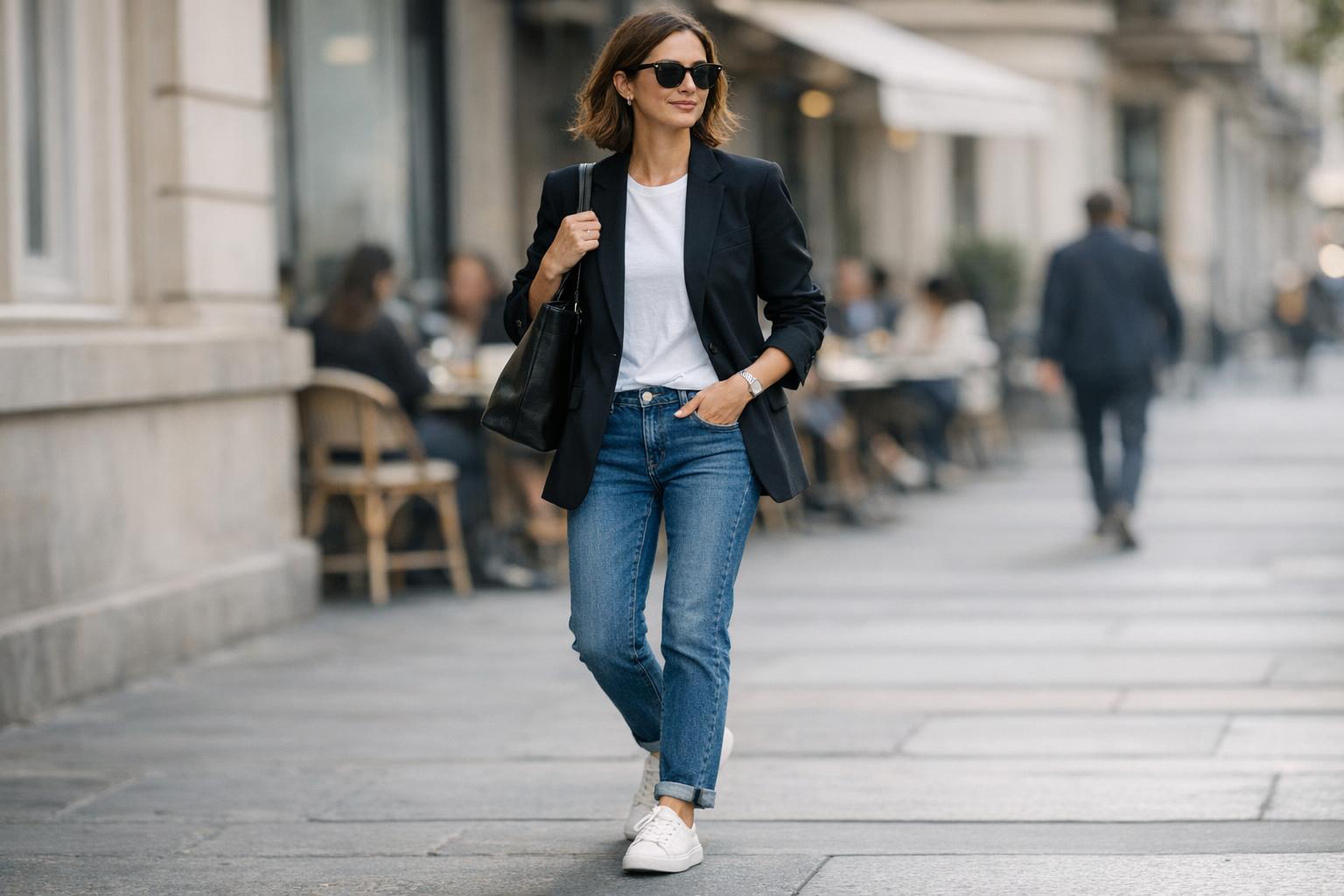
This is the outfit you reach for when you want instant credibility without discomfort. Denim gives you ease; the t-shirt keeps it grounded; the blazer sharpens the silhouette. It also photographs well in the real world—think street-style energy you’d spot around a shopping district, where people dress for walking and meetings in the same afternoon.
Proportion is the secret. A structured blazer layered over a simple tee creates clean lines through the torso, which makes even relaxed jeans look intentional. If the denim is straighter or looser, keep the blazer crisp. If your jeans are more fitted, you can play with a slightly more relaxed blazer shape while maintaining structure at the shoulders.
- For the most “classic casual” read: medium-wash jeans + white t-shirt + dark blazer + sneakers
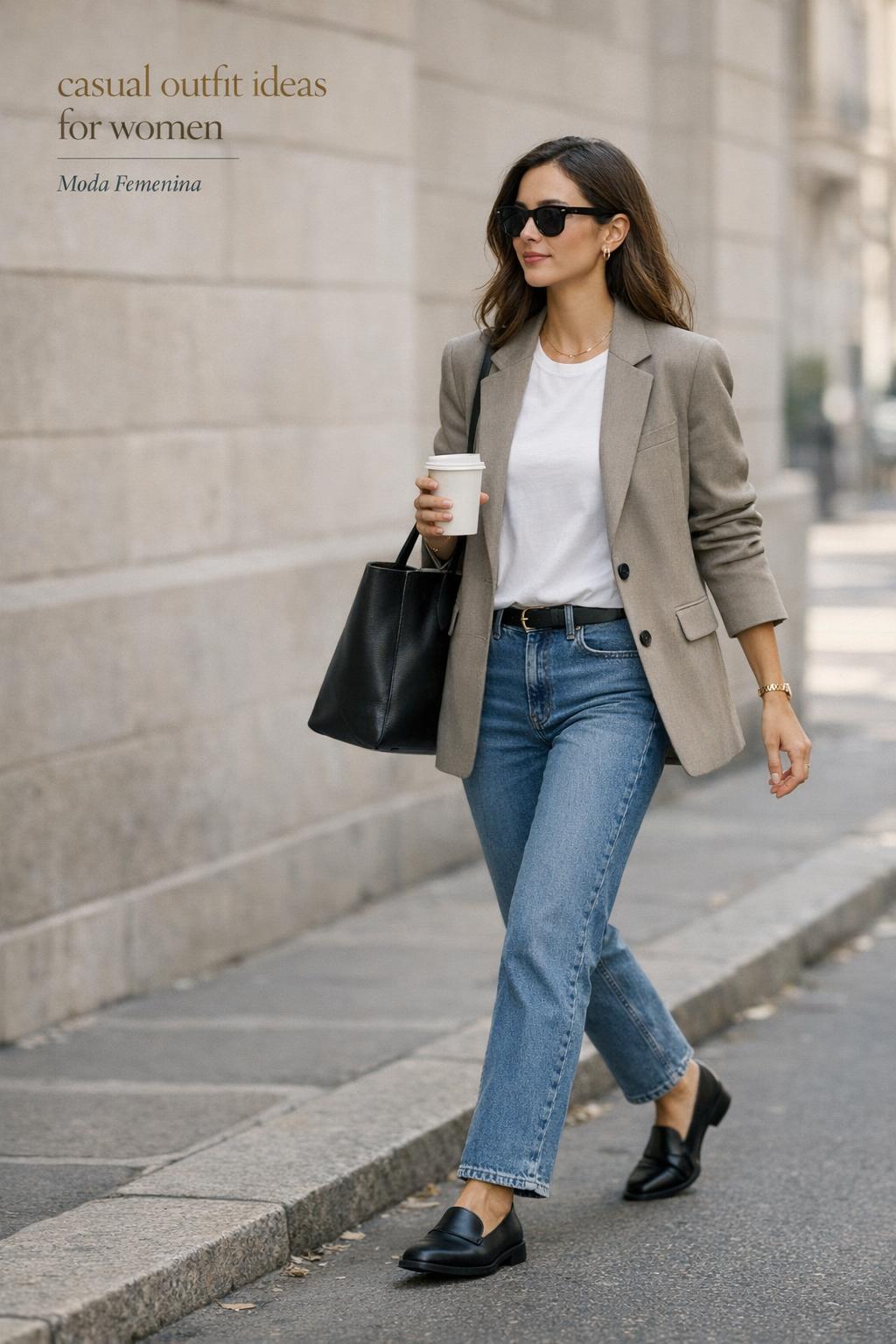
- For a smart casual lean: dark denim + blazer + refined tee + loafers
- For a business casual edge (where jeans are allowed): dark denim + button-down shirt under blazer + pumps or loafers
This is also where shoes do heavy lifting. Sneakers communicate ease. Loafers add a polished, slightly European finish. Pumps can move the look toward office-ready—useful if you’re navigating a day that includes work environments and evening plans.
The button-down shirt and jeans combination (the “shirt work outfit” that doesn’t feel stiff)
A button-down shirt is the quiet hero of everyday outfits because it changes the tone of denim without changing the comfort level. The structure of the collar and placket suggests intention; the jeans keep it grounded. In offices with business casual norms, this pairing reads as capable and appropriate—especially when the denim is clean and the styling is restrained.
To keep it modern, avoid overcomplicating. The visual goal is a crisp vertical line through the center of the body, balanced by denim’s relaxed texture. Add a blazer when you need more formality, or keep it shirt-forward for a lighter, more effortless mood.
Footwear choices clarify the setting. Loafers are the most versatile—polished yet walkable. Pumps are the sharpest, but less forgiving on long days. Sneakers can work if the rest of the outfit is clean and office norms allow a more relaxed interpretation of smart casual.
The hoodie + structured blazer contrast (relaxed chic with editorial balance)
One of the most wearable modern formulas is also the most deceptively clever: a hoodie under a structured blazer. It’s the essence of elevated casual—comfortable at the core, with tailored framing. The hoodie introduces softness and a relaxed texture; the blazer creates shape and presence.
This combination works because it plays with contrast: relaxed knit against structured tailoring, sport-adjacent ease against a polished outer layer. Keep the rest of the look streamlined—jeans or trousers that don’t fight for attention, and sleek sneakers that feel intentional rather than purely athletic.
In real life, this is a strong option for city days when you might step from a casual coffee meeting into a more formal setting. The blazer ensures you won’t feel underdressed; the hoodie ensures you won’t feel constrained.
The casual dress with sneakers (simplicity with a practical finish)
Dresses are often overlooked in casual wardrobes because they can feel “too done.” But the right styling makes a casual dress one of the easiest daily outfits: one piece, one silhouette, and instant coherence. The key is footwear—sneakers keep the look grounded and walkable, and the overall feel becomes relaxed rather than precious.
A belt bag can add an urban practicality, especially when you’re moving through a full day of errands, travel, or a long walk through a city. If you want a slightly more refined mood, shift from sneakers to loafers and add a light layer like a cardigan or coat depending on the season.
How to style everyday basics like an editor (without buying anything new)
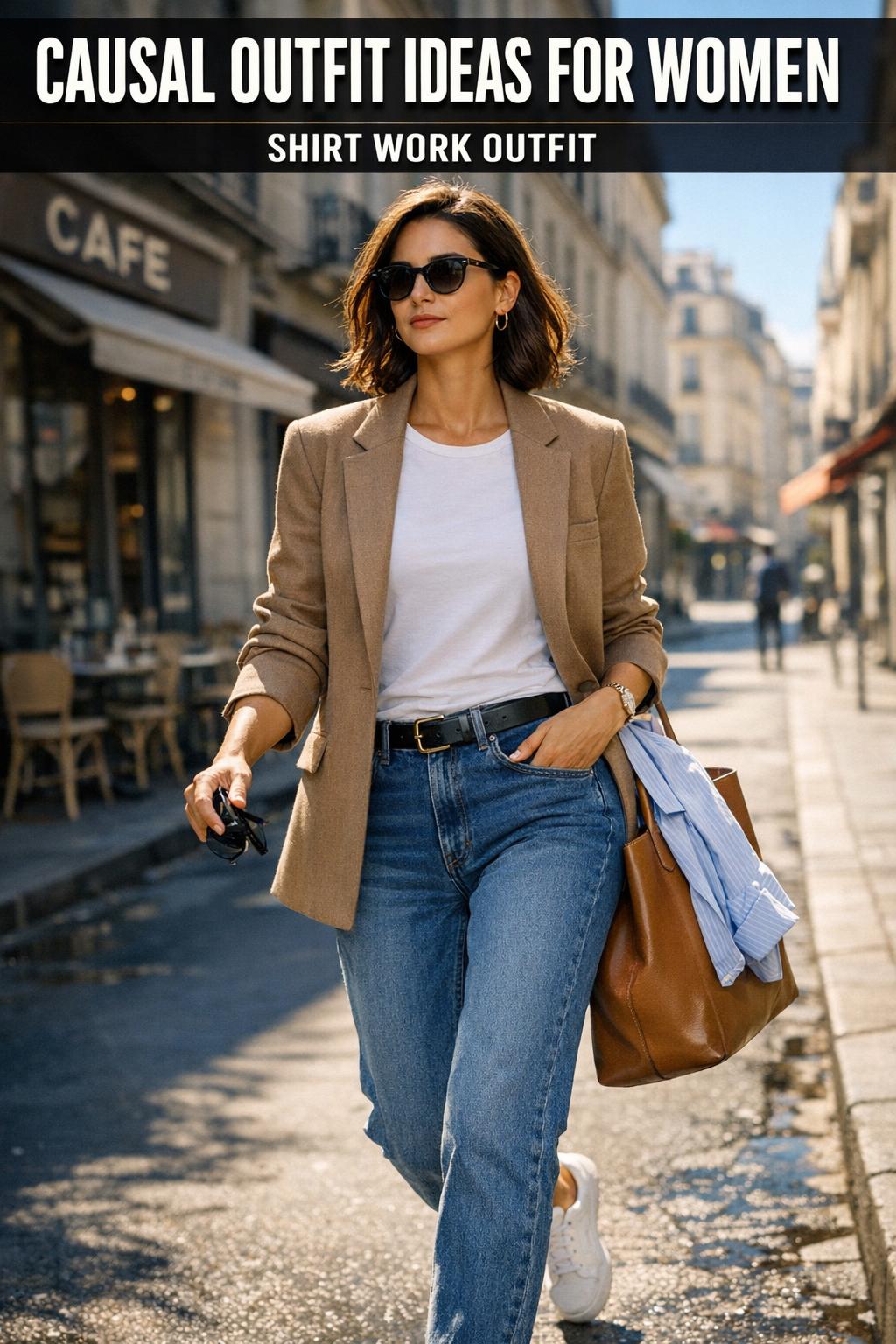
Most people already own the core items: jeans, t-shirts, sneakers, a cardigan, perhaps a blazer or coat. The difference between “I got dressed” and “I styled an outfit” is composition. Editorial dressing is less about novelty and more about control—of color, proportion, and texture.
Use a “one-structured-piece” rule
If your base is soft (tee + denim, hoodie + jeans), add one structured item: a blazer, a button-down shirt, or a coat. This creates a frame. It also keeps casual outfits from reading as purely lounge—even when they’re comfortable enough to feel like it.
Build around texture, not just color
Casual outfits thrive on texture because the pieces are simple. Denim brings grain and weight; knits bring softness; blazers bring a crisp surface. When you layer—cardigan over tee, coat over sweater, blazer over hoodie—you’re creating depth. That depth is often what people describe as “put-together,” even when the palette is neutral.
Let footwear set the tone
Sneakers communicate relaxed modernity. Loafers suggest classic polish. Boots add authority and seasonal practicality. Pumps elevate instantly but demand comfort considerations. If you’re unsure whether a look is too casual, change the shoes first; it’s the fastest way to adjust the message without rebuilding the outfit.
Shoes and accessories that elevate casual looks (quietly, not loudly)
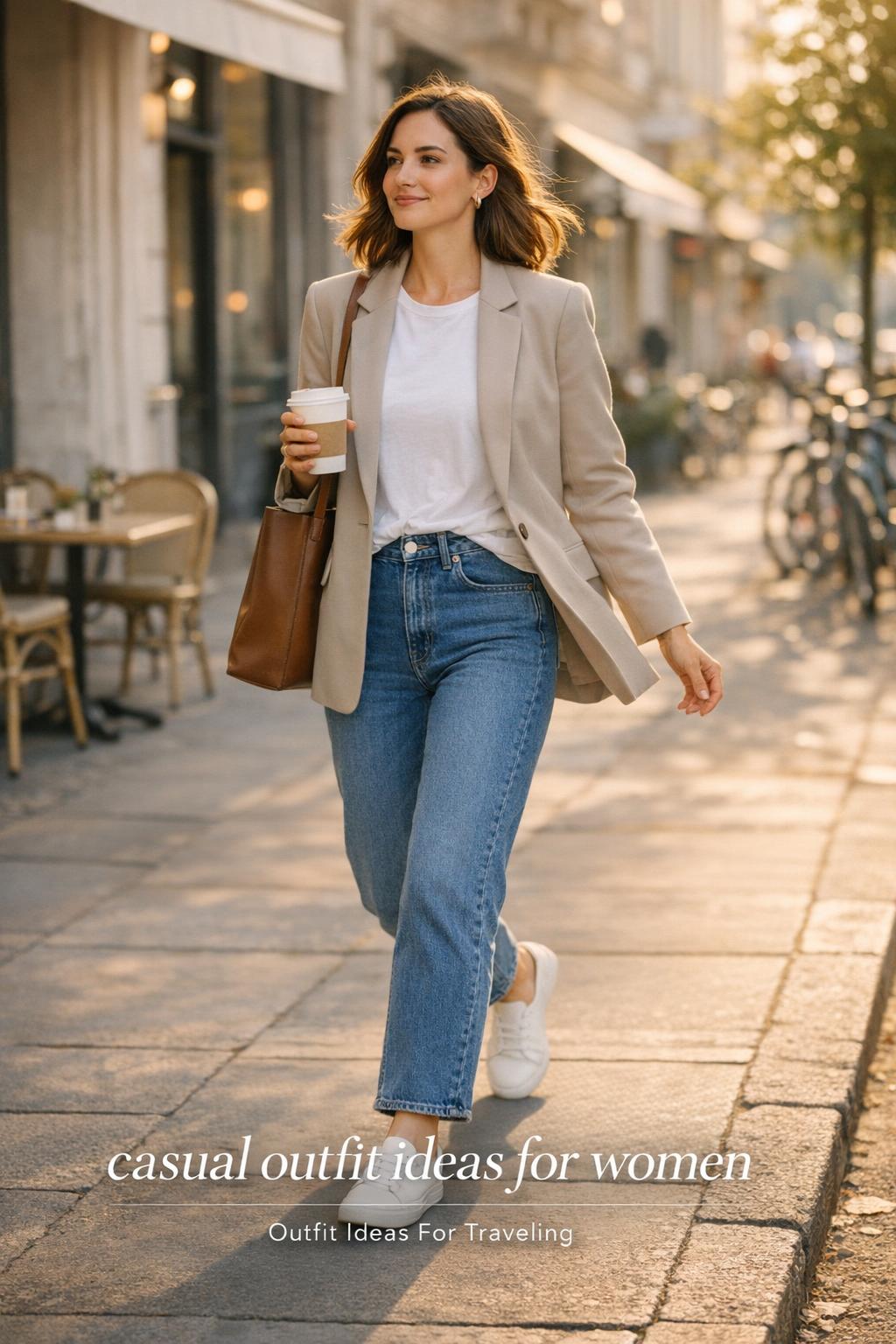
Accessories are often treated as decoration, but in casual dressing they function as punctuation. A handbag can make denim feel refined. A scarf can make a sweater look intentional. The goal is not to add more, but to add the right detail so the outfit looks finished.
Sneakers, loafers, boots, pumps: choosing your “formality dial”
Think of shoes as the final edit. The same jeans and blazer can read like weekend street style with sneakers, or office-ready with loafers, or business casual with pumps—assuming your workplace allows denim. Boots become essential in cold weather, especially when you’re layering sweaters, coats, and scarves and want the outfit to feel seasonally complete.
Bags, belts, scarves, hats: the practical accessories that matter
A handbag is more than a carry-all; it’s a signal of intention. A belt can define proportion, particularly with an oversized blazer or a casual dress. Scarves contribute warmth and visual softness in colder months, and they’re one of the most effortless ways to make a simple coat-and-denim combination feel styled rather than purely functional. Hats can be useful in transitional weather, but keep the overall look cohesive—casual chic works best when one accessory leads and the rest supports.
Minimalist jewelry and clean accents
In classic casual outfits, jewelry should read as part of the silhouette, not a separate statement. Minimalist accents reinforce “clean casual”: they don’t compete with the blazer line, the denim texture, or the layering. If your outfit already has contrast—hoodie under blazer, for example—keep jewelry especially restrained so the styling feels deliberate rather than busy.
Seasonal casual essentials: adapting the same templates all year
Seasonal dressing isn’t about reinventing your wardrobe; it’s about adjusting fabric weight, layering strategy, and footwear. The same base ideas—denim with a tee, blazer over casual pieces, smart casual layering—become more or less practical depending on climate.
Spring and summer: lighter layers, breathable fabrics, and relaxed structure
Warm weather casual outfits benefit from ease and breathability. Cotton and linen feel natural here, while denim becomes a key anchor for cooler mornings or air-conditioned interiors. A t-shirt and jeans can still look polished when the fit is clean and the styling is minimal; a casual dress with sneakers becomes an easy daily uniform for city walking.
In summer, the blazer can remain relevant as a light finishing layer—particularly when you want a smart casual impression without resorting to heavier pieces. Keep the palette streamlined and let the texture—denim grain, cotton softness—do the work.
Fall and winter: layering as a styling tool (not just warmth)
Cold weather is where casual style becomes most interesting because layering adds dimension. Sweaters, coats, scarves, and boots create a composed silhouette that still feels wearable. A cozy-chic approach—made famous in public-figure inspiration moments like Katie Holmes’ city-ready formulas—shows how comfort and polish can coexist: a sweater that feels soft, a coat that frames the look, boots that ground it.
In winter, the blazer can sit under a coat or be swapped for heavier outerwear. The key is maintaining a consistent story: if the layers are chunky, keep the base streamlined; if the coat is tailored, you can afford a relaxed knit underneath without losing shape.
Tips: In cold climates, build your outfit from the outer layer inward. Choose the coat and boots first, then decide whether your mid-layer is a blazer or sweater, and finish with a tee or button-down shirt depending on how polished you need to look once indoors.
Office-ready denim and smart casual boundaries (what works, what doesn’t)
The most common modern dilemma is whether jeans can truly belong in a work wardrobe. The answer is contextual: office dress codes vary, and so does the interpretation of business casual. But the styling principles are consistent. If denim is allowed, it should be paired with structured pieces that signal professionalism—blazers, button-down shirts, refined shoes like loafers or pumps.
A work outfit with jeans succeeds when it leans on tailoring and clean lines. Dark denim reads more formal than lighter washes. A crisp button-down shirt immediately elevates the look, and a blazer adds authority. Footwear finishes the message: loafers are a dependable choice, pumps are the most formal, and sneakers are best reserved for offices with a more relaxed culture.
Common pitfalls that make denim look “too weekend”
In practice, the problem is rarely “jeans” themselves—it’s the styling around them. When everything in the outfit is relaxed, the result reads like off-duty errands rather than office-appropriate smart casual.
- Pairing jeans with an overly casual top without a structured layer (no blazer, no button-down shirt)
- Choosing footwear that looks purely athletic rather than clean and streamlined
- Layering pieces that feel too slouchy together (for example, hoodie + jeans + sneakers with no tailoring to balance)
- Over-accessorizing, which can make a simple outfit look chaotic rather than elevated
Tips: If you want a foolproof “shirt work outfit,” start with a button-down shirt and choose either a blazer or loafers—ideally both. That single decision usually keeps denim within professional boundaries.
Outfit ideas for traveling: the airport-to-city formula that stays polished
Travel is where casual dressing is tested: long periods of sitting, temperature shifts, and the desire to feel comfortable without looking undone. The best outfit ideas for traveling mirror street-style logic—pieces that layer, fabrics that move, and silhouettes that look intentional even when you’re tired.
Start with a comfortable base you can sit in: jeans with a bit of ease, or trousers if that’s your preference. Add a t-shirt as the breathable foundation, then layer with a cardigan, hoodie, or blazer depending on how polished you want to appear when you arrive. A coat can become the outer shell in colder seasons, while scarves are invaluable for warmth and softness without bulk.
Sneakers are the obvious travel companion for comfort, but the editorial upgrade is to keep them clean and sleek so the outfit still reads modern. A handbag that fits essentials keeps your look city-ready the moment you step off the plane. If your itinerary includes a dinner shortly after arrival, swap the outer layer: blazer on, scarf adjusted, and suddenly your travel uniform becomes a smart casual look.
Two travel-ready silhouettes that always look composed
- Relaxed base, tailored frame: t-shirt + jeans + sneakers + structured blazer (add a coat for winter)
- Cozy-chic layers: sweater or hoodie + jeans + sleek sneakers + scarf (add boots in cold weather)
These aren’t costumes; they’re reliable compositions. They also suit the reality of moving through airports, taxis, and city sidewalks—exactly where casual chic proves its worth.
Inclusive, comfortable casual styling: fit, movement, and confidence
Casual style only works when it works on a real body in motion. Inclusive styling begins with acknowledging that comfort and fit aren’t luxuries—they’re the foundation. The most wearable casual outfits are the ones you don’t have to “manage” all day: waistbands that don’t pinch, layers that don’t restrict your arms, shoes that support your pace.
Rather than chasing one ideal silhouette, focus on balance. If you prefer a more relaxed fit on the bottom (looser jeans, for example), add structure on top with a blazer or button-down shirt to create clean lines. If you feel best with a closer fit on the bottom, you can introduce softness through knits—sweaters, hoodies, cardigans—while keeping the overall outline refined with a tailored outer layer.
Comfort-focused fabrics and fits (the practical checklist)
Comfort doesn’t have to look casual in the unstyled sense. It can look intentional when you choose pieces that drape well and maintain shape. Stretch fabrics and thoughtful cuts can help you stay comfortable without losing polish, especially in jeans and layered looks.
- Choose denim that allows movement, especially for long days and travel
- Use layering pieces (cardigans, coats, scarves) to adapt to temperature shifts without outfit disruption
- Prioritize footwear you can actually walk in; even the most beautiful outfit collapses if you’re uncomfortable
Tips: When trying to make an outfit feel more “elevated casual,” don’t tighten everything. Often, the more flattering approach is to keep one area relaxed (a tee, a hoodie, a sweater) and sharpen another (a blazer, a button-down shirt, a polished shoe).
Basic style outfits women rely on—refined through color and tone
Many of the best casual outfits are built in neutrals because neutrals make mixing easier and layering more coherent. Layered neutrals—tonal, monochrome, or softly contrasting—create a streamlined effect that feels “expensive” in the sense that it looks considered. You don’t need loud statements; you need harmony.
A tonal base also lets texture shine: denim against a knit sweater, a blazer over a t-shirt, a scarf adding softness near the face. This is where casual becomes quietly sophisticated—less about novelty, more about the discipline of editing.
That said, a neutral wardrobe shouldn’t feel flat. The trick is to vary depth (dark denim with a lighter top), or to add one small contrast through footwear or a handbag. The result remains classic casual, but with dimension.
Street-style reality: outfits that look good in motion, not just in mirrors
Street style—especially around fashion week moments—teaches a practical truth: an outfit has to function while walking, standing, and moving between locations. That’s why sneakers, denim, and layering recur so consistently. The most compelling everyday looks are the ones that hold their shape and mood under real conditions: wind, cold, heat, crowds, long days.
Imagine a day that starts in an office environment, shifts to errands across a busy city, and ends with dinner. A jeans-and-blazer base can carry all of that. Swap sneakers for loafers to move more polished. Add a scarf and coat in winter, or keep the outfit lighter with a button-down shirt in warmer seasons. These are small adjustments, but they change the story of the look without changing its comfort.
This is the editorial secret behind moda femenina that feels wearable: repeat the same core items, then refine the finishing choices. Great style comes from thoughtful composition, not constant reinvention.
A quick-start capsule mindset for everyday casual outfits
You don’t need a rigid capsule wardrobe to benefit from capsule thinking. The idea is simple: reduce your styling to a small set of pieces that combine effortlessly—jeans, t-shirts, blazers, button-down shirts, sneakers, loafers, a coat, a cardigan, a hoodie, a sweater, and a scarf. These items appear repeatedly in the most useful casual outfit ideas because they share a common strength: they layer well, and they can be dressed up or down.
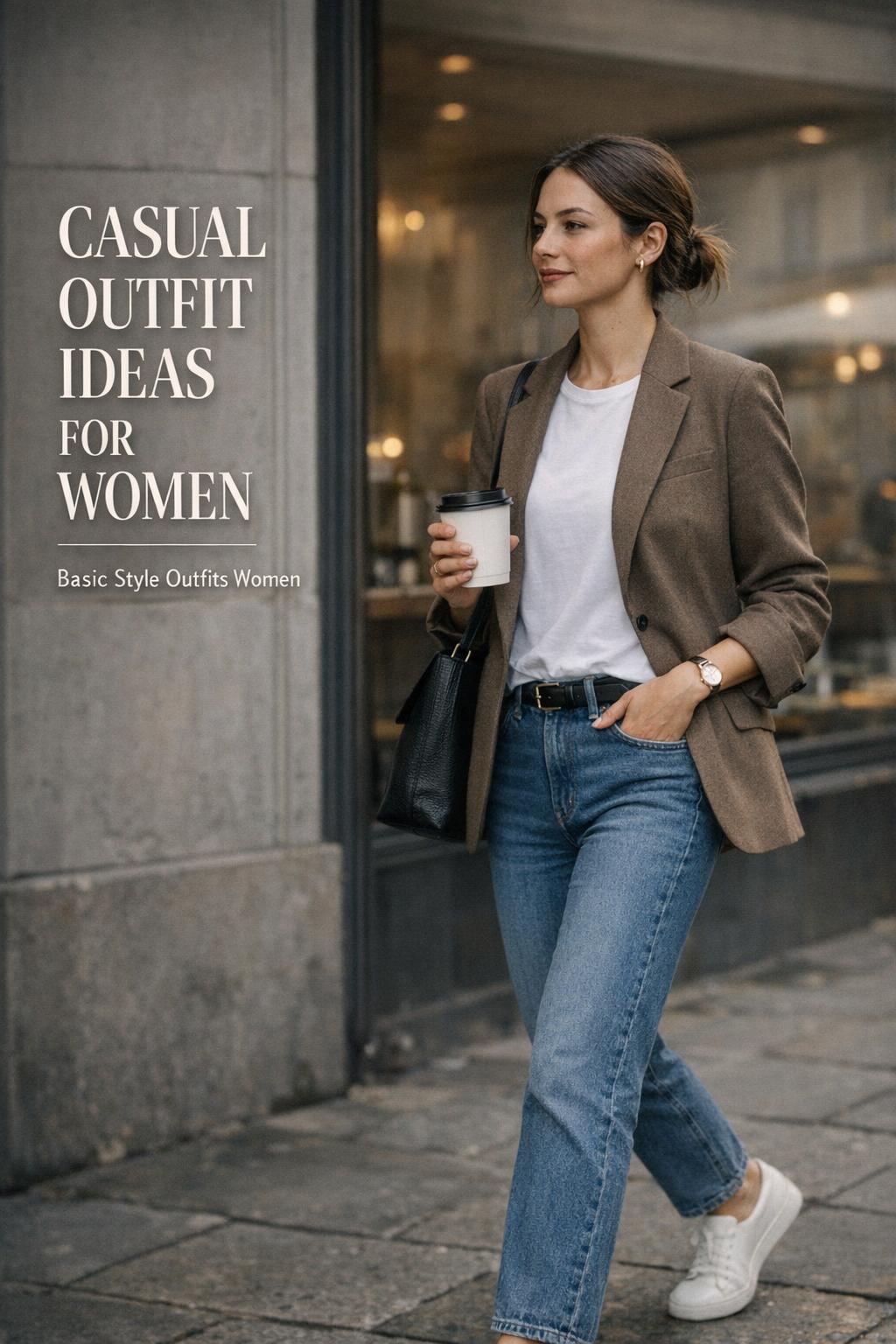
A closet inventory approach can be surprisingly elegant. Look at what you already reach for—denim, tees, sneakers—and add one or two “bridges” that elevate everything: a blazer for structure, a button-down shirt for polish, a coat for seasonal authority. Suddenly, your basic style outfits women default to become a curated wardrobe with range.
Tips: When you feel like you have “nothing to wear,” choose a template first (denim + blazer + tee; shirt + jeans; hoodie + blazer; dress + sneakers). Then decide the season layer (cardigan, coat, scarf) and the shoe mood (sneakers, loafers, boots, pumps). This sequence reduces overwhelm and produces more consistent outfits.
How to make casual feel elevated without losing ease
Elevated casual is not about looking formal; it’s about looking finished. The most effective upgrades are subtle: sharper outerwear, cleaner footwear, more coherent layering, and fewer competing details. A blazer is the clearest shortcut, but it’s not the only one—button-down shirts, coats, and even a well-chosen scarf can do the same work.
It’s also worth acknowledging what doesn’t always work. A hoodie can be smart casual in the right context, but in more conservative office environments it may read too relaxed unless it’s balanced with a structured blazer and streamlined shoes. Similarly, sneakers can be polished, but an overly athletic pair may fight the refined lines of a blazer-and-denim look.
When in doubt, return to silhouette. Casual chic is a shape story: relaxed pieces need a frame; structured pieces need softness nearby so the outfit doesn’t feel rigid. That tension—comfort against tailoring—is what makes modern everyday style feel current.
FAQ
What are the easiest causal outfit ideas for women to recreate with basics?
The most reliable options are template-based: jeans with a t-shirt and a blazer, a button-down shirt with jeans and loafers, a hoodie under a structured blazer with sleek sneakers, or a casual dress styled with sneakers. These formulas work because they balance relaxed comfort with at least one polished element.
How do I style jeans for the office without looking too casual?
Keep denim clean and pair it with structured pieces like a blazer and a button-down shirt, then finish with loafers or pumps to reinforce a business casual mood. The more tailored the top half looks, the more office-appropriate jeans tend to feel in workplaces where denim is permitted.
Are sneakers acceptable for smart casual outfits?
Sneakers can work for smart casual when the rest of the outfit is refined—think jeans with a blazer and a simple t-shirt or a button-down shirt. Choose a clean, streamlined sneaker shape so the overall look reads intentional rather than purely athletic.
Can a hoodie be part of a polished everyday look?
Yes, especially when you use contrast: a hoodie layered under a structured blazer creates an elevated casual balance of soft and tailored. Keep the rest of the outfit simple—jeans or trousers and sleek sneakers—so the hoodie reads as a styling choice, not an afterthought.
What shoes make casual outfits look more “put-together”?
Loafers and boots tend to elevate casual outfits quickly because they add polish and structure, while pumps push the look closer to business casual. Sneakers remain ideal for comfort and travel, but they look most refined when paired with classic pieces like a blazer and clean denim.
How do I make basic style outfits women wear feel more elevated?
Add one structured layer—typically a blazer, button-down shirt, or coat—and keep your palette coherent, especially with layered neutrals. Small finishing choices like loafers instead of overly sporty sneakers or a scarf in cold weather can make a simple jeans-and-tee base look styled.
What are the best outfit ideas for traveling that still look stylish?
Build from a comfortable base like jeans and a t-shirt, then add a layer you can adjust—cardigan, hoodie, blazer, or coat depending on the climate. Finish with sneakers for walking comfort and use a handbag to keep the look city-ready; a blazer swap can take you from airport casual to smart casual quickly.
How should I adapt casual outfits for cold weather?
Use layering as both warmth and styling: add sweaters, coats, scarves, and boots to build a cohesive silhouette over your base pieces like jeans and tees. A cozy-chic approach keeps the look comfortable, while a structured outer layer maintains polish.
Leave a Reply