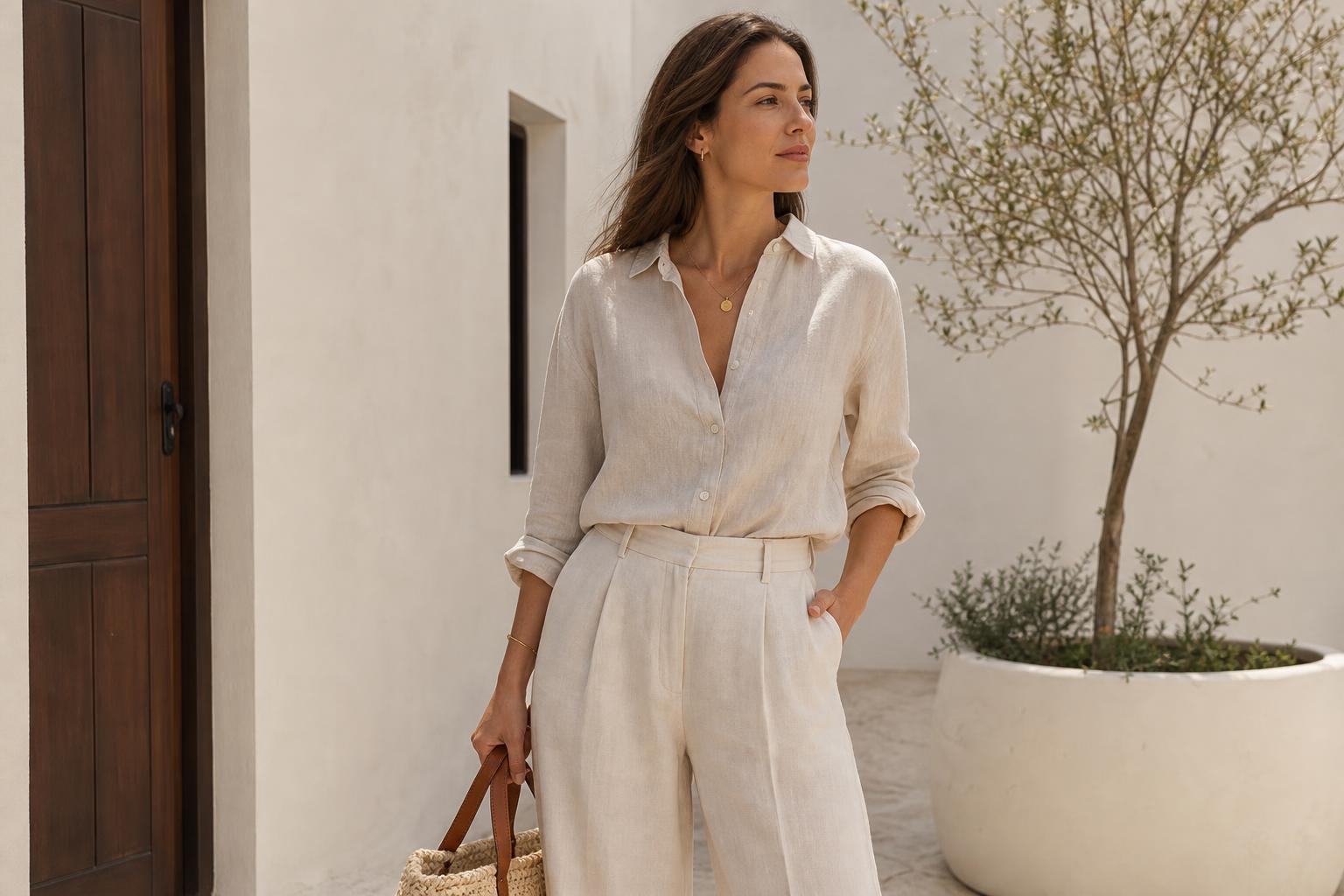
High summer dressing often looks simpler than it feels. The usual problem is not a lack of ideas, but the tension between polish and relief: you want to look composed, yet the weather asks for clothes that breathe, move, and never feel heavy by noon. This is exactly why linen summer outfits remain so compelling. They solve a practical issue first, then build style around it.
Linen can be deceptively tricky, though. A beautiful fabric on a hanger can become too rumpled for work, too bare for the city, or too resort-coded for everyday life if the outfit is not balanced well. The answer is not to abandon linen, but to style it with more intention. The right silhouette, the right layering piece, and the right accessories make the difference between looking merely dressed for heat and looking genuinely refined.
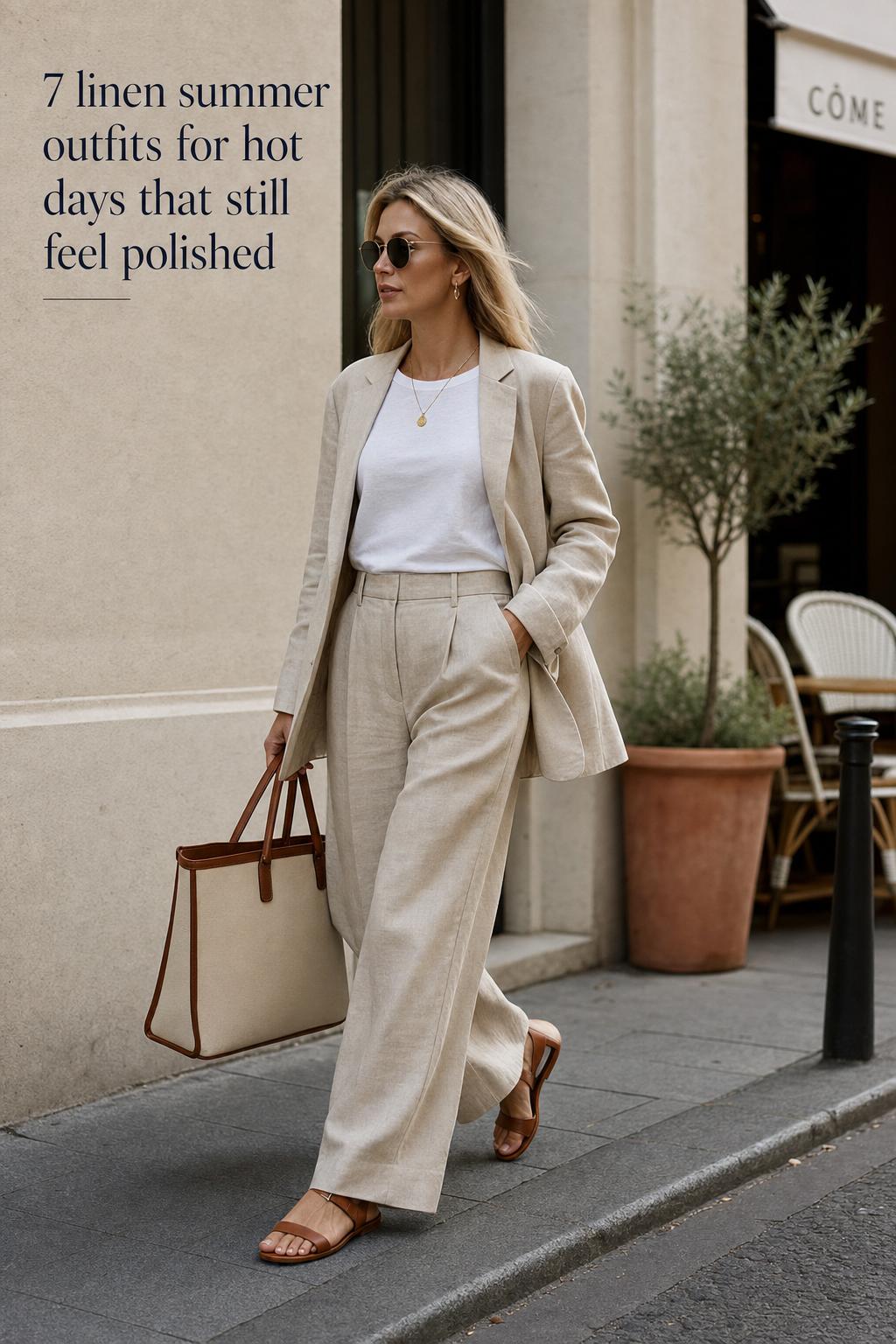
This guide approaches linen the way a thoughtful fashion editor would: as a material with character, not a trend to copy blindly. From white tees and linen trousers to matching sets, throw-on dresses, long shorts, and city-ready layers, these outfit solutions are designed to help you build a summer wardrobe that feels cool, modern, and realistic for daily life.
Why dressing well in linen can feel harder than it should
The challenge begins with summer itself. Heat changes how clothing behaves and how you experience it. A blazer that feels sharp in spring can seem restrictive in July. A fitted dress may look elegant at breakfast and feel far less convincing by late afternoon. Linen enters this conversation because it is associated with breathability and comfort, but comfort alone does not create a strong outfit.
Your wedding has a lot of moving pieces. Your plan can still feel composed.
Zarellea organizes guests, vendors, budget, and timelines in one shared space — so you can make decisions with clarity, not stress.
What makes linen so useful is also what makes it demanding. Its texture is relaxed. Its drape is softer than rigid tailoring. It carries an ease that suits vacation, coastal dressing, and resort wear beautifully, yet that same ease can feel unfinished in a city setting unless there is structure elsewhere in the look. This is why the best linen dressing often relies on balance: a crisp white tee against fluid trousers, a matching set with refined sandals, or a linen dress finished with a raffia bag and minimal jewelry.
There is also the question of context. A linen short set may feel perfect for casual errands, beach travel, or a weekend lunch, while a double-layered linen look or a linen vest with tailored trousers makes more sense for work or a polished city afternoon. The difficulty is not choosing linen versus non-linen. It is choosing the right linen formula for the right moment.
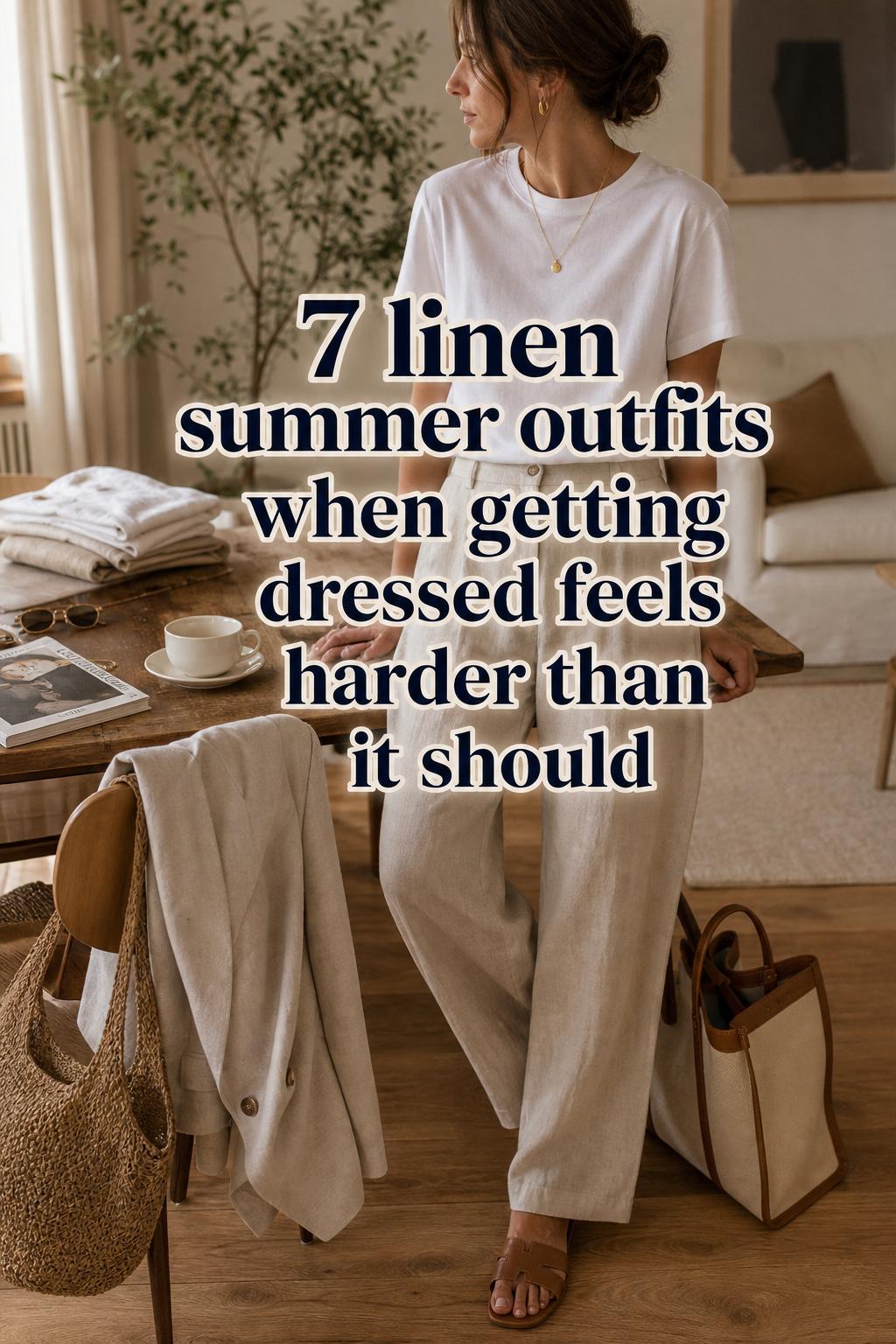
The principles that make linen outfits work
Strong linen styling is built on a few consistent ideas seen across modern summer wardrobes, from resort-ready dressing to more elevated urban looks. Once you understand these principles, linen becomes much easier to wear repeatedly without every outfit feeling the same.
- Start with breathability as the foundation, not the finishing touch.
- Use silhouette to add polish where linen naturally softens the look.
- Keep the color story controlled, then introduce a pop of color if needed.
- Rely on accessories with natural texture, such as raffia, to support the fabric rather than fight it.
- Choose one focal point: a linen dress, matching set, long short, or fluid trouser.
The most successful linen summer outfits rarely feel overworked. Instead, they look edited. Neutral tones do much of the heavy lifting because they allow texture to become visible. This is one reason linen appears so often in refined palettes associated with Paris, Milan, and coastal dressing. A soft neutral linen set with clean sandals and a woven bag feels coherent because every element speaks the same visual language.
That does not mean color should disappear. Harper’s Bazaar emphasized keeping colorfully cool, and that remains a useful styling direction. A neutral base with one vivid note can make linen feel more current and less predictable. Think of a natural linen trouser and white top anchored by a stronger accessory or a colorful accent within an otherwise pared-back look.
Understanding linen as a summer fabric
Before getting into outfit formulas, it helps to define why linen matters in warm weather. Linen is consistently treated as the essential breathable fabric for summer dressing. It is valued for comfort, airflow, and the lived-in texture that makes hot-weather clothes feel less rigid. In practical terms, it helps you create outfits that are cooler and easier to wear for long days that move between indoor and outdoor settings.
There is also a more editorial reason linen endures. It has visual depth. A linen shirt does not look flat in the same way some smoother fabrics can. A linen dress catches light differently. A linen blazer layered over a simple base adds enough texture to make an outfit feel considered, even when the palette is minimal. This is why labels and retailers as varied as Banana Republic, The Row, Massimo Dutti, Reformation, J.Crew, Toteme, Deiji Studios, LEMAIRE, ST. AGNI, and Jenni Kayne all fit naturally into the linen conversation.
For readers thinking beyond appearance, fabric education and care also matter. Linen is not just a visual choice; it is a wardrobe decision. Concepts such as flax, linen origin, European linen mills, European flax, Belgian linen, pre-washed linen, and certifications like OEKO-TEX are relevant because they help explain why one linen piece may feel softer, sturdier, or more suitable for repeat wear than another. In the same way, linen blends such as cotton-linen blends or rayon-linen blends can affect drape and ease, especially if you want a more fluid silhouette or less crisp texture.
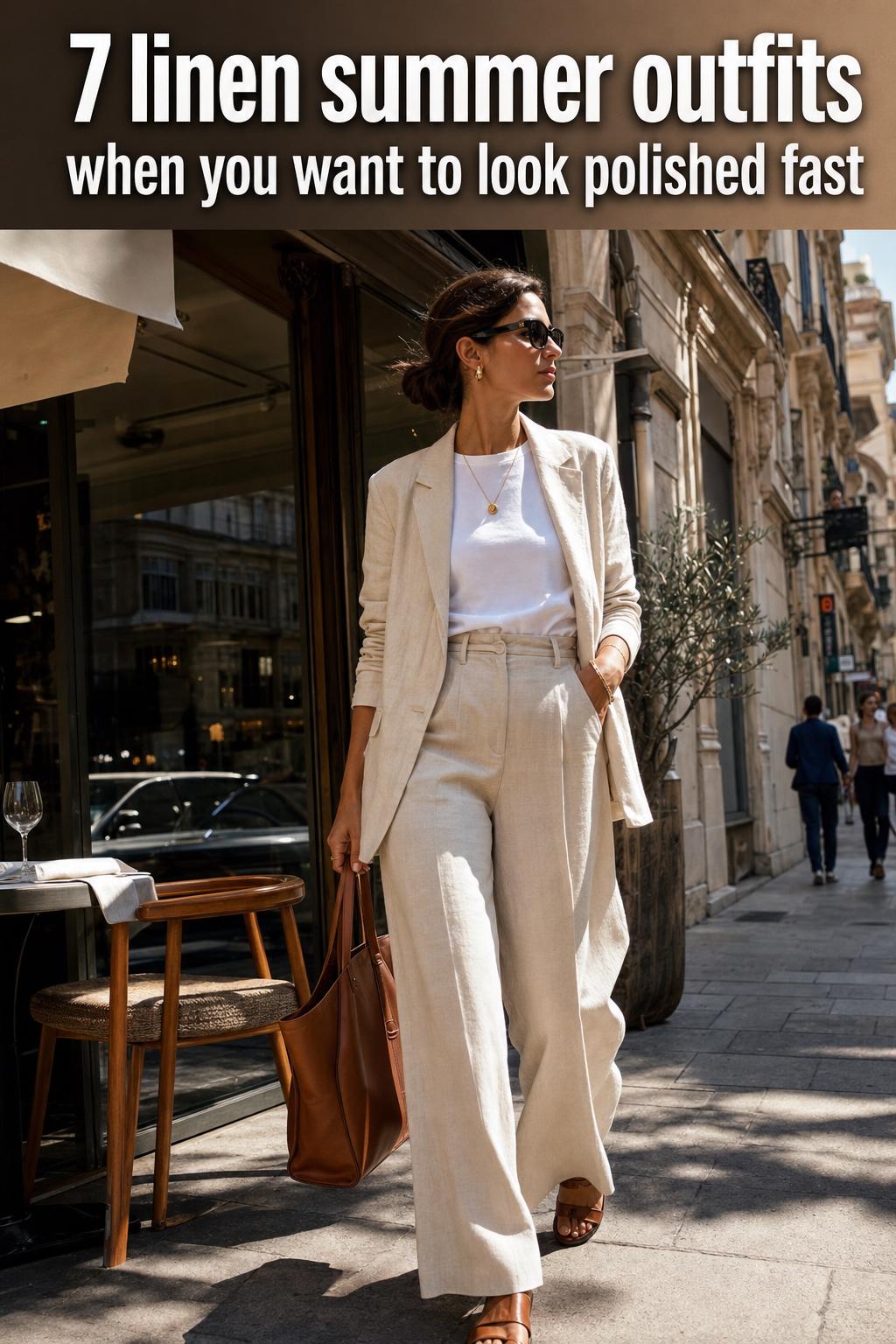
From resort to city: the linen wardrobe problem solved by context
One of the most useful shifts in thinking is to stop treating linen as a single aesthetic. Linen can belong to vacation mode, of course, but it also works for city wear, hybrid work, casual errands, and modern summer tailoring. The key is to style it in a way that reflects where you are going.
Editorial styling often leans on location to sharpen this idea. Coastal linen dressing tends to feel looser, softer, and more relaxed. City linen, by contrast, benefits from cleaner lines, stronger proportions, and slightly more deliberate accessories. That contrast helps explain why the same linen shirt can work with pull-on trousers and sandals at a resort, then feel right with a vest, belt, and structured tote in an urban setting.
There is an aspirational aspect here as well. References to Paris and Milan, particularly in design week contexts, suggest a more polished approach to warm-weather dressing: restraint, quality, and fabric-led composition rather than excessive styling. The lesson is not to imitate a location literally, but to understand the mood. Linen looks best when the outfit feels intentional, not improvised.
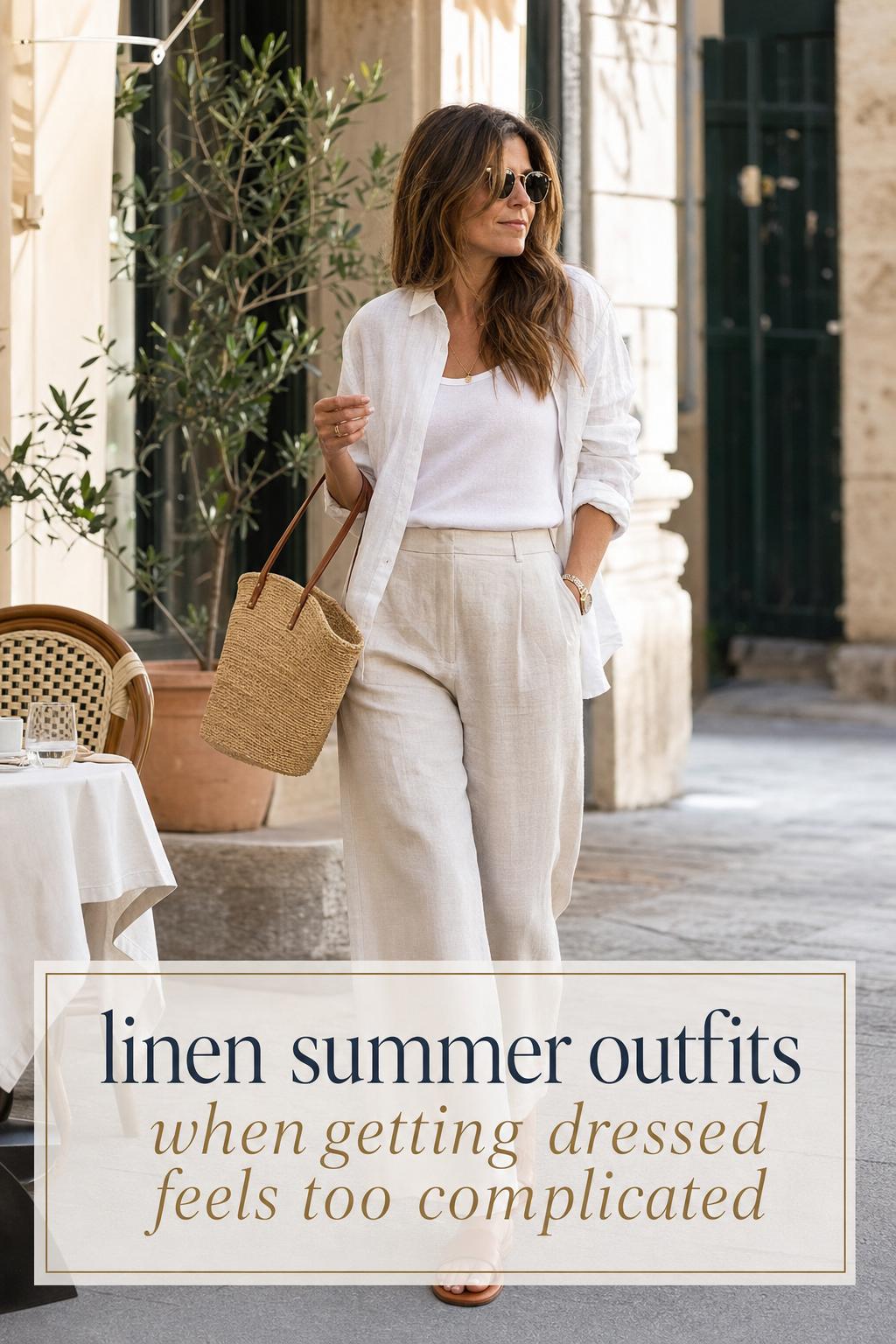
Outfit solution: white tee and linen trousers for polished ease
This is one of the most dependable answers to the summer dressing problem because it pairs a familiar basic with a fabric that does the climate work for you. A simple white tee grounds the outfit. Linen trousers introduce movement and breathability. Together, they create a silhouette that feels calm, polished, and easy to adapt.
The reason this combination works so well is proportion. The tee keeps the top half clean and uncomplicated, while the trouser adds length and softness. If your concern is looking too casual, this is where accessories matter. Add minimal sandals, a refined bag, and restrained jewelry. A belted tote or a clean shoulder bag can shift the tone immediately. Mansur Gavriel fits naturally into this polished-accessory space, while a more understated line from The Row conveys the same stripped-back confidence.
This formula also adapts across wardrobes. Banana Republic and J.Crew are often referenced in relation to linen trousers because the category itself is central: a trouser that breathes but still reads as composed. For work-from-anywhere days, you can layer a linen blazer over the tee. For casual city errands, leave the look spare and let the texture of the trouser do the visual work.
Why this outfit solves the problem
It keeps the body cool without sacrificing visual structure. The tee prevents the look from becoming overly styled, and the linen trouser stops basic summer dressing from feeling flat. It is especially useful when you want one outfit to carry you through commuting, meetings, lunch, and early evening plans.
Outfit solution: the matching linen set when you want immediate coherence
Few pieces solve warm-weather dressing as efficiently as the linen matching set. Whether it is a vest with trousers, a shirt with shorts, or a coordinated top-and-skirt combination, the set creates instant continuity. You do not need to puzzle over whether separates belong together; the fabric and color story already do that for you.
This is why matching sets appear so consistently in modern summer styling. Cosmopolitan and Harper’s Bazaar both treat them as central rather than incidental. They work for vacation, for city weekends, and for casual everyday dressing because they deliver a composed silhouette with very little effort. A set from Deiji Studios suggests a softer, more relaxed approach. A cleaner, more tailored interpretation from Massimo Dutti or Toteme reads sharper and more urban.
The crucial decision here is how much structure you want. A loose linen shirt and short set feels resort-ready immediately, particularly with sandals and a raffia bag. A linen vest and trouser set feels more directional and can move into hybrid work territory when finished with simple jewelry and a refined flat. If you are worried about looking too monochrome or too safe, a single pop of color in a bag, sandal, or earring is often enough.
Where this outfit works best
It is ideal for travel days, casual errands, warm weekends, and summer lunches when you want to look put together quickly. It also packs visual impact without demanding much styling, which is useful when dressing in heat tends to reduce your patience for complicated combinations.
Outfit solution: the throw-on linen dress that still looks intentional
The linen dress is often the cleanest solution to the question of what to wear when heat makes separates feel like too much work. A good throw-on dress offers one-step simplicity, but the best versions still hold shape, create line, and leave room for accessories to define the mood.
There are several directions within this category. A summer white dress feels fresh and minimal, particularly when paired with barely-there sandals and a woven bag. A minidress moment is lighter and more playful, especially for weekends or holiday settings. A longer linen dress can feel more polished and calm, which makes it especially useful for city wear or for occasions that sit between casual and elevated.
Reformation, J.Crew, and Banana Republic sit comfortably in this conversation because the linen dress is not niche; it is a core modern summer piece. At a more elevated level, names such as Gucci, Valentino, and LEMAIRE reinforce how versatile linen can be when silhouette and finish are considered carefully. Even when the dress itself is simple, the final effect depends on proportion. A flatter sandal keeps the look clean. Jewelry should support rather than interrupt the line. A raffia bag, including the kind associated with Loewe x Paula’s Ibiza, reinforces the seasonal texture elegantly.
How to keep a linen dress from feeling too bare
Think in terms of framing. Add sunglasses, a subtle earring, a structured bag, or a lightweight layer if needed. The goal is not to complicate the dress, but to give the eye a few deliberate points of focus so the outfit feels finished rather than simply minimal.
Outfit solution: long shorts and elevated basics for the in-between days
Long shorts are one of the more practical developments in linen dressing because they bridge comfort and polish with unusual ease. They offer airflow and movement, but the extra length gives the silhouette enough seriousness to feel appropriate beyond the beach or resort.
This is where elevated basics become important. Pair linen long shorts with a clean tank, a simple white tee, or a linen vest. Add flat sandals and a compact bag. The outfit remains easy, but the proportions feel more deliberate than a shorter short-and-tee combination. Aeyde, Jenni Kayne, and ST. AGNI sit naturally within this language of refined restraint, where the emphasis is on line and material rather than obvious statement dressing.
The strongest version of this look avoids excess volume on every piece at once. If the shorts are relaxed, keep the top neater. If the top is airy, define the waist or choose a cleaner sandal. This kind of adjustment matters because linen already introduces softness; proportion is what turns that softness into elegance instead of shapelessness.
Outfit solution: double-layered linen for warm-weather work and hybrid schedules
Not every summer day is purely casual. Some require more authority, more coverage, or simply a more dressed impression. This is where double-layered linen becomes unexpectedly useful. A linen blazer over linen trousers, or a linen vest under a lightweight outer layer, creates depth while keeping the fabric story seasonally appropriate.
The hesitation many people feel around layered summer dressing is understandable. Extra pieces can sound impractical in heat. But linen layering works when the shapes remain breathable and the palette remains controlled. A softly tailored blazer over a simple base creates a modern silhouette that is far easier to wear in summer than denser traditional suiting.
This is where references to The Row, Massimo Dutti, and Banana Republic become useful not as shopping instructions, but as styling markers. The idea is polished summer tailoring: clean lines, enough structure to feel professional, and enough softness to feel realistic in warm weather. For readers navigating modern hybrid work, this may be one of the most effective linen formulas because it respects both comfort and context.
A practical note on when layering works
Reserve this approach for indoor-heavy days, travel, or city schedules where air-conditioned interiors are part of the routine. If the day is fully outdoors, a single linen layer is often the more sensible choice. The point of linen dressing is not to prove endurance, but to make heat more manageable without giving up style.
Outfit solution: linen skirt and lightweight top for texture and movement
A linen skirt brings a different kind of ease to summer dressing. It has more movement than trousers, often more flexibility than a dress, and offers a useful middle ground for readers who want softness without looking overly casual. The styling success of this look usually comes from contrast: the relaxed texture of the skirt balanced by a more considered top.
A lightweight top, whether fitted or simply cleaner in line, gives the outfit direction. This is also one of the best places to introduce stripes or controlled color, a direction suggested through pieces such as a Massimo Dutti striped linen shirt. If the skirt is neutral, the top can carry slightly more character. If the skirt itself is the visual focus, keep the top quieter.
For those who find linen separates difficult because they can read too informal, this combination is especially helpful. It feels composed without becoming severe, and it works across coastal afternoons, city lunches, and more relaxed office environments.
Color, accessories, and the finishing details that elevate linen
Linen responds best to styling that respects its texture. Accessories should complement that texture, not compete with it. This is why raffia bags, restrained jewelry, and uncomplicated sandals appear repeatedly in strong linen outfits. They support the mood of the fabric while still giving the outfit definition.
- Use neutrals as the base: white, soft cream, sand, and earthy tones allow linen texture to stand out.
- Add one accent rather than several: a color pop feels sharper than a crowded palette.
- Choose sandals or flats with clean lines to preserve the outfit’s lightness.
- Lean into natural materials for bags and accessories, especially raffia.
- Keep jewelry concise and modern so it frames the look rather than overwhelms it.
Brands such as Mansur Gavriel, Hereu, Lié Studio, and Loewe x Paula’s Ibiza help define this finishing language. The common thread is not logo-driven dressing but material intelligence. A raffia tote with linen trousers makes sense because both pieces share a seasonal ease. Minimal earrings with a linen dress make sense because they sharpen the neckline without disrupting the softness of the fabric.
There is also room for fragrance as part of the final impression, particularly when thinking about linen as a complete summer mood rather than just a fabric choice. In editorial terms, this supports the larger feeling of effortless dressing, though the outfit itself should remain the main statement.
Regional styling notes: coastal ease, city restraint, and travel practicality
Linen behaves differently depending on where you wear it, and this is one of the most overlooked parts of styling it well. A Southern California beachwear mood naturally supports looser sets, airy shirts, and sandals with very little structure. A Northeast city wardrobe usually asks for stronger lines, longer hems, and bags that can handle a commute. Tropical linen looks tend to favor the lightest, easiest formulas: short sets, throw-on dresses, and open silhouettes that allow airflow.
This regional approach also helps explain why a single wardrobe formula cannot solve every summer day. The same linen dress may look perfect at a sea-side lunch and slightly underbuilt for a city meeting unless you add a structured layer or more defined accessories. Likewise, a vest-and-trouser set that feels elegant in New York may feel too composed for a casual coastal afternoon.
If you like the elegance associated with Paris or Milan, take the principle rather than the costume. Keep your palette edited. Let fabric and silhouette lead. Avoid over-accessorizing. The result is a more refined form of summer dressing that travels well across different settings.
Linen care, wrinkle management, and longevity
One reason some readers hesitate with linen is the question of care. Wrinkling is part of linen’s identity, but there is a distinction between lived-in texture and neglect. Understanding linen care helps you keep garments looking intentional and extends their useful life in the wardrobe.
Washing, drying, and finishing methods matter, as does the fabric construction itself. Pre-washed linen may feel softer and easier from the start. Linen blends can reduce crispness and alter how the garment drapes. Steaming and thoughtful storage can make a visible difference, especially with dresses, trousers, and blazers where line is part of the appeal.
For readers who care about the broader story behind the fabric, ideas such as ethical flax farming, traceability, sustainable linen, and standards like OEKO-TEX or European flax offer useful context. These details may not change how you style a linen shirt tomorrow morning, but they do shape how you evaluate pieces for long-term wear.
Tips for keeping linen looking fresh
- Choose silhouettes that still look good with a relaxed finish, rather than requiring absolute crispness.
- Use steaming to restore shape when the garment needs more polish.
- Consider linen blends if you want a softer drape or a slightly easier everyday finish.
- Pay attention to quality markers such as fabric feel, construction, and origin when building a lasting linen wardrobe.
Common mistakes that make linen outfits feel less polished
The most common linen mistake is assuming the fabric alone will create the outfit. Linen is helpful, but it is not automatic. Without attention to shape and finishing details, even a beautiful piece can feel incomplete.
- Wearing oversized pieces from head to toe, which can flatten the silhouette and make the outfit feel shapeless.
- Adding accessories that are too heavy or formal for the softness of the fabric.
- Treating every linen item as vacation wear, even when the setting calls for more city-ready structure.
- Ignoring context, especially when moving between outdoor heat and indoor work environments.
- Choosing visual clutter over a controlled palette, which can obscure linen’s natural elegance.
A better approach is to let one element stay relaxed while another provides definition. If the shirt is loose, keep the bottom line cleaner. If the trousers are fluid, choose a simple, more fitted top. If the dress is minimal, finish it with accessories that frame the look. Linen rewards editing far more than excess.
A curated way to build a linen wardrobe that actually gets worn
Readers often focus first on statement purchases, but the smartest linen wardrobe starts with versatility. A linen trouser, a linen dress, and one matching set create more outfit options than several isolated pieces that only work on vacation. From there, a skirt, long shorts, or a light blazer can expand the wardrobe according to your routine.
Brands mentioned repeatedly in the linen conversation illustrate different expressions of the same idea. Banana Republic, Reformation, J.Crew, and Massimo Dutti speak to practical wardrobe building. Toteme, The Row, LEMAIRE, and ST. AGNI suggest restraint and modern refinement. Loewe x Paula’s Ibiza, Hereu, Lié Studio, and Mansur Gavriel help define the accessory language that works around linen. Editorial references to Gucci, Valentino, Vilebrequin, and Deiji Studios show how broad the category can be, from luxury to relaxed resort dressing.
What matters most is not collecting labels, but understanding the role each piece plays. The best linen wardrobe is one where each item can move between occasions with a small shift in styling: sandals instead of flats, a raffia tote instead of a structured bag, a blazer added for the city, jewelry scaled back for the beach.
The lasting appeal of thoughtful linen dressing
Linen summer outfits work best when they solve a real problem: how to dress for heat without sacrificing elegance. The answer is rarely a single perfect item. It is a set of styling decisions built around breathability, proportion, and context. A white tee with linen trousers, a matching set, a throw-on dress, long shorts, or a softly layered suiting look can all work beautifully when the outfit is composed with intention.
Once you begin to see linen as a fabric that needs thoughtful framing rather than constant decoration, summer dressing becomes far easier. You start choosing silhouettes more intelligently, relying on texture more confidently, and using accessories with more restraint. That is what gives linen its enduring sophistication: not trend momentum, but the quiet authority of clothes that understand the season they are made for.
FAQ
How do I style linen outfits in summer without looking too casual?
Use linen as the relaxed element in the outfit, then add polish through silhouette and accessories. A white tee with linen trousers, a linen vest with tailored bottoms, or a linen dress with minimal sandals and a structured bag all help create a more refined finish.
What are the best linen summer outfits for hot weather?
The most reliable options are a white tee with linen trousers, a matching linen set, a throw-on linen dress, and linen long shorts with elevated basics. These combinations work because they prioritize breathability while still giving the outfit enough shape to feel intentional.
Are linen matching sets practical beyond vacation?
Yes, especially when the set has cleaner lines and a more tailored shape. A linen shirt-and-short set leans resort-ready, while a vest-and-trouser set or a more structured coordinated look can work well for city wear, casual meetings, and hybrid work settings.
How can I wear a linen dress in the city?
Choose a silhouette with clear line, then finish it with deliberate accessories. A raffia bag, simple jewelry, sunglasses, and refined sandals can make a linen dress feel urban and polished rather than overly beachy, especially if the color palette stays controlled.
Do linen outfits always have to be neutral?
No, but neutrals tend to highlight linen’s texture most elegantly. A strong approach is to keep the base neutral and add one pop of color through an accessory or a single garment, which keeps the outfit fresh without overwhelming the fabric’s natural softness.
What accessories work best with linen?
Accessories with natural texture and clean lines usually work best. Raffia bags, minimal jewelry, simple sandals, and restrained totes complement linen because they support its relaxed character instead of competing with it.
How do I keep linen from looking too wrinkled?
Choose silhouettes that still look attractive with a slightly lived-in finish, and use steaming when you need a cleaner line. Pre-washed linen and some linen blends can also feel easier to manage, particularly for everyday wear.
Can linen work for summer office outfits?
It can, especially through linen trousers, linen blazers, and more structured matching sets. The key is to keep the palette refined, avoid overly beach-oriented styling, and use layering only when the day includes indoor spaces where an extra piece is practical.
What is the difference between resort linen and city linen styling?
Resort linen styling tends to be softer, looser, and more relaxed, often with short sets, open shapes, and woven accessories. City linen styling usually needs stronger proportions, cleaner finishes, and accessories that add structure so the outfit feels more composed in an urban environment.
Leave a Reply