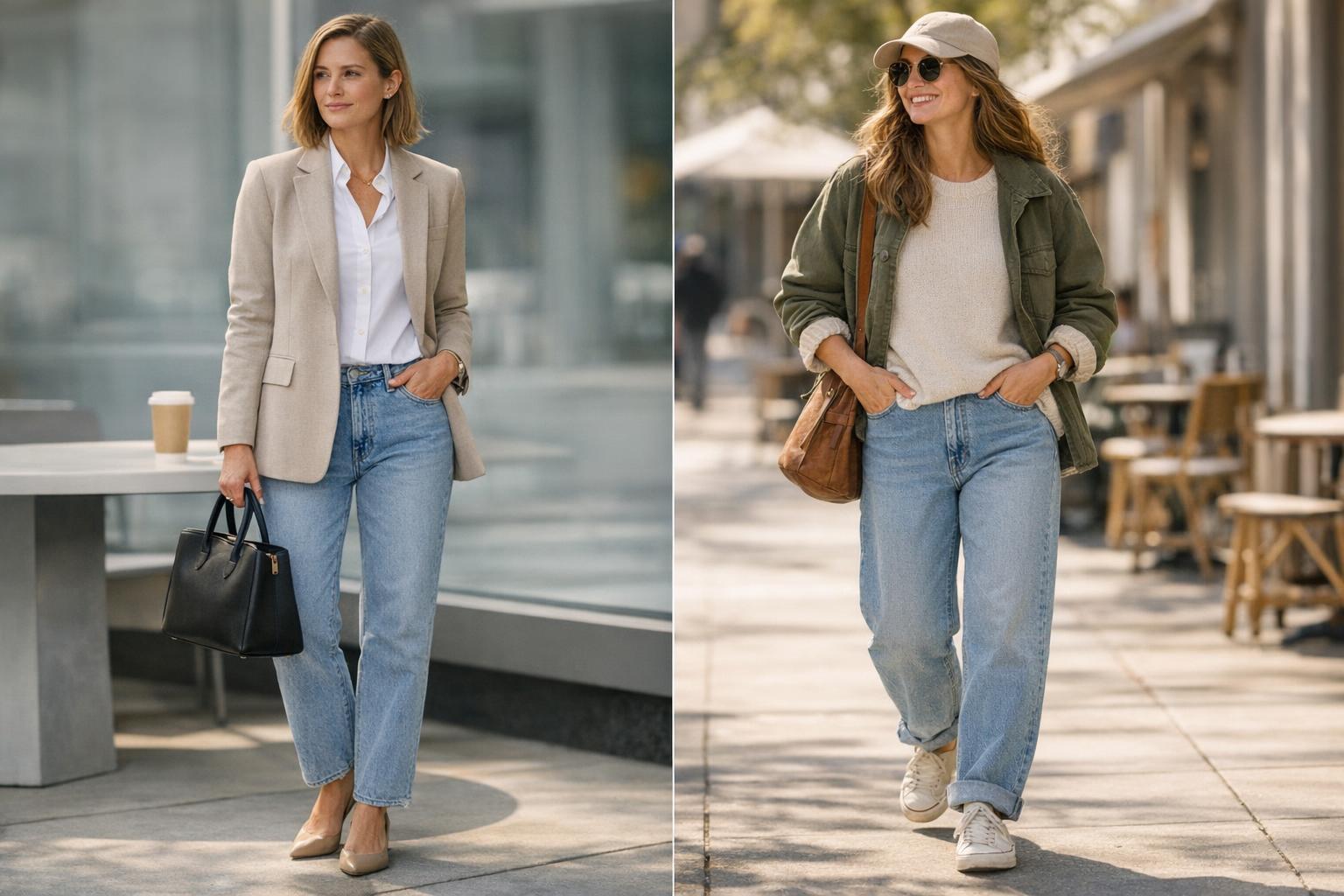
Light wash denim has a particular honesty to it: bright, easy, and slightly nostalgic, yet capable of looking sharply modern when the rest of the outfit is composed with intention. A light wash jeans outfit also tends to trigger an internal debate—do you lean into the relaxed, weekend character of washed jeans, or do you counterbalance their softness with polished structure?
That tension is exactly why light wash jeans are discussed alongside more than one aesthetic. In real wardrobes across the United States, the same pair can travel from a coffee run to a casual office to a flight day—yet the styling logic shifts dramatically depending on whether you’re building a clean, minimal look or a more playful, vintage-leaning one.
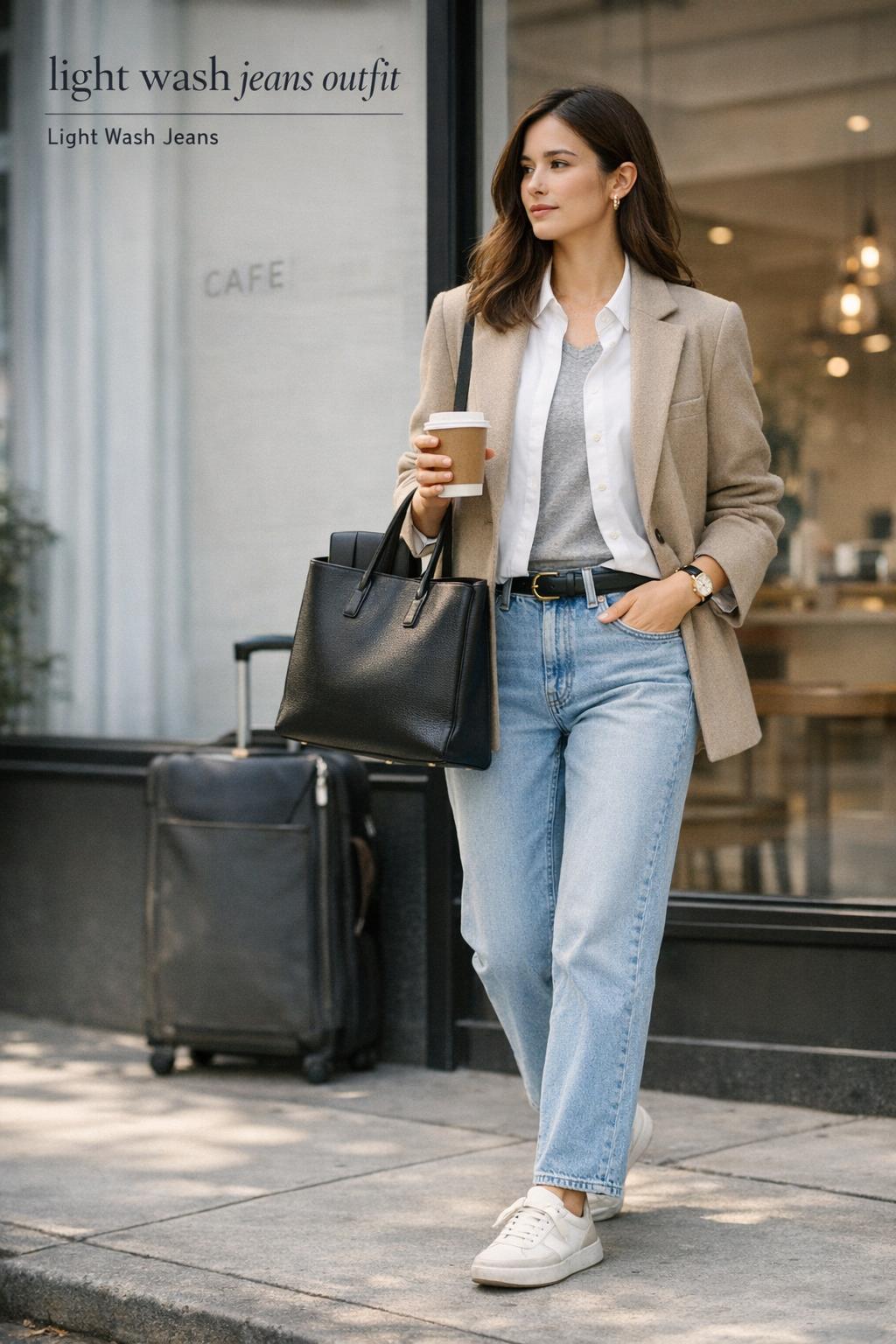
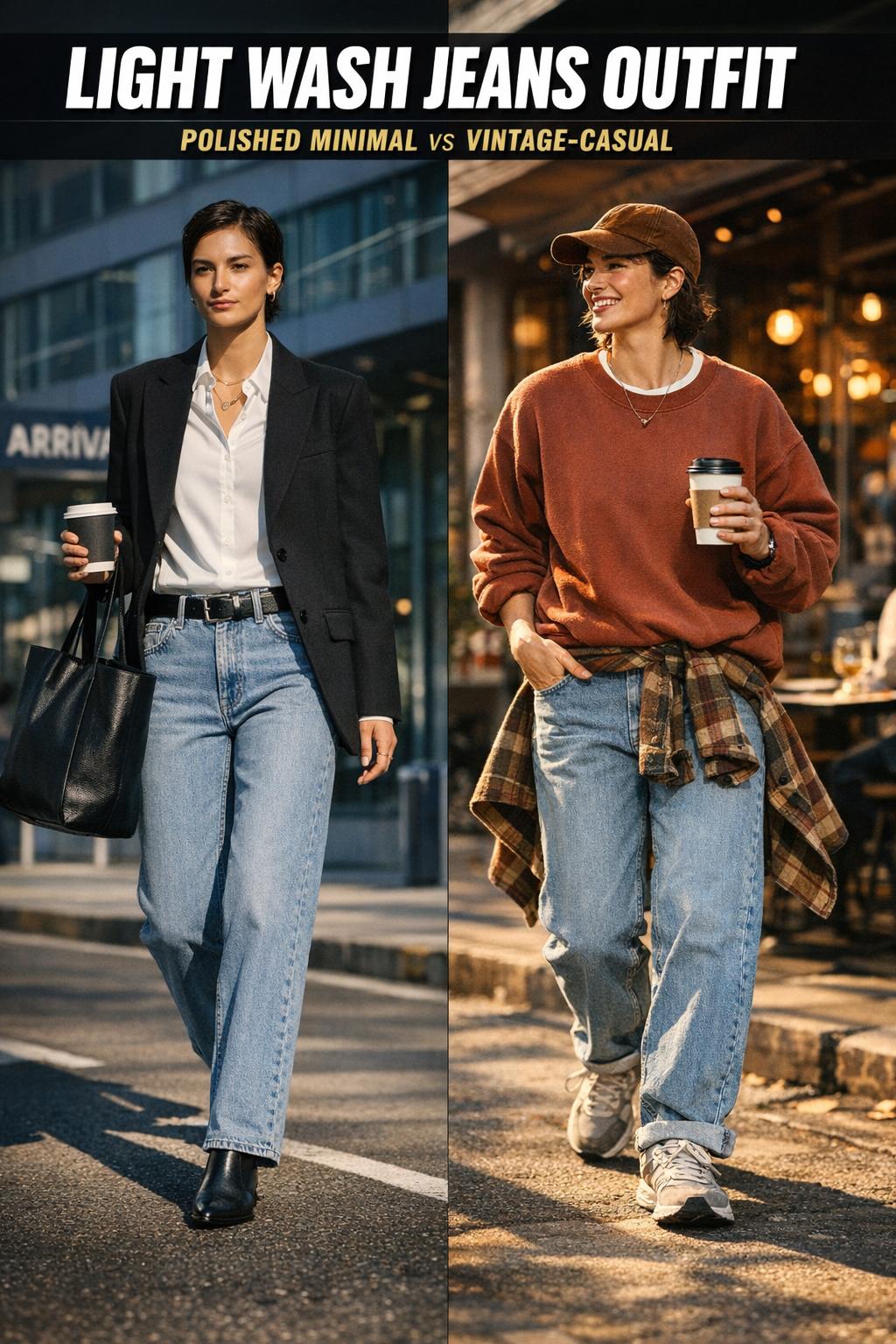
This comparison breaks down two commonly intertwined approaches to jean outfits with light wash denim: a polished minimalist route versus a relaxed, vintage-casual route. You’ll learn how each style handles silhouette, proportion, color, and texture; how footwear and accessories change the mood; and how to choose a jeans fit that supports the look you’re aiming for—without turning your outfit into a costume.
Style overview: polished minimalism with light wash jeans
Polished minimalism treats light wash jeans as a bright neutral—almost like a canvas. The defining characteristics are clean lines, thoughtful restraint, and a sense of finish: crisp layering, controlled proportions, and a palette that stays calm even when the denim is pale.
Your wedding has a lot of moving pieces. Your plan can still feel composed.
Zarellea organizes guests, vendors, budget, and timelines in one shared space — so you can make decisions with clarity, not stress.
Silhouettes here often rely on contrast: structured outerwear over relaxed denim, or sleek knitwear paired with a straighter leg. The color palette typically stays within neutrals and understated tones, while textures do the heavy lifting—smooth knits, refined shirting, and jackets with a tailored hand.
The mood is modern and composed. This is the light wash jeans outfit you reach for when you want ease, but not slouch; comfort, but with a visible point of view.
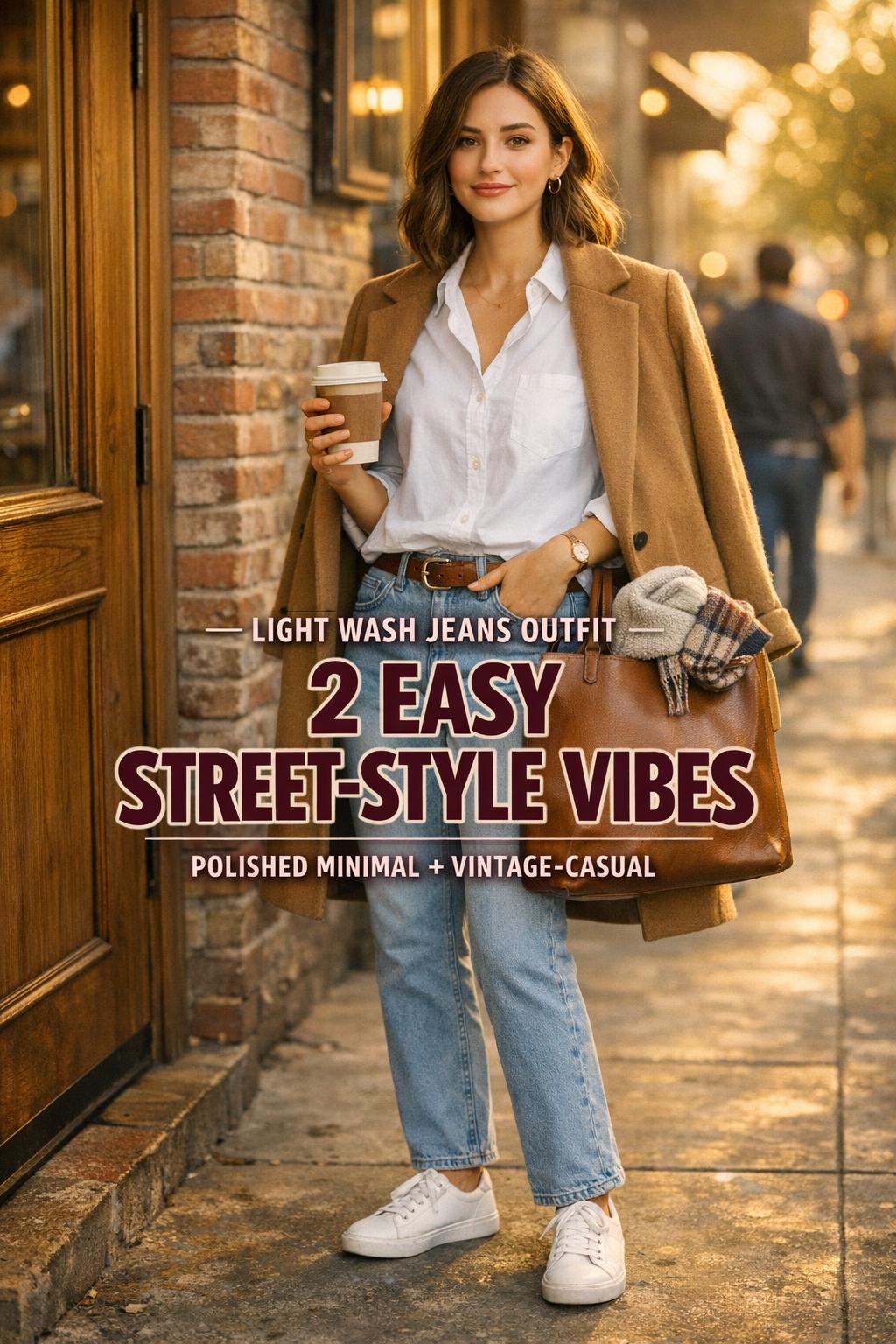
Style overview: relaxed vintage-casual with washed jeans
Relaxed vintage-casual leans into what light denim naturally suggests: daylight, downtime, and a touch of throwback familiarity. The defining characteristics are softness and ease—looser shapes, more casual layering, and a lived-in sensibility that makes washed jeans feel intentional rather than merely convenient.
Silhouettes here tend to be roomier, with an emphasis on comfort and movement. Proportions often skew relaxed-on-relaxed, but the best versions maintain shape through a clear waistline, a considered hem length, or a deliberate tuck.
The palette can be broader than minimalism—still grounded, but more open to warmer tones and familiar casual textures. The mood is effortless and approachable, like a favorite weekend uniform refined by a few smart choices.
Why these two styles get mixed up in jean outfits
Light wash jeans sit in a tricky middle ground: they’re casual by nature, but not inherently sloppy. Because the wash is bright and attention-catching, it can read “styled” even when the outfit is simple. That’s why polished minimalism and relaxed vintage-casual often get blurred—both can look understated, both can rely on basics, and both can feel “effortless” on the surface.
The difference isn’t whether you wear a tee or a sweater. It’s in the architecture: how the jeans fit through the hip and leg, where the waistband sits, how your layers hold shape, and whether the finishing touches (shoes, belt, bag, jewelry) suggest intention or pure comfort.
Key differences that change the entire outfit
Silhouette: controlled contrast vs. relaxed continuity
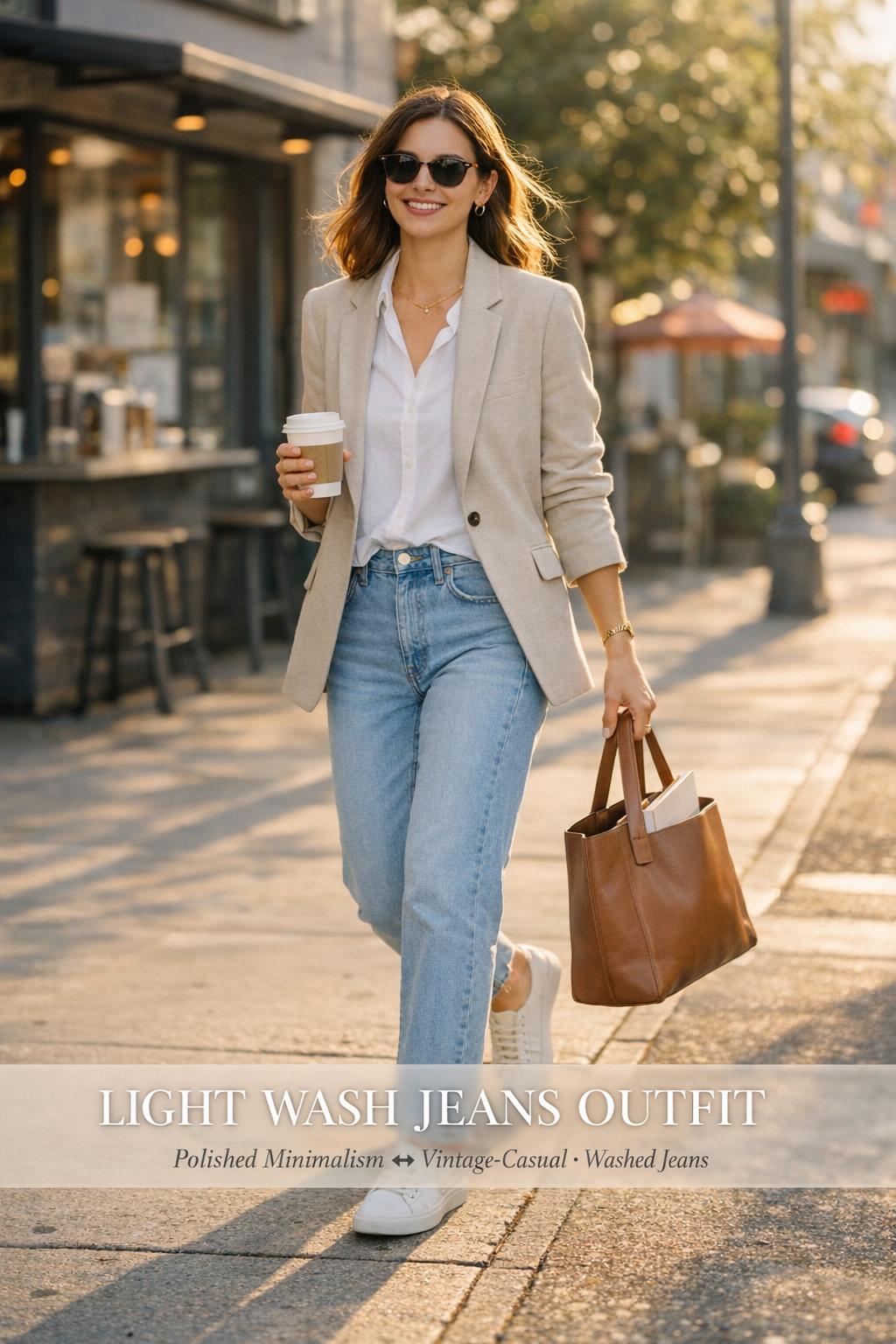
In polished minimalism, the silhouette is usually built on contrast—light wash jeans grounded by a sharper top layer. Think of a straighter or gently relaxed jeans fit with a jacket that holds its own shape, or a streamlined knit that keeps the torso clean. In relaxed vintage-casual, continuity is the point: the jeans fit is looser, and the top layers echo that ease, creating a softer outline.
Color palette: quiet neutrals vs. familiar warmth
Minimalism typically keeps the palette restrained so the light denim doesn’t feel loud. Relaxed vintage-casual allows a more sun-warmed approach—still cohesive, but more open to casual color relationships. Both can be subtle; the difference is whether the palette aims for “clean and modern” or “comfortable and lived-in.”
Formality: the same jeans, two very different signals
Light wash denim is rarely truly formal, but it can be made work-appropriate in many U.S. environments when the rest of the outfit signals structure. Polished minimalism borrows cues from tailoring and refined basics. Relaxed vintage-casual stays closer to weekend language—easy layers and practical shoes—making it perfect for off-duty settings.
Styling philosophy: “finish” vs. “ease”
Minimalist jean outfits prioritize finish: hems that skim rather than puddle, layers that sit neatly, and accessories that feel considered. Vintage-casual prioritizes ease: pieces that move, soften, and feel friendly. Neither is “better”—they simply solve different problems on different days.
Typical wardrobe pieces: structure versus softness
Minimalism tends to pair light wash jeans with crisp shirting, sleek knitwear, and structured outer layers. Relaxed vintage-casual leans toward softer tops, cozier layers, and unfussy textures. In both cases, the most successful outfits use one “anchor” piece to set the tone—either a structured layer to elevate, or a relaxed layer to keep things intentionally casual.
Visual style breakdown: how the outfits read at a glance
Layering approach
A minimalist light wash jeans outfit typically uses layering to add crispness: a clean top line at the shoulders, a jacket that frames the body, or a shirt that creates a sharp vertical. Vintage-casual layering feels more “thrown on,” but the best versions still have a hierarchy—one layer leads, the others support, and nothing fights for attention.
Garment proportions
Minimalism often relies on balanced proportions—if the jeans fit is relaxed, the top is more streamlined; if the top is roomy, the jeans are straighter. Vintage-casual can play with volume more freely, but it needs a visual anchor: a defined waist, a clean hem length, or a deliberate sleeve push-up. Without one of these, washed jeans can slide from “effortless” into “unfinished.”
Accessories and finishing details
Minimalism uses accessories as punctuation: restrained, refined, and clearly chosen. Vintage-casual uses accessories as atmosphere: softer, more familiar, less “styled,” but still cohesive. In both aesthetics, the simplest credibility marker is consistency—if your denim is bright and casual, your accessories should either elevate with intention or relax with conviction.
Footwear choices and outfit balance
Footwear is where these two approaches separate most clearly. Minimalism often looks best with shoes that keep the silhouette clean and the outfit feeling finished. Vintage-casual favors comfort and practicality, letting the jeans and shoe meet in an easy, everyday way. Even with the same pair of light wash jeans, the shoe choice can shift the outfit from “polished city errands” to “weekend off-duty” instantly.
The foundation: choosing the right jeans fit for each aesthetic
Before styling comes fit. Light wash denim highlights shape more than darker washes, so a jeans fit that feels “fine” in a deeper wash may suddenly feel too tight, too slouchy, or oddly proportioned in a pale blue. Fit is also the easiest way to steer a look toward minimal or vintage-casual without changing your entire wardrobe.
- For polished minimalism: look for a cleaner line through the leg and a waistband that sits securely. A straighter or gently relaxed cut reads modern and intentional, especially when hems are neat.
- For relaxed vintage-casual: a looser, more lived-in silhouette can work beautifully—just ensure the rise and seat still feel stable so the outfit looks relaxed, not accidental.
- For either style: prioritize comfort at the waist and hips. If you’re constantly adjusting, the outfit loses its composure, no matter how good the pieces are.
In practice, many people build their best jean outfits around two pairs of light wash jeans: one with a cleaner line for more polished days, and one with a softer, roomier feel for casual ones. That small wardrobe decision simplifies everything else.
Example comparisons: the same scenario, styled two ways
A casual day out: coffee, errands, and an open afternoon
Polished minimalism approach: Start with light wash jeans in a straighter jeans fit, then keep the top half clean and structured—an unfussy knit or a crisp shirt creates an intentional line. The overall effect is calm and considered: a simple outfit that still looks “put together” in motion.
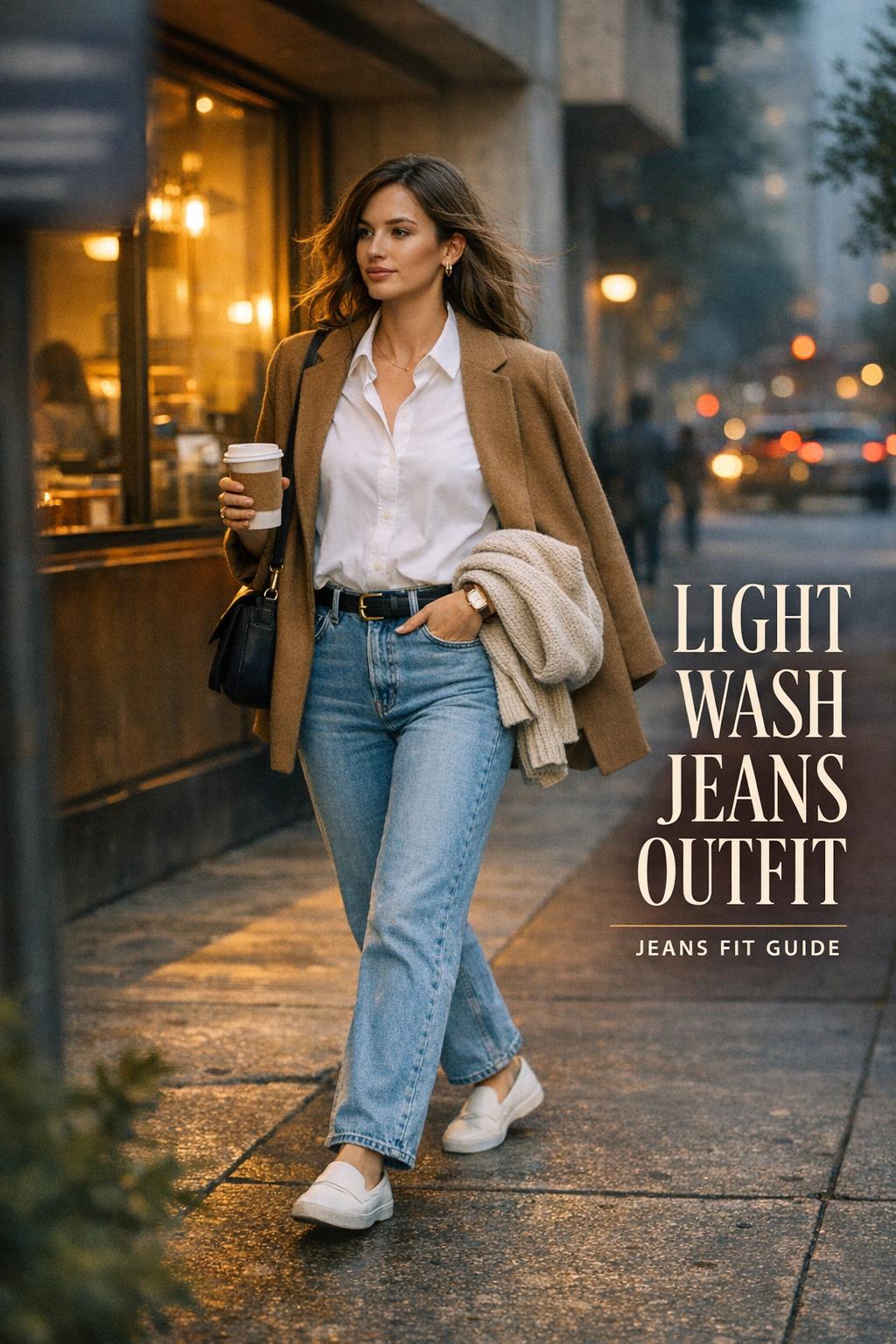
Relaxed vintage-casual approach: Choose washed jeans with a softer drape and build comfort into the layers—a relaxed top and an easy outer layer that you can carry or tie without it feeling precious. The outfit reads friendly and wearable, the kind of look that suits long walks and spontaneous plans.
Casual office or smart day meetings (where denim is acceptable)
Polished minimalism approach: Light wash jeans can work here when everything else signals refinement—clean lines, minimal visual noise, and a clear structure at the shoulders. The goal is to make the denim feel like a deliberate choice rather than a shortcut, with a silhouette that holds its shape throughout the day.
Relaxed vintage-casual approach: This is the trickier setting for the vintage-leaning route. If your workplace is truly casual, you can keep the outfit relaxed but should tighten one element—cleaner footwear, a neater top layer, or a more stable jeans fit—so the look feels respectful and intentional rather than weekend-coded.
Travel day: airports, trains, long hours of sitting
Polished minimalism approach: Travel is where minimalism earns its reputation. Choose light wash jeans with comfortable give through the waist and hips, then rely on streamlined layers that don’t bunch when seated. The outfit should photograph well and feel easy to manage—no fussy adjustments, no pieces that require constant attention.
Relaxed vintage-casual approach: This is vintage-casual territory. Washed jeans with a roomier leg and soft layers create comfort for movement and temperature shifts. The key is avoiding a shapeless result—keep the waistband secure and the layers visually organized so you still look composed when you arrive.
Evening casual: dinner that’s not formal, but not careless
Polished minimalism approach: Let the light denim act as contrast against sharper elements: a cleaner top, a structured outer layer, and refined finishing details. The mood becomes modern rather than daywear. This is one of the most reliable ways to make a light wash jeans outfit feel elevated without pushing into overdressed territory.
Relaxed vintage-casual approach: Keep the ease, but upgrade the cohesion. Choose a more intentional top layer and avoid overly worn details competing with the light wash. The result can feel charming and effortless—like you have style, but you’re not performing it.
Tips: the small styling decisions that make light wash denim look expensive
Light wash denim has a way of amplifying whatever is happening around it. If the rest of the outfit is slightly off—an awkward hem, a clashing tone, a top that collapses—light denim makes that mismatch more obvious. A few small choices can instantly sharpen your jean outfits without changing your personal style.
- Mind the hem: a clean, deliberate hem reads finished. If the length feels unresolved, the whole outfit can tilt casual in an unplanned way.
- Keep one “hero” element: either a structured layer (for polish) or an intentionally relaxed layer (for vintage-casual). Too many competing statements can make light denim look busy.
- Use texture to add depth: because light wash jeans are visually flat compared to darker denim, pairing them with tactile knits or crisp fabrics prevents the outfit from feeling one-note.
- Check the seat and waistband: if the jeans fit gapes or pulls, the outfit loses composure quickly—especially in a lighter wash.
A practical note from real life: light denim is less forgiving in strong daylight. Try your outfits in natural light before wearing them for a full day out. It’s a simple check that saves you from discovering proportion issues mid-errand run.
Where each style thrives in the U.S.: context matters
In the United States, denim lives everywhere, but the “right” version of a light wash jeans outfit depends on setting. The same jeans can look perfectly appropriate in a casual workplace, slightly underdone in a more formal city environment, or ideal for a weekend town where comfort is part of the culture. Thinking in context is not overthinking—it’s how you make denim look intentional.
Everyday wear
For daily life, relaxed vintage-casual tends to be the easiest to sustain: it matches the rhythms of errands, commuting, and unpredictable schedules. Polished minimalism works beautifully when you want to feel sharper—especially if your day includes a mix of casual and slightly more public-facing moments.
Work environments
If your workplace accepts denim, polished minimalism generally has the advantage because it borrows visual cues from more formal dressing—structure, restraint, and clean finishing. Vintage-casual can still work, but it requires tighter editing: fewer slouchy elements at once, a more stable jeans fit, and an overall look that reads “deliberate.”
Travel and long days
Travel calls for comfort, but also for outfits that don’t unravel after hours of sitting. Vintage-casual provides softness; minimalism provides order. The smartest approach often blends the two: light wash jeans that feel comfortable, paired with layers that hold shape and accessories that keep the look composed.
A stylist’s eye: common mistakes with washed jeans (and how to correct them)
Light wash denim is often blamed when an outfit feels “off,” but the issue is usually composition. The bright wash emphasizes proportion and contrast; it doesn’t create the problem—it reveals it. A few recurring pitfalls are worth knowing because the fixes are simple and immediately visible.
Mistake: pairing light wash with equally low-structure layers
When both the jeans and the top layers are overly soft, the outfit can lose definition. If you love relaxed dressing, keep it—but add one element with shape: a cleaner neckline, a more secure waistband, or an outer layer that frames the shoulders. This keeps the washed jeans outfit looking purposeful rather than purely comfortable.
Mistake: ignoring contrast placement
Because light wash jeans draw the eye, you need to decide where contrast lives: at the waist, at the shoulders, or at the feet. If contrast is scattered everywhere, the outfit can look choppy. If you concentrate contrast in one area, the look becomes calmer and more editorial.
Mistake: choosing a jeans fit that fights your movement
An outfit isn’t just a photo; it’s a day. If your jeans fit restricts sitting, walking, or bending, you will adjust constantly—and the styling loses its confidence. Light wash denim makes those adjustments more visible. Prioritize a fit that stays in place and feels stable through real movement.
How to blend both aesthetics without looking undecided
Most people don’t live entirely in one style lane. The most modern jean outfits often combine the calm finish of minimalism with the approachability of vintage-casual. The secret is choosing a “dominant” mood and letting the other act as a subtle accent.
- Minimal base, casual accent: keep the silhouette clean and structured, then add one relaxed element—an easy layer or a softer texture—to make it feel lived-in rather than severe.
- Casual base, polished accent: build comfort first with washed jeans and relaxed layers, then add one sharpening element—clean footwear, a more structured outer layer, or a refined finishing detail—to pull the look together.
- Keep your proportions consistent: if you mix aesthetics, make sure the outline still makes sense: one focal point, one clear line through the body, and a hem length that feels intentional.
This blended approach is particularly effective for light wash jeans because the wash itself sits between worlds: casual in spirit, but bright enough to look styled when the rest of the outfit is coherent.
Tips for seasonal shifts: making light wash jeans work beyond one weather moment
Light wash denim is often associated with warmer months, but it can be worn well across seasons when you treat it as part of a broader palette strategy. The key is not forcing a “summer” outfit into colder days, but recalibrating texture and layering so the denim feels seasonally believable.
In transitional weather, polished minimalism benefits from structured layers that can be removed without the outfit collapsing—your base should still look complete when the outer layer comes off. Relaxed vintage-casual benefits from tactile layering that reads cozy rather than beachy. In both cases, the jeans fit matters: a stable waistband and a clean leg line keep lighter denim from looking flimsy when the weather turns.
One practical habit: build a “denim capsule” around your light wash jeans with two dependable top options—one cleaner, one softer. This makes it easy to pivot between aesthetics depending on your day, without rethinking your entire closet.
Conclusion: the real distinction is structure, not trend
The core difference between polished minimalism and relaxed vintage-casual isn’t the jeans themselves—it’s the role they play. Minimalism uses light wash jeans as a bright neutral balanced by structure and clean finishing. Vintage-casual treats washed jeans as part of an easy, lived-in uniform, refined through cohesion rather than sharp tailoring.
You can identify each style quickly by looking at silhouette discipline, contrast placement, and how “finished” the outfit feels from head to toe. And if your wardrobe sits between the two, that’s not a problem—it’s often the most realistic place to be. A thoughtful light wash jeans outfit is less about chasing a specific aesthetic and more about composing proportion, texture, and intent so the denim looks like a choice.
FAQ
What colors work best in a light wash jeans outfit?
Light wash jeans pair most reliably with calm, grounded tones that don’t compete with the brightness of the denim; this is why polished minimalism often leans into restrained palettes, while relaxed vintage-casual can incorporate slightly warmer, familiar tones as long as the overall look stays cohesive.
How do I make light wash jeans look more polished for work?
Use structure and finish to offset the casual wash: choose a cleaner jeans fit, keep the silhouette controlled through the shoulders and waist, and ensure hems and layers look intentional so the denim reads as a considered styling choice rather than an overly relaxed default.
Are washed jeans only for casual outfits?
Washed jeans are inherently casual, but they can look elevated when the rest of the outfit provides refinement; polished minimalism does this through clean lines and structured layers, while vintage-casual keeps things relaxed but can still look intentional with coherent proportions and a stable jeans fit.
What jeans fit is most versatile for light wash denim?
A straighter or gently relaxed jeans fit tends to be the most adaptable because it can be styled with sharper, minimalist pieces for a polished look or softened with relaxed layers for vintage-casual, without the silhouette feeling extreme in either direction.
Why do my light wash jean outfits sometimes look “unfinished”?
Light wash denim emphasizes proportion and contrast, so outfits can look unfinished when everything is equally low-structure or when contrast is scattered; adding one clear anchoring element—either structure for polish or a deliberately relaxed hero piece—usually restores intention.
How can I style light wash jeans for travel without looking sloppy?
Prioritize comfort in the waist and hips so you’re not adjusting all day, then keep your layers organized—either streamlined for a minimalist finish or soft but cohesive for vintage-casual—so the outfit holds its shape after long periods of sitting and moving through different temperatures.
Can I mix polished minimalism and relaxed vintage-casual in one outfit?
Yes—choose a dominant mood and let the other act as a subtle accent, such as a clean, structured base with one relaxed texture, or a casual base with one sharpening element like a more structured layer or cleaner finishing detail.
What’s the simplest way to elevate jean outfits with light wash denim?
Focus on the small details that signal intention: a deliberate hem length, consistent proportions, and a jeans fit that sits securely at the waist; these elements create a polished effect even when the outfit is built from simple, everyday pieces.
Leave a Reply