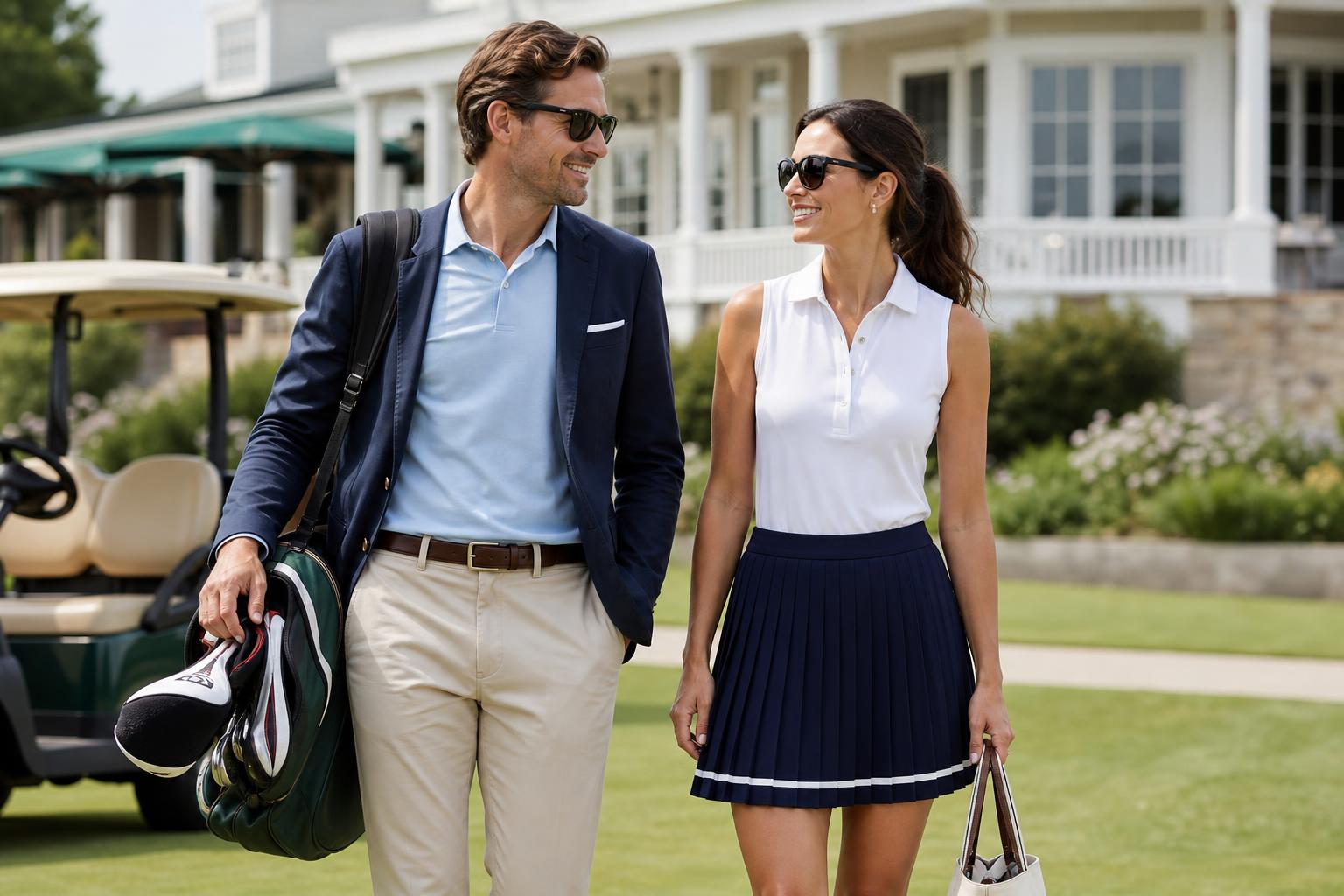
There is a particular pressure to getting country club outfits right. The setting asks for polish, but not stiffness; ease, but never carelessness. You may be heading to a clubhouse lunch, a daytime golf session, a member-guest tournament, or a formal dinner, and each moment calls for a slightly different reading of the same visual language: tailored silhouettes, clean fabrics, restrained accessories, and an understanding of dress code etiquette that feels instinctive rather than forced.
The most successful country club wardrobe is not built around a single “perfect look.” It is built around versatile pieces that move gracefully between golf attire, smart-casual clubhouse dressing, and more formal events. A polo shirt with chinos and loafers, a structured blazer layered over tailored trousers, a refined dress with discreet jewelry, a skirt paired with a collared blouse—these combinations work because they respect the club setting while still leaving room for personal style. The key is to understand why each piece belongs, how to adapt it for season and body shape, and what to avoid when a polished impression matters.
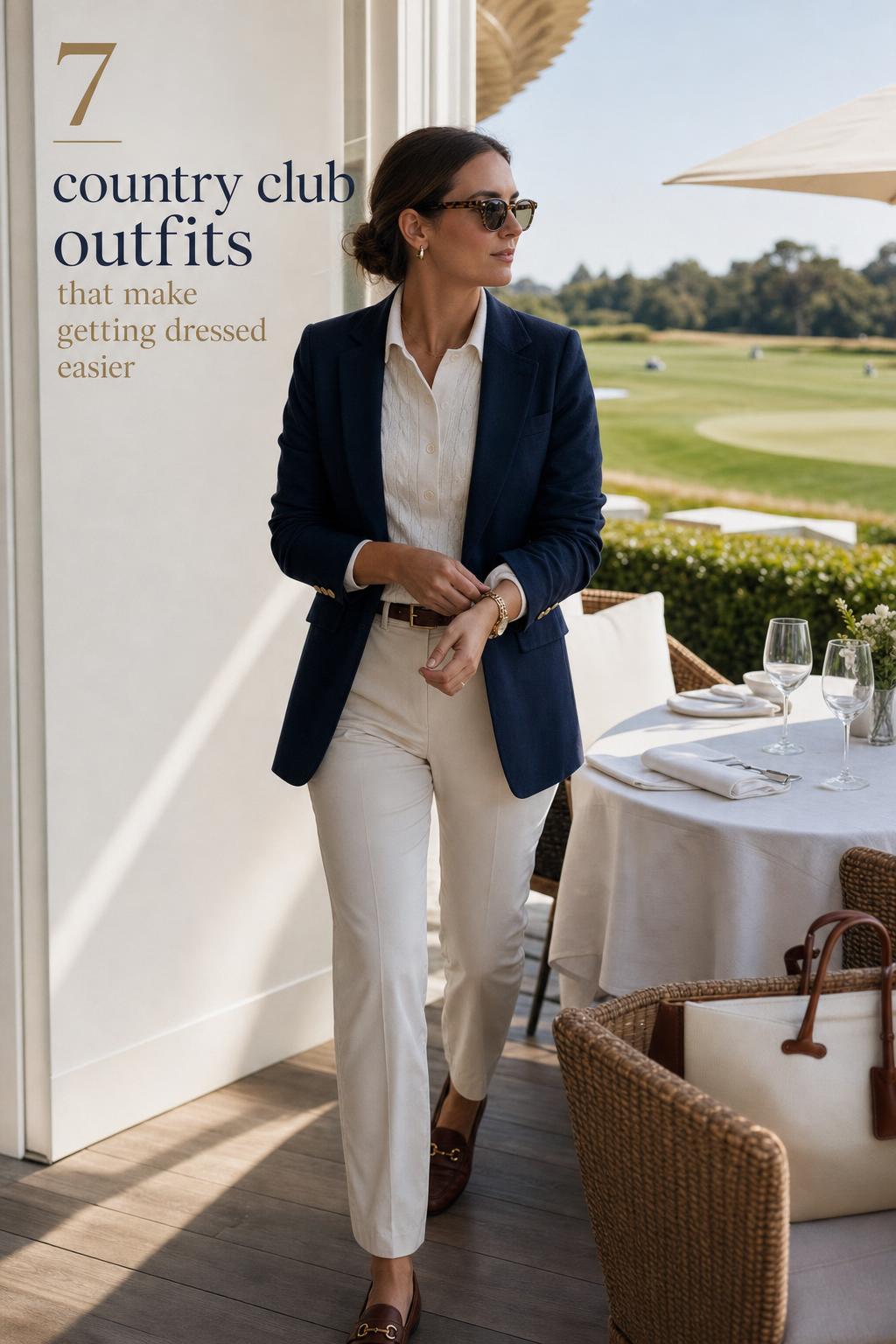
The dress code logic behind country club style
Country club dress code is best understood as a spectrum rather than a single rule. Most clubs operate within three broad tiers: formal dining or gala dressing, clubhouse smart-casual, and golf or court attire. Once you recognize which tier you are dressing for, outfit decisions become simpler. The same wardrobe can be adjusted with a blazer, a change of shoes, or a more refined fabric story.
Formal dining and gala settings usually call for the sharpest version of club style. For men, that often means a dress shirt or an OCBD, tailored trousers or chinos in a darker, cleaner finish, loafers or dress shoes, and a blazer. For women, a tailored dress, a blouse with a skirt, or elegant separates with a cardigan or blazer captures the right balance of refinement and restraint. The mood is elevated, but country club elegance still tends to favor understated composition over excessive drama.
Your wedding has a lot of moving pieces. Your plan can still feel composed.
Zarellea organizes guests, vendors, budget, and timelines in one shared space — so you can make decisions with clarity, not stress.
Clubhouse smart-casual is where most people need the most guidance because it sounds relaxed but still has boundaries. This is the realm of polo shirts, collared shirts, neat blouses, pleated skirts, tailored pants, loafers, and polished flats. The best smart-casual country club outfits look intentional from every angle. Nothing should read sloppy, overly tight, or too athletic, even when comfort is the priority.
Golf and court attire introduces practical performance concerns, but polish still matters. Performance fabrics, moisture-wicking construction, and quick-dry materials are especially useful here because they support movement and heat management without abandoning the club’s expectation of a neat appearance. This is where the visual equation often becomes performance polo plus golf shorts or a golf skirt by day, then chinos, a blazer, or smarter footwear later for dinner.
A practical way to read the room
- If the event includes the words dinner, gala, or awards, lean toward a blazer, dress shirt, tailored dress, or more refined separates.
- If you are simply meeting for lunch or afternoon drinks in the clubhouse, choose smart-casual pieces with structure: collared tops, trousers, skirts, dresses, loafers.
- If your day begins on the golf course, prioritize performance fabrics first, then plan one polished layer for the clubhouse transition.
- If the rules feel unclear, dress slightly more polished than you think necessary. In a club setting, restraint is usually rewarded.
The country club wardrobe staples worth buying first
A country club wardrobe becomes far more manageable once you stop thinking in terms of endless outfit ideas and start thinking in terms of a compact, interchangeable wardrobe. A few strong pieces do most of the work: a polo shirt, an OCBD or another crisp collared shirt, chinos, tailored trousers, a blazer, loafers, and for women, at least one reliable skirt or dress that can shift from daytime to evening with minor changes.
If you are building from scratch or shopping with a budget in mind, start with the pieces that offer the highest versatility. For men, that is usually a well-fitting polo shirt in a neutral or classic shade, a pair of chinos that can handle both daytime and evening use, and loafers that feel polished but still comfortable enough for a long day. For women, a collared shirt or polished blouse, tailored pants or a pleated skirt, and a pair of loafers or refined flats create a strong foundation that can be worn in many combinations.
The blazer is one of the smartest investments because it instantly changes the tone of an outfit. It can sharpen golf-to-dinner transitions, make tailored shorts feel more intentional when permitted, and give a simple dress or blouse-and-trouser combination the composure expected at a clubhouse dinner. If your budget only allows one elevated piece, choose a lightweight blazer with clean lines and reliable structure.
The easiest pieces to recreate affordably
Not every country club look requires expensive shopping. In fact, the style relies more on silhouette and condition than novelty. A neat polo shirt in a smooth fabric will outperform a trend-heavy top every time. Tailored pants with a straight, clean leg line can look far more expensive than they are if they fit well at the waist and hem. A simple cardigan or blazer in navy, cream, or another restrained neutral can also elevate basics without forcing you into a full wardrobe overhaul.
- Buy first: polo shirt, chinos or tailored pants, loafers, blazer.
- Add next: OCBD, pleated skirt, day-to-evening dress, cardigan.
- Save money on trend pieces and invest more in shoes, tailoring, and fabrics that hold their shape.
- Choose colors that mix easily: navy, cream, soft pastels, and other balanced neutrals.
How country club outfits for men work in real life
The strongest men’s country club attire is not complicated. It is simply composed with discipline. The classic formula—polo shirt, chinos, loafers—appears repeatedly because it solves several problems at once. It respects the dress code, feels comfortable for daytime movement, photographs well, and transitions cleanly with a blazer when the setting becomes more formal.
Classic clubhouse smart-casual
A collared shirt or polo paired with chinos creates the ideal clubhouse smart-casual base. This works especially well for men who want one dependable formula they can repeat in different colors. The reason it works is proportion: the shirt provides structure at the neckline, the chinos keep the lower half tailored without becoming rigid, and loafers finish the look with a subtle dress-code signal. If you are tall, this combination looks best when the trouser break is clean and not overly long. If you are shorter, a slightly slimmer line through the trouser can keep the silhouette sharper.
Summer veranda dressing
For warm-weather lunches or outdoor afternoons, lighter fabrics and softer color palettes matter. Cotton and linen blends help maintain polish without the heaviness of formal suiting fabrics. A lightweight collared shirt or polo in a pale tone, paired with chinos or tailored shorts where permitted, creates a composed summer look. The practical point here is breathability: the more comfortable you are, the less likely the outfit is to collapse into visible discomfort by midday.
If shorts are allowed, keep them tailored and modest in spirit rather than overtly sporty. This is not the place for anything baggy or aggressively athletic. A clean hem, a structured waistband, and loafers or neat dress shoes keep the look anchored in the country club setting.
Golf-to-dinner transitions
This is one of the most useful styling scenarios to master. Begin with a performance polo and golf-appropriate bottoms during the day, then bring in chinos, loafers, and a blazer for the evening. The success of this transition depends on choosing daytime pieces that already look refined. A performance fabric can still appear polished if the cut is clean and the color is restrained. This approach is especially practical for member-guest tournaments or long club days when going home to change is unrealistic.
How country club outfits for women feel polished without becoming precious
Country club outfits for women often work best when they balance a tailored silhouette with softness in fabric or color. Dresses, skirts, blouses, tailored pants, loafers, and cardigans recur for a reason: they create a refined line without looking severe. The visual language leans preppy and elegant, but the most modern versions avoid looking costume-like. The goal is not to imitate an editorial photo panel from a fashion site such as Fashion Gone Rogue or New York Style Guide; it is to translate that polished ease into a wardrobe that functions in daylight, movement, and real social settings.
Polished smart-casual with dresses and skirts
A dress is often the simplest answer for a clubhouse lunch or daytime event because it creates an instant sense of completion. A tailored dress with clean seams and a modest line requires very little styling beyond loafers, flats, or a light cardigan. For women who prefer separates, a pleated skirt with a collared shirt or blouse offers similar polish while allowing more flexibility in fit.
This silhouette is especially flattering for readers who want definition without cling. A skirt that moves away gently from the body can feel balanced on curvier frames, while petite dressers often benefit from keeping the top more fitted so the proportions stay crisp. Taller readers can carry a slightly longer line with ease, especially when the blouse is tucked neatly to preserve waist definition.
Tailored pants and chic separates
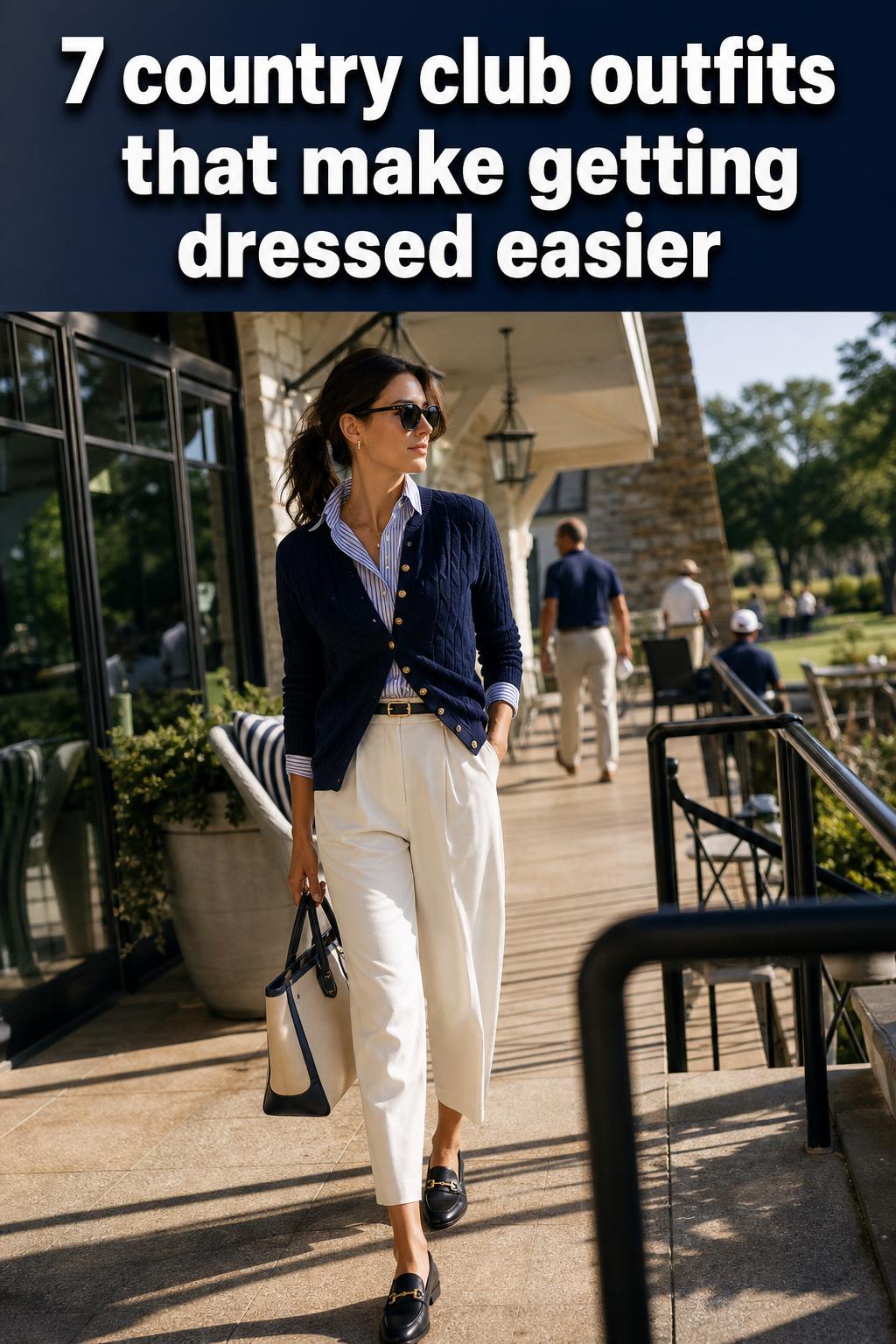
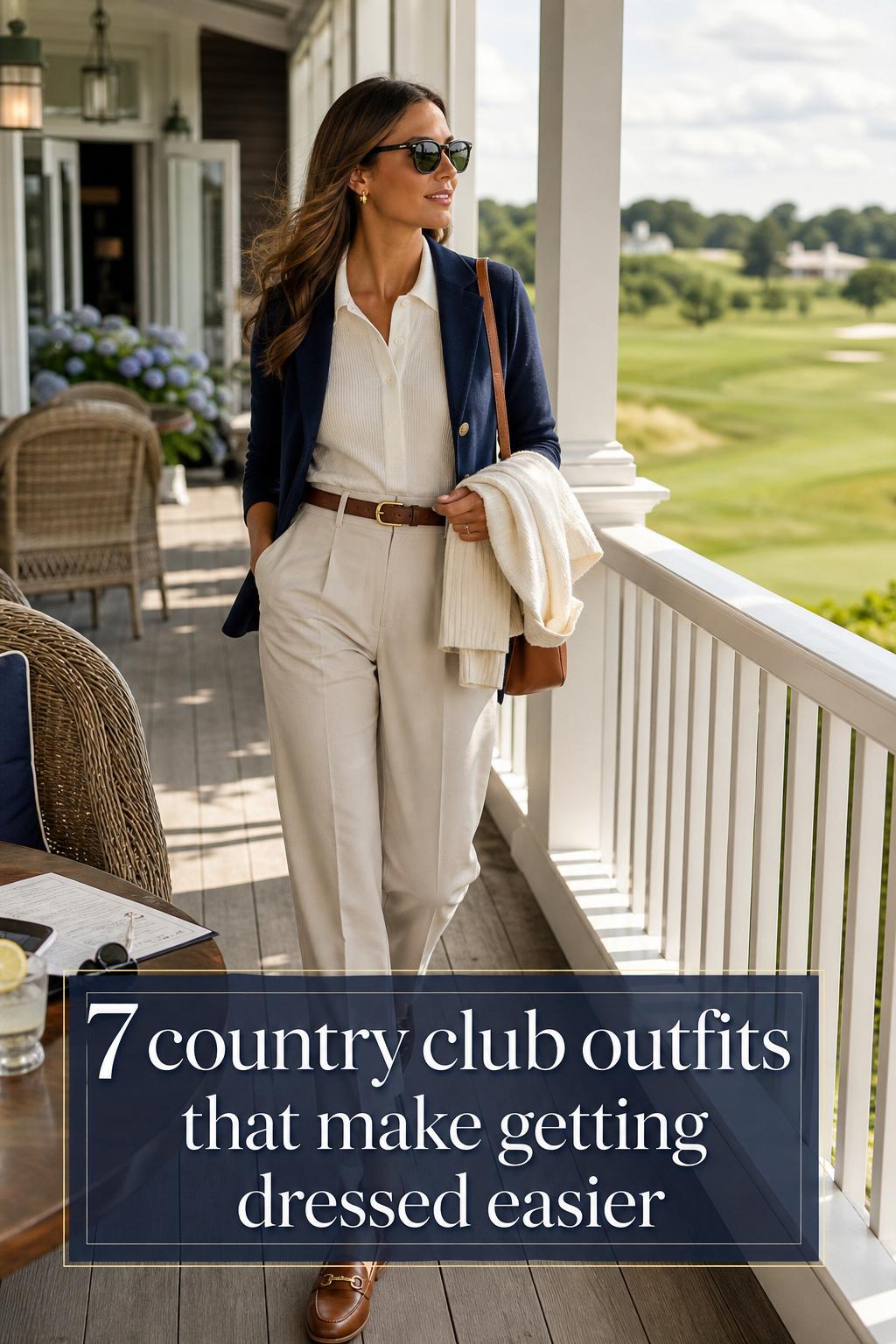
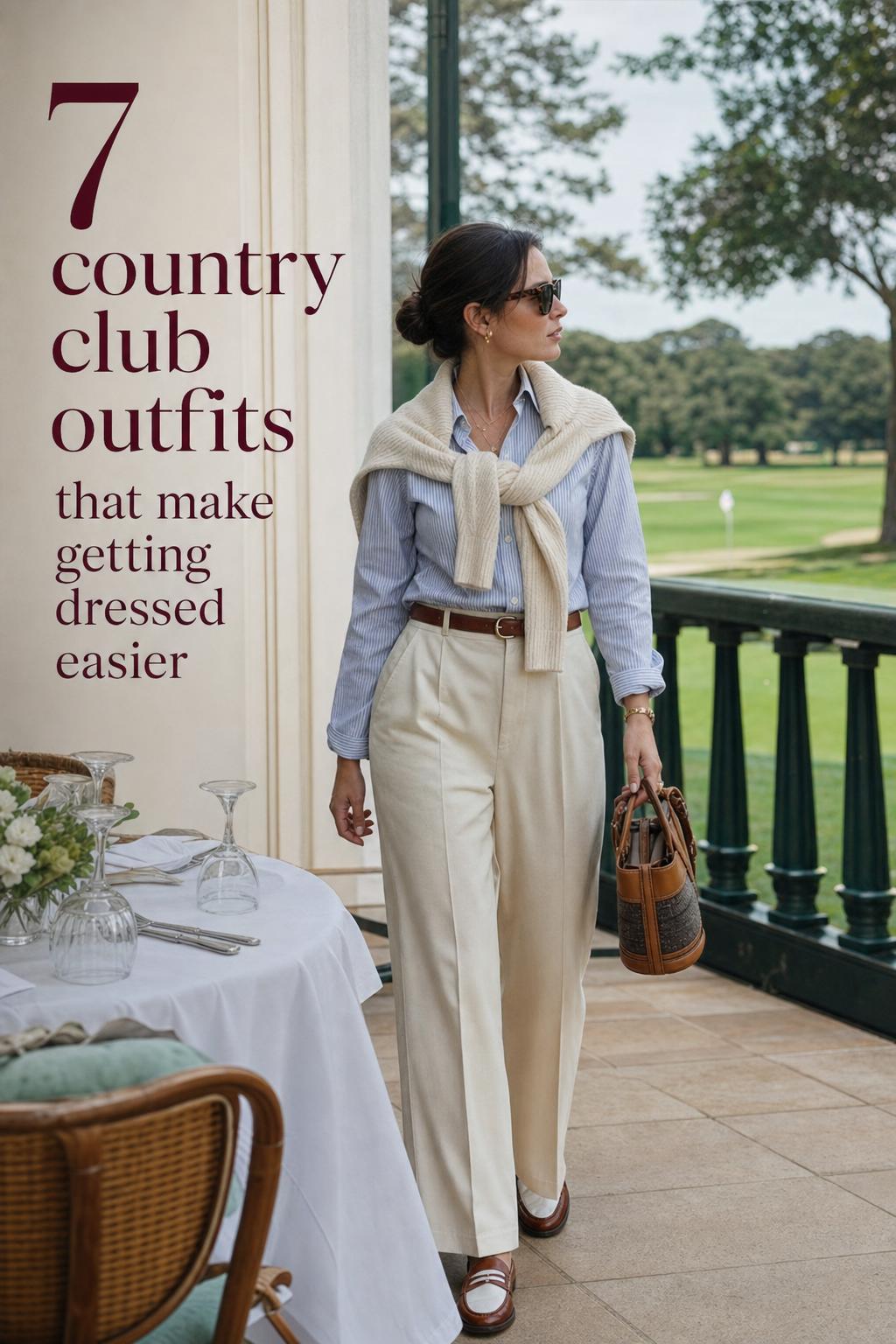
Tailored pants are often the most versatile option because they can move from lunch to dinner with only a small shift in styling. A blouse in a smooth fabric, worn with tailored trousers and loafers, gives a quiet authority that suits the country club environment well. Add a blazer and the outfit becomes evening-ready. This is one of the strongest choices for anyone who values comfort, wants more coverage, or prefers a modern silhouette over dresses.
For curvier body types, a trouser with a clean drape rather than too much stiffness can be more flattering and easier to wear for long periods. For petite frames, avoiding excessive fabric volume is useful; a tailored ankle or full-length trouser with a clean line tends to feel more controlled than a very wide shape. The country club setting rewards refinement, so tailoring matters more than trend.
Summer and shoulder-season layering
Summer country club outfits often rely on breathable fabrics, soft pastels, creams, and navies. A skort, skirt, or light dress can work beautifully in heat, but it still needs enough structure to avoid looking beachy. In shoulder season, a cardigan or lightweight blazer becomes essential. These pieces also solve a common practical problem: interiors can feel cooler than the terrace or golf course, and having one elegant layer keeps the outfit visually finished.
Why fabric and color make the difference between polished and merely dressed
Fabric is one of the most overlooked parts of country club dressing, yet it often determines whether an outfit holds its shape over a full day. Cotton and linen blends offer the right combination of breathability and polish for warm weather, especially for veranda lunches, golf-adjacent dressing, or daytime events. Performance fabrics bring another practical advantage: moisture-wicking and quick-dry qualities help maintain comfort and a neat appearance when the schedule includes activity.
The most useful approach is to align fabric choice with the occasion. For sport-focused hours, performance materials make sense. For clubhouse dining, fabrics with a slightly more refined hand—smooth cotton, linen blend shirting, structured dresses, polished blouses—tend to read more elegant. If you want one wardrobe that bridges both, choose pieces that combine technical comfort with tailored lines.
Color stories that feel classic, not flat
Pastels, navy, cream, and balanced neutrals appear again and again in country club fashion because they feel light, clean, and appropriately restrained. The easiest way to make them look modern is through contrast in texture or proportion. A structured blazer over a soft blouse, cream trousers with a navy polo, or a pastel skirt grounded by loafers creates visual interest without disrupting the dress code.
If you tend to look washed out in pale tones, place the lighter color away from your face or break it up with a stronger neutral. If you prefer a more minimal wardrobe, choose a narrow palette and repeat it. This makes packing, shopping, and outfit planning much easier while also making the final result look more considered.
Tip: make simple pieces look more expensive
In country club settings, expensive style is usually communicated through neatness, proportion, and fabric behavior rather than obvious branding. Steam the shirt. Hem the trousers properly. Choose loafers that are polished and in good condition. Keep the blazer shoulders clean and the fit controlled. Even affordable pieces gain authority when they sit correctly on the body and coordinate in tone.
Accessories and etiquette: the finishing details that quietly matter
Accessories should refine country club outfits, not dominate them. A belt can sharpen the line of chinos or tailored trousers. A watch adds structure to a simple polo-and-loafer combination. Discreet jewelry works well with dresses, blouses, and skirts because it contributes polish without competing with the clean lines of the outfit. The guiding idea is restraint.
Hats and sunglasses can be practical in sunny clubs, especially for golf or outdoor daytime use, but they should still feel aligned with the rest of the look. A highly athletic accessory paired with a polished clubhouse outfit can create visual confusion. Bag choice matters too. A neat handbag or structured day bag supports the outfit better than anything overly casual or oversized for dining spaces.
Etiquette is not separate from style here; it is part of style. The reason country club dress code places so much emphasis on collared shirts, tailored pants, dresses, skirts, loafers, and blazers is that these garments communicate care and situational awareness. They tell the room you understood the assignment.
- Keep jewelry discreet rather than statement-heavy.
- Use belts to define the waist or sharpen trouser looks.
- Choose loafers or dress shoes that can handle several hours of wear.
- Treat hats and sunglasses as practical daytime additions, not focal points.
- Avoid accessories that push the outfit too far toward beachwear or gymwear.
Real-world club scenarios and what actually works
The most helpful way to think about country club attire is by scenario. Not every country club event demands the same degree of formality, and one reason people miss the mark is that they dress for an imagined aesthetic rather than the actual schedule ahead. A lunch on the terrace, a golf game followed by drinks, and a formal awards dinner each ask for different decisions around fabric, footwear, and layering.
Daytime golf sessions
Start with practical performance pieces that still look polished. For men, a performance polo with golf shorts or other permitted bottoms creates the right base. For women, a golf skirt or skort with a neat top offers comfort and movement. Keep colors controlled and the fit intentional. If you know the day will continue into social time, bring loafers, a cardigan, or a blazer so the outfit can be elevated quickly.
Clubhouse lunches
This is where smart-casual precision matters most. Men do well with collared shirts, chinos, and loafers. Women can rely on dresses, skirts with blouses, or tailored trousers with a polished top. The most common mistake here is dressing too casually because the event happens during daylight. Daylight does not automatically mean informal in a club context. Clean lines and a finished shoe make a visible difference.
Formal dinners, galas, and awards evenings
These events require the most elevated version of the country club wardrobe. A blazer, dress shirt, and dress shoes or loafers are strong choices for men. For women, tailored dresses, elegant skirts, or polished separates with a cardigan or blazer work beautifully. Fabrics should feel more refined than daytime sport pieces, and the overall composition should look composed in lower evening light as well as in photographs. This is also where understated elegance outperforms trend chasing.
Regional and club-type nuance without overcomplicating your wardrobe
Not every club interprets country club fashion in exactly the same way. A private club may read more traditional than a public-facing resort environment. A Northeast prep sensibility may lean more classic and structured, while a West Coast resort mood may feel lighter and more relaxed in color and fabric. The useful lesson is not to build entirely separate wardrobes, but to choose adaptable staples that can move slightly more formal or slightly more relaxed depending on the setting.
For example, a navy blazer, cream trousers, and loafers can be styled toward a more traditional club environment with an OCBD or dress shirt, or softened for a resort-leaning atmosphere with a lighter polo and relaxed color palette. For women, a pleated skirt with a collared blouse can feel more classic, while a tailored dress in a soft pastel can feel more resort-oriented while still respecting the same code of polish.
Location-specific style content from places such as New York Style Guide often emphasizes urban polish, while visually led pages and influencer-inspired edits from outlets like YesStyle may push a more trend-aware interpretation, occasionally drawing inspiration from figures such as Sabrina Carpenter. These references can be useful for mood, but the final test is still practicality: can the look handle the club’s expectations, the weather, and the length of the day?
Common mistakes that make country club outfits fall flat
The most frequent mistake is confusing “casual” with “anything goes.” Country club casual is still curated. Athletic wear that looks too gym-specific, denim where it is discouraged, or shoes that feel too informal can undermine even good pieces elsewhere in the outfit. Another common issue is forcing a fashion-forward idea into a setting that rewards subtlety. Editorial inspiration is useful, but it needs translating.
Fit is another decisive factor. A blazer that pulls, a skirt that rides up, trousers that puddle, or a polo shirt that is too tight through the chest all shift the outfit away from the composed ease that country club attire requires. This is why tailoring often matters more than buying more. One well-fitted pair of tailored pants will serve you better than several mediocre substitutes.
Finally, many readers overcomplicate the idea of preppy style. Country club fashion does not require costume-level styling. It is enough to work with collared tops, dresses, skirts, chinos, loafers, blazers, and a clean palette. The elegance lies in combination and proportion, not in collecting every visual cliché associated with the setting.
Tip: what to avoid when you are unsure
- Anything that looks more suited to the gym than the club.
- Overly distressed, casual, or sloppy-looking garments.
- Footwear that feels too beachy, too rugged, or too athletic for the clubhouse.
- Outfits with no structure at the collar, waist, or hemline.
- Too many trend pieces competing at once.
Building a small country club capsule wardrobe
A capsule approach works particularly well for country club dressing because the aesthetic is built on repetition with variation. Instead of trying to create endless new outfits, focus on a compact group of elevated basics that can rotate across lunch, travel, golf-adjacent plans, dinners, and seasonal transitions. This is also the most budget-conscious strategy because every new purchase has to work with multiple existing pieces.
For men, a practical capsule might include two or three polo shirts, one OCBD or dress shirt, two pairs of chinos or tailored trousers, one pair of tailored shorts if allowed, loafers, and a blazer. For women, a refined capsule might include a collared shirt, a blouse, tailored pants, a pleated skirt, a day-to-evening dress, loafers or flats, and a cardigan or blazer. Once these are in place, the wardrobe becomes highly flexible.
This kind of wardrobe also travels well. If your plans include a resort-style club weekend or several events over a few days, a tight color palette of navy, cream, pastels, and neutrals reduces packing stress and ensures every combination feels coherent. It is a quiet form of styling intelligence: fewer pieces, more possible outcomes.
Where a few trusted names fit into the picture
Some readers encounter country club style first through retail and editorial guides from names such as Nimble Made, Rihoas, Floradress, Tee to Toe, She Be Shine, Erthe Golf, Top Trends Guide, and YesStyle. These can be useful starting points for identifying silhouettes—collared shirts, pleated skirts, blazers, dresses, loafers, golf skirts, and polished separates—but the most important decision remains the same regardless of source: choose the version that fits your life, your proportions, and the formality of the club rather than buying into a single image.
Styling insight: why these outfits work beyond the club
One reason country club outfits remain so appealing is that they overlap with a broader wardrobe of elevated basics. A blazer that works at the clubhouse also works for casual work settings. Tailored pants and loafers travel beautifully. A collared shirt with a skirt can move from daytime social plans to dinner. A refined dress can be restyled with different accessories and layers in shoulder season. This makes country club dressing less of a niche challenge and more of an exercise in building a polished, versatile wardrobe.
That is also why thoughtful composition matters more than buying for a single event. The goal is not simply to look appropriate at a private club or a public-facing resort; it is to own pieces that continue to serve you elsewhere. Great style, in this context, is not about excess. It is about choosing clean lines, balanced proportions, and fabrics with enough structure to hold up under real use.
FAQ
What should I wear to a country club if I do not know the exact dress code?
Choose polished smart-casual pieces that sit safely in the middle: a collared shirt or polo with chinos and loafers for men, or a dress, blouse with a skirt, or tailored pants with loafers or flats for women. Add a blazer or cardigan if the setting may become more formal.
Are shorts allowed at a country club?
Shorts may be allowed in some golf or daytime settings, but they should be tailored and neat rather than overly athletic or casual. If you are unsure, chinos or tailored trousers are usually the safer option.
What are the best country club outfits for women?
The most reliable options are tailored dresses, pleated skirts with collared shirts or blouses, and tailored pants with polished separates. Loafers, flats, a cardigan, or a blazer help complete the look without making it feel overdone.
What are the best country club outfits for men?
A polo shirt with chinos and loafers remains the most versatile formula, especially for clubhouse smart-casual. For more formal events, add a blazer and switch to a dress shirt or OCBD if needed.
Can I wear performance fabrics to the country club?
Yes, especially for golf and daytime activity, because performance fabrics support comfort through moisture-wicking and quick-dry function. The key is choosing pieces with clean tailoring so they still look polished in the clubhouse.
How do I transition from golf attire to dinner at the club?
Start with a refined performance polo or other neat daytime base, then change into chinos or more tailored bottoms, add loafers or dress shoes, and finish with a blazer or cardigan. This creates a smooth shift from sporty to evening-appropriate.
Which shoes work best with country club attire?
Loafers are the most adaptable choice because they work with polos, trousers, dresses, and skirts. Dress shoes suit formal events, while very casual or overly athletic footwear can feel out of place in clubhouse settings.
How can I recreate country club fashion on a budget?
Focus on a small capsule of versatile basics: a polo or collared shirt, tailored pants or chinos, loafers, and a blazer or cardigan. Prioritize fit, fabric condition, and a restrained color palette, since these details make affordable pieces look more elevated.
What colors work best for country club outfits?
Pastels, navy, cream, and other balanced neutrals are the easiest choices because they feel polished and classic. They also mix well together, which makes wardrobe planning and seasonal transitions much simpler.
What should I avoid wearing to a country club?
Avoid pieces that read too gym-specific, sloppy, overly distressed, or too casual for the clubhouse. When in doubt, choose clothing with structure at the collar, waist, and hem, and keep the overall look neat and restrained.
Leave a Reply