Sweat pants outfit logic in 2026: why “cozy” and “chic” are no longer opposites
There’s a particular modern moment—often a travel morning, a city errand run, or a quick pivot from couch to brunch—when you want comfort without broadcasting “I gave up.” That’s exactly where the sweat pants outfit now lives: not as a guilty pleasure, but as a styling platform. The best sweatpants outfits aren’t built on novelty; they’re built on proportion, layering, and a clear point of view.
Two aesthetics dominate the conversation and are frequently blurred together: elevated loungewear (clean, coordinated, refined) and street-led athleisure (sport-coded, slightly bolder, often sneaker-driven). Both can produce cute sweat pant outfits, both can look intentional, and both can fail in the same way—when the silhouette collapses into shapeless “around-the-house” trousers energy.
Below, you’ll learn how to tell these styles apart, how they overlap, and how to use their rules in real wardrobes. We’ll break down silhouettes, fabrics, and accessory strategy; translate those choices into practical outfit comparisons; and map them to modern contexts like New York minute polish, “quarantine in Paris” nonchalance, and airport-ready ease seen on Sara Sampaio and Shay Mitchell.
Style overview: elevated loungewear (the polished sweatpants approach)
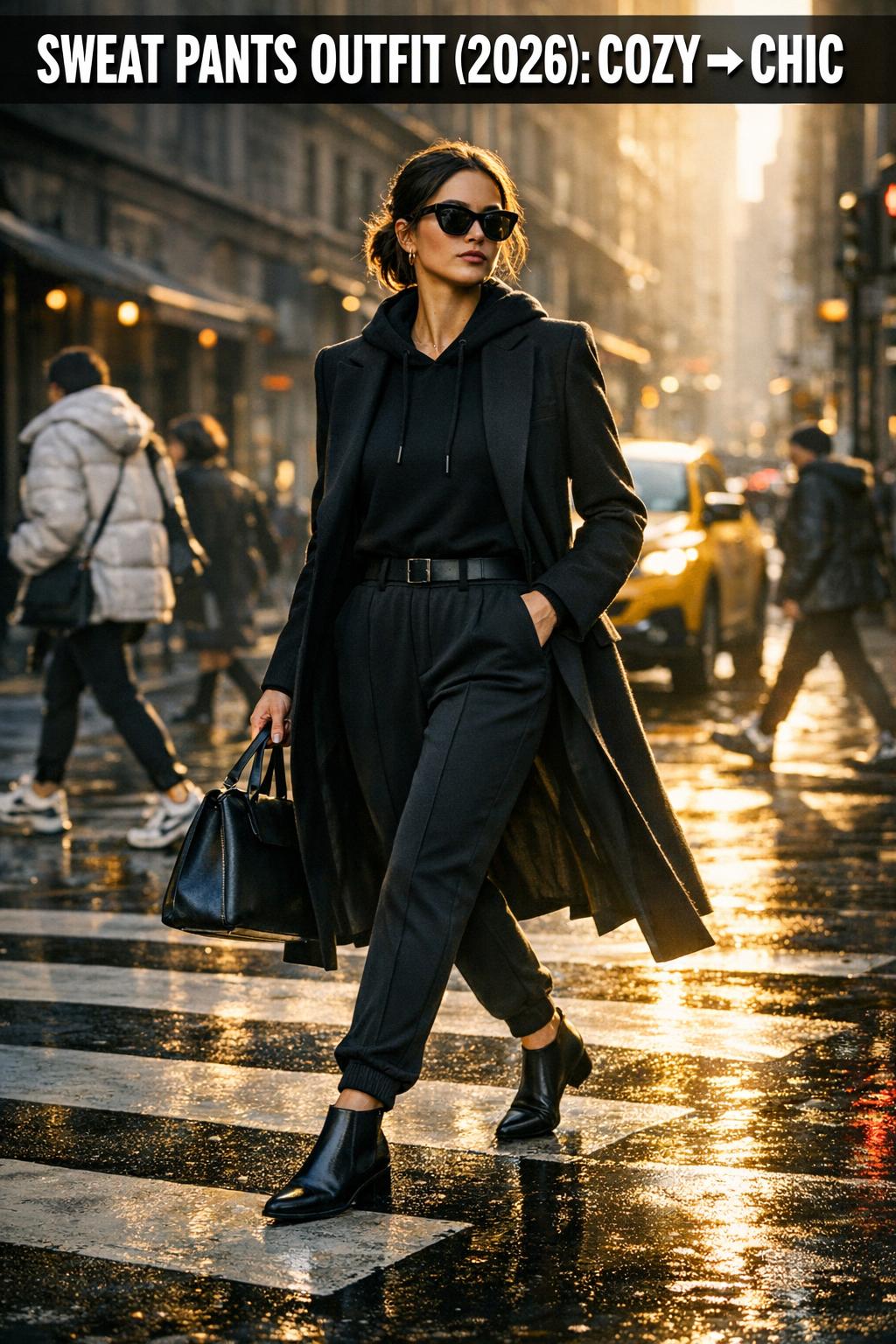
Elevated loungewear treats sweatpants as refined pants—closer in intent to well-cut trousers, just softer in touch. The mood is quiet, composed, and often monochrome or thoughtfully color-coordinated. Think “matchy-matchy,” but not childish: clean lines, deliberate layering, and accessories that do the heavy lifting.
Your wedding has a lot of moving pieces. Your plan can still feel composed.
Zarellea organizes guests, vendors, budget, and timelines in one shared space — so you can make decisions with clarity, not stress.
Defining characteristics include a controlled silhouette (even when relaxed), a preference for structured outerwear, and an emphasis on styling signals that read “finished”: a cinched waist with a belt (a Loewe corset belt is an emblematic reference), sleek boots (Prada-style energy), or minimalist flats (Miu Miu ballet flats as a fashion-coded contrast).
- Silhouettes: tapered joggers or classic straight sweats styled to look intentional; a defined waist; long outerwear to create a vertical line
- Color palette: neutrals and calm tones; frequent monochrome sets
- Fabrics and textures: fleece and terry treated as “base layers,” elevated through contrast with tailored pieces
- Aesthetic mood: refined, editorial, “all day, every day” ease—comfortable yet composed
Style overview: street-led athleisure (the sporty sweatpants approach)
Street-led athleisure is more overtly casual, but not sloppy. It’s rooted in sport and movement—think Nike-coded comfort—then sharpened with street-style cues: bold layering, strong footwear, and accessories that tilt the look toward “urban chic.” It’s the aesthetic behind many nice sweatpants outfits that still feel relaxed, energetic, and modern.
This approach is comfortable with contrast: a hoodie and sweatpants base, then a statement layer like a leather jacket or a big coat. It also leans into the “half-dressed” idea—mixing a clearly casual piece with something that looks more deliberate, so the outfit lands in that stylish in-between.
- Silhouettes: roomier joggers, sometimes baggier; strong emphasis on footwear proportions
- Color palette: can be monochrome, but often includes sporty contrasts and easy neutrals
- Fabrics and textures: fleece and brushed sweats paired with leather, denim, and big coats for tension
- Aesthetic mood: energetic, city-ready, travel-friendly, slightly edge-forward
Where they overlap (and why they’re easy to confuse)
Both aesthetics rely on the same modern premise: sweatpants can be “casual but cute” when the outfit includes at least one intentional anchor—tailored outerwear, a statement accessory, or a cohesive color story. Both also borrow from fashion-capital imagery: the brisk competence of New York, the soft nonchalance of Paris, and the editorial shorthand of Milan-style polish.
In practice, the same base piece—a neutral sweatpant—can become either look. The difference is less about the sweatpants themselves and more about what you ask them to do. Elevated loungewear asks sweatpants to behave like trousers. Street-led athleisure asks sweatpants to behave like a uniform—practical, cool, and modular.
Key differences: silhouette, structure, and the “signal pieces” that change everything
1) Silhouette and structure: waist definition vs movement-first ease
Elevated loungewear is silhouette-aware. The waist is often defined—sometimes literally cinched with a belt—and outerwear is chosen to sharpen the outline. Street-led athleisure prioritizes ease and motion; it’s more tolerant of volume, as long as the overall outfit stays balanced with strong footwear and a confident layer on top (a leather jacket, for instance).
2) Color strategy: monochrome composure vs sporty contrast
Both styles use monochrome, but they use it differently. Elevated loungewear treats monochrome as sophistication—matching tones to create a long, calm line. Street-led athleisure uses it as a base for impact: a clean set that becomes a canvas for a coat, sunglasses, or a statement bag.
3) Level of formality: sweatpants as trousers vs sweatpants as uniform
If you want sweatpants to pass in more formal, work-adjacent contexts, elevated loungewear is the safer path. It uses pieces that are widely read as “put-together”—a blazer, a structured coat, polished boots. Street-led athleisure can still look intentional, but it remains visibly casual; the point is style, not disguise.
4) Styling philosophy: editorial refinement vs city street-style energy
Elevated loungewear is about restraint: fewer, stronger choices. Street-led athleisure is about attitude: the look is often built around a recognizable casual identity—sneakers, a hoodie, a big coat—and then elevated with accessories and proportions.
Visual style breakdown: how each look behaves in real outfits
Layering: blazer precision vs coat-and-sneaker momentum
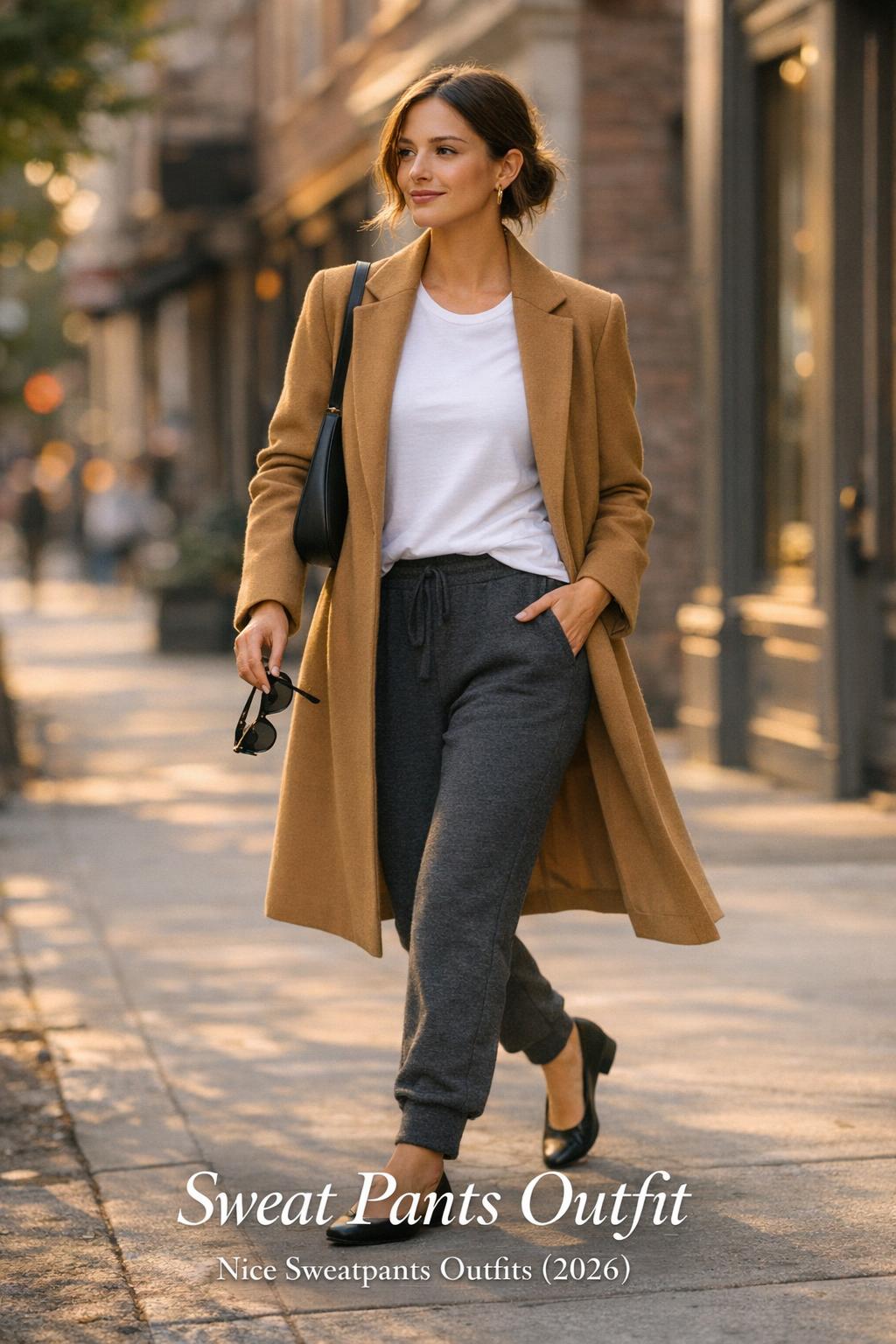
A tailored blazer is the signature “translator” for elevated loungewear: it turns sweatpants into a pants outfit with intention. You’ll see this logic across city-ready outfit ideas—sweatpants paired with a blazer and refined accessories to create a polished silhouette. Street-led athleisure reaches for coats (including faux-fur for high-impact warmth) to create momentum and presence, especially in travel scenarios.
Proportions: long lines and cinched waists vs relaxed volume with a strong base
Elevated loungewear typically elongates: a longer coat or blazer, a tidy hem, a waist detail. A cinched waist—think of the dramatic clarity a corset belt can create—keeps relaxed fabric from reading tired. Street-led athleisure works with volume: looser sweats paired with a leather jacket, or an oversized coat over a hoodie. The outfit succeeds when the base feels anchored, usually through footwear that looks decisive.
Accessories: discreet luxury cues vs street-style punctuation
Elevated loungewear often uses accessories as quiet signals: a refined bag, sleek sunglasses, minimalist jewelry, or fashion-forward flats. Street-led athleisure uses accessories as punctuation: a statement bag, bolder eyewear, or a hat that reads instantly “street.” Both approaches can pull from luxury references—Loewe, Prada, Balenciaga—without making the outfit feel like a costume, if the rest of the look stays balanced.
The sweatpants themselves: fit, fabric, and why your “trousers” comparison matters
Before styling, it helps to decide what role you want the sweatpants to play. If you want them to act like trousers, choose a fit that doesn’t puddle at the ankle and a fabric that holds shape. If you want them to feel like true loungewear, you can go softer and looser—then rely on outerwear and accessories to bring structure back into the outfit.
Across modern editorials and street-style galleries, a few practical fit categories show up repeatedly: slim or tapered joggers for a cleaner line, classic fits for versatility, and baggier silhouettes for a trend-forward, urban look. Brands like COS and Nanushka are often referenced in the same breath as elevated styling because they suggest clean design and fabric presence; Nike is a common shorthand for sport-coded comfort and easy athleisure legitimacy.
Tips: a quick fit check that prevents the “sloppy” problem
Try the outfit in motion, not just in the mirror. Sit down, walk, and lift your arms as if you’re hailing a cab or pulling a carry-on. If the waistband collapses, the knee bags excessively, or the hem stacks awkwardly, treat the sweatpants like you would trousers: adjust the proportions with a different outer layer, a waist-defining belt, or a cleaner shoe line. The goal is not stiffness—it’s visual control.
Outfit comparisons: the same scenario, two aesthetics
Example comparison: “New York minute” errand run
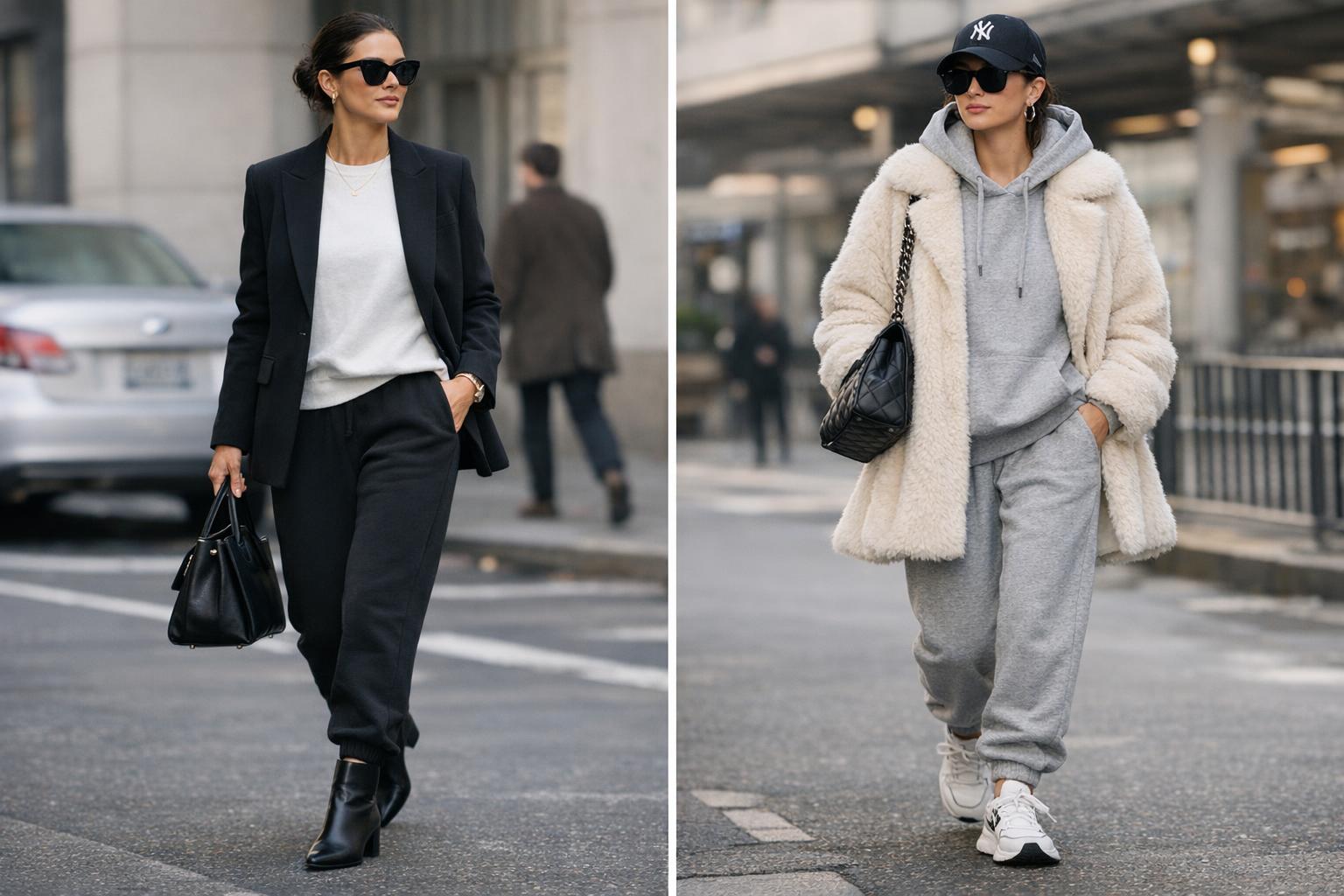
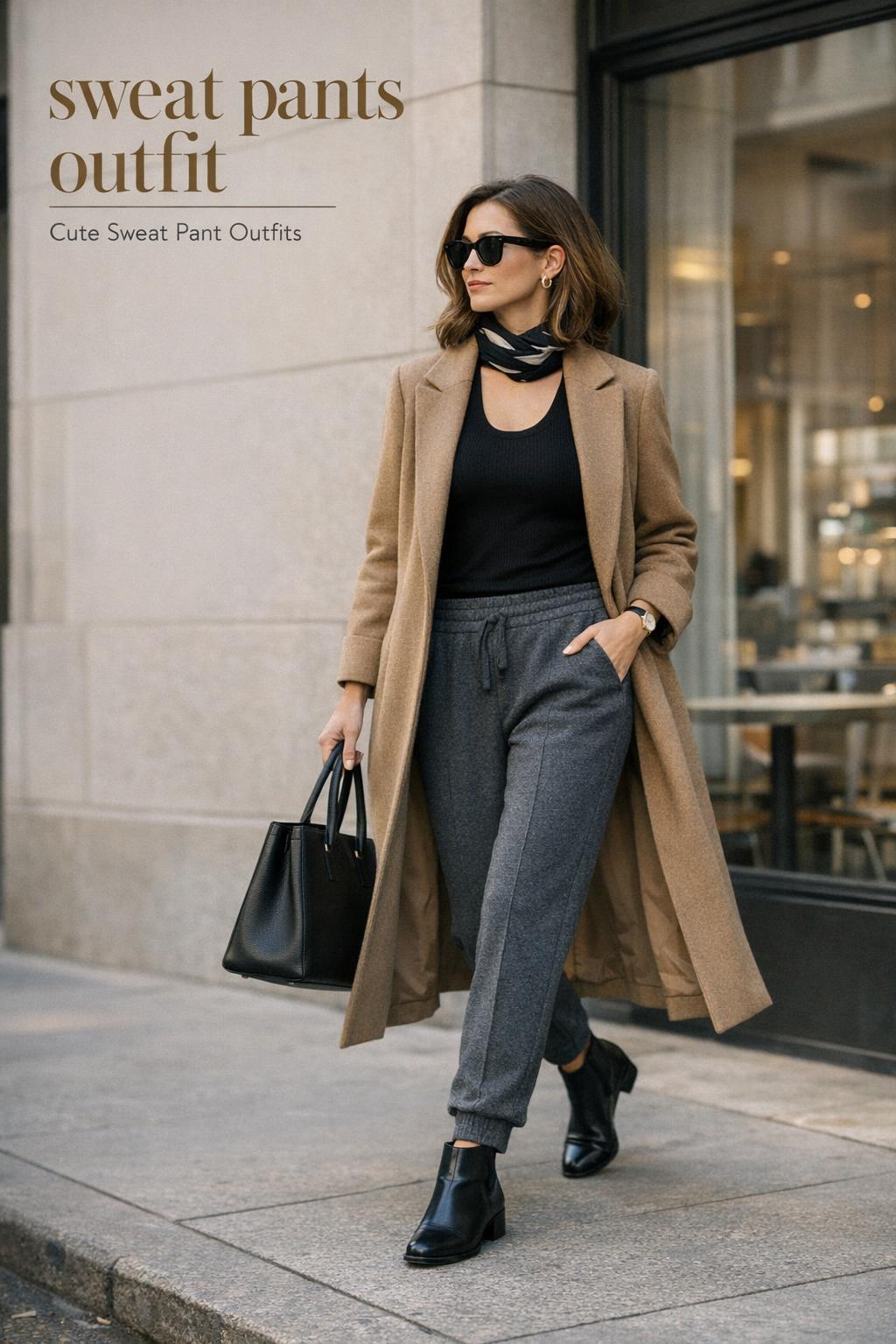
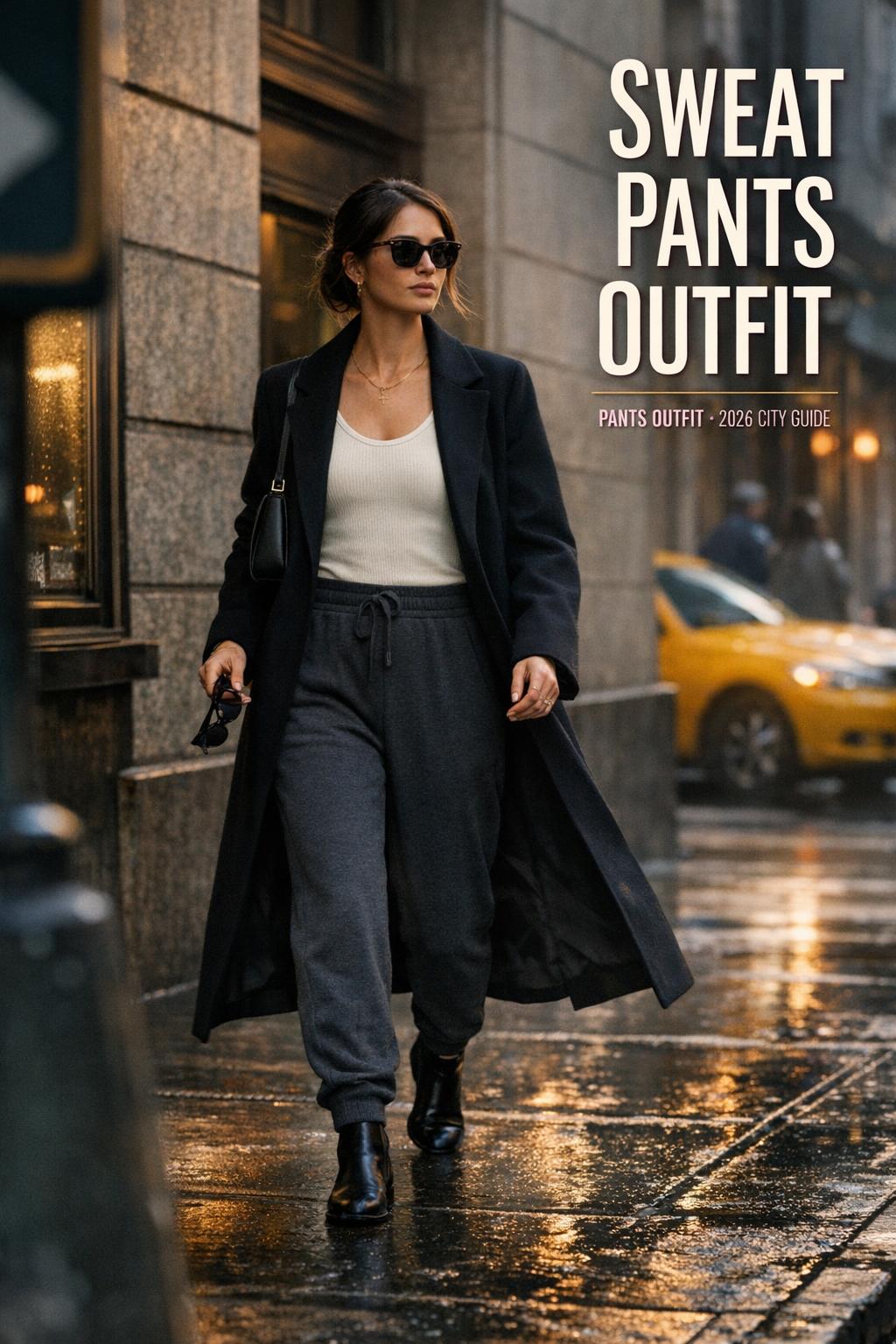
Elevated loungewear: Start with black joggers and a streamlined top, then add a structured blazer to create instant architecture. Finish with sleek boots for polish—Prada-style energy works as a reference point—and sunglasses that feel deliberate. This is a sweat pants outfit that reads like a composed city uniform, not gym overflow.
Street-led athleisure: Keep the base more openly casual—Nike-coded sweats with a hoodie—then add a coat that creates presence. Sneakers stay in play, but they must look intentional: clean, substantial, and visually grounding. The result is a fast, functional outfit that still feels styled, especially with a bag that adds a fashion note.
Example comparison: couch-to-brunch (“casual but cute”)
Elevated loungewear: Go monochrome—matching sweatpants and top—then use one refined accessory to shift the mood: a Loewe-style belt to define the waist or a polished bag. The outfit becomes one of those nice sweatpants outfits that photographs well because it’s calm and cohesive, with a clear line through the body.
Street-led athleisure: Keep the set relaxed, then introduce edge via a leather jacket. This single texture change—soft fleece against leather—creates contrast and makes the look feel street-style rather than sleepy. Add sunglasses and a confident shoe to finish; the outfit reads modern and lived-in.
Example comparison: airport day and arrival outfit
Elevated loungewear: Choose a coordinated base and a coat that looks composed even when you’re tired. This is where “travel-ready sweatpants” becomes more than a phrase: the outfit should hold its shape after hours of sitting. A structured bag in the spirit of The Row adds a quiet-luxury travel cue without overwhelming the simplicity.
Street-led athleisure: Lean into the celebrity-coded formula seen on Sara Sampaio and Shay Mitchell: sweatpants with a high-impact faux-fur coat for warmth and presence. The faux-fur layer does the visual work—useful when the base is deliberately simple. Sneakers keep it functional; accessories keep it camera-ready.
Example comparison: “quarantine in Paris” softness vs “city polish”
Elevated loungewear: The Paris-leaning version is relaxed but exacting: tone-on-tone sweats, a long coat, and minimal accessories that feel chosen. A ballet-flat moment—Miu Miu as a recognizable reference—can make the outfit feel intentionally delicate, almost like a modern-day ballerina translation.
Street-led athleisure: The city polish version keeps the comfort, but turns up the structure in a different way: a leather jacket or bold coat, stronger shoe presence, and accessories that look street. The look reads like you dressed for the day rather than drifted into it.
Accessory strategy: how shoes, bags, and belts decide the mood
In sweatpants styling, accessories aren’t optional—they’re the steering wheel. Because sweatpants are inherently casual, the outfit needs at least one element that signals intention. This is why editorial galleries so often focus on shoes and outerwear: they sit at the silhouette’s endpoints and set the tone instantly.
Footwear: the fastest way to shift from “pants” to “trousers” energy
If you’re aiming for elevated loungewear, choose footwear that looks finished: sleek boots (Prada references appear frequently in chic styling contexts) or refined flats (Miu Miu-coded ballet flats are a classic contrast to sporty fabric). For street-led athleisure, sneakers are the natural partner—especially with Nike as a common anchor—because they reinforce the movement-first logic.
Where it can go wrong: overly worn sneakers with shapeless sweats can make the entire outfit collapse. If the sweatpants are roomy, choose a shoe with enough visual weight to balance the volume; if the sweatpants are tapered, a sleeker shoe line reads more intentional.
Bags, sunglasses, jewelry: small items, large consequences
A structured bag is one of the simplest upgrades, which is why luxury references—from Loewe to Balenciaga—appear so often in editorial sweatpants outfits. Sunglasses add instant “out in the world” energy; jewelry adds finish, especially when the base is a matching set. For a more accessible but still polished feel, consider shoes from Steve Madden as a styling tool: not as a logo moment, but as a way to sharpen the outfit’s final line.
Tips: the one-accessory rule for busy mornings
If you don’t have time to “style,” choose one hero accessory and let it set the standard for everything else. A belt (Loewe corset belt as the archetype), a statement coat (including faux-fur), or a refined shoe (boots or ballet flats) can do the work of three smaller tweaks. Once that anchor is in place, keep the rest quiet and cohesive.
Color and “matchy-matchy”: comparing monochrome minimalism to contrast styling
Monochrome is the shortcut most people associate with chic sweatpants, and for good reason: it creates one uninterrupted column, making even relaxed pants feel intentional. In elevated loungewear, monochrome is often the point—creams, blacks, and other calm tones styled as a unified set. In street-led athleisure, monochrome is a base layer that invites a stronger top note: a leather jacket, a bold coat, or pronounced accessories.
Color coordination also helps sweatpants compete with traditional trousers in your wardrobe. When the palette is cohesive, the outfit reads as a designed composition rather than a collection of comfortable items. This is the logic behind many cute sweat pant outfits that feel surprisingly “dressy” without actually becoming formal.
Tips: a practical palette trick borrowed from city dressing
Pick two tones only: one for the base (sweatpants and top) and one for the outer layer. This mirrors the clean, fast styling associated with a New York minute—minimal decisions, maximum impact. If you want more personality, place it in accessories (sunglasses, bag, belt) rather than adding extra colors that fragment the silhouette.
Occasion choices: when each style works best (and when it doesn’t)
Sweatpants are now worn across more settings than most people admit, but context still matters. The question isn’t “Are sweatpants appropriate?” so much as “What message does this pants outfit send?” Choose the aesthetic that matches your day’s demands—movement, warmth, polish, or all three.
- Work-adjacent moments: elevated loungewear wins with a blazer, structured coat, and refined shoes; it’s the closest sweatpants get to trousers without feeling like a workaround
- Travel and airport style: both work; elevated loungewear reads composed after long hours, while street-led athleisure shines with strong outerwear (including faux-fur) and sneakers
- Weekend errands: street-led athleisure feels natural and practical; add a leather jacket or coat to keep it intentional
- Brunch and social plans: elevated loungewear feels sleek in monochrome; street-led athleisure feels cool with contrast textures and confident accessories
Common missteps that sabotage nice sweatpants outfits
Most sweatpants outfits fail for the same reason: the styling doesn’t declare an identity. The look sits awkwardly between homewear and streetwear—too soft to feel styled, too casual to feel intentional. The fix is rarely “buy something new”; it’s usually a proportional adjustment or a clearer choice of outerwear.
- No structure anywhere: if the sweatpants are relaxed and the top is relaxed and the outerwear is relaxed, the silhouette has no focal point; add a blazer, a sharper coat, or a waist-defining belt
- Inconsistent finish level: polished accessories with overly worn sweatpants can feel mismatched; choose one consistent lane—either refined head-to-toe, or casual with one elevated anchor
- Ignoring the hem and shoe line: bunching at the ankle can look unconsidered; either embrace it with a sneaker-heavy athleisure direction or clean it up with sleeker footwear
- Overloading the look with “trend pieces”: sweatpants are already a statement in many contexts; keep additional statements focused—one coat, one bag, one shoe
A small, flexible wardrobe framework: building a sweatpants outfit without overthinking
If sweatpants are now a core piece, treat them like you would any foundational wardrobe item: build repeatable formulas. Editorial style stories—from modern-day ballerina softness to urban “all day, every day” dressing—return to the same structure: a base, a layer, and a finish.
Here’s a framework that works whether your taste leans COS-minimal or Nike-sport, whether you prefer Prada-leaning polish or Balenciaga-tinged edge:
- Base: sweatpants + a top that matches the day’s mood (coordinated set for polish; hoodie for athleisure)
- Layer: blazer (tailored), coat (city), leather jacket (edge), or faux-fur (travel presence)
- Finish: one deciding element—belt, shoes, or bag—plus sunglasses or jewelry if needed
Tips: how to pivot the same sweatpants from day to night-out energy
When you need the outfit to feel less daytime, change the outer layer and the shoe line, not the sweatpants. A leather jacket instantly sharpens the texture story; sleeker boots create a longer, more deliberate line. Keep accessories minimal but intentional. This is the easiest way to push sweatpants into “night-out” territory without forcing them into a role they can’t convincingly play.
Final comparison: how to recognize each style at a glance—and how to blend them
Elevated loungewear is defined by control: waist definition, long lines, and a composed palette that makes sweatpants behave like trousers. Street-led athleisure is defined by attitude: movement-first comfort sharpened by a strong layer—coat, faux-fur, leather—and decisive footwear.
To identify the difference quickly, look at the “translator piece.” If it’s a blazer, a belt, refined flats, or sleek boots, you’re in elevated territory. If it’s a hoodie-and-sneaker base topped by a bold coat or leather, you’re in street-led athleisure. And if you want the most modern result, blend them: pair Nike-coded comfort with a tailored blazer, or temper a monochrome set with a single edge piece. The goal isn’t to chase a trend—it’s to compose a sweat pants outfit that feels intentional in your real life.
FAQ
Can sweatpants look polished enough for a work-adjacent setting?
Yes, when you style them through an elevated loungewear lens: a tailored blazer or structured coat adds architecture, and refined shoes (sleek boots or minimalist flats) keep the outfit reading closer to trousers than true loungewear.
How do I wear sweatpants to the airport without looking sloppy?
Use an intentional outer layer that holds presence—either a structured coat for a composed look or a statement faux-fur coat for a bolder travel silhouette—then keep the base cohesive and the footwear practical, taking cues from celebrity travel formulas associated with Sara Sampaio and Shay Mitchell.
What’s the simplest way to elevate a basic sweat pants outfit?
Add one “translator” piece that changes the message of the outfit: a blazer, a waist-defining belt (a Loewe corset belt is a clear reference), or sleek footwear; then keep the rest of the look quiet and color-coordinated.
Are monochrome sweatpants outfits always the most flattering?
Monochrome is reliably elongating because it creates one uninterrupted line, but it’s not the only option; contrast styling can look equally modern when the outfit has a clear structure, such as a strong coat or leather jacket, and accessories that feel intentional rather than random.
How do I choose between a blazer and a coat with sweatpants?
Choose a blazer when you want sweatpants to read more like trousers and the overall outfit to feel tailored; choose a coat when you want city-ready ease and a stronger silhouette from a single layer, especially for travel or cold-weather styling.
What shoes work best with cute sweat pant outfits?
Sneakers are the natural match for street-led athleisure (Nike references are common for this direction), while sleek boots or refined flats—such as Miu Miu-style ballet flats—are more aligned with elevated loungewear when you want a polished finish.
How can I keep sweatpants from looking too bulky?
Balance volume with structure: define the waist with a belt, choose a longer outer layer to create a vertical line, and make sure the footwear anchors the look; bulk usually becomes an issue when the outfit has no focal point or the hem and shoe line feel unresolved.
What does “half-dressed” mean in sweatpants styling?
It’s a deliberate mix of casual and polished elements—like sweatpants with a blazer, or a hoodie with a structured coat—used to keep the outfit modern and intentional rather than uniformly dressed up or uniformly relaxed.
Can I build nice sweatpants outfits without relying on luxury labels?
Yes; luxury references like Loewe, Prada, or Balenciaga help illustrate the concept, but the real upgrade comes from composition—cohesive color, a structured layer, and a clean finish—so you can apply the same logic whether your staples lean Nike-sport or COS-style minimal.
Leave a Reply