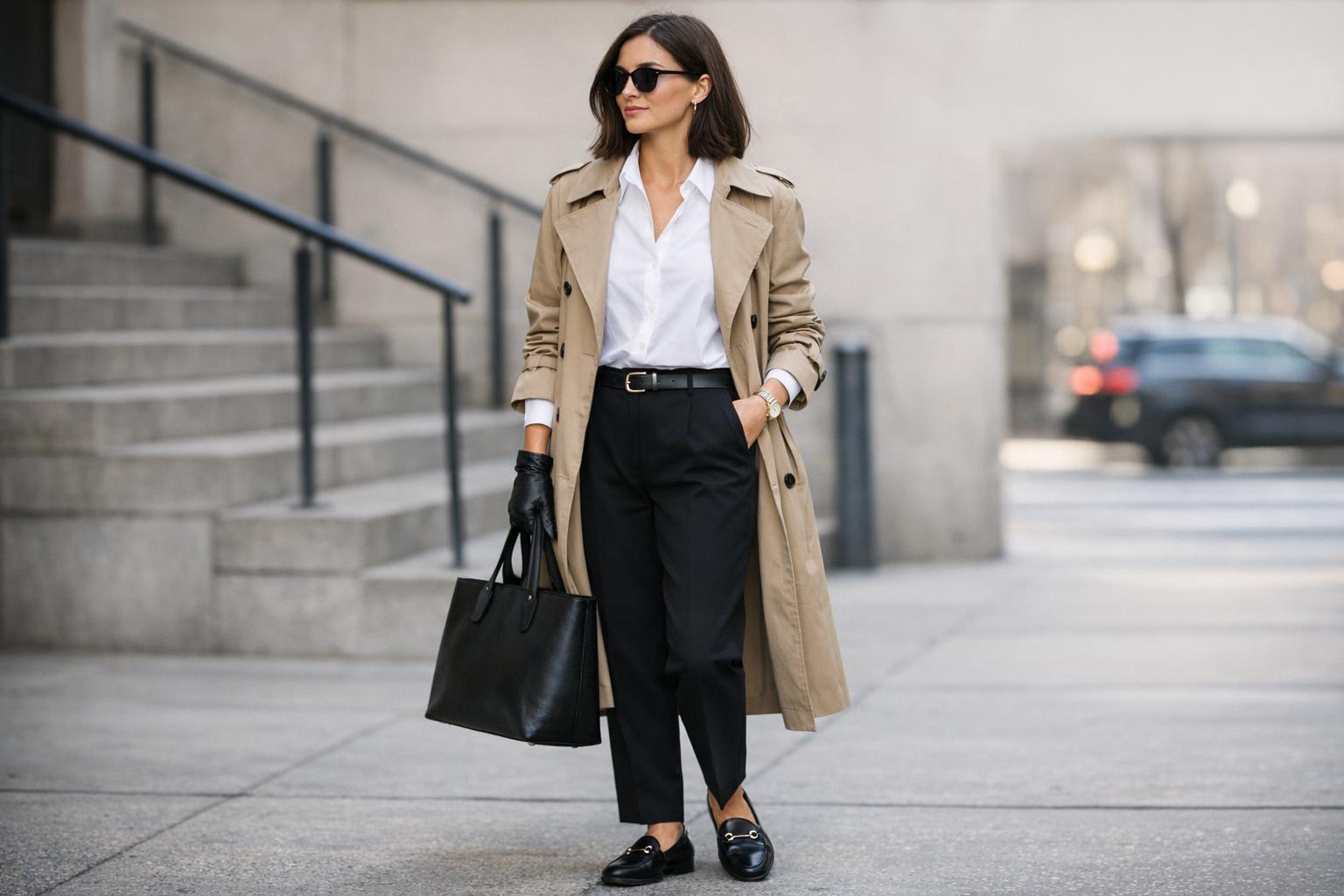
Capsule Wardrobe Outfits: A Modern Guide to Timeless, Repeatable Style
Capsule wardrobe outfits are the practical answer to a familiar problem: a closet full of clothes but nothing that feels easy to wear. Instead of chasing endless “new,” a capsule approach builds a small set of wardrobe basics—pieces like a trench coat, a white button-down, tailored trousers, denim, knitwear, and dependable shoes—so you can mix, match, and repeat outfits without feeling repetitive.
This guide is designed for U.S. readers who want a Fashion Capsule Wardrobe that works in real life: commuting days, casual weekends, and the occasional evening plan. You’ll find the core frameworks (including the 30-piece method associated with Caroline Rector of Un-Fancy, the 10-item wardrobe approach linked to “Lessons from Madame Chic” by Jennifer L. Scott, and the 3–3–3 rule), a clear list of capsule essentials, and a deep bench of outfit formulas you can copy. You’ll also see how minimalist style icons like Carolyn Bessette Kennedy (CBK) and modern street-style moments—like Bella Hadid’s Milan Fashion Week look—translate into outfits that are simple, polished, and wearable.
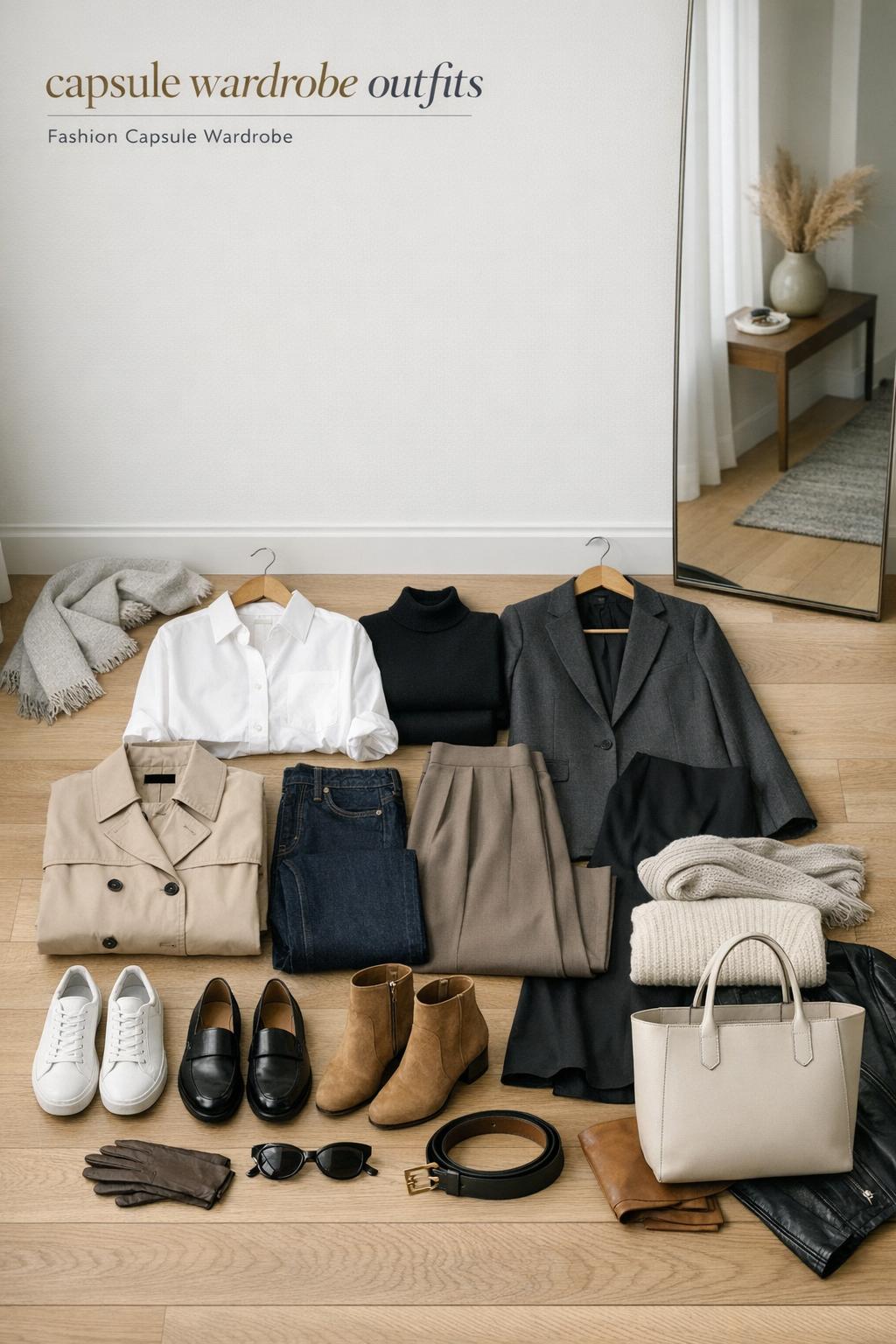
Think of this as a Minimalist Wardrobe Capsule playbook: less closet stress, more outfit confidence, and a system you can adjust seasonally—without needing to reinvent your personal style every morning.
What a Capsule Wardrobe Is (and Why It Still Works)
A capsule wardrobe is a curated collection of versatile clothing and shoes designed to be worn together in many combinations. In practice, it’s a strategy for reducing decision fatigue and increasing outfit consistency: you choose a limited palette of silhouettes and colors, rely on repeatable wardrobe basics, and rotate thoughtfully by season.
Your wedding has a lot of moving pieces. Your plan can still feel composed.
Zarellea organizes guests, vendors, budget, and timelines in one shared space — so you can make decisions with clarity, not stress.
In fashion media, capsule wardrobes are often explained through structured piece counts (commonly around 30 items, sometimes 30–37 depending on the approach) and a focus on timeless staples. The idea is not “never shop” or “wear the same outfit every day,” but to buy and style with intention so that each piece earns its place through versatility.
From minimalism to modern “CBK” timelessness
Minimalism is the aesthetic engine behind many capsule wardrobes, and few references are as enduring as the Carolyn Bessette Kennedy approach: clean lines, classic pieces (like a trench coat and a crisp white shirt), and a calm, polished look that holds up across years. More recently, celebrity street style has reinforced the same message. A Bella Hadid “look of the day” moment in Milan—built from items like trousers, a black turtleneck, a cardigan, a suede jacket, gloves, oval sunglasses, and a belt—shows how a small set of strong basics can look current without needing loud trend cycles.
The most useful takeaway for Capsule Wardrobe Women is this: a capsule doesn’t restrict you; it clarifies you. With a smaller edit, you get more outfits that feel like “you,” because everything fits into a consistent styling story.
Three Core Frameworks: 30-Piece, 10-Item, and the 3–3–3 Rule
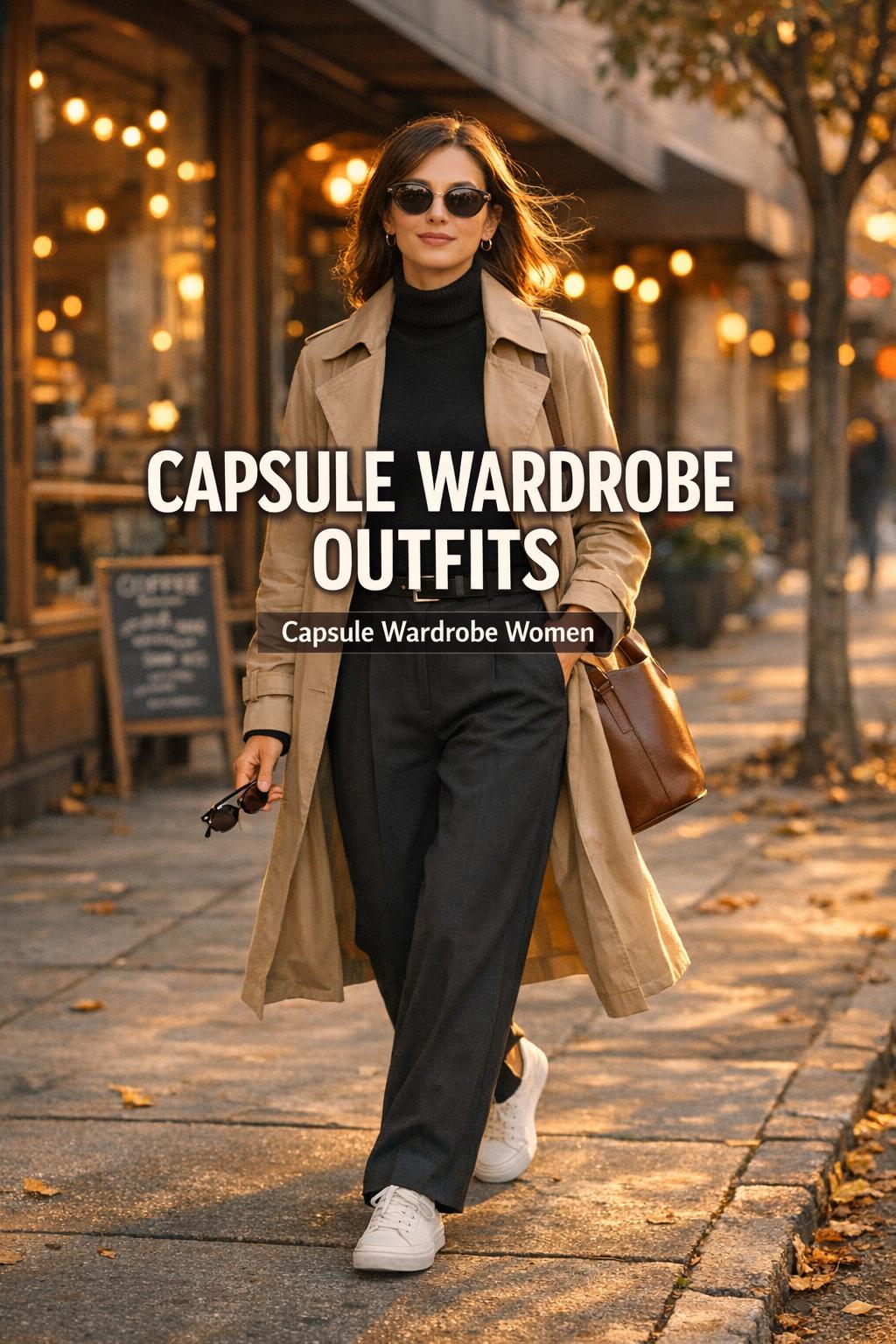
The right framework depends on your lifestyle and tolerance for repetition. Some people want a tight Fashion Capsule; others prefer a broader capsule that still feels streamlined. These three methods are the most common starting points and can be combined.
The 30-piece capsule (Caroline Rector / Un-Fancy influence)
The 30-piece method is a structured way to reduce your closet to a workable, seasonal set. It’s often taught as a “reduce and rotate” practice: build one capsule for a season, wear it hard, learn what you actually reach for, then adjust next season. The benefit is breadth—you can include outerwear, layering pieces, and shoes while keeping the overall count disciplined. The trade-off is that it takes a bit more planning upfront, especially if you’re trying to balance work outfits and weekend outfits inside the same capsule.
The 10-item wardrobe (quality-over-quantity approach)
The 10-item wardrobe approach (popularized in modern capsule conversations through “Lessons from Madame Chic” by Jennifer L. Scott) narrows your “core” down dramatically. This can be powerful if you love simplicity, have a predictable routine, or want to build a Minimalist Wardrobe Capsule that forces clarity. In practice, many people use “10 core items” as the nucleus, then add supportive extras (like a workout item or special-occasion piece) so real life still fits. The advantage is ease and consistency; the downside is that a strict 10 can feel limiting if your week includes very different contexts (office, travel, events).
The 3–3–3 rule (fast outfit generation)
The 3–3–3 rule is an outfit-building shortcut: choose three tops, three bottoms, and three shoes, then create combinations from that mini set. It’s especially useful when you want capsule wardrobe outfits quickly—like packing for a trip, resetting after a closet clean-out, or testing a new silhouette (wide-leg pants versus tailored trousers, for example). The strength of this method is speed; the limitation is that it doesn’t automatically account for outerwear, layers, or accessories, which often make or break how “finished” an outfit feels.
- If you want structure and flexibility: start with a 30-piece capsule.
- If you want simplicity and strong repetition: build around a 10-item core.
- If you want immediate outfits with minimal planning: run a 3–3–3 mini capsule for two weeks and refine.
Wardrobe Basics: The Core Capsule Essentials That Do the Heavy Lifting
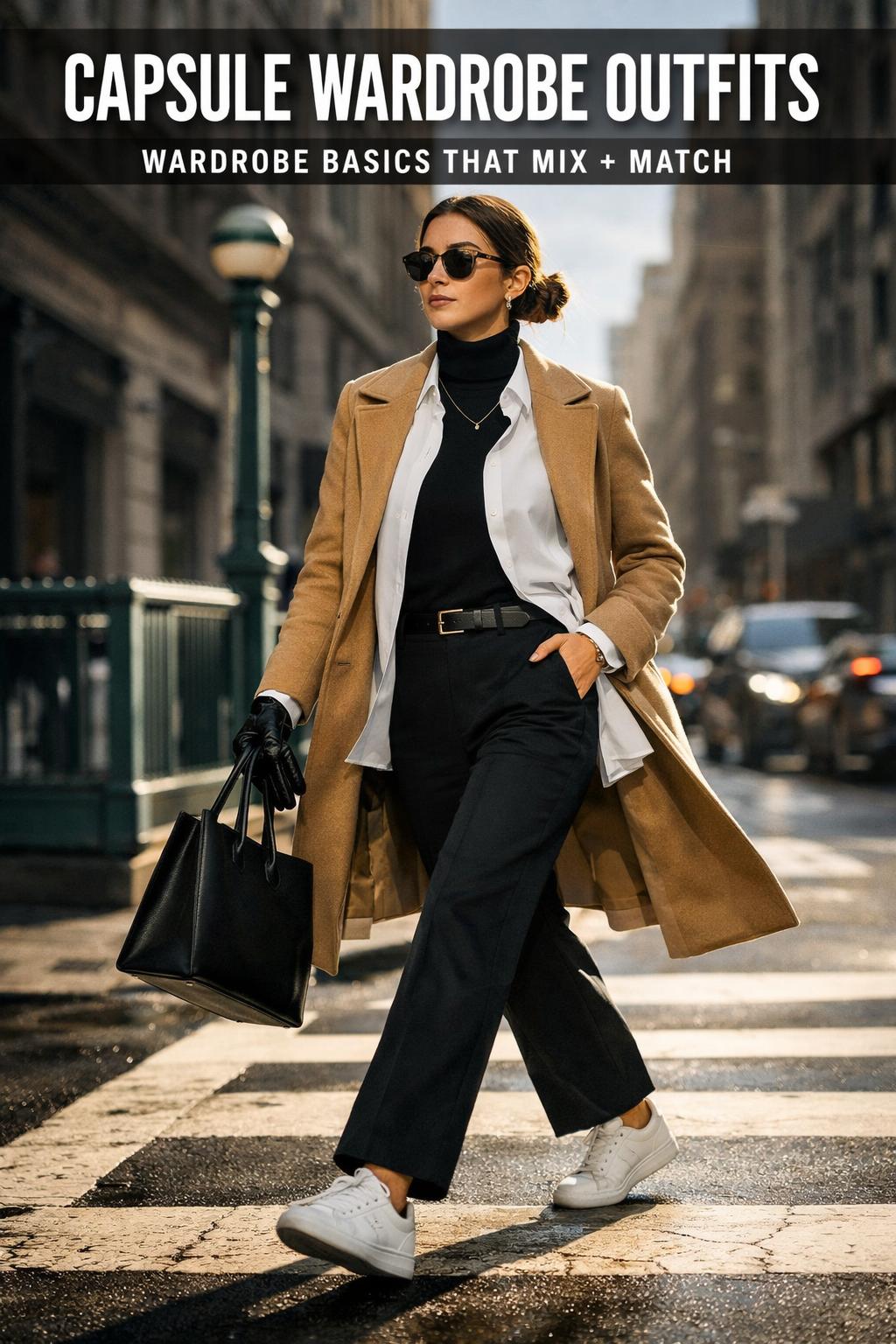
A strong capsule isn’t about owning the “perfect” version of every item; it’s about choosing pieces that work together. The essentials below show up repeatedly in capsule wardrobe conversations because they create outfits across work, weekend, and evening with small adjustments. You’ll also notice they align naturally with CBK-inspired minimalism: clean staples, crisp layers, and classic shoes.
The capsule essentials list (build your base)
- Trench coat (a classic topper that elevates denim, trousers, and dresses)
- White button-down shirt (tucked, layered, or worn open over a tee)
- Tailored trousers (a foundation for polished capsule wardrobe outfits)
- Wide-leg pants (a modern silhouette that still reads timeless when styled simply)
- Dark denim or classic jeans (the casual anchor)
- Knitwear: a sweater and/or cardigan (for layering and texture)
- Black turtleneck (a minimalist staple that works alone or under outerwear)
- A simple tee (the under-layer that keeps outfits practical)
- A midi dress (the one-and-done option that can skew day or evening)
- Tailored blazer (structure for work and smart casual)
- Leather jacket or a suede jacket (adds edge and contrast to basics)
- Comfort-forward shoes: white sneakers, loafers, and ankle boots (the capsule trio)
This list intentionally overlaps with the recurring staples seen across capsule wardrobes: trench coats, white shirts, tailored trousers, white sneakers, sunglasses, leather jackets, and loafers. If you already own versions you like, that’s your starting point—capsules work best when you begin with what you genuinely wear, then fill only what’s missing.
How to think about “enough” pieces without overbuying
When people try to build a Fashion Capsule Wardrobe, the most common trap is confusing “capsule essentials” with a shopping checklist. The better mindset is modular: each item should connect to at least three other items in your capsule. A trench coat should work with tailored trousers and loafers for a work look, with denim and sneakers for weekend, and over a midi dress for a dinner plan. If a piece only works in one highly specific outfit, it may belong outside the capsule or in a special-occasion category.
Tips: If you’re on the fence about an item—like a denim maxi skirt, a knee-length skirt, or track pants—treat it as a “trial piece.” Wear it in at least three different outfits within two weeks. If you keep reaching for it, it earns a more permanent role.
How to Mix and Match Capsule Wardrobe Outfits Without Feeling Repetitive
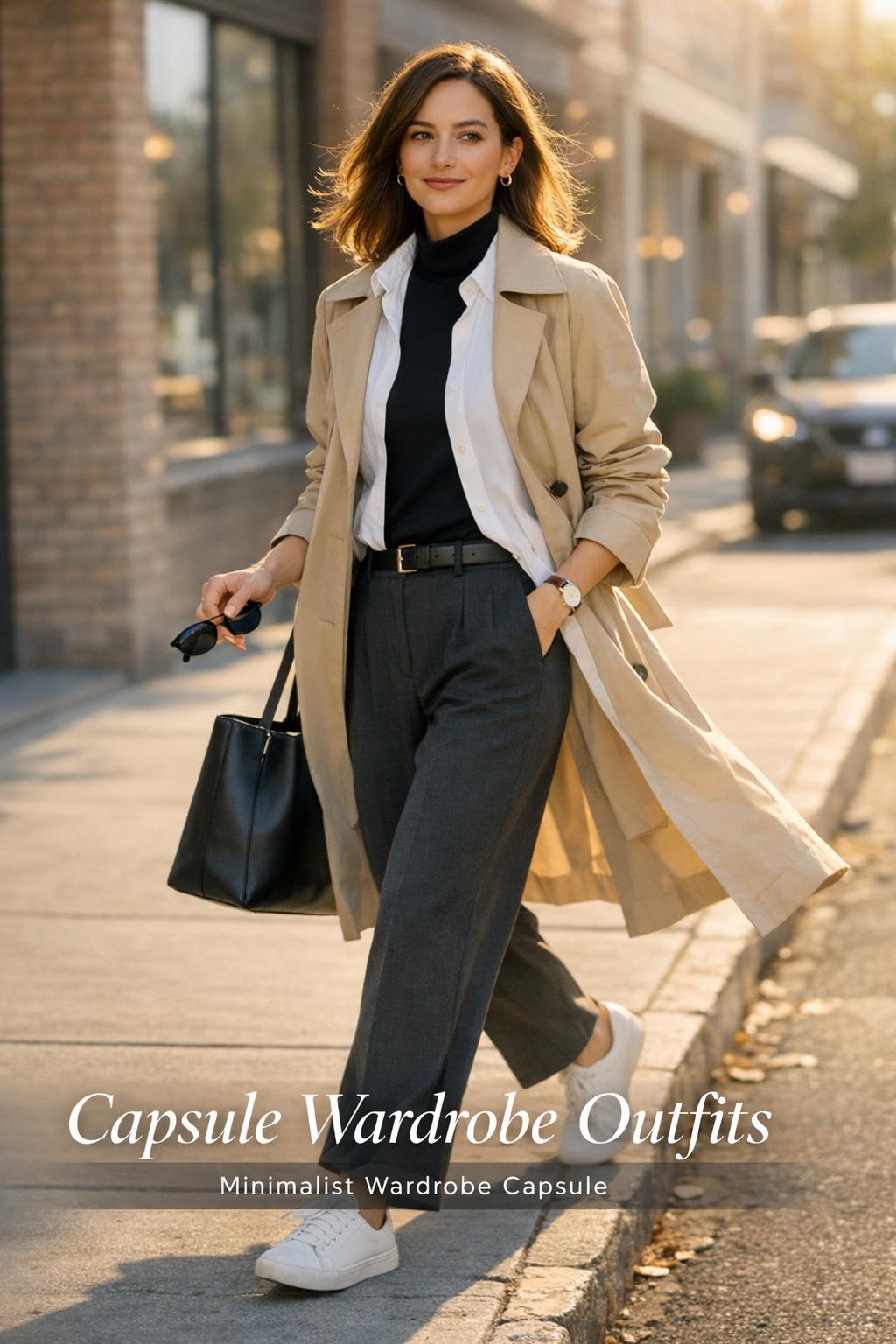
Capsule dressing becomes effortless when you stop thinking in single outfits and start thinking in formulas. A formula is a repeatable structure—like “turtleneck + tailored trousers + loafer + coat”—that you can refresh through small swaps: change the shoe, add a belt, switch from a wool coat to a trench, or trade a cardigan for a blazer.
Three levers that create variety
- Layering: cardigan, blazer, trench coat, wool coat, leather jacket, suede jacket
- Silhouette: tailored trousers versus wide-leg pants; knee-length skirt versus denim maxi skirt
- Finishing details: leather belts, sunglasses (including oval sunglasses), gloves, and a structured tote
In practice, the biggest “outfit multiplier” is outerwear and layering. A black turtleneck and trousers can look like three different outfits with a tailored blazer, then a trench coat, then a suede jacket—especially when you rotate shoes between loafers, ankle boots, and white sneakers.
Tips: If your capsule is mostly neutrals (a common minimalist approach), use texture to keep it interesting. Knitwear against denim, a crisp white shirt under a blazer, or a sleek leather jacket over a midi dress creates contrast without adding loud color.
Outfit Ideas: Capsule Combinations by Scenario (Work, Weekend, Evening)
The outfit ideas below are built from the same small set of wardrobe basics. They echo the kinds of combinations frequently shown in capsule outfit roundups: blazer + trousers, wool coat + pleated skirt + tights, bomber jacket + wide-leg jeans + sneakers, trench-based looks, and clean turtleneck outfits. Use these as templates, then adjust to your day.
Work capsule wardrobe outfits (polished, repeatable)
- Tailored blazer + white button-down + tailored trousers + loafers (add sunglasses and a structured tote for a CBK-leaning finish)
- Black turtleneck + tailored trousers + trench coat + ankle boots (a simple uniform that still looks intentional)
- Cardigan + tee + tailored trousers + loafers (swap cardigan for blazer when you need more structure)
- White button-down + wide-leg pants + belt + ankle boots (belt defines the shape; boots sharpen the look)
- Midi dress + blazer + loafers (switch to ankle boots for a slightly more modern edge)
Real-world note: Work outfits often fail in the “middle”—too formal for everyday, too casual for meetings. Tailored trousers solve this because they flex: they look sharp with a blazer, but they don’t look out of place with a sweater and sneakers when styled cleanly.
Weekend capsule outfits (comfortable, elevated)
- Tee + denim + trench coat + white sneakers (a classic base that feels put-together with minimal effort)
- Cardigan + black turtleneck + denim maxi skirt + ankle boots (sleek and easy; adjust hemline based on comfort and weather)
- Sweater + wide-leg jeans + sneakers (add a leather belt to make it feel styled, not accidental)
- Leather jacket + tee + denim + loafers (the loafers keep it refined even when the outfit is simple)
- Track pants + knitwear + trench coat + white sneakers (sporty comfort, capsule structure)
Tips: If you want weekend outfits to feel more “intentional,” choose one anchor that signals structure—loafers instead of beat-up sneakers, a trench coat instead of a random hoodie, or a belt that creates a clean line at the waist.
Evening capsule outfits (minimal effort, maximum polish)
- Black turtleneck + knee-length skirt + ankle boots (simple silhouette, strong proportions)
- Midi dress + leather jacket + ankle boots (an easy day-to-night switch)
- Tailored trousers + cardigan + belt + loafers (sleek and understated; swap loafers for ankle boots when you want more edge)
- White button-down + tailored trousers + blazer (use accessories like sunglasses earlier in the day, then remove for a clean evening look)
The capsule advantage shows up at night: you’re not scrambling for a “going-out top.” You’re upgrading the same wardrobe basics with sharper shoes, a more structured layer, and deliberate accessories.
Brand Anchors and Shopping Notes (Nordstrom and Beyond)
Many capsule wardrobe edits in the U.S. are shaped by retailer curation, and Nordstrom is frequently positioned as a one-stop destination for easy capsule building—especially when guided by a stylist’s perspective. In capsule-focused shopping roundups, you’ll often see staples paired with recognizable brands that cover a range of price points and aesthetics: Madewell, Mango, Topshop, Vince Camuto, Rag & Bone, Reformation, COS, & Other Stories, J.Crew, and even luxury cues like Gucci, Versace, Ganni, and Dear Frances.
The point of naming brands in a Fashion Capsule Wardrobe context isn’t to say you need any single label. It’s to show how capsule staples appear across the market: a trench coat is a trench coat, but details like fabric, structure, and how it sits on the shoulder determine whether it reads “timeless” or “trend-only.” If you’re shopping, prioritize fit and versatility over hype—especially for pieces you’ll wear weekly, like trousers, denim, and outerwear.
Tips: When you try on capsule basics, move like you’ll move in real life. Sit, walk, reach, and layer a cardigan under a coat. Capsule wardrobe outfits succeed when the clothes behave comfortably across a full day, not when they only look good standing still.
Celebrity and Street-Style Inspiration: CBK Minimalism and the Bella Hadid Milan Moment
Celebrity inspiration is most useful when you treat it as a blueprint, not a costume. Carolyn Bessette Kennedy remains a reference point for a timeless capsule because her look relies on repeatable wardrobe basics—trench coats, tailored white shirts, high-waisted trousers, loafers, and a structured tote—styled with restraint. That restraint is what makes the outfits portable: you can recreate the idea with many brands, from Gap and Levi’s to Banana Republic, Coach, Quince, Dolce Vita, or a curated mix that fits your budget.
In a more current street-style example, Bella Hadid’s Milan Fashion Week look demonstrates the same capsule principles in motion: trousers anchored the outfit, a black turtleneck kept the base sleek, and layers like a cardigan and a suede jacket added depth. Finishing pieces—gloves, oval sunglasses, and a belt—did what capsule accessories do best: they made simple items feel deliberate.
How to translate celebrity looks into your own capsule
Start by identifying the “non-negotiable” structure of the look (usually the base layers and silhouette), then customize the rest. For example, the CBK-inspired structure might be “white shirt + tailored trousers + loafers + trench,” while the Milan look structure might be “turtleneck + trousers + layered knits + jacket.” Once you have the structure, you can choose your own versions—maybe COS or & Other Stories for clean lines, Mango for accessible tailoring, Madewell for denim, or Vince Camuto for wearable footwear—without losing the core effect.
Tips: Avoid overcopying the exact accessories. In capsule wardrobes, accessories are the easiest place to drift into “impulse buy” territory. Choose a small set—sunglasses, one belt, and one dependable bag style like a structured tote—and wear them consistently.
Seasonal and Climate-Specific Capsules (U.S.-Focused, Layering-First)
Most capsule frameworks assume seasonal rotation, and that matters in the U.S., where what works in one month can fail the next. Even if you keep your core staples year-round, you’ll wear them differently depending on temperature shifts. A trench coat, knitwear, and boots can carry transitional days; a tee, white sneakers, and lighter layers handle warmer weeks.
Transitional layering: the capsule skill that saves outfits
Layering is how capsule wardrobe outfits stay functional across changing conditions. A black turtleneck can be a standalone top on a cool day, then become a base layer under a blazer, then sit under a trench coat for wind. A cardigan can serve as a lightweight jacket substitute and also as a mid-layer under outerwear when temperatures drop.
Tips: Use a “three-layer test” when building a seasonal capsule: pick one base (tee or turtleneck), one mid-layer (cardigan or sweater), and one topper (trench coat, wool coat, leather jacket, or suede jacket). If those three layers work together without feeling bulky, your capsule is prepared for a wider range of days.
Seasonal swaps that keep the capsule consistent
- Swap shoes first: loafers and white sneakers for mild days; ankle boots when it cools.
- Keep silhouettes stable: tailored trousers and denim stay; the top layers change.
- Use one “warmth hero”: a wool coat or heavier knitwear for colder stretches.
A capsule doesn’t need dramatic seasonal reinvention. The more consistent your base pieces are, the easier it is to adapt with only a handful of swaps.
Sustainability and Longevity: The Hidden Advantage of a Minimalist Wardrobe Capsule
A capsule wardrobe naturally nudges you toward longevity: fewer pieces, worn more often, chosen more carefully. While not every capsule shopper is driven by sustainability, the most functional capsules share the same habits—intentional buying, prioritizing quality, and avoiding excess. That’s also why resale value and durability matter more in a capsule than in a trend-only wardrobe: you’re building a small system, so each piece needs to hold up.
In practical terms, longevity shows up in boring but important choices: a trench coat that keeps its shape, trousers that don’t bag out, denim that stays comfortable, and shoes that can handle frequent wear. If you’re building capsule wardrobe outfits for everyday life, “wearability over novelty” is a reliable filter.
Tips: If you’re deciding between two similar items, choose the one that works across more scenarios. A loafer that looks right with denim and tailored trousers will earn more wears than a shoe that only looks right with one skirt length.
How to Build Your Capsule Wardrobe: A Practical 30–60–90 Day Plan
The hardest part of a capsule wardrobe isn’t understanding the concept; it’s making decisions in your actual closet. A timeline helps because it reduces rushed shopping and gives you time to learn what you truly wear. Use this plan whether you’re building a Capsule Wardrobe Women capsule from scratch or editing an existing closet into a Fashion Capsule Wardrobe.
Days 1–30: Closet audit and outfit observation
Start by pulling the pieces you already wear on repeat: your best trousers, the tee that fits right, the blazer you trust, the denim that works with multiple shoes. Then observe your outfit habits for a few weeks. The goal is to see patterns—like always reaching for a black turtleneck or always defaulting to white sneakers—so your capsule reflects real life, not an idealized fantasy self.
- Choose a small set of “known winners” (outerwear, bottoms, and your most-worn tops).
- Build 9 quick outfits using a 3–3–3 mini set (3 tops, 3 bottoms, 3 shoes).
- Note what feels great and what you avoid (fit, comfort, or styling difficulty).
Days 31–60: Define your framework and fill only true gaps
Now choose your structure: a 30-piece capsule if you want room for multiple settings, or a 10-item core if you want a tighter Minimalist Wardrobe Capsule. Either way, only shop for gaps that block outfits you want to wear. For example, if you have trousers and tops but no shoes that feel right, a loafer or ankle boot will unlock more outfits than buying another sweater.
Shopping note: This is where retailer curation can help. A Nordstrom-stylist style of roundup often highlights “easy staples” that mix well—use that logic even if you shop elsewhere. Look for pieces that connect, not pieces that compete.
Days 61–90: Standardize outfit formulas and refine
By now, you’ll know your go-to formulas. Standardize them into a small set you can rely on: “blazer + trousers + loafers,” “trench + denim + sneakers,” “turtleneck + skirt + boots,” “midi dress + jacket.” Then refine: if a piece isn’t earning wears, it’s either the wrong fit, the wrong silhouette for your life, or it doesn’t connect to enough items in your capsule.
Tips: Refinement is where the capsule becomes personal. Two people can own the same wardrobe basics—white shirt, trench coat, denim, loafers—and still end up with totally different capsule wardrobe outfits based on proportions, comfort preferences, and how they layer.
Common Mistakes (and How to Avoid Them)
Capsules are simple, but they’re not foolproof. A few predictable mistakes can make a capsule feel boring or impractical. The fix is usually small: adjust the count, strengthen your shoe lineup, or add one more layer piece.
Mistake: Picking pieces that look good alone but don’t mix well
If your capsule items don’t connect, you’ll still feel like you have “nothing to wear.” The solution is to prioritize compatibility. Before adding a new item—like a pleated skirt, denim maxi skirt, or a standout jacket—mentally pair it with at least three existing capsule pieces (including shoes). If you can’t, it may be an “occasion piece,” not a capsule piece.
Mistake: Over-indexing on trends instead of staples
Trendy pieces can exist in a capsule, but the capsule must be built on wardrobe basics first. If you love a modern silhouette like wide-leg jeans, anchor it with classic partners: a white button-down, a black turtleneck, a trench coat, and simple sneakers or loafers. This keeps the look current without making the wardrobe fragile.
Mistake: Ignoring shoes and outerwear
Shoes and outerwear do disproportionate work in capsule wardrobe outfits. A strong trio—white sneakers, loafers, and ankle boots—covers most needs, and outerwear like a trench coat, wool coat, leather jacket, or suede jacket can transform the same base outfit. If your capsule feels stale, upgrade the “finish” before you buy more tops.
Tips for Making a Fashion Capsule Feel Personal (Not Generic)
A capsule can look generic if it’s copied without considering your actual routine. The goal is not to dress like a template; it’s to build a system that reflects your life. If you rarely go out at night, your capsule doesn’t need multiple “evening-only” items. If your weekends are active, track pants and sneakers might be more functional than a delicate skirt—even if both appear in capsule outfit inspiration.
Tips: Choose one “signature” within your minimalist range. It can be your consistent silhouette (tailored trousers with loafers), your consistent layer (a trench coat), or a consistent accessory (a belt and sunglasses). A signature element makes repetition look intentional, which is the heart of CBK-coded minimalism and modern capsule dressing.
When you want inspiration, use outfit galleries and brand examples as prompts. A COS-style clean line, a Mango blazer, a J.Crew-inspired classic combo, or a Reformation dress can all live in the same capsule logic as long as the pieces share a cohesive shape and styling purpose.
FAQ
How do I start building capsule wardrobe outfits if my closet is already full?
Start by selecting your most-worn wardrobe basics (like denim, tailored trousers, a tee, a black turtleneck, and your best shoes), then build a 3–3–3 mini capsule for two weeks to identify what you actually reach for; once you see your patterns, you can edit toward a 30-piece capsule or a 10-item core without panic-shopping.
What’s the difference between a 30-piece capsule and a 10-item wardrobe?
A 30-piece capsule gives you more flexibility across scenarios and seasons and is often associated with the Caroline Rector / Un-Fancy style of structured rotation, while a 10-item wardrobe focuses on a very small core (often linked to “Lessons from Madame Chic” by Jennifer L. Scott) that prioritizes simplicity and repetition, sometimes supported by a few extra non-core pieces.
What are the most important capsule wardrobe essentials to buy first?
Prioritize the pieces that unlock the most outfits: a trench coat, a white button-down, tailored trousers, dependable denim, knitwear (sweater or cardigan), and versatile shoes like white sneakers, loafers, and ankle boots, because these items connect easily into work, weekend, and evening capsule wardrobe outfits.
How can I make my capsule outfits look different without buying more clothes?
Use outfit formulas and rotate layers and finishers: swap a blazer for a cardigan, a trench coat for a leather or suede jacket, loafers for ankle boots, and add consistent accessories like a belt, gloves, or sunglasses (including oval sunglasses) to make the same base pieces feel intentionally styled.
How do I recreate a Carolyn Bessette Kennedy (CBK) capsule wardrobe vibe?
Focus on clean, timeless wardrobe basics—trench coats, tailored white shirts, high-waisted trousers, loafers, and a structured tote—styled with restraint and repeatable silhouettes; the key is consistency and fit, not chasing exact items, so you can adapt the look across brands like Gap, Levi’s, Banana Republic, Coach, Quince, Dolce Vita, or other capsule-friendly retailers.
What’s a simple work capsule outfit I can repeat without it feeling boring?
A reliable repeatable formula is black turtleneck + tailored trousers + a structured layer (blazer or trench coat) + loafers or ankle boots, because small swaps in outerwear and shoes change the vibe while keeping the outfit polished and consistent.
Can I include trend pieces like wide-leg pants, track pants, or a denim maxi skirt in a capsule?
Yes, but treat them as connectors: make sure each trend-leaning item pairs with multiple capsule staples (like a white shirt, black turtleneck, cardigan, trench coat, and your core shoes), and if it only works in one specific look, keep it outside the main capsule and use it occasionally.
Does a capsule wardrobe mean I have to shop at Nordstrom or buy specific brands?
No—Nordstrom is often referenced because stylist-led curation makes it easy to see capsule combinations, but the capsule method works with any brands that offer versatile basics, whether that’s Madewell, Mango, COS, & Other Stories, J.Crew, Reformation, Rag & Bone, Vince Camuto, Topshop, or a mix that suits your budget and fit needs.
Leave a Reply