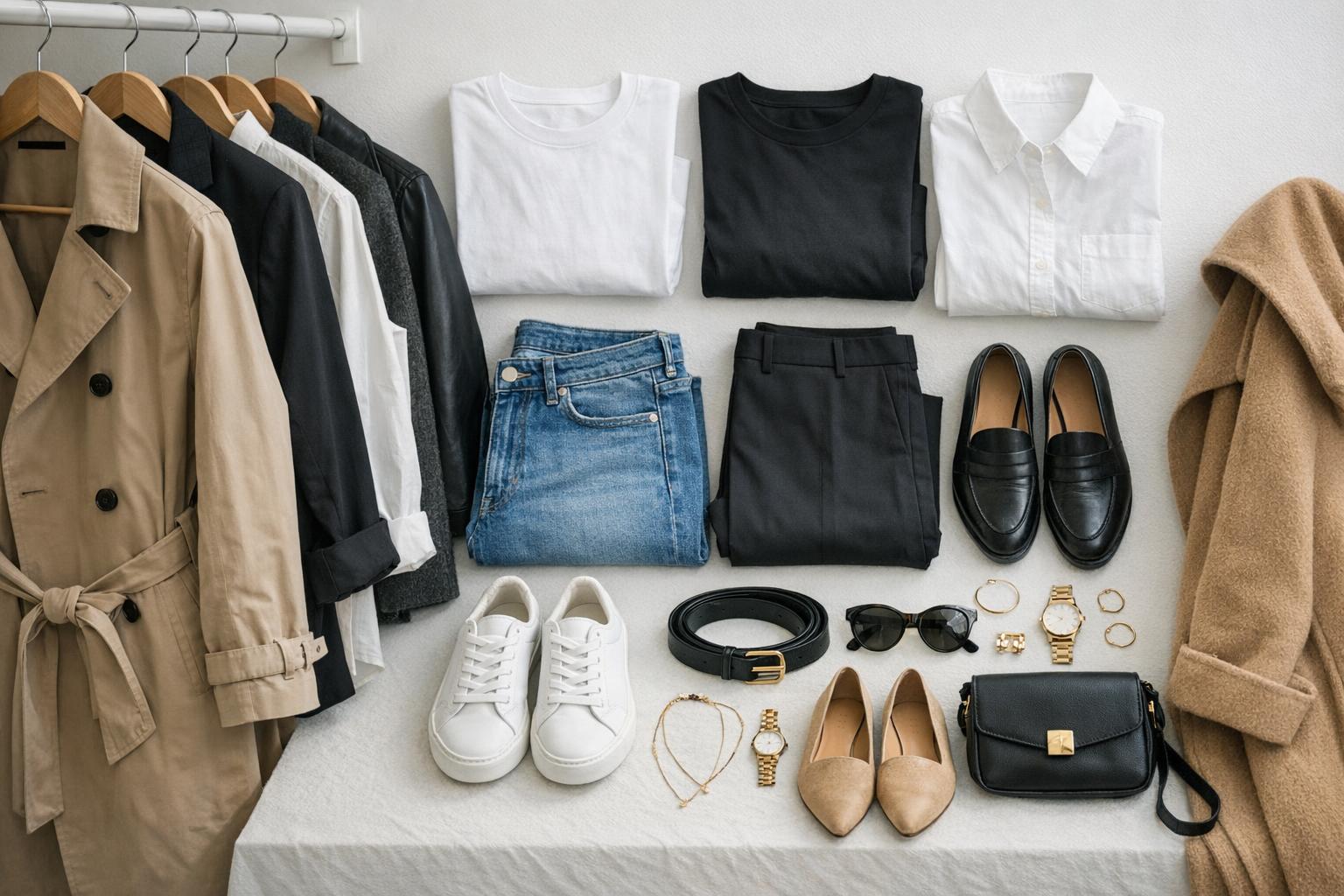
Capsule wardrobe checklist: a complete, actionable guide to a timeless closet
A capsule wardrobe checklist is a practical way to build a smaller, more versatile closet using a focused set of essentials you can mix and match across outfits, occasions, and seasons. Instead of chasing constant “more,” you choose a tight edit of pieces—often around 30–37 items—that work together in color, silhouette, and function. Done well, a capsule reduces decision fatigue, makes packing easier, and keeps shopping intentional without requiring you to dress “boring.”
This guide is designed for U.S. lifestyles and the reality of changing weather, commuting patterns, and dress codes—from casual weekends to office-appropriate looks to travel. You’ll get a complete wardrobe checklist you can actually use, a capsule wardrobe items list organized by category, a phased plan for building your capsule over time, seasonal transition guidance, and tips on shopping strategy and fabric care so your core pieces last. If you’ve ever wanted a wardrobe checklist woman can rely on year-round—without overhauling everything at once—this is the framework.
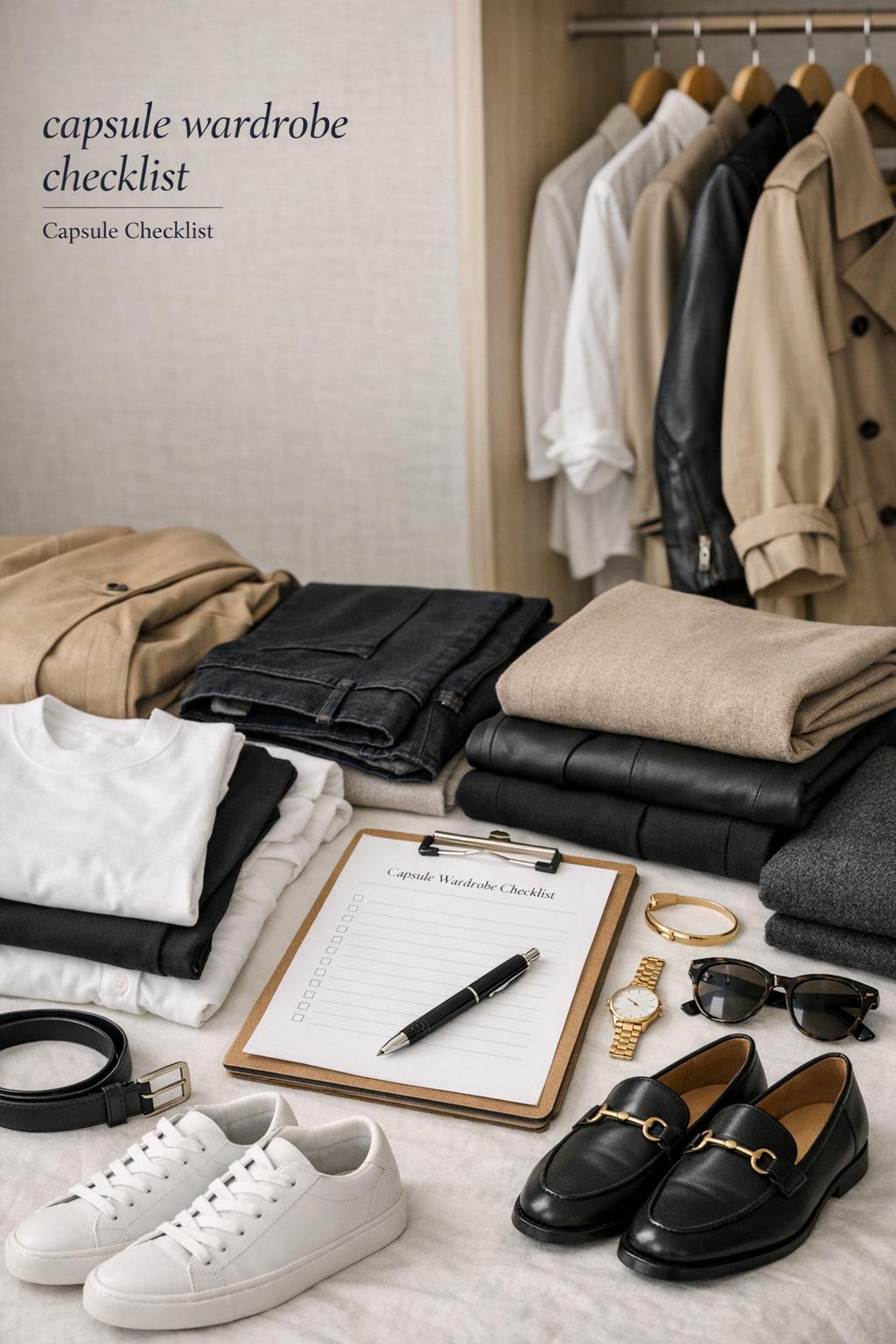
What is a capsule wardrobe and why it works in the U.S.
A capsule wardrobe (sometimes called a capsule closet or minimalist wardrobe) is a curated set of clothing built around versatile basics—think a white button-down, tailored trousers, a trench coat, white sneakers—that can be styled in multiple ways. The focus is cohesion: neutral or compatible colors, repeatable silhouettes, and a balance of casual and polished items so you can dress for real life with fewer pieces.
It works particularly well in the U.S. because many people need outfits that move across settings: workdays that swing from meetings to errands, weekends with social plans, and frequent seasonal changes. A fashion capsule wardrobe is less about strict minimalism and more about repeatable outfit formulas—your “default” jeans-and-tee uniform upgraded with a blazer, or a simple dress that can be layered under outerwear.
Your wedding has a lot of moving pieces. Your plan can still feel composed.
Zarellea organizes guests, vendors, budget, and timelines in one shared space — so you can make decisions with clarity, not stress.
The key idea: versatile basics that create more outfits than you own
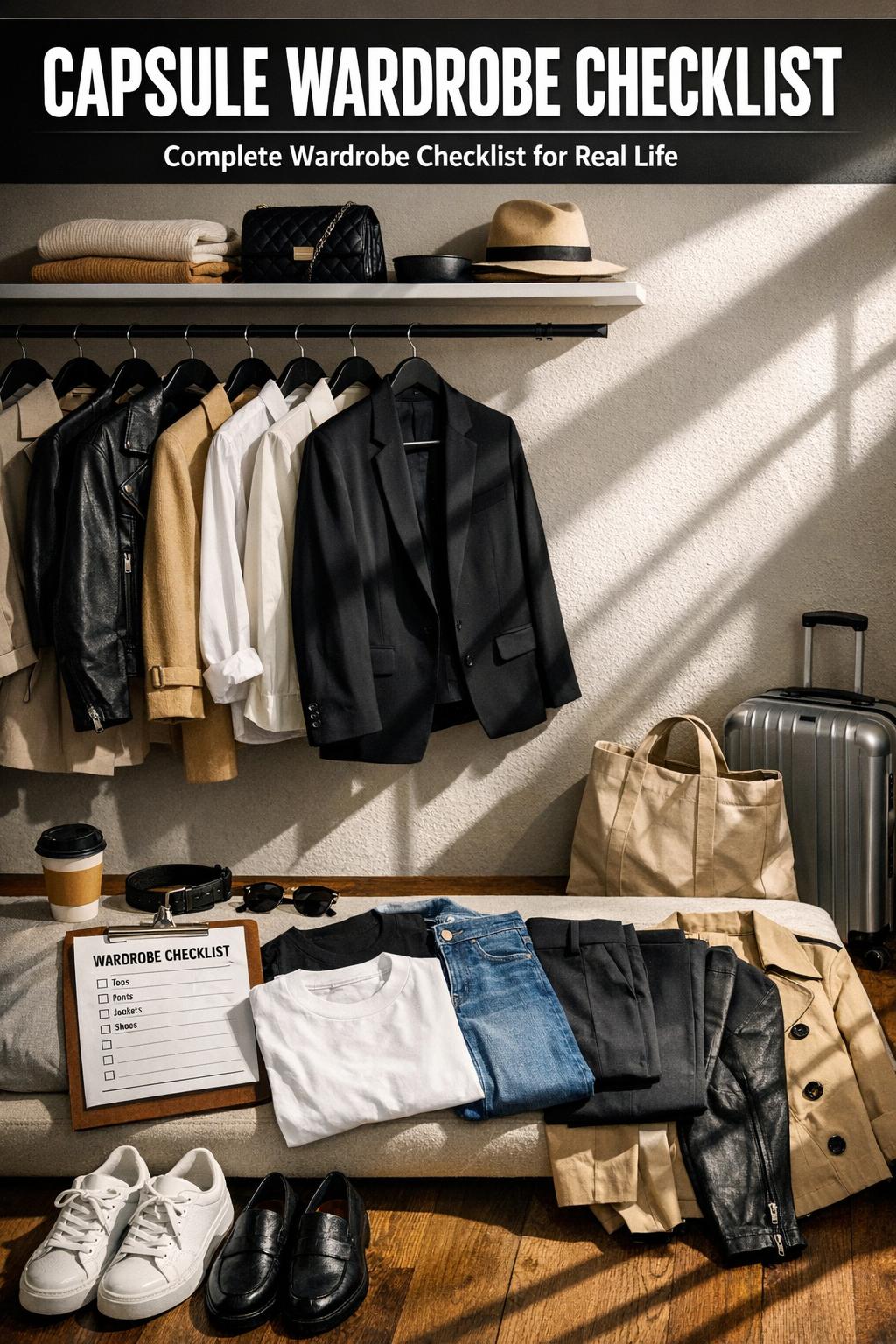
The strongest capsules rely on repeatable building blocks. When your tops coordinate with your bottoms, and your outerwear works with both, outfit creation becomes a simple system. That’s why checklists often start with essentials like neutral tees, black pants, jeans, and layerable outerwear (a blazer, a leather jacket, a trench coat). Add a small set of shoes and accessories, and the combinations multiply without needing more volume.
A note on “rules”: 30–37 pieces and the 3-3-3 rule
Many capsule wardrobe checklists use a 30–37 item baseline because it’s large enough to cover daily life but small enough to stay intentional. You may also see the 3-3-3 rule referenced as a styling shortcut: small sets of items that can be combined quickly (for example, a few tops, a few bottoms, and a few shoes). These are frameworks, not rigid requirements—use them to simplify decisions, not to create pressure.
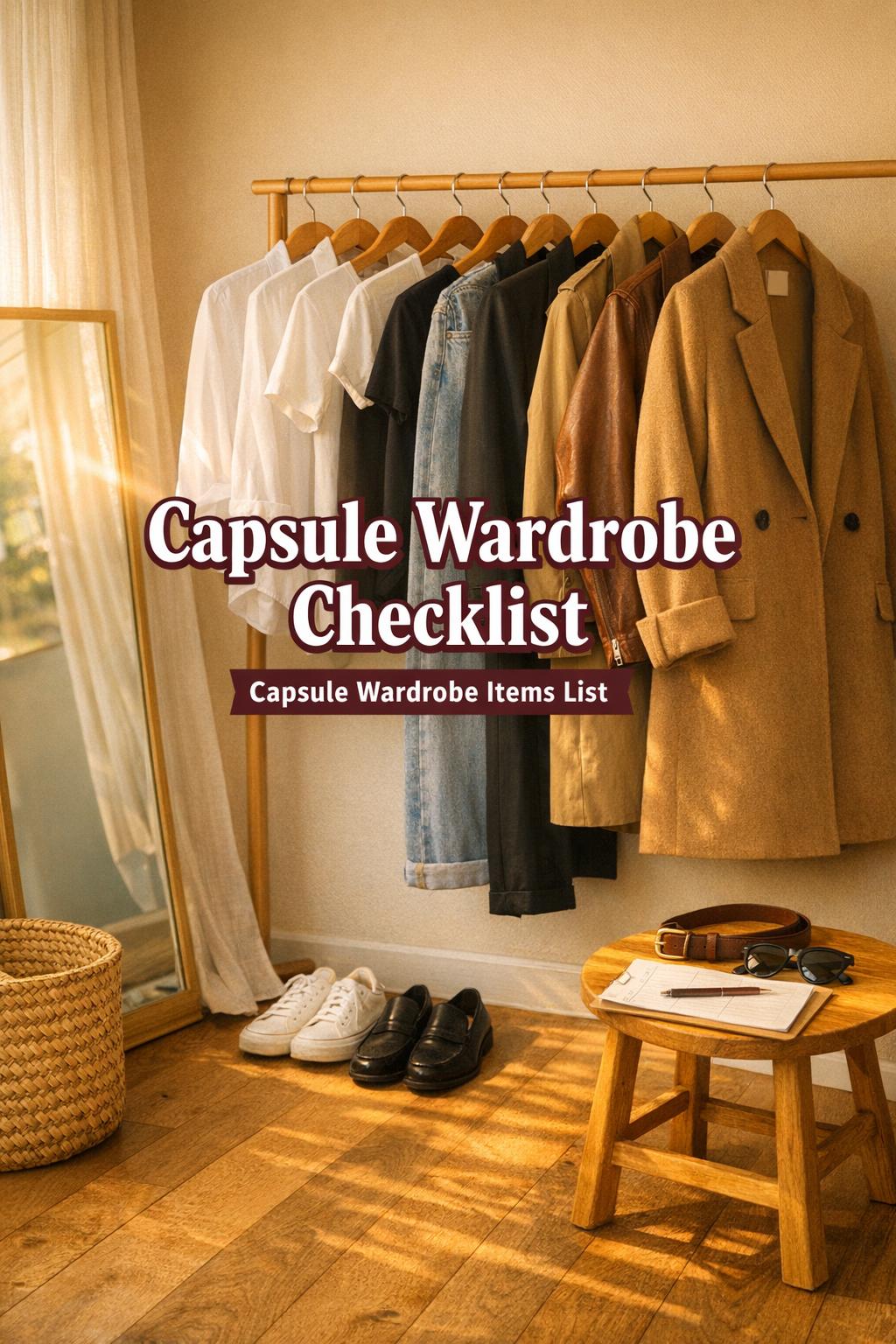
Core capsule pieces: the 30–37 essentials to own (capsule checklist)
This capsule checklist is meant to function as a complete wardrobe checklist for most adult lifestyles, with room to adjust for climate and dress code. The goal is balance: enough tops to rotate, enough bottoms to anchor outfits, outerwear for layering, and shoes that cover your main activities.
Use this capsule wardrobe items list as your starting point, then edit based on how you actually live. If you rarely wear heels, for example, you don’t need them in your core. If you’re in a city where a trench coat is a staple for transitional weather, prioritize it earlier.
- Tops and tees (core rotation)
- Bottoms (denim + tailored options)
- Outerwear (layering system)
- Shoes (comfort + versatility)
- Accessories (small pieces that change the look)
Tops and tees: the foundation for mix-and-match outfits
Tops drive outfit variety in a capsule because they’re the most visible and easiest to swap. A strong set includes neutral tees (including a white tee and black tee), a white button-down, and a few elevated options that still coordinate with your bottoms. If you’ve ever built outfits that felt “almost right,” it’s usually because the tops weren’t cohesive in color or proportion with the bottoms and layers you own.
For everyday U.S. dressing, many people find that a handful of high-rotation tops is more useful than a closet full of occasional pieces. This is where reliable basics from brands often referenced in capsule conversations—like Everlane and Madewell—tend to fit in as examples: simple silhouettes, neutral palettes, and pieces you can repeat often without feeling overly trendy.
- 2–3 neutral tees (include a white tee and black tee)
- 1–2 long-sleeve tops for layering
- 1 white button-down (or a crisp neutral shirt)
- 1–2 elevated tops you can wear to dinner or work
- 1–2 knit or cozy layers for colder days
Tips: making tops work harder in a fashion capsule wardrobe
In practice, tops “earn their keep” when they work under multiple layers. Before you buy a new top, picture it under a blazer, under a trench coat, and with your main pair of jeans and your main pair of tailored trousers. If it only works in one scenario, it’s more of a specialty item than a capsule essential. Also pay attention to fabric care: easy-care basics are the ones you’ll actually reach for on busy weeks.
Bottoms: trousers, jeans, and skirts that work in all seasons
Bottoms are your outfit anchors. Most capsule wardrobes rely on a mix of denim and tailored options—jeans for everyday and tailored trousers for polish. Black pants are a frequent capsule staple because they can read casual with sneakers or more refined with a structured top and outerwear.
Fit matters more here than almost anywhere else. A capsule wardrobe checklist can list “tailored trousers,” but your best version might be straight-leg, wide-leg, or ankle-length depending on what feels comfortable and what shoes you actually wear. The point is to choose silhouettes you can repeat across seasons and settings.
- 1–2 pairs of jeans (a primary pair plus an optional backup wash)
- 1 pair of tailored trousers
- 1 pair of black pants (if different from your tailored trousers)
- 1 optional skirt if you wear them regularly
Outerwear: layering essentials for every U.S. season
Outerwear is where U.S. climate differences show up fast, but the capsule principle stays the same: choose layers that work together. A trench coat is a classic capsule piece for transitional weather, a blazer adds structure for work and dinners, and a leather jacket can be the casual-cool layer that pulls an outfit together.
If you live in a colder region, a wool coat becomes a key part of the system. In milder climates, you may rely more on lighter layers. The important part isn’t owning every type of coat—it’s owning the right layers for the weather you actually experience and the outfits you actually wear.
- 1 blazer (workhorse layer for polish)
- 1 trench coat (transitional outerwear)
- 1 leather jacket (optional but versatile)
- 1 warm coat (often a wool coat in colder regions)
Shoes and accessories: completing your capsule wardrobe items list
Shoes are where a capsule becomes livable. A pair of white sneakers can carry you through errands, travel days, and casual office looks, while a more structured option like loafers can shift the same outfit into “polished.” Accessories are the smallest category but often the highest leverage: sunglasses, a belt, or a simple bag can change the tone of a neutral outfit without adding clutter.
- 1 pair of white sneakers
- 1 pair of loafers (or another everyday polished shoe)
- 1 optional dress shoe for occasions that require it
- 1–2 simple accessories (for example, sunglasses and a belt)
How to shop and style a capsule wardrobe (without overbuying)
A capsule wardrobe checklist is only helpful if it prevents “duplicate buying”—grabbing another black tee, another pair of jeans, another jacket—because you’re unsure what you already have. The shopping and styling approach that tends to work is intentional: inventory first, identify gaps second, and only then consider purchases.
Start with an inventory: keep, tailor, donate
Before you shop, do a quick closet inventory. This step is often skipped, but it’s where a capsule becomes realistic. You’ll usually find you already own some core basics—maybe a white button-down, black pants, or a trench coat—that can serve as anchors. You may also find duplicates that can be donated, or pieces that could be revived with a small repair or better fabric care.
- Pull out the pieces you wear weekly and set them aside as “core.”
- Identify “almost right” items that might need tailoring or better styling.
- Create a donate pile for items that don’t fit your current life or comfort.
Build outfit formulas (and repeat them confidently)
In day-to-day dressing, most people repeat a few outfit formulas. The capsule method makes those formulas easier to execute. For example: neutral tee + jeans + blazer + loafers; white button-down + tailored trousers + trench coat + sneakers; or an elevated top + black pants + leather jacket. The goal isn’t to reinvent your style daily—it’s to have reliable combinations that look intentional with minimal effort.
Tips: use a “one-in, one-out” mindset during the build phase
When you’re actively building a fashion capsule wardrobe, it’s easy to justify “just one more” because each piece seems useful. A practical rule is to replace rather than add whenever possible: if you buy a new pair of jeans, decide whether the older pair still belongs in your core rotation. This keeps the capsule from quietly turning back into an overflowing closet.
A phase-based plan to build your capsule wardrobe (phase 1–phase 5)
If you try to build a complete wardrobe checklist all at once, you’ll likely overspend or end up with pieces that don’t work together. A phased approach makes the process calmer and more accurate, because you learn what you actually reach for as you go. Think of phases as a sequence: secure the core basics first, then add polish, then refine for season and lifestyle.
Phase 1: define your color story and daily uniform
Start by deciding on a neutral-heavy palette you’ll actually wear. Most successful capsules lean on neutrals because they mix easily and make repeating outfits feel consistent. Then identify your real daily uniform—what you wear for work, weekends, and errands—so your capsule is built around reality, not aspiration.
Phase 2: lock in your high-rotation basics
This phase is about the pieces you’ll wear constantly: neutral tees (including a white tee and black tee), a dependable pair of jeans, and black pants or tailored trousers. These pieces should be comfortable and easy to care for, because they’ll be washed and worn often. If a basic is fussy, it won’t stay in rotation.
Phase 3: add structure with outerwear and layering
Once your base outfits are working, add the layers that make them feel complete: a blazer to sharpen casual looks, a trench coat for transitional weather, and (if it fits your style) a leather jacket for an effortless third piece. In colder climates, prioritize a warm coat that works with your most common outfits.
Phase 4: refine with shoes and accessories that match your life
Choose shoes that match your walking, commuting, and work needs. A capsule that looks good but hurts to wear is not a working system. A pair of white sneakers is a frequent cornerstone; loafers (or a similarly versatile polished shoe) add range. Keep accessories minimal and purposeful—small touches like sunglasses can change the vibe without adding clutter.
Phase 5: fill true gaps and upgrade quality over time
Only after living in your capsule for a while will your real gaps become obvious. This is the time to upgrade quality, replace worn-out basics, and refine fit. It’s also when you can thoughtfully add a piece that reflects your personal style—maybe a more distinctive top from a brand like Dôen if it fits your aesthetic—without breaking the capsule cohesion.
Seasonal transitions: adapting your capsule for spring, summer, fall, and winter
Seasonal transition is one of the biggest reasons people think capsules “don’t work.” In reality, capsules work best when you treat them as a year-round system with seasonal adjustments. You keep the core (jeans, black pants, neutral tees, white button-down), then swap a small number of weather-specific layers.
Spring-to-summer: lighter layers and flexible outfits
Spring and early summer often require outfits that handle temperature swings—cool mornings, warm afternoons, and air-conditioned indoor spaces. This is where a trench coat shines, because it layers over tees and button-downs without feeling too heavy. If you’re using a “micro-capsule” approach (like a 12-piece edit), you can take inspiration from celebrity-style capsule thinking—Kendall Jenner’s spring-to-summer capsule wardrobe is an example of a tightly curated seasonal set—but adapt it to your everyday needs rather than designer-only pieces.
Fall: reintroduce structure
Fall is often the easiest capsule season because layering is natural. Add a blazer more often, bring back the leather jacket, and rely on jeans and tailored trousers. The styling trick is contrast: a simple tee becomes “fall-ready” with a blazer and loafers, while the same tee stays casual with sneakers.
Winter: focus on outerwear and fabric care
In winter-heavy regions, outerwear becomes the visual centerpiece. A warm coat—often a wool coat—needs to work with your most common outfits and layers underneath. Winter is also where fabric care becomes a capsule superpower: caring properly for frequently worn basics helps your core items last through repeated wear.
Tips: climate reality check for U.S. regions
Even within the U.S., winter and summer can look very different depending on where you live. Instead of copying a universal list, use the checklist as a base and adjust outerwear first. If your area has mild winters, you may not need multiple heavy coats; if you face long cold stretches, a warm coat becomes non-negotiable and may take priority over trendier layers.
Budgeting, shopping strategies, and fabric care for capsule pieces
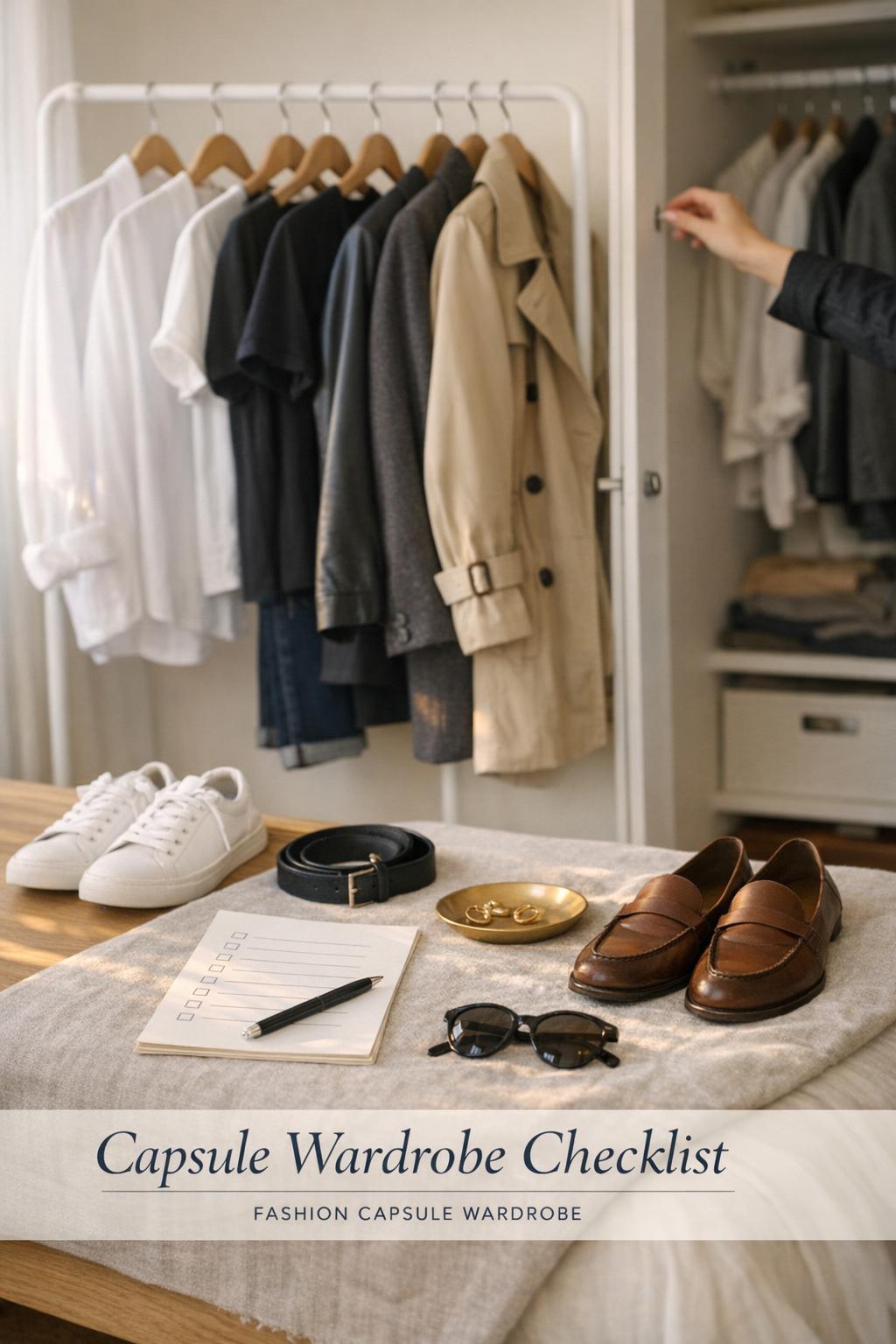
A capsule wardrobe is often associated with “investment pieces,” but budgeting is personal. The strategy that tends to be most sustainable is to spend where wear is highest (your everyday shoes, your most-worn pants, your go-to outerwear) and stay practical on experimental pieces. A complete wardrobe checklist should guide you to fewer, better decisions—not force you into one price point.
Quality vs. quantity: what to prioritize
Prioritize durability and comfort for high-rotation items: tees you wear weekly, jeans you live in, a blazer that needs to hold shape, and outerwear that faces weather. Brands commonly referenced in capsule discussions—like Everlane and Madewell—are often used as examples for straightforward basics, while designer labels (The Row, Khaite, Maison Margiela, Courrèges, Isabel Marant) show up more in editorial or celebrity capsule inspiration. You don’t need designer pieces for a functional capsule; the useful takeaway is the emphasis on intentional selection and cohesive styling.
Fabric care: the quiet skill that keeps capsules looking new
Because capsule wardrobes rely on repeated wear, fabric care matters. Basics that are easy to wash and maintain are more likely to stay in rotation. Pay attention to how different materials behave over time and choose items you can realistically care for. If a piece requires constant special handling, it may be better as an occasional item rather than a core capsule staple.
Tips: avoid the “fantasy self” shopping trap
One of the most common capsule mistakes is buying for a life you don’t regularly live—extra dressy pieces for events you rarely attend, or trendy items that don’t integrate with your neutral basics. When evaluating a potential purchase, ask where it fits in your outfit formulas and which existing items it pairs with. If you can’t name at least a couple of strong combinations using your current capsule, it’s probably not a core piece.
Visualizing your capsule: printables, tools, and a simple planning workflow
Many people find that a capsule wardrobe checklist only “clicks” once it’s visible. Whether you prefer a printable capsule checklist or a simple planning method, the goal is the same: reduce uncertainty. Seeing your core pieces listed by category makes it easier to spot duplicates, identify true gaps, and plan outfits without last-minute stress.
A practical workflow: print, inventory, plan
A straightforward workflow is to start with a printable-style checklist mentality: print (or write) your categories, inventory what you own, then plan a few go-to outfits. This is especially effective if you’re rebuilding after a lifestyle change, a move to a different climate, or a shift in dress code.
- Print or draft your capsule wardrobe items list by category.
- Check off what you already own and actually wear.
- Circle the missing essentials that would unlock multiple outfits.
- Plan a week of outfits using only your checked items.
Tips: treat your checklist like a living document
Your capsule will evolve. A checklist is most useful when you revisit it after a few weeks of real wear—then adjust. If you notice you never reach for a certain top, it might be the wrong fit, the wrong fabric, or simply not aligned with your daily life. Replacing one weak link can improve the whole capsule more than buying multiple new items.
Real-world examples: celebrity-inspired and everyday capsules
Examples make capsule planning easier because they show how a small set of items becomes a real wardrobe. Editorial capsules often highlight designer pieces, while everyday capsules lean on approachable basics. Both can be useful: celebrity capsules can teach cohesion and restraint, and everyday capsules prove the system can work for errands, commuting, and repeat wear.
Celebrity capsule inspiration (and how to translate it)
A celebrity-driven capsule—like Kendall Jenner’s spring-to-summer capsule wardrobe—often centers on a tight set of statement-leaning staples, sometimes from designers such as The Row, Khaite, Maison Margiela, Courrèges, Éterne, or Isabel Marant. The practical takeaway isn’t that you need those labels; it’s that the pieces are chosen to mix cleanly and repeat. Translate that by selecting your own equivalents: a crisp shirt, a streamlined pant, a great coat, and shoes that work with everything.
An everyday capsule scenario: a week of outfits from a small core
Imagine a typical week: two workdays that require polish, a casual office day, a weekend brunch, errands, and a dinner. With a white button-down, neutral tees, jeans, tailored trousers, black pants, a blazer, a trench coat, white sneakers, and loafers, you can build multiple outfits by simply changing the layer and shoe. This is where capsules feel empowering: fewer items, but more “ready” combinations.
Putting it all together: your complete wardrobe checklist for a capsule closet
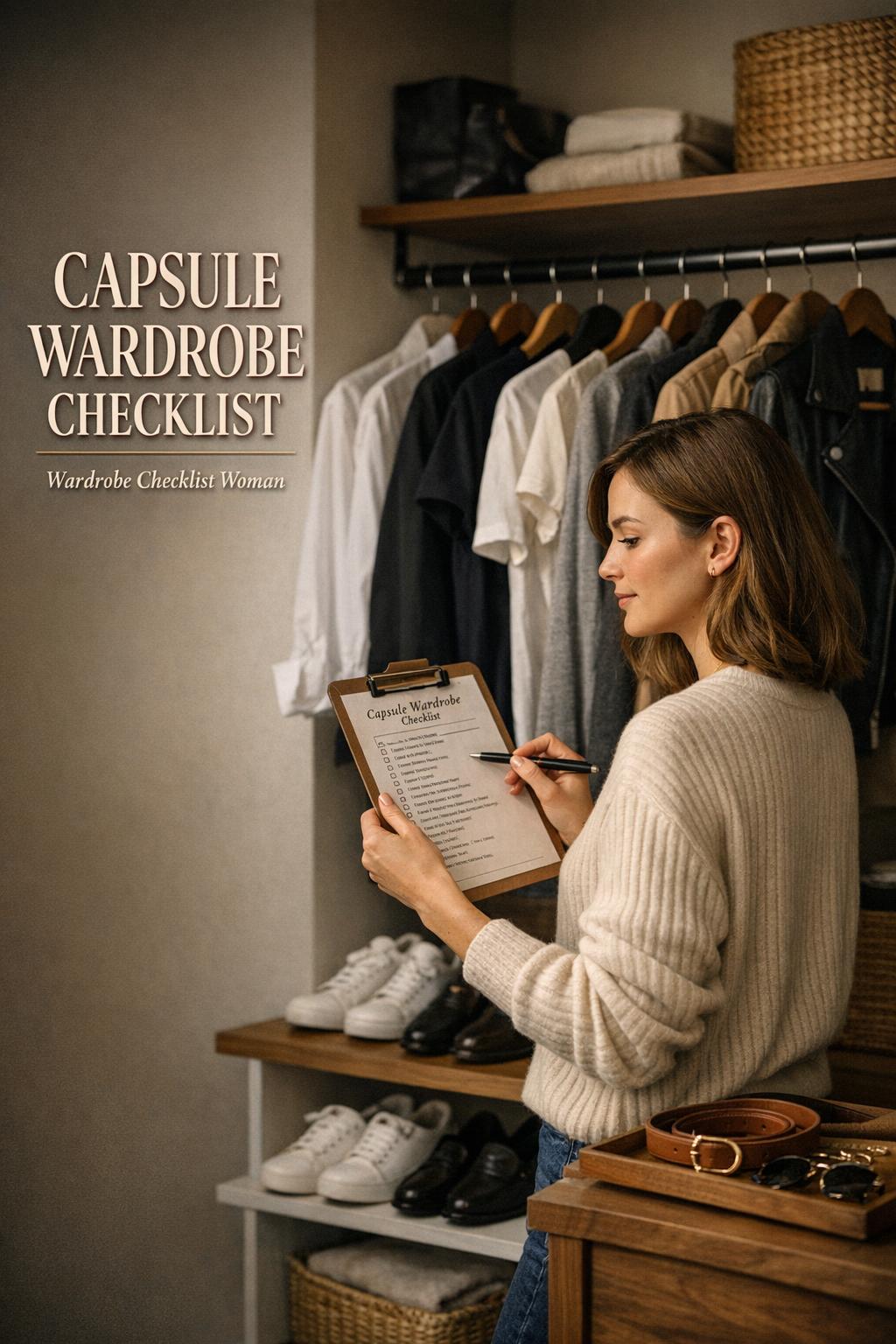
If you want one place to reference everything, this complete wardrobe checklist condenses the core categories into a single, actionable view. Use it as your wardrobe checklist woman can return to each season—especially during transitions when it’s easy to feel like you have “nothing to wear” despite owning plenty.
- Tops: neutral tees (include a white tee and black tee), long-sleeve layer, white button-down, 1–2 elevated tops, 1–2 cozy layers
- Bottoms: jeans, tailored trousers, black pants, optional skirt
- Outerwear: blazer, trench coat, leather jacket (optional), warm coat (often wool coat in colder regions)
- Shoes: white sneakers, loafers, optional dress shoe
- Accessories: keep it minimal (for example, sunglasses and a belt)
As you build, remember the central relationship that makes a capsule work: capsule wardrobe essentials support multiple outfits across occasions. If a piece doesn’t support that goal—because it doesn’t match, doesn’t fit your climate, or doesn’t suit your lifestyle—it belongs outside your core capsule, even if it’s beautiful.
FAQ
How many items should be in a capsule wardrobe checklist?
Many capsule wardrobe checklists use a 30–37 item baseline because it’s enough to cover daily life while still feeling curated; treat that number as a guide and adjust based on your climate, lifestyle, and how often you do laundry.
What are the most important capsule wardrobe essentials to start with?
Start with high-rotation basics that anchor outfits: neutral tees (including a white tee and black tee), a white button-down, jeans, black pants or tailored trousers, plus a versatile layer like a blazer and an all-purpose shoe like white sneakers.
What is the 3-3-3 rule and how does it help?
The 3-3-3 rule is a simple styling shortcut that uses small sets of items (such as a few tops, a few bottoms, and a few shoes) to create quick combinations; it helps reduce decision fatigue and makes outfit planning easier within a capsule.
How do I build a capsule wardrobe without buying everything at once?
Use a phase-based plan: define your neutrals and daily uniform first, lock in your most-worn basics next, add outerwear layers, then refine shoes and accessories, and only after living in the capsule for a while fill true gaps or upgrade quality.
How do I adapt my capsule closet for seasonal transitions?
Keep the core pieces consistent (tees, button-down, jeans, black pants, tailored trousers) and swap a small number of weather-specific layers; for many U.S. wardrobes, a trench coat and blazer handle spring/fall well, while a warm coat becomes essential in winter-heavy areas.
Do I need designer brands for a fashion capsule wardrobe?
No—designer labels like The Row, Khaite, Maison Margiela, Courrèges, or Isabel Marant often appear in editorial or celebrity capsule examples, but the practical principle is intentional selection and cohesion; you can build a strong capsule with accessible basics from brands commonly referenced for staples, such as Everlane or Madewell, or with what you already own.
What should I do with clothes that don’t fit my capsule checklist?
Start with an inventory and separate items into core, “almost right,” and donate piles; pieces that don’t fit your lifestyle or coordinate with your essentials are often best donated, while “almost right” items may be improved with better styling, minor fixes, or more consistent fabric care.
How can I make a printable-style capsule checklist useful day to day?
Use the checklist as a living document: check off what you truly wear, circle the few missing pieces that unlock multiple outfits, and plan a week of outfits from your checked items to confirm what works before you shop.
Leave a Reply