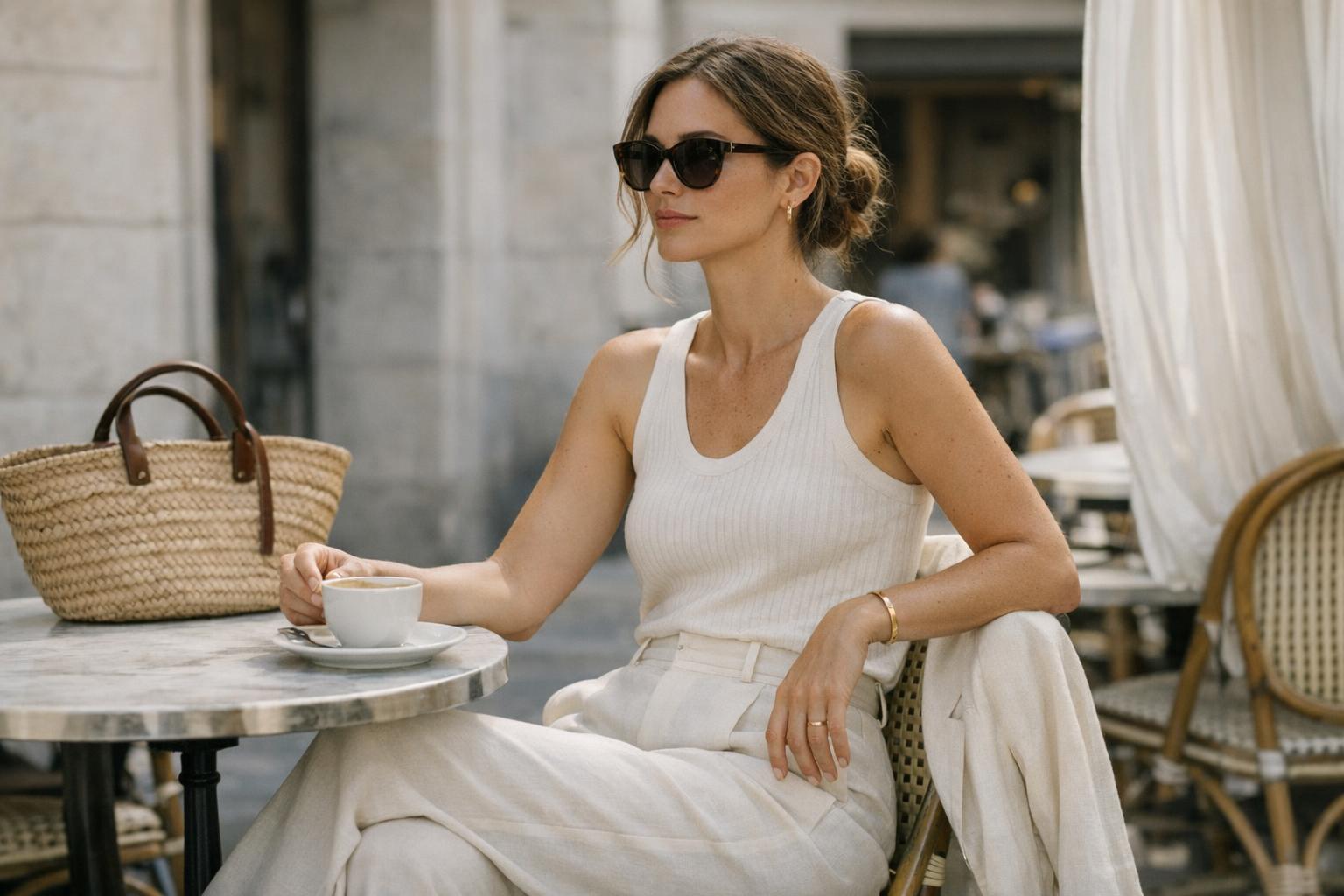
Summer quiet luxury outfits, understood the European way
The most telling summer style moments are rarely the loudest. You notice them in motion: a relaxed linen shirt that drapes cleanly at the shoulder, tailored cream trousers that hold their line even in heat, leather sandals that look better because they’re simple, not because they announce themselves. This is the quiet luxury idea—often discussed alongside “stealth wealth”—translated for warm weather, when comfort and polish have to coexist. And that balance is exactly what makes summer quiet luxury outfits feel so modern: they’re built on breathable fabrics like linen, silk, and cotton, expressed through refined silhouettes, and finished with understated accessories that look intentional rather than decorated.
ModePrima’s approach is not to chase a trend, but to read it like an editor. Quiet luxury in summer isn’t a uniform; it’s a styling logic. Think of it as a set of decisions—neutral tones (beige, khaki, navy, white), clean lines, minimal branding, and pieces that mix into a small capsule. If you’ve ever saved “looks chic” street-style photos from Europe outfits—those polished, calm ensembles that feel as natural in a city café as they do near the coast—this is the same visual language. It’s also why the aesthetic pairs so well with Italy outfits and the broader look di moda mindset: ease, restraint, and an appreciation for texture over flash.
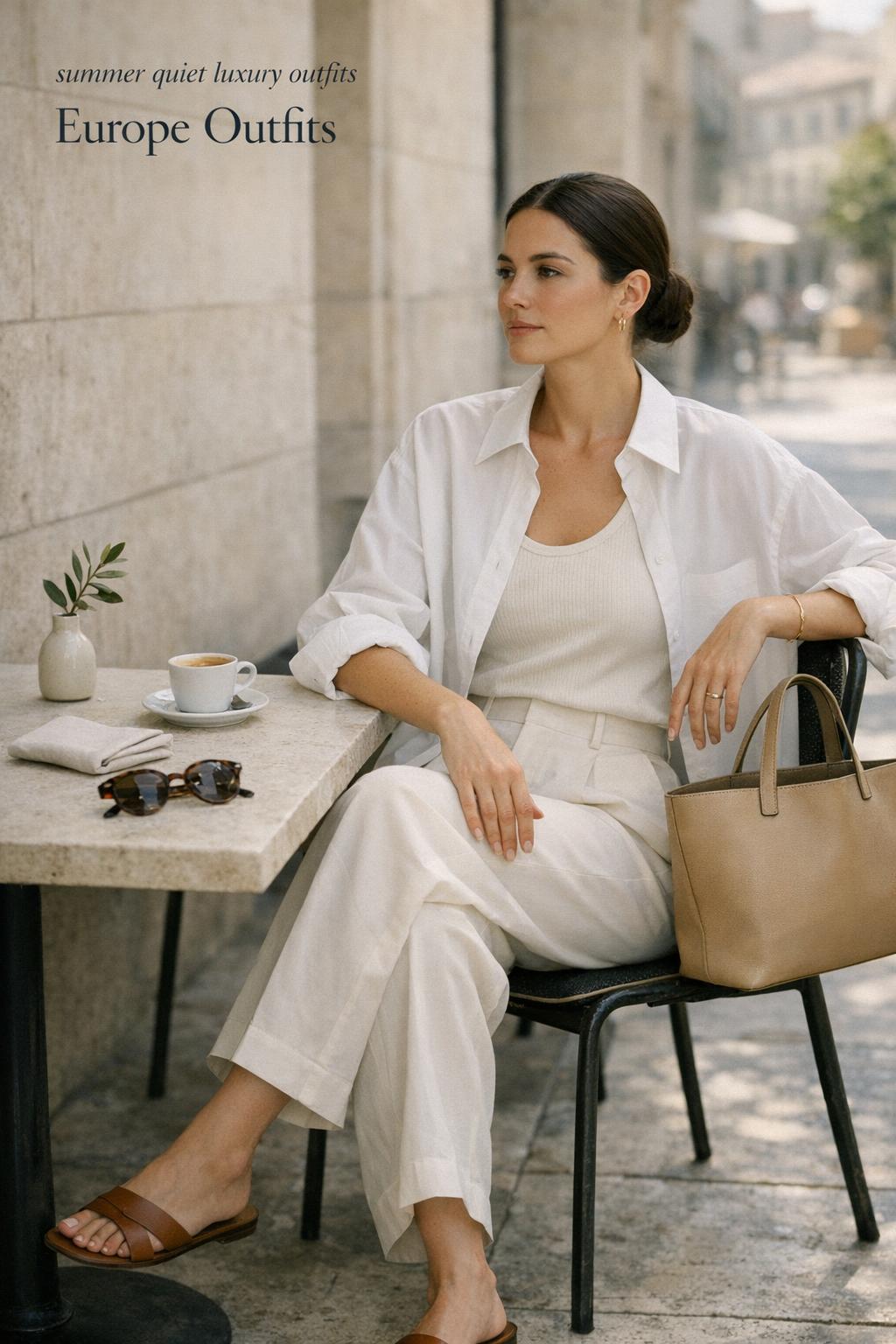
What follows is a complete guide to building and styling summer quiet luxury outfits with the pieces that consistently define the look: linen shirts, white shirts, linen pants, tailored trousers, slip dresses and midi dresses, lightweight blazers, leather sandals, structured totes, and subtle jewelry. You’ll see how to compose outfits by occasion, how to make neutrals feel dimensional, when silk works better than cotton, and how to achieve the effect even with accessible labels like Zara, Madewell, and & Other Stories—while still understanding why houses like Hermès and Saint Laurent are often referenced as shorthand for understated quality.
What “quiet luxury” means once the temperature rises
In summer, quiet luxury becomes less about layering status pieces and more about the discipline of editing. Heat has a way of exposing shortcuts: synthetic fabrics cling, cheap tailoring collapses, fussy styling reads as effortful. Quiet luxury avoids that by leaning on materials and shapes that hold up under real conditions—walkable afternoons, office air-conditioning, long dinners, vacation days that start in sandals and end in a slightly breezy evening.
Your wedding has a lot of moving pieces. Your plan can still feel composed.
Zarellea organizes guests, vendors, budget, and timelines in one shared space — so you can make decisions with clarity, not stress.
The “stealth wealth” label is often used as a cultural cousin of quiet luxury, but for day-to-day dressing, the more useful definition is practical: premium-looking outfits created through fabric, fit, and restraint, not logos. That’s why the core entities of the look—linen, silk, cotton, neutral palettes, tailored trousers, white shirts, slip dresses, and minimal accessories—repeat across summer guides. They’re the building blocks that consistently communicate refinement without needing embellishment.
One detail worth remembering: quiet luxury doesn’t require a luxury budget. It does require clarity. The outfit needs a focal point (structure, drape, or proportion) and everything else should support it. When that editorial harmony is present, even a simple ivory ribbed tank with wide-leg pants can feel composed enough to belong in the same visual world as a Hermès sandal or a Saint Laurent bag.
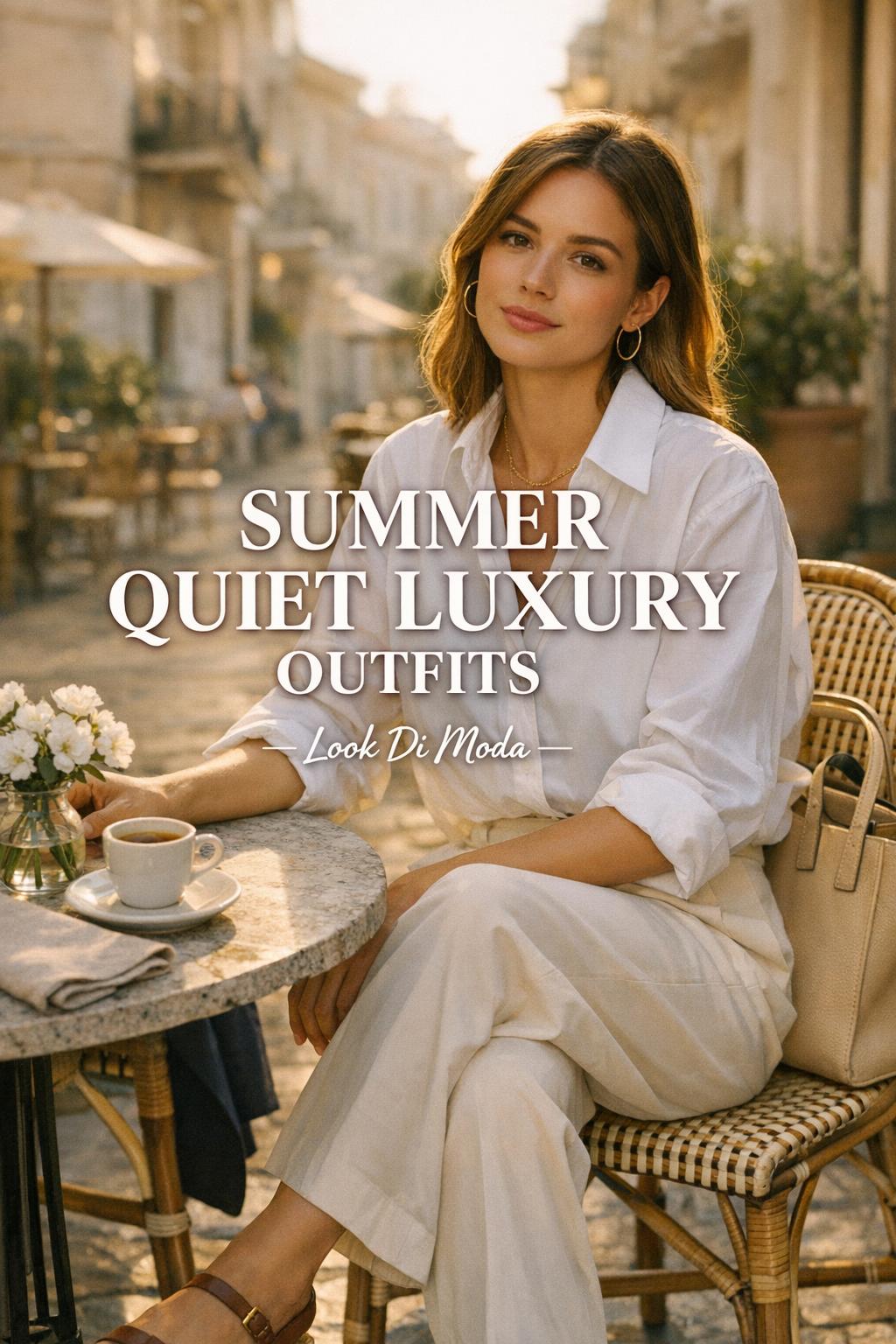
The fabric triad: linen, silk, cotton (and why they photograph differently)
Quiet luxury summer styling begins with fabric because fabric determines the mood before color or accessories ever do. Linen signals breathable confidence; silk and satin add controlled shine; cotton and poplin deliver crispness that reads “fresh” rather than “casual.” These are not interchangeable roles. Understanding the trade-offs is how you stop copying outfits and start composing them.
Linen: breathable luxury for hot days
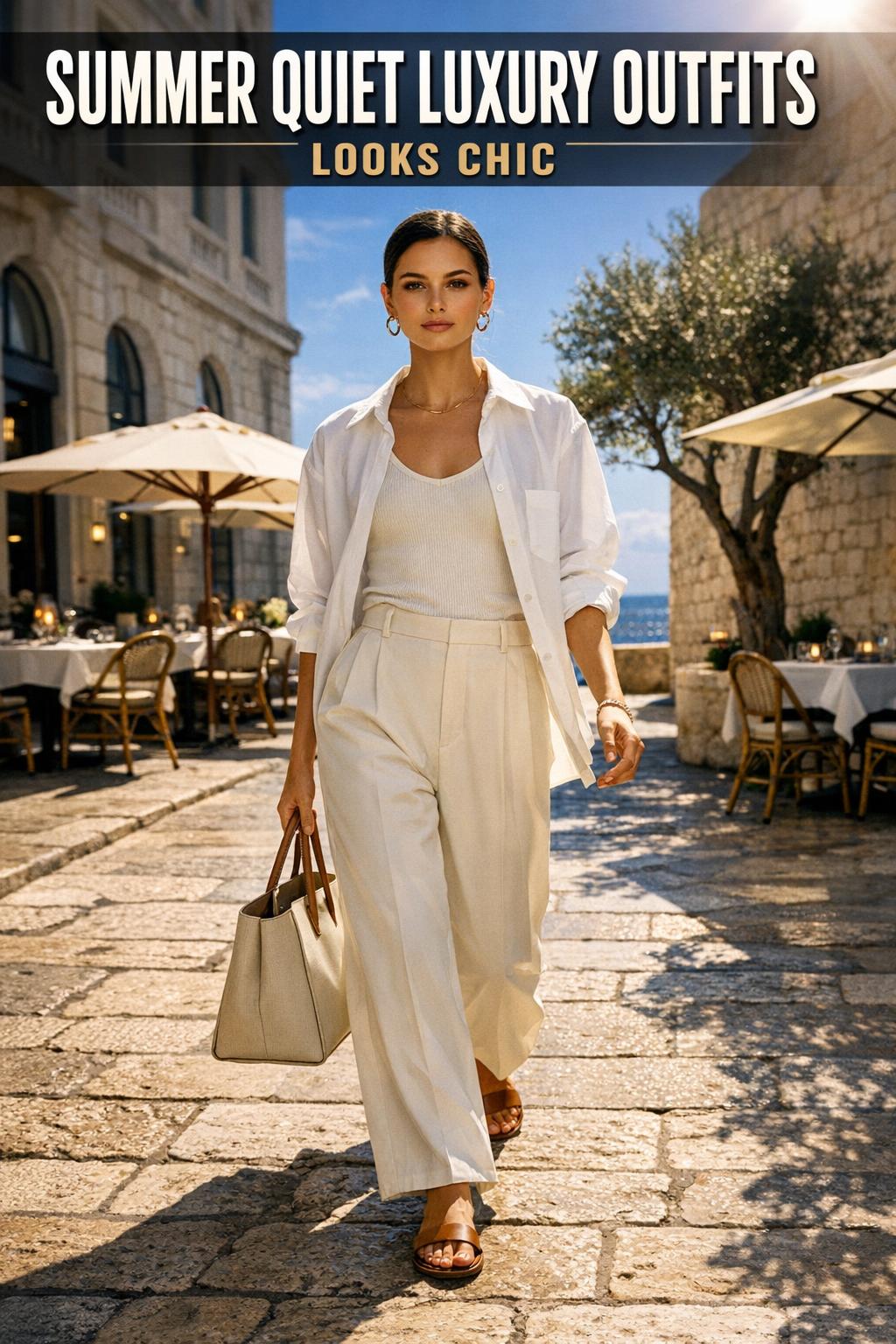
Linen is the backbone of summer quiet luxury outfits because it makes heat look elegant. A relaxed linen shirt has a natural texture that feels expensive when the cut is clean and the color is calm—white, beige, or soft neutrals. Linen pants and wide-leg silhouettes do the same work: they create movement without looking sloppy. The key is pairing linen’s relaxed texture with at least one tailored element—tailored cream trousers instead of drawstring pants, or a structured tote instead of a slouchy bag—so the outfit stays polished.
Practical note: linen creases. Quiet luxury doesn’t pretend otherwise; it embraces a controlled, lived-in finish. If the rest of the outfit is precise—sharp sandals, a clean neckline, minimal jewelry—the creasing reads as authenticity, not neglect.
Silk and satin: subtle shine, maximum polished effect
Silk is the evening specialist of the capsule, and it’s also your shortcut to looking “done” with very little. A silk slip skirt or slip dress carries light in a way linen cannot; it creates a quiet glow rather than a loud sparkle. This is why silk pieces appear repeatedly in quiet luxury essentials: they make neutral outfits feel dimensional, especially in low light—dinner terraces, summer events, or an impromptu late reservation when you want to look intentional without looking overdressed.
The styling rule is proportion. Silk wants balance: pair a silk slip skirt with a lightweight knit polo, or add a crisp white shirt for contrast. Keep accessories understated—gold chains or subtle jewelry—so the shine stays the focal point.
Cotton and poplin: everyday elevated
Cotton is the quiet achiever. In summer, the right cotton—especially in a white shirt or poplin-inspired crispness—creates an effortless “freshly dressed” impression that works in offices and cities. Cotton also plays well with tailoring: a white shirt tucked into tailored trousers is one of the most reliable looks chic formulas because it’s both simple and structured. When you want to feel refined without feeling precious, cotton is the answer.
Cotton’s limitation is that it can read basic if the silhouette is too generic. Quiet luxury solves that with thoughtful styling: a clean collar line, sleeves casually but neatly pushed, and a bag that adds architecture (a structured tote rather than an unshaped carryall).
Quiet luxury color: neutrals with intention, not monotony
Neutral palettes are central to quiet luxury, but the best summer versions don’t look flat. Beige, khaki, navy, and white work because they allow texture and cut to lead the story. The editorial trick is to treat neutrals as a range, not a single tone—monochrome beige can be compelling when you vary fabric finishes: matte linen against a smoother cotton, or a silk skirt under a more structured top.
If you’re drawn to Europe outfits that feel calm and expensive, this is often why: the colors are restrained, but the outfit isn’t. It has depth through contrast—relaxed versus tailored, crisp versus fluid, matte versus subtle shine. Quiet luxury is less about wearing “plain” than wearing edited.
- White reads crisp and intentional, especially in a white shirt or cotton-poplin structure.
- Beige and cream feel refined when they’re tailored (cream trousers) or layered in tonal combinations.
- Navy brings city polish to summer staples like wide-leg pants or a lightweight blazer.
- Khaki works best when the shape is clean—think tailored trousers rather than overly utilitarian details.
A small but meaningful point: neutral dressing rewards precision. When the palette is quiet, any imbalance—an awkward hem, a collapsing shoulder, a shoe that feels too busy—becomes more visible. That’s why proportion is not a detail in this aesthetic; it’s the foundation.
The summer capsule, ModePrima-edited: the pieces that do the heavy lifting
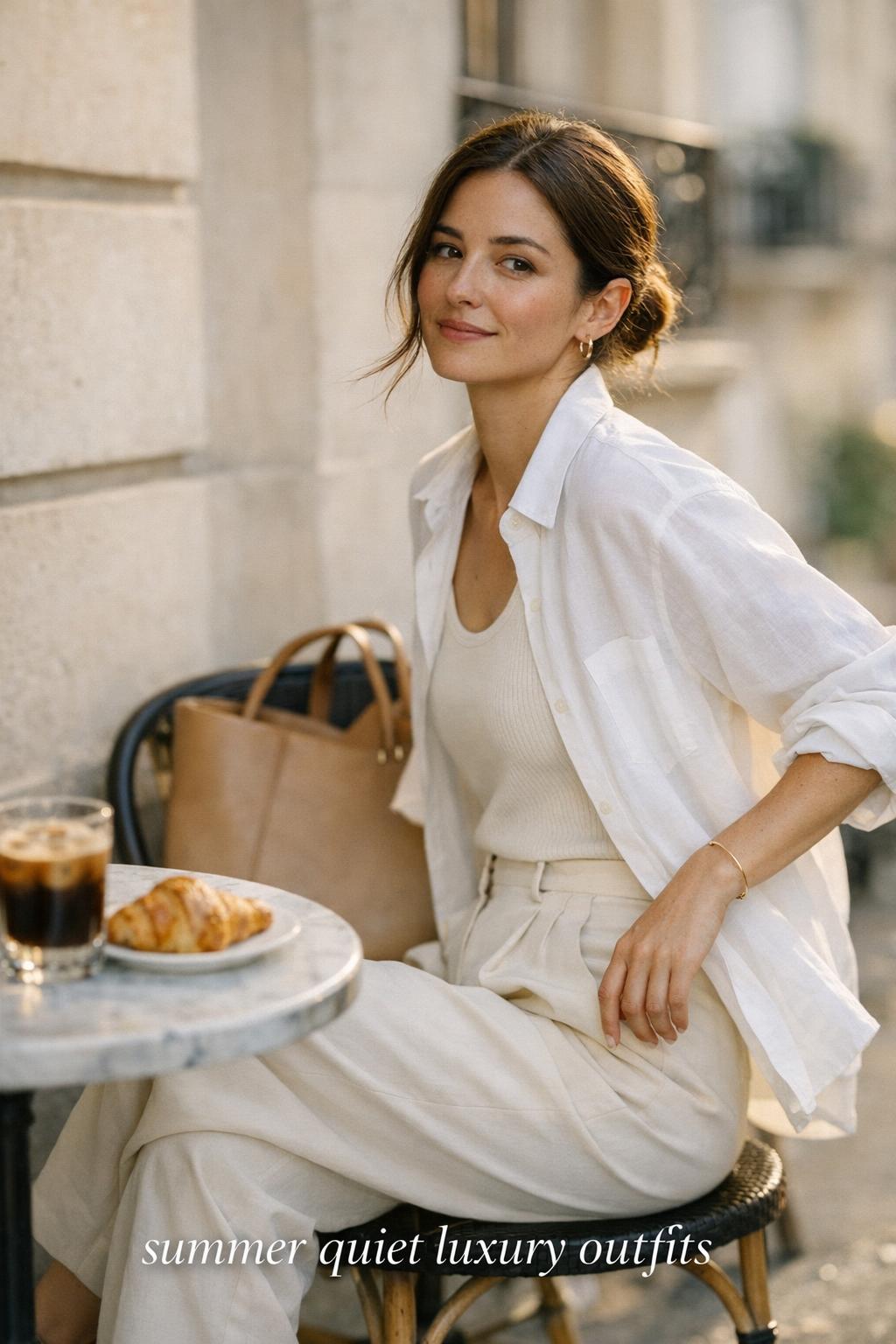
A quiet luxury summer wardrobe doesn’t need endless variety; it needs interoperable essentials. The capsule concept appears repeatedly in quiet luxury summer staples for a reason: once you have the correct core pieces, outfits assemble themselves with very little effort. The goal is not minimalism for its own sake, but versatility—pieces that look right in multiple settings and can be dressed up or down through accessories.
Tops that create structure without weight
Start with a crisp white shirt and a relaxed linen shirt. They do different jobs: the white shirt delivers sharpness; the linen shirt delivers ease. Add an ivory ribbed tank for heat waves and a lightweight knit polo for a more composed, “off-duty tailored” mood. These tops are quiet luxury because they frame the face cleanly and give you line—collar, neckline, or ribbing—without loud detail.
Bottoms with tailored calm
Tailored cream trousers are the anchor because they instantly refine whatever they’re paired with—even a simple tank. Linen pants bring breathability and movement, while wide-leg pants deliver a modern silhouette that feels both relaxed and intentional. The unifying factor is clean lines: no fussy embellishments, no overly complicated hardware, nothing that interrupts the calm.
Dresses that travel between day and evening
A linen midi dress is daylight’s best friend: easy, breathable, quietly elegant. A silk slip dress is your evening translator—minimal, fluid, polished. A monochrome column dress (especially in a neutral tone) is a powerful tool for looking elevated with almost no styling, because the silhouette does the work. If you want an alternative with similar simplicity, a shirt dress offers structure and ease in equal measure.
Light layers: the blazer effect
Even in summer, you’ll want a light layer for air-conditioning, late evenings, or simply to add shape. A lightweight blazer is the classic quiet luxury solution: it creates shoulder definition, sharpens a waistline, and makes linen feel city-ready. A shacket can play a similar role when you want something slightly more relaxed, but still clean-lined.
Footwear, bags, and subtle jewelry
Leather sandals and minimal heels keep the look grounded and wearable. The point is not height, but refinement—clean straps, understated shape, and comfort you can rely on during long days. For bags, a structured tote is the most useful summer companion: it gives the outfit architecture and keeps even relaxed silhouettes looking polished. Finish with minimal jewelry—gold chains, small pieces that catch light quietly rather than dominate it.
Luxury references like Hermès (including the much-cited Oran sandals) and Saint Laurent often appear in quiet luxury conversations because they’re recognized shorthand for restrained design. But the aesthetic can be achieved without turning the outfit into a brand collage; one understated accessory is plenty, and none is also perfectly valid if the fabrics and tailoring are right.
Outfit composition, not copying: editorial formulas that repeat all summer
The most useful way to approach summer quiet luxury outfits is through repeatable formulas. A formula is not a rigid uniform; it’s a proportion idea you can recreate with different pieces. This is how editors dress in real life: by relying on silhouettes that consistently work, then adjusting fabric and accessories for the occasion.
The tailored-and-breathable pairing (city afternoons and meetings)
Picture a relaxed linen shirt half-tucked into tailored cream trousers. The linen brings softness; the trousers bring line. Add leather sandals and a structured tote, and the outfit immediately reads composed—an easy answer for warm commutes, lunches, and office environments that swing between heat and heavy air-conditioning. If you need more authority, layer a lightweight blazer over the linen; the contrast between relaxed texture and tailored structure is the quiet luxury signature.
Variation: switch the linen shirt for a crisp white shirt when you want a sharper mood. Keep accessories minimal; let the tailoring speak.
The tonal neutral column (when you want “looks chic” with minimal effort)
A monochrome beige ensemble—top and bottom in the same family—creates a long visual line, which reads instantly elevated. The key is to keep the tones close but not identical and let texture do the separating: a knit polo with wide-leg pants, or an ivory ribbed tank with a silk slip skirt. Finish with subtle jewelry and sandals that don’t interrupt the line. This is where “look di moda” becomes practical: one color story, carefully executed.
Variation: use navy for a slightly more city-polished version. Navy wide-leg pants with a white shirt is a classic Europe outfits move—quiet, crisp, and dependable.
The slip skirt pivot (day-to-night without changing your entire look)
A silk slip skirt is one of the smartest quiet luxury essentials because it transitions without effort. In daylight, anchor it with a white shirt—sleeves rolled with intention, collar clean, sandals simple. For evening, swap the shirt for a fitted tank or knit polo and add a minimal heel. Keep the palette neutral and the jewelry subtle (a fine gold chain can be enough). The skirt does the “occasion” work for you.
The shirt dress and the refined sandal (vacation days that still feel polished)
For Italy outfits and coastal-town energy, the shirt dress is the quiet luxury hero: structured enough to look intentional, relaxed enough to feel like vacation. Choose clean lines and a breathable fabric; then keep everything else pared back—leather sandals, a structured tote, and minimal jewelry. It’s a formula that works for walking days, lunches, and late-afternoon shopping without ever feeling like you tried too hard.
One reason this formula resonates in summer is practicality: a dress solves the “top and bottom” question instantly, and quiet luxury is, at its core, a discipline of simplifying decisions.
A Europe outfits interlude: styling quiet luxury for vacation without costume
Travel dressing is where quiet luxury either shines or falls apart. Overstyling can feel theatrical; understyling can feel careless. The European-inspired approach—whether you’re channeling Paris, Milan, or Copenhagen sensibilities—is to keep the outfit calm and let the setting elevate it. Mediterranean imagery is often invoked in summer style because it suits the fabrics: linen, cotton, and silk all move beautifully in warm air and bright light.
For vacation, prioritize pieces that pack well into a capsule and create multiple outfits: linen pants that work with both a white shirt and a ribbed tank, a linen midi dress for daytime, and one silk piece (slip dress or slip skirt) to handle evenings. Quiet luxury doesn’t require a new wardrobe for each destination; it requires coordination.
- Choose a single neutral story (white + cream, beige + khaki, or navy + white) so everything mixes naturally.
- Use one structured element per outfit (a blazer, a structured tote, or tailored trousers) to prevent the look from sliding into resort-wear cliché.
- Keep sandals refined; the simplest leather sandal often looks the most expensive in photos.
- Let linen be linen; a slightly lived-in texture reads authentic in summer settings.
This is the difference between “holiday outfits” and Italy outfits that feel truly chic: the second category looks like your real style, simply adapted to warmth and light.
Quiet luxury by occasion: four scenarios, four distinct moods
Quiet luxury is often presented as a single aesthetic, but in real life it shifts with context. The pieces remain consistent—linen, silk, cotton; neutral tones; clean lines—but the styling emphasis changes. Here are four common summer scenarios and how to interpret them without losing the understated thread.
Workwear in warm weather: polish that breathes
For office days, build your outfit around tailored structure, then soften it with breathable fabric. Tailored cream trousers with a crisp white shirt is the classic base; add a lightweight blazer when you need definition. If you’re moving through heat, swap in a relaxed linen shirt and keep it neat—collar clean, hem considered, accessories minimal. The point is to look composed without looking heavy.
Weekend brunch: relaxed textures, clean lines
Brunch dressing is where quiet luxury can look its most effortless. Think wide-leg pants with an ivory ribbed tank and leather sandals, finished with a structured tote. The silhouette is relaxed, but the outfit still has architecture: the pants create line, the tote adds shape, and the palette stays calm. If you want more coverage, layer a linen shirt worn open like a light jacket—clean lines, no fuss.
Evening and events: silk as your understatement
For summer events, quiet luxury becomes about controlled shine and streamlined proportion. A silk slip dress, minimal heel, and subtle jewelry can carry an entire evening—especially in neutral tones. If you prefer separates, a silk slip skirt with a crisp white shirt creates a balanced high-low contrast: polished, but not loud. Keep branding minimal; let the fabric do what logos usually try to do.
Vacation and coast: easy silhouettes that still look intentional
On vacation, prioritize silhouettes that move: linen midi dresses, shirt dresses, linen pants, and relaxed jumpsuits with clean lines. Pair them with leather sandals and minimal jewelry, and keep the color story consistent. This is where the “stealth wealth” idea is most natural—nothing about the outfit needs to shout, because the ease is the statement.
Tips: the small adjustments that make quiet luxury feel real
Most “quiet luxury fails” aren’t about the wrong items; they’re about styling that doesn’t resolve. Summer is unforgiving, so details matter. These are the editor-level adjustments that consistently elevate an outfit without adding complexity.
- Balance relaxed with tailored. If your top is oversized (a relaxed linen shirt), keep the bottom structured (tailored trousers). If your bottom is wide-leg, keep the top cleaner at the shoulder or waist.
- Keep hardware quiet. Minimal jewelry, refined sandals, and a structured tote create polish without distracting from the silhouette.
- Use fabric contrast as styling. Pair linen with silk, cotton with satin, knit with tailored trousers—texture is the quiet luxury print.
- Commit to clean lines. Avoid overly busy details; quiet luxury is most convincing when the eye can read the shape immediately.
A personal styling habit that helps: before leaving, check your outfit in motion. Walk a few steps, sit, and stand. If the shirt pulls oddly or the trousers collapse at the waist, the look will feel less refined—especially in a neutral palette, where fit is the headline.
How to do quiet luxury on a budget (without losing the point)
Budget-friendly quiet luxury is not an oxymoron; it’s simply a more disciplined version of the same concept. The goal is to prioritize the elements that read as quality—fabric feel, clean finishing, and fit—while keeping the wardrobe edited. This is where accessible brands mentioned in quiet luxury coverage—Zara, Madewell, & Other Stories, and Tuckernuck—often come into the conversation: they offer versions of the key silhouettes (linen pants, white shirts, sandals, dresses) that can work beautifully when chosen carefully.
The trade-off is consistency. At lower price points, not every piece will drape perfectly or hold its shape over time, so selection becomes the skill. If you want the “looks chic” effect, invest your attention before you invest your money: choose clean lines, avoid overly trendy cuts, and focus on neutral colors where the styling mileage is highest.
Tips: smart selection for affordable summer quiet luxury outfits
Use a capsule mindset even when shopping casually: aim for a small set of pieces that interlock—linen pants that match both a knit polo and a white shirt, a slip skirt that works with both a tank and a blazer, sandals that suit dresses and trousers. This reduces “orphan items” and makes your wardrobe look more considered.
- Choose neutrals first (white, beige, navy, cream, khaki) to maximize combinations.
- Prioritize fabric composition and feel within what’s available, because linen, cotton, and silk-like pieces are central to the aesthetic.
- Tailoring matters more than trend; even an inexpensive piece can look elevated if the shoulder, waist, and hem sit correctly.
- Keep branding minimal so the outfit reads “quiet” rather than promotional.
When a piece doesn’t work, it’s usually because it interrupts the calm: a noisy detail, an awkward length, or a fit that requires constant adjustment. Quiet luxury should feel effortless to wear, not delicate to manage.
Designer and brand references, used sparingly and intelligently
Quiet luxury conversations often name-check luxury houses like Hermès and Saint Laurent because they represent a certain design restraint: clean silhouettes, minimal branding, and accessories that signal quality through form. These references can be useful as style shorthand—particularly when you’re learning what “understated luxury” looks like in practice.
But in a modern wardrobe, the most sophisticated approach is to treat brands as optional accents, not the outfit’s identity. A single understated item—perhaps sandals in the spirit of Hermès Oran, or a sleek bag with Saint Laurent-like simplicity—can complement a capsule built primarily from quiet essentials. The outfit still has to work on its own: linen, silk, cotton; neutral tones; tailored lines; minimal jewelry; a structured tote that supports the silhouette.
It’s also worth noting how editors build credibility in their recommendations. A named perspective—such as a fashion editor like Rivkie Baum—signals that the approach is curated, not random. In your own wardrobe, the parallel is consistency: repeat what works, refine the palette, and let your best silhouettes become signatures.
Common missteps: when “quiet” turns into “unfinished”
Because quiet luxury is intentionally minimal, it leaves less room for error. If an outfit feels flat, it usually isn’t because it lacks “more.” It’s because one of the core pillars—fabric, fit, proportion, or finishing—has been overlooked.
- Too many relaxed items at once: linen shirt plus slouchy pants plus unstructured bag can read sleepy rather than refined. Add tailored trousers or a structured tote.
- Ignoring the shoe: busy sandals or overly casual footwear can break the clean line of the outfit. A refined leather sandal is often the simplest fix.
- Monochrome without texture: head-to-toe beige is beautiful when the fabrics vary. Without contrast, it can look flat.
- Over-accessorizing: quiet luxury prefers subtle jewelry—gold chains, minimal pieces—over stacked statements.
When in doubt, return to a reliable formula: a white shirt, tailored trousers, leather sandals, and a structured tote. It’s simple, but it’s simple in the way that looks expensive—because it’s composed.
A final styling note: make it yours, keep it calm
The lasting appeal of summer quiet luxury outfits is that they don’t require constant reinvention. They reward repetition and refinement—wearing your linen shirt again, but pairing it differently; choosing the same wide-leg pants, but shifting from a ribbed tank to a knit polo; keeping the palette neutral, but changing texture from cotton to silk. Over time, this creates a wardrobe that feels personal and deliberate, not trend-dependent.
If you love the romance of Europe outfits or the elegance of Italy outfits, remember that the most chic interpretation is never costume. It’s coherence: fabrics that breathe, silhouettes that move, accessories that whisper. Quiet luxury is not about looking untouchable; it’s about looking beautifully put together in real summer life.
FAQ
What defines quiet luxury in summer?
Quiet luxury in summer is defined by breathable, quality-leaning fabrics (especially linen, silk, and cotton), clean and tailored silhouettes, neutral color palettes like beige, cream, white, navy, and khaki, and minimal branding—so the outfit looks refined through composition rather than logos.
What are the best fabrics for summer quiet luxury outfits?
Linen is the warm-weather cornerstone for its breathable texture, silk (and satin-like finishes) adds subtle polish for evenings, and cotton or poplin-style crispness works for everyday structure, especially in staples like a white shirt.
What are the core pieces of a quiet luxury summer capsule?
A strong capsule typically includes a relaxed linen shirt, a crisp white shirt, an ivory ribbed tank, a lightweight knit polo, tailored cream trousers, linen pants or wide-leg pants, a linen midi dress, a silk slip dress or silk slip skirt, a lightweight blazer or shacket, leather sandals or minimal heels, a structured tote, and subtle jewelry such as fine gold chains.
How do I style neutral tones so they don’t look boring?
Use tonal dressing with intentional contrast: vary textures (linen with silk, cotton with knit), keep lines clean, and ensure at least one structured element—like tailored trousers or a structured tote—so the outfit feels dimensional rather than flat.
How can I make linen look polished if it wrinkles?
Accept gentle creasing as part of linen’s character, then keep everything else precise: balance linen with tailored pieces, choose refined leather sandals, and finish with minimal jewelry so the overall impression stays composed and intentional.
What are easy quiet luxury outfit formulas I can repeat?
Reliable formulas include a relaxed linen shirt with tailored cream trousers, a white shirt with wide-leg pants in navy or beige, a silk slip skirt styled with a white shirt for day and a knit polo for evening, and a shirt dress paired with leather sandals and a structured tote for vacation polish.
How do I do quiet luxury on a budget without it looking cheap?
Focus on fit, clean lines, and a tight neutral palette, then choose versatile staples—linen pants, white shirts, simple dresses, refined sandals—from accessible brands like Zara, Madewell, & Other Stories, or Tuckernuck, keeping branding minimal so the outfit reads calm and cohesive.
Which brands are commonly associated with quiet luxury?
Hermès and Saint Laurent are frequently referenced as luxury benchmarks for understated design, while accessible labels such as Zara, Madewell, & Other Stories, and Tuckernuck are often mentioned in the context of building quiet-luxury-leaning summer staples.
What’s the difference between quiet luxury and “stealth wealth”?
Both concepts emphasize understated luxury, but in everyday summer styling the useful overlap is the same: minimal branding, refined fabrics like linen and silk, and timeless silhouettes—so the outfit communicates polish through quality and restraint rather than visible labels.
Leave a Reply