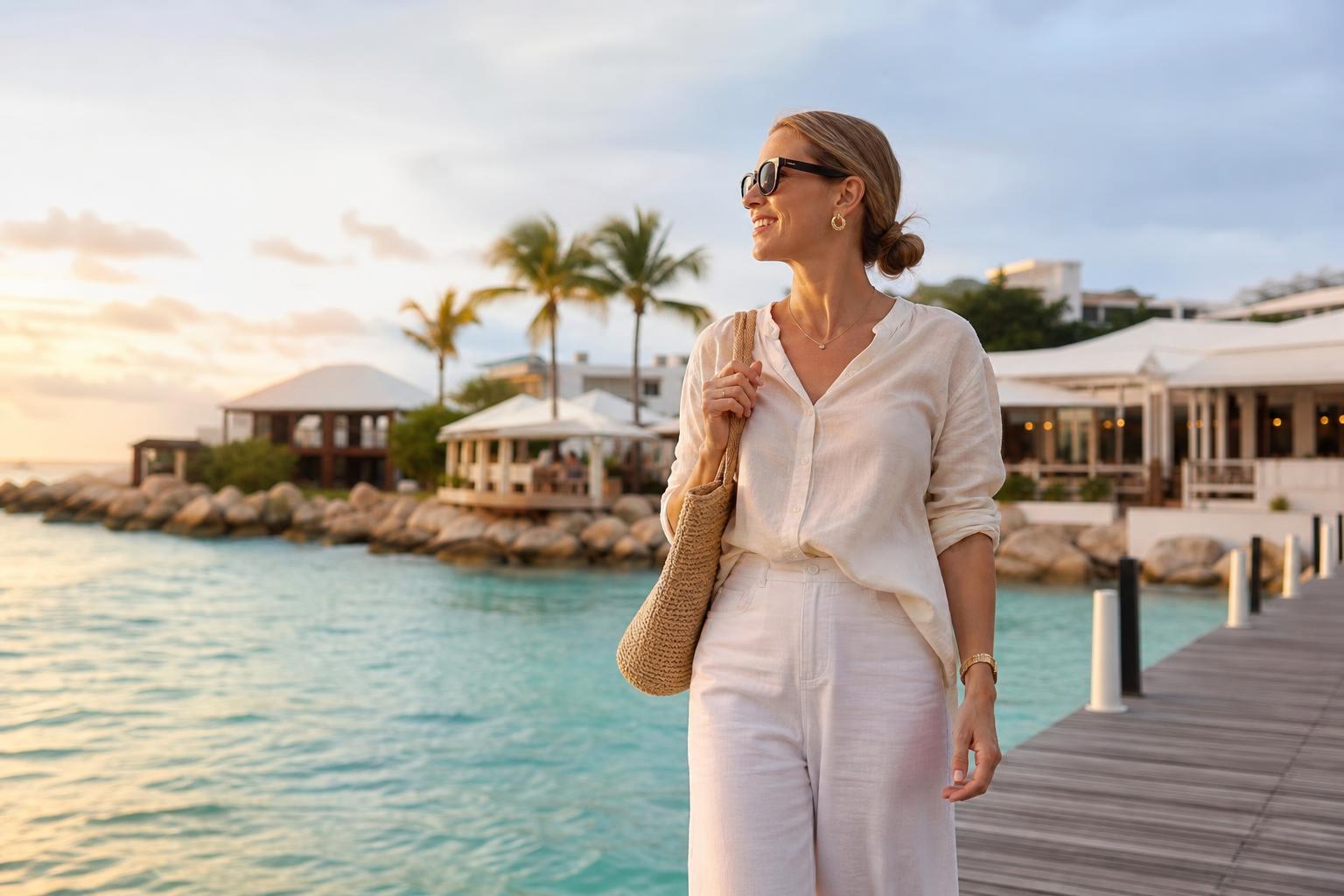
By the time a suitcase lands on the bed for Aruba, most travelers are already balancing two style instincts that look similar on paper but behave very differently in real life: pure beachwear and resort casual. Both belong in the conversation around aruba vacation outfits, and both rely on light fabrics, relaxed silhouettes, and sun-ready accessories. Yet one is built for salt air, pool decks, and easy cover-ups, while the other asks for a more composed line, a cleaner finish, and enough polish for dinners, town walks, and sunset drinks.
That overlap is exactly why the styles are often confused. A sundress can read effortless beachwear in one setting and refined resort casual in another. A linen shirt can feel like a breezy daytime layer or a deliberate evening piece, depending on what sits beneath it and what footwear anchors it. In Aruba, where beach days, island exploring, and dinner plans often happen within the same stretch of hours, understanding the distinction matters more than simply packing more clothes.
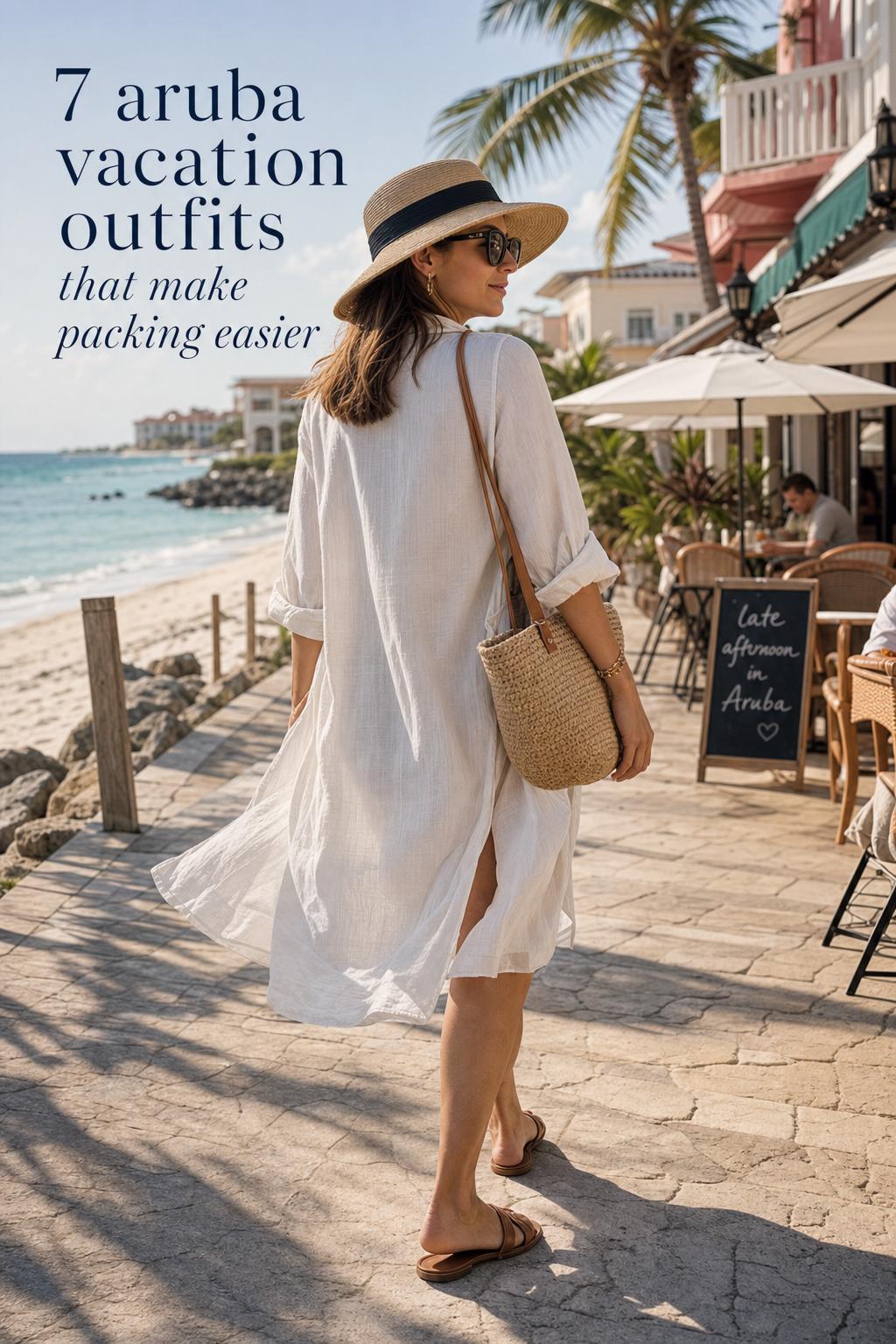
This guide breaks down the key style approaches behind an Aruba wardrobe, compares how they differ visually and practically, and shows how to compose outfits that feel elegant rather than random. The aim is not to create a long shopping list, but to explain the styling logic that makes beachwear, resort casual, and beach-to-dinner dressing work in Aruba’s warm climate, breezy conditions, and casual-but-considered social rhythm.
The three style languages that shape Aruba wardrobes
Most successful Aruba packing strategies are built from three related but distinct aesthetics: beachwear, lightweight daywear, and resort casual. They share breathable fabrics, easy movement, and a relaxed Caribbean mood, but each one solves a different style problem. The first protects comfort at the shore, the second supports daytime movement through town and sightseeing, and the third answers the question of how to look polished in the evening without fighting the climate.
Your wedding has a lot of moving pieces. Your plan can still feel composed.
Zarellea organizes guests, vendors, budget, and timelines in one shared space — so you can make decisions with clarity, not stress.
Style overview: beachwear
Beachwear is the most relaxed of the three. Its defining characteristics are functional swimwear, easy cover-ups, sandals, sunglasses, and sun protection such as hats and sunblock. The silhouettes are uncomplicated: bikinis, bathing suits, rash guards, loose cover-ups, and airy layers that slip on and off without interrupting the day. Visually, the mood is light, practical, and a little carefree, designed for beach access, pool time, and water activities rather than structured social settings.
Style overview: lightweight daywear
Lightweight daywear sits between the beach and the evening. This is where sundresses, rompers, skirts, shorts, linen shirts, and breathable daytime separates come into focus. The silhouettes remain relaxed, but they are more complete and intentional than simple beach layers. The color palette often leans soft, bright, or sun-washed, and the fabrics matter: lightweight, breathable textiles keep the look composed even in heat and humidity. The mood is casual, mobile, and versatile enough for Oranjestad, Palm Beach areas, or a long lunch after a morning in the sun.
Style overview: resort casual
Resort casual is the polished end of Aruba dressing. It still favors comfort, but the pieces become more refined: dresses with cleaner lines, linen shirts styled with intention, skirts that feel elevated rather than purely practical, and sandals chosen as part of the composition rather than just for convenience. The overall mood is effortless but considered. It is less about overt glamour and more about balance, proportion, and a silhouette that can move from sunset cruise to dinner without feeling either overdressed or underprepared.
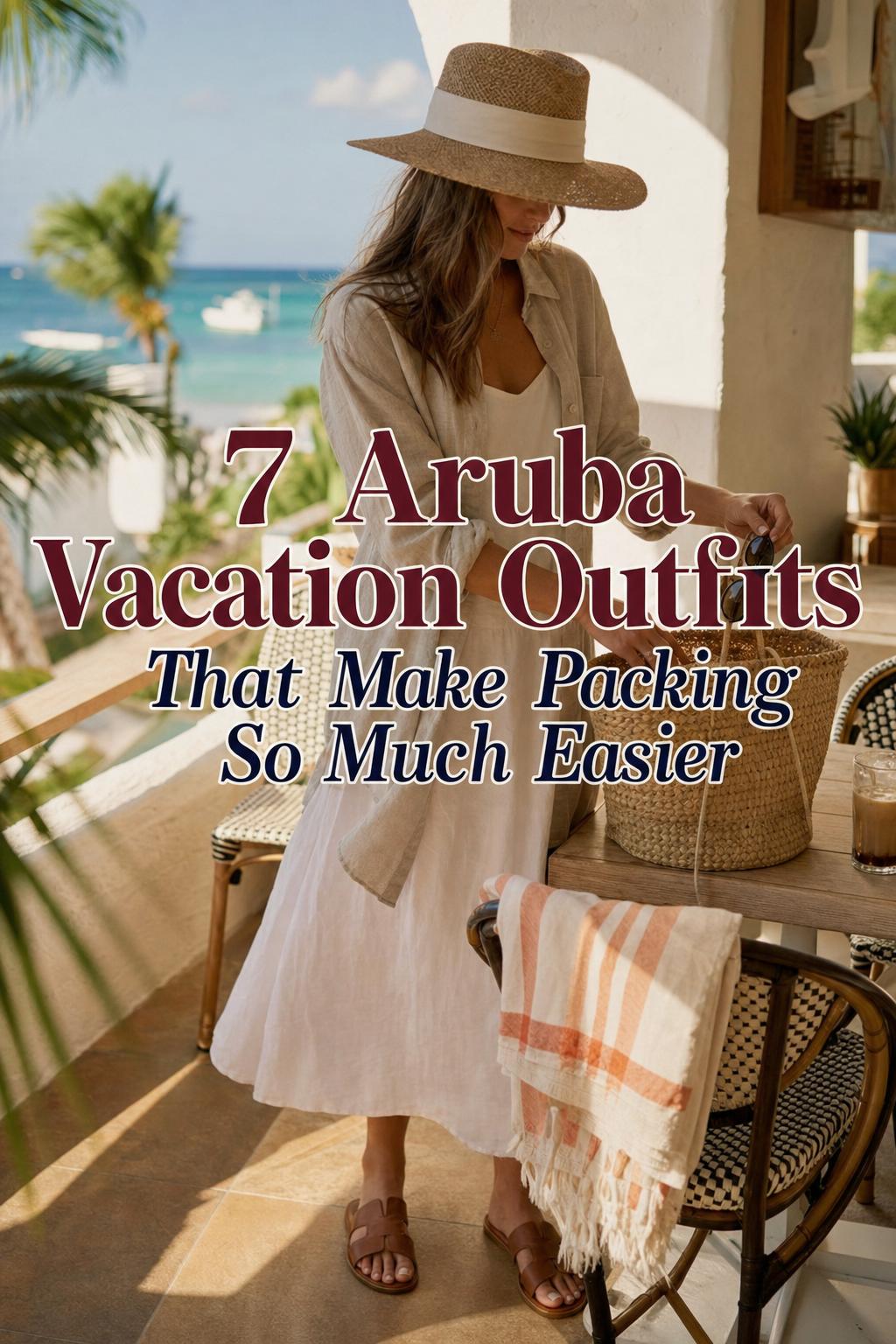
Why Aruba changes the way these styles behave
Aruba’s climate is the reason these categories blur so easily. Warm temperatures, humidity, strong sun, and sea breeze all reward clothing that is breathable, quick to wear, and uncomplicated in shape. A heavy or rigid outfit may look attractive in theory, but in practice it can feel misjudged after twenty minutes outdoors. That is why top Aruba wardrobes keep returning to the same core entities: swimwear, cover-ups, sundresses, lightweight fabrics, sandals, hats, and sunglasses.
At the same time, Aruba is not a one-setting destination. A traveler may move from a catamaran tour to town, from a snorkeling stop to a casual dinner, or from a day at the beach to an evening venue where resort casual makes more sense than beachwear. The most successful aruba vacation outfits are therefore not the loudest or most trend-driven. They are the most adaptable, with pieces that shift smoothly across the island’s rhythms.
That is also why beach-to-dinner dressing appears so often in Aruba style conversations. It is not a trend phrase so much as a practical reality. The challenge is to make that transition feel intentional rather than improvised.
Where beachwear ends and resort casual begins
The easiest mistake in Aruba packing is assuming all lightweight clothing belongs to the same category. It does not. Beachwear and resort casual may use similar materials and a similarly relaxed spirit, but the line between them is visible in structure, finish, and social appropriateness.
- Beachwear prioritizes function first, style second. Resort casual keeps comfort, but gives equal weight to presentation.
- Beachwear relies on swim-centered foundations such as bathing suits and cover-ups. Resort casual begins with complete ready-to-wear pieces such as dresses, skirts, or linen shirts paired more deliberately.
- Beachwear welcomes obvious sun utility: hats, rash guards, flat sandals, and large sunglasses. Resort casual uses accessories more selectively to frame the outfit rather than dominate it.
- Beachwear often tolerates looser shape and less definition. Resort casual benefits from clearer proportion, cleaner hemlines, and a more finished silhouette.
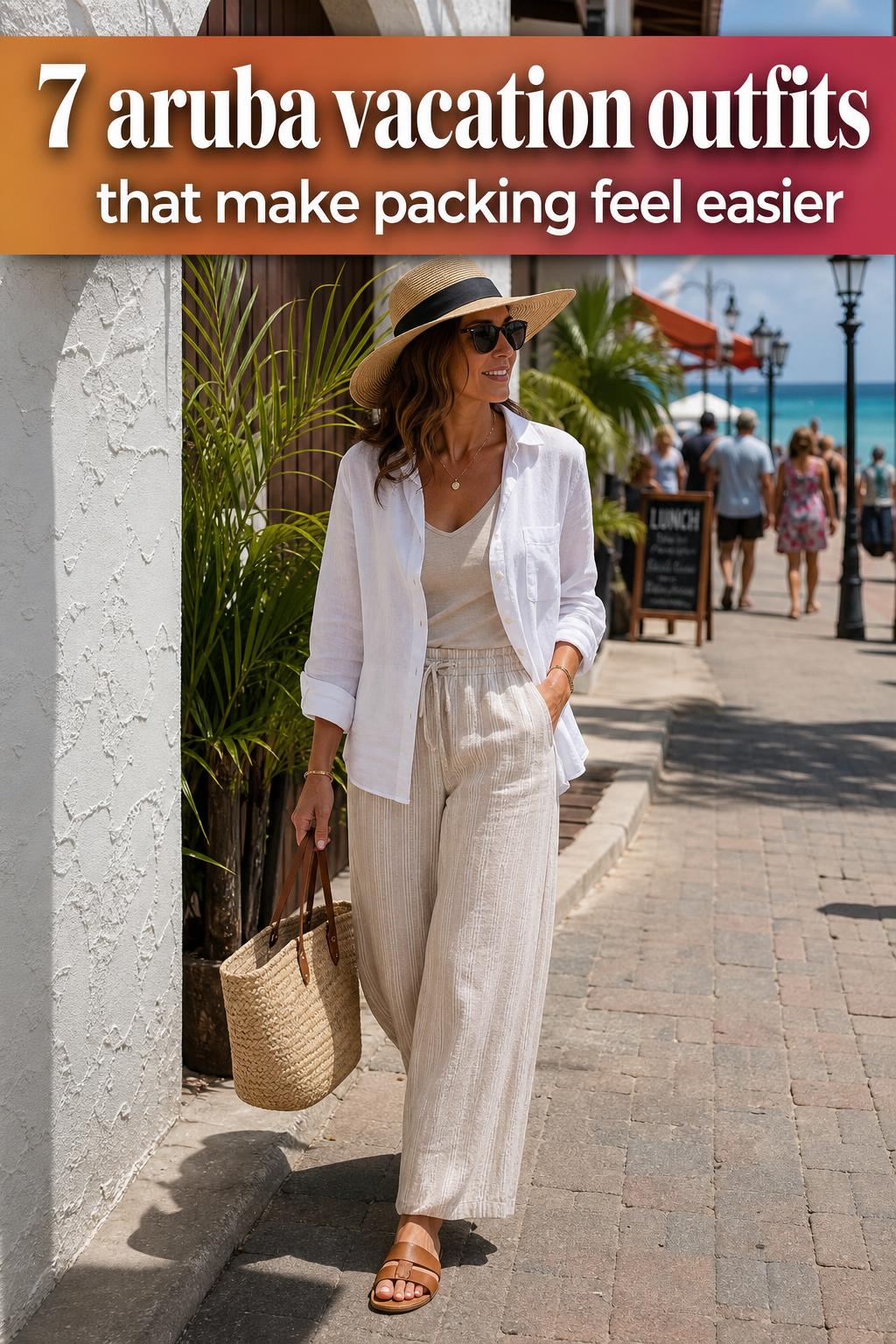
In practical terms, a cover-up worn open over a swimsuit belongs to beachwear. A breezy dress worn with polished sandals and sunglasses after changing out of swimwear belongs to resort casual. A linen shirt can sit in either category, but the styling decides its role: unbuttoned over swimwear, it acts as beachwear; neatly composed with shorts or a skirt, it becomes daywear or evening resort casual.
Silhouette, proportion, and the visual grammar of Aruba style
Aruba dressing works best when proportions remain easy but not shapeless. The climate encourages volume, but too much volume can make an outfit feel unfinished. This is where the strongest difference between style approaches becomes visible.
Beachwear silhouettes
Beachwear tends toward looseness layered over a close base. The swimsuit provides the structure, while the outer layer stays fluid. A loose cover-up over a bathing suit, or a breezy shirt over a bikini, creates a simple contrast that feels natural on the shore. The proportions are forgiving because the setting itself is informal.
Lightweight daywear silhouettes
Daywear benefits from a little more line. Sundresses, rompers, shorts with lightweight tops, and skirts all need enough shape to look intentional while still remaining comfortable. Clean lines matter here. A relaxed dress can still look polished if the silhouette is coherent and the accessories do not compete with it. This is especially useful for island exploring, town life, and travel outfits that need to carry the wearer from airport transitions into the day.
Resort casual silhouettes
Resort casual asks for slightly more definition. Not stiffness, but clarity. Dresses tend to look stronger when they fall cleanly rather than billow excessively. Linen shirts work best when they balance relaxed texture with a more refined outline. The overall effect should feel airy yet edited, as though every piece belongs in the same visual sentence.
Fabric tells the truth faster than color
Many travelers focus first on color palette, but in Aruba the real distinction between styles often comes from fabric behavior. Lightweight and breathable fabrics are not just a comfort preference; they shape how an outfit moves, drapes, and photographs across beach, town, and evening settings.
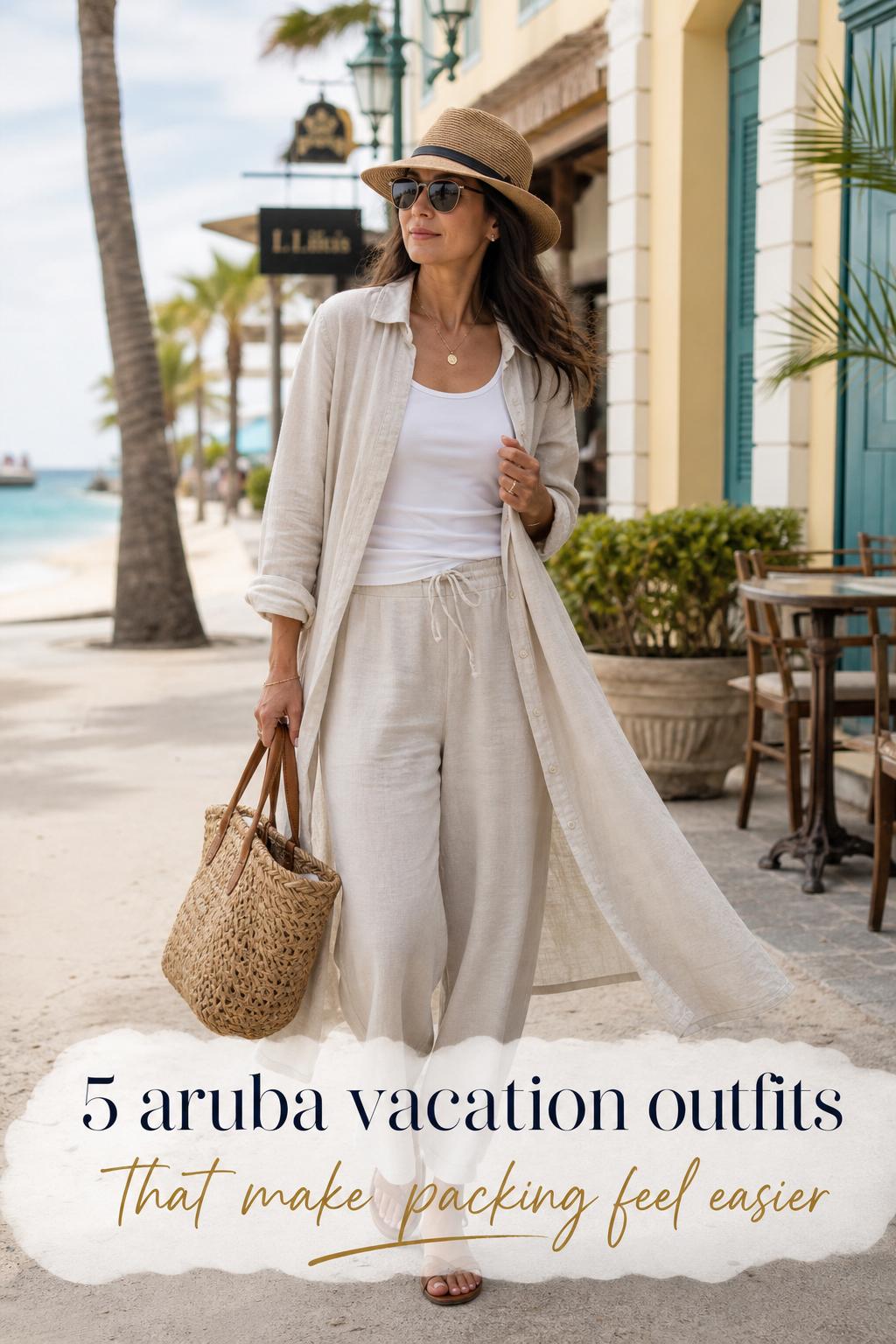
Beachwear welcomes fabrics that dry quickly, layer easily, and tolerate salt, wind, and sunscreen. Swimwear, rash guards, and uncomplicated cover-ups belong here. Lightweight daywear introduces breezier woven textures, especially linen shirts and easy dresses that let air circulate while keeping the look complete. Resort casual keeps those same breathable priorities but chooses textiles that hold their line slightly better, so the outfit still reads polished at dinner.
UV-protective fabrics and moisture-wicking textiles also make sense in the Aruba context because sun exposure is part of daily dressing, not an afterthought. Even when a traveler prefers a style-led wardrobe, sun protection remains part of the composition through hats, sunglasses, sunblock, lip balm, and in some cases rash guards for water activities.
A comparison of everyday outfit situations in Aruba
The clearest way to understand Aruba style is to compare how each wardrobe approach answers the same real-life moment. The clothes themselves may overlap, but the intention behind them changes.
Casual beach morning
A beachwear interpretation begins with swimwear as the true outfit. A bikini or bathing suit sets the base, then a cover-up, sandals, sunglasses, and a hat handle movement to and from the water. The look is practical first. By contrast, a lightweight daywear interpretation of the same morning might still include swimwear underneath, but the visible outfit becomes a sundress or airy shirt-and-shorts combination that can sit comfortably at a café or continue into town without feeling half-dressed.
Snorkeling or catamaran day
For water-centered activities, beachwear has the advantage because it understands movement, sun, and quick changes best. Rash guards, swimwear, and easy cover-ups make sense here. Resort casual would feel too precious for this context, while daywear can work only if it is built around pieces that layer cleanly over water-ready foundations. The lesson is simple: let the activity decide the hierarchy of the outfit.
Oranjestad or town exploring
Town dressing needs more visual completeness than beachwear. A cover-up that looks perfect at the shore can feel too informal when the day shifts toward shopping, walking, or lunch. Lightweight daywear is strongest here: sundresses, skirts, shorts, and linen shirts create an easy silhouette that still looks composed. Resort casual can also work, especially if the day flows into evening, but daytime Aruba style generally feels better when it remains relaxed rather than overly formal.
Sunset cruise and dinner
This is where resort casual becomes essential. Beachwear can imitate evening dressing only to a point, and that point arrives quickly. A polished dress, a refined skirt, or a thoughtfully styled linen shirt gives the outfit enough structure for a sunset cruise or dinner setting. The goal is not dramatic formality. It is a quiet shift in finish: cleaner footwear, fewer overtly beach-specific elements, and a silhouette that looks complete once the sun goes down.
The role of accessories: utility versus finish
Accessories in Aruba have a double function. They protect, and they define the outfit category. A sunhat, sunglasses, sandals, and sunblock are practical pieces in any island wardrobe, but they carry different visual weight depending on whether the look is beachwear or resort casual.
- In beachwear, accessories are primarily utilitarian. The hat shields, the sunglasses protect, the sandals move easily across sand and pool areas.
- In lightweight daywear, those same pieces begin to support the outfit’s balance. A sundress with simple sandals and sunglasses feels deliberate rather than merely prepared.
- In resort casual, accessories become more restrained. The outfit usually benefits from cleaner styling, where footwear and eyewear complement the silhouette instead of announcing a beach day.
This is also why over-accessorizing can weaken Aruba dressing. The island’s style language tends to reward ease. Even when the look is elevated, it should still feel breathable and unfussy.
An Aruba capsule wardrobe: the most versatile balance
For many travelers, the most intelligent approach is not choosing one style over another, but building a compact capsule where beachwear, daywear, and resort casual share the same visual vocabulary. Aruba’s casual dress norms support this strategy well. A small edit of strong pieces usually performs better than an overpacked suitcase full of narrowly useful options.
A functional Aruba capsule might center on repeated categories rather than rigid outfits: swimwear, cover-ups, sundresses, one or two linen shirts, lightweight skirts or shorts, comfortable sandals, evening-ready dresses, and sun protection accessories. The strength of this approach lies in transition. Each item should either stand alone in its own setting or help another piece shift from beach to town to dinner.
Tips for building a refined Aruba packing edit
- Choose pieces that layer naturally over swimwear but still look complete once dry land plans begin.
- Favor breathable fabrics over heavily structured garments that may feel misjudged in heat and humidity.
- Pack at least one evening look that is clearly separate from beachwear, even if the silhouette stays relaxed.
- Let sandals, sunglasses, and hats serve more than one role so the suitcase stays light.
- Use linen shirts and easy dresses as bridge pieces between categories, since they move well across Aruba’s casual rhythm.
The beach-to-dinner transition, properly understood
Beach-to-dinner style is often treated as a vague travel fantasy, but in Aruba it is simply a question of editing. Very few outfits can move directly from the water to dinner without adjustment. What makes the transition successful is not magical versatility. It is knowing which element needs to change so the entire silhouette shifts category.
Sometimes that change is the base layer: replacing visible swimwear with a dress. Sometimes it is the outer layer: swapping a beach cover-up for a linen shirt or a more refined piece. Sometimes it is the accessories: removing the beach hat, keeping the sunglasses only if they still suit the setting, and choosing cleaner sandals. A traveler who understands this shift can pack less while dressing better.
In style terms, the principle is simple. Resort casual should feel like an outfit that happens to be in Aruba. Beachwear should feel like an outfit made specifically for the beach. Confusing the two rarely looks effortless, even when the individual pieces are beautiful.
A seven-day style rhythm for Aruba
Rather than planning seven isolated looks, it is more useful to think in wardrobe modules that repeat with variation. This keeps packing realistic and preserves cohesion across the trip.
- Days centered on the beach or pool should prioritize swimwear, cover-ups, sandals, hats, and sunglasses.
- Days built around snorkeling or a boat tour benefit from swim-first dressing, with rash guards or easy layers that cope with sun and movement.
- Town or island exploring days call for sundresses, skirts, shorts, or linen shirts with practical footwear and sun protection.
- At least two evenings should be anchored by clear resort casual pieces such as dresses or polished separates that are distinct from daytime beach layers.
- Travel days work best with comfortable, versatile outfits that can move from airport to arrival without feeling heavy or fussy.
This rhythm reflects how people actually use clothing on an Aruba trip. The wardrobe does not need endless novelty. It needs enough variation to suit activity, enough polish to respect evening settings, and enough consistency that every piece feels connected to the next.
What often goes wrong with Aruba vacation outfits
Even stylish travelers can misread Aruba if they pack as though every hour belongs to the beach or, just as commonly, as though every evening requires a separate statement look. The island rewards flexibility, not excess.
Common styling mistakes
- Relying too heavily on beachwear and discovering there is not enough that feels appropriate for dinners or town settings.
- Packing fabrics that are visually appealing but too heavy for Aruba’s heat, humidity, or sea breeze.
- Skipping sun protection accessories, which can leave even a good outfit feeling impractical after a long day outdoors.
- Confusing casual dress norms with total informality and arriving without a polished option for upscale venues.
- Overpacking single-purpose items instead of choosing versatile dresses, cover-ups, linen shirts, and sandals.
The remedy is rarely more clothing. It is better category balance. Once swimwear, daywear, and resort casual are each represented properly, the wardrobe becomes easier to wear and easier to trust.
Venue mood matters: beach bars, dining rooms, and everything between
One of the subtler distinctions in Aruba style is venue mood. Casual beach bars naturally accept a more relaxed interpretation of island dressing. Here, daywear can stay loose, and a simple sundress or linen shirt outfit feels entirely right. As the setting becomes more polished, the same relaxed spirit should remain, but the finish should sharpen.
For higher-end restaurants or more upscale dinner plans, resort casual is the safer and more elegant choice. That does not mean heavy styling or formal tailoring. It means avoiding pieces that still read as beach items, even if they are attractive. A cover-up is not automatically a dress, and sandals chosen for sand are not always the same sandals that complete an evening look well.
This awareness becomes especially useful in areas such as Palm Beach or around dinner plans connected to a sunset cruise. The surrounding mood helps determine the outfit’s final level of polish.
Local context, island mood, and the appeal of understated color
Although many Aruba outfit guides focus most on categories of clothing, there is also a broader style atmosphere worth noticing. The island setting naturally supports easy color, soft brightness, and pieces that feel open to light and movement. Caribbean style influence is often expressed less through dramatic costume and more through ease, fluidity, and sun-friendly confidence.
That is why Aruba wardrobes tend to look strongest when they avoid overcomplication. A simple dress in a breathable fabric, a well-cut cover-up, or a linen shirt with clean sandals can often feel more refined than a heavily styled outfit. Great travel style here comes from composition: how the silhouette breathes, how the textures respond to wind and heat, and how one piece transitions into the next setting.
Practical tips from a real packing perspective
There is a difference between clothes that look right in a suitcase and clothes that keep working after several long days of sun, swimming, walking, and evening plans. Aruba rewards honesty in packing. Pieces that wrinkle into untidiness, cling uncomfortably, or require constant adjustment usually lose their appeal quickly once the trip begins.
Tips for making the wardrobe function day after day
Choose dresses and cover-ups that can tolerate repeated wear without feeling fragile. Let linen shirts act as a bridge piece over swimwear by day and with skirts or shorts later on. Keep one lightweight layer available for evenings, since some travelers prefer a little coverage once the day cools or breezes pick up. If laundry is part of the plan, it becomes easier to pack light and repeat strong foundational pieces instead of overpacking backups.
Travel outfits also deserve thought. A comfortable airport look that still works on arrival helps the trip start smoothly, particularly if the first day moves quickly toward beach or town plans. Versatility matters from the first hour, not only after unpacking.
How to combine the styles without looking undecided
Mixing beachwear and resort casual can work beautifully, but only when one style clearly leads. The problem is not combination itself; it is visual confusion. A refined Aruba wardrobe often borrows the ease of beachwear and the polish of resort casual, yet the final outfit should still have a dominant identity.
For example, a lightweight dress with sandals and sunglasses can nod to beach ease while remaining fully resort casual if the silhouette is complete and no overt swim element is visible. A linen shirt worn over swimwear can feel elevated beachwear if the swim base is still clearly part of the look. The styling succeeds because the eye understands the outfit immediately.
The strongest travel wardrobes do not force a choice between comfort and elegance. They refine comfort until it looks intentional.
Final style perspective
The core distinction in Aruba dressing is not between casual and dressy in the usual sense. It is between clothes designed for the beach and clothes designed to move beyond it. Beachwear is easy, sun-led, and functional. Lightweight daywear adds completeness and mobility. Resort casual introduces polish without sacrificing breathability or ease.
Once that framework is clear, aruba vacation outfits become far easier to compose. You can identify each style by its silhouette, its fabric behavior, its accessory logic, and its suitability for the setting. And because Aruba encourages versatility, the most elegant wardrobe often combines all three approaches through a few thoughtful pieces: swimwear, cover-ups, sundresses, linen shirts, sandals, hats, sunglasses, and one or two refined evening options that complete the picture.
FAQ
What should I wear in Aruba during the day?
During the day, Aruba dressing usually works best with swimwear for beach or pool time and lightweight daywear for town or casual exploring. Sundresses, shorts, skirts, linen shirts, sandals, sunglasses, and a hat all fit the climate well, especially when the fabrics are breathable and easy to move in.
What is the difference between beachwear and resort casual in Aruba?
Beachwear is built around swimwear, cover-ups, and sun-focused practicality, while resort casual is more polished and complete for dinners, sunset cruises, and refined daytime settings. Both are relaxed, but resort casual has cleaner structure and a more finished silhouette.
Is linen appropriate for Aruba?
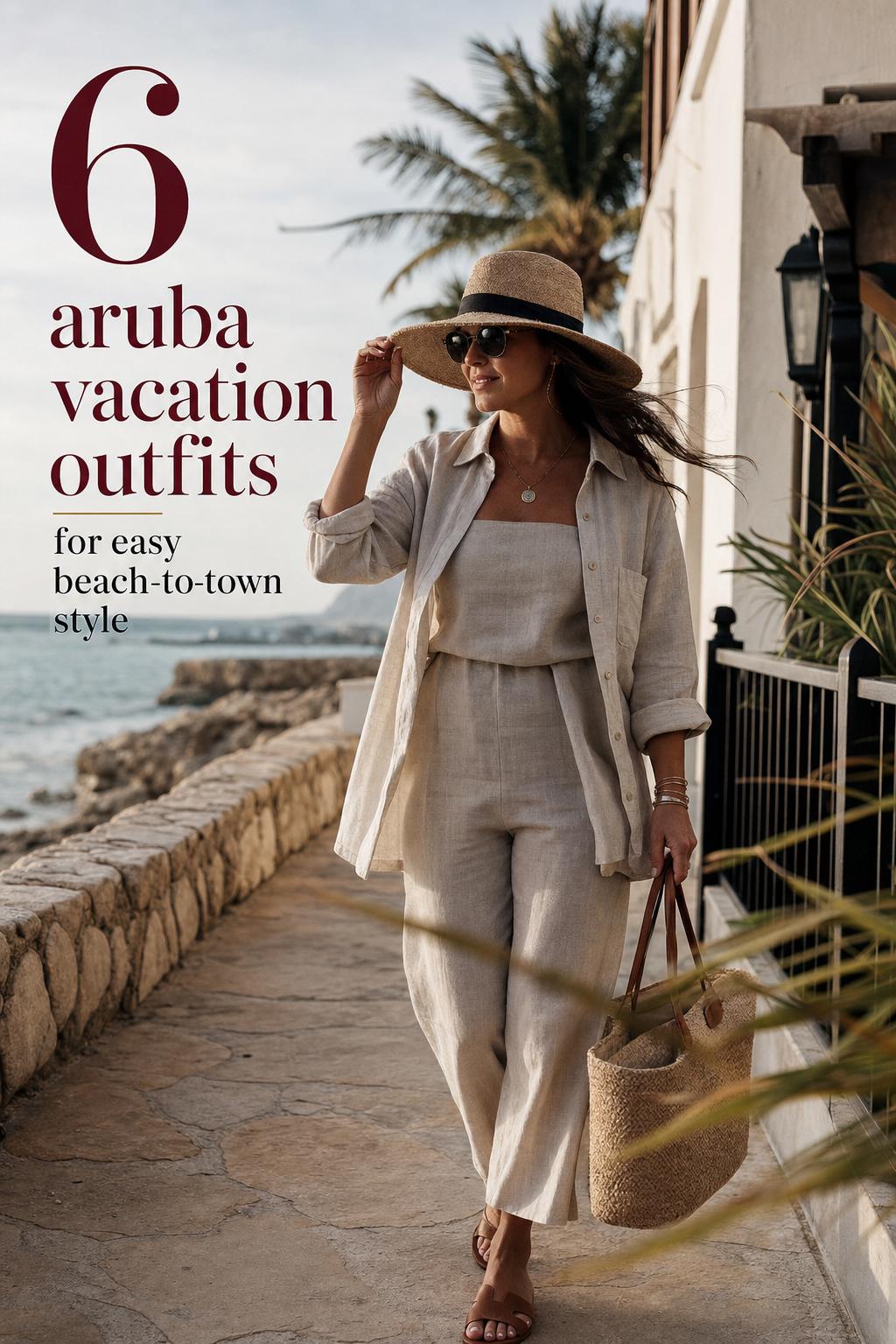
Linen is one of the most useful fabrics for Aruba because it is lightweight, breathable, and easy to style across multiple settings. A linen shirt can work over swimwear during the day or as part of a more refined outfit for town and evening plans, depending on how it is styled.
Do Aruba restaurants require a dress code?
Aruba generally leans casual, but dining settings can vary. Beach bars and relaxed venues suit easy daywear, while upscale restaurants are better approached with resort casual outfits such as polished dresses, skirts, or a neatly styled linen shirt rather than obvious beachwear.
How many outfits should I pack for a 7-day Aruba trip?
A seven-day Aruba wardrobe does not need a separate outfit for every moment if the pieces are versatile. Most travelers do well with a balance of swimwear, cover-ups, lightweight daywear, and two or more resort casual evening options, especially if some pieces can repeat across beach, town, and dinner plans.
What shoes work best for Aruba vacation outfits?
Sandals are the most practical foundation because they suit beachwear, casual daytime dressing, and many resort casual looks. The key is choosing pairs that match the setting: simple, easy sandals for the beach and cleaner, more refined sandals for dinner or evening plans.
What should I wear for snorkeling or a catamaran tour in Aruba?
For snorkeling or a catamaran tour, swimwear should lead the outfit. Rash guards, cover-ups, sandals, sunglasses, and strong sun protection make the most sense because these activities prioritize comfort, movement, and time in direct sun rather than a polished resort casual finish.
Can I wear a cover-up to dinner in Aruba?
A cover-up is usually best reserved for beach and pool settings unless it is styled in a way that clearly reads as a complete dress rather than a beach layer. For most dinner situations, especially upscale ones, a proper resort casual outfit will look more intentional and feel more appropriate.
What accessories are essential for Aruba?
The essentials are sunglasses, a hat, sandals, and dependable sun protection such as sunblock and lip balm. These are not only practical in Aruba’s sun and breeze, but also central to how beachwear and lightweight daytime outfits come together visually.
What is the smartest way to pack light for Aruba?
The smartest approach is to pack by clothing category rather than by single-use outfits. Focus on versatile swimwear, cover-ups, sundresses, linen shirts, a few lightweight separates, and a small number of evening-ready resort casual pieces so each item can serve more than one part of the trip.
Leave a Reply