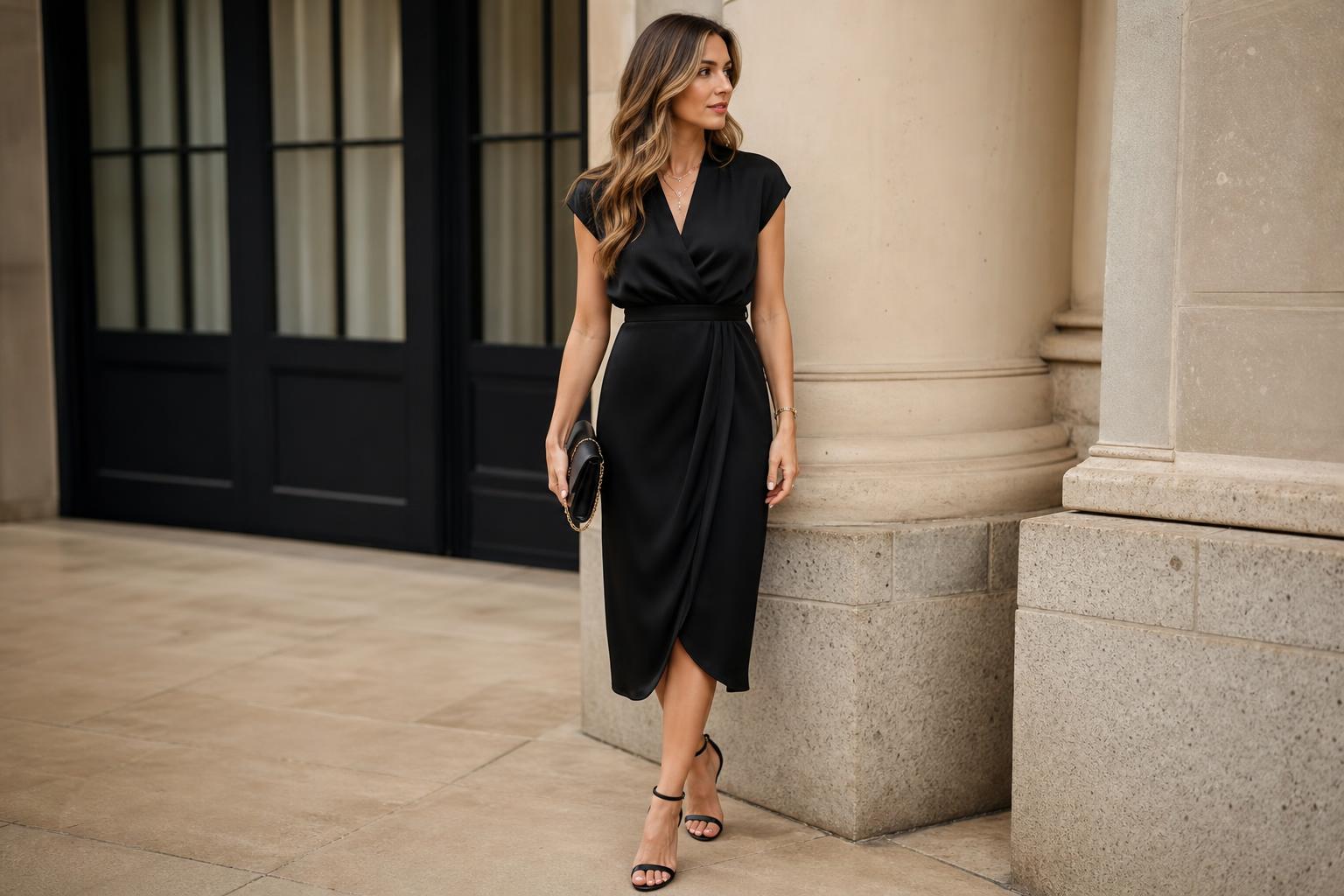
An invitation marked semi-formal can create a very specific kind of hesitation, especially when the outfit in mind is black. The shade is timeless, urban, and reliably elegant, yet it sits close to cocktail and even formal territory if the silhouette, fabric, or accessories lean too far in one direction. That is why semi formal black outfits for women are so often discussed alongside cocktail attire, black-tie references, and polished event dressing more broadly.
The real distinction is not simply about wearing a black dress versus choosing a jumpsuit or tailored separates. It is about proportion, texture, and mood: how black behaves in satin rather than crepe, how a midi dress reads differently from a sculptural celebrity-inspired look, and why the same pair of pumps can sharpen one outfit while overdressing another. What follows is a style breakdown designed to clarify those differences, compare the most relevant approaches, and help you choose a black semi-formal look that feels refined, modern, and appropriate in a U.S. event context.
The three black semi-formal directions women wear most often
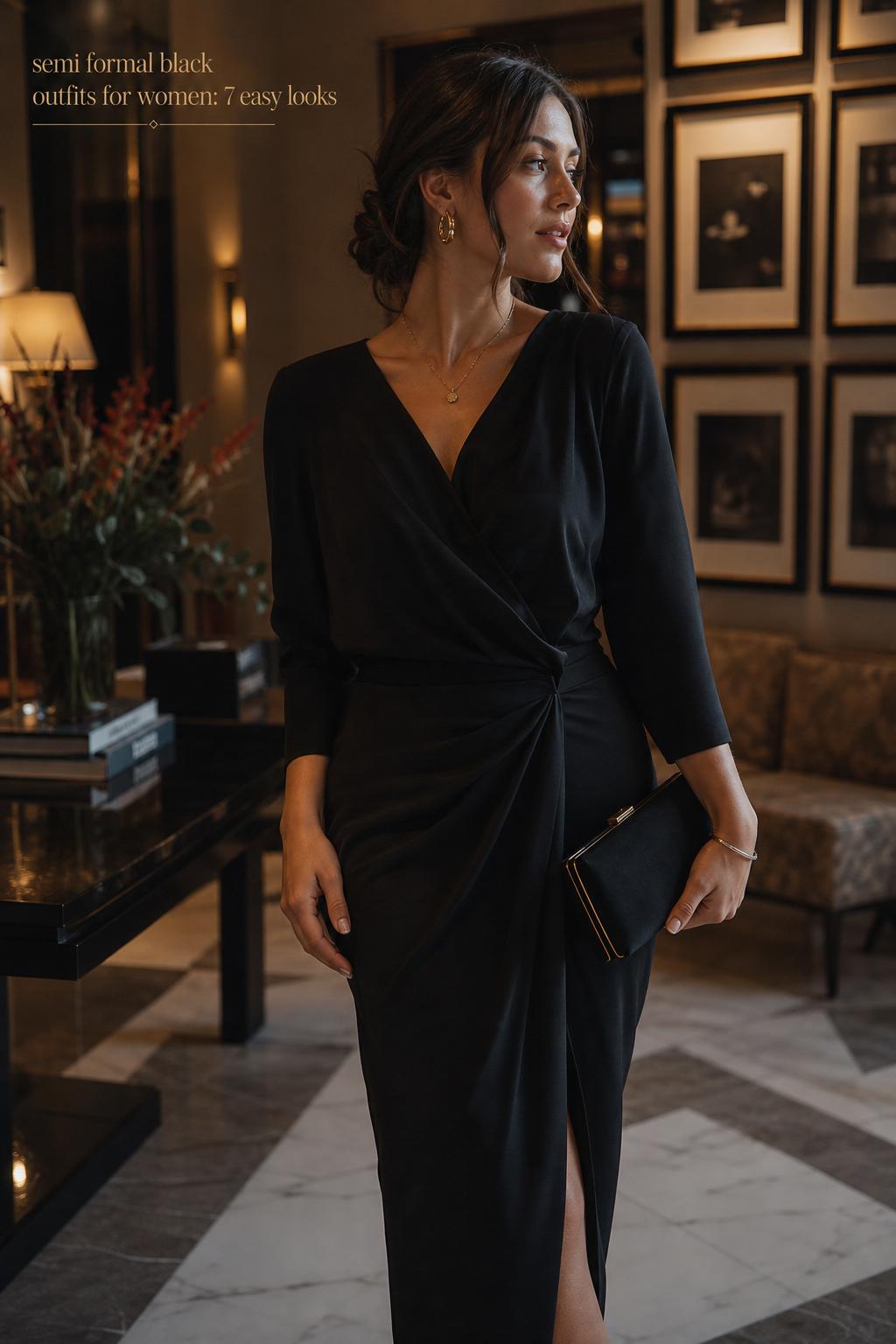
Black semi-formal dressing for women tends to fall into three broad style families. The first is the dress-led approach, usually built around a midi dress or knee-length silhouette. The second is the tailored route, where a jumpsuit or blazer set replaces the traditional dress. The third is a softer separates formula, often a skirt and blouse combination that offers flexibility without losing polish. These styles overlap, but they create different visual messages.
They are also frequently confused because all three can work for weddings, cocktail parties, receptions, and corporate semi-formal events. The difference lies less in the invitation label than in how the outfit handles structure, fabric finish, and accessories. A black satin midi dress with delicate jewelry belongs to a different style conversation than a black wide-leg jumpsuit with a blazer layered over it, even if both satisfy the same dress code.
Your wedding has a lot of moving pieces. Your plan can still feel composed.
Zarellea organizes guests, vendors, budget, and timelines in one shared space — so you can make decisions with clarity, not stress.
Style overview: the classic black dress approach
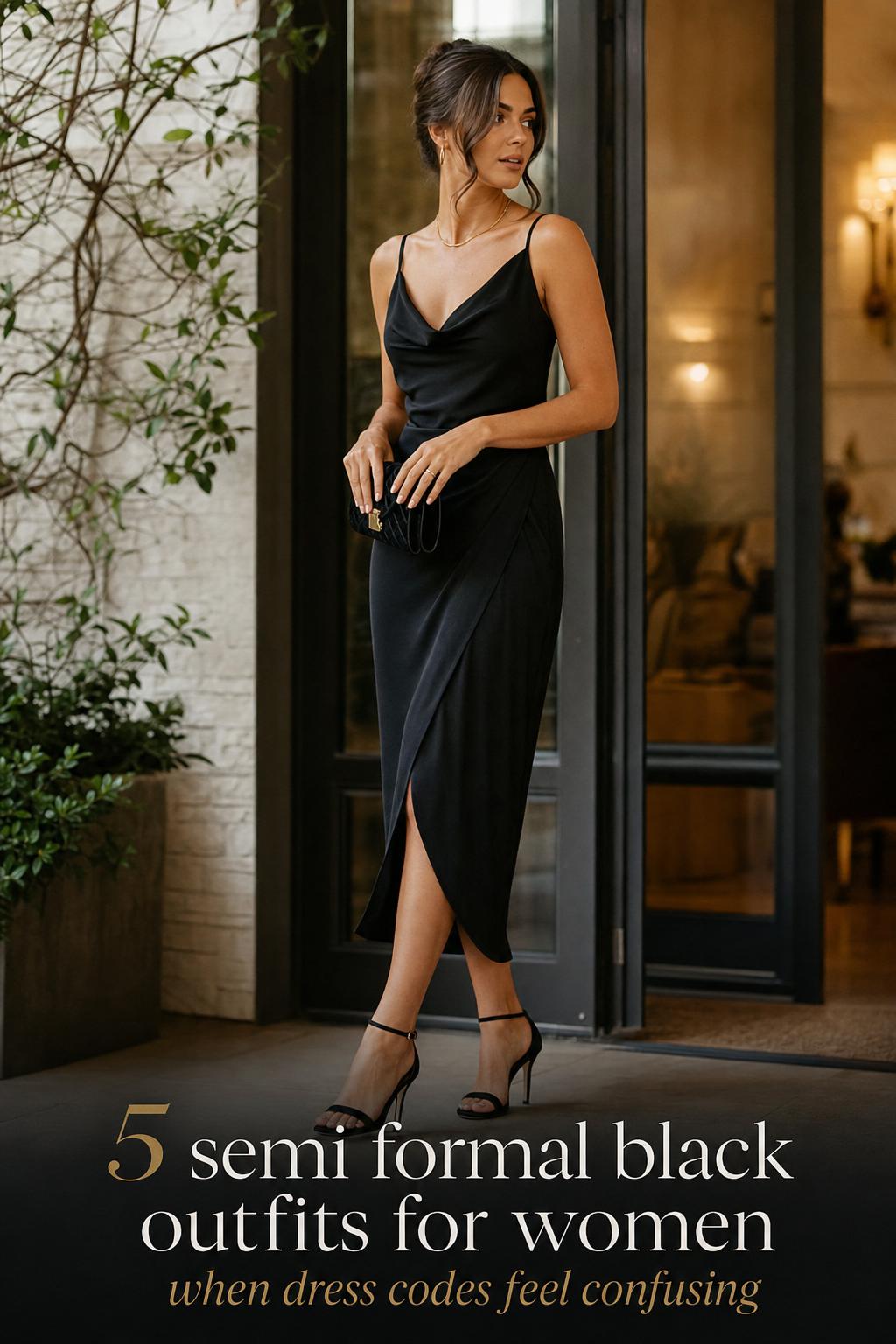
This is the most familiar version of semi-formal attire for women. Its defining characteristics are clean lines, balanced hemlines, and a silhouette that feels polished without the drama of eveningwear. Typical shapes include the midi dress, knee-length styles, sheath cuts, and fit-and-flare options. The color palette stays focused on black, but texture becomes the real source of variation, especially when satin, crepe, velvet, or matte jersey enter the picture.
The overall mood is elegant and dependable. Brands such as Azazie, Adrianna Papell, and Windsor often present black semi-formal dresses in exactly this register: polished enough for a wedding guest or cocktail party, restrained enough to avoid looking black-tie. This is the route most closely associated with traditional semi-formal dressing.
Style overview: the tailored jumpsuit or separates approach
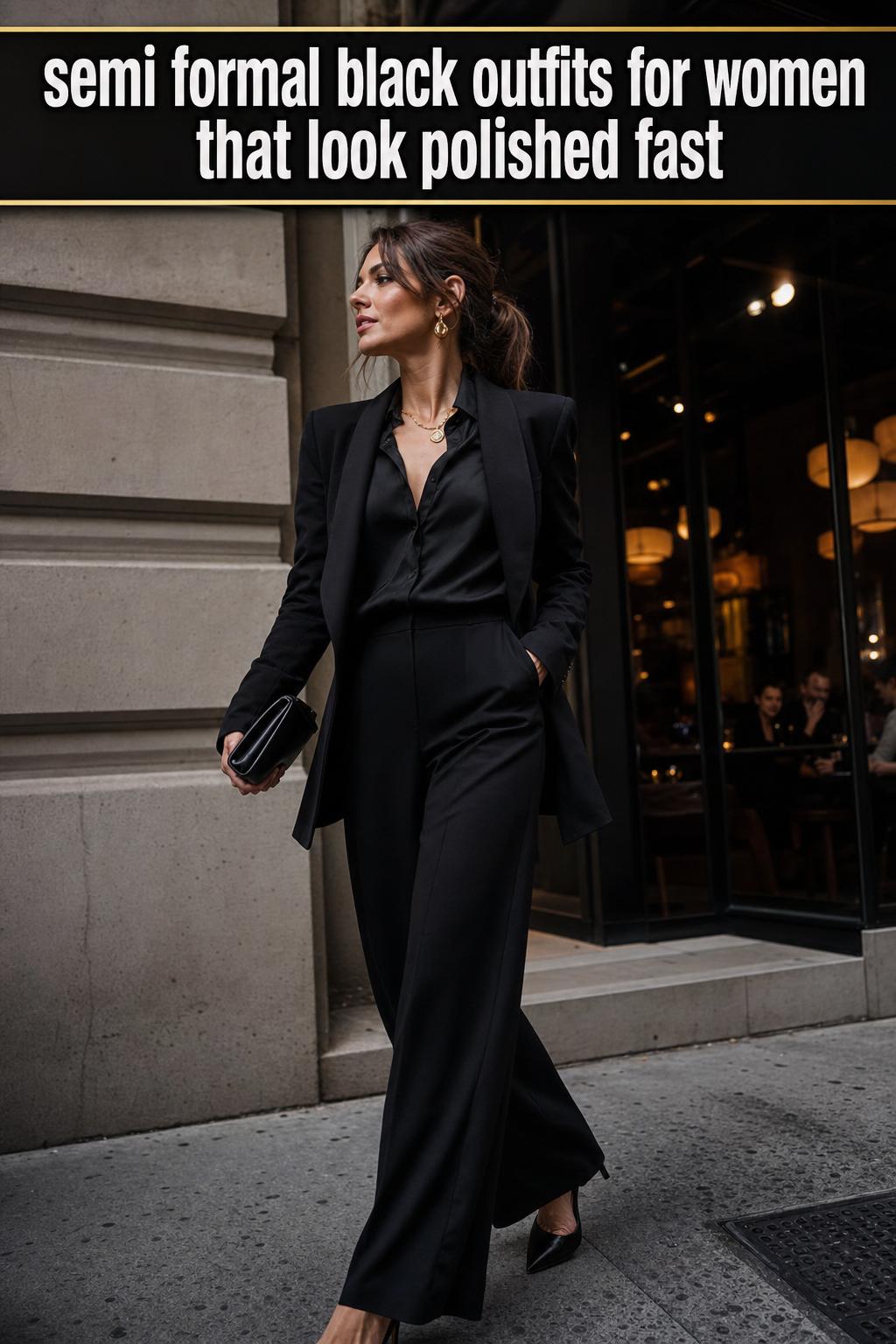
The tailored interpretation of black semi-formal outfits is more architectural. Here the silhouette is defined by a wide-leg jumpsuit, refined blazer set, or other tailored separates that create length and structure rather than softness. The palette remains black, but the styling philosophy is sharper, often borrowing from minimal editorial dressing and the sculptural mood seen in fashion coverage and celebrity appearances.
In visual terms, this style often feels more modern and directional. It can call to mind the streamlined confidence associated with figures such as Zoe Kravitz, Hailey Bieber, Tracee Ellis Ross, Alexa Chung, or Paloma Elsesser when editorial fashion uses tailored lines to reinterpret event dressing. It still belongs in the semi-formal category, but it moves away from convention and toward clean, composed impact.
Style overview: the skirt-and-blouse balance
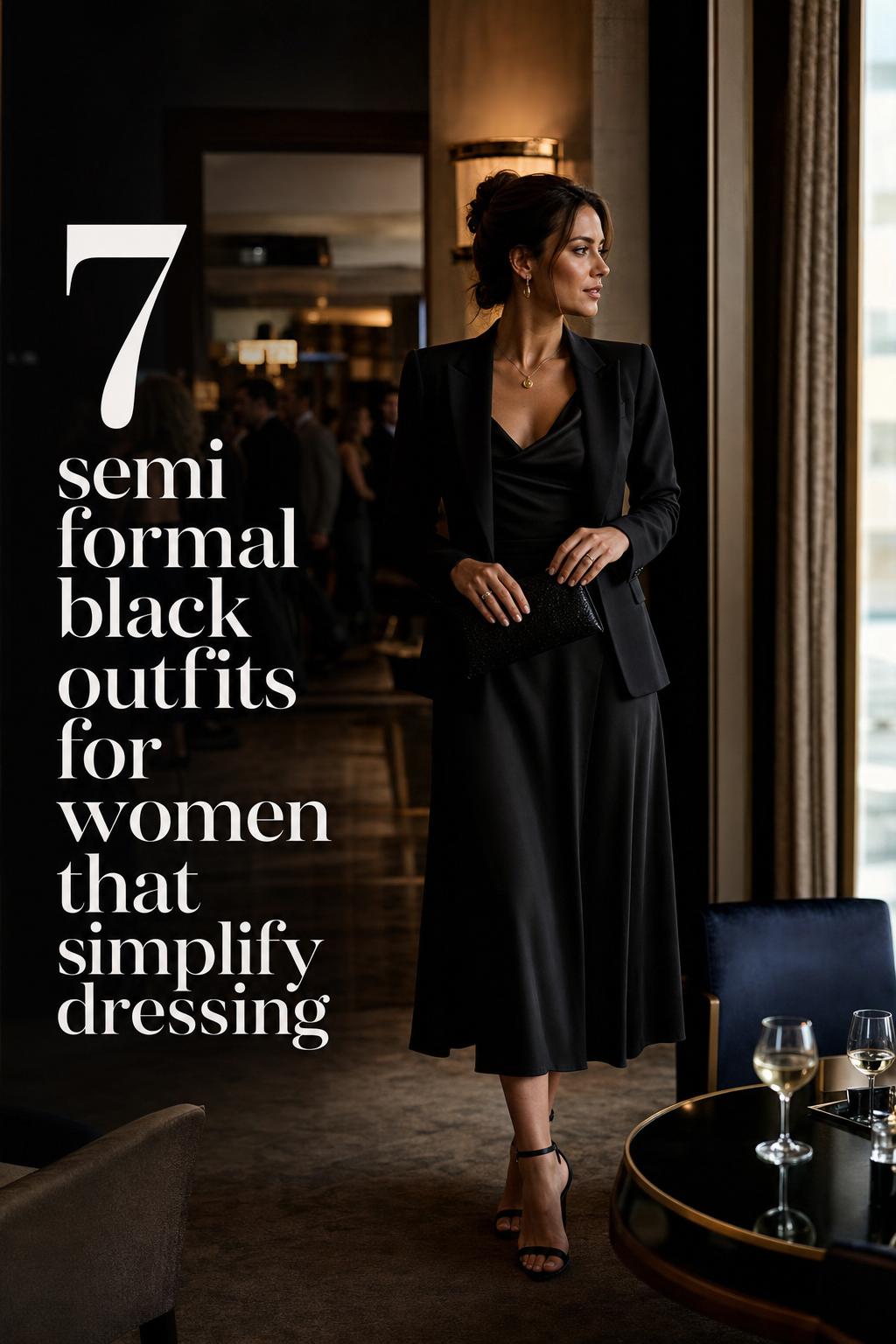
The third route is less discussed yet especially useful for women who prefer versatility or more control over coverage and proportion. A black semi-formal outfit built from a skirt and blouse combo sits between the first two styles. It has the femininity of a dress and the modular practicality of separates. Typical elements include a fluid skirt, a refined blouse, and accessories that keep the look intentional rather than office-like.
The aesthetic mood here is thoughtful and composed. It suits women who want adaptability for venue, weather, sleeves, or neckline preference, and it can be particularly effective for corporate events or receptions where an outfit needs to feel elegant for several hours rather than dramatic for a single entrance.
Where semi-formal ends and cocktail begins
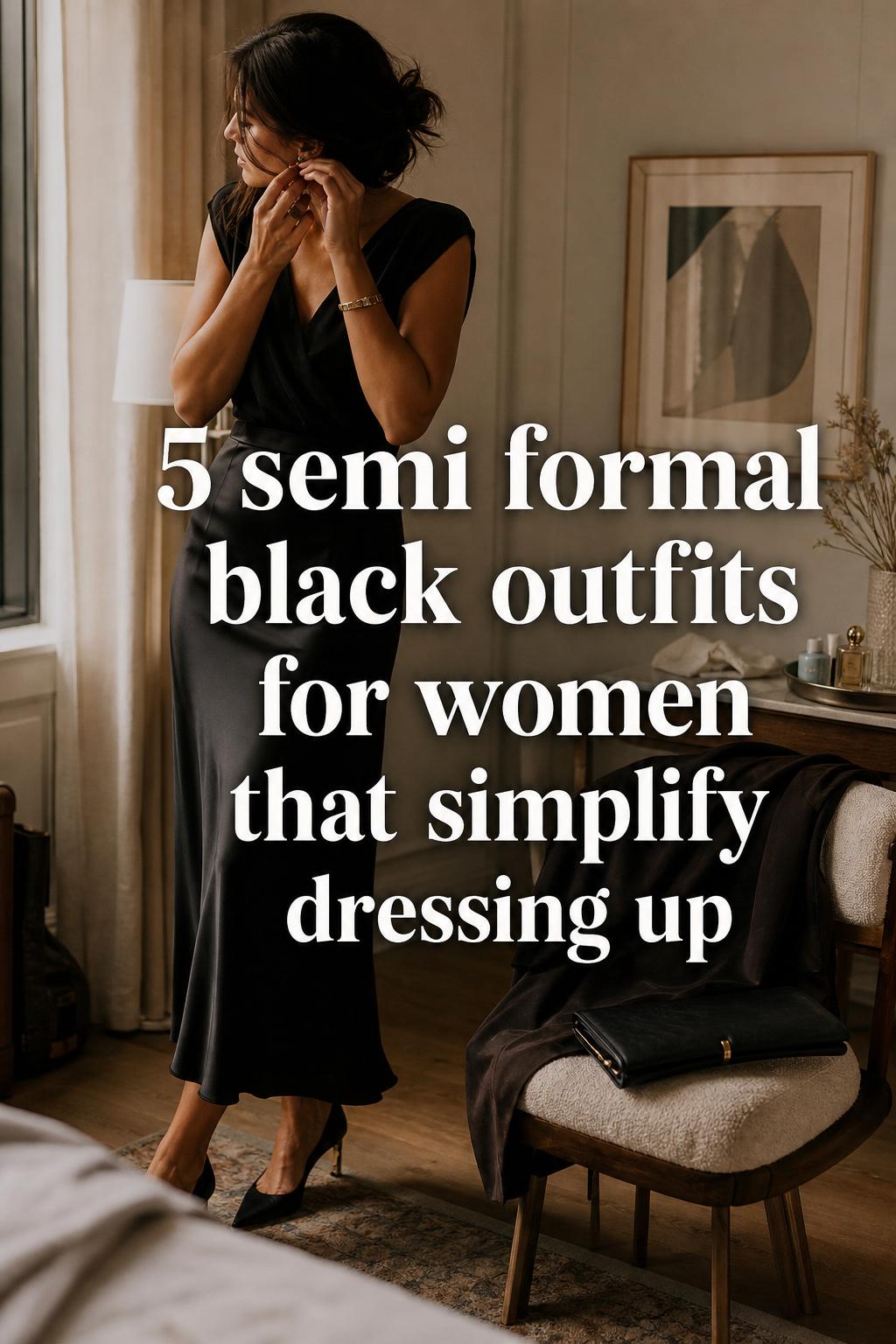
The confusion between semi-formal and cocktail attire is understandable because both ask for polish, both often welcome black, and both can include dresses, jumpsuits, and heels. Yet the styling logic is different. Semi-formal tends to prioritize moderation and versatility. Cocktail attire usually permits a little more fashion emphasis, a little more statement, and occasionally a little more glamour.
In practice, a semi-formal black outfit is often quieter in line and finish. It may feature satin or velvet, but usually without an overtly evening-focused silhouette. Cocktail attire can move closer to dramatic detailing, stronger embellishment, or bolder accessory choices. Black-tie, by contrast, sits further away still, asking for a more elevated level of dress and more formal evening cues.
- Semi-formal favors balance over drama.
- Cocktail attire allows more statement-making styling.
- Black-tie requires a distinctly more formal interpretation.
- Black works across all three, but fabric, length, and accessories change the message.
This distinction matters because many women overdress a semi-formal event by chasing evening glamour rather than reading the invitation through the lens of proportion and restraint. A polished black outfit should look deliberate, not heavy.
Silhouette as the first point of comparison
If there is one element that immediately separates black semi-formal styles, it is silhouette. Long before jewelry or shoes enter the picture, the shape of the outfit sets its level of polish and its relation to the dress code.
Midi dresses and knee-length options
The midi dress remains the clearest expression of semi-formal dressing because it lands in a controlled middle ground. It is more elevated than daywear and more adaptable than overt eveningwear. A black satin midi dress feels fluid and refined; a crepe midi dress reads more matte and composed; a velvet option introduces depth, making it especially suited to evening receptions or colder-weather events.
Knee-length options perform similarly, though they often appear slightly more traditional. In U.S. settings such as weddings or corporate semi-formal events, this category offers the least ambiguity. It works because the hemline, structure, and movement usually align naturally with the dress code.
Jumpsuits and tailored separates
A black jumpsuit changes the language of the outfit immediately. It introduces a cleaner vertical line, often reads more modern, and can feel exceptionally polished when the cut is tailored through the waist and balanced through the leg. A wide-leg jumpsuit, especially in crepe or satin, can sit beautifully in semi-formal territory when paired with restrained accessories.
Tailored separates, including blazer-led looks, are more nuanced. They can be striking for a corporate event or fashion-forward cocktail setting, but they require careful styling to avoid drifting into officewear. The key is not just the presence of tailoring, but the finish and composition around it.
Skirts and blouse combinations
A skirt and blouse combination offers a semi-formal look that is less fixed and more adaptive. It is particularly useful when body proportion, preferred coverage, or comfort is part of the equation. The softness of the blouse can counterbalance the structure of the skirt, creating an outfit that feels considered rather than assembled at the last moment.
This route tends to look best when there is a clear relationship between the two pieces. In black, texture becomes especially important, since the outfit relies on tonal depth rather than color contrast to create visual interest.
Fabric changes everything in black
Because the palette is limited, black semi-formal outfits depend heavily on fabric to communicate tone. Two black dresses in the same silhouette can project entirely different levels of formality simply because one is satin and the other is matte jersey.
Satin, crepe, velvet, and matte jersey
Satin gives black a luminous surface, making even a simple midi dress feel more elevated. It reflects light, softens minimal shapes, and often reads closer to cocktail attire if the cut is too sleek or body-conscious. Crepe is steadier and more understated, which is why it works so well for semi-formal dressing. It gives structure without harshness and keeps the outfit polished in a quieter way.
Velvet introduces weight and richness. It can be beautiful for evening weddings, receptions, or parties, but it naturally pushes an outfit toward a more formal mood, so the silhouette should remain disciplined. Matte jersey is often underestimated. It offers ease, comfort, and mobility, making it practical for events that run long or require more movement, though it needs sharp accessorizing to stay refined.
Texture, drape, and embellishment
In black, drape is part of the design language. A softly falling satin dress creates a different impression than a sculpted crepe jumpsuit. Embellishments can also shift the outfit quickly. If the fabric is already expressive, accessories should generally become quieter. If the outfit is matte and minimal, jewelry or shoes can carry a bit more visual responsibility.
This is often where semi-formal black outfits succeed or fail. Black can absorb detail, which means poor-quality finish or too many competing design ideas show up more clearly than expected. Clean lines, controlled texture, and a thoughtful balance of shine usually produce the strongest result.
The visual breakdown: how each style reads in real life
The most useful way to compare these styles is to imagine them in motion rather than on a hanger. Semi-formal dressing is lived in for several hours. It has to work when seated, walking across a venue, standing outdoors, or moving from ceremony to reception.
Layering approach
The classic dress approach usually layers lightly. A shawl or a structured blazer can be added, but the dress remains the visual center. The tailored route often depends more strongly on layering, especially when a blazer defines the outfit’s structure. The separates formula sits in between, using layering for both style and practical coverage.
Garment proportions
A midi dress creates one uninterrupted line, which is why it tends to flatter so many settings. A jumpsuit elongates the body but requires waist definition or leg balance to avoid looking severe. A skirt and blouse combination can be adjusted more precisely, which is helpful for petite, tall, or plus-size styling decisions where proportion matters more than trend.
Accessories and footwear
Pumps tend to reinforce classic polish. Block heels often feel more grounded and practical, especially for weddings or outdoor receptions. Sandals can work beautifully with black semi-formal outfits when the overall silhouette remains elegant and the event context supports a lighter finish. A clutch keeps the look event-appropriate, while jewelry determines whether the outfit leans minimal or statement-led.
The dress-led style often pairs best with delicate jewelry and a compact bag. The tailored route can handle more sculptural accessories. The separates formula usually benefits from restraint, because too many focal points can fragment the look.
Event context matters more than many women expect
The same black outfit does not behave identically at every event. Semi-formal is a category shaped by setting as much as by clothing, and practical judgment often matters more than labels.
Weddings and receptions
For a semi-formal wedding, a black midi dress is often the safest and most polished choice. Windsor and Azazie-style examples frequently revolve around this balance: elevated enough for a celebration, composed enough not to feel theatrical. A jumpsuit can work well too, especially for evening receptions, but it should maintain softness in drape or fabric so it does not read overly corporate.
If the venue requires longer hours, transitions between indoor and outdoor spaces, or additional coverage, a skirt-and-blouse approach can be especially practical. It gives more flexibility around sleeves, layering, and comfort during a full event schedule.
Cocktail parties
Cocktail party dressing allows black to become slightly sharper. Here a satin dress, a sculpted jumpsuit, or a sleek pair of tailored separates can all make sense. This is where celebrity-inspired references become useful. Think of the cleaner, more editorial side of semi-formal styling associated with Alexa Chung or Zoe Kravitz: modern lines, disciplined styling, and enough confidence in the silhouette that the outfit does not need excessive decoration.
Corporate and workplace semi-formal events
Corporate semi-formal events require perhaps the most careful reading. Too much shine can feel evening-specific; too much tailoring can feel like standard workwear. This is where crepe dresses, matte jumpsuits, and softly structured separates are often most effective. A blazer layered over a black dress can create a polished bridge between office and event, provided the accessories signal occasion rather than business routine.
Body proportion, fit, and inclusive styling decisions
One of the most useful ways to refine black semi-formal dressing is to stop asking whether an item is fashionable and start asking whether its proportion supports the wearer. Black is forgiving in some respects, but it can also flatten the body visually if shape and line are ignored.
Petite, tall, and plus-size guidance
For petite proportions, uninterrupted lines and controlled volume are often more effective than excessive layering. A midi dress with a clear waist or a tailored jumpsuit with vertical structure can feel especially balanced. For tall women, black separates and wide-leg jumpsuits can look elegant because they use length as part of the styling language rather than trying to minimize it.
For plus-size styling, the strongest black semi-formal outfits are usually those with intentional shape rather than concealment. A fit-and-flare dress, a sheath with soft drape, or a wide-leg jumpsuit with a defined waist can all work beautifully. The goal is not to hide the body under black, but to let silhouette, fabric, and movement create proportion with clarity.
Adaptive and coverage-related needs also matter. Necklines, sleeves, and layering pieces should be treated as part of the outfit’s composition, not as afterthoughts. A shawl, blazer, or longer sleeve can enhance the look when chosen in harmony with the silhouette rather than as a separate correction.
Outfit comparisons that show the styling logic
It is often easier to understand style differences by comparing how each approach handles the same occasion.
A wedding guest interpretation
The classic route would choose a black midi dress in crepe or satin, add pumps or block heels, a clutch, and delicate jewelry. The logic is balance: enough elegance for the event, enough simplicity to remain respectful and wearable through ceremony and reception.
The tailored route would choose a black wide-leg jumpsuit, likely with minimal jewelry and a cleaner shoe choice. This feels more modern and individual, but the success depends on drape. If the jumpsuit is too sharp or too structured, the outfit risks losing the softness expected at a wedding.
The separates route might use a fluid black skirt and refined blouse with a compact bag and polished heels. This works especially well when comfort, movement, or coverage is a priority. It can be less visually immediate than a dress, but often more adaptable across a long event day.
A cocktail-party interpretation
The dress-led version may become sleeker here, perhaps in satin with slightly stronger jewelry. The tailored version gains confidence, since cocktail settings often welcome a more fashion-conscious line. A blazer set or sculptural jumpsuit can feel particularly effective in this setting, especially when the styling remains disciplined rather than flashy.
The separates version would rely on texture to create evening presence. Without that, a black skirt and blouse can look too subdued. In cocktail contexts, this approach needs very deliberate finishing touches to maintain parity with the more immediately polished alternatives.
An office-to-event interpretation
The dress approach usually wins for simplicity: a black crepe dress with a structured blazer layered over it transitions neatly from work to event. The jumpsuit approach can also work, but only if the fabric avoids reading too evening-specific during the day. The separates formula is strongest here because it naturally accommodates layering and proportion shifts across different settings.
Accessories are not decoration here; they are calibration
With black semi-formal outfits, accessories do not merely finish the look. They determine how the look is interpreted. The same dress can move toward understated semi-formal or toward cocktail attire depending on the shoe, bag, and jewelry choices.
- Pumps sharpen the line and often feel most classic.
- Block heels add stability and are especially sensible for weddings and receptions.
- Sandals lighten the mood and work best when the outfit itself remains structured.
- A clutch preserves event polish more effectively than an everyday bag.
- Delicate jewelry supports classic semi-formal dressing, while stronger pieces suit cleaner, more minimal silhouettes.
Outerwear also matters. A structured blazer brings tailored clarity. A shawl introduces softness and is often easier over a satin or velvet dress. The point is to choose layering that belongs to the outfit visually, not merely something practical grabbed on the way out.
Brands, editorial references, and what they represent
Different brands and references tend to embody different black semi-formal approaches. Azazie and Windsor often sit close to occasion dressing and event-ready polish, especially for weddings and receptions. Adrianna Papell frequently appears in conversations around fabrics, silhouettes, and styling that feel elegant but wearable. In editorial contexts, Burberry and celebrity styling references often stand in for a more directional semi-formal language built around tailoring, clean shape, and visual precision.
These references are useful not because one should copy a look exactly, but because they clarify style categories. A wedding-guest midi dress and a red-carpet-inspired tailored look may both be black and semi-formal-adjacent, yet they speak with very different accents. Knowing which language suits the event is often the difference between dressing well and merely dressing up.
Practical tips that make black semi-formal dressing easier
Black is famously dependable, but it is not always effortless. It reveals proportion issues, can feel too severe in the wrong fabric, and changes noticeably under different venue lighting. A few practical considerations make the process far easier.
Tips for choosing the right black semi-formal look
- Start with the event type before choosing the silhouette. A wedding, cocktail party, and corporate event may all say semi-formal, but they rarely want the exact same outfit mood.
- Use fabric to control formality. Satin elevates quickly, crepe steadies the look, velvet deepens it, and matte jersey softens it.
- If the outfit is minimal, let accessories do some work. If the fabric or cut is already expressive, keep the accessories restrained.
- Prioritize movement for long events. A beautiful outfit that restricts walking, sitting, or layering tends to lose its elegance over time.
- Pay attention to cover-ups, sleeves, and necklines early in the styling process rather than adding them as a last-minute compromise.
Common mistakes to avoid
The most common mistake is treating all black eventwear as interchangeable. A black dress can be semi-formal, cocktail, or nearly black-tie depending on cut and finish. Another frequent misstep is allowing accessories to contradict the outfit’s intention. Heavy statement styling on a sleek dress can push it out of semi-formal balance, while overly plain finishing can leave tailored separates looking unfinished.
There is also the question of comfort. Semi-formal events often stretch across hours, involve standing, and move across indoor and outdoor spaces. Shoes, layering, and fabric breathability affect how polished an outfit continues to feel by the end of the evening. Elegance that only works for the first twenty minutes is rarely the best choice.
When each black semi-formal style works best
Rather than asking which style is best in absolute terms, it is more useful to ask which style is best for a specific wardrobe and occasion.
The classic dress approach works best for women who want clarity, reliability, and immediate event polish. It is ideal for weddings, receptions, and situations where the dress code should not be open to interpretation. The tailored jumpsuit or separates approach works best for women who prefer cleaner lines, a modern silhouette, and a more editorial mood. It suits cocktail settings, fashion-aware social events, and some corporate occasions.
The skirt-and-blouse formula works best for women who value flexibility, nuanced fit decisions, and adaptable coverage. It performs especially well when comfort, layering, or body proportion is part of the styling conversation. In a real wardrobe, many women benefit from combining these approaches: a dress for weddings, a jumpsuit for cocktail evenings, and refined separates for office-related semi-formal events.
The lasting distinction
The core difference in black semi-formal dressing is not whether a woman wears a dress, a jumpsuit, or separates. It is whether the outfit achieves the right equilibrium between elegance and restraint. Semi-formal asks for polish, but not excess; clarity, but not severity; personality, but still respect for the occasion.
Once that principle is clear, black becomes one of the most versatile tools in a woman’s wardrobe. A satin midi dress, a crepe jumpsuit, a velvet evening option, or a composed skirt-and-blouse pairing can all work beautifully. The secret is in understanding how silhouette, fabric, accessories, and event context work together. That is where style stops being a formula and becomes composition.
FAQ
What does semi-formal mean for women?
Semi-formal for women usually means polished event dressing that sits between daywear and more formal evening attire. It often includes dresses, jumpsuits, or refined separates, with an emphasis on elegant silhouettes, thoughtful accessories, and fabrics that feel elevated without becoming overly formal.
Can women wear black to a semi-formal event?
Yes, black is one of the most reliable choices for semi-formal events because it is refined, versatile, and easy to elevate. The key is making sure the silhouette, fabric, and accessories fit the occasion so the outfit reads semi-formal rather than too casual or too close to black-tie.
What is the difference between semi-formal and cocktail attire?
Semi-formal usually favors moderation, versatility, and quieter polish, while cocktail attire allows a more expressive and glamorous interpretation. Both can include black dresses or jumpsuits, but cocktail looks often use stronger styling, more noticeable detailing, or a more evening-focused finish.
Are jumpsuits appropriate for semi-formal events?
Yes, a tailored black jumpsuit can work very well for semi-formal events, especially when the cut is refined and the fabric has enough drape or structure. It tends to feel more modern than a dress, so accessories should usually stay balanced and the overall look should remain polished rather than severe.
What shoes work best with black semi-formal outfits for women?
Pumps are the most classic choice, block heels are especially practical for weddings and long events, and sandals can work for lighter or more fashion-forward settings. The best option depends on the silhouette of the outfit, the venue, and how much comfort and mobility the event requires.
Is a black midi dress semi-formal?
A black midi dress is often one of the clearest semi-formal choices because it naturally balances elegance and restraint. In satin it may feel slightly more elevated, while in crepe it often reads more understated, but in both cases it fits well within the semi-formal dress code when styled appropriately.
How should I accessorize a semi-formal black outfit?
Use accessories to support the mood of the outfit rather than compete with it. Delicate jewelry, a clutch, and polished shoes suit classic black dresses, while cleaner tailored looks can handle slightly stronger accessory choices. The goal is to calibrate the outfit so it remains refined and event-appropriate.
What black semi-formal outfit works best for a wedding?
A black midi dress is often the most dependable option for a semi-formal wedding because it feels polished and appropriate without drawing too much attention. A refined jumpsuit can also work, especially for an evening reception, while skirt-and-blouse combinations are useful when comfort, layering, or coverage is a higher priority.
How do I choose between a dress and tailored separates for a semi-formal event?
Choose a dress when you want clarity, simplicity, and a traditional semi-formal result. Choose tailored separates when the setting allows a more modern or editorial interpretation and when you want more control over proportion, layering, or structure. The event type should guide the decision first.
Leave a Reply