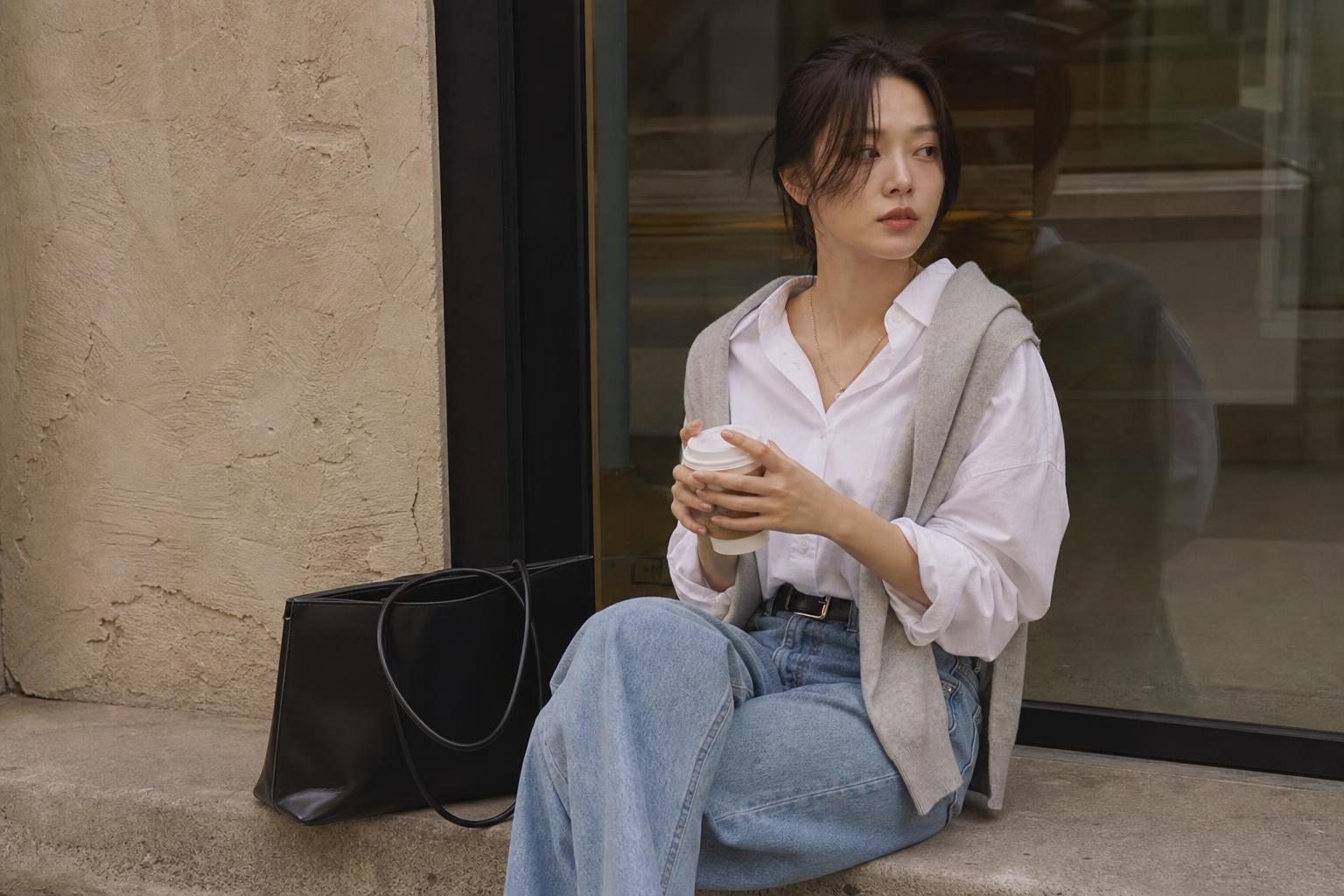
A well-composed wardrobe often reveals itself in ordinary moments: a coffee run, a commute, a day that begins cool and turns warm by midday. That is precisely where korean casual outfits feel most convincing. Their appeal is not only visual. It lies in proportion, restraint, and the intelligent use of layering—an oversized white shirt worn with wide-leg jeans, a slip dress grounded by a simple tee, a denim jacket balancing a knit and chinos. Rather than relying on loud statements, this style works through clean lines, soft structure, muted color systems, and pieces that move easily from one setting to another.
What makes korean casual outfits so relevant for a U.S. reader is their practicality. The best versions are built from elevated basics: tees, sweaters, button-downs, trousers, denim, skirts, hoodies, lightweight jackets, and oversize coats. These are not difficult garments to wear in real life. The difference is in how they are combined. Korean casual style often blends minimalism with streetwear influence, using neutral foundations, subtle textures, and seasonal layering to create an effortless result that still feels considered.
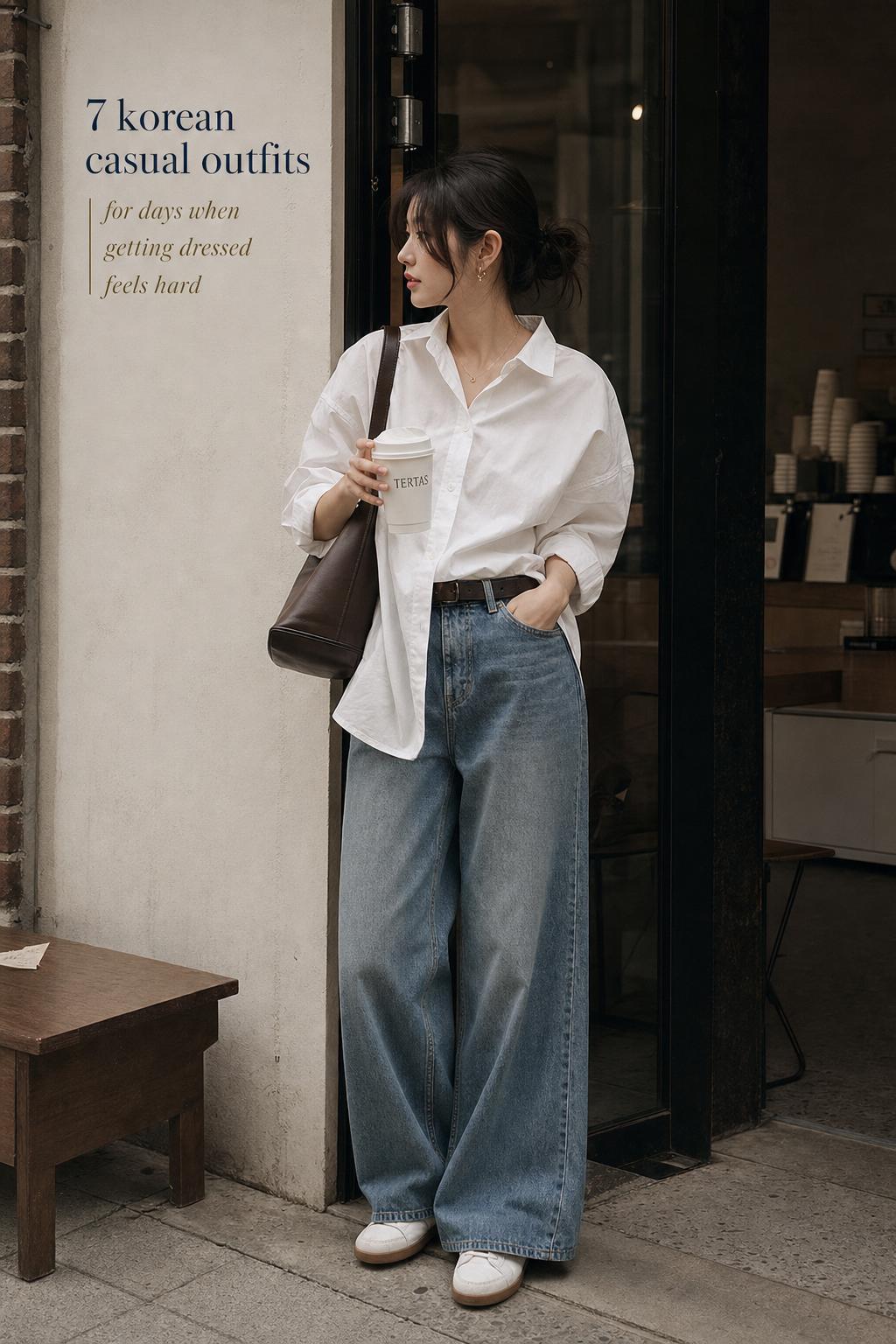
This guide approaches the style as a wardrobe system rather than a gallery of disconnected looks. You will find practical outfit formulas for men and women, guidance on color pairing, fabric and fit decisions by season, shopping logic for the U.S. market, and clear advice on what to buy first. The goal is not to imitate an image exactly, but to understand why the outfit works so you can adapt it to your own proportions, budget, and daily routine.
What defines korean casual style
Korean casual style sits at a refined intersection of minimalism and street style. The silhouettes are usually relaxed without looking careless. The palette tends toward black, white, gray, navy, beige, and other soft neutrals, then occasionally introduces a muted accent color or a controlled pop. Layering matters as much as the individual garments: a base tee under a dress, a shirt beneath outerwear, a hoodie softened by a cleaner trouser line. Nothing feels overly decorated, yet the composition is deliberate.
Your wedding has a lot of moving pieces. Your plan can still feel composed.
Zarellea organizes guests, vendors, budget, and timelines in one shared space — so you can make decisions with clarity, not stress.
One reason this style translates so well is that it does not demand a dramatic wardrobe overhaul. A black top with wide-leg jeans, for example, already reflects a recognizable korean fashion approach when the fit is right and the accessories stay restrained. In the same way, a striped tee with simple pants can move toward korean street style through proportion alone—perhaps a slightly looser leg, a cleaner hemline, and understated accessories rather than excessive embellishment.
There is also a certain softness to many of these outfits. Even when the influence comes from streetwear, the finish is often polished rather than aggressive. The result can lean minimalist, effortless, casual smart, or slightly soft-girl depending on fabric, color, and silhouette. That flexibility is part of the appeal. You can make the look quieter for work, more relaxed for travel, or sharper for a smart casual setting without losing the core identity.
The wardrobe foundation that makes the style easy to recreate
If you want this aesthetic to work in everyday life, buy the foundation before chasing outfit photos. Most korean casual outfits repeat the same categories of clothing in different combinations. A thoughtful capsule will do more for you than a long list of trend pieces.
The most useful tops to start with
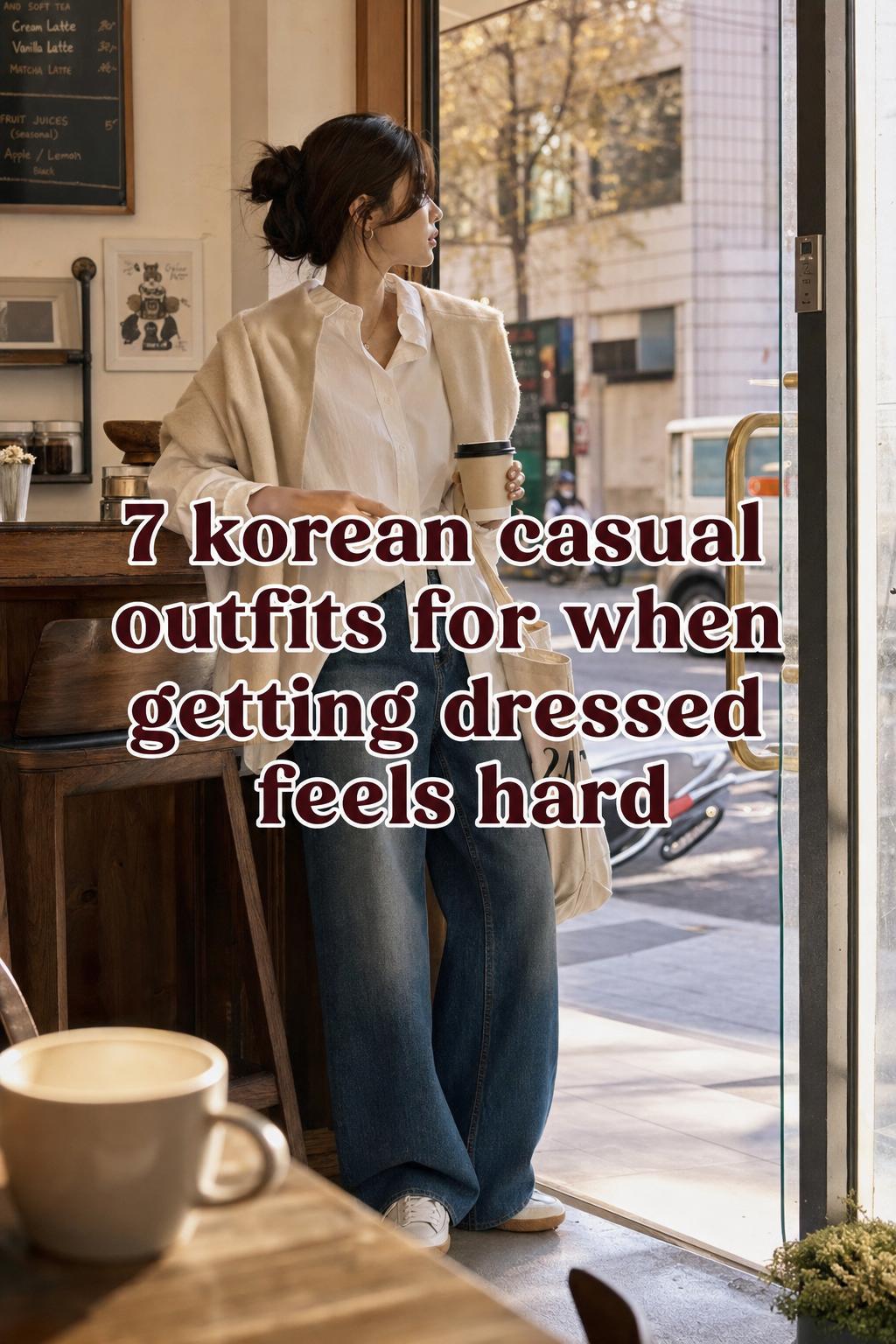
Begin with simple tees, lightweight sweaters, a black top, a striped tee, and at least one oversized white shirt or clean button-down. These pieces appear repeatedly because they are easy to layer and they create the understated line this style depends on. The oversized shirt is especially versatile. It can be worn open over a tee, tucked loosely into trousers, paired with skirts, or used as a light outer layer in transitional weather.
Bottoms that create the right proportion
Wide-leg jeans, straight or relaxed denim, simple trousers, chinos, and a tennis skirt or other uncomplicated skirt shape all fit naturally into this wardrobe. The key is balance. If the top is fitted, the bottom can be looser. If the top is oversized, the bottom should still hold some structure so the outfit does not collapse into bulk. Korean casual style often looks effortless because volume is controlled rather than random.
Outerwear that does the heavy lifting
Lightweight jackets, denim jackets, oversized outerwear, and oversize coats matter more than many people expect. A very simple base outfit can suddenly feel intentional once the outer layer introduces shape and depth. For men, a denim jacket over a knit with chinos is one of the easiest ways to capture the look. For women, oversized outerwear can sharpen a slip dress and tee or soften trousers and a fitted top.
What is worth investing in first
- An oversized white shirt with good drape
- Wide-leg jeans or clean relaxed denim
- A simple neutral trouser or chinos
- A lightweight jacket or denim jacket
- A knit that layers comfortably under outerwear
- One skirt or dress that can be styled in more than one season
These pieces offer the highest versatility because they can form multiple outfit formulas without feeling repetitive. If your budget is limited, prioritize outerwear, denim, and one excellent shirt. They tend to influence the entire outfit more than small trend-driven additions.
The color logic behind the look
One of the clearest patterns across korean casual outfits is the disciplined use of color. Rather than building a look around many contrasting shades, the outfit often begins with a dark base, a monochrome arrangement, or a neutral foundation, then introduces a muted accent. This is where the style feels especially polished. Color is not absent; it is controlled.
Dark base with muted accents
This approach is particularly useful if you want an outfit to feel streamlined without looking severe. Think of black, charcoal, or navy as the anchor, then soften it with a quieter accent rather than a bright interruption. The value of this formula is that it is forgiving. It works for daily wear, packs well for travel, and helps inexpensive basics look more cohesive.
Black and white done with restraint
Black-and-white palettes appear often because they emphasize silhouette and texture. A white oversized shirt with dark trousers, or a black top with wide-leg jeans, can feel far more elevated than the simplicity suggests. The trick is to let line and fabric do the work. Crisp cotton, soft knits, clean denim, and minimal accessories keep the contrast refined rather than stark.
Neutrals with subtle texture
When the palette is very quiet, texture becomes essential. A smooth shirt against structured denim, a soft knit under a lightweight jacket, or a matte skirt paired with a cleaner top creates enough visual movement to keep the look from feeling flat. This is one of the most useful principles for anyone who prefers understated dressing but still wants dimension.
A practical note: if you are rebuilding your wardrobe on a budget, color discipline matters even more than buying many items. A smaller collection in black, white, gray, beige, navy, and denim tones will create more combinations than a larger wardrobe full of disconnected colors.
Silhouette first: why these outfits look effortless
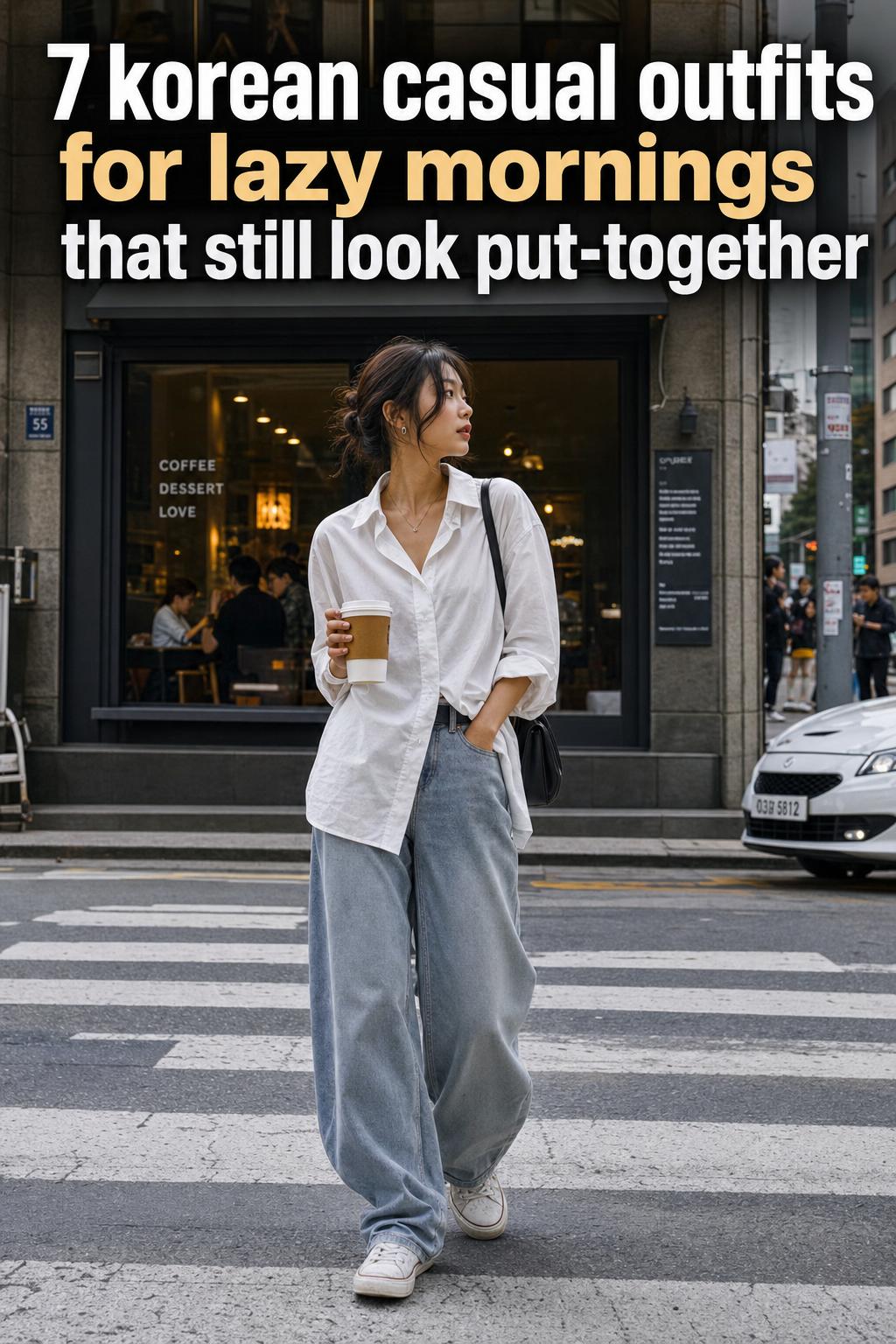
The most convincing korean casual outfits are built on proportion. That means the visual success of the look often has less to do with the individual garment and more to do with how each piece relates to the next. The oversized white shirt works because it introduces ease while the bottom half restores order. Wide-leg jeans work because they create movement, but they need either a shorter top, a partial tuck, or a cleaner shoulder line somewhere else in the outfit.
This is also why minimal outfits can feel much more sophisticated than expected. They are not plain; they are edited. A tailored silhouette contrasted with relaxed textures creates tension. A structured blazer layered over a simpler base can produce a polished everyday look without requiring extra decoration. Even when a blazer is not central to the outfit, the principle remains the same: one piece gives shape, another brings softness.
If you are petite, avoid letting every piece run oversized at once. Keep one element neat—perhaps the sleeve line, hem, or waist placement—so your frame does not disappear. If you are tall, longer lines in trousers, coats, and shirts can look especially elegant, but keep the outfit from feeling too elongated by using texture or a subtle break in color. If you are curvy, this style can work beautifully when the volume is placed strategically. Try a relaxed shirt with a more defined trouser waist, or wide-leg pants with a top that skims rather than clings. The goal is balance, not reduction.
Outfit compositions for women that feel modern and wearable
The slip dress layered over a tee
This combination appears often for good reason. The tee makes the dress less formal, more grounded, and easier to wear during the day. It also introduces modesty and layering potential without heaviness. Choose a simple tee and let the dress remain the cleaner line. If the dress is fluid, keep the tee smooth and relatively fitted so the outfit retains shape. Add oversized outerwear when the weather cools, and the look transitions naturally into a more layered season.
This formula flatters many body types because the tee creates structure around the upper body while the dress provides vertical movement. It is especially practical for someone who already owns dresses but rarely wears them casually. Instead of buying something new, you change the context.
The oversized shirt with wide-leg pants
This is one of the strongest everyday korean minimalist outfits because it looks intentional with very little effort. The shirt offers softness and volume; the wide-leg pants continue the relaxed line while still looking composed. To prevent the look from becoming shapeless, use one of three adjustments: a front tuck, rolled sleeves, or a slightly more fitted inner layer if the shirt is worn open.
This combination is useful for work-from-cafe days, casual office environments, and travel. It is comfortable enough for movement but polished enough for photographs, errands, or informal meetings. It also pairs easily with minimal accessories, which is part of why it reads as modern rather than overstyled.
The striped tee and simple pants
A striped tee can shift the mood of korean casual outfits from soft minimalism to a slightly more playful street style. Pair it with simple pants and keep the rest of the look clean. This is where many people overcomplicate things by adding too many accessories. Resist that instinct. The strength of the outfit lies in its clarity.
If you want to make it feel more elevated, focus on fit and finish rather than add-ons. A better drape in the pants, a neater shoulder seam, or a slightly oversized cut that falls well through the torso will do far more than trend-heavy extras.
The tennis skirt with a grounded top layer
The tennis skirt introduces a youthful line, but it works best when balanced by something understated above it. A black top, a simple sweater, or an oversized shirt gives the look enough weight to feel wearable beyond a purely photo-driven outfit. This is also where soft-girl energy can appear most naturally, especially if the color palette remains controlled and the accessories stay minimal.
For everyday use, consider when and where you will actually wear this. It is practical in warm weather, on walking-heavy days only if the fit is comfortable, and easiest to style when the rest of your wardrobe already leans simple.
Outfit formulas for men with a clean korean smart casual finish
Denim jacket, knit, and chinos
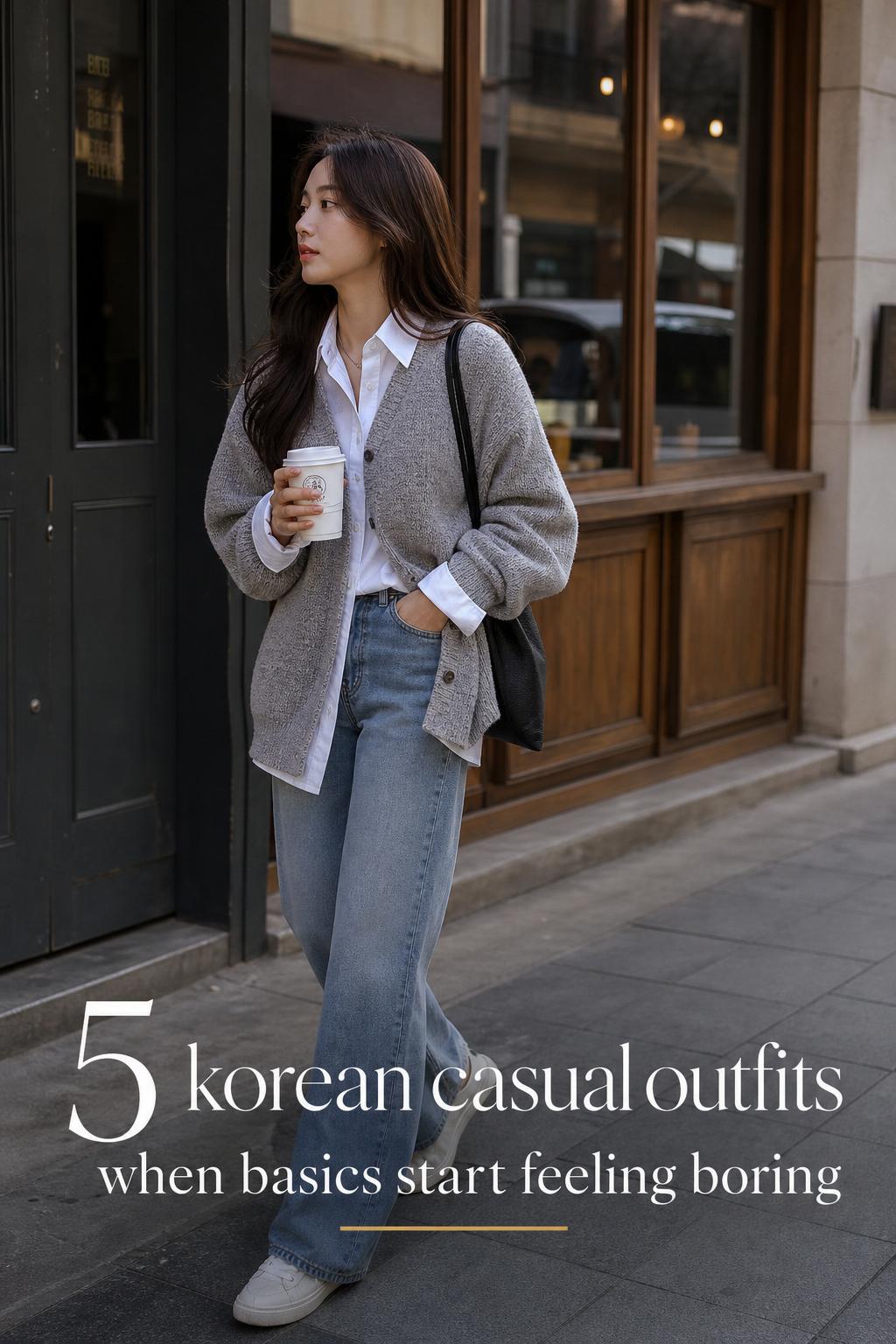
This is one of the clearest men’s outfit formulas because it captures the relaxed refinement associated with korean casual outfits for men. The knit softens the denim, the chinos sharpen it, and the full look sits comfortably between casual and smart casual. It is practical across seasons and easier to recreate than many men expect because the pieces are familiar.
To keep the result modern, avoid extremes: not too skinny, not too oversized, not too distressed. The polish comes from moderation. If your denim jacket has more presence, keep the knit simple. If the chinos are roomier, let the upper half stay clean.
Shirt, knitwear, and denim
Layering a shirt with knitwear and denim creates depth without looking formal. This is especially useful for transitional weather and for men who want to move toward korean casual style without leaning fully into streetwear. The shirt introduces structure at the collar and hem, while the knit softens the overall impression.
For body proportions, this formula is helpful because layering can visually rebalance the torso. A taller man can use a slightly longer shirt line beneath the knit. A shorter man may prefer a cleaner hem relationship to avoid too much vertical interruption.
Hoodie with cleaner trousers
Streetwear influence appears strongly here, but the key to keeping it aligned with korean fashion is contrast. A hoodie on its own can feel too casual. Pairing it with cleaner trousers or chinos introduces the right tension between ease and structure. Oversized outerwear can add another layer of polish when the weather requires it.
This is one of the easiest outfit formulas for men on a budget because many already own the base pieces. What changes the look is not spending more but editing better—quieter colors, less branding, and a cleaner silhouette.
Seasonal transitions: the style only works if the layering works
Seasonal adaptability is one of the strongest practical advantages of korean casual outfits. Because the style already relies on layers, it translates well across spring, summer, fall, and winter. The garments may remain similar, but the fabric weight and layering order should shift.
Spring and summer
Warmer months call for lighter fabrics and simpler combinations. Oversized shirts, tees, skirts, dresses, wide-leg jeans in lighter weight denim, and lightweight jackets for air-conditioned interiors all fit naturally here. Linen-like ease, crisp cotton, and breathable textures make the palette feel softer and the layering less heavy. This is where the black-and-white approach can look especially fresh.
In heat, avoid layering for the sake of appearance alone. One of the easiest mistakes is forcing a look that reads well in photos but feels uncomfortable by noon. If temperatures are high, let proportion and color do more of the styling work instead of piling on extra garments.
Fall and winter
Cooler weather is where korean casual layering becomes especially expressive. Knits, hoodies, denim jackets, oversize coats, and darker bases all come into play. Texture matters more here because outerwear occupies a larger visual role. Wool blends and heavier fabrics create a more substantial silhouette, while muted accents keep the palette composed.
The practical challenge in winter is bulk. To avoid it, keep the inner layers relatively slim and let only one outer layer carry most of the volume. This makes movement easier and preserves the clean lines that define the style.
Seoul style cues and how to interpret them in a U.S. wardrobe
Korean casual style is often discussed broadly, but its visual cues are closely tied to Seoul street style and to the idea of urban dressing that feels polished without seeming rigid. References to Seoul, Gangnam, Busan, Myeongdong, and Hongdae matter less as exact rules than as reminders that this aesthetic lives in real city movement: walking, layering, commuting, shifting between indoor and outdoor spaces, dressing for full days rather than isolated moments.
For a U.S. wardrobe, the useful interpretation is this: choose outfits that can transition. An oversized shirt that works in an office and at dinner. A hoodie and cleaner trouser pairing that can handle travel. A slip dress layered over a tee that feels casual by day and sharper under outerwear at night. Korean street style is appealing because it is often built for mobility and visual ease at once.
This is also why district-style thinking can be helpful, even in a loose sense. If you want something softer and more minimal, stay closer to clean lines, monochrome, and subtle accessories. If you want more streetwear energy, use oversized outerwear, looser denim, and stronger contrast. The point is not to mimic a place literally, but to understand the styling attitude behind it.
Shopping with discernment: how to build the look without overspending
Most people do not need an entirely new wardrobe to wear korean casual outfits well. They need better editing. Before buying, identify which of your existing basics already fit the capsule: tees, button-downs, sweaters, denim, trousers, hoodies, skirts, jackets. Then decide what is missing in terms of silhouette rather than quantity.
For U.S. shoppers, practicality matters: availability, fit, returns, and whether an item earns repeated wear. If you are considering Korean brands or platforms, Musinsa is one of the names that appears most directly in relation to affordable outfit building and product typologies. That does not mean every purchase must begin there. It means color systems, silhouettes, and everyday styling logic are often easier to understand when you shop with a clear formula in mind.
Panaprium’s women’s and men’s casual Korean outfit coverage also reflects another useful lens: fabrics and sustainability considerations. Even if sustainability is not your primary focus, fabric choice affects comfort, drape, and longevity. A simple shirt in a better material will often look more expensive than a trend item in a poor one.
What to buy first on a budget
- One excellent pair of wide-leg or relaxed jeans
- A crisp oversized white shirt
- A dark neutral knit
- A denim jacket or lightweight jacket
- A pair of simple trousers or chinos
These pieces create the greatest number of combinations and can be styled across seasons. If a budget choice must be made, spend more on fit and fabric in pieces worn near the face or outermost in the outfit—shirts, knits, jackets, coats. Less visible basics can be simpler as long as the silhouette still works.
How to make simple outfits look more expensive
The elegance of korean casual style depends less on luxury and more on composition. There are several ways to achieve a more refined effect without buying premium wardrobes.
- Keep the palette disciplined rather than highly mixed.
- Choose fabrics with visible drape or structure instead of flimsy finishes.
- Let one piece provide volume and another provide shape.
- Use accessories sparingly so the silhouette remains the focus.
- Pay attention to hems, sleeve length, and shoulder fit.
A black-and-white outfit, for example, can feel significantly more polished when the shirt is crisp, the jeans fall cleanly, and the accessories are minimal. In the same way, neutral foundations with subtle texture often appear more elevated than brighter outfits with less coherence. The restraint is what creates the sophistication.
Common styling mistakes that disrupt the effect
Because korean casual outfits look effortless, it is easy to assume they require little thought. In practice, the styling is quite edited. A few common mistakes can quickly make the result feel heavy or generic.
- Wearing every piece oversized at once, which removes shape.
- Adding too many accent colors, which weakens the minimal foundation.
- Choosing trend-driven pieces before building the capsule basics.
- Ignoring seasonal fabric weight, especially in summer.
- Over-accessorizing simple outfits that rely on clean lines.
Another frequent issue is copying an outfit formula without considering body proportions. A wide-leg jean that looks elegant on one person may need a different hem, rise, or top length on another. The goal is not exact replication. It is to preserve the visual logic of balance, contrast, and ease.
Tips for adapting the style to real life
The most successful wardrobes are not built for one idealized version of life. They are built for errands, work, weather changes, travel days, and repeated wear. Korean casual style is particularly strong here because it values versatility. A few adjustments make the outfits more functional without losing their character.
For work and smart casual settings
Lean into shirts, knitwear, trousers, and cleaner outerwear. Keep the color system restrained and let layering create interest. Men can rely on shirt, knitwear, and denim or chinos combinations. Women can use oversized shirts with wide-leg pants or dresses grounded by simple layers. The polished effect comes from line, not formality.
For travel and long days out
Comfort matters most, so choose pieces that move well and recover shape: looser denim, lightweight jackets, soft knits, and shirts that can be worn open or closed. Dark bases are especially practical for travel because they mix easily and hide wear. This is where a korean casual capsule becomes truly useful.
For petite, curvy, or tall wardrobes
Petite frames usually benefit from a controlled oversized effect rather than full-volume layering. Curvy shapes often look strongest when the outfit combines ease with one point of structure, such as a defined waistline in the trouser or a cleaner shoulder line. Taller frames can wear elongated silhouettes beautifully, but texture and color breaks help maintain interest. In every case, proportions should be adjusted, not the entire aesthetic abandoned.
Where inspiration turns into a coherent wardrobe
Many galleries of korean casual outfits are visually appealing, but the real value lies in seeing the pattern behind them. The recurring staples—oversized white shirts, black tops, wide-leg jeans, denim jackets, knitwear, chinos, simple skirts, slip dresses, and neutral outerwear—are not accidental. They form a system. Once you recognize that system, getting dressed becomes easier and shopping becomes more selective.
Minimalism, streetwear influence, and seasonal layering are the three strongest threads running through the style. You can emphasize one more than the others depending on your needs. If your wardrobe must work hard for office days, let minimalism lead. If comfort is the priority, bring in more streetwear-inspired ease. If you live in a variable climate, build around layering and outerwear.
The elegance of this approach is that it does not ask you to perform style. It asks you to compose it. And that is why korean casual outfits continue to feel modern: they are thoughtful without being rigid, expressive without becoming loud, and practical enough to belong in daily life.
FAQ
What are the easiest korean casual outfits to recreate with clothes I already own?
The easiest place to start is with elevated basics you likely already have: a black top with wide-leg jeans, an oversized shirt with simple trousers, or a denim jacket layered over a knit and chinos. These outfits work because the pieces are familiar, and the style comes from proportion, restrained color, and light layering rather than from unusual garments.
What should I buy first if I want a korean casual capsule wardrobe?
Begin with the pieces that create the most outfit combinations: an oversized white shirt, relaxed or wide-leg denim, a neutral trouser or chinos, a dark knit, and a lightweight jacket or denim jacket. These staples repeat across many korean casual outfits and make it easier to build looks for different seasons and settings.
Do korean casual outfits work for petite, curvy, or tall body types?
Yes, but the proportions should be adjusted to your frame. Petite dressers usually need only one oversized element at a time, curvy dressers often benefit from pairing relaxed pieces with one point of structure, and taller dressers can carry elongated lines well but may want texture or subtle color contrast to keep the outfit dynamic.
How do I make korean casual outfits look polished instead of sloppy?
Focus on silhouette control, fabric quality, and color discipline. Let one piece provide volume while another provides shape, avoid mixing too many accent colors, and choose garments with clean hems and good drape. Even a simple black-and-white outfit can look refined when the fit is intentional and the styling remains restrained.
Which colors work best for korean casual style?
Black, white, gray, navy, beige, and denim tones form the strongest base because they support the minimalist, layered quality of the style. Many outfits also use a dark base with muted accents or a monochrome approach with one subtle contrast, which keeps the wardrobe versatile and easy to mix.
Can I wear korean casual outfits to work or only on weekends?
You can absolutely adapt them for work, especially in smart casual settings. Shirts, knitwear, trousers, cleaner denim, and understated outerwear create a polished version of the style that still feels modern and relaxed. The key is to keep the palette refined and the layering intentional rather than overly sporty.
How can I recreate korean casual outfits on a budget?
Start by editing what you own instead of buying everything at once. Build around neutral basics, prioritize one strong outer layer and one strong pair of denim or trousers, and avoid spending on highly specific trend pieces too early. A smaller wardrobe with better cohesion will look more convincing than a larger one with scattered styles.
What fabrics are most practical by season?
In spring and summer, lighter fabrics and breathable textures are the most practical for shirts, tees, dresses, and lighter denim. In fall and winter, knits, heavier outerwear, wool blends, and more substantial textures help the layered silhouette feel complete while still keeping the outfit comfortable and structured.
Where does Musinsa fit into korean casual style?
Musinsa is useful as a reference point because it is associated with Korean fashion and affordable wardrobe building, particularly around product types and color systems. For many shoppers, the practical takeaway is not to buy everything from one place, but to understand how the platform’s styling logic can help clarify what silhouettes and combinations actually define the look.
What is the biggest mistake people make with korean casual outfits?
The most common mistake is assuming the style is casual enough to require no editing. In reality, it depends on balance. Too much volume, too many accent colors, or too many accessories can quickly weaken the clean, effortless effect. The strongest outfits usually look simple because every element has been chosen with restraint.
Leave a Reply