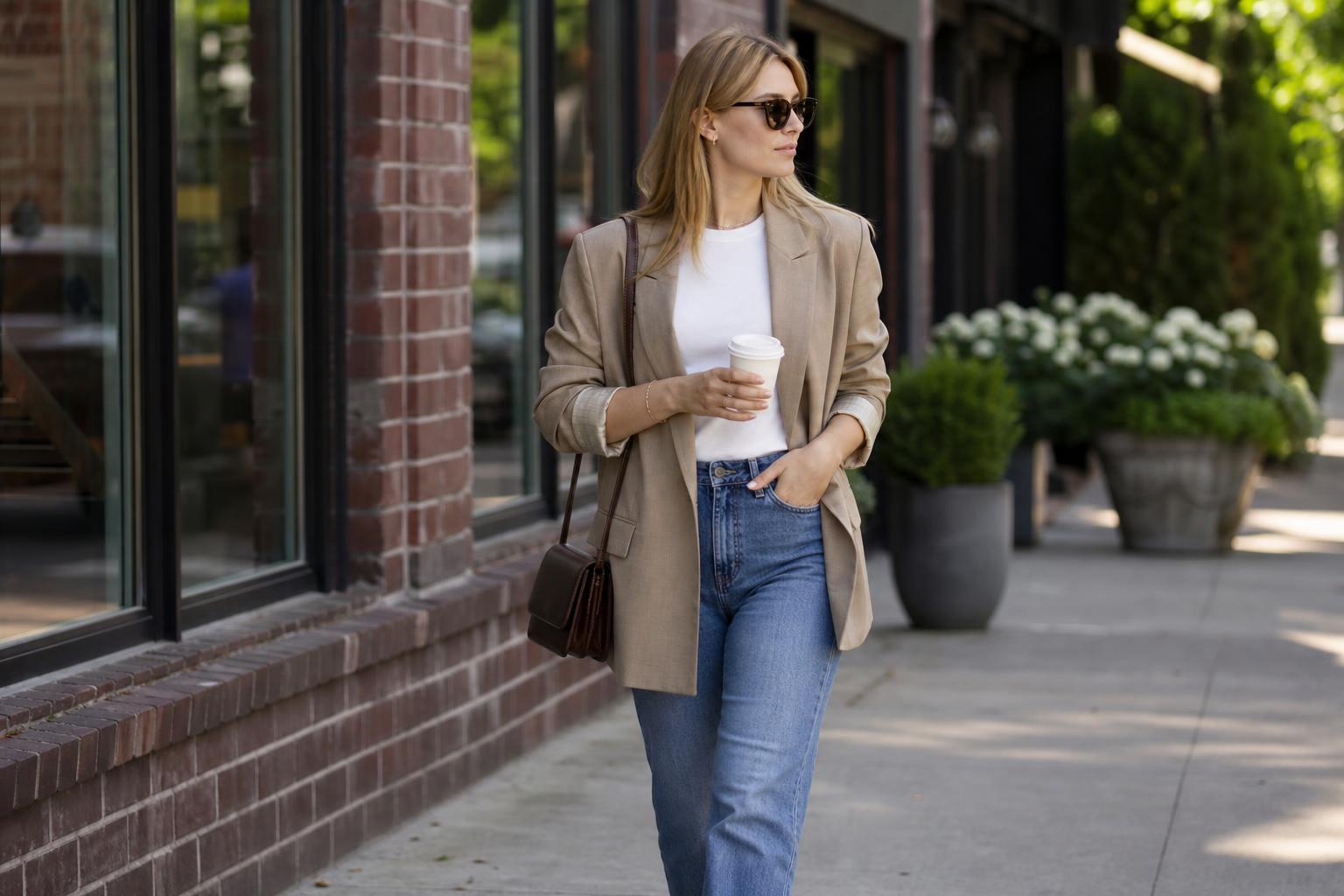
Most wardrobes fail on ordinary days, not important ones. The real test comes on the morning of errands, a hybrid work schedule, a coffee meeting, a long walk across the city, or an afternoon that may turn into dinner without warning. Casual day outfits sound simple, yet they often become complicated because the clothes must do several things at once: feel comfortable, look considered, layer well, and adapt to changing weather and activity.
That tension is exactly why so many everyday outfits feel either too relaxed or too polished. A tee and jeans can look unfinished if the proportions are off, while a blazer and trousers can feel too formal for a low-key daytime plan. The solution is not to chase more pieces, but to understand how silhouette, fabric, layering, and context work together.
This guide approaches casual daywear as a practical style problem with elegant answers. From capsule wardrobe staples and smart-casual combinations to footwear, color stories, and activity-based outfit ideas, the focus is on building casual day outfits that feel effortless, refined, and realistic for daily life.
Why everyday dressing feels harder than it should
The challenge with everyday casual outfits is that they sit in the most nuanced part of a wardrobe. Formalwear announces itself. Occasion dressing comes with obvious cues. Casual dressing, by contrast, asks for judgment. You need enough ease for movement and comfort, but enough structure to avoid looking accidental.
Your wedding has a lot of moving pieces. Your plan can still feel composed.
Zarellea organizes guests, vendors, budget, and timelines in one shared space — so you can make decisions with clarity, not stress.
Weather makes the decision more layered. Spring may require a jacket in the morning and none by noon. Summer asks for breathable fabrics without sacrificing polish. Autumn favors texture and layering, while winter demands warmth without too much bulk. On top of that, a single day may include commuting, sitting, walking, and social plans, so the outfit has to perform rather than merely look good in a mirror.
There is also the matter of functionality. Shoes that work for a short coffee run may not suit a full day of walking. A soft knit may feel ideal at home but appear too relaxed on a video call. Casual chic and polished casual dressing depend on reading these details correctly. That is why the best casual day looks are usually built from versatile pieces rather than trend-led one-offs.
The dressing principles that make casual daywear work
Start with comfort, but define it properly
Comfort is not only about softness. In practical styling, comfort means freedom of movement, temperature balance, and ease over several hours. Cotton, jersey, denim, linen, knitwear, wool, and silk all play different roles depending on season and context. A relaxed silhouette can feel comfortable, but so can a lightly tailored shape if the fabric has enough drape and the proportions are balanced.
Use layering to create flexibility, not bulk
Layering appears again and again in strong casual day outfits because it solves real problems. A cardigan over a tee, a structured blazer over a knit top, or a lightweight jacket over a dress gives the outfit dimension and allows you to respond to shifting temperatures. The mistake is adding layers without considering line and weight. Each added piece should either sharpen the silhouette, soften it intentionally, or provide practical coverage.
Balance relaxed pieces with tailored structure
The easiest way to avoid looking underdressed is to pair one easy element with one more defined one. Denim and sneakers become more polished with a blazer. Loose trousers feel modern with a simple fitted tee. A soft dress gains shape from a belt or clean outerwear. This is the logic behind casual elegance: low-key pieces arranged with enough structure to feel deliberate.
Dress for context, not just for category
Not all casual outfits serve the same purpose. Everyday errands, hybrid office days, shopping, brunch, and travel-day dressing all sit under the casual umbrella, but each one asks for a different balance of polish, practicality, and comfort. A good outfit should acknowledge where you are going, how much you will walk, and whether the day includes transitions between settings.
The casual day capsule that solves most wardrobe problems
A capsule wardrobe approach is especially useful for casual daywear because it removes friction from daily decisions. Instead of inventing a new look every morning, you build around a small group of pieces that combine naturally. The goal is versatility, not strict minimalism.
The core pieces worth relying on
- Simple tees in clean colors for layering and easy contrast
- Jeans or denim in a shape that works with sneakers, loafers, and jackets
- Trousers that feel relaxed but still read as polished
- A dress that can be worn alone or under outerwear
- A cardigan or knit as a soft middle layer
- A blazer or jacket for structure
- Footwear such as sneakers, loafers, sandals, or boots depending on season
These staples appear repeatedly in everyday casual looks because they can move across moods and settings. A tee can anchor denim for a coffee run, but the same tee under a blazer becomes hybrid-work appropriate. That is the value of wardrobe staples: they do not limit style, they create coherence.
Building color stories that feel polished
Color coordination is one of the clearest ways to make simple outfits look intentional. Soft neutral tones tend to create an effortless foundation, while deeper tones in autumn and winter bring weight and richness. In spring and summer, lighter color palettes and fresh pastels keep casual day outfits airy. Texture matters here as much as color. Cotton with denim, silk with knitwear, or linen with a structured jacket creates visual interest without excessive styling.
A useful rule is to keep the outfit anchored by one calm base and then introduce contrast through either texture or one accent tone, not both in equal force. This prevents an everyday look from feeling busy.
Outfit solutions for the moments that cause the most indecision
Outfit solution: the polished errand uniform
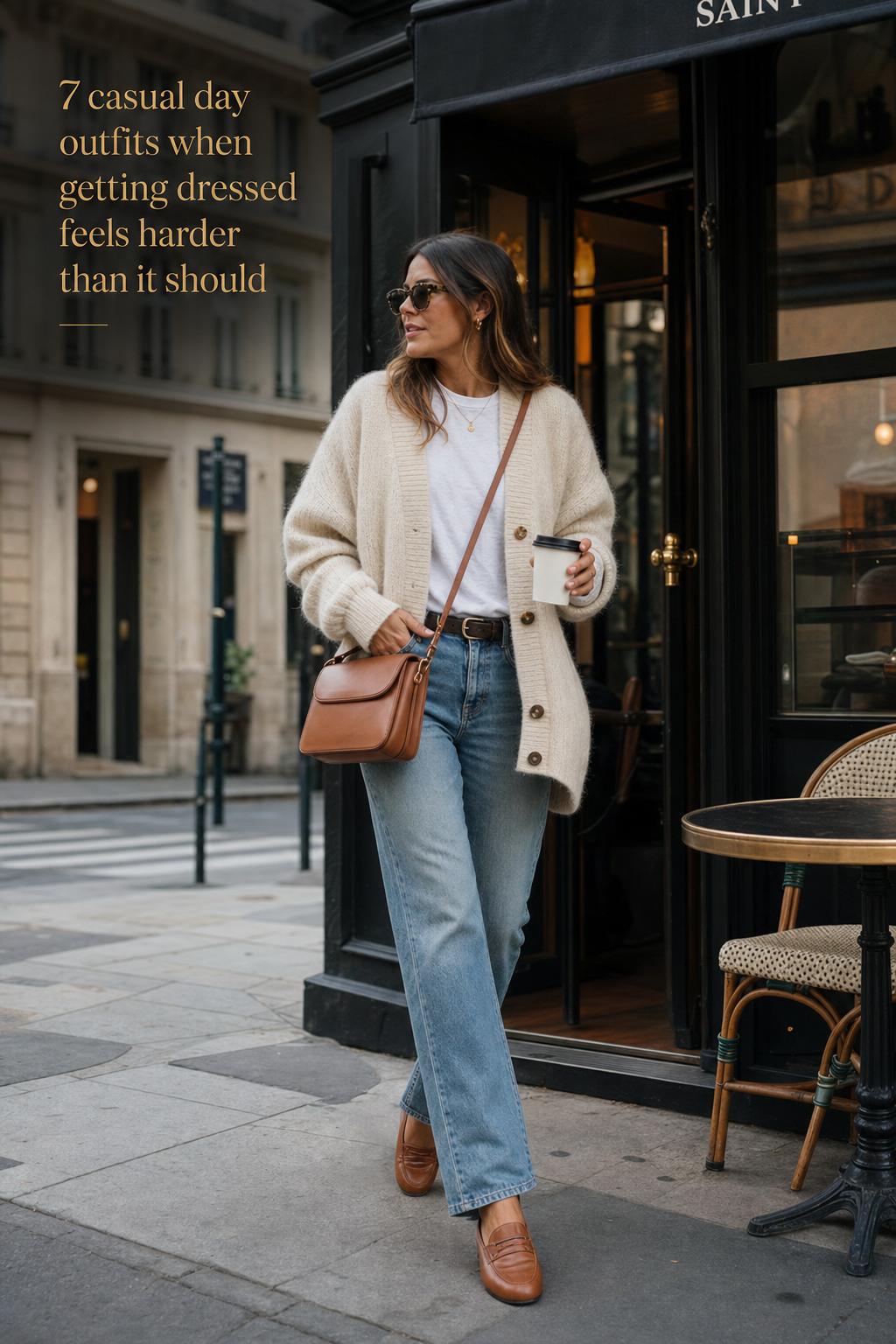
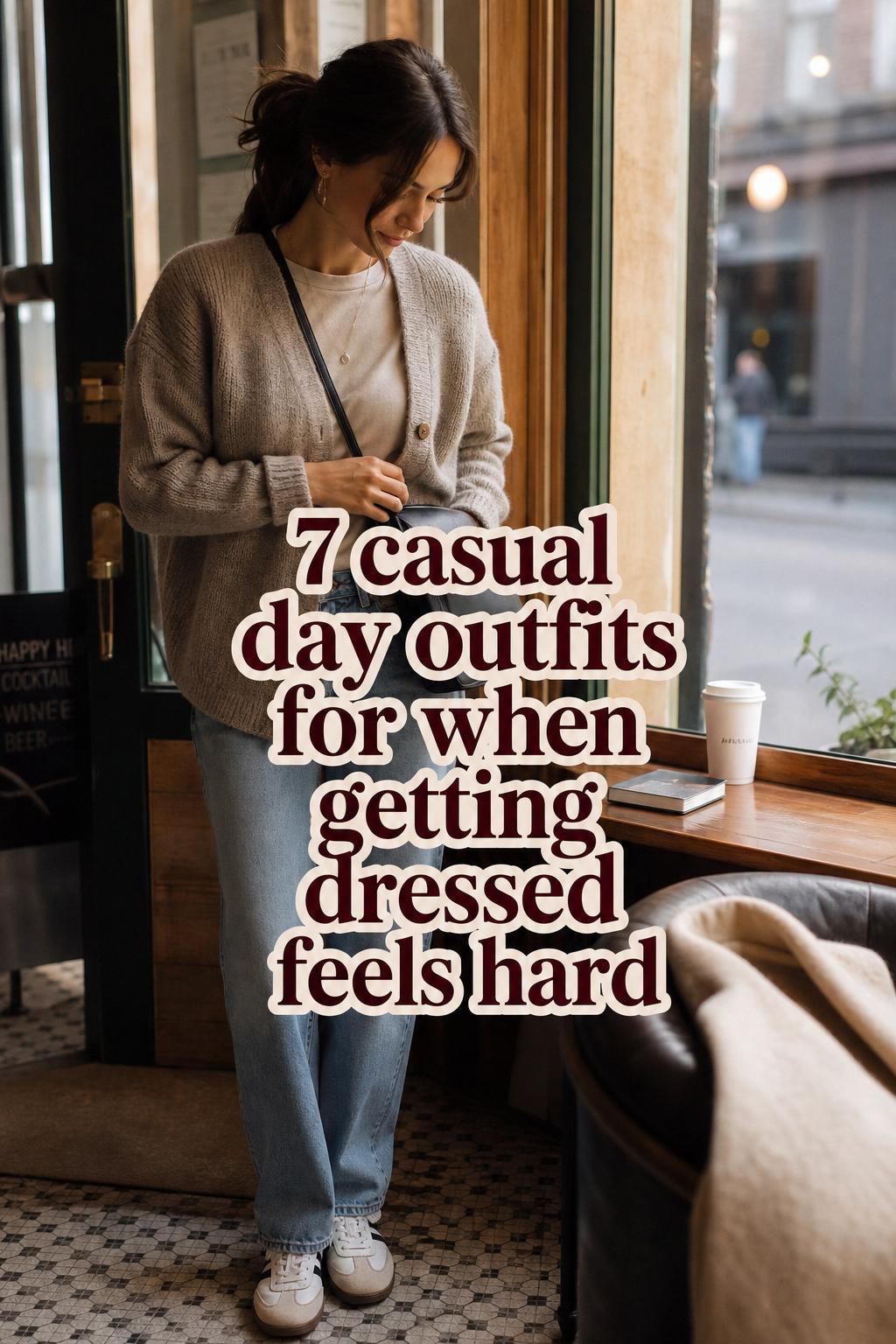
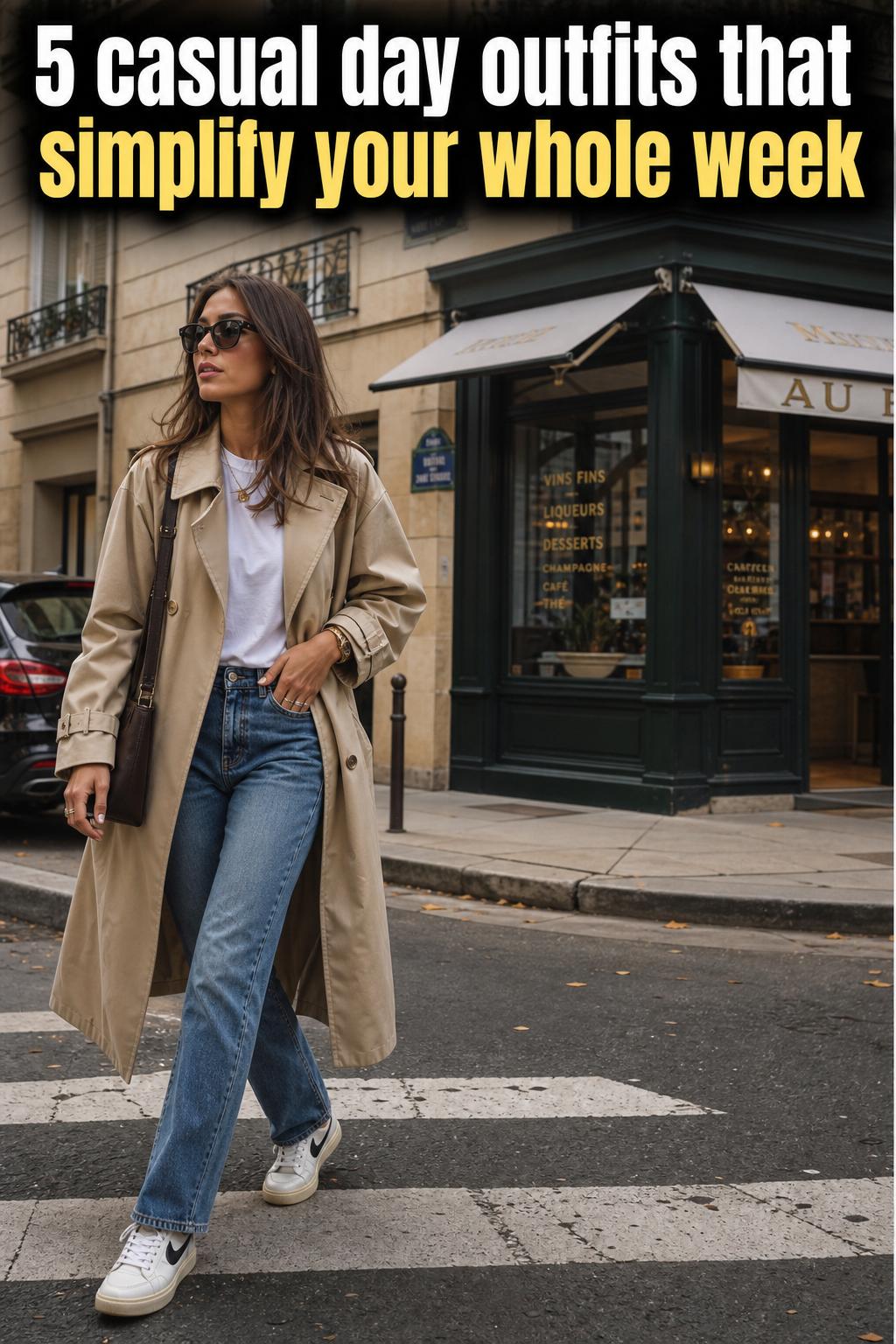
A tee, straight or relaxed jeans, clean sneakers, and a cardigan or lightweight jacket form one of the strongest casual day outfits for real life. It works because every piece serves a purpose. The tee keeps the look uncomplicated, denim adds everyday ease, sneakers support walking, and the extra layer gives the outfit enough finish to avoid looking flat.
To make this combination feel refined rather than generic, pay attention to silhouette. If the jeans are loose, the tee should either tuck slightly or sit with intention. If the top is more relaxed, choose denim with a cleaner line. A crossbody bag keeps the look practical and leaves your hands free, which matters more on an errand day than many people expect.
Outfit solution: smart-casual for work-from-home and hybrid days
Hybrid schedules often require casual office outfits that sit between home comfort and public polish. One of the most reliable answers is a knit top or simple shirt with tailored trousers, finished with a blazer and loafers or minimal sneakers. This formula gives you clean lines on video calls and enough ease for the less formal rhythm of the day.
The blazer is central here, not because it makes the outfit formal, but because it introduces structure. Worn over denim, it creates casual chic. Worn with trousers, it turns elevated basics into something more work-appropriate. If the day includes commuting, choose shoes that can manage movement; if it remains home-based, you can lean more on soft knitwear and lighter layering.
Outfit solution: daytime social plans without overdoing it
Brunch, shopping, and meeting friends call for a different kind of ease. A dress with sandals and a crossbody bag is often the simplest answer, especially in warm weather. The appeal is that a dress resolves the outfit quickly while still looking composed. Add a cardigan or jacket if the day begins cool or if the setting shifts indoors.
If dresses are not your default, try trousers with a refined top and understated jewelry. The objective is polished casual rather than occasion dressing. You want enough softness for daytime, enough interest for social plans, and enough practicality to sit, walk, and move through the day comfortably.
Outfit solution: a denim-centered look that always feels current
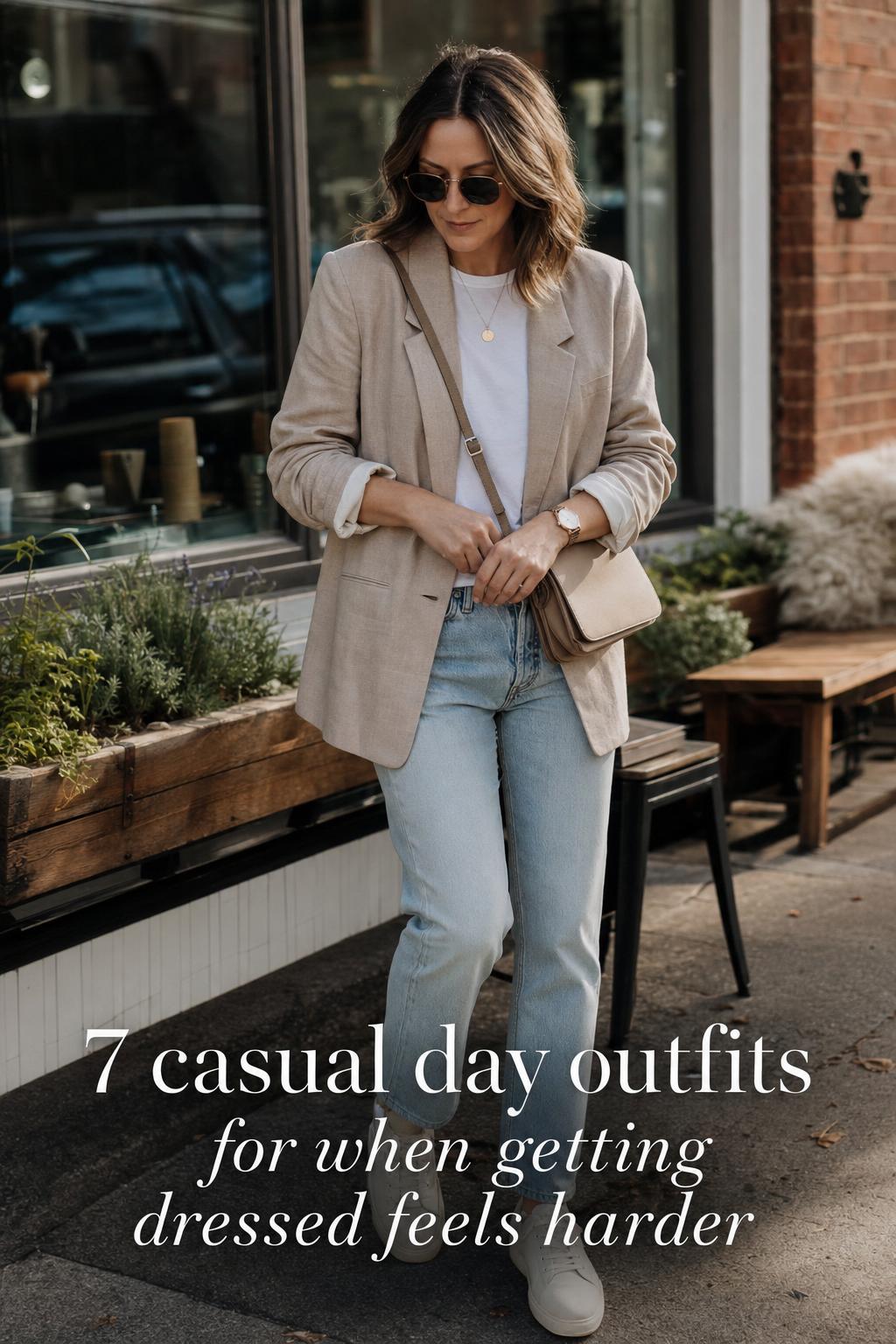
Denim is one of the most consistent motifs in casual daywear because it adapts easily to changing style cues. A denim base with a t-shirt and blazer is especially effective when you want casual elegance rather than plain basics. The denim keeps the outfit grounded, the tee prevents it from becoming stiff, and the blazer sharpens the outline.
This combination also handles day-to-evening movement well. Swap sneakers for loafers if the schedule is more polished, or keep sneakers if walking is a priority. The intelligence of the outfit lies in its contrast: relaxed fabric below, tailored structure above.
Outfit solution: soft knitwear for a chill day that still looks considered
On days built around comfort, knitwear becomes essential. A soft sweater or cardigan with denim and sneakers creates the familiar chill-day silhouette, but it looks stronger when you think about proportion. A slightly shorter knit can define the waistline visually, while a more fluid knit over slim or straight bottoms creates a calm, elongated shape.
This is the kind of outfit that suits coffee runs, a casual lunch, or a low-key travel day. The beauty of it is that it does not pretend to be formal. Instead, it uses texture and color pairing to elevate comfort into a complete look.
Outfit solution: spring layers for unpredictable weather
Spring casual outfits succeed or fail on layering strategy. Start with a tee or light knit, add trousers or jeans, and finish with a jacket that can be removed easily. This is where polished everyday layers become useful. You need enough warmth for early hours, but not so much that the outfit feels heavy by midday.
Color coordination can make spring layering feel more intentional. Fresh colors and softer tones keep the look seasonal, while denim or a structured jacket grounds it. The result should feel practical first, graceful second, and never overworked.
Outfit solution: summer ease with a capsule mindset
Summer daywear often becomes either too bare or too fussy. A better approach is the summer capsule wardrobe formula: breathable tops, easy skirts or shorts, simple dresses, and sandals or sneakers that fit the day’s activity. Linen and cotton matter here because they keep the silhouette light and breathable without sacrificing visual structure.
What makes this approach elegant is repetition with variation. A shirt worn with shorts one day and over a dress the next creates consistency. You are not trying to build novelty; you are trying to make warm-weather dressing feel calm and reliable.
Outfit solution: autumn and winter casual with depth
Cooler months invite more texture, and texture is often what makes everyday outfits look rich. Knitwear, wool, jackets, boots, and deeper color palettes naturally create visual depth. The challenge is preventing the outfit from becoming bulky. A simple formula is one substantial piece, one smoother counterpoint, and one practical shoe choice.
For example, a knit with trousers and boots works well when the trousers have a clean line. A jacket over a dress adds warmth while preserving shape. Autumn and winter dressing rewards attention to fabric weight; drape matters just as much as insulation.
How footwear changes the success of casual day outfits
Footwear is often treated as a finishing touch, but in daytime dressing it is part of the outfit’s logic from the start. The right shoe affects posture, pace, and how polished the entire look feels. This is especially important because many casual day outfits need to carry you through errands, commuting, or several hours away from home.
- Sneakers are ideal when walking is central to the day, especially with jeans, trousers, or knitwear.
- Loafers work well for hybrid workdays or smart-casual plans because they sharpen the outfit without feeling formal.
- Sandals suit social daytime dressing and summer capsule looks, particularly with dresses and easy separates.
- Boots bring weight and practicality in fall and winter, pairing especially well with denim, trousers, and layered outerwear.
The key is matching the shoe to the activity, not just the aesthetic. A beautiful outfit loses credibility quickly if the footwear does not support the day you are actually having.
Accessories that quietly solve styling problems
Belts, earrings, handbags, hats, and jewelry are often described as extras, but in casual daywear they can provide the exact amount of polish that simple pieces need. A belt can define shape in a relaxed outfit. Earrings can bring light to a minimal look. A crossbody bag adds function while keeping the silhouette streamlined.
The most effective accessory strategy is restraint. Because casual day outfits rely on versatility, accessories should clarify the look rather than compete with it. If the clothing already has texture through denim, knitwear, or layering, choose cleaner accessories. If the outfit is very simple, a belt or structured bag can add enough definition to complete it.
Tip: build accessory clusters, not random add-ons
It is easier to get dressed when you think in small groups. For example, denim with sneakers may pair naturally with a crossbody bag and simple earrings, while a dress with sandals may feel more complete with a belt and understated jewelry. These clusters reduce decision fatigue and make repeated outfits feel intentional rather than repetitive.
Seasonal fabrics and color balance that make everyday outfits feel modern
Spring and summer: lightness with enough shape
Warm-weather casual daywear benefits from fabrics that breathe and move. Cotton and linen naturally support this, while silk can add a softer, more fluid contrast when you want the look to feel elevated. Pastels, lighter neutrals, and fresh color stories work best when grounded by straightforward shapes such as shirts, simple tops, shorts, skirts, or a clean dress silhouette.
The strongest spring and summer outfits avoid two extremes: excessive layering that looks out of season, and overly bare styling that reads unfinished. A light layer, such as a cardigan or jacket, often solves this balance gracefully.
Fall and winter: warmth without visual heaviness
As temperatures drop, deeper tones and textured fabrics naturally come forward. Knitwear, wool, denim, and boots create a more grounded palette and silhouette. The trick is to maintain line. If the top layer is substantial, keep the rest of the look more streamlined. If you are wearing a softer dress, outerwear should add enough structure so the whole outfit does not collapse into bulk.
Seasonal layering works best when the outfit still has contrast. Too many heavy pieces together can make even expensive clothing look flat. A tailored silhouette contrasted with relaxed textures usually feels more modern.
A seven-item casual day capsule you can actually use
For readers who want a concrete framework, a seven-item casual day capsule can simplify the week dramatically. The point is not to wear only seven things forever. It is to create a reliable rotation that covers errands, hybrid work, and social daytime plans with minimal friction.
- Two tops: one tee and one refined shirt or knit top
- Two bottoms: one pair of jeans and one pair of trousers
- One dress for easy one-piece styling
- One outer layer: blazer, cardigan, or jacket
- One primary footwear choice suited to your routine, such as sneakers or loafers
From this small edit, several combinations emerge naturally. The tee with jeans and sneakers handles errands. The shirt with trousers and a blazer suits hybrid office days. The dress with sandals or a jacket works for social plans. This is how a capsule wardrobe supports everyday chic: through repeatable combinations that still allow for mood and seasonal adjustment.
A context-specific lens: city casual, coastal casual, and the mood of the day
One useful way to refine casual day outfits is to think in day-out archetypes. This approach helps when your wardrobe feels correct in theory but not in atmosphere. The outfit may need a change in mood rather than a total change in clothes.
City casual
City casual tends to benefit from sharper lines, practical shoes, and layering that supports movement. Denim, blazers, sneakers, loafers, and a crossbody bag feel especially at home here. The look should be efficient, polished, and walkable.
Coastal casual
Coastal casual leans lighter in fabric and softer in mood. Linen, cotton, sandals, shirts, easy dresses, and fresh colors create the sense of openness this style needs. The silhouette is usually more fluid, though still composed.
Tech-ready or schedule-heavy casual
On days built around a packed calendar, hybrid work, or multiple transitions, the outfit should prioritize adaptability. Trousers, a knit top, a blazer, and footwear that can handle commuting are especially effective. The emphasis is not on statement dressing, but on sustained polish.
These archetypes are useful because they shift attention from isolated garments to the full context of the day. That is often the missing link in everyday styling.
Subtle mistakes that make casual outfits look less intentional
Most casual dressing mistakes are not dramatic. They are small mismatches that weaken the outfit’s purpose.
- Adding layers without considering proportion, which creates bulk rather than depth
- Choosing footwear for appearance alone, even when the day requires walking or commuting
- Wearing only relaxed pieces at once, so the outfit loses structure
- Over-correcting with overly formal items that fight the casual mood
- Ignoring fabric weight, especially during seasonal transitions
- Using too many competing colors or textures in an everyday look
In practice, the fix is usually simple. Introduce one tailored piece, remove one unnecessary layer, or switch to footwear that aligns with the day’s movement. Casual style improves quickly when each piece has a clear reason to be there.
Practical styling tips that make getting dressed easier
A strong everyday wardrobe is less about inspiration and more about repeatable logic. Once you understand what your routine asks for, getting dressed becomes more intuitive.
Tip: keep a small rotation of proven formulas
Instead of reinventing casual daywear every morning, keep three to five outfit formulas that already work for your schedule. Examples include denim with a tee and blazer, trousers with a knit top and loafers, or a dress with sandals and a cardigan. This approach creates consistency without monotony.
Tip: let one piece do the elevating
If an outfit feels too basic, do not add several new ideas at once. A structured jacket, a belt, polished loafers, or a refined bag is often enough. The best polished casual outfits are usually built from restraint.
Tip: think about the longest part of your day
Dress for the part of the schedule that places the most demand on your outfit. If you will be walking for hours, footwear should reflect that. If you have a video call, the top half needs definition. If weather shifts are likely, layering should be planned from the start rather than added as an afterthought.
Tip: rely on texture when you want understated interest
When you want everyday outfits to feel more editorial without becoming louder, use texture instead of excess detail. Denim with knitwear, silk with wool, or cotton with a structured blazer creates subtle sophistication and keeps the look timeless.
Closing perspective
The best casual day outfits are rarely the most complicated. They succeed because they solve the real demands of daytime dressing: movement, weather, comfort, and polish. Once you begin with those realities, the styling choices become clearer. Layering gains purpose, footwear becomes part of the plan, and wardrobe staples start to feel more versatile.
Whether your version of casual daywear leans toward denim and sneakers, dresses and sandals, or blazers with elevated basics, the most useful principle remains the same: balance ease with intention. That is what turns simple clothes into a refined everyday look you can return to again and again.
FAQ
What are the most essential pieces for casual day outfits?
The most useful foundation includes simple tops, jeans or denim, relaxed but polished trousers, a dress, a cardigan or knit, a blazer or jacket, and practical footwear such as sneakers, loafers, sandals, or boots depending on season. These pieces combine easily and support layering, versatility, and everyday comfort.
How can I make casual outfits look more polished?
The easiest way is to pair one relaxed item with one structured element. A blazer over a tee, loafers with trousers, a belt on a soft dress, or a clean handbag with denim can sharpen the outfit without making it feel formal. Color coordination and thoughtful proportions also help simple outfits look intentional.
What shoes work best for casual daywear?
The best choice depends on activity. Sneakers are strongest for walking, errands, and city days. Loafers suit hybrid work and smart-casual settings. Sandals work well for warm-weather social plans, while boots are practical for fall and winter layering. The key is matching footwear to how much movement your day actually includes.
How do I build casual day outfits for unpredictable weather?
Start with a breathable base such as a tee or light knit, then add a removable layer like a cardigan, blazer, or jacket. This gives you flexibility without overcomplicating the outfit. Spring casual outfits especially benefit from light layering that can adjust throughout the day.
Can jeans still look refined in everyday outfits?
Yes, especially when denim is balanced with cleaner pieces. A t-shirt and blazer, a knit with loafers, or a refined shirt with minimal sneakers can make jeans feel polished and current. The finish depends less on the jeans alone and more on how the rest of the outfit shapes the silhouette.
What is the difference between casual and smart-casual day outfits?
Casual outfits prioritize ease and practicality, while smart-casual adds more structure and polish. In practice, smart-casual often includes pieces such as blazers, loafers, trousers, or sharper shirts, whereas relaxed casual may rely more on tees, denim, sneakers, and softer knitwear. Both can work for daytime dressing if the outfit suits the context.
How do I use a capsule wardrobe for everyday casual looks?
A capsule wardrobe works by narrowing your choices to versatile staples that combine easily. Focus on a few tops, bottoms, one dress, one outer layer, and footwear that matches your routine. This creates multiple casual day outfits without requiring constant new combinations or trend-led shopping.
Which fabrics are best for casual day outfits?
Cotton and jersey are dependable for comfort and layering, denim provides structure, linen is useful in warm weather, knitwear adds softness and warmth, wool supports cooler months, and silk can elevate simple combinations through drape and contrast. The best fabric depends on season, movement, and the level of polish you need.
How can I avoid looking underdressed in casual clothes?
Avoid wearing only soft or oversized pieces at once. Introduce one element that gives the outfit shape, such as a blazer, jacket, belt, clean footwear, or a more defined trouser line. Even a minimal outfit looks more put together when the silhouette is balanced and the accessories are considered.
Leave a Reply