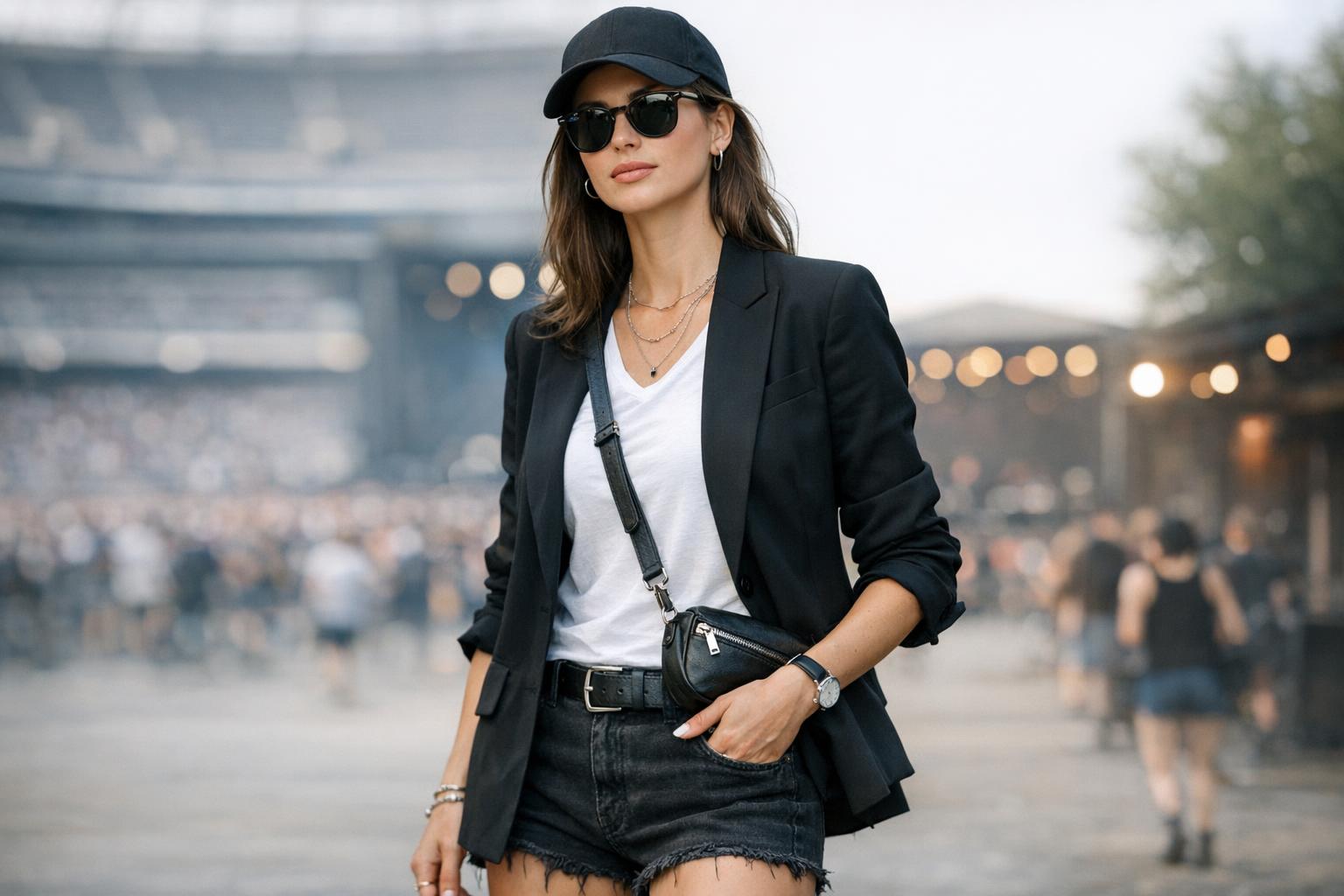
The konzert outfit dilemma: looking effortless while planning for reality
A concert is rarely just “a night out.” It’s a walk from parking to gate, a queue that stretches longer than expected, a temperature shift between daylight and the first encore, and—if you’re lucky—hours of movement. The best konzert outfit acknowledges this reality without surrendering the pleasure of dressing. It’s a look built for the body in motion: standing, dancing, weaving through crowds, stepping onto sticky club floors or gravel festival paths. And it still needs that editorial charge—the feeling that your silhouette and styling choices are intentional.
Across concert fashion, a few priorities keep reappearing: comfort, weather readiness, and a vibe that aligns with the music. Yet “comfort” doesn’t have to mean forgettable. Oversized tees can be styled to look deliberate; a light blazer can read polished while solving the “cold indoor” problem; sneakers can anchor an outfit with streetstyle credibility. Think of this as Look Di Moda with a practical spine: refined composition, clean lines, and pieces chosen for how they behave over a full night—not just how they photograph.
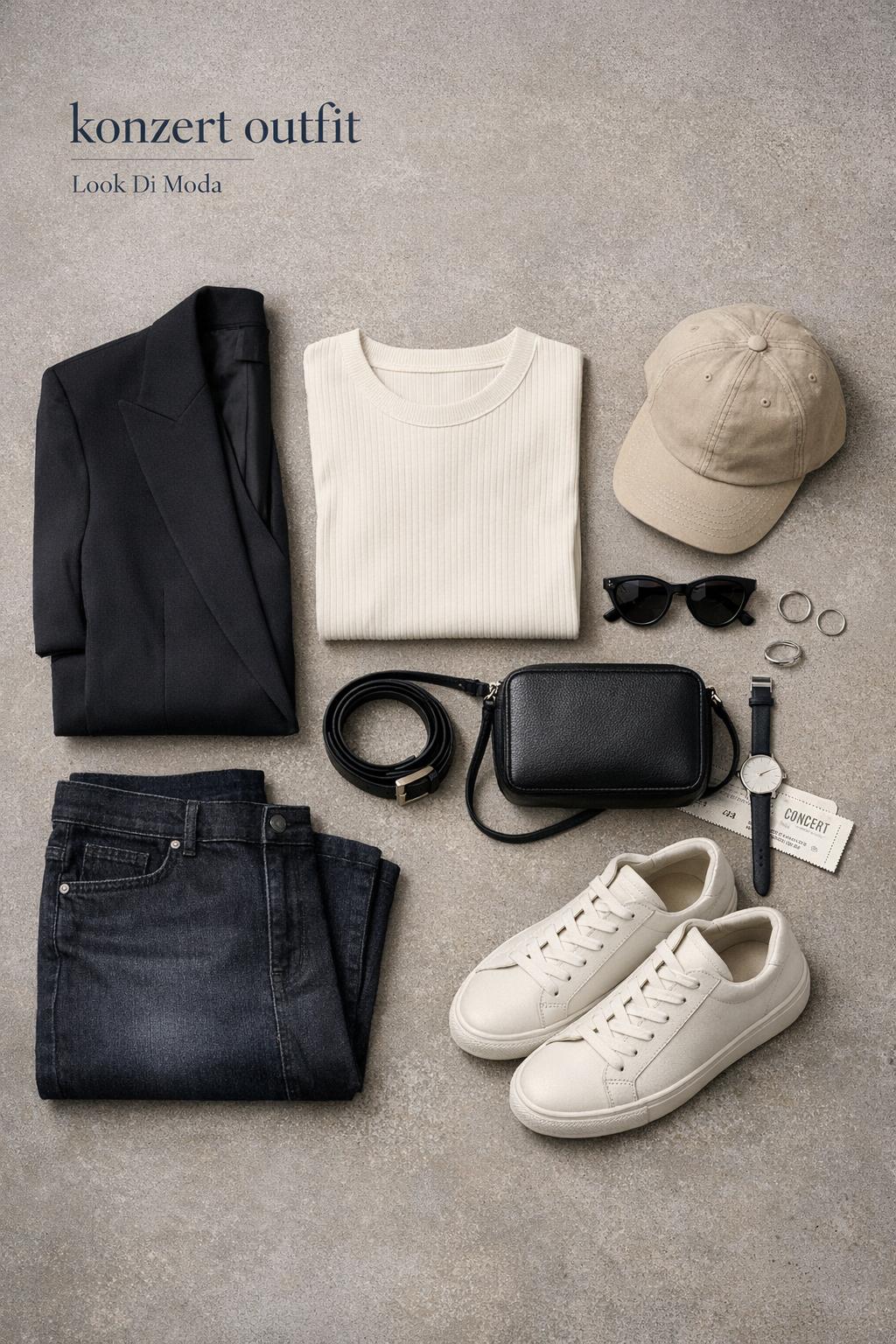
Below, you’ll find a fashion-editor approach to outfit for concerts: how to build the foundation, how to adjust for venue and weather, how to translate genre into proportion and texture, and how accessories (from hats and bags to a watch) can quietly do the heavy lifting. Consider it Outfit Inspo Casual elevated into looks chic—and still ready for the real world.
The anatomy of a concert look: why some outfits work all night
A strong concert outfit is a system, not a single item. The most reliable approach is to start with three anchors—mobility, climate logic, and aesthetic intent—and then add detail. Mobility means you can raise your arms, step quickly, and stand for long stretches without constant adjustment. Climate logic means you won’t be forced to carry a coat all night or shiver through the opener. Aesthetic intent is the invisible difference between “I threw something on” and “this is my lookbook outfits moment.”
Your wedding has a lot of moving pieces. Your plan can still feel composed.
Zarellea organizes guests, vendors, budget, and timelines in one shared space — so you can make decisions with clarity, not stress.
Stylists and fashion editors often return to the same balancing act: relaxed pieces that allow movement, sharpened by one structured element. An oversized tee paired with a clean jacket; denim with a sleeker shoe; a casual base with a glam accent. The goal isn’t to dress like the performer. It’s to choose a silhouette that feels aligned with the event—concert, open-air concert, festival, club night—while still feeling like you.
- Base layer: the item that touches the skin and determines comfort (often a tee, lightweight top, or breathable fabric choice).
- Structure layer: the piece that gives the look shape (a blazer, a jacket, or a well-chosen outerwear silhouette).
- Grounding layer: footwear that can handle standing and dancing (sneakers and boots are the recurring heroes).
- Functional accents: accessories that solve real needs (bag, belt, hat, sunglasses, watch).
Once you start thinking in layers and roles, concert fashion becomes less about chasing trends and more about building a look that performs.
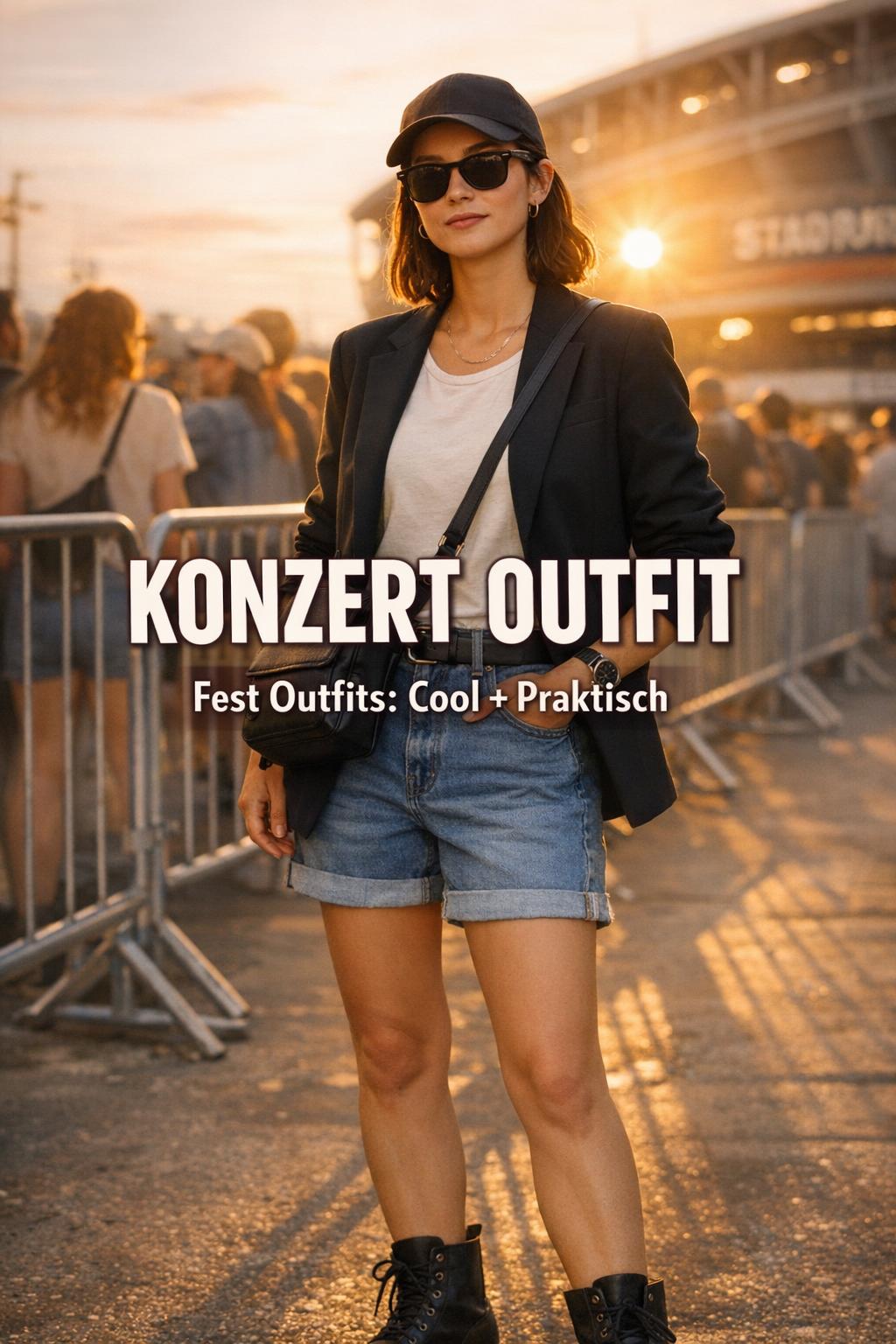
Venue intelligence: dressing for stadiums, open-air festivals, and small clubs
Venue type quietly dictates everything: fabric choice, layering strategy, and even how much accessory “weight” you can tolerate. A stadium seat changes your posture and temperature; an outdoor festival demands weather readiness; a small venue compresses the room and intensifies heat and movement. If you’ve ever watched your carefully chosen outfit unravel by hour two, venue logic was probably missing.
Indoor stadiums and theatres: the art of light layering
Indoor venues can feel climate-controlled—until they don’t. The common experience is a warm crowd with pockets of cold air, especially once you’re seated. The most dependable indoor concert outfit is built on breathable fabrics with a removable top layer: a light jacket, a soft cardigan, or a structured blazer that won’t crush under your arm.
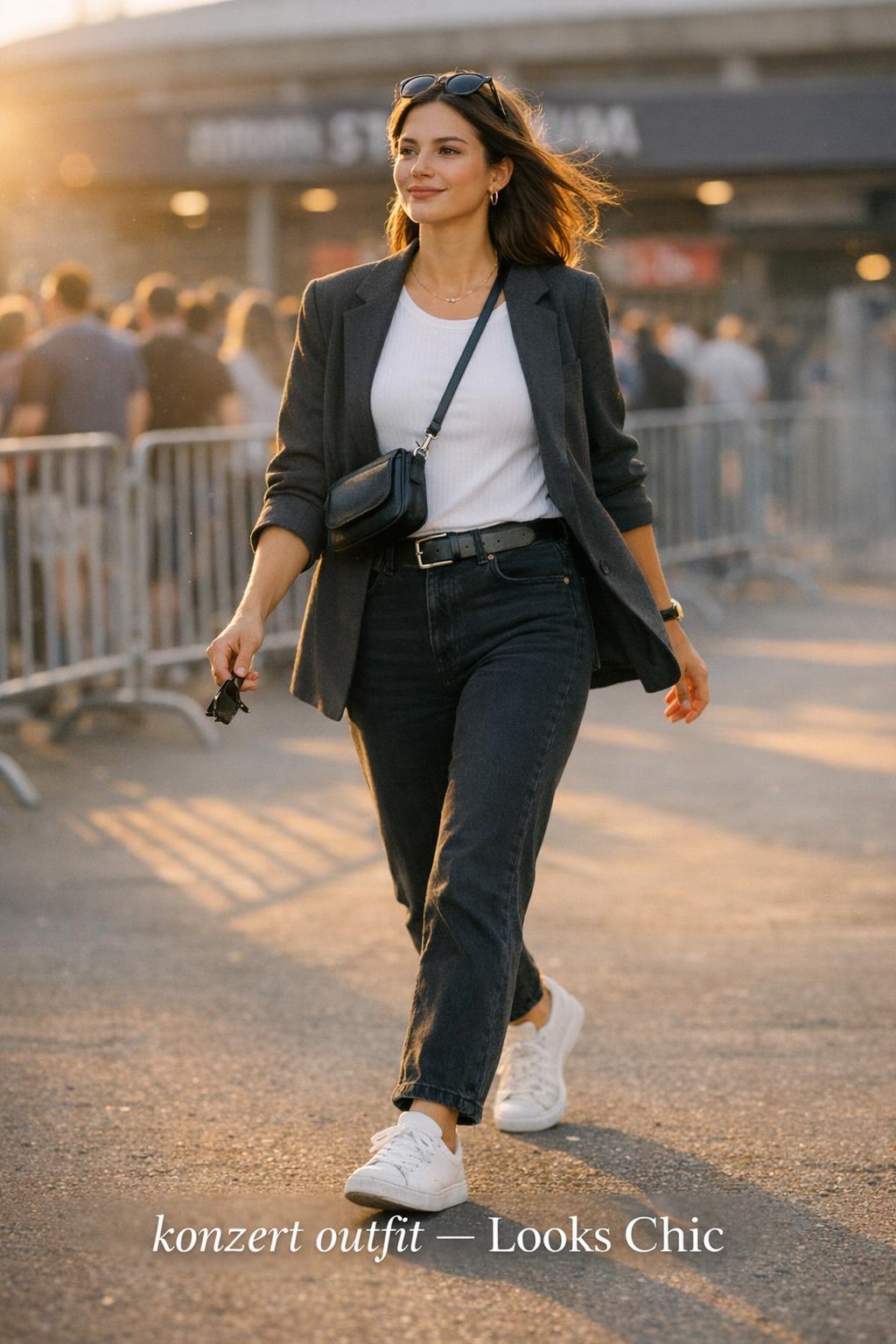
A refined formula: an oversized tee softened by tailored structure. The tee keeps movement easy; the blazer adds polish and a clean vertical line that reads intentional. If your style leans streetstyle, keep the blazer relaxed and the tee slightly longer. If you want looks chic, choose a cleaner blazer shape and let your accessories do the playfulness.
Open-air concerts and festivals: sun, dust, and sudden weather
Outdoor events demand a different kind of elegance: preparation that doesn’t look like preparation. Sun is a styling factor, not merely a comfort issue—hats and sunglasses become part of the silhouette, and breathable fabrics shift from “nice to have” to non-negotiable. Weather can turn quickly, so your outerwear should be easy to carry or wear without overheating.
Footwear becomes the make-or-break decision. Sneakers are a baseline for a reason: stable, comfortable, and reliable on uneven ground. Boots can work beautifully, especially if the look is genre-driven (rock textures, darker palettes), but the boot has to be walkable for long stretches. Your festival outfit is not the place for shoes you must “break in.”
For fest outfits that still feel editorial, focus on proportion: a relaxed top balanced with a more defined bottom, or a streamlined base with a more dramatic layer—like a cape-inspired outer piece that moves with you and adds visual narrative without restricting motion.
Small venues and club nights: compact silhouettes, high impact
In smaller venues, you feel the music in close quarters. The styling challenge is heat and density—your outfit needs to breathe, and your accessories should be minimal enough to avoid constant readjustment. This is where texture and color do their best work: velvet or satin accents (even subtle) can create a sense of glamour without piling on layers.
Keep the look streamlined: a clean top, a confident jacket choice, and shoes designed for movement. If you want a stage-ready look without looking costume-like, select one statement element—an accessory, a bold color note, or a sharp outerwear piece—and let the rest stay refined.
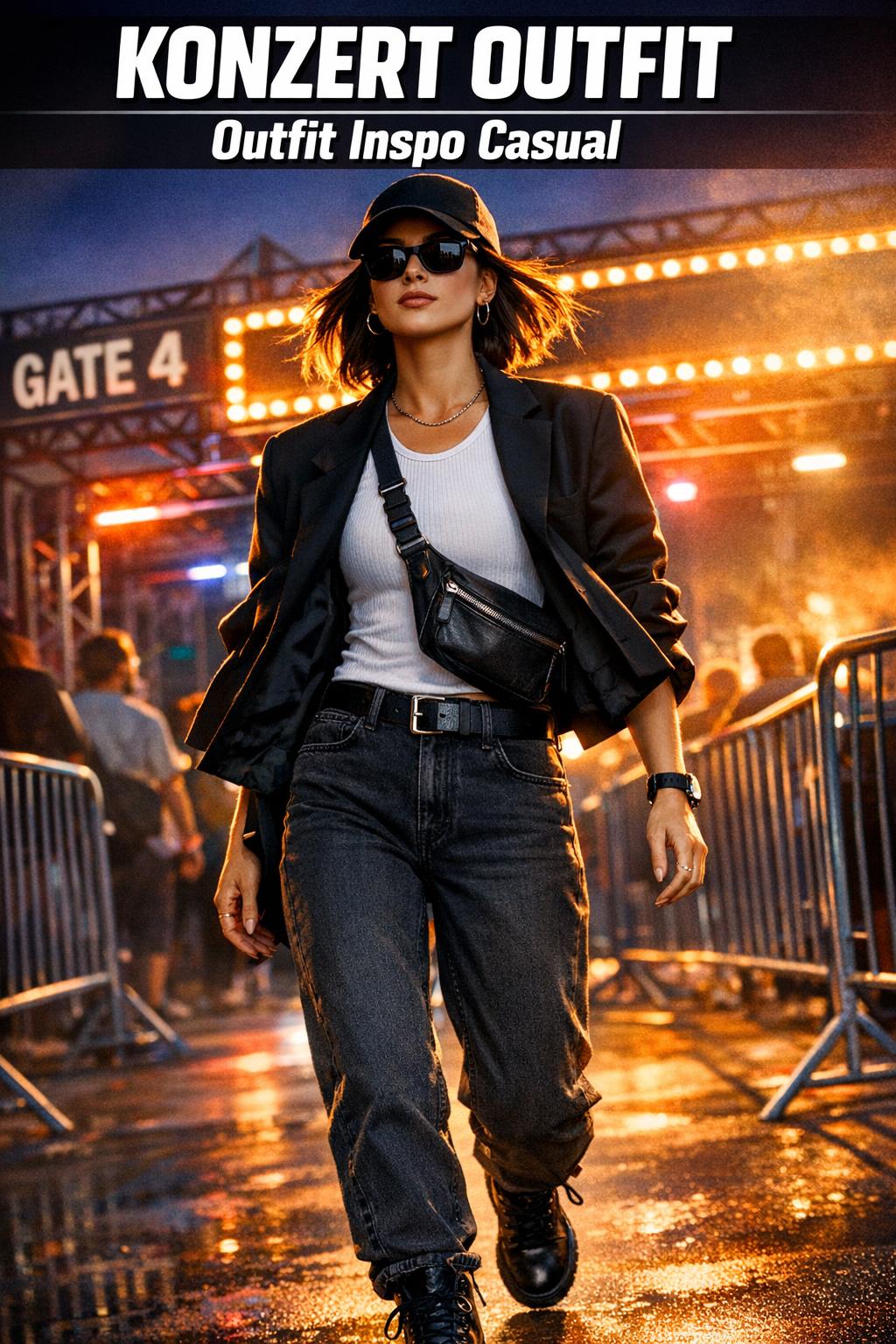
Genre dressing without clichés: translating music into silhouette and texture
Genre-inspired dressing works best when it’s interpreted, not copied. The most convincing “music-vibe” outfits use a few genre cues—texture, color, proportion—then filter them through your own wardrobe. This is where the lookbook outfits mindset becomes useful: you’re composing a visual story using pieces that already make sense on your body.
Rock and indie: denim, leather accents, and purposeful layering
Rock and indie styling thrives on contrast: a relaxed base with a tougher edge, matte textures with a hint of shine. Denim is the easy backbone—especially layered with a jacket—and it reads authentic because it’s durable and lived-in. A denim jacket over a tee is classic, but the editorial trick is proportion: keep the jacket slightly cropped or structured so the line of the body stays clear, even when you’re moving.
Boots naturally belong here, but sneakers can feel just as right if the rest of the look carries the mood. The goal is a look that can handle crowds, doors, and late-night chill—without sacrificing that nonchalant cool that indie streetstyle suggests.
Tip: If you’re wearing an oversized tee, make the rest of the silhouette intentional. Pair it with a jacket that adds shape, or balance it with a cleaner, more streamlined lower half. That’s the difference between “oversized” and “sloppy.”
Pop and mainstream: bold color with wearable comfort
Pop concerts invite shine, color, and a more playful relationship with accessories. Yet the most modern pop concert outfit still respects comfort—because you’ll be dancing. Think bold colors placed thoughtfully rather than everywhere at once: a bright top against a calmer base, or a neutral outfit punctuated by statement jewelry.
To keep it refined, choose one focal point. If the jewelry is the statement, keep the neckline clean. If the color is the statement, keep accessories minimal and deliberate. This is how you get looks chic without slipping into “trying too hard.”
Tip: For a polished effect under venue lighting, mix textures rather than stacking loud pieces. A smooth fabric paired with a more tactile layer can read glamorous and controlled.
EDM and dance: movement-first styling with glow accents
EDM styling is driven by motion. You’ll feel the difference between an outfit that fights your body and one that moves with it. Flexible fabrics, clean lines, and shoes that can handle hours of dancing are the foundation. Glow-in-the-dark accessories and reflective details can be fun here, but they work best when the base outfit is simple and stable.
Approach glow as an accent, not a full theme: a small accessory, a subtle detail, a single element that catches light. It keeps the look elevated—more Look Di Moda than novelty—while still honoring the rave and festival context where this style language makes sense.
Weather and climate: a layering strategy that looks intentional
Weather-appropriate layering is the quiet hallmark of experienced concertgoers. The most common failure is dressing only for the moment you leave the house—then spending the rest of the night either sweating or freezing. A smart concert look anticipates transitions: afternoon sun to evening chill, indoor warmth to outdoor air, crowd heat to the walk back.
Heat and summer nights: breathable fabrics that still look polished
In warm weather, the best summer concert outfit starts with breathable fabric choices and a silhouette that allows airflow. Lightweight materials and looser cuts can still look refined if the lines are clean. Sun protection becomes part of styling: a hat can frame the face and complete the outfit; sunglasses add attitude and practical comfort.
In the heat, glam is best expressed through detail: a crisp accessory choice, a controlled color palette, or a well-balanced outfit rather than heavy layers. This is the season where Outfit Inspo Casual can be the most sophisticated, because simplicity looks deliberate when the fit is right.
Rain and cold nights: outerwear that doesn’t ruin the look
Cold and rain don’t need to mean bulky compromise. The trick is selecting outerwear that integrates into the outfit story. A blazer can add warmth indoors and still look sharp; a jacket with a clean shape can protect you outside. If rain is possible, avoid fabrics that show water spots easily and focus on layers you can rearrange.
When the temperature drops, a cape-like layer can be unexpectedly effective: it reads dramatic and editorial, and it allows movement without the rigidity of a tight sleeve. It’s a styling choice that feels fashion-forward while still being functional for an open-air concert.
The layering toolkit: modular pieces you’ll actually use
Layering works when it’s modular. If the pieces can’t be removed, carried, or re-styled quickly, they become a burden. Think in “on/off” items that still look good when you’re holding them.
- A light blazer that folds over the arm without losing its shape
- A jacket that can be tied at the waist without looking bulky
- A cardigan that adds warmth but doesn’t trap heat in crowds
- A top layer that complements your base colors, so it never feels like an afterthought
Tip: Choose a consistent color story across layers. When the palette is cohesive, the outfit still reads “finished” even after you remove a piece.
Shoes that dance: the elegant case for sneakers and the right boots
Footwear is the most underestimated part of concert attire, and the part you’ll feel most intensely. A concert is not a short walk; it’s hours of standing, shifting weight, and navigating other people’s pace. Comfortable footwear is not just comfort—it’s posture. The wrong shoe changes how you stand and how you move, which changes how your clothes sit on the body. Even a beautiful outfit can look off if your shoes force an awkward stance.
Sneakers are the modern default for good reason, and they can be styled to look intentional. A streamlined sneaker keeps the outfit clean and contemporary; it supports movement and pairs well with everything from denim to a blazer-based look. Boots bring attitude and can suit rock and indie styling beautifully, but only when the boot is stable enough for a long night.
- Choose sneakers when the venue involves long walking, outdoor terrain, or hours of dancing.
- Choose boots when the weather is cooler, the look is texture-driven, or you want a tougher finish—provided they’re broken-in and supportive.
- Avoid “new shoes” for festivals and open-air concerts; discomfort becomes the main memory.
In editorial terms, shoes also anchor proportion. Chunkier footwear can balance an oversized tee; sleeker shoes can sharpen a relaxed outfit. Either can be correct—if the rest of the silhouette agrees.
Accessories as architecture: hats, bags, sunglasses, and the quiet power of a watch
Accessories at concerts should feel stylish, not fussy. The best ones function like architecture: they organize the look and solve problems. A bag shapes how your body moves through a crowd. A belt can add definition when you’re wearing a looser top. Sunglasses and hats do more than protect from sun—they set the mood and frame the face in a way that reads instantly on arrival.
Bags, belts, and tech-friendly add-ons for real movement
A small crossbody bag is often the most practical concert companion because it keeps hands free and stays close in crowds. The silhouette matters: a neat shape looks polished; an overly bulky bag can distort proportions. Belts are useful when you want to give an oversized tee or relaxed outfit a clearer waistline—especially if you’re aiming for looks chic rather than purely casual.
If you like the idea of subtle “tech-friendly” styling, keep it discreet: choose accessories that support your needs without turning the outfit into gear. Functional accessories should disappear into the overall composition, not shout over it.
Jewelry, hats, and sunglasses: glam without discomfort
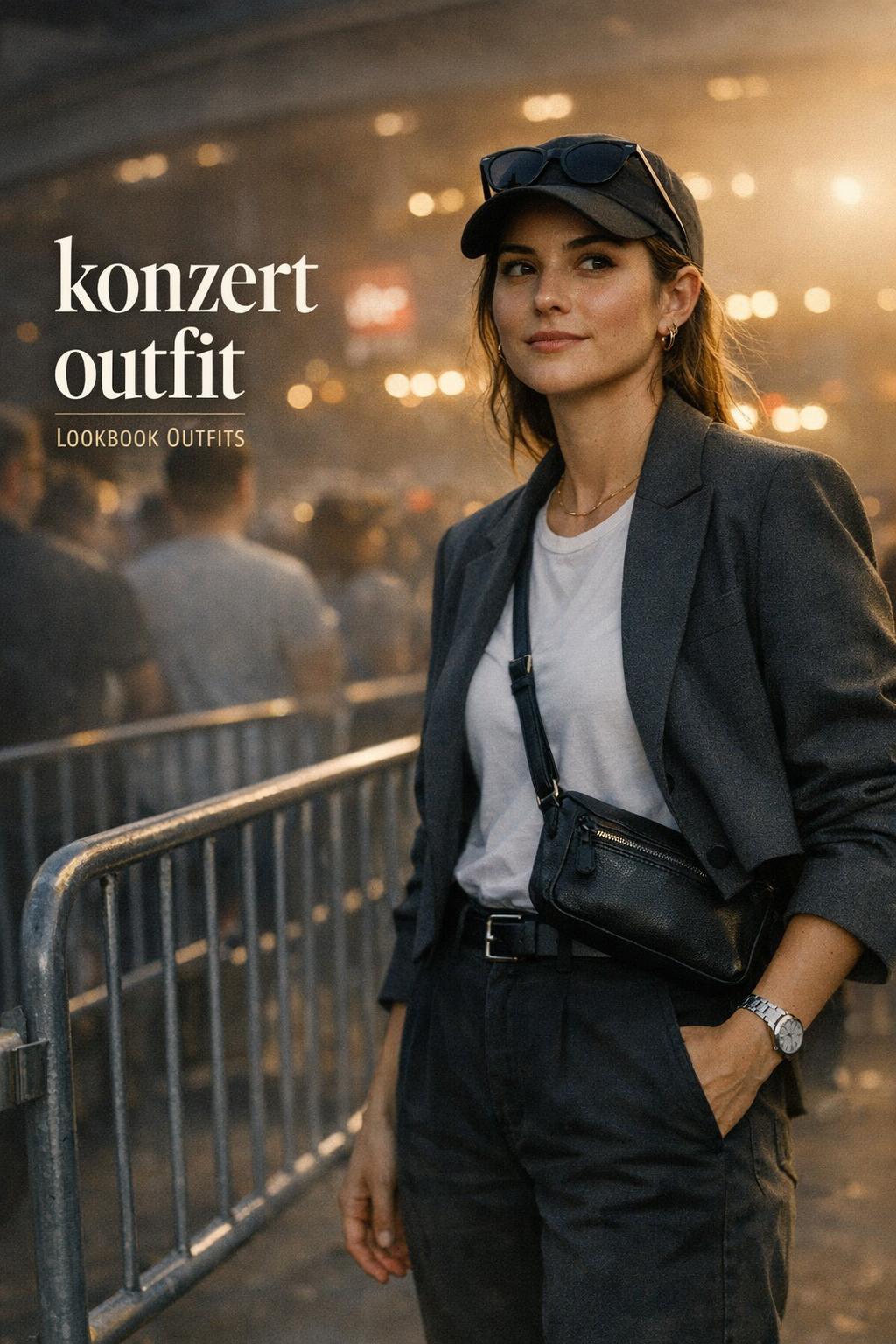
Statement jewelry can elevate the simplest base, but at concerts it has to be wearable for hours. If you’ll be dancing, choose pieces that won’t snag or require constant adjustment. Hats can read especially modern when balanced with clean lines—think of them as part of a festival outfit silhouette rather than a last-minute add-on. Sunglasses bring instant attitude and remain one of the simplest ways to turn Outfit Inspo Casual into a more intentional concert look.
A watch as a finishing detail: subtle, composed, and intentional
A watch can be the most understated “finishing touch,” especially if the rest of the look is minimal. It adds a sense of polish and deliberateness—quietly suggesting you thought about details. Brand-led styling content often frames watches as coordination pieces, and in practice that’s exactly right: the watch should harmonize with your outfit’s texture and color story rather than competing with statement jewelry.
Look di moda, not last-minute: styling rules that make any concert outfit feel elevated
Concert outfits are full of temptations: too many trends, too much discomfort, too little planning. The styling rules below aren’t rigid; they’re the kind of editor’s mental checklist that keeps a look from tipping into chaos. When applied lightly, they make even basic pieces feel like a considered lookbook outfit.
- Balance volume: if one piece is oversized, keep another more streamlined so the silhouette stays intentional.
- Choose one “glam twist”: texture (velvet, satin), statement jewelry, or a bold color—just one is usually enough.
- Respect movement: anything that restricts your arms, hips, or stride will become annoying by the second song.
- Plan for holding your layer: if you can’t carry your outerwear comfortably, it will end up tied awkwardly or left behind.
- Use accessories to finish, not clutter: a hat, a crossbody bag, sunglasses, or a watch can complete a look; too many pieces dilute it.
Tip: Before you leave, do a two-minute “movement test”: raise your arms, sit, stand, and walk quickly. If anything rides up, pinches, or demands constant adjustment, revise now—not later in line.
A curated concert wardrobe: pieces that re-style across seasons and vibes
The smartest approach to concert fashion is building a small set of pieces that can shift from indoor stadium to open-air festival without changing your entire identity. Think of it as a capsule with range: streetstyle-friendly, but adaptable to glam accents and weather shifts. Retailers and fashion magazines often show dramatic outfit ideas, but the most useful inspiration is the kind you can re-style with what you already own.
Start with the foundation pieces that appear again and again: tees (including oversized tees), denim, a jacket you can live in, and shoes designed for movement. Then add one or two “editorial” elements—perhaps a blazer that sharpens any base, or accessories that can tilt the mood from casual to polished. This is how fest outfits can still feel mature and refined: the palette is controlled, the silhouette is considered, and the materials feel chosen.
If you like browsing retailer inspiration, you’ll notice the same patterns across different sources: sneakers as a baseline, jackets and outerwear as problem-solvers, and accessories like hats and bags as the finishing layer. The point isn’t to copy a catalog. It’s to recognize the structure behind the styling and recreate the effect in your own way.
Genre-meets-weather outfit stories: realistic scenarios you can actually use
Concert dressing becomes easier when you imagine the night as a story: where you’ll walk, where you’ll wait, when the temperature changes, and how much you’ll move. Below are a few scenario-based compositions—less “Outfit 1, Outfit 2,” more editorial styling logic you can borrow and adapt.
Indoor pop show with intense air conditioning: polished layers that won’t overwhelm
Begin with a clean base—an easy top that breathes—then add a blazer that brings structure. Keep the palette simple, and place your “pop” energy in accessories: statement jewelry or a strong color note. Finish with sneakers so you can dance without thinking. The blazer is the practical hero: it reads elevated while solving the cold-venue problem.
Outdoor festival afternoon into chilly night: a modular look that stays chic
Think breathable fabric at the base, plus a jacket that can be worn or carried without ruining the silhouette. Add a hat and sunglasses early—both functional and mood-setting. As the temperature drops, your outerwear becomes part of the look rather than an emergency. Sneakers keep the outfit grounded across grass, pavement, and packed crowds.
Small indie venue with a packed floor: texture-driven minimalism
Choose a streamlined outfit with one tactile element—denim, a subtle satin accent, or a sharper jacket. Keep accessories compact: a crossbody bag that stays close, minimal jewelry that won’t snag. The effect is modern, slightly moody, and comfortable enough to move for hours without distraction.
EDM night where you’ll dance for hours: glow details on a disciplined base
Prioritize flexible, movement-friendly pieces and supportive shoes. Keep the base clean and minimal so reflective or glow-in-the-dark accessories feel intentional rather than overwhelming. This is where a single accent becomes your signature—an editorial “glam twist” that catches the light while the rest of the outfit does its job quietly.
Common mistakes that sabotage a konzert outfit (and how to fix them)
The most common concert styling mistakes are easy to make because they look fine in a mirror—until you’re outside, in a crowd, under changing temperatures. Fixes are usually small: a different shoe, a smarter layer, or a more deliberate proportion choice.
- Over-layering without a plan: If you can’t remove a layer without losing the outfit’s shape, the layers are working against you.
- Choosing shoes for aesthetics only: Uncomfortable footwear changes your posture and your mood, and can make even stylish clothes look awkward.
- Too many accessories: In crowded spaces, excess jewelry and bulky bags become a constant inconvenience.
- Ignoring weather transitions: Dressing only for the start of the night often ends with discomfort later.
- Oversized without intention: Oversized tees look modern when balanced; without structure, the silhouette can collapse.
Tip: If you feel uncertain, simplify the base and add one clear focal point. A controlled foundation always photographs—and feels—more refined than a chaotic mix.
Quick tips: a pre-concert checklist for comfort, style, and confidence
Before you step out, a concise checklist keeps your concert attire grounded in reality. It’s not about overthinking; it’s about making sure your look holds up through the full arc of the night.
- Confirm whether the venue is indoor, open-air, or a small club, then choose your outerwear accordingly.
- Plan one removable layer for temperature shifts.
- Choose comfortable footwear you trust for long standing and dancing.
- Keep valuables in a small bag that stays close, ideally crossbody.
- Select accessories with intention: hat and sunglasses for sun, minimal jewelry for movement, a watch for subtle polish.
- Do a quick movement test at home to catch fit issues early.
This is the quiet difference between a look that feels like a last-minute decision and one that reads like curated Look Di Moda—composed, effortless, and ready.
Lookbook outfits, not costumes: building a personal concert style vocabulary
The most stylish concertgoers aren’t necessarily wearing the most dramatic pieces. They’re wearing outfits that are coherent. Their color palette makes sense. Their proportions feel intentional. Their layers feel like part of the story. Whether your default is streetstyle, glam-leaning, or Outfit Inspo Casual, the goal is to develop a small vocabulary of shapes and textures you can repeat and refine.
Start by identifying your “concert uniform” and then adjusting it by genre and weather. Maybe it’s denim plus a tee plus a jacket, reworked with a blazer for a pop show or with tougher outerwear for rock. Maybe it’s a minimalist base with a single accessory statement. This repeatable approach is what turns one-off fest outfits into a wardrobe strategy.
And if you do browse inspiration—magazine edits, retailer guides, or curated collections from brands such as IVY Berlin, Peek & Cloppenburg, or Stylight—use them as composition lessons. Notice the structure. Notice the role of sneakers. Notice how a bag and sunglasses can finish a look. Then translate it into your own life, climate, and movement needs.
FAQ
What is a konzert outfit, and how is it different from everyday outfits?
A konzert outfit is designed for movement, long wear, and changing conditions—standing, dancing, and shifting temperatures—while still expressing a clear style intention through silhouette, layering, and accessories.
What should I wear to an indoor concert if I’m worried about getting cold?
Start with a breathable base layer and add a light, removable top layer like a blazer or light jacket; it keeps you warm in colder pockets of the venue without forcing you into heavy outerwear you’ll have to carry later.
What are the best shoes for concerts if I plan to dance?
Sneakers are usually the most reliable choice because they support long standing and dancing, especially in crowded venues; boots can work as well if they’re stable, comfortable, and already broken in.
How do I dress for an open-air concert or festival without sacrificing style?
Build your outfit around breathable fabrics, add sun-smart accessories like a hat and sunglasses, and choose a modular outerwear layer you can wear or carry as the temperature changes, keeping the color palette cohesive so the look stays intentional.
How can I make an oversized tee look polished for a concert?
Balance the relaxed volume with a structured layer such as a blazer or a clean jacket shape, and keep the rest of the silhouette more streamlined so the oversized proportion looks deliberate rather than accidental.
What accessories are actually useful at concerts?
A small crossbody bag helps you move hands-free in crowds, sunglasses and a hat are practical for open-air events, and a watch can add subtle polish; the best concert accessories solve real needs without creating extra bulk or discomfort.
How do I choose a concert outfit based on genre like rock, pop, or EDM?
Use genre as a guide for texture and proportion—denim and layered toughness for rock/indie, a controlled bold color or statement jewelry for pop, and movement-first styling with optional glow accents for EDM—while keeping comfort and layering appropriate to the venue.
What are the biggest concert outfit mistakes to avoid?
The most common issues are ignoring weather transitions, choosing uncomfortable footwear, over-layering without a plan for carrying pieces, and over-accessorizing in crowded spaces, all of which can undermine both comfort and the overall look.
Leave a Reply