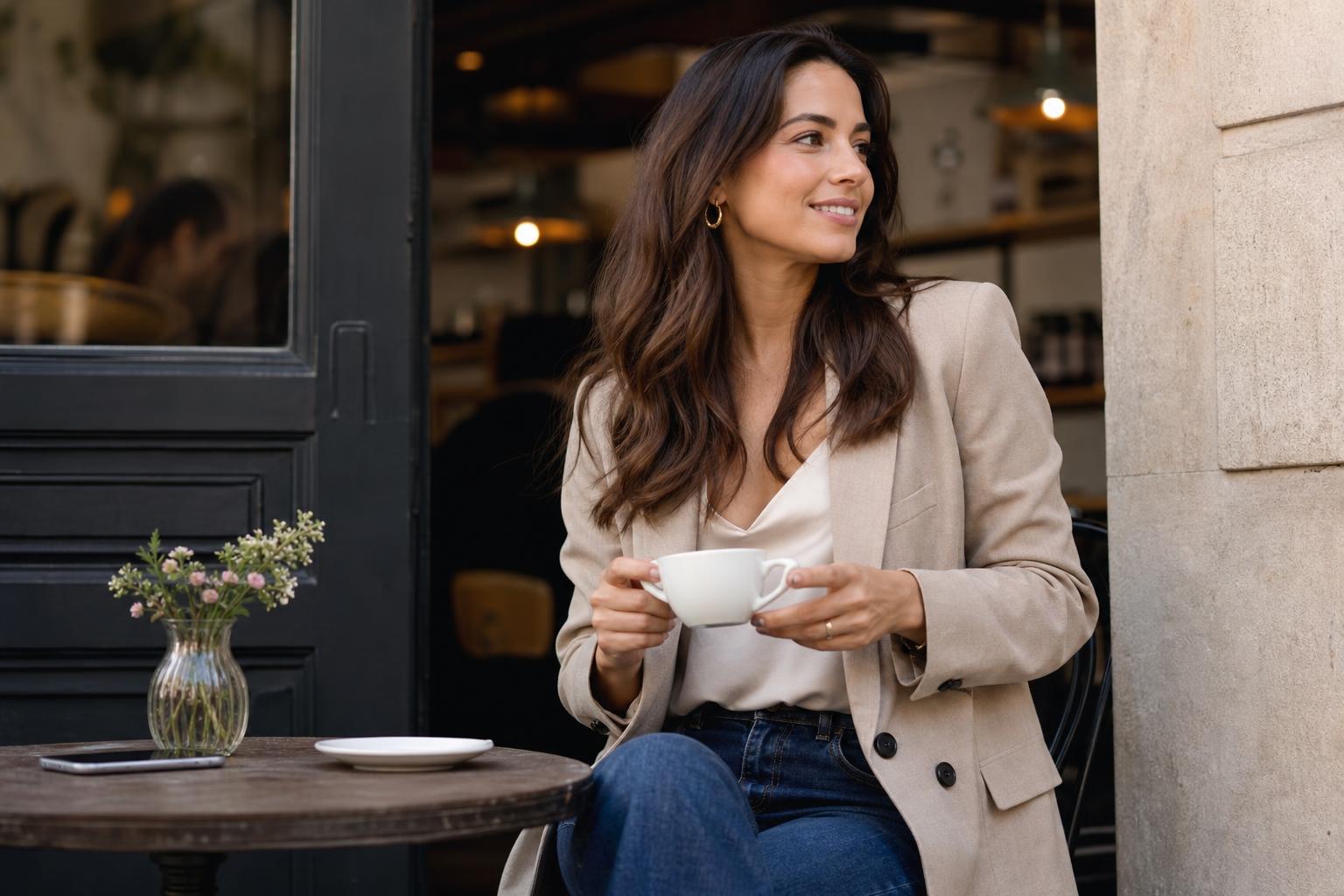
A coffee date sounds simple until you stand in front of the wardrobe and realize the dress code is unusually precise. It is not fully casual, not traditionally dressy, and rarely forgiving of outfits that feel too calculated. Most people want coffee date outfits that feel effortless, polished, and comfortable enough for a daytime setting, yet still memorable in the subtle way that good personal style often is.
The difficulty comes from the setting itself. A café asks for ease: you may be seated by a window, walking a few blocks, layering against indoor air conditioning or a chilly patio, and hoping your outfit works in natural daylight rather than evening mood lighting. The most successful coffee-date look is usually built from thoughtful basics rather than dramatic fashion moves. This guide breaks down how to solve that styling problem with practical outfit formulas, seasonal adjustments, and refined finishing details.
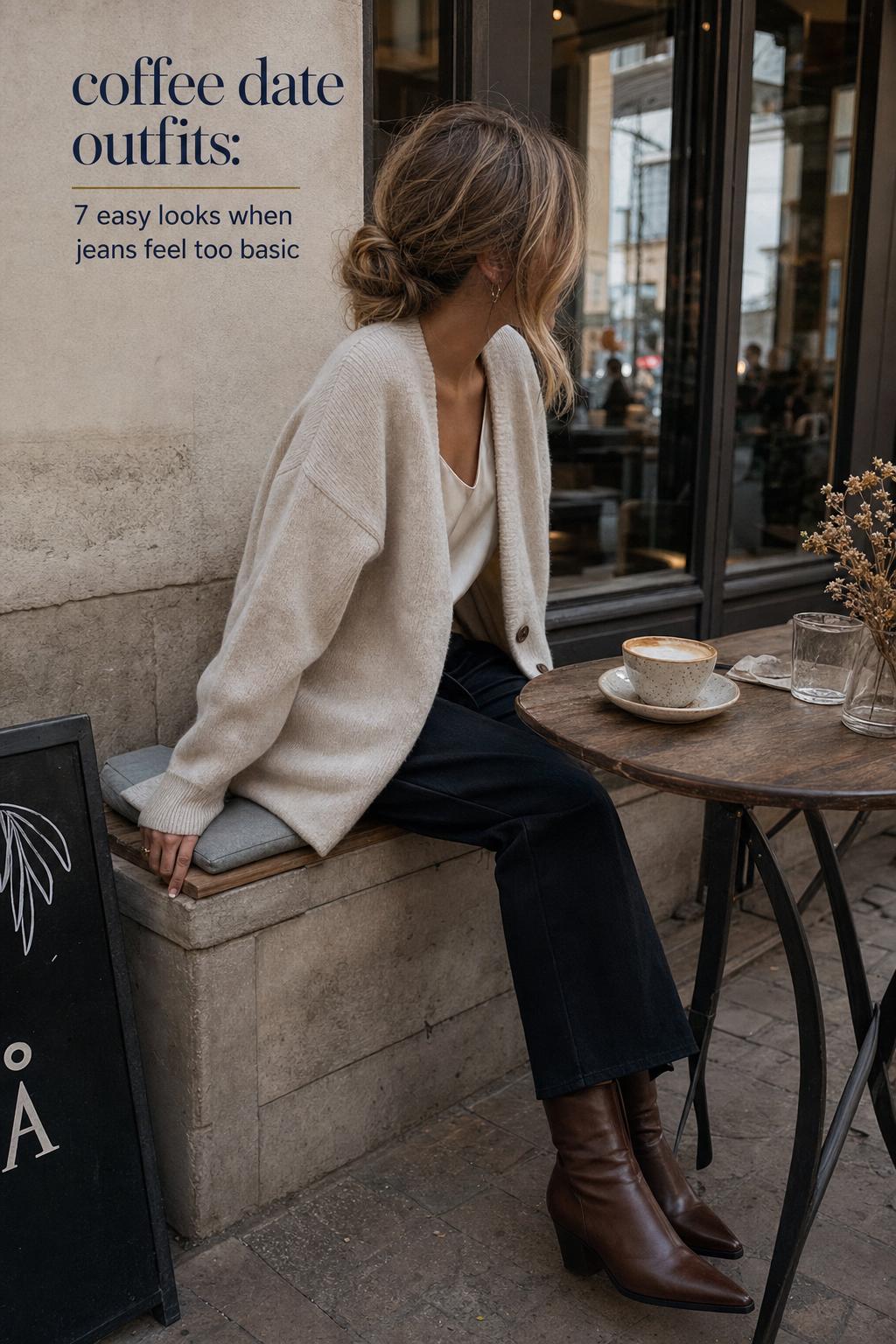
The quiet complexity of the coffee-date dress code
A coffee date sits in the middle of the casual-to-polished spectrum. That is why it creates so much uncertainty. Jeans may feel right, but the wrong top can make them seem too relaxed. A dress can be perfect, but the wrong shoes may push it too far into occasionwear. Even a blazer, which often saves an outfit, can feel overly formal if the rest of the look lacks softness or balance.
There are also practical considerations that matter more here than they might for dinner or an evening event. Daytime dates often involve changing temperatures, natural light, and more movement. You may be walking from your car to a local café, heading from coffee to a gallery, or extending the date into a stroll through a park or nearby neighborhood. That means comfort, layering, and adaptable pieces are not secondary concerns; they are the structure of the outfit itself.
Your wedding has a lot of moving pieces. Your plan can still feel composed.
Zarellea organizes guests, vendors, budget, and timelines in one shared space — so you can make decisions with clarity, not stress.
This is where the idea of casual chic, or elevated-casual dressing, becomes useful. In simple terms, it means pairing familiar wardrobe staples such as denim, knitwear, dresses, skirts, and blouses in a way that feels composed rather than accidental. The effect is confident, modern, and date-ready without looking overworked.
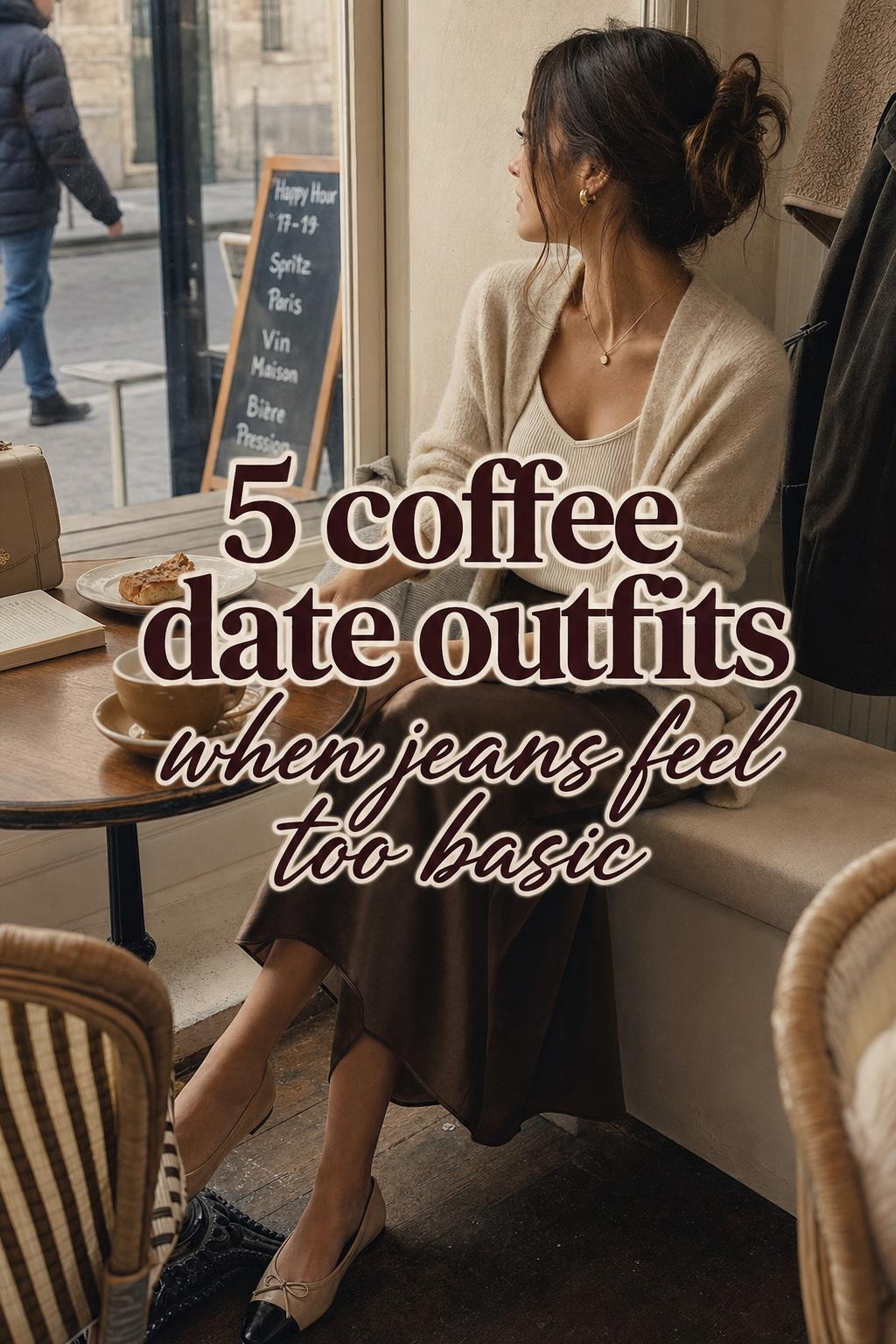
What makes coffee date outfits work
The best coffee date outfits are usually built from four components: a strong foundation piece, a balancing layer, thoughtful footwear, and restrained accessories. This combination appears again and again because it solves the central challenge of the occasion: looking put together while still feeling like yourself.
- Start with one anchor piece. This can be a dress, a skirt, great denim, or a blouse with a clean silhouette.
- Add structure through layering. A cardigan, blazer, or light jacket creates shape and gives the look finish.
- Choose shoes that support the mood. Flats, loafers, ankle boots, sneakers, or simple heels all work when they align with the rest of the outfit.
- Keep accessories intentional. A bag, belt, and jewelry should refine the outfit rather than compete with it.
In editorial terms, this is a game of proportion and texture. A tailored blazer sharpens relaxed denim. A knit top softens a satin skirt. A cardigan makes a dress feel less formal and more daytime appropriate. Clean lines and a coherent palette do much of the work, which is why neutral tones, tonal dressing, soft pink, ivory, and understated contrasts appear so often in coffee-date styling.
Core pieces worth relying on
Tops that set the tone
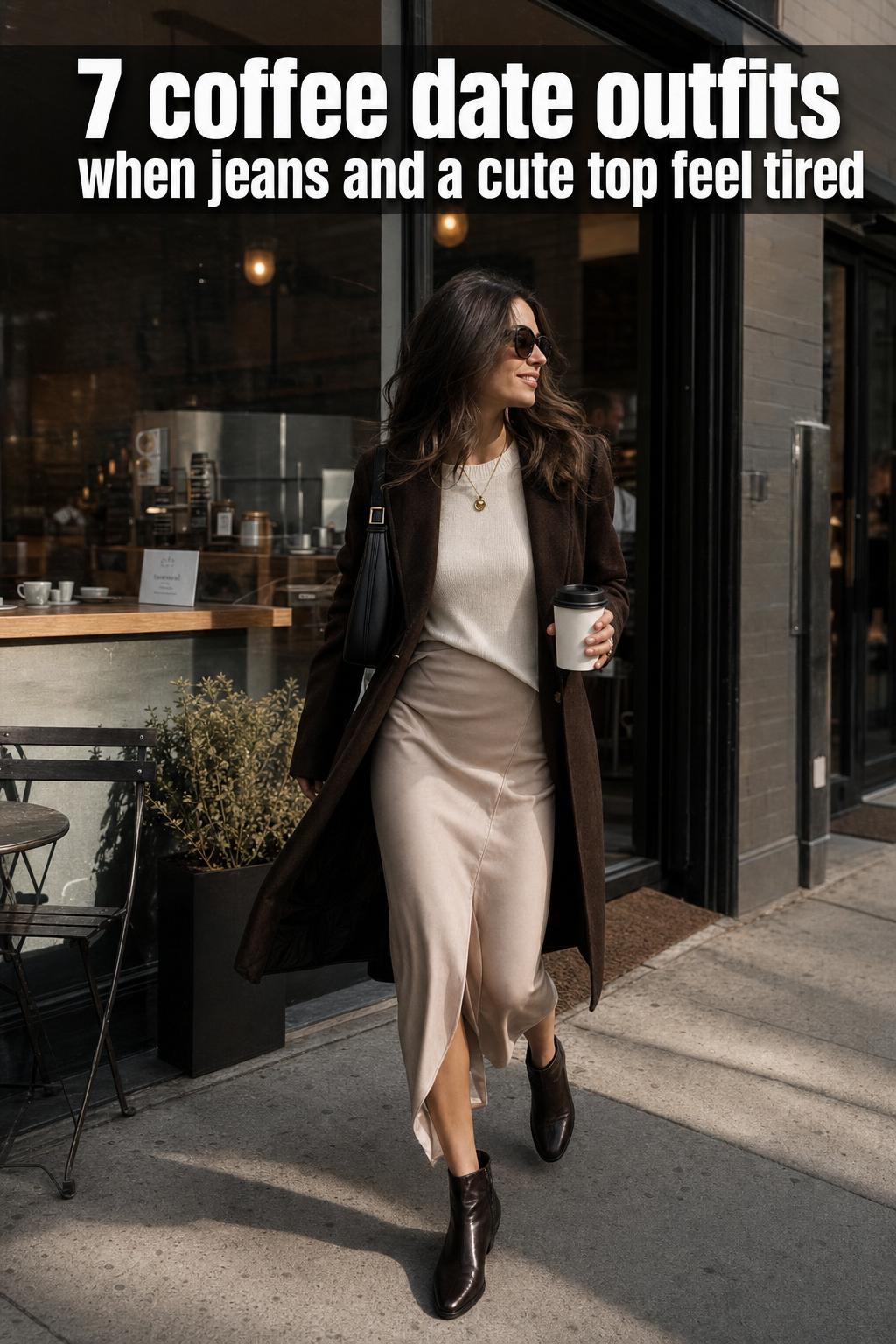
Tops and blouses often determine whether an outfit reads as relaxed or refined. A simple tee can work beautifully with polished outerwear and thoughtful shoes, especially if you want a modern, understated look. A blouse offers a dressier line immediately, making it useful with denim or a mini skirt when you want the outfit to feel slightly more composed. Knit tops are especially effective because they add softness, visual texture, and ease while still looking intentional.
Bottoms that balance comfort and shape
Jeans remain one of the most practical foundations for a coffee date because they are familiar, versatile, and easy to style up or down. Skirts, including satin and midi styles where available in your wardrobe, add movement and visual interest. Dresses simplify the entire process by solving proportion in one step, while co-ords and dressy-casual hybrids offer a similarly streamlined effect for those who prefer a more coordinated look.
Outerwear as the finishing line
Cardigans, jackets, and blazers are central to coffee-date dressing because cafés are transitional spaces. You may be moving between indoor and outdoor temperatures, sitting still for an hour, or extending the day elsewhere. A cardigan lends softness and approachability. A blazer adds tailored structure and a more professional-casual balance. Light jackets are useful when you want the outfit to feel modern and practical without becoming heavy.
Shoes that support the entire outfit
Footwear has to do more than look good. It has to suit walking, daytime light, and the casual rhythm of a café setting. Loafers are particularly strong for this reason: they feel polished, grounded, and easy. Flats are similarly effective when the rest of the look is clean. Ankle boots work well in cooler seasons and with dresses, skirts, or denim. Sneakers can be right for a more casual coffee date, but they need the rest of the outfit to carry enough shape and intention.
Dressing with the café setting in mind
One under-discussed part of coffee date outfits is ambience. A neighborhood café, a sleek coffee chain interior, and a local spot with outdoor seating all create slightly different style pressures, even when the dress code remains informal. The outfit should not be themed to the venue, but it should feel in conversation with it.
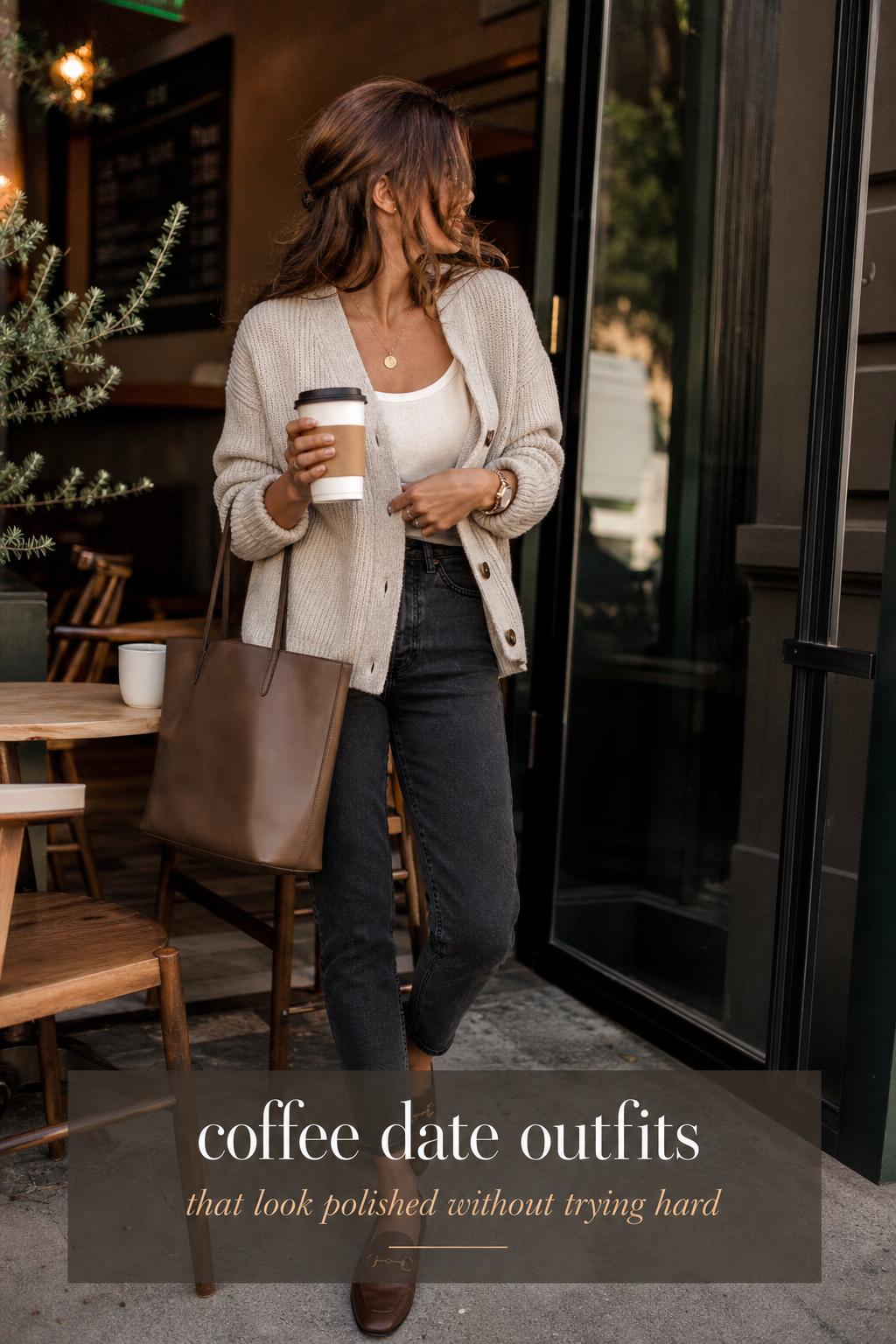
For a minimalist café setting, clean silhouettes and tonal dressing work especially well: think ivory knitwear, dark denim, a blazer, and loafers. In a softer, more romantic local café, a dress with a cardigan or a skirt with a blouse can feel more natural. If the date may continue to a museum, gallery, or city walk, the outfit should have enough structure to transition beyond the coffee table. This is why elevated basics outperform trend-heavy styling here. They travel better across settings.
Seasonal styling that solves real wardrobe decisions
Spring and summer: breathable, light, and still polished
In warmer weather, the challenge is avoiding an outfit that feels either too plain or too exposed for daytime. Lightweight fabrics and breathable silhouettes matter. A dress becomes an obvious solution because it is one-step dressing, but it works best when grounded with simple flats, loafers, or a light cardigan. Linen, cotton, and lighter knits help maintain ease without losing visual structure.
Pastels and soft tones, including shades like soft pink and ivory, tend to work particularly well in spring and summer because they look fresh in daylight and pair naturally with café settings. If dresses are not your preference, denim with a blouse or knit top gives you the same balance of polish and comfort. The important thing is to keep the silhouette breathable and avoid heavy layering that feels disconnected from the season.
Fall and winter: layers, texture, and tonal depth
Cooler seasons create a different challenge. The risk is not underdressing, but overloading the outfit with heavy pieces that flatten the silhouette. Fall and winter coffee-date dressing works best when layers are distinct but not bulky: knitwear under a blazer, a dress with a cardigan and ankle boots, or a skirt paired with a structured top and coat.
Texture becomes more important here. Knitwear, denim, and soft outerwear add warmth visually and physically, which helps the outfit feel seasonal without relying on excess detail. Tonal palettes are particularly effective in colder months because they create cohesion even when multiple layers are involved. A monochrome or near-monochrome look can feel especially refined in winter daylight.
Outfit solutions for different coffee-date moods
Outfit solution: the dress and cardigan formula
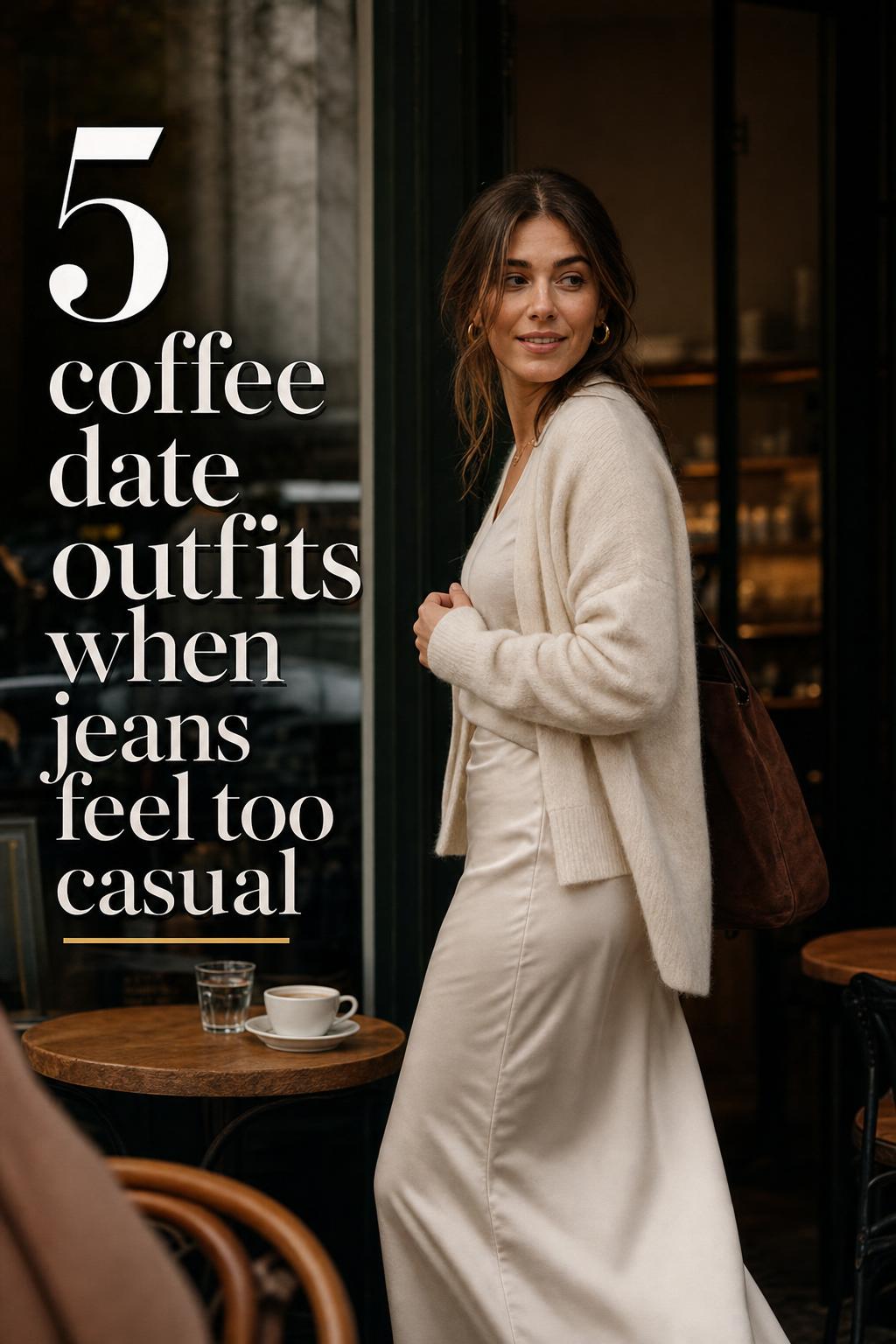
This is one of the most reliable coffee-date outfits because it solves several problems at once. The dress provides shape and ease, while the cardigan softens the look and makes it feel daytime appropriate. It is especially useful for first coffee dates, when you want to look considered without appearing overstyled.
A simple dress in a clean silhouette paired with a fine-knit cardigan works across multiple settings and seasons. In spring, choose lighter tones and breathable fabrics. In fall, move toward richer neutrals and add ankle boots. The reason this combination works so well is that it balances femininity with practicality. The cardigan introduces warmth, movement, and a sense of approachability that a dress on its own may not always provide.
Outfit solution: denim, blouse, and blazer
For anyone who feels most like themselves in jeans, this formula offers one of the smartest ways to dress for a café date. Denim keeps the outfit grounded and familiar. A blouse lifts it immediately, and a structured blazer creates polish without requiring formal pieces elsewhere.
This combination works particularly well in city settings or any café date that may continue into another daytime activity. It also suits the modern, casual-chic aesthetic often associated with polished everyday dressing. Loafers or flats keep the line refined, while simple boots shift the look toward fall or winter. If the blouse feels too dressy, a knit top can take its place while preserving the same silhouette logic.
Outfit solution: satin skirt with a knit top
A satin skirt can feel unexpectedly right for a coffee date when balanced correctly. On its own, it risks looking too delicate or occasion-specific. Paired with a knit top, however, it becomes a study in contrast: soft sheen below, matte texture above, with enough casual ease to suit a daytime café.
This outfit is ideal when you want a slightly more fashion-aware look without sacrificing comfort. A cardigan or light jacket can be added depending on the season, and footwear should remain clean and uncomplicated. The real strength of this combination lies in texture. It creates interest without depending on loud color or too many accessories.
Outfit solution: skirt, blouse, and loafers
For a polished but approachable look, a skirt with a blouse and loafers is difficult to fault. It feels composed, feminine, and easy to adjust depending on the café and season. A mini skirt can work if the styling remains balanced, especially with a more covered blouse and a blazer or cardigan. A midi or softer skirt shape creates a calmer, more classic line.
The loafers are what keep the look anchored. They prevent the outfit from drifting into something too delicate or too office-like. This formula is especially useful when you want to look neat and put together in daylight, with enough practicality for walking and enough structure for a first impression.
Outfit solution: knitwear with tailored bottoms
When the weather turns colder, knitwear becomes the easiest way to look seasonally appropriate while remaining refined. A well-cut knit paired with dressy-casual bottoms or dark denim offers warmth without compromising silhouette. Add a blazer if you want more definition, or keep the outfit softer with a cardigan.
This kind of look is particularly effective for fall and winter coffee dates because it feels natural in the environment. You are not fighting the season with impractical fabrics, and you are not relying on bulky layers to create impact. The elegance comes from texture, fit, and proportion rather than statement detail.
Outfit solution: the one-step co-ord or matching set
Co-ords offer a clean solution for anyone who wants an outfit that feels modern and intentional without much styling friction. Because the pieces already relate to one another, the overall effect is cohesive even with minimal accessories. For a coffee date, the key is choosing a set that remains on the dressy-casual side rather than something overly formal.
Add a blazer for structure or a cardigan for softness, depending on the mood of the date. The advantage of a matching set is visual clarity. In natural daylight, that coherence reads as polished and confident, which is often exactly what people are trying to achieve on a first meet-up.
How to accessorize without overcomplicating the look
Accessories matter on a coffee date because they can quietly shift the formality of an outfit. The mistake many people make is treating accessories as decoration rather than as styling tools. On a daytime date, the strongest accessories usually refine the silhouette or reinforce the mood of the clothes already in play.
- Jewelry: Minimal pieces support clean, modern outfits; a slightly more noticeable piece can work if the clothing palette is restrained.
- Bags: Choose a bag that feels proportionate to the outfit and practical for sitting, walking, and carrying essentials.
- Belts: A belt can define the waist, sharpen denim looks, or connect the tones of shoes and outerwear.
- Layering pieces: A cardigan or blazer often functions as an accessory as much as a practical garment because it completes the composition.
The overall goal is harmony. If the outfit already includes interesting textures such as satin, knitwear, or structured denim, accessories can remain minimal. If the clothes are very simple, a bag or piece of jewelry can provide just enough contrast. Coffee-date styling tends to look best when no single element insists too loudly on being noticed.
Editorial notes on color, texture, and proportion
The reason some coffee date outfits look instantly polished while others feel unfinished often comes down to composition rather than clothing category. A structured blazer layered over a soft knit top creates depth because the textures differ. A tailored silhouette contrasted with relaxed denim gives the eye a clear hierarchy. Soft neutral tones balanced with darker footwear create steadiness, while tonal color dressing can make simple pieces feel more expensive and intentional.
Color should support the daytime setting. Ivory, soft pink, and other restrained shades work well because they feel fresh and approachable. Deeper tones and tonal palettes are often better in fall and winter, especially when knitwear and outerwear play a larger role. The most practical rule is to let one element lead. If the skirt has sheen, keep the top matte. If the blazer is sharply tailored, let the rest of the outfit relax slightly around it.
Brand references and style cues that fit the mood
Some brands naturally appear in conversations around coffee-date dressing because they reflect the balance of softness, polish, and wearability that this occasion demands. Adrianna Papell appears most clearly where dresses, layering pieces, and occasion-adjacent styling are concerned, especially for readers who lean feminine and want a refined dress-based look. J.Crew and Anthropologie are often associated with the same broader aesthetic of elevated everyday dressing, where blouses, skirts, knitwear, and polished separates can be mixed without strain.
Style references also shape how these outfits are imagined. The occasional use of a personality such as Syd Anastasia points to a trend-forward but still wearable approach: denim, dresses, and tops styled in a way that feels current rather than theatrical. What matters is not copying a persona exactly, but understanding the silhouette logic behind the look. Coffee-date dressing works best when it feels lived-in, not costumed.
Practical tips that make the outfit easier to wear
A beautiful outfit that feels wrong after twenty minutes at a café is not a successful one. The finer details matter: how the fabric sits when seated, whether the jacket feels too stiff indoors, whether the shoes suit a short walk, and whether the outfit can survive a change in weather or an unexpected extension of the date.
- Test the outfit sitting down before you leave, especially with skirts, dresses, and blazers.
- Use layering strategically rather than heavily; one strong outer layer is often enough.
- Choose fabrics that work in daylight and movement, including cotton, linen, and knit textures where appropriate.
- Keep footwear realistic for the route, not just the café table.
- If the date may continue elsewhere, make sure the outfit can transition without needing a full reset.
This last point is especially useful. A coffee date often becomes a walk, a bookstore stop, a gallery visit, or another easy daytime plan. Outfits that can stretch into those moments tend to feel more confident from the beginning.
Common styling mistakes that make coffee-date outfits feel off
The most common mistake is dressing for a different kind of date. Evening outfits often look too heavy, too dark, or too intentionally seductive in a café setting. On the other side, outfits that are too casual can seem underconsidered, especially on a first coffee date where the goal is to look attentive and present.
- Too much formality: A highly dressed-up outfit can feel disconnected from the ease of the setting.
- Too little structure: An outfit made entirely of basics without layering or shape can read as unfinished.
- Ignoring the season: Heavy textures in summer or overly bare outfits in winter create visual and physical discomfort.
- Unrealistic shoes: If the shoes do not support walking or sitting comfortably, the entire outfit suffers.
- Over-accessorizing: Coffee-date style usually benefits from restraint rather than excess.
The solution is almost always balance. Add one tailored element to a casual outfit, or soften a dressier look with knitwear, flats, or a cardigan. The occasion does not ask for extremes. It rewards thoughtful editing.
How to think about first coffee dates versus familiar daytime dates
Not every coffee date carries the same pressure. A first coffee date usually benefits from a slightly more polished approach because first impressions are part of the occasion. That might mean a blazer over denim, a dress with refined flats, or a blouse with a skirt and understated jewelry. The idea is not to appear more formal, but more intentional.
A coffee date with someone you already know allows for more ease and personality. Sneakers may make more sense, denim can feel more relaxed, and layering can become softer. In both cases, the styling principles remain the same: comfort, proportion, adaptability, and a clear point of view. The only difference is how much polish the moment asks for.
Building a small wardrobe formula for future coffee dates
If coffee dates are part of your regular social life, it helps to think in terms of repeatable wardrobe formulas rather than one-off looks. A strong rotation might include a dress that works with a cardigan, a reliable pair of denim, one polished blouse, one knit top, a skirt, a blazer, and shoes that can cross multiple settings. From those pieces, a wide range of coffee date outfits becomes possible without constant reinvention.
This is also where thoughtful shopping becomes useful. Rather than chasing novelty, look for pieces that can move between café dates, casual workdays, and other daytime plans. The wardrobe becomes more elegant when the pieces speak to each other. That, ultimately, is the essence of elevated-casual dressing: not more clothing, but better composition.
A refined approach to an easy-looking outfit
The appeal of coffee-date dressing lies in its subtlety. You are not dressing for spectacle. You are dressing for daylight, conversation, movement, and the small but important confidence that comes from feeling right in your clothes. Dresses, skirts, tops, blouses, denim, cardigans, blazers, knitwear, and polished shoes all work beautifully here when they are balanced with intention.
Approach the outfit by asking a few practical questions: does it suit the season, can you move comfortably, does it feel polished in natural light, and can it adapt if the date continues beyond coffee. If the answer is yes, the outfit is likely already doing what it should. The most effective coffee-date look is rarely the loudest one. It is the one that feels effortless because every element has been chosen with quiet intelligence.
FAQ
What should I wear on a first coffee date?
A first coffee date usually calls for an outfit that feels polished but not formal. Good options include a dress with a cardigan, denim with a blouse and blazer, or a skirt with loafers and a refined top. The goal is to look intentional, comfortable, and appropriate for a daytime café setting.
Can jeans work for coffee date outfits?
Yes, jeans are one of the most reliable foundations for coffee date outfits because they feel natural and easy to style. They work especially well when paired with a blouse, knit top, blazer, or polished shoes such as loafers or flats. The key is balancing the casual nature of denim with one or two more refined elements.
Are dresses too much for a coffee date?
Dresses are not too much for a coffee date when styled in a daytime way. A simple dress with a cardigan, light jacket, flats, or ankle boots usually feels appropriate and elegant. The dress should look easy rather than overly occasion-focused, and the accessories should remain restrained.
What shoes are best for a coffee date?
The best shoes are the ones that suit both the outfit and the practical reality of the date. Loafers, flats, ankle boots, and clean sneakers can all work depending on the overall look and season. Because coffee dates often include walking or a second daytime stop, comfort matters as much as polish.
How do I make a casual outfit look more date-ready?
Add one structured or refined piece to create contrast. A blazer over denim, a blouse instead of a basic tee, a belt that defines the waist, or polished footwear can shift a casual outfit into elevated-casual territory. Small changes often make the biggest difference in a café setting.
What are good coffee date outfits for spring and summer?
In warmer weather, look for breathable and lightweight combinations such as a dress with a cardigan, denim with a blouse, or a skirt with a knit top. Soft tones like ivory and soft pink work well in daylight, and lighter fabrics help the outfit feel seasonally appropriate without losing polish.
What should I wear for a fall or winter coffee date?
Fall and winter coffee-date outfits work best with thoughtful layering and visible texture. Try knitwear with denim or tailored bottoms, a dress with a cardigan and ankle boots, or a blouse layered under a blazer. Tonal palettes and manageable layers create warmth while keeping the silhouette clean.
How can I transition a coffee-date outfit to another daytime activity?
Choose versatile pieces that can move easily from café to gallery, museum, bookstore, or city walk. A blazer, cardigan, polished denim, comfortable shoes, and a bag that works beyond the table all help. If the outfit already feels balanced and practical, it will usually transition well without needing major adjustments.
Should accessories be minimal or more noticeable on a coffee date?
Minimal accessories are often the safest and most refined choice because the setting is informal and daylight reveals every detail clearly. However, one more noticeable element can work if the rest of the outfit is restrained. The best approach is to use accessories to support the look rather than dominate it.
Leave a Reply