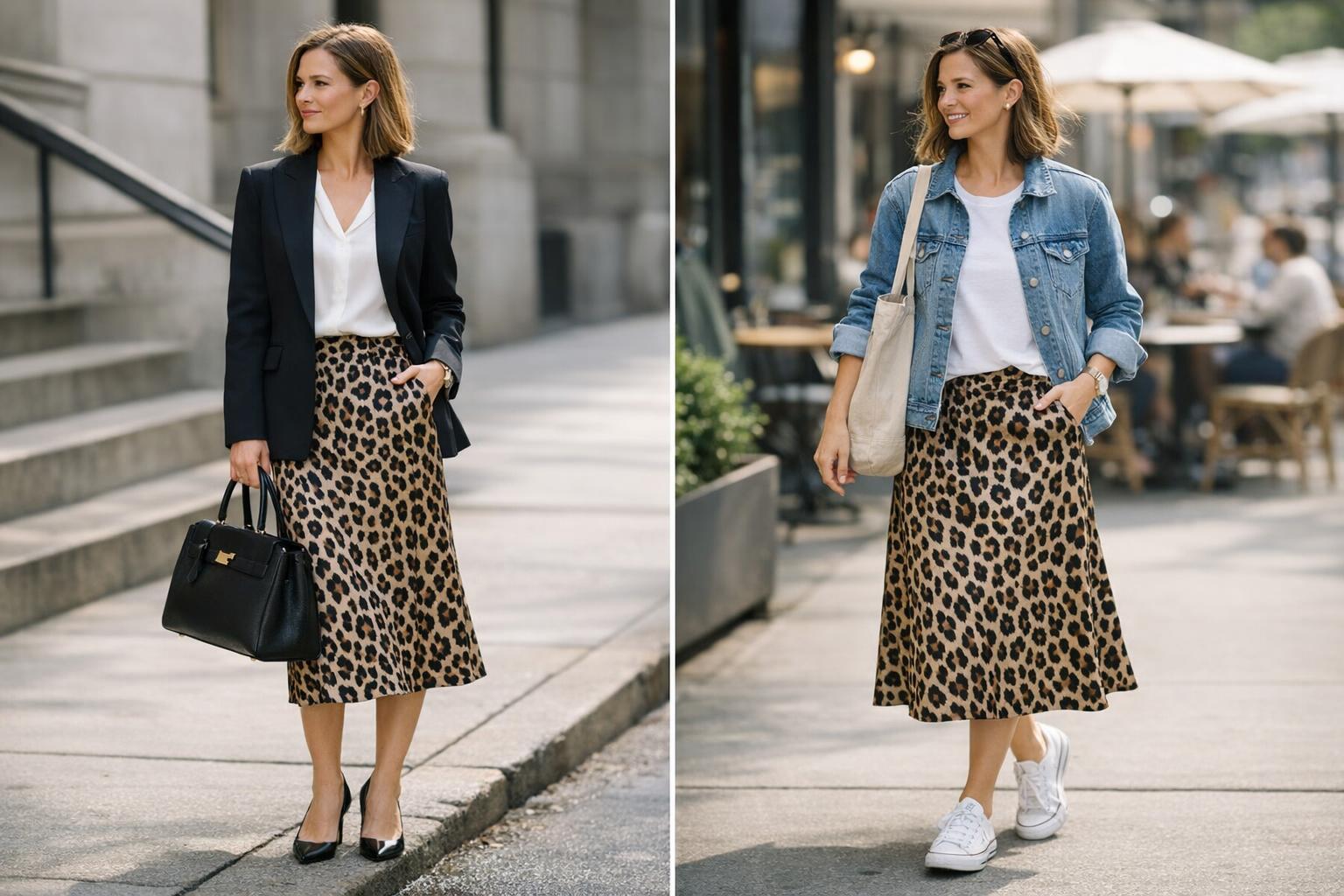
A leopard skirt outfit is one of those styling problems that returns every spring: the print feels bold, the silhouette feels familiar, and yet the final look can land anywhere between Parisian polish and weekend-casual ease. That range is exactly why leopard print skirt outfits are endlessly discussed—and often confused. The same skirt can read refined or loud, intentional or accidental, depending on structure, proportion, and what you choose to keep quiet.
This style breakdown compares two dominant approaches to leopard skirt outfits: a classic, polished interpretation built on clean lines and tailored layers, and a casual, spring-ready interpretation that treats leopard as an everyday neutral. They overlap in pieces—tees, knits, sneakers, simple accessories—but differ in styling philosophy. One is about control and restraint; the other is about comfort and relaxed contrast.
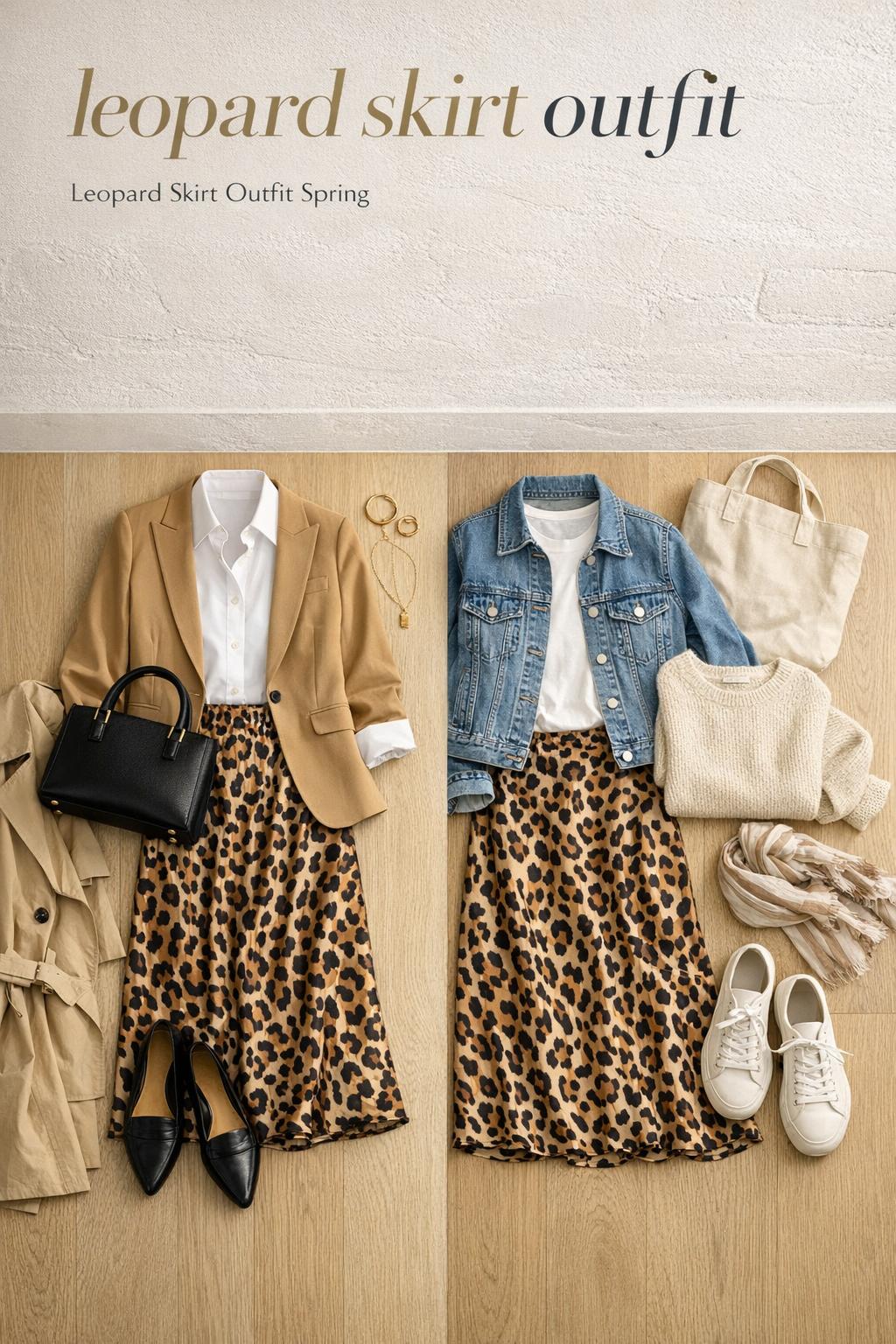
By the end, you’ll know how to identify each approach at a glance, how to build a leopard skirt outfit spring wardrobe that feels wearable in real life, and how to borrow the best of both styles without looking like you tried too hard.
Style overview: the polished, tailored leopard skirt outfit
The polished approach treats leopard as a sophisticated pattern—almost a texture—set within a structured outfit. The defining characteristic is a composed silhouette: clean waist definition, intentional proportions, and layers that hold their shape. The mood is “editorial but real,” the kind of look that works for a meeting, dinner, or a city day where you want to feel pulled together.
Your wedding has a lot of moving pieces. Your plan can still feel composed.
Zarellea organizes guests, vendors, budget, and timelines in one shared space — so you can make decisions with clarity, not stress.
Silhouettes tend to be streamlined: a midi skirt that skims rather than clings, a tucked knit or crisp shirt, and a blazer or structured jacket that sharpens the outline. The color palette stays restrained—think neutrals that let the print remain the focal point without adding visual noise. Fabrics matter: a skirt with a fluid drape reads more luxe, while a jacket with a firmer hand adds authority and shape.
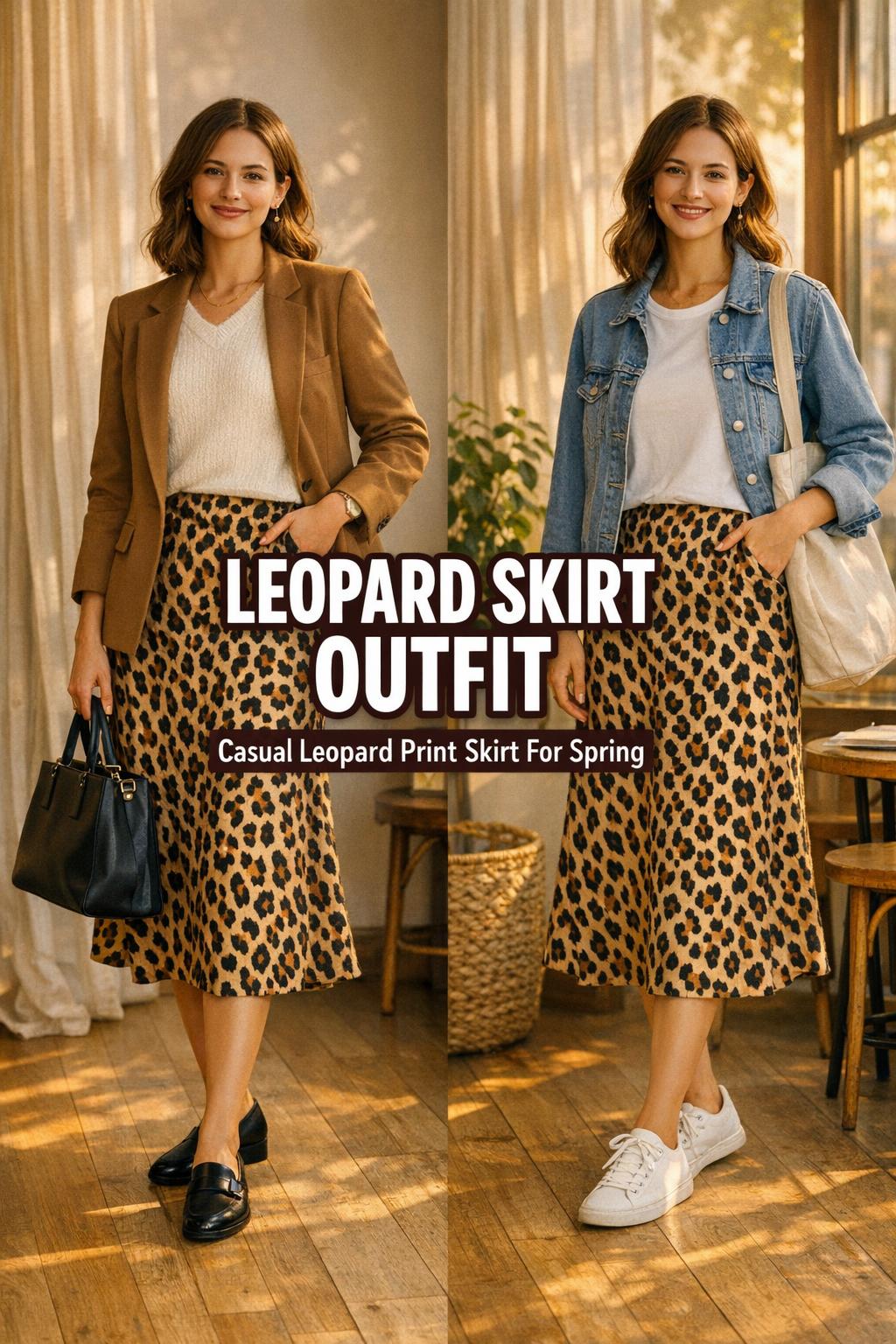
Style overview: the casual leopard print skirt for spring
The casual approach—especially for a casual leopard print skirt for spring—treats leopard like a wardrobe basic. Instead of “dressing up” the print, you bring it down to earth with relaxed layers and easy footwear. The mood is effortless and modern: a look that can handle errands, coffee, travel days, and long afternoons that shift from sun to breeze.
Silhouettes here are looser and more forgiving. The skirt can still be midi, but the overall outfit relies on soft structure: a simple tee, a light knit, a denim layer, or an easy shirt worn slightly undone. The palette can still be neutral, but it’s less strict—spring-appropriate lightness and comfort lead. Fabrics lean toward breathable and movement-friendly choices, because the point is wearability, not perfection.
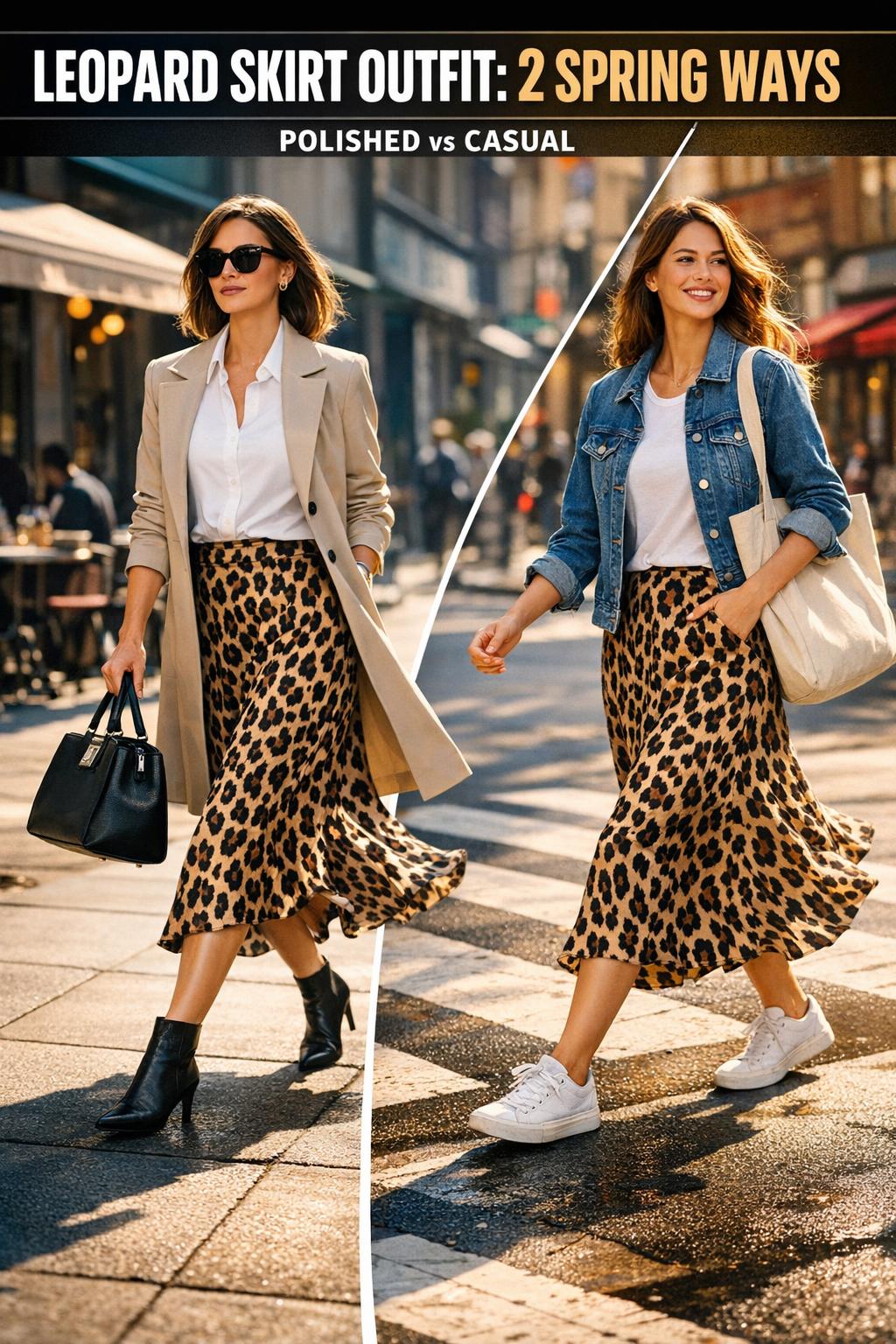
Why these two leopard skirt outfits get mixed up
Both styles often start with the same foundation: a leopard skirt and a neutral top. From there, the difference comes down to the “frame” you build around the print. In a polished leopard skirt outfit, the print is contained by tailoring and deliberate balance. In a casual spring version, the print is softened by relaxed texture and low-key styling.
The confusion is understandable because leopard functions like a neutral in both worlds. But the logic is different: one uses leopard as a refined statement within a controlled silhouette, and the other uses leopard as an everyday pattern within an easy uniform.
Key differences that change the entire mood
Silhouette: structured frame vs relaxed outline
In the tailored approach, the outfit has a clear architecture: shoulders are defined (through a blazer or structured jacket), the waist is intentional (tucked or neatly belted), and the skirt length is chosen to elongate. In the casual approach, the silhouette breathes: a slightly slouchy top, a looser layer, and an outfit that moves easily—designed for comfort and momentum.
Formality: “city-ready” vs “day-off”
A polished leopard print skirt outfit leans toward smart casual at minimum. Even when it’s simple, it looks finished: clean footwear, a refined bag shape, and minimal but deliberate accessories. The casual version is intentionally everyday—often anchored by sneakers or flat shoes and a top that prioritizes ease. Both can look chic, but their default settings differ.
Styling philosophy: editing vs layering
Tailored styling is about editing: fewer elements, sharper lines, and a clear focal point. Casual styling is about layering and texture: light knits, soft cotton, and pieces that feel lived-in. With leopard, this philosophical difference matters because the print already carries visual energy; the question is whether you refine it or relax it.
Typical wardrobe pieces: blazer and sleek shoe vs tee and sneaker
The polished wardrobe reaches for structured outerwear, refined knits, and sleek shoes that lengthen the leg line. The casual wardrobe reaches for tees, light jackets, and comfortable footwear built for walking. Neither is “more correct.” The more useful question is which approach matches your day, your environment, and your tolerance for fuss.
Visual style breakdown: what changes in the mirror
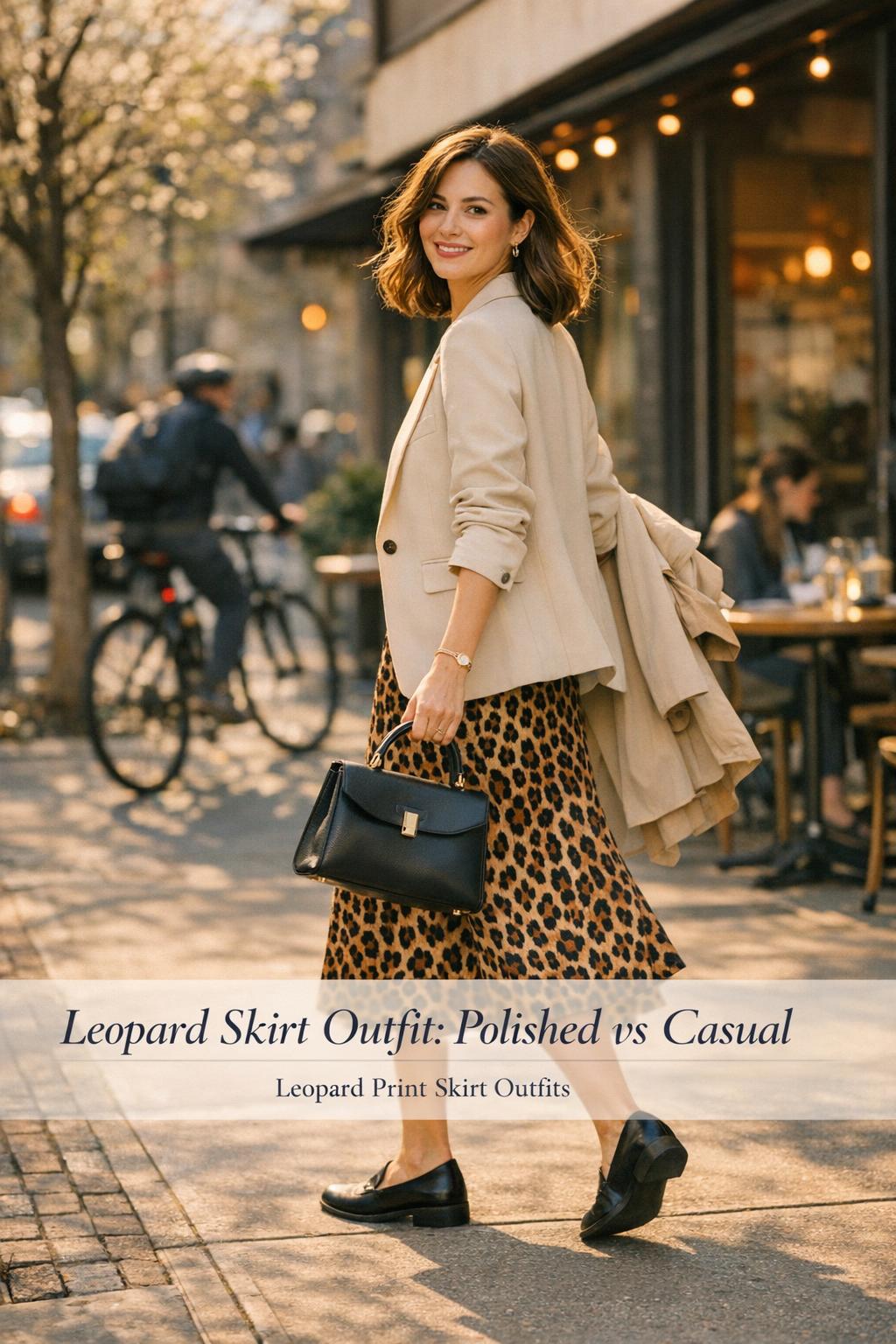
Layering approach
With a polished leopard skirt outfit, layers are clean and intentional: a blazer that ends at a flattering point on the hip, a knit that tucks smoothly, a coat that creates a long vertical line. In a leopard skirt outfit spring casual version, layers are lighter and more flexible: a denim layer you can take off, a cardigan that softens the print, or a shirt worn open for ease.
Proportions: where the volume sits
Polished looks usually concentrate volume in one place only. If the skirt has movement, the top stays neat. If the top is slightly oversized, the skirt is slimmer and the waist remains defined. Casual looks allow a touch more volume on top—especially in spring when you want comfort—yet still benefit from one grounding detail, like a partial tuck or a cropped layer that keeps the outfit from feeling shapeless.
Accessories and footwear
The tailored route typically chooses refined accessories that don’t compete: simple jewelry, a structured bag, and shoes that read sleek rather than sporty. The casual route chooses practicality—sneakers, flats, or low-profile sandals—plus an everyday bag that fits a real schedule. The key is consistency: mixing a highly polished bag with very casual footwear can look accidental unless the rest of the outfit is carefully controlled.
A spring-specific reality check: leopard in shifting weather
Spring styling is rarely about one perfect outfit; it’s about adaptation. A leopard skirt outfit spring plan should account for temperature swings, wind, and the fact that you may be walking more—weekends, travel, and longer days outside. This is where the casual approach gains an advantage: it welcomes layers that can be added and removed without breaking the look.
That said, polished leopard skirt outfits can be spring-friendly too, as long as the structure doesn’t become heavy. Think lighter layers and breathable fabrics, with a silhouette that still feels crisp. The goal is not to overdress the print, but to give it a frame that works in daylight.
Example comparisons: the same skirt, two styling philosophies
Example comparison: casual daytime errands vs polished city lunch
For a casual leopard print skirt for spring, the outfit works best when the print is treated like a neutral: a simple tee or light knit, easy footwear, and a layer you can carry. The skirt becomes the interesting element, while everything else stays calm and comfortable. For a polished city lunch, the same skirt becomes more intentional with a tucked top, a structured outer layer, and cleaner lines through the waist and shoulder—less “weekend,” more “considered.”
Example comparison: work-friendly polish vs relaxed office day
In the polished interpretation, the leopard skirt outfit relies on restraint: a refined top, minimal accessories, and a silhouette that reads professional without feeling severe. In the relaxed office version, you keep the skirt but shift the energy with softer layers and comfort-first choices. The difference is subtle but visible: structured pieces signal formality, while soft textures signal approachability.
Example comparison: travel day practicality vs dinner-ready elegance
For travel, leopard print skirt outfits succeed when they’re built for movement: low-fuss layers, comfortable shoes, and a top that won’t require constant adjusting. For dinner, the same skirt can feel elevated simply by sharpening the outline—cleaner top lines, more deliberate accessories, and footwear that visually lengthens. The print does the work; your job is to decide whether the mood is ease or elegance.
Tips: how to keep leopard chic (and not costume-like)
Leopard can be surprisingly unforgiving when the outfit lacks a clear point of view. If you’ve ever put on a leopard skirt and felt “too much,” it’s usually not the print—it’s the competing elements around it. The fix is editing and intention.
- Choose one lead element. If the skirt is the statement, keep the rest of the outfit quiet and cohesive.
- Anchor with neutrals. Neutral tones help leopard read like a classic rather than a novelty.
- Watch the fit at the waist. A waistband that sits cleanly changes the entire impression, especially in spring layers.
- Be consistent with mood. If you go sporty with footwear, commit to casual elsewhere; if you go polished, keep lines clean.
A practical trick: take a quick mirror check from a few steps back. If your eye doesn’t know where to land, simplify—remove one accessory, refine one layer, or bring the top closer to the body. Leopard likes clarity.
Common styling mistakes (and the easy fixes)
Mistake: adding too many “statement” pieces
The most common misstep with leopard skirt outfits is stacking bold elements—busy accessories, loud color, or multiple prints—until the look feels chaotic. The fix is not to eliminate personality, but to pick one expressive lane. If leopard is the feature, let texture or silhouette be the supporting interest rather than another competing print.
Mistake: ignoring proportion in spring layers
Spring layers can easily distort proportion: a longer cardigan can fight a midi skirt, or a bulky layer can swallow the waist. The fix is to choose one intentional line—either define the waist with a tuck, or create a long vertical with a cleaner outer layer. In a leopard skirt outfit spring context, small proportion choices are what keep the look modern.
Mistake: treating leopard as “formal-only”
Leopard can look overly done when it’s styled as if it only belongs at night. One of the most wearable approaches is daytime casual: the skirt with an unfussy top and comfortable shoes. If you want to get more wear from the piece, build at least one truly casual formula so the skirt doesn’t live only in “special occasion” territory.
When to choose each style (and how to decide quickly)
The best leopard skirt outfit is the one that matches your setting and your schedule. A useful way to decide is to think about two factors: how much walking you’ll do, and how “finished” you need to look when you arrive.
- Choose polished tailoring for meetings, dinners, date nights, and any occasion where you want the print to feel refined and intentional.
- Choose casual spring styling for weekends, travel days, outdoor plans, and everyday wear where comfort and flexibility matter.
- Choose a hybrid when your day spans settings—errands to lunch to evening—by keeping the base casual and adding one structured layer to elevate.
In real wardrobes, the hybrid option is often the most useful: a casual foundation that can be sharpened with one deliberate piece. This is how leopard becomes a repeatable uniform rather than a one-off statement.
How to blend both aesthetics without losing the plot
The most modern leopard print skirt outfits rarely sit at extremes. They borrow the comfort of casual styling and the clarity of tailored dressing. The goal is balance: relaxed textures paired with a clean silhouette, or structured layers paired with easy footwear—so the outfit feels current, not precious.
The “one structured piece” rule
If you start with a casual leopard skirt outfit spring base, add exactly one structured element—think a sharper jacket shape or a cleaner, more refined top line. The structure provides definition, while the rest stays comfortable. The outfit reads intentional without looking like it’s trying to be formal.
The “one casual piece” rule
If you begin with a polished leopard skirt outfit, soften it with one casual element that makes sense for the day: a more relaxed knit, a simple daytime layer, or an easier shoe choice. This prevents the print from feeling like it belongs only to evening and makes the look feel more American-daytime wearable while maintaining editorial elegance.
Leopard as a neutral: a stylist’s mindset for repeat wear
The most useful way to think about leopard—especially when you want to wear it often—is as a neutral with movement. It carries contrast (light and dark) and natural warmth, which means it can harmonize with many understated tones without needing additional “styling tricks.” This is why leopard skirt outfits can be built like a uniform: one skirt, multiple moods.
When you treat leopard as a neutral, your focus shifts to composition: how the skirt’s pattern interacts with the rest of the outfit’s textures, how the hemline relates to footwear, and how spring layers change the proportions. This is where personal style shows up—not in buying more, but in refining how pieces sit together.
Spring capsule thinking: making one skirt do more
A leopard skirt is at its best when it earns its space in your spring rotation. Instead of chasing new combinations, build two reliable formulas—one casual, one polished—and then adjust only one variable at a time. That approach keeps leopard feeling effortless, not complicated.
A simple two-formula framework
- Casual formula: leopard skirt + simple top + comfortable footwear + light layer for temperature shifts.
- Polished formula: leopard skirt + refined top line (tucked/neat) + structured layer + sleek finishing details.
Once those two are working, you can refine for your life: more walking, more meetings, more travel, more evenings out. The skirt stays constant; the frame changes.
Conclusion: the real difference is the frame, not the print
The core distinction between these leopard skirt outfits is how the rest of the look “frames” the print. The polished style relies on structure, clean proportions, and edited accessories to make leopard feel refined. The casual spring style relies on softness, comfort, and easy layers to make leopard feel like an everyday neutral.
Once you can see that frame—tailored versus relaxed—you can choose your approach quickly and dress for the reality of your day. And when you blend the two with intention, leopard becomes less of a statement and more of a signature: wearable, modern, and quietly confident.
FAQ
How do I make a leopard skirt outfit look casual for spring?
Keep the styling relaxed and breathable: pair the skirt with an unfussy top and comfortable footwear, then add a light layer you can remove as temperatures change; the goal is to let leopard act like a neutral while the rest of the outfit feels easy and daytime-appropriate.
What makes a leopard print skirt outfit look polished instead of loud?
Polish comes from structure and editing: a clean, intentional silhouette (especially at the waist and shoulders), restrained supporting pieces, and accessories that don’t compete with the print, so the leopard reads as refined texture rather than visual chaos.
Can leopard print be worn like a neutral?
Yes—when you treat it as a neutral with contrast and keep surrounding pieces calm, leopard becomes a flexible base that can swing casual or tailored depending on your layers, proportions, and finishing details.
How do I choose between casual and polished leopard skirt outfits for the same day?
Decide based on walking time and how finished you need to look on arrival: start casual if your day is mobile and outdoors, start polished if you’re heading into meetings or dinner, and use a single structured (or single casual) piece to shift the mood without changing the skirt.
What’s the biggest mistake people make with a leopard skirt outfit?
The most common mistake is adding too many statement elements at once—busy accessories, competing prints, or overly dramatic pieces—when leopard already carries energy; simplifying the supporting items usually makes the outfit look immediately more intentional.
How can I keep a leopard skirt outfit spring-ready when the weather changes?
Build the outfit around light, flexible layers that can be added or removed without disrupting proportion; in spring, the most successful leopard looks are the ones that stay cohesive whether your outer layer is on or off.
How do I blend casual and polished elements without looking mismatched?
Use a clear “one shift” strategy: either start casual and add one structured element for definition, or start polished and add one relaxed element for ease; keeping the rest of the outfit consistent prevents the mix from feeling accidental.
Leave a Reply