Blog

  • Dinner Date Night Outfit Formulas for City Nights Out in Style

    Dinner Date Night Outfit Formulas for City Nights Out in Style

    Dinner date night outfit dilemmas: looking “elevated” without feeling overdone

    You know the moment: reservation confirmed, the restaurant lighting is going to be flattering, and suddenly your closet feels strangely uncooperative. A dinner date night outfit has to do more than look good in a mirror—it has to hold up through a long sit-down meal, a walk to the car, and the subtle pressure of “looking like yourself, but a little more polished.”

    The challenge is that dinner dates live in a style gray zone. They’re rarely true black-tie, yet a purely casual look can read under-considered, especially in a city setting where New York or Los Angeles energy tends to skew fashion-aware. Add in temperature swings (warm dining room, chilly sidewalk), comfort (chairs, hemlines, footwear), and the desire for confidence, and you can see why so many people search for dinner date outfits that feel effortless but intentional.

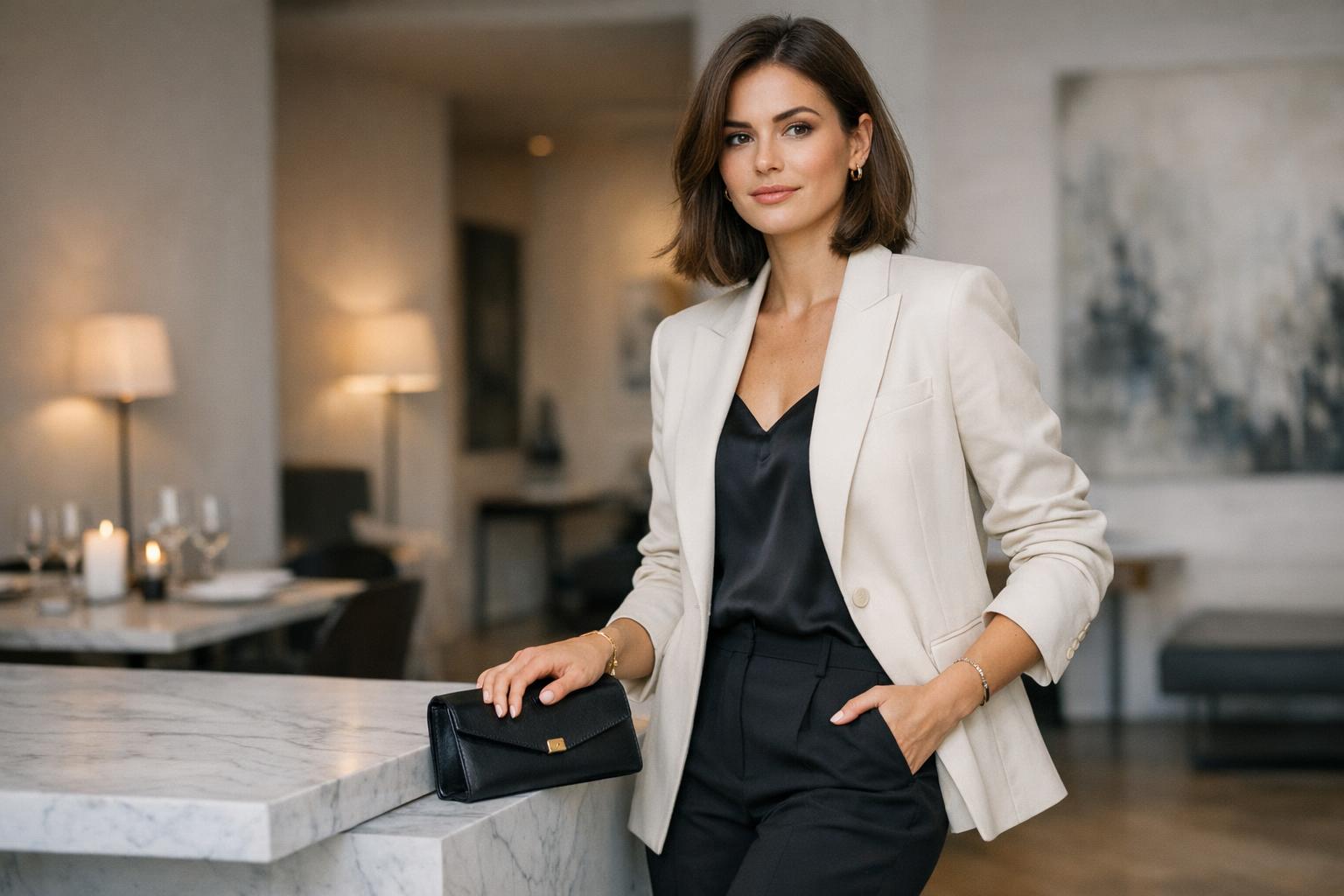
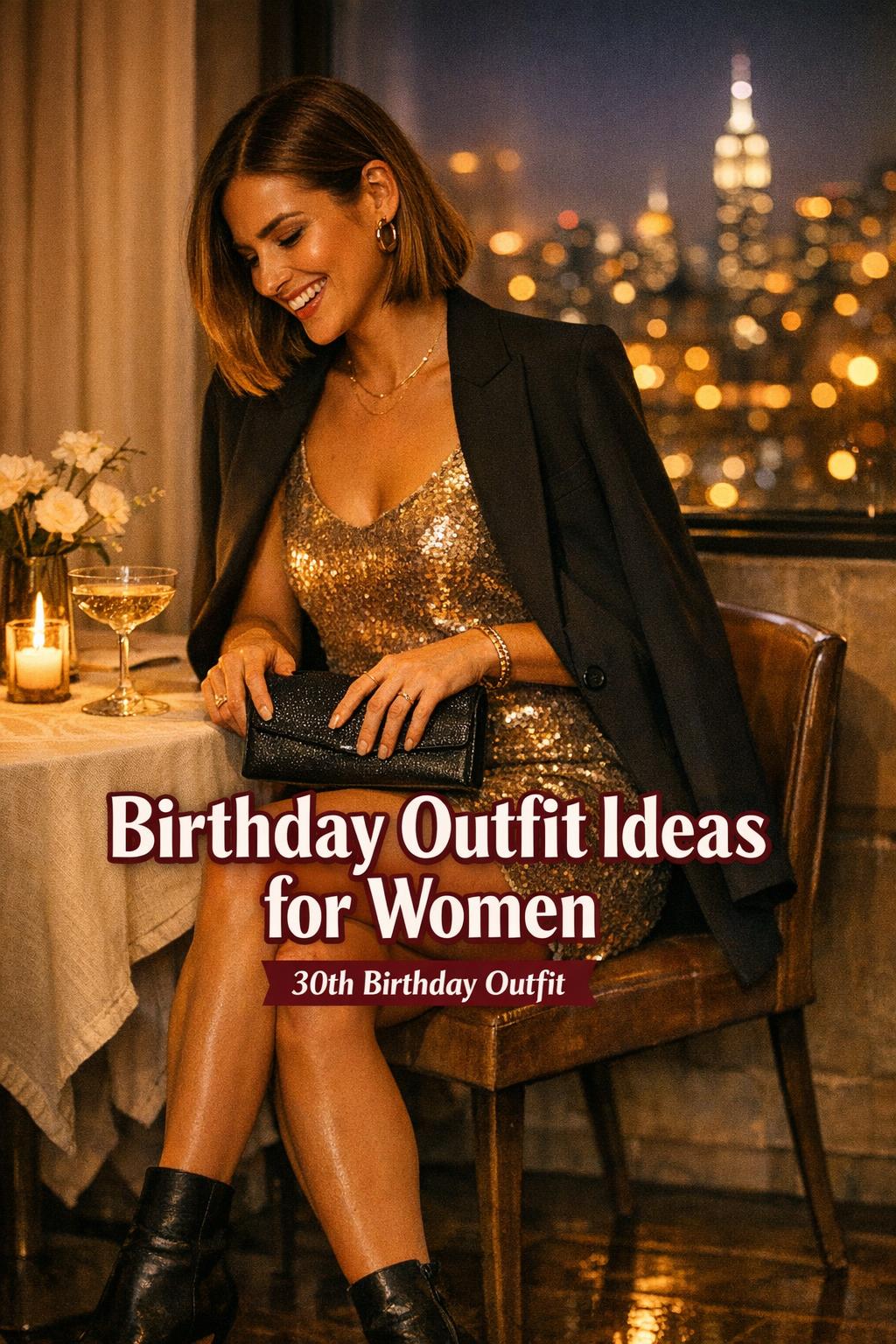
    Dinner date night outfit in upscale restaurant: woman in champagne satin slip dress with black blazer, warm candlelight.
    A quietly romantic dinner date night look pairs a champagne satin slip dress with a sharp black blazer in warm, upscale light.

    This guide approaches the problem like an editor: by building outfits from core garment families—dresses, slip dresses, LBDs, pantsuits, jumpsuits, blazers, jackets—then refining with textures like satin and velvet, and finishing with the accessory ecosystem (heels, sandals, jewelry, clutches, mini bags). You’ll get practical outfit formulas, context cues (first date vs. anniversary; smart casual vs. semi-formal), and solutions that translate into going out outfits classy enough for a fancy dining room without becoming costume.

    Understanding the styling challenge: comfort, dress codes, and real-life logistics

    Dinner dates sound simple until you dress for one. Restaurants often sit between “chic casual” and “semi-formal,” and the right choice depends on the venue, your city, and even the time of day. Many people over-correct—either dressing too formally (feeling stiff) or too casually (feeling underdressed once they arrive). The sweet spot is an elevated look with versatile pieces that can flex up or down.

    Weather is the unglamorous variable that defines the evening. You might leave home in a jacket, step into a warm dining room, then walk out again into the night. That’s why outerwear entities—blazers, jackets, even a trench-style layer—show up so frequently in strong date-night styling. They’re not just practical; they help “frame” the look and sharpen the silhouette.

    Then there’s comfort: heels vs. walking; bodycon silhouettes vs. sitting; satin that skims vs. satin that clings. The goal isn’t to avoid glamour. It’s to make the glamour wearable—so you feel like yourself from the first toast to dessert.

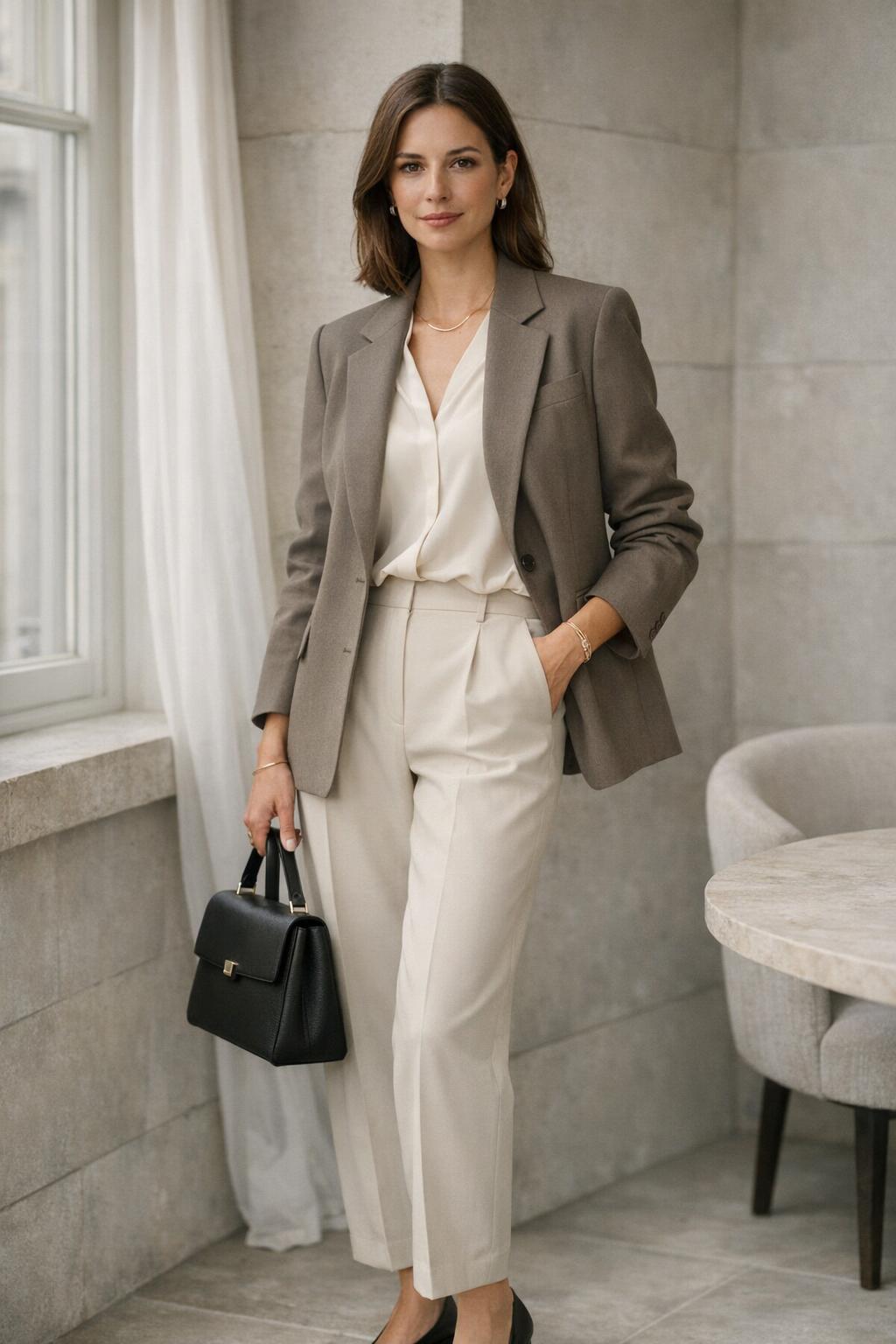
    Dinner date night outfit: woman in satin slip dress and black blazer at an upscale restaurant with warm candlelight bokeh
    A chic, relaxed dinner-date look pairs a champagne satin slip dress with a structured black blazer in warm candlelit ambiance.

    Key dressing principles that make dinner date outfits feel composed

    Build from a core silhouette, then elevate with one deliberate detail

    The strongest dinner date outfits start with a recognizable base: a little black dress, a slip dress, a tailored pantsuit, a sleek jumpsuit, or a midi/maxi dress. From there, choose one “elevation lever”—texture (velvet or satin), a sharp blazer, metallic accessories, or statement jewelry. This keeps the look refined rather than crowded.

    Use structure to balance softness (and vice versa)

    Think in contrasts that read modern: a structured blazer over a satin slip dress; a tailored suit softened by minimal jewelry; a bodycon dress grounded with a jacket. These relationships—blazer + slip dress, LBD + metallic accents—show up repeatedly because they solve a common problem: looking elevated without feeling try-hard.

    Let accessories complete the outfit, not compete with it

    A dinner date is not the moment to carry everything you own. A clutch or mini bag keeps the line clean; a crossbody can work when the vibe is casual or the evening includes walking. Jewelry should match the mood: minimal for tailored looks, more statement for simpler dresses. Footwear is the anchor—heels and sandals are classic, but the “right” shoe is the one that lets you move comfortably.
    Choose a color story that reads intentional in restaurant lighting

    Black is timeless for a reason—an LBD is an instant solution—but jewel tones and metallic accents can feel equally evening-appropriate, especially when paired with satin or velvet textures. The key is cohesion: one main color family, one supporting accent, and a clear finish (matte, sheen, or sparkle) so the outfit photographs well and feels polished in low light.

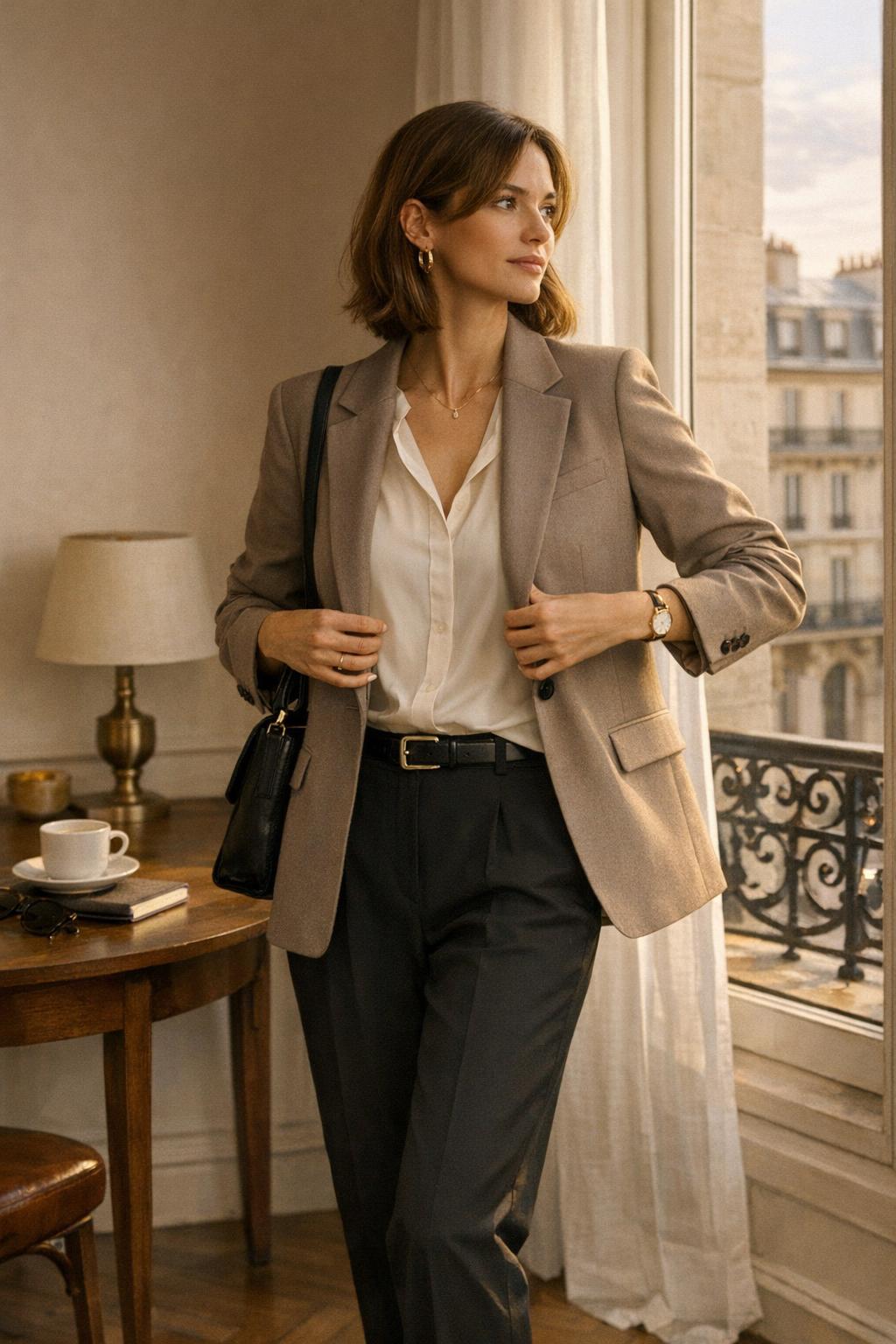
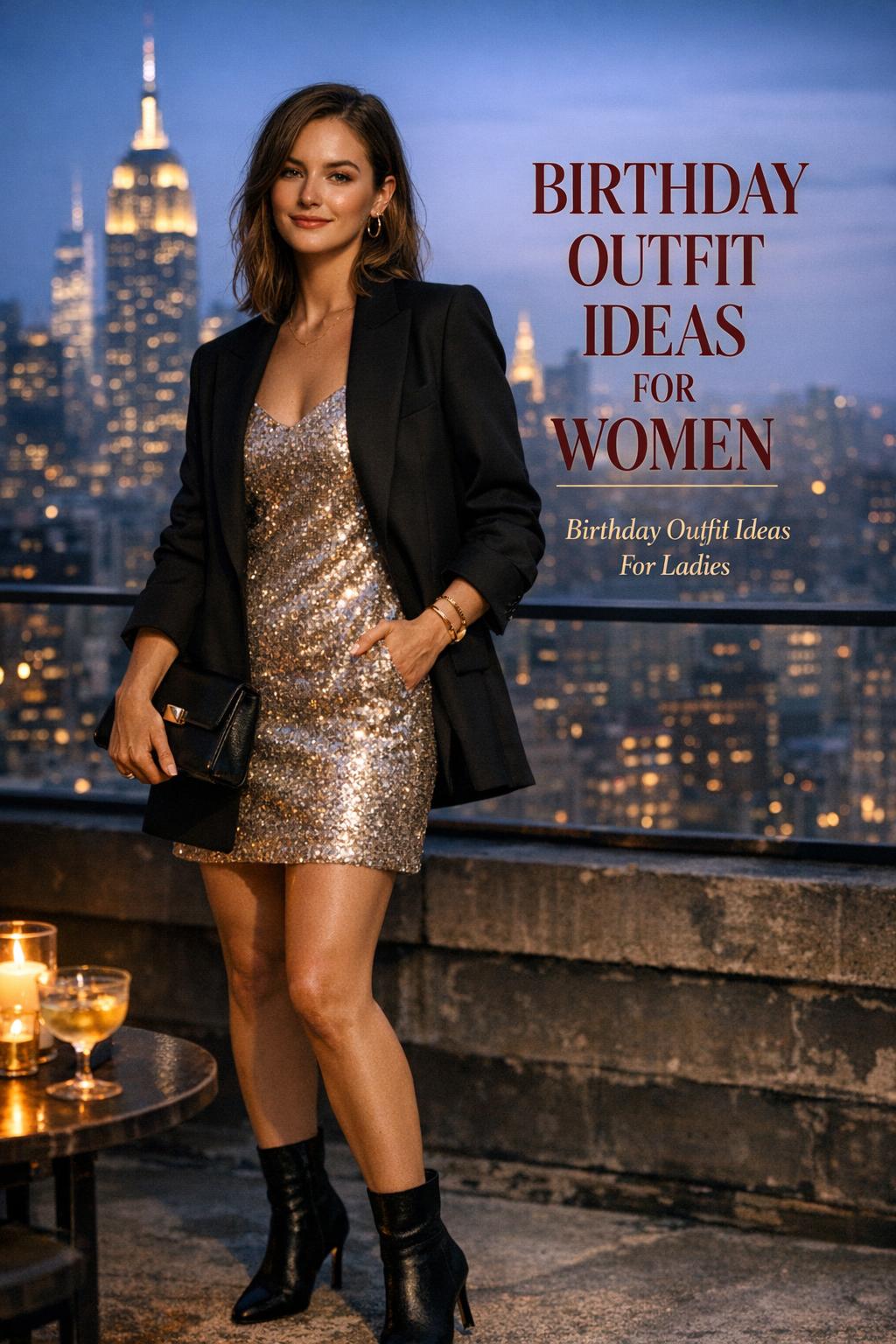
    Dinner date night outfit featuring an elegant evening look with tailored jacket and heels
    A polished dinner date night outfit pairs sleek tailoring with timeless evening elegance.

    Core building blocks: what to reach for first in your closet

    Before you get swept into micro-trends, focus on the pieces that repeatedly perform for dinner-date scenarios. They’re popular not because they’re boring, but because they create flattering proportions, adapt to dress codes, and pair easily with the accessories you already own.

    • Dresses: LBD, slip dress, bodycon silhouettes, midi/maxi options for versatile coverage.
    • Jumpsuits and tailored suits: modern alternatives that feel confident and composed.
    • Outerwear: blazers and jackets (including leather-jacket energy) for instant polish.
    • Footwear: heels and sandals for evening, with comfort considerations built in.
    • Accessories: jewelry, clutches, mini bags, and refined finishing touches.

    If you’ve ever wanted lover girl outfits that still feel like an adult wardrobe, this is where it begins: romantic silhouettes (slip dresses, satin, soft sheen) disciplined by tailoring (a blazer, a clean bag, a sleek shoe).

    Outfit solutions for real dinner-date scenarios (with styling logic)

    Outfit solution: blazer + slip dress for elevated casual confidence

    This is the formula fashion editors return to because it handles the most common dress code: chic casual with a hint of sophistication. Start with a slip dress—satin is the classic choice for evening vibes—then add a blazer to introduce structure. The blazer also solves the “cold on the way there, warm inside” issue; you can keep it on for a composed entrance, then drape it over your shoulders once seated.

    Finish with heels or refined sandals, plus a clutch or mini bag. Jewelry can go minimal (clean, modern) if the satin already has sheen, or slightly more statement if your slip dress is understated. The result reads going out outfits classy, without crossing into overly formal territory.
    Outfit solution: the classic glam LBD with metallic accessories

    When you’re unsure, the little black dress remains the most reliable answer to “how to dress for a dinner date.” It’s also the easiest to tailor to the venue: keep the silhouette clean for a sleek restaurant, or lean into a bodycon cut for a more overtly glamorous mood. The key is how you style it.
    Metallic accessories—think a metallic clutch and jewelry that catches low light—create instant evening impact without needing complicated layering. Add heels that feel stable enough for walking; the LBD does the heavy lifting, so your supporting pieces should look intentional, not fussy. If you want cute outfits for fancy dinners that don’t feel juvenile, this is the grown-up version: simple black, luminous accents, and a confident silhouette.

    Outfit solution: velvet texture with sleek shoes for a true evening mood

    Texture is the fastest route to “elevated,” and velvet is particularly effective for dinner dates because it reads rich under restaurant lighting. Whether the velvet appears as a dress or as a key piece paired with neutral elements, it signals that you dressed with intention.

    Because velvet is already expressive, keep the rest streamlined: a compact bag (a clutch works beautifully) and jewelry that’s either minimal or carefully chosen as a single statement. For footwear, heels keep the silhouette elongated; dressy sandals can work when the venue and season allow. This outfit is especially useful when the date leans semi-formal without stating it outright.

    Outfit solution: modern tailoring with a pantsuit (the confident alternative to a dress)

    Yes, you can wear pants to a dinner date—and in many restaurants, a tailored pantsuit looks more elevated than a casual dress. The secret is the fit: clean lines through the shoulder, a defined waist, and trousers that fall smoothly. This is where tailoring becomes your best accessory.

    Style it with heels for polish and elongation, or refined footwear that still reads “evening.” Keep the bag structured and the jewelry intentional; a statement piece can punctuate the suit without overpowering it. This is a quietly powerful approach to dinner date outfits when you want to feel composed, modern, and unmistakably adult.

    Outfit solution: tailored jumpsuit with a minimalist accessory story

    A tailored jumpsuit gives you the ease of a one-piece outfit with the sophistication of a styled look—perfect when you want to get dressed quickly without looking like you rushed. Choose a silhouette that defines the waist and falls cleanly through the leg; the effect is long, elegant lines with zero outfit-math required.

    Pair with heels and a mini bag, and keep jewelry clean and modern. If you need extra warmth, a jacket or blazer completes the look without complicating it. This formula is especially useful for city dinner dates where you want a sleek “going out” finish that still feels functional.

    Outfit solution: bodycon maxi + jacket for glam that still moves

    Bodycon silhouettes can be dinner-date gold—when you remember you’ll be sitting, standing, and walking. A bodycon maxi brings drama with coverage, and a jacket adds balance and practicality. This pairing also helps if you’re navigating temperature swings: the jacket is functional, but also acts as a style counterweight so the outfit reads chic rather than overly revealing.

    Keep the accessories edited: a compact bag and jewelry that complements the neckline. Footwear should be chosen with the evening’s reality in mind—heels are classic, but prioritize stability if the date includes a walk to a second location.

    Outfit solution: satin statement piece + quiet neutrals for a refined shine

    Satin doesn’t have to be a full slip dress to feel romantic. A satin piece—whether it’s the main garment or a key element—brings a soft sheen that reads unmistakably “night.” The trick is to pair that shine with quieter companions: simple outerwear, understated jewelry, and a bag that doesn’t fight for attention.

    This is an elegant route to lover girl outfits that still fit a sophisticated restaurant. The shine feels romantic; the restraint feels mature. If you’re ever unsure how to make an outfit feel “date-night,” satin is one of the most dependable answers.

    Outfit solution: skirt or tailored separates with a blazer for smart-casual venues

    Not every dinner date calls for a dress. A skirt paired with a refined top—then finished with a blazer—creates a polished smart-casual balance. The blazer is doing double-duty again: structure, warmth, and that subtle “I meant to look this good” energy.

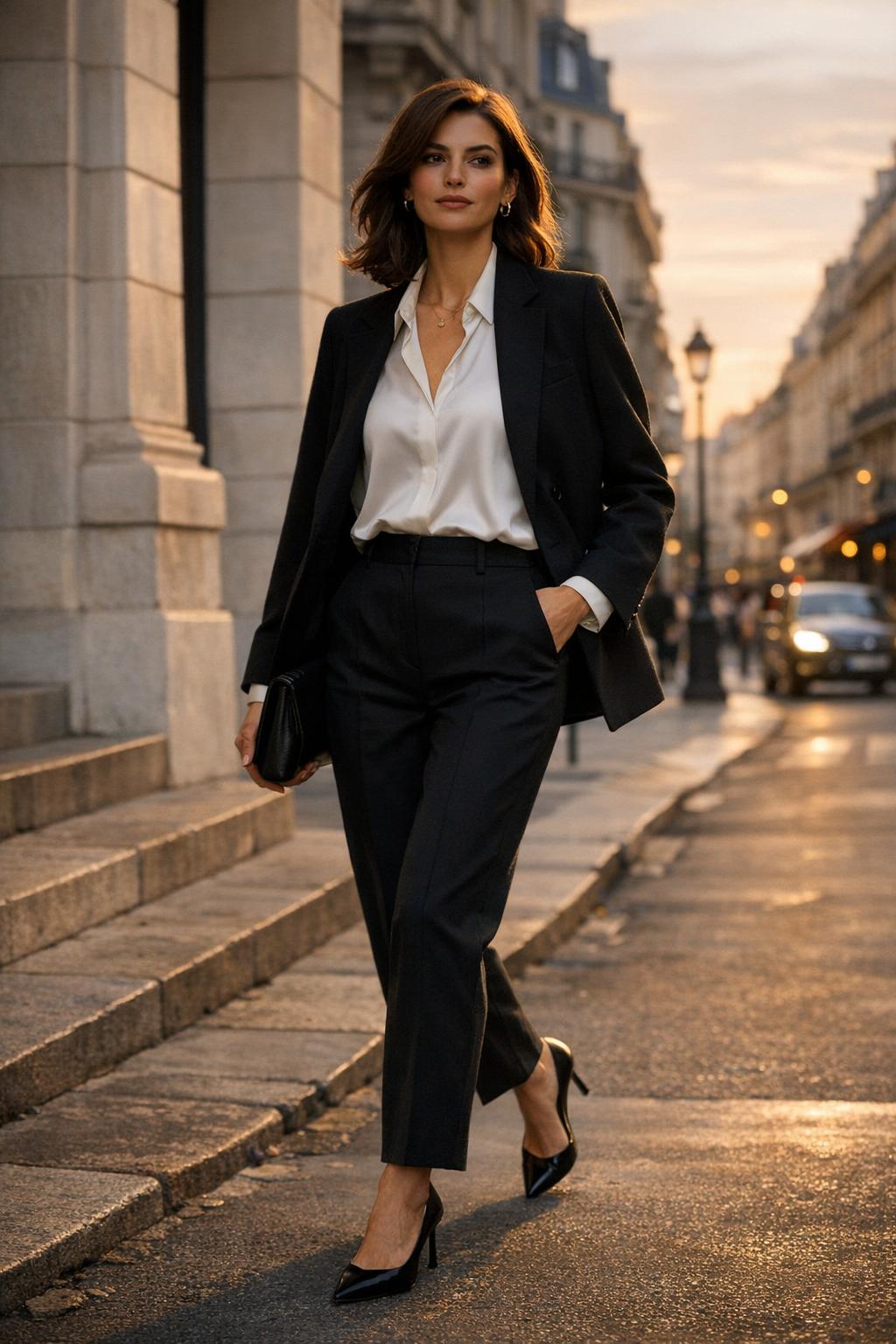
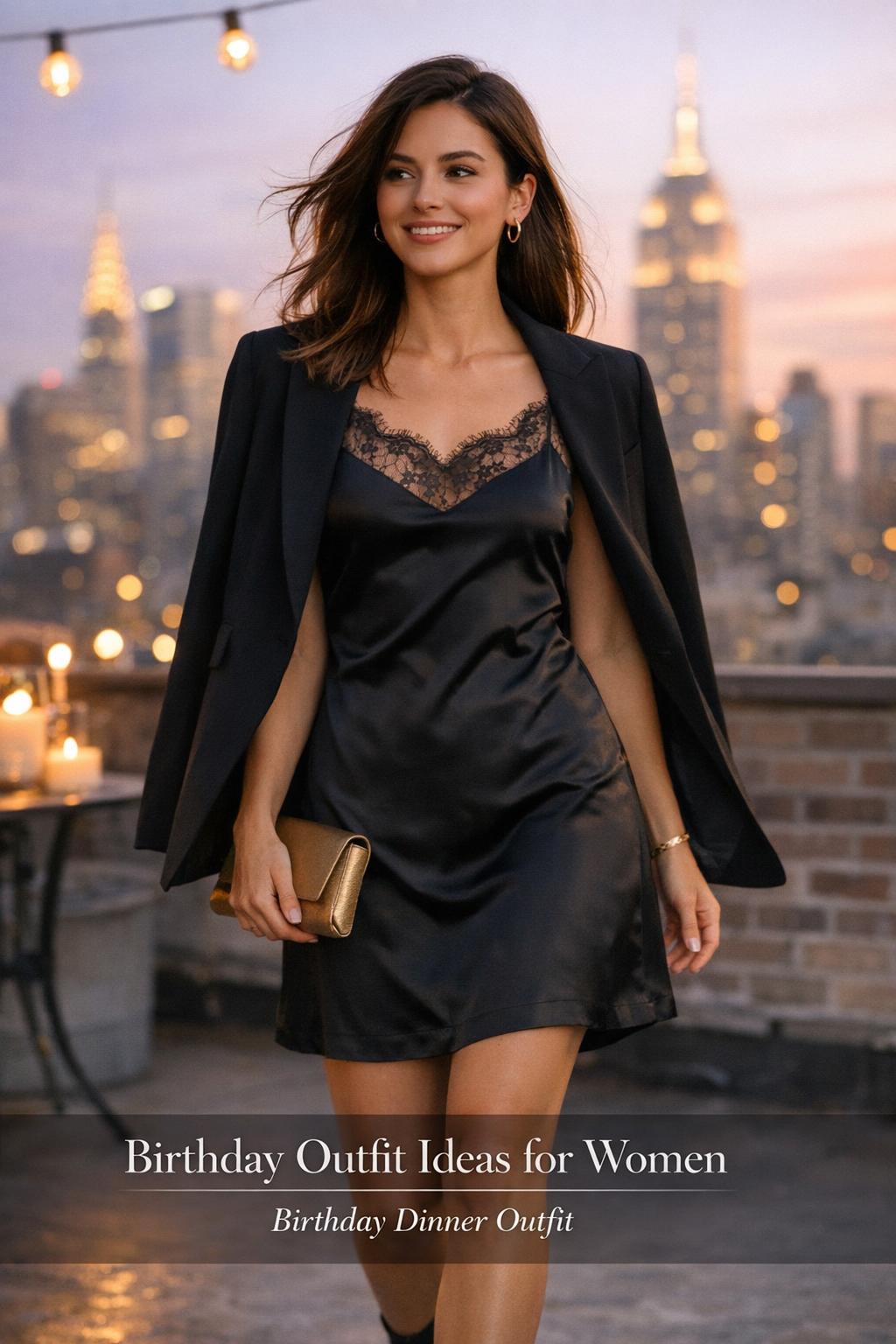
    Stylish woman in satin slip dress and black blazer outside a city restaurant at blue hour, dinner date night outfit
    A stylish woman steps into the blue-hour glow outside an upscale restaurant, her satin slip dress and blazer embodying effortless romance.

    Choose heels or dressy sandals depending on the venue and season, and bring a clutch if you want the look to lean more evening. This approach also adapts beautifully if your plans shift from a casual bistro to a more formal dining room.

    Context cues: first date, anniversary, and restaurant dress codes

    First date: aim for elevated, not theatrical

    For a first date, the best strategy is clothing that feels like a slightly refined version of you. Elevated casual formulas—blazer + slip dress, LBD with minimal jewelry, tailored jumpsuit—signal effort without demanding attention. If you’re experimenting with fest outfits energy (a bolder vibe, more texture or shine), keep it to one element: a satin finish, a statement accessory, or a dramatic silhouette, but not all at once.

    Anniversary dinner: lean into texture, sophistication, and a clearer “evening” signal

    Anniversary dinners tend to invite a more deliberate mood. This is where velvet, satin, and metallic accents feel especially appropriate, and where semi-formal cues (a more defined silhouette, more intentional jewelry, a polished clutch) can shine. It’s less about looking “different” and more about looking considered—an outfit that matches the occasion’s emotional weight.

    Dress code translation: smart casual vs. semi-formal (and the black-tie hint)

    Restaurants rarely label themselves clearly, so you’ll often be interpreting. Smart casual can still be chic: structured blazer, clean shoes, refined bag. Semi-formal asks for a stronger evening silhouette: LBD, satin slip dress, velvet texture, or sleek tailoring paired with heels and a clutch. If a venue gives black-tie cues, keep the approach calm and elegant—lean on the LBD or a long, clean line, and let accessories do the work rather than overcomplicating the outfit.

    City styling: New York polish, Los Angeles ease, and why location matters

    Even in the United States, dinner-date style changes by context. In New York, the look often reads more sharpened—blazers, sleek dresses, and intentional accessories that hold their own in an urban dining room. In Los Angeles, the same dinner date might invite a softer, more relaxed interpretation: satin with minimal jewelry, or a tailored jumpsuit with sandals that still feel elevated.

    The point isn’t to stereotype; it’s to notice how location affects expectations. If you’re dressing for a city-known restaurant, consider the room: dim lighting, close tables, the impression you make while seated. A clean neckline, thoughtful jewelry, and a bag that doesn’t sprawl across your lap are the small details that read “seasoned.”

    Textures and finish: the quiet power of satin, velvet, and shine

    Silhouette is the skeleton of the outfit; texture is the mood. Velvet gives depth and softness, satin gives sheen and romance, and metallic accessories offer pinpoint light. Many “elevated” dinner-date looks are simply a familiar base rendered in a more evening-appropriate material.

    There’s also a practical side: textures help you look dressed up without relying on complicated styling. If your outfit is essentially simple—an LBD, a slip dress, a tailored jumpsuit—texture creates the interest. That’s why this approach works so well when you want cute outfits for fancy dinners while keeping your overall look calm and modern.

    Accessory ecosystems: shoes, bags, and jewelry that don’t sabotage the outfit

    Shoes by scenario: heels and sandals, with comfort as the final word

    Heels remain a classic finishing touch for dinner dates because they refine posture and sharpen proportions—especially with slip dresses, LBDs, and tailored suits. Dressy sandals can feel equally elegant in the right setting. The real-world test is simple: can you walk, stand, and stay relaxed through a long evening? A shoe that looks perfect but feels punishing will show in your body language.

    Bags: why a clutch (or mini bag) reads instantly evening

    A clutch is the most direct route to an evening signal, especially paired with satin or velvet. A mini bag offers a similar effect with more practicality. A crossbody can work when the vibe is more casual or you’ll be moving around the city—just keep it sleek and scaled to the outfit, so it doesn’t cut awkwardly across your silhouette.

    Jewelry: statement vs. minimal, decided by your outfit’s “volume”

    If your garment has texture or shine—velvet, satin, or a dramatic silhouette—choose minimal jewelry so the look stays refined. If your base is quiet (a simple LBD, a clean jumpsuit), a statement earring or bolder jewelry can provide the focal point. The goal is one clear visual message, not a competition among details.

    Tips that stylists quietly rely on for long dinners

    Tip: Treat outerwear as part of the outfit, not an afterthought. A blazer or jacket should harmonize with your silhouette and fabric story; it’s the first thing people see when you arrive and the last thing you wear when you leave.

    Tip: Keep a “seated silhouette” in mind. Dinner dates are mostly spent sitting, so prioritize clean lines at the waist and hips, and avoid anything that bunches uncomfortably or demands constant adjusting—especially with bodycon silhouettes.

    Tip: If you’re leaning into fest outfits energy—more shine, bolder styling—anchor it with one classic element: a tailored blazer, a sleek clutch, or minimal jewelry. This is the difference between playful and chaotic.

    Tip: Build your look like a formula you can repeat. Once you know your best base (slip dress, LBD, jumpsuit, pantsuit), you can rotate textures (satin vs. velvet) and accessories (metallic clutch vs. minimal bag) to create multiple dinner date outfits without reinventing your style every time.

    Common mistakes that undermine an otherwise beautiful look

    Mistake: dressing for a photo, not the full evening

    An outfit can look impeccable standing up and become a nuisance once you sit down. Extremely restrictive bodycon pieces, fussy accessories, or shoes you can’t walk in tend to pull focus away from the date itself. Choose glamour that moves with you: a bodycon maxi with a jacket, a slip dress with a blazer, or an LBD with stable heels.

    Mistake: mixing too many “elevated” signals at once

    Velvet, satin, statement jewelry, metallic accessories, and dramatic outerwear can all be gorgeous—just not all together. If your dress is doing the talking, let the accessories whisper. If your silhouette is minimal, let one accessory speak clearly. Refinement comes from restraint.

    Mistake: ignoring venue and city cues

    What feels perfectly chic in a relaxed Los Angeles setting might read underpowered in a New York dining room with a sharper vibe. You don’t need to change your personality—just calibrate the finish: swap a casual bag for a clutch, add a blazer, or choose satin/velvet to signal “evening.”

    Conclusion: a calmer way to choose dinner date night outfits

    The most successful dinner date night outfit isn’t the most complicated; it’s the most considered. Start with a core silhouette you trust—LBD, slip dress, tailored jumpsuit, pantsuit—then elevate with one decisive element: a blazer, velvet texture, satin sheen, or metallic accessories. Keep your accessory ecosystem tight (heels or sandals you can actually wear, a clutch or mini bag, jewelry that matches the outfit’s volume), and let venue context guide the final polish.

    When you approach dinner date outfits as a set of repeatable formulas rather than a one-night styling crisis, you gain something more valuable than a good look: confidence that travels across restaurants, cities, and seasons—always refined, always wearable.

    Stylish woman stepping into a candlelit restaurant wearing a dinner date night outfit with champagne satin slip dress and black blazer
    A stylish woman transitions from a wet city sidewalk into a candlelit restaurant, wearing a champagne satin slip dress under a sharp black blazer.

    FAQ

    What should I wear to a fancy dinner date?

    For a fancy dinner, lean into semi-formal cues: an LBD, a satin slip dress, a velvet piece, or a tailored jumpsuit or pantsuit, finished with heels and a clutch or mini bag; keep jewelry intentional and let one element—texture, silhouette, or metallic accessories—carry the “evening” message.

    How do I dress for a dinner date if I don’t want to wear a dress?

    A tailored pantsuit or sleek jumpsuit is one of the most elevated alternatives to a dress and often reads even more polished in a restaurant setting; add heels, a structured bag or clutch, and minimal-to-statement jewelry depending on how clean or dramatic the tailoring feels.

    What shoes work best for a slip dress on a dinner date?

    Heels are the classic partner for a slip dress because they sharpen the silhouette, while dressy sandals can feel equally refined when the venue and season allow; choose a pair you can comfortably walk and stand in, since confidence shows most when your posture is relaxed.

    How can I make an outfit look “elevated casual” for a restaurant?

    Use structure and finish: add a blazer or jacket to a simple base like a slip dress or skirt-and-top combination, keep your bag compact (clutch or mini bag), and choose jewelry that looks deliberate rather than overly trendy; the result reads chic casual with a refined edge.

    Is a bodycon dress appropriate for dinner date outfits?

    A bodycon silhouette can work beautifully for a dinner date, especially as a maxi, as long as you consider comfort while sitting and moving; balancing it with a jacket or blazer and keeping accessories streamlined helps it feel polished rather than overly intense.

    How do I choose between satin and velvet for a dinner date night outfit?

    Satin delivers a romantic sheen that feels modern and light, while velvet creates depth and a richer evening mood; both read elevated, so choose based on the vibe you want—soft and luminous with satin, or plush and sophisticated with velvet—then keep accessories cohesive.

    What accessories make going out outfits classy for a dinner reservation?

    Classy finishing touches usually come down to a compact bag (clutch or mini bag), jewelry that matches the outfit’s simplicity or drama, and a clean shoe choice like heels or refined sandals; metallic accents can add evening sparkle without overwhelming the look.

    What’s a reliable first-date dinner outfit that won’t feel overdone?

    Try an elevated casual formula like a blazer over a satin slip dress, or an LBD with minimal jewelry and a small clutch; these options look intentional in city dining settings while still feeling like a natural extension of your everyday style.

  • Trail-to-Town Hike Outfit That Looks Polished After Miles

    Trail-to-Town Hike Outfit That Looks Polished After Miles

    Introduction

    The modern hike outfit lives in two worlds at once: the quiet discipline of the trail and the visual language of the city. It’s a silhouette built for movement—striding uphill, stepping over roots, pausing for wind—yet composed enough to feel intentional when the day ends at a café table, not a campsite. That duality is exactly what makes hiking style so captivating right now: it reads as capable, calm, and self-possessed.

    The mood is often described as granola chic, but the best versions are less costume, more curation. Think clean layers, purposeful textures, and accessories that look chic while earning their place: a hat that means sun protection, socks that manage comfort, a shell that answers weather without drowning the outfit in bulk. Whether you lean minimal, sporty, or softly nostalgic, the aesthetic hiking outfits that resonate most are the ones that make practical sense.

    Modern trail-to-town hike outfit with merino layers, fleece vest and hydration pack in an urban park near a cafe
    A refined trail-to-town hike outfit pairs technical merino layers with minimalist accessories for a calm weekend finish.

    You’ll see this style on weekend trails and urban parks, on travel days where an early hike turns into afternoon errands, and anywhere “trail-to-town” dressing is the unspoken dress code. Its appeal is straightforward: a hiking outfit can be functional, flattering, and quietly fashion-aware—without trying too hard.

    The anatomy of a hike outfit: the layers that make it look effortless

    Before aesthetics, there’s structure. Most hiking outfits that photograph well and feel comfortable share the same underlying architecture: base layer, mid-layer, and outer shell, anchored by bottoms and footwear suitable for trails. When you understand this system, you can style almost any “vibe”—athleisure-forward, minimalist, or outdoorsy—without losing the plot when weather shifts.

    Base layers: where comfort and polish begin

    A base layer is the piece that sits closest to the skin, quietly controlling the entire day’s comfort. In practice, it’s the difference between feeling fresh on a climb and feeling sticky the moment the pace changes. Moisture-wicking base layers—whether merino or synthetic blends like polyester and nylon—tend to look sleeker for longer, which matters if your plan includes a trail-to-city transition.

    For warm weather, the base layer can be as simple as a tank top, a fitted tee, or a long-sleeve that signals sun protection. For those building hiking outfit women spring wardrobes, a long-sleeve base layer is particularly elegant: it creates clean lines under a vest or lightweight jacket, and it reads intentionally layered rather than “thrown on.” UPF considerations often come into play here—especially when the trail has little shade—because sun protection is a styling choice you’ll never regret.

    Mid-layers: the styling layer that also saves the day

    The mid-layer is where the outfit becomes expressive. This is where fleece can add a plush, tactile softness, and where insulation can bring a crisp, sporty shape. In cool conditions, a lightweight down or synthetic insulation piece gives that modern, slightly sculpted silhouette—practical warmth without turning the look into a marshmallow. When the temperature fluctuates, the mid-layer also becomes your styling tool: tied at the waist, draped over shoulders, or zipped to create a high-neck line that reads refined.

    From a fashion editor’s perspective, mid-layers are also the most forgiving way to add personality: a vest over a sleek base layer, or a fleece that softens the utility of hiking pants. Many cool hiking outfits women love hinge on this contrast—technical function, styled with a sense of proportion.

    Outer shells: weather protection without aesthetic compromise

    An outer shell is your outfit’s boundary with the elements. The choice often comes down to how you balance protection and breathability: a rain jacket for wet conditions, a softshell for a more flexible feel, or a hardshell when weather protection is non-negotiable. This is the layer that can make or break comfort when wind picks up, and it’s also the layer most visible in photos—so it pays to choose one whose cut and finish feel modern.

    In cold hiking outfits, a shell becomes especially important because it helps your insulating layers do their job. Visually, it also creates a clean outer line. If you want your look to read “city-ready” after the hike, prioritize shells that sit neatly at the hip and don’t overwhelm the rest of the silhouette.

    Hike outfit idea: stylish woman walking from park trail to cozy cafe patio in neutral technical layers at golden hour
    An athletic woman in neutral technical layers heads from a sunlit park trail to a cozy café patio during golden hour.

    Bottoms, footwear, and the details that signal “trail-ready”

    The most stylish hiking outfits are grounded by pieces that perform. Bottoms and footwear are where you feel the trail—scrambles, gravel, damp patches, long descents—and where discomfort tends to announce itself loudly. Good choices here don’t just prevent problems; they refine the entire outfit.

    Trail-proof pants and shorts: proportion matters

    Hiking pants in quick-dry fabrics often bring the cleanest line: they resist that heavy, clingy feeling, and they tend to look crisp even after hours outside. Stretch hiking pants—often in nylon/spandex blends—move with you, which affects how confident the outfit feels in motion. Shorts can be equally chic, especially when balanced with a longer sleeve on top for a composed proportion.

    Convertible pants have a particular utility-driven charm: they’re not always the most fashion-forward at first glance, but they embody the trail-to-town philosophy—adaptability as style. If your aesthetic is minimalist, keep the color palette restrained and let the design’s practicality become the point.

    Footwear choices by terrain: boots vs. trail runners

    Footwear suitable for trails is less about trend and more about terrain logic. Hiking boots often read more classic and structured, while trail runners lean sporty and agile. Both can be styled beautifully; the decision is about what the trail asks of you and how you like to move. A boot can anchor an outfit with a grounded, heritage feel, while a trail runner can make an outfit feel lighter and more modern.

    Brands appear in trail-to-city conversations because they represent recognizable approaches to this balance. Danner is often associated with a sturdier, boot-led look, while brands like Salomon and Altra are frequently linked to trail-runner styling. The point isn’t to chase labels; it’s to understand the visual message: structured vs. streamlined, rugged vs. athletic.

    Socks and small accessories: the quiet luxury of comfort

    Merino socks are the understated heroes of a hike outfit. They’re rarely the star of a photo, but they’re central to how the day feels. Smartwool and Darn Tough are often named in hiking conversations for good reason: they’re part of that “invisible infrastructure” that keeps your outfit functional. And when socks feel good, everything else—pace, posture, mood—follows.

    Accessories finish the look while solving real needs: a hiking hat for sun protection, sunglasses to soften glare, a hydration pack or compact bag for storage. Visors can also appear in more trend-driven hiking outfits, especially in warm weather when you want sun coverage with a sporty, styled edge.

    • Accessories that look intentional: UPF-focused hat or visor, sunglasses, compact pack for hydration and essentials
    • Accessories that add polish: a belt that keeps proportions clean, a neatly folded layer you can add or remove
    Stylish hike outfit on a scenic mountain trail during golden hour
    A stylish hike outfit captures the spirit of adventure on a sunlit mountain trail.

    Look: relaxed minimal layers (the refined day-hike silhouette)

    This look is the minimalist’s answer to the trail: clean, quiet, and modern. The silhouette reads streamlined—nothing flaps, nothing pulls—so the outfit feels composed even when the terrain is not. Visually, it’s about restraint: a narrow color palette, subtle texture, and layers that sit close to the body.

    Start with a moisture-wicking base layer—merino or a synthetic blend—in a neutral tone. Add a light mid-layer, perhaps a fleece with a smooth finish, and keep the outer shell compact enough to pack or tie at the waist. Pair with stretch hiking pants in a quick-dry fabric; the slight structure in the fabric helps the outfit hold its shape. Finish with trail runners for a modern, athletic line, and merino socks that prevent small discomforts from becoming big distractions.

    • Key garments: neutral base layer, sleek fleece mid-layer, packable shell
    • Footwear: trail runners
    • Accessories: sunglasses, a simple hiking hat, compact pack

    Why it fits the aesthetic: the outfit speaks in clean lines and practical choices, making it feel “designed” rather than improvised. It’s also the easiest look to convert into trail-to-town—swap the shell for a neatly worn mid-layer and the outfit still reads intentional.

    Look: granola chic with a vest focus (trail-to-town, lightly styled)

    Granola chic works best when it’s balanced: outdoorsy cues, edited with a fashion eye. The vest becomes the centerpiece—slightly utilitarian, slightly trend-coded—creating a torso-focused silhouette that feels current without becoming costume. It’s the kind of look that can go from an early hike to a casual lunch without requiring a full reset.

    Layer a fitted base—think a long-sleeve for sun coverage or a smooth tee—under a vest that adds shape and storage. Keep bottoms practical: hiking shorts for warm conditions or quick-dry pants when brush and abrasion resistance matter. Add a light shell for weather protection, but treat it as a removable styling element. Footwear can go either way: a hiking boot for a more rugged edge, or trail runners for a sportier mood.

    Why it fits the aesthetic: the vest connects fashion-forward hiking outfits with real trail logic. It also sharpens proportions—defined shoulders, contained volume—so the entire outfit reads more styled, even if every piece is inherently practical.

    Stylish woman walking a sunlit urban park trail in a hike outfit, with outdoor café bokeh in golden-hour light
    A stylish woman strides along a golden-hour park trail in a refined hike outfit as a cozy café blurs softly behind her.

    Look: soft weekend aesthetic (spring layering without bulk)

    For hiking outfit women spring styling, softness is the secret weapon. Spring hiking tends to involve temperature swings—cool shade, warm sun, a breeze at the top—so the outfit needs layers that can move with you. The visual mood here is calm and slightly relaxed, with texture doing most of the work.

    Begin with a long-sleeve base layer that feels breathable and clean against the skin. Add a fleece mid-layer with a softer hand; it lends a weekend ease that still looks polished. If rain is possible, a lightweight rain jacket slips on without dominating the look. Bottoms can be slim hiking pants for a neat line, and footwear should be chosen for the trail—boots if conditions are unpredictable, trail runners if the terrain is straightforward. Finish with sunglasses and a simple hat; keep accessories pared back so the outfit stays serene.

    Why it fits the aesthetic: it’s a spring-ready interpretation of layering—practical, but intentionally gentle. The softness of fleece against more technical fabrics creates that tactile contrast that photographs well and feels comfortable through a long day.

    Look: summer trail-ready minimalism (lightweight, sun-aware)

    Summer hiking outfits succeed when they look airy without being careless. The best warm-weather styling feels breathable, sun-aware, and lightly sporty—more “clean athletic” than “gym-to-trail.” The silhouette tends to be simple: a streamlined top, shorts or lightweight bottoms, and accessories that earn their place.

    A tank top can be the hero here, especially when it’s chosen for comfort and moisture management. Crop tops appear in summer hiking fashion too, often styled with higher-rise hiking bottoms to keep the overall proportion balanced. If you prefer more coverage, a long-sleeve base layer can still feel summery when it’s lightweight and designed for sun protection. Add a visor or hiking hat, sunglasses, and a small pack that keeps your hands free.

    • Key garments: breathable tank top or lightweight long-sleeve base, quick-dry shorts or lightweight pants
    • Footwear: trail runners for a light, fast feel
    • Accessories: visor or hiking hat, sunglasses, compact hydration setup

    Why it fits the aesthetic: sun protection becomes part of the styling story, not an afterthought. The look stays crisp because every piece is chosen for airflow and movement—exactly what warm weather demands.

    Look: cold hiking outfits with a sharp outer line (warmth, but make it sleek)

    Cold hiking outfits are where the trail-to-city idea is most impressive—because it requires real layering intelligence. The goal is warmth without heaviness, and a silhouette that still feels modern. Think of it as a composed outer line with hidden comfort: insulation working underneath, weather protection on top, and thoughtful proportions throughout.

    Start with a base layer that manages moisture, because warmth becomes uncomfortable when it turns clammy. Add insulation as your mid-layer—lightweight down or synthetic insulation—then seal it with an outer shell suited for weather protection. Bottoms should be hiking pants that move easily; bulk at the legs can make the whole look feel clumsy. Finish with hiking boots if the terrain is rough or conditions are uncertain. Socks matter more here than anywhere else—merino styles from names like Smartwool or Darn Tough are often part of the cold-weather comfort equation.

    Why it fits the aesthetic: the look communicates competence. Even when you’re wearing more pieces, the outfit reads clean because each layer has a defined role—and a defined place in the silhouette.

    Trail-to-city style logic: how to look intentional after the hike

    The trail-to-city concept isn’t about pretending you weren’t outside; it’s about choosing pieces that hold their shape and mood when the setting changes. This is where the difference between “hiking clothes” and “a hike outfit” becomes clear. The latter is composed, with layering and fabrics that look good even after movement.

    A few practical choices make the transition easier. First, keep your palette cohesive—neutrals or a restrained set of tones—so you can remove or add layers without the outfit looking fragmented. Second, choose mid-layers that can function as your top in town; a sleek fleece or vest often does this better than a bulky piece. Third, treat accessories like styling tools: sunglasses and a hat can look chic, but they also signal sun protection and real-world readiness.

    Style tip: the “one clean layer” rule

    If you want to look city-ready with minimal effort, plan for one layer that stays clean and presentable—usually your base layer or mid-layer. It’s the piece you’ll still be wearing when the shell comes off. When that layer has a tidy neckline and a flattering cut, the entire outfit feels more intentional, even if the rest is purely functional.

    Outfit planning by hike type: how real days shape real style

    Not every hike asks for the same solution. A short urban hike has different needs than a long day on the trail, and a weekend through-hike demands a layering system you can repeat without irritation. The most confident aesthetic hiking outfits are built with the day’s rhythm in mind: movement, pauses, weather changes, and where you’ll end up afterward.

    Day hike (lightweight, breathable, camera-friendly)

    A day hike outfit works best when it stays light and flexible. A moisture-wicking base layer and a packable shell cover the most common variables, while quick-dry shorts or hiking pants keep the look crisp. Footwear should match the terrain—trail runners for a nimble feel, boots if you prefer structure. This is also where accessories like a hiking hat and sunglasses feel like part of the aesthetic rather than purely utilitarian.

    Weekend through-hike (layered, repeatable, emotionally comfortable)

    For a weekend through-hike, repeatability matters: layers that still feel good after long hours, and fabrics that don’t become a problem when conditions shift. Base layers in merino or synthetic blends help with comfort; a fleece mid-layer adds warmth without excessive weight; and an outer shell protects when weather changes. Socks become a cornerstone—this is where names like Darn Tough are often mentioned for a reason. The aesthetic is quieter here: less about “the look,” more about a composed system that still photographs well because it’s coherent.

    Urban-inspired hike (city proportions, trail function)

    An urban-inspired hike outfit is the most style-driven interpretation of trail-to-town dressing. Think sleek base layer, vest or refined mid-layer, and hiking pants that read structured rather than sloppy. Footwear becomes the statement: a boot-anchored look leans classic and grounded, while trail runners push it modern and athletic. The goal is not to overdress the trail; it’s to keep proportions sharp enough that your post-hike plans feel effortless.

    Key pieces that define aesthetic hiking outfits (without overbuying)

    The most compelling hiking outfit women wardrobes are built around a small set of pieces that mix easily: base layers that feel good against the skin, mid-layers that add warmth and style, a shell that handles weather protection, bottoms that move, and footwear suitable for trails. This is why trail-to-city dressing feels so intuitive—each piece has a job, and the “look” emerges from how you compose them.

    • A base layer you’d happily wear in town (merino or synthetic, moisture-wicking, clean neckline)
    • A mid-layer with visual texture (fleece or a vest that sharpens proportion)
    • An outer shell that doesn’t overwhelm your frame (rain jacket or shell that packs down)
    • Quick-dry hiking pants or shorts that keep their shape
    • Merino socks you trust (Smartwool, Darn Tough are often referenced in hiking contexts)
    • Footwear you can commit to for hours (hiking boots or trail runners, depending on terrain)

    When you’re building cool hiking outfits women can wear beyond the trail, prioritize pieces that look intentional in stillness. A good vest or fleece often becomes the hinge: it’s functional on the hike and still looks “styled” when you stop moving.

    Fabric and performance, translated into style language

    Technical talk can feel distant from aesthetics, but fabrics are the reason some outfits remain polished and others collapse into discomfort. Breathable, moisture-wicking materials keep the silhouette clean because they resist saturation. Quick-dry hiking bottoms look more refined because they don’t cling or wrinkle as dramatically. And shells matter because weather protection is, in real life, the difference between enjoying the day and counting minutes until it’s over.

    It’s also worth acknowledging trade-offs. A highly protective outer shell can feel less breathable; a very minimal base layer can feel too exposed in sun or wind. Style, on the trail, is often about choosing the compromise you can live in. That mindset is what elevates an outfit from “cute idea” to a hike outfit you’ll actually wear again.

    Common styling missteps that disrupt the trail-to-town mood

    Even the most aesthetic hiking outfits can unravel when one element ignores the reality of movement or weather. The goal isn’t perfection; it’s coherence—pieces working together rather than competing. A few missteps show up repeatedly in real-life trail-to-city dressing, especially when fashion inspiration is copied without adapting it to conditions.

    • Over-layering without a plan: too much bulk makes proportions feel clumsy and can trap moisture
    • Choosing a mid-layer that only works on the trail: if it’s your most visible piece, it should also look tidy in town
    • Ignoring socks: discomfort at the feet changes posture and mood, and it shows
    • Footwear that doesn’t match terrain: a stylish idea is not worth a miserable descent
    • No sun strategy: skipping a hat, visor, or long-sleeve option can turn “summer look” into a regret

    Correcting these isn’t about buying more. It’s about editing: fewer pieces, better roles, clearer proportions. That’s the heart of ModePrima-style dressing—thoughtful composition over noise.

    Practical tips: how to keep your hiking outfit looking composed all day

    The trail has a way of revealing whether an outfit is truly wearable. A jacket that rides up, shorts that chafe, a top that feels fine until you stop moving—these details decide the day. The most reliable approach is to treat your outfit as a system: layers you can adjust, fabrics that behave, accessories that support comfort.

    Tips for layering without constant outfit changes

    Layering works best when each piece is easy to add or remove and still looks good when it’s not “fully assembled.” A vest is excellent for this, which is why it appears so often in fashion-forward hiking outfits. A shell that packs down matters for the same reason: it lets you respond to weather protection needs without carrying a rigid, bulky silhouette all day.

    Tips for a clean silhouette in photos and in motion

    Keep one line sleek—either the top half or the bottom half—so the outfit doesn’t look busy. If you choose looser hiking pants, keep the top more fitted; if you choose a roomier fleece, keep bottoms streamlined. This is a simple proportion rule, but it’s the difference between “random layers” and a hike outfit that reads editorial.

    Tips for trail-to-town transitions that feel natural

    Plan your “town layer” in advance: the piece you’ll be wearing when you remove the shell. Often it’s a clean base layer or a refined mid-layer. When that layer is in a cohesive color palette and fits well, the entire look shifts effortlessly from hiking clothes to trail-to-city style—no costume change required.

    A note on the hiking outfit women conversation: style, but make it inclusive in spirit

    A lot of the most visible outfit inspiration in this space is framed as hiking outfits for women, often with fashion editorials leading the conversation. That can be useful for aesthetic direction—granola chic, athleisure hybrids, and trail-to-town styling—but the underlying principles are broader: layering, comfort, and footwear suitable for trails apply to anyone building a practical wardrobe for the outdoors. The strongest personal style emerges when you adapt these frameworks to your body, your movement, and the environments you actually hike.

    Hike outfit: modern trail-to-town look walking from park trailhead toward a cozy café patio at golden hour
    A modern hike outfit transitions seamlessly from the trailhead to a cozy café patio in warm golden-hour light.

    FAQ

    What is the most important thing to get right in a hike outfit?

    Start with a comfortable base layer and a sensible layering plan: moisture management close to the skin, a mid-layer for warmth, and an outer shell for weather protection. When those roles are clear, the rest of the styling—colors, proportions, accessories—falls into place and feels more intentional.

    How do I create a trail-to-city hiking outfit that still looks polished afterward?

    Choose at least one layer (usually your base layer or mid-layer) that you would happily wear in town, keep a cohesive color palette, and avoid bulky pieces that distort your proportions. A vest or a refined fleece often works well because it looks styled while still functioning on the trail.

    What should I wear for a summer hiking outfit if I want sun protection?

    Use lightweight layers strategically: a breathable base layer (tank top or lightweight long-sleeve), quick-dry bottoms, and sun-focused accessories like a hiking hat or visor and sunglasses. This approach keeps the look airy while acknowledging that sun protection is part of trail readiness.

    How do I style cold hiking outfits without looking bulky?

    Rely on a clear system—base layer, insulation as a mid-layer, and an outer shell—so warmth comes from smart layering rather than oversized pieces. Keep bottoms streamlined with hiking pants that move easily, and let the outer shell create a clean exterior line for a sleeker silhouette.

    Are hiking boots or trail runners better for a hike outfit?

    It depends on terrain and the feel you want: hiking boots read more structured and classic, while trail runners feel lighter and more athletic. Both can look stylish; the best choice is the one that matches your trail conditions and keeps you comfortable for the full distance.

    What are the key details that make aesthetic hiking outfits look intentional?

    Intentional hiking style usually comes from coherent layering, balanced proportions, and accessories that serve a purpose—like a hat for sun protection or a pack for essentials. Clean lines, a restrained palette, and fabrics that keep their shape help the outfit read composed rather than accidental.

    What’s a reliable hiking outfit women spring formula for unpredictable weather?

    Use a breathable long-sleeve base layer, add a fleece mid-layer you can remove easily, and bring a lightweight shell for weather protection. Pair with quick-dry hiking pants and footwear suitable for trails, so you’re prepared for temperature swings without carrying unnecessary bulk.

    Which sock brands are commonly mentioned for hiking comfort?

    Merino-focused sock options are often referenced in hiking contexts, including Smartwool and Darn Tough. They’re typically discussed because socks strongly affect comfort over long distances, which in turn affects how well your entire hiking outfit performs.

    How can I make fashion-forward hiking outfits feel practical on the trail?

    Keep the fashion elements anchored in function: use layering for real temperature control, choose quick-dry bottoms, and prioritize footwear suitable for trails. Trend-driven pieces like a vest or visor work best when they also solve a practical need, reinforcing the trail-to-town idea rather than fighting it.

  • Editor-Off-Duty Pink Jeans Outfit for City-Chic Polish

    Editor-Off-Duty Pink Jeans Outfit for City-Chic Polish

    Pink jeans, styled like a modern essential

    There’s a particular moment—usually five minutes before you need to leave the apartment—when a pair of pink jeans feels either inspired or impossible. You love the color in theory, but the mirror asks a practical question: what exactly is a pink jeans outfit supposed to look like in real life? Not costume-y. Not overly sweet. Not “trying too hard.” Just refined, current, and wearable.

    The secret is to treat pink denim the way you treat any statement neutral: as a base that needs proportion, texture, and a calm supporting palette. This is where “how to style pink jeans” becomes less about chasing a specific trend and more about building a coherent silhouette. The best looks are composed—clean lines, thoughtful layering, and a deliberate balance between softness and structure. Consider this your editor’s guide to pink jeans outfit ideas that feel polished enough for the city, relaxed enough for weekends, and adaptable enough to earn a permanent place in your wardrobe rotation.

    Pink jeans outfit on an editor-off-duty woman walking a minimalist city sidewalk in wide-leg dusty-rose denim and trench coat.
    An editor-off-duty look pairs wide-leg dusty-rose pink denim with a crisp white shirt, oatmeal trench, and sleek black accessories.

    Start with the shade: choosing the pink that behaves like a neutral

    Before we talk styling pink jeans, it’s worth acknowledging the quiet power of shade. Pink isn’t one color; it’s a range of moods. A pale blush reads almost like a warm ivory—subtle, forgiving, and easy to pair with soft neutrals. A saturated fuchsia is more graphic, closer to a statement trouser, and it demands calmer companions. Dusty rose sits in the middle: modern, slightly muted, and surprisingly sophisticated.

    In practice, the shade determines your outfit’s “volume.” The brighter the pink, the more you’ll want to simplify shape and color elsewhere. The softer the pink, the more freedom you have to build dimension through layering and texture. This is why two people can wear pink jeans and look like they belong in entirely different style worlds.

    • Blush or pale pink: pairs beautifully with cream, camel, light gray, soft denim, and quiet pastels.
    • Dusty rose: works with black, navy, chocolate brown, and tonal pink layering for a refined, modern effect.
    • Bright pink: looks sharp with crisp white, charcoal, deep navy, and clean black—minimal silhouettes shine here.

    If you’re building your first pink jeans outfit, start with a muted pink. It’s the easiest to repeat, re-style, and wear in daylight without feeling overexposed.

    Pink jeans outfit inspiration: woman in dusty-rose wide-leg denim, white shirt and beige trench walking by a modern cafe.
    A polished golden-hour street look shows how to style pink jeans with a crisp white shirt and an open beige trench.

    The silhouette matters more than the color

    When pink denim feels “too much,” it’s rarely the shade alone—it’s the proportion. Denim is inherently casual, while pink can read romantic or playful. Your job is to decide which side leads, then make everything else support it. A tailored silhouette makes pink feel grown-up. A relaxed silhouette makes it feel effortless. What tends to look less convincing is a halfway approach: tight everywhere, fussy everywhere, or overly matched in a way that reads like an outfit rather than personal style.

    High-rise structure: the easiest route to polish

    A high-rise pink jean creates a clean line through the waist and makes even a simple knit feel intentional. Pairing it with a tucked-in shirt or a short jacket gives you definition without relying on gimmicks. If you want a pink jeans outfit that reads “editor off duty,” focus on waist placement and hem length. A cropped ankle can feel light and modern; a full length feels elongating and slightly more formal, especially with a sharp shoe.

    Wide-leg ease: make the top half more deliberate

    Wide-leg pink jeans are at their best when the top half has clarity—either fitted, cropped, or structured. Think a crisp shirt with a defined collar, a sleek knit, or a tailored blazer that frames the shoulder. The pink becomes part of a silhouette story rather than the only headline.

    Slim and straight: keep it modern, not overly sweet

    A slim or straight pink jean can look sharp, but it’s also the quickest to skew “cute” if paired with delicate details everywhere. Counterbalance with something clean-lined: a minimal trench, a structured leather jacket, or a simple button-down. This is one of the most reliable approaches for pink jeans styling that feels current without being loud.

    Pink jeans outfit styled with a white blouse and sneakers in a bright street setting
    A chic pink jeans outfit paired with a crisp white blouse and casual sneakers for an effortless daytime look.

    Color strategy: letting pink sit comfortably in the palette

    Styling pink jeans becomes remarkably simple once you treat pink as either a neutral base or a single accent. The most refined outfits are built on restraint: a limited palette, repeated tones, and one intentional contrast. Instead of asking “what color goes with pink,” ask: “what mood do I want—soft, sharp, or tonal?”

    Soft neutral pairing: cream, beige, and warm gray

    For an everyday pink jeans outfit that feels European in spirit, lean into quiet neutrals. A cream knit, a beige trench, and a pale pink jean create a calm gradient that reads expensive even when the pieces are simple. The key is texture: denim against knitwear, cotton against a smooth outer layer. Add a leather belt or structured bag for definition.

    Graphic contrast: black, white, and deep navy

    If your pink is saturated, go crisp. White sharpens the look; black grounds it; navy brings a classic dimension that feels less severe than black. A bright pink jean with a white shirt and dark blazer is clean, confident, and city-ready. This is also the easiest formula for “pink jeans outfit ideas” that work for dinner or a casual work setting with a smart dress code.

    Tonal pink layering: sophisticated, not sugary

    Yes, you can wear pink with pink—beautifully—when you vary the tones and textures. Pair dusty rose jeans with a blush knit, then add a camel coat or a darker pink scarf for depth. The goal is a tonal story, not a perfectly matched set. This is where pink jeans styling becomes truly editorial: controlled, nuanced, and quietly bold.

    Pink jeans outfit on a stylish woman walking outside a modern cafe in golden morning light, trench coat and loafers
    A stylish woman in muted pink wide-leg jeans and a beige trench coat strides past a modern café in soft morning light.

    Pink jeans outfit ideas built around real life settings

    The most useful outfit inspiration isn’t a fantasy. It’s what you can wear on a day with errands, meetings, weather changes, and the possibility of sitting for hours. Below are styling directions anchored in settings—so you’re choosing a strategy, not copying a costume.

    City morning: tailored top, relaxed jean, grounded shoe

    For a crisp morning in the city, let the jeans be the soft element and keep everything else structured. Try straight or wide-leg pink jeans with a button-down shirt, then layer a structured blazer over it. The blazer gives the look a shoulder line and a sense of purpose. Keep the shoe clean and grounded—something minimal that doesn’t compete with the color.

    Why it works: pink denim reads modern when it’s framed by tailoring. The outfit becomes about silhouette first, color second.

    Weekend ease: knitwear, denim, and soft contrast

    On weekends, the most convincing “how to style pink jeans” answer is often knitwear. A soft sweater or a clean knit polo with pale pink jeans creates a gentle, approachable look. Add a simple outer layer—like a trench or a minimal coat—so you can move between indoor warmth and outdoor chill without losing shape.

    Tip: if the jeans are wide, choose a knit that’s slightly shorter or lightly tucked at the front. If the jeans are slim, a longer knit can create a sleek column.

    Dinner plans: dark layers to elevate the pink

    For dinner, pink jeans can feel unexpectedly chic when paired with darker, smoother textures. Dusty rose jeans with a black top and a tailored jacket feels intentional—especially when the denim is clean and the fit is precise. Keep accessories minimal and let the contrast do the work.

    Why it works: darker tones pull pink away from “playful” and toward “polished.” The outfit reads like a choice, not an accident.

    Creative workplace: crisp shirt, refined layers, controlled color

    In a creative office, pink jeans can substitute for beige chinos: still approachable, but with personality. Keep the rest of the outfit office-legible—collar, clean lines, minimal branding—and choose a shade of pink that’s muted rather than neon. A tucked shirt and a belt instantly sharpen the story, and a structured outer layer makes it meeting-ready.

    Real-world note: if you’ll be sitting most of the day, prioritize comfort at the waist and hip. A rigid, tight fit can look sharp for ten minutes and miserable by lunch.

    Texture and fabric: the quiet detail that makes pink denim feel expensive

    Pink can show “cheap” faster than navy or black if the outfit relies only on color. Texture is your antidote. Denim has a matte, slightly rugged surface; pairing it with other materials creates depth and intention. Think smooth leather, crisp cotton, soft wool, or a clean knit—each adds a different note to the same pink foundation.

    • Knit + denim: softens the look and makes pink feel wearable in daylight.
    • Cotton shirting + denim: keeps the outfit crisp and modern, especially with a defined collar.
    • Tailoring + denim: makes pink read sophisticated and city-appropriate.
    • Leather accents + denim: adds edge and structure without overwhelming the color.

    A useful styling lens: if the jeans are visually “soft” (light pink, washed denim), bring in something with a sharper hand feel. If the jeans are bold (bright pink, saturated), keep fabrics clean and minimal so the color doesn’t fight with fussy texture.

    Seasonal intelligence: making a pink jeans outfit work across the year

    Pink jeans often get filed under “spring,” but they’re surprisingly versatile when you adjust layering and footwear. The same pair can look airy in warm weather or grounded in cooler months. The difference isn’t only the coat—it’s the overall density of the outfit.

    Spring: light layers and a clean palette

    In spring, keep the look breathable. Pale pink jeans with a white or cream top and a lightweight trench feel fresh without being overly literal. The goal is clarity: a clean line, a gentle palette, and one structured piece to prevent the outfit from drifting into “pastel overload.”

    Summer: simplified silhouettes and intentional skin balance

    In summer, styling pink jeans is about restraint. If you’re wearing a lighter top—sleeveless or short-sleeved—let the jeans be the anchor and keep accessories minimal. A slightly cropped hem can feel cooler and more contemporary. Pay attention to the shoe: an overly heavy shoe can weigh down the look in heat, while something clean and minimal keeps it light.

    Fall: add depth with darker neutrals

    Fall is where dusty rose shines. Pair pink jeans with deeper neutrals—black, navy, chocolate tones—to create a richer palette. Layer with a structured jacket or coat so the color feels integrated rather than seasonal. This is one of the most elegant ways to wear pink denim without leaning into overtly “spring” signals.

    Winter: grounding pink with structure and coverage

    In winter, pink can be a welcome break from a sea of black—but it needs grounding. Choose a full-length coat, a substantial knit, and a clean boot. Keep the palette tight, and let pink act as the single point of warmth in an otherwise composed outfit. If the weather is harsh, practicality wins: traction, warmth, and layers matter more than a perfectly styled cuff.

    How to style pink jeans with layering that looks intentional

    Layering is where a pink jeans outfit becomes editorial rather than accidental. The guiding idea is hierarchy: one base layer close to the body, one structured layer for shape, and one outer layer for context (weather, destination, formality). You don’t need all three every time, but understanding the system makes styling feel effortless.

    The “clean base” formula

    Start with a simple top—think crisp, minimal, and unembellished—then let the jeans provide the color. Add one strong finishing layer, such as a blazer or trench. This formula is especially flattering when you want the pink to feel calm, not attention-seeking.

    The “soft on soft” formula (with one sharp edge)

    Tonal dressing can be beautiful, but it needs one element with definition: a belt, a structured jacket, a sharp collar, or a cleaner shoe. Without that edge, pink can drift into overly sweet territory. The point isn’t to make the outfit “tough,” but to give it architecture.

    The “denim but make it refined” formula

    Denim is casual by default. To elevate pink denim, you don’t need sparkle; you need precision. A tucked waist, a clean hem, and a structured layer can transform the same jeans into something dinner-appropriate. This is one of the most reliable approaches to pink jeans styling when you want the color without the whimsy.

    Common styling mistakes that make pink jeans feel harder than they are

    Most pink-jeans frustration comes down to a few predictable missteps. The fix is usually simple: adjust the palette, simplify the silhouette, or add structure.

    • Too many competing “cute” details: ruffles, delicate prints, and pastel accessories can push pink into costume territory. Choose one soft element and keep the rest clean.
    • No visual anchor: without a darker neutral (black, navy) or a structured layer, the outfit can feel floaty. Add a blazer, belt, or sharper shoe.
    • Ignoring fit: pink denim draws the eye. If the fit is pulling at the hips or collapsing at the knee, it reads immediately. Prioritize a clean line.
    • Overmatching: a perfectly matched pink top can look forced. Tonal dressing works best with varied shades and textures.
    • Wrong hem-to-shoe relationship: a wide leg pooling over a heavy shoe can feel clumsy; a cropped slim leg with a too-delicate shoe can feel unbalanced. Adjust hem or shoe for harmony.

    A good rule: if the jeans are the statement, everything else should feel like a supporting cast—quietly excellent, not vying for attention.

    Tips for pink jeans styling that you’ll actually use

    These are the small decisions that separate “I wore pink jeans” from “I styled pink jeans.” The difference isn’t money or novelty—it’s editing.

    Tip: decide whether pink is your neutral or your accent

    If pink is your neutral, keep the rest of the palette soft and tonal. If pink is your accent, surround it with black, white, navy, or warm neutrals and keep silhouettes sharper. Trying to do both at once is when outfits start to feel chaotic.

    Tip: use structure to “adultify” the color

    A structured blazer, a crisp shirt collar, a defined waistband, or a clean belt line instantly makes a pink jeans outfit feel intentional. This is especially helpful if you worry pink reads too youthful on you—structure shifts the tone without changing your personality.

    Tip: keep one area minimal for visual rest

    When the jeans are colorful, let either the top half or the shoe-and-bag area be quiet. Minimal doesn’t mean boring; it means giving the eye a place to rest so the pink looks elevated rather than loud.

    Tip: plan for movement and comfort

    Pink denim is unforgiving when it’s too tight—creases and pull lines show quickly, and comfort disappears fast. If you’ll be walking, sitting, commuting, or traveling, choose a fit that holds its shape without restricting you. The most stylish outfit is the one you can actually live in for eight hours.

    Occasion dressing: refining the same pink jeans for different plans

    One of the most modern ways to approach pink jeans outfit ideas is to stop thinking in terms of “casual” versus “dressy” and start thinking in terms of polish. The same jeans can feel relaxed or refined depending on what you bring to the waist, shoulder, and shoe.

    For a coffee meeting, you can keep the mood soft—knitwear, clean outerwear, minimal accessories. For a gallery afternoon, sharpen the look with a tailored jacket and a crisp top, letting the pink become a confident detail. For an evening plan, deepen the palette and simplify the lines: a clean dark top, structured layer, and a shoe that looks intentional rather than purely practical.

    This is the editorial approach to “pink jeans outfit” styling: fewer pieces, better chosen, more repeatable. You’re not reinventing yourself; you’re refining the same foundation for different contexts.

    A note on confidence: wearing pink without feeling “on display”

    It’s normal to feel more visible in pink jeans than in blue denim. Color draws attention, and denim sits at the center of the silhouette. If you’re easing in, start with pale pink in a familiar cut, and style it the way you already dress—clean neutrals, classic layers, minimal fuss. As you get comfortable, explore tonal pink combinations or higher-contrast pairings.

    Confidence here isn’t a personality trait; it’s a styling outcome. When the fit is right, the palette is controlled, and the outfit has structure, pink stops feeling like a risk and starts feeling like a signature.

    Pink jeans outfit street style: woman in wide-leg pink denim, white shirt and beige trench walking by a cafe window
    A refined city-morning street-style look pairs wide-leg pink denim with a crisp white shirt and an open beige trench.

    FAQ

    What colors go best with a pink jeans outfit?

    Pink jeans pair most reliably with clean neutrals like white, cream, beige, black, and navy; the best choice depends on the shade of pink, with softer pinks suiting tonal neutrals and brighter pinks looking most refined against crisp, darker contrasts.

    How to style pink jeans so they don’t look too sweet?

    Use structure and simplicity: choose a clean-lined top, add a tailored layer like a blazer or trench, and avoid stacking multiple “cute” details at once so the pink reads modern rather than sugary.

    Can I wear pink jeans to work?

    Yes in many settings, especially creative or smart-casual offices—opt for a muted pink, a precise fit, and pair them with a crisp shirt and structured layering to keep the overall look polished and professional.

    What shoes look best with pink jeans?

    The most balanced shoes are clean and minimal, chosen to match the outfit’s level of structure; lighter, simpler shoes keep pale pink jeans airy, while darker, sharper shoes help ground brighter or more saturated pink denim.

    Do pink jeans work in fall and winter?

    They do—pink looks especially sophisticated in cooler months when paired with deeper neutrals and substantial layers, such as a structured coat and a heavier knit, which give the color a grounded, seasonal context.

    How do I wear pink jeans if I’m new to color?

    Start with pale or dusty pink in a familiar cut and style them like you would light denim: keep the rest of the outfit neutral, add one structured piece for polish, and focus on fit so the color looks intentional and easy.

    Can I wear pink jeans with a pink top?

    Yes—tonal pink dressing can look very refined when you vary the shades and textures, and add one defining element (like a crisp collar, belt line, or structured jacket) to keep the look sophisticated rather than overly matched.

    What’s the biggest mistake people make when styling pink jeans?

    The most common mistake is letting the outfit lack an anchor—either through fit, structure, or a grounding neutral—so the pink feels untethered; a clean silhouette and one structured layer usually fixes it immediately.

  • After Party Outfit Ideas With Red-Carpet Glam, Dance-Floor Ease

    After Party Outfit Ideas With Red-Carpet Glam, Dance-Floor Ease

    After-party outfits: where red-carpet polish meets late-night freedom

    The after party outfit lives in a specific fashion hour: the moment the formal photos are done, the music turns up, and the night asks for something more expressive—and more wearable. Whether the setting is an Oscars-adjacent room buzzing with Vanity Fair energy, a Saint Laurent post-Grammys party with a Chateau Marmont mood, or a wedding after-party where the dance floor becomes the main event, the style logic is the same: you still want impact, but you also need movement.

    This is why after-party dressing is often confused with red-carpet dressing. Both can lean into couture and designer signals—Prada, Dior, Giorgio Armani Privé, Tamara Ralph—along with accessories that telegraph “occasion,” like Manolo Blahnik heels or jewelry from Tiffany & Co. Yet the after-party version shifts the emphasis. It’s not only about being seen; it’s also about staying comfortable enough to last until the end of the night.

    after party outfit editorial photo of woman in black velvet slip dress and blazer adjusting earring in a glamorous lounge
    In a dim, champagne-lit lounge, she perfects her statement earring in a sleek black velvet after-party look.

    Below, we’ll compare two dominant approaches that show up again and again in modern going out fashion: the high-glam, celebrity-coded after-party look versus the guest-first, wedding-after-party look. You’ll learn how their silhouettes, fabrics (velvet, sequins, mesh, satin, lamé), and styling philosophies differ—and how to borrow from both when you need an outfit for the night that feels special without feeling precious.

    Style overview: the celebrity after-party look (Oscars, Grammys, Met Gala, VMAs)

    Celebrity after-party dressing is built for cameras, quick transitions, and a kind of curated spontaneity. Think of the red-carpet-to-after-party transition as a deliberate edit: the look often becomes shorter, sharper, or more fluid, but it still carries designer authority. At the Oscars after-parties—often framed through the aura of the Vanity Fair Oscar Party—the emphasis falls on “after-party looks” that feel fashion-forward yet less ceremonial than the main red carpet.

    Defining characteristics include a strong designer signature (Prada, Dior, Giorgio Armani Privé), dramatic textures (sequins, velvet, mesh), and accessories used like punctuation. Jewelry isn’t an afterthought; it’s part of the architecture of the look, with recognizable names like Tiffany & Co. anchoring the overall impression. Footwear can also carry status weight—Manolo Blahnik is the kind of label that reads as a deliberate finishing touch rather than mere utility.

    The overall mood is late-night glamour: sleek lines, intentional shine, and the confidence to be a little bolder than daytime style allows. And it isn’t only “classic glam.” There’s also room for contrastive styling—the kind of anti-after-party statement associated with Zoë Kravitz at a VMAs after-party, where minimalism can feel rebellious precisely because everyone expects sparkle.

    After party outfit inspiration: woman in velvet slip dress and blazer adjusting heels in warm, glamorous lounge lighting
    A chic woman perfects her after-party outfit in a warm, golden-hour lounge with soft city-light bokeh behind her.

    Style overview: the wedding after-party look (for brides and guests)

    Wedding after-party style is its own ecosystem. It borrows the glamour language of eveningwear, but its priorities are different: comfort, stamina, and personal practicality. The wedding after-party isn’t a moment you exit after five minutes; it’s a stretch of hours that includes hugs, dancing, and the quiet reality of being on your feet. Guidance in this space tends to focus on wearability—fit, support, and ease—while still delivering a show-stopping silhouette.

    In this lane, brands and retailers often function as a wardrobe framework. Adrianna Papell appears as a voice of practical wedding-guest dressing, while Windsor positions itself around wedding-after-party outfit ideas that feel party-ready and accessible. The mood can still be glamorous—sequins and satin certainly belong here—but the styling tends to read less “editorial photo call” and more “personal best night.”

    Wedding after-party outfits also tend to be more adaptable. A guest might want a party outfit that looks intentional in photos but can handle a crowded dance floor; a bride might want something that feels like a second act—lighter, shorter, or more playful—without losing the elevated occasion energy.

    After party outfit styled on a model at a nighttime event, featuring a chic dress, heels, and statement accessories
    A chic after party outfit styled for a glamorous night out, finished with statement accessories and sleek heels.

    The key differences that change everything

    Silhouette: “designed to be seen” vs. “designed to be lived in”

    Celebrity after-party silhouettes often emphasize a clean, striking outline—think a sharp mini dress, a sleek slip dress, or a lingerie-inspired bodysuit under a tailored blazer. The fit can be precise because the context assumes styling support and shorter bursts of wear. Wedding after-party silhouettes still aim for impact, but they’re typically chosen with movement in mind: enough ease through the hips, stable straps, and a shape that still looks polished when you’re mid-dance rather than standing still.

    Fabric choice: optical drama vs. long-night comfort

    Both aesthetics rely on texture, but they use it differently. Celebrity looks lean hard into fabrics that photograph beautifully—sequins that catch flash, mesh that creates intrigue, velvet that reads rich in low light, even lamé for a metallic, editorial finish. Wedding after-party dressing can absolutely include sequins or satin, but the fabric conversation shifts toward what stays comfortable overnight: how a material feels against skin, how it moves, and whether it holds up when the venue gets warm.

    Accessory strategy: brand punctuation vs. practical elegance

    In celebrity after-party styling, accessories can be the headline: Tiffany & Co. jewelry, Manolo Blahnik shoes, and designer callouts that tie a look to a wider fashion narrative (Prada, Dior, Giorgio Armani Privé, Tamara Ralph). Wedding after-party accessorizing usually works best when it’s slightly more restrained: still elevated, still intentional, but chosen so nothing distracts or becomes uncomfortable as the night goes on.

    Styling philosophy: “look” vs. “wear”

    Perhaps the most important difference is mindset. Celebrity after-party style is often built around a single image: the outfit is composed to communicate a point of view—late-night glamour, couture confidence, or an anti-after-party minimalism. Wedding after-party style is built around experience: the outfit is composed to support the evening while still reading as celebration-ready.

    Stylish woman in satin slip dress and blazer in a Vanity Fair–style lounge, laughing mid-step in an after party outfit
    A stylish woman laughs mid-step in a satin slip dress and draped black blazer, glowing in a candlelit after-party lounge.

    Visual style breakdown: how these aesthetics appear in real outfits

    Layering and proportions

    Celebrity after-party outfits frequently use minimal layering so the silhouette stays crisp in photos: a slip dress with bare shoulders, a sequin jumpsuit that doesn’t need much else, or a tailored blazer over a lingerie-inspired base for a controlled reveal. Wedding after-party outfits tend to allow more practical layering—especially when venues change—without losing polish. A blazer can still be used, but it’s often chosen as a comfort layer rather than purely a style statement.

    Accessories as balance, not clutter

    In both aesthetics, accessories function best when they correct the outfit’s balance. A velvet slip dress becomes modern when paired with statement jewelry rather than competing textures. A sequin-heavy piece becomes chic when the bag and shoe stay clean-lined. The celebrity version may lean into recognizable brand signals; the wedding version leans into an edited, stable finish that stays comfortable for hours.

    Footwear: the quiet determinant of how your night goes

    After-party footwear is where theory meets reality. A designer shoe—Manolo Blahnik is a classic example of a name that carries visual authority—can elevate the entire outfit for the first hour. But for wedding after-parties especially, the best choice is the one that keeps your posture confident later in the night. The look should still feel intentional; the difference is that wedding logic prioritizes longevity.

    The shared foundation: fabrics that define after-party dressing

    Even when the styling philosophies diverge, after-party fashion returns to a small set of textures that signal “night.” These are the materials that repeatedly anchor after-party outfit ideas because they translate well under low light and feel appropriately elevated for the occasion.

    • Velvet: rich, soft, and inherently evening-coded—especially effective in a slip dress silhouette where the fabric can do most of the work.
    • Sequins: maximal impact and camera-friendly sparkle; ideal when you want the outfit to read as a statement even with minimal styling.
    • Mesh: modern and slightly provocative, often used to create contrast—either as panels, overlays, or a sheer moment balanced by tailoring.
    • Satin: smooth, reflective, and fluid; reads polished and can move beautifully on a dance floor when the cut is right.
    • Lamé: a more overt metallic effect that leans editorial; best when the silhouette is clean so the fabric doesn’t feel costume-like.

    What changes between celebrity after-parties and wedding after-parties is how you deploy these fabrics: celebrity style often stacks drama upon drama; wedding style tends to choose one main “loud” element and keeps the rest more disciplined.

    Outfit frameworks, compared: the same pieces, different styling logic

    Velvet slip dress: late-night minimalism vs. wedding-ready romance

    A velvet slip dress is one of the clearest bridges between aesthetics. In a celebrity after-party interpretation, the styling is sleek: a clean neckline, a high-impact jewelry moment (this is where Tiffany & Co. styling cues make sense conceptually), and a shoe that reads sharp and deliberate. In a wedding after-party interpretation, the slip dress becomes softer: the accessories are still elevated, but chosen to stay comfortable; the overall finish is warm and celebratory rather than intentionally “cool.”

    Tips: Velvet is forgiving visually, but it can feel warm. If you know the venue will be crowded or you’ll be dancing for hours, keep the silhouette fluid rather than overly tight, and avoid piling on heavy layers that turn the outfit into something you can’t wait to take off.

    Sequin jumpsuit: high-shine edge vs. guest-first ease

    The sequin jumpsuit is pure after-party energy—an instant party outfit that doesn’t require complex coordination. For a celebrity-coded look, the jumpsuit is styled like a single, decisive statement: minimal layering, crisp hair-and-makeup energy, and accessories that look intentional rather than “extra.” For a wedding after-party, the same jumpsuit can work, but comfort becomes the deciding factor: you want ease through the torso and a fit that moves without constant adjustment.

    This is also where the conversation about “outfit for the night” becomes practical. A jumpsuit is a commitment. If you love how it looks but worry about the long-hours reality, consider how easy it will be to move, sit, and dance in it—because an after-party look that feels restrictive quickly loses its glamour.

    Lingerie-inspired bodysuit with tailored blazer: the after-party uniform, two ways

    This combination sits at the heart of going out fashion because it’s modular. In a celebrity after-party context, the blazer can be sharply tailored—evoking the authority of couture and high fashion houses like Giorgio Armani Privé or Dior in spirit—worn over a lingerie-inspired bodysuit that feels modern and slightly provocative. In a wedding after-party context, the same pairing becomes more about polish: the bodysuit is chosen for security and comfort, and the blazer functions as a temperature and confidence layer rather than a pure statement.

    Tips: The blazer matters most in the shoulders. A clean shoulder line instantly elevates the look; a blazer that slips, pinches, or overwhelms the frame can make even the best base layer feel messy. If you want the “after-party” effect without overthinking, keep the base sleek and let the tailoring create structure.

    Statement mini dress with texture: editorial flash vs. dance-floor practicality

    Mini dresses are after-party shorthand: shorter hem, more energy, less formality. Celebrity interpretations often lean into texture—sequins, mesh, lace, or layered effects—paired with strong accessories and a confident stride. Wedding after-party minis can be just as fun, but the best versions are those you can forget about while wearing: stable straps, a secure neckline, and a fabric that won’t irritate after several hours.

    A helpful lens is to ask: is this mini dress designed for standing still, or for moving? After-party life rarely involves standing still for long.

    Event context comparison: awards after-parties vs. wedding after-parties

    Occasion drives everything. It’s easy to say “after party” and imagine a single dress code, but the style cues change dramatically depending on whether you’re entering an awards-season atmosphere—Oscars, Grammys, Met Gala, VMAs—or a wedding after-party where the social rules are more personal and less performative.

    Oscars and the Vanity Fair Oscar Party: couture energy, controlled glamour

    Oscars after-parties are associated with designer clarity: identifying who wore Prada, Dior, Giorgio Armani Privé, or Tamara Ralph is part of the fashion conversation, as are the jewelry and accessories that complete the look. The style expectation is high-impact, but the after-party twist is that the outfit often feels more playful or more comfortable than the main red-carpet moment—without losing the aura of ceremony.

    Grammys after-parties and the Chateau Marmont mood: sharper, nightlife-coded styling

    Grammys after-party style often reads as nightlife-first: sleek, slightly rebellious, and venue-aware. A Saint Laurent post-Grammys party with a Chateau Marmont vibe suggests a look that’s polished but less formal than an awards gown—still elevated, still designer-aware, but built for music, movement, and a more intimate kind of glamour.

    Met Gala after-party looks: concept meets wearability (and recreations)

    Met Gala after-party dressing sits in a fascinating middle ground. The Met Gala itself is known for statement-making, but the after-party invites reinterpretation—often through more wearable silhouettes, or through budget-friendly recreations that translate a high-fashion mood into something you can actually wear out. This is where the conversation naturally expands from “what did they wear?” to “how do I recreate it?”—a practical question that still respects the original styling idea.

    VMAs after-party: the anti-after-party twist

    The VMAs after-party space leaves room for an “anti” approach—an intentionally pared-back look that becomes striking because it refuses the expected formula. The Zoë Kravitz example captures this: minimalism can read bold when the room is full of sequins. If you’re drawn to this direction, the key is precision—clean lines, considered proportions, and a confident refusal of clutter.

    Where “party outfit” becomes personal: three everyday translations

    Not every after-party moment is tied to a formal event. Many people are searching for an after party outfit because they want going out fashion that feels elevated but wearable—something that works for a birthday, a rooftop, a hotel lounge, or a spontaneous late reservation. This is also where the additional style needs come in: a party college outfit that feels current without looking overdone, or a party jeans outfit that stays comfortable while still reading as “night.”

    The party jeans outfit: casual structure with after-party texture

    A party jeans outfit succeeds when the denim is treated as the grounding piece and everything else is elevated. The after-party element comes from texture—mesh, satin, sequins—or from a tailored blazer that sharpens the silhouette. The goal isn’t to mimic an Oscars after-party; it’s to borrow the logic: one statement element, one strong line, one deliberate finish.

    Tips: If you’re using denim as the base, keep the top half intentional. A lingerie-inspired bodysuit under a blazer can look composed rather than accidental, especially when accessories are edited and the proportions feel balanced.

    The party college outfit: confidence, comfort, and a clear point of view

    A party college outfit benefits from the after-party mindset: you’re dressing for hours, not minutes. A mini dress in a tactile fabric—sequins or velvet—can work beautifully, but only if you can move comfortably. Alternatively, a tailored blazer over a sleek base creates a polished outline that feels grown-up without being formal. This is where “outfit for the night” becomes less about a single trend and more about knowing what you can wear with ease.

    The “desk-to-dance-floor” edit: red-carpet logic, real-life timing

    The most practical after-party skill is editing. If you’re coming from dinner, work, or a ceremony, take a cue from the red-carpet-to-after-party transition: remove weight, sharpen the silhouette, and add one high-impact element. That might mean trading a daytime layer for a tailored blazer, or swapping a subdued texture for mesh or satin. The point isn’t to transform into someone else; it’s to give your existing outfit a late-night finish.

    Designer spotlight vs. accessible wardrobes: how the references change the feel

    Designer references matter in after-party culture because they function like visual shorthand. A Prada or Dior mention signals a certain type of polish; Giorgio Armani Privé suggests couture-level tailoring; Tamara Ralph carries a couture romance; Tiffany & Co. jewelry reads as classic, recognizable refinement; Manolo Blahnik implies an iconic heel culture. Even when you aren’t wearing those exact pieces, understanding what they communicate helps you replicate the mood.

    Accessible wardrobes use different anchors. Retailers like Windsor and brand-driven edits like Oh Polly—particularly the Oh Polly x Sarah Ashcroft “after party” collaboration—lean into party-ready silhouettes such as embellished tailoring or faux fur accents. Meanwhile, Adrianna Papell’s wedding-oriented guidance centers the realities of fit and comfort, reminding you that the best after-party look is the one you can actually enjoy wearing.

    The useful comparison isn’t “luxury vs. affordable.” It’s signal vs. function. Celebrity dressing often prioritizes fashion signal; wedding and everyday after-party dressing often prioritizes function. The strongest personal style usually finds a composed midpoint.

    Practical styling: what experienced dressers check before they commit

    Fit and comfort: the after-party reality check

    After-party outfits are judged in motion. Before you commit to any dress, jumpsuit, or blazer-and-bodysuit combination, test it like you’ll actually live in it: sit, walk, lift your arms, and imagine a crowded dance floor. Wedding after-party guidance emphasizes this for good reason—comfort isn’t a compromise; it’s what allows the look to stay confident. If you’re relying on a strapless or very fitted silhouette, be honest about how much adjustment you’re willing to do all night.

    Venue cues: Chateau Marmont cool vs. ballroom glamour

    Venue mood is an underrated styling tool. A Chateau Marmont-inspired night suggests sleeker, nightlife-coded choices: crisp tailoring, a controlled amount of shine, and a look that feels intentional without looking overly formal. A wedding after-party can range from lounge to ballroom energy, and the outfit should reflect that: sequins and satin can thrive in either, but the silhouette and layering strategy should match the room’s formality and temperature.

    Common mistakes that quietly undermine an after-party look

    The most common misstep is over-styling—stacking sequins, heavy jewelry, and complicated layers until the outfit loses clarity. Another is underestimating fabric behavior: mesh can be powerful, but it needs structure somewhere else; velvet can look rich, but it can feel too warm if the venue runs hot. And finally, many outfit-for-the-night plans fail at the shoe stage: the wrong footwear changes posture, movement, and mood, no matter how perfect the dress is.

    Choosing your aesthetic: when to lean glam, and when to go “anti”

    If you’re attending an awards-season adjacent event—anything in the orbit of Oscars, Met Gala, Grammys, or VMAs—the room often rewards a clearer fashion point of view. Glam works when it’s disciplined: one dominant texture (sequins, velvet, lamé) and one strong silhouette (slip, mini, jumpsuit, tailored blazer). This is also where designer-coded styling cues—Prada-level minimalism, Dior polish, Armani Privé tailoring—feel contextually appropriate.

    If your after-party is a wedding, your best strategy is elegant stamina. Choose a silhouette that flatters in movement, keep the accessories refined, and let the fabric do the storytelling. And if you’re drawn to the Zoë Kravitz-style anti-after-party mood—pared-back, minimalist, almost defiant—commit fully: clean lines, controlled proportions, and a finish that looks intentional rather than “underdressed.”

    The most modern answer is that you can combine them. A wedding after-party look can borrow a touch of awards-night shine; an awards after-party look can borrow wedding-level comfort logic. The goal is not to copy a celebrity—it’s to understand why the styling works, then apply the reasoning to your own night.

    After party outfit in a luxe lounge: woman in black velvet slip dress and blazer walking past velvet seating, cinematic low light
    A stylish woman in a black velvet slip dress and draped blazer strides through a glamorous after-party lounge in warm, cinematic light.

    FAQ

    What defines an after party outfit compared to a regular party outfit?

    An after party outfit is usually designed for a later-hour setting and often follows a main event, so it balances visual impact with comfort and movement—think high-impact textures like sequins, velvet, or mesh paired with a silhouette you can actually wear for hours.

    How do I choose an after-party outfit for a wedding vs. an awards after-party?

    Wedding after-party outfits typically prioritize comfort, secure fit, and dance-floor practicality, while awards after-party looks (Oscars, Grammys, Met Gala, VMAs) lean more editorial and designer-coded, often emphasizing striking silhouettes and statement accessories like Tiffany & Co. jewelry or Manolo Blahnik-style heels.

    What fabrics work best for after-party looks that last all night?

    Velvet, sequins, mesh, satin, and lamé are the signature after-party fabrics, but the best choice depends on comfort and venue heat—velvet reads rich but can feel warm, while satin and thoughtfully placed mesh can feel lighter if the silhouette allows movement.

    How can I recreate a celebrity after-party look on a budget?

    Focus on replicating the styling logic rather than the exact label: choose one statement element (like a sequin mini or a velvet slip), keep the silhouette clean, and finish with edited accessories; this approach mirrors the way Met Gala after-party looks are often recreated in more accessible ways.

    Can I wear a party jeans outfit as an after-party outfit?

    Yes—treat denim as the grounding piece and add an after-party texture or structure on top, such as a tailored blazer over a sleek base or a satin/mesh-inspired top, so the look reads intentional rather than simply casual.

    What makes a Chateau Marmont-inspired after-party vibe different from Oscars after-party style?

    A Chateau Marmont-inspired mood (often referenced around Grammys after-parties) tends to be nightlife-coded and sleek—more sharp tailoring and controlled shine—while Oscars after-party style leans more couture-adjacent, with designer callouts and classic high-glam finishing touches.

    How do I avoid looking overdressed or underdressed at an after-party?

    Choose one clear “occasion” signal—texture (sequins, velvet), a strong silhouette (slip, mini, jumpsuit), or elevated accessories—then keep the rest disciplined; most after-party styling mistakes come from stacking too many loud elements or choosing a look that isn’t wearable for the venue.

    What’s the easiest outfit for the night when I need to transition quickly?

    A tailored blazer over a sleek base (like a lingerie-inspired bodysuit) is one of the quickest transitions because it’s modular: you can sharpen the silhouette instantly, adapt to venue temperature, and keep the look polished without rebuilding the entire outfit.

  • Country Festival Outfit: Cowboy-Chic Looks That Last All Day

    Country Festival Outfit: Cowboy-Chic Looks That Last All Day

    Country festivals have a very specific dress code—except it’s rarely written down. You’re expected to look “Western,” feel comfortable for hours on your feet, and still photograph well in bright sun and dusty air. That is the real styling challenge behind a country festival outfit: it’s not just a look, it’s a long-day uniform that has to work.

    The difficulty is in the balance. Lean too far into costume and the outfit can feel stiff, overly themed, or impractical. Go too minimal and you may feel underdressed next to denim, boots, hats, fringe, rhinestones, embroidery, and those unmistakable belt buckles. Add in heat, humidity, dust, and an evening temperature dip, and even a beautiful idea can unravel fast.

    Country festival outfit flat lay with cowgirl boots, denim shorts, chambray shirt, straw hat, and festival essentials
    A minimalist flat lay captures a refined country festival outfit with worn tan boots, denim shorts, chambray layers, and smart essentials.

    This guide approaches country concert attire the way an editor would build a wardrobe: with logic, proportion, and function leading the decisions. You’ll find outfit solutions for women and men, accessories that finish the story, footwear comfort and boot care, fabric and layering strategies, and regional cues—from Texas edge to California festival-cool to Nashville outfits that feel city-to-country refined. Consider it your plan for fest outfits that look intentional from the first song to the last.

    Understanding the country festival outfit problem: style meets survival

    A country music festival (or even a county fair or rodeo-themed event) asks more of clothing than a typical night out. You’re dealing with long walking distances, standing for sets, dust and grass, and sun exposure—often all in one day. In this setting, “cute” has to coexist with breathable fabrics, stable footwear, and a silhouette that moves.

    This is why Western festival fashion has stayed so consistent: denim, boots, hats, and belts are not random aesthetics—they’re practical anchors. Denim holds up, boots protect and support, hats offer real coverage, and belts keep outfits stable through movement. The modern challenge is integrating today’s details—metallic accents, rhinestones, leather corsets, crochet—without losing comfort or veering into a look that only works for photos.

    If you’re dressing for a concert outfit summer moment, the variables multiply: heat by day, cooler air at night, and the kind of dust that clings to hems and footwear. The best country summer outfits concert-ready are built in layers and finished with accessories that do something, not just add sparkle.

    Country festival outfit with woman in denim and boots walking at golden hour fairground with cowboy hat and belt
    A stylish woman strolls through a golden-hour fairground in a practical country festival outfit with denim, boots, and a classic hat.

    Key dressing principles that solve most festival styling dilemmas

    Think of Western wear as a structure, not a costume. A strong country festival outfit usually works because it follows a few principles: a grounded base (boots and denim), one statement element (fringe, rhinestones, embroidery, a dramatic hat), and functional finishing (a bag you can manage, sunglasses, and weather-smart layers). This approach keeps the look cohesive even if you’re mixing classic Western with boho Western fusion.

    Silhouette is your quiet advantage. Pair a fitted top with a relaxed bottom, or a floaty dress with a structured layer like a denim jacket or fringed jacket. Let one texture lead—denim, leather accents, or crochet details—then echo it subtly in accessories (belt buckle hardware, jewelry, or hat trim) so the outfit reads styled, not scattered.

    Finally, build for the full day. The most reliable formula is “day breathable, night layerable.” Cotton, rayon, and lighter denim handle heat better; a vest or jacket makes evening events feel comfortable and intentional. Western streetwear and classic cowboy chic both benefit from this day-to-night discipline.

    • Anchor with two Western essentials: denim + boots, or boots + hat, or denim + belt buckle.
    • Choose one hero detail: fringe details, rhinestone accents, embroidery, or metallic accents.
    • Plan a layer: denim jacket, fringe jacket, or a vest for evening transitions.
    • Keep accessories purposeful: a hat for sun, a bag that stays close, sunglasses, and jewelry that won’t snag.
    Country festival outfit with denim shorts, plaid shirt, cowboy boots, and wide-brim hat in a sunlit field
    A classic country festival outfit pairs denim, plaid, and cowboy boots for a timeless outdoor look.

    Core Western wardrobe essentials (and how to make them feel current)

    If you want festival-ready Western wear without overthinking it, start with the essentials that appear in nearly every successful look: cowgirl boots, denim, and a confident accessory story. The point isn’t to buy a whole new wardrobe—it’s to create a backbone you can restyle for different festivals, from major US country festivals to smaller regional events.

    Boots: the non-negotiable foundation

    Cowgirl boots are the most practical and visually defining choice for Western festival fashion. They handle uneven ground and dust better than delicate footwear, and they instantly “translate” an outfit into the country space. Brands like Ariat, Justin, Tony Lama, and Lucchese are recognizable anchors within Western wear, and the key is choosing a pair you can actually walk in for hours. A more minimal boot reads classic; a rhinestone or embroidered pair becomes the hero detail.

    Denim: choose your shape, then style the proportion

    Denim is the other pillar—shorts, skirts, mini skirts, and jeans all work, as long as you balance the silhouette. A denim short with a more covered top can look refined; a mini skirt benefits from a slightly looser shirt or light outerwear. If you’re after a modern cut, the idea of denim “hybrids” appears in labels like Rag & Bone and AGOLDE, while Levi’s and Wrangler remain classic, festival-friendly reference points. The brand matters less than the logic: denim that fits comfortably and holds shape through movement.

    Fringe, rhinestones, embroidery: pick one statement language

    Fringe details communicate motion—perfect for dancing and walking between stages—while rhinestone accents and metallic accents give that evening-glow effect even in daylight. Embroidery reads artisanal and rooted in Western tradition. The editorial trick is not stacking all three at once. One statement language keeps the outfit intentional and prevents the “trying too hard” feeling that can haunt cowgirl style outfits.

    Country festival outfit with a stylish woman in denim shorts, chambray shirt, cowgirl boots and hat on a fairground walkway
    A stylish woman strolls a dusty fairground walkway at golden hour in a modern country festival outfit with effortless cowgirl-chic details.

    Outfit solutions for women: cowgirl style outfits with polish and stamina

    The best women’s country festival outfit ideas don’t chase novelty—they solve the day. These outfit solutions are designed for heat, dust, long walking, and the visual expectations of a country concert attire moment, while keeping a modern silhouette that still feels refined.

    Outfit solution: denim shorts with rhinestone boots (high-impact, low effort)

    Start with denim shorts that sit comfortably at the waist—stable enough to move, not so tight that heat becomes distracting. Pair them with a clean-lined top (a simple tank or fitted shirt) so the boots can be the statement. Rhinestone boots are particularly effective here: the sparkle reads festive, but the outfit stays grounded because the denim is classic. This is one of the most reliable “denim shorts cowgirl boots outfit for festival” formulas because it’s built on two sturdy essentials and one hero detail.

    Why it works: the bare leg line keeps the look summer-ready, while the boots add weight and structure. The contrast makes the silhouette feel balanced rather than skimpy, especially in bright daylight.

    Outfit solution: fringe jacket over a floral maxi (boho Western fusion that still reads country)

    A floral maxi can drift into purely boho unless you give it Western punctuation. The easiest way is a fringe jacket—ideally in a tone that feels earthy and grounded. Add cowgirl boots to keep the hem out of dust and make the look festival-functional. This is the outfit for anyone who wants softness (movement, romance, ease) without losing that Western wear identity.

    Why it works: the maxi’s vertical line elongates; fringe adds texture and motion; boots make it practical. It’s also excellent for day-to-night transitions—button the jacket for evening chill, open it for day heat.

    Outfit solution: Western dress with cowgirl boots (the one-piece answer to “what to wear”)

    A Western dress—anything that clearly nods to the genre through cut, print, or detailing—solves decision fatigue. Pair it with boots and you have a complete country festival outfit in two steps. If you’re drawn to trends like rhinestone fringe dress Western festival look, treat the dress as the hero and keep accessories restrained: one belt or one statement jewelry moment, not both.

    Why it works: a dress simplifies comfort and fit, boots stabilize the look, and the styling remains cohesive even when the day gets messy (dust, sitting on grass, quick outfit adjustments).

    Outfit solution: leather accents with denim (a modern Western edge)

    When you want a sharper, more modern Western streetwear mood, use leather accents as a controlled highlight—think a leather corset-inspired top or a leather-trim detail paired with denim. Keep the rest simple: a clean belt buckle and boots. Metallic accents can work here, but use them like punctuation, not a full paragraph.

    Why it works: leather brings structure and evening energy; denim keeps it rooted in classic Western wear. This pairing also holds up well in photos without feeling like a costume.

    Outfit solutions for men: country outfits built on fit, fabric, and function

    Men’s country festival outfits are often simpler, but the success is in the details: shirt pattern, denim wash, belt choice, and whether the boots are comfortable enough for an all-day venue. The goal is to look intentional, not like you arrived in generic casualwear.

    Outfit solution: chambray shirt and dark jeans (clean, classic, and heat-aware)

    A chambray shirt brings a Western mood without relying on loud motifs, and dark jeans hold the outfit together visually. Finish with a leather belt and boots. This combination reads polished in the way European menswear appreciates: restraint, texture, and fit doing the work.

    Why it works: chambray is visually lighter than heavy denim-on-denim, and dark jeans stay sharp even after a long day. It also transitions easily into evening events with one added layer.

    Outfit solution: plaid or Western shirt with a strong belt buckle (heritage, not costume)

    Plaid is an instant signal, but it can become overly “theme” if the fit is off. Choose a shirt that skims the body rather than clinging, and let a belt buckle be the focal point. Boots complete the look. This outfit is especially suited to county fairs and more traditional festival crowds where classic Western is the norm.

    Why it works: the buckle creates a deliberate center point, and the shirt pattern does the visual storytelling so you don’t need extra accessories.

    Outfit solution: vest layering for evening events (practical warmth, better silhouette)

    When a festival runs into cooler night air, a vest is the quiet hero. Layer it over a shirt, keep the denim comfortable, and make sure the boots are broken in. The vest adds structure to the torso and creates a sharper line—useful if the base outfit is simple.

    Why it works: you stay warm without bulky sleeves, and the silhouette looks more composed in photos and under stage lighting.

    Accessories that finish the look (and earn their place)

    Accessories are where Western wear becomes personal. They’re also where festival practicality is either protected—or sabotaged. Think in terms of function first: hats for sun, belts for stability, jewelry that won’t snag on fringe, and a bag that stays close while you move through crowds.

    Hats: structure, sun coverage, and instant identity

    A hat can be the most effective shortcut to a country festival outfit, especially if the rest is minimal. Consider the silhouette: a Cattleman or Dallas shape reads traditionally Western; a fedora variant can lean more city-meets-country—particularly relevant for Nashville outfits where the look often crosses from street to stage. The practical note: hat hygiene matters at festivals. Heat and dust accumulate quickly, so plan to store it carefully and wipe it down after.

    Belts and belt buckles: the styling “hinge”

    A belt buckle is more than decoration—it’s a hinge that ties denim to the rest of the outfit. It sharpens the waistline, balances looser tops, and gives shape to dresses when you want more definition. If you’re wearing fringe or rhinestones, keep the buckle simpler; if the outfit is very plain, let the buckle carry more visual weight.

    Jewelry: turquoise mood or statement shine

    Turquoise jewelry is a Western classic, while statement jewelry can modernize a simple base. The key is durability: festival environments are tough on delicate pieces. If you’re wearing layered necklaces, ensure they won’t tangle with embroidery or fringe details. For a more refined take, choose one strong piece rather than stacking many—an approach that keeps the look editorial, not cluttered.

    Tips: if you’re carrying a small bag, consider accessory storage as part of your plan. Dusty air can dull hardware and stones quickly; a simple way to avoid frustration is to bring fewer, better-chosen pieces and keep them consistent with your boot hardware and belt buckle tone.

    Footwear: comfort, boot selection, and boot care that actually matters

    Footwear is where country outfits either succeed brilliantly or fail by mid-afternoon. “Best boots for country festivals” isn’t just about aesthetics—it’s about endurance. A good boot should feel stable for long walking, protect your feet from dust and uneven ground, and remain comfortable when temperatures rise.

    Choosing boots for all-day festival walking

    Start by being honest about how much you’ll walk and stand. A classic boot from brands like Ariat, Justin, Tony Lama, or Lucchese can be an investment, but the payoff is often in construction and long-wear comfort. If you’re styling a cowboy boots outfit primarily for photos, it’s tempting to choose a pair that’s visually dramatic but punishing; at festivals, discomfort becomes the only thing you remember.

    • Choose a boot height you can manage comfortably for hours.
    • Prioritize a secure fit to reduce rubbing during long walks.
    • If the boot is new, test it with the same type of socks you’ll wear at the festival.

    Boot care and festival dust: a small routine with big returns

    Dust, heat, and repeated wear are hard on boots. Boot maintenance is not a luxury detail; it keeps your footwear wearable across seasons. Wipe boots down after the event, and pay attention to areas that collect dust and scuffs. It’s also worth thinking about accessory durability: dust can dull metal, so store pieces thoughtfully after the day ends.

    Tips: if you’re packing for a multi-day festival, bring a backup plan—either a second pair of boots or a comfort-first alternative you can tolerate for hours. Even the most beautiful cowgirl style outfits lose their charm when you can’t walk from stage to stage.

    Fabric, weather readiness, and the day-to-night transition

    A country festival outfit has to survive weather swings. Even in concert outfit summer conditions, heat can peak mid-day and drop after sunset. The best approach is to build an outfit that breathes early, then layers cleanly later—without forcing you to carry an awkward pile all afternoon.

    Daytime breathable fabrics vs. nighttime insulation

    During the day, cotton and rayon tend to feel lighter, while denim gives structure without requiring heavy layering. At night, a denim jacket, fringed jacket, or vest adds warmth and visual intention. Leather accents can look sharp but may feel less forgiving in heat, so consider placing them strategically (as a detail rather than a full heavy layer) if you expect high temperatures.

    Dust-proof thinking: small choices that keep you comfortable

    Dust changes how clothes behave. Hemlines pick it up, hardware dulls, and fabrics can start to feel dry and gritty. Choose lengths and layers that you can shake out easily, and be cautious with overly delicate crochet details if you’ll be sitting on the ground. Dust-proof accessories aren’t about avoiding style—they’re about choosing pieces you won’t be constantly adjusting.

    Tips: the most useful “layer” is often the one that stays elegant when tied at the waist or draped over a bag—think a denim jacket or a vest rather than anything overly bulky. This is where a refined festival look separates itself from a purely trend-driven one.

    Budget to premium: building Western festival fashion without regret

    Festival dressing is notorious for encouraging last-minute spending—usually on pieces that don’t survive beyond one weekend. A smarter strategy is to decide which items deserve investment (boots, perhaps a great hat) and which can be more flexible (tops, trend details like rhinestones or metallic accents). This helps your country festival outfit feel like wardrobe-building, not impulse shopping.

    Where to allocate: the “capsule” mindset

    Think in a small capsule: boots, denim, one statement layer (fringe jacket or denim jacket), and two tops that shift the mood. From there, accessories—belt buckles, jewelry, sunglasses—create variation without requiring an entirely new outfit.

    • Worth prioritizing: comfortable boots, denim that fits, a hat you’ll wear again.
    • Flexible spend: rhinestone accents, metallic accents, trend-led tops.
    • Easy to rotate: belts, belt buckles, jewelry, scarves, sunglasses.

    This is also where brand mix becomes useful. You might anchor denim in a familiar classic like Levi’s or Wrangler, then explore a more modern cut from AGOLDE or a denim-forward option like Rag & Bone. The goal is not to chase labels—it’s to create a consistent silhouette that can handle a festival environment.

    Festival-specific planning: Texas edge, California cool, and Nashville outfits that translate

    Regional flavor changes how Western wear is worn. Even when the essentials remain the same, the styling shifts—sometimes subtly, sometimes dramatically. If you’re attending major US country festivals (Stagecoach is a recurring reference point), or you’re building a look for city-adjacent country events, it helps to tailor your outfit to the regional mood.

    Texas-style Western edge

    Texas styling often reads more classic and confident: strong denim, a defined belt buckle, and boots that look like they mean business. Keep proportions clean and let craftsmanship and fit do the talking. Fringe can work, but it tends to look best when it’s structured—more jacket than costume.

    California festival-cool (the crossover effect)

    California festival locales often invite a looser, more boho-chic balance—Western motifs filtered through breezier silhouettes. This is where crochet details, flowing dresses, and metallic accents can feel natural, as long as you keep one Western anchor visible (boots, a hat, or a belt). The look is relaxed, but it should still read intentional—especially in photos where a too-random mix can look accidental rather than styled.

    Nashville outfits: city-to-country styling that still feels refined

    Nashville outfits often live in the in-between space: part street style, part Western reference. A fedora variant can read more urban than a traditional Cattleman shape, and a clean chambray shirt or structured denim jacket can feel more “city” while still belonging in country concert attire. If you’re going from a daytime spot to an evening event, this is the region where day-to-night transition dressing pays off most.

    A packing mindset for fest outfits: stay polished when the day gets messy

    The overlooked skill in festival dressing is planning for friction—literal and visual. Clothes rub, dust settles, temperatures shift, and you may not have access to a perfect mirror when you need one. A calm packing strategy helps your country festival outfit look composed even when the environment is chaotic.

    • Pack one backup top that works with your denim and boots.
    • Bring a layer that looks good both worn and carried (vest or denim jacket).
    • Choose accessories that won’t snag: be mindful with fringe details and layered necklaces.
    • Think about storage: hats and jewelry need a plan so they don’t get crushed or tangled.

    This is also where inclusive, real-world dressing matters. A “perfect” look on paper can fail if the fit causes constant adjusting. Prioritize pieces that let you move confidently—your comfort reads as style.

    Common mistakes that sabotage country concert attire (and what to do instead)

    Most festival style mistakes come from copying a photo without considering the conditions. A look that works for a ten-minute shoot can become miserable after five hours in sun and dust. The antidote is simple: treat function as part of the aesthetic.

    • Mistake: brand-new boots worn for the first time at the festival. Instead: test boots ahead of time with your festival socks and walking time in mind.
    • Mistake: stacking fringe, rhinestones, embroidery, and metallic accents together. Instead: choose one statement language and let denim and boots ground it.
    • Mistake: ignoring the night temperature drop. Instead: plan a vest or jacket that complements your base outfit.
    • Mistake: accessories that snag, tangle, or require constant fixing. Instead: pick fewer, stronger accessories and keep them consistent with your belt buckle and boot hardware.

    Final checklist: a quick start plan for your country festival outfit

    If you’re building your look quickly—whether for a major festival or a last-minute country summer outfits concert invite—this is the simplest way to make it feel finished without spiraling into overthinking. Start with the foundations, then add one confident detail and one functional layer.

    • Choose comfortable cowgirl boots (Ariat, Justin, Tony Lama, or Lucchese are familiar Western anchors).
    • Pick your denim base: shorts, skirt/mini skirt, or jeans (Levi’s, Wrangler, AGOLDE, or Rag & Bone as reference points).
    • Add one statement: fringe details, rhinestone accents, embroidery, or metallic accents.
    • Finish with one purposeful accessory: hat + belt buckle is the easiest classic pairing.
    • Plan a layer for evening: denim jacket, fringe jacket, or vest.

    Done this way, your outfit reads like Western festival fashion with intelligence—rather than a costume assembled in a rush.

    Country festival outfit with woman in denim shorts, chambray shirt and cowgirl boots walking at golden-hour fairgrounds
    A stylish woman strolls through a golden-hour country music festival in a modern country festival outfit with effortless rodeo-chic details.

    FAQ

    What should I wear to a country music festival if it’s hot?

    Build your country festival outfit around breathable fabrics and a stable base: denim shorts or a lighter dress paired with cowgirl boots, then add a hat for sun coverage and a light layer (like a denim jacket or vest) that you can use after sunset when temperatures drop.

    Are cowgirl boots mandatory for Western festival fashion?

    They’re not mandatory, but they’re the most practical and instantly recognizable foundation for country concert attire because they handle dust, uneven ground, and long walking better than delicate shoes while also anchoring the Western wear look.

    How do I style a denim shorts and boots outfit without looking costume-y?

    Keep the top clean and fitted or simply structured, then choose one hero detail—rhinestone boots, a statement belt buckle, or a strong hat—rather than piling on fringe, embroidery, and metallic accents all at once.

    What are good men’s country festival outfits that still feel modern?

    A chambray shirt with dark jeans, a leather belt with a considered belt buckle, and comfortable Western boots is a modern, refined formula; for evening events, add a vest for warmth and a sharper silhouette without heavy layering.

    How can I make boho pieces work for a country festival outfit?

    Use a clear Western anchor—boots, a hat (Cattleman, Dallas, or a fedora variant), or a belt buckle—then let the boho element be the movement piece, such as a floral maxi or crochet details, so the look reads as boho Western fusion rather than a separate aesthetic.

    What accessories matter most for comfort at festivals?

    A hat for sun protection, sunglasses, a belt that stabilizes your outfit, and jewelry that won’t snag on fringe details are the most useful; they enhance comfort while finishing the Western look in a way that stays manageable during long hours.

    How do I plan for dust and keep my outfit looking polished?

    Choose pieces that can handle dust—boots over delicate shoes, hemlines you can shake out easily, and accessories you can store without tangling—then wipe down boots and hardware afterward as part of simple boot care and accessory maintenance.

    What’s the easiest day-to-night transition for country summer outfits concert plans?

    Start with a breathable base (denim and a simple top, or a Western dress with boots) and bring a layer that looks intentional when worn or carried, like a denim jacket, fringe jacket, or vest, so you’re comfortable when evening air cools down.

    How should I approach Nashville outfits for a festival or country concert?

    Lean into the city-to-country balance: clean denim, a structured layer like a denim jacket, and a refined accessory choice such as a fedora variant or a crisp belt buckle, keeping the look polished while still clearly grounded in Western wear.

  • Quietly Confident: A black tube top outfit styled in noir tones

    Quietly Confident: A black tube top outfit styled in noir tones

    Introduction

    There’s a particular kind of confidence to a black tube top outfit: quiet, clean-lined, and unapologetically modern. The tube top’s minimal structure frames the shoulders and collarbone with a simplicity that feels almost architectural—especially in black, where the silhouette reads crisp and intentional rather than fussy. It’s the kind of piece that can look like an afterthought in the wrong styling, yet becomes unmistakably editorial when the proportions are considered.

    This aesthetic lives comfortably between European polish and American ease. You’ll see it on warm city evenings, on rooftops with a light breeze, in coastal towns where a day look needs to become dinner-ready, and in downtown settings where sleek basics are the uniform. Tube top outfits are popular precisely because they’re flexible: a black tube top can anchor denim, tailoring, fluid skirts, or relaxed trousers—then shift mood entirely with a shoe and a layer.

    Black tube top outfit on a stylish woman at blue hour on a minimalist rooftop with city bokeh and tailored black trousers.
    A poised woman in a black tube top outfit stands against clean rooftop lines at blue hour, framed by soft city lights.

    What makes the look enduring is not novelty; it’s composition. A black tube top is a blank canvas, but not an empty one. The clean neckline demands balance—through texture, volume, or a strategic third piece—so the result feels refined rather than “just a top.” The looks below explore that balance across different settings, all within the same sleek, aesthetic mood.

    The black tube top as a wardrobe anchor

    A tube top is defined by its strapless neckline and close fit through the bust. In practice, that means two things matter most: stability and proportion. Stability is the foundation of comfort—if you’re adjusting all night, the outfit loses its ease. Proportion is the difference between a chic column of color and a silhouette that feels top-heavy or unfinished.

    In top outfits built around a black tube top, the styling logic is often the same: add either structure (tailoring, a crisp layer) or movement (draped fabric, a skirt with swing) to complement the top’s minimal line. Black also invites tonal dressing—charcoal, espresso, washed black denim—where the interest comes from texture and finish rather than loud color.

    • Silhouette rule: if the top is fitted, choose either volume at the bottom (wide-leg, full skirt) or structure on top (blazer, overshirt).
    • Texture rule: pair matte with sheen, or ribbed with smooth, so the look reads styled, not flat.
    • Comfort rule: plan for movement—sitting, walking, dancing—before committing to ultra-tight pieces.
    Black tube top outfit on a stylish woman in wide-leg trousers and blazer at a golden-hour urban rooftop lounge
    A chic black tube top outfit pairs tailored wide-leg trousers and a relaxed blazer for an effortless rooftop evening look.

    Look: Tailored city lines (the blazer contrast)

    This is the black tube top outfit that reads immediately “city”: a sharp, elongated line through the torso, softened by bare shoulders. The mood is controlled but not severe—like you dressed with intention, then edited everything down to the essentials. The blazer adds authority; the tube top keeps it modern.

    Start with a black tube top in a firm knit or structured fabric so it holds its shape under a layer. Add tailored trousers—straight-leg or gently wide through the hem—for a polished, almost menswear balance. Finish with a structured blazer worn open, creating a frame around the neckline. Keep the palette tonal: black on black, or black with deep neutrals, letting the contrast come from fabric rather than color.

    • Key garments: black tube top, tailored trousers, structured blazer
    • Footwear: sleek heeled sandal or pointed-toe flat (depending on the evening)
    • Accessories: minimal jewelry, a clean-lined shoulder bag

    Why it works: the blazer supplies shape and practicality, while the strapless neckline keeps the overall impression light. It’s especially effective in transitional weather—warm indoors, cooler outside—where a tube top alone might feel too bare, but a full long-sleeve top would feel heavy.

    Look: Relaxed denim and clean skin (minimal, not casual)

    Black tube top outfit styled with sleek jeans and minimal accessories in a modern streetwear look
    A chic black tube top outfit paired with clean lines and understated accessories for effortless street style.

    Denim is where many tube top outfits begin, but the elevated version doesn’t lean on festival energy or overt trends. Instead, it’s pared-back and slightly ’90s in spirit: clean waistline, long leg, and a neckline that feels fresh against the familiarity of jeans. The mood is effortless—like a summer afternoon that turns into an unplanned dinner.

    Choose a black tube top with a close, secure fit—ribbed knits tend to feel more grounded with denim. Pair it with high-rise jeans to lengthen the line and keep the outfit balanced. The most refined silhouette usually comes from a straighter leg or a subtle flare rather than overly distressed shapes. A slim belt can add definition without breaking the minimal effect.

    • Key garments: black tube top, high-rise jeans
    • Footwear: leather sandal, refined sneaker, or a low heel
    • Accessories: sunglasses, a simple chain, small hoop earrings

    Why it works: a black tube top is visually crisp, while denim brings texture and everyday grounding. The look becomes “aesthetic” when everything is edited—no competing necklines, no excess hardware—just clean proportions and a confident bareness through the shoulders.

    Style tip: the strapless neckline needs one intentional choice

    Stylish woman on a golden-hour rooftop wearing a black tube top outfit with wide-leg trousers and an open blazer.
    A stylish woman strolls across a golden-hour rooftop in a black tube top outfit, tailored trousers, and a relaxed blazer.

    With a tube top, the neckline is the focal point, whether you want it to be or not. The simplest way to make a black tube top outfit feel deliberate is to pick one styling direction and commit: either keep the entire upper half minimal (no clutter, sleek hair, subtle jewelry) or add a single statement layer (a blazer, an open shirt, or a light jacket) that frames the top. The indecisive middle—multiple necklaces, busy outerwear, and a complicated bra situation—tends to make the look feel more stressful than stylish.

    Look: Soft weekend aesthetic (fluid skirt, quiet elegance)

    This version is for warm weekends when you want to look polished but feel unrestrained. The silhouette is gentle: fitted through the bodice, then fluid and airy through the hemline. It reads romantic in an understated way, because the black tube top keeps the look graphic while the skirt brings movement.

    Pair a black tube top with a midi skirt in a lightweight fabric that moves when you walk. The contrast between a structured, strapless top and a soft skirt creates the kind of balance associated with refined summer dressing. Keep the color story restrained—black with deep neutrals, or black with a muted, low-contrast skirt tone—so the outfit stays cohesive.

    • Key garments: black tube top, fluid midi skirt
    • Footwear: minimal sandal or a sleek flat
    • Accessories: small bag, delicate earrings, a light layer for evening air

    Why it works: the tube top’s clean line modernizes the skirt immediately. Instead of looking overly “dressy,” the outfit becomes a study in proportion—bare shoulders above, movement below—ideal for long lunches, gallery afternoons, or a low-key date night.

    Look: Monochrome after-dark (all black, all texture)

    All-black dressing can look flat if it relies only on color. The elevated evening approach uses texture as the storyline: matte against subtle sheen, smooth against ribbed, structured against fluid. The result is streamlined and sensual without being loud—an outfit that looks composed under dim restaurant lighting and still feels comfortable in a crowded room.

    Anchor the look with a black tube top, then build contrast through finishes: a satin-like skirt, coated trousers, or a darker-wash black denim can each change the mood. Add a sharp layer—perhaps a tailored jacket—if the setting calls for it, but keep the neckline visible so the tube top remains the point of clarity. Accessories should be deliberate and minimal, chosen for silhouette rather than sparkle.

    • Key garments: black tube top, textured black bottom (skirt or trousers), optional tailored layer
    • Footwear: heeled sandal or sleek ankle boot (weather dependent)
    • Accessories: one refined piece of jewelry, a compact bag

    Why it works: monochrome elongates the body, while texture creates dimension. This is the black tube top outfit that feels most “editorial,” because it’s built on restraint and fabric intelligence rather than bold statements.

    Look: Street-clean layers (button-down framing)

    Street style doesn’t have to mean loud. In its most refined form, it’s about crisp layering and purposeful ease—pieces that look better as the day goes on. A black tube top brings a sharp minimal base; a light, open layer adds movement and practicality without covering the neckline entirely.

    Wear a black tube top under an unbuttoned shirt—think a clean, oversized silhouette that moves with you. This creates a vertical frame that lengthens the torso and adds coverage for daytime settings. Pair with relaxed trousers or denim, keeping the palette neutral so the look reads cohesive rather than busy. The result is an outfit that transitions well: coffee run, errands, then a casual evening without needing a full change.

    • Key garments: black tube top, open button-down shirt, relaxed trousers or jeans
    • Footwear: refined sneaker or flat sandal
    • Accessories: tote or crossbody bag, sunglasses

    Why it works: the open layer gives the tube top context, which can make strapless silhouettes feel more wearable in everyday environments. It also solves a common comfort issue—temperature shifts—without compromising the clean aesthetic.

    How to recreate the aesthetic without overthinking it

    The most convincing tube top outfits look simple because they’re edited, not because they’re random. If you’re building a black tube top outfit from scratch, start by deciding what you want the outfit to communicate: tailored, relaxed, romantic, or after-dark. Then choose one “supporting actor” piece that does the heavy lifting—tailored trousers, a fluid skirt, a structured blazer, or a crisp shirt—while everything else stays quiet.

    • Pick the base: a secure, well-fitting black tube top that stays put when you sit and move.
    • Choose one statement in shape: wide-leg trousers, a swingy midi skirt, or a sharp blazer—only one needs to lead.
    • Keep the palette disciplined: black plus deep neutrals reads refined; too many high-contrast colors can dilute the minimal mood.
    • Finish with one focal detail: a sleek bag, a strong shoe, or a single piece of jewelry.

    The point is not to create a costume. The point is to let the tube top’s clean line look intentional—supported by proportion, not distracted by clutter.

    Look: Coastal evening ease (light layer, polished simplicity)

    There’s a specific moment on the coast—sunset fading, air cooling—when a strapless top feels perfect but you still want a layer within reach. This look is relaxed and elegant, with soft coverage that doesn’t hide the neckline. The silhouette stays streamlined, but the mood is calmer than the city version.

    Build around a black tube top and a clean, comfortable bottom—denim or relaxed trousers both work—then add a light jacket or layer you can slip on as the temperature shifts. Keep the outfit grounded with neutral accessories and comfortable shoes suited to walking. The black tube top remains the anchor, while the layer signals practicality.

    • Key garments: black tube top, relaxed bottom, light layer for evening
    • Footwear: sandal or low-profile sneaker depending on the setting
    • Accessories: practical bag, minimal jewelry

    Why it works: it respects real life—wind, cooler nights, long walks—without sacrificing the aesthetic. The tube top provides the sleek line; the layer makes it wearable beyond a photo moment.

    Common styling mistakes that flatten a black tube top outfit

    A black tube top is simple, but simplicity is demanding: every detail shows. The most common misstep is treating the tube top like a basic tank and assuming the rest will “figure itself out.” In reality, strapless silhouettes need either structural support (tailoring, a jacket) or a deliberate counterbalance (volume, drape). Without that, the outfit can feel unfinished—especially in black, where the absence of contrast can read like a missing element.

    • Ignoring proportion: pairing a tight tube top with overly tight bottoms can make the silhouette feel compressed rather than sleek.
    • Over-accessorizing: multiple competing details near the neckline can fight the tube top’s clean line.
    • Forgetting movement: an outfit that looks good standing still may become uncomfortable when sitting or walking for hours.
    • Choosing the wrong layer: heavy, bulky outerwear can overwhelm the minimal neckline; opt for cleaner lines.

    A more refined approach is to let the tube top be the “quiet center” and build one clear idea around it—tailored, fluid, layered, or tonal.

    Look: Modern minimal weekend (wide-leg balance)

    This is minimalism with comfort built in: a small, fitted top paired with a longer, looser leg that moves. The mood feels contemporary and slightly Scandinavian in spirit—calm, functional, and beautifully proportioned. It’s the kind of look that works for daytime plans that run long because nothing pinches or demands constant adjustment.

    Style a black tube top with wide-leg trousers for an elongated silhouette. The trousers should sit high enough to meet the top cleanly, creating a continuous line through the torso. Keep the color palette restrained—black with deep neutrals—then add subtle texture through fabric choice. If you want an extra layer, choose something light and structured rather than bulky, so the outfit stays clean.

    • Key garments: black tube top, wide-leg trousers
    • Footwear: sleek flat or low heel
    • Accessories: understated bag, simple jewelry

    Why it works: the wide leg counterbalances the fitted top, creating a silhouette that feels deliberate and modern. This is one of the most versatile top outfits for a black tube top because it can lean casual or polished depending on shoes and outerwear.

    Key pieces that make tube top outfits feel refined

    Even when you’re working with the same black tube top, the supporting pieces determine whether the outfit reads elevated or accidental. The most reliable wardrobe companions are those that add either structure or grace—tailoring for polish, drape for softness, and a layer that frames rather than hides. Think of the tube top as the clean headline; the rest of the outfit is the typography that makes it look intentional.

    • Tailored blazer: adds shape and instant city polish without changing the tube top’s clean neckline.
    • High-rise denim or trousers: creates a longer line and a secure, wearable midsection.
    • Fluid midi skirt: introduces movement and a softer mood while keeping the top modern.
    • Crisp open shirt: offers an easy frame and practical coverage for daytime settings.

    None of these pieces are about chasing novelty. They’re about giving the tube top the kind of support that makes minimal dressing look expensive: proportion, fabric, and restraint.

    Practical comfort notes (because strapless dressing is real life)

    A black tube top outfit should feel as good at hour four as it does in the mirror at minute one. Strapless dressing becomes uncomfortable when fit and movement weren’t considered from the start. If you’ll be sitting for long periods, walking a lot, or dealing with temperature swings, build the outfit with that reality in mind: a reliable base, breathable fabrics, and a layer that doesn’t disrupt the silhouette.

    Also, be honest about the setting. A tube top can feel perfectly appropriate at a rooftop dinner or on vacation, but you may prefer a framing layer—an open shirt or blazer—in more conservative environments or heavily air-conditioned spaces. The most stylish approach is never to force it; it’s to adapt the same aesthetic with smarter layering.

    Conclusion

    The enduring appeal of a black tube top outfit is its clarity: a clean neckline, a modern silhouette, and endless room for thoughtful styling. When tube top outfits work, it’s because they’re composed—balanced proportions, intentional texture, and a single strong idea guiding the look. Start with a black tube top that feels secure, then build around it with tailoring, drape, or an elegant layer; the aesthetic will follow, and it will feel like your own.

    Stylish woman on a city rooftop at blue hour wearing a black tube top outfit with tailored trousers and blazer
    A stylish woman models a black tube top outfit on a modern rooftop at blue hour, framed by city lights and soft haze.

    FAQ

    What bottoms look best with a black tube top outfit?

    High-rise bottoms tend to be the most flattering and wearable with a black tube top because they create a clean, continuous line through the torso; tailored trousers, straight-leg jeans, wide-leg pants, and fluid midi skirts all work well depending on whether you want the look to feel polished, relaxed, or softly dressy.

    How do I make tube top outfits look classy instead of too casual?

    Keep the palette restrained (black and deep neutrals), prioritize clean proportions, and add one structured element—such as a tailored blazer, refined trousers, or a sleek shoe—so the tube top reads as a deliberate styling choice rather than an unfinished summer basic.

    What should I layer over a black tube top?

    A structured blazer creates a sharp city look, while an open button-down shirt gives a more relaxed, street-clean effect; both options frame the strapless neckline rather than covering it completely, which helps the outfit stay balanced and intentional.

    Can I wear a black tube top outfit for a night out?

    Yes—an after-dark version often looks most refined when you keep the outfit monochrome and create interest through texture, pairing the black tube top with a contrasting finish like a subtly glossy skirt or sleek trousers and finishing with minimal, polished accessories.

    How do I keep a tube top from looking awkward or unbalanced?

    Balance the fitted strapless top with either structure (a blazer, tailored pants) or movement (a fluid skirt, wider leg), and avoid overcrowding the neckline with too many accessories so the tube top’s clean line remains the focal point.

    Are tube top outfits practical for day-to-night plans?

    They can be, especially if you plan for temperature changes by adding a light layer you can remove and rewear; a black tube top with jeans or relaxed trousers can look daytime-appropriate with an open shirt, then feel evening-ready once the layer comes off and the accessories are simplified.

    What shoes work best with a black tube top outfit?

    For a refined look, choose sleek sandals, a pointed-toe flat, or a low heel; for daytime ease, a minimal sneaker can work well, especially when the rest of the outfit is clean and tonal so the overall silhouette stays polished.

    How can I make a black tube top feel more wearable in cooler weather or strong air conditioning?

    Add a structured blazer or a crisp open shirt as a framing layer and pair the black tube top with higher-waisted trousers or denim; this keeps the aesthetic intact while making the outfit more comfortable and appropriate for cooler indoor or evening conditions.

  • Polished ’90s Loose Jeans Outfit for City Street Style

    Polished ’90s Loose Jeans Outfit for City Street Style

    Loose jeans outfit: the modern case for relaxed denim

    The most convincing loose jeans outfit rarely announces itself as a “trend.” It simply looks right: a relaxed leg line that moves easily, anchored by something with intention—clean tailoring, a fitted knit, a decisive shoe. That’s the real appeal of loose fit jeans right now. They can read polished without becoming precious, casual without becoming careless, and unmistakably current while still nodding to the 1990s—especially when the styling leans into what looks vintage rather than overly new.

    You’ll notice the strongest references in today’s outfit formulas aren’t abstract; they’re specific and wearable. Jennifer Aniston’s wide-leg jeans approach centers on balance—volume below, structure above. Hailey Bieber’s mix of a Saint Laurent bomber jacket with Gap low-rise jeans makes the high-low equation feel effortless. Julianne Hough’s baggy jeans with a double-breasted blazer proves relaxed denim can hold its own in a more tailored context. And Jennifer Lopez, stepping into barrel-leg jeans (notably via Free People), reminds us that silhouette itself can be the statement.

    Woman in a loose jeans outfit with blazer and ankle boots on a minimalist city sidewalk, editorial street style
    A cool editor-off-duty look pairs relaxed denim with a tailored blazer and black ankle boots on a quiet city sidewalk.

    What follows is an editorial playbook: how to choose a loose silhouette that flatters, how to build proportion, how to handle shoes (including cuffed jeans with ankle boots), and how to adapt your styling across warm weather and the texture-heavy months. The goal isn’t to copy a look; it’s to understand why it works so you can repeat the effect in your own wardrobe.

    Why loose denim still feels timeless (even when it’s trending)

    Relaxed denim cycles through fashion because it solves a perennial style problem: comfort that doesn’t compromise on silhouette. Baggy jeans and wide-leg jeans create a long, fluid line, and when paired thoughtfully they can make the entire outfit feel intentional. The 1990s resurgence is part of this story—low-rise loose jeans, bomber jackets, and a certain nonchalance—but the enduring element is proportion. A looser leg gives you room to play with shape: cinch the waist, sharpen the shoulder, or keep everything minimal and let the jeans provide the texture.

    In practice, loose jeans succeed when you treat them as the foundation of an outfit architecture. If the denim is relaxed, something else must provide clarity: a fitted top, a structured jacket, or a shoe with definition. Without that counterpoint, loose denim can look like an afterthought. With it, the look becomes refined—more “editor off duty” than weekend errands, even if you’re doing both.

    Loose jeans outfit on a stylish woman in a camel blazer and black ankle boots walking a golden-hour city street.
    A chic editor-off-duty loose jeans outfit pairs relaxed denim with a tailored blazer and sleek ankle boots in warm city light.

    Fit first: choosing loose fit jeans that flatter in real life

    “Loose” is not one cut. It’s a family of silhouettes—baggy straight, wide-leg, barrel-leg, and low-rise variations—each with its own behavior. Before you plan outfits, choose the shape that best supports how you move through a day: sitting, commuting, walking, and, very realistically, dealing with changing weather and footwear.

    A simple fit framework you can use without overthinking

    Start with two questions: where do you want definition (waist, hip, or none), and what line do you want from knee to hem (straight, wide, or curved)? Baggy/loose straight jeans tend to skim and elongate with minimal drama. Wide-leg jeans emphasize flow and can look especially elegant with a more fitted upper half. Barrel-leg jeans create a rounded volume through the leg—fashion-forward, but demanding a cleaner top and a confident shoe. Low-rise loose jeans shift the visual “start point” of the leg and lean more overtly into a 1990s attitude.

    • If you want the easiest styling: baggy/loose straight tends to integrate into most wardrobes quickly.
    • If you want maximum elegance: wide-leg jeans look composed with tailored layers and deliberate footwear.
    • If you want a statement silhouette: barrel-leg jeans deliver shape, but require restraint elsewhere.
    • If you want a clear ’90s cue: low-rise loose jeans work best with sharp outerwear or a fitted top to avoid looking undone.

    The most common frustration with loose denim isn’t the leg; it’s the length. A hem that pools excessively can feel heavy, while a hem that’s too short may make the volume look abrupt. That’s why footwear planning belongs in the fitting room conversation—not as an afterthought once the jeans are home.

    The silhouette playbook: baggy straight, wide-leg, barrel-leg, and low-rise

    Think of this as a style editor’s set of “rules you can break once you understand them.” Each loose silhouette has a different relationship to structure. Your job is to decide where that structure lives: in the top, the jacket, the waist, or the shoe.

    Baggy or loose straight: the cleanest route to an elevated everyday

    Baggy straight jeans are often the most forgiving. They read modern without feeling costume-like, and they pair beautifully with wardrobe staples. The key is to avoid adding more “softness” everywhere. If you wear an oversized top with baggy jeans, you’ll need an anchoring detail—defined shoulders, a tidy hemline, or a shoe that sharpens the outline.

    For a refined daytime look, imagine a fitted top under a structured layer: a blazer that holds its shape, or a jacket with intentional lines. This is why Julianne Hough’s baggy jeans paired with a double-breasted blazer lands so well: the blazer supplies architecture, the denim supplies ease, and the whole outfit reads composed rather than casual-by-default.

    For a casual sport look, baggy straight jeans work when the top half stays clean and the styling feels deliberate. A simple tee can be enough, but keep the neckline and fit considered—too oversized and you lose the crispness that makes relaxed denim look editorial.

    Wide-leg jeans: the quiet luxury of proportion

    Wide-leg jeans have an inherently polished sweep, especially when the denim falls cleanly. They’re also the silhouette most associated with the “balanced formula” seen in Jennifer Aniston’s styling: volume below, refinement above. It’s a simple idea, but it’s one of the most reliable ways to make a loose jeans outfit feel intentional.

    A fitted or structured top is the usual partner here—not because you must “counter” the volume, but because the outfit needs a focal point. With a wide leg, a neatly fitted top clarifies the waist and keeps the silhouette long. If you prefer looser tops, choose one with some structure—an intentional shoulder, a clean placket, or a hem that ends decisively rather than drifting.

    Footwear matters more than people expect. Wide-leg denim can swallow a shoe; choose something that reads clearly from the side and front. This is less about height and more about definition. When the hem is full, your shoe becomes punctuation.

    Barrel-leg jeans: sculptural, modern, and best styled with restraint

    Barrel-leg jeans—seen in celebrity styling moments like Jennifer Lopez in Free People—bring shape into the center of the outfit. The curve through the leg is the point, which means everything else should support it rather than compete. Keep your top line clean. Choose layering pieces that don’t add extra bulk at the hips. Let the denim be the interesting volume.

    Barrel silhouettes are also where fabric behavior becomes more noticeable. If the denim collapses, the shape looks less intentional; if it holds, the silhouette reads sculptural. In real life, that translates to a simple question: does the leg keep its form when you sit and stand, or does it crease into a different cut entirely?

    Low-rise loose jeans: the ’90s reference, updated with precision

    Low-rise loose jeans are the most explicitly era-coded. Hailey Bieber’s outfit—pairing Gap low-rise jeans with a Saint Laurent bomber jacket—works because the bomber adds a controlled shape and a high-fashion finish to a very casual denim mood. The effect is modern nostalgia: clearly 1990s-inspired, but styled with today’s taste for clean lines and carefully chosen outerwear.

    Low-rise cuts also change how you think about proportions. A fitted top can look sleek, but you’ll want to be mindful of comfort and movement across a long day. If you prefer a little more coverage without losing the low-rise attitude, rely on a structured jacket or a blazer to keep the outfit feeling finished.

    Loose jeans outfit with casual white tee and sneakers on a city street
    A relaxed loose jeans outfit pairs perfectly with a crisp white tee and classic sneakers for effortless street style.

    Styling logic: how to balance volume without looking boxy

    Most loose denim styling problems are really proportion problems. The fix is rarely “buy a new top.” It’s adjusting where the eye lands: at the waist, at the shoulder, or at the shoe. The strongest loose jeans outfits create one area of definition and one area of ease.

    The tailored-outerwear rule (and why it works)

    A tailored jacket—think blazer or a crisp bomber—gives loose denim a frame. That frame matters because denim is visually dense. A double-breasted blazer over baggy jeans reads confident and city-ready, an outfit you could imagine in New York without it feeling overstyled. It’s also a practical formula for transitional days: you can remove the jacket and still have a coherent outfit underneath, as long as the top remains considered.

    The fitted-top approach (Aniston’s enduring formula)

    Jennifer Aniston’s wide-leg styling is a masterclass in understatement: relaxed denim paired with a more fitted or structured top, then finished with accessories that keep the look balanced. The point isn’t to appear “tight on top”—it’s to clarify the silhouette. When the top is clean and close to the body, the jeans read purposeful rather than merely loose.

    This approach is especially useful when you want the outfit to look refined without additional layers—think warm weather days when you’d rather not rely on a jacket to provide structure.

    Loose jeans outfit street style at golden hour, woman in wide-leg denim, blazer and black ankle boots on downtown sidewalk
    A stylish woman strides through downtown golden hour in a loose jeans outfit with a structured blazer and sleek black ankle boots.

    Warm weather, cool polish: loose jeans outfits that breathe

    In warm weather, loose jeans can be surprisingly comfortable—if the outfit is composed with lightness in mind. The temptation is to go oversized everywhere. Instead, aim for a breathable, edited silhouette: a streamlined top, an open neckline, and accessories that keep the look intentional.

    Light layering without the bulk

    Summer styling is less about piling on pieces and more about choosing a single anchor. Loose jeans with a clean top can look modern and effortless; add a structured jacket only when the temperature drops or the occasion demands a sharper line. If you do layer, keep it light and crisp so the denim remains the main texture.

    A casual sport look can work beautifully here: relaxed denim paired with a minimal, fitted top and a practical shoe choice that still reads polished. The difference between “athletic-inspired” and “just casual” is editing—clear lines, no unnecessary volume, and a tidy finish.

    Tips for warm-weather loose denim that still looks refined

    • Keep one element sleek: a fitted top, a clean neckline, or a sharp jacket.
    • Let the denim do the work: avoid adding multiple competing textures if the day is hot.
    • Use accessories for structure: a belt can define the waist, and a bag can add a polished focal point.

    Warm-weather dressing is also where “looks vintage” can feel most natural. A slightly relaxed, 1990s-inflected silhouette—loose jeans and a minimal top—can read timeless if the finish is clean and the proportions are intentional.

    Fall and winter: texture, layering, and the return of ankle boots

    As the season turns, loose denim becomes a layering tool. The outfit gains depth from knitwear and outerwear, but the guiding principle stays the same: keep the silhouette legible. This is where cuffing becomes more than a styling trick; it’s a proportion strategy.

    Cuffed jeans with ankle boots: a proportion move, not just a detail

    Cuffed jeans with ankle boots are a recurring styling idea for good reason. The cuff creates a clear endpoint, and the ankle boot provides structure. Together, they prevent a loose hem from swallowing the foot and make the outfit look designed. This pairing can shift the mood from relaxed to sharply urban—equally at home on Paris streets or in Brooklyn, depending on how you build the top half.

    If you’re working with very baggy jeans, cuffing can also lighten the look visually. It introduces a deliberate break in the line, which helps balance heavier layers above—especially when you’re wearing a blazer or a more substantial jacket.

    Low-rise loose jeans for fall: how to keep it grown-up

    Low-rise loose jeans can transition into fall when you rely on smart layering. A structured jacket—bomber or blazer—keeps the outline clean. The more relaxed the denim, the more the upper half should look intentional. This is also the season when you can lean further into the 1990s styling reference without it feeling costume-like: crisp outerwear, defined footwear, and a restrained color story.

    In practice, consider your day: if you’ll be outdoors, sitting for long periods, or moving between temperatures, prioritize ease at the waist and a hem length that works with boots. Loose fit jeans that feel effortless standing up but restrictive when seated won’t get worn—no matter how good they look in photos.

    Celebrity styling, decoded: what to borrow and what to ignore

    Celebrity style is useful not because it’s aspirational, but because it’s often built from clear, repeatable formulas. When you break down the outfits into components—silhouette, structure, footwear, finishing details—you can adapt them to your own wardrobe rather than chasing exact pieces.

    Jennifer Aniston: wide-leg jeans with a fitted counterpoint

    Aniston’s approach to wide-leg jeans highlights the most reliable styling relationship in relaxed denim: a looser leg with a more fitted or structured top. The outfit reads calm and intentional, never fussy. The lesson is balance—if your denim takes up visual space, your top should provide clarity. Accessories then act as quiet refinement rather than decoration.

    Hailey Bieber: Gap low-rise jeans with a Saint Laurent bomber jacket

    Hailey Bieber’s look underscores a modern styling truth: mixing accessible and luxury items can feel more current than an outfit that’s expensive head-to-toe. Gap low-rise jeans bring the 1990s energy; the Saint Laurent bomber jacket sharpens it. The takeaway isn’t “buy a designer jacket.” It’s to pair casual, era-coded denim with something that reads structured and deliberate, so the look feels intentional rather than accidental.

    Julianne Hough: baggy jeans with a double-breasted blazer

    This is relaxed denim stepping into a polished context. A double-breasted blazer introduces a clear shoulder and a tailored line down the torso, which makes baggy jeans look sleek rather than sloppy. The outfit also speaks to seasonality: it’s an easy template for spring days that start cool and end warm, or for offices that lean casual but still appreciate structure.

    Jennifer Lopez: barrel-leg jeans as a silhouette statement

    Barrel-leg jeans—like the Free People pair associated with Jennifer Lopez—show how a single sculptural shape can carry an entire outfit. When the denim is the focal point, the rest should be calm: clean top lines, restrained layering, and shoes that support the silhouette. This is the opposite of maximalism; it’s impact through shape.

    The accessory and footwear playbook: grounding loose denim

    Accessories are not an afterthought in a loose jeans outfit; they’re the finishing logic. Loose denim softens the outline, which can be beautiful—but it also means the outfit benefits from small points of structure. Belts and shoes do the heavy lifting here, and bags often provide the visual “center” that keeps the look refined.

    Belts and waist definition: when to add structure

    A belt is most useful when your jeans are very loose through the hip or when you’re wearing a fitted top and want a clear waistline. It’s less about cinching dramatically and more about signaling intention. In wide-leg and barrel-leg silhouettes especially, a defined waist can keep the volume looking designed instead of merely roomy.

    Shoes: the proportion “editor” of every loose fit

    Shoes determine whether loose denim reads relaxed, tailored, or overtly 1990s. Ankle boots pair naturally with cuffed hems, creating a crisp break and a streamlined finish. Sneakers can push the outfit into a casual sport look—best when the top half is tidy and the denim length is controlled. Heels can refine wide-leg jeans by extending the line, but the real goal is definition: the shoe should look like a choice, not an afterthought hidden under a hem.

    • Ankle boots: ideal with cuffed jeans; add structure and a clean endpoint.
    • Sneakers: best with an edited top and controlled hem; supports a casual sport look.
    • Heels: elongate wide-leg lines; especially useful when the denim is long and fluid.

    Bags and jewelry are the quieter details that can move the outfit from casual to polished. Even when you keep them minimal, they help communicate that the looseness is intentional—an aesthetic choice, not a lack of effort.

    Denim fabric and care: why the material changes the silhouette

    Loose denim is more sensitive to fabric behavior than many people realize. The same cut can look sharply tailored or gently collapsed depending on how the denim hangs. That’s why two pairs of loose fit jeans can feel completely different: one holds its shape through the day, the other softens and changes character with wear.

    Denim weight, stretch, and wash: the practical impact

    In a looser silhouette, denim weight influences drape. A pair that falls cleanly can make wide-leg jeans look elegant and composed; a softer, more relaxed feel can lean into the “looks vintage” mood. Stretch content affects how the jeans move and how the shape holds over time—particularly important for barrel-leg styles, where the curve is the point. Wash also matters aesthetically: it can emphasize the 1990s reference in low-rise loose jeans or keep the look crisp and modern depending on the overall outfit composition.

    Tips for keeping loose jeans looking intentional, not tired

    • Pay attention to shape retention: if the denim collapses quickly, the silhouette can lose its designed volume.
    • Protect the hem: wide and baggy styles can drag more, especially when worn with different shoe heights.
    • Rotate footwear thoughtfully: changing shoes changes the hem behavior, which changes the whole line of the outfit.

    Care is not glamorous, but it’s central to making relaxed denim look refined. When the jeans keep their line—through the knee, at the hem, and around the waist—the outfit reads polished with minimal effort.

    Occasion dressing: taking loose jeans from weekend to workwear energy

    The best argument for loose jeans is versatility. With the right companions, the same denim can shift context. It’s not that baggy jeans magically become formal; it’s that you can build a more tailored outfit around them. A structured blazer is the obvious move, but the real skill is choosing one focal point and keeping the rest quiet.

    For a city day (New York polish, Paris restraint)

    Start with loose straight or wide-leg jeans, add a structured blazer (double-breasted if you want sharper lines), and keep the top fitted or cleanly cut. Finish with ankle boots—especially effective if you cuff the jeans slightly. The result reads composed and practical, the kind of outfit that works for meetings, galleries, or a long lunch that turns into evening plans.

    For an off-duty weekend (the elevated casual sport look)

    Choose baggy jeans that sit comfortably, then keep the top streamlined so the outfit doesn’t drift into “all volume.” Sneakers can work here, but the success of the look depends on editing: a clean silhouette up top, and denim that isn’t excessively long. This is where relaxed denim earns its place in a real wardrobe—comfort without abandoning shape.

    For evening energy without trying too hard

    Wide-leg jeans are often the simplest route to a dressed-up feel because they already have movement and presence. Keep the top more fitted or structured, and let the denim create the drama. If you lean into a 1990s mood, take a note from the Hailey Bieber formula: pair era-coded denim with a piece that reads sharp and intentional, so the nostalgia feels modern.

    Common styling mistakes (and the quick fixes editors actually use)

    Loose denim can be wonderfully forgiving, but it’s not effortless by default. Most “something feels off” moments come down to proportion, length, or competing volume. The solution is usually small: a cuff, a change of shoe, a more structured top layer.

    • Too much volume everywhere: if the jeans are baggy, keep the top fitted or structured; if the top is oversized, consider a cleaner jean silhouette.
    • Hem swallowing the shoe: try cuffing (especially with ankle boots) to create a deliberate endpoint.
    • Low-rise looks unintentionally messy: add a sharp outer layer (a bomber jacket or blazer) to restore structure.
    • The outfit feels “flat”: introduce one defining element—belt at the waist, a structured jacket, or a decisive shoe.

    These adjustments sound minor, but they’re the difference between loose jeans looking like a styling choice and loose jeans looking like you didn’t have time to think. In editorial terms, you’re not adding more—you’re clarifying the line.

    A minimalist shopping mindset: choosing brands and pieces without chasing hype

    It’s telling that some of the most discussed loose denim moments combine recognizable names with everyday accessibility. Gap low-rise jeans appear in the same conversation as a Saint Laurent bomber jacket; Jennifer Lopez’s barrel-leg moment spotlights Free People. The lesson is not that one label is better than another, but that the styling logic matters more than the logo.

    When you evaluate loose fit jeans, prioritize what will make them wearable: a silhouette you can style with your existing tops, a length that works with your most-used shoes, and a fabric that holds the intended shape. The rest—trend timing, exact celebrity references—can be inspiration, not obligation.

    Tips for verifying fit (especially if you’re experimenting with a new silhouette)

    Try on loose denim with two shoe types you actually wear—one flat option and one with more structure, like ankle boots. Walk, sit, and stand. If the knee bagging or hem drag feels distracting within minutes, it will be worse after a full day. A great loose jeans outfit depends on ease, but it also depends on control.

    Loose jeans outfit street style photo of a woman in blazer and wide-leg denim walking in golden-hour city light
    An editor-off-duty loose jeans outfit pairs wide-leg denim with a sharp blazer in warm golden-hour street light.

    FAQ

    How do I style a loose jeans outfit so it looks polished and not sloppy?

    Use one clear element of structure: a fitted or cleanly cut top (as in Jennifer Aniston’s wide-leg approach), a tailored blazer (as in Julianne Hough’s baggy jeans styling), or a sharp jacket like a bomber. Then keep the rest edited—especially the hem length and the shoe choice—so the outfit has a defined outline.

    What tops work best with wide-leg jeans?

    Wide-leg jeans pair most reliably with fitted or structured tops because they clarify the waist and keep the silhouette long. If you prefer a looser top, choose one with intentional shape—clean lines and a decisive hem—so you don’t end up with volume competing against volume.

    How can I wear low-rise loose jeans without looking too “throwback”?

    Keep the 1990s reference controlled by pairing low-rise loose jeans with a structured piece like a bomber jacket or blazer; Hailey Bieber’s Gap low-rise jeans with a Saint Laurent bomber jacket is a clear example of that modern balance. The goal is nostalgia with precision, not a full costume.

    Do cuffed jeans with ankle boots work with baggy jeans?

    Yes—cuffing is often the easiest way to make baggy jeans look intentional with ankle boots because it creates a clean endpoint and shows the boot’s structure. This pairing also helps prevent a wide or loose hem from swallowing the shoe, which is a common proportion issue.

    How do I make loose fit jeans work for warm weather?

    In warm weather, keep the outfit light and edited: choose a streamlined top, rely on minimal layering, and use small details—like a belt or a defined shoe—to keep the look refined. Loose denim can feel airy, but it looks best when the silhouette stays clear.

    What’s the difference between baggy, wide-leg, and barrel-leg jeans in styling terms?

    Baggy or loose straight jeans are the most adaptable and tend to look clean with either fitted tops or tailored outerwear. Wide-leg jeans emphasize flow and often look most polished with a fitted or structured top, following the balance seen in Jennifer Aniston’s styling. Barrel-leg jeans, associated with statement silhouettes like Jennifer Lopez’s, create a curved volume and look best when the rest of the outfit is restrained and clean.

    Can I wear baggy jeans with a blazer for a more formal look?

    Absolutely—baggy jeans can look surprisingly polished with a tailored blazer, especially a double-breasted style like the one seen on Julianne Hough. The blazer supplies structure at the shoulders and torso, which makes the relaxed denim read intentional and elevated.

    How do I keep a loose jeans outfit looking “vintage” in a good way?

    Focus on restraint and clean composition: a 1990s-inspired shape like low-rise loose jeans or relaxed wide-leg denim can look vintage when the outfit avoids excess. Pair the denim with a structured jacket or a fitted top, and keep the finish crisp so it reads like purposeful nostalgia rather than an accidental throwback.

    What’s the easiest way to fix proportions if my loose jeans feel overwhelming?

    Make one quick adjustment that adds definition: swap to a more fitted top, add a structured outer layer, or cuff the hem and choose a more structured shoe like ankle boots. Loose denim looks best when there’s a clear focal point—waist, shoulder, or footwear—so the volume feels designed.

  • Campus Chic to Polished Casual: College Outfit Ideas in One Capsule

    Campus Chic to Polished Casual: College Outfit Ideas in One Capsule

    College outfit ideas, decoded: effortless campus chic vs polished casual

    There’s a particular moment on a U.S. campus—late morning, a lecture hall that runs cold even in early fall—when style becomes less about spectacle and more about strategy. You want to look considered, even a little look di moda, but you also need to move, sit for long stretches, carry a bag, and still feel like yourself by the time the study session ends.

    That’s why so many college outfit ideas circle the same two aesthetics and sometimes blur them together: effortless campus chic (the relaxed, “thrown-on-but-right” formula) and polished casual (a cleaner, more structured approach that still reads comfortable). Both can produce cute college outfits. Both can become trendy college outfits. And both can be built from the same core pieces—oversized shirt, jeans, skirt, sweater, collared shirt, boots, sneakers—just arranged with different priorities.

    College outfit ideas featuring two students in layered fall campus outfits walking near a library in soft overcast light
    Two students stride past a library entrance in refined layered fall looks with a calm, modern campus mood.

    This comparison breaks down how these styles actually work in real life: silhouettes, layering logic, footwear, accessories, and where each approach shines (class mornings, presentations, career fairs, campus festivities). You’ll also find practical uni outfits you can adapt across seasons—fall through summer—without needing a completely different wardrobe every time the weather changes.

    Style overview: effortless campus chic (the “intentional ease” formula)

    Effortless campus chic is the style most people mean when they say they want to look “put-together” without looking like they tried too hard. The mood is relaxed, practical, and modern—rooted in everyday campus life. In this lane, comfort is not an afterthought; it’s the starting point, then refined with proportion and repetition of dependable staples.

    Defining characteristics: soft structure, easy layering, and familiar pairings that feel reliable at 8 a.m. Typical silhouettes favor a slightly oversized top (think oversized shirt) with a straight, uncomplicated bottom (jeans or a simple skirt). The palette tends to stay wearable and repeatable—neutrals and basics—because the goal is consistency over novelty.

    Fabrics and textures: the emphasis is on pieces that move with you: a sweater or cardigan that layers without bulk, denim that feels like a second skin, and knits that can handle temperature swings between outdoors and lecture halls. Footwear leans practical—sneakers are the natural anchor, with boots stepping in as weather shifts.

    College outfit ideas photo of a stylish student walking past an ivy brick library at golden hour with tote and coffee
    A stylish student strolls past an ivy-clad brick library at golden hour, pairing capsule staples with effortless campus chic.

    Style overview: polished casual (clean lines, campus-ready structure)

    Polished casual starts from the same campus reality—long days, lots of walking, unpredictable temperatures—but it interprets “college outfits” with more clarity and composure. Where effortless campus chic is about ease, polished casual is about definition: sharper lines, a more deliberate finish, and a subtle lift in formality that still stays appropriate for class.

    Defining characteristics: a tidier silhouette, gentle tailoring, and a styling philosophy that favors refinement. The collared shirt becomes a central player, layering under sweaters or sitting crisply on its own. Jeans still appear, but they’re treated as part of a composed outfit rather than the default. Skirts can feel more intentional here—less “cute,” more “considered.”

    Fabrics and textures: think knits with a smoother finish and layers that read structured—like a blazer over a blouse when the day calls for it. Footwear shifts toward ankle boots or loafers when you want a cleaner line; sneakers can still work, but the rest of the outfit is usually more streamlined to balance them.

    Stylish student wearing casual campus look, showcasing college outfit ideas for everyday class wear
    A polished yet relaxed campus outfit that captures effortless style for everyday classes.

    Where they overlap (and why they’re often confused)

    Effortless campus chic and polished casual share the same wardrobe vocabulary. Scroll any campus outfit roundup and you’ll see the repeats: oversized shirt, jeans, sweaters, collared shirts, skirts, boots. Pinterest-style inspiration boards amplify this overlap because they cluster images by mood rather than explaining the styling logic behind each look.

    The difference isn’t the item list—it’s what each style is trying to achieve. Effortless campus chic prioritizes comfort-first composition. Polished casual prioritizes clarity of silhouette and a slightly elevated finish. If you’ve ever worn the same jeans and top combo two different ways and felt like you’d shifted your whole “vibe,” you’ve already experienced the distinction.

    Key differences that matter on a real campus day

    Silhouette and structure

    Effortless campus chic tends to play with relaxed proportions: an oversized shirt over jeans, a sweater that drapes, or a cardigan that softens the outline. The silhouette is intentionally unforced—comfortable for sitting through lectures and moving between buildings. Polished casual pulls the shape inward. A collared shirt introduces a clean neckline; a blazer (even lightly structured) creates a more defined shoulder and a sharper vertical line, ideal for days that include a presentation-ready moment.

    Color palette and visual “quietness”

    Both styles can live in a neutral, campus-friendly palette, but the effect differs. Effortless campus chic often looks best when colors blend softly—basic tops, denim, and knits that feel cohesive without looking matched. Polished casual benefits from clearer contrasts and cleaner blocks: a collared shirt peeking under a sweater, or a blazer framing a blouse. It reads more intentional because the eye can follow the outfit’s lines.

    Level of formality (and how far each style can stretch)

    Effortless campus chic is ideal for class and day-to-day campus life, but it can struggle when you need to look formally credible—think a career fair, an internship meeting, or an academic presentation—unless you add a stronger layer like a blazer. Polished casual already sits closer to that threshold. It transitions more easily from lecture hall comfort to event-focused outfits, with fewer changes required.

    Styling philosophy: “template dressing” vs “composition dressing”

    Effortless campus chic is built on templates: oversized shirt + jeans + sneakers; sweater + skirt + boots. The goal is repeatability—outfits you can assemble quickly, especially during back-to-school season when you’re establishing routines. Polished casual behaves more like composition: the collared shirt neckline, the sweater layer, the shoe choice, and accessories work together as a single message. It’s not harder; it’s simply more deliberate.

    The wardrobe pillars both styles rely on (and how each interprets them)

    Most cute college outfits that actually get worn (not just saved) are variations on a small capsule. When you treat the wardrobe as a set of pillars—core tops, bottoms, layers, footwear—you stop chasing random pieces and start building uni outfits that mix without friction.

    The capsule starter: 6–8 essential pieces

    This isn’t about restriction; it’s about a foundation that keeps your mornings easy. Both effortless campus chic and polished casual can be built from a compact core—then styled in two different directions depending on your day.

    • an oversized shirt (the relaxed anchor piece)
    • jeans (a consistent base for daily college outfits)
    • a skirt (for contrast and quick polish)
    • a sweater (layering and warmth without fuss)
    • a collared shirt (instant structure, especially in polished casual)
    • a cardigan (soft layering for shifting campus temperatures)
    • sneakers (comfort-first walking shoe)
    • boots (especially ankle boots; knee-high boots for a more statement line)

    In effortless campus chic, these pieces are styled to feel relaxed and natural—oversized shirt draped, sweater worn casually, sneakers doing the heavy lifting. In polished casual, the same pieces are arranged to look intentional—collared shirt crisp under a sweater, boots or loafers sharpening the finish, and a blazer appearing when the day calls for authority.

    Layering essentials by climate (the campus reality check)

    Layering is where college outfit ideas become practical rather than aspirational. Lecture halls can feel cold; afternoons can warm up; a long walk across campus changes what “comfortable” means. Effortless campus chic prefers softer layers: cardigan over a basic top, sweater over a collared shirt with a relaxed drape. Polished casual uses layers to create definition: a blazer to refine the silhouette, or a sweater layered with more visible structure at the neckline.

    Footwear fundamentals: sneakers, boots, and the mood shift

    Sneakers signal campus ease—perfect for long days, tight schedules, and lots of walking. Boots shift the posture of the outfit. Ankle boots immediately read more refined and can elevate jeans or a skirt without pushing you into overdressed territory. Knee-high boots are more directional: they turn a simple skirt into a trendy college outfit, but they’re less subtle and can feel like “a look,” especially if the rest of the outfit is also statement-driven.

    College outfit ideas on a modern campus walkway: woman in layered sweater and jeans holding coffee and laptop at golden hour.
    A confident student strolls past a brick campus library in early fall, showcasing effortless layered style with coffee and laptop in hand.

    Visual style breakdown: how the two aesthetics look in motion

    On paper, both styles use similar ingredients. In real life—walking to class, sitting in a library, moving between buildings—the difference is visible in proportion, layering, and finishing details.

    Layering approach: softness vs definition

    Effortless campus chic layers for comfort and warmth. A cardigan is worn open; a sweater feels slightly oversized; an oversized shirt becomes a relaxed top layer. The outfit moves. Polished casual layers for line. A collared shirt creates a clear neckline; a blazer frames the torso; sweaters sit more cleanly, keeping the silhouette tidy even when you add warmth.

    Garment proportions: drape vs precision

    Effortless campus chic leans into drape—tops that don’t cling, bottoms that feel familiar and easy. The balance often comes from pairing one relaxed piece with one straightforward piece (oversized shirt with jeans, sweater with a skirt). Polished casual is more precise: the top half often has a deliberate line (collared shirt, blouse, blazer), and the bottom half supports it with cleaner styling.

    Accessories: the quiet difference-maker

    Accessories are a supporting entity in many campus fashion guides because they’re the easiest way to adjust the message of an outfit. Effortless campus chic treats accessories as minimal—small additions that don’t interrupt comfort. Polished casual uses accessories to sharpen the impression: a belt to define shape, a scarf to add a composed layer, or understated pieces that reinforce the “put-together” effect.

    Outfit comparisons: the same scenario, two different style logics

    Rather than a long list of outfits, consider these as styling interpretations. Each example uses familiar campus pieces—jeans, oversized shirt, sweater, skirt, boots—then adjusts proportion and finish to land in either effortless campus chic or polished casual.

    Casual class morning: jeans as the anchor

    Effortless campus chic: Start with jeans and an oversized shirt, letting the top skim the body for ease. Sneakers keep it grounded for walking across campus. The outfit reads relaxed, functional, and current—ideal when you want cute college outfits that don’t demand attention. Polished casual: Keep the jeans, but swap the oversized shirt for a collared shirt (or layer the collared shirt beneath a sweater). Add ankle boots to tighten the silhouette. The result is still comfortable, but the lines look sharper—more “ready” than “rolled out.”

    Study session chic: soft layering with purpose

    Effortless campus chic: A cardigan over a simple top, paired with a skirt for a light, collegiate contrast. Sneakers can keep it practical, or boots can shift it toward a trendier direction without sacrificing comfort. Polished casual: A sweater layered over a collared shirt creates instant structure around the face—useful in indoor lighting and long hours. Pair with a skirt and ankle boots for a composed outline that still feels relaxed enough for a library chair.

    Presentation-ready: when you need credibility without stiffness

    Effortless campus chic: Build from the familiar—jeans and a clean top—then add a blazer as the authority layer. The blazer is the pivot: it moves the outfit from “class outfit” to “professional college look” without forcing you into uncomfortable formality. Polished casual: Begin with a blouse under a blazer, then choose jeans only if they read neat and intentional; otherwise, a skirt can create an equally campus-appropriate but more polished line. Footwear matters here: ankle boots (or loafers) keep the look cohesive and composed.

    Back-to-school first week: trend-aware, not trend-chasing

    Effortless campus chic: An oversized shirt with jeans is a reliable first-week uniform because it’s forgiving when schedules shift. Add a sweater you can remove mid-day. The goal is consistency: outfits for class that keep you comfortable while you learn campus rhythms. Polished casual: Use the collared shirt as your “signal” piece—either alone or under a sweater. It photographs well, reads intentional, and helps you feel pulled together in new spaces, from lecture halls to campus meetings.

    Trendy college outfits moment: knee-high boots and a skirt

    Effortless campus chic: Pair knee-high boots with a simple skirt and a relaxed sweater to keep the look wearable. The boots make it fashion-forward; the knit keeps it grounded. Polished casual: Let the boots stay, but refine the top half—layer a collared shirt under the sweater or add a blazer. The aim is balance: when footwear is bold, the rest of the outfit should feel controlled so it reads look di moda rather than costume-like.

    Seasonal translation: fall to summer without changing your identity

    Seasonality is where campus outfits often go wrong: people chase a “fall aesthetic” and end up with outfits that don’t work indoors, don’t layer well, or feel impractical by week three. A smarter approach is to keep your style identity stable—effortless or polished—then adjust fabric weight and layering.

    Fall: the semester’s most forgiving style season

    Fall college outfits are the easiest to make look cohesive because layering is expected. Effortless campus chic thrives here: oversized shirt plus jeans, topped with a sweater or cardigan when the temperature drops. Polished casual also shines in fall because collared shirts and sweaters layer naturally, and ankle boots feel seasonally appropriate without effort.

    Winter: warmth changes the silhouette

    In winter, the challenge is bulk. Effortless campus chic can lean too oversized if every layer is loose; keep one element cleaner (jeans that hold a line, or a skirt with boots that create structure). Polished casual benefits from defined layers—especially a blazer under heavier outer layers when you need a crisp indoor look after you take your coat off.

    Spring: lighter layers, clearer proportions

    Spring outfits reward restraint. A collared shirt becomes a perfect transitional piece—alone on mild days, under a cardigan when mornings are cooler. Effortless campus chic can feel fresh with a simple oversized shirt and jeans, while polished casual reads especially modern with a sweater draped over a collared shirt and streamlined footwear.

    Summer campus comfort: minimal layers, maximum intention

    Summer strips away layering tricks, which means proportion and simplicity matter more. Effortless campus chic becomes about clean basics—an easy top with jeans or a skirt, sneakers for long walks. Polished casual relies on crispness: a collared shirt with sleeves styled neatly, or a blouse that keeps the look elevated even when the outfit is minimal.

    Event-focused dressing: career fairs, lectures, campus festivities

    College life isn’t only “what to wear to class.” There are career fairs, internship conversations, presentations, guest lectures, and campus festivities—each with its own unspoken dress code. The most useful college outfit ideas acknowledge this and build flexible templates rather than one-off looks.

    Career fair-ready templates (where polished casual leads)

    For career fairs, polished casual tends to be the safer default because it signals competence without looking overly formal. A blazer over a blouse is the clearest option when you want a professional college look that still feels like you. If you lean effortless campus chic, keep your base familiar, but let the blazer do the talking—otherwise the look can read too relaxed for a first impression.

    Lecture hall comfort (where effortless campus chic excels)

    Long lectures reward comfort and temperature management. Effortless campus chic handles this elegantly: oversized shirt with jeans, sneakers, and a sweater you can put on or take off. Polished casual can still work for lectures, especially if you like feeling more composed; just make sure the layers don’t restrict movement or become fussy when you’re sitting for long periods.

    Campus festivities and dress codes: trending without overcommitting

    Campus festivities are where trendy college outfits appear—boots with skirts, a more styled silhouette, accessories that show personality. The key is adaptability: choose one statement element (knee-high boots or a skirt) and keep the rest grounded (a sweater, an oversized shirt, or clean layers). Both aesthetics can participate; the difference is whether the finish feels relaxed (effortless) or defined (polished).

    Tips from real campus wear: making outfits last from morning to night

    Even the best uni outfits can fail if they don’t survive a full day. Comfort isn’t only about softness; it’s about friction points—waistbands when you sit for hours, layers that overheat indoors, shoes that feel fine for ten minutes but not ten thousand steps.

    Tips: a “two-layer rule” for unpredictable buildings

    Many campuses run cold inside. A practical rule is to plan for two layers you can separate: a base (top, blouse, or collared shirt) and a removable layer (cardigan, sweater, or blazer). Effortless campus chic keeps this relaxed—cardigan over a basic top. Polished casual keeps it crisp—blazer over a blouse, or a sweater over a collared shirt. The point is control: you can adapt without the outfit losing its shape.

    Tips: use footwear to choose your style lane

    If you’re torn between aesthetics, decide based on shoes. Sneakers naturally pull you toward effortless campus chic. Ankle boots naturally pull you toward polished casual. Knee-high boots lean trend-forward and can work in either style, but they require more balance elsewhere—cleaner layers if you want polish, softer knits if you want ease.

    Tips: the “one polished element” shortcut

    On days when you’re tired but still want to look put-together, add one polished element to an otherwise casual outfit. A collared shirt under a sweater, a blazer over your usual jeans-and-top formula, or ankle boots instead of sneakers. This is how you move from everyday campus wear to something that reads refined—without changing your whole wardrobe.

    Common styling mistakes (and what to do instead)

    Most outfit frustration in college isn’t about lacking clothes—it’s about mismatched intention. The fix is rarely “buy more.” It’s usually about making your pieces agree with each other.

    • Too many oversized layers at once: if your oversized shirt is relaxed and your sweater is also oversized, keep jeans more streamlined or add boots to reintroduce structure.
    • Mixing formality signals without a plan: a blazer can look awkward if everything else is ultra-casual; pair it with a blouse or a collared shirt to make the message cohesive.
    • Over-styling for class: knee-high boots and a skirt can be cute, but if the rest of the outfit is also highly styled, it may feel uncomfortable for a long campus day; soften with a sweater or keep accessories minimal.
    • Ignoring the indoor climate: outfits that work outside can fail inside; rely on cardigans, sweaters, and blazers you can remove without losing the look.

    The underlying principle is simple: decide whether the day calls for ease or definition. Then style consistently within that lane. This is how college outfits become repeatable, not just photogenic.

    Inclusive and sustainable campus style (what many guides skip)

    Campus style should work across bodies and across budgets, and it should feel responsible in how you build it. Two themes are often discussed but not always developed in typical roundups: inclusive sizing and sustainability. You don’t need a perfect system to start; you need a way of thinking that favors pieces you’ll rewear, layer, and adapt.

    Size-inclusive thinking: adapt the silhouette, not the trend

    The most wearable styles—effortless campus chic and polished casual—are fundamentally adaptable because they rely on proportion rather than a single “ideal” shape. If you’re petite, oversized shirts can overwhelm unless you keep the bottom line clean (jeans that hold shape, boots that lengthen the line). If you’re tall, skirts with boots can look especially balanced when the top half is streamlined (a sweater layered over a collared shirt). If you’re plus-size, polished casual can be powerful because clean lines and defined layering (blazer, collared shirt) create a refined silhouette without relying on tightness. In all cases, comfort matters: outfits for class should feel good sitting down, not just standing up.

    Sustainability as a wardrobe method: fewer, better combinations

    Sustainable campus style doesn’t require a new identity; it’s often a commitment to a capsule approach that reduces excess. When you build around essentials—jeans, an oversized shirt, a collared shirt, sweaters, a skirt, sneakers, boots—you naturally repeat outfits in fresh ways. This is the quiet advantage of a true capsule wardrobe for college: it supports daily variety through styling, not through constant replacement.

    Choosing your style lane: a practical guide for everyday decisions

    Some days demand ease. Others demand clarity. The most stylish students aren’t the ones with the most clothes—they’re the ones who can shift between effortless campus chic and polished casual without losing coherence.

    Choose effortless campus chic when you need endurance

    Reach for effortless campus chic on long days with lots of walking, back-to-back classes, or heavy study sessions. It’s the most forgiving style for changing temperatures and changing schedules. It also excels at “repeat dressing”: jeans, oversized shirt, sneakers, sweater—small variations that still look intentional.

    Choose polished casual when the day includes visibility

    Polished casual is ideal for presentations, career fairs, internship conversations, or any day when you’ll be meeting new people and want a little more authority. A collared shirt, a blouse, or a blazer can elevate your presence without pushing you into discomfort. It’s still campus fashion—just sharper.

    Blend both for a modern “look di moda” campus signature

    The most convincing trendy college outfits often blend the two: a relaxed base with one structured element. Think jeans and sneakers (effortless), finished with a blazer (polished). Or a skirt with boots (directional), tempered by a sweater (easy). This hybrid is especially useful when you want cute college outfits that still feel grown-up—modern, not performative.

    A note on regional campus style (and why climate changes the outfit)

    Even within the U.S., campus style shifts with climate and daily movement patterns. The same “college outfit ideas” behave differently depending on how much you walk, how unpredictable the weather is, and whether you spend most of your day indoors or outdoors. That’s why layering entities—sweaters, cardigans, jackets, blazers—show up again and again in campus outfit guides: they’re the functional bridge between seasons and settings.

    If your campus days are mostly outdoors, boots and heavier layers become more than aesthetic—they’re practical. If your campus is primarily indoors, you’ll likely rely on removable layers and lighter bases. In both cases, the best uni outfits are designed to flex: they should still look coherent when a sweater comes off or a blazer gets carried in your arm.

    Conclusion: the core distinction—and how to spot it instantly

    Effortless campus chic and polished casual share the same building blocks, which is why they’re often discussed together in college outfits roundups. The distinction is in intention: effortless campus chic prioritizes ease and soft proportion, while polished casual prioritizes defined lines and a cleaner finish. Once you understand that, you can translate any inspiration—Pinterest boards, back-to-school edits, everyday campus wear—into something that suits your real schedule.

    To identify the style at a glance, look at the neckline and the shoes: a collared shirt, blouse, blazer, and ankle boots usually signal polished casual; an oversized shirt, relaxed sweater, and sneakers often signal effortless campus chic. And if you want a look di moda signature, blend them: one structured element over an otherwise relaxed base. That’s how cute college outfits become sustainable, repeatable, and genuinely yours.

    College outfit ideas: stylish student in layered campus chic look walking by an ivy-covered red-brick building at golden hour
    A stylish student showcases layered campus chic with polished-casual touches while walking past an ivy-covered red-brick college building at golden hour.

    FAQ

    What are the easiest college outfit ideas for class?

    Start with a repeatable template: an oversized shirt with jeans and sneakers for effortless campus chic, or a collared shirt layered under a sweater with ankle boots for polished casual; both are comfortable for lecture halls and easy to adapt with a cardigan or sweater when temperatures change.

    How do I look put-together without looking overdressed on campus?

    Use one elevated element at a time—swap sneakers for ankle boots, add a collared shirt under a sweater, or layer a blazer over your usual jeans-and-top combination—so the outfit reads intentional while still feeling like everyday campus wear.

    What’s the difference between effortless campus chic and polished casual?

    Effortless campus chic emphasizes relaxed proportions and comfort-first layering (oversized shirt, sweaters, sneakers), while polished casual emphasizes clearer structure and refinement (collared shirts, blouses, blazers, ankle boots), even when both styles use similar wardrobe pieces.

    What should I wear to a college career fair?

    Polished casual is typically the safest direction: a blazer over a blouse creates a professional college look that still feels campus-appropriate, and you can keep the rest of the outfit simple so you look credible without feeling stiff during a long event.

    How do I layer for fall college outfits without looking bulky?

    Keep one part of the outfit clean and one part cozy—layer a cardigan or sweater over a simpler base like a collared shirt or basic top, and pair it with jeans or a skirt that holds its shape so the silhouette stays balanced while you stay warm.

    Can sneakers still work for polished casual uni outfits?

    Yes, but the outfit needs cleaner lines elsewhere—think a collared shirt under a sweater or a blazer over a blouse—so the sneakers read as intentional contrast rather than a default choice.

    How do I style a skirt for campus without it feeling too dressed up?

    Balance the skirt with a relaxed top layer such as a sweater or cardigan for effortless campus chic, or keep the top half composed with a collared shirt and simple footwear for polished casual so the overall look stays appropriate for class and study sessions.

    Are knee-high boots practical for college outfits?

    Knee-high boots can create trendy college outfits—especially with a skirt—but they read more statement-making, so they work best when the rest of the outfit is grounded (a simple sweater or structured layers) and when your day’s walking and comfort needs support that choice.

  • Old Money Fashion for Busy Days and Unpredictable Weather

    Old Money Fashion for Busy Days and Unpredictable Weather

    Old money fashion when you need to look polished all day (without feeling overdressed)

    The hardest part of dressing “old money” isn’t finding a blazer or a pair of loafers—it’s managing the in-between moments of real life. A morning that starts in an air-conditioned office, turns into a sunny lunch, becomes a windy commute, and ends at a dinner where you suddenly feel either too casual or too done-up. Old money fashion promises effortless composure, but the wrong fabric, fit, or styling choice can quickly read as stiff, costume-like, or simply uncomfortable.

    That tension is why the old money aesthetic has become synonymous with quiet luxury: it’s less about “looking rich” and more about looking considered. The goal is a wardrobe that behaves well—tailoring that moves, knitwear that breathes, leather that softens, and a palette that lets you repeat outfits without anyone noticing. If you’ve admired the country club aesthetic or the Ivy League-inspired polish of East Coast prep traditions, this guide is designed to help you translate the idea into outfits that work for modern schedules.

    Old money fashion capsule wardrobe flat lay with navy blazer, camel coat, loafers, watch, and espresso on stone tabletop.
    A refined old money fashion flat lay pairs tailored navy and camel staples with polished leather accessories and a quiet espresso moment.

    Think of this as a problem-solving fashion guide: you’ll learn the styling logic behind old money style, how to build a wardrobe with durable staples (not trend-chasing “hauls”), and how to create outfit solutions for work, travel, weekends, and occasions. Consider it your practical bridge between “look di moda” aspiration and the realities of weather, comfort, and movement.

    Understanding the styling challenge: timeless, understated, and actually wearable

    Old money fashion is often described in images—navy blazers, trench coats, cashmere sweaters, pearl earrings, heirloom watches—but lived experience is more complicated. The look relies on restraint: minimal logos, refined silhouettes, and fabrics that hold their shape. Yet restraint can become rigid if you choose pieces that don’t match your climate, your daily walking distance, or your tolerance for fussy layers.

    The most common friction points are practical. Weather shifts make heavy wool too warm at noon and too thin at night if you’ve only brought one layer. Comfort matters when you’re sitting through meetings or moving through airports; an overly tight tailored trouser can ruin the “effortless” impression faster than any trend mistake. And there’s a social balance: old money style should feel quietly confident, not like you’re auditioning for a role in someone else’s lifestyle.

    Solving this means thinking in relationships rather than single items: silhouettes connected to fabrics, fabrics connected to seasons, and accessories connected to function. The best old money wardrobes look simple because the decisions were made earlier—fit, material, and color harmony doing the work so you don’t have to.

    Old money fashion photo of a woman in a navy blazer and white shirt in a warm entryway, holding a camel trench coat
    In warm golden-hour light, a woman adjusts her navy blazer while holding a camel trench coat in a serene, country-club-inspired entryway.

    Key dressing principles of the old money aesthetic (the logic behind the ease)

    Principle 1: build the silhouette first, then add “quiet” texture

    Old money fashion is anchored by clean lines: a tailored blazer that defines the shoulder, trousers that skim rather than cling, and outerwear that falls with intention. Once the shape is right, texture does the elevating—cashmere against crisp cotton, wool against smooth leather. This is the quiet luxury trick: you don’t need loud branding when the materials create depth up close.

    Principle 2: use layering to solve temperature swings without bulk

    Layering in old money style is not about piling on; it’s about modular refinement. A cardigan that can be buttoned or worn open, a trench coat that handles wind and light rain, a blazer that can replace a coat in mild weather—these pieces let you adapt while keeping a polished outline. When done well, the outfit still reads intentional even when you remove a layer and carry it.

    Principle 3: commit to a restrained palette that repeats elegantly

    The old money aesthetic leans on neutrals that work across seasons—navy, camel, cream, black, and soft, natural tones. This isn’t about being “boring”; it’s about building an ecosystem where everything speaks the same language. When your blazer, knitwear, and trousers are in a coherent family of tones, you can rewear pieces frequently and still look freshly composed.

    Principle 4: choose craftsmanship and fit over novelty

    Even the most classic items—loafers, cap-toe oxfords, a trench coat—can look wrong if the fit is careless or the material collapses. Old money fashion is built around durable materials (wool, cashmere, cotton, leather) and tailoring details that keep garments looking elegant over time. When you prioritize construction and fit, you don’t need constant refreshes; your wardrobe becomes stable, not seasonal.

    Principle 5: accessories should be personal, subtle, and functional

    Understated jewelry—pearls, simple gold chains, an heirloom watch—fits the spirit of old money because it signals continuity rather than trend. Accessories also solve practical problems: a belt that refines proportion, a watch that keeps you off your phone, loafers that transition from daytime to evening. The goal is never “more,” but “enough.”

    Old money fashion portrait of a well-dressed person in tailored blazer and classic accessories, timeless style
    A refined portrait capturing old money fashion through impeccable tailoring and understated luxury.

    Wardrobe anchors: the investment pieces that do the heavy lifting

    You can’t style your way out of weak foundations. Old money fashion works when your closet contains a core of timeless wardrobe staples that combine seamlessly. These are not “must-buys” in a shopping sense; they’re design solutions: pieces with stable silhouettes, durable fabrics, and a quiet presence that makes everything else look better.

    • Outerwear: trench coat, camel hair overcoat
    • Tailoring: navy blazer, tailored trousers
    • Knitwear: cashmere sweater, refined cardigan
    • Shirts and bases: crisp cotton pieces that layer cleanly
    • Footwear: leather loafers, cap-toe oxfords
    • Jewelry and finishing: pearl studs, simple gold chains, heirloom watches

    Brand names aren’t the point, but heritage brands are often referenced because they’ve historically specialized in the very categories that define the look. Brooks Brothers and J. Press are archetypes in classic American tailoring tied to East Coast and Ivy League style codes, while Ralph Lauren represents a modern reinterpretation that translates heritage cues into contemporary wardrobes. Treat these names as directional references: they illustrate categories and proportions, not a requirement list.

    Fabrics, materials, and craftsmanship: where “quiet luxury” becomes visible

    In old money fashion, materials are the message. Cashmere reads refined because it drapes softly and looks calm even in simple silhouettes. Wool holds structure in tailoring and outerwear. Cotton brings crispness to the layers closest to the skin. Leather becomes more beautiful with wear, especially in footwear and belts, where shine and softness develop gradually. These fabrics support the aesthetic precisely because they age with dignity rather than collapsing after a season.

    Wool and cashmere: warmth without heaviness

    Wool and cashmere are central to the old money aesthetic because they solve a common styling challenge: staying warm while maintaining clean lines. A cashmere sweater under a blazer adds insulation without the puffiness that breaks a tailored silhouette. A wool coat or camel hair overcoat creates an elegant vertical line—especially useful when you want to look longer and more composed in colder months.

    Cotton: the quiet structure layer

    Cotton is the behind-the-scenes hero of old money style. A crisp cotton layer keeps knitwear from feeling too casual and helps tailoring sit smoothly. It’s also practical: cotton breathes, which matters when you’re moving between overheated interiors and brisk city streets. The effect is subtle, but the comfort difference is immediate.

    Leather: polish that improves with time (if you care for it)

    Leather loafers and cap-toe oxfords are more than aesthetic cues; they’re functional tools for looking put-together with minimal effort. Good leather holds shape, supports the foot, and can be maintained. The old money approach is to keep leather clean, conditioned, and rotated—less frantic replacement, more long-term relationship. This is one reason the look aligns with durable, repair-friendly wardrobe thinking.

    Old money fashion portrait of a woman in camel trench and navy blazer in a sunlit East Coast entryway
    A poised woman steps into golden-hour light, layering a camel trench over a navy blazer for an old money fashion look.

    Color palette and styling rules: the country club aesthetic without the costume

    The country club aesthetic can be misread as a uniform—navy, white, beige, repeat. In reality, the best old money fashion uses neutrals as a canvas, then introduces interest through texture, proportion, and controlled contrast. Navy against cream feels crisp. Camel against black feels architectural. A soft tonal outfit in wool and cashmere feels expensive without announcing itself.

    Neutrals that work across seasons

    If your goal is to dress well with fewer decisions, build around neutrals that layer naturally. Navy is the backbone of the classic blazer; camel is the language of outerwear; cream and soft whites brighten knitwear and cotton layers. Black is best used with intention—clean, sharp, and minimal—so it doesn’t overpower the quieter textures that define the old money aesthetic.

    Where to place subtle accents

    Accents in old money style belong at the edges: a scarf-like layer of knitwear, a small piece of jewelry, the warm tone of leather. This is where “look di moda” can enter without turning flashy—one refined point of interest that doesn’t fight the silhouette. If you want to add personality, do it through texture or one controlled contrast, not a loud logo.

    Outfit solutions for real life: polished, adaptable, and quietly confident

    Outfit planning is where old money fashion stops being an idea and becomes a solution. The combinations below are designed for common situations: long days, unpredictable temperatures, and social settings where you want to look refined without feeling like you’re trying too hard. Each is built around wardrobe anchors—blazer, trench, cashmere, loafers—then adjusted through proportion and fabric behavior.

    Outfit solution: the lightweight layered look for unpredictable weather

    Start with a crisp cotton base for breathability, then add a cashmere sweater or refined cardigan as your soft layer. Finish with a trench coat as the outer shell. The silhouette stays clean because each layer is slim and structured: cotton gives clarity, cashmere adds softness, and the trench provides a defined outline that resists wind. Pair with tailored trousers and leather loafers so the outfit reads composed even if you remove the trench midday and carry it.

    This is the quiet luxury equation in action: nothing is loud, but everything is deliberate. The trench coat signals classic outerwear heritage, the cashmere signals texture and quality, and the loafers keep the outfit grounded in timeless footwear. It’s old money style that moves with you rather than restricting you.

    Outfit solution: smart-casual balance for office-to-dinner days

    Choose a navy blazer as the anchor—structured shoulders and a clean lapel line instantly elevate even simple layers. Underneath, keep the base refined and minimal so the blazer remains the statement. Add tailored trousers for a long, uninterrupted line. For footwear, leather loafers or cap-toe oxfords create a polished finish that doesn’t feel delicate or over-styled.

    The reason this works for long days is flexibility: the blazer can stay on for meetings, then be worn open at dinner for a more relaxed mood. If the venue is warmer, the base layer remains presentable on its own. If the evening turns cooler, the blazer still provides structure without needing an additional heavy coat in mild weather.

    Outfit solution: the weekend “country club aesthetic” without the clichés

    For weekends, old money fashion is best expressed through relaxed structure: a cardigan layered over a crisp cotton piece, paired with tailored trousers rather than overly casual bottoms. The cardigan softens the outfit, but the trousers keep it intentional. Add pearl studs or a simple gold chain—small, classic details that read personal rather than performative. Finish with loafers for a polished step that still feels comfortable for walking through a city neighborhood, a museum, or an outdoor lunch.

    This is where many people overdo it, leaning into obvious “prep” signals. The more modern approach is restraint: keep the palette neutral, let textures do the talking, and choose proportions that feel current—tailored but not tight, relaxed but not sloppy.

    Outfit solution: travel-day elegance that stays comfortable

    Travel is a stress test for the old money aesthetic because it exposes weak fabrics and fussy styling. Build your look around knitwear and tailoring: a cashmere sweater for comfort, tailored trousers that allow movement when seated, and a trench coat for temperature changes. An heirloom watch is an especially practical finishing touch on travel days—quiet, functional, and in keeping with the understated luxury style.

    The key is avoiding anything that wrinkles or pinches. When the fabrics behave well, you step off a plane or train looking composed rather than crushed. That’s the true promise of old money style: looking calm when the day is not.

    Outfit solution: formal-leaning minimalism for events that require restraint

    For formal events where you want elegance without sparkle, focus on tailoring and jewelry discipline. A well-fitted blazer and tailored trousers create a refined frame. Keep the palette deep and neutral—navy or black with subtle contrast. Add pearl earrings or a simple gold chain, then stop there. This is where quiet luxury is most powerful: the absence of overt statement pieces reads confident, especially in rooms where dress codes are implied rather than spelled out.

    If you expect cooler temperatures or a late-night departure, a camel hair overcoat completes the line beautifully. The coat doesn’t compete; it elongates. And because the silhouette is coherent from shoulder to hem, the outfit looks “finished” even when you’re holding a bag, greeting people, and moving through a crowded venue.

    How to build an old money wardrobe in phases (a realistic plan, not a fantasy closet)

    The most sustainable way to develop old money fashion is to build it like a capsule wardrobe: phased, intentional, and based on what you actually do during a week. The goal is not quantity. It’s a small set of pieces that can be recomposed endlessly—so you’re never stuck with a closet full of items and nothing that feels right.

    Phase 1: foundations—fit, neutrals, and your daily uniform

    Start with what touches your life most: the silhouettes you wear on ordinary days. Prioritize tailored trousers that fit comfortably when sitting, a base of crisp cotton layers that feel breathable, and one anchoring blazer. This phase is where you learn your proportions—what makes you feel polished rather than constrained. Old money style looks easy because the wearer isn’t adjusting all day.

    Phase 2: layering pieces—cashmere, cardigans, and outerwear that solves weather

    Once the foundation is stable, add the layers that make outfits flexible: a cashmere sweater, a refined cardigan, and a trench coat. These pieces expand your outfit range without requiring new colors or dramatic styling changes. This is also where the old money aesthetic becomes visible—texture, softness, and quiet structure coming together.

    Phase 3: finishing—footwear, jewelry, and the “signature” that repeats

    Finally, invest your attention in what completes the look: leather loafers and/or cap-toe oxfords, plus one or two understated jewelry choices like pearl studs or a simple gold chain. Add an heirloom watch if it fits your lifestyle. The finishing pieces should feel like you, not like a checklist. In old money fashion, repetition is a feature—your “signature” becomes part of your presence.

    Additional styling tips that make old money style feel effortless

    Tip: Before buying anything new, test the old money aesthetic with styling swaps: replace a casual shoe with a leather loafer, exchange a flimsy layer for a cashmere sweater, or add a trench coat over a simple base. These changes reveal how much the look depends on structure and material, not novelty.

    Tip: Treat tailoring as comfort engineering. If tailored trousers look elegant but feel restrictive, they’ll never become your everyday uniform—and old money fashion depends on repetition. Choose cuts that allow sitting, walking, and commuting without constant adjustment. The most polished people look polished because they’re not fighting their clothes.

    Tip: Use accessories as punctuation, not paragraphs. Pearls, a simple gold chain, and an heirloom watch are powerful precisely because they are restrained. If you add all of them at once, keep everything else calm: clean tailoring, neutral palette, minimal texture clashes.

    Tip: Keep a “fallback formula” for busy mornings: blazer + crisp cotton + tailored trousers + loafers. Add trench coat or camel hair overcoat depending on weather. This is the kind of outfit logic that makes quiet luxury practical—your standard looks good, so you don’t spiral into outfit indecision.

    Common mistakes that sabotage the old money aesthetic (and what to do instead)

    Mistake: chasing logos instead of materials

    Old money fashion is defined by understated luxury, so visible branding can work against the point. When the focus becomes the logo, the outfit starts to feel “new money” rather than quietly refined. Instead, lean on fabric quality and fit—cashmere softness, wool structure, leather polish—so the outfit’s value reads through craftsmanship.

    Mistake: wearing overly stiff tailoring that looks good only when standing still

    If your blazer restricts your shoulders or your trousers pinch when seated, you’ll look uncomfortable, which is the opposite of effortless. Old money style should survive a long day. Choose tailoring that maintains a clean line while allowing movement, and rely on layering for refinement rather than tightness for “sharpness.”

    Mistake: leaning too hard into “prep” cues until it feels like a costume

    East Coast prep schools and Ivy League culture are part of the historical atmosphere around old money style, but literal imitation can feel dated or performative. The modern answer is to borrow the discipline—neutrals, structure, quality materials—without turning the outfit into a caricature of the country club aesthetic.

    Mistake: forgetting that footwear sets the tone

    Even beautiful tailoring can be undercut by shoes that don’t match the level of polish. Leather loafers and cap-toe oxfords create a refined baseline and make simple outfits look intentional. If comfort is your concern, rotate footwear and maintain leather; the goal is ease, not endurance through pain.

    A note on icons, heritage, and modern interpretation

    Old money fashion sits at the intersection of history and modern life. It draws on recognizable settings—East Coast high-society imagery, Ivy League campus polish, the understated codes of clubs and dress traditions—yet it keeps evolving through contemporary reinterpretations. That’s why references to heritage brands like Brooks Brothers and J. Press still appear in conversations about the look, while Ralph Lauren often stands as a bridge between archival cues and modern styling.

    When you approach these references with intelligence, they become useful context rather than strict rules. The point is to understand the visual language: classic silhouettes, durable materials, and a quiet approach to luxury. You can express old money style in a way that fits your city, your climate, and your calendar—without losing the essence.

    Conclusion: make old money fashion a system, not a performance

    Old money fashion is easiest when you treat it as a wardrobe system: stable silhouettes, breathable layers, durable materials, and a restrained palette that repeats elegantly. The old money aesthetic and quiet luxury aren’t about chasing attention; they’re about composing outfits that look polished in motion—during long workdays, travel, weekends, and events where understatement is the most refined choice.

    When you understand the logic—structure first, texture second, accessories as subtle punctuation—you can solve the daily styling challenge with calm consistency. And once you have that foundation, “old money,” “old money style,” and even a touch of “look di moda” become less like a trend and more like a dependable way of dressing well.

    Old money fashion editorial portrait of a woman adjusting a navy blazer in a classic townhouse lobby with warm wood and brass
    A poised woman in navy and camel layers strides through a classic townhouse lobby, embodying old money fashion with country-club polish.

    FAQ

    What is old money fashion, exactly?

    Old money fashion is an understated approach to dressing built on classic silhouettes, durable materials like wool, cashmere, cotton, and leather, and a restrained color palette; it overlaps with quiet luxury because it avoids loud logos and relies on fit, craftsmanship, and timeless wardrobe staples.

    Is the old money aesthetic the same as quiet luxury?

    They’re closely related, but not identical: quiet luxury describes the understated, logo-minimal expression of quality, while the old money aesthetic adds cultural styling cues often associated with heritage, timeless tailoring, and classic settings like East Coast prep and Ivy League-inspired polish.

    Is old money style the same as preppy?

    Old money style can include preppy influences, but it’s broader than preppy; the most convincing versions prioritize refined proportions, subtle accessories, and high-quality fabrics over obvious “prep” signals, which helps avoid looking costume-like.

    How do I dress old money without wearing logos?

    Focus on the pieces and the materials that communicate refinement on their own—navy blazers, tailored trousers, trench coats, cashmere sweaters, leather loafers—then keep the palette neutral and the accessories minimal, such as pearl studs, a simple gold chain, or an heirloom watch.

    Can I achieve the old money fashion look on a budget?

    You can get close by prioritizing fit, a cohesive neutral palette, and fewer but better wardrobe staples—especially classic tailoring and practical layers like a trench coat and refined knitwear—because the look depends more on silhouette and material behavior than on constant newness.

    What are the most important old money wardrobe staples to start with?

    Start with an anchoring navy blazer, tailored trousers, a trench coat for adaptable outerwear, a cashmere sweater or cardigan for refined layering, and leather loafers; then add understated finishing pieces like pearls or an heirloom watch once the foundation feels effortless.

    Which fabrics matter most for the country club aesthetic?

    Wool and cashmere create warmth and refined texture without bulk, cotton keeps base layers crisp and breathable, and leather provides polish in footwear and accessories; together, these materials support the quiet, composed look associated with the country club aesthetic.

    How do I keep old money fashion practical for travel or long days?

    Use a modular layering strategy—crisp cotton as a base, cashmere knitwear for comfort, and a trench coat for weather shifts—paired with tailored trousers that allow sitting and walking comfortably, plus leather loafers or cap-toe oxfords to maintain polish with minimal effort.

  • Old Money Aesthetic Outfit Ideas for Quiet-Luxury Days

    Old Money Aesthetic Outfit Ideas for Quiet-Luxury Days

    Old money aesthetic outfit: a definitive guide to timeless, quiet luxury

    The old money aesthetic outfit isn’t built on spectacle. It’s built on restraint: a steady palette of navy, ivory, beige, and black; silhouettes that hold their shape; fabrics that move with quiet confidence. The look reads polished from a distance and even better up close—because the elegance is in the cut of a trouser, the drape of a trench coat, the understatement of a simple watch and delicate jewelry.

    In real life, this aesthetic shows up where clothes need to perform for long hours: a business luncheon, a museum afternoon, a coastal weekend, a flight to Paris, or the kind of workday that turns into dinner. It’s the same reason “quiet luxury” keeps resurfacing—especially through cultural touchpoints like Succession, where characters such as Shiv Roy made minimal, tailored dressing feel like a modern uniform rather than a costume.

    Old money aesthetic outfit in a Parisian stone corridor, trench coat and tailored trousers with leather tote in soft daylight.
    A poised, minimalist wardrobe moment captures the timeless elegance of an old money aesthetic outfit in soft natural light.

    What makes the style so appealing is its calm. It doesn’t require a loud label to feel expensive; it relies on classic tailoring, subversive basics, and longevity. Think of it as looks chic dressing with better priorities: fit, fabric, and proportion first—then accessories, then personality.

    What the old money aesthetic is (and what it isn’t)

    The old money aesthetic is a styling language rooted in classic silhouettes—tailored blazers, straight-leg trousers, trench coats, crisp button-downs, and refined shoes like loafers or ballet flats. It’s adjacent to “quiet luxury” and “stealth wealth,” but the best version is less about broadcasting status and more about communicating taste through simplicity. The message is subtle: you choose pieces that look considered, not trendy.

    It is not the same as wearing head-to-toe logos or chasing novelty. The aesthetic also isn’t limited to one gender expression; many guides now position it as gender-inclusive, relying on shared building blocks—tailoring, heritage fabrics like tweed and wool, classic patterns like stripes and houndstooth, and a neutral palette that makes mixing easy.

    A practical way to keep the concept grounded is to treat it as “longevity dressing.” One widely discussed framework is a four-year test: if you can imagine reaching for a piece across multiple seasons and years—without it feeling dated—it likely belongs in an old money wardrobe. This is where fashion psychology enters the conversation, including commentary associated with fashion psychologist Shakaila Forbes-Bell: the appeal is as much about perceived stability and refinement as it is about aesthetics.

    Old money aesthetic outfit in Paris: woman in camel trench and ivory cashmere walking past a sunlit museum café
    A stylish woman in a camel trench and ivory cashmere strolls past a sunlit Paris museum courtyard café in warm golden-hour light.

    The visual codes: silhouette, proportion, and the art of restraint

    Old money styling is often mistaken for “basic,” but the difference is architectural. The silhouette tends to be clean and slightly structured: shoulders are defined, waistlines are intentional, hems are neat, and lengths feel balanced (a trouser that skims the shoe, a trench that elongates the line, a skirt that holds its shape). Even when the look is relaxed, it’s rarely sloppy—there’s always one element providing structure.

    This is why tailored trousers appear in nearly every serious guide. They anchor the body and give even simple tops—like subversive basics in cotton or knitwear—an elevated frame. The same logic applies to a trench coat: it’s outerwear, yes, but also a moving silhouette that signals intention the moment you enter a room.

    Accessories are chosen for clarity rather than volume: a belt that defines the waistline, a watch that reads grown-up, delicate jewelry that doesn’t compete with the outfit. If there’s a single “rule,” it’s this: the outfit should look composed even when you’re rushing.

    Old money aesthetic outfit styled in a timeless, tailored look for a classic luxury vibe
    A timeless old money aesthetic outfit pairs tailored elegance with understated luxury for a refined, classic look.

    Color, fabric, and texture: why neutrals look expensive

    The old money palette is famously restrained: beige, ivory, navy, black, taupe—sometimes punctuated by crisp white or a muted stripe. These colors are forgiving in real wardrobes because they layer easily, photograph beautifully, and don’t lock you into a specific season. That’s also why an old money navy blue outfit is so reliable: navy has depth without the harshness of black, and it pairs effortlessly with ivory knitwear, camel outerwear, or a clean white shirt.

    Texture is where the outfit becomes believable. Classic fabric names are repeated across the category for a reason: tweed, wool, cashmere, and silk carry a visual weight that synthetic blends often struggle to replicate. Houndstooth and stripes add heritage character without feeling loud; they read as pattern with a pedigree, especially when used sparingly in a blazer, scarf, or skirt.

    The most convincing “quiet luxury” looks aren’t shiny; they’re tactile. A matte wool trouser, a softly brushed cashmere sweater, a crisp cotton button-down—these textures communicate quality in a way logos never need to.

    Old money aesthetic outfit on elegant woman in beige trench coat walking past a Paris museum at golden hour
    An elegant woman in a timeless old money aesthetic outfit strolls past a Paris museum façade in soft golden-hour light.

    Key pieces that build the wardrobe (the ones you actually wear)

    Old money dressing is often described through icons—Princess Diana, private-school aesthetics, or the modern corporate polish of Succession. But in daily life, it’s held together by a small, disciplined set of garments. These pieces appear across editorial guides because they do the heavy lifting: they create line, create ease, and make mixing straightforward.

    • Tailored blazers and sport coats (structure, polish, easy layering)
    • Trench coats and classic outerwear silhouettes (movement, authority, weather utility)
    • Tailored trousers (high-rise, straight-leg, often wool blends)
    • Skirts and dresses with classic lines (clean hems, minimal fuss)
    • Tops: crisp button-down shirts and refined knitwear (cashmere is a signature)
    • Shoes: loafers, ballet flats, and minimal white sneakers
    • Accessories: belts, watches, delicate jewelry (subtle, not loud)

    Brand references tend to cluster around heritage and modern minimalism. You’ll often see luxury houses like Chanel, Saint Laurent, Ferragamo, Bottega Veneta, and Loewe used as visual anchors for the aesthetic, alongside contemporary labels such as Nanushka, COS, The Frankie Shop, Favorite Daughter, and Remain Birger Christensen for cleaner, modern interpretations. The point isn’t to chase labels; it’s to recognize the visual language those labels often communicate: tailoring, restraint, and longevity.

    Look: the Paris outfits trench-and-knit uniform (quiet, cinematic, practical)

    This is the old money look that feels made for movement—crossing a city, stepping in and out of cafés, or navigating a full day that includes work, errands, and dinner. The mood is composed and slightly anonymous in the best way: a clean line, a calm face, and clothes that never ask for attention.

    Start with a trench coat in a classic neutral—beige, camel, or stone—layered over fine knitwear in ivory or navy. Pair it with straight-leg tailored trousers in wool or a wool blend; keep the rise comfortable but intentional. Shoes set the tone: loafers sharpen the stride, ballet flats soften it, and minimal white sneakers tilt it toward off-duty ease while staying within the aesthetic’s “no chaos” rule.

    • Key garments: trench coat, cashmere sweater or fine knit, tailored trousers
    • Footwear: loafers, ballet flats, or clean white sneakers
    • Accessories: slim belt, simple watch, delicate jewelry

    Why it works: the trench provides architecture, knitwear provides softness, and the trouser provides polish. It’s a classic formula that reads looks chic without feeling styled to death—especially when you keep jewelry minimal and let the silhouette speak.

    Look: tailored trousers with subversive basics (the modern Shiv Roy energy)

    This look leans into the contemporary side of the aesthetic—the one popularized by sleek corporate wardrobes and “quiet luxury” storytelling. It’s spare, precise, and slightly severe in a way that feels powerful rather than cold. Think clean lines, controlled proportions, and fabrics that hold their shape through a long day.

    Choose tailored trousers as the anchor—straight-leg, high-rise, and ideally in a sober neutral like black, navy, or charcoal-adjacent tones (staying within the neutral family). Add a crisp white shirt or a refined, body-skimming knit top—this is where “subversive basics” come in: pieces that look simple but are cut impeccably. A tailored blazer finishes the frame, creating that boardroom-to-dinner authority.

    Why it works: the outfit communicates old money through discipline. You’re not relying on trend pieces; you’re relying on silhouette. When the trousers fit perfectly at the waist and fall cleanly to the hem, the entire outfit looks more expensive—regardless of the label.

    Style tip: the easiest way to upgrade a “basic” top

    In practice, the quickest edit is to swap a flimsy tee for a crisper shirt or fine knit and to add one structured layer—usually a blazer. The old money effect comes from contrast: soft against sharp, simple against tailored.

    Look: the old money navy blue outfit (deep color, lighter mood)

    Navy is the quiet hero of the aesthetic: it feels traditional without being costume-like, and it’s kinder than black in daylight. This look is ideal when you want the “heritage” read—clubby, composed, subtly preppy—without leaning into overtly preppy styling.

    Work with navy as your base: navy tailored trousers or a navy skirt with classic lines. Add an ivory button-down or a cashmere sweater in cream to lift the palette. Outerwear can be a trench coat for elegance, or a tailored blazer if you want a sharper line. Finish with loafers for a more grounded, academic note or ballet flats for a softer, feminine balance.

    • Key garments: navy tailored trousers or skirt, ivory shirt or cashmere knit, blazer or trench
    • Footwear: loafers or ballet flats
    • Accessories: slim belt, watch, understated jewelry

    Why it works: navy and ivory create contrast without drama, and the combination plays beautifully with heritage fabrics—wool trousers, tweed-adjacent textures, or a knit that reads refined rather than casual. This is the sort of look di moda composition that never looks like it’s trying.

    Look: tweed and houndstooth heritage (prep without cliché)

    Heritage textures are where the old money aesthetic becomes unmistakable. The mood here is private-school-adjacent—polished, traditional, slightly nostalgic—but the styling should feel modern, not theatrical. The goal is to borrow the codes (tweed, houndstooth, stripes) while keeping the silhouette current and clean.

    Let one heritage piece take the lead: a tweed blazer or a houndstooth skirt. Keep everything else minimal—an ivory knit top, a crisp shirt, or a simple dress underneath. The shoe choice decides whether it reads academic or romantic: loafers sharpen the heritage note, while ballet flats soften it into something more garden-party and editorial.

    Why it works: old money style is about controlled reference. A single patterned piece signals tradition; the rest of the outfit signals modern restraint. If you’ve ever tried to wear tweed and felt “overdone,” it’s usually because too many heritage cues appeared at once.

    Look: garden-party elegance (refined outdoors, never fussy)

    Garden-party dressing is one of the aesthetic’s most flattering expressions: elegant, airy, and deliberately untrendy. The silhouette is clean and classic—nothing too tight, nothing too experimental—because the setting does the work. You’re dressing for light, movement, and long conversations.

    Choose a simple dress with refined lines or pair a classic skirt with a crisp shirt. Outerwear can be a trench coat if the weather turns, or a tailored blazer if the event leans more formal. Keep the palette bright but grounded—ivory, beige, navy accents—and choose delicate jewelry that catches light without feeling loud. Ballet flats feel most aligned here: practical on grass, elegant in photos, and consistent with the aesthetic’s quiet mood.

    Why it works: the old money aesthetic thrives in environments where understatement reads as confidence. A clean dress or skirt-and-shirt combination looks timeless in daylight and doesn’t compete with the setting.

    Look: weekend refined casual (the “long-hauler” wardrobe in motion)

    This is the look for the Saturday that starts with coffee and ends somewhere nicer than expected. It’s relaxed, but it never collapses into loungewear energy. The silhouette is built on two ideas: one piece with structure and one piece with ease.

    Start with tailored trousers or a classic skirt, then add a soft knit—cashmere if you have it, fine knitwear if you don’t. Swap the blazer for a trench coat when you want movement, or keep it simple with a structured layer that holds the shoulders. Shoes can be minimal white sneakers here, but keep them clean and pared-back; the aesthetic doesn’t tolerate clutter. A watch and a slim belt finish the look with the kind of quiet intention associated with longevity dressing—pieces you reach for again and again.

    Why it works: it’s the “long-hauler” concept in real life. These are not outfits designed for a single moment; they’re designed to be repeated, refined, and relied upon.

    Look: the business outfit that doesn’t feel trend-led

    An old money business outfit is less about looking “corporate” and more about looking settled. It’s the confidence of a blazer that fits the shoulders, trousers that sit cleanly at the waist, and shoes that can handle a full day without changing the mood of the outfit.

    Build around tailoring: a blazer and tailored trousers in navy, black, or a soft neutral. Underneath, keep it crisp—button-down shirts are the obvious choice, but refined knitwear can read even more modern if the fit is precise. Loafers feel especially right for this aesthetic: they’re classic, grounded, and quietly authoritative. Jewelry stays delicate; the watch becomes the focal point instead of a statement accessory.

    Why it works: the old money aesthetic doesn’t fight for attention in professional spaces; it earns it through coherence. When your palette is controlled and your silhouettes are clean, you look composed even under pressure.

    Tips: tailoring checks that change everything

    • Prioritize shoulder fit in blazers; structure starts at the top.
    • Choose trousers that fall straight from hip to hem; the line matters more than a trend cut.
    • Keep hems intentional—too long looks careless, too short looks accidental.
    • If you’re wearing a trench coat, belt it with purpose or leave it cleanly open; avoid half-fastened styling.

    Iconic influences: Princess Diana, private-school polish, and modern TV minimalism

    The old money aesthetic is often explained through recognizable references because the visual codes are instantly legible. Princess Diana is frequently cited as an icon: her looks balanced tradition with approachability, often relying on classic tailoring, clean lines, and accessories that felt intentional rather than excessive. That influence still shows up today in blazers, neat trousers, and refined footwear that can move through real life.

    On the modern end, Succession sharpened the public’s vocabulary for quiet luxury. The appeal wasn’t novelty—it was discipline. Characters like Shiv Roy made the case for minimal palettes, tailored silhouettes, and accessories that whisper. Alongside that, the private-school or ivy league adjacency remains a strong undercurrent: stripes, houndstooth, tweed, and loafers—heritage cues that can read either classic or dated depending on how heavily you lean in.

    The editorial trick is to treat influence as seasoning, not the meal. A single nod—a houndstooth skirt, a stripe, a trench—keeps the outfit anchored in the aesthetic without slipping into costume.

    How to build a capsule wardrobe (three-level approach that feels personal)

    Old money style is at its strongest when it’s repeatable. A capsule wardrobe approach makes the aesthetic livable: you invest attention in a small set of pieces and learn the combinations until they feel instinctive. The result is less decision fatigue and more coherence—especially useful if you’re balancing work, weekends, and travel (think Paris outfits that don’t require overpacking).

    Level one: the pieces you’ll wear 80% of the time

    These are the daily anchors: tailored trousers, a crisp shirt, refined knitwear, a blazer, and shoes that match your life—loafers, ballet flats, or minimal white sneakers. Choose neutrals first so the wardrobe blends effortlessly; this is where beige, navy, ivory, and black do their best work.

    Level two: seasonal accents that elevate without distracting

    Seasonal doesn’t have to mean trendy. Think of accents as texture and layering: a trench coat for transitional weather, a tweed or houndstooth piece for heritage depth, stripes for a preppy note, and a skirt or dress with classic lines for event dressing. These items keep the wardrobe from feeling uniform while staying within the same visual identity.

    Level three: the four-year test (longevity as a style filter)

    Before you add a piece, imagine wearing it across four years—different seasons, different occasions, different versions of you. If it only works for a single “moment,” it’s likely not old money. If it supports multiple looks—work, weekend, travel, social events—it earns its place. This mindset aligns with the aesthetic’s obsession with long-haulers: garments that outlast hype.

    A brief note on labels: heritage cues vs. modern minimalism

    The old money aesthetic is frequently illustrated with heritage luxury names—Chanel, Saint Laurent, Ferragamo, Bottega Veneta, and Loewe—because their house codes often align with the look: classic shapes, restrained palettes, and refined materials. At the same time, modern brands like COS, Nanushka, The Frankie Shop, Favorite Daughter, and Remain Birger Christensen are often used to demonstrate how clean tailoring and minimal silhouettes can achieve a similar effect without leaning on overt branding.

    In practice, the label matters less than the decision-making. If the fit is correct, the fabric reads substantial, and the palette stays coherent, the outfit communicates quiet luxury regardless of price. That balance—aspirational without being dependent on logos—is central to why the aesthetic feels so current.

    Common styling mistakes that break the illusion (and how to fix them)

    Old money styling is deceptively easy to get wrong because it’s subtle. When something is off, it’s usually not dramatic—it’s a small proportion issue, a conflicting texture, or an accessory that feels too loud for the outfit’s quiet logic.

    • Too many heritage references at once: If you’re wearing tweed, skip the extra houndstooth and keep stripes for another day.
    • Fit that collapses the silhouette: Tailoring should skim, not cling or drown; a clean line is the point.
    • Over-accessorizing: Choose a watch or delicate jewelry, not a competing collection.
    • Ignoring footwear tone: Loafers and ballet flats support the aesthetic; overly busy shoes usually don’t.
    • Neutrals without texture: A beige-on-ivory look needs fabric depth—wool, cashmere, tweed—to avoid looking flat.

    A useful correction method is to identify the “hero” (usually tailoring or outerwear) and let everything else be calm. If your outfit feels like it’s trying too hard, it’s often because everything is competing for hero status.

    How to recreate the aesthetic on a budget without losing credibility

    Many guides now address a budget-friendly approach, and the most reliable strategy is to stop chasing the most “expensive-looking” item and instead build a coherent system. Spend your attention on the pieces that control silhouette—blazer, trousers, trench—and keep the rest refined and minimal. “Quiet luxury” is less about price and more about discipline.

    Start with one excellent pair of tailored trousers and a crisp shirt, then add a structured layer. Keep your color palette narrow so everything mixes; navy, ivory, beige, and black can carry you through work, weekends, and travel. When you add accessories, choose restraint: a belt that matches your shoes, a simple watch, delicate jewelry. This is the fast track to looks chic consistency.

    If you’re tempted by trend-driven purchases, rerun the four-year test. The pieces that pass tend to be the ones you’ll wear repeatedly—exactly what the aesthetic celebrates.

    Quick-start cheat sheet: the 10-piece starter kit

    If you want the look to feel immediate, begin with a small kit that creates multiple outfit formulas. The goal is to be able to dress for work, weekend, and social plans without changing your style identity.

    • Tailored blazer (neutral)
    • Trench coat
    • Two pairs of tailored trousers (one navy or black, one lighter neutral)
    • One skirt or one simple dress with classic lines
    • Crisp white shirt
    • Fine knitwear (cashmere if possible)
    • Loafers
    • Ballet flats or minimal white sneakers
    • Slim belt
    • Simple watch and delicate jewelry

    From here, your “look di moda” advantage comes from repetition: wearing the same shapes in different combinations until the wardrobe feels like a signature, not a costume.

    Old money aesthetic outfit in Paris: elegant woman in camel trench walking past a stone museum facade at golden hour
    An elegant woman in a camel trench and tailored trousers strolls past a Paris museum façade in soft, cinematic light.

    FAQ

    What is an old money aesthetic outfit, in simple terms?

    An old money aesthetic outfit is a quiet, tailored look built from classic pieces—blazers, trench coats, straight-leg trousers, crisp shirts, refined knitwear, and understated shoes like loafers or ballet flats—usually in neutral colors such as navy, ivory, beige, taupe, and black.

    How is the old money aesthetic related to quiet luxury and stealth wealth?

    They overlap in the idea of understated refinement: quiet luxury and stealth wealth avoid overt branding and rely on fit, fabric, and timeless silhouettes, which are also the core tools of old money styling.

    What are the most important wardrobe staples for this style?

    The most repeated staples are tailored trousers, a structured blazer, a trench coat, a crisp button-down shirt, refined knitwear (often cashmere), and classic footwear such as loafers, ballet flats, or minimal white sneakers, finished with a belt, a simple watch, and delicate jewelry.

    Can I wear an old money navy blue outfit year-round?

    Yes—navy is a core neutral within the aesthetic, pairing easily with ivory, beige, and crisp white, and it works across seasons because it reads polished in winter layers and still feels fresh in lighter spring and summer combinations.

    How do I make the style work for a business outfit?

    Use tailoring as your foundation—blazer plus tailored trousers in navy, black, or beige—add a crisp shirt or fine knitwear, and keep accessories minimal; loafers and a simple watch are especially effective for a professional, quiet luxury finish.

    What patterns fit the old money aesthetic without looking too preppy?

    Classic patterns like stripes, houndstooth, and tweed work best when used as a single focal point—one patterned blazer, skirt, or accessory—while the rest of the outfit stays clean and neutral to maintain a modern, restrained silhouette.

    Do I need luxury brands like Chanel or Saint Laurent to achieve the look?

    No—the aesthetic is commonly illustrated with houses like Chanel, Saint Laurent, Ferragamo, Bottega Veneta, and Loewe, but the effect comes primarily from classic silhouettes, a controlled neutral palette, quality-looking fabrics, and cohesive styling rather than visible labels.

    What’s the “four-year test,” and how do I use it?

    The four-year test is a longevity check: before buying or keeping a piece, ask whether you can realistically see yourself wearing it across multiple seasons over the next four years; if it supports repeated outfits and still feels timeless, it aligns well with old money wardrobe logic.

    How can I adapt old money styling to Paris outfits without overpacking?

    Pack a trench coat, a blazer, tailored trousers, a crisp shirt, refined knitwear, and one versatile shoe choice (loafers, ballet flats, or minimal white sneakers), then keep the palette neutral so everything mixes; the aesthetic is naturally capsule-friendly because it relies on repeatable, coherent formulas.