Blog

  • How to Build a Capsule Wardrobe: 7-Step Closet Plan

    How to Build a Capsule Wardrobe: 7-Step Closet Plan

    How to Build a Capsule Wardrobe: A Practical Step-by-Step Blueprint

    If you’re searching for how to build a capsule wardrobe, you’re likely looking for a system that makes getting dressed easier, reduces closet overwhelm, and helps you shop with intention. A capsule wardrobe (sometimes called a capsule closet or minimalist wardrobe) is a curated set of versatile, mix-and-match pieces you actually wear—built around core staples, a cohesive color palette, and outfit formulas that make the most of a smaller collection.

    This guide gives you a repeatable process you can use to edit what you already own, define a workable piece count (including common 30–40 item targets), choose colors that coordinate, and maintain your capsule over time with a one-in-one-out approach. The goal is not perfection; it’s clarity, versatility, and a wardrobe that supports your real life.

    Capsule wardrobe essentials on hangers on a wooden rack by a window in a minimalist room
    Neutral wardrobe pieces hang neatly on a wooden rack beside a bright window for a calm minimalist look.

    What a Capsule Wardrobe Is and Why It Works

    A capsule wardrobe is a smaller, intentionally selected set of clothing designed to mix and match easily. Most capsule guides emphasize timeless wardrobe staples, versatile wardrobe items, and a consistent color strategy so you can create many outfits from fewer pieces.

    Why it works is simple: when most pieces “go together,” you spend less time deciding what to wear, you make fewer impulse purchases, and you get more cost per wear out of what you own. Many modern capsule approaches also connect to minimalism and sustainability—buying less, buying better (when possible), and keeping clothing in use longer.

    What “capsule” means (and what it doesn’t)

    A capsule doesn’t mean you must wear the same outfit every day, only wear neutrals, or follow a rigid rule forever. Many people use a capsule as a seasonal capsule wardrobe—rotating a small set for fall, winter, or summer—while others maintain a year-round capsule with small seasonal edits. The common thread is intentionality: every piece earns its spot by being wearable, comfortable, and easy to pair.

    Tip: If the idea of a “minimalist wardrobe” feels restrictive, treat this as a mix-and-match wardrobe project. You’re building a wardrobe system, not a fashion rulebook.

    Green long sleeve shirt on hanger with tag, minimalist capsule wardrobe essentials guide
    A crisp green long sleeve shirt with a hanging tag rests on a wooden hanger, ready for a minimalist capsule wardrobe.

    Start With a Clear Goal and Your Climate

    Before you count items or shop for essentials, set the scope. Most capsule wardrobe frustration comes from building a closet that looks good on paper but doesn’t match your actual week.

    Assess your daily activities and environment

    Think about where you go and what you do: office/professional settings, casual errands, active days, formal events, or a mix. Then factor in your climate and how dramatic your seasons are. A climate-based capsule will look different in a place with four distinct seasons compared to somewhere mild year-round, and your outerwear needs can change the entire structure of your capsule.

    Decide whether you’re building a seasonal capsule wardrobe (editing quarterly) or aiming for a year-round core with seasonal add-ons. Either can work; the best choice is the one you’ll maintain.

    • Year-round core + seasonal edits: Keep a base of everyday staples, then swap in/out a few weather-specific items.
    • Seasonal capsule: Build a tighter selection for the current season and store the rest.

    Tailor capsule size to your lifestyle (not a strict rule)

    You’ll see many references to a 30–37 item range, and it’s a helpful benchmark because it forces decisions and keeps the wardrobe lean. Other guides suggest 30–40 items (sometimes including shoes and accessories), and some people prefer 30–50 depending on their lifestyle and seasonality. Use the number as a planning tool, not a test you can “fail.”

    Tip: If you’re new to this, start with a slightly larger first capsule. It’s easier to reduce later than to feel stuck with too few options.

    Choose a Cohesive Color Palette

    A cohesive color palette is one of the fastest ways to make a capsule wardrobe feel effortless. When your tops, bottoms, outerwear, and shoes share a compatible color story, mixing and matching becomes automatic—and outfit formulas practically create themselves.

    Pick 1–2 base neutrals

    Many capsule wardrobes are built on neutrals like black, navy, camel, and white. Choose one or two that you truly wear and that align with your lifestyle. Your base neutrals will show up most often in bottoms, outerwear, and shoes because those pieces need to anchor many outfits.

    Tip: If you dislike a common “capsule neutral,” skip it. A capsule works best when your base colors reflect what you already reach for.

    Add 1–2 accent colors (and keep them consistent)

    Accent colors bring personality without breaking mix-and-match potential. Choose one or two accents you like wearing and repeat them across categories (for example, a knit, a blouse, or an accessory) so they feel integrated rather than random.

    To keep color coordination simple, aim for a palette where most pieces can pair with most other pieces. If you love variety, you can still have it—just make sure it’s intentional variety.

    Colorful clothes on black hangers on a rack, how to build a capsule wardrobe with a minimalist approach
    A neatly arranged row of colorful garments hangs on black hangers from a sleek metal rack against a gray wall.

    Do a Closet Edit: A Three-Pass Method That Makes Decisions Easier

    Editing your existing wardrobe is where your capsule really begins. Instead of guessing what you “should” own, you’ll identify what already works, what needs attention, and what can be released. A structured closet audit also helps you avoid buying duplicates or shopping for an imaginary life.
    Pass 1: Keep (your proven staples)

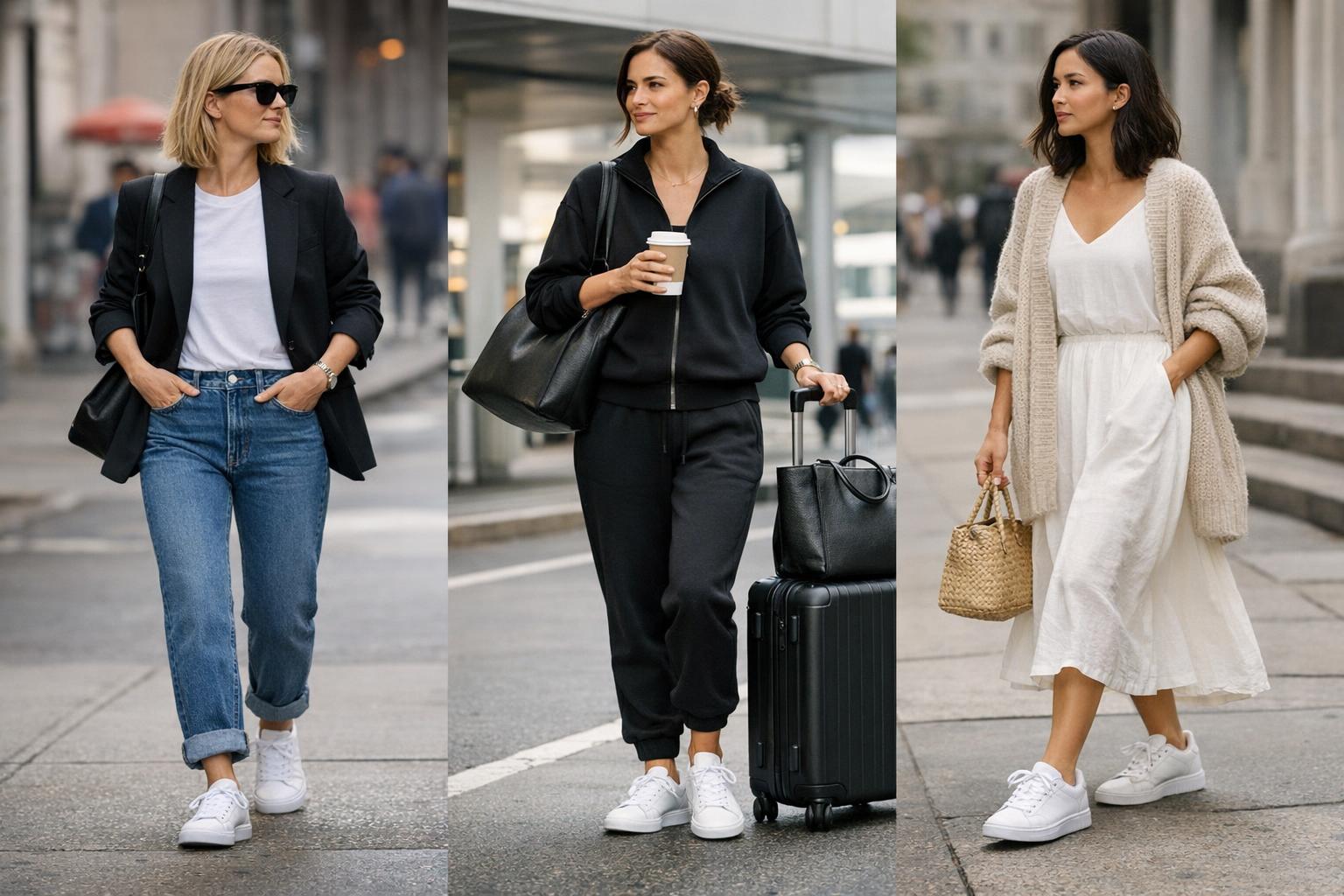
    Start by pulling out the pieces you wear regularly and would happily wear again. These are your core staples: the jeans that fit, the white tee you rely on, the shirt that works for meetings, the jacket you always grab. Many capsule wardrobe essentials are already in your closet; the capsule process simply makes them easier to see.

    Pass 2: Mend (or tailor) the “almost” items

    Next, separate items you like but don’t wear because something is off—small repairs, missing buttons, hemming, or fit tweaks. This step is often overlooked, but it’s a practical way to expand your wearable wardrobe without adding new pieces. It also supports a more sustainable approach by extending the life of clothing.

    Pass 3: Replace (with intention, not impulse)

    Finally, identify the gaps. Replacement shopping should be specific: you’re not “shopping for a capsule,” you’re replacing a missing work pant, upgrading a versatile knit, or adding weather-appropriate outerwear. This is also where you can decide whether to shop secondhand, prioritize durability, or use a one-in-one-out rule to keep your capsule from growing unintentionally.

    • Keep: Fits well, gets worn, matches your palette, supports your lifestyle.
    • Mend: Worth saving, close to perfect, needs a repair or adjustment.
    • Replace: You need the function, but the current item no longer serves you.

    Tip: If you get stuck, focus on versatility. A versatile item earns its place by pairing with multiple pieces, working in more than one setting (casual and professional), and supporting easy outfit formulas.

    Identify Core Staples: Tops, Bottoms, Outerwear, Shoes, Accessories

    Most high-performing capsule wardrobe guides anchor the closet around timeless essentials and a short list of “nonnegotiables”—pieces that consistently create outfits. While your exact list depends on lifestyle and climate, it helps to build your capsule by category so you don’t end up with ten tops and no bottoms to wear them with.

    Tops: your everyday workhorses (6–8 as a common starting point)

    Tops typically do the heaviest lifting in a capsule because they’re closest to your face and can change the look of an outfit quickly. Common capsule wardrobe basics include tees, crisp shirts, knits, and versatile blouses. Many editors highlight a goes-with-anything white tee and crisp shirting as core building blocks because they layer well and work across settings.

    • Simple tees and tanks for layering and casual outfits
    • Crisp shirting (like a white shirt) for polish and structure
    • Knits for warmth and texture
    • A dressier top that still pairs with your core bottoms

    Bottoms: the anchor pieces (4–6 as a common starting point)

    Bottoms are the foundation for many outfit formulas, and they’re often where fit matters most. Capsule closet staples frequently include jeans and tailored trousers because they cover casual and professional needs. If you wear skirts often, a skirt can serve as an anchor piece the same way trousers do.

    Tip: Keep your bottoms in your base neutrals to increase outfit combinations. When your bottoms coordinate easily, tops can bring variety without creating mismatches.

    Outerwear: plan for seasonality

    Outerwear can make or break a seasonal capsule wardrobe. A blazer, jacket, or coat can also act as a style “multiplier” by giving structure to simple basics. If you’re building a fall or winter capsule, prioritize outerwear that works across many outfits and matches your palette.

    • A structured layer (like a blazer) for a professional capsule
    • A jacket for everyday casual wear
    • A coat appropriate for your climate and season

    Shoes and accessories: outfit multipliers

    Some capsule approaches count shoes and accessories in the total (often contributing to the 30–40 item target), while others don’t. Either way, shoes and accessories should support your outfit formulas rather than complicate them. A small, cohesive shoe set aligned with your base neutrals can expand outfit options quickly.

    Accessories work best when they reinforce your color palette and help you shift outfits between settings. If you like variety, focus on a few pieces that repeat across the capsule rather than many one-off items.

    Colorful clothes on rack with shoes, minimalist guide for how to build a capsule wardrobe
    A curated rack of colorful tops and dresses pairs with neatly arranged shoes for a minimalist capsule wardrobe.

    Quantities, Piece Counts, and Outfit Formulas

    One reason capsule wardrobes are so popular is the “simple math” of outfits. When you plan counts by category and choose pieces that coordinate, you can create many looks without needing a huge closet. This section turns the idea into a practical blueprint you can follow.

    Typical capsule wardrobe counts: 30, 40, or 50

    Many people aim for a 30–37 piece capsule, while other guides suggest 30–40 items (sometimes including shoes and accessories) or even 30–50 based on seasonality. Instead of fixating on one “correct” number, pick a preset that fits your life right now, then adjust after you wear-test it.

    • 30-piece capsule: Great for tight, highly coordinated wardrobes or seasonal capsules.
    • 40-piece capsule: A flexible middle ground, especially when you want more variety.
    • 50-piece capsule: Helpful if you have varied activities, strong seasonality, or prefer more options.

    Outfit formulas: make your capsule do the work

    Outfit formulas are repeatable combinations that reduce daily decision fatigue. They’re also how you confirm whether your capsule wardrobe essentials are balanced. A classic example is the “3 tops x 3 bottoms” logic: even a small set can produce multiple outfits, especially when you add a layering piece.


    • Top + bottom + jacket/blazer
    • Tee + tailored trousers
    • Button-down shirt + jeans
    • Knit + trousers (then swap shoes/accessories to change the vibe)

    Tip: If you can’t quickly create multiple outfits from your capsule, it’s usually a color palette issue or a category imbalance (for example, too many statement tops and not enough anchor bottoms).

    Build Your Capsule in 7 Days (A Beginner-Friendly Micro-Guide)

    If you feel overwhelmed, a short timeline helps. This seven-day structure keeps you moving without rushing you into purchases. You’ll end with a capsule closet that reflects your lifestyle, climate, and preferences, plus a plan to maintain it.

    • Day 1: Define your goal (work/casual/formal mix) and decide seasonal vs year-round.
    • Day 2: Do a quick closet inventory and pull your most-worn items into a “keep” section.
    • Day 3: Choose your base neutrals and 1–2 accent colors; remove pieces that fight your palette.
    • Day 4: Build your category list (tops, bottoms, outerwear, shoes) and identify gaps.
    • Day 5: Create 10–15 outfit formulas from what you have; note what’s missing.
    • Day 6: Make a targeted replacement list (not a browsing list) and set your item-count preset (30/40/50).
    • Day 7: Set your maintenance plan: one-in-one-out, seasonal refresh date, and a tracking method.

    Tip: Wear-testing matters. Even if a piece looks like a “capsule staple,” it only belongs if you actually wear it. Let your real habits guide the final capsule more than any checklist.

    The One-in-One-out Rule and How to Maintain Your Capsule

    A capsule wardrobe succeeds when it stays functional over time. Without a maintenance strategy, capsules often slowly expand until they feel cluttered again. A one-in-one-out wardrobe principle keeps your capsule stable: when you add a piece, you remove a piece from the same category.

    How to evaluate new purchases

    Before you buy, check whether the item matches your color palette and whether it supports multiple outfit formulas. If it only works with one specific piece or requires buying more to “make it work,” it’s usually not capsule-friendly. The best capsule wardrobe choices strengthen your wardrobe basics rather than compete with them.

    Tip: Use a simple rule: if a new item can’t create several outfits with what you already own, it’s not a core staple—it’s a special add-on, and you should treat it that way.

    A seasonal refresh workflow

    Seasonality is a consistent theme across capsule wardrobe guides for a reason: weather changes your needs. A seasonal edit can be small and still effective. Swap in season-specific layers and outerwear, rotate shoes if needed, and reassess whether your current capsule still matches your activities.

    • Pack away items that don’t match the current season (or move them to a separate area).
    • Bring forward the outerwear and shoes you’ll actually wear now.
    • Re-check outfit formulas to ensure you still have enough combinations.

    Practical Shopping Guide: Budget, Quality, and Sustainable Options

    A strong capsule wardrobe isn’t defined by price tags. Many capsule guides balance investment pieces with affordable basics, focusing on versatility and longevity. The key is to shop with a plan: know what you need, how it fits your palette, and how it integrates with your current capsule.

    Balance investment pieces with affordable basics

    Some items carry the wardrobe more than others. If you invest anywhere, prioritize pieces that get worn often and that influence many outfits—like outerwear, shoes, or a tailored staple you reach for weekly. Meanwhile, affordable basics can still be capsule-worthy if they fit well and coordinate seamlessly. The goal is not “expensive,” it’s “reliable.”

    Tip: Avoid buying “almost right” items just because they’re a good deal. In a capsule wardrobe, every piece needs to work hard, so near-misses tend to become clutter.

    Consider sustainability: secondhand, upcycling, and longer use

    Many capsule wardrobe approaches include an eco-conscious angle: buying fewer pieces, choosing items you’ll wear repeatedly, repairing what you already own, and exploring secondhand options. If sustainability matters to you, incorporate it into the process from the start: mend before replacing, shop with a targeted list, and adopt a one-in-one-out policy to prevent overbuying.

    Digital wardrobe tools and “virtual closet” approaches can also support intentional shopping by helping you see what you own and test outfit combinations before purchasing another item that fills the same role.

    Capsule Wardrobe for Different Lifestyles (and a Gender-Inclusive Approach)

    A capsule wardrobe only works when it maps to real life. A professional capsule needs more polished options, a casual capsule leans on comfortable basics, and many people need a bridge for formal events. You can still keep a cohesive capsule—just distribute your piece count where you actually spend your time.

    Office or professional capsule

    For professional settings, focus on tailored staples and layering pieces that elevate basics. Crisp shirting, tailored trousers, and structured outerwear are common foundations because they create multiple outfits while staying consistent with a timeless wardrobe staples approach.

    Casual and active capsule

    If most of your time is casual, your capsule can still be intentional. Prioritize comfortable basics that mix easily and look put-together with minimal effort. The difference is emphasis: you may need fewer formal staples and more everyday items that support errands, social plans, and relaxed days.

    Formal events and “special category” needs

    Many people struggle with capsules because formal events feel like exceptions. Instead of building a large “just in case” section, keep one or two event-ready options that align with your palette and can be styled different ways with your existing shoes and layers. This preserves capsule simplicity without leaving you unprepared.

    A gender-inclusive capsule framework (unisex logic)

    The most useful capsule wardrobe principles are universal: cohesive color coordination, versatile basics, and repeatable outfit formulas. Whether you shop from women’s, men’s, or mixed sections, the structure stays the same—build around core staples like tees, crisp shirts, knits, jeans or trousers, and season-appropriate outerwear, then adapt fit and styling to your preferences.

    Tip: When you’re aiming for a gender-inclusive capsule, prioritize fit and comfort first. A capsule only works if you want to wear it repeatedly.

    Maintenance, Care, and Longevity

    Capsule wardrobes depend on repeat wear. That makes care and storage especially important: the better your pieces hold up, the fewer replacements you need, and the more stable your capsule stays across seasons.

    Care habits that support a capsule wardrobe

    Good care keeps your core basics looking consistent, which matters when you’re relying on fewer pieces. Pay attention to how you wash, dry, and store your staples—especially the items you wear weekly. The more dependable your essentials are, the easier it is to stick to intentional shopping.

    Rotate and store seasonal pieces

    If you build seasonal capsules, storage is part of the system. Keeping off-season items separate reduces visual clutter and helps you see what you truly have available right now. Even if you maintain a year-round capsule, a small rotation for outerwear and weather-specific items can keep your closet calmer and more functional.

    Tip: Treat your capsule like a living system. If you’re repeatedly avoiding an item, move it out of the capsule and replace it only if you genuinely need that function.

    Free Resources and Next Steps (What to Create for Yourself)

    To make your capsule wardrobe easier to build and maintain, create a simple planner you can reuse each season. The most effective “tool” is one you’ll actually use—whether that’s a spreadsheet, a notes app, or a digital wardrobe.

    A capsule checklist you can copy into a note or spreadsheet

    List your categories (tops, bottoms, outerwear, shoes, accessories) and assign a target count based on your 30/40/50 preference. Then list what you already own that fits your palette and lifestyle, plus a short “replace” list. Keeping it simple prevents the process from turning into a complicated project you avoid.

    • Target piece count (30/40/50)
    • Chosen base neutrals and accent colors
    • Core staples you already own
    • Mend list
    • Replace list (specific items only)
    • One-in-one-out tracking note

    A quick “Capsule Builder” self-quiz (write your answers)

    If you’re unsure what your capsule should include, answer a few prompts and let them guide your decisions. Keep your answers short and honest; they’re meant to prevent you from building a fantasy wardrobe.

    • What do I wear most weeks: professional, casual, or a mix?
    • Do I need a seasonal capsule or a year-round core?
    • What base neutrals do I already wear most?
    • What 1–2 accent colors do I enjoy repeating?
    • What are my three most reliable outfit formulas?
    • What do I keep buying but not wearing (and why)?

    Tip: Revisit this quiz after a few weeks of wear. Your capsule should evolve based on experience, not just intention.

    Open closet with capsule wardrobe clothes on hangers and two hats, minimalist style
    A curated selection of capsule wardrobe essentials hangs neatly in an open closet beneath two hats on the top shelf.

    FAQ

    How many items should be in my capsule wardrobe?

    Common targets include 30–37 pieces or 30–40 items, sometimes including shoes and accessories, while some people prefer 30–50 depending on lifestyle and seasonality; choose a starting number that fits your climate and activities, then adjust after you wear-test it.

    Do shoes and accessories count in a capsule wardrobe?

    Some capsule approaches include shoes and accessories in the total count (often when aiming for a 30–40 item capsule), while others track them separately; the most important point is consistency in how you count so you can maintain a balanced, functional wardrobe.

    How do I choose a color palette for a capsule wardrobe?

    Start with one or two base neutrals you already wear (often black, navy, camel, or white) and add one or two accent colors you enjoy repeating; keeping colors cohesive makes it easier to mix and match and build reliable outfit formulas.

    Can I build a capsule wardrobe without buying new clothes?

    Yes—begin with a closet audit to identify the core staples you already wear, create outfit formulas from those pieces, and only add items if you discover clear gaps that prevent you from dressing for your real lifestyle or climate.

    What are the most important capsule wardrobe essentials?

    Most capsule wardrobes rely on versatile basics and timeless staples like tees, crisp shirts, knits, jeans or tailored trousers, and season-appropriate outerwear, chosen in a cohesive palette so they coordinate easily.

    How do I keep my capsule wardrobe from growing again?

    Use a one-in-one-out rule by category, shop from a specific replacement list instead of browsing, and do a seasonal refresh to rotate weather-appropriate items while moving off-season pieces out of the main closet area.

    Should I build a seasonal capsule wardrobe or a year-round capsule?

    If your climate has distinct seasons, a seasonal capsule or a year-round core with seasonal edits often feels easiest; if your weather is consistent, a year-round capsule may be simpler, with small updates as your activities change.

    Can a capsule wardrobe include trends?

    Yes—many people keep the core focused on timeless staples and use a small number of trend items as accents, making sure they still work with the existing color palette and create multiple outfits rather than requiring additional purchases.

  • 7-Step Capsule Wardrobe Plan for a Year-Round Closet

    7-Step Capsule Wardrobe Plan for a Year-Round Closet

    The Capsule Wardrobe: A Practical Guide to a 30–37 Item Closet That Works All Year

    A capsule wardrobe is a curated, mix-and-match closet built around versatile essentials you actually wear. Instead of owning a little bit of everything, you build a smaller set of pieces that work together—so getting dressed is faster, outfits feel more cohesive, and you can shop with more intention. Most modern guides circle around a practical range (often 30–37 items) and a seasonal rotation approach that keeps your wardrobe focused without feeling restrictive.

    This guide walks you through what a capsule wardrobe is, how many items to include, how a three-month rotation works, and how to build your own step by step. You’ll also find ready-to-use capsule lists by style, seasonal strategies, shopping and budgeting rules, and a clear FAQ at the end.

    A bright white walk-in closet showcases a capsule wardrobe with neatly hung clothes, folded drawers, shoes, and travel-ready suitcases.

    What Is a Capsule Wardrobe, and Why It Works

    At its core, a capsule wardrobe is a smaller wardrobe designed for maximum outfit versatility. The idea is simple: choose a set of timeless basics and a few higher-impact pieces that coordinate in color and silhouette. You wear this curated set for a defined period (commonly a season), then reassess and plan the next capsule based on what worked.

    Core idea and the benefits (clarity, time-savings, cost-per-wear)

    Capsules work because they remove friction. When most items in your closet pair well, it’s easier to create repeatable outfit “formulas” (for work, weekends, travel, and more). A focused wardrobe also supports cost-per-wear thinking: fewer, better-chosen pieces can earn their keep through repeated use, while impulse buys that don’t coordinate become less tempting.

    Many capsule-wardrobe approaches emphasize decluttering, planning, and a shopping pause or limit during the wear period. The goal isn’t just fewer items—it’s a closet that reliably produces outfits you feel good in, without constant decision fatigue.

    Common misconceptions (limits on style, rigidity)

    A capsule wardrobe isn’t a uniform, and it doesn’t have to be boring. It’s a framework that helps you choose pieces that fit your lifestyle and preferences. Some capsules lean minimalist; others are classic, work-friendly, or more trend-relevant. What makes it a capsule is the intentional coordination and the commitment to wear what you selected long enough to learn what truly works.

    It’s also not all-or-nothing. Many people keep a “core” capsule and add seasonal expansions, or build a year-round base with smaller seasonal swaps. The most functional capsule wardrobe is the one you can maintain without feeling deprived.

    Capsule wardrobe: empty dark closet with wooden shelves and wire hangers under a light strip
    A dark, empty closet with wooden shelves and wire hangers awaits a thoughtfully planned capsule wardrobe.

    How Many Items Should Your Capsule Have?

    There isn’t one perfect number, but most capsule wardrobe methods settle into a predictable range: a focused closet with enough variety to cover real life, without slipping back into clutter. You’ll see frameworks such as a 30–37 item capsule wardrobe for a season, and broader “core” ranges that can span roughly 25–50 items depending on the system and lifestyle.

    The 30–37 item framework and rationale

    The 30–37 item capsule is popular because it’s large enough to support variety (work, casual, social plans) and small enough to force coordination. It encourages you to prioritize what you wear most, choose colors that mix, and stop relying on “maybe someday” pieces. It also makes seasonal planning more straightforward: you can commit to a set of items for a defined period, then edit with fresh eyes next season.

    When people use the 30–37 approach, the emphasis is less about policing the exact number and more about building a cohesive lineup of essentials across categories—tops, bottoms, layers, shoes, and a few finishing pieces.

    Adjusting for climate and lifestyle

    Your ideal capsule wardrobe size depends on how you live. If you need more variety for work settings, travel, or frequent events, you may want more pieces in the mix. If your day-to-day is simpler, you may prefer a smaller starter capsule wardrobe and expand only when you see a genuine gap.

    Climate also affects the mix. Seasonal layering needs and outerwear requirements can change what “enough” looks like from one region to another. A flexible way to handle this is to keep a stable core and rotate in seasonal pieces—so the capsule stays cohesive without trying to solve every weather scenario at once.

    Capsule wardrobe on wooden hangers in a minimalist closet, clothes hanging neatly on a metal rod
    A capsule wardrobe hangs neatly on wooden hangers along a metal rod, supporting minimalist planning at a glance.

    The 3–Month Rotation and the 3-3-3 Rule

    One reason the capsule wardrobe concept is so repeatable is the built-in rhythm: choose a capsule, wear it for a set period, learn what you love, then adjust. Many methods use a three-month wearing rule, which aligns naturally with seasons and helps you avoid constant closet reshuffling.

    What it means in practice

    A three-month capsule doesn’t mean you can’t ever wear anything else, but it does create helpful boundaries. You commit to a curated lineup and limit shopping or keep it highly intentional. Over those months, you get real data: which shoes you reach for, which tops feel “right,” what you avoid, and what you wish you had included.

    The 3-3-3 planning mindset is often used as a simple way to build outfits and avoid overcomplicating the process. While versions vary, the key idea is to plan in small, repeatable groupings so you can mix and match reliably without needing a massive closet.

    Planning your three-month capsule

    The easiest way to plan a seasonal capsule is to start from your real calendar. If your next three months include work obligations, travel, or events, build around those needs first, then fill in the everyday basics. A well-planned capsule wardrobe should feel ready for your life as it is, not your life in theory.

    • Choose your start date and end date (roughly three months).
    • Note your most common activities (work, casual days, social plans).
    • Decide on a color direction so most pieces coordinate.
    • Select a balanced set across categories (tops, bottoms, layers, shoes).
    • Commit to a shopping pause or a strict “only replace true gaps” rule.

    Tip: If three months feels intimidating, treat the first capsule as a starter capsule wardrobe. The goal is progress, not perfection, and the rotation is what makes the system forgiving.

    Black plastic hangers on a closet rod above a patterned dress, capsule wardrobe minimalist planning
    Black plastic hangers line a closet rod above a patterned dress, reflecting capsule wardrobe minimalist planning.

    Building Your Capsule Wardrobe: A Step-by-Step Guide

    Building a capsule wardrobe works best when you move in a clear sequence: audit what you have, identify what’s essential, and then plan outfits before you buy anything. The steps below are designed to keep your capsule practical and cohesive, rather than aspirational and unused.

    Step 1 – Audit and declutter

    Start by looking at what you already own and what you actually wear. A capsule wardrobe is easiest to build when you begin with your most reliable pieces—items you reach for repeatedly and feel good in. Pull those forward first, then evaluate the rest with a more critical eye.

    Tip: Focus your audit on repeat wear. If a piece hasn’t been worn in a long time, ask why. Fit, comfort, styling difficulty, and fabric feel are common reasons items stall out. A capsule thrives on “easy yes” pieces, not “maybe later” pieces.

    Step 2 – Choose a color palette and fabrics

    A coordinated color palette is the fastest way to improve mix-and-match potential. Many capsule wardrobe guides emphasize the value of timeless basics and consistent colors so that outfits come together without effort. You don’t need to limit yourself to one color family, but you do want most items to pair naturally.

    Quality and fabric choice matter because capsules rely on repeat wear. Prioritizing high-quality basics and materials that hold up over time supports longevity and reduces the need for constant replacement. This is also where sustainability goals often align with practicality: fewer pieces, chosen well, worn often.

    Step 3 – Identify core pieces by category

    Once you know your preferred colors and the level of dressiness you need, organize your capsule by category. Most capsule wardrobe essentials lists include a blend of tops, bottoms, layers, and shoes, plus a few accessories that tie everything together. The point is to cover your most common outfit needs with minimal duplication.

    Tip: Aim for coverage, not clones. If you already own several similar items, pick the best-fitting, most versatile version for the capsule and set the others aside while you test-drive your lineup.

    Step 4 – Create outfit formulas

    Outfit formulas turn a capsule wardrobe from a nice idea into a daily tool. Instead of thinking “What should I wear?” you rely on combinations you already know work—then rotate the individual pieces. This is where the capsule starts saving time, because you’re not reinventing your style every morning.

    • Work-friendly formula: structured top + straight-leg jeans or trousers + layer + go-to shoes.
    • Casual formula: tee + jeans + jacket + everyday shoes.
    • Polished formula: knitwear + tailored bottom + refined shoe.
    • Simple one-and-done formula: dress or jumpsuit + outer layer + accessory.

    Tip: If you work from home or have hybrid days, build formulas that feel comfortable but still intentional. The goal is a capsule wardrobe that matches your reality, whether that’s meetings, errands, or both.

    The 8 Core Capsule Categories (With Example Items)

    Most capsule wardrobe checklists are easiest to follow when you think in categories rather than a single long shopping list. Below are core categories that show up repeatedly in capsule wardrobe essentials guides, along with example pieces that tend to do the most work in a mix-and-match closet.

    1) Tops, blouses, and T-shirts

    Tops do a lot of heavy lifting in a capsule wardrobe because they change the feel of an outfit quickly. A strong capsule usually includes both casual options (like tees) and more polished tops (like blouses) so you can shift between relaxed and refined without needing an entirely separate wardrobe.

    • A reliable white shirt (a commonly cited “nonnegotiable” anchor piece)
    • Everyday T-shirts in coordinating colors
    • A blouse or elevated top for work-friendly outfits

    2) Knitwear and layering tops

    Knitwear is often treated as a core capsule item because it bridges seasons and dress codes. It can look polished with jeans or trousers and also works for layering when temperatures change. A capsule wardrobe built around timeless basics typically includes at least one knit option you can wear frequently.

    Tip: Choose knitwear that complements your most-worn bottoms. The more naturally it fits into your outfit formulas, the more value you’ll get from it.

    3) Bottoms: jeans and trousers

    Bottoms anchor outfit repetition. Straight-leg jeans are frequently highlighted as a foundational piece because they work across casual and polished settings depending on what you pair with them. Trousers can serve the same anchoring function for work-friendly capsules.

    • Straight-leg jeans as a versatile core bottom
    • A trouser you can wear for work or polished outfits
    • An additional bottom that fits your lifestyle (for variety without clutter)

    4) Dresses and jumpsuits

    Dresses and jumpsuits can simplify a capsule wardrobe because they create a full outfit with minimal planning. They’re especially useful when you want a “one-and-done” option that can be styled up or down with layering, shoes, and accessories.

    Tip: In a capsule, a dress earns its place when it can be worn multiple ways—alone, layered, or paired with different shoes—so it doesn’t become a single-occasion piece.

    5) Outerwear: jackets and coats

    Outerwear is a capsule category where quality and versatility matter. Because it’s often the first thing people see, a good jacket or coat can make repeated outfits feel intentional. Capsule wardrobe systems frequently treat outerwear as a key seasonal lever: you may keep a stable core and rotate outerwear as the weather changes.

    6) Shoes

    Shoes influence how dressed up an outfit feels, so even a small capsule wardrobe benefits from a thoughtful shoe lineup. Rather than collecting many pairs, aim for a few that cover your most common needs and coordinate with your palette.

    • An everyday pair for frequent wear
    • A more polished option for work-friendly or elevated outfits
    • A seasonal option that supports your climate and rotation

    7) Accessories: belts, bags, scarves

    Accessories are a practical way to add variety without adding bulk. Capsule wardrobe essentials lists often include a few accessories because they help repeat outfits feel fresh, and they can reinforce your overall style direction. Keep accessories aligned with your color palette so they integrate smoothly.

    8) “High-impact” anchors and essentials

    Some capsule approaches emphasize a small set of “nonnegotiables”—timeless pieces that define your wardrobe and elevate everything else. In editorial-style capsule wardrobes, these anchors are chosen for classic silhouettes, quality fabrics, and their ability to pair across seasons. The specifics can vary, but the principle stays consistent: a few strong items can carry many outfits.

    Seasonal Capsule Strategies (Spring, Summer, Fall, Winter)

    Seasonality is where many people either abandon a capsule wardrobe or finally make it sustainable. A simple approach is to maintain a dependable base of year-round essentials and rotate in seasonal pieces every three months. This keeps your closet aligned with weather changes while preserving the mix-and-match logic of the capsule.

    Transitional pieces and layering

    Transitional dressing is one of the best reasons to invest in a capsule wardrobe structure. When items layer well and share a consistent palette, you can adjust to temperature swings without buying an entirely separate wardrobe. Knitwear, outerwear, and versatile tops often do the most work here.

    Tip: If layering is part of your daily life, prioritize pieces that can be worn in multiple combinations. The more your capsule layers without bulk or discomfort, the easier it is to stick with the system for the full three-month wear period.

    Seasonal adjustments to maintain capsule integrity

    Seasonal swaps work best when you treat them as small edits rather than a total reset. Keep your most-worn basics consistent if they still serve you, and only replace what doesn’t fit the season or your current lifestyle. This is also a good moment to review what you didn’t wear and why—because that feedback improves the next capsule.

    • Spring: emphasize light layering and flexible tops that work across changing temperatures.
    • Summer: prioritize breathable, easy outfits and adjust shoes and layers accordingly.
    • Fall: bring back knitwear and jackets that support layering and repeat wear.
    • Winter: focus on warmth through layers and outerwear, while keeping the core palette consistent.

    Tip: Don’t treat your closet like a store. Seasonal capsule planning is about selecting from what you own first, then filling only the most obvious gaps.

    Budgeting and Shopping Rules for a Capsule Wardrobe

    A capsule wardrobe can support saving money over time, but only if you pair it with intentional shopping rules. Because capsules emphasize repeat wear and versatility, they naturally encourage a price-per-wear mindset and reduce random purchases that don’t integrate with your wardrobe.

    When to invest, when to save

    Capsule wardrobe guidance often points to investing in high-quality basics—especially items you’ll wear constantly—while being more selective elsewhere. If a piece is part of your weekly outfit formulas, it usually makes sense to prioritize quality and longevity. For more occasional items, it can be smarter to keep spending moderate and focus on coordination.

    Tip: If you’re unsure what to invest in, wait until you’ve worn your capsule for a few weeks. Real wear quickly reveals what you rely on most, and those are the pieces most likely to deliver strong cost-per-wear value.

    Quality signals (fabric, stitch, fit)

    Quality matters in a capsule wardrobe because items are worn more frequently. While “quality” can mean different things depending on your style and budget, the practical focus stays consistent: choose pieces that feel good, fit well, and hold up to repeat wear. Fit is especially important, because an item can be “essential” on paper and still go unworn if it doesn’t feel right on your body.

    • Choose fabrics that feel comfortable for your everyday wear.
    • Prioritize fit and ease of movement so you actually reach for the piece.
    • Look for construction that supports longevity when you’ll wear an item often.
    • Avoid buying “almost right” items that require constant adjusting or special handling.

    Practical Examples: Ready-to-Use Capsule Lists (By Style)

    These sample capsules are meant to be practical starting points, not rigid rules. Use them to spot gaps, confirm your essentials, and choose a style direction. Each list can be adapted to a 30–37 item capsule wardrobe approach by expanding within categories based on your lifestyle.

    Classic capsule (timeless, work-friendly)

    A classic capsule leans into timeless basics, clean silhouettes, and pieces that shift easily between work and weekend. It often includes anchors like a white shirt, straight-leg jeans, knitwear, and a small set of polished layers and shoes.

    • White shirt and a few coordinating tops
    • Straight-leg jeans and a trouser
    • Knitwear for layering and polish
    • One dress or jumpsuit for simple outfitting
    • A versatile jacket/coat
    • A small shoe lineup covering everyday and polished needs
    • Simple accessories that coordinate with most outfits

    Minimalist capsule (streamlined, mix-and-match)

    A minimalist wardrobe capsule prioritizes cohesion and repetition. The palette is usually tight, the silhouettes are consistent, and every piece needs to pair with most other pieces. This style works especially well with a year-round core capsule plus seasonal expansion capsules.

    Tip: Minimalist capsules often succeed when you build around a handful of “always” pieces, then add only a few seasonal items to keep things fresh while maintaining the same core logic.

    Modern-casual capsule (everyday, comfortable, polished enough)

    A modern-casual capsule is designed for real daily life: comfort-forward pieces that still feel put-together. It’s especially practical for work-from-home and hybrid routines, where you want clothes that move easily between home, errands, and occasional meetings.

    • Comfortable tops you can repeat without boredom
    • Jeans as a go-to bottom plus one more polished option
    • Knitwear or layering pieces that elevate casual looks
    • A simple dress or jumpsuit for quick “done” outfits
    • Outerwear that pulls the look together
    • Shoes that balance comfort and versatility

    Sustainability, Repairs, and Longevity

    Sustainability shows up naturally in capsule wardrobe thinking because the model emphasizes fewer, better pieces worn more often. Prioritizing high-quality basics, limiting shopping during the wear period, and planning seasonal capsules can reduce wasteful buying patterns and encourage more intentional consumption.

    Repair tips, ethical purchasing, and secondhand options

    Longevity is a practical skill in a capsule wardrobe. When items are worn frequently, small issues are worth addressing so your core pieces stay in rotation. Many capsule approaches also encourage more thoughtful purchasing—whether that means choosing durable items, shopping more intentionally, or considering alternatives that support longer garment life.

    Tip: Treat repairs and upkeep as part of your capsule routine, especially at the end of a three-month cycle. A quick review helps you decide what to mend, what to replace, and what to remove from the next capsule.

    Tools and Resources (Apps, Planners, Checklists)

    A capsule wardrobe is easier to maintain when you can see what you own and what outfits you repeat. Many people use digital closet tools, outfit planning features, or a simple checklist to track their capsule items across a season. Others prefer pre-made capsule plans or a modular approach that separates a year-round core from seasonal expansions.

    Digital closet tools and printable checklists

    If you tend to forget what’s in your closet, a digital workflow can make a capsule more workable. Even a basic checklist can help you stay within your intended item count, maintain a clear view of your essentials, and spot true gaps before shopping. The most helpful tool is the one you’ll actually use consistently during your three-month rotation.

    Tip: Keep your first tracking system simple. Start by listing your capsule wardrobe items by category and noting your most-used outfit formulas. After a few weeks, you’ll have enough insight to refine your capsule without overcomplicating the process.

    Making Your Capsule Wardrobe Work for You

    The most successful capsule wardrobe is practical, personalized, and repeatable. It’s built around timeless basics that align with your lifestyle, anchored by a few nonnegotiable pieces you love, and supported by a seasonal rhythm that keeps your closet current. If you treat each capsule as a learning cycle—wear, observe, adjust—your wardrobe gets easier over time.

    Start with what you already own, commit to a focused three-month capsule, and use your real wear patterns as feedback. That’s how a capsule wardrobe becomes less of a challenge and more of a system you can rely on year-round.

    Capsule wardrobe planning in an open white closet with piled clothes in a minimalist room
    An open white wardrobe reveals piled clothing in a calm, minimalist room ready for thoughtful planning.

    FAQ

    What is a capsule wardrobe?

    A capsule wardrobe is a curated collection of versatile clothing that mixes and matches easily, built around timeless basics and a cohesive color approach so you can create many outfits from fewer pieces.

    How many items should be in a capsule wardrobe?

    Many people use a 30–37 item framework for a seasonal capsule, while other approaches describe a broader core range (often roughly 25–50 items) depending on lifestyle, climate, and how you structure your rotations.

    What is the three-month wearing rule?

    The three-month wearing rule is a common capsule approach where you select a focused set of items and wear them for about three months (often a season), limiting shopping so you can learn what truly works before planning the next capsule.

    What is the 3-3-3 rule in capsule wardrobe planning?

    The 3-3-3 concept is a simple planning mindset used in capsule wardrobes to keep outfits easy and repeatable by building around small, mix-and-match groupings rather than trying to plan an entire closet all at once.

    Do capsule wardrobes work for work-friendly outfits?

    Yes, many capsule wardrobe essentials and starter packs are designed to be work-friendly by focusing on versatile tops, jeans or trousers, layering pieces like knitwear, and shoes that can shift between casual and polished settings.

    Will a capsule wardrobe limit my style?

    A capsule wardrobe is a flexible framework, not a style restriction; you can build it as minimalist, classic, or more modern-casual by choosing silhouettes, colors, and “anchor” pieces that reflect your preferences.

    How do I plan a capsule wardrobe for different seasons?

    A common strategy is to keep a year-round core of essentials and rotate seasonal pieces every three months, using layering and outerwear to adapt while maintaining a consistent, mix-and-match foundation.

    How do I shop for a capsule wardrobe without overspending?

    Use a shopping pause or strict gap-filling rule during your capsule period, prioritize high-quality basics you’ll wear often, and rely on cost-per-wear thinking so each addition fits your palette, your outfit formulas, and your real daily life.

    What should I do at the end of a capsule season?

    Review what you wore most, what you avoided, and what felt missing, then plan the next capsule by keeping the pieces that worked, swapping seasonal items as needed, and making only intentional additions that improve outfit versatility.